Review

The Vascular Endothelial Glycocalyx in Ageing: Molecular Mechanisms, Age-Related Dysfunction, and Anti-Ageing Strategies for Cardiovascular Healthspan

by
Taiki Tojo
1,2 and
Minako Yamaoka-Tojo
2,3,*
1
Department of Cardiovascular Medicine, School of Medicine, Kitasato University, Sagamihara 252-0374, Japan
2
Department of Cardiovascular Medicine, Graduate School of Medical Sciences, Kitasato University, Sagamihara 252-0374, Japan
3
Department of Rehabilitation, School of Allied Health Sciences, Kitasato University, Sagamihara 252-0373, Japan
*
Author to whom correspondence should be addressed.
J. Ageing Longev. 2026, 6(3), 53; https://doi.org/10.3390/jal6030053
Submission received: 20 April 2026 / Revised: 26 June 2026 / Accepted: 30 June 2026 / Published: 2 July 2026

Abstract

The vascular endothelial glycocalyx (EGX) is a gel-like, negatively charged mesh of membrane-bound proteoglycans, glycosaminoglycans, glycoproteins and adsorbed plasma proteins that covers the luminal surface of the endothelium and orchestrates vascular homeostasis through regulation of permeability, leukocyte trafficking, mechanotransduction and anti-thrombotic signalling. Progressive thinning, heterogeneous remodelling and accelerated shedding of the EGX are now recognised as hallmarks of vascular ageing and early drivers of age-related cardiovascular disease. Here, we synthesise current evidence linking EGX integrity to biological ageing, with emphasis on age-dependent remodelling of heparan-sulfate proteoglycans, endothelial progenitor-cell dysfunction, and the heightened susceptibility of the aged EGX to oxidative, inflammatory and infectious insults. We discuss signalling pathways driving EGX shedding—including the IQGAP1/PAR1-2/PI3K/Akt axis—and clinical correlates such as vulnerable coronary plaque in older patients with coronary artery disease and microvascular endotheliopathy in severe COVID-19. Finally, we review emerging anti-ageing strategies targeting the EGX, including direct oral anticoagulants, glycocalyx-mimetic and nitric-oxide-releasing biomaterials, bioinspired antithrombogenic surfaces and microbiome-based modulation, and consider their translational potential for extending cardiovascular healthspan.

1. Introduction

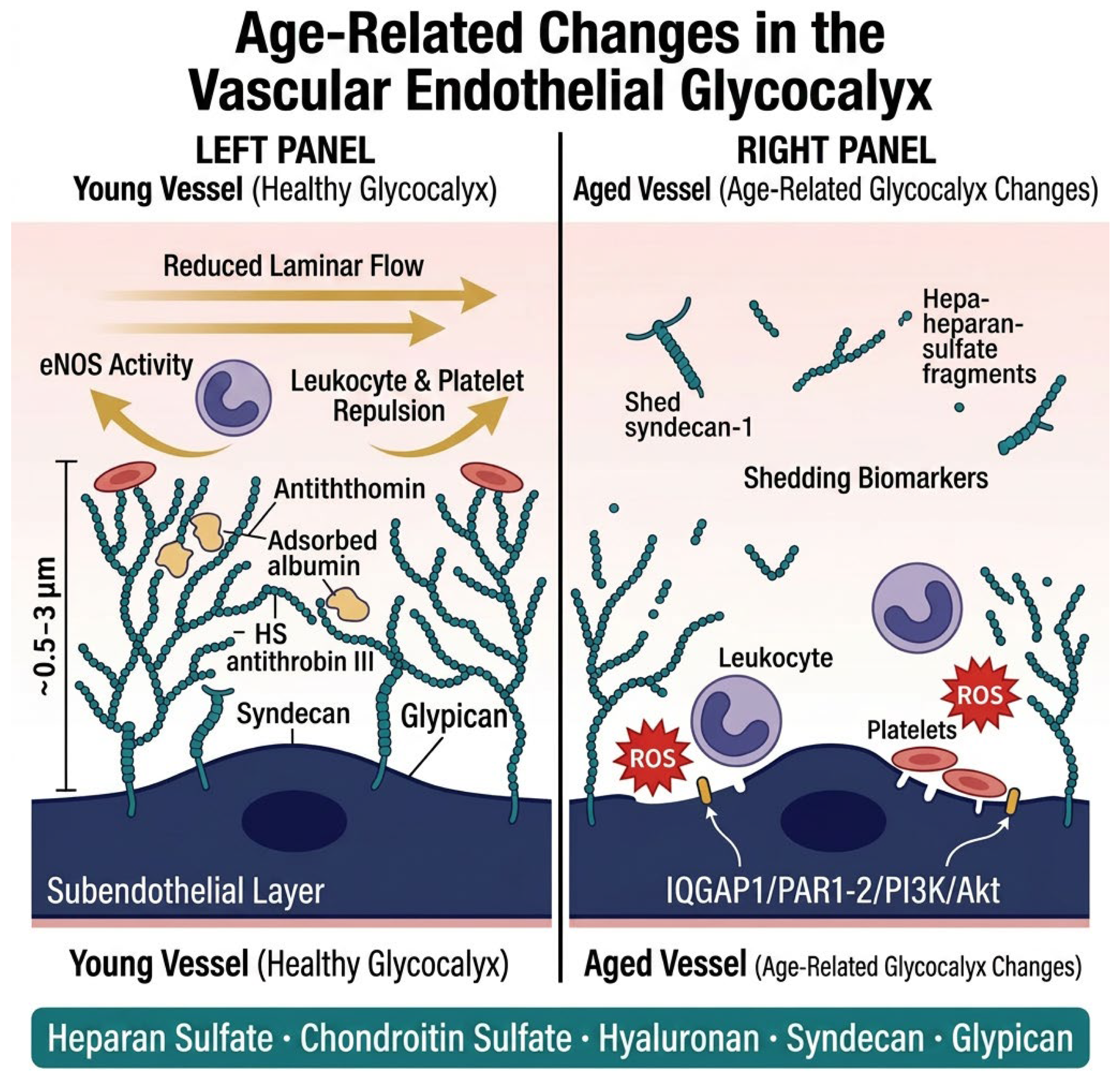
Population ageing is among the most profound demographic shifts in the twenty-first century, and cardiovascular disease (CVD) remains the principal cause of premature mortality and loss of healthy life-years in older adults. A central feature of the ageing cardiovascular system is progressive endothelial dysfunction, which is increasingly traced to structural and functional deterioration of the vascular endothelial glycocalyx (EGX) [1,2]. The EGX is a highly hydrated mesh of membrane-bound proteoglycans, glycosaminoglycans (GAGs), glycoproteins and adsorbed plasma proteins that covers the luminal face of every endothelial cell; its multifaceted roles include regulation of vascular permeability, leukocyte and platelet adhesion, mechanotransduction of shear stress into nitric oxide (NO) release, and anti-thrombotic signalling [1,3,4,5] (Figure 1). Recent comprehensive reviews have further emphasised the critical role of glycocalyx turnover in maintaining vascular homeostasis and how its dysregulation contributes to endothelial dysfunction [6].
Over the past decade, glycocalyx biology has emerged as a unifying framework for understanding why the endothelium becomes maladaptive with age. Age-related alterations in heparan-sulfate proteoglycans (HSPGs) impair homing and migration of endothelial progenitor cells (EPCs), attenuating the intrinsic vasculo-reparative capacity [2]. At the clinical level, reduced EGX thickness and increased shedding products correlate with coronary plaque vulnerability in patients with coronary artery disease (CAD) [6] and contribute to the systemic inflammatory microvascular endotheliopathy observed in severe COVID-19 [3,4], a syndrome that disproportionately affects older adults.
This review integrates recent progress in EGX biology with an ageing-centred perspective. We first summarise the composition and function of the endothelial glycocalyx, then review how the EGX is remodelled with age and disease, and finally discuss emerging pharmacological, biomaterial and microbiome-based strategies that preserve or restore the EGX as a promising anti-ageing target for cardiovascular healthspan.

Literature Search Strategy

This narrative review was based on a structured literature search conducted in PubMed through March 2026. The search strategy included combinations of the following terms: “glycocalyx”, “vascular endothelial glycocalyx”, “vascular ageing”, “cardiovascular disease prevention”, “endothelial dysfunction”, “heparan sulfate proteoglycan”, “oxidative stress”, “microvascular disease”, and “cardiovascular ageing”. Additional articles were identified through manual screening of reference lists from relevant reviews and original studies.
Priority was given to recent reviews, mechanistic studies, translational investigations, and clinical studies examining glycocalyx structure, function, ageing-related alterations, assessment methodologies, and therapeutic interventions. Given the narrative nature of this review, formal systematic-review methodology and quantitative meta-analysis were not performed.

2. Structure and Function of the Vascular Endothelial Glycocalyx

The EGX is organised as a dense, negatively charged layer extending approximately 0.5–3 µm from the endothelial plasma membrane into the vessel lumen, with regional variation between macro- and microvessels [1]. Membrane-bound core proteoglycans—principally syndecans (syndecan−1 to −4) and glypicans—anchor GAG side chains such as heparan sulfate (HS), chondroitin sulfate and hyaluronan, which together with adsorbed plasma proteins (albumin, antithrombin III, and extracellular superoxide dismutase) constitute a functional barrier coupled to the endothelial cytoskeleton.
The EGX performs at least five critical functions that converge on vascular homeostasis. First, its dense, hydrated meshwork restricts passage of macromolecules and modulates permeability. Second, it shields the endothelium from leukocyte and platelet adhesion under quiescent conditions, and its selective shedding exposes adhesion molecules during inflammation. Third, it transduces shear stress into NO release by coupling flow-sensing to endothelial NO synthase (eNOS) activation. Fourth, it sequesters antioxidant and anticoagulant proteins on the luminal surface. Fifth, it binds growth factors, chemokines and cytokines, regulating vascular signalling [1,7]. Loss of any of these functions contributes to vascular ageing and age-related disease.

3. The Ageing Endothelial Glycocalyx

3.1. Age-Related Structural Remodelling of Heparan-Sulfate Proteoglycans

HSPGs are particularly sensitive to the biological ageing process. Williamson et al. demonstrated that age-related impairment of EPC migration correlates with structural alterations in HSPG sulfation patterns, indicating that ageing remodels the extracellular glycan landscape in ways that disable a key vascular-repair mechanism [2]. Longitudinal studies further document reduced EGX thickness and increased circulating shedding products—including syndecan-1 and heparan sulfate fragments—with advancing age, and these biomarkers are associated with endothelial dysfunction, arterial stiffness and microvascular rarefaction [1].

3.2. Endothelial Progenitor Cell Dysfunction

EPCs contribute to ongoing endothelial maintenance by engrafting and replenishing denuded or senescent endothelium. Because EPC homing depends critically on interactions between CXCR4 and glycocalyx-associated HS moieties, age-dependent remodelling of HSPGs compromises EPC migration and impairs endothelial repair [2]. This creates a feed-forward loop in which diminished EGX quality both promotes endothelial damage and attenuates its repair, accelerating vascular senescence.

3.3. Glycocalyx Shedding as a Biomarker of Vascular Ageing

Several techniques, including sidestream dark-field imaging, GlycoCheck® (Microvascular Health Solutions, Alpine, USA) analysis and circulating biomarker assessment, have been developed to estimate glycocalyx integrity. Sun et al. synthesised mounting evidence that the EGX is a sensitive early indicator of vascular ageing and age-related cardiometabolic disease, including hypertension, diabetes, heart failure and ischaemic stroke [1]. Non-invasive measurement of EGX thickness via sidestream dark-field or GlycoCheck® imaging, combined with circulating biomarkers, offers a readout of vascular health that may serve as an adjunctive marker of vascular ageing.

4. Mechanisms Linking Glycocalyx Damage to Age-Related Cardiovascular Disease

4.1. Oxidative Stress and IQGAP1/PAR1-2/PI3K/Akt Signalling

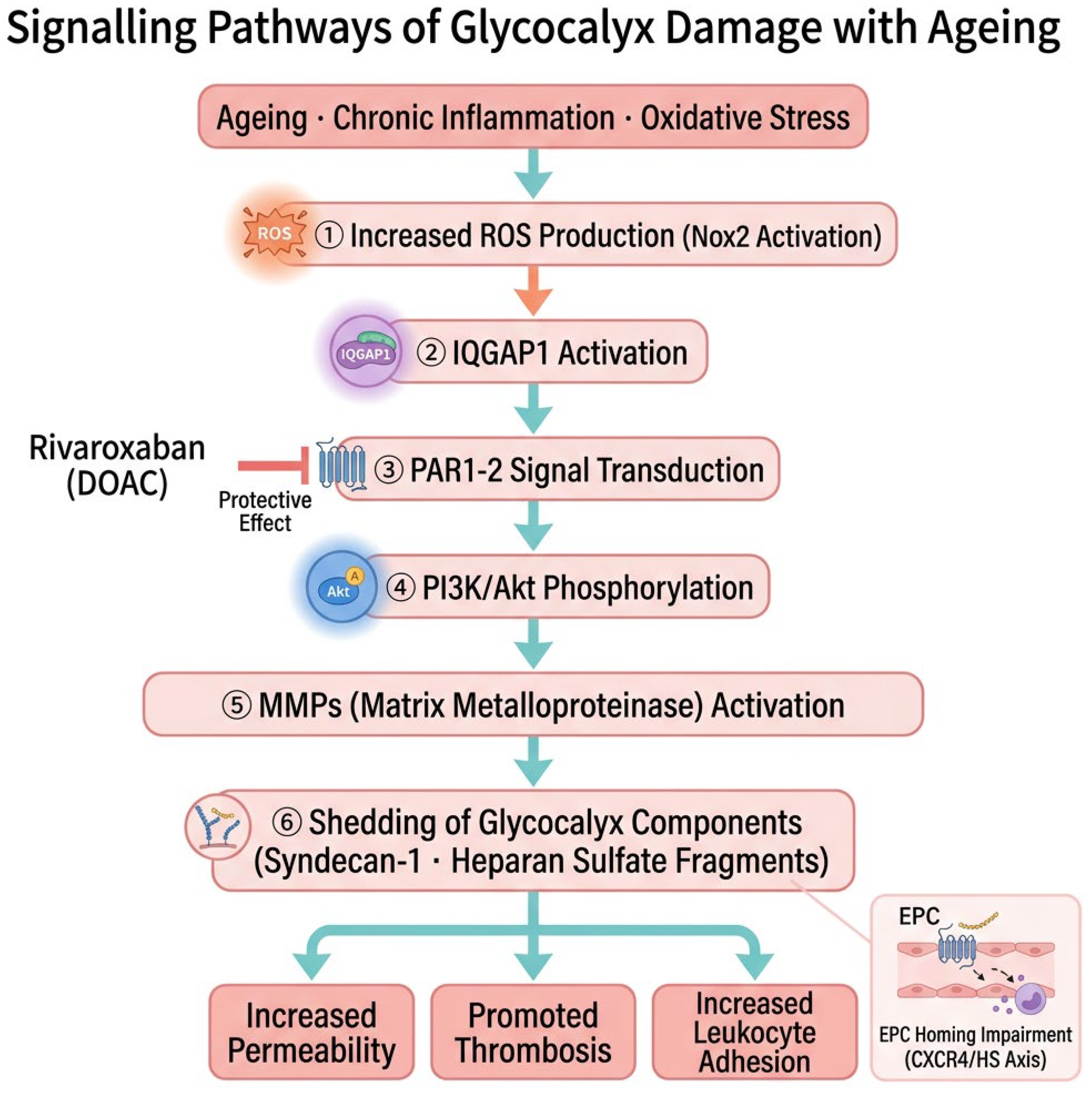
Oxidative stress is a central driver of age-related endothelial dysfunction. Kitasato et al. demonstrated that oxidative stress disrupts the EGX through a PAR1-2/IQGAP1/PI3K/Akt signalling axis, and that the direct-acting factor Xa inhibitor rivaroxaban preserves EGX integrity by modulating this pathway [8]. IQGAP1—originally characterised as a VEGFR2 scaffold linking Rac1- to Nox2-dependent reactive oxygen species (ROS) generation—thereby integrates redox and coagulation signals at the glycocalyx, providing a mechanistic bridge between the procoagulant and pro-oxidant environment of ageing and glycocalyx loss (Figure 2). These findings raise the possibility that drugs acting at the endothelial scaffolding network may exert glycocalyx-protective effects well beyond their canonical indications.
In addition to the IQGAP1/PAR1-2/PI3K/Akt pathway, glycocalyx degradation is promoted by heparanase activation, matrix metalloproteinases, inflammatory cytokines, and impaired shear-stress signalling.

4.2. Systemic Inflammation and Endotheliopathy: Lessons from COVID-19

The COVID-19 pandemic revealed the EGX as a critical interface between systemic inflammation and microvascular dysfunction. Yamaoka-Tojo reviewed evidence that SARS-CoV-2 infection produces widespread glycocalyx damage that underlies a systemic inflammatory microvascular endotheliopathy, with disproportionate impact on older patients and those with pre-existing endothelial dysfunction [3]. More recent work by Martino et al. demonstrated that bacteria can enzymatically groom the host glycocalyx and thereby modulate SARS-CoV-2 infectivity, implicating the microbiome as a third partner in EGX biology and immunity [9]. Because the EGX is simultaneously an age-sensitive tissue and a portal for pathogen entry, its preservation is pivotal to resilience in older adults during infectious insults.

4.3. Atherosclerosis and Coronary Plaque Vulnerability

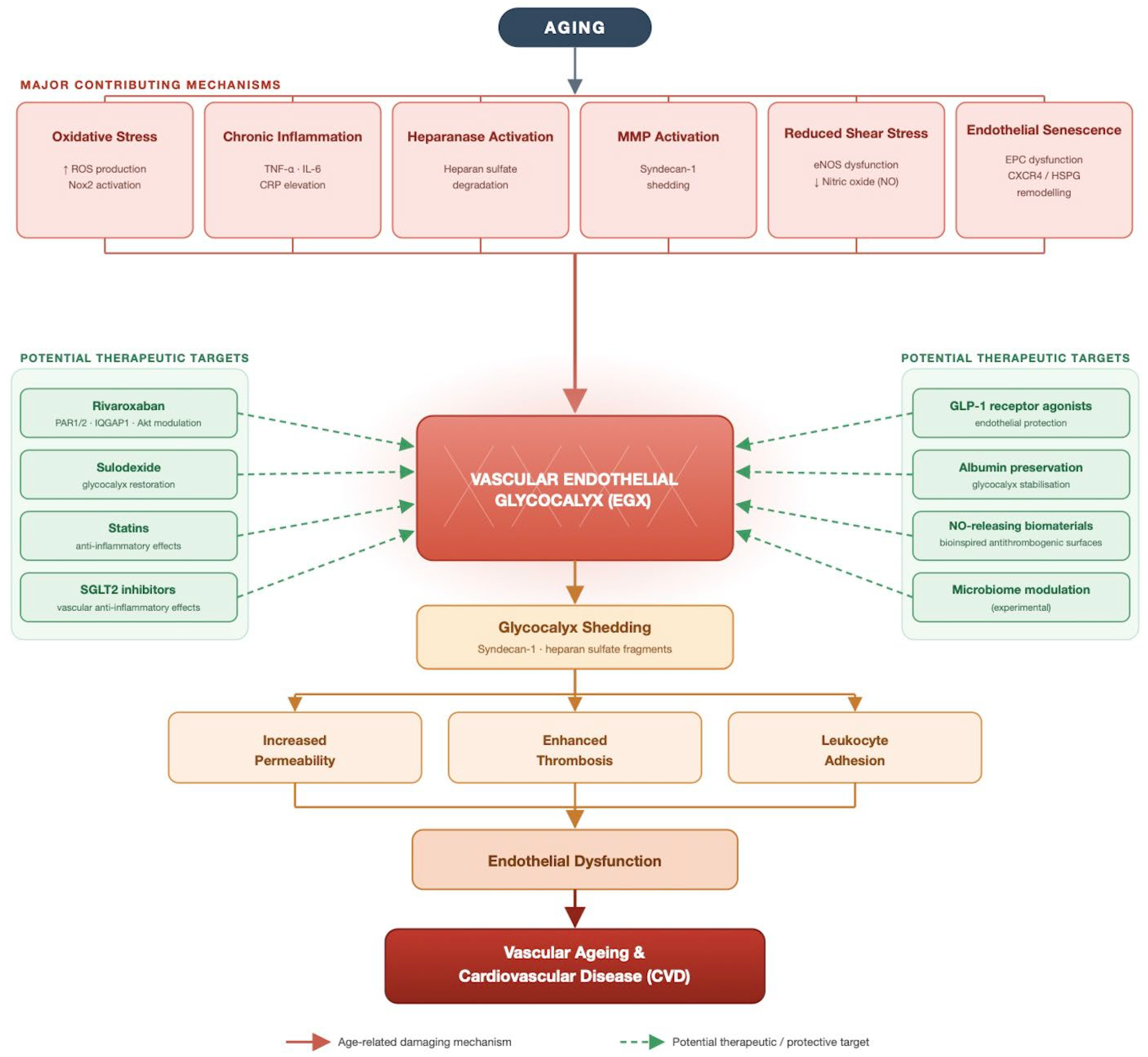
Clinical data from Nemoto et al. demonstrated that glycocalyx damage, assessed by sidestream dark-field imaging of the sublingual microcirculation, correlates with the severity and vulnerability of coronary plaque on intravascular imaging in patients with CAD [6]. This situates the EGX as both a barrier against atherogenesis and an early sentinel of disease progression, supporting the potential utility of EGX assessment as an emerging marker of vascular ageing and cardiovascular risk, as illustrated in the conceptual model shown in Figure 3. Recent studies have also highlighted the role of glycocalyx dysregulation in impairing the blood–brain barrier during ageing and neurodegenerative disease, underscoring the systemic impact of EGX deterioration [10].
An author-generated conceptual schematic is shown above, integrating current experimental and clinical evidence on the mechanisms involved in age-related deterioration of the vascular endothelial glycocalyx (EGX). Ageing promotes EGX dysfunction through several interrelated mechanisms, shown as the major contributing pathways at the top of the figure: oxidative stress (increased reactive oxygen species [ROS] generation and Nox2 activation), chronic low-grade inflammation (“inflammaging”; tumour necrosis factor-α [TNF-α], interleukin-6 [IL-6], and C-reactive protein [CRP]), heparanase activation with heparan sulfate (HS) degradation, matrix metalloproteinase (MMP) activation with syndecan shedding, reduced shear stress with endothelial nitric oxide synthase (eNOS) dysfunction and decreased nitric oxide (NO). These mechanisms converge on the EGX (centre), promoting glycocalyx shedding (release of syndecan-1 and HS fragments), which in turn increases vascular permeability, enhances thrombosis, and facilitates leukocyte adhesion. The resulting endothelial dysfunction contributes to vascular ageing and cardiovascular disease (CVD) [11]. Potential therapeutic and protective targets are shown flanking the EGX, acting to restore or stabilise the glycocalyx: rivaroxaban (protease-activated receptor 1/2 [PAR1/2], IQGAP1, and Akt modulation), sulodexide (glycocalyx restoration), statins (anti-inflammatory effects), sodium–glucose cotransporter 2 (SGLT2) inhibitors (vascular anti-inflammatory effects), glucagon-like peptide-1 receptor agonists (GLP-1RA; endothelial protection), albumin preservation (glycocalyx stabilisation), nitric oxide (NO)-releasing glycocalyx-mimetic biomaterials and bioinspired antithrombogenic surfaces, and microbiome modulation (experimental). Representative examples of glycocalyx-preserving interventions are shown for illustrative purposes and do not constitute an exhaustive list of all potential therapeutic approaches discussed in the text and Table 1. This figure is intended as a conceptual framework and does not represent a definitive or fully validated mechanistic pathway.

5. Anti-Ageing Strategies Targeting the Glycocalyx

5.1. Pharmacological Protection: Direct Oral Anticoagulants and Beyond

Beyond anticoagulation, rivaroxaban preserves the EGX under oxidative stress via PAR1-2/IQGAP1/PI3K/Akt signalling [1,8], suggesting a vasculoprotective effect that may be especially relevant for older patients who are prescribed direct oral anticoagulants (DOACs) for atrial fibrillation or venous thromboembolism. Other pharmacological candidates with reported EGX-protective effects include statins, renin–angiotensin system inhibitors, sulodexide and incretin mimetics, each of which may contribute to a broader anti-ageing vasculoprotective portfolio in older adults [1].

5.2. Glycocalyx-Mimetic and Nitric-Oxide-Releasing Biomaterials

Biomimicry of the glycocalyx in biomaterials offers a direct engineering strategy to compensate for age-related EGX loss at the interface between blood and vascular devices. Zheng et al. described a NO-releasing zwitterionic glycocalyx-mimetic hydrogel coating for bioprosthetic valves with integrated anti-thrombotic, endothelialisation-promoting and immunomodulatory activities [24]. Similar concepts are being applied to stents, vascular grafts and extracorporeal oxygenator circuits to replicate the surface properties of the native endothelium, potentially improving outcomes in older patients in whom intrinsic EGX repair is compromised.

5.3. Bioinspired Antithrombogenic Surfaces

Hong and Waterhouse reviewed bioinspired approaches to engineering antithrombogenic medical devices for vascular intervention [7], including zwitterionic polymers, slippery liquid-infused porous surfaces and HS-mimetic coatings. Because older patients are both the major recipients of vascular devices and the least able to repair device-induced endothelial injury, bioinspired glycocalyx-mimetic surfaces represent a particularly attractive anti-ageing technology.

5.4. Nanomedicine and Microbiome-Based Modulation

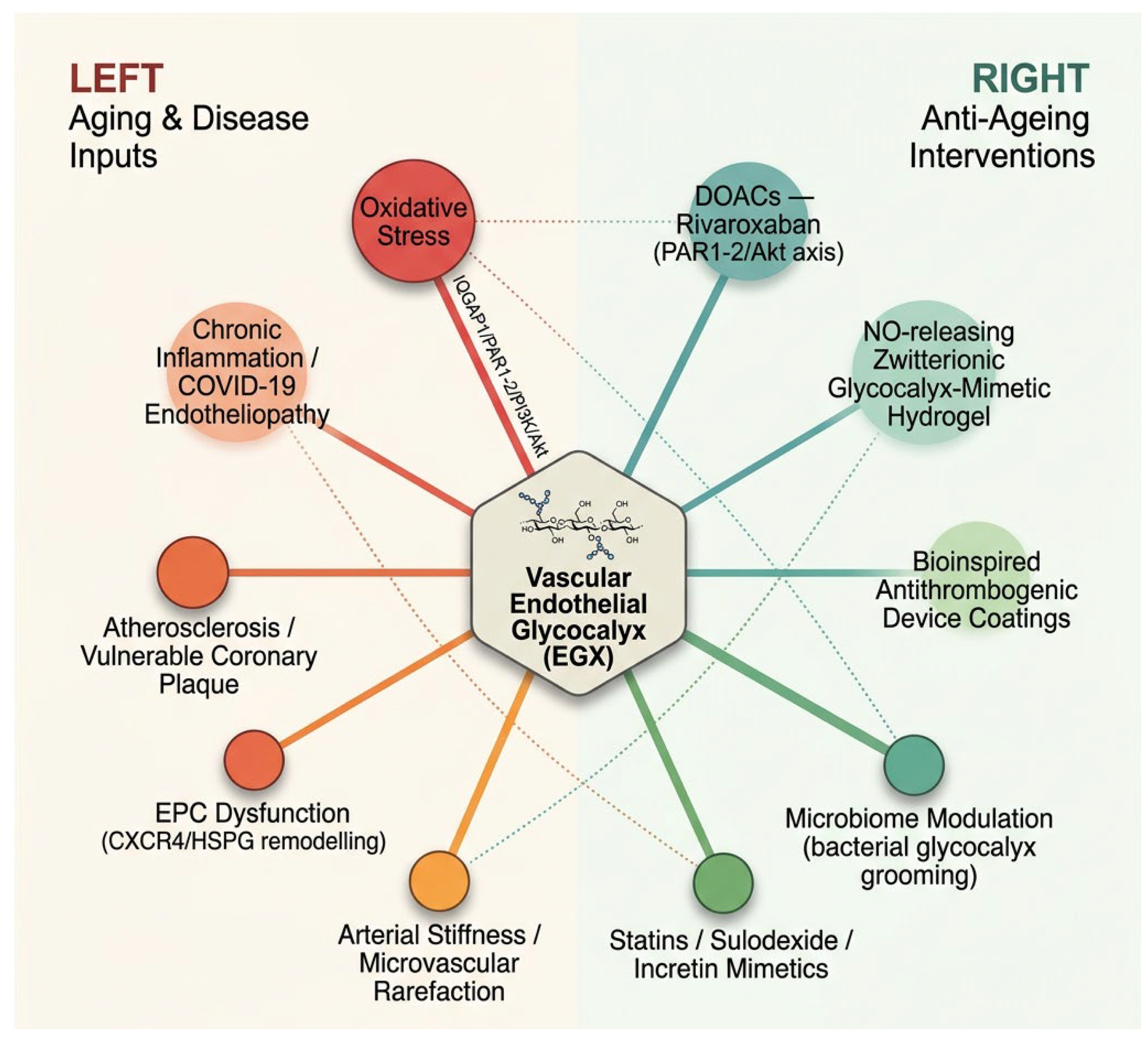
Nanoparticle formulations that exploit glycocalyx binding—such as bovine serum albumin-coated niclosamide-zein nanoparticles investigated as injectable medicines against COVID-19 [25]—illustrate the therapeutic potential of EGX-targeted drug delivery. In parallel, Martino et al. have shown that commensal bacteria can enzymatically modify the host glycocalyx and thereby alter viral infectivity [9], raising the intriguing possibility of microbiome-based interventions to fine-tune EGX composition and immune function in the ageing host (Figure 4). Emerging clinical data also reveal sex differences in glycocalyx thickness and response to glycocalyx-targeted therapies among older adults, suggesting the importance of personalised anti-ageing approaches [32].

6. Current Limitations and Challenges in Glycocalyx Assessment and Translation

Despite growing recognition of the endothelial glycocalyx (EGX) as a central regulator of vascular homeostasis and a potential biomarker of vascular ageing, several important limitations currently restrict its application in both research and clinical practice.
First, direct assessment of the glycocalyx remains technically challenging. Most currently available approaches, including sidestream dark-field (SDF) imaging and GlycoCheck®-based measurements, evaluate glycocalyx properties indirectly through estimates of the perfused boundary region rather than direct visualisation of glycocalyx thickness. Although these methods have provided important insights into microvascular health, measurement variability, operator dependency, and limited standardisation continue to affect reproducibility across studies.
Second, circulating biomarkers such as syndecan-1, heparan sulfate fragments, hyaluronan, and heparanase activity are increasingly used as indicators of glycocalyx injury. However, these markers are not specific to vascular ageing and may be influenced by acute inflammation, infection, trauma, heart failure, renal dysfunction, and other systemic conditions. Consequently, interpretation of circulating glycocalyx biomarkers requires careful clinical context and remains insufficient for standalone risk stratification.
Third, the relationship between glycocalyx alterations and cardiovascular outcomes remains largely associative. Although reduced glycocalyx thickness has been linked to coronary plaque vulnerability, microvascular dysfunction, hypertension, diabetes, heart failure, and stroke, most evidence derives from observational studies. Whether glycocalyx deterioration directly contributes to disease progression or primarily reflects underlying vascular injury remains incompletely understood.
A further challenge concerns translational development of glycocalyx-targeted therapies. Several promising interventions—including direct oral anticoagulants, sulodexide, nitric oxide-releasing biomaterials, glycocalyx-mimetic coatings, nanomedicine approaches, and microbiome-based modulation—have demonstrated beneficial effects in experimental models. However, the majority of these strategies have not yet been validated in large prospective clinical trials specifically designed to evaluate glycocalyx preservation as a therapeutic endpoint.
The concept of glycocalyx preservation as an anti-ageing strategy should therefore be interpreted cautiously. While maintenance of glycocalyx integrity may contribute to preservation of vascular function and cardiovascular healthspan, current evidence remains insufficient to conclude that glycocalyx-targeted interventions directly modify biological ageing processes or extend lifespan. Future studies will require standardised assessment methods, validated biomarkers, longitudinal ageing cohorts, and randomised clinical trials to determine whether glycocalyx-directed therapies can translate into meaningful clinical benefit.
Taken together, the endothelial glycocalyx represents a promising but still evolving field. Addressing these methodological and translational challenges will be essential before glycocalyx assessment can become integrated into routine cardiovascular risk evaluation or anti-ageing clinical practice.

7. Future Directions and Conclusions

The vascular endothelial glycocalyx has emerged as a key regulator of endothelial homeostasis and an important mechanistic link between vascular ageing and age-related cardiovascular disease. Growing evidence suggests that age-associated glycocalyx deterioration contributes to impaired mechanotransduction, inflammation, oxidative stress, thrombosis, and defective vascular repair.
Recent advances in glycocalyx biology have also identified multiple potential therapeutic approaches aimed at preserving or restoring endothelial function, including pharmacological interventions, glycocalyx-mimetic biomaterials, bioinspired vascular-device surfaces, and emerging microbiome-based strategies. However, these approaches currently exist at different stages of translational development, ranging from mechanistic laboratory investigations to early clinical applications.
Although glycocalyx assessment using imaging technologies and circulating biomarkers shows promise as a tool for evaluating vascular health, significant challenges remain regarding standardisation, reproducibility, clinical validation, and integration into established cardiovascular risk assessment frameworks.
Therefore, while preservation of glycocalyx integrity may represent an attractive strategy for maintaining cardiovascular healthspan, further mechanistic studies, longitudinal ageing cohorts, and adequately powered clinical trials are required before glycocalyx-targeted interventions can be incorporated into routine clinical practice.
Future research should focus on establishing standardised assessment methodologies, identifying validated ageing-related glycocalyx biomarkers, and determining whether therapeutic preservation of the glycocalyx can translate into measurable improvements in cardiovascular outcomes among older adults.

Author Contributions

Conceptualisation, M.Y.-T.; writing—original draft preparation, T.T. and M.Y.-T.; writing—review and editing, T.T. and M.Y.-T.; supervision, M.Y.-T. All authors have read and agreed to the published version of the manuscript.

Funding

This research received no external funding.

Institutional Review Board Statement

Not applicable.

Informed Consent Statement

Not applicable.

Data Availability Statement

No new data were created or analysed in this study. Data sharing is not applicable to this article.

Acknowledgments

The authors thank the members of the Department of Cardiovascular Medicine and the Department of Rehabilitation, Kitasato University, for helpful discussions. During the preparation of this manuscript, the authors used large language models (Claude for Mac, Ver. 1.17377.1 by Anthropic) and the AI-assisted presentation tool Gamma for iterative brainstorming (“wall-bouncing”) of the conceptual framework and schematic illustrations (Figure 1, Figure 2, Figure 3 and Figure 4), as well as for language editing and literature organisation. All AI-generated content was carefully reviewed, critically edited, and refined by the authors, who take full responsibility for the final content of this publication.

Conflicts of Interest

The authors declare no conflicts of interest.

Abbreviations

The following abbreviations are used in this manuscript:
CADCoronary artery disease
CVDCardiovascular disease
DOACDirect oral anticoagulant
EGXEndothelial glycocalyx
eNOSEndothelial nitric oxide synthase
EPCEndothelial progenitor cell
GAGGlycosaminoglycan
HSHeparan sulfate
HSPGHeparan-sulfate proteoglycan
IQGAP1IQ motif-containing GTPase-activating protein 1
NONitric oxide
PARProtease-activated receptor
ROSReactive oxygen species
VEGFR2Vascular endothelial growth factor receptor 2

References

  1. Sun, L.; Wang, L.; Ye, K.X.; Wang, S.; Zhang, R.; Juan, Z.; Feng, L.; Min, S. Endothelial Glycocalyx in Aging and Age-related Diseases. Aging Dis. 2023, 14, 1606–1617. [Google Scholar] [CrossRef] [PubMed]
  2. Williamson, K.A.; Hamilton, A.; Reynolds, J.A.; Sipos, P.; Crocker, I.; Stringer, S.E.; Alexander, Y.M. Age-related impairment of endothelial progenitor cell migration correlates with structural alterations of heparan sulfate proteoglycans. Aging Cell 2013, 12, 139–147. [Google Scholar] [CrossRef] [PubMed]
  3. Yamaoka-Tojo, M. Vascular Endothelial Glycocalyx Damage in COVID-19. Int. J. Mol. Sci. 2020, 21, 9712. [Google Scholar] [CrossRef] [PubMed]
  4. Gomez Toledo, A.; Golden, G.J.; Cummings, R.D.; Malmström, J.; Esko, J.D. Endothelial Glycocalyx Turnover in Vascular Health and Disease: Rethinking Endothelial Dysfunction. Annu. Rev. Biochem. 2025, 94, 561–586. [Google Scholar] [CrossRef] [PubMed]
  5. Reitsma, S.; Slaaf, D.W.; Vink, H.; van Zandvoort, M.A.M.J.; oude Egbrink, M.G.A. The endothelial glycocalyx: Composition, functions, and visualization. Pflug. Arch. Eur. J. Physiol. 2007, 454, 345–359. [Google Scholar] [CrossRef] [PubMed]
  6. Nemoto, T.; Minami, Y.; Yamaoka-Tojo, M.; Kato, A.; Katsura, A.; Sato, T.; Muramatsu, Y.; Kakizaki, R.; Fujiyoshi, K.; Hashimoto, T.; et al. Endothelial glycocalyx and severity and vulnerability of coronary plaque in patients with coronary artery disease. Atherosclerosis 2020, 302, 1–7. [Google Scholar] [CrossRef] [PubMed]
  7. Hong, J.K.; Waterhouse, A. Bioinspired Approaches to Engineer Antithrombogenic Medical Devices for Vascular Intervention. Arterioscler. Thromb. Vasc. Biol. 2023, 43, 797–812. [Google Scholar] [CrossRef] [PubMed]
  8. Kitasato, L.; Yamaoka-Tojo, M.; Iwaya, T.; Murayama, Y.; Ikeda, Y.; Hashikata, T.; Oikawa, J.; Suzuki, M.; Misawa, N.; Kawashima, R.; et al. Rivaroxaban as a Protector of Oxidative Stress-Induced Vascular Endothelial Glycocalyx Damage via the IQGAP1/PAR1-2/PI3K/Akt Pathway. J. Vasc. Res. 2025, 62, 22–36. [Google Scholar] [CrossRef] [PubMed]
  9. Martino, C.; Kellman, B.P.; Sandoval, D.R.; Clausen, T.M.; Cooper, R.; Benjdia, A.; Soualmia, F.; Clark, A.E.; Garretson, A.F.; Marotz, C.A.; et al. SARS-CoV-2 infectivity can be modulated through bacterial grooming of the glycocalyx. mBio 2025, 16, e0401524. [Google Scholar] [CrossRef] [PubMed]
  10. Shi, S.M.; Suh, R.J.; Shon, D.J.; Garcia, F.J.; Buff, J.K.; Atkins, M.; Li, L.; Lu, N.; Sun, B.; Luo, J.; et al. Glycocalyx dysregulation impairs blood–brain barrier in ageing and disease. Nature 2025, 639, 985–994. [Google Scholar] [CrossRef] [PubMed]
  11. Lagrange, J.; Jahangiri, M.; Baudry, G.; Monzo, L.; Guerci, P.; Ter Maaten, J.M.; Heymans, S.; Mercier, N.; Girerd, N. Updates on the endothelial glycocalyx in heart failure with preserved ejection fraction. Am. J. Physiol. Heart Circ. Physiol. 2025, 329, H1316–H1330. [Google Scholar] [CrossRef] [PubMed]
  12. Nieuwdorp, M.; Meuwese, M.C.; Mooij, H.L.; Ince, C.; Broekhuizen, L.N.; Kastelein, J.J.; Stroes, E.S.; Vink, H. Measuring endothelial glycocalyx dimensions in humans: A potential novel tool to monitor vascular vulnerability. J. Appl. Physiol. 2008, 104, 845–852. [Google Scholar] [CrossRef] [PubMed]
  13. Dane, M.J.; van den Berg, B.M.; Lee, D.H.; Boels, M.G.; Tiemeier, G.L.; Avramut, M.C.; van Zonneveld, A.J.; van der Vlag, J.; Vink, H.; Rabelink, T.J. A microscopic view on the renal endothelial glycocalyx. Am. J. Physiol. Renal Physiol. 2015, 308, F956–F966. [Google Scholar] [CrossRef] [PubMed]
  14. Lee, D.H.; Dane, M.J.; Van Den Berg, B.M.; Boels, M.G.; Van Teeffelen, J.W.; De Mutsert, R.; Heijer, M.D.; Rosendaal, F.R.; Van Der Vlag, J.; Van Zonneveld, A.J.; et al. Deeper penetration of erythrocytes into the endothelial glycocalyx is associated with impaired microvascular perfusion. PLoS ONE 2014, 9, e96477. [Google Scholar] [CrossRef] [PubMed]
  15. Schmidt, E.P.; Yang, Y.; Janssen, W.J.; Gandjeva, A.; Perez, M.J.; Barthel, L.; Zemans, R.L.; Bowman, J.C.; Koyanagi, D.E.; Yunt, Z.X.; et al. The pulmonary endothelial glycocalyx regulates neutrophil adhesion and lung injury during experimental sepsis. Nat. Med. 2012, 18, 1217–1223. [Google Scholar] [CrossRef] [PubMed]
  16. Tarbell, J.M.; Cancel, L.M. The glycocalyx and its significance in human medicine. J. Intern. Med. 2016, 280, 97–113. [Google Scholar] [CrossRef] [PubMed]
  17. Gouverneur, M.; Spaan, J.A.E.; Pannekoek, H.; Fontijn, R.D.; Vink, H. Fluid shear stress stimulates incorporation of hyaluronan into endothelial cell glycocalyx. Am. J. Physiol. Heart Circ. Physiol. 2006, 290, H458–H462. [Google Scholar] [CrossRef] [PubMed]
  18. Broekhuizen, L.N.; Mooij, H.L.; Kastelein, J.J.; Stroes, E.S.; Vink, H.; Nieuwdorp, M. Endothelial glycocalyx as potential diagnostic and therapeutic target in cardiovascular disease. Curr. Opin. Lipidol. 2009, 20, 57–62. [Google Scholar] [CrossRef] [PubMed]
  19. Becker, B.F.; Jacob, M.; Leipert, S.; Salmon, A.H.; Chappell, D. Degradation of the endothelial glycocalyx in clinical settings: Searching for the sheddases. Br. J. Clin. Pharmacol. 2015, 80, 389–402. [Google Scholar] [CrossRef] [PubMed]
  20. Ikonomidis, I.; Pavlidis, G.; Thymis, J.; Birba, D.; Kalogeris, A.; Kousathana, F.; Kountouri, A.; Balampanis, K.; Parissis, J.; Andreadou, I.; et al. Effects of Glucagon-Like Peptide-1 Receptor Agonists, Sodium-Glucose Cotransporter-2 Inhibitors, and Their Combination on Endothelial Glycocalyx, Arterial Function, and Myocardial Work Index in Patients with Type 2 Diabetes Mellitus After 12-Month Treatment. J. Am. Heart Assoc. 2020, 9, e015716. [Google Scholar] [CrossRef] [PubMed]
  21. Chorazy, N.; Wojnar-Lason, K.; Gdula, A.M.; Fels, B.; Stojak, M.; Karas, A.; Motrapu, M.; Anders, H.J.; Kusche-Vihrog, K.; Pacia, M.Z. Empagliflozin-mediated protection of heparan sulfate-rich endothelial glycocalyx during vascular inflammation. Biochem. Pharmacol. 2026, 249, 117890. [Google Scholar] [CrossRef] [PubMed]
  22. Jacob, M.; Chappell, D.; Rehm, M. Clinical update: Clinical update: Perioperative fluid management. Lancet 2007, 369, 1984–1986. [Google Scholar] [CrossRef] [PubMed]
  23. Fraser, D.D.; Patterson, E.K.; Slessarev, M.; Gill, S.E.; Martin, C.; Daley, M.; Miller, M.R.; Patel, M.A.; Dos Santos, C.C.; Bosma, K.J.; et al. Endothelial injury and glycocalyx degradation in critically ill coronavirus disease 2019 patients: Implications for microvascular platelet aggregation. Crit. Care 2020, 2, e0194. [Google Scholar] [CrossRef] [PubMed]
  24. Zheng, C.; Wei, B.; Huang, X.; Chen, L.; Wang, Y. A nitric oxide-releasing zwitterionic glycocalyx-mimetic hydrogel armored bioprosthetic valve with integrated antithrombotic, endothelialization-promoting, and immunomodulatory capacities. Acta Biomater. 2026, 216, 67–85. [Google Scholar] [CrossRef] [PubMed]
  25. Rejinold, N.S.; Choi, G.; Piao, H.; Choy, J.-H. Bovine Serum Albumin-Coated Niclosamide-Zein Nanoparticles as Potential Injectable Medicine against COVID-19. Materials 2021, 14, 3792. [Google Scholar] [CrossRef] [PubMed]
  26. Donato, A.J.; Morgan, R.G.; Walker, A.E.; Lesniewski, L.A. Cellular and molecular biology of aging endothelial cells. J. Mol. Cell. Cardiol. 2015, 89, 122–135. [Google Scholar] [CrossRef] [PubMed]
  27. Ungvari, Z.; Tarantini, S.; Donato, A.J.; Galvan, V.; Csiszar, A. Mechanisms of vascular aging. Circ. Res. 2018, 123, 849–867. [Google Scholar] [CrossRef] [PubMed]
  28. Thaiss, C.A.; Zmora, N.; Levy, M.; Elinav, E. The microbiome and innate immunity. Nature 2016, 535, 65–74. [Google Scholar] [CrossRef] [PubMed]
  29. Witkowski, M.; Weeks, T.L.; Hazen, S.L. Gut microbiota and cardiovascular disease. Circ. Res. 2020, 127, 553–570. [Google Scholar] [CrossRef] [PubMed]
  30. Buijsers, B.; Yanginlar, C.; de Nooijer, A.; Grondman, I.; Maciej-Hulme, M.L.; Jonkman, I.; Janssen, N.A.; Rother, N.; de Graaf, M.; Pickkers, P.; et al. Increased plasma heparanase activity in COVID-19 patients. Front. Immunol. 2020, 11, 575047. [Google Scholar] [CrossRef] [PubMed]
  31. Lipowsky, H.H.; Lescanic, A. Inhibition of inflammation induced shedding of the endothelial glycocalyx with low molecular weight heparin. Microvasc. Res. 2017, 112, 72–78. [Google Scholar] [CrossRef] [PubMed]
  32. Gimblet, C.J.; Donato, A.J.; Jalal, D.I.; Pierce, G.L. Sex differences in endothelial glycocalyx thickness and the response to glycocalyx-targeted therapy among older adults. Physiol. Rep. 2025, 13, e70428. [Google Scholar] [CrossRef] [PubMed]
Figure 1. Age-related changes in the vascular endothelial glycocalyx. Author-generated conceptual schematic integrating current experimental and clinical evidence regarding endothelial glycocalyx biology in ageing. The figure is intended as a conceptual model and does not represent a definitive or fully validated mechanistic pathway. (Left panel) Schematic illustration of a young vessel with an intact, healthy glycocalyx (~0.5–3 µm thick) showing eNOS activity, repulsion of leukocytes and platelets, sequestration of antithrombin and adsorbed albumin, and the core components heparan sulfate (HS), syndecan, and glypican anchored to the subendothelial layer. (Right panel) Aged vessel demonstrating characteristic age-related glycocalyx deterioration, including shedding of syndecan-1 and heparan sulfate fragments (shedding biomarkers), increased reactive oxygen species (ROS) production, leukocyte and platelet adhesion, and activation of the IQGAP1/PAR1-2/PI3K/Akt pathway. The bottom bar indicates the major glycocalyx constituents (heparan sulfate, chondroitin sulfate, hyaluronan, syndecan, and glypican).
Jal 06 00053 g001
Figure 2. Signalling pathways of glycocalyx damage with ageing. Author-generated conceptual schematic integrating current experimental and clinical evidence regarding endothelial glycocalyx biology in ageing. The figure is intended as a conceptual model and does not represent a definitive or fully validated mechanistic pathway. Flow diagram illustrating the molecular cascade initiated by ageing, chronic inflammation, and oxidative stress. Key sequential steps are: (1) increased ROS production via Nox2 activation; (2) IQGAP1 activation; (3) PAR1-2 signal transduction (inhibited by rivaroxaban/DOAC with protective effects); (4) PI3K/Akt phosphorylation; (5) matrix metalloproteinase (MMP) activation; and (6) shedding of glycocalyx components (syndecan-1 and heparan sulfate fragments). Downstream consequences include increased vascular permeability, promoted thrombosis, increased leukocyte adhesion, and impaired endothelial progenitor cell (EPC) homing via the CXCR4/HS axis.
Jal 06 00053 g002
Figure 3. Conceptual model of mechanisms contributing to age-related endothelial glycocalyx dysfunction and potential therapeutic targets.
Jal 06 00053 g003
Figure 4. Aging and disease inputs and potential glycocalyx-preserving strategies. Author-generated conceptual schematic integrating current experimental and clinical evidence regarding endothelial glycocalyx biology in ageing. The figure is intended as a conceptual model and does not represent a definitive or fully validated mechanistic pathway. Central hub diagram positioning the vascular endothelial glycocalyx (EGX) as the key interface. The left side (red/orange) lists major ageing and disease inputs: oxidative stress, chronic inflammation/COVID-19 endotheliopathy, atherosclerosis/vulnerable coronary plaque, EPC dysfunction (CXCR4/HSPG remodelling), and arterial stiffness/microvascular rarefaction. The right side (green/blue) summarises anti-ageing interventions: DOACs (rivaroxaban acting on the PAR1-2/Akt axis), NO-releasing zwitterionic glycocalyx-mimetic hydrogel, bioinspired antithrombogenic device coatings, microbiome modulation (bacterial glycocalyx grooming), and pharmacological agents (statins, sulodexide, and incretin mimetics). The overarching therapeutic goal is to preserve the glycocalyx for cardiovascular healthspan.
Jal 06 00053 g004
Table 1. Glycocalyx-targeted interventions for vascular ageing and cardiovascular healthspan.
InterventionProposed MechanismEvidence LevelClinical Development Stage
Rivaroxaban [8]PAR1-2/IQGAP1/PI3K/Akt pathway modulation;
reduction in oxidative stress-induced glycocalyx shedding
Cell, animal, and
observational human studies
Approved drug
Sulodexide [12,13,14]Glycocalyx restoration;
endothelial protection
Clinical and observational studiesClinically available
Statins [15,16,17]Anti-inflammatory effects;
improved endothelial
function
Clinical and experimental studiesWidely used
ACE inhibitors/ARBs [18,19]Reduction in oxidative stress and endothelial injuryClinical studiesWidely used
GLP-1 receptor agonists [20]Endothelial and glycocalyx protectionEmerging clinical evidenceApproved drug class
SGLT2 inhibitors [20,21]Endothelial protection and vascular anti-inflammatory effectsEmerging clinical evidenceApproved drug class
Albumin supplementation [22,23]Glycocalyx stabilisation and oncotic supportLimited clinical evidenceInvestigational for
glycocalyx preservation
NO-releasing glycocalyx-
mimetic biomaterials [24]
Biomimetic replacement of glycocalyx functionsPreclinicalExperimental
Bioinspired
antithrombogenic surfaces [7]
Reduction in thrombosis and endothelial injuryPreclinicalExperimental
Nanomedicine
approaches [25]
Targeted drug delivery through glycocalyx
interactions
PreclinicalExperimental
Microbiome modulation [9,26,27,28,29]Regulation of host glycocalyx composition and
inflammatory responses
Mechanistic and early
translational studies
Exploratory
Low molecular weight
heparin [30,31]
Heparanase inhibition; glycocalyx
stabilisation
Preclinical
(in vivo animal model)
Clinically available
(glycocalyx-protective use investigational)
Abbreviations: ACE, angiotensin converting enzyme; Akt, protein kinase B; GLP-1, glucagon-like peptide-1; IQGAP1, IQ motif-containing GTPase-activating protein 1; NO, nitric oxide; PAR, protease-activated receptor; SGLT2, sodium–glucose cotransporter 2.
Disclaimer/Publisher’s Note: The statements, opinions and data contained in all publications are solely those of the individual author(s) and contributor(s) and not of MDPI and/or the editor(s). MDPI and/or the editor(s) disclaim responsibility for any injury to people or property resulting from any ideas, methods, instructions or products referred to in the content.