Protocol

Transforming the Built Environment for Mobility Challenged Seniors: Protocol for the Built Environment in Falls and ArthrITis (BE-FIT) Study


by
Eugene Yong Sheng Woon
1,*,
Su-Yin Yang
2,
Eloise Ying Ying Lie
3,
Neha Seayad
3,
Chun Yue Tan
1,
Krešimir Friganović
4,
Shamsul Azrin Jamaluddin
4,
Shiau Ching Wong
3,
Isaac Okumura Tan
5,
Nien Xiang Tou
6,
Houhao Liang
7,
Joanne Ee Chia Kua
8,
Noor Hafizah Ismail
8,
Su Su
9,
Phyllis Liang
10,
Panos Mavros
11,
Yee Sien Ng
12,
Yew Yoong Ding
6,
Julian Thumboo
13,14,
Navrag B. Singh
4 and
Bryan Yijia Tan
1
add Show full author list remove Hide full author list
1
Department of Orthopaedic Surgery, Woodlands Hospital, Singapore 737628, Singapore
2
Psychology Service, Woodlands Hospital, Singapore 737628, Singapore
3
Rehabilitation Research Institute of Singapore, Nanyang Technological University, Singapore 308232, Singapore
4
Singapore-ETH Centre, CREATE Campus, Singapore 138602, Singapore
5
Department of Physiotherapy, Tan Tock Seng Hospital, Singapore 308433, Singapore
6
Geriatric Education and Research Institute, Singapore 768024, Singapore
7
CNRS@CREATE, Singapore 138602, Singapore
8
Institute of Geriatrics and Active Ageing, Tan Tock Seng Hospital, Singapore 308433, Singapore
9
Geriatric Medicine, Khoo Tech Puat Hospital, Singapore 768828, Singapore
10
Department of Epidemiology and Preventive Medicine, Tan Tock Seng Hospital, Singapore 308433, Singapore
11
Télécom Paris, Institut Polytechnique de Paris, 91120 Palaiseau, France
12
Department of Rehabilitation Medicine, Singapore General Hospital, Singapore 168582, Singapore
13
Department of Rheumatology and Immunology, Singapore General Hospital, Singapore 169608, Singapore
14
Health Services Research Unit, Singapore General Hospital, Singapore 169608, Singapore
*
Author to whom correspondence should be addressed.
J. Ageing Longev. 2026, 6(2), 43; https://doi.org/10.3390/jal6020043
Submission received: 31 January 2026 / Revised: 30 April 2026 / Accepted: 15 May 2026 / Published: 29 May 2026

Abstract

A neighborhood’s built environment can challenge the mobility of older mobility-challenged adults (due to knee osteoarthritis and falls), reducing their participation and quality of life. The Built Environment in Falls and arthrITis (BE-FIT) study aims to understand the neighborhood influence on the mobility, participation, and psychosocial health of older adults with knee osteoarthritis and/or falls. BE-FIT comprises four work packages (WPs). WP1 quantitatively explores relationships among environmental-, social-, and person-related factors and participation outcomes of its intended population. WP2 employs qualitative methods to comprehend the relationships among WP1’s variables. Via a combination of wearable sensor technology and qualitative geospatial methods, WP3 aims to characterize its population’s movement behavior, mobility, functional activity of daily living, and lived experiences of residing in a mature neighborhood. Finally, WP4 engages crucial stakeholders to co-develop evidence-based recommendations to inform public health, urban planning, and aging policies and implementation. BE-FIT could benefit societies with rising incidence of knee osteoarthritis and falls by improving neighborhoods and lives of older mobility-challenged residents.

1. Introduction

As societies rapidly age, with 2.1 billion people projected to be at least 60 years old by 2050 [1], the growing prevalence of knee osteoarthritis (OA) [2] and falls among older adults presents a critical public health challenge. Both conditions have long-term, interconnected consequences for mobility, physical health, and psychosocial well-being. Within this context, the neighborhood built environment (BE) plays a crucial role in supporting knee OA rehabilitation, preventing falls [3,4], and fostering participation [5]. The BE-FIT (Built Environment in Falls and arthrITis) study seeks to develop a holistic understanding of how the BE interacts with the challenges faced by older adults with knee OA or a history of falls, as well as the psychosocial contexts shaping these experiences. By bridging gaps in the literature, BE-FIT aims to collaborate closely with authorities, urban developers, and policymakers in improving age-friendliness of environments to support healthy aging, enhance quality of life [4,6,7], develop technological tools for visualizing environmental barriers and facilitators, and reduce the burden of knee OA and falls. To achieve these objectives, BE-FIT employs quantitative, qualitative, geospatial, and technological approaches across four work packages (WPs).

1.1. Overview of Knee OA and Falls

Musculoskeletal conditions, including OA and falls, are among the leading global causes of years lived with disability [2]. Knee OA accounts for 83% of the total global OA burden, substantially affecting individuals worldwide [8]. By 2050, its prevalence is projected to increase by 74.9% from 595 million in 2020 to 642 million individuals [2]. Key risk factors include age, female gender, prior knee injury, and overweight or obesity [9]. Clinically, knee OA is characterized by chronic pain, stiffness, swelling, and reduced joint function [10].
Falls represent another major public health concern. They account for 40% of injury-related deaths among older adults [11] and are the second leading cause of death globally [12]. Serious fall-related injuries [13,14,15,16] impose significant health [12] and economic burdens [16]. Approximately one in three adults aged 65 years and older and one in two aged 80 years and older experience at least one fall annually [11]. Intrinsic risk factors include frailty [17,18,19] (see [20,21] for correlated factors), sarcopenia, impaired balance and gait, polypharmacy, a history of falls, advanced age, female gender, visual and hearing impairments, cognitive decline [16], mobility limitations, and pain [22]. Extrinsic risks stem largely from environmental hazards [8]. Longitudinal studies show that older adults living in neighborhoods with significant environmental barriers or deteriorating conditions were more likely to fall [23]. Notably, 73% of outdoor falls are linked to environmental hazards [24]; outdoor fallers tend to be older, frailer [25], and vulnerable even when in familiar surroundings [24].
Evidence highlights that knee OA and falls affect older adults in overlapping biopsychosocial ways, including muscle weakness [26,27], functional decline [28], reduced activity engagement [26,27,29,30,31,32], social isolation [26,27,29,30,31,32,33,34], and diminished quality of life [29,30,31,32,33,34]. Both conditions also have psychological responses: knee OA often induces kinesiophobia (fear of movement due to pain), while falls provoke fear of falling (FoF)—an anxiety about falling [35]. These fears perpetuate cycles of restricted activity, functional decline, social isolation, poor psycho-emotional states, and reduced quality of life [23,26,27,33,34]. Importantly, kinesiophobia is associated with increased fall risk [26,27], which may contribute to chronic post-traumatic OA [36], accounting for 12% of global OA cases [37].
Together, knee OA and FoF heighten older adults’ reliance on their neighborhood environment, which shapes participation and biopsychosocial outcomes. Participation—defined as engagement in meaningful roles and daily activities within one’s environment—supports self-efficacy, well-being, and overall life satisfaction [38].

1.2. The Urban Neighborhood as a Facilitator or Barrier to Participation

The interplay between physical ability and environmental demands [39,40,41] means that neighborhood conditions can significantly shape participation among mobility-challenged older adults [5]. Pain often restricts mobility, increasing reliance on the immediate neighborhood for daily participation [42,43]. BE challenges [42,44] and barriers [45] may limit compensation for impairments [42,46], heighten fall risks and FoF [16], and become overwhelming [47,48] when adaptation capacity is compromised by increasing pain, disability, and fears. A mismatch between BE demands and individual capacity can perpetuate cycles of functional decline, sarcopenia [28], restricted activity, social isolation, reduced independence [49], diminished quality of life [29,30,31,32], and poor mental health [43].
Walkability and accessibility are, therefore, critical for healthy urban living [50]. Walkable environments reduce FoF [51], support frailty prevention and rehabilitation [3], aid OA management [4], and foster socialization and physical activity, particularly when participation becomes more difficult [52,53]. Walkability also enhances participation, accomplishment, and independence [38], while lowering risks of chronic diseases [54,55,56], making it a cornerstone of age-friendly cities [57]. Accessibility—defined as proximity to essential amenities [58]—directly influences participation decision among older mobility-challenged adults [59]. A well-designed BE can, thus, improve biopsychosocial outcomes [4] by promoting physical activity and meeting psychosocial needs such as independence, control [6], quality of life, and preference to age in place [7].
This study proposes the following research questions:
RQ 1: What are the relationships among environmental-, social-, and person-related factors and participation outcomes—measured by physical activity and life-space mobility?
RQ 2: How do neighborhood BE factors affect the lived experiences (in terms of mobility, participation, physical activity, and psychosocial outcomes) of older people with knee OA and/or falls?
RQ 3: How do BE factors influence participation levels and psychosocial experiences of older people with mobility challenges?
RQ 4: How do BE factors influence physical activity at the behavioral level (including gait stability and fall risk) among older people with mobility challenges?
RQ 5: How can research findings be disseminated to the community to inform individual behaviors, as well as public policies?

1.3. Research Objectives

BE-FIT aims to achieve the following:
(1)
Investigate relationships among environmental-, social-, and person-related factors and participation among older adults with knee OA and a history of falls.
(2)
Address knowledge gaps by comprehensively and holistically examining the knee OA, falls, BE, and psychosocial factors within an urban Southeast Asian society.
(3)
Leverage technology to generate new kinematic knowledge and insights for preventing outdoor falls and sustaining healthy aging goals, by motivating older mobility-challenged older adults individuals to better engage in physical activity and improve performance.
(4)
Translate its findings into actionable guidance for national policies on urban design policies to better support its vulnerable mobility-challenged older populations.

2. Materials and Methods

2.1. Methodology

This 3-year study will be conducted through four work packages (WPs) to achieve its objectives and address gaps identified in international literature and local initiatives. Development of the BE-FIT protocol is summarized in Table S1 (Supplementary Materials, [44,60,61,62,63,64,65]).
BE-FIT’s research questions span associations (RQ1), lived experiences (RQ2), psychosocial meanings (RQ3), behavioral gait-level outcomes (RQ4), and translation into policy (RQ5). No single method can adequately address this multidimensional problem. Quantitative questionnaires and functional tests establish measurable associations between built environment (BE) factors, clinical outcomes, and psychosocial variables, but they cannot explain the mechanisms or subjective meanings behind these associations. Qualitative methods capture lived experiences and psychosocial interpretations, yet lack generalizability and statistical precision. Technological geospatial and sensor approaches provide objective behavioral and spatial data, but without qualitative linkage they risk producing decontextualized outputs. When used in isolation, each method offers only a partial view. By integrating them—synchronizing sensor-derived gait metrics and GPS traces with geotagged qualitative narratives, and linking these to quantitative indicators through multilevel and spatial modeling—BE-FIT generates both measurable evidence and meaningful accounts. This complementarity ensures that findings are robust, contextually rich, and persuasive for policymakers and urban planners, who require both statistical precision and human-centered narratives to inform age-friendly design.

2.2. Area of Study: The Singapore Context

Singapore is a densely populated island city-state in Southeast Asia with a land area of 744.3 square kilometers [66]. Given its limited land space, Singapore’s urban planning principles are based on integrated land use, modern architecture, efficiency, and cost-effectiveness [67]. This has resulted in homogenous [68], self-contained residential towns comprising high-rise, high-density public housing supported by major transit nodes [69,70]. Each town includes a neighborhood center with markets, shops [70], and accessible communal facilities, amenities, and services that support socialization and exercise [71].
By 2030, 25% of Singapore’s population is projected to be 65 or older [72], with most residing in high-rise public apartments [73]. To support aging in place, neighborhoods have established community facilities and services (e.g., senior activity centers and active aging centers) [74] that encourage older adults’ participation in social and health initiatives. Efforts to create barrier-free, accessible living environments through universal designs and national programs—such as the Land Transport Masterplan (2013), Walk2Ride [75], Active Mobility Act (2018) [76], and Silver Zones [77], which are ongoing [78].

2.3. Sampling Strategy

The study’s inclusion and exclusion criteria (see Table S2, Supplementary Materials) will be applied in WPs 1, 2, and 3. Using maximum variation purposive sampling based on demographics and perceptions of the BE, WPs 2 and 3 will, respectively, recruit participants from WP1 and from a specific neighborhood in Singapore. The recruitment strategy for WP2 is supplemented by snowball sampling, whereby enrolled participants refer others they consider suitable for the study. Interviewers will contact selected individuals via text message or phone call to introduce the study and assess participation eligibility and interest. Recruitment will continue until the researchers have determined thematic sufficiency is reached.
Work Package 1 (RQ 1: What are the relationships among environmental-, social-, and person-related factors and participation outcomes—measured by physical activity and life-space mobility?)
A cross-sectional study design will be used to explore relationships among environmental-, social-, and person-related factors and their associations with participation outcomes. Standardized questionnaires and functional tests (see Table S3, Supplementary Materials, [79,80,81,82,83,84,85,86,87,88,89,90,91,92,93,94,95,96,97,98,99,100,101,102,103,104,105,106,107,108,109,110])—selected based on established studies and were recommendations from local clinical and academic experts—will be administered. Participants with both knee OA and falls will complete all questionnaires.
Research assistants will receive standardized training from study coauthors prior to commencement to ensure consistency in questionnaire and test administration. Data will be collected via interviewer-administered questionnaires in English or Mandarin by bilingual research assistants.

2.3.1. Recruitment Strategy

Participants will be recruited from the Departments of Orthopedic Surgery and Geriatric Medicine at the following three public, restructured tertiary hospitals in Singapore: Tan Tock Seng Hospital, Woodlands Health, and Khoo Teck Phuat Hospital. Research assistants will pre-screen for potential participants before their hospital appointments, introduce the study, and obtain written informed consent from eligible and interested individuals prior data collection. To enhance recruitment, posters will be displayed in hospital clinics and public areas to raise awareness and encourage participation.
Sample size was estimated based on structural equation modeling analysis using the sample size calculator provided by Soper, D.S (2026) [111,112,113]. With 0.05 type I error, 80% power of study, and given 3 main latent variables (Person, Environment, and Social) with 19 observed variables in the model, the study will need to recruit 256 subjects to detect relationships with medium effect size of up to 0.3 at a 95% confidence level. Accounting for a 20% attrition rate, the final target sample size is 320. Recruitment commenced in May 2024.

2.3.2. Conceptual Framework

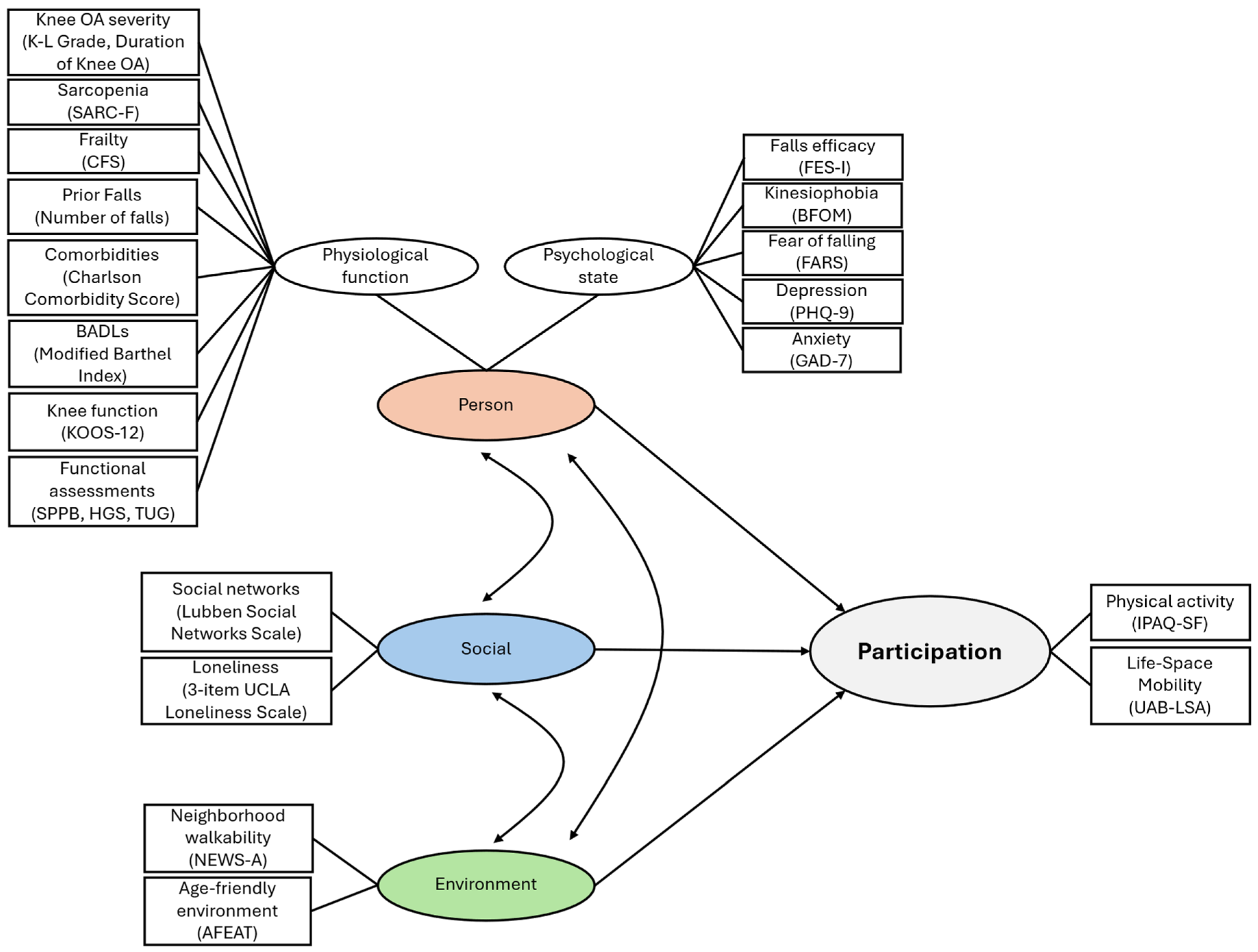
The data analysis for this work package is guided by a conceptual model that extends the WHO person-centered healthy aging framework [114]. The WHO model emphasizes the interplay between intrinsic capacity (mental and physical reserves), extrinsic factors (social and environmental conditions at both micro- and macro-levels) in shaping functional ability that support the health and well-being in older adults [114]. We operationalize this interaction through three latent interacting domains that are tractable for empirical testing in this work package (Figure 1). The Person domain encompasses physiological function (e.g., knee OA severity, multimorbidity, gait, balance, strength, and endurance), and psychological state (e.g., fear of falling, kinesiophobia, and mood). The Social domain captures the dimensions of social connectedness and resources (e.g., network size and quality, frequency of contact, and perceived loneliness). The Environment domain reflects built environment characteristics, such as micro- to neighborhood-level features that afford or constrain mobility and participation (e.g., physical infrastructure, access to facilities and amenities, public transport connectivity, and the availability and clarity of wayfinding and information). Together, these domains represent complementary determinants that shape individuals’ capacity and opportunities to participate in daily and community life.
We hypothesize that these domains, both independently and through their dynamic interactions, influence participation. In line with the International Classification of Functioning, Disability and Health framework (ICF), we treat participation—defined as involvement in life situations and engagement in community activities—as our primary outcome [115]. The ICF framework emphasizes participation as a key determinant of overall human functioning and ability [115]. In this study, we operationalize participation with the following two complementary measures: (1) physical activity (International Physical Activity Questionnaire—Short Form (IPAQ-SF)) and (2) life-space mobility (University of Alabama at Birmingham Life-Space Assessment (UAB-LSA)). Prior evidence demonstrates that intrinsic capacity influences the extent of community participation [97], yet the combined effects of intrinsic capacity, social connectedness, and environmental affordances on participation remain underexplored, particularly in populations with knee OA and falls in highly urbanized Asian contexts. We hypothesize that environmental affordances may interact with individual-level factors including physical function, psychological state, and health status, as well as social connectedness [63,116], to shape mobility behaviors and participation in community life. Through these pathways, supportive environments, stronger social networks, and physical and psychological health and their interactions are hypothesized to promote higher levels of participation in older adults with knee OA and falls (see Table S4, Supplementary Materials).
Positioning participation as the primary outcome aligns with policy priorities for healthy aging in Singapore. In particular, Age Well SG [117] underscores sustaining older adults’ participation through physical activity and community engagement as a strategic lever for maintaining autonomy, cognitive, physical, and social health [118]. By making explicit how person, social, and environmental domains jointly shape both the quality and quantity of participation, this model provides a clear line of sight from theory to intervention design and policy direction for healthy aging.

2.3.3. Causal Logic and Hypothesized Pathways

Figure 2 depicts the hypothesized relationships between the Person, Social and Environment domains and their corresponding explanatory variables to be examined in relation to participation outcomes. The major hypotheses this study will test include:
(1)
Environment as a predictor of participation (direct affordance pathway): more walkable, safe, and accessible environments (e.g., better pedestrian infrastructure, shorter distances to amenities, higher transport connectivity, clearer wayfinding and information) directly increase out of home exposure, reduce travel burden, and facilitate higher physical activity and larger life spaces.
(2)
Person as a predictor of participation (capacity pathway): Higher intrinsic capacity and better physical and psychological function (e.g., stronger lower limb strength, better balance and gait, lower pain, lower depressive symptoms) support greater participation. Conversely, frailty, pain, impaired balance, and elevated fear of falling constrain activity and life space.
(3)
Social as a predictor of participation (resource and exposure pathway): stronger social networks and engagement increase opportunities, motivation, and perceived safety to go out (companionship, encouragement), thereby expanding activity and life space.
In addition to these hypotheses, we also aim to test the mediating and moderating pathways among the three latent constructs in relation to participation outcomes (see Table S4, Supplementary Materials).

2.3.4. Statistical Analysis Plan

Linear regression will be used to explore the variables which significantly predict the outcome, and stepwise variable selection method will be used to build multivariable models. Structural equation modeling will be used to explore the relationships of observed and latent variables. Secondary analyses using mediation analyses will be conducted to explore the potential mediating effect of psychosocial factors between predictors with the primary outcomes. Additional secondary analyses, mainly exploratory in nature, will be conducted to explore the influence of participation on health-related quality of life.
Work Package 2 (RQ 2: How do neighborhood BE factors affect the lived experiences (in terms of mobility, participation, physical activity, and psychosocial outcomes) of older people with knee OA and/or falls?)
WP2 will employ mixed qualitative methods guided by a descriptive phenomenological approach. Sit-down interviews alone disengage interviewees from their usual activities (e.g., walking) and contextual environment and situations, limiting their ability to meaningfully reflect on lived experiences. Walk-along interviews address this limitation by enabling interviewees to immerse in their usual activities, lived environments, and situations, to demonstrate their experiences directly rather than describe them abstractly [119].

2.3.5. Data Collection

Interviews will be scheduled at times and venues (i.e., home, void deck, or neighborhood vicinity) convenient for interviewees. Prior to the session, interviewees will plan their walk-along routes to facilitate experiential conversations rather than conventional researcher-led discussions. Unless adverse weather or interviewee preference dictates otherwise, sit-down and walk-along interviews will be conducted sequentially on the same day.
Two bilingual, experienced qualitative researchers will conduct the interviews. They will meet the interviewees in their neighborhoods, explain the study, obtain informed consent, and conduct the sit-down and walk-along interviews sequentially. Interviewees recruited via snowball sampling will complete a self-reported case report form (see Table S5, Supplementary Materials, [93,107]).
Sit-down interviews will be audio-recorded, followed by a rest period before the walk-along interview. To retain realism, interviewees will be encouraged to use their assistive walking devices (e.g., walking stick, umbrella, and trolley) and personal items (e.g., handbag) as they would during daily activities. Lapel microphones will ensure clear recordings despite ambient noise. Given Singapore’s tropical climate, which can affect participant’s willingness to walk [120], measures such as rest breaks, reminders to wear comfortable clothing and shoes, and provision of umbrellas will be implemented.
While prior studies used photographs as “prompts and reminders, to clarify ideas, provide new insights, and as a way to organize and stimulate thinking” [121], this study will video-record [122] walk-along interview to capture richer contextual data for analysis. During the walk, interviewer will conduct semi-structured interviews (Table S6, Supplementary Materials), while observing interviewee’s interactions with their physical (e.g., amenities, facilities, features, facilitators and barriers, people, weather, time of the day, noise) and social environments [123]. Interview duration will depend on the chosen route, influenced by interviewee’s ability and willingness to guide the interviewer [122]. Field notes will be written during and after each interview.
Interview domains are outlined in Table S6 (Supplementary Materials). Interview guides were pilot-tested before implementation. No prior relationship was established between interviewers and interviewees. Recruitment commenced in June 2024.

2.3.6. Data Analysis

Interview recordings will be transcribed verbatim into Microsoft Word documents, translated where necessary, and labeled with the participant codes. Translated Mandarin transcripts will be checked against recordings to ensure meaning and essence are preserved. Transcripts will not be returned to interviewees, as interviewers took measures to achieve in-depth and accurate understanding of expressed sentiments and experiences [124] during interviews.
Deductive thematic analysis will be conducted using pre-established codes derived from regulatory guidelines of the Building and Construction Authority, Land Transport Authority, and National Parks. In parallel, inductive thematic analysis will be undertaken.
Inductive data analysis begins with immersing in and familiarizing with the transcripts, field notes, and videos [121] to construct rich and accurate understanding of interviewees’ lived experience [125]. Descript codes will be generated by identifying similarities and differences across datasets [125]. Categories, codes, and their meanings are refined through deep reflective thought to refine the codes and their meaning [90] with iterative re-analysis ensuring precision and rigor [126]. The coding manual will be updated as new codes and categories are developed. Rigorous processes—including iterative data analysis, intercoder reliability checks, and researcher triangulation—ensure diverse interpretations of irregularities in the data before finalizing codes and themes that accurately reflect the data. NVivo 15 will be used to manage the coded data and facilitate analysis.

2.4. Work Package 3 (Mixed Qualitative and Technological Geospatial)

While WP2 examines multiple neighborhoods across Singapore, WP3 adopts an in-situ site-specific approach, collecting data within a specific neighborhood estate. This design enables a more detailed investigation of how neighborhood layout, amenities, facilities, and BE factors influence the lives of older adults with mobility challenges.
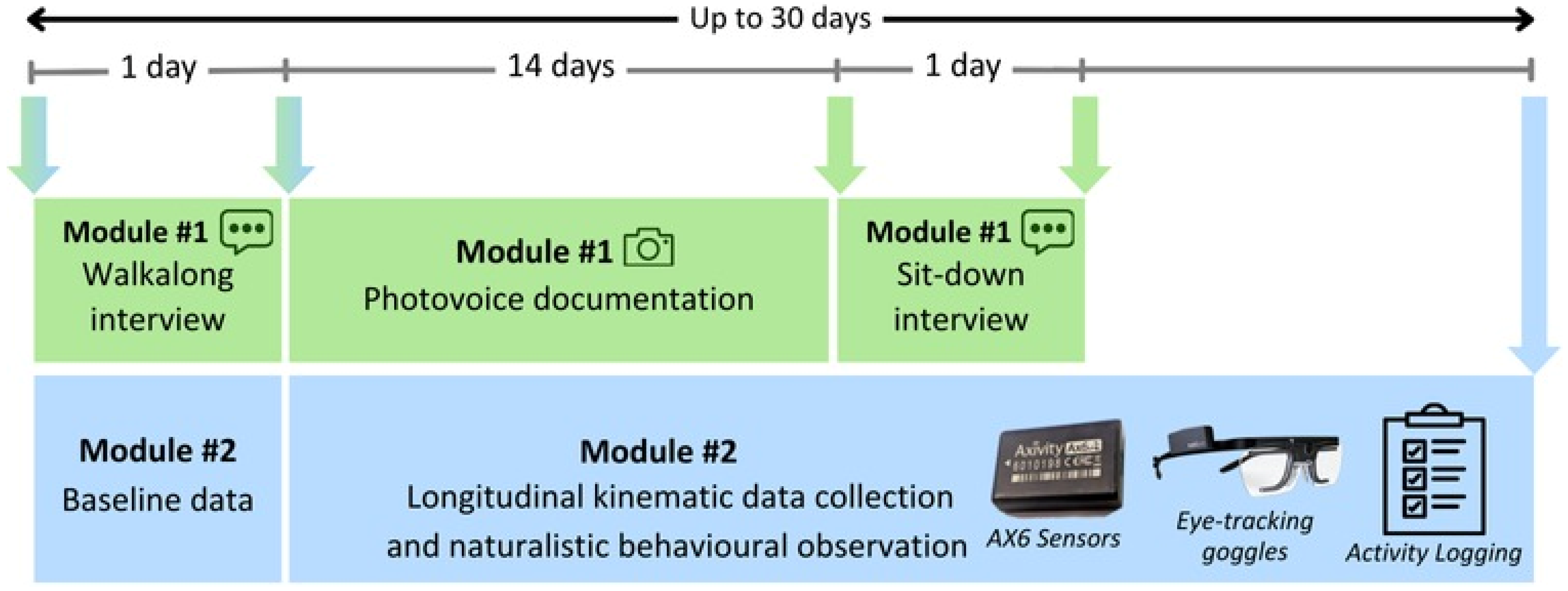
Given its methodological complexity and to reduce participant burden, WP3 is organized in the followig two complementary components: WP3.1 (qualitative geospatial) and WP3.2 (wearable and sensor technology). Although described separately for clarity, both components form a single integrated protocol. A modular approach is adopted, allowing participants to choose whether to participate in one or both components. The participation timeline is shown in Figure 3. Recruitment commenced in March 2025.

2.5. Work Package 3.1 (Qualitative Geospatial)

This sub-WP adopts a descriptive approach and uses mixed qualitative methods—walk-along interview and photovoice—to address RQ 3: How do BE factors influence participation levels and psychosocial experiences of older people with mobility challenges? Relying on a single method often highlights specific aspects of a phenomenon while leaving others underexplored [127]. Although walk-along interviews can capture the “feel” and tacit elements of locations [128], the data are cross-sectional and limited by participants’ chosen route and willingness or ability to guide the interviewer [122]. Photovoice complements this by offering a longitudinal perspective, capturing nuances and emotions that are not constrained by route selection. The walk-along interview protocol is described in WP2 (see Table S7A, Supplementary Materials for interview guide). As in WP2, participants will complete a case record form (see Table S5, Supplementary Materials, [93,107]).

2.5.1. Photovoice

Photovoice enables participants to highlight concerns about their BE, engage in-depth discussions, and inform policymakers of needed community improvements [129]. The protocol, adapted from Moogoor et al. [130], consists of the following two parts:
Part 1: Briefing and Training
Participants will receive training in photo/video-taking and be asked to document:
  • Travel destinations (e.g., favorite places to go with family and friends, frequently visited places);
  • BE features they like, dislike, or that hinder/facilitate mobility;
  • Features important for their needs and outdoor activities.
Participants will use configured personal or provided smartphones to capture clear, geotagged photos/videos. Instructions include the following:
  • Take as many photos/videos as possible over two weeks;
  • Prioritize personal safety;
  • Do not edit or delete any photo/video;
  • Send photos/videos to researchers via WhatsApp with short descriptions (typed or verbal) every 2–3 days or at their earliest convenience;
  • Avoid overseas travel during the study period;
  • Do not deliberately photograph people, situations that portray others negatively, or restricted areas (e.g., conflict areas, crime scenes, military camps).
Part 2: Semi-Structured Interviews
Within two weeks of completing Part One, sit-downs will be scheduled at times and venues convenient for interviewees. Interviewees will select meaningful photos/videos for discussion, though participants can choose to discuss photos/videos that were not selected. Interviews are guided by a pilot-tested interview guide (see Table S7B, Supplementary Materials) and Ronzi et al.’s SHOWeD mnemonic [131]: What do you See here? What is Happening here? How does this relate to Our life? Why does this problem or strength Exist? What can we Do about it?

2.5.2. Data Analysis

Data analysis will follow the procedures described in WP2, with the addition of triangulating photovoice inputs alongside walk-along interview recordings, transcripts, and field notes. This integration will enrich interpretation and ensure a comprehensive understanding of participants’ lived experiences.

2.6. Work Package 3.2 (Wearable and Sensor Technology)

This WP addresses RQ4, aiming to understand and characterize movement behavior, mobility, and functional activity of daily living among older adults in Singapore using wearable sensor technology. The study is structured into the following two phases (see Figure S1, Supplementary Materials): movement monitoring (up to 30 days) and naturalistic behavioral observation. By leveraging wearable sensors and mobile devices, we aim to:
  • Capture unbiased lifestyle behavior in natural settings;
  • Develop frameworks for long-term monitoring of micro and macro gait metrics;
  • Associate qualitative neighborhood observations with quantitative gait data.

2.6.1. Recruitment Strategy and Baseline Assessment

WP 3.2 integrates longitudinal time-series data from multiple digital technologies, including eye-tracking goggles, wearable IMU sensors, and GPS-enabled smartphones to collect perceptual, movement, and spatial behaviors over extended real-world exposure (up to 30 days). To our knowledge, such an integrated and large-scale approach has not previously been reported in the literature. In the absence of established effect sizes or variance estimates for this type of high-frequency, multi-sensor data, formal a priori sample size calculation was not feasible. Accordingly, a purposive sample of 60 participants was tentatively proposed, consistent with exploratory and methodological innovation studies prioritizing data richness and feasibility.
A 5-min walk test will be conducted to establish baseline kinematic fall risk characteristics. Six IMU sensors (ZurichMove, Zürich, Switzerland) [132] will be attached to the feet, trunk, wrists, and head (sampling frequency 200 Hz, ±16 g acceleration dynamic range, and 2000°/s gyroscope dynamic range). Participants will walk at a preferred pace in their home or corridor. Signals recorded during the baseline walk test are processed using validated gait event detection algorithms [132,133] to identify key phases in the gait cycle. From these phases, key spatio-temporal parameters (such as stride length, stride time, double limb support time, and cadence) are computed to provide an individual baseline for fall risk [134] prior to longitudinal monitoring. Along the baseline walk test, standardized questionnaires and functional tests use in WP1 will also be administered (see Table S3, Supplementary Materials, [79,80,81,82,83,84,85,86,87,88,89,90,91,92,93,94,95,96,97,98,99,100,101,102,103,104,105,106,107,108,109,110]) with exclusion of Kellgren–Lawrence grade.

2.6.2. Longitudinal Monitoring

Participants will be fitted with three types of monitoring devices to track their mobility, geospatial positioning, and physiological metrics:
  • IMU sensor (Axivity AX6, Axivity Ltd. Newcastle upon Tyne, UK, [135], sampling frequency 100 Hz, acceleration and gyroscope dynamic range ±8 g and ±1000 dps) will be attached at the lower back area, approximately on the fifth lumbar vertebra (L5), using a waterproof tape (Figure S2, Supplementary Materials). The height of the sensor from the ground will be measured (in cm). Metadata (participant ID) will be added through OMGUI software (OpenMovement GUI, version 45; Open Movement, Newcastle University, Newcastle upon Tyne, UK).
  • Smartphone equipped with a GPS tracking app (Sensor Logger version 1.59 [136]) will be provided to participants. This app will capture longitude, latitude, and altitude with timestamps. Participants are required to carry the smartphone when they leave their place of residence.
  • Wristband Empatica EmbracePlus (Empatica Inc., Cambridge, MA, USA), a medical grade device that can record accelerometry data, skin temperature, skin conductance and blood volume pulse with photoplethysmography sensor (PPG) [137], will also be given to the participants.
All datasets are time-stamped for synchronization among the different types of data. Monitoring includes five scheduled visits (every 7 days) for device maintenance and data integrity checks. Data gaps exceeding seven consecutive days will result in exclusion.
Following longitudinal monitoring, participants will be contacted every three months for one year to document any fall occurrences, circumstances, and outcomes. The calls, conducted by trained study team members, will take approximately 5–10 min. Participation in these follow-up calls is voluntary, and participants may choose to decline or withdraw at any time without affecting their involvement in the primary study.
Maintaining participant motivation and compliance with the longitudinal protocol is essential for the quality of the collected data. During its longitudinal phase, participants are required to carry one IMU, one wristband and one smartphone with them at all times, as well as recharge the devices. To mitigate fatigue, discomfort, and attrition the research staff will conduct weekly home visits for sensor replacement, and to check if there was any issue or discomfort during the monitoring. To reduce daily demands from participants, the mobile device is configured for passive data collection, requiring no active user interaction other than daily charging, instructed to perform over each night. For participants with lower digital literacy, daily reminders will be provided to ensure device is properly charged. A detailed, illustrated manual for troubleshooting technical issues with mobile device and self-replacement of sensor is given to participant. Direct helpline number to reach a research assistant is provided.
To formally assess participant experience and quantify any device-related burden, a Post-Long-Term-Monitoring Questionnaire (see Table S8, Supplementary Materials) is administered at the conclusion of the monitoring period. We included this questionnaire specifically to gather data on the discomfort of using the sensors. It records the exact duration of compliance, reasons for premature removal, and evaluates physical discomfort, skin irritation, anxiety, and the device’s impact on routine activities.
During both functional assessments and naturalistic observation walks, participants are instructed to take breaks to prevent fatigue. To account for potential attrition or technical interruptions, a minimum of seven days of continuous monitoring is considered a valid dataset for analysis. In cases where a minimum of one week of monitoring is completed, a weekly average statistic of the collected data will then be calculated. This approach allows us to retain robust, representative behavioral data while respecting the limits of our participants.
We are highly conscious of potential behavioral reactivity to prolonged sensor use. We actively mitigate these factors through high-touch participant support, which includes frequent daily checks with participants and weekly home visits by research staff for sensor replacement. Furthermore, we continuously reinforce that participation is entirely voluntary, and participants always retain the explicit option to withdraw from the study at any time. Any anxiety or reactivity experienced will be captured in the aforementioned post-monitoring questionnaire.

2.6.3. Naturalistic Behavioral Observation

Naturalistic observation is conducted during or after the longitudinal monitoring period, depending on participant availability. The participant will be invited to undertake a short walk to visit key locations they frequent during their everyday life (e.g., public transport stations or local market). The walk will be kept to the participants’ own pace and comfort (e.g., visit to local market and back), while participants carry wearable sensors. The researcher will follow the participant from a distance recording the participant for about 60–90 min going about their daily routine on video (see Figure S3, Supplementary Materials).
Additional sensors will be attached to participant as follows:
  • High-resolution ZurichMove IMU sensors will be attached on the participants and analyzed as described in Baseline Assessment (see Figure S4, Supplementary Materials);
  • Eye-tracking glasses Pupil Labs Neon (Pupil Labs GmbH, Berlin, Germany) will be used to monitor an individual’s visual (gaze) behavior without assessing for disease status or its occurrence. The Pupil eye-tracking glasses collect data such as gaze coordinates and a video feed from the point of view of the participant, as well as acceleration and angular velocity of the head movement;
  • Video data will be recorded with a GoPRO Hero 13 (GoPro, Inc., San Mateo, CA, USA) mobile camera that provides resolution and stabilization needed for analysis of the BE features of participants walking environment.
Machine learning methods [138] will code BE features from the video data. These will be synchronized with gaze and IMU data to correlate gait characteristics with specific environmental features and visual attention.
In our analysis of two phases, our primary outcomes aim to identify areas with high fall risk within participants’ neighborhoods by associating GPS trajectories with gait data from IMU sensors, and to determine what specific aspects of the built environment (e.g., stairs, ramps, surface material, and quality) are associated with changes in quantitative gait parameters (e.g., gait speed, stride length, and variability) captured using these sensors. Building upon this, our secondary outcomes will explore what aspects of the built environment are being visually attended to while participants move around their neighborhood, examine the interrelationships between visual attention, physiological measures, gait metrics, and built environment characteristics, and determine if these micro- and macro-level gait metrics can complement qualitative observations and the characterization of real-world lifestyle and mobility behaviors. A list of all modalities captured, their objectives, and primary or secondary output relations are stated in Table S9 (Supplementary Materials).

2.6.4. Methodological and Thematic Integration

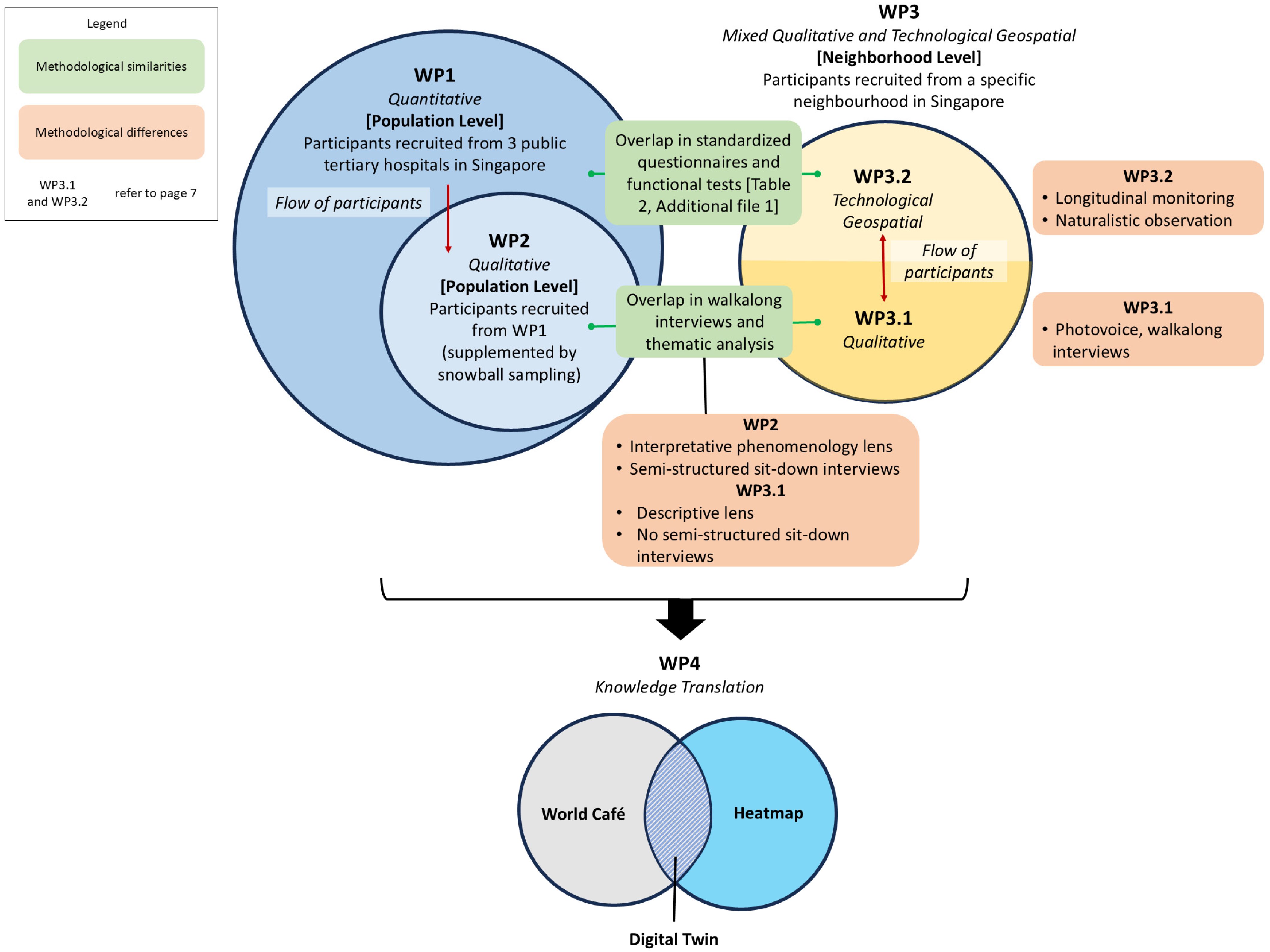
Findings from WP1 and WP2 will provide a comprehensive understanding of which BE and psychosocial factor(s) impact, as well as the extent to which the identified factor(s) enable or disable the physical activity levels, social participation and functional outcomes of mobility challenges. While WP1 informs the statistical correlations among the BE/psychosocial factors, the qualitative data from WP2 substantiates the trends identified with detailed insights on how participants perceive and respond to the built environment, thereby strengthening the validity and reliability of the overall findings. Data from WPs 3.1 and 3.2 will provide clearer and comprehensive insight into the influence of knee OA, falls, and the BE on older mobility-challenged adults’ mobility, gait, physical activity levels, and social participation, and their psychosocial outcomes. Geospatial coordinates and timestamps will allow as to map micro-gait instability events or physiological stress peaks directly onto the specific built environment features identified in photovoice and walk-along interviews. These synthesized datasets will be feed into the Heatmap and Digital Twin (see Section Work Package 4). Figure 4 depicts the flow of participants and methodological similarities and differences among WPs 1–3.2, whereby their findings will ultimately be translated into insights for discussions, recommended changes to policies and guidelines, co-development of interventions, and creation of visualization and simulation tools.

2.7. Work Package 4 (Knowledge Translation)

2.7.1. Stakeholder Engagement and the World Café

The study team adopts an active engagement approach with relevant stakeholders in the BE sector to use findings from WP1, WP2, and WP3 to co-develop practical recommendations to inform policy and implementation [RQ5]. Stakeholders include government agencies involved in the planning, development, maintenance, and enhancement of residential estates and related amenities and facilities and grassroots and community-based groups with deep understanding of the living environment and residents’ needs, as well as clinicians and researchers.
Stakeholder engagement in the BE ecosystem is expected to be challenging given the scale and complexity of urban planning and construction and maintenance of BE infrastructure, as well as the overlapping responsibilities among government agencies, statutory bodies, and community organizations. The different institutional priorities and timelines add to coordination challenges, thereby requiring a sustained and iterative process of relationship-building and communication to foster trust and collaboration.
After identifying the main stakeholder organizations, the team will engage key contacts through regular meetings and email updates throughout WP1 to WP3. These interactions serve to communicate the project’s objectives, deliverables and interim findings, to invite feedback for alignment with policy and practice needs. These engagements allow the team to map out the key national and local BE initiatives and timelines, therefore providing opportunities to translate research insights to support the stakeholders’ work.
Finally, stakeholders relevant to the BE-related issues and psychosocial outcomes identified from the findings will be invited to participate in an interactive group discussion. This will take the format of a World Café [139].
The World Café’s strengths in enhancing relevance and uptake of research findings make it particularly well-suited for BE-FIT’s stakeholder co-interpretation phase. It functions as a complementary, structured stakeholder engagement and knowledge translation component to support implementation-relevant co-interpretation of BE-FIT’s findings. The World Cafe will adopt a hospitable and informal format to encourage stakeholders to freely and actively share rich, diverse, and meaningful insights. Representatives from key policy, planning, and practice organizations will participate in facilitated small-group discussions focusing on predefined, policy-relevant questions derived from BE-FIT’s objectives. Participants will engage in multiple, small-group discussion rounds, rotating between tables to enable cross-fertilization of perspectives, while trained facilitators moderated discussions and a table host summarized prior discussions to ensure continuity. This arrangement allows for focused and rigorous discussions, while mitigating dominance effects and power hierarchies to enable diverse and rich insights to surface.
Discussions will orient about identification of implementation considerations, including perceived barriers, facilitators, and contextual factors relevant to urban design and policy application. Insights were documented through structured notes and summaries, and synthesized during a facilitated plenary “harvesting” session to identify convergent themes or potential action points. Consistent with integrated knowledge translation principles, the World Café—a co-interpretation tool and bridge between evidence and real-world decision making—does not generate primary empirical evidence as it was conducted after completion of core quantitative, qualitative, and sensor-based analyses to contextualize findings, enhance relevance, and inform translation into policy and practice. The outcomes of the World Café will be presented in a written report to relevant authorities, policymakers, and stakeholders.

2.7.2. Heatmap and Digital Twin

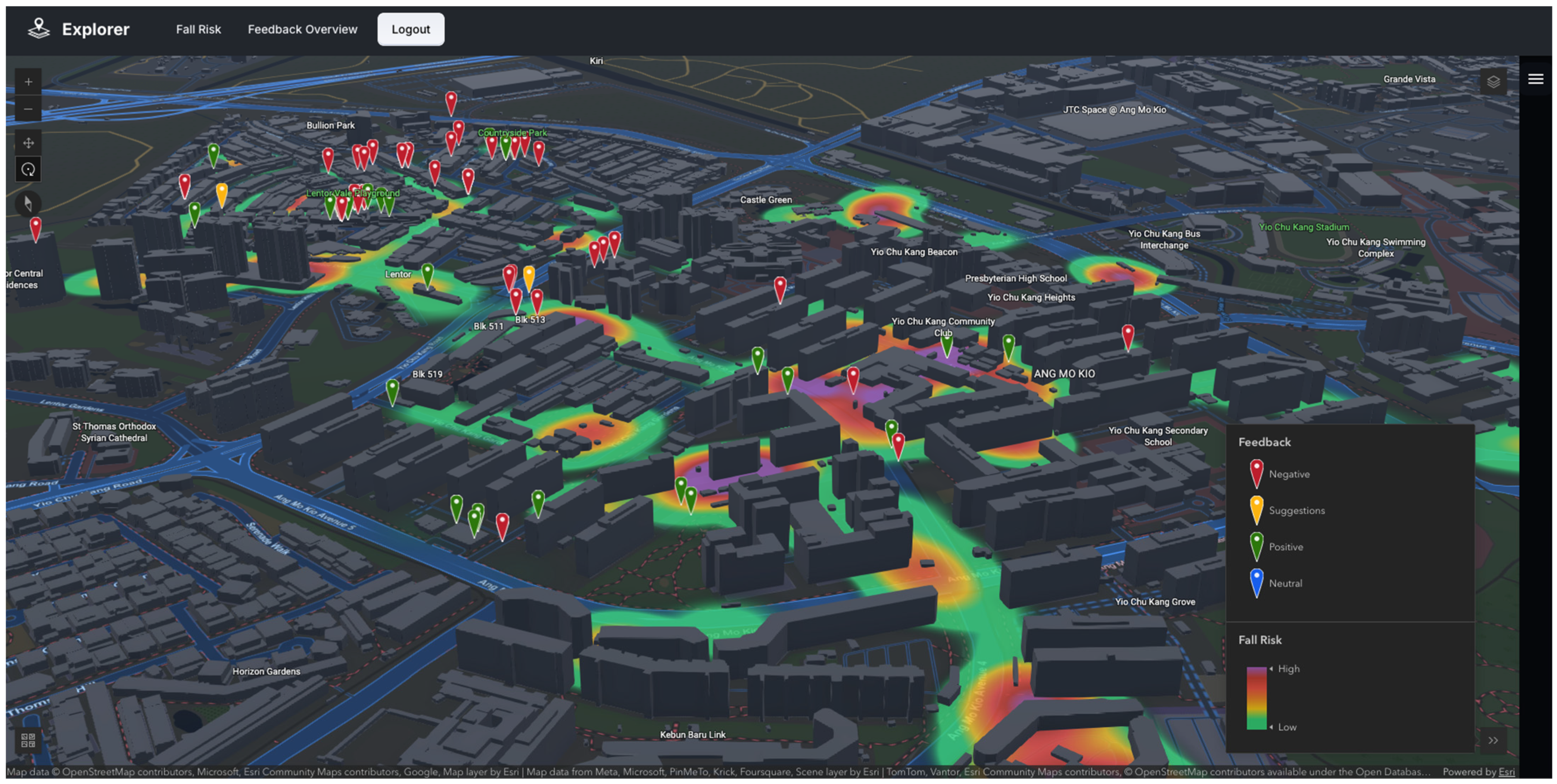
The qualitative geospatial and kinematic findings from WP3 will be triangulated into a 3D visualization tool, Digital Urban Climate Twin (DUCT) [140], to demonstrate fall risk profiles via a color-coding scheme in an engaging matter (Figure 5). Specifically, fall risk-related features integrated together with built environmental features will be visualized on the map as objective measures. To contextualize and “ground-truth” these findings, participants’ subjective feedback on falls-related built environment features will be overlaid with the aforementioned objective measures. This overlay ensures that the visual tools effectively translate both objective kinematic data and subjective lived experiences into actionable insights for urban planners and policymakers. These visualizations will illustrate mobility enablers and barriers, serving as a visual tool to help stakeholders to identify priorities and direct resources for targeted interventions within their area of influence. Users can easily access findings by category and data source relevant to their needs. For example, town councils responsible for infrastructural restoration and repair works can filter municipal data to focus on BE features that need their urgent attention.
Collaborative events (e.g., World Café) and the heat map will be used to guide discussions among the stakeholders to co-develop recommendations. Building on the heatmap and further informed by co-developed recommendations from the stakeholders, a digital twin will simulate recommendations and potential impacts, offering an interactive blueprint for creating healthy, enabling neighborhoods. The digital twin will enable authorities, healthcare professionals, and environmental health practitioners to enhance OA and falls management while driving physical activity and prevention efforts.
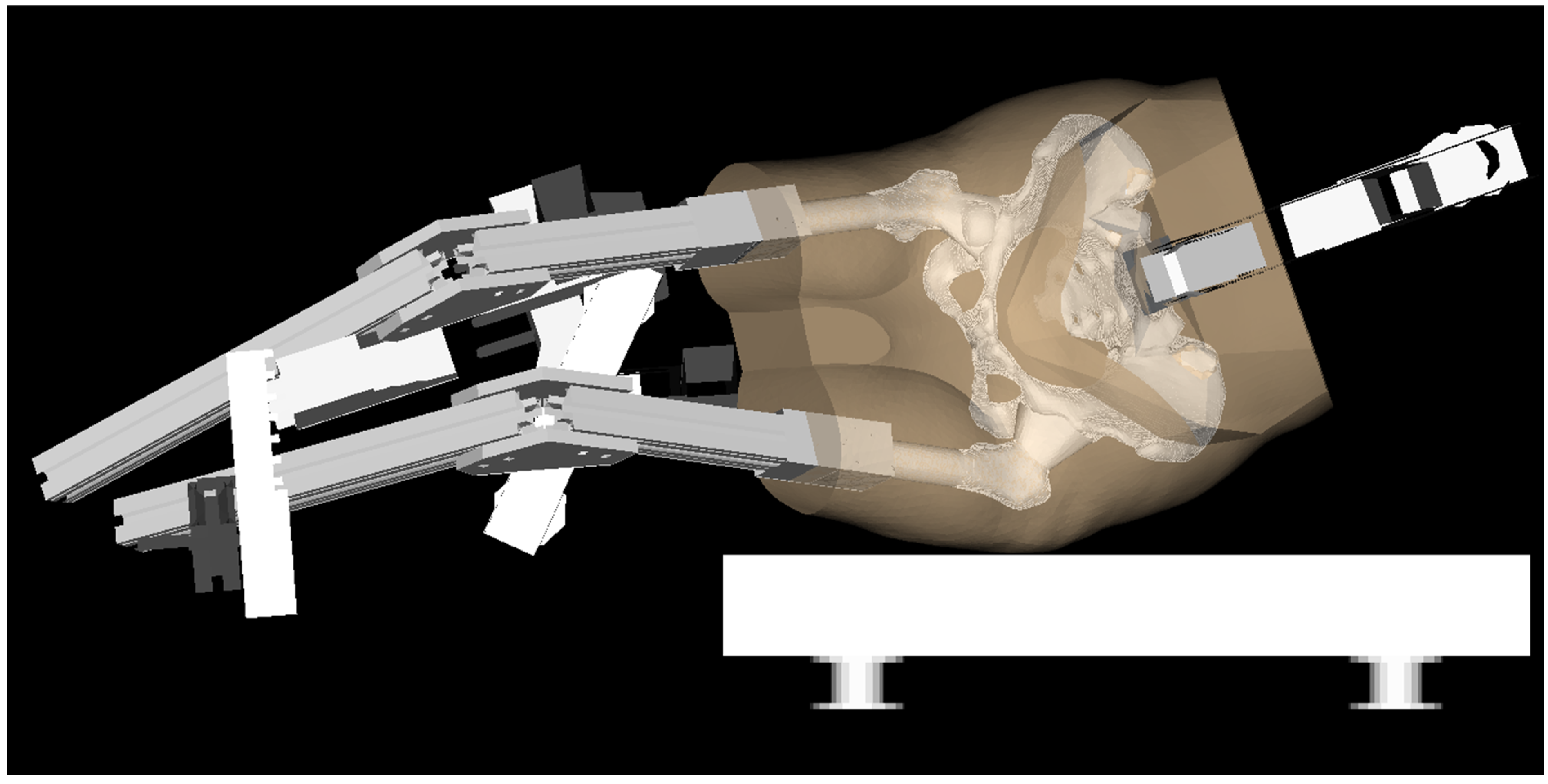
Digital twins derived from dual-energy X-ray absorptiometry (DXA) scans of community-dwelling older adults, capture the ethnic variations in hip fracture rates in Singapore (Figure 6) [141]. In WP4, the team will leverage this digital twin technology to evaluate how factors such as slope, friction, and surface compliance impact fracture risk after low-trauma falls.

2.8. Ethics Approval

Ethics approval (NHG DSRB Ref: 2023/00566, 5 August 2024) was obtained for WPs 1 and 2. Ethics approval (IRB-2024-818, 26 February 2025) was obtained for WP3. This study was conducted in accordance with the Declaration of Helsinki.

3. Discussion

The literature indicates that health and place studies have predominantly focused on walkability [142,143], architectural features [143], socioeconomic characteristics of neighborhoods, and older adults’ sociodemographic factors (e.g., race), physical activity [43,143,144], pain and disability [145,146], social participation [144], and psychosocial outcomes [144,147]—typically in relation to either falls or knee OA. However, several critical gaps remain:
(1)
A distinct scarcity of studies examining FoF [142].
(2)
Limited understanding on how BE characteristics contribute to micro- and macro- gait parameters [11], despite their established role as predictor of falls.
(3)
The overwhelming dominance of Western-based studies [148,149].
(4)
Clear underrepresentation of Southeast Asian population and perspectives [142,150].
(5)
The absence of research that holistically examining the clinical and psychosocial impact of neighborhood BE on knee OA-related pain, disability, falls, and FoF.
At present, BE-FIT is the first multi-pronged study to holistically examine knee OA, falls, psychosocial factors and consequences, and the neighborhood BE within a highly-developed Southeast Asian urban context. It distinguishes itself from prior research by employing a rigorous, integrated, multi-method protocol that combines cross-sectional self-reported, longitudinal objective, and in-depth qualitative approaches. Its methodological rigor is ensured through validated questionnaires widely used in related research, complemented by mixed interview methods that capture rich, nuanced lived experiences of mobility-challenged older adults. The qualitative protocols are consistent with established methods, ensuring reliability and credibility.
Another key methodological strength of BE-FIT lies in its wearable technologies and geospatial methods, which provide unbiased, longitudinal kinematic and geospatial data under naturalistic conditions. By combining objective measures with qualitative lived experiences, BE-FIT can comprehensively investigate how neighborhood BE factors influence clinical and psychosocial outcomes among older adults with knee OA and/or falls. Importantly, this protocol extends beyond knowledge generation to translation. Its methodological framework offers future research and practices the means to inform building and design guidelines, shape policies, and develop technological tools that visualize barriers and facilitators (e.g., structural, socioeconomic, and participatory). Beyond knowledge generation, the ability to simulate the impact of recommendations or interventions across neighborhoods enhances BE-FIT’s practical relevance to policymakers and urban developers.
In Singapore, research and government efforts have largely concentrated on developing dementia-friendly neighborhoods, with limited attention to environments for older adults with mobility challenges. Against this backdrop, BE-FIT is both timely and significant. It advances Singapore’s aging-in-place agenda by collaborating closely with authorities, urban developers, and policymakers to translate its findings into practice [151].
Singapore’s unique position as a confluence of Western and Asian cultures, coupled its national model of high-density, self-contained, and socioeconomically uniform communal towns, provides a distinctive context. BE-FIT is, therefore, poised to generate novel insights into how neighborhood BE factors shape biopsychosocial outcomes and lived experiences of mobility-challenged older adults—insights that are locally significant and regionally transferable. Given that other highly-developed, urban, and densely populated Asian cities—such as Tokyo, Seoul, Shanghai, Jakarta, and Kuala Lumpur—share similar BE features (e.g., pavements, stairs, ramps, slopes, shelters, green spaces, traffic junctions, and transport systems) [152], making BE-FIT’s findings regionally transferable. By situating the research in Singapore’s unique urban design, the study also contributes novel perspectives on how Western-influenced Asian urban design shapes the biopsychosocial experiences of older adults.
Despite its strengths, BE-FIT has limitations. Firstly, the cross-sectional design of WP1 imposes inherent constraints on the interpretation of findings, particularly with respect to causality. While associations between variables can be identified, the absence of temporal sequencing prevents determination of whether one factor precedes or influences another. This limitation restricts the ability to disentangle potential bidirectional relationships and raises the possibility that observed correlations may be driven by unmeasured confounding variables. Consequently, any conclusions drawn must be understood as descriptive rather than explanatory, and caution is warranted in inferring causal pathways from the data.
Secondly, beyond WP1, we acknowledge that the overall observational nature of WP3.2 limits the ability to establish definitive causal relationships between mobility limitations and environmental factors. In particular, the relationship between mobility and environmental perceptions may be bidirectional. Older adults with mobility limitations may perceive certain BE features (e.g., stairs, slopes, or uneven surfaces) as more challenging or hazardous, while these same environmental characteristics may also concurrently influence movement behavior, gait patterns, and physiological responses during daily activities. Therefore, findings from this study will be interpreted as associations rather than causal effects. Nonetheless, the integration of wearable sensor data, GPS-derived mobility patterns, physiological monitoring, eye-tracking, and video-based BE observations will allow us to intricately contextualize these relationships in real-world settings while acknowledging this potential reciprocal influence. The exploratory WP3.2 is cognizant that the proposed sample size of 60 participants may be insufficient for meaningful analysis. To mitigate this limitation, the sample size may be increased based on the richness of and insights provided by the data. If necessary, future studies with adequately powered sample size may be carried out to meaningfully understand and characterize movement behavior, mobility, and functional activity of daily living among older adults with mobility challenges.
Thirdly, linguistic constraints in data collection, transcription, and translation, excluded participants not conversant in English or Mandarin. This may have limited the inclusion of perspectives from older adults who speak only Chinese dialects, Malay, or Tamil (including other Indian languages). However, such individuals represent a small minority in Singapore [153] and are typically accompanied by caregivers fluent in English or Mandarin. Including them would have imposed significant burden on both participants and caregivers, given the extensive questionnaires in WP1. Employing multilingual research staff was considered but deemed impractical given the small population size and limited resources. The breath of quantitative, qualitative, and longitudinal kinematic and geospatial data collected across three WPs is expected to offset this concern.
Fourthly, some participants could only walk short distances or duration due to pain, or FoF, which may limit the richness of walkalong interviews and naturalistic observation in WPs 2 and 3. However, these constraints themselves could provide valuable insight by reflecting the lived realities of mobility-challenged older adults. Rather than a methodological weakness, this limitation underscores the importance of documenting restricted mobility as part of the broader narrative of aging in place.
Finally, the diversity of demographic, socioeconomic, and cultural contexts across Asian societies presents challenges for cross-cultural transferability of qualitative findings. Nonetheless, the increasing westernization of many Asian societies introduces shared cultural and environmental features that enhance the applicability of BE-FIT’s insights beyond Singapore.

4. Conclusions

BE-FIT is a pioneering study that addresses the interplay among knee OA, falls, the BE, and psychosocial factors and outcomes in older adults with mobility challenges. Its findings have significant implications for public health, urban planning, and aging policy.
First, BE-FIT provides evidence to guide designs of elder-friendly neighborhoods that promote active mobility, participation, and positive biopsychosocial outcomes. Second, it advances discourse on how BE factors shape these outcomes, offering a comprehensive perspective that is lacking in the literature. Finally, its insights can inform interventions aimed at reducing falls and improving quality of life among mobility-challenged older adults.
Importantly, urbanized aging societies facing rising incidence of knee OA and falls can draw on BE-FIT’s findings to translate research into policies and interventions that improve neighborhoods and support healthier, more engaged lives for older residents.

Supplementary Materials

The following supporting information can be downloaded at: https://www.mdpi.com/article/10.3390/jal6020043/s1, Table S1: Development of the BE-FIT protocol; Table S2: Inclusion and exclusion criteria; Table S3: List of standardized questionnaires and functional tests (WP1 and 3.2); Table S4: List of all hypotheses that will be tested in WP1; Table S5: Case report form (WP2); Table S6: Interview guide (WP2); Table S7A: Walkalong interview guide (WP3); Table S7B: Photovoice interview guide (WP3); Table S8: Post Long-Term Monitoring Questionnaire; Table S9: Multimodal data sources and derived analytical measures; Figure S1: Description of the long-term monitoring of kinematic and geospatial datasets; Figure S2: Placement of the sensor on the lower back of the individual; Figure S3: Settings on OMGUI software (OpenMovement GUI, version 45; Open Movement, Newcastle University, Newcastle upon Tyne, UK); Figure S4: A schematic of naturalistic behavioral observation.

Author Contributions

E.Y.S.W. wrote the manuscript. S.-Y.Y. and N.S. edited the manuscript. E.Y.S.W., E.Y.Y.L., S.C.W., P.L., I.O.T. and C.Y.T. co-designed WPs 2 and 3.1; S.-Y.Y. and Y.S.N. guided design and conceptualization of WPs 1, 2, and 3.1; S.-Y.Y., J.E.C.K., N.H.I., S.S., Y.Y.D., N.S. and C.Y.T. co-designed WP2; N.B.S., P.M., K.F., H.L. and S.A.J. co-designed WP3.2; Y.Y.D., N.X.T. and S.C.W. co-designed WP4. J.T. advised on study design and concept; B.Y.T. and N.B.S. conceptualized the BE-FIT study. All authors have read and agreed to the published version of the manuscript.

Funding

This research and APC were funded by the National Research Foundation’s “Intra-CREATE Thematic Grant” (NRF2022-THE004-004).

Institutional Review Board Statement

Ethics approval (NHG DSRB Ref: 2023/00566) was obtained for WPs 1 and 2. Ethics approval (IRB-2024-818) was obtained for WP3.

Informed Consent Statement

Informed consent was obtained from all subjects involved in the study. Written informed consent has been obtained from the patient(s) to publish this paper.

Data Availability Statement

The data that support the findings of this study are available upon request from the corresponding author. The data are not publicly available due to restrictions on information that could compromise the privacy of research participants.

Acknowledgments

The study team would like to thank Gillian Long Szu Chew, Ken Sze Yang Lim, Jia Yi Tan, Cherlyn Lee, Pei Ling Tong, Lim Chien Joo, and Heiko Adyt for their insights on refining the study protocol. During the preparation of this manuscript, the author(s) used Microsoft Copilot App (Web, February 2026) for the purpose of editing only. The authors have reviewed and edited the output and take full responsibility for the content of this publication.

Conflicts of Interest

Author Houhao Liang was employed by the company CNRS@CREATE, Singapore. The remaining authors declare that the research was conducted in the absence of any commercial or financial relationships that could be construed as a potential conflict of interest.

Abbreviations

The following abbreviations are used in this manuscript:
OAOsteoarthritis
BE-FITBuilt Environment in Falls and arthrITis
WPWork package
BEBuilt environment
FoFFear of falling
RQResearch question

References

  1. World Health Organization. Ageing. Available online: https://www.who.int/health-topics/ageing (accessed on 6 March 2025).
  2. Global Burden of Disease Collaborative Network. Global Burden of Disease Study 2019 (GBD 2019) Reference Life Table; Institute for Health Metrics and Evaluation: Seattle, WA, USA, 2021. [Google Scholar]
  3. Mitsutake, S.; Ishizaki, T.; Yokoyama, Y.; Nishi, M.; Koohsari, M.J.; Oka, K.; Yano, S.; Abe, T.; Kitamura, A. Do Walking-Friendly Built Environments Influence Frailty and Long-Term Care Insurance Service Needs? Sustainability 2021, 13, 5632. [Google Scholar] [CrossRef]
  4. Bowden, J.L.; Hunter, D.J.; Feng, Y. How can neighborhood environments facilitate management of osteoarthritis: A scoping review. Semin. Arthritis Rheum. 2021, 51, 253–265. [Google Scholar] [CrossRef] [PubMed]
  5. Chaudhury, H.; Campo, M.; Michael, Y.; Mahmood, A. Neighbourhood environment and physical activity in older adults. Soc. Sci. Med. 2016, 149, 104–113. [Google Scholar] [CrossRef]
  6. Musselwhite, C.; Haddad, H. Mobility accessibility and quality of later life. Qual. Ageing Older Adults 2010, 11, 25–37. [Google Scholar] [CrossRef]
  7. Wiles, J.L.; Leibing, A.; Guberman, N.; Reeve, J.; Allen, R.E.S. The meaning of “aging in place” to older people. Gerontologist 2012, 52, 357–366. [Google Scholar] [CrossRef]
  8. Vos, T.; Flaxman, A.D.; Naghavi, M.; Lozano, R.; Michaud, C.; Ezzati, M.; Shibuya, K.; Salomon, J.A.; Abdalla, S.; Aboyans, V.; et al. Years lived with disability (YLDs) for 1160 sequelae of 289 diseases and injuries 1990–2010. Lancet 2012, 380, 2163–2196. [Google Scholar] [CrossRef]
  9. Silverwood, V.; Blagojevic-Bucknall, M.; Jinks, C.; Jordan, J.L.; Protheroe, J.; Jordan, K.P. Current evidence on risk factors for knee osteoarthritis in older adults: A systematic review and meta-analysis. Osteoarthr. Cartil. 2015, 23, 507–515. [Google Scholar] [CrossRef]
  10. Hochberg, M.C.; Altman, R.D.; April, K.T.; Benkhalti, M.; Guyatt, G.; McGowan, J.; Towheed, T.; Welch, V.; Wells, G.; Tugwell, P. American College of Rheumatology 2012 recommendations for the use of nonpharmacologic and pharmacologic therapies in osteoarthritis of the hand, hip, and knee. Arthritis Care Res. 2012, 64, 465–474. [Google Scholar] [CrossRef]
  11. Tan, J. Seniors Learn to Roll with It and Minimise Risk of Fall Injuries. The Straits Times. 2023. Available online: https://www.straitstimes.com/singapore/getting-the-elderly-re-acquainted-with-the-ground (accessed on 30 October 2024).
  12. World Health Organization. WHO Global Report on Falls Prevention in Older Age. 2008. Available online: https://www.who.int/publications/i/item/9789241563536 (accessed on 30 October 2024).
  13. Zhou, J.; Liu, B.; Qin, M.Z.; Liu, J.P. A prospective cohort study of the risk factors for new falls and fragility fractures in self-caring elderly patients aged 80 years and over. BMC Geriatr. 2021, 21, 116. [Google Scholar] [CrossRef] [PubMed]
  14. Santy-Tomlinson, J.; Speerin, R.; Hertz, K.; Tochon-Laruaz, A.C.; van Oostwaard, M. Falls and secondary fracture prevention. In Fragility Fracture Nursing; Hertz, K., Santy-Tomlinson, J., Eds.; Springer: Cham, Switzerland, 2018; pp. 163–180. [Google Scholar] [CrossRef]
  15. James, S.L.; Lucchesi, L.R.; Bisignano, C.; Castle, C.D.; Dingels, Z.V.; Fox, J.T.; Hamilton, E.B.; Henry, N.J.; Krohn, K.J.; Liu, Z.; et al. The global burden of falls: Global, regional and national estimates of morbidity and mortality from the Global Burden of Disease Study 2017. Inj. Prev. 2020, 26, i3–i11. [Google Scholar] [CrossRef]
  16. Ambrose, A.F.; Paul, G.; Hausdorff, J.M. Risk factors for falls among older adults: A review of the literature. Maturitas 2013, 75, 51–61. [Google Scholar] [CrossRef] [PubMed]
  17. De Roza, J.G.; Ng, D.W.L.; Mathew, B.K.; Jose, T.; Goh, L.J.; Wang, C.; Soh, C.S.C.; Goh, K.C. Factors influencing fear of falling in community-dwelling older adults in Singapore: A cross-sectional study. BMC Geriatr. 2022, 22, 186. [Google Scholar] [CrossRef]
  18. Fhon, J.R.S.; Rodrigues, R.A.P.; Neira, W.F.; Huayta, V.M.R.; Robazzi, M.L.C.C. Fall and its association with the frailty syndrome in the elderly: Systematic review with meta-analysis. Rev. Esc. Enferm. USP 2016, 50, 1005–1013. [Google Scholar] [CrossRef]
  19. Kojima, G. Frailty as a Predictor of Future Falls Among Community-Dwelling Older People: A Systematic Review and Meta-Analysis. J. Am. Med. Dir. Assoc. 2015, 16, 1027–1033. [Google Scholar] [CrossRef] [PubMed]
  20. Chang, C.I.; Chan, D.C.; Kuo, K.N.; Hsiung, C.A.; Chen, C.Y. Prevalence and correlates of geriatric frailty in a northern Taiwan community. J. Formos. Med. Assoc. 2011, 110, 247–257. [Google Scholar] [CrossRef] [PubMed]
  21. Woo, J.; Zheng, Z.; Leung, J.; Chan, P. Prevalence of frailty and contributory factors in three Chinese populations with different socioeconomic and healthcare characteristics. BMC Geriatr. 2015, 15, 163. [Google Scholar] [CrossRef]
  22. Chen, T.-Y. Predictors of Falls Among Older Singaporeans; Centre for Ageing Research and Education, Duke NUS Medical School: Singapore, 2017. [Google Scholar]
  23. Lee, S.; Lee, C.; Ory, M.G. Association between Recent Falls and Changes in Outdoor Environments near Community-Dwelling Older Adults’ Homes over Time: Findings from the NHATS Study. Int. J. Environ. Res. Public Health 2019, 16, 3230. [Google Scholar] [CrossRef]
  24. Li, W.; Keegan, T.H.M.; Sternfeld, B.; Sidney, S.; Quesenberry, C.P.; Kelsey, J.L. Outdoor falls among middle-aged and older adults: A neglected public health problem. Am. J. Public Health 2006, 96, 1192–1200. [Google Scholar] [CrossRef]
  25. Kelsey, J.L.; Procter-Gray, E.; Hannan, M.T.; Li, W. Heterogeneity of falls among older adults: Implications for public health prevention. Am. J. Public Health 2012, 102, 2149–2156. [Google Scholar] [CrossRef]
  26. Curl, A.; Fitt, H.; Tomintz, M. Experiences of the Built Environment, Falls and Fear of Falling Outdoors among Older Adults: An Exploratory Study and Future Directions. Int. J. Environ. Res. Public Health 2020, 17, 1224. [Google Scholar] [CrossRef]
  27. Ang, G.C.; Low, S.L.; How, C.H. Approach to falls among the elderly in the community. Singap. Med. J. 2020, 61, 116–121. [Google Scholar] [CrossRef]
  28. Merchant, R.A.; Chen, M.Z.; Wong, B.L.L.; Ng, S.E.; Shirooka, H.; Lim, J.Y.; Sandrasageran, S.; Morley, J.E. Relationship Between Fear of Falling, Fear-Related Activity Restriction, Frailty, and Sarcopenia. J. Am. Geriatr. Soc. 2020, 68, 2602–2608. [Google Scholar] [CrossRef] [PubMed]
  29. Auais, M.; French, S.; Alvarado, B.; Pirkle, C.; Belanger, E.; Guralnik, J. Fear of Falling Predicts Incidence of Functional Disability 2 Years Later: A Perspective From an International Cohort Study. J. Gerontol. A Biol. Sci. Med. Sci. 2018, 73, 1212–1215. [Google Scholar] [CrossRef]
  30. Choi, K.; Jeon, G.S.; Cho, S.I. Prospective Study on the Impact of Fear of Falling on Functional Decline among Community Dwelling Elderly Women. Int. J. Environ. Res. Public Health 2017, 14, 469. [Google Scholar] [CrossRef]
  31. Paraschiv-Ionescu, A.; Büla, C.J.; Major, K.; Lenoble-Hoskovec, C.; Krief, H.; El-Moufawad, C.; Aminian, K. Concern about Falling and Complexity of Free-Living Physical Activity Patterns in Well-Functioning Older Adults. Gerontology 2018, 64, 603–611. [Google Scholar] [CrossRef] [PubMed]
  32. Schoene, D.; Heller, C.; Aung, Y.N.; Sieber, C.C.; Freiberger, E. A systematic review on the influence of fear of falling on quality of life in older people: Is there a role for falls? Clin. Interv. Aging 2019, 14, 701–719. [Google Scholar] [CrossRef] [PubMed]
  33. GBD 2016 Collaborators GBD 2016 Disease and Injury Incidence and Prevalence Collaborators. Global, regional, and national incidence, prevalence, and years lived with disability for 328 diseases and injuries for 195 countries, 1990–2016: A systematic analysis for the Global Burden of Disease Study 2016. Lancet 2017, 390, 1211–1259. [CrossRef]
  34. Bowden, J.L.; Callahan, L.F.; Eyles, J.P.; Kent, J.L.; Briggs, A.M. Realizing Health and Well-being Outcomes for People with Osteoarthritis Beyond Health Service Delivery. Clin. Geriatr. Med. 2022, 38, 433–448. [Google Scholar] [CrossRef]
  35. Harding, S.; Gardner, A. Fear of falling. Aust. J. Adv. Nurs. 2009, 27, 94–100. [Google Scholar] [CrossRef]
  36. Punzi, L.; Galozzi, P.; Luisetto, R.; Favero, M.; Ramonda, R.; Oliviero, F.; Scanu, A. Post-traumatic arthritis: Overview on pathogenic mechanisms and role of inflammation. RMD Open 2016, 2, e000279. [Google Scholar] [CrossRef]
  37. Yu, D.; Jordan, K.P.; Bedson, J.; Englund, M.; Blyth, F.; Turkiewicz, A.; Prieto-Alhambra, D.; Peat, G. Population trends in the incidence and initial management of osteoarthritis: Age-period-cohort analysis of the Clinical Practice Research Datalink. Rheumatology 2017, 56, 1902–1917. [Google Scholar] [CrossRef] [PubMed]
  38. Berg, A.I.; Hoffman, L.; Hassing, L.B.; McClearn, G.E.; Johansson, B. What matters, and what matters most, for change in life satisfaction in the oldest-old? A study over 6 years among individuals 80+. Aging Ment. Health 2009, 13, 191–201. [Google Scholar] [CrossRef]
  39. Lawton, M.P. Environment and Aging; Center for the Study of Aging: Albany, NY, USA, 1986. [Google Scholar]
  40. Clarke, P.; Nieuwenhuijsen, E.R. Environments for healthy ageing: A critical review. Maturitas 2009, 64, 14–19. [Google Scholar] [CrossRef] [PubMed]
  41. Scheidt, R.; Norris-Baker, C. The General Ecological Model Revisited: Evolution, Current Status, and Continuing Challenges. Annu. Rev. Gerontol. Geriatr. 2003, 23, 34–58. [Google Scholar]
  42. Rantakokko, M.; Wilkie, R. The role of environmental factors for the onset of restricted mobility outside the home among older adults with osteoarthritis: A prospective cohort study. BMJ Open 2017, 7, e012826. [Google Scholar] [CrossRef] [PubMed]
  43. Rosso, A.L.; Auchincloss, A.H.; Michael, Y.L. The urban built environment and mobility in older adults: A comprehensive review. J. Aging Res. 2011, 2011, 816106. [Google Scholar] [CrossRef]
  44. Yang, S.Y.; Woon, E.Y.S.; Griva, K.; Tan, B.Y. A Qualitative Study of Psychosocial Factors in Patients With Knee Osteoarthritis: Insights Learned From an Asian Population. Clin. Orthop. Relat. Res. 2023, 481, 874–884. [Google Scholar] [CrossRef]
  45. Vaughan, M.W.; Felson, D.T.; LaValley, M.P.; Orsmond, G.I.; Niu, J.; Lewis, C.E.; Segal, N.A.; Nevitt, M.C.; Keysor, J.J. Perceived Community Environmental Factors and Risk of Five-Year Participation Restriction Among Older Adults with or at Risk of Knee Osteoarthritis. Arthritis Care Res. 2017, 69, 952–958. [Google Scholar] [CrossRef]
  46. Gignac, M.A.M.; Cott, C.; Badley, E.M. Adaptation to disability: Applying selective optimization with compensation to the behaviors of older adults with osteoarthritis. Psychol. Aging 2002, 17, 520–524. [Google Scholar] [CrossRef]
  47. Timmermans, E.J.; Schaap, L.A.; Visser, M.; van der Ploeg, H.P.; Wagtendonk, A.J.; van der Pas, S.; Deeg, D.J.H. The association of the neighbourhood built environment with objectively measured physical activity in older adults with and without lower limb osteoarthritis. BMC Public Health 2016, 16, 710. [Google Scholar] [CrossRef]
  48. Wilkie, R.; Peat, G.; Thomas, E.; Croft, P. Restricted mobility and knee pain. Arthritis Rheum. 2007, 57, 1381–1389. [Google Scholar] [CrossRef]
  49. Hanson, H.M.; Schiller, C.; Winters, M.; Sims-Gould, J.; Clarke, P.; Curran, E.; Donaldson, M.G.; Pitman, B.; Scott, V.; McKay, H.A.; et al. Concept mapping applied to the intersection between older adults’ outdoor walking and the built and social environments. Prev. Med. 2013, 57, 785–791. [Google Scholar] [CrossRef]
  50. Raveshia, C. Active mobility can help cities bounce forward. Urban. Solut. 2020, 18, 56–59. [Google Scholar]
  51. Lee, S.; Lee, C.; Rodiek, S. Outdoor exposure and perceived outdoor environments correlated to fear of outdoor falling among assisted living residents. Aging Ment. Health 2020, 24, 1968–1976. [Google Scholar] [CrossRef]
  52. Busija, L.; Buchbinder, R.; Osborne, R.H. A grounded patient-centered approach generated the personal and societal burden of osteoarthritis model. J. Clin. Epidemiol. 2013, 66, 994–1005. [Google Scholar] [CrossRef]
  53. Carr, A.J. Beyond disability: Measuring the social and personal consequences of osteoarthritis. Osteoarthr. Cartil. 1999, 7, 230–238. [Google Scholar] [CrossRef] [PubMed]
  54. Sarkar, C.; Webster, C.; Gallacher, J. Neighbourhood walkability and incidence of hypertension: Findings from the study of 429,334 UK Biobank participants. Int. J. Hyg. Environ. Health 2018, 221, 458–468. [Google Scholar] [CrossRef] [PubMed]
  55. Smith, T.C.; Wingard, D.L.; Smith, B.; Kritz-Silverstein, D.; Barrett-Connor, E. Walking decreased risk of cardiovascular disease mortality in older adults with diabetes. Am. J. Epidemiol. 2007, 165, 1329–1337. [Google Scholar] [CrossRef] [PubMed]
  56. Gregg, E.W.; Gerzoff, R.B.; Caspersen, C.J.; Williamson, D.F.; Narayan, K.M.V. Relationship of walking to mortality among US adults with diabetes. Arch. Intern. Med. 2003, 163, 1440–1447. [Google Scholar] [CrossRef]
  57. Huang, R.; Moudon, A.V.; Zhou, C.; Saelens, B.E. Higher residential and employment densities are associated with more objectively measured walking in the home neighborhood. J. Transp. Health 2019, 12, 142–151. [Google Scholar] [CrossRef]
  58. Chu, N. Walkability and Accessibility: Users’ Perspectives of a Planned Neighborhood. Doctoral Dissertation, The University of Wisconsin-Milwaukee, Milwaukee, WI, USA, 2017. [Google Scholar]
  59. van der Pas, S.; Schaap, L.; Castell, M.; Cooper, C.; Denkinger, M.; Edwards, M.; Herbolsheimer, F.; Maggi, S.; Sánchez-Martinez, M.; Pedersen, N.; et al. Availability and use of neighborhood resources by older people with osteoarthritis: Results from the European Project on OSteoArthritis. Health Place 2016, 37, 1–7. [Google Scholar] [CrossRef]
  60. Building and Construction Authority. Code on Accessibility in the Built Environment 2019; Building and Construction Authority: Singapore, 2019. [Google Scholar]
  61. Building and Construction Authority. Guide to Universal Design Index (UDi) 2022; Building and Construction Authority: Singapore, 2022. [Google Scholar]
  62. Sun, J.; Fleming, R. The Development and Reliability of the Singaporean Environmental Assessment Tool (SEAT) for Facilities Providing High Levels of Care for People Living with Dementia. HERD Health Environ. Res. Des. J. 2021, 14, 289–300. [Google Scholar] [CrossRef]
  63. Sahrin, R.; Ng, C.J.Y.; Lim, C.J.; Goh, Z.Z.S.; Pua, Y.-H.; Tan, B.Y. Exploring the role of the built environment and psychosocial mediators on knee function in knee osteoarthritis patients in Singapore: A cross-sectional study. BMJ Open 2024, 14, e082625. [Google Scholar] [CrossRef]
  64. Fahimi, F.; Taylor, W.R.; Dietzel, R.; Armbrecht, G.; Singh, N.b. Identifying Fallers Based on Functional Parameters: A Machine Learning Approach. In 2021 IEEE Asia-Pacific Conference on Computer Science and Data Engineering (CSDE); IEEE: New York, NY, USA, 2021; pp. 1–6. [Google Scholar] [CrossRef]
  65. König, N.; Taylor, W.R.; Armbrecht, G.; Dietzel, R.; Singh, N.B. Identification of functional parameters for the classification of older female fallers and prediction of ‘first-time’ fallers. J. R. Soc. Interface 2014, 11, 20140353. [Google Scholar] [CrossRef]
  66. Department of Statistics Singapore. eBook of Statistics. Available online: https://www.singstat.gov.sg/find-data/explore-data-themes/society/environment/latest-news-data (accessed on 14 May 2026).
  67. Law, L.; Cloke, P.; Crang, P.; Goodwin, M. Urban senses. In Introducing Human Geographies, 3rd ed.; Routledge: London, UK, 2013; pp. 706–719. [Google Scholar]
  68. Lai, A.E.; Hee, L.; Boontharm, D.; Erwin, V. A neighbourhood in Singapore: Ordinary people’s lives “downstairs”. In Future Asian Space: Projecting the Urban Space of New East Asia; National Library Board, NUS Press for Centre of Advanced Studies in Architecture: Singapore, 2012. [Google Scholar]
  69. Centre for Liveable Cities. Integrating Land Use and Mobility: Supporting Sustainable Growth; Centre for Liveable Cities: Singapore, 2018. [Google Scholar]
  70. Foo, T.S. Planning of Tampines, an award-winning high-rise, high-density township in Singapore. Cities 2001, 18, 33–42. [Google Scholar] [CrossRef]
  71. Housing & Development Board. Designing for Life. In Dwellings; Housing & Development Board: Singapore, 2021; pp. 11–20. [Google Scholar]
  72. National Population and Talent Division. Population Trends. 2022. Available online: https://www.population.gov.sg (accessed on 14 May 2026).
  73. Yuen, B.; Soh, E. Housing for Older People in Singapore: An Annotated Bibliography; Springer: Berlin/Heidelberg, Germany, 2016. [Google Scholar] [CrossRef]
  74. Ministry of Health Singapore. Integration of Health and Social Services to Support Seniors. 2018. Available online: https://www.moh.gov.sg/newsroom/integration-of-health-and-social-services-to-support-seniors/ (accessed on 14 May 2026).
  75. Centre for Liveable Cities (CLC); The Seoul Institute. Walkable and Bikeable Cities: Lessons from Seoul and Singapore; Centre for Liveable Cities (CLC) & The Seoul Institute: Singapore, 2016. [Google Scholar]
  76. Land Transport Authority. Rules & Code of Conduct: Active Mobility Act. Available online: https://www.lta.gov.sg/content/ltagov/en/getting_around/active_mobility/rules_and_public_education/rules_and_code_of_conduct.html (accessed on 25 January 2022).
  77. Bhuyan, M.R.; Lane, A.P.; Moogoor, A.; Močnik, Š.; Yuen, B. Meaning of age-friendly neighbourhood: An exploratory study with older adults and key informants in Singapore. Cities 2020, 107, 102888. [Google Scholar] [CrossRef]
  78. Building Construction Authority. Universal Design Guide for Public Places; Building Construction Authority: Singapore, 2016. [Google Scholar]
  79. O’Neill, J.; Tabish, H.; Welch, V.; Petticrew, M.; Pottie, K.; Clarke, M.; Evans, T.; Pardo, J.P.; Waters, E.; White, H.; et al. Applying an equity lens to interventions: Using PROGRESS ensures consideration of socially stratifying factors to illuminate inequities in health. J. Clin. Epidemiol. 2014, 67, 56–64. [Google Scholar] [CrossRef]
  80. Rockwood, K.; Song, X.; MacKnight, C.; Bergman, H.; Hogan, D.B.; McDowell, I.; Mitnitski, A. A global clinical measure of fitness and frailty in elderly people. CMAJ 2005, 173, 489–495. [Google Scholar] [CrossRef]
  81. Malmstrom, T.K.; Morley, J.E. SARC-F: A simple questionnaire to rapidly diagnose sarcopenia. J. Am. Med. Dir. Assoc. 2013, 14, 531–532. [Google Scholar] [CrossRef]
  82. Voeten, S.C.; Nijmeijer, W.S.; Vermeer, M.; Schipper, I.B.; Hegeman, J.H. DHFA Taskforce Study Group. Validation of the Fracture Mobility Score against the Parker Mobility Score in hip fracture patients. Injury 2020, 51, 395–399. [Google Scholar] [CrossRef]
  83. Marvin, K.; Zeltzer, L. Barthel Index (BI); McDermott, A., Korner-Bitensky, N., Sitcoff, E., Eds.; Canadian Partnership for Stroke Recovery: Ottawa, ON, Canada, 2015; Available online: https://strokengine.ca/en/assessments/barthel-index-bi/ (accessed on 27 February 2025).
  84. Charlson, M.E.; Carrozzino, D.; Guidi, J.; Patierno, C. Charlson Comorbidity Index: A Critical Review of Clinimetric Properties. Psychother. Psychosom. 2022, 91, 8–35. [Google Scholar] [CrossRef]
  85. Lauretani, F.; Ticinesi, A.; Gionti, L.; Prati, B.; Nouvenne, A.; Tana, C.; Meschi, T.; Maggio, M. Short-Physical Performance Battery (SPPB) score is associated with falls in older outpatients. Aging Clin. Exp. Res. 2019, 31, 1435–1442. [Google Scholar] [CrossRef]
  86. Lim, W.S.; Cheong, C.Y.; Lim, J.P.; Tan, M.M.Y.; Chia, J.Q.; Malik, N.A.; Tay, L. Singapore Clinical Practice Guidelines For Sarcopenia: Screening, Diagnosis, Management and Prevention. J. Frailty Aging 2022, 11, 348–369. [Google Scholar] [CrossRef]
  87. de Fátima Ribeiro Silva, C.; Ohara, D.G.; Matos, A.P.; Pinto, A.C.P.N.; Pegorari, M.S. Short Physical Performance Battery as a Measure of Physical Performance and Mortality Predictor in Older Adults: A Comprehensive Literature Review. Int. J. Environ. Res. Public Health 2021, 18, 10612. [Google Scholar] [CrossRef]
  88. Rubenstein, L.Z.; Vivrette, R.; Harker, J.O.; Stevens, J.A.; Kramer, B.J. Validating an evidence-based, self-rated fall risk questionnaire (FRQ) for older adults. J. Saf. Res. 2011, 42, 493–499. [Google Scholar] [CrossRef] [PubMed]
  89. Stolk, E.; Ludwig, K.; Rand, K.; van Hout, B.; Ramos-Goñi, J.M. Overview, Update, and Lessons Learned From the International EQ-5D-5L Valuation Work: Version 2 of the EQ-5D-5L Valuation Protocol. Value Health 2019, 22, 23–30. [Google Scholar] [CrossRef]
  90. Balestroni, G.; Bertolotti, G. [EuroQol-5D (EQ-5D): An instrument for measuring quality of life]. Monaldi Arch. Chest Dis. 2012, 78, 155–159. [Google Scholar] [CrossRef] [PubMed]
  91. Spitzer, R.L.; Kroenke, K.; Williams, J.B.W.; Löwe, B. A brief measure for assessing generalized anxiety disorder: The GAD-7. Arch. Intern. Med. 2006, 166, 1092–1097. [Google Scholar] [CrossRef]
  92. Kroenke, K.; Spitzer, R.L.; Williams, J.B. The PHQ-9: Validity of a brief depression severity measure. J. Gen. Intern. Med. 2001, 16, 606–613. [Google Scholar] [CrossRef] [PubMed]
  93. Wee, L.E.; Tsang, Y.Y.T.; Tay, S.M.; Cheah, A.; Puhaindran, M.; Yee, J.; Lee, S.; Oen, K.; Koh, C.H.G. Perceived Neighborhood Environment and Its Association with Health Screening and Exercise Participation amongst Low-Income Public Rental Flat Residents in Singapore. Int. J. Environ. Res. Public Health 2019, 16, 1384. [Google Scholar] [CrossRef]
  94. Craig, C.L.; Marshall, A.L.; Sjöström, M.; Bauman, A.E.; Booth, M.L.; Ainsworth, B.E.; Pratt, M.; Ekelund, U.L.; Yngve, A.; Sallis, J.F.; et al. International physical activity questionnaire: 12-country reliability and validity. Med. Sci. Sports Exerc. 2003, 35, 1381–1395. [Google Scholar] [CrossRef]
  95. Lee, P.H.; Macfarlane, D.J.; Lam, T.H.; Stewart, S.M. Validity of the International Physical Activity Questionnaire Short Form (IPAQ-SF): A systematic review. Int. J. Behav. Nutr. Phys. Act. 2011, 8, 115. [Google Scholar] [CrossRef]
  96. Oyeyemi, A.L.; Adegoke, B.O.; Oyeyemi, A.Y.; Fatudimu, B.M. Test-retest reliability of IPAQ environmental- module in an African population. Int. J. Behav. Nutr. Phys. Act. 2008, 5, 38. [Google Scholar] [CrossRef]
  97. Lee, J.Q.; Ding, Y.Y.; Latib, A.; Tay, L.; Ng, Y.S. INtrinsic Capacity and its RElAtionship With Life-SpacE Mobility (INCREASE): A cross-sectional study of community-dwelling older adults in Singapore. BMJ Open 2021, 11, e054705. [Google Scholar] [CrossRef]
  98. Peel, C.; Sawyer Baker, P.; Roth, D.L.; Brown, C.J.; Brodner, E.V.; Allman, R.M. Assessing mobility in older adults: The UAB Study of Aging Life-Space Assessment. Phys. Ther. 2005, 85, 1008–1119. [Google Scholar] [CrossRef]
  99. Cerin, E.; Saelens, B.E.; Sallis, J.F.; Frank, L.D. Neighborhood Environment Walkability Scale: Validity and development of a short form. Med. Sci. Sports Exerc. 2006, 38, 1682–1691. [Google Scholar] [CrossRef] [PubMed]
  100. Nyunt, M.S.Z.; Shuvo, F.K.; Eng, J.Y.; Yap, K.B.; Scherer, S.; Hee, L.M.; Chan, S.P.; Ng, T.P. Objective and subjective measures of neighborhood environment (NE): Relationships with transportation physical activity among older persons. Int. J. Behav. Nutr. Phys. Act. 2015, 12, 1–10. [Google Scholar] [CrossRef] [PubMed]
  101. Ng, T.P.; Nyunt, M.S.Z.; Shuvo, F.K.; Eng, J.Y.; Yap, K.B.; Hee, L.M.; Chan, S.P.; Scherer, S. The Neighborhood Built Environment and Cognitive Function of Older Persons: Results from the Singapore Longitudinal Ageing Study. Gerontology 2018, 64, 149–156. [Google Scholar] [CrossRef]
  102. Hou, Y.; Yap, W.; Chua, R.; Song, S.; Yuen, B. The associations between older adults’ daily travel pattern and objective and perceived built environment: A study of three neighbourhoods in Singapore. Transp. Policy 2020, 99, 314–328. [Google Scholar] [CrossRef]
  103. Garner, I.W.; Holland, C.A. Age-friendliness of living environments from the older person’s viewpoint: Development of the Age-Friendly Environment Assessment Tool. Age Ageing 2020, 49, 193–198. [Google Scholar] [CrossRef]
  104. Delbaere, K.; Close, J.C.T.; Mikolaizak, A.S.; Sachdev, P.S.; Brodaty, H.; Lord, S.R. The Falls Efficacy Scale International (FES-I). A comprehensive longitudinal validation study. Age Ageing 2010, 39, 210–216. [Google Scholar] [CrossRef]
  105. Yardley, L.; Todd, C. Development and initial validation of the Falls Efficacy Scale-International (FES-I). Age Ageing 2005, 34, 614–619. [Google Scholar] [CrossRef] [PubMed]
  106. Meyer, F.; König, H.H.; Hajek, A. Osteoporosis, Fear of Falling, and Restrictions in Daily Living. Evidence From a Nationally Representative Sample of Community-Dwelling Older Adults. Front. Endocrinol. 2019, 10, 646. [Google Scholar] [CrossRef]
  107. Gandek, B.; Roos, E.M.; Franklin, P.D.; Ware, J.E. A 12-item short form of the Knee injury and Osteoarthritis Outcome Score (KOOS-12): Tests of reliability, validity and responsiveness. Osteoarthr. Cartil. 2019, 27, 762–770. [Google Scholar] [CrossRef]
  108. Roos, E.M.; Lohmander, L.S. The Knee injury and Osteoarthritis Outcome Score (KOOS): From joint injury to osteoarthritis. Health Qual. Life Outcomes 2003, 1, 64. [Google Scholar] [CrossRef] [PubMed]
  109. Krebs, E.E.; Lorenz, K.A.; Bair, M.J.; Damush, T.M.; Wu, J.; Sutherland, J.M.; Asch, S.M.; Kroenke, K. Development and initial validation of the PEG, a three-item scale assessing pain intensity and interference. J. Gen. Intern. Med. 2009, 24, 733–738. [Google Scholar] [CrossRef]
  110. Shelby, R.A.; Somers, T.J.; Keefe, F.J.; DeVellis, B.M.; Patterson, C.; Renner, J.B.; Jordan, J.M. Brief Fear of Movement Scale for osteoarthritis. Arthritis Care Res. 2012, 64, 862–871. [Google Scholar] [CrossRef] [PubMed]
  111. Soper, D. A-Priori Sample Size Calculator for Structural Equation Models. 2026. Available online: https://www.danielsoper.com/statcalc/ (accessed on 18 March 2026).
  112. Cohen, J. Statistical Power Analysis for the Behavioral Sciences, 2nd ed.; Routledge: New York, NY, USA, 2013; 567p. [Google Scholar] [CrossRef]
  113. Westland, J.C. Lower bounds on sample size in structural equation modeling. Electron. Commer. Res. Appl. 2010, 9, 476–487. [Google Scholar] [CrossRef]
  114. World Health Organization. World Report on Ageing and Health; World Health Organization: Geneva, Switzerland, 2015. [Google Scholar]
  115. World Health Organization. International Classification of Functioning Disability and Health (ICF); World Health Organization: Geneva, Switzerland, 2001; 304p. [Google Scholar]
  116. Myers, H.E.W.; Mabey, C.S.; Burleson, G. Applying Affordance Theory to Improve Design Practices for Physical, Mental, and Social Health Outcomes. In International Design Engineering Technical Conferences and Computers and Information in Engineering Conference; American Society of Mechanical Engineers: New York, NY, USA, 2024. [Google Scholar] [CrossRef]
  117. Ministry of Health. Age Well SG to Support Our Seniors to Age Actively and Independently in the Community. 2023. Available online: https://www.moh.gov.sg/newsroom/age-well-sg-to-support-our-seniors-to-age-actively-and-independently-in-the-community/ (accessed on 18 March 2026).
  118. Johnson, J.; Rodriguez, M.A.; Al Snih, S. Life-Space Mobility in the Elderly: Current Perspectives. Clin. Interv. Aging 2020, 15, 1665–1674. [Google Scholar] [CrossRef] [PubMed]
  119. Curl, A.; Tilley, S.; Van Cauwenberg, J. Walking with Older Adults as a Geographical Method. In Geographies of Transport and Ageing; Curl, A., Musselwhite, C., Eds.; Springer: Cham, Switzerland, 2018; pp. 171–195. [Google Scholar] [CrossRef]
  120. Evans, J.; Jones, P. The walking interview: Methodology, mobility and place. Appl. Geogr. 2011, 31, 849–858. [Google Scholar] [CrossRef]
  121. Van Cauwenberg, J.; Van Holle, V.; Simons, D.; Deridder, R.; Clarys, P.; Goubert, L.; Nasar, J.; Salmon, J.; De Bourdeaudhuij, I.; Deforche, B. Environmental factors influencing older adults’ walking for transportation: A study using walk-along interviews. Int. J. Behav. Nutr. Phys. Act. 2012, 9, 85. [Google Scholar] [CrossRef]
  122. Wang, Y.; Wong, Y.D.; Du, B.; Lum, K.M.; Goh, K. Sociospatial inclusiveness of streets through the lens of urban pedestrian mobilities: Go-along interviews with less mobile pedestrians in Singapore. J. Transp. Geogr. 2024, 115, 103811. [Google Scholar] [CrossRef]
  123. Hand, C.L.; Rudman, D.L.; Huot, S.; Gilliland, J.A.; Pack, R.L. Toward Understanding Person-Place Transactions in Neighborhoods: A Qualitative-Participatory Geospatial Approach. Gerontologist 2018, 58, 89–100. [Google Scholar] [CrossRef] [PubMed]
  124. Legard, R.; Keegan, J. In-depth Interviews. In Qualitative Research Practice: A Guide for Social Science Students and Researchers; Ritchie, J., Lewis, J., Ormston, R., Nicholls, C.M., Eds.; SAGE: Thousand Oaks, CA, USA, 2013; pp. 139–169. [Google Scholar]
  125. Polkinghorne, D. Methodology for the Human Sciences: Systems of Inquiry; SUNY Press: Albany, NY, USA, 1983. [Google Scholar]
  126. Grondin, J. Gadamer’s understanding. In Cambridge Companion to Gadamer; Dostal, R.J., Ed.; Cambridge University Press: Cambridge, UK, 2002; pp. 36–51. [Google Scholar]
  127. Huot, S.; Rudman, D.L. Extending Beyond Qualitative Interviewing to Illuminate the Tacit Nature of Everyday Occupation: Occupational Mapping and Participatory Occupation Methods. OTJR 2015, 35, 142–150. [Google Scholar] [CrossRef]
  128. Mahmood, A.; Chaudhury, H.; Michael, Y.L.; Campo, M.; Hay, K.; Sarte, A. A photovoice documentation of the role of neighborhood physical and social environments in older adults’ physical activity in two metropolitan areas in North America. Soc. Sci. Med. 2012, 74, 1180–1192. [Google Scholar] [CrossRef]
  129. Wang, C.; Burris, M.A. Photovoice: Concept, methodology, and use for participatory needs assessment. Health Educ. Behav. 1997, 24, 369–387. [Google Scholar] [CrossRef] [PubMed]
  130. Moogoor, A.; Močnik, Š.; Yuen, B. Neighbourhood environmental influences on older adults’ physical activities and social participation in Singapore: A photovoice study. Soc. Sci. Med. 2022, 310, 115288. [Google Scholar] [CrossRef]
  131. Ronzi, S.; Pope, D.; Orton, L.; Bruce, N. Using photovoice methods to explore older people’s perceptions of respect and social inclusion in cities: Opportunities, challenges and solutions. SSM Popul. Health 2016, 2, 732–745. [Google Scholar] [CrossRef]
  132. Renggli, D.; Graf, C.; Tachatos, N.; Singh, N.; Meboldt, M.; Taylor, W.R.; Stieglitz, L.; Daners, M.S. Wearable Inertial Measurement Units for Assessing Gait in Real-World Environments. Front. Physiol. 2020, 11, 90. [Google Scholar] [CrossRef]
  133. Kim, Y.K.; Pai, S.G.S.; Choi, J.-O.; Tan, K.Z.; Gwerder, M.; Frautschi, A.; Taylor, W.R.; Singh, N.B. Leveraging Deep Learning and Wearables for Automatically Identifying Gait Event: Effects of Age and Location of Sensors on the Assessment of Gait Events. IEEE Sens. J. 2025, 25, 792–802. [Google Scholar] [CrossRef]
  134. Lai, W.X.; Koh, V.; Goh, J.W.; Tan, K.Y.; Tan, K.Z.; Pai, S.G.S.; Taylor, W.R.; Visaria, A.; Singh, N.B.; Chan, A.W.M.; et al. Steps to Avoid Falls in the Elderly—A TECHnology Enhanced Intervention (SAFE-TECH) study: Randomized controlled trial protocol for a community-based, multi-component fall prevention program. BMC Public Health 2024, 24, 3464. [Google Scholar] [CrossRef]
  135. Ho, S.H.; Tan, D.P.S.; Tan, P.J.; Ng, K.W.; Lim, Z.Z.B.; Ng, I.H.L.; Wong, L.H.; Ginting, M.L.; Yuen, B.; Mallya, U.J.; et al. The development and validation of a prototype mobility tracker for assessing the life space mobility and activity participation of older adults. BMC Geriatr. 2020, 20, 251. [Google Scholar] [CrossRef]
  136. Choi, K. Sensor Logger [Software]. Available online: https://www.tszheichoi.com/sensorlogger (accessed on 30 December 2025).
  137. Rykov, Y.G.; Patterson, M.D.; Gangwar, B.A.; Jabar, S.B.; Leonardo, J.; Ng, K.P.; Kandiah, N. Predicting cognitive scores from wearable-based digital physiological features using machine learning: Data from a clinical trial in mild cognitive impairment. BMC Med. 2024, 22, 36. [Google Scholar] [CrossRef] [PubMed]
  138. Liang, H.; Jamaluddin, A.; Friganovic, K.; Raubal, M.; Hölscher, C.; Singh, N.; Mavros, P. An Automated Multimodal Framework for Capturing Dynamic and Micro-scale Interactions between the Built Environment and Vulnerable Older Adults. Build. Environ. 2026, in press. [Google Scholar] [CrossRef]
  139. World Café. World Café Method. Available online: https://theworldcafe.com/key-concepts-resources/world-cafe-method (accessed on 6 March 2025).
  140. Aydt, H.; Acero, J.A.; Ivanchev, J.; Nevat, I.; Benny, J.; Adelia, A.S.; Niffeler, M.; Wong, M.L.; Zozaya, A.; Orehounig, K. A Digital Urban Climate Twin for Singapore. SSRN 2024, 5002636. [Google Scholar] [CrossRef]
  141. Jha, D.; Praveen, A.D.; Baker, A.; Fung, A.; San Cheong, V.; Gupta, P.; Lamoureux, E.L.; Hong, N.; Rhee, Y.; Koh, V.J.W.; et al. Dual-energy X-ray absorptiometry based biofidelic finite element models for simulating falls to the hip: Impact of trochanteric soft tissue thickness on fracture risk. Clin. Biomech. 2025, in press. [Google Scholar] [CrossRef]
  142. Dunlap, P.M.; Fan, E.K.; Hubbard, Z.L.; VonVille, H.M.; Strotmeyer, E.S.; Rosso, A.L. Outdoor Environmental Risk Factors for Falls and Fear of Falling: A Systematic Review. Gerontologist 2025, 65, gnaf078. [Google Scholar] [CrossRef] [PubMed]
  143. Arias-Fernández, L.; Carcedo-Argüelles, L.; García-Esquinas, E.; Caballero, F.F.; Rodríguez-Artalejo, F.; Lana, A. Association of neighborhood physical environment with falls and fear of falling in older adults: A prospective cohort study. Arch. Gerontol. Geriatr. 2025, 133, 105831. [Google Scholar] [CrossRef]
  144. Kowitt, S.D.; Aiello, A.E.; Callahan, L.F.; Fisher, E.B.; Gottfredson, N.C.; Jordan, J.M.; Muessig, K.E. How Are Neighborhood Characteristics Associated With Mental and Physical Functioning Among Older Adults With Radiographic Knee Osteoarthritis? Arthritis Care Res. 2021, 73, 308–317. [Google Scholar] [CrossRef]
  145. Keysor, J.J.; Jette, A.M.; LaValley, M.P.; Lewis, C.E.; Torner, J.C.; Nevitt, M.C.; Felson, D.T. The Multicenter Osteoarthritis (MOST) Group. Community Environmental Factors Are Associated With Disability in Older Adults With Functional Limitations: The MOST Study. J. Gerontol. Ser. A 2009, 65A, 393–399. [Google Scholar] [CrossRef] [PubMed]
  146. White, D.K.; Jette, A.M.; Felson, D.T.; Lavalley, M.P.; Lewis, C.E.; Torner, J.C.; Nevitt, M.C.; Keysor, J.J. Are features of the neighborhood environment associated with disability in older adults? Disability and Rehabilitation. Disabil. Rehabil. 2010, 32, 639–645. [Google Scholar] [CrossRef]
  147. Herbolsheimer, F.; Ungar, N.; Portegijs, E.; Dallmeier, D.; Schaap, L.; Smith, T.; Stubbs, B.; Deeg, D.; Peter, R.; Castell, M.V.; et al. Neighborhood environment, social participation, and physical activity in older adults with lower limb osteoarthritis: A mediation analysis. Health Place 2021, 68, 102513. [Google Scholar] [CrossRef]
  148. Chen, D.R.; Lin, Y.C. Social identity, perceived urban neighborhood quality, and physical inactivity: A comparison study of China, Taiwan, and South Korea. Health Place 2016, 41, 1–10. [Google Scholar] [CrossRef]
  149. Loo, B.P.Y.; Lam, W.W.Y.; Mahendran, R.; Katagiri, K. How Is the Neighborhood Environment Related to the Health of Seniors Living in Hong Kong, Singapore, and Tokyo? Some Insights for Promoting Aging in Place. Ann. Am. Assoc. Geogr. 2017, 107, 812–828. [Google Scholar] [CrossRef]
  150. Kerr, J.; Rosenberg, D.; Frank, L. The Role of the Built Environment in Healthy Aging: Community Design, Physical Activity, and Health among Older Adults. J. Plan. Lit. 2012, 27, 43–60. [Google Scholar] [CrossRef]
  151. Estabrooks, P.A.; Brownson, R.C.; Pronk, N.P. Dissemination and Implementation Science for Public Health Professionals: An Overview and Call to Action. Prev. Chronic Dis. 2018, 15, E162. [Google Scholar] [CrossRef]
  152. Green, A.; Fanshawe, F.; Crepaldi, N. 21st Century Cities: Asia Pacific’s Urban Transformation; MIT Technology Review Insights, in partnership with Accenture: Singapore, 2021; Available online: https://www.accenture.com/content/dam/accenture/final/a-com-migration/r3-3/pdf/pdf-166/accenture-21st-century-cities-asia-pacific-urban-transformation.pdf (accessed on 14 May 2026).
  153. Singapore Department of Statistics. Census of Population 2020 Statistical Release—Key Findings. 2021. Available online: https://www.singstat.gov.sg/publication-resources/singapore-census-of-population-2020-statistical-release-1-demographic-characteristics-education-language-and-religion (accessed on 14 May 2026).
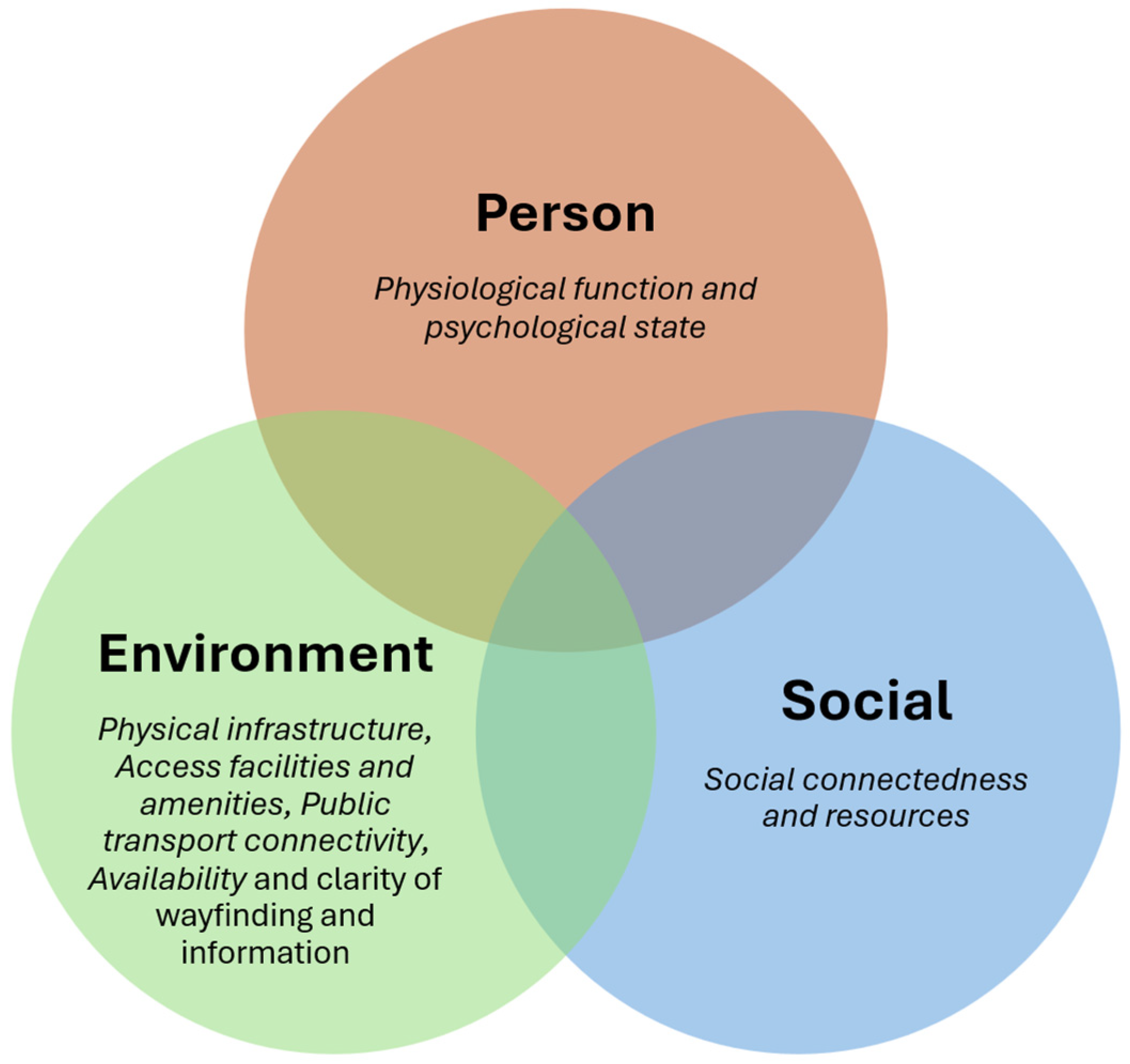
Figure 1. Person–Environment–Social conceptual model guiding data analysis.
Jal 06 00043 g001
Figure 2. Hypothetical path diagram to guide quantitative analysis. K-L grade: Kellgren–Lawrence Grade; SARC-F: Strength, Assistance with walking, Rising from a chair, Climbing stairs, and Falls Questionnaire; CFS: Clinical Frailty Score; BADLs: Basic Activities of Daily Living; KOOS-12: Knee Injury and Osteoarthritis Outcome score-12; SPPB: Short Physical Performance Battery; HGS: Hand Grip Strength; TUG: Timed Up and Go Test; PHQ-9: Patient Health Questionnaire-9; GAD-7: General Anxiety Disorder-7; FES-I: Falls Efficacy Scale—International; BFOM: Brief Fear of Movement Scale; FARS: Falls Activity Restriction Scale; UCLA: University of California, Los Angeles; NEWS-A: Neighbourhood Environmental Walkability Scale—Abbreviated; AFEAT: Age-Friendly Environment Assessment Tool; IPAQ-SF: International Physical Activity Questionnaire—Short Form; UAB-LSA: University of Alabama in Birmingham Life-Space Assessment.
Jal 06 00043 g002
Figure 3. Participation timeline. Participant will be involved in WP3 for minimally 16 days (WP3.1 only) or up to 30 days (WP3.2 only or WP3.1 + WP3.2).
Jal 06 00043 g003
Figure 4. Schematics of methodological similarities and differences and the flow of participants.
Jal 06 00043 g004
Figure 5. Researchers’ impression of the heatmap in DUCT Explorer (version 0.27.1, Singapore) [140].
Jal 06 00043 g005
Figure 6. Dual-energy X-ray absorptiometry (DXA)-based digital twin representing a sideways fall.
Jal 06 00043 g006
Disclaimer/Publisher’s Note: The statements, opinions and data contained in all publications are solely those of the individual author(s) and contributor(s) and not of MDPI and/or the editor(s). MDPI and/or the editor(s) disclaim responsibility for any injury to people or property resulting from any ideas, methods, instructions or products referred to in the content.