


Abstract
Population ageing has renewed interest in the capability approach (CA) as a framework for understanding wellbeing in later life. Yet research applying the CA to ageing remains fragmented, and its empirical focus is still not well understood. This study examines how CA-based ageing research has developed and how it explains capability constraints and adaptive responses in later life. Using Web of Science Core Collection records from 2000 to 2025, we combine comparative bibliometric analysis with a focused qualitative interpretive synthesis. A general CA corpus (n = 3416) was first constructed and then refined to identify a CA-in-ageing subset (n = 142). The bibliometric results suggest that CA-in-ageing research is more problem-oriented than the broader CA literature, with health and care evaluation, as well as mobility and accessibility, emerging as particularly prominent thematic concentrations in the retrieved corpus. The qualitative synthesis of five appraised studies further shows how capability loss may be experienced in everyday life through shrinking life-space, disrupted social participation, and threats to dignity. It also identifies adaptive strategies through which older adults rebuild routines, negotiate selective support, and re-establish participation through enabling environments and services. Given the small qualitative corpus, its reliance on several COVID-19-related studies, and its Western empirical contexts, the findings should be read as an explanatory account of possible mechanisms rather than as a comprehensive representation of later-life capability loss across all ageing settings. By integrating bibliometric mapping with qualitative evidence, this study clarifies how the CA has been operationalised in ageing research and highlights the importance of environmental accessibility, service stability, and participation opportunities in sustaining wellbeing in later life.
1. Introduction
Research on ageing increasingly recognises that wellbeing in later life cannot be understood solely through the distribution of resources such as pensions, healthcare, or social services [1,2]. Instead, attention has shifted towards whether older adults have real opportunities to live the lives they value [1]. In this context, population ageing has become one of the most consequential social transformations of the twenty-first century. As demographic structures continue to shift, older populations display growing internal differentiation in functional status, health conditions, and social participation, with clear disparities in health-related quality of life by gender and among the oldest-old [3,4]. These patterns highlight a central challenge for ageing societies: not only the provision of resources, but also the question of whether older adults are able to convert available support into meaningful opportunities for living [5,6]. The capability approach (CA) provides a framework for examining these opportunities by focusing on people’s substantive freedoms and the conditions that shape their ability to convert resources into valued functionings.
In practice, similar levels of pensions, healthcare provision, or community services can translate into markedly different life outcomes for older adults. These divergences are closely linked to functional capacity and structural inequality. Evidence shows that functional limitations are more concentrated among socioeconomically disadvantaged groups and that such inequalities have widened over time [7,8]. In later life, risks often emerge not from absolute deprivation but from shrinking opportunities for everyday participation. Functional impairments and multiple risk factors reduce social participation [9], while participation itself helps explain inequalities in functional limitations [10]. Environmental conditions also play a critical role: proximity to services and everyday facilities can slow functional decline among older adults with multimorbidity [11]. These patterns suggest that later-life wellbeing depends not only on the availability of resources but also on the conditions that enable older adults to translate available support into participation, independence, and everyday functioning.
Ageing-related challenges, therefore, point fundamentally to the structural distribution of life chances and freedoms rather than only to changes in the quantity of resources available. The CA offers a particularly powerful framework for making sense of this problem. Unlike evaluative perspectives centred on income, resources, or utility, the CA shifts attention to what people are actually able to be and do, and the real freedoms and feasible opportunities they have in choosing ways of living [1]. In contrast to a conventional biomedical view, this perspective emphasises how social, economic, and psychological barriers constrain people’s opportunities [12]. This perspective is particularly relevant for ageing research, where later-life vulnerability often emerges precisely in the gap between the availability of support and the ability to convert that support into meaningful participation and autonomy.
The CA, developed primarily by Sen and further elaborated by Nussbaum, evaluates well-being in terms of people’s real freedoms and opportunities to achieve valued ways of living rather than the resources they possess [1,13]. Within ageing research, this perspective highlights that later-life wellbeing depends not only on the amount of support available but also on whether older adults are able to convert available resources, services, and environments into meaningful participation, autonomy, and dignity [14,15].
As scholarship on the CA has expanded, the literature has grown rapidly and become increasingly differentiated. Several review studies have synthesised the theoretical foundations and applications of CA, outlining key concepts such as capabilities, functionings, freedoms, and conversion factors and documenting its use across a range of policy domains [16,17,18,19]. More recently, Barreno-Alcalde et al. [14] conducted a bibliometric review that mapped major journals, publication trends, and co-citation clusters, while identifying influential bridging studies across thematic areas. However, existing reviews primarily focus on the overall CA literature and provide limited insight into how CA research has evolved within specific domains such as ageing. In particular, existing studies have paid limited attention to the evolution of high-frequency keywords and to the thematic relationships revealed through keyword co-occurrence networks. As a result, it remains difficult to trace how research priorities develop, how thematic differentiation occurs, and how specific subfields are structured within the broader CA literature. This limitation is especially important for ageing research, where empirical applications of the CA often focus on concrete everyday capabilities such as mobility, participation, and access to services.
To address these limitations, this study combines comparative bibliometric analysis with qualitative interpretive synthesis to examine how CA research has developed in ageing scholarship and how it explains capability constraints in later life. First, we map the broader CA literature and compare it with CA research on ageing, focusing on thematic shifts and conceptual emphases. Second, we synthesise eligible qualitative studies to examine how older adults experience constrained capabilities and how they adapt to these constraints in everyday life. This integrated design links field-level patterns in the literature with lived experiences of capability loss and adaptation.
This study contributes to ageing research in three ways. First, it clarifies how the CA has been applied within ageing scholarship and identifies the main thematic emphases visible in the retrieved literature. Second, it shows how bibliometric mapping can be combined with qualitative interpretive synthesis to connect patterns of knowledge production with everyday experiences. Third, it identifies recurring mechanisms through which environments, services, and support systems shape older adults’ opportunities for participation, autonomy, dignity, and well-being.
Based on this design, we address the following research questions: How has CA research developed within ageing scholarship? From a CA perspective, what capability constraints do older adults experience, and how do they adapt to them?
2. Methodology
2.1. Bibliometric Analysis
Bibliometrics is a set of quantitative techniques that maps scientific knowledge by analysing publication and citation data to uncover relationships among authors, institutions, and themes [20]. Such methods enable systematic, replicable, and objective exploration of large literature sets [21].
2.1.1. Data Source and Search Strategy
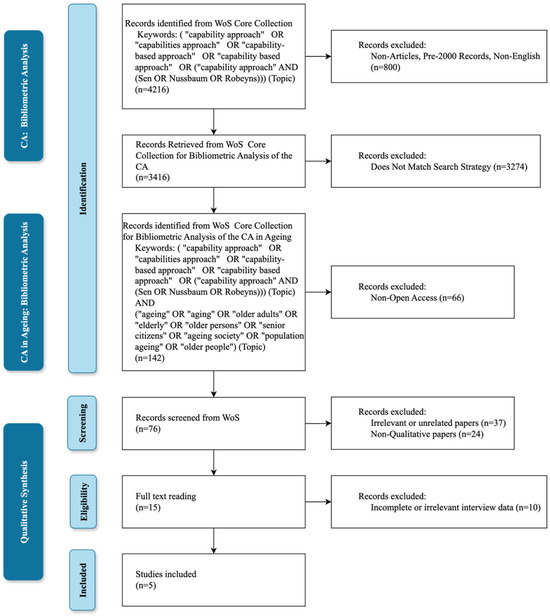
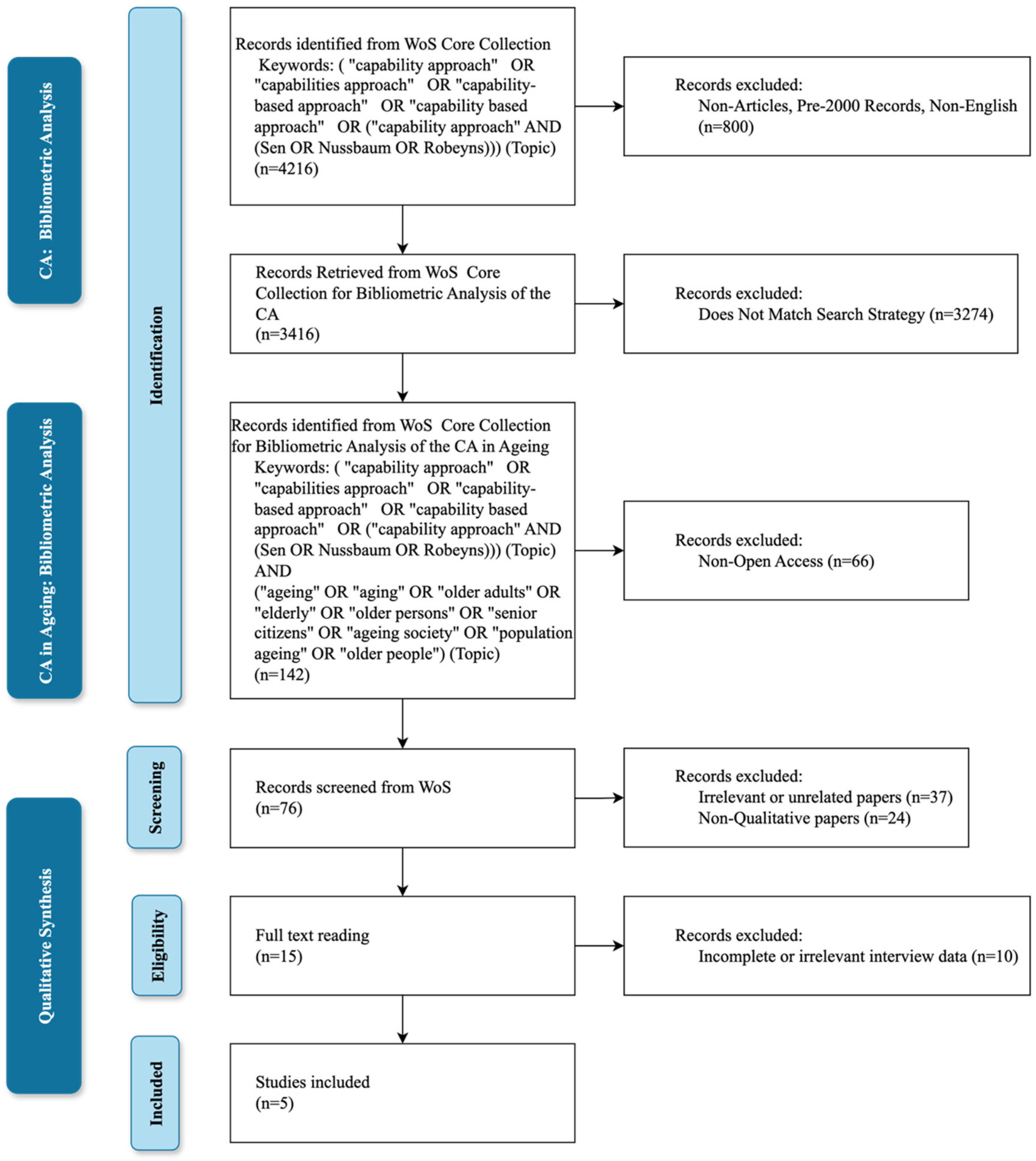
This study followed the PRISMA framework to improve transparency in the literature selection process (See Figure 1) [22,23]. Publications from 2000 to 2025 were retrieved from the Web of Science (WoS) Core Collection in January 2026, covering A&HCI, BKCI-SSH, BKCI-S, CCR-EXPANDED, ESCI, IC, CPCI-SSH, CPCI-S, SCI-EXPANDED, and SSCI. WoS was used as the sole bibliographic source because it provides standardised citation records, stable indexing procedures, and structured metadata suitable for reproducible bibliometric analysis [22,24]. Using a single database also ensured consistency in record structure, citation indexing, keyword fields, and document classification when comparing the broader CA corpus with the CA-in-ageing subset. The time range was set from 2000 onwards to capture the period in which the CA gained wider empirical application across social policy and health-related research.
Figure 1.
Flow diagram of the study selection and screening process. Adapted from the PRISMA 2020 framework [25].
We implemented a two-step topic search strategy to (i) build a general capability approach (CA) corpus and (ii) derive an ageing-focused CA subset. Query 1 aggregated CA-related records using the following topic search string:
TS = (“capability approach” OR “capabilities approach” OR “capability-based approach” OR “capability based approach” OR (“capability approach” AND (Sen OR Nussbaum OR Robeyns)))
The search string avoided the isolated term “capability” because it is widely used across multiple disciplines. Records were exported in plain text format with full records and cited references for bibliometric analysis. To ensure comparability and data quality, the results were limited to English-language peer-reviewed journal articles published from 2000 onwards. Non-English outputs, books, book chapters, commentaries, duplicate records, and items without substantive research content or a clear methodological basis were excluded. After screening, 3416 records were retained for the general CA bibliometric analysis and used as the comparative benchmark.
An ageing-related topic filter was then applied to identify CA scholarship explicitly situated in ageing or older-adult contexts. The filter included spelling variants and common population descriptors used in ageing research. It was kept deliberately focused because the aim was to capture studies that explicitly engaged with ageing populations or ageing societies, rather than all studies indirectly relevant to later-life wellbeing. The ageing-related search terms were:
TS = (“ageing” OR “aging” OR “older adults” OR “elderly” OR “older persons” OR “senior citizens” OR “ageing society” OR “population ageing” OR “older people”)
After applying this additional restriction, 142 records were retained for the bibliometric analysis of CA research in the ageing domain.
2.1.2. Bibliometric Data Analysis
Before bibliometric analysis, the dataset was cleaned and harmonised to improve consistency in mapping and network analysis. Duplicate records were checked, and keyword variants were standardised where terms were semantically equivalent and differed mainly in spelling, capitalisation, pluralisation, hyphenation, or formatting. For example, “capability approach”, “capabilities approach”, “Capability Approach”, “capability-based approach”, and “Sen’s capability approach” were standardised as “capability approach”, while “quality of life” and “quality-of-life” were standardised as “quality of life”. Conceptually distinct terms were retained separately to avoid over-standardisation.
Bibliometric analyses were conducted in RStudio (version 4.5.2; RStudio PBC, Boston, MA, USA) using the bibliometrix package. Bibliometrix supports reproducible science-mapping workflows, including descriptive analysis, conceptual structure analysis, and keyword co-occurrence mapping [24,26,27].
2.2. Qualitative Interpretive Synthesis
2.2.1. Study Screening and Selection Process
From the 142 ageing-related records identified in the bibliometric stage, we conducted further screening for the qualitative interpretive synthesis. This stage aimed to identify studies with qualitative empirical material suitable for examining capability constraints and adaptive responses in later life, rather than to include all CA-in-ageing publications. The first, second, and last authors independently assessed titles and abstracts using a blinded procedure.
At this stage, 24 studies were excluded because they were non-qualitative or did not provide relevant qualitative empirical material. A further 37 articles were excluded after discussion because they did not meet the interpretive focus of the synthesis. These included studies in which ageing was only incidental, capability was not substantively linked to older adults’ lived experiences, or the abstract did not indicate evidence on capability constraints, adaptive responses, care, mobility, participation, or everyday functioning. After unblinding, discrepancies were compared and resolved through discussion. This process left 15 articles for full-text eligibility assessment. The screening process is summarised in Figure 1.
2.2.2. Quality Appraisal Process
During a full-text eligibility assessment, the 15 articles were reviewed against the criteria for qualitative interpretive synthesis. Three studies were excluded because their qualitative data were too limited, insufficiently transparent, or not sufficiently extractable to support thematic interpretation. A further seven studies were excluded because they did not directly address capability constraints, adaptive responses, or the conversion of resources, services, and environments into valued functionings among older adults. The age-related criterion prioritised studies in which participants were primarily aged 65 years and above, or in which later-life experiences were clearly separable and analytically relevant to ageing-related capability issues. Five studies were finally included in the qualitative interpretive synthesis.
The synthesis was designed to be interpretive rather than exhaustive. Although the final qualitative corpus was small, the included studies provided detailed accounts of capability constraints and adaptive responses in later life. The analysis, therefore, focused on conceptual depth and mechanism-building rather than statistical generalisation.
Full-text quality appraisal followed the Swedish Agency for Health Technology Assessment and Assessment of Social Services [28] framework, which evaluates qualitative research across key domains, including theoretical background, research questions and aims, recruitment, sample, procedures, data analysis, pre-understanding, reflexivity, and the use of qualitative data. Each article was appraised independently by two authors (with responsibilities shared between the first and second authors, and between the third and last authors). After independent appraisal, assessments were compared; where interpretations differed, we conducted reflexive discussions to reach a shared judgement.
When one reviewer raised concerns not mentioned by the other, additional authors were occasionally consulted to determine an appropriate resolution. All final decisions were made by consensus.
2.2.3. Qualitative Interpretive Synthesis and Analysis
We conducted a reflexive, inductive thematic analysis [29]. First, we carefully read the findings/conclusions sections of each included study to become familiar with the material. The first, second, and last authors then coded the texts independently while remaining blind to one another’s coding decisions. Extracts were systematically annotated to generate initial codes and candidate themes.
Next, the authors compared coded extracts, preliminary interpretations, and candidate themes. Through reflexive discussion, we examined convergence and divergence to refine and review the developing thematic structure. Each extract was systematically organised into themes and sub-themes. Themes were then summarised in narrative form and discussed reflexively.
Throughout the stages of theme development and review, we maintained ongoing reflexive discussions about how our prior assumptions and potential biases might shape interpretation, and we used these discussions to strengthen analytic transparency and consistency across authors.
3. Bibliometric Results
3.1. Descriptive Overview of CA Research in Ageing
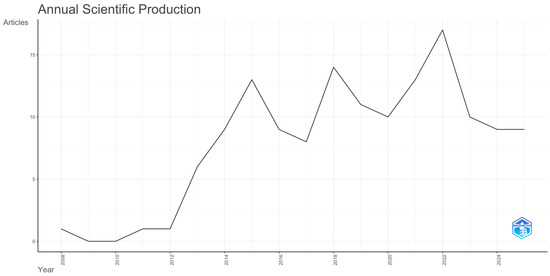
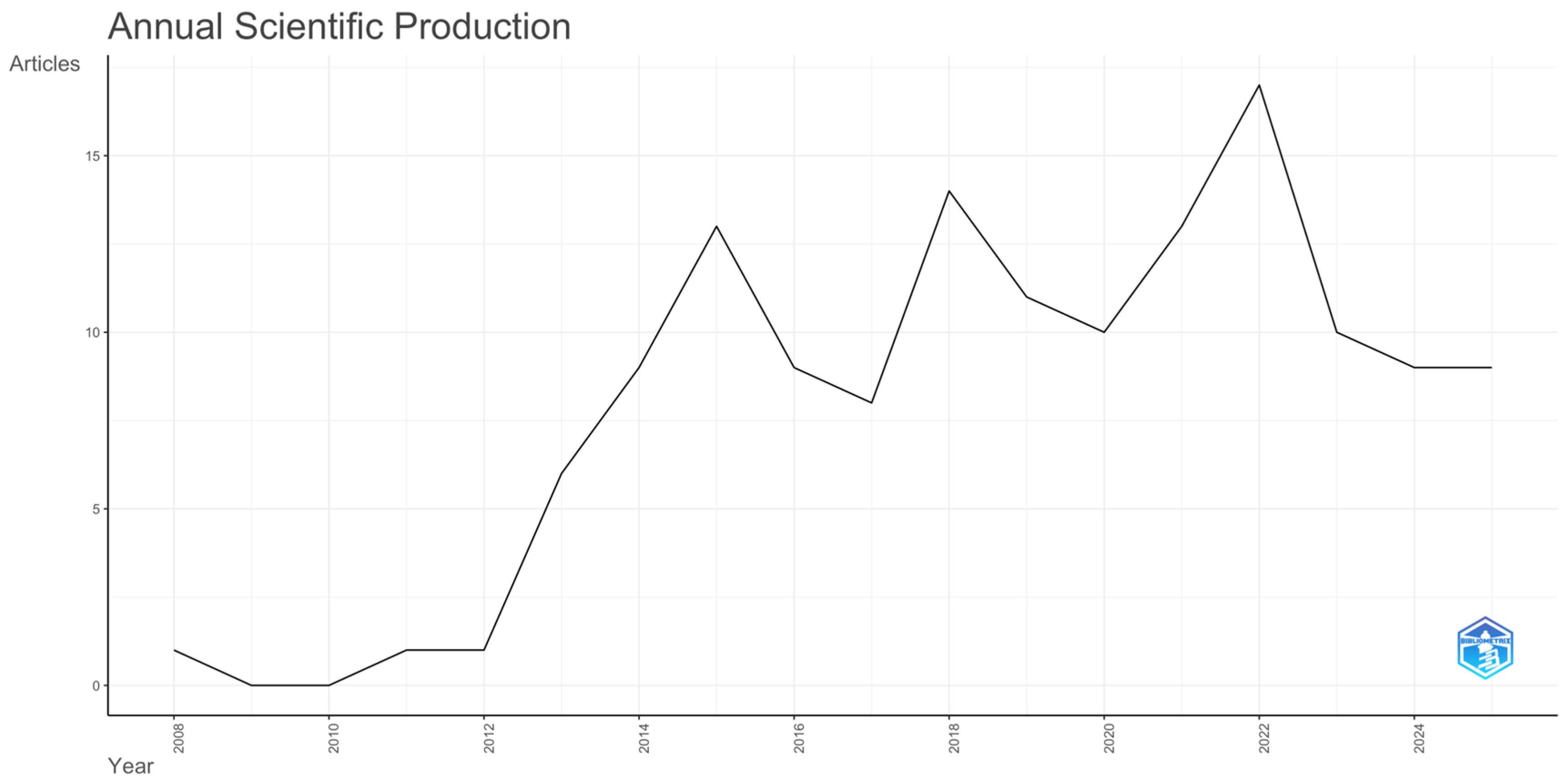
To position the CA research on ageing within the broader CA literature, we first benchmarked our results against existing bibliometric evidence. Barreno-Alcalde et al. [14] identified 2320 CA-related WoS articles (SSCI, AHCI, ESCI) published between 1994 and 2022, documenting rapid expansion in the field. Once an ageing focus is introduced, the publication trajectory appears less continuous than that observed in the broader CA literature, with visible fluctuations across the period (see Figure 2). In our CA-in-ageing dataset, publications became more visible from 2008, followed by a first noticeable rise during 2012–2015. Output then fluctuated through 2022, before dropping sharply in the most recent years. Overall, CA research on ageing appears to follow a less continuous growth trajectory than the broader CA literature, with periods of increased attention followed by slower publication activity (see Figure 2).
Figure 2.
Annual scientific production of CA-in-ageing publications (2000–2025).
Introducing the ageing constraint also reshapes the outlet structure. While established CA journals remain present, their relative salience declines as health and gerontology outlets move to the centre. Social Science & Medicine is the most productive journal (12 publications), followed by Social Indicators Research (8) and Ageing & Society (6). The appearance of Journal of Transport Geography among the top outlets (4 publications) is particularly revealing, suggesting that mobility and accessibility have become a visible applied strand of CA-in-ageing research, alongside more conventional health- and care-oriented agendas (see Table 1).
Table 1.
Most productive journals in the CA-in-ageing dataset.
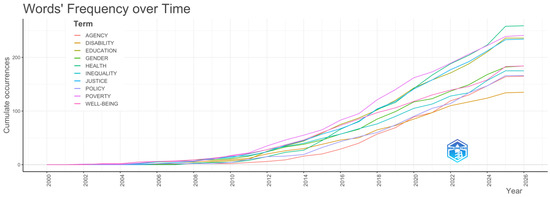
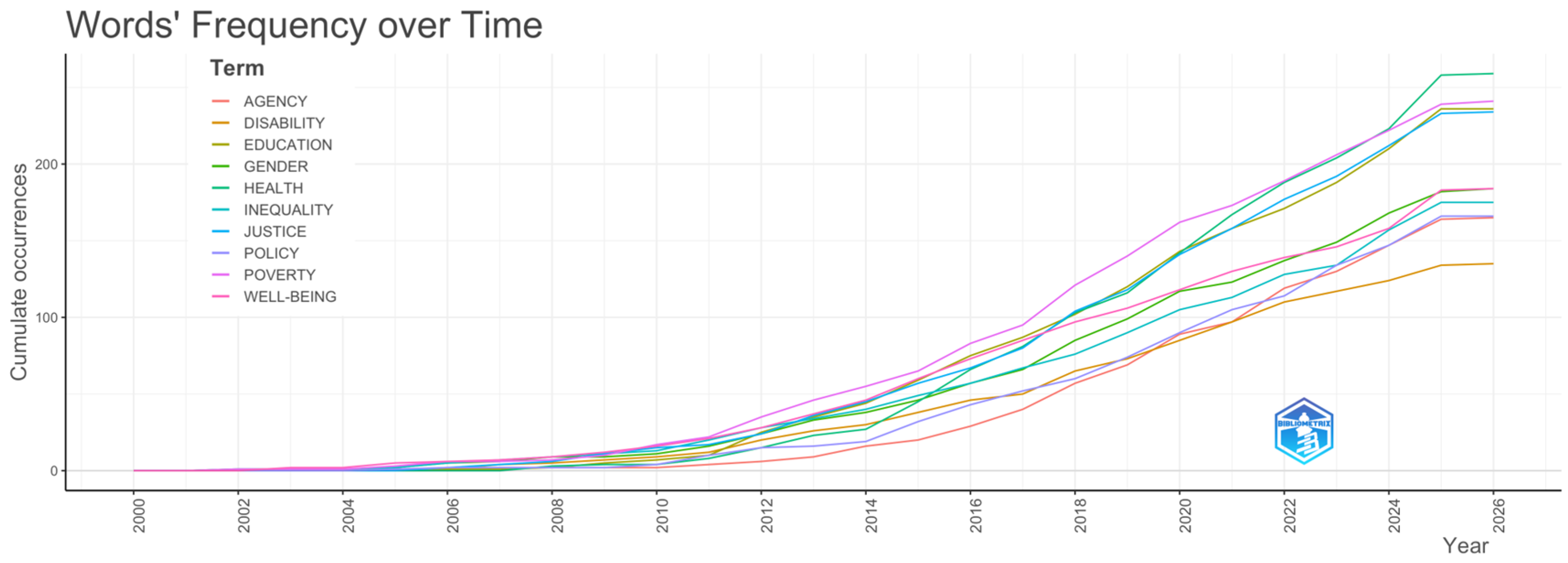
To move beyond where studies are published and examine what the field increasingly emphasises, we traced the evolution of high-frequency keywords. In the overall CA corpus, the dominant trajectories remain anchored in CA’s normative–development tradition: keywords related to justice, well-being, poverty, inequality, and agency accumulate steadily over time (see Figure 3). This reinforces the view that, even as CA diffuses into new domains, its mainstream intellectual base continues to centre on assessing development and social arrangements in terms of substantive freedoms and fairness.
Figure 3.
Trends in high-frequency keywords in the overall CA literature.
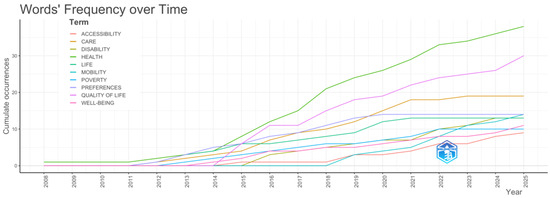
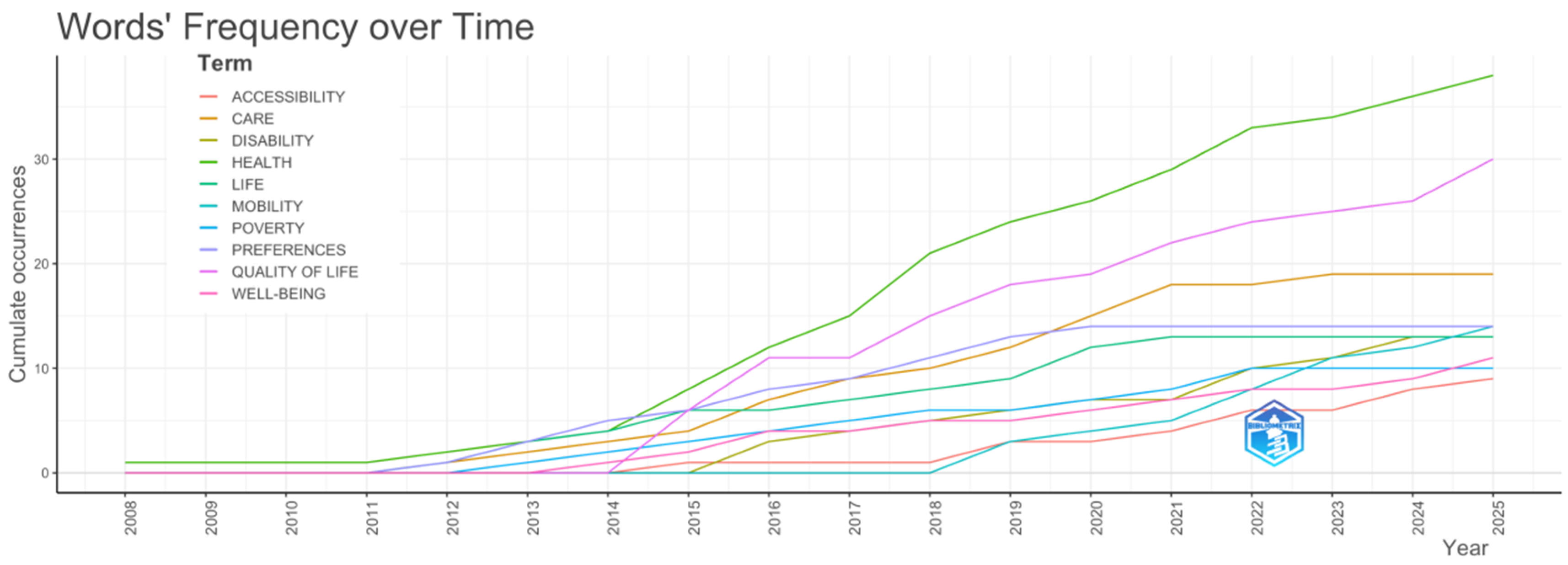
In contrast, the CA-in-ageing subset follows a more problem-driven and application-focused pathway. Over time, keywords increasingly cluster around health- and functioning-relevant concerns (e.g., health, disability, quality of life, care), accompanied by a clearer rise in evaluative- and measurement-oriented terms linked to health economics and capability-based instruments (see Figure 4). Notably, the growing visibility of mobility- and accessibility-related terms mirrors the outlet pattern reported above, supporting the interpretation that ageing studies often operationalise “capabilities” as concrete, everyday opportunities, especially the ability to move, reach services, and sustain social participation. These trajectories indicate which themes have gained prominence, but they do not yet show how themes are structured in relation to one another. To address this, we next apply Multiple Correspondence Analysis (MCA) to map the conceptual space of keywords.
Figure 4.
Trends in high-frequency keywords in CA-in-ageing studies.
3.2. Conceptual Structure Comparison
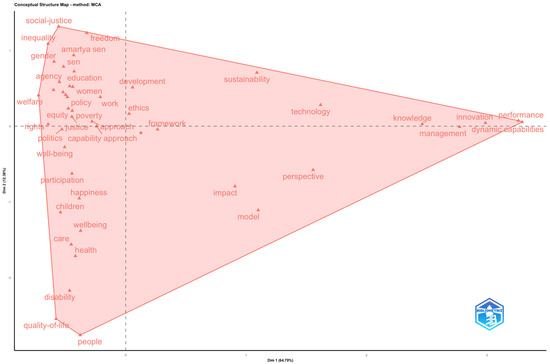
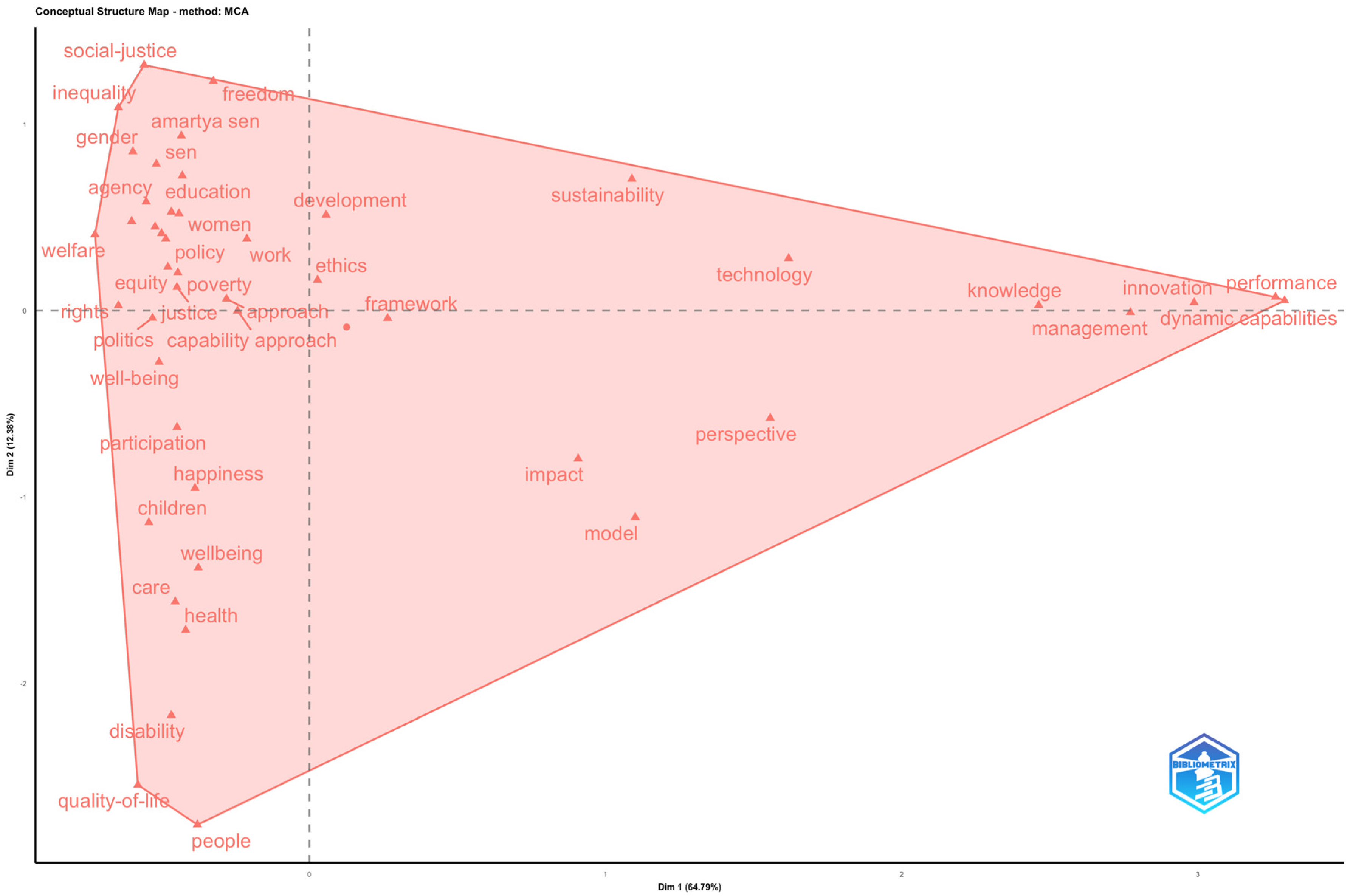
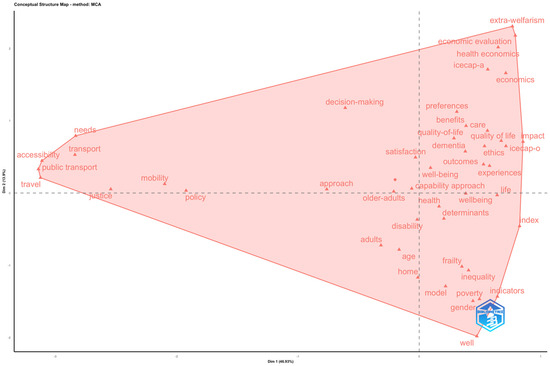
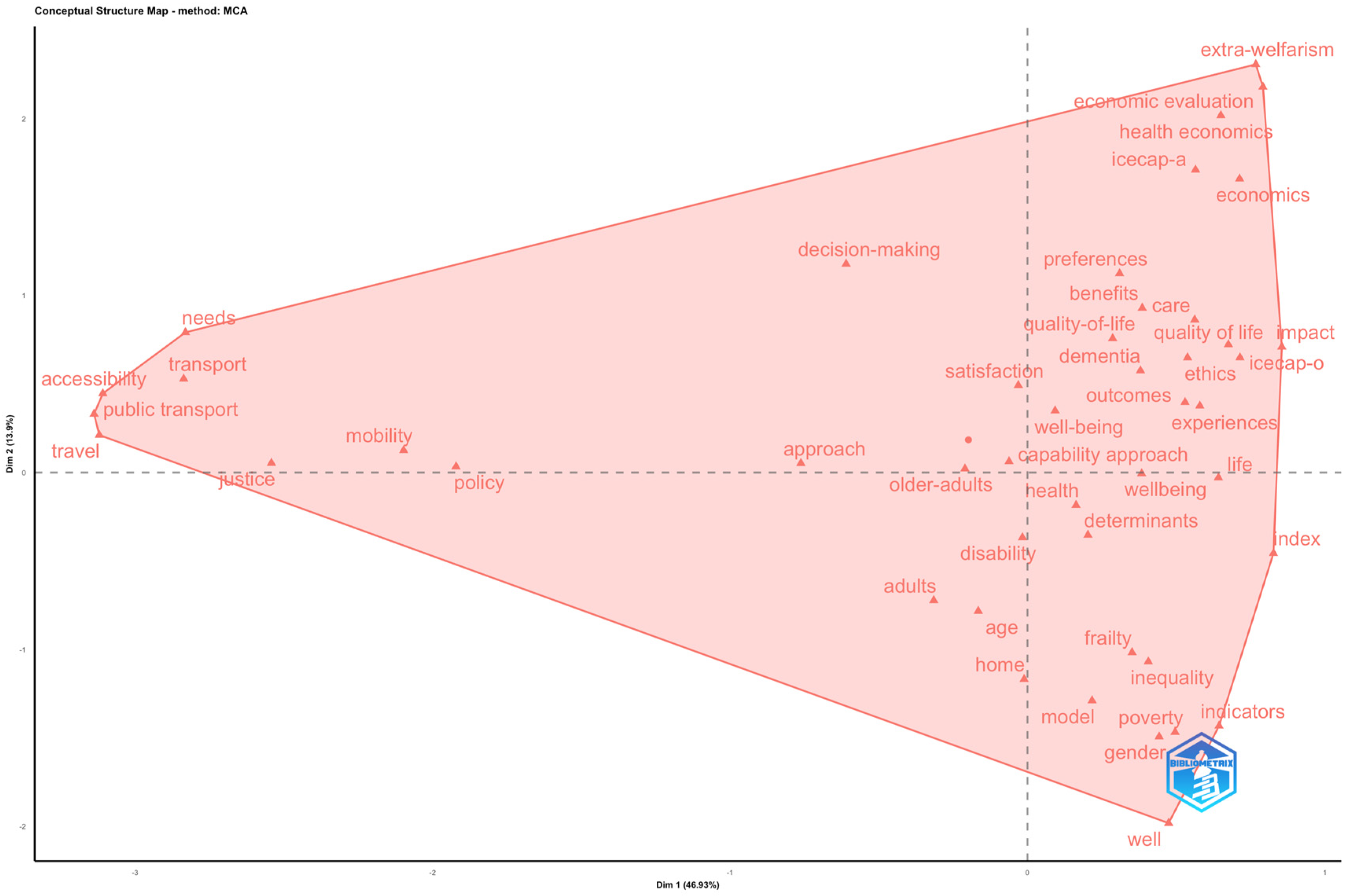
To examine how keywords are positioned in relation to one another, Multiple Correspondence Analysis (MCA) was applied to the keyword data. Figure 3 and Figure 4 show changes in keyword visibility over time, while MCA provides a complementary view of how these terms are distributed within a shared conceptual space. For visual comparability, both maps included the top 50 keyword terms. In the overall CA corpus, Dimension 1 explained 64.79% of the variance and Dimension 2 explained 12.38%, suggesting a strong primary conceptual axis. In the CA-in-ageing subset, Dimension 1 explained 46.93%, and Dimension 2 explained 13.90%, indicating a less concentrated keyword space within the selected representation. This contrast should be interpreted cautiously because the same top-50 threshold was applied to corpora of markedly different sizes. Nevertheless, the ageing-focused map points to a more problem-oriented set of applied emphases, particularly mobility and accessibility, health and care evaluation, and unequal ageing-related vulnerability.
The MCA map for the overall CA literature (see Figure 5) shows a broad keyword landscape anchored mainly in CA’s normative and development-oriented vocabulary. Keywords such as social justice, rights, welfare, equity, poverty, gender, inequality, agency, education, freedom, and Amartya Sen appear close to this central area. This pattern suggests that much of the broader CA literature continues to engage with questions of justice, development evaluation, inequality, and human agency. A related health-oriented area links CA to terms such as health, care, disability, quality of life, and well-being, indicating an applied pathway through which CA is used to assess lived conditions and well-being outcomes.
Figure 5.
Conceptual structure map of the overall CA literature.
Another area of the map contains terms such as technology, knowledge, innovation, management, performance, and dynamic capabilities. This reflects the wider use of capability-related vocabulary in organisational and innovation research. Its separation from the justice and development vocabulary suggests that this strand shares some terminology with CA but is not necessarily aligned with CA’s normative agenda.
In the ageing-focused subset, the MCA map (Figure 6) shows a more applied and problem-oriented keyword distribution. One visible concentration centres on mobility and accessibility, including terms such as accessibility, public transport, travel, mobility, and justice. These terms foreground the practical conditions under which older adults reach services and sustain social participation. A second concentration centres on health and valuation, with terms related to health economics and economic evaluation, including quality of life, ICECAP-O, care, benefits, and preferences. Alongside these areas, keywords such as poverty, inequality, gender, frailty, and indicators suggest continuing attention to unequal ageing and vulnerability. The map, therefore, indicates thematic prominence within the retrieved corpus rather than a definitive structure of the CA-in-ageing field.
Figure 6.
Conceptual structure map of CA-in-ageing studies.
3.3. Comparative Analysis of Keyword Co-Occurrence Networks
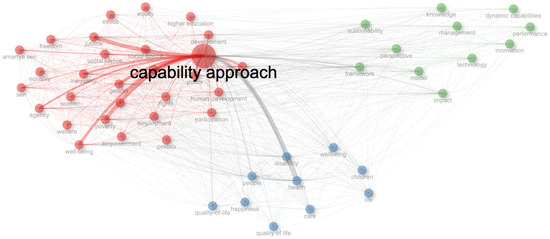
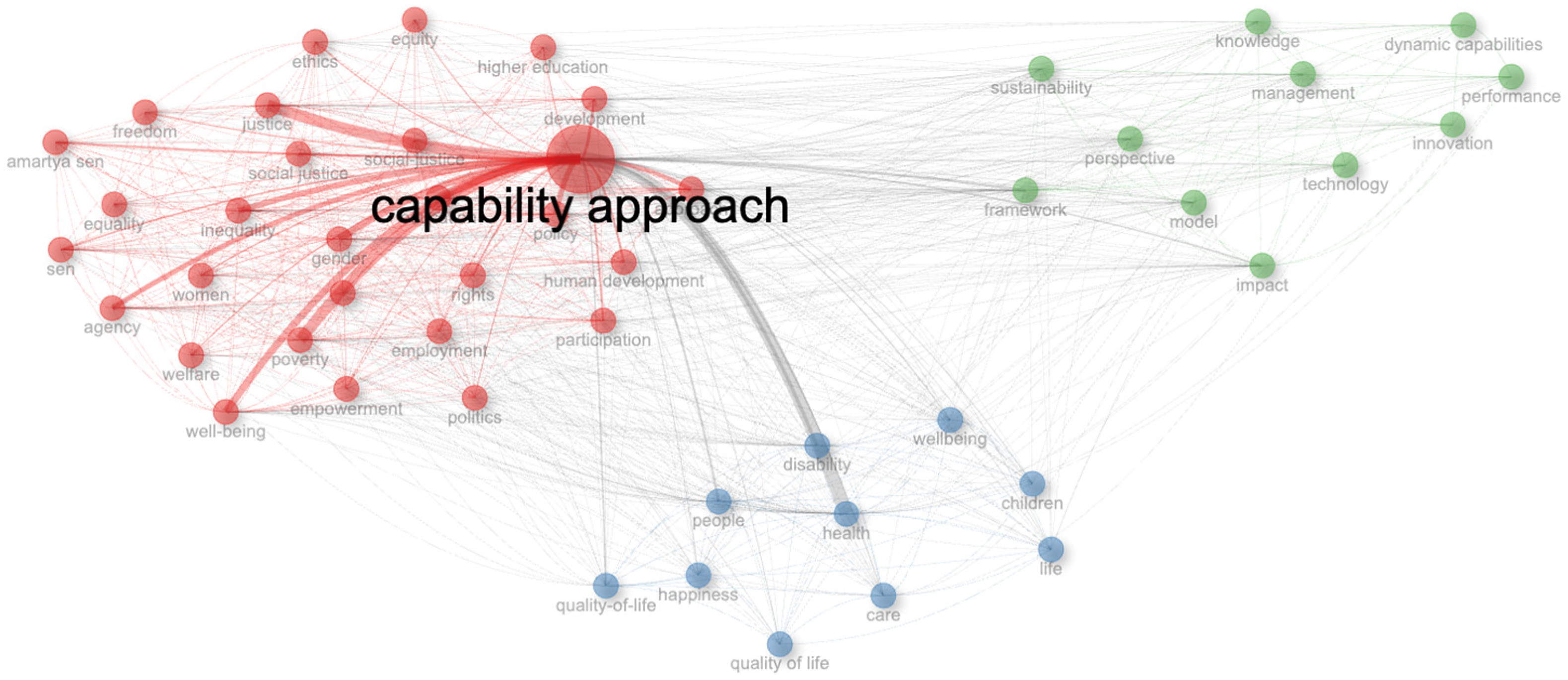
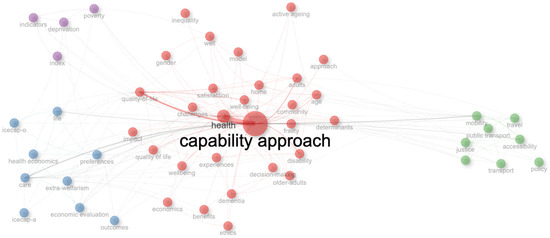
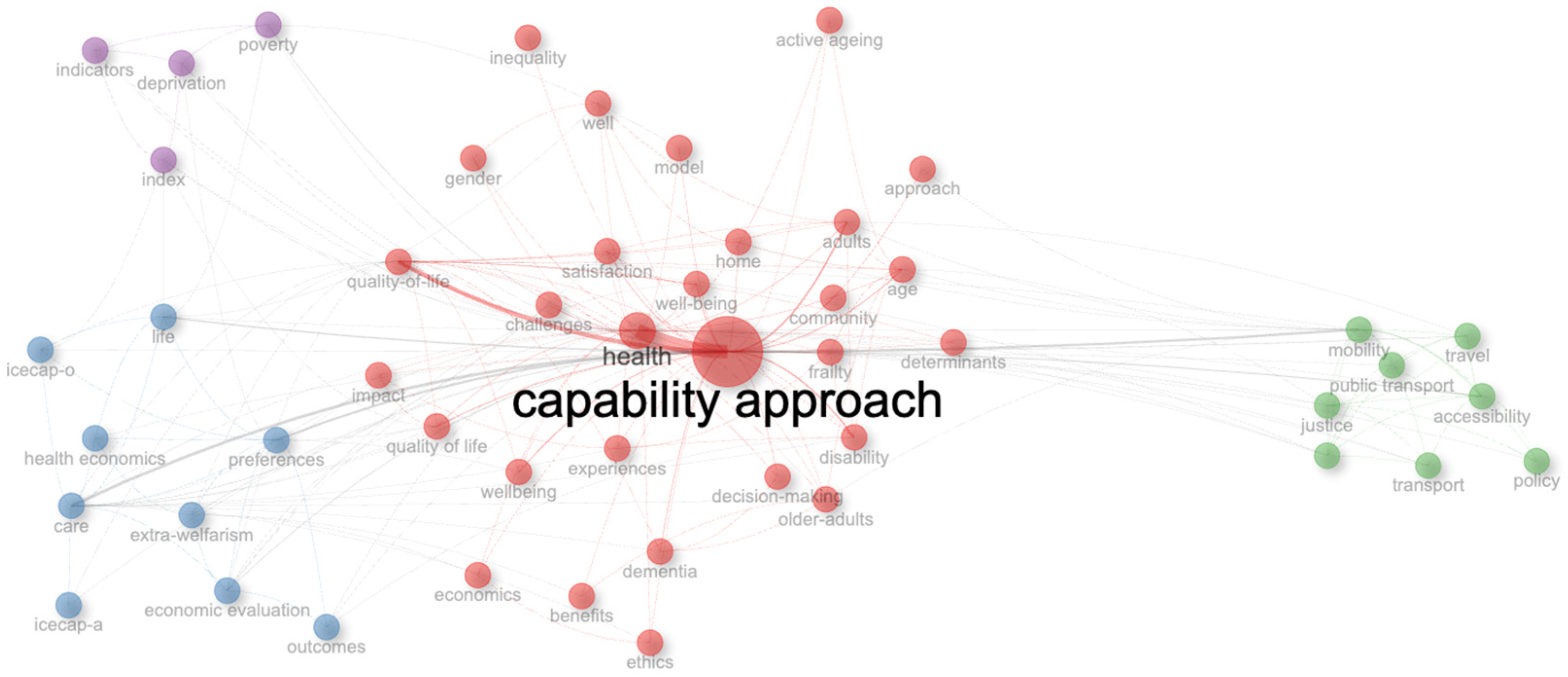
Whereas MCA maps position keywords within a shared conceptual space, keyword co-occurrence networks show how strongly terms are connected. We therefore constructed comparable networks for the overall CA corpus and the CA-in-ageing subset using the harmonised keyword field. Synonymous and near-synonymous variants, including different forms of “capability approach” and “capabilities approach”, were consolidated to reduce lexical fragmentation. For visual comparability, both networks included the top 50 most frequent keyword terms after harmonisation and were clustered using the Louvain algorithm. Node-level indicators, including betweenness centrality, closeness centrality, PageRank, and Louvain cluster membership, were used to support the interpretation of bridging terms and thematic communities. The resulting networks are shown in Figure 7 and Figure 8.
Figure 7.
Keyword Co-occurrence Network of the CA Literature.
Figure 8.
Keyword Co-occurrence Network of the CA in Ageing Literature.
In the overall CA network (see Figure 7), “capability approach” functions as the main hub, with a substantially higher betweenness centrality (344.665) and PageRank value (0.195) than any other term. Other bridging terms are much weaker, including health (6.282), education (3.167), justice (2.975), poverty (2.871), and impact (2.441). This pattern suggests that the broader CA corpus is organised around a strong conceptual centre, with secondary links extending towards normative-development concerns and selected applied domains.
The Louvain clusters further reflect this pattern. The largest cluster, containing 28 of the 50 keyword nodes, brings together terms associated with CA’s normative and development-oriented vocabulary, including freedom, rights, justice, equality, welfare, empowerment, poverty, education, gender, inequality, agency, and wellbeing. A second cluster links CA to applied concerns such as health, disability, care, quality of life, children, and happiness. A third cluster includes terms such as framework, dynamic capabilities, impact, performance, innovation, management, knowledge, technology, model, perspective, and sustainability, indicating the wider use of capability-related vocabulary in organisational and innovation research.
The ageing-focused network (See Figure 8) shows a more applied and problem-oriented pattern within the retrieved corpus. “Capability approach” remains the strongest bridging node, with the highest betweenness centrality (719.536) and PageRank value (0.172). However, several ageing-related terms also occupy visible bridging positions, including health (betweenness = 87.859; PageRank = 0.075), older-people (69.870), quality-of-life (19.463), people (14.921), care (11.701), older people (11.353), and mobility (6.701). This suggests that, in the ageing-focused subset, CA is connected to later-life concerns through health, care, quality of life, older people, and mobility.
The cluster structure supports this reading. One cluster links CA with health, older people, disability, poverty, ageing, frailty, gender, and inequality, suggesting attention to health, vulnerability, and unequal ageing. A second cluster brings together care, preferences, quality of life, economic evaluation, extra-welfarism, ICECAP-O, economics, and health economics, reflecting the visibility of capability-based measurement and care evaluation. Other clusters point to later-life agency and care-related decision-making, wellbeing and satisfaction, and mobility/accessibility, including justice, travel, public transport, and needs.
Taken together, the comparison suggests that the broader CA network is more strongly centred on CA’s normative-development vocabulary, whereas the ageing-focused network connects CA more visibly to concrete later-life concerns. These include health conditions, care evaluation, quality of life, mobility, accessibility, service reachability, and everyday functioning. Given the exploratory nature of keyword co-occurrence analysis and the smaller size of the ageing corpus, these patterns should be read as thematic prominence within the retrieved literature rather than as a definitive structure of the field.
4. Qualitative Interpretive Synthesis Results
4.1. Study Characteristics
The bibliometric results indicated that health and care evaluation and mobility and accessibility were two prominent applied emphases in the retrieved corpus of CA-in-ageing research. These emphases informed the sensitising frame for reading the qualitative evidence, without determining the final themes deductively. In the qualitative material, mobility and accessibility were evident in shrinking life-space, dependence on transport, and difficulties reaching social and service settings. Health and care evaluation was evident in support instability, selective help, dignity, and the negotiation of care.
Following full-text screening and quality appraisal, five qualitative studies were included in the synthesis. These studies were conducted in Canada (n = 10; 65+), England (n = 38; 50–90; and n = 8; 70–92), Ireland (n = 3; 65–89), and the Netherlands (n = 32; 65+), offering a limited cross-context perspective within Western settings. Participants were drawn from diverse living contexts, including community settings and sheltered housing. Collectively, the studies foregrounded capabilities related to everyday independence, mobility, social connectedness, and the conversion of resources and services into valued functionings. Table 2 provides an overview of study contexts, samples, age ranges, and author-reported themes.
Table 2.
Characteristics of included qualitative studies.
Two points about the qualitative corpus require clarification. First, some included studies were conducted in pandemic or lockdown contexts. These accounts were not treated as evidence that all older adults experience capability loss in the same way. Rather, they were read as expressions of broader ageing-related mechanisms, intensified by the pandemic, such as transport dependence, inaccessible environments, unstable support, affordability pressures, and negotiated autonomy. Experiences such as public-space closure, restrictions on physical contact, and regulated social interaction, therefore, show how existing capability constraints became more abrupt, visible, and emotionally acute under pandemic governance.
Second, Mortenson et al. [30] was retained despite its broader focus on disability because its sample included older adults aged 65 and above, and several reported accounts directly addressed later-life capability constraints, including restricted mobility, loss of access to familiar places, disrupted social connections, uncertainty about future capabilities, and efforts to maintain control under constraint. In the synthesis, only extracts and author-reported themes clearly relevant to older adults or later-life capability issues were used.
4.2. Thematic Findings
4.2.1. Constrained Capabilities
- (a)
- Shrinking life-space
This theme shows how resources and environments compress older adults’ life-space, the places they can realistically reach and use. In the pandemic-focused studies (Mortenson et al., 2025 [30]; Osborne & Meijering, 2023 [31]), capability loss is experienced as a sudden re-drawing of everyday geography: familiar places disappear, routines break, and well-being becomes harder to sustain. As OA15 put it:
“They closed the big parks. That was a problem, because we have a very nice provincial park around here. So, I couldn’t go there.”(OA15, 68)
The same contraction is echoed elsewhere—again, not as a minor inconvenience, but as a direct loss of what makes daily life workable. As OA4 said:
“They closed the big parks… So, I couldn’t go there.”(OA4, 69)
When space narrows, mobility is no longer assumed; it becomes heavy, fragile, and uncertain.
“I feel as though I have got concrete blocks on my feet because, you know, you can’t go anywhere.”(OA12, 74)
Mobility is also infrastructure-dependent. When transport options shrink, mobility becomes reliant on others and on services that may vanish. As Moira explained:
“… anywhere I’m going I really need a lift”(Moira, 66)
“[A local bus] … it is no longer running.”(Moira, 66)
In short, shrinking life-space not only limits where older adults can go, but also changes what they can still do with others, making capability loss social. The next theme shows how reduced mobility quickly leads to a breakdown of participation and connection.
- (b)
- Social participation breakdown
Mobility constraints quickly become relational constraints. Participants do not merely report “less contact”; they describe contact being redefined as improper or forbidden, even when it could be practised safely. Ms. Foster captures the frustration of watching others enjoy closeness while her own friendship is treated as illegitimate:
“And I would like to go for a walk with my friend who lives, um, down in town. Because I quite feel resentful when I see people out in family groups that I can’t go for a walk with my friend […] Even if we stay six feet apart, apparently, we’re not supposed to, although actually unofficially we have actually been for a walk, walking six feet apart.”(Ms. Foster, England)
For some, the deepest loss is not conversation but touch—warmth, recognition, and belonging. As Mrs. van Wijk said:
“I find it horrible that I am no longer being touched, that I am not allowed to touch. Fortunately, I have a cat! At least where I still have some warmth, and that also wants warmth from me. But I find it humiliating to just refuse people human contact […] What do you think that does to a person if you are not touched for a year! People are dying! It’s that simple. In a 1.5 m society, people die of loneliness.”(Mrs. van Wijk, Netherlands)
This deprivation is also voiced through family relationships, where restrictions interrupt ordinary expressions of love and care. As Ms. Lee recalled:
“I’m missing seeing m’little ones. M’little great-grandson, who’s four, gets on the phone, and he says, ‘Gwanny, I want to give you a hug. Why can’t I come and give you a hug?’ It’s quite cruel really because m’granddaughter brings him in the car once a week, and she parks it right opposite me. And he’s looking out of the window, and he doesn’t understand, does he, at that age.”(Ms. Lee, England)
As participation opportunities narrow, routines that used to anchor identity, walks, classes, cultural outings, and shared meals, collapse into absence. OA3 frames the same loss through the disappearance of everyday pleasures:
“I love to go to movies. I love to hear live music. I love to have suppers with friends. All those things totally disappeared.”(OA3, 71)
Ms. Lee also described her own similar experience:
“I’m usually a very active person, so I’m missing all my long walks, all m’classes, and meeting all my friends.”(Ms. Lee, England)
When participation becomes emotionally costly, some withdraw, and isolation reinforces itself. As Mrs. van Wijk put it:
“I feel lonely, alone, let down… and I just notice that I withdraw.”(Mrs. van Wijk, Netherlands)
Participation is also shaped by the stability of support. For Moira, being able to “get out” depends on maintaining everyday autonomy:
“Well, I think once you’re able to get out, get up … you know, yourself, and take your own shower … look after your own, you know? Able to do your own cleaning and washing … once you’re able to do things like that and do your own shopping.”(Moira, 66)
Helen’s account, meanwhile, shows how support may hinge on fragile informal pathways:
“She … said she had stumbled across somebody who was doing cleaning for other people that she visited and … she had noticed that this person seemed very caring, so maybe she would help me, and sure enough … I got in touch directly with (carer) … otherwise I would not have known anybody.”(Helen, 85)
Crucially, when costs become unpredictable, support can flip from enabling to threatening, triggering rapid disengagement. As Helen said:
“When six weeks later they stopped providing the service according to this scheme, I got their staggering bill … I was taken aback that I had to pay … eventually I got a bill that I could hardly afford. So, I stopped the service … I cut off contact with them as quickly as possible because I was frightened of money.”(Helen, 85)
As participation contracts, the loss is not only social. It also reshapes how safe and valued people feel in everyday life. The next theme shows how capability loss becomes intertwined with insecurity and with the ongoing work of protecting dignity.
- (c)
- Precarious dignity
Participants link capability loss to a heightened sense of insecurity. They describe disrupted sleep, anticipatory worry, and the feeling that risk is unevenly shared. These accounts present insecurity not as anxiety alone, but as a realistic response to fragile support and an uncertain future.
“I’m not sleeping very well… you think about what’s gonna happen in the future.”(OA11, 73)
“It’s said we’re in this together, but we’re not in the same boat… Mine’s a little boat with holes.”(OA8, 72)
Insecurity is also tied to place. Fear of unsafe environments restricts when and where people feel able to move, which further narrows practical opportunities. Moira puts this plainly:
“You don’t know who you’d meet, you know what I mean? … especially in the night-time, there are no lights, and you’d never go through. I wouldn’t.”(Moira, 66)
Alongside safety concerns, participants treat dignity and recognition as central to capability. For some, exclusion is experienced as a question of whose lives are valued, turning capability loss into a moral and political injury.
“It has been a bit of a punch in the gut… the reason why it hadn’t been done is really a matter of values and whose body minds are at stake.”(OA6, 70)
Others describe dignity as something negotiated through everyday practice. They work to preserve autonomy by continuing to “push yourself,” while also accepting selective help in ways that protect self-respect and competence. Eamon emphasises persistence:
“I like to do things myself … You can say, ‘oh but I’ve Alzheimer’s now I’m afraid I’ll get lost’, [but] you’ve got to push yourself a bit, you know?”(Eamon, unknown age)
Dignity is also negotiated through moral positioning around money and entitlement. Some participants limit claims not because they lack need, but because restraint helps them remain at peace with who they are. Sally frames it as a way of living with oneself:
“I don’t want to be the sort of person who’s grabbing every bit of money that they have a right to, do you know what I mean? I don’t think that everything is just right. I want to live with myself, so I don’t want to get every penny I can get.”(Sally, 70)
Our findings show dignity as fragile yet active. Participants manage insecurity, defend recognition, and set moral boundaries to maintain valued functionings. The next section turns to the strategies through which they adapt under constraint.
4.2.2. Adaptive Strategies
- (a)
- Routine and control
A central pathway involves reclaiming agency by rebuilding parts of daily life that participants can still control. Rather than waiting for external circumstances to change, they describe self-managed routines that restore predictability and ownership in everyday life.
“I’m able to control my exercise, my daily routine, my food intake…”(OA17, 76)
For some, this agency is sustained through discipline. Routine becomes a steady commitment that stabilises the self amid uncertainty.
“I have to be up every morning, if it’s rain or snow, I’ve got to be up”(Eamon, unknown age)
At the same time, these accounts show that agency is not always chosen. In sheltered housing, financial limitation forces painful trade-offs, and coping practices can sit alongside deprivation and vulnerability.
“With 300 euros [a month], you can’t afford to eat here every day… then you’re left with nothing… I take a couple of drinks every day…”(Mrs. Jensen, age group 56–60)
Reclaiming agency helps rebuild a sense of control. Yet daily control alone does not resolve the practical risks of bodily decline. The next accounts show how autonomy is defended through continued effort and carefully managed support.
- (b)
- Self-pushing and selective help
Participants also describe adaptation as an active effort to preserve autonomy by pushing themselves to continue valued activities despite decline, fear, or risk.
“… you’ve got to push yourself a bit, you know?”(Eamon, unknown age)
Autonomy is also sustained through selective dependence. Some accept help for high-risk tasks while retaining competence elsewhere, maintaining self-respect through clear boundaries around assistance.
“I like to receive help when taking a shower [because I am at risk of falling], but I can do the rest myself. If I get help showering one day, I can wash myself during the rest of the week. I put a towel on my [walker], I place it in front of the washbasin, and I know how to wash myself.”(Mrs. Lutz, age group 76–80)
For others, adaptation involves a harder compromise. Accepting uncomfortable care arrangements becomes the price of maintaining basic functionings.
“You knew that if you didn’t hold your nose and jump in, it simply wouldn’t happen, so it was a choice between never having a shower ever, again, or getting over the fact that you were going to get undressed in front of someone who wasn’t intimate.”(Helen, 85)
These accounts show autonomy as something actively negotiated, not simply possessed. The next pathway moves from the private sphere of daily coping to the social world, where participation is rebuilt through spaces, infrastructure, and support.
- (c)
- Rebuilding participation
This code captures how older adults re-open opportunities for social participation after disruption. Here, “participation” refers not only to going out or attending activities, but to regaining a felt sense of social presence, belonging, and connection through everyday routines and shared spaces. Participants describe participation as something rebuilt when supportive places, accessible environments, and workable support arrangements make re-engagement feasible.
“…the centre is the place you can go to when you’re happy and when you’re sad…”(Edith, 74)
Participation is also described as emotional repair, where going out changes how one returns.
“… while I go out sometimes with a tear in my eye, I come back with a smile on my face.”(Edith, 74)
For residents in sheltered housing, built-environment accessibility directly reshapes social opportunity. Features such as elevators function as conversion factors that make visits feasible and expand social reach.
“I invite people. I have a great seat here. People come here. It’s much easier because everybody can take the elevator. So, people come to me more often. When I lived in my row house, people didn’t come so often because it was hard to reach.”(Mr. Torenstra, age group 61–65)
Support can also be rebuilt through informal relational pathways, mediated by trust and chance rather than stable systems.
“… she had noticed that this person seemed very caring, so maybe she would help me, and sure enough … I got in touch directly with (carer) … otherwise I would not have known anybody.”(Helen, 85)
At times, adaptation takes the form of strategic withdrawal when participation becomes financially threatening. Here, protecting future security takes priority over continued engagement.
“So, I stopped the service … I cut off contact with them as quickly as possible because I was frightened of money.”(Helen, 85)
In these accounts, participation is rebuilt less through individual motivation alone and more through enabling settings that make “showing up” possible again.
5. Discussion
Integrating the bibliometric and qualitative components suggests that the quantitative patterns are best read as visible thematic concentrations within the retrieved corpus, rather than as fixed structures of the field. Mobility/accessibility and health/care evaluation appear as especially visible applied emphases in the bibliometric analysis. In the qualitative synthesis, these emphases are reflected in everyday processes of capability constraint and adaptation: mobility and accessibility appear through shrinking life-space and disrupted participation, while health and care concerns appear through unstable support, selective dependence, and threats to dignity. Table 3 makes this integration explicit by linking bibliometric concentrations, qualitative themes, illustrative mechanisms, and policy implications.
Table 3.
Integrative synthesis of bibliometric and qualitative findings.
5.1. How Constraints Compound in Later Life
The qualitative evidence shows that later-life capability loss is rarely experienced as a single deficit. It unfolds as a practical tightening of what can be done, where it can be done, and with whom. Across the studies reviewed, capability constraints tend to accumulate through routine social and environmental mechanisms that progressively narrow opportunities for mobility, service access, and social participation. Changes in space, services, and social rules reduce feasible options, and those reductions then compound. What begins as limited movement quickly becomes limited participation, and this, in turn, affects dignity and security [2].
Some of the qualitative evidence was drawn from COVID-19-related studies, but the mechanisms identified here should not be read as pandemic-specific. A clearer distinction can be made between broader ageing-related mechanisms and pandemic-intensified expressions of those mechanisms. Broader mechanisms include life-space contraction, transport dependence, inaccessible or unsafe environments, fragile informal support, affordability pressures, and the negotiation of autonomy and dignity. These conditions also appear in non-pandemic studies, where older adults’ opportunities are shaped by limited transport, housing and neighbourhood accessibility, unstable support arrangements, and the cost of care.
Pandemic restrictions intensified these mechanisms by making them more abrupt, visible, and emotionally acute. Public-space closure, regulated social contact, touch deprivation, and sudden participation collapse should therefore be interpreted as intensified expressions of wider conversion constraints rather than as evidence that all older adults experience capability loss uniformly. The analytical value of the pandemic-related evidence lies in showing how capability constraints become concentrated under stress. The findings, therefore, have cautious theoretical transferability.
First, the accounts point to an immediate problem of feasibility. Older adults often describe a world that becomes less navigable and less predictable. Places that previously supported routine, restoration, and contact become unavailable. Transport becomes unreliable or absent. Moving around turns into an effort that depends on lifts, timetables, and other people. In capability terms, the issue is not simply fewer activities, but fewer workable routes from resources to valued functionings. The environment stops enabling ordinary independence [34].
Second, reduced feasibility has social consequences. When movement is restricted and settings for meeting disappear, relationships become harder to sustain in practice. Participants describe the loss of everyday participation not only as fewer encounters, but also as the collapse of the routines that gave structure and meaning to social life. Classes, walks, cultural outings, shared meals, and casual visits are not trivial extras. They are the practical infrastructure of belonging. When they disappear, isolation becomes easier to maintain than re-engagement, and withdrawal becomes a predictable response rather than an individual failing.
Third, constraints are felt as insecurity as well as limitation. Participants report anticipatory worry, disrupted sleep, and a clear sense that risk is unevenly borne. This is not best read as anxiety in isolation. It reflects fragile support and uncertain futures. In several accounts, insecurity is also tied to place. Fear of unsafe environments restricts when and where people are willing to move, which narrows opportunities further. Alongside fear, dignity becomes a live issue. Participants interpret exclusion and delayed support as signals about whose lives are valued, and they work to protect self-respect through everyday practices such as pushing themselves to remain capable, accepting help selectively, and managing claims in ways that allow them to live with themselves [35].
These qualitative patterns align closely with the bibliometric structure of CA-in-ageing research. In the ageing-focused network, health becomes a major hub connected to disability, frailty, home, community, wellbeing, and quality of life, while mobility and accessibility form a visible applied strand. This matches what participants describe: capability loss is most often made real through health and functional limits, and through whether everyday environments and services remain reachable and usable. In short, the qualitative evidence explains why the ageing literature concentrates where it does. It is not only because health matters, but because health, access, and support systems jointly determine what older adults can realistically do and be.
5.2. Adaptive Strategies Expand Capabilities by Repairing Conversion Conditions
Just as important as constraint is the fact that the qualitative Interpretive synthesis does not portray older adults as passive recipients of loss. Across studies, participants describe practical ways of reopening capability space under restriction. The shared feature is simple. Across studies, a shared pattern emerges: adaptation does not represent a return to pre-pandemic life but rather the recovery of control and participation within a smaller opportunity set through reorganisation, substitution, and selective trade-offs [36].
First, participants restore a sense of direction through reclaiming everyday agency. Everyday practices such as managing exercise, routine, and food intake bring wellbeing back into a sphere that feels manageable when external conditions are unstable. For some, routine takes on a disciplined, almost ritual quality, which helps stabilise the self in uncertainty [37]. At the same time, the accounts show that “control” is not always freely chosen. In sheltered housing or under financial strain, coping practices sit alongside scarcity. Agency may therefore coexist with vulnerability rather than replacing it. This matters because it keeps adaptation grounded in real options, not optimism.
Second, participants protect dignity through self-pushing and selective help. Autonomy here is not defined by rejecting assistance. It is maintained by managing how assistance enters everyday life [38]. People accept help for higher-risk tasks while keeping competence elsewhere, preserving self-respect through clear boundaries. Harder cases show the cost of this balancing act. Some forms of help feel uncomfortable, yet they are treated as the price of sustaining basic functionings. These accounts portray later-life autonomy as something negotiated in practice, shaped by risk, bodily change, care arrangements, and social norms, rather than as a fixed personal trait.
Third, participants describe rebuilding participation as the work of reconnecting life to a shared world. Participation cannot be reduced to simply “going out”. It involves recovering social presence, belonging, and a sustainable route back into everyday interaction. Community centres are described as spaces that hold emotion and reconnect people, and outings are experienced as a form of repair. In sheltered housing, mundane features such as elevators matter because they make visits feasible, widening the practical reach of one’s social world. Yet renewed participation remains conditional. Dependence on lifts, fear of unsafe spaces, and service access that relies on chance relational pathways all mean that capability expansion can be partial and fragile. It may also reverse quickly when costs become uncertain, prompting withdrawal and the cutting of ties. These accounts underline a consistent point. Participation cannot be rebuilt through motivation alone. It depends on stable, affordable, and predictable support and environments [39].
The bibliometric results reinforce this reading. Both the MCA and co-occurrence networks show two prominent applied emphases within the retrieved CA-in-ageing corpus. One centres on ICECAP-O and economic evaluation, reflecting a growing effort to translate dignity, participation, and choice into assessable outcomes. The other centres on mobility and accessibility, capturing the role of transport and service accessibility in shaping everyday opportunities [40]. Viewed alongside the qualitative findings, these emphases point to practical domains through which capabilities may be constrained and expanded in later life, particularly through accessible environments and workable support systems.
The qualitative evidence helps explain why these strands have become prominent within CA-in-ageing research. The prominence of health, care evaluation, mobility, and accessibility within the CA-in-ageing literature reflects the practical domains through which capability constraints and adaptations are most visibly experienced in later life. In other words, the patterns identified in the knowledge maps correspond closely to the everyday mechanisms described by older adults in qualitative studies. This alignment suggests that CA-in-ageing research increasingly focuses on the concrete conditions through which opportunities for participation and wellbeing are shaped in later life.
5.3. Theoretical and Policy Implications
Capability loss in later life is shaped less by the number of resources than by the conditions that allow people to use them. The qualitative interpretive synthesis shows a stable pattern across studies. Daily functioning depends on transport reliability, perceived safety, service continuity, affordability, and the local norms that regulate social contact. These conversion conditions decide whether older adults can turn available support into real freedoms and valued functionings. This strengthens the CA for ageing research because it keeps the focus on feasible options in everyday life rather than on inputs alone [1].
Participation should be treated as a capability with clear structural requirements. The evidence suggests that participation is not simply a matter of motivation or personal preference. It relies on accessible spaces, predictable services, and stable arrangements that make returning to social life possible. When life space becomes limited and support is uncertain, reduced participation often reflects risk management and self-protection rather than individual failure. This shifts policy attention towards improving accessibility, service stability, and community-level support.
Autonomy in later life is maintained through practical negotiation rather than fixed independence. Across studies, older adults try to preserve competence and accept assistance selectively. They aim to reduce risk while protecting dignity and decision-making. Autonomy, therefore, functions as an arrangement shaped by available support and local conditions. This clarifies how agency can be sustained under constraint and avoids treating autonomy as a simple independence-versus-dependence issue.
This study’s main contribution is the integration of comparative bibliometrics and qualitative interpretive synthesis. Bibliometrics maps where the CA in ageing research is concentrated and how the field develops. Qualitative interpretive synthesis explains what these patterns mean in lived experience by identifying common mechanisms of constraint and adaptation. Together, the two methods link field-level knowledge structures to everyday processes. This design makes the review both more informative and more explanatory than using either method alone, and it offers a replicable approach for strengthening review articles.
5.4. Limitations and Directions for Future Research
This study has several limitations. First, the bibliometric analysis was based on the WoS Core Collection and English-language journal articles. This improved consistency and reproducibility, but may have underrepresented books, local journals, and non-English scholarship. The results also depend on the search strategy. Although the first query captured CA-oriented scholarship through explicit CA-related terms, the ageing-related filter may have missed studies using adjacent later-life expressions such as “late life”, “healthy ageing”, “successful ageing”, or “older population”. The CA-in-ageing subset should therefore be understood as a focused rather than exhaustive corpus.
Second, the bibliometric maps require careful interpretation. The term “capability” is used in several research traditions, including organisational and innovation studies, which introduces some noise in field-level mapping. In addition, both the overall CA corpus and the CA-in-ageing subset were analysed using the same top 50 keyword threshold. This choice enabled visual comparability, but it did not allow for proportional coverage across corpora of very different sizes. In the smaller ageing corpus, the threshold may give greater visibility to weaker or more context-specific signals, while in the larger CA corpus, it may obscure secondary themes. For this reason, the maps should be read as visual and relational representations of thematic prominence within the retrieved literature, not as scale-neutral evidence of a definitive field structure.
Third, the qualitative synthesis was based on five studies that met the eligibility criteria after screening and appraisal. This supported a focused interpretive synthesis but limited empirical coverage. The included studies varied in setting, participant profiles, age ranges, and analytic focus, which enriched the interpretation but limited generalisation and made it difficult to separate age effects from disability effects or policy-regime effects. Some of the most vivid accounts were also drawn from pandemic or lockdown contexts. These accounts are analytically valuable because they show how capability constraints can become concentrated under stress, but experiences such as public-space closure, touch deprivation, regulated contact, and sudden participation collapse should not be directly generalised to all ageing contexts. They are better understood as crisis-intensified expressions of broader ageing-related conversion constraints.
Finally, theme development relied on researchers’ judgement. We strengthened analytical transparency through independent coding and iterative and reflexive discussion, but other research teams could reasonably produce different thematic structures. Future qualitative syntheses should report theme refinement and disagreement resolution more explicitly, especially when integrating studies with varied contexts, samples, and analytical aims.
Future research should extend the evidence base in three directions. First, bibliometric work could combine WoS with Scopus, discipline-specific databases, and non-English sources to assess whether the same thematic emphases appear across publication systems and regions. Future reviews should also examine how search terms, inclusion rules, keyword harmonisation, and threshold choices affect the classification of CA research. Second, longitudinal bibliometric methods, including time-sliced networks and topic modelling, could clarify how concepts emerge, split, and move across domains and whether the apparent post-2022 decline in CA-in-ageing publications reflects indexing delay, saturation, or a real shift in research attention. Third, more primary qualitative studies across diverse policy and service contexts are needed to strengthen capability-informed synthesis. Such work should place life-space contraction, adaptation, and negotiated autonomy in closer dialogue with ageing theories such as place attachment, selection, optimisation and compensation, and environmental gerontology. As more standardised quantitative studies accumulate, especially those using instruments such as ICECAP-O, meta-analytic work may also become possible, allowing researchers to assess the magnitude and consistency of capability-related effects across interventions, contexts, and population groups.
6. Conclusions
This study examined how the capability approach (CA) has been applied in ageing research over the past 25 years by integrating comparative bibliometric analysis with qualitative interpretive synthesis. The bibliometric results suggest that, within the retrieved corpus, CA-in-ageing research has developed as an applied and problem-oriented area of scholarship. Health and care evaluation, including capability-based measurement tools, as well as mobility and accessibility as structural conditions shaping participation, appeared as especially visible thematic concentrations across the bibliometric maps.
The focused qualitative interpretive synthesis complements these bibliometric patterns by showing how capability loss may be experienced in everyday life. Within the included studies, constrained capabilities were expressed through shrinking life-space, disrupted participation, and threats to dignity. Adaptive strategies involved rebuilding routine and control, negotiating selective support, and re-establishing participation through enabling environments and services. These findings support a central insight of the CA: well-being in later life depends not only on the availability of resources, but also on the social, spatial, and institutional conditions that allow older adults to convert those resources into real freedoms.
By linking bibliometric mapping with qualitative accounts of lived experience, this study offers a focused account of how CA-based ageing research has attended to the practical conditions that sustain participation, autonomy, dignity, and wellbeing in later life. Rather than providing a general typology for all ageing contexts, the findings highlight accessible environments, reliable support systems, and meaningful participation opportunities as possible foundations for capability expansion. Future research should examine how institutional arrangements and community infrastructures can strengthen these conversion conditions across more diverse policy, service, and cultural contexts [41].
Author Contributions
S.W.: Conceptualisation; Methodology; Visualisation; Writing—Original Draft. R.B.R.F.: Project Administration; Data Curation; Supervision; Writing—Review & Editing. C.L.: Investigation; Data Curation; Validation. C.Z.: Data Curation; Software; Formal Analysis. J.Y.: Visualisation; Resources. All authors have read and agreed to the published version of the manuscript.
Funding
This work was supported by Universiti Sains Malaysia, Short-Term Grant with Project No: R501-LR-RND002-0000002733–0000.
Institutional Review Board Statement
Not applicable.
Informed Consent Statement
Not applicable.
Data Availability Statement
The datasets generated during and/or analysed during the current study are available from the corresponding author on reasonable request.
Conflicts of Interest
The authors declared no potential conflicts of interest with respect to the research, authorship, and/or publication of this article.
References
- Sen, A. Development as Freedom; Oxford University Press: Oxford, UK, 1999. [Google Scholar]
- Venkatapuram, S.; Thiyagarajan, J.A. The capability approach and the WHO healthy ageing framework (for the UN Decade of Healthy Ageing). Age Ageing 2023, 52, iv6–iv9. [Google Scholar] [CrossRef] [Scilit]
- Yi, Y.; Park, Y.H. Structural equation model of the relationship between functional ability, mental health, and quality of life in older adults living alone. PLoS ONE 2022, 17, e0269003. [Google Scholar] [CrossRef] [Scilit]
- Singh, S.; Goodwin, S.; Zhong, S.; Avan, A.; Rogers, K.; Hachinski, V.; Frisbee, S. Inequalities in health-related quality of life and functional health of an aging population: A Canadian community perspective. PLoS ONE 2024, 19, e0304457. [Google Scholar] [CrossRef] [Scilit]
- Grove, H. Ageing well in place: A capability approach. Tijdschr. Econ. Soc. Geogr. 2026, 117, 10–26. [Google Scholar] [CrossRef] [Scilit]
- Moreno-Agostino, D.; Prina, M.; Chua, K.-C.; Jotheeswaran, A.T.; Sadana, R.; Officer, A.; Kamenov, K.; Cieza, A. Measuring functional ability in healthy ageing: A nationwide cross-sectional survey in the Philippine older population. BMJ Open 2021, 11, e050827. [Google Scholar] [CrossRef] [Scilit]
- Singh, L.; Goel, R.; Rai, R.K.; Singh, P.K. Socioeconomic inequality in functional deficiencies and chronic diseases among older Indian adults: A sex-stratified cross-sectional decomposition analysis. BMJ Open 2019, 9, e022787. [Google Scholar] [CrossRef] [Scilit] [PubMed]
- Jiang, H.; Burström, B.; Chen, J.; Burström, K. Rural–urban inequalities in poor self-rated health, self-reported functional disabilities, and depression among Chinese older adults: Evidence from the China Health and Retirement Longitudinal Study 2011 and 2015. Int. J. Environ. Res. Public Health 2021, 18, 6557. [Google Scholar] [CrossRef] [Scilit] [PubMed]
- Raina, P.; Ali, M.U.; Joshi, D.; Gilsing, A.; Mayhew, A.; Thompson, M.; Griffith, L.E. Associations of functional disability and behavioural risk factors with social participation of older adults: A cross-sectional analysis from the Canadian Longitudinal Study on Aging. BMJ Open 2022, 12, e052173. [Google Scholar] [CrossRef] [Scilit] [PubMed]
- García-Hernández, H.; Salinas-Escudero, G.; Reyes-Morales, H.; Carrillo-Vega, M.F. Health inequities in functional limitation among Mexican older adults: An intersectional approach. PLoS ONE 2025, 20, e0325211. [Google Scholar] [CrossRef] [Scilit]
- Wu, Y.-T.; Kingston, A.; Houlden, V.; Franklin, R. The longitudinal associations between proximity to local grocery shops and functional ability in the very old living with and without multimorbidity: Results from the Newcastle 85+ study. Arch. Gerontol. Geriatr. 2022, 101, 104703. [Google Scholar] [CrossRef] [Scilit]
- Gilroy, R. Taking a capabilities approach to evaluating supportive environments for older people. Appl. Res. Qual. Life 2006, 1, 343–356. [Google Scholar] [CrossRef] [Scilit]
- Nussbaum, M. Capabilities as fundamental entitlements: Sen and social justice. Fem. Econ. 2003, 9, 33–59. [Google Scholar] [CrossRef] [Scilit]
- Barreno-Alcalde, S.; Diez-Martin, F.; Escamilla-Solano, S. The multidisciplinary nature of the capability approach: Emerging trends and future research directions through a bibliometric analysis. SAGE Open 2024, 14, 21582440241284951. [Google Scholar] [CrossRef] [Scilit]
- United Nations Development Programme (UNDP). Human Development Reports: What Is Human Development? Available online: https://hdr.undp.org/content/what-human-development (accessed on 7 April 2026).
- Bonvin, J.-M.; Orton, M. Activation policies and organisational innovation: The added value of the capability approach. Int. J. Sociol. Soc. Policy 2009, 29, 565–574. [Google Scholar] [CrossRef] [Scilit]
- Mitchell, P.M.; Roberts, T.E.; Barton, P.M.; Coast, J. Applications of the capability approach in the health field: A literature review. Soc. Indic. Res. 2017, 133, 345–371. [Google Scholar] [CrossRef] [Scilit]
- Batista, L.F.; Correia, S.E. Capabilities approach to social innovation: A systematic review. Int. J. Innov. 2021, 9, 414–434. [Google Scholar] [CrossRef]
- Vecchio, G.; Martens, K. Accessibility and the capabilities approach: A review of the literature and proposal for conceptual advancements. Transp. Rev. 2021, 41, 833–854. [Google Scholar] [CrossRef] [Scilit]
- Garfield, E. Is citation analysis a legitimate evaluation tool? Scientometrics 1979, 1, 359–375. [Google Scholar] [CrossRef] [Scilit]
- Wu, S.; Radin Firdaus, R.B.; Wang, Y.; Kamsi, N.S. Mapping higher education research in Malaysia and Singapore (2014–2024): A bibliometric analysis through the research–policy–practice lens. SAGE Open 2026, 16, 21582440261423292. [Google Scholar] [CrossRef] [Scilit]
- Kim, H.; So, K.K.F. Two decades of customer experience research in hospitality and tourism: A bibliometric analysis and thematic content analysis. Int. J. Hosp. Manag. 2022, 100, 103082. [Google Scholar] [CrossRef] [Scilit]
- Lyu, Z.; Guo, X.; Wu, S. A bibliometric visualisation of research trends in Chinese batik (1959–2024). Cogent Arts Humanit. 2025, 12, 2587873. [Google Scholar] [CrossRef] [Scilit]
- Moral-Muñoz, J.; Herrera-Viedma, E.; Espejo, A.; Cobo, M.J. Software tools for conducting bibliometric analysis in science: An up-to-date review. Prof. Inf. 2020, 29, e290103. [Google Scholar] [CrossRef] [Scilit]
- Page, M.J.; Moher, D.; Bossuyt, P.M.; Boutron, I.; Hoffmann, T.C.; Mulrow, C.D.; Shamseer, L.; Tetzlaff, J.M.; Akl, E.A.; Brennan, S.E.; et al. PRISMA 2020 explanation and elaboration: Updated guidance and exemplars for reporting systematic reviews. BMJ 2021, 372, n160. [Google Scholar] [CrossRef]
- Aria, M.; Cuccurullo, C. Bibliometrix: An R-tool for comprehensive science mapping analysis. J. Informetr. 2017, 11, 959–975. [Google Scholar] [CrossRef] [Scilit]
- Zanini, G.S.; de Oliveira, D.M.; Oliveira, P.L.S.P.; Massini, D.A.; Pessôa Filho, D.M. Global trends in scientific production on physical exercise and spinal cord injury. Front. Sports Act. Living 2026, 7, 1678162. [Google Scholar] [CrossRef] [Scilit]
- Swedish Agency for Health Technology Assessment and Assessment of Social Services. SBU Book of Methods; Swedish Agency for Health Technology Assessment and Assessment of Social Services: Stockholm, Sweden, 2020. (In Swedish) [Google Scholar]
- Braun, V.; Clarke, V. Thematic Analysis: A Practical Guide; SAGE: London, UK, 2022. [Google Scholar]
- Mortenson, W.B.; Esfandiari, E.; Mohammadi, S.; Sakakibara, B.; Schmidt, J.; Simpson, E.; Chan, J.; Reid, H.; Rash, I.; Brooks, E.; et al. Pandemic-related experiences of older adults and people with disabilities. PLoS ONE 2025, 20, e0325306. [Google Scholar] [CrossRef] [Scilit]
- Osborne, T.; Meijering, L. ‘We may be long in the tooth, but it makes us tough’: Exploring stillness for older adults during the COVID-19 lockdowns. Soc. Cult. Geogr. 2023, 24, 447–466. [Google Scholar] [CrossRef] [Scilit]
- Meijering, L.; van Hoven, B.; Yousefzadeh, S. “I think I’m better at it myself”: The capability approach and being independent in later life. Res. Ageing Soc. Policy 2019, 7, 229–259. [Google Scholar] [CrossRef] [Scilit]
- Tanner, D.; Ward, L.; Ray, M. ‘Paying our own way’: Application of the capability approach to explore older people’s experiences of self-funding social care. Crit. Soc. Policy 2018, 38, 262–282. [Google Scholar] [CrossRef] [Scilit]
- Ryan, J.; Wretstrand, A.; Schmidt, S.M. Exploring public transport as an element of older persons’ mobility: A capability approach perspective. J. Transp. Geogr. 2015, 48, 105–114. [Google Scholar] [CrossRef] [Scilit]
- Lloyd-Sherlock, P.; Agrawal, S.; Minicuci, N. Fear of crime and older people in low- and middle-income countries. Ageing Soc. 2016, 36, 1083–1108. [Google Scholar] [CrossRef] [Scilit]
- Boom, I.; Zhang, J.; Hammond, J.; Bevilacqua, G.; Lawrence, W.; Ward, K.A.; Cooper, C.; Dennison, E.M. Impact of the COVID-19 pandemic on community-dwelling older adults: A longitudinal qualitative study of participants from the Hertfordshire Cohort Study. PLoS ONE 2022, 17, e0275486. [Google Scholar] [CrossRef] [Scilit]
- Finlay, J.M.; Kler, J.S.; O’Shea, B.Q.; Eastman, M.R.; Vinson, Y.R.; Kobayashi, L.C. Coping during the COVID-19 pandemic: A qualitative study of older adults across the United States. Front. Public Health 2021, 9, 643807. [Google Scholar] [CrossRef] [Scilit]
- Taylor, E.; Frost, J.; Ball, S.; Clegg, A.; Brown, L.; Goodwin, V.A. Participation, autonomy and control are shared concepts within older people’s interpretations of independence: A qualitative interview study. Ageing Soc. 2025, 45, 855–878. [Google Scholar] [CrossRef] [Scilit]
- Löfgren, M.; Larsson, E.; Isaksson, G.; Nyman, A. Older adults’ experiences of maintaining social participation: Creating opportunities and striving to adapt to changing situations. Scand. J. Occup. Ther. 2022, 29, 587–597. [Google Scholar] [CrossRef] [Scilit]
- Ravensbergen, L.; Van Liefferinge, M.; Isabella, J.; Zhang, M.; El-Geneidy, A. Accessibility by public transport for older adults: A systematic review. J. Transp. Geogr. 2022, 103, 103408. [Google Scholar] [CrossRef] [Scilit]
- Firdaus, R.B.R.; Mohamad, O.; Mohammad, T.; Gunaratne, M.S. Community partnership through knowledge transfer program: Assessment from the perspectives of academics’ experience. Sage Open. 2020, 10, 2158244020980742. [Google Scholar] [CrossRef] [Scilit]

Disclaimer/Publisher’s Note: The statements, opinions and data contained in all publications are solely those of the individual author(s) and contributor(s) and not of MDPI and/or the editor(s). MDPI and/or the editor(s) disclaim responsibility for any injury to people or property resulting from any ideas, methods, instructions or products referred to in the content. |
© 2026 by the authors. Licensee MDPI, Basel, Switzerland. This article is an open access article distributed under the terms and conditions of the Creative Commons Attribution (CC BY) license.