1. Introduction
Urban development in post-socialist cities has undergone profound changes over the past three decades, largely shaped by the transition from centrally planned systems to more flexible and market-oriented forms of development. These transformations are not only visible in large-scale urban restructuring, but also in smaller, often fragmented spatial interventions that gradually redefine the existing urban fabric.
In Zagreb, such processes are particularly evident in Novi Zagreb, a large residential area developed during the socialist period as a planned extension of the city south of the Sava River. Post-war urban development in Zagreb was strongly influenced by centralized planning, which established a relatively coherent relationship between housing, infrastructure, and public services [
1,
2,
3,
4,
5]. The city was conceived as a system that could be organized through clearly defined spatial and functional principles, resulting in a structured but at times rigid urban framework.
The expansion across the Sava River [
6,
7] marked a key moment in this development. Novi Zagreb was planned as a system of neighbourhood units, combining residential areas with educational, social, and recreational facilities [
8]. However, despite the clarity of its planning concept, the realization of this vision remained partial, leaving behind a spatial structure characterized by both strong organizational logic and areas of ambiguity [
9].
As a product of modernist urbanism, Novi Zagreb is defined by an open spatial structure, relatively low density, and extensive collective spaces [
10]. While this approach allowed for flexibility and future adaptation, it also resulted in a lack of clearly articulated spatial hierarchy. Many spaces remained undefined or weakly structured, creating conditions that later enabled the insertion of new programs without a clearly established spatial order [
11].
The political and economic transition of the 1990s further intensified these dynamics. With the weakening of centralized planning mechanisms and the increasing role of private initiatives, urban development became more fragmented and less coordinated [
12]. In this context, Novi Zagreb proved particularly receptive to change, as its open and partially unresolved structure allowed for the occupation and transformation of previously undefined areas [
9,
12].
Within this broader process, the emergence of religious buildings represents a specific and relatively underexplored phenomenon. Traditionally, religious architecture played a central role in shaping urban space, often occupying prominent and symbolically significant positions. During the socialist period, however, religious buildings were largely excluded from formal planning processes, which significantly reduced their spatial presence and urban significance [
13,
14].
Following the political changes in the 1990s, the construction of churches and parish complexes intensified. Unlike historic churches, which were often conceived as central urban landmarks, these new buildings were introduced into already formed residential environments, frequently without a comprehensive planning strategy. Consequently, they occupy a range of spatial situations, from peripheral and residual plots to locations more closely connected to neighbourhood pedestrian systems and public spaces, resulting in different degrees of spatial integration within the inherited modernist urban fabric.
Previous research has addressed the planning history and urban development of Novi Zagreb, as well as the historical and architectural development of religious buildings in Zagreb [
1,
2,
3,
4,
5,
6,
7,
8,
9,
10,
11,
12,
13,
14]. However, the specific spatial relationship between post-socialist church complexes and the inherited modernist housing structure has remained insufficiently examined. In particular, there is a lack of systematic comparative research addressing their position within the urban fabric in relation to accessibility, movement systems, visibility, spatial legibility, and the articulation of surrounding public space.
Theoretical Framework of Spatial Integration
Spatial integration is understood in architectural and urban theory as the degree to which a space, building, or complex is embedded within the wider configuration of accessibility, movement, visibility, and social interaction. It does not refer solely to physical proximity or geographical centrality. Rather, it concerns the relational position of a space within a broader spatial system and the extent to which it participates in everyday patterns of movement and use.
Hillier and Hanson established a configurational understanding of architectural and urban space, arguing that spatial organization is not merely a passive setting for social activity but actively contributes to the formation of movement, encounter, and patterns of co-presence [
15]. Within this approach, the significance and performance of an individual space depend on its relationships with other spaces within the wider spatial system.
Hillier later developed this theoretical position by defining spatial configuration as a system of spatial relations that influences the functioning of buildings and cities [
16]. From this perspective, the integration of a building cannot be evaluated solely through its architectural form, physical location, or symbolic importance. It must also be considered in relation to routes, connections, accessibility, spatial continuity, and patterns of pedestrian and vehicular movement.
Lynch, who examined the perceptual legibility of urban environments through the concepts of paths, edges, districts, nodes, and landmarks [
17], provides a complementary approach. These elements influence the ability of users to understand, navigate, and mentally structure the city. In the context of religious architecture, visibility and landmark quality may contribute to spatial recognition. However, visual prominence does not necessarily imply integration into everyday neighbourhood life. A church may be highly visible from a major traffic route while remaining weakly connected to pedestrian movement and surrounding public spaces.
The relationship between spatial form and everyday public life has also been emphasized by Gehl, who highlighted the importance of pedestrian accessibility, transitional zones, human-scale design, and spaces between buildings in supporting optional and social activities [
18]. Public and semi-public spaces associated with institutional buildings may contribute to neighbourhood life when they facilitate access, lingering, informal encounter, and multiple forms of use. Conversely, residual, poorly articulated, or exclusively circulation-oriented external spaces may limit the capacity of a building to engage with its surroundings.
These theoretical perspectives are particularly relevant to religious complexes introduced into modernist housing estates. Such complexes usually combine a church building with parish halls, classrooms, offices, residential units, and other auxiliary functions. Their level of integration therefore depends not only on the visibility of the church volume but also on the relationship between the complex and pedestrian routes, local streets, open spaces, entrance zones, boundaries, and everyday neighbourhood activities.
In the present study, spatial integration is defined through five interrelated dimensions: urban position, connection to pedestrian and vehicular movement systems, visibility and volumetric expression, spatial composition, and the articulation of surrounding external space. Particular attention is given to the relationship between pedestrian accessibility and the spatial definition of forecourts, plateaus, entrance zones, and boundaries, as these elements mediate between the religious complex and the wider neighbourhood structure.
The study does not apply quantitative space syntax analysis. Instead, it draws conceptually on configurational theory, theories of urban legibility, and research on pedestrian movement and public space use to establish a qualitative comparative framework. This framework is used to identify recurring spatial relationships among the selected cases and to assess the extent to which each complex functions as an integrated component of the inherited modernist urban fabric.
Building on this theoretical framework, the paper examines how religious buildings and parish complexes are spatially integrated into the modernist housing structure of Novi Zagreb, with particular attention to their relationship with movement systems, visibility, spatial legibility, and the articulation of surrounding public and semi-public space.
The main research question is:
How are religious buildings spatially integrated into the modernist housing structure of Novi Zagreb in the post-socialist period?
The objectives of the research are:
- i.
To analyse the spatial position of the selected case studies within the urban structure;
- ii.
To examine their relationship with pedestrian and vehicular movement systems;
- iii.
To evaluate their visibility, spatial composition, and immediate surroundings;
- iv.
To analyse the articulation of adjacent public and semi-public space;
- v.
To identify recurring spatial patterns and propose a typological interpretation.
The contribution of the paper lies in providing a systematic spatial reading of religious complexes introduced into an urban structure that was not originally planned to accommodate them. By combining the analysis of urban position, movement, visibility, spatial composition, and public space articulation, the study develops a typological framework for distinguishing different degrees of spatial integration.
Although the research is focused on Novi Zagreb, the proposed analytical framework may also be relevant to other post-socialist and modernist urban contexts in which new institutional, religious, or community-oriented programs have been inserted into inherited housing estates. The study therefore contributes not only to research on religious architecture but also to broader discussions concerning the adaptation and transformation of modernist urban environments.
2. Materials and Methods
2.1. Research Approach
The research is based on a qualitative spatial analysis of selected religious buildings located within the modernist housing structure of Novi Zagreb. The approach combines elements of urban morphological analysis with a comparative reading of spatial relationships, with the aim of understanding how these buildings are positioned and perceived within their urban context.
The focus is not on architectural form itself, but on the relationship between buildings and their surroundings—particularly in terms of movement, visibility, and the structure of adjacent open space. Such an approach allows for the identification of recurring spatial tendencies that may not be evident through purely quantitative methods.
2.2. Selection of Case Studies
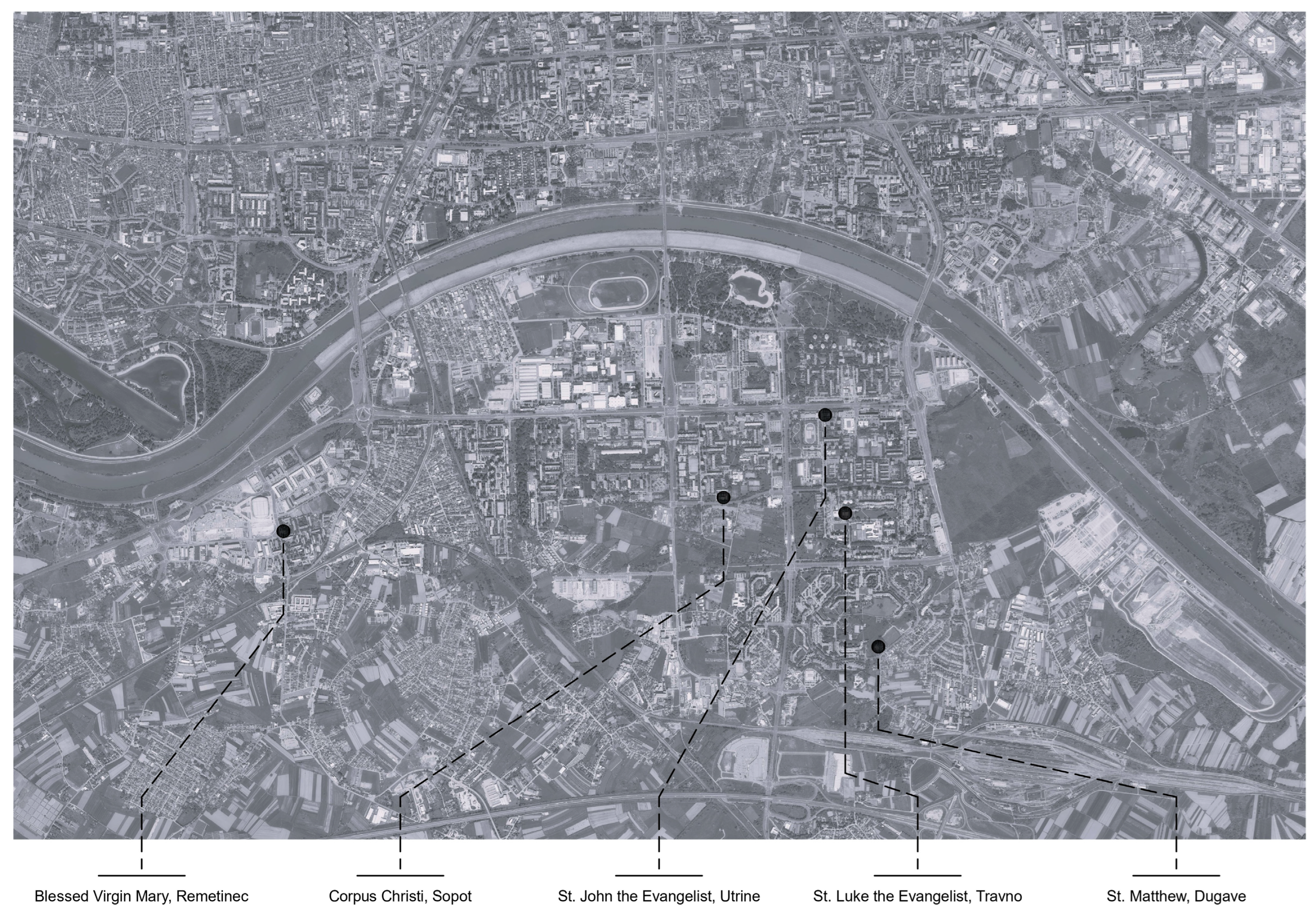
The analysis includes five case studies situated within different neighbourhoods of Novi Zagreb (
Figure 1).
The selection was guided by two main criteria. The first was their location within residential areas developed during the socialist period, ensuring a relatively consistent urban framework characterized by open planning, functional zoning, and a lack of strongly defined centres. The second criterion was the period of construction or major transformation, with a focus on buildings developed in the post-socialist period.
The selected cases differ in their spatial position, scale, and degree of integration, which makes it possible to observe a range of spatial conditions within a comparable urban context.
2.3. Historical Development of the Selected Church Complexes
The temporal relationship between the construction of the modernist housing estates and the development of the selected church complexes is important for understanding their present spatial position. In all five cases, the corresponding parishes were established during or shortly after the principal period of neighbourhood construction, while the permanent church buildings were designed and constructed considerably later.
Table 1 presents the chronology of neighbourhood development, parish establishment, and church construction. This comparison helps clarify the extent to which the religious complexes were introduced into already formed urban environments rather than incorporated into the original modernist planning framework.
The chronology shows a clear temporal gap between the establishment of the parishes and the construction of the permanent church buildings. Although the parishes in Dugave, Remetinec, Sopot, Travno, and Utrine were established between 1964 and 1978, the analysed churches were constructed primarily after 1990. The only exception is the beginning of the design and construction process in Dugave in 1989, immediately before the political transition.
This temporal sequence confirms that the selected church complexes were largely post-socialist interventions introduced into neighbourhoods whose principal spatial and functional structure had already been established. Their locations were therefore conditioned by the availability of building plots, existing traffic and pedestrian networks, and the inherited distribution of residential buildings and open spaces.
The duration of construction also indicates that several complexes developed incrementally rather than as single, fully coordinated interventions. This is particularly evident in Dugave and Utrine, where construction extended over more than a decade. Such phased development may have influenced the internal coherence of the complexes, the relationship between church and parish facilities, and the degree to which the surrounding external space was spatially defined.
2.4. Data Collection
The analysis is based on a combination of fieldwork and secondary sources.
Field observations were conducted at each location, with attention given to spatial relationships, access patterns, visibility, and the character of surrounding open space. These observations were supplemented by cartographic materials and aerial imagery, which were used to situate each case within the broader urban structure.
Secondary sources include planning documentation and research on the urban development of Zagreb and Novi Zagreb [
1,
2,
3,
4,
5,
6,
7,
8,
9,
10,
11,
12], together with studies on the development and urban characteristics of religious architecture in Zagreb [
13,
14].
2.5. Analytical Framework
The analysis is structured through a set of categories that address different aspects of spatial integration. These include urban context, volumetric expression and visibility, spatial composition, program and use, and the relationship between the building and surrounding public space.
Within these categories, particular attention is given to two aspects that proved especially relevant across all cases. The first relates to the position of the building within the urban structure, including its relationship to traffic routes, pedestrian movement, and the broader spatial organization of the neighbourhood. The second concerns the way in which the surrounding space is defined, especially in terms of openness, boundary articulation, and the presence (or absence) of clearly structured exterior space.
Interior flexibility and adaptability were assessed according to the capacity of parish halls, classrooms, and auxiliary spaces to accommodate different activities. The assessment considered multifunctional layouts, independent access, movable partitions, and spatial configurations not restricted to a single use. Spaces were classified as partially flexible when they could accommodate several activities without major spatial transformation, and as non-flexible when their layout was primarily determined by a single function. The assessment was based on available architectural documentation, field observations, and information obtained from parish representatives.
In order to clarify the qualitative assessment procedure, the main analytical categories were operationalized through a set of spatial indicators presented in
Table 2. These indicators were subsequently applied consistently across all selected case studies. The aim was not to establish fixed numerical thresholds, but to provide a transparent framework for reading spatial relationships within a comparable urban context.
The categories were assessed comparatively across the five selected cases. Therefore, the values assigned to each case reflect relative differences within the sample rather than absolute measurements. This approach made it possible to identify recurring spatial tendencies and to distinguish between different degrees of spatial integration within the modernist housing structure of Novi Zagreb.
The individual attributes used in the comparative matrices—such as visually secondary, balanced visibility, soft boundary, entrance plateau, or linear entrance space—are therefore understood as interpretative categories derived from the comparison of the selected cases. Their meaning is relational and depends on observed differences and similarities within the sample.
2.6. Typological Classification
Based on the comparative analysis, the case studies are grouped into three categories according to their degree of spatial integration. This classification is not derived from a single parameter, but from the combined reading of spatial position and the configuration of surrounding space.
Buildings that are directly accessible, integrated into pedestrian movement, and associated with clearly defined external space tend to show a higher degree of integration. In these cases, the church complex establishes a legible relationship with everyday movement patterns and contributes to the articulation of local public or semi-public space.
In contrast, buildings located in more isolated positions, with limited connection to pedestrian flows and weakly defined external space, appear less integrated into the surrounding urban structure. Between these two conditions, a range of intermediate situations can be observed, where certain aspects of integration are present while others remain spatially unresolved.
The resulting typology distinguishes between integrated, semi-integrated, and isolated cases. These categories should not be understood as fixed or universal types, but as analytical tools for interpreting recurring spatial patterns across the selected sample.
2.7. Limitations
The study is based on a limited number of case studies and relies on qualitative interpretation. While the selected examples reflect broader tendencies in the spatial integration of post-socialist religious buildings within Novi Zagreb, they do not encompass all possible spatial variations.
In addition, the analysis focuses primarily on spatial characteristics and does not address user perception, liturgical practices, parish life, or social dynamics in detail. These aspects could provide further insight into the everyday use and symbolic meaning of the analysed complexes, but they remain outside the scope of this research.
The study also does not aim to produce a quantitative evaluation of spatial integration. Instead, it offers a comparative and interpretative framework for understanding how religious buildings are inserted into inherited modernist housing structures. Future research could expand the number of case studies, include other post-socialist urban contexts, and incorporate user-based or ethnographic methods in order to provide a more comprehensive understanding of these spaces.
3. Results
The results are derived from a comparative analysis of the five case studies presented in
Table 3. The interpretation is based on recurring values across the analytical categories, with particular attention to urban position, integration in movement systems, visibility, and the definition of surrounding public space.
3.1. Position Within the Urban Structure
The data in
Table 3 show a clear predominance of edge-related locations. Three cases (Utrine, Sopot, Remetinec) are positioned along traffic axes, one case (Dugave) is located along an internal neighbourhood axis, and only one case (Travno) occupies a central position.
This distribution is consistent with the recorded relationship to pedestrian movement. Utrine and Remetinec are explicitly marked as detached from pedestrian flows, while Dugave, Travno, and Sopot are integrated into pedestrian flows.
However, centrality does not correspond directly to integration. Although Travno is the only centrally located case, it shares the same level of pedestrian integration as Dugave and Sopot, which are positioned along edges. This indicates that position alone does not determine the level of spatial integration, but must be considered in relation to movement systems.
The orientation of buildings further reinforces this pattern. Buildings aligned with traffic routes (Utrine, Sopot, Remetinec) are also those where visibility is later recorded as stronger from vehicular routes (
Table 3), suggesting a consistent relationship between urban position and perceptual exposure.
3.2. Visibility and Volumetric Expression
Table 3 shows that all five case studies have a lower overall volume than the surrounding residential structures, and in all cases the buildings are described as visually secondary. This indicates a consistent lack of dominance within the urban skyline.
Vertical articulation is also limited. Four cases include a low bell tower, while one case (Remetinec) has no vertical accent at all, reinforcing the absence of strong visual markers.
Differences appear in the type of visibility. Utrine and Remetinec are recorded as having visibility stronger from vehicular routes, Travno as stronger from pedestrian space, and Dugave and Sopot as having balanced visibility.
These values correspond closely to their position within the urban structure. Buildings along traffic axes tend to rely on vehicular visibility, while those integrated into neighbourhood interiors show either pedestrian-based or balanced visibility. This confirms that visibility is directly related to movement systems rather than to building form alone.
3.3. Spatial Composition
The data in
Table 3 indicate that most complexes are composed of separated volumes. Utrine, Travno, and Remetinec are explicitly defined as “separated volumes”, while Sopot is described as “separated volumes but connected”, and only Dugave shows partial integration.
Spatial hierarchy is also unevenly distributed. Utrine and Dugave are the only cases marked as having a clear hierarchy, while the remaining three cases (Travno, Sopot, Remetinec) are recorded as having no clear hierarchy.
Access patterns reflect this difference. Utrine and Dugave are defined as utilitarian, whereas Travno, Sopot, and Remetinec are described as having a ceremonial frontal approach. However, this ceremonial access does not correspond to a stronger spatial hierarchy, as all three cases lack a clearly defined spatial sequence.
The capacity to define exterior space further differentiates the cases. Utrine and Dugave define an entrance square, while Travno and Sopot are associated with a plateau, and Remetinec does not define a clear exterior space. This suggests that spatial definition is not consistent across the sample and is not directly linked to access type.
3.4. Program and Use
All cases include additional parish functions, as shown in
Table 3, with recurring elements such as halls, classrooms, and parish offices. In four cases—Utrine, Dugave, Travno, and Sopot—the complexes are used beyond scheduled liturgical services, while Remetinec shows a more limited program.
Three cases (Utrine, Dugave, and Travno) are classified as partially flexible, while two cases (Sopot and Remetinec) are classified as non-flexible.
Importantly, all five cases are marked as not including a clearly defined symbolic or community-oriented program, indicating that programmatic complexity does not translate into a distinct spatial or symbolic expression.
3.5. Public Space Interface
The strongest differences between cases appear in the definition of external space (
Table 3).
Utrine and Dugave are both associated with a semi-enclosed plateau, while Travno and Sopot are defined by an entrance plateau, and Remetinec by a linear entrance space. These categories correspond to decreasing levels of spatial definition.
Boundary articulation follows a similar pattern. Utrine and Dugave are the only cases with a soft boundary, while the remaining three cases (Travno, Sopot, Remetinec) have no defined boundary.
In terms of openness, Utrine is the only case described as enclosed, Dugave as partially open, and the remaining three as open. However, openness does not correspond to stronger spatial definition. In fact, the most open cases are also those with the weakest spatial articulation.
The urban role of the buildings reflects these conditions. Utrine and Sopot function as landmarks along main traffic routes, Dugave and Travno as neighbourhood centres, while Remetinec is classified as a discreet insertion.
3.6. Synthesis of Observed Relationships
When the values from
Table 3 are considered together, several consistent relationships can be identified.
Cases associated with a lower degree of spatial integration generally combine the following characteristics:
- (i)
An edge position along a traffic axis;
- (ii)
Detachment from pedestrian flows;
- (iii)
Visibility oriented primarily toward vehicular movement;
- (iv)
Weakly defined or linear external space.
Utrine and Remetinec most clearly demonstrate this combination of characteristics.
In contrast, cases showing a stronger relationship with the surrounding urban structure generally combine:
- (i)
Integration into pedestrian flows;
- (ii)
Balanced or pedestrian-based visibility;
- (iii)
Clearly defined external space, such as a plateau or forecourt.
Dugave, and to a lesser extent Travno, demonstrate these characteristics.
Intermediate conditions are visible in Sopot and Travno, where some of these attributes are present while others remain unresolved. These relationships form the basis for the typological classification presented in
Table 4.
4. Discussion
The results reveal a consistent pattern in the positioning of religious buildings within the modernist housing structure of Novi Zagreb. As shown in
Table 3 and illustrated in
Figure 2,
Figure 3,
Figure 4,
Figure 5 and
Figure 6, most case studies are located along edges or in relation to traffic axes, while only one case occupies a central position. This distribution suggests that these buildings are not conceived as primary elements of the neighbourhood structure, but rather as later insertions into already defined urban frameworks.
This observation can be directly linked to the planning conditions of the socialist period, during which religious functions were largely excluded from formal urban planning processes [
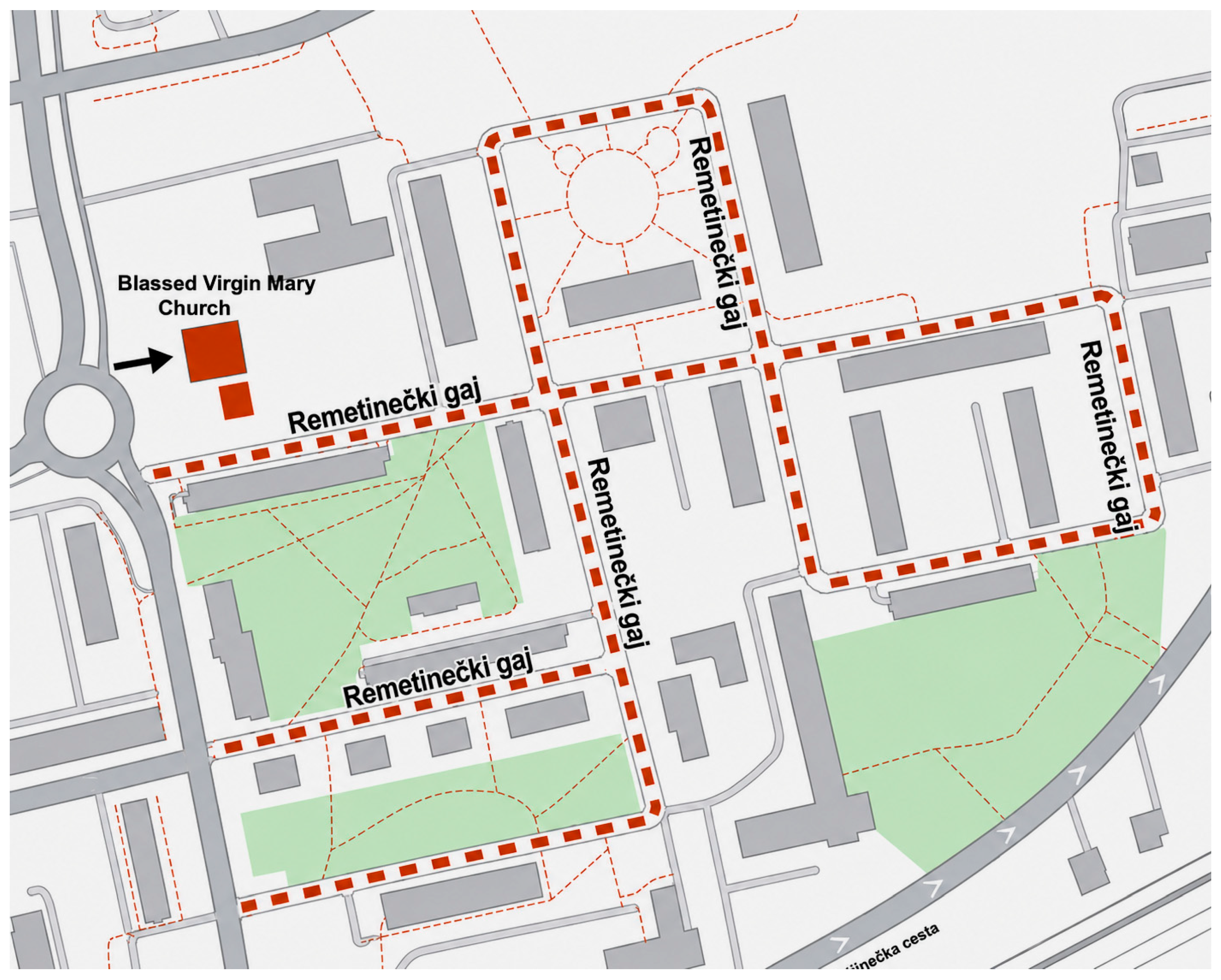
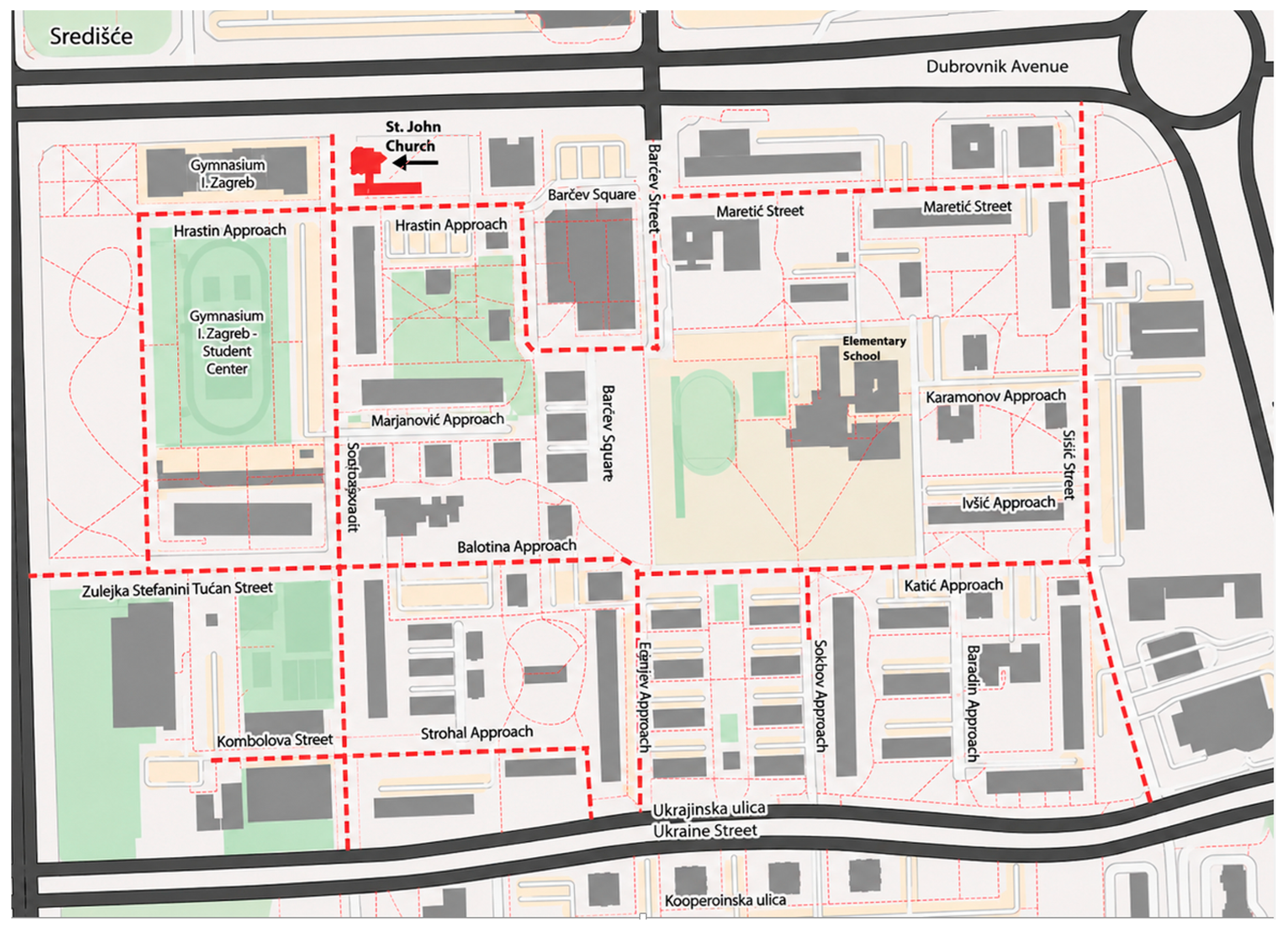
12]. As a result, the introduction of religious buildings in the post-socialist period appears to rely on available or residual spatial conditions, which often correspond to edge zones or infrastructural corridors, as clearly visible in the Remetinec and Utrine cases (
Figure 3 and
Figure 6).
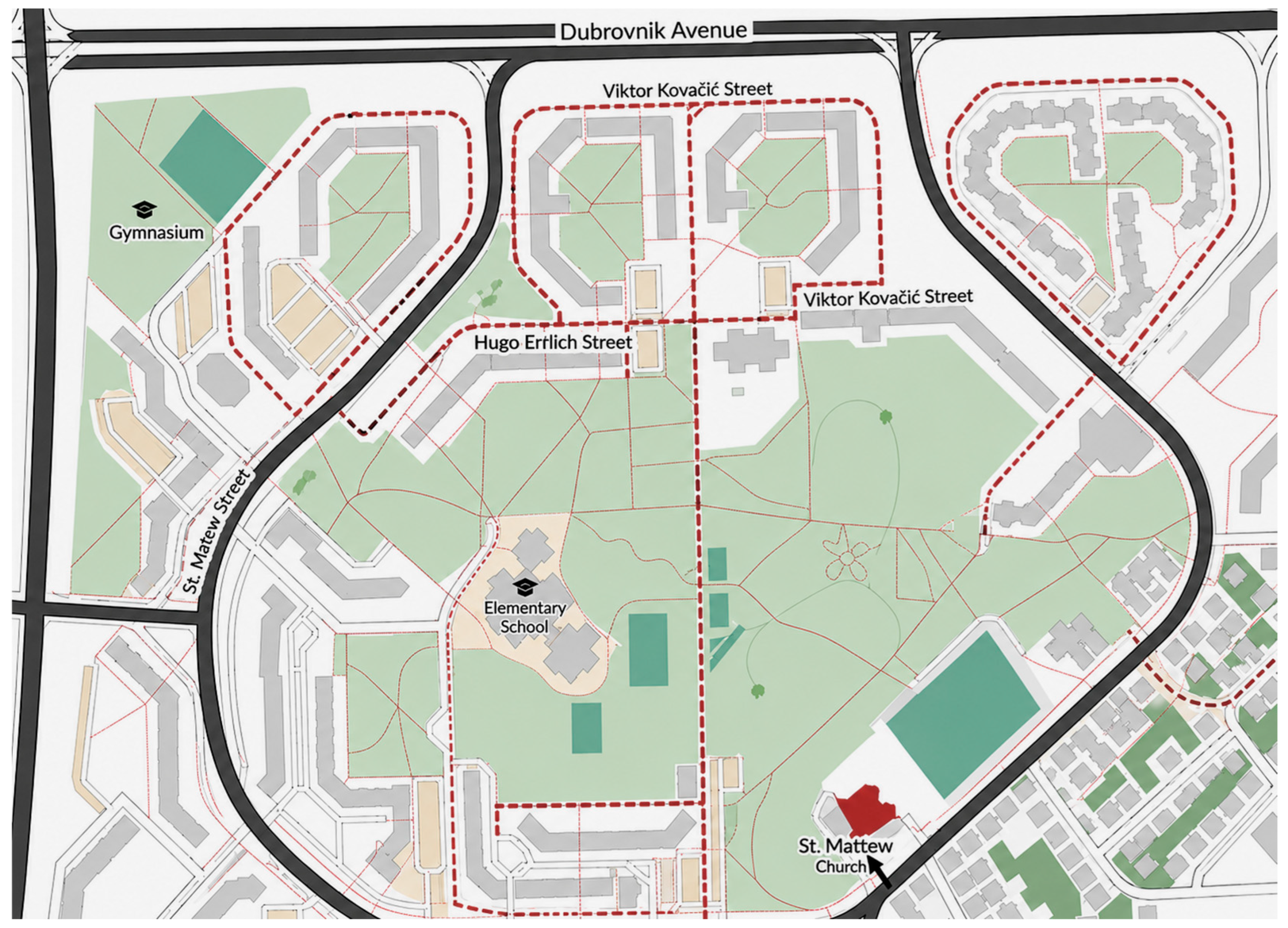
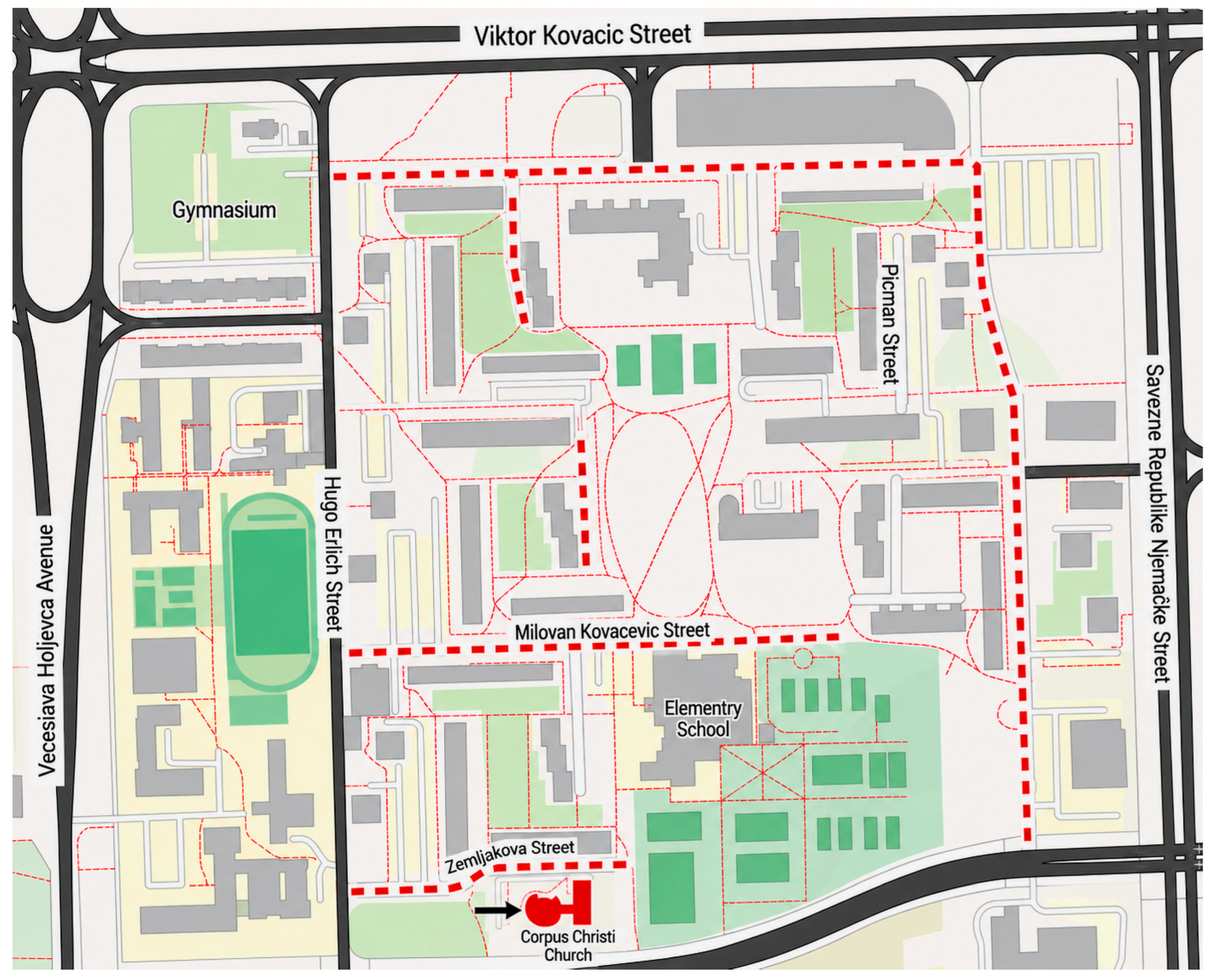
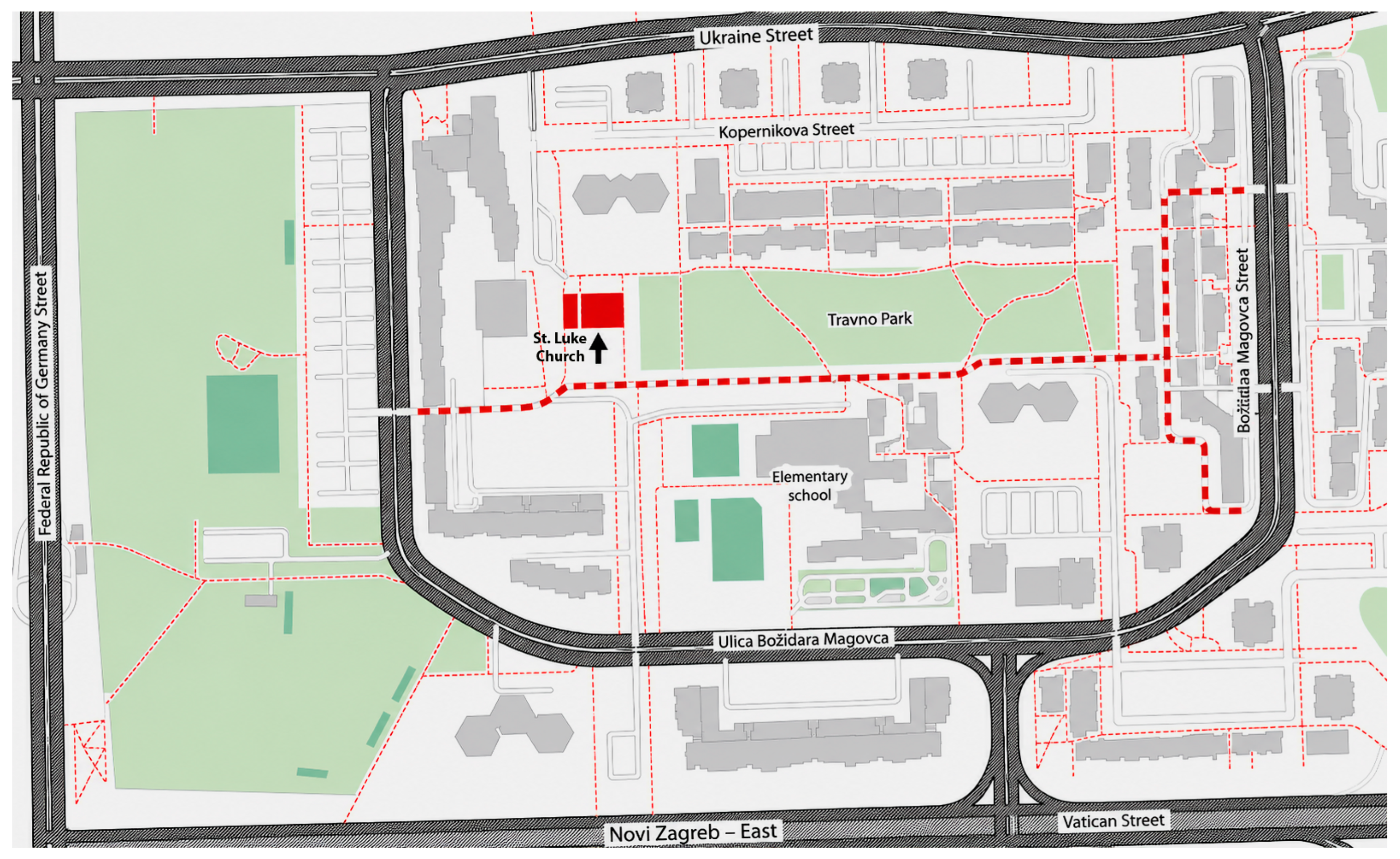
However, the results also show that urban position alone is not sufficient to explain spatial integration. Although the Travno case is centrally located (
Figure 5), it is not classified as fully integrated. In contrast, Dugave—located along an internal neighbourhood axis—demonstrates a higher level of integration due to its connection to pedestrian flows and the presence of a clearly defined external space (
Figure 2).
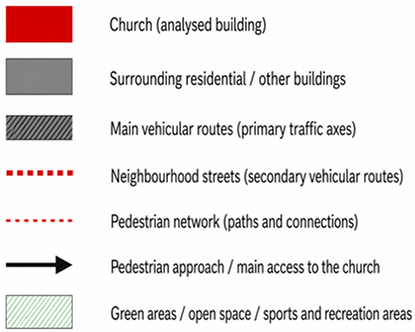
Shared legend for
Figure 2,
Figure 3,
Figure 4,
Figure 5 and
Figure 6. Urban position and accessibility of the analysed churches within the neighbourhood structure. Source: Authors’ elaboration based on OpenStreetMap contributors’ data.
Figure 2.
Diagram showing the position of the church complex within the urban structure of Dugave, including its relationship to pedestrian and vehicular networks.
Figure 2.
Diagram showing the position of the church complex within the urban structure of Dugave, including its relationship to pedestrian and vehicular networks.
Figure 3.
Diagram showing the position of the church complex within the urban structure of Remetinec, including its relationship to pedestrian and vehicular movement networks.
Figure 3.
Diagram showing the position of the church complex within the urban structure of Remetinec, including its relationship to pedestrian and vehicular movement networks.
Figure 4.
Diagram showing the position of the church complex within the urban structure of Sopot, including its relationship to pedestrian and vehicular movement networks.
Figure 4.
Diagram showing the position of the church complex within the urban structure of Sopot, including its relationship to pedestrian and vehicular movement networks.
Figure 5.
Diagram showing the position of the church complex within the urban structure of Travno, including its relationship to pedestrian and vehicular movement networks.
Figure 5.
Diagram showing the position of the church complex within the urban structure of Travno, including its relationship to pedestrian and vehicular movement networks.
Figure 6.
Diagram showing the position of the church complex within the urban structure of Utrine, including its relationship to pedestrian and vehicular movement networks.
Figure 6.
Diagram showing the position of the church complex within the urban structure of Utrine, including its relationship to pedestrian and vehicular movement networks.
This indicates that spatial integration depends on the relationship between position and movement systems, rather than on centrality alone. As shown in
Figure 2,
Figure 3,
Figure 4,
Figure 5 and
Figure 6, cases integrated into pedestrian flows (Dugave, Travno, Sopot) tend to establish stronger connections to everyday urban use, while those detached from pedestrian movement (Utrine, Remetinec) remain more peripheral in functional terms.
A similar relationship can be observed in the analysis of visibility. Buildings aligned with traffic axes and detached from pedestrian flows are also those whose visibility is primarily associated with vehicular routes (Utrine, Remetinec), as indicated by their position along major roads (
Figure 3 and
Figure 6). In contrast, cases integrated into neighbourhood interiors show either pedestrian-based or balanced visibility (Dugave, Travno, Sopot), as reflected in their connection to internal pedestrian networks (
Figure 2,
Figure 4 and
Figure 5).
The analysis of spatial composition further reinforces this interpretation. As shown in
Table 3 and
Figure 7,
Figure 8,
Figure 9,
Figure 10 and
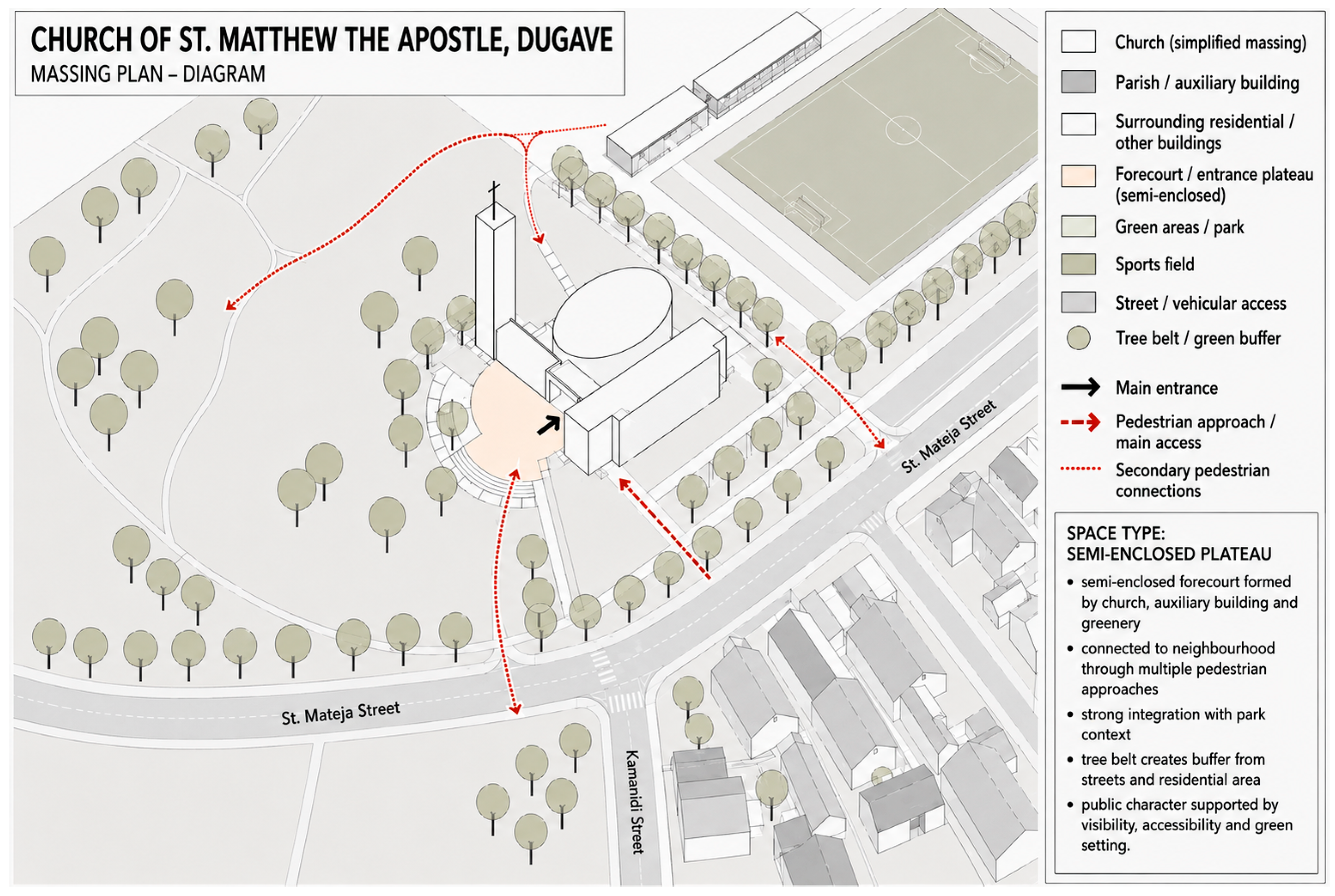
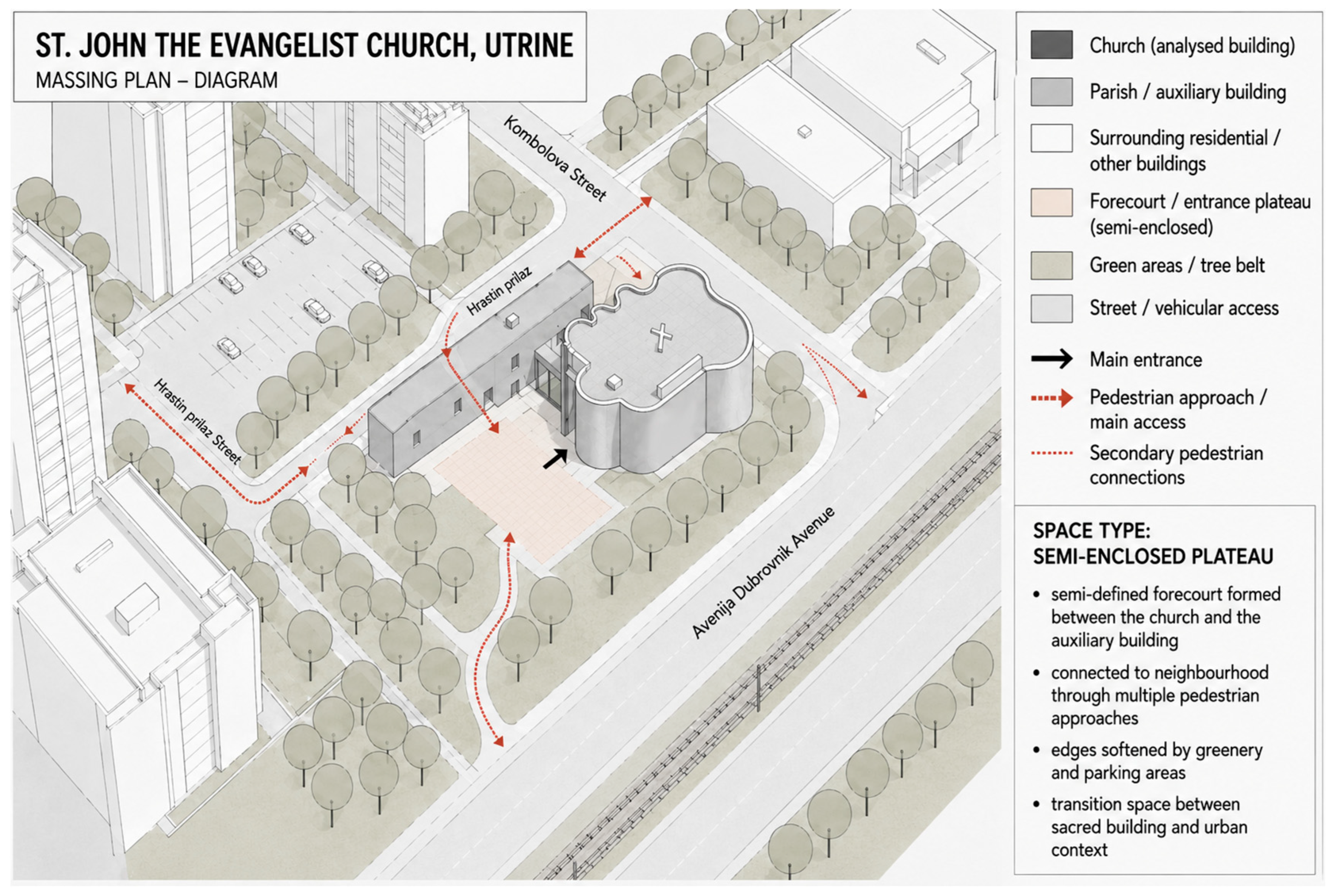
Figure 11, most complexes are organized as separated volumes, and only one case demonstrates partial integration. Moreover, a clear spatial hierarchy is present only in Utrine and Dugave, while the remaining cases lack a defined sequence from public to sacred space. This is particularly evident in the spatial organization of the Dugave complex (
Figure 7), where the entrance plateau and auxiliary structures create a more legible transition.
The relationship between buildings and surrounding public space emerges as a particularly significant factor.
Figure 7,
Figure 8,
Figure 9,
Figure 10 and
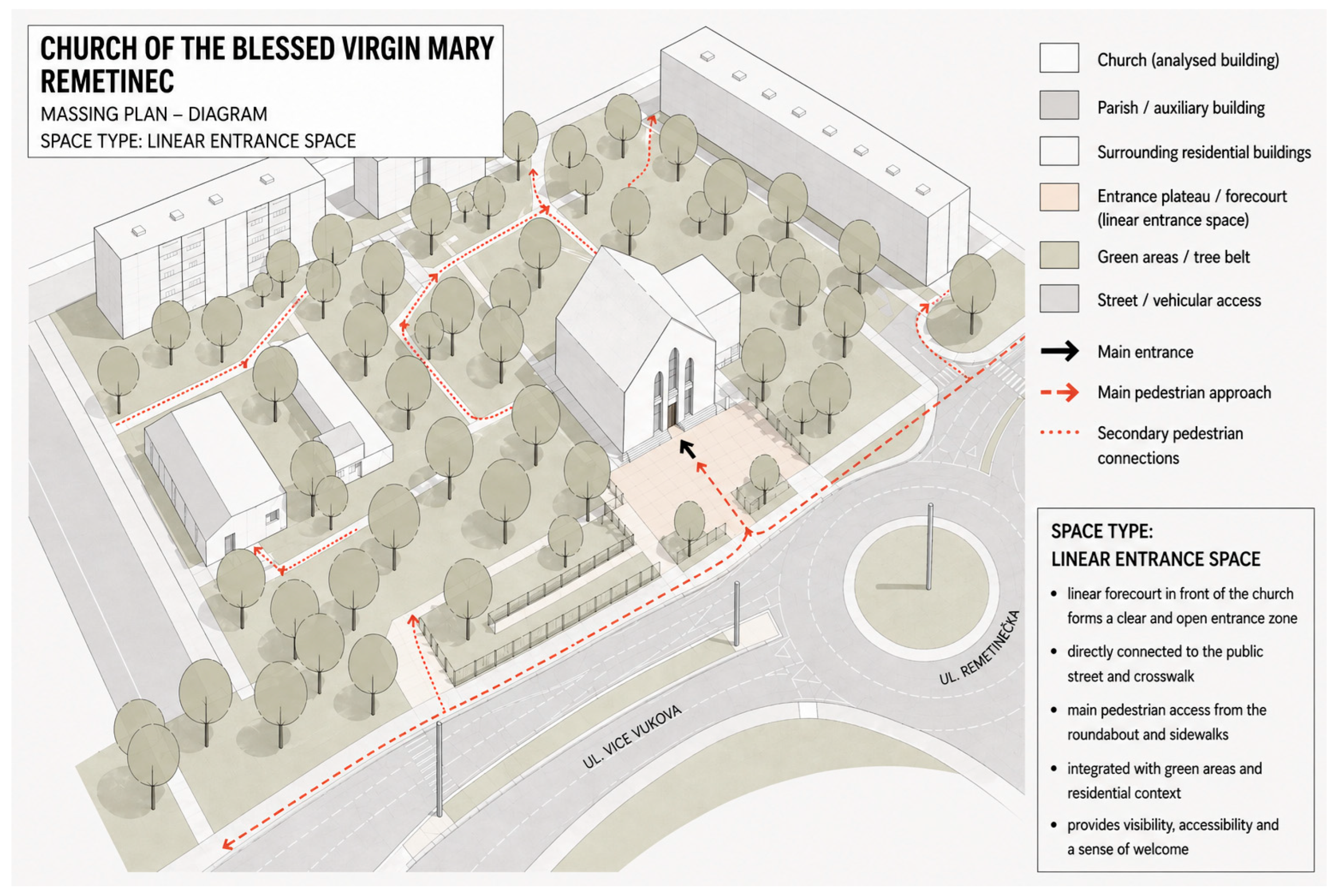
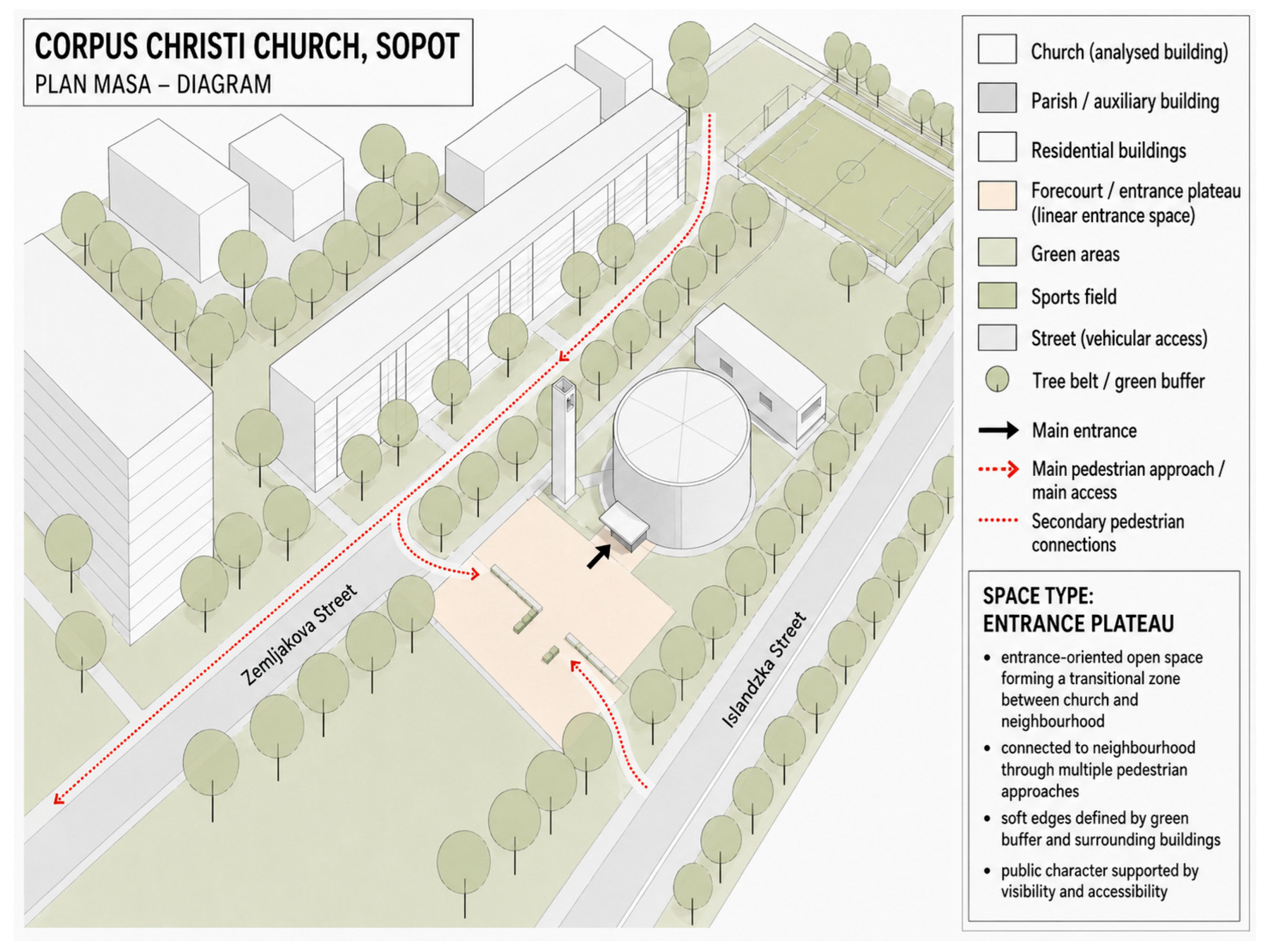
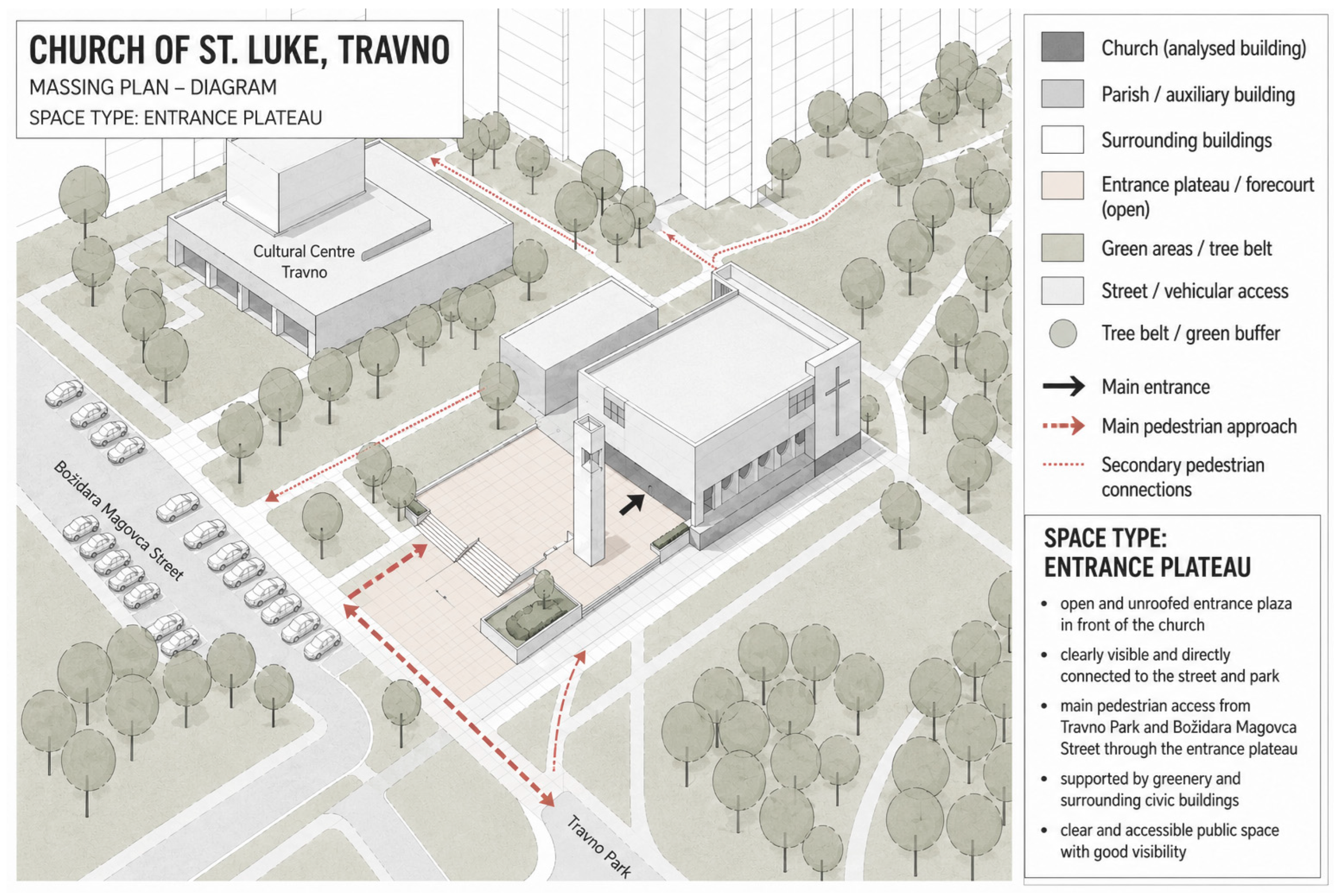
Figure 11 clearly illustrate differences in the definition of external space, ranging from semi-enclosed plateaus (Utrine, Dugave) to entrance plateaus (Travno, Sopot) and linear entrance spaces (Remetinec). These variations correspond to different levels of spatial articulation.
Importantly, the results indicate that spatial definition is more relevant than openness. While several cases are described as open, this openness is often accompanied by a lack of clear spatial structure, as seen in the Remetinec case (
Figure 8). In contrast, semi-enclosed or clearly defined spaces, such as in Dugave and Utrine (
Figure 7 and
Figure 11), provide a more legible transition between public and semi-public domains, supporting a stronger spatial presence.
Boundary articulation follows a similar pattern. Only two cases, Utrine and Dugave (
Figure 7 and
Figure 11), establish a soft boundary between public and sacred space, while the others lack any clear boundary. This absence results in direct but weakly structured transitions, which reduces the ability of the building to organize its surroundings, as visible in the Travno and Sopot cases (
Figure 9 and
Figure 10).
These spatial characteristics are reflected in the different urban roles identified in the analysis. Buildings with stronger spatial definition and clearer relationships to movement systems, such as Dugave and Travno, tend to function as neighbourhood centres (
Figure 7 and
Figure 10), while those aligned with traffic routes, such as Utrine and Sopot, function as landmarks primarily perceived from movement (
Figure 9 and
Figure 11). In contrast, the Remetinec case, characterized by a linear entrance space and lack of spatial definition, functions as a discreet insertion with limited urban presence (
Figure 8).
The socio-cultural role of these complexes is also related to the diversity of their users and to the extent to which their spaces participate in everyday neighbourhood life. In addition to regular parishioners attending liturgical services, the complexes may be used by local residents participating in educational, charitable, pastoral, cultural, or community activities, as well as by occasional visitors attending ceremonies or events. Their external spaces may also be encountered by passers-by who are not directly connected to the parish but move through the surrounding neighbourhood. From the perspective of Hillier and Hanson [
15] and Hillier [
16], the degree to which these different users encounter and access the complex depends partly on its position within the wider configuration of movement and on its connection to everyday pedestrian routes.
Lynch’s concepts of paths, nodes, and landmarks [
17] further help distinguish between visual recognition and actual social centrality. A church complex may function as a recognizable landmark without becoming an active neighbourhood node. Complexes integrated into pedestrian routes and provided with clearly articulated entrance plateaus or semi-public spaces have greater potential to support informal encounters and activities beyond scheduled liturgical services. This interpretation is also consistent with Gehl’s emphasis on pedestrian accessibility, transitional zones, and spaces between buildings as settings for optional and social activities [
18]. By contrast, complexes primarily oriented toward vehicular access or associated with weakly defined external spaces remain more dependent on intentional visits. These observations should be understood as spatially based interpretations, since the present study does not include surveys or ethnographic research on user behaviour.
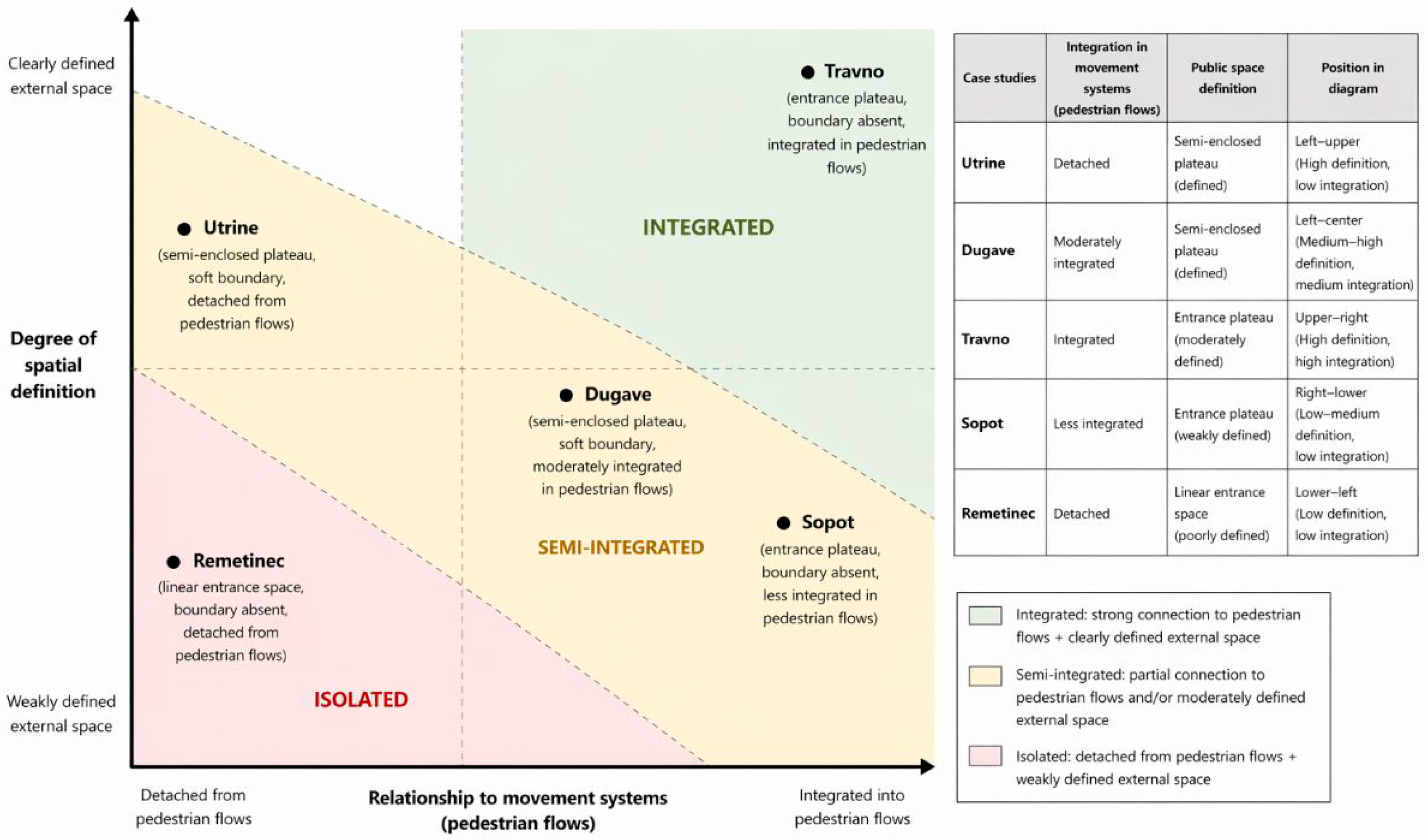
The typological classification presented in
Table 4 synthesizes these relationships and provides a structured interpretation of the observed spatial patterns. The distinction between integrated, semi-integrated, and isolated cases is not based on a single parameter, but on the combined interaction of movement systems, spatial definition, and urban position, as illustrated across
Figure 7,
Figure 8,
Figure 9,
Figure 10 and
Figure 11. This relationship is further illustrated in
Figure 12, which maps the case studies according to their degree of spatial definition and their integration into pedestrian movement systems.
Integrated cases are characterized by a strong alignment between pedestrian accessibility and the configuration of external space. In the Dugave case (
Figure 7), the presence of a semi-enclosed plateau, combined with multiple pedestrian approaches, establishes a clear and legible spatial interface between the church complex and the surrounding neighbourhood. This spatial arrangement supports both accessibility and a degree of enclosure, allowing the complex to function as a recognizable local centre.
Semi-integrated cases, such as Travno and Sopot (
Figure 9 and
Figure 10), exhibit only partial alignment of these factors. In both examples, the entrance plateau provides a defined access zone, but the surrounding space remains relatively open and lacks a stronger spatial boundary. As a result, these buildings achieve visibility and accessibility, yet their capacity to structure the surrounding urban space remains limited.
Isolated cases, represented most clearly by Remetinec (
Figure 8), demonstrate the absence of both spatial definition and integration into pedestrian movement systems. The linear entrance space, directly connected to the street, provides access but does not create a distinct transitional zone or a sense of spatial enclosure. Consequently, the building remains functionally accessible but spatially weak in its relationship to the surrounding environment.
The Utrine case (
Figure 11) occupies an intermediate position within this classification. Although located along a major traffic route, it incorporates elements of spatial definition through a semi-enclosed plateau and the presence of auxiliary structures. However, its limited connection to pedestrian flows reduces its overall level of integration, positioning it between semi-integrated and isolated conditions.
These distinctions highlight the importance of spatial configuration over formal or symbolic expression. Across all cases, the architectural form remains relatively subdued and does not establish a dominant presence within the urban skyline. Instead, the degree of spatial integration is determined by how effectively the building engages with its immediate surroundings, particularly through the articulation of external space and its connection to everyday movement patterns.
This observation reinforces the broader interpretation of post-socialist urban transformation as a process characterized by incremental and context-dependent interventions. Religious buildings, as demonstrated in this study, do not redefine the urban structure at a systemic level, but rather adapt to existing spatial conditions. Their integration therefore depends less on their intended symbolic role and more on the opportunities and constraints provided by the inherited modernist framework.
At the same time, the analysis suggests that even within such constraints, a higher degree of spatial integration can be achieved. The Dugave case (
Figure 7) illustrates how the combination of clearly structured external space and integration into pedestrian networks can produce a more coherent and legible urban relationship. This indicates that the observed patterns are not fixed, but represent a range of possibilities shaped by spatial decisions at the local level.
Taken together, the findings point to a structural mismatch between the modernist urban system—originally planned without religious functions—and their later introduction in the post-socialist period. As a result, religious buildings rarely assume a structurally dominant role within the neighbourhood, and their spatial significance emerges through localized interactions rather than through a consistent urban strategy.
5. Conclusions
This study examined the spatial integration of religious buildings within the modernist housing structure of Novi Zagreb through a comparative analysis of five case studies, focusing on their urban position, visibility, spatial composition, and relationship to surrounding public space.
The results indicate that these buildings are most commonly located in edge or transitional positions, often associated with traffic infrastructure or residual urban spaces. Their placement therefore does not correspond to the primary spatial logic of the neighbourhoods, but reflects patterns of later insertion into an already established urban framework.
At the same time, the analysis shows that spatial integration cannot be explained by location alone. Buildings that are centrally positioned or aligned with major routes do not necessarily achieve a stronger urban presence. Instead, the degree of integration depends on the relationship between movement systems and the articulation of surrounding space.
In this regard, the definition of external space emerges as a key factor. Cases characterized by clearly structured forecourts or plateaus, combined with pedestrian accessibility, demonstrate a more coherent relationship with their surroundings. In contrast, buildings associated with weakly defined or linear entrance spaces, and limited connection to pedestrian flows, tend to remain spatially and functionally detached.
The typological classification presented in this study distinguishes between integrated, semi-integrated, and isolated cases, based on the combined reading of urban position, visibility, and public space configuration. Rather than representing fixed categories, these types describe a range of spatial conditions that reflect different modes of insertion into the modernist urban structure.
The findings point to a broader mismatch between the modernist planning framework—originally developed without consideration for religious functions—and their later introduction in the post-socialist period. As a result, religious buildings rarely assume a structurally dominant role, and their spatial significance depends largely on local conditions rather than on a consistent urban strategy.
The main contribution of the paper lies in establishing an analytical framework for understanding these processes and in identifying spatial patterns that may be relevant beyond the specific case of Novi Zagreb. Although based on a limited sample, the study highlights recurring relationships that can inform future research on the integration of new institutional programs into inherited modernist environments.
Further research could expand the number of case studies and incorporate user-based perspectives, providing a more comprehensive understanding of how these spaces are experienced and used in everyday urban life.