1. Introduction
As global temperatures continue to rise, reducing atmospheric CO
2 concentrations has become an urgent scientific and policy priority. While sustainable design strategies mitigate operational and embodied emissions, emerging carbon removal technologies offer an essential complementary pathway. Direct air capture (DAC) is a highly scalable approach that extracts CO
2 directly from ambient air; however, conventional active DAC systems rely on mechanical fans and costly synthetic sorbents [
1,
2,
3,
4]. To overcome these financial and energetic barriers, recent innovations have shifted toward passive, mineral-based DAC systems. These systems utilize an abundantly available calcium-based cyclic carbonation process: calcium carbonate (CaCO
3) is thermally decomposed into calcium oxide (CaO), hydrated to calcium hydroxide (Ca(OH)
2), and then exposed to ambient air. Driven by prevailing wind currents rather than mechanical fans, the Ca(OH)
2 reacts with atmospheric CO
2 to reform CaCO
3 through a passive mineralization process. Because this approach relies entirely on natural ventilation, the carbonation reaction rate depends critically on airflow exposure and mass transfer dynamics. Consequently, the aerodynamic distribution of air within DAC enclosures emerges as a vital determinant of overall system efficiency [
5,
6,
7,
8].
Despite the importance of natural ventilation in passive DAC, limited research has explored how architectural enclosure design can be optimized to enhance airflow. While the internal chemistry of mineral-based capture technologies is highly engineered, comparatively little attention has been given to the enclosure’s geometric capacity to improve air exposure without increasing mechanical energy demand. Beyond merely providing structural protection from the elements, the enclosure actively regulates wind distribution across the stacked capture assemblies. Identifying aerodynamic configurations that maximize air exchange—and thereby optimize CO2 contact with the sorbent materials—remains a critical blind spot, particularly as these systems scale toward site-specific architectural integrations.
To address this gap, this study introduces a CFD-integrated parametric framework for evaluating enclosure performance under varying climatic conditions. This approach builds upon existing computational fluid dynamics (CFD)-based architectural workflows and employs a segmented mass-flow evaluation method as a proxy for airflow-driven capture potential, enabling a comparative performance assessment during early-stage design. By linking architectural geometry with airflow performance metrics, the framework supports the performance-driven integration of DAC systems into building design.
2. Literature Review
The influence of architectural geometry on airflow behavior is a central concern in building aerodynamics and computational wind engineering, where enclosure form, orientation, and spatial configuration govern ventilation performance and environmental exposure [
9]. CFD tools are essential for simulating and visualizing airflow behavior within architectural enclosures. Over the past decades, various CFD applications have been integrated with computer-aided design (CAD) platforms to support performance-informed design workflows [
10,
11,
12,
13,
14]. Examples include the Autodesk Flow Design (now retired), which functioned as a virtual wind tunnel for visual airflow analysis, and Autodesk CFD, which provides more advanced simulation capabilities [
15]. Other platforms such as Rhino CFD and Microflow extend airflow simulations to Rhino and SketchUp environments, respectively, while cloud-based platforms like SimScale offer web-based CFD analyses [
16]. However, many of these tools are not fully optimized for parametric design environments that enable the iterative exploration of large geometric design spaces. For this reason, a CFD integration compatible with Grasshopper-based parametric modeling was prioritized in this study to support systematic performance-driven design exploration.
Applying CFD to architectural models presents specific challenges, particularly in mesh generation. Architectural geometries are often complex and non-watertight, complicating their conversion into the closed volumetric domains required for accurate CFD analysis [
17]. To address such issues, hybrid meshing strategies that combine structured and unstructured elements have been proposed to balance computational efficiency and simulation accuracy, especially during early-stage design exploration. CFD tools integrated within parametric design environments, such as Butterfly and Eddy3D—both based on the OpenFOAM solver—offer automated meshing workflows [
18,
19]. While both platforms facilitate airflow simulation within design interfaces, differences in computational architecture influence performance; Butterfly relies primarily on CPU-based processing, whereas Eddy3D incorporates GPU acceleration, enabling faster solution times. Given the iterative nature of the design exploration undertaken in this study, computational efficiency was a critical consideration, and the accelerated simulation capability of Eddy3D supported the rapid evaluation of multiple geometric configurations.
The reliability of Eddy3D has been supported through empirical validation studies. Simulated wind velocity and mean radiant temperature outputs have been compared with field measurements from multiple on-campus monitoring stations, demonstrating a strong agreement between predicted and observed environmental conditions [
20,
21]. Additionally, Eddy3D-derived wind fields have been incorporated into a Universal Thermal Climate Index (UTCI) framework, where correlations were identified between simulated thermal comfort conditions and observed cycling activities [
22].
Recent research has expanded the integration of Eddy3D within data-driven and optimization-based design workflows. Automated Eddy3D pipelines have been used to generate CFD training datasets for surrogate modeling, enabling near-instantaneous airflow predictions during early-stage massing exploration with reported SSIM values between 75 and 97% across 564 urban geometries [
23]. Similarly, Eddy3D outputs have been embedded in parametric and machine-learning-assisted multi-objective optimization frameworks combining artificial neural networks and genetic algorithms [
24]. Model-based optimization approaches have also been implemented using tools such as Opossum to explore high-rise building form generation without surrogate modeling [
25]. At the neighborhood scale, Grasshopper-based optimization frameworks combining Ladybug tools and Eddy3D have been used to explore trade-offs between building energy performance and outdoor thermal comfort autonomy [
13]. Parallel tool-development research has extended toward coupled urban microclimate simulations; for example, urbanMicroclimateFoam has been validated against real-world data with a temperature RMSE of around ~1 °C and relative humidity errors below 5%, highlighting ongoing efforts to integrate coupled microclimate physics into the evolving Eddy3D ecosystem [
12].
Although Eddy3D is built upon the OpenFOAM simulation engine, certain fluid dynamic parameters—such as mass-flow rate—are not directly accessible through its interface, as the tool primarily focuses on visualizing airflow patterns related to building massing and orientation. Consequently, no established workflow currently enables the quantitative evaluation of passive airflow performances for building-integrated DAC systems within commonly used parametric design environments. This limitation restricts the integration of aerodynamic performance considerations during early-stage architectural design.
DAC systems that rely on natural airflow require controlled wind distribution through stacked calcium hydroxide capture assemblies, making mass-flow rate a critical parameter for evaluating carbon absorption potential. Since airflow distribution is influenced by enclosure geometry, tray configuration, and wind conditions, variations in architectural design can significantly affect system performance. To address this methodological gap, this study develops a computational framework implemented in Rhino3D and Grasshopper that integrates site-specific climatic analysis (Ladybug) with steady-state airflow simulation (Eddy3D).
The study contributes to the field in two ways: (1) it formalizes a CFD-integrated parametric workflow tailored to building-integrated DAC systems by introducing a segmented mass-flow evaluation approach that bridges architectural geometry and airflow performance metrics; and (2) it demonstrates the applicability of this method through scenario-based investigations, illustrating how enclosure geometry influences airflow redistribution in passive DAC configurations. These contributions position enclosure design as a quantifiable variable within performance-driven carbon-capture integration strategies. The framework enables designers to evaluate enclosure performance using quantifiable airflow metrics, supporting the performance-informed integration of carbon-capture systems in architectural design.
3. Methodology
This paper aims to illustrate the process of calculating mass-flow rate under specific site conditions, using a representative generic site with climatic data from Seattle, WA, USA. Airflow and mass-flow rate are used as proxy indicators for potential carbon-capture performances, since increased airflow across the calcium hydroxide trays increases the contact between air and the sorbent material, thereby potentially enhancing CO
2 absorption under appropriate reaction conditions. While the actual CO
2 capture process depends on complex chemical kinetics, material properties, and mass transfer coefficients [
5], increased airflow across the calcium hydroxide trays generally enhances contact between air and the sorbent material, thereby improving CO
2 absorption potential within an optimal velocity range. The relationship between the airflow velocity and carbonation rate is non-linear: while sufficient airflow is necessary to deliver CO
2 to the sorbent surface, excessive velocity can reduce residence time and limit reaction completion. This study therefore treats mass-flow rate as a simplified performance indicator suitable for comparative analysis during early-stage architectural design, acknowledging that detailed chemical modeling would be required for precise capture efficiency predictions.
To focus on the impact of the architectural geometry itself, the simulations were intentionally simplified by assuming a flat terrain with no surrounding obstacles or adjacent buildings—effectively excluding complex external environmental parameters. This assumption enabled a clear, unobstructed evaluation of how the proposed enclosure influenced airflow and supported passive carbon-capture performance. NOAA wind data, typically preferred for wind planning due to its higher accuracy and multi-year datasets, was not available for Seattle. In its absence, TMYx data was utilized for this study as it provided a comprehensive record of typical meteorological conditions for the location. While TMYx data is not typically weighted for wind direction analysis, it was adapted for this specific context to represent typical wind conditions for a generic location. To minimize the limitations of TMYx data, only the most prevailing wind direction was prioritized for simulations. The least frequent wind direction and seasonal variations, though included in preliminary analysis, were not emphasized in simulations, as they held limited relevance for practical design purposes. This ensures that any recommended building design, informed by Eddy3D projections, is optimized for typical conditions. In our case, the prevailing wind predominantly originates from the northwest throughout most of the year. This directional data, represented as a vector, along with the associated speed, extracted as a float, are utilized to conduct CFD analysis using Eddy3D. This approach enables accurate simulations of site-specific wind flow. If the building is surrounded by objects that may impact the microclimate, they should be accounted for during simulations in Eddy3D.
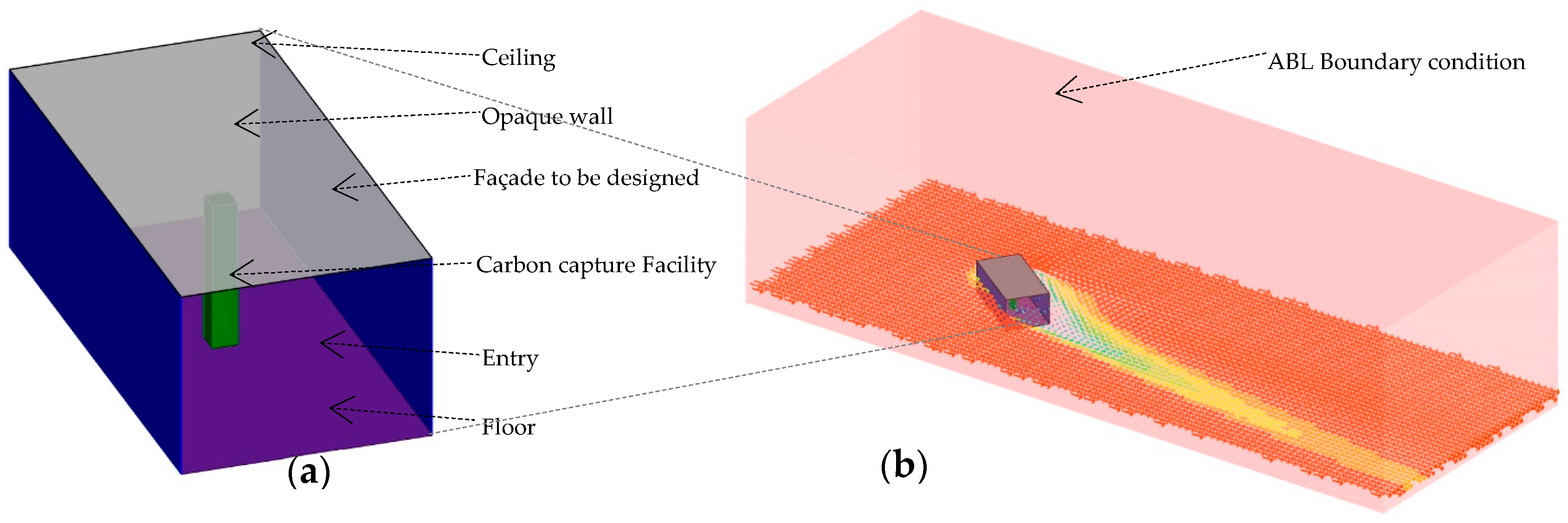
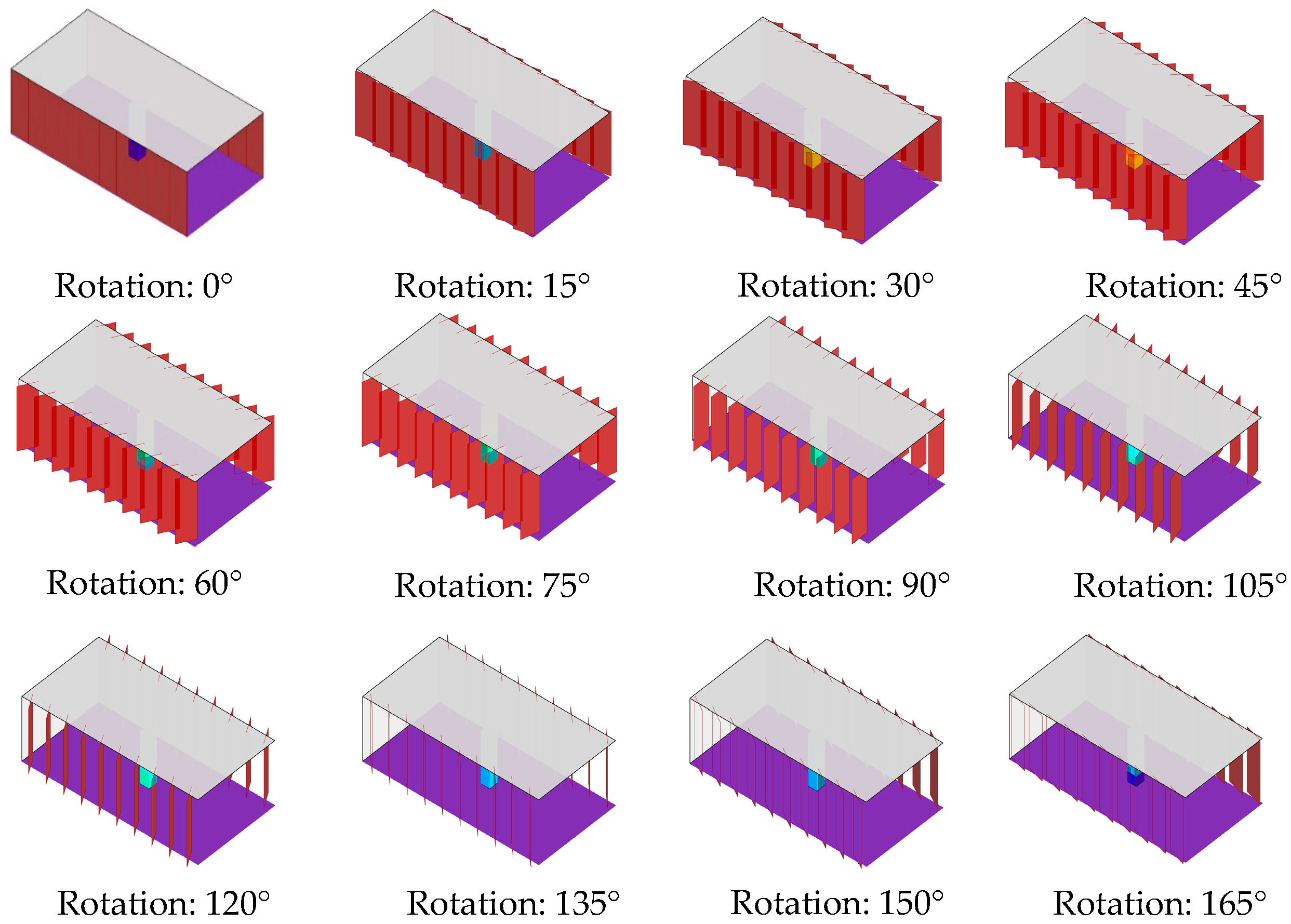
A linear building orientation, aligned in a north–south direction, is envisioned for the site, with stacked trays of calcium hydroxide (Ca(OH)
2) positioned within (see
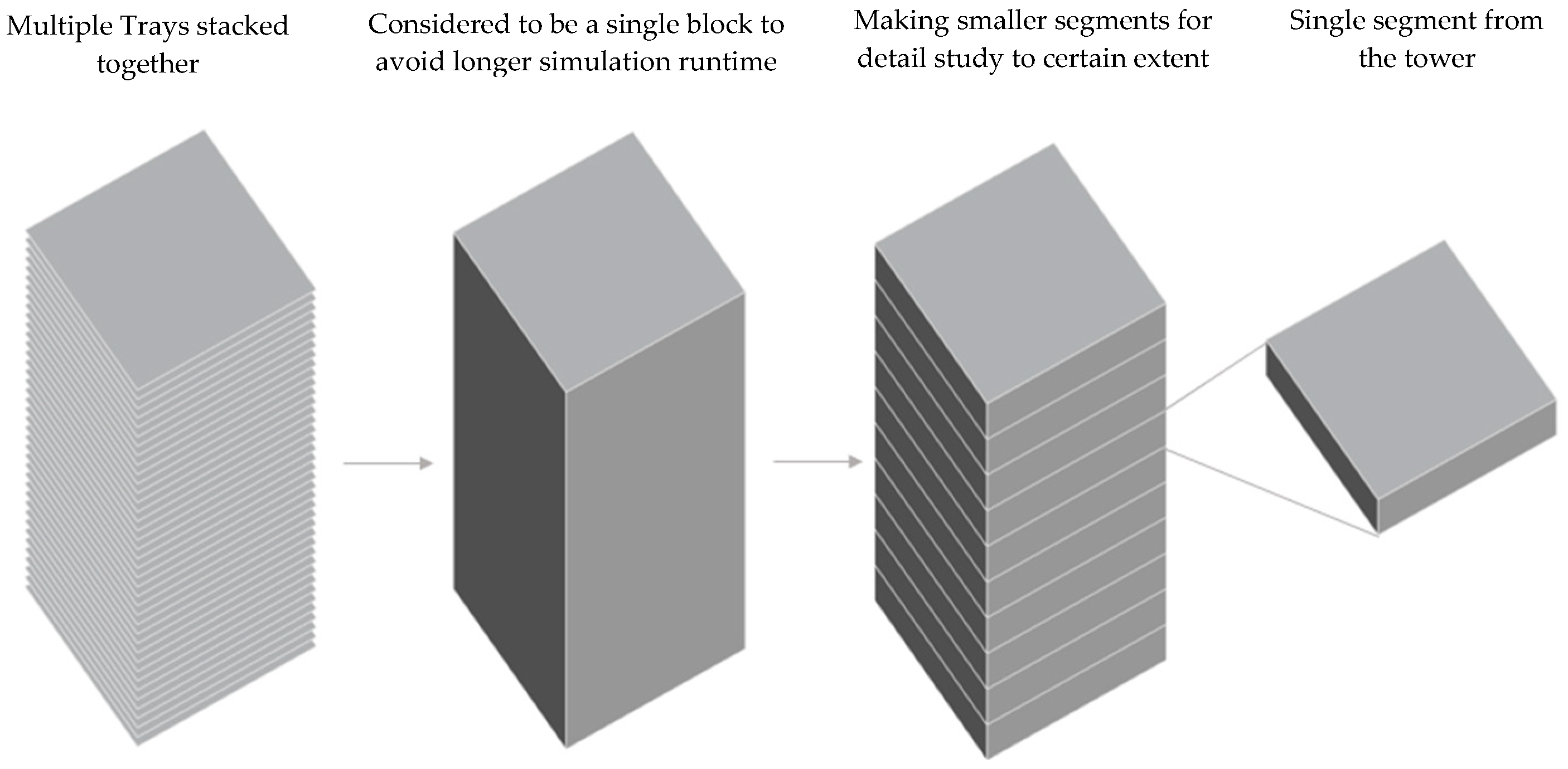
Figure 1). The design prioritizes larger facades on the east and west sides, with the south side designated for entry and the north side considered opaque. These prescribed conditions amplify the uncertainties regarding wind direction within the structure, thereby yielding a range of mass-flow rate values. The building dimensions are set at 40 m by 20 m with a height of 12 m, devoid of surrounding objects exceeding a height of 0.01 m. Initially, only one stack of trays, standing at a height of 10 m, was considered for preliminary studies. However, owing to the unknown distribution and configuration of stacked trays, a segmented analysis of the entire tower is conducted (see
Figure 2). The rectangular distribution of towers yields varying mass-flow rates around them, as demonstrated in the Results Section, attributed to the wind diversion by bordering towers.
While exploring multiple design options, a consistent simulation setup was maintained across all design iterations to ensure comparability of the results (see
Table 1). The virtual boundary condition is a box shaped ABL (atmospheric boundary layer). The box’s height is set to default from Eddy3D. On both sides of the shorter length, the design is maintained at twice its breadth. We have twice as much length in the windward direction and four times as much length in the leeward direction in the larger length [
26]. Given that the structure analyzed (40 m × 20 m × 12 m) is significantly smaller than the domain height, the default setting ensured sufficient room for airflow modeling without interference from artificial boundary effects. This approach is consistent with best practices for CFD simulations, where the domain height typically exceeds the model dimensions to allow accurate simulation of wind profiles and turbulence effects.
While customizing the domain height might have allowed for further refinement, it was deemed unnecessary in this case, as the focus was on analyzing airflow behavior within and around the structure, rather than simulating far-field wind effects. Future studies should consider domain customization to investigate specific site conditions requiring a tighter computational domain. Simulation properties are adopted from a precedent Eddy3D study [
22] with similar building-scale geometries (10–15 m height). The mesh refinement levels (Acc feature = 3, Acc ground = 3) validated in that study provide adequate resolution for building-scale wind patterns and near-surface velocity profiles relevant to this application. Only the height of the surface roughness has been changed to 0.01 m, considering that the site is nearly level and has few obstructions facing the windward direction. The number of iterations is set at 1000 since most simulations revealed that this range allowed for convergence. For detailed examination, a substantial number of probing points is considered.
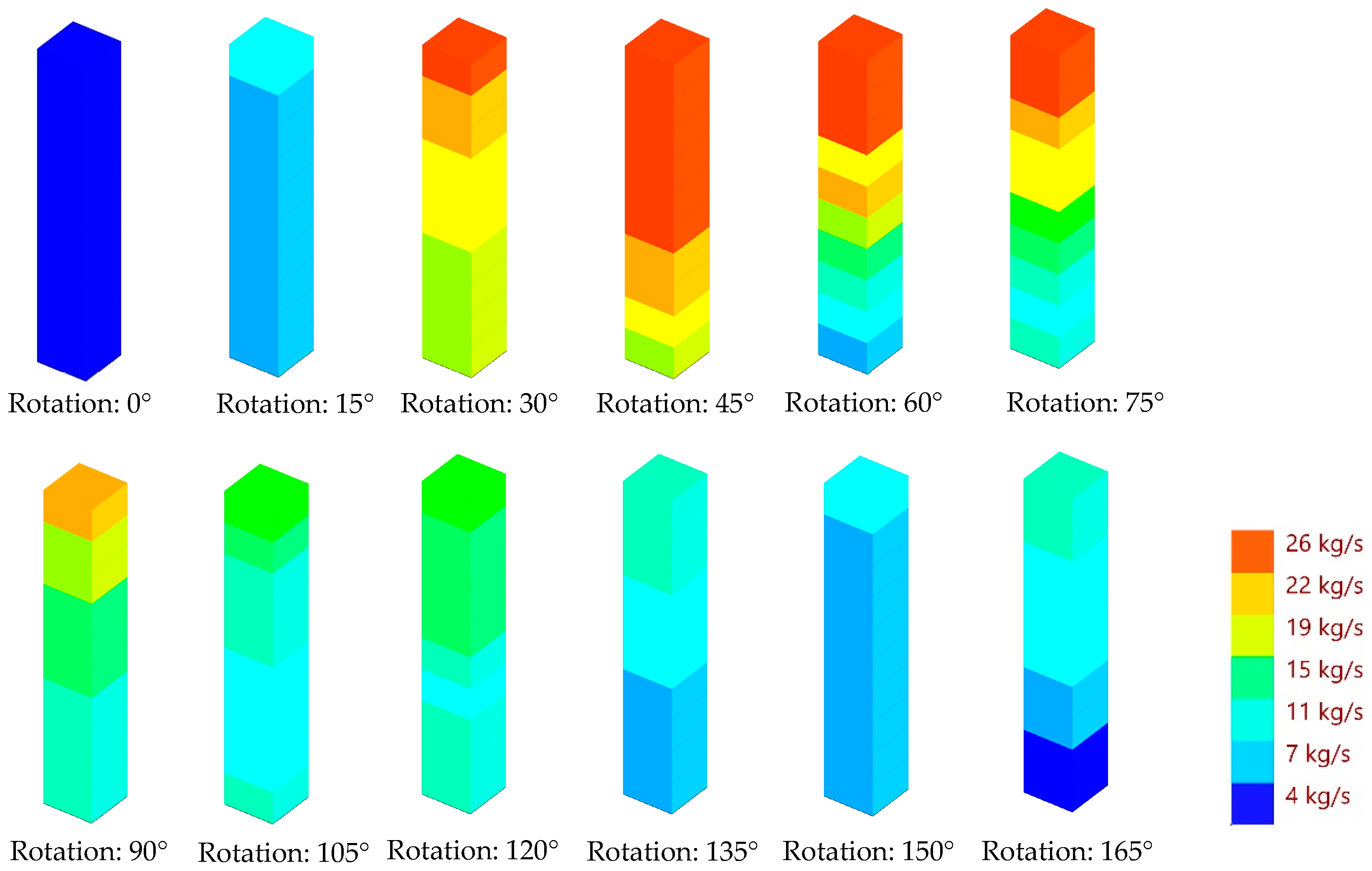
Eddy3D provides wind velocity data at specific probing points. It is imperative to assess airflow adequacy at individual stacks of trays. Averaging the velocities across all probing points fails to elucidate the volume of wind passing through. Additionally, wind direction is expected to be altered upon encountering obstacles. The number of stacks stacked atop one another in a column is contingent upon equipment engineering. We considered each tray to be square, with a length of 2 m. Given the dynamic physics of the designed structure, uniform airflow throughout the entire block is unrealistic. To enable localized analysis, the block was subdivided into 10 segments and the mass-flow rate was calculated for each segment (see
Figure 2).
While running the simulation, the cross-sectional area of all the blocks was reduced to half to account for the air resistance caused by the stack of trays. These geometries simulate both the diversion and resistance effects introduced by the stack. Modeling individual trays in detail within the CFD setup, while feasible, would significantly increase computational demand due to the larger number of CFD cells required. To mitigate this computational expense, the simulation can be simplified by reducing the effective wind speed passing through the trays, which inherently reflects the reduction in carbon absorption caused by resistance. This approach balances computational efficiency with the need to provide actionable insights for design optimization.
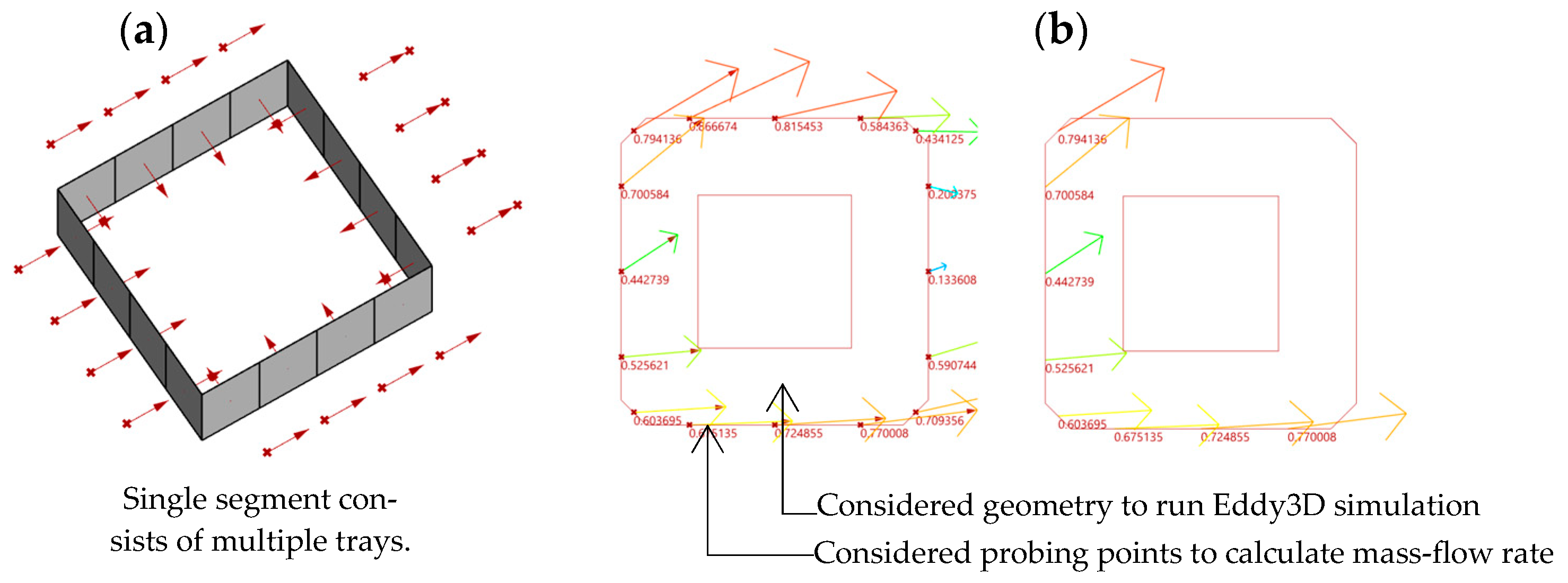
To calculate the mass-flow rate after simulation, actual-sized blocks are considered. Because the system is open, accurately calculating the airflow through each block portion is challenging. Each block portion is treated as a sink, with wind assumed to approach from all directions. This assumption simplifies the three-dimensional flow field into discrete sampling points while capturing the dominant inflow patterns. Each side of the block portion is divided into four divisions. These divisions are considered the cross sections through which wind is going inside or coming out. The centroids of these cross sections were used as probing points. So, each segment has 16 probing points, and the full tower has 160 probing points.
Running the Eddy3D simulation provides the wind direction and speed at those points. With extracted values, we can calculate the mass-flow rate at each point. Each cross section is treated as a vector surface having an inward direction. While calculating the mass-flow rate, the angle between the surface direction and the wind vector extracted from Eddy3D at its centroid is considered. If the angle is zero degrees, it indicates that the wind is passing through the block. If the angle is 90 degrees or more, it means that the wind is either coming out of the block or not entering it. Only cross sections with positive cosine values (angles < 90°) are included in the mass-flow summation, as these represent actual air entering the capture zone (see
Figure 3). This exclusion prevents double-counting of airflow: in an open system, air entering one face must exit another face, and summing all faces (including outflow) would yield a zero net flow. The method assumes steady-state conditions and does not capture transient flow effects or turbulent mixing that could enhance or reduce contact time. Air viscosity was assumed negligible for this calculation.
where
| v = flow speed (m/s) | P = pressure of the gas |
| A = cross-sectional area (m2) | T = temperature of the gas |
| ρ = mass density of the fluid (1.293 kg/m3 for air) | M = molecular weight of the gas |
| m = mass-flow rate (kg/s) | R = universal gas constant |
Equations (1)–(3). Formulas used to calculate mass-flow rate, starting from the basic density-based Equation (1), incorporating ideal gas assumptions (2), and extended to a segmented multi-vector summation for total flow (3).
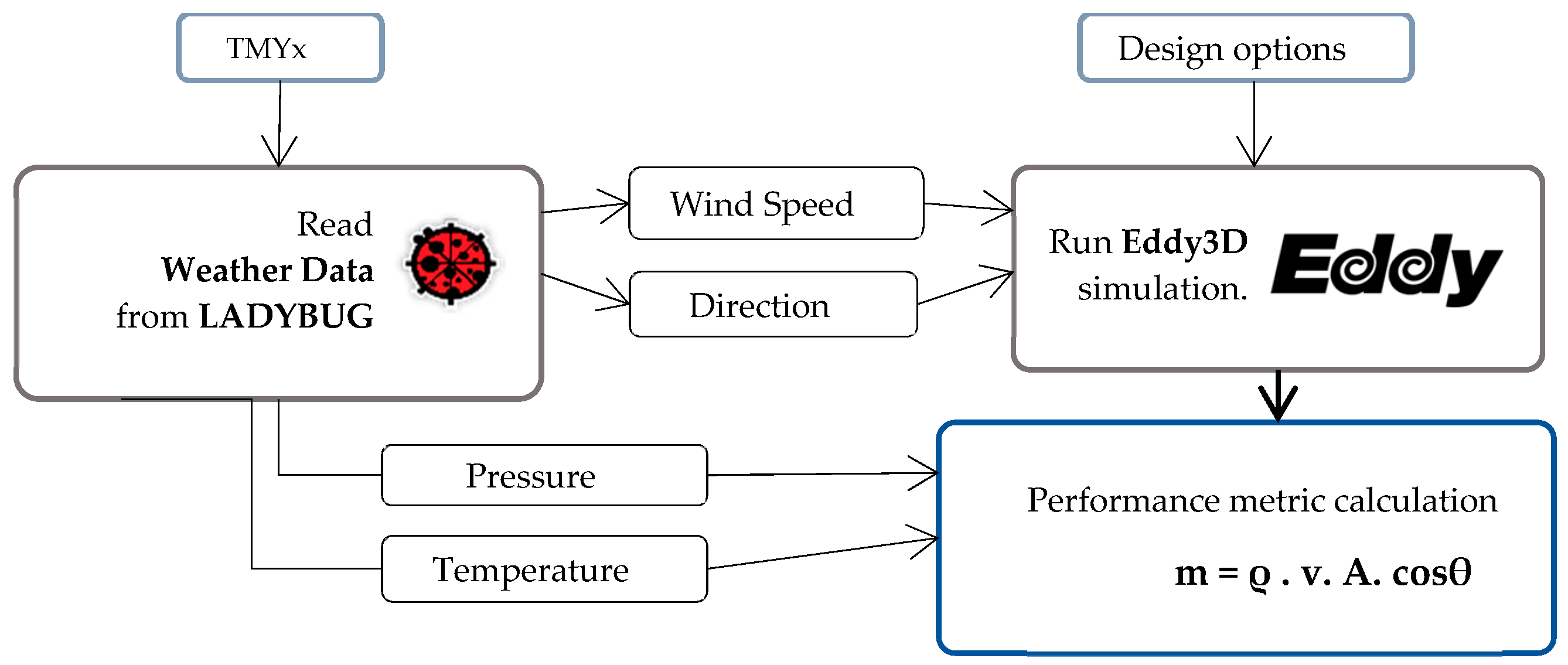
The density of air is influenced by atmospheric pressure (P) and temperature (T). For this study, we assumed the air density to be constant throughout the analysis. For improved accuracy, monthly average atmospheric pressure and temperature can be extracted from the TMYx file using Ladybug (see
Figure 4). When the most prevailing wind direction is considered, the average wind pressure and temperature of the site for the whole year can be utilized for the calculation. In the equation for calculating mass-flow rate, the molecular weight of air and the universal gas constant are both constants. Ladybug provided the values for P and T, while the cross-sectional area (A) was obtained from our model. The wind speed (v) and direction (cosθ) were determined using Eddy3D. Reducing the cross-sectional area allows for a more accurate calculation of the mass-flow rate, but it also results in increased computation time.
By integrating the relevant variables into our calculations (see Equations (1)–(3)), we computed the mass-flow rate across defined probing points. Subsequently, we visualized the total mass-flow rate across individual segments of the tower using color coding, providing a clear spatial representation of airflow variation. To test whether the workflow produces meaningful, physically consistent results, we simulated three distinct scenarios. In Scenario 1, we rotated operable façade panels, hypothesizing that alignment with wind direction would increase mass-flow rate. Scenario 2 examined seasonal wind speed variations, where higher wind months were expected to produce greater airflow. Scenario 3 introduced multiple towers, with the expectation that mass flow would decrease in towers positioned further from the windward edge due to shielding. These scenarios allow us to assess whether the workflow responds predictably to known aerodynamic principles, thereby validating its usefulness in early-stage carbon-capture enclosure design.
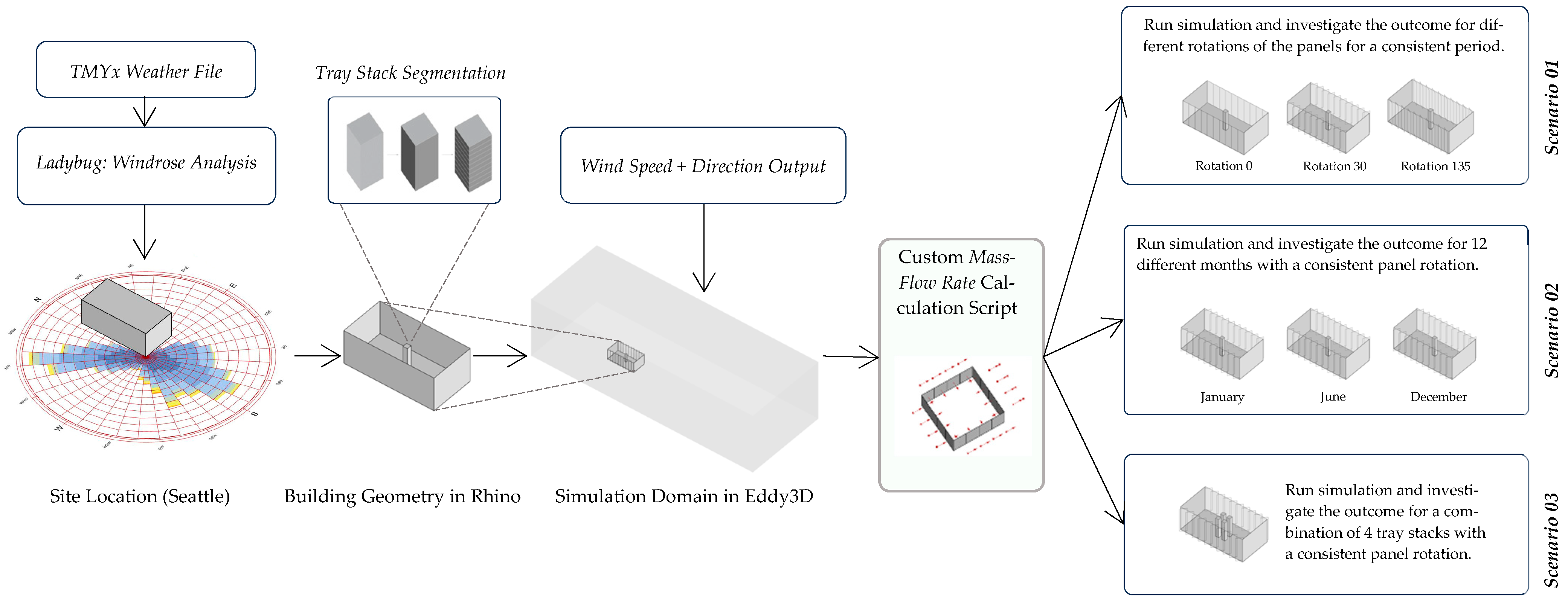
Figure 5 provides an overview of the full methodological workflow described in this section.
5. Discussion
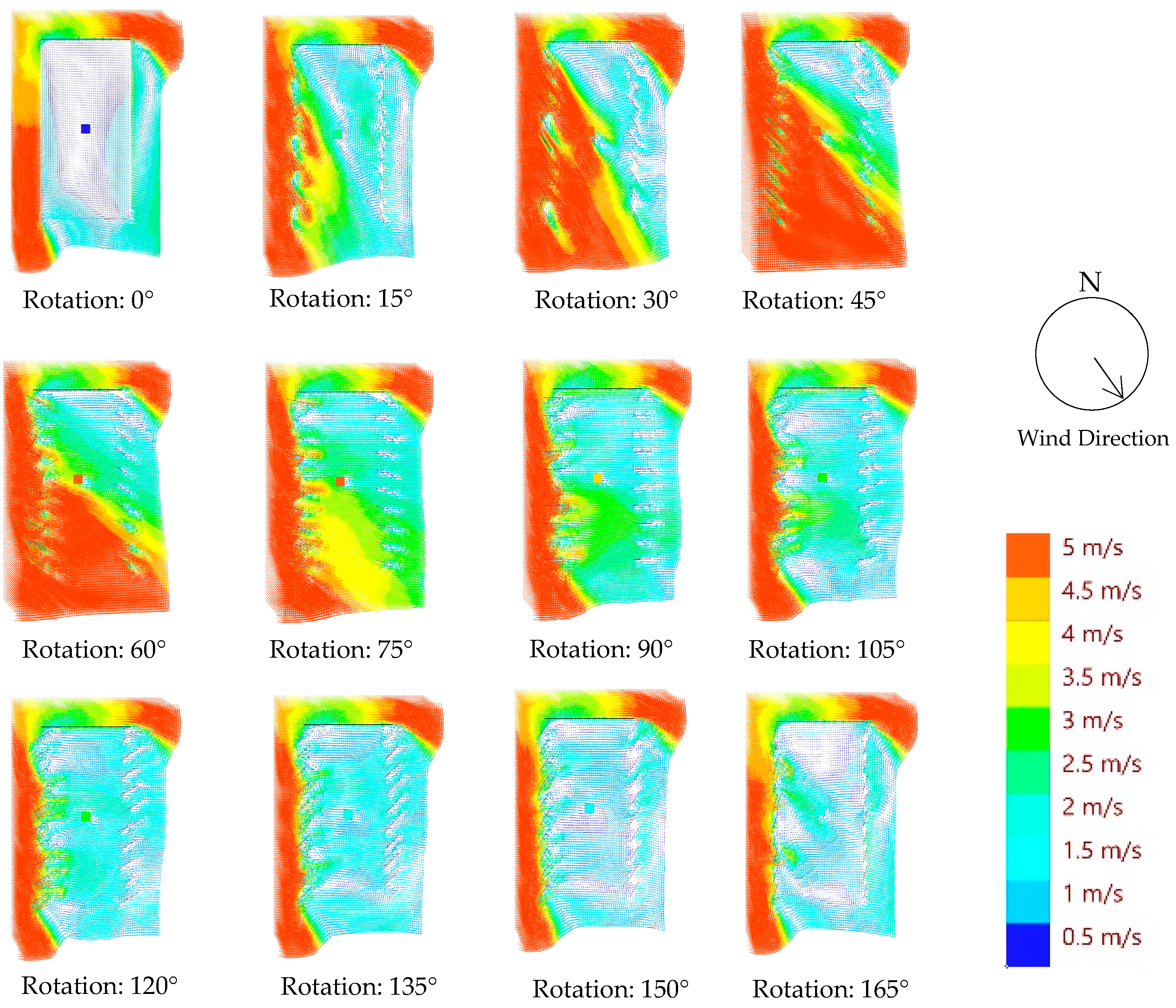
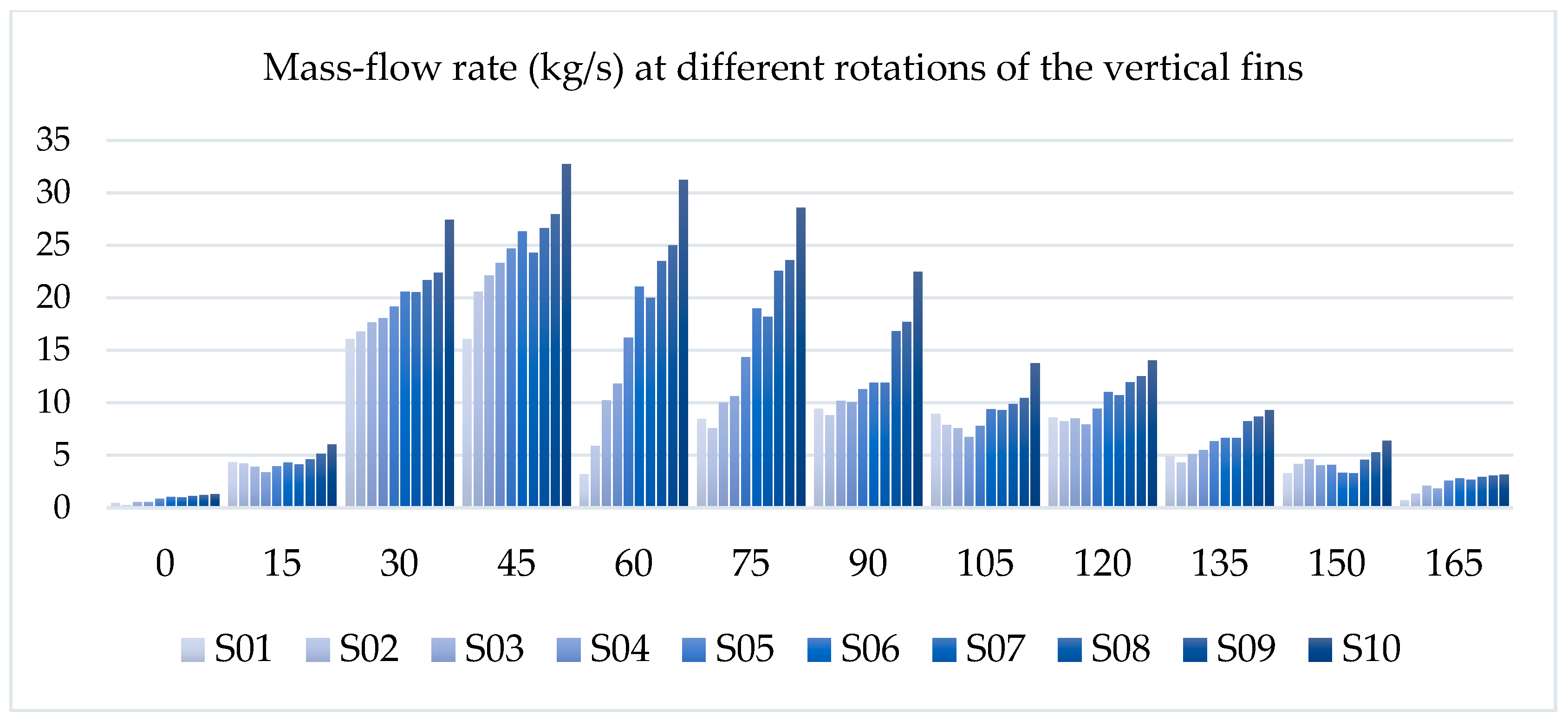
The results across all three scenarios offer deeper insights into how specific design and environmental conditions influence the airflow and mass-flow rate within the proposed carbon-capture enclosure. Scenario 1 demonstrates that a 45-degree panel rotation yields the highest mass-flow rate, indicating improved potential for carbon absorption (see
Figure 9). Quantitatively, the simulations show that façade rotation can alter the total mass-flow rate by up to 96.5% across the tested configurations. However, excessive airflow could introduce structural risks. The heatmap visualizations enable designers to compare options and select a rotation that achieves balanced airflow. It is important to note that this framework does not define an “ideal” airflow condition; rather, it enables performance comparisons, while the final decision must be aligned with engineering requirements and DAC system specifications.
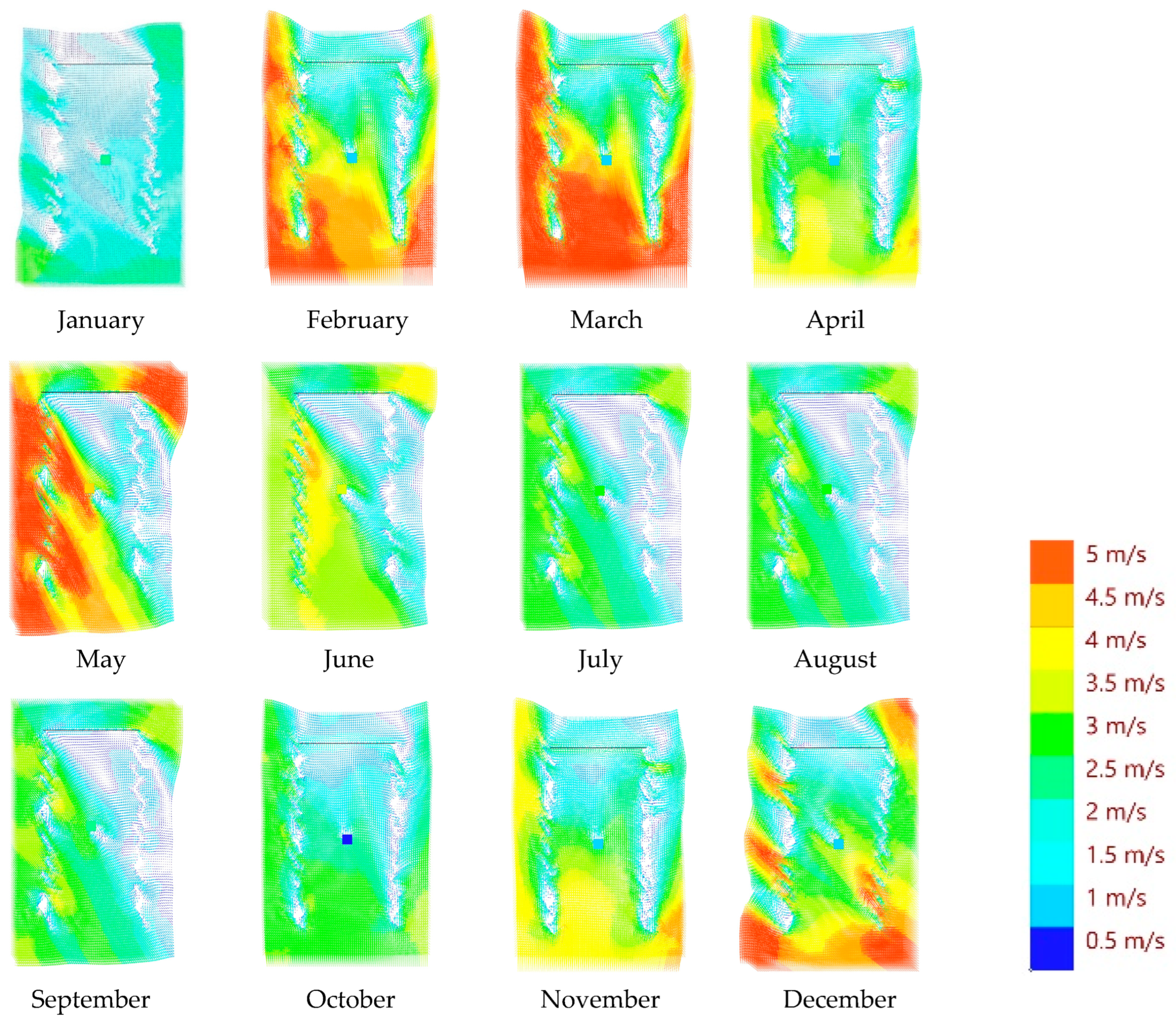
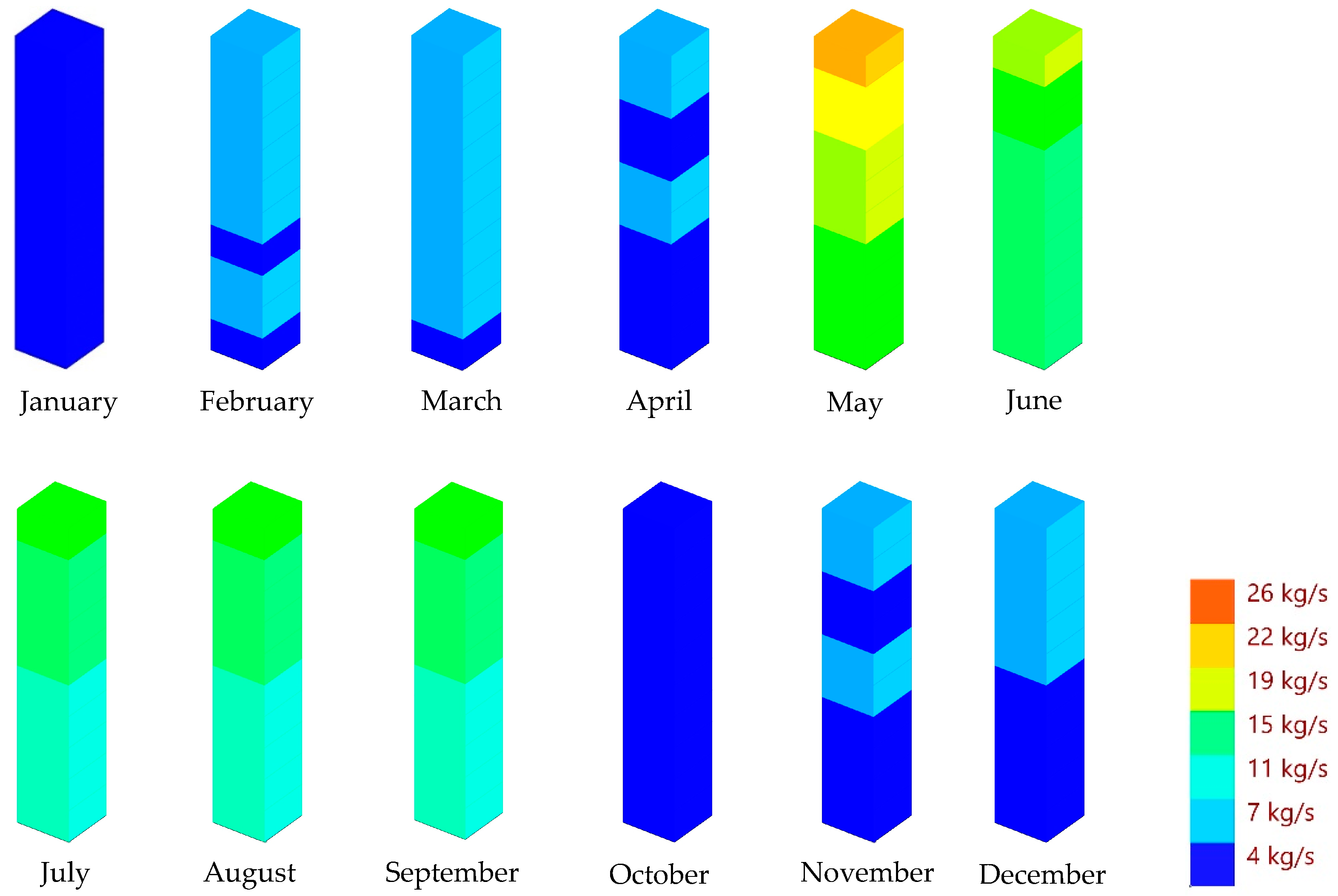
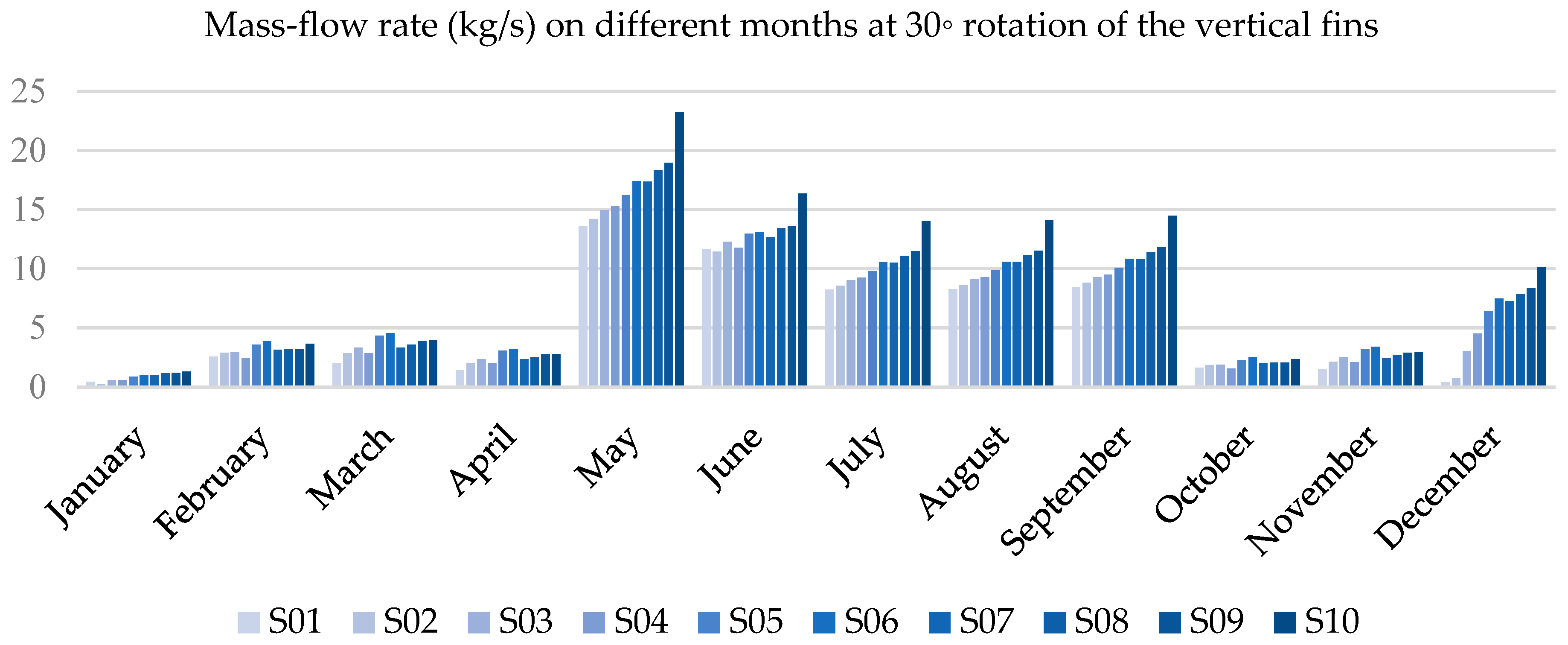
Scenario 2 reveals that moderate and consistent mass flow is achieved between May and September (see
Figure 12). Quantitatively, with a fixed façade configuration, total mass-flow rates vary from approximately 8.5 kg/s in January to 169.5 kg/s in May. Interestingly, some months with high wind speeds, such as February, March and December, do not correspond to higher mass-flow rates due to the influence of design geometry. The significant seasonal variation in airflow highlights the need for adaptive architectural strategies. Rather than relying on a fixed configuration, DAC-integrated enclosures can benefit from responsive or seasonally adjustable systems that maintain consistent performances throughout the year.
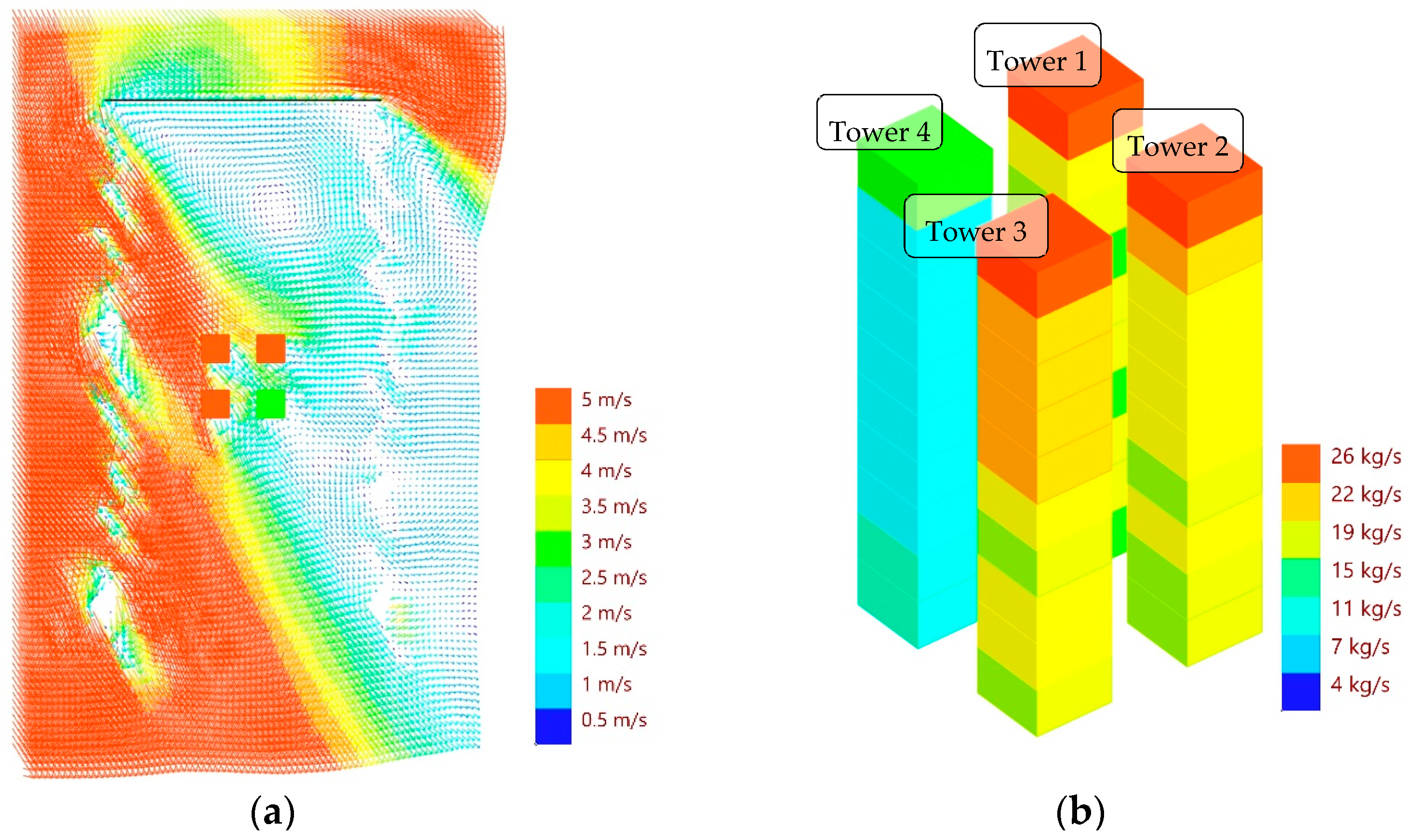
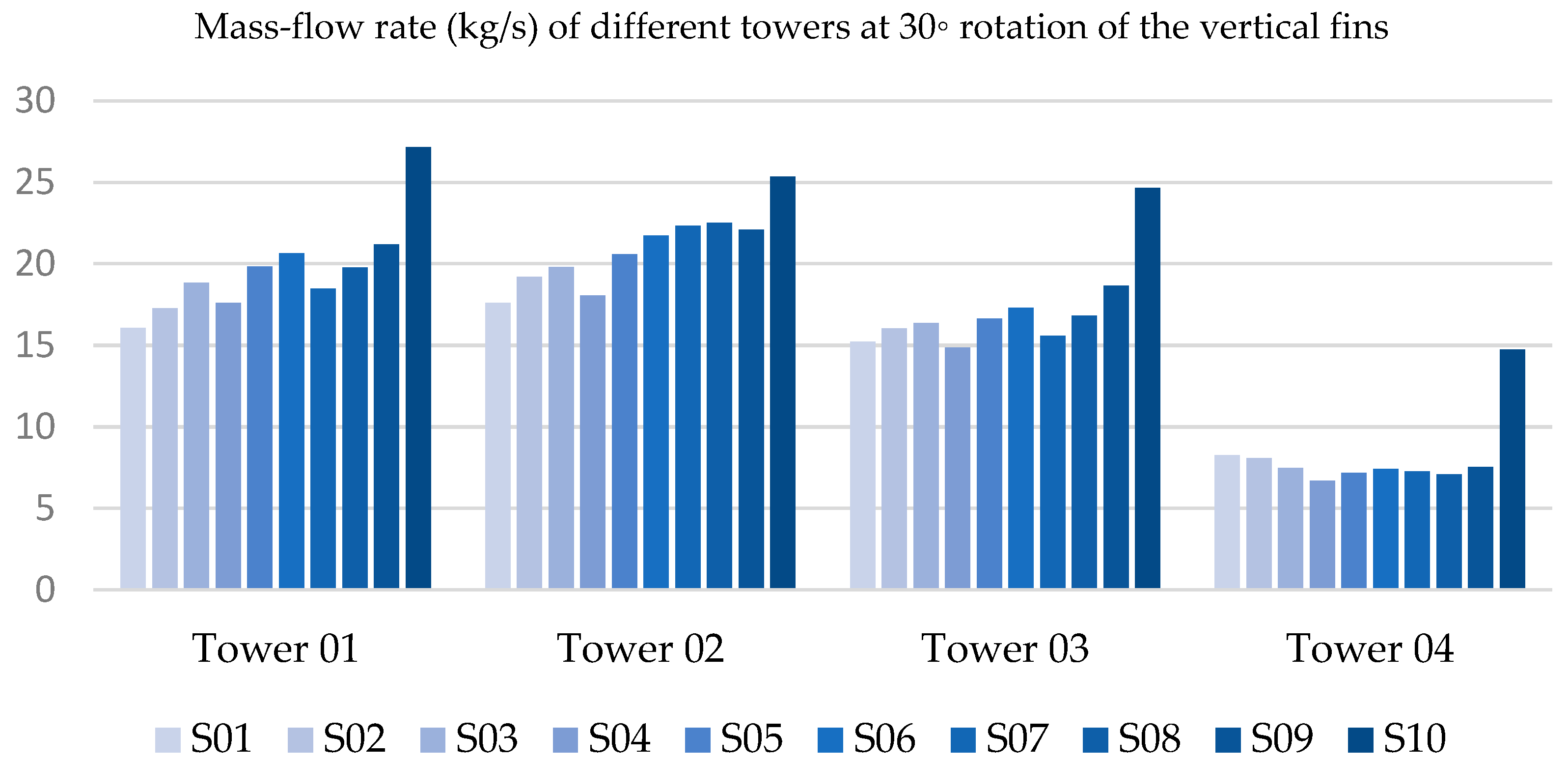
Scenario 3 highlights the impact of spatial configuration, where Tower 4, positioned behind the others, receives the lowest mass-flow due to wind shadowing (see
Figure 13). The simulations indicate that shielding effects between towers can reduce airflow by up to 60.9% compared with windward towers. The observed spatial heterogeneity in airflow distribution suggests that carbon-capture efficiency is not uniform within the enclosure. This has direct implications for internal spatial organization, indicating that high-performance zones should be prioritized for denser or more active capture assemblies, while low-flow zones may require design interventions such as redirection elements or altered geometry. The impact of wind shadowing between towers extends the implications of this study beyond individual buildings to urban-scale planning. The placement, spacing, and clustering of DAC-integrated structures must be carefully considered to avoid performance losses due to aerodynamic interference.
Several limitations should be acknowledged. The framework does not explicitly account for the microclimate within the enclosure. The monthly average temperature of the site is used as a proxy; however, the internal environment—particularly within the shaded structure housing the capture equipment—may exhibit different thermal conditions. Additionally, material properties of the capture equipment may influence internal temperature distribution, leading to a non-uniform temperature distribution within the structure. Further investigation is required to incorporate material-specific and microclimate effects.
Pressure variations and detailed flow resistance within the stack are also not explicitly represented, limiting the physical fidelity of the simulations. Addressing these challenges would require advanced CFD configurations, increasing computational cost. These simplifications reflect a trade-off between computational efficiency and applicability within early-stage design explorations.
The current study focuses on the airflow within a single structure. However, if the technology is implemented on a larger scale, involving the master planning of multiple structures instead of just one, new challenges will arise. Nevertheless, the location of each individual structure can be optimized to ensure maximum airflow through all the structures. The current framework simplifies environmental and microclimatic variables for computational efficiency. The flat terrain assumption and absence of urban context enable a clear comparison of geometric alternatives but represent idealized conditions. Real-world implementation would require site-specific modeling that accounts for surrounding buildings, terrain topography and local microclimate effects.
While the study advances design-oriented workflows for airflow evaluation, its direct contribution to carbon sequestration research is limited. The framework does not engage with the materials or chemical processes of DAC technology, focusing instead on optimizing airflow for better performance. Additionally, the findings are context-specific to the chosen site and do not directly generalize to other locations without modification. Future research should integrate advanced modeling techniques to directly simulate CO
2 concentrations to enable a more comprehensive performance assessment. Integration with optimization methods could further support multi-criteria design exploration. In addition, emerging AI-assisted and hybrid modeling approaches—such as physics-informed machine learning and data-driven surrogate modeling—offer the potential to accelerate simulation workflows and enable the rapid evaluation of design alternatives, particularly in early-stage exploration [
27,
28]. These approaches align with broader developments in AI-enabled performance-driven design, where computational methods support more efficient and adaptive design processes.
6. Conclusions
This study presents a computational workflow that empowers architects to evaluate airflow performance in carbon-capture enclosures using familiar tools such as Rhino, Grasshopper, Ladybug, and Eddy3D. By integrating mass-flow rate calculations and visual analyses into early-stage design, the workflow allows designers to explore and compare multiple design options without requiring advanced CFD expertise.
Results across three scenarios demonstrated the workflow’s ability to respond to variations in panel orientations, seasonal wind conditions, and tower arrangements—providing performance insights that align with physical expectations. These findings support the workflow’s utility in helping designers make informed decisions when integrating DAC technologies into architectural projects.
The implications of this research extend beyond optimizing individual enclosures. As direct air capture technologies mature toward commercial viability, the architectural profession faces a transformative opportunity: buildings may transition from being passive consumers of resources to active contributors in atmospheric carbon removal. This paradigm shift necessitates new design methodologies where aerodynamic performance becomes as fundamental to enclosure design as thermal insulation or structural integrity. The framework presented here establishes a precedent for embedding carbon-capture performance metrics into parametric design workflows, enabling a generation of carbon-responsive architecture that quantifiably participates in climate mitigation.
Looking forward, several critical research directions emerge. First, integrating real-time CO2 concentration modeling with CFD simulations could reveal the relationship between airflow distribution and actual carbonation rates, moving beyond mass-flow proxies toward direct capture efficiency predictions. Second, scaling these methods to urban district-level analyses would illuminate how building clusters, street canyons, and prevailing wind corridors interact to create or constrain capture opportunities—potentially informing zoning policies and master planning strategies for carbon-positive development. Third, coupling this workflow with multi-objective optimization algorithms could simultaneously balance carbon-capture performance against competing concerns such as energy consumption, daylighting, thermal comfort, and construction costs, revealing design trade-offs that are essential for real-world implementation. Furthermore, incorporating AI-assisted approaches, such as physics-informed machine learning and data-driven surrogate modeling, may enhance computational efficiency and enable rapid design exploration. Additionally, exploring hybrid active–passive systems that strategically deploy mechanical assistance during low-wind periods could extend viable geographical markets beyond naturally well-ventilated climates.
While the current framework simplifies environmental and microclimatic variables for computational efficiency, it establishes a foundation for expanding passive carbon-capture strategies in architectural design. As the urgency of climate-responsive architecture grows, tools like this can help bridge the gap between environmental performance analyses and conceptual design. By streamlining airflow assessment and embedding it within common design platforms, this framework invites broader participation from the architectural community in shaping carbon-conscious solutions.