
Assessing Identity in the Recent Algerian Architectural Production: Case of Administrative Buildings of Béchar



Abstract
1. Introduction
1.1. Definition of the Concept of Identity
1.2. Definition of the Concept of Architectural Identity
1.2.1. Identity in Architectural Theories
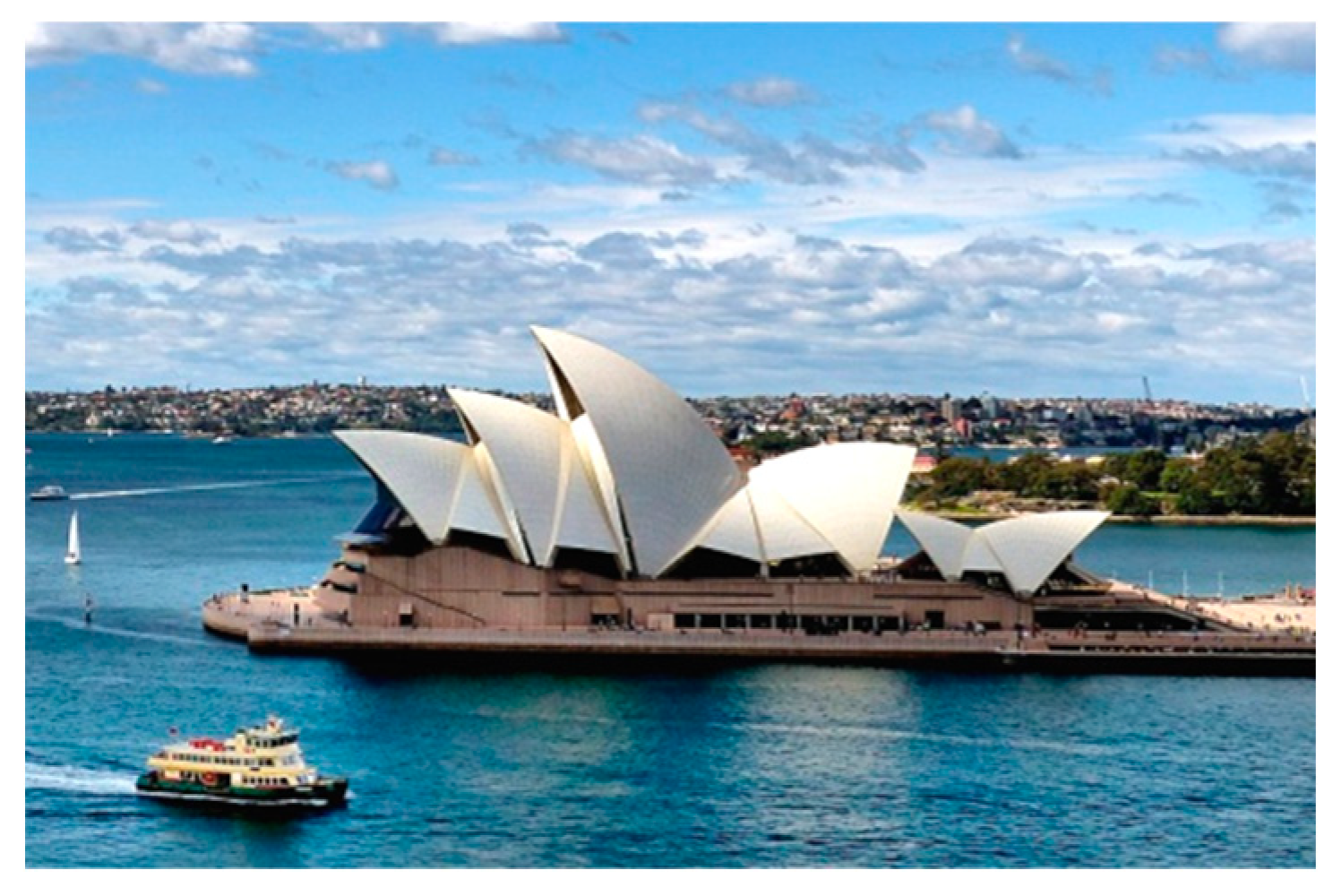

1.2.2. Identity in Architectural Practice
1.2.3. Previous Research on Architectural Identity
2. Materials and Methods
2.1. Parameters of Architectural Identity
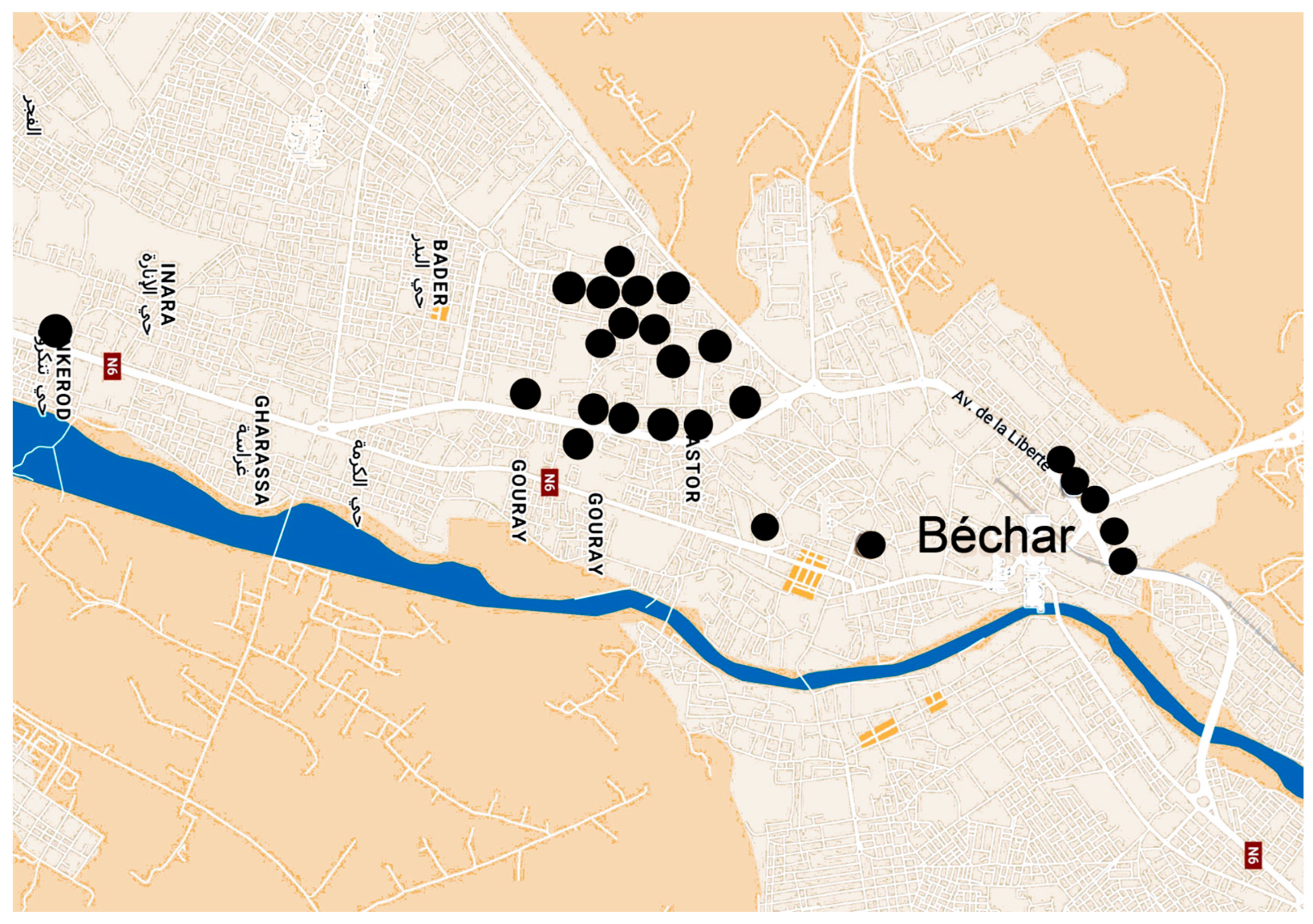
2.2. The Administrative Buildings of Béchar as a Case Study
3. Results and Discussions
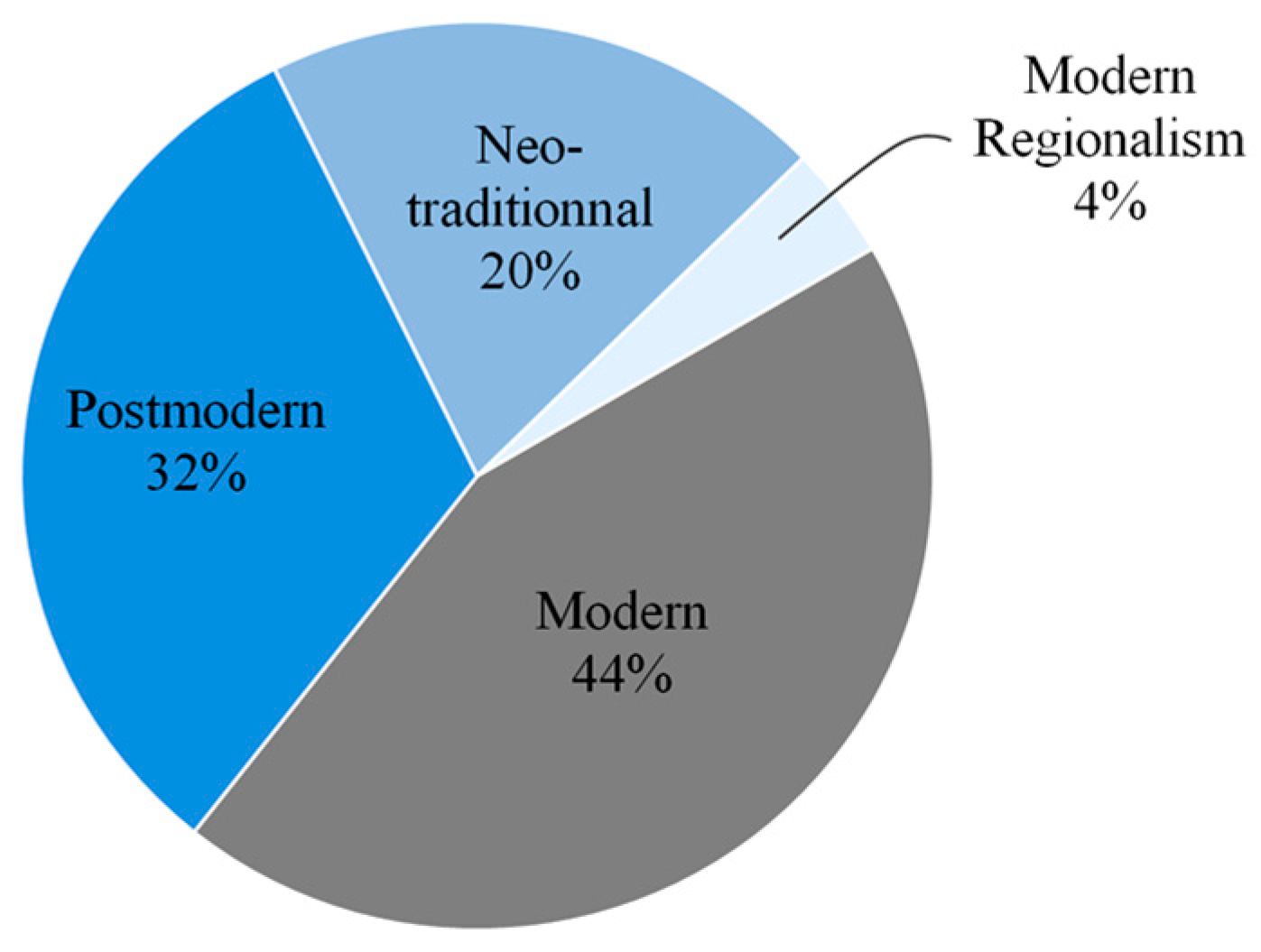
3.1. Design References
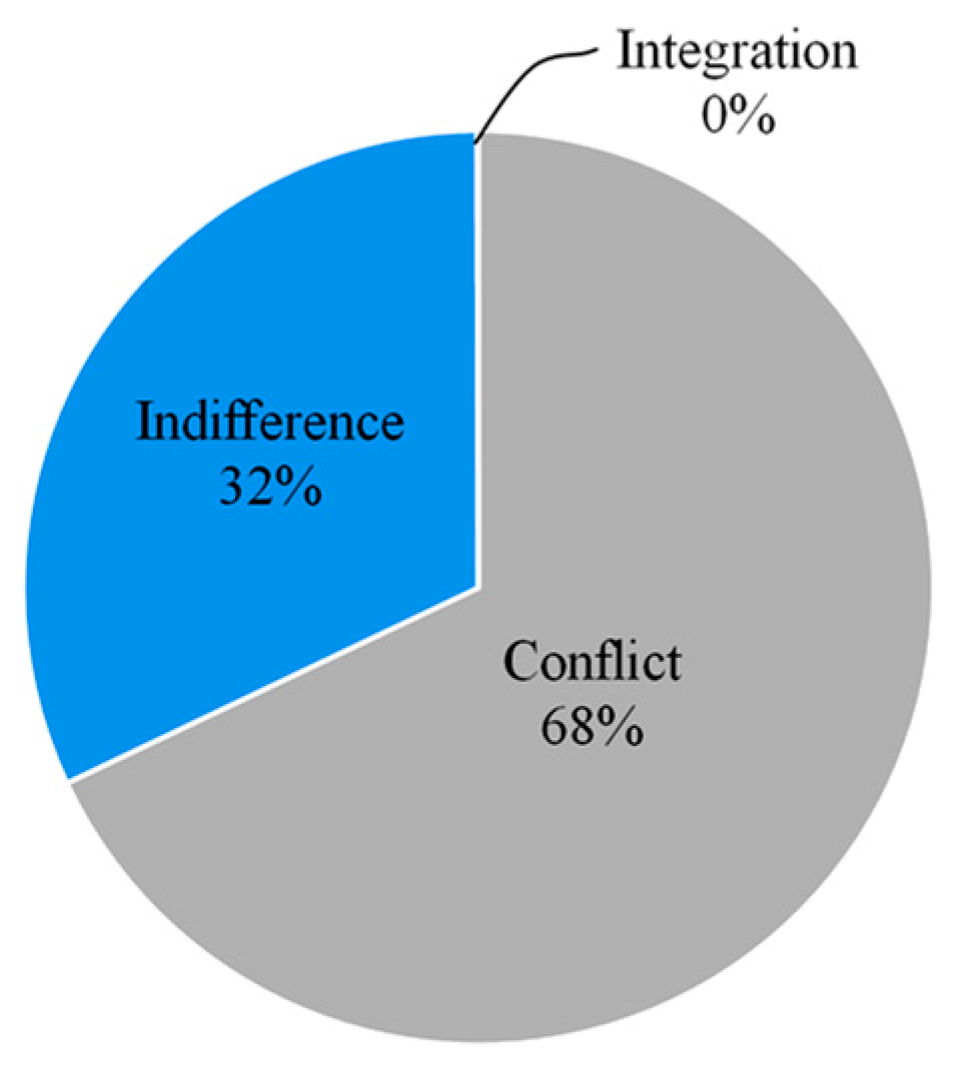
3.2. Relationship with the Natural Environment (Climate)
- -
- No building is defined as “integrated” with the climate.
- -
- All buildings classified as “modern” are in conflict with the climate.
- -
- All buildings classified as “neo-traditional” are indifferent to the climate.
- -
- Most “postmodern” buildings (75%) are in conflict with the climate, while the rest are indifferent.
- -
- The only building designed using the abstract approach does not deviate from the rule of ignoring climatic conditions.
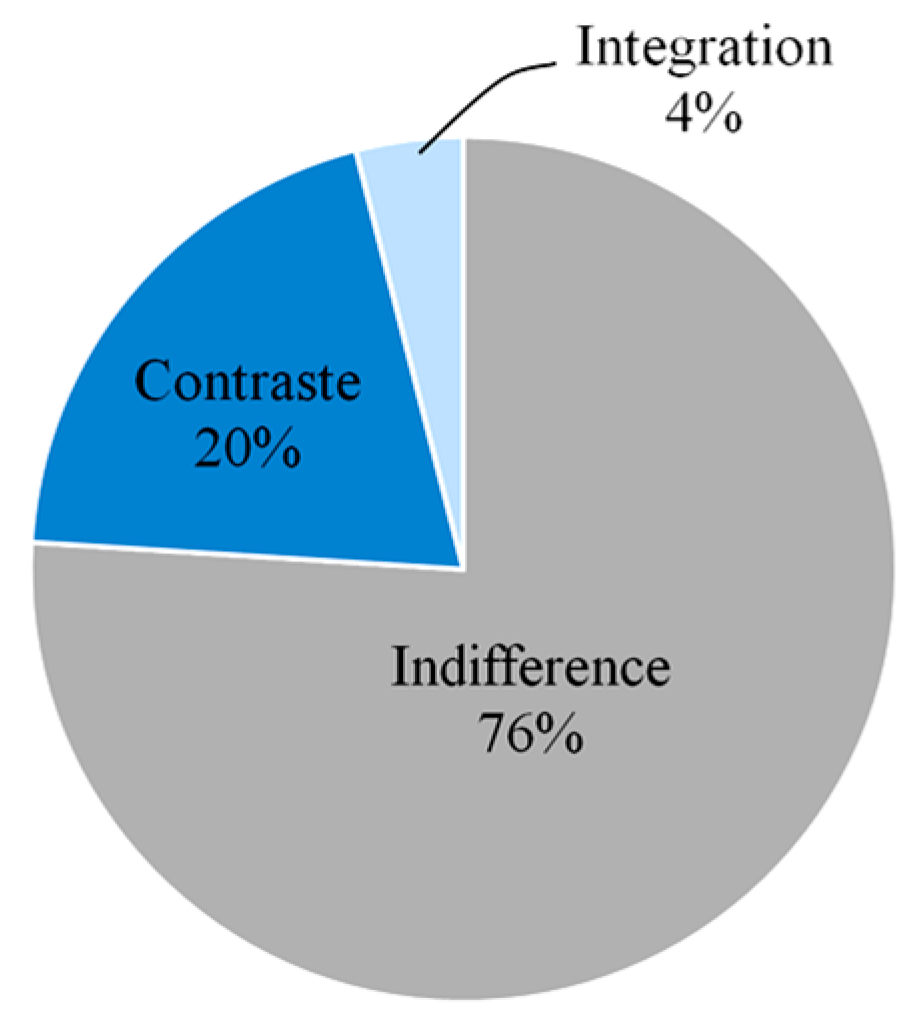
3.3. Relationship with the Urban Environment
- -
- All Neo-traditional and Postmodern buildings are indifferent to their integration into the urban environment.
- -
- Only one building designed according to the modern approach is integrated into its urban environment; the rest are divided equally between indifference and contrast.
4. Conclusions
5. Recommendations
5.1. Regarding Design References
5.2. Regarding the Integration of the Climate Factor
5.3. Regarding the Building’s Integration into the Urban Environment
Author Contributions
Funding
Institutional Review Board Statement
Informed Consent Statement
Data Availability Statement
Conflicts of Interest
Abbreviations
| DUAC | Direction de l’Urbanisme, de l’Architecture et de la Construction |
| CNAS | Caisse Nationale des Assurances Sociales |
| SP | Superficial Properties |
| EP | Essential Properties |
References
- Gharipour, M. Tradition versus Modernity: The Challenge of Identity in Contemporary Islamic Architecture. Local Identities Global Challenges. Ph.D. Thesis, Morgan State University, Baltimore, MD, USA, 2011; pp. 199–205. [Google Scholar]
- Halpern, C. L’identité. Histoire d’un succès. In Identité(s): L’individu, Le Groupe, La Société; Sciences Humaines: Auxerre, France, 2016; pp. 5–13. [Google Scholar]
- Marc, E. Psychologie de l’identité, Soi et le Groupe; Editions Dunod: Malakoff, France, 2005; 255p. [Google Scholar]
- Salama, A.M. Mediterranean Visual Messages: The Conundrum of Identity, ISMS, and Meaning in Contemporary Egyptian Architecture. Archnet-IJAR Int. J. Archit. Res. 2007, 1, 86–104. Available online: https://strathprints.strath.ac.uk/50384/1/Ashraf_Salama2007_Mediterranean_Visual_Messages_The_Conundrum_of_Identity_ISMS_and_Meaning_in_Contemporary_Egyptian_Architectur.pdf (accessed on 6 January 2026).
- Alavi, S.F.; Tanaka, T. Analyzing the Role of Identity Elements and Features of Housing in Historical and Modern Architecture in Shaping Architectural Identity: The Case of Herat City. Architecture 2023, 3, 548–577. [Google Scholar] [CrossRef]
- Correa, C. Quest for Identity. In Proceedings of the Seminar: Exploring Architecture in Islamic Cultures, Universiti Teknologi Malaysia and Ministry of Culture, Youth and Sports, Malaysia, Kuala Lumpur, Malaysia, 25–27 July 1983; Volume 1, pp. 10–13. [Google Scholar]
- Rapoport, A. The Meaning of the Built Environment: A Nonverbal Communication Approach; University of Arizona Press: Tucson, Arizona, USA, 1990; 253p. [Google Scholar]
- Alzahrani, A. Understanding the Role of Architectural Identity in Forming Contemporary Architecture in Saudi Arabia. Alex. Eng. J. 2022, 61, 11715–11736. [Google Scholar] [CrossRef]
- Salama, A.M. Architectural Identity in the Middle East: Hidden Assumptions and Philosophical Perspectives. In Shores of the Mediterranean: Architecture as a Language of Peace; Mazzoleni, D., Anzani, G., Salama, A.M., Sepe, M., Simone, M.M., Eds.; Intra Moenia: Napoli, Italy, 2005; pp. 77–85. [Google Scholar]
- Asfour, K. Polemics In Arab Architecture: Theory Versus Practice. Archnet-Ijar Int. J. Archit. Res. 2007, 1, 53–69. Available online: https://s3.us-east-1.amazonaws.com/media.archnet.org/system/publications/contents/4944/original/DPC1662.pdf?1384787254 (accessed on 6 January 2026).
- Lynch, K. The Image of the City; Technology Press: Cambridge, UK, 1960. [Google Scholar]
- Sharara, H. Modern and Contemporary Architecture Between Western and Arab Countries: A Review of Derivative Synonyms. Eur. Sci. J. 2022, 18, 133. [Google Scholar] [CrossRef]
- Abel, C. Architecture and Identity: Towards a Global Eco-Culture; With a Foreword by SuhaOzkan; Architectural Press: Oxford, UK, 1997; 245p. [Google Scholar]
- Curtis, W.J. Modern Architecture Since 1900; Prentice-Hall: Englewood, NJ, USA, 1982. [Google Scholar]
- Norberg-Schulz, C. Genius Loci: Towards a Phenomenology of Architecture; Rizzoli: New York, NY, USA, 1980. [Google Scholar]
- Ozkan, S. Régionalisme et Mouvement Moderne—A La Recherche d’Une Architecture Contemporaine En Harmonie Avec La Culture. Archit. Comport. 1992, 8, 353–366. [Google Scholar]
- Orozco, J.C. A Comparative Analysis of Kenneth Frampton’s Critical Regionalism and William J. R. Curtis’s Authentic Regionalism as a Means for Evaluating Two Houses by Mexican Architect Luis Barragan. Ph.D. Thesis, Kansas State University, Manhattan, KS, USA, 2011. Available online: http://hdl.handle.net/2097/8723 (accessed on 1 May 2024).
- Schmitz, S. Identity in Architecture—A Construction? In Constructing Identity in Contemporary Architecture: Case Studies from the South; Herrle, P., Schmitz, S., Eds.; LIT Verlag: Münster, German, 2009. [Google Scholar]
- Curtis, W.J.R. Towards an Authentic Regionalism. Mimar. Archit. Dev. 1986, 19, 24–31. [Google Scholar]
- Bernard Spragg. Opéra of Sidney. From Wikimedia Commons. 2015. Available online: https://commons.wikimedia.org/w/index.php?curid=70521604 (accessed on 1 July 2025).
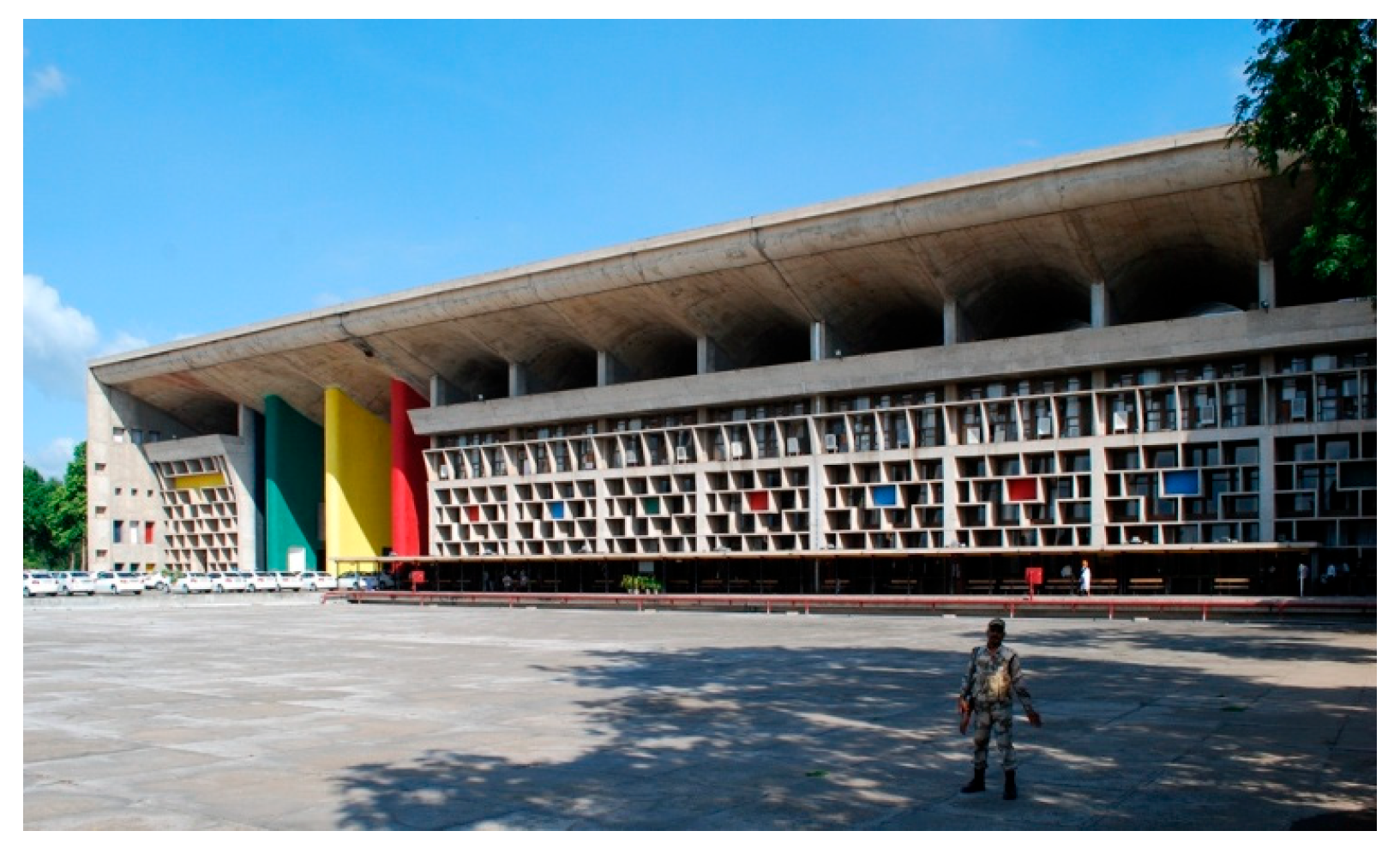
- Sanyam Bahga. Palace of Justice, Chandigarh, India. From Wikimedia Commons. 2011. Available online: https://commons.wikimedia.org/wiki/File:Capitol_High_Court.jpg (accessed on 1 July 2025).
- Koolhaas, R. The Generic City, 2nd ed.; Sigler, J., Ed.; The Monacelli Press, Inc.: New York, NY, USA, 1995. [Google Scholar]
- Asfour, K. Identity in the Arab Region: Architects and Projects from Egypt, Iraq, Jordan, Saudi Arabia, Kuwait and Yatar. In Constructing Identity in Contemporary Architecture: Case Studies from the South; Herrle, P., Schmitz, S., Eds.; LIT Verlag: Berlin/Münster, Germany, 2009; p. 152. [Google Scholar]
- EI-Shorbagy, A.M. The Architecture of Hassan Fathy: Between Western and Non-Western Perspectives. Ph.D. Thesis, University of Canterbury, Christchurch, New Zealand, 2001. [Google Scholar]
- Al-Dabbagh, A.H.; Salim Al-Sofee, E. Identity Incarnated in Contemporary Arab Architecture the Architect Abed Wahid El-Wakil. Al-Rafidain Eng. J. 2011, 19, 71–92. [Google Scholar] [CrossRef]
- Al-Dabbagh, A.H.; Al-Dabbagh, A. Tradition Employing in Contemporary Arabic Architecture the Architect RasemBadran“Specialty of”. Al-Rafidain Eng. J. 2010, 18, 58–79. [Google Scholar] [CrossRef]
- Bekkouche, A. Pour Une Architecture Algérienne. In L’Algérie 50 Ans Après. Etat Des Savoirs En Sciences Sociales et Humaines; CRASC (Centre de Recherche En Anthropologie Sociale et Culturelle): Oran, Algeria, 2008; pp. 503–513. [Google Scholar]
- Mecarsel, J. Architecture et Présence: Entre Idée, Image et Communication. Ph.D. Thesis, Université de Toulon, Toulon, France, 2014. [Google Scholar]
- Tahar, B. Housing as an Expression of Self-Identity in Contemporary Algeria: The Work of El-Miniawy Brothers. J. Islam. Archit. 2010, 1, 87–93. [Google Scholar] [CrossRef]
- 200 Housing Units Ouled Jellal, Algeria. Source: Archnet.org. Available online: https://www.archnet.org/sites/4692 (accessed on 25 September 2025).
- Maachi-Maïza, M. L’architecture de Fernand Pouillon En Algérie. Insaniyat 2008, 13–26. [Google Scholar] [CrossRef]
- Abdelsalam, T. A Comprehensive Framework for Approaching the Architectural Identity Dilemma in the Design Studio. In Proceedings of the Architectural Education Forum 4: Flexibility in Architectural Education, Erciyes University Faculty of Architecture, Kayseri, Turky, 26–29 May 2009. [Google Scholar]
- Abdelsalam, T. The Role of Aga Khan Award in Addressing the Identity Crisis in the Eastern Arab City. In Proceedings of the Symposium of “Contemporary Discourses in Architecture”, Lebanese American University, Beirut, Lebanon, 13–14 May 2004; pp. 183–199. [Google Scholar]
- Torabi, Z.; Brahman, S. Effective Factors in Shaping the Identity of Architecture. Middle East J. Sci. Res. 2013, 15, 106–113. [Google Scholar]
- Baper, Y.S. The Role of Heritage Buildings in Constructing the Continuity of Architectural Identity in Erbil City. Int. Trans. J. Eng. Manag. Appl. Sci. Technol. 2018, 9, 1–12. [Google Scholar] [CrossRef]
- Mahgoub, Y. Architecture and the Expression of Cultural Identity in Kuwait. J. Archit. 2007, 12, 165–182. [Google Scholar] [CrossRef]
- Curtis, W. Principle vs Pastiche, Perspectives on Some Recent Classicisms. Archit. Rev. 1984, 176, 10–21. [Google Scholar]
- Hamid, M.; Hanks, L.; Qi, W. Is It Possible to Define Architectural Identity More Objectively? In Cities’ Vocabularies: The Influences and Formations; Advances in Science, Technology & Innovation; Springer: Cham, Switzerland, 2021; pp. 109–123. [Google Scholar] [CrossRef]
- Von Meiss, P. De la Forme au Lieu une Introduction à L’étude de L’architecture; Presses Polytechniques et Universitaires Romandes: Lausanne, Switzerland, 1993; 221p. [Google Scholar]
- Mazouz, S. Formes Urbaines et Espace Public Dans La Ville Algérienne Contemporaine, Des Mots Sur Les Maux; 2024self-edited; 392p. Available online: https://www.amazon.fr/Formes-Urbaines-Espace-Alg%C3%A9rienne-Contemporaine/dp/B0D9DDTG3N (accessed on 11 July 2024).
- Chaouche-Bencherif, M. La Micro-Urbanisation et La Ville-Oasis, Une Alternative à l’équilibre Des Zones Arides Pour Une Ville Saharienne Durable Cas Du Bas-Sahara. Ph.D. Thesis, University of Constantine, Constantine, Algeria, 2007. [Google Scholar]
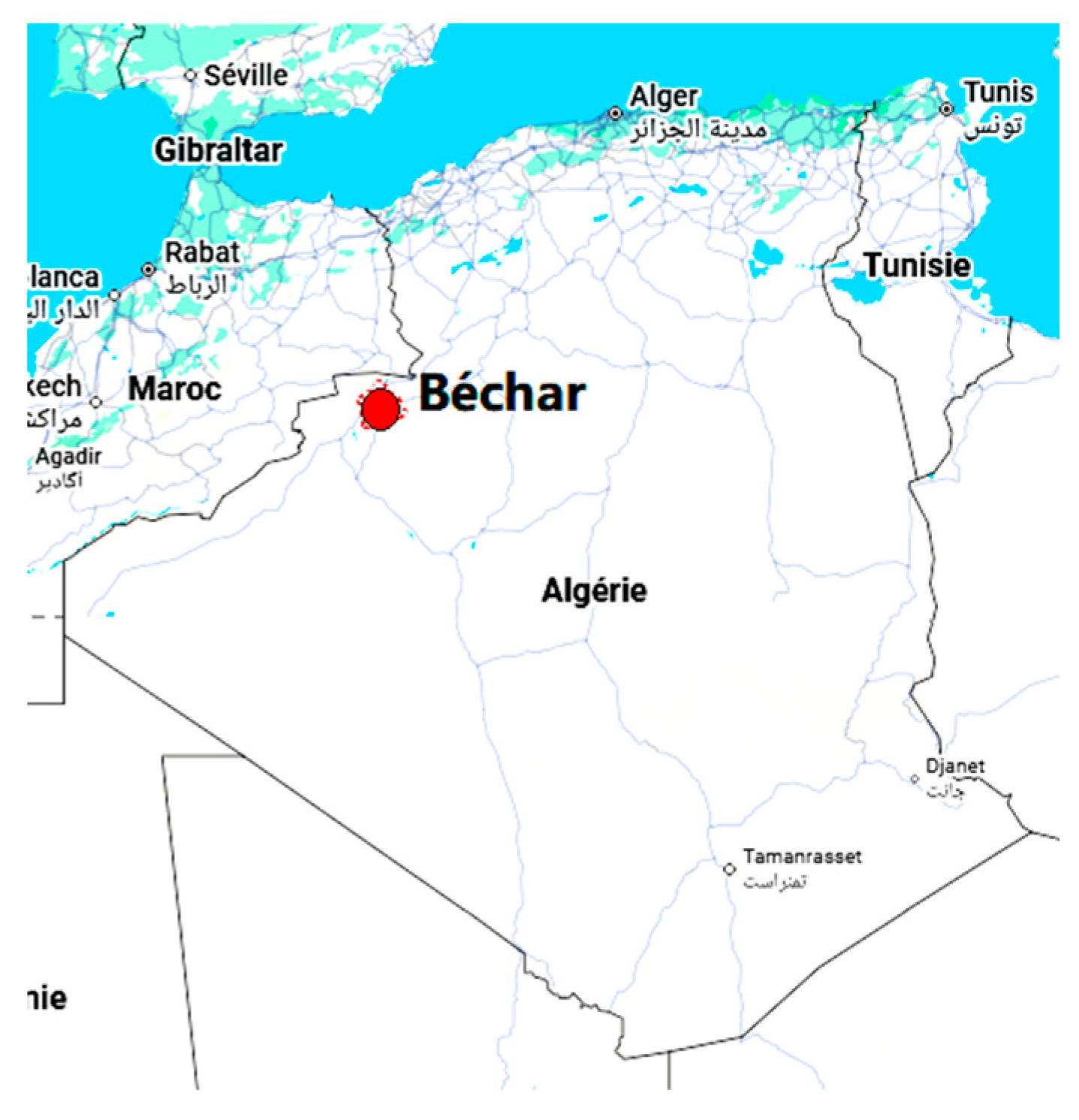
- Google Maps. Situation of the City of Béchar, Algeria. Available online: https://maps.app.goo.gl/G5EQqe4xuFunuMPu7 (accessed on 12 October 2025).
- Tay, K.S. Cultural Identity in Architecture as Perceived from a Singapore Viewpoint. In Proceedings of the Seminar: Exploring Architecture in Islamic Cultures, Universiti Teknologi Malaysia and Ministry of Culture, Youth and Sports, Malaysia, Kuala Lumpur, Malaysia, 25–27 July 1983; Volume 1, pp. 46–51, CaseStudy3—Singapore. [Google Scholar]
- Ait Hammouda, K. L’architecture urbaine à Adrar, modèle imposé ou esthétique recherchée: Une architecture qui ne dit pas son nom. In Proceedings of the Ateliers Méditerranéens du Patrimoine: Agir pour l’identité du Patrimoine, Béchar, Algeria, 21–22 April 2010. [Google Scholar]
- Pallasmaa, J. Newness, Tradition and Identity. Archit. Des. 2012, 82, 14–21. [Google Scholar] [CrossRef]
- Alhawasli, H.; Bemanian, M.R. The Impact of Holy Kaaba Cubic Shape on the Incorporeal Space. J. Islam. Archit. 2018, 5, 103–110. [Google Scholar] [CrossRef]
- Abdelwahab, S.; Elhussainy, M.; Labib, R. The negative impact of solar reflections caused by reflective buildings’ facades: Case study of the Nasher Museum in Texas. IOP Conf. Ser. Earth Environ. Sci. 2019, 297, 012048. [Google Scholar] [CrossRef]
- Konya, A. Design Primer for Hot Climates, 2nd ed.; The Architectural Press Ltd.: London, UK, 1980. [Google Scholar]
- Fearon, J.D. What Is Identity (As We Now Use the Word); Department of Political Science, Stanford University: Stanford, CA, USA, 1999; Available online: https://web.stanford.edu/group/fearon-research/cgi-bin/wordpress/wp-content/uploads/2013/10/What-is-Identity-as-we-now-use-the-word-.pdf (accessed on 1 June 2025).



| Design References | Climatic Considerations | Relationship with the Urban Surrounding | |||
|---|---|---|---|---|---|
| Properties Related to Tradition | Properties Related to Modernity | ||||
| Properties | Orientation, implantation, Principles of mass composition | ||||
| Formal articulations | |||||
| Architectural elements | |||||
| Materials, Colors, textures | |||||
| Results (possible values) | Superficial properties (SP) Essential properties (EP) No relationship | Superficial properties (SP) Essential properties (EP) No relationship | Integration—continuity Indifference Conflict- opposition | Integration—continuity Indifference Conflict- opposition | |
| Interpretation | Define the design approach adopted | ||||
| Tradition | Modernity | Definition of Design Approach | ||||
|---|---|---|---|---|---|---|
| Essential Properties | Superficial Properties | No Relationship | Essential Properties | Superficial Properties | No Relationship | |
| * | * | * | Reproduction of traditional architecture | |||
| * | * | Neo-traditional architecture | ||||
| * | * | * | ||||
| * | * | * | Abstractive approach | |||
| * | * | |||||
| * | * | * | ||||
| * | * | * | * | |||
| * | * | Undefined style or imported style | ||||
| * | * | |||||
| * | * | * | Postmodern approach | |||
| * | * | |||||
| * | * | * | Reproduction of modern | |||
| Sampling | ||||
|---|---|---|---|---|
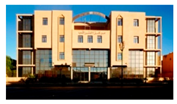
 |  |  |  |  |
| Education Directorate | Investment Center | Housing Directorate | DUAC Bechar | Public Works Directorate |
 |  |  |  |  |
| Algeria Telecom Building | Municipality Sub-Delegation building | Regional Trade Directorate | NAFTAL Building | Algeria Telecom commercial directorate |
 |  |  |  |  |
| Energy Directorate | Environment Directorate | Tourism Directorate | Employment Directorate | Agriculture Directorate |
 |  |  |  |  |
| Planning Directorate | CNAS BécharDjedid | Facilities Directorate | University directorate | Tax Center building |
 |  |  |  |  |
| Trade Directorate | Post directorate | Culture Directorate | Trade Directorate | Customs Directorate |
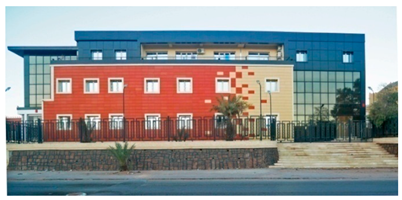
| Education Directorate—2015 | Planning Directorate—2021 | ||||||||||
|---|---|---|---|---|---|---|---|---|---|---|---|
 |  | ||||||||||
 |  | ||||||||||
| Design References | Design References | ||||||||||
| Tradition | modernity | tradition | modernity | ||||||||
| -Entrance portico with three slender horseshoe arches made of GRC sheeting.(SP) -The three other larger arches of the same type, attached with their false pilasters on the facade wall, serve only a decorative function.(SP) -The type of arch used is drawn from the repertoire of Islamic architecture. (SP) | -Lightness(EP) -Regularity(EP) -Interplay of volumes (interpenetration of curvilinear and rectilinear curtain walls)(EP) -Extruded volumes -Asymmetry(EP) -Sharp edges(EP) -Perfectly regular windows(EP) -Transparency: curtain walls covering a large portion of the façade(EP) -Cantilever(EP) -Glass(SP) -Alucobond(SP) -Reinforced concrete frame structure(SP) -GRC panel(SP) | No relationship | -The layout is not determined by the boundaries of the plot.(EP) -Assembly of simple forms.(EP) -The building terminates with horizontal lines, emphasizing the finesse of the shapes used.(EP) -Curtain walls and Alucobond to the facades to give the building a contemporary appearance.(SP) -Regularity of the opening shapes(EP) -Transparency (curtain walls covering a large portion of the facade).(EP) -Cantilever.(SP) -Sharp edges. (SP) -Roof terrace(SP) -The use of bright, high-contrast colors.(EP) | ||||||||
| Superficial properties | Superficial properties | Essential properties | No relation | Superficial properties | Essential properties | ||||||
| Postmodern approach is characterized by incorporating architectural elements from tradition into pure modern architecture. | Modern approach | ||||||||||
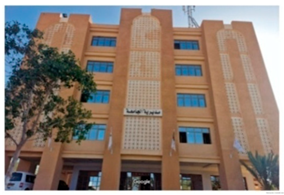
| Telecommunications Directorate | University Directorate | ||||||||||
 |  | ||||||||||
 |  | ||||||||||
| Design references | Design references | ||||||||||
| tradition | modernity | tradition | Modernity | ||||||||
| -Symmetry(EP) -The projecting cylindrical and cubic volumes are slightly higher than the main body of the building to symbolize the towers (Bordjs)(EP) -The massive effect is produced by the extruded volumes marking the entrance and corners of the building.(EP) -Crenelated parapet reminiscent of the profile of the Ksours (EP) -Heterogeneous use of traditional architectural elements such as domes, steep tiled roofs, arches, and towers (SP) -Semicircular arches for windows and doors (SP) -Window frames accentuating the massive appearance (EP) -Wooden windows (SP) -Use of yellow and white colors (SP) | -Sharp edges (the corners of the building)(SP) -Large, unprotected windows(SP) -Glass panes(SP) -Smooth coating (SP) -Aluminum domes cladding(SP) -Materials (reinforced concrete for the structure, brick for the infill)(SP) -Reflective glass(SP) | -Symmetry(EP) -The effect of massiveness created by the massive panels that envelop the building and extend to the ground with heavy square-section piles. (EP) -Dominance of solidity over transparency.(EP) -Reinforcement of the corners with heavy panels accentuating the building’s stability. (EP) -Use of perforated concrete elements evoking the Mushrabiah.(EP) -Use of arches to crown the vertical panels.(EP) -Simplicity of the decor.(EP) -Use of yellow and white colors. (SP) -The square shape recalls the symbolism of this form in Islamic architecture(EP) | -The implantation of the building is unrestricted and determined solely by its shape. (EP) -The building’s orientation and height emphasize its character and distinctive role.(EP) -The building is elevated above the ground by means of a laterally open gallery. (EP) -The building rises above the ground by via a laterally open gallery. (EP) -The building opens to the sky by with a free and uneven profile.(EP) -Regularity and purity. (EP) -Large strip windows. (SP) -Simple décor (EP) -Materials: reinforced concrete for the structure, and brick for the infilling system. (SP) -Reflective glass(SP) -Aluminum (windows )(SP) | ||||||||
| Superficial properties | Essential properties | Superficial properties | Superficial properties | Essential properties | Superficial properties | Essential properties | |||||
| Neo-traditional style because it uses architectural forms drawn from tradition with modern materials and techniques. | Abstractive approach characterized by the fusion of tradition and modernity in a single design | ||||||||||
| Neo-Traditional | Postmodern | Modern | Abstractive Approach | Total | |
|---|---|---|---|---|---|
| Integration | 0 | 0 | 0 | 0 | 0 |
| Indifference | 5 | 2 | 0 | 1 | 08 |
| Conflict | 0 | 6 | 11 | 0 | 17 |
| Total | 5 | 08 | 11 | 1 | 25 |
| Representative Samples | ||
|---|---|---|
| / | University Directorate—2011 | Education Directorate—2015 |
 |  | |
 |  | |
| -The use of the same formal treatment for four facades with different orientations (southeast, southwest, southwest and southeast) demonstrates that the design is indifferent to climatic parameters.(Indifference) -The use of large, unprotected bay windows facing indifferently towards the South-east, south-west, north-east and north-west demonstrates that climatic parameters are no longer being considered. (Indifference) | -The easterly orientation shows no consideration for the climate.(Opposition) -The interplay of volumes reduces the building’s compactness by increasing the percentage of exposed surfaces.(Opposition) -The ratio of transparent to solid does not take into account the climatic conditions of the Sahara.(Opposition) -The alternation of transparent and opaque parts on the same façade demonstrates that climate parameters are not determining factors in this composition.(Opposition) -Curtain walls and unprotected east-facing windows produce thermal and visual discomfort (glare), thus putting the building in conflict with the climatic environment. (Opposition) | |
| Integration | The analysis shows that the building design is indifferent to the Saharan climate. | The analysis shows that the building design is opposed to the Saharan climate. |
| Neo-Traditional | Postmodern | Modern | Abstractive Approach | Total | |
|---|---|---|---|---|---|
| integration | 0 | 0 | 1 | 0 | 1 |
| indifference | 5 | 08 | 5 | 1 | 19 |
| Contrast | 0 | 0 | 5 | 0 | 05 |
| Total | 5 | 08 | 11 | 1 | 25 |
| Representative Samples | ||
|---|---|---|
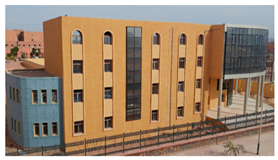
| Tax Center | Planning Directorate | Regional Customs Directorate |
 |  |  |
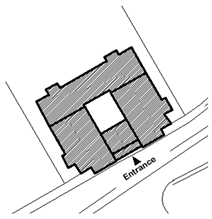 | 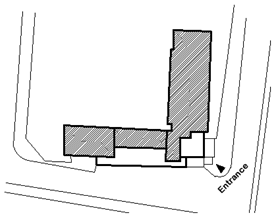 |  |
| -The building’s ground floor aligns with the street.(Integration) -The main entrance opens directly onto the street, providing easy access(Integration) -The building’s height ensures its integration into the urban environment.(Integration) -The materials and colors used, such as tinted glass and a scratched coating, fit into the environment. (Integration) | -The building is set back from the street behind a transparent iron fence, making it difficult to access.(Contrast) -The main entrance is distinguished by its white frame, position at the corner, and stairs covered in white marble and black ceramic. (Contrast) -The building incorporates foreign architectural elements, such as curtain walls and roof terraces that are not found on the site or in the city. (Contrast) -The materials and colors used have no relation to the building’s environment. (Contrast) | -The building is isolated behind a low, ceramic-clad wall topped with wrought iron. This building has no direct connection to the street (Indifference). -The choice of a corner building is indifferent to the characteristics of the plot, which has only one side facing the street. (Indifference) -The ratio of height to length accentuates the building’s horizontality, allowing it to blend into its environment. (Integration) -The shape of the building takes precedence over the urban site conditions. (Indifference) |
| The building fits spatially and formally into its urban environment. (Integration) | The building stands out from its surroundings both spatially and formally. (Contrast) | The analysis shows that the building has the qualities of an object-building indifferent to the properties of its urban site. (Indifference) |
Disclaimer/Publisher’s Note: The statements, opinions and data contained in all publications are solely those of the individual author(s) and contributor(s) and not of MDPI and/or the editor(s). MDPI and/or the editor(s) disclaim responsibility for any injury to people or property resulting from any ideas, methods, instructions or products referred to in the content. |
© 2026 by the authors. Licensee MDPI, Basel, Switzerland. This article is an open access article distributed under the terms and conditions of the Creative Commons Attribution (CC BY) license.
Share and Cite
Miloudi, M.; Biara, R.W. Assessing Identity in the Recent Algerian Architectural Production: Case of Administrative Buildings of Béchar. Architecture 2026, 6, 13. https://doi.org/10.3390/architecture6010013
Miloudi M, Biara RW. Assessing Identity in the Recent Algerian Architectural Production: Case of Administrative Buildings of Béchar. Architecture. 2026; 6(1):13. https://doi.org/10.3390/architecture6010013
Chicago/Turabian StyleMiloudi, Mohammed, and Ratiba Wided Biara. 2026. "Assessing Identity in the Recent Algerian Architectural Production: Case of Administrative Buildings of Béchar" Architecture 6, no. 1: 13. https://doi.org/10.3390/architecture6010013
APA StyleMiloudi, M., & Biara, R. W. (2026). Assessing Identity in the Recent Algerian Architectural Production: Case of Administrative Buildings of Béchar. Architecture, 6(1), 13. https://doi.org/10.3390/architecture6010013