You are currently viewing a new version of our website. To view the old version click .
Architecture
  • Article
  • Open Access

10 December 2025

Designing Climate-Sensitive Cities: Integrating Architecture, Landscape, and Resilience

and
1
School of AUD, RMIT University, Melbourne 3000, Australia
2
School of Design and Architecture, Swinburne University of Technology, Melbourne 3122, Australia
*
Author to whom correspondence should be addressed.
This article belongs to the Special Issue Architectural Responses to Climate Change

Abstract

The increase in extreme weather underscores the critical need for combining innovative architecture, urban, and landscape design to render our cities more resilient. Conventional approaches, heavily relying on energy consuming and dioxide producing technology, often falter during extreme events, worsening climate challenges. A project in Melbourne exemplifies a shift towards nature-inspired, distributed designs implementing passive strategies of shading, ventilation, water capture, and evaporative cooling. It transformed underused urban spaces into “climate oases” connected through walkable ecological corridors to mitigate urban heat and flooding while providing social and recreational benefits. Its design combined architectural, urban, and ecological strategies in interconnected city ecologies involving buildings, landscapes, and human activities. Local climate adaptation could similarly inform architectural and urban strategies in other locations across the globe. They could similarly draw on the needs of each climate: tropical cities would benefit from embracing cross-ventilation and shade, arid regions from integrating cooling gardens and introverted dense layouts, temperate climates from seasonal strategies alternating rain and sun protection, while cold areas could optimize sun exposure and wind protection. A study of climate design principles across architecture, urban, and landscape sections demonstrate tailored approaches for specific climates over one-size-fits-all models. They combine strategies to drive innovative urban ecologies that prioritize human and environmental well-being. While the Melbourne Cool Lines initiative exemplifies the integration of climate sensitive urban and ecological approaches within existing urban areas, the typological study ignites discussions on how to take these ideas into different contexts, transforming cities into resilient ecosystems that could better respond to changing climates.

1. Introduction

This article explores how we may adapt our cities to the challenges of climate change through climate-responsive design combining urban, architectural, and landscape approaches. Highlighting the evolution of vernacular typologies across diverse environments, key figures such as Torben Dahl [1] have explored passive climatic strategies in architecture, while Kenneth Frampton examined Modernism’s post-colonial transformation in regions like South America, Asia, and Scandinavia in response to climatic contexts [2] (pp. 16–30). He expanded how vernacular climate responses were picked up in contemporary architecture of the time. Climate as Design Factor further examines climate-responsive typologies [3]. Despite these in-depth explorations, a significant opportunity lies in extending these principles to urbanism and dense urban forms. Cross sectional studies of climate-adapted architecture across different geographies have further overlooked the potential of integrating landscape and ecology with architecture in cities.
Ken Yeang’s groundbreaking research on tropical high-density architecture remains an exception in the area of climate-adapted urban design [4]. He demonstrated how climatic considerations can shape the design of urban types in cities like Hong Kong and Singapore. Further, Singapore’s “garden city” approach stands as a visionary model where urbanism and lush landscapes coalesce to address the city’s unique tropical weather challenges [5]. This concept has paved the way for contemporary trends such as water sensitive and sponge city designs in Asia [6], which integrate urban planning with ecological principles for sustainable city futures.
The Melbourne’s Cool Lines project [7], described in this article, expands these water sensitive ideas [8] to a temperate/dry climate, forming an early example of climate sensitive design [9] (pp. 20–62) in a non-tropical context. As a transformative project, Melbourne Cool Lines exemplified the integration of architecture, urban, and landscape design to mitigate urban heat island effects and flooding. By retrofitting underused spaces within a post-industrial neighborhood into climate oases the project created a network of multifunctional spaces to enhance urban resilience connected by walkable ecological corridors.
Interventions benefited from evaporative cooling and the shade of vegetation and infrastructures, providing cooling respite for the wider neighborhood. The networked proposals envisioned the city as an interconnected ecology. This ecology included vegetation, but was also built for environment, human, and animal activity. The visionary proposal advocated for a context-specific, ecologically grounded design processes. The concept of urban ecology [10] brought to the fore a focus on locally adapted approaches, common in landscape design. While these existed in vernacular [1] and regional modern examples [2] their consideration is less present in the urban design of dense cities. Simultaneously the discussion of climate-adapted architecture had often overlooked deep integration with ecology.
Therefore, after Melbourne Cool Lines, we examined how climate-adaptation strategies could integrate architecture, urban and landscape design, and how they could apply in other climatic contexts. The aim was to challenge the idea of a universal approach for integrating urban, architectural, and landscape design. Examples from diverse climates—such as the tropical cities of Rio and Singapore, the arid contexts of Hyderabad and Casablanca, and the temperate zones of Paris and Melbourne or cold Toronto—revealed how local conditions can fundamentally alter best climate-sensitive urban, landscape, and architectural approaches. These are summarized through typological sections highlighting key principles. Tropical downtowns might benefit from cross-ventilated towers with vegetated balconies, covered elevated walkways, and courtyard drainage systems, and arid climates might benefit from densely placed volumes with internal cooling gardens, courtyards, halls, and covered streets. Temperate cities may optimize seasonal sun exposure through awnings and balconies, alternating orientations and street widths, whereas cold climates benefit from denser spaced volumes with indoor or sheltered passages and wintergardens. Based on sun intensities and angles, varying humidity, downpour, and temperatures, different climatic typological response types can be identified with the aim to inform climate appropriate urban design.
The principles summarized in the typological sections were tested through AI to visualize the variability of expressions climatic variance may bring to the fore. The contribution of these studies is not to provide readymade solutions. It is to open a discussion about the need to differentiate climatic conditions and drive approaches that think architecture, urban, and landscape design in integrative manner. It merges climate sensitive and ecological considerations into innovative new understandings of urban ecologies [10,11] (pp. 25–49) that can benefit both human and environmental health [12] while creating more exciting urban experiences and interactions with the natural world [13] (pp. 211–228) throughout seasonal and climatic change.

2. Objectives of the Study

The primary objective of this study is to comparatively investigate the integration possibilities between urban, landscape, and architectural design across diverse climatic contexts. By commencing with a local site-based study, the research aimed to establish a grounded understanding of how interdisciplinary collaboration—drawing from architecture, urban design, and environmental sciences—can advance integrated design strategies. A core goal was to synthesize an approach from transdisciplinary processes, how to adaptively respond to climatic challenges in urban contexts while combining these domains. This approach would inform the generation of blueprint sections for different climate zones.
To create the blueprint sections, the study aimed to integrate extracted principles from the academic literature and precedent projects that addressed the concept of designing with and for particular climates. The blueprint section’s purpose was to unite principles ranging from architecture, urban to landscape design principles, serving as tools for synthetic communication and comparative analysis across four major climate types. The blueprint section would also help generating a list of design principles. These were then translated into prompts with the aim of testing found principles through generative AI (in this case Val [14]).
Thus, AI was intended as a testing tool of found principles, rather than as an aim. The objective was to experiment and demonstrate the level of variation, of climatic design principles across different climate regions, through the ‘neutral’ tool of GenAI, to verify the kind of expression it would generate from derived principles. As a side investigation, by evaluating GenAI’s performance in visualizing and spatially integrating the developed principles, this research also identified opportunities and limitations of digital tools within the integrated design process, with a focus on the accuracy, completeness, and spatial integration of AI-generated responses, investigating the potential benefits of using GenAI (Val) in design prototyping. Meanwhile it acknowledges shortcomings of current AI technologies, lacking, so far, capacities to reflect contextual complexities. But the main objective of the study was not to investigate in depth AI’s image or vision generating capacities, but instead to use AI to test principles conjoined in the synthetic sections through conventional design-research.
Generally, the study aims to inform located real-world case studies and further research in the field. Acknowledging variance in climates, this study aims to move beyond the universal designs of modernism and high-tech architecture. Although technical measures can be advantageous, recent power outages during heat waves and other climate-related events have highlighted their limitations and the pressure they place on urban infrastructure [15]. This suggests that relying solely on technological interventions is insufficient and that integrating natural physical principles is equally important.
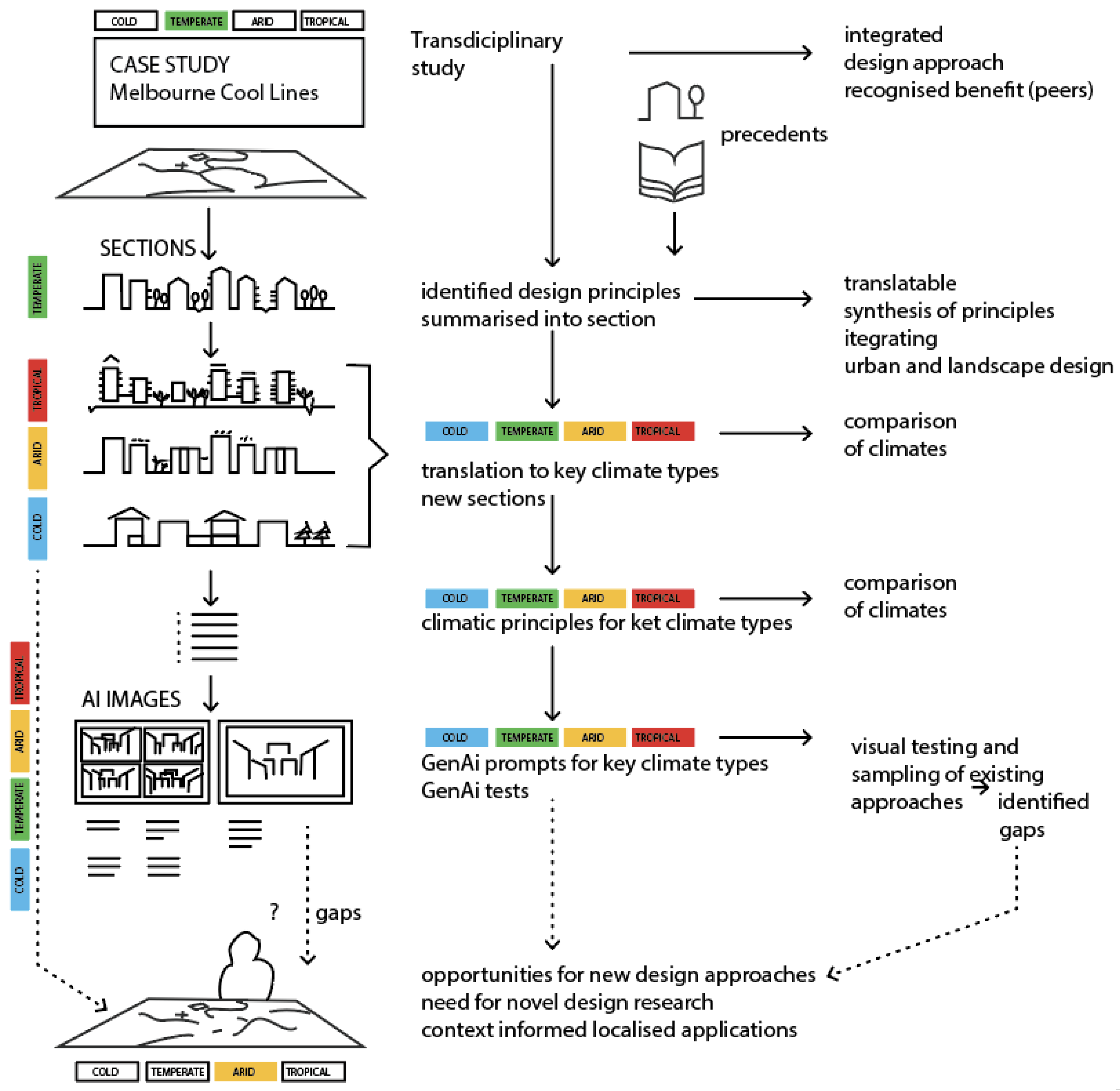
The blueprint section methodology is intended not only to enable comparison among climate zones and different urban–ecological integration strategies, but also to act as a starting point for further innovation, education, and research in the field. In summary, the objectives span design method advancement, testing, and knowledge transfer across disciplines, prompting new directions for climate-responsive design thinking beyond disciplinary and geographic silos. The objectives are summarized in Figure 1.
Figure 1. Objectives diagram.

3. Methods

3.1. Study Setup

The first study, described in this article, of Melbourne Cool Lines (MCL) was conducted as a university-led engaged studio. The authors of this article initiated the study at Monash University and developed research materials to be presented as a physical exhibition for public display [16] and a virtual exhibition [7]. These informed city of Melbourne urban policy and initiatives, such as an online mapping tool of coolest paths though the city [17], and a greening strategy [18]. MCL was commissioned, funded, and developed in collaboration with the Collaborative Research Centre for Water Sensitive Design (CRCWSD) and with the City of Melbourne. Water Engineers, Climate Specialists, and Ecologists from the CRCWSC further informed the study. Students of architecture, urban and landscape design, and water engineering further participated in this transdisciplinary endeavor.
The second part of this article draws on and discusses graphical materials developed by the researchers in parallel and after the Melbourne Cool Lines study. They are based on case studies research and lectures developed and conducted from 2011 to 2017 at Monash University within a technology and climate-design course [19], and extensive readings, a selection of which are named in this article. The drawings extend on illustrations produced for these lectures. They summarize key climatic-design principles identified through extensive studies. Finally Generative Artificial Intelligence [14] was used to translate these principles, coded as keywords, and test their automated visual rendition. Rather than a design tool, they are meant to be seen as a site-less testing of the outcomes of such principles. These images may inform but not replace a process of site-informed design by real practitioners.

3.2. A Strategy Combining Urban Architecture and Landscape Design

Melbourne Cool Lines started with the objective of developing a strategy to retrofit a post-industrial neighborhood in North and West Melbourne, in the face of Melbourne’s harshening climate, marked by extreme heatwaves and sudden downpours. The area flagged for transformation into housing lay in a barren state with many asphalted surfaces, pockets of underused land, and a decisive lack of vegetation. In this it is an exemplar of many post-industrial sites in fast-growing Melbourne, with many factories, asphalted parking lots, a channelized creek under an elevated highway, and warehouses of varying size. The study, further described by Manissi [20], aimed to investigate how urban spaces and infrastructures must evolve, as the building stock would be transformed into housing, to address climatic challenges, while forming inviting places for the incoming population and biodiversity.
We approached the precinct wholistically, combining architectural, landscape, and urban design thinking, with water [6] and climate sensitive approaches [8]. Our aim was to mitigate the urban heat island (UHI) effect and manage flooding through strategic interventions that adopted passive design and revegetation principles for transforming urban spaces. They involved providing shade through built structures and foliage, capturing rain in wetlands and reservoirs that cool in heatwaves, through evapotranspiration, enabling ventilation corridors, and offering cover through both new constructions and the retrofitting of existing spaces.
These are principles that demonstrably benefit urban cooling and local microclimates in quantifiable ways: Shade can reduce physiologically equivalent temperature (PET) up to 9 degrees and 90% of solar radiation through trees or built measures [21]. Vegetation density and land cover further have 47 and 25% effect on climate mitigation [22]. A study of Chinese cities additionally demonstrates that ventilation corridors, irrespective of ground cover, can reduce the land surface temperature by 3.20 degrees Celsius [23]. The presence of water bodies further mitigates urban heat islands in quantifiable ways by up to 7 °C [24]. The techniques we proposed to employ thus measurably benefit climate mitigation in cities. The questions resided in where to integrate and how to combine those techniques within the existing environment environments, while combining them with landscape and urban design approaches.
Thematic mapping of topography and urban surfaces, open and covered water bodies, evolution of built structure, climatic patterns, and vegetation had given us a deep understanding of the urban context, together with repeated site visits. They helped us in determining critical areas for urban intervention: our choice fell on underused urban spaces that had the potential to be (re-)connected through passages and lanes to create a wider green network. Our urban transformation approach thus integrated existing spatial structures, complementing them strategically with new designs to create a system of interconnected urban oases. A few examples, described in the coming paragraphs, illustrate how they combine architecture, landscape, and infrastructural design approaches to respond to seasonal climatic challenges. Virtual reality animations [25], with stills shown in this article, and links to be found in the image credits, enabled us to present those proposals to the public. They enabled exhibition viewers to imagine and immerse themselves in the proposed urban upgrades.

3.3. Examples Illustrating Key Approaches

3.3.1. Indigenous Estuary Park

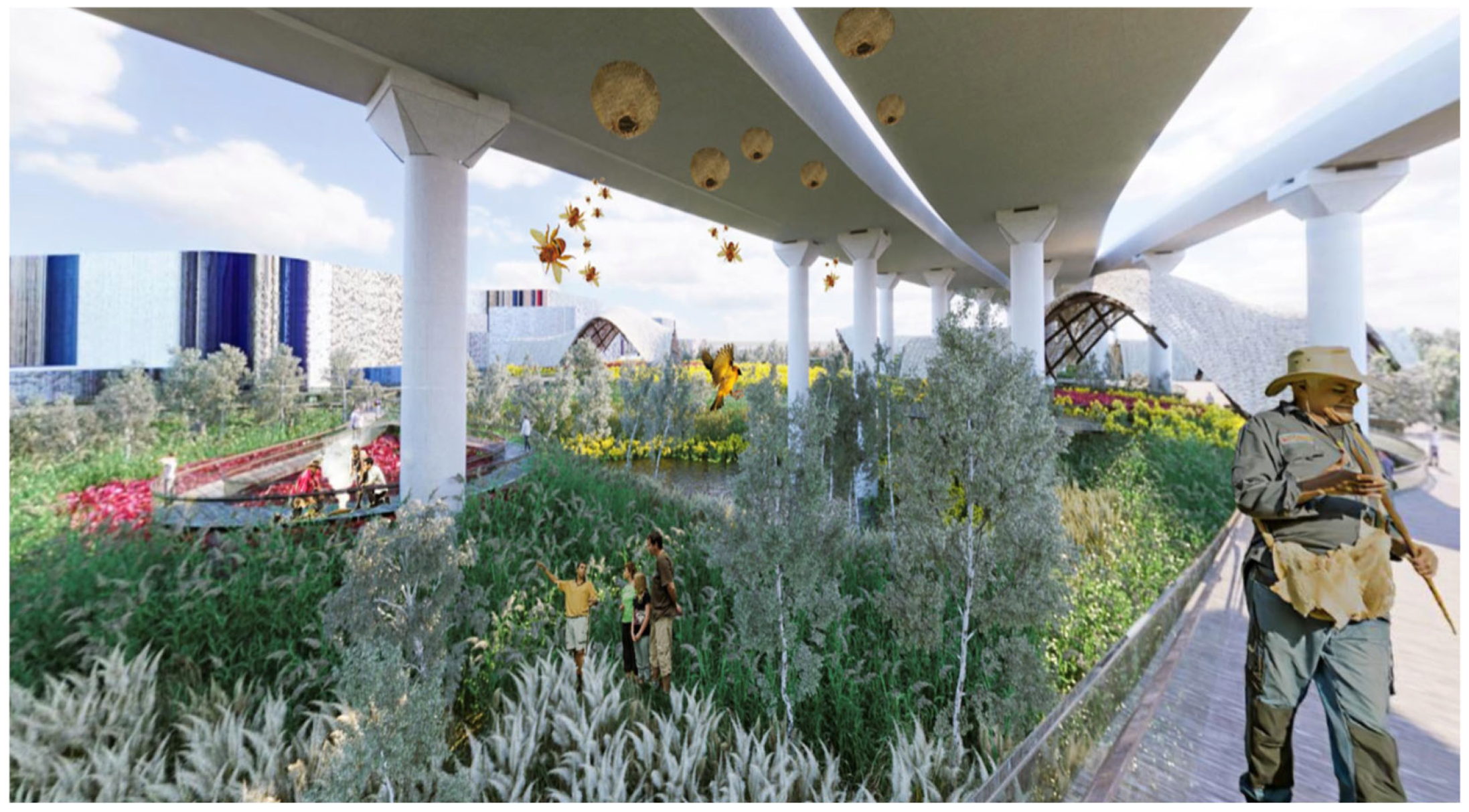
A first intervention redesigned a flood-prone industrial wasteland into a vibrant ecological sanctuary as seen in Figure 2. It revitalized a canalized creek hidden beneath a highway. Shade and water would create a cool microclimate for the surroundings of bustling Docklands and West Melbourne. The reinterpretation of Indigenous dam practices would allow us to separate saltwater and freshwater habitats, removing brackish areas, and re-creating a chain of ponds to encourage a resurgence of aquatic flora and fauna. The lush ecosystem would offer recreational escapes for nearby communities. It would also bring local history to life, as an Indigenous center could host cultural workshops, and scenic boardwalks could double as open-air ecology museum.
Figure 2. The Estuary Park renatured a channelized creek under a highway. Shade, natural water source, and evaporative cooling provide a lush, engaging urban landscape, as can be further explored in VR animation.

3.3.2. Rainforest Silos

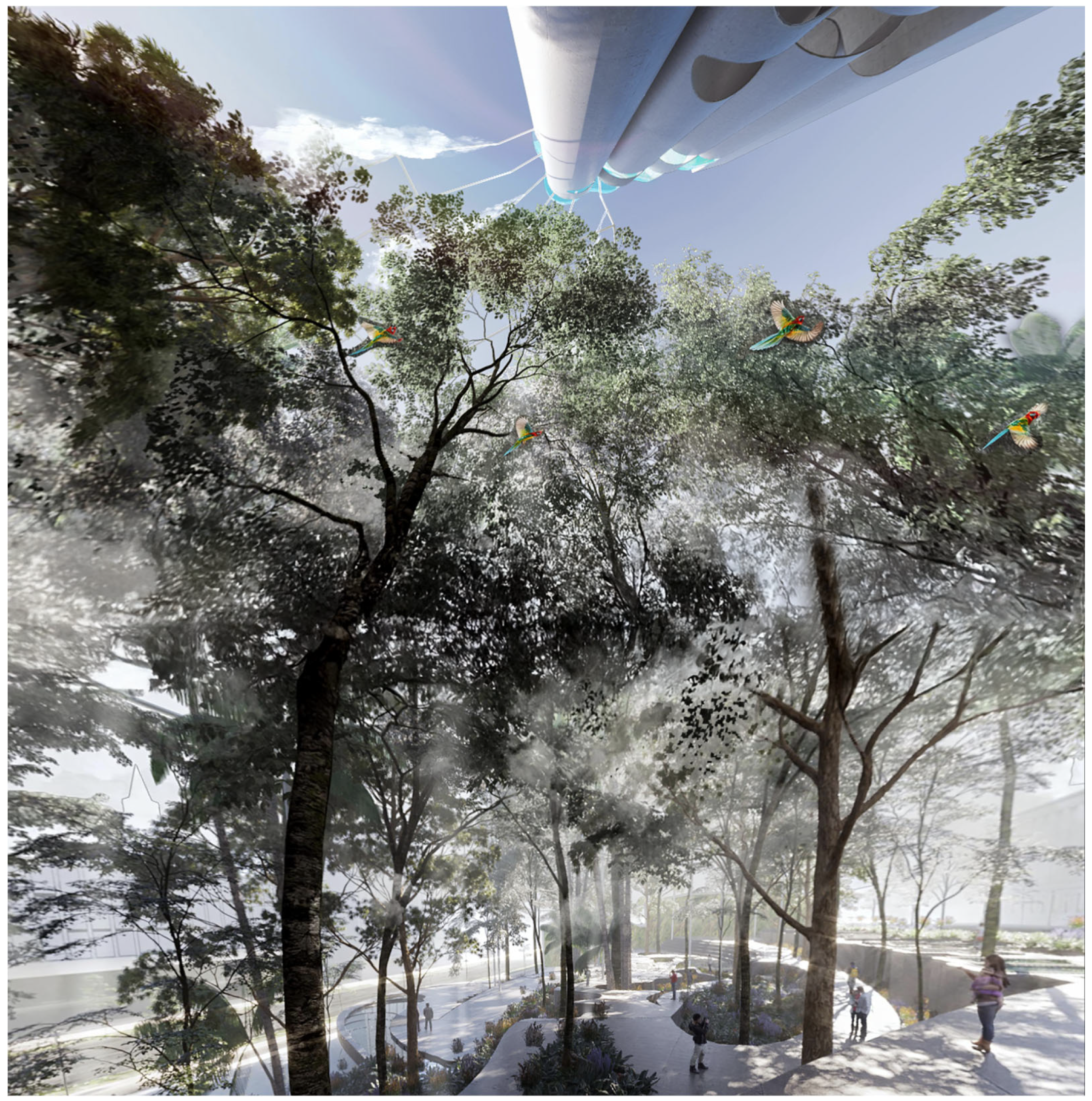
A forgotten grain silo is reimagined in Figure 3, to become a thrilling shaded center for climbing enthusiasts—providing, through puncturing the shell, a twist on local gym culture within a newly planted urban forest. As you would scale the heights, your movement could pump up and fuel rainwater to a rooftop reservoir, sending a refreshing mist over the lush rainforest canopies. The green corridor with its cooling cascading wetlands would further offer a serene contrast to the high-energy activities within, forming a new habitat for birds amidst the industrial backdrop.
Figure 3. Rainforest Silos reimagines a disused industrial structure as punctured outdoor structure within an urban forest, with VR animation.

3.3.3. Oasis Interchange

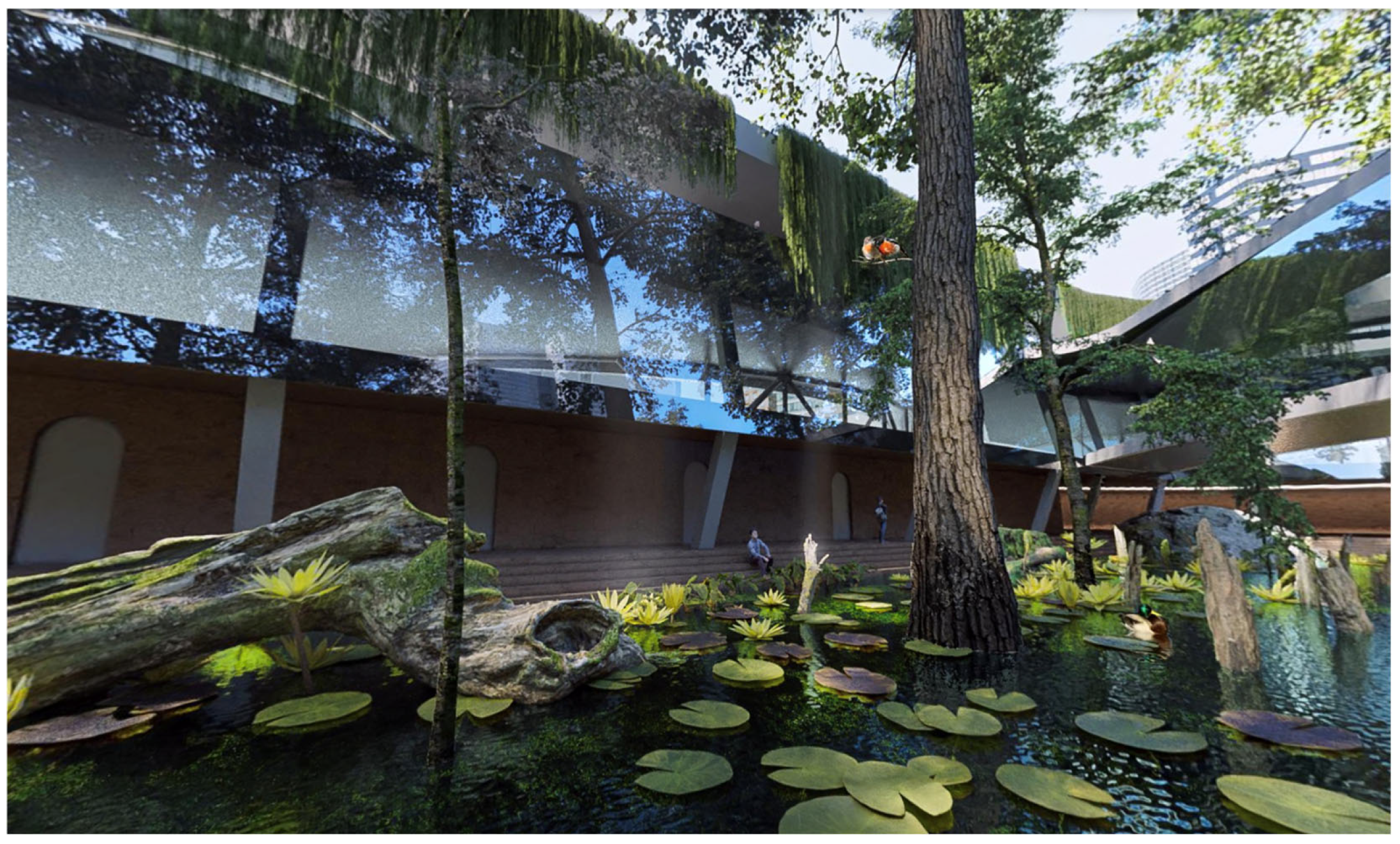
A third example, depicted in Figure 4, is proposed to insert within a roundabout of historical creek-turned-arterial road a reservoir park to capture recurring flash floods. This urban sanctuary would be at the center of a vegetated bridge connecting either side of an inner-city highway. Blossoming with life, it would offer a cool refuge and tranquil vistas from elevated, covered walkways, with open-air shopping opportunities, providing a calm escape for nearby hospital visitors and workers.
Figure 4. Interchange Oasis integrates a wetland reservoir within a greened shaded overpass with amenity. VR animation.
These three examples illustrate a mode of operation built on common principles: the reuse of existing infrastructures for shade, the insertion of vegetation and ecosystems with a consideration of flora and fauna, and the capturing of rain and flood waters in wet winter conditions to cool during Melbourne’s hot dry summers, while considering local needs and usages. Virtual reality enabled exhibition visitors to imagine the benefits of these principles in space.

3.3.4. Networked Greens Oases as Design Principle

Networked interventions—applying ideas of archipelagic thinking [26] (pp. 45,147)—allowed for discrete, impactful changes in strategic locations. These contained acts of retrofitting underused urban space would collectively transform the urban environment. Connected by cyclable and walkable pathways they would enhance mobility and reduce reliance on cars. Meanwhile they would further operate as ventilation and drainage corridors to cool and capture water runoff extending on water sensitive (WSUD) principles. It mostly drew on native species but also considered, at times, the introduction of deciduous trees beneficial for seasonal shading, or species that would be more resilient to a future climate, as tested in the local botanical garden [27].
This network would extend existing passages and laneways. Spaces would upgrade through revegetation and water-sensitive designs into interconnected ecosystems to encourage biodiversity propagation.
This integrated approach would not only address climate challenges, but it would also enrich the urban landscape, making Melbourne at once more resilient and livable. The ideas inspired the city of Melbourne, the municipality launching different initiatives: an interactive mapping tool for the coolest, most vegetated paths through its metropolitan area called ‘Melbourne Cool Routes’ [16], and an initiative for revegetating green spaces called ‘Cooling our city’ [17] as well as a ‘Laneway Initiative’ for communities to revegetate their lanes.

3.3.5. Understanding the Multiple Benefits of Urban Ecosystems

The revegetation in cities offers many climatic benefits, as is well understood in Water Sensitive Urban Design (WSUD). WSUD, also referred to as a “sponge city”, builds on flora’s capacity of absorbing excess rainfall to store humidity for drought periods, where it is precious for the environment. Through evaporation cooling this stored humidity refreshes the air during hot dry periods. In this process filtration capacities of planting and soil improve the water quality [27], while lush vegetation and tree cover shade spaces, further improving local microclimates [28]. Thus, vegetation has many climatic benefits. Economically, there are notable benefits too, as more resilient cities need less technical upkeep and repair [29] (pp. 235–259) allowing us to redirect these resources to new park creation, while urban areas with proximity to green spaces and parks are further valued by inhabitants [30] (pp. 5,10), legitimizing these investments.
The presence of nature plays a crucial role in enhancing livability. Beyond offering substantial benefits as social spaces for overall well-being, green spaces improve physical health, encourage active lifestyles, and boost mental health by reducing stress and promoting relaxation, captured through practices of ‘forest bathing’ [31]. They also foster interaction, a sense of community, and social cohesion across generations [32], as families, young professionals, and the elderly can find common ground in parks and gardens. Moreover, ecologic spaces nurture curiosity and can have educational purpose: witnessing seasonal change, different species, and growth of ecosystems can instill a sense of environmental awareness [33] that is vital in cultivating a sense of curiosity and connection to place and other beings.
This element of discovery can be enhanced by spontaneously developing less curated green areas in cities. These ecosystems can provide essential habitats for wildlife, enhancing biodiversity in urban areas. Ecological corridors enable the movement and interaction of various species, contributing to diverse and healthier urban ecosystems, as suggested in the MCL proposal. This new relationship between people and nature in cities can transform urban environments into vibrant places, enriching experiences for inhabitants: witnessing nature’s response to seasonal and weather changes, the encounter with different indigenous animals, and the progressive evolution and enrichment of ecosystems over time, in response to climate and weather.

3.3.6. Translating More than Human Ideas into Design

These benefits of providing more diverse ecosystems in cities extend beyond humans: as they support the health of other species, where vibrant ecosystems within urban areas also benefit from improved temperatures. In our visualizations for the Melbourne Cool Lines project, we imagined urban ecologies filled with a wide array of animals, symbolizing urban vegetation that supports diverse and spontaneous ecosystems. This strategy moved away from excessively curated landscapes that need intense maintenance regimes, instead embracing natural growth patterns that accommodate the life cycles, seasonal change, and interactions of humans with various species within the context of urban environments.
The concept of a “more-than-human” city, as explored by scholars like Hathaway [34] underscores the importance of designing urban environments that not only serve human interests but also cater to the needs of other species [35]. Such environments foster a deeper human connection with the natural world, encouraging urban dwellers to engage and connect with the other species, changing natural conditions and other perspectives. Such interactions promote learning and adaptation, inviting us to reflect on nature’s inherent resilience to climate and weather changes, while recognizing the entanglements of urban and ecological conditions.
By integrating landscape and urban design, cities can offer spaces where inhabitants experience the cycles of ecosystems, climate, and the adaptability of nature. This approach enhances urban experiences by providing a dynamic environment where individuals can connect with the beauty of weather changes and seasonal transformations and encounter different species depending on the seasons. This direct exposure to urban ecosystems provides a positive experience of climate. It can demonstrate how humans, nature, and the city can positively interact within fascinating urban environments that co-benefit human, ecosystem and city health.

3.3.7. One Interconnected Health

The One Health concept underscores such intricate connections between human, environmental, and biotic health [12]. Traditionally grounded in medical sciences, this concept of interconnection evolved in a prior publication to apply it to urban contexts [13] (pp. 211–228). This extension recognizes the functional interplay between human, ecological, and urban systems. Humans reside at the intersection of these realms, linking natural ecosystems with built environments. Therefore, our health is dependent on the delicate balance between city and ecology. The pandemic for instance starkly illustrated how environmental scarcity and depleted urban areas negatively affected inhabitants’ physical and mental health. Simultaneously, many studies have demonstrated worse health outcomes due to climate change in urban areas lacking vegetation [36]. The same areas often also suffer from contamination of water and soil, as a lack of vegetation results in uncontrolled runoffs into soil and water systems, again affecting human health. Therefore, a linked consideration of urban ecology, urban systems, and health are necessary.
Simultaneously, to be effective, climate buffers need to be healthy and lush to effectively moderate climate and provide good air and water quality. Planting demonstrably thrives best if not realized in isolation, but as ecosystems where single species support each other [37,38]. Healthy ecosystems that are thought of in an integrated manner with each other and the city fabric, as in the Melbourne Cool Lines project, provide an effective way forward. Rather than isolated planting, they are less vulnerable to climate change, as they benefit from each other and compounded climatic effects. Embracing holistic approaches is therefore crucial for the interconnected health of humans, urban environments, and other species we share these with.

3.3.8. From Melbourne Cool Lines to Other Climatic Contexts

The Melbourne Cool Lines (MCL) provided a newly integrated response to the intertwined challenges of climate change and biodiversity loss, providing an alternative of integrating nature within the city. MCL built on transdisciplinary collaboration, with water engineers and climatologists from the Collaborative Research Centre for Water Sensitive Design informing the design process. It combined a wide array of expertise to devise a networked strategy tailored to the specific local conditions of Melbourne. The unique Melbournian climate—arid summers creating intense urban heat islands and rainy, temperate winters that often result in heavy rain events—shaped MCL’s strategies of integrating climate and water-sensitive principles within urban and landscape design.
Providing shade, ensuring evaporative cooling through planting and water bodies, and capturing rainwater responded to the city’s rapidly changing weather patterns from drought to flash rains, intensified by climate change and urbanization. To apply MCL’s integrated approach in other climatic regions, local conditions and challenges would need to be considered, translating MCL’s framework to other contexts and climates.

3.3.9. Extending Passive Strategies to Urban Design

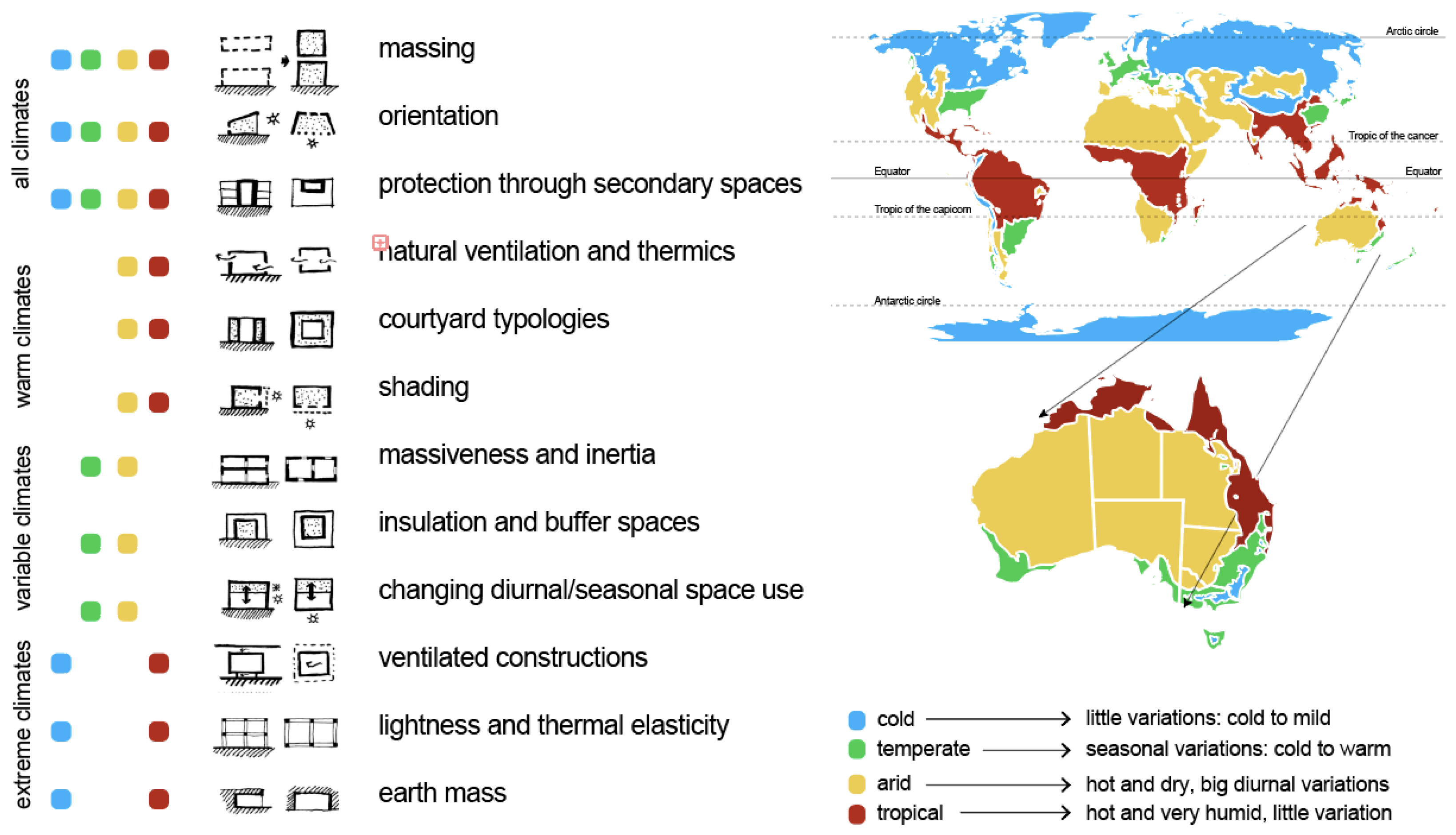
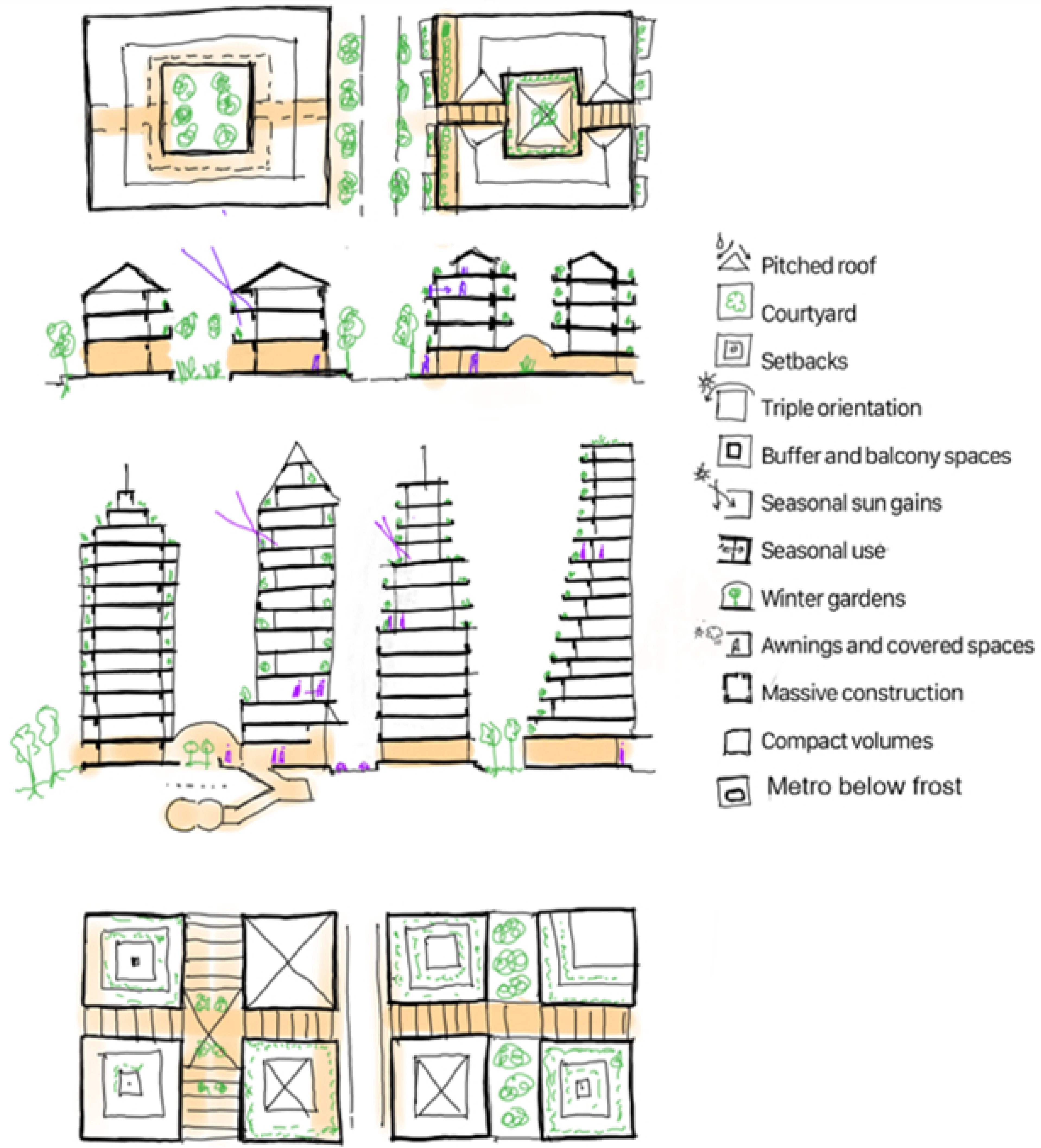
In technology courses led at Monash University [19] various strategies had been developed to address divergent needs for architectural and urban climate adaptation in different climate zones. These courses taught students strategies on how architecture can adapt to different climate conditions in Australia, from tropical north, desertic center, to temperate and cold areas in the Alpine South and Tasmania. They extended on passive design strategies in architecture, drawing from Dahl [1], Hoengger, Brunner Menti, Wieser [3], Yeang [4], and others, translating these ideas to a local Australian context of extreme variation. The courses explored the integration of passive strategies into the architectural and urban design process. It is an approach, rooted in vernacular knowledge, that is echoed by the regional modernist movement such as Candilis, Bawa, and Correa, and continued by contemporary architects like Peter Zumthor, Studio Mumbai, and Roofwork, who adeptly merge contextual relevance with contemporary architectural practice. The courses extracted principles from these precedents and grouped them per climatic region. The aim was to discuss how these principles addressed particular climatic needs, answering how climate sensitive design may be deployed in different climatic contexts, as seen in Figure 5.
Figure 5. Climate and typology: regulating climate through design principle.
Yet the Melbourne Cool Lines project (MCL) encouraged designers to think beyond individual buildings by combining ecology urban and architectural design. This broader perspective prompted a critical question: How can different climates be effectively addressed through design responses beyond buildings? What roles do these principles play beyond small-scale interventions that often revive historical vernacular types? As it is imperative to consider applications for urban contexts, we need to consider how to move beyond, at times, nostalgic and isolated revivals that remain often economically unfeasible at scale while lacking larger impact.
To tackle these challenges, we must develop high-density approaches aligning with contemporary needs of an increasingly urbanized world. This involves crafting an urban design language that is forward-thinking yet building on age-old knowledge and ensuring strategies are feasible at scale using contemporary construction processes. The objective of the second part of our study was therefore connecting passive with urban design. It aimed further to invigorate trans-disciplinary design of climatically informed city types.

4. Results

Speculation on Design Strategies Across Four Key Climate Zones
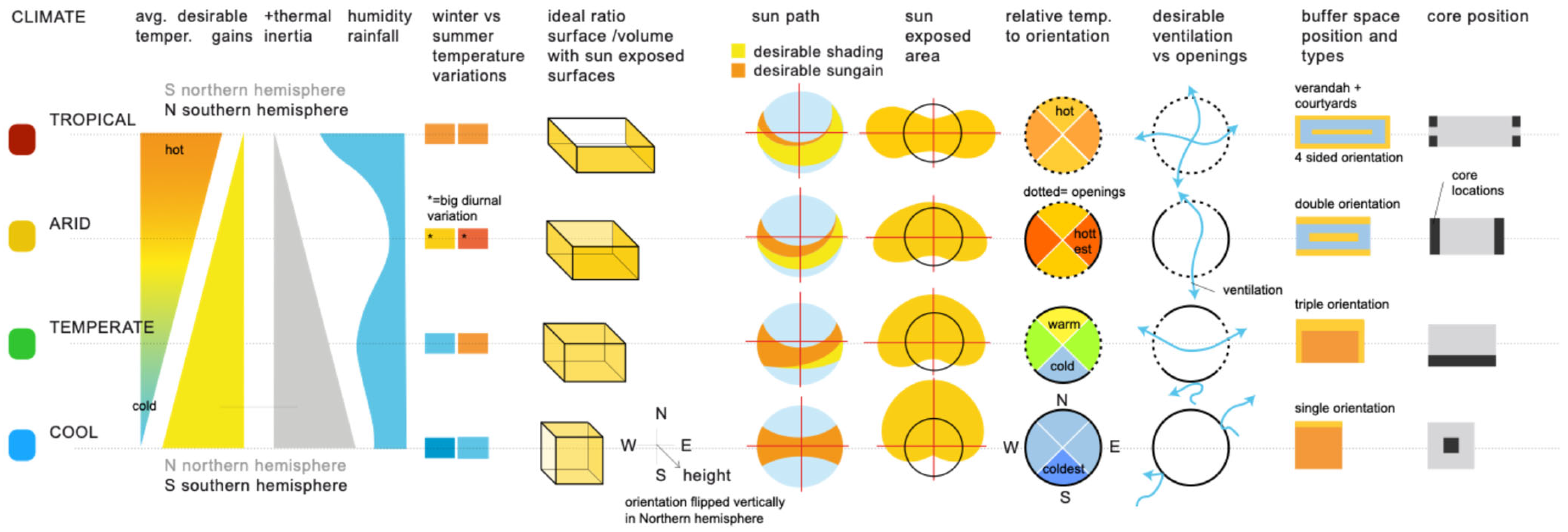
The second exploration focused on a structured speculation within four key climate zones, each defined by distinct climatic principles such as sun paths, levels of solar exposure, humidity and downpour levels, and temperature variations, charted in Figure 6. By understanding these elements, we developed a catalog of design strategies that respond to each environment type. Drawing from vernacular examples gathered in lectures from the literature and desktop research [19], the method then conjoined through a design-research approach [39] (1) typological principles in blueprint sections, highlighting key design strategies as pull-out icons with examples. This approach provides a visual representation of how traditional passive strategies can inform contemporary urban design approaches. The distilling of principles into actionable strategies facilitates their application. The integration of urban space and landscape design was strongly considered in this process, aiming to create an integrated vision, as performed earlier in the Melbourne Cool Lines project. The aim was to link across sometimes-distinct design disciplines, learning from the previous transdisciplinary experience in Melbourne.
Figure 6. Climatic needs per climate zone.
Starting from a vernacular section, we translated these principles to a high-density city section to create types that work at scale in contemporary situations.
  • Examples of Climate Sections

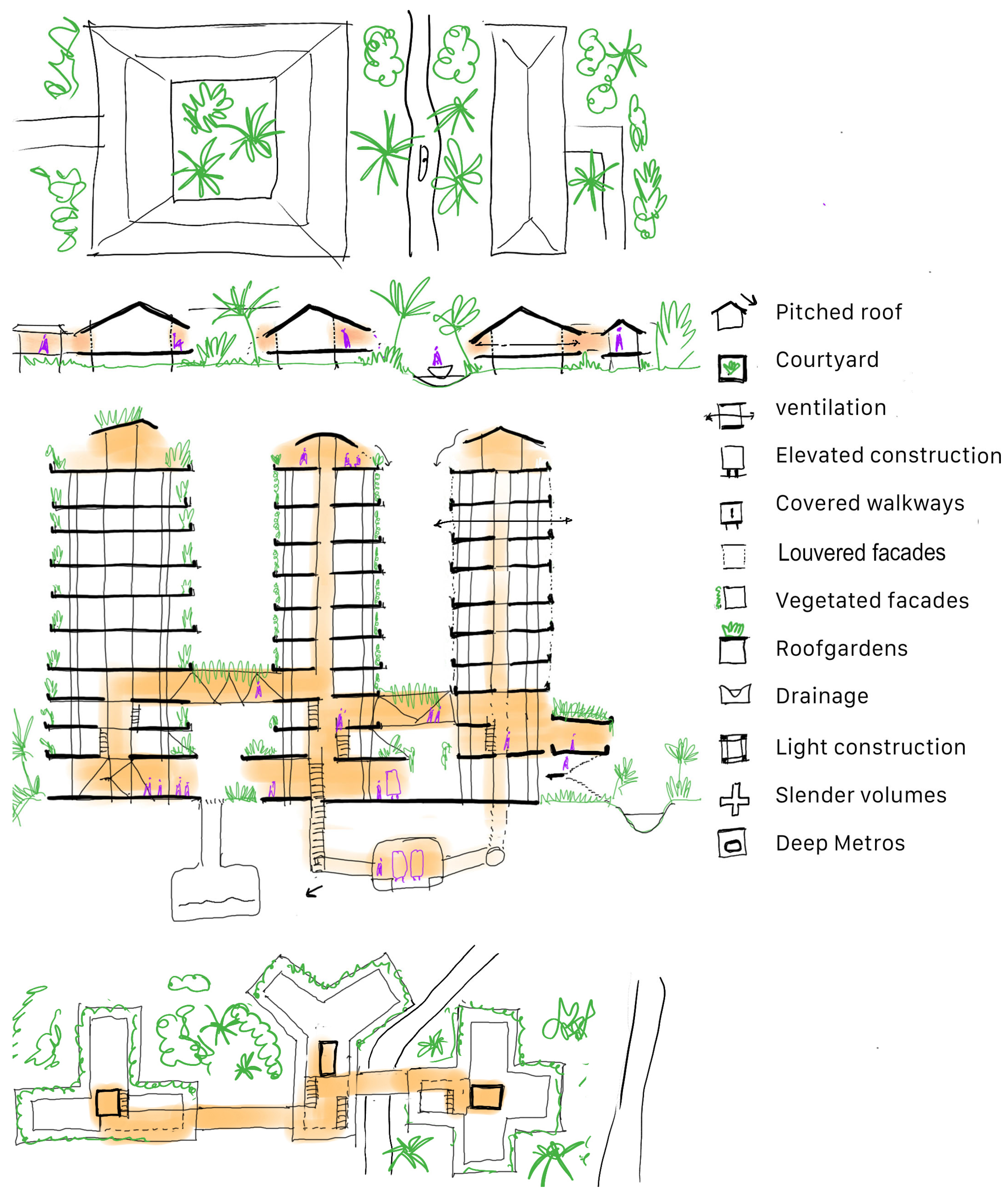
4.1. Tropical Climate (See Figure 7)

In response to a constantly hot and humid climate, with intense but warm downpours and stormy winds, vernacular architecture has operated in this climate with large overhanging roofs, protecting both constructions and human inhabitation from occasional rain and intense vertical sun paths. Under the overhangs, shaded outdoor space can be used for circulation or outdoor programs. The constant humidity leaves cross ventilation and shading as the best natural strategies for freshness, as evaporative cooling is not effective in these conditions. This renders slender double oriented volumes, often arranged around courtyards, optimal. Louvers and vegetation shade spaces from direct sunlight, while providing aeration. Plentiful rainwater needs to be drained away, through gardens and ditches. Elevated covered walkways allow access while bridging soaked soils, while open ground floors may only be occupied in the dry season.
The urban section translates these principles to a high-density contemporary context. Slender towers now often take cruciform shapes, allowing for effective cross ventilation. Balconies provide overhangs and outdoor buffer space that may be shaded yet ventilated by louvers or green facades. Elevated covered walkways provide accesses to higher up public programs, while ground floors, that can be cleared in flood situations, may host more informal programs, stalls, and transportation stops. Urban drains and renatured rivers can provide effective flood prevention, limiting those occasions. Public rooftop gardens provide extra insulation to below lying programs, and welcome well aerated respite to inhabitants. Rainwater, cascading down from roofs into roof gardens’ greened facades, can be slowed and filtered by vegetation, preventing overload of urban drainage systems. Metros are positioned below soaked soils to prevent water infiltration. Examples of green facades and rooftops can be found in Singapore, of elevated walkways in Hong Kong, or louvered architectures in Vietnam, and of extensive urban drainage systems in Tokyo. The sections synthetically conjoin such principles for ease of application.
Figure 7. Blueprint sections for vernacular vs. urban layouts in tropical climates.

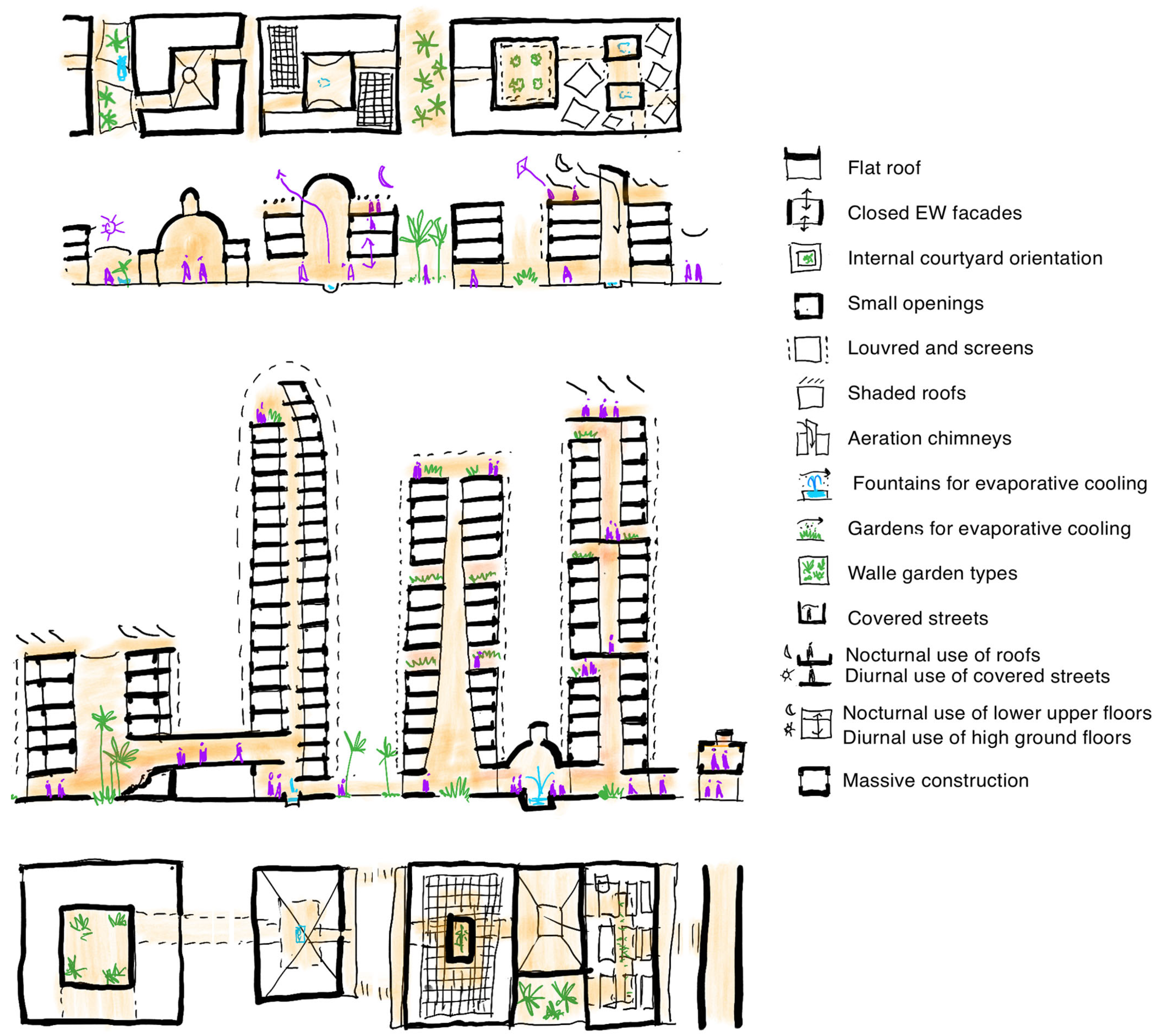
4.2. Arid Climate (See Figure 8)

Arid climates, ranging from desert to mediterranean conditions, are characterized by big diurnal variations (and lesser seasonal variations) between hot dry days and cooler moister nights. The dry conditions lend themselves for evaporative cooling, drawing airflows over gardens, water basins, and fountains to refresh spaces behind. Often ventilation shafts or wind towers, that can be opened in cooler periods and closed in hotter daytime periods, are used in traditional architecture to create these airflows. So are pressure differentials between hot streets and cool gardens to create drafts. The intense sun is mostly felt in the east and west due to relatively steep sun angles. This results in openings being carefully placed either to the other sides or towards internal courtyards. These are often sheltered through dense louvers and lattice screens. Further buildings are mostly carried out in thick massive construction. This creates thermal inertia, averaging out big variations between night and day temperatures. Buildings are placed densely to profit of each other’s shadow, with narrow shaded streets in-between. Sun sails, covered streets, arcades, covered markets form further types of sun sheltered public spaces. Gardens are often walled for shade, and precious water supplies covered and strongly managed to prevent evaporation and loss. Further cooler ground floors with higher ceilings are used during hot days, while lower-ceilinged upper floors and roofs become heavens after sunset, having captured precious sun gains for cool nights.
Figure 8. Blueprint sections for vernacular vs. urban layouts in arid climates.
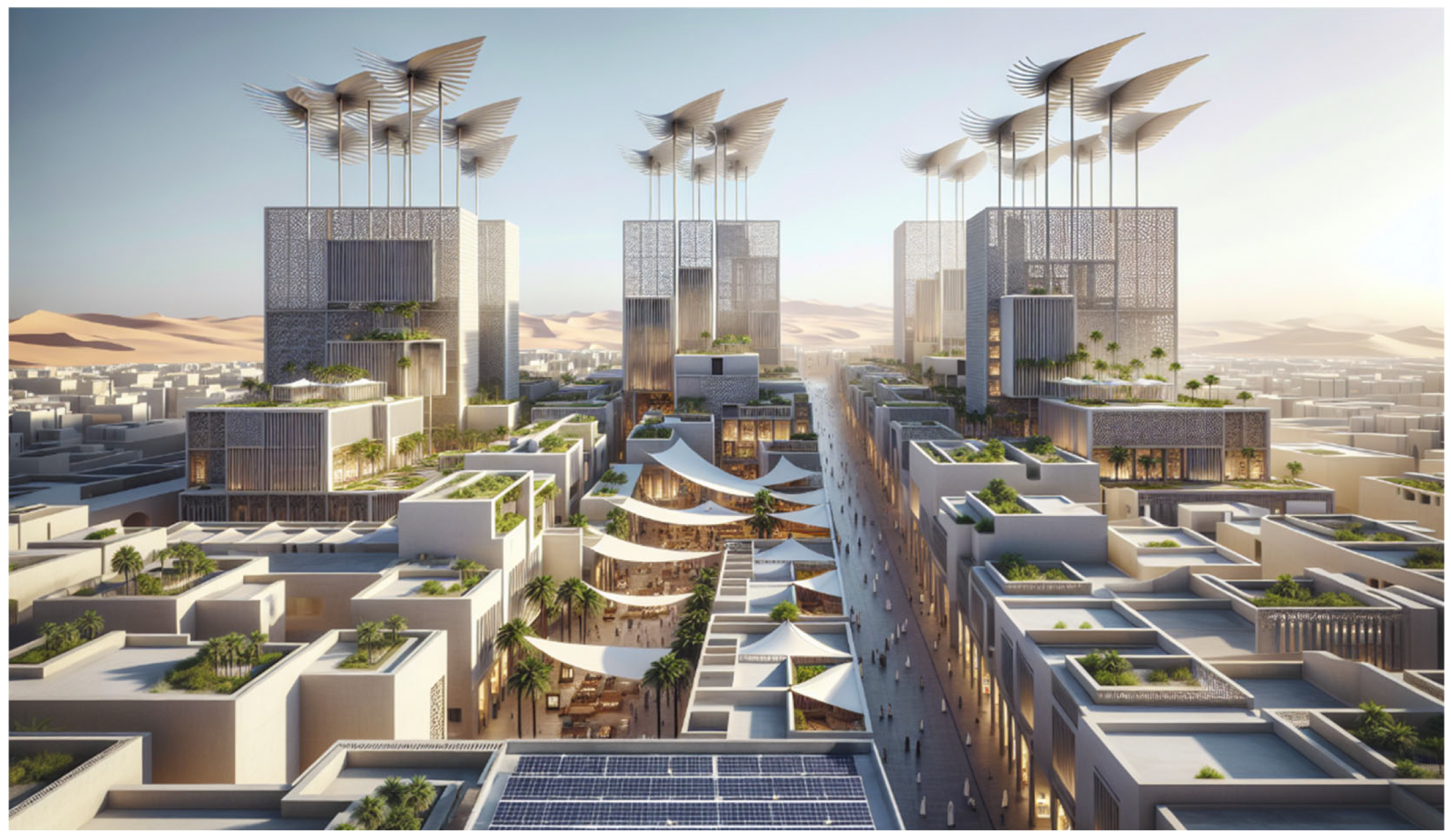
In the dense city version and section, towers with strategically placed and strongly shaded openings are densely planted. They are linked through covered pedestrian streets and communal areas, as well as shaded internalized gardens. Atriums in the towers serve as wind chimneys, drawing in, in a time-controlled manner, cooler air from high up. The air is further cooled in the shaded internal wells while falling to the ground. Here internal fountains and planting further reduce its temperature through evaporative cooling. While ground floors are active during the day, roof gardens covered with solar panels become heavens for cooler evenings. Their underside can further capture night condensation to water internal gardens. Cities like Hyderabad and Cairo demonstrate the use of wind towers, while Masdar shows their contemporary reinterpretation. It further is an example of the use of screened moucharabiehs and evening roof gardens. In many Emirate cities, like Dubai, older parts provide examples of traditional and modern covered streets, e.g., in the Indian quarter, while recent constructions reinterpret these as indoor air conditioned or outdoor shaded malls. Using natural evaporative cooling principles would enable us to naturally cool those spaces.

4.3. Temperate Climate (See Figure 9)

Temperate climates are characterized by changing seasonal conditions and sun angles: from mildly cold and humid winters with oblique sun paths from East to West, to warm summers with steeper sun trajectories. It is notable that in the northern hemisphere the sun path is inclined to the south while in the southern hemisphere it is slanted to the north, as is the case in lesser degrees in arid climates. In response to these conditions, a triple orientation to the sun is privileged. In traditional architecture the courtyard type is common. Triple orientation aims for maximizing sun gains in colder periods, while indoor spaces are best shaded through overhangs (balconies, awnings) against a steeper summer sun. Planting of deciduous trees allows for seasonal sun exposure or shading. Buffer spaces such as sheltered balconies, loggias, covered passages, and winter gardens allow us to extend comfortable enjoyment of seasonally used spaces, forming together with courtyards areas for extending urban planting. Compact volumes, realized in massive construction, enable the retention of heat or coolness depending on the season, sometimes reinforced by strategically placed cores at the sun-opposed sides of buildings. Roof overhangs provide further protection from rain.
Figure 9. Blueprint sections for vernacular vs. urban layouts in temperate climates.
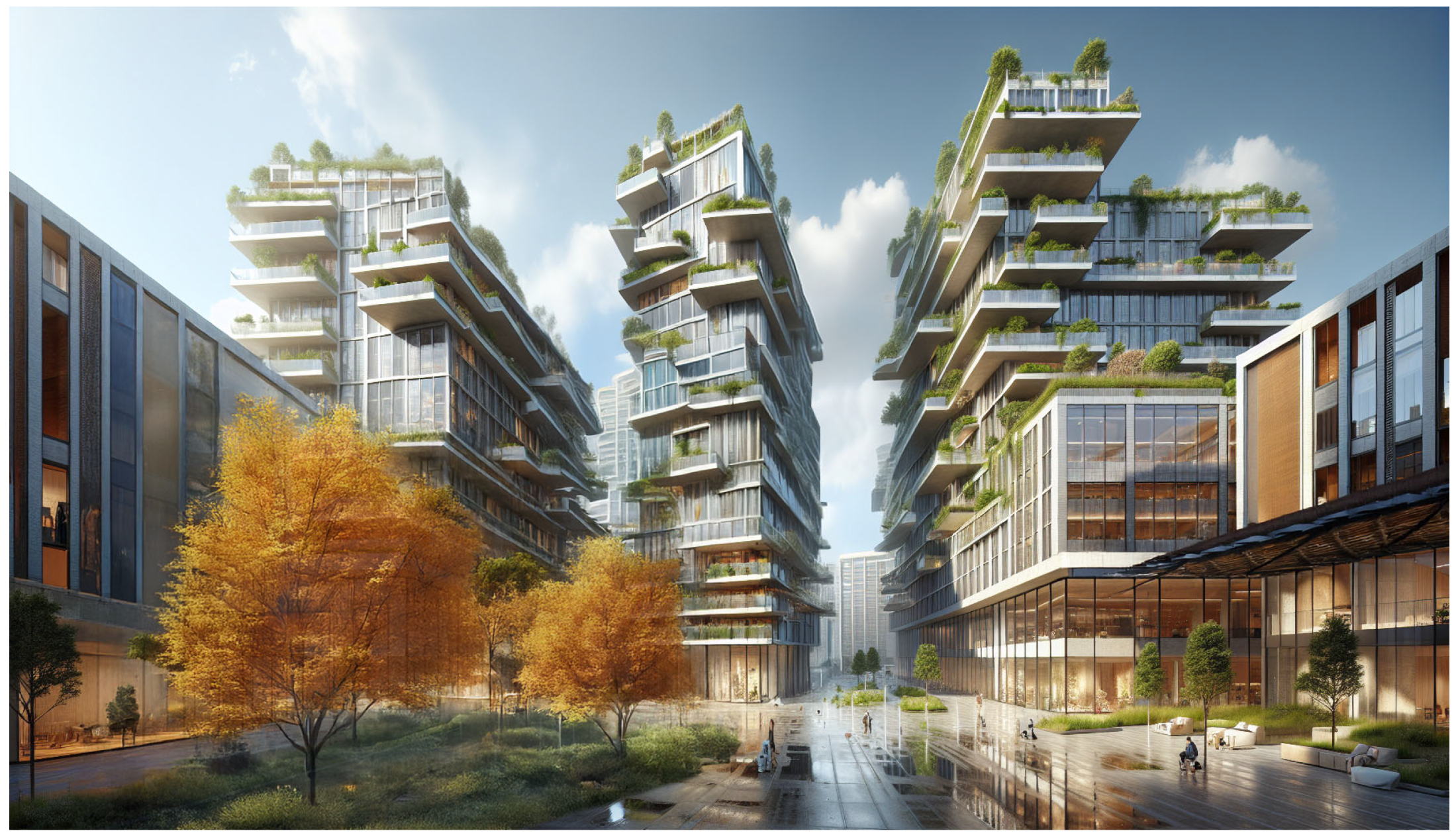
High density cities extend these principles vertically. Setback principles enable a maximum penetration of sunlight into streets in winter, while balcony overhangs and awnings protect from summer sun and winter rains. Alternating street width can respond strategically to different sun angles and orientations. Covered passages, sheltered gardens, and balconies provide optimal space for seasonal use, planting, and ecosystem growth. Hereby taking into consideration the different levels of sun exposure and shelter can help identify ideal species composition for shade or heat tolerant species. The passages of Brussels or Paris, the alternating street width of New York or Melbourne, or the latter’s use of awnings akin to London, or the arcades and balconies of mediterranean cities form examples of sheltered outdoor space principles.

4.4. Cold Climate (See Figure 10)

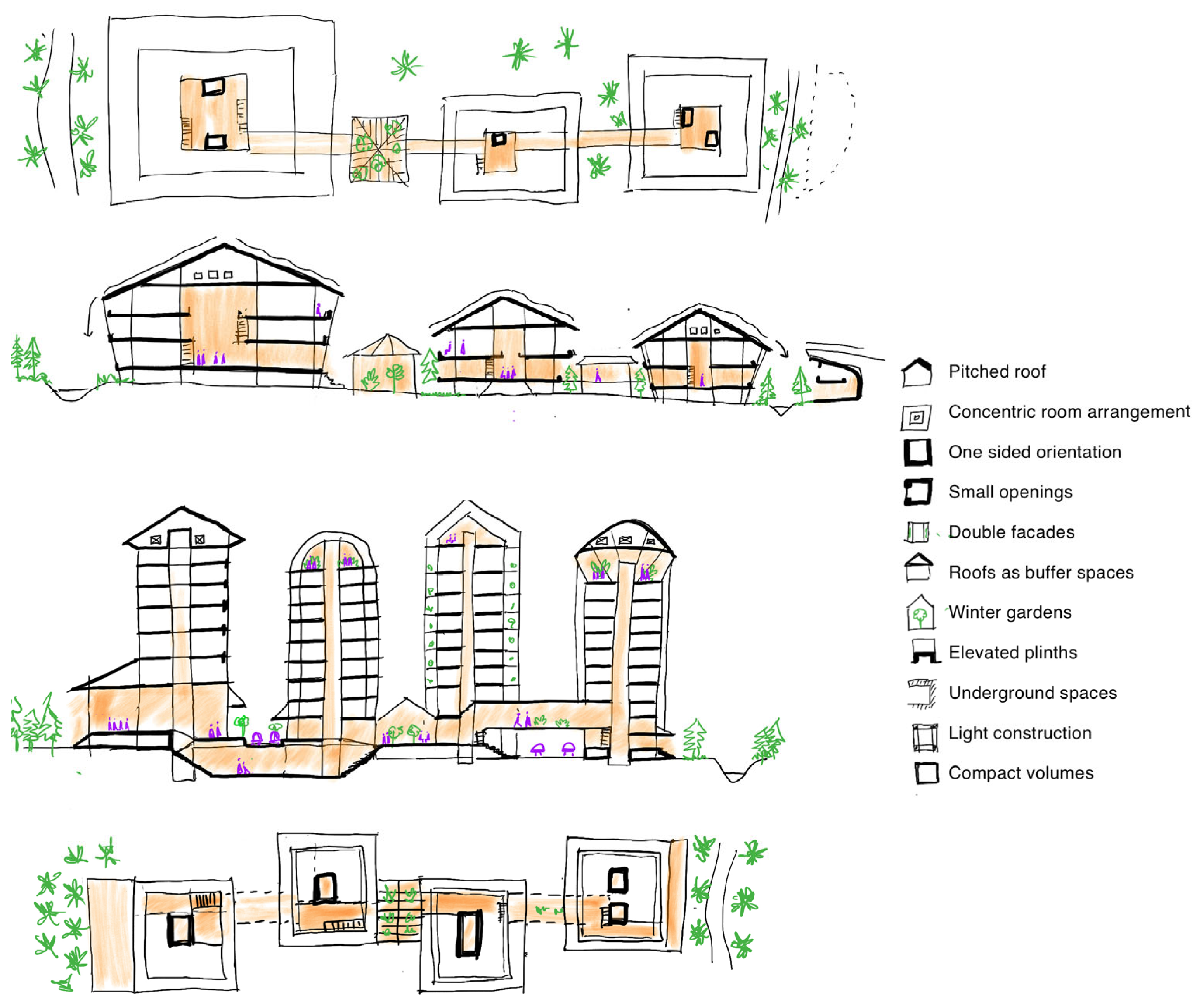
Cold climates are characterized, as their name implies, by relatively consistent cold to mild temperatures, resulting in a need for consistent sun gain. As sun angles are flat to either South (northern hemisphere) or North (southern hemisphere), this is the main orientation of buildings, often spread apart so as not to shadow each other. Thick volumes together with concentric organizations, allow them to reduce heat losses. Heat sources and cores are placed at the center, surrounded by living areas, then outdoor buffer spaces such as winter gardens or wind sheltered balconies. Timber constructions further allow us to insulate buildings against the cold, while massive building bases or elevated constructions protect against soil humidity and snow accumulation. Low buildings sometimes also benefit from being placed underground to benefit from the ground’s insulating capacity. Large roof overhangs and covered and protected walkways protect inhabitants and constructions from cold and snowfall. Often social spaces are translocated from an outdoor setting to indoor halls. Gardens are often placed in wind sheltered areas between buildings, and wintergardens further extend growing seasons and opportunity for plant diversity.
Figure 10. Blueprint sections for vernacular vs. urban layouts in cold climates.
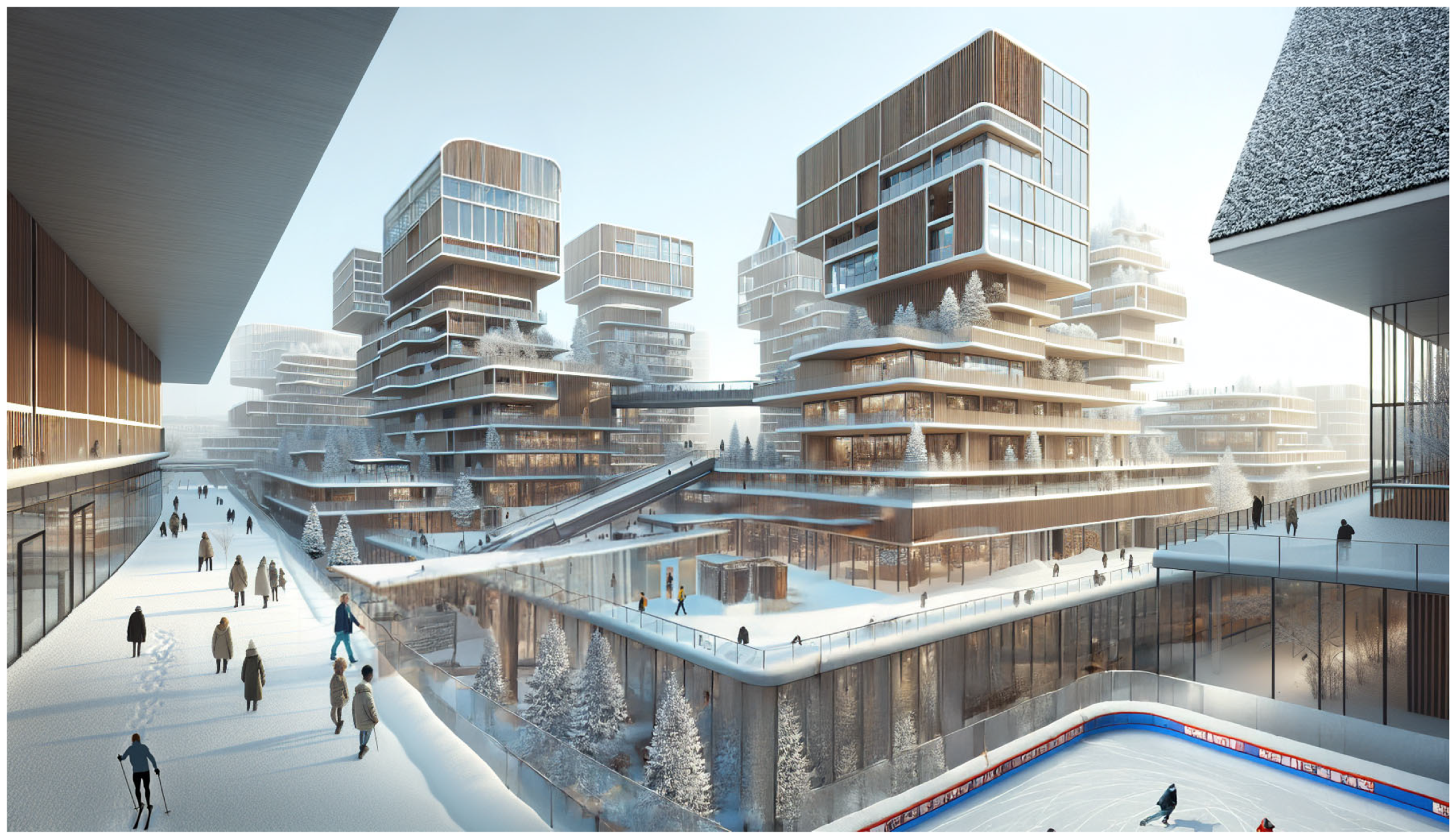
The extension of these principles to a high-density context leads to equally denser vertical forms, with concentric functional zones and insulation layers. Light construction and especially recent high rise timber construction benefit these climates. Elevated massive bases enable the lifting off from snow and sludge. Raised sheltered walkways, underground tunnels, and indoor halls facilitate the movement and gathering of people in cold climates. Cold tolerant native species and ecologies thrive in sheltered spaces, especially in-between buildings. Wintergardens for other planting may be articulated as glazed balconies, double facades, covered passages, or rooftop spaces that can accommodate indoor gardens. Extended covered walkway systems can be found in cities like Toronto and Montreal, while Chicago’s high-rises feature dense concentric layouts. Alpine cities, but also cold wind battered La Coruna, feature double layered facades. In Alpine and Nordic regions, large roof overhangs and raised ground floors are common, adding to the vocabulary of cold cities.

5. Discussion

5.1. Testing Sectional Principles Through Artificial Intelligence

These discussed principles were further tested using generative Artificial Intelligence, in this case the software VAL provided by RMIT [19]. The enounced principles were written out as commands to test how they would express spatially, making abstraction of other factors like site, existing local conditions, or culture. These would of course be key design elements in a real project and be combined with climatic considerations. Furter considerations of local microclimates and expected climate changes would need to be evaluated. Yet, the GenAI outcomes were striking in their difference. To test the effectiveness of these strategies, AI visualization tools employed keywords from the previous sectional diagrams. This allowed for generating rapid simulations and iterations by adjusting the commands.
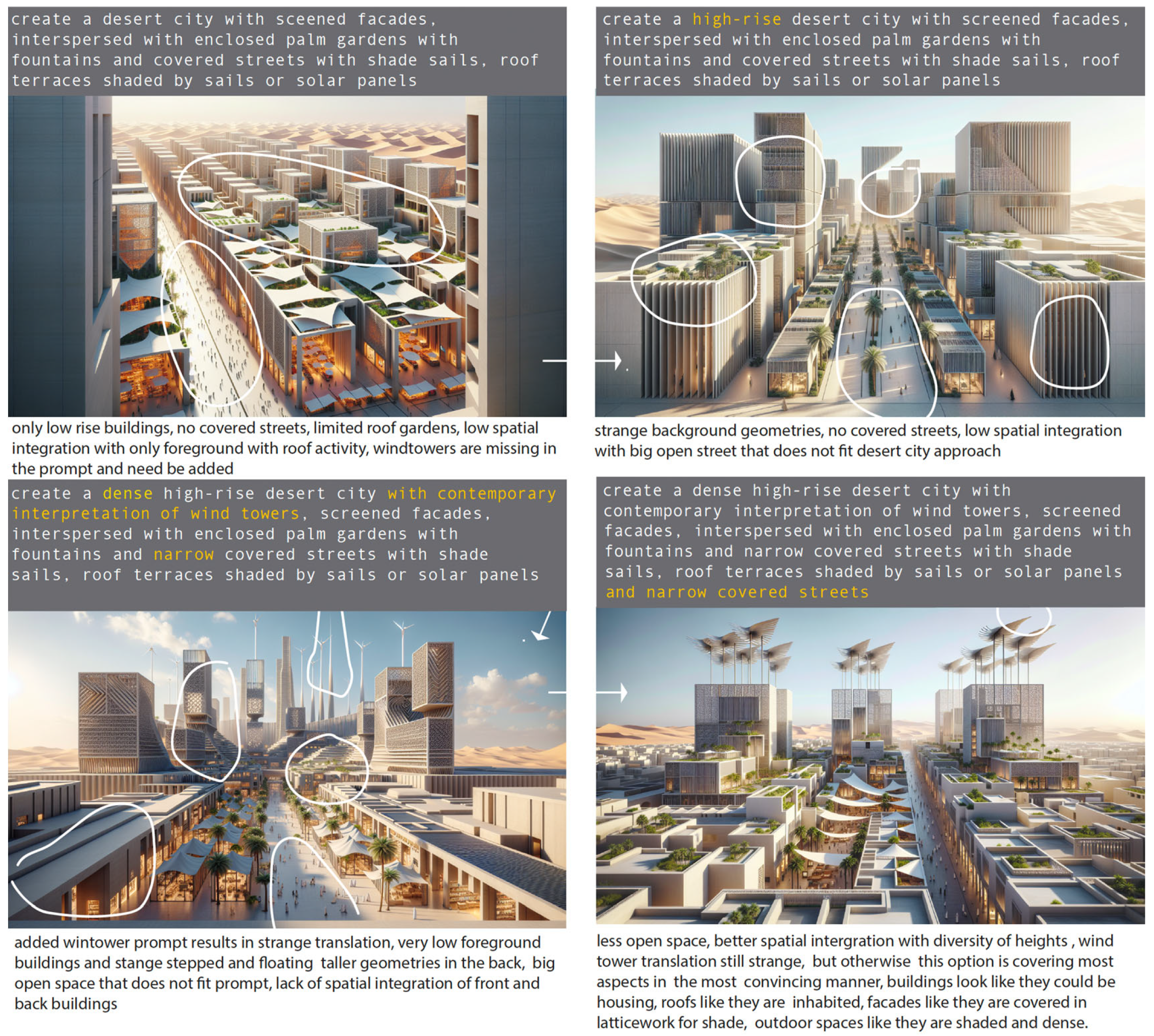
For each test we generated four to five images and chose the one that best matched expectations of the typologies imagined while drawing the sections. The criteria for selection we applied were choosing the example where most design principles of the sections and prompts had been translated three-dimensionally, where those principles seemed to be applied most convincingly without spatial or typological oddities, and where the elements seemed to be the most spatially integrated across the rendering. During this process some prompts were added which had been forgotten, others modified or reinforced, as can be seen in one example of the process in Figure 11. It was a rapid process, as the GenAI images were intended as a quick visualization of the typologies imagined in the section, a testing of the sections rather than an aim in itself.
Figure 11. AI generated image sequence, with iterations of prompts (in gray) and circled areas of concern, for arid climate.
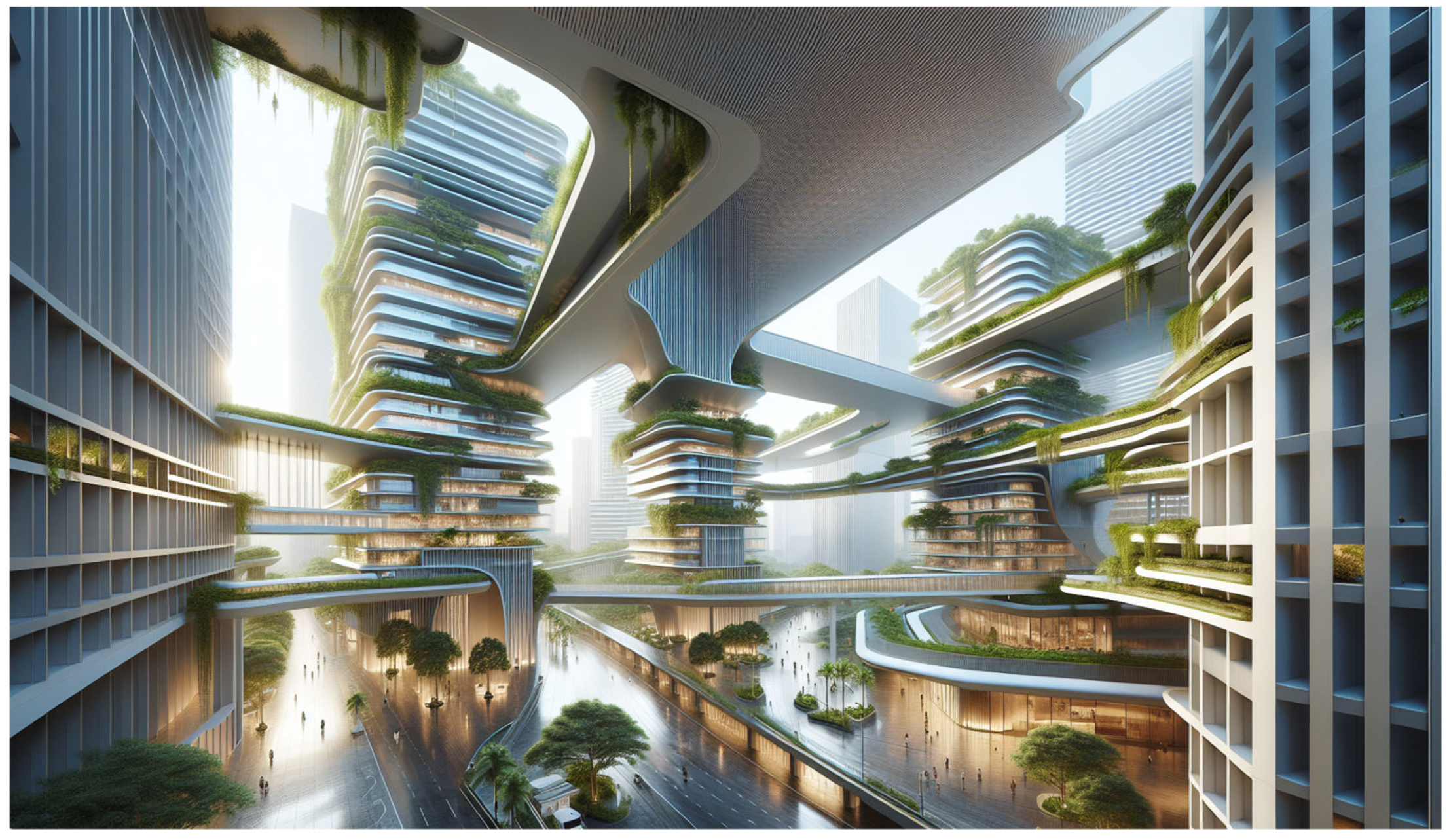
The GenAI visualizations in Figure 12, Figure 13, Figure 14 and Figure 15 provide insights into the practical applicability of design strategies articulated in the blueprint sections across different climatic conditions. By aligning traditional principles with these new technologies, we were able to test our urban design framework, expressions of the embedded design principles, using AI sampling principles of architectural, urban, and landscape imagery.
Figure 12. AI generated image using command: “create image of a tropical high-rise city with contemporary design, elevated covered walkways, breezy open facades, with louvers or screens, covered in lush vegetation, and covered open air areas for tropical rain”.
Figure 13. AI generated image using command: “create a dense high-rise desert city with contemporary interpretation of wind towers, screened facades, interspersed with enclosed palm gardens with fountains and covered streets with shade sails, roof terraces shaded by sails or solar panels and narrow covered streets”.
Figure 14. AI generated image using command: “generate image high rise city, between rain and sun, with setbacks and awnings, planted balconies, glass covered passages, green courtyards, green roof terraces, deciduous trees and rain gardens, concrete or brick construction, show city after rain with autumn sunshine”.
Figure 15. AI generated image using command: “generate a snow-covered high-rise city with compact wood buildings, closed facades and some glass wintergardens, pitched roofs, linked by indoor walkways or bridges in snowy sunny weather”.

5.2. What the Process of AI Generation Revealed

While the AI imagery was not intended to be read as designs, it enabled us to compare how certain climatic principles could translate visually using AI’s capacity to sample ideas from the vast trove of image material that is publicly available. The aim was not to propose finished designs, but to test how climate design principles could be expressed. These principles would of course need the capacity of human designers to be meaningfully implemented in targeted ways for real contexts, taking into account all relevant local specificities.
While the AI tool was useful to assess how differently those climatic concepts and principles translate, its limitation was also in truly understanding all commands. For instance, words like wind towers, setbacks, louvers, pitched roofs, and awnings were not as successfully captured than other more commonly understood terms, like green balconies, slender volumes, walled gardens, or planted roofs. Prompts employing familiar and general non-disciplinary language tended to produce more coherent results, whereas those requiring specialist terminology often lacked precision and nuance. Often commands were translated, as to be expected, in a very generic way and sometimes in odd ways, like the wind towers, as AI is strong at extracting and rendering existing patterns across extensive existing visual material, but struggles where such material is lacking.
The study also revealed varied levels of success in translating design prompts into synthetic visual outputs. GenAI platforms demonstrated greater proficiency in rendering details than in achieving integration at the overall spatial level, with atmospheric elements proving particularly challenging. There was a need to supplement prompts with explicit weather or atmospheric cues became evident to generate appropriate environmental effects, especially for the cold and temperate examples, as seen in the prompts. Control over vegetation types, such as specifying conifers, deciduous trees, or palms, remained limited, and requests for diverse or contextually appropriate planting schemes frequently resulted in generic representations. These outcomes substantiate the anticipated constraint of GenAI—the absence of nuanced local context and the challenge of managing complex ecological differentiation.
A critical insight from this study is that, while GenAI can assist in visualizing design principles and provide first inspirations, it cannot replace the expertise of skilled, transdisciplinary designers in fully translating and integrating those principles spatially, beyond creating visually polished first impressions sampling existing approaches. AI lacks the capacity of artifice, creativity, conscious selection, and invention, that enable it to create something new with deep connection to a particular reality. Thus, the images will not be real simulations [40] but remain visual impressions. Nevertheless, the tests provide a first way of assessing spatial and visual expressions of climatic principles, combining elements of city and nature, where some images integrated those aspects more successfully than others. The research was purposely abstracted from site-specific contexts to experiment with the translation of general principles through GenAI; as it anticipated the difficulties of AI when tasked with situated, context-driven design. Performing real sited tests would have expanded the scope of this article and is the objective of further research.
Further, GenAI, reliant on precedent image databases and common vocabulary, often fell short with more specialized terminology or less commonly used design approaches, such as wind towers, i.e., This highlights the indispensable role of practitioners in bridging gaps between common precedent and innovation. Principles with a wealth of precedents were generally well-translated, whereas those drawing on lesser-known precedents or requiring interpretation or novel design approaches proved beyond AI’s current reach: AI relies on statistical models rather than genuine understanding or cognitive processing. AI can mimic elements of intelligence like language processing and problem-solving, but it lacks the deeper levels of human comprehension [41] needed for novel climatic design approaches. Therefore, designer expertise remains central especially in a field that requires important innovation and development. Real sophistication is necessary for complex, holistic design proposals where integration of city and landscape demand deeper understanding of real sites.
GenAI can serve as an effective tool though for inspiration and early-stage ideation, functioning as a mood board, illustrating established ideas, and highlighting where new creative approaches demanding human designers are warranted. Its strength lies in identifying existing patterns in the noise of existing approaches [42], catalyzing rather than generating resolved design solutions. For real spatial interpretation and contextually responsive design, the advanced skills of human designers remain essential. These findings reinforce the need for a collaborative, transdisciplinary approach integrating the irreplaceable judgment of experienced designers to advance urban, architectural, and landscape integration across varied climatic contexts.

6. Conclusions

6.1. Reflections on Original Objectives

The study aimed to provide insights into a comparison between different climate zones and their varied opportunities of urban–ecological integration strategies. Central to this endeavor were urban sections that synthesized elements from urban, architectural, and landscape design to critically examine the ways landscape can and should be integrated within the fabric of cities. Rather than treating landscape as an afterthought or as passive environmental buffer, the analyses positioned it as an active agent in urban systems—one that benefits from and contributes to built structures.
This allows us to bring to the foreground reciprocal relationships between built environments and natural systems, where cities can shelter landscape from harsh climatic conditions such as excessive sun or wind, while landscapes themselves can moderate urban microclimates. For instance, desert cities often utilize internalized courtyards to shelter vegetation, conserving moisture which cools ambient air though evapotranspiration and benefits surrounding buildings. In cooler climates, glassed or covered outdoor spaces support both human use and a broader range of plant species, while these warmer buffer spaces enable solar gains and natural ventilation into warmer spaces behind.
Drawing from vernacular examples, we translated those principles into higher density models. This enabled us to discuss how hybrid urban–landscape approaches could be integrated into a contemporary context. Such synthetic approaches create beneficial microclimates and exemplify the reciprocal relationships such synthetic sections allow us to study: the shelter provided by buildings enables vegetation to thrive, and, in turn, that vegetation benefits the urban spaces adjacent to it. It creates conditions that are healthier and more comfortable, providing tangible benefits to human and non-human inhabitants. Collectively, these strategies underscore the importance of designing cities, spaces, and landscapes together in synthetic, mutually beneficial ways. Importantly, the type of these relationships is deeply climate-specific, underscoring the need for contextual design thinking.
The comparative analysis through the sections facilitated identification of strategies and adaptation patterns across distinct climate zones. Sheltered spaces in extreme climates, flexible space-use in variable contexts, and sun shading in hot areas each represent examples of parallels across different climate zones, that enable practitioners to expand precedents that can be combined into locally relevant solutions. However, recognizing critical differences between climates is also essential; indiscriminate adoption of well-marketed temperate climate strategies—such as high insulation, double glazing, but also compact built forms, wrong orientations, roof forms, or construction types —can be inappropriate in other climates, such as tropical or arid climates. It is a risk amplified by gaps in education. Especially western trained designers are not often aware of those differences, designing in inappropriate ways for foreign contexts.
Rather than seeking definitive answers, the overarching aim of this research has been to raise awareness of the complexity inherent to climate-sensitive urban and landscape design, and to open debate around the limitations of imported solutions. By challenging the notion that there can be a singular, universally applicable approach to sustainable urbanism, this work calls for the expansion of climate-specific strategies that explicitly integrate landscape considerations and acknowledge the diversity of environmental contexts encountered globally.
In terms of methodology, experimenting with AI-based visualization tools proved revealing. AI-generated images can help picture existing strategies and clarify climatic differences, while pinpointing gaps and illustrating principles that are sometimes difficult to convey due to lack of precedent. Nevertheless, such outputs provide only partial accuracy: beyond AI visualization so far being ineffective in experiments with real sites, some principles and contextual nuances are also lost in translation. Despite these shortcomings, the polished appearance of AI tests risks being misinterpreted as final design solutions, when they are in fact sampled amalgams based on existing datasets, lacking genuine three-dimensional or site-specific integration. Therefore, it is important to note that they remain a fast visual test of the sections. To produce meaningful, responsive designs, there remains a need for the high-level expertise and creativity of professionals capable of integrating mapping, urban ecology, water systems, topography, infrastructure, and built form into holistic site analysis and project delivery.
The first site-based transdisciplinary study conducted herein demonstrates the potential for such integrative processes. By translating principles into real situations, using mapping to identify critical resources, and leveraging the nuanced interplay between climate, landscape, and urban space, this approach shows how urban design, infrastructure, architecture, and landscape can be cohesively brought together. It emphasizes the necessity of grounding design thinking in microclimatic realities and specific urban contexts, beyond the abstractions of generalized models. Ultimately, the study suggests that climate-sensitive, landscape-led urban design demands both awareness and adaptation—an ongoing process that must be iterative, and deeply situational, if it is to achieve genuinely sustainable and livable outcomes for cities worldwide.

6.2. Opening a Discussion

The principles summarized in the typological sections and tested through AI visualize the variability of climatic expressions variance. They aim not to provide readymade solutions, but to open a discussion. Melbourne’s MCL project further demonstrated the necessity of a nuanced understanding of local conditions. It blended strategies from temperate (covered space, water protection, and drainage) and arid climate types (using evaporative cooling and internalized spaces) reflecting on a changing climate with increasing summer temperatures, drought, and otherwise wet winters. It integrated built and ecological approaches within existing contexts, demonstrating a need to adapt theoretical types to real conditions. The sections and AI tests developed ideas of how to systematize such approaches, with the awareness that the principles would of course need an adaptation to particular conditions and geographies, where MCL could serve as an example of application. Thus, the article targeted a discussion on how we may review the design of cities in divergent climatic contexts, merging climate sensitive and ecological considerations into innovative new urban ecologies.
Creating such new urban ecologies benefits interconnected human and environmental health and creates exciting urban experiences. This approach strengthens intertwined, co-dependent urban, human and ecological systems. By creating engaging and livable urban spaces, we can uplift health and well-being, next to building resilience to intensifying climatic conditions. Economically, climate resilient cities require less maintenance and repairs, freeing up resources for new green investment, while urban areas near green spaces are more valued by residents, further justifying such investments.
Local microclimates and the intensifying effects of climate change also require consideration. Melbourne, for instance, situated in a temperate zone, is effectively used as a blend of arid and temperate strategies to adapt to recently intensifying conditions. This included rain shelter and capture, courtyard designs, evaporative cooling, and shading strategies. Such adaptive measures underscored the necessity of accounting for both current and future climatic shifts. Additionally, to native species, deciduous canopies may provide useful seasonal cover creating passive shading. Nonnative species may at times be appropriate for future conditions. A nuanced application of principles is thus important, informed by local needs and particularities.

6.3. New Opportunities for Design

By sparking a discourse on climate-specific urban design, the initiative encourages innovative thinking about how to combine the tools and design strategies of urban landscape and architectural design, mixing traditional principles with contemporary transdisciplinary design to craft optimistic and experiential urban spaces for a resilient future. The study set out to ignite an emergent dialog about climate-adaptive design beyond single buildings. By deliberately conducting climatic tests free from the constraints of specific sites, the study encouraged a broader, forward-thinking discourse on how design can respond to environmental challenges though the combination of different disciplines. However, this approach inherently excluded the intricate details of specific conditions, microclimates, cultural needs, and existing typologies.

6.4. Overcoming One-Approach-Fits-All and Techno-Beliefs

Recognizing the need to address evolving and diverse climates, the study sought to transcend the one-size-fits-all approaches still prevalent due to the lasting influence of modernism, universal styles, and high-tech architecture. While technical solutions offer benefits, power shortages and outages have illuminated their vulnerabilities and strain on urban systems. This reveals that more technology cannot be the only approach, but that we need to be working as well with natural principles of physics.
By integrating passive strategies, we can alleviate pressure on urban systems during extremes, fostering resilience. But we may also spark innovative design trajectories. The study championed a new narrative: one that looks beyond traditional paradigms and embraces dynamic, adaptive design to meet the challenges and opportunities of our age. This innovative mindset hopes to pave the way for a wider diversity of designs, urban environments, and approaches, as well as new intriguing and exploratory urban space arrangements. It imagines a livable future combining build up areas, urban ecologies, humans, and other beings. Spaces where these domains are thought together, where humans can experience this entwinement in a fascinating and evolving way across seasons and changes. It is a way of city design that yet needs to be completely imagined, by and for humans, not machines.

Author Contributions

Conceptualization, M.C. and M.J.; methodology, M.C. and M.J.; investigation, M.C. and M.J.; writing—original draft preparation, M.C.; writing—review and editing, M.C. and M.J. All authors have read and agreed to the published version of the manuscript.

Funding

Melbourne Cool Lines project: The project was funded by the CRC for water sensitive cities and the City of Melbourne (in kind contributions for the exhibition).

Institutional Review Board Statement

Not applicable.

Data Availability Statement

The original contributions presented in this study are included in the article. Further inquiries can be directed to the corresponding author.

Acknowledgments

We thank Jianbing Wang and Candace Jordan for facilitating this collaboration. The team included project leaders: Maud Cassaignau, Markus Jung Video Team: Chi Che Goh, George Mellos, Duy Phan Exhibition Team: Perri Athanasiou, Maud Cassaignau, Ronald Chu, Yasarhan Demirkol, Phan Quang Duy, Markus Jung, Kristen Levey, Mingzhu Lu, George Mellos, Brahn Smillie-Fern, Louie Smith, Maxwell Vulcan and Jin Zhong. The project was accompanied by the CRCWSC’s Tony Wong and City of Melbourne’s Candace Jordan.

Conflicts of Interest

The authors declare no conflicts of interest.

Abbreviations

The following abbreviations are used in this manuscript:
UHIUrban heat island
CRCWSCCollaborative Research Centre for Water Sensitive Cities
MCLMelbourne Cool Lines project
WSUDWater Sensitive Urban Design

References

  1. Dahl, T. Climate and Architecture; Routledge: Roxon, UK, 2010. [Google Scholar]
  2. Frampton, K. Towards a critical regionalism: Six points for an architecture of resistance. In The Anti-Aesthetic: Essays on Postmodern Culture; Foster, H., Ed.; Bay Press: San Francisco, CA, USA, 1983; pp. 16–30. [Google Scholar]
  3. Hoenger, C.; Brunner, R.; Menti, H.-C.; Wieser, C. Climate as Design Factor, 2nd ed.; Quart Verlag: Lucerne, Switzerland, 2014. [Google Scholar]
  4. Yeang, K. Eco Masterplanning; Wiley: Hoboken, NJ, USA, 2009. [Google Scholar]
  5. Ninsalam, Y. Garden City, the City in a Garden and Beyond; Lecture; RMIT: Melbourne, VIC, Australia, 2025. [Google Scholar]
  6. Collaborative Research Centre for Water Sensitive Cities; Australian Government. Impacts of Water Sensitive Urban Design Solutions on Human Thermal Comfort Green Cities and Microclimate (Report). Available online: https://watersensitivecities.org.au/wp-content/uploads/2016/07/TMR_B3-1_WSUD_thermal_comfort_no2.pdf (accessed on 14 October 2025).
  7. Melbourne Cool Lines! CityXVenice, the Venice Biennale 2021. Available online: https://www.youtube.com/watch?app=desktop&v=7bxSjtkqGq0 (accessed on 14 October 2025).
  8. Rohington, E.M. Urbanization and Climate. In An Urban Approach to Climate Sensitive Design: Strategies for the Tropics; Taylor and Francis: Milton Park, UK, 2005; pp. 20–62. [Google Scholar]
  9. Coutts, A.M.; Tapper, N.J.; Beringer, J.; Loughnan, M.; Demuzere, M. Watering our cities: The capacity for Water Sensitive Urban Design to support urban cooling and improve human thermal comfort in the Australian context. Prog. Phys. Geogr. Earth Environ. 2012, 37, 28. [Google Scholar] [CrossRef]
  10. Kowarik, I. Urban biodiversity, ecosystems and the city. Insights from 50 years of the Berlin School of urban ecology. Landsc. Urban Plan. 2023, 240, 104877. [Google Scholar] [CrossRef]
  11. Cassaignau, M.; Jung, M. City as Urban Ecology: Ecosystems as Climate Regulators and Sources of Resilience. In Cities of Tomorrow: Urban Resilience and Climate Change Preparedness; Ghosh, S., Cheshmehzangi, A., Majumdar, S., Eds.; Springer: Singapore, 2024; pp. 25–49. [Google Scholar]
  12. One Health. 2017. Available online: https://www.who.int/news-room/questions-and-answers/item/one-health (accessed on 14 October 2025).
  13. Cassaignau, M.; Jung, M. Ecological Urban Networks, More-than-human Urban Rehabilitation. In Landscape as Horizon, sITA 2024; Editura Universitară Ion Mincu: Bucharest, Romania, 2024; Volume 12, pp. 211–228. [Google Scholar]
  14. Val Virtual Assistant for Learning [AI Chatbot]. [Second Version]. Available online: https://www.rmit.edu.au/students/support-services/study-support/val (accessed on 14 October 2025).
  15. Australian Bureau of Meteorology; University of Adelaide. Power Outages During Heatwaves: Predicting Mortality Burden in Australian Cities, a Discussion Paper. Available online: https://www.aemo.com.au/-/media/files/initiatives/strategic-partnerships/2020/power-outages-and-mortality-burden-australian-cities.pdf (accessed on 14 October 2025).
  16. Melbourne Cool Lines! Opening Night. Available online: https://watersensitivecities.org.au/content/melbourne-cool-lines/ (accessed on 14 October 2025).
  17. Cool Routes. Available online: https://www.melbourne.vic.gov.au/cool-routes (accessed on 14 October 2025).
  18. Cooling Our City. Available online: https://www.melbourne.vic.gov.au/cooling-our-city (accessed on 14 October 2025).
  19. Cassaignau, M. Technologies and Environments 4; course in the Master of Architecture; Monash University: Melbourne, VIC, Australia, 2011–2017. [Google Scholar]
  20. Manissi, A. Cataloguing a Future City: Melbourne Cool Lines! Landscape Australia. 2021. Available online: https://landscapeaustralia.com/articles/cataloguing-a-future-melbourne-cool-lines/ (accessed on 14 October 2025).
  21. Ouyang, W.; Ren, G.; Tan, Z.; Li, Y.; Ren, C. Natural shading vs. artificial shading: A comparative analysis of their cooling efficacy in extreme hot weather. Urban Clim. 2024, 55, 101870. [Google Scholar] [CrossRef]
  22. Soltanifard, H.; Amani-Beni, M. The cooling effect of urban green spaces as nature-based solutions for mitigating urban heat: Insights from a decade-long systematic review. Clim. Risk Manag. 2025, 49, 100731. [Google Scholar] [CrossRef]
  23. Rising, H.; Deng, L. The effects of small Water Cool(ing) Islands on body temperature. J. Urban Des. 2023, 29, 167–183. [Google Scholar] [CrossRef]
  24. Sánchez de la Flor, F.J.; Alvarez, S. The effect of the evaporative cooling, techniques on reducing urban heat. In Urban Climate Mitigation Techniques; Santamouris, M., Kolokotsa, D., Eds.; Routledge: Milton Park, UK, 2016. [Google Scholar]
  25. Kuula Virtual Tours. Available online: https://kuula.co/about (accessed on 1 October 2025).
  26. Glissant, É. Philosophie de la Relation: Poésie en Étendu; [Philosophy of Relationships: Extended Poetics]; Gallimard: Paris, France, 2009; p. 45. [Google Scholar]
  27. Entwisle, T.; Cole, C.; Symes, P. Adapting the botanical landscape of Melbourne Gardens (Royal Botanic Gardens Victoria) in response to climate change. Plant Divers. 2017, 39, 338–347. [Google Scholar] [CrossRef] [PubMed]
  28. Köster, S. How the Sponge City becomes a supplementary water supply infrastructure. Water-Energy Nexus 2021, 4, 35–40. [Google Scholar] [CrossRef]
  29. Legrand, M. La Mise en Ordre Écologique des Parcs Urbains: Savoirs, Pratiques et Paysages: Exemple d’un Grand Parc Francilien [The Ecological Ordering of Urban Parks: Knowledge, Practices, Landscapes: The Case of a Large Park in Paris Region—France]. Ph.D. Dissertation, Museum National d’Histoire Naturelle, Paris, France, 2015; pp. 235–259. [Google Scholar]
  30. CABE. Urban Green Nation: Building the Evidence Base; Report; CABE: London, UK, 2010; pp. 5+10. Available online: https://www.designcouncil.org.uk/fileadmin/uploads/dc/Documents/urban-green-nation-summary1_0.pdf (accessed on 15 November 2025).
  31. Wen, Y.; Yan, Q.; Pan, Y. Medical empirical research on forest bathing (Shinrin-yoku): A systematic review. Environ. Health Prev. Med. 2019, 24, 70. [Google Scholar] [CrossRef] [PubMed]
  32. Peters, K.; Elands, B.; Buijs, A. Social interactions in urban parks: Stimulating social cohesion? Urban For. Urban Green. 2010, 9, 93–100. [Google Scholar] [CrossRef]
  33. Jin, M.; Hu, L.; Hu, G.; Guo, J. Pursuing Ecological and Social Co-Benefits: Public Hierarchical Willingness for Biodiversity Conservation in Urban Parks. Sustainability 2025, 17, 4201. [Google Scholar] [CrossRef]
  34. Haraway, D. When Species Meet; University of Minnesota Press: Minneapolis, MN, USA, 2008. [Google Scholar]
  35. Wolch, J. Zoöpolis. In Animal Geographies: Place, Politics and Identity in the Nature–Culture Borderlands; Wolch, J., Emel, J., Eds.; Verso: London, UK, 1998; pp. 275–330. [Google Scholar]
  36. Shanahan, D.; Lin, B.; Bush, R.; Gaston, K.; Dean, J.H.; Barber, E.; Fuller, R. Toward improved public health outcomes from urban nature. Am. J. Public Health 2015, 105, 470–477. [Google Scholar] [CrossRef] [PubMed]
  37. Wohlleben, P. The Hidden Life of Trees, What They Feel, How They Communicate: Discoveries from a Secret World; Harper Collins: New York, NY, USA, 2015. [Google Scholar]
  38. Simard, S.; Martin, K.; Vyse, A. Meta-networks of fungi, fauna and flora as agents of complex adaptive systems. In World Managing Forests as Complex Adaptive Systems: Building Resilience to the Challenge of Global Change; Puettmann, K., Messier, C., Coates, K.D., Eds.; Routledge: New York, NY, USA, 2013; pp. 133–164. [Google Scholar]
  39. Fraser, M. Introduction. In Design Research in Architecture; Fraser, M., Ed.; Ashgate: Farnham, UK, 2013; p. 1. [Google Scholar]
  40. Baudrillard, J. Cool Memories; Turner, C., Translator; Verso: Paris, France, 1990. [Google Scholar]
  41. Opara, E.C. AI Is Not Intelligent. Authorea 2025, 2025, 1. [Google Scholar] [CrossRef]
  42. Salvaggio, N.E.; Joel Stern, J.; Siddons, E. Signal to Noise; Exhibition 12 April 2025–14 September 2025; National Communications Museum: Melbourne, VIC, Australia, 2025; Available online: https://ncm.org.au/exhibitions/signal-to-noise (accessed on 15 November 2025).
Disclaimer/Publisher’s Note: The statements, opinions and data contained in all publications are solely those of the individual author(s) and contributor(s) and not of MDPI and/or the editor(s). MDPI and/or the editor(s) disclaim responsibility for any injury to people or property resulting from any ideas, methods, instructions or products referred to in the content.

Article Metrics

Citations

Article Access Statistics

Multiple requests from the same IP address are counted as one view.