1. Introduction
Tactical urbanism (TU) and virtual reality (VR) both aim to experiment with and reimagine physical spaces, but they do so through distinct approaches. While TU relies on quick execution, temporariness, scalability, and low cost to test and refine urban design in real-world environments [
1,
2], VR offers a digital, immersive space to simulate and analyze those same changes in a virtual setting [
3,
4]. Both approaches allow for rapid iteration and user feedback, with tactical urbanism physically altering public spaces to understand human interactions, and VR providing a tool for exploring with a subjective view these changes in a simulated, yet highly detailed, environment. Combined, these approaches can complement each other by testing design alternatives in both the real and virtual worlds so that local communities and different stakeholders can evaluate impacts before committing to permanent changes. This article is part of a broader research initiative exploring the integration of VR and TU to advance urban design processes. The primary goal is to enhance decision-making by evaluating the strengths and limitations of VR in providing realistic, high-quality analyses and impact assessments of potential spatial interventions, minimizing the need for physical execution. Specifically, the article explores how VR can strengthen and refine TU initiatives by providing valuable support in the decision-making process. In this context, several guiding questions arise: (1) What are the specific advantages and limitations of utilizing VR and its immersive digital platform to simulate and analyze TU propositions? (2) How can combining these approaches enhance outcomes? and (3) How do these approaches differ in terms of spatial perception and user interaction?
Addressing these questions requires a comprehensive understanding of how users perceive, interpret, and interact with their environments. Such an understanding is crucial for designing legible, inclusive, and functional spaces that align with the principles of tactical urbanism. Spatial perception depends on the human ability to process sensory information, which together with other factors, e.g., emotional responses, past experiences, and memories, collectively shape place experience and influence how people engage with urban spaces.
Spatial perception, in this context, is a deeply subjective and individualized experience, varying according to each person’s unique perspective and background. Each individual brings distinct reactions which influence how they experience and interpret their surroundings. Emotional reaction plays a pivotal role, as specific locations and circumstances can evoke powerful personal feelings. Moreover, spatial perception is shaped by a dynamic combination of thoughts, emotions, and memories, all of which collectively inform and color one’s interpretation of reality [
5,
6,
7,
8,
9].
Previous research [
10,
11,
12] explored the experiential walk methodology for urban design, aimed at enhancing designers’ sensory awareness and ability to consider multi-sensory, dynamic environmental conditions through direct experience, self-reflection, and data representation, ultimately uncovering and communicating the essence and potential of places. The same approach of experiential walk can be adopted with lay people to assess their subjective experience by applying the
exp-EIA© (
experiential-Environmental Impact Assessment) method, protocol, and tools [
12,
13,
14,
15]. This innovative approach integrates advanced technology into urban studies, leveraging questionnaires to gather data on participants’ psychological reactions, which are vital for describing and interpreting lived experiences. Combined with VR resources, the
exp-EIA© methodology aims to enhance the development of tactical urbanism proposals, empowering designers to create environments that meet users’ needs and expectations. These tools facilitate the transformation of public spaces, ultimately improving quality of life and promoting well-being. We applied this methodology both in a real-world environment and in a VR simulation, faithfully representing the same scenario. This approach allowed us to compare the results and validate the use of VR as a reliable simulation of the real environment. Consequently, it enables an assessment of spatial experiences and supports the evaluation of design proposals prior to their actual realization.
Building on this foundation, this paper presents a case study that compares participants’ perceptions of a tactical urbanism intervention—a parklet—across both real and virtual environments, with the virtual environment being a digital recreation using 360° images and VR headsets. A parklet is a small, temporary public space typically created by converting a parking space or street area into a pedestrian-friendly environment, often with seating, greenery, and other elements that encourage social interaction. Data collected through questionnaires captured participants’ reactions and experiences, providing a detailed evaluation of these interventions. By examining these reactions, the study offers valuable insights into the integration of urban design with digital technologies, delivering a comprehensive understanding of the impact these interventions have on both physical and virtual spaces, thereby contributing to the investigation of the ecological validity of VR applications for tactical urbanism interventions.
Thus, this article is structured as follows: (a) a review of literature summarizing existing theoretical and practical contributions to identify the potentials and challenges of VR and TU, their applications, and limitations; (b) a case study examining the response equivalence between virtual and real environments, conducted using an actual tactical urbanism intervention recreated in VR photography [
12,
16]; (c) an analysis of the exploratory study results; (d) discussion of the intersection between the review of literature and the exploratory study; and (e) general conclusions based on the findings.
2. Review of Literature
Understanding the interaction between humans and their environments is funda- mental to spatial studies, where perception plays a vital role in interpreting and engaging with physical and social contexts. This review of the literature provides a broad overview of the theoretical foundations and emerging technologies that shape spatial perception and urban planning. It explores the interplay between phenomenological perspectives, semiotics, and innovative tools like virtual reality (VR), highlighting their role in enhancing the understanding of urban spaces.
Rather than offering a deep, critical analysis, this review summarizes key concepts and trends, bridging traditional theories with modern applications. It examines the dynamic relationship between subjective experiences and objective positivist approaches, setting the stage for the theoretical framework underpinning this research. Additionally, it touches on how inclusive planning, digital participation, and tactical urbanism intersect to address contemporary challenges in creating accessible, vibrant, and sustainable urban environments.
Adler and Tanner [
5] argue that understanding human experience is intrinsically tied to the apprehension of space, as it is through spatial interaction that individuals engage with the world. They emphasize the role of phenomenology in uncovering the fundamental elements of reality by analyzing how sensory perceptions emerge. In contrast, Veríssimo [
17] offers a different interpretation of phenomenology, positing that reality is an intrinsic and immutable aspect of the environment, with perception serving as a means to represent or interpret this pre-existing reality. This perspective underscores that while perception facilitates engagement with reality, the essence of reality itself remains constant and independent of perceptual processes.
Spatial perception, however, is deeply intertwined with corporeality and the physical presence of the perceiver. Merleau-Ponty [
18] highlights that objects are experienced in an embodied manner, emphasizing the intimate connection between the perceiver and the objects within a space. This embodied relationship means that the apprehension of space is inseparable from one’s existence and physical presence. Perception not only enables the description and understanding of spatial phenomena but also communicates the impressions these phenomena evoke, even when observed from a distance. These perspectives collectively highlight the multifaceted and dynamic nature of spatial perception as a bridge between human experience and the environment.
Building on the principles established by Adler and Tanner, Veríssimo, and Merleau-Ponty [
5,
17,
18], perception is understood as a process shaped by embodied engagement with the environment, in which sensory input and cognitive interpretation unfold simultaneously in a structured and dynamic interplay. Spatial perception plays a critical role in describing and understanding spatial phenomena, offering valuable insights for planning, design, and interventions. This perspective emphasizes the importance of the relationship between the perceiving subject and the physical environment. The interaction between individuals and their surroundings profoundly shapes how space is understood and interpreted, underscoring the deep connection between spatial perception and experiential knowledge.
Applying these principles is essential for designing and understanding perceptible spaces, intended as the relationship between social and physical dimensions of space that enable users to easily interact with their environment and facilitate orientation. Such spaces emphasize spatial relationships and rely on intuitive design decisions, making environments more accessible and comprehensible. Conversely, invisible spaces hinder users’ understanding and interaction with their surroundings, resulting in less effective and less engaging experiences [
19]. VR, on the other hand, is a technology that enhances perception and interaction with simulated environments through advanced computational resources. This technology, based on high-performance graphics processing, allows for complete immersion in three-dimensional virtual environments, extending the limits of conventional reality. Previously, VR systems were limited and primarily used simple visualization devices. However, with current technological advancements, VR headsets provide highly realistic immersive experiences. These innovations can transform various sectors, including gaming, education, training, and remote professional collaboration. VR is constantly evolving and is mainly driven by companies focused on online social interactions and social networking platforms. These environments can include simulations, games, and applications, offering entertainment and problem-solving opportunities. Through devices like headsets and motion trackers, VR can stimulate users’ senses and create a sense of immersion and presence in the simulation [
3,
4].
VR has a wide range of applications in entertainment, especially in virtual travel, tourism, and electronic games. Additionally, VR can be applied in education, allowing students to visualize and interact with virtual environments that aid in understanding complex concepts [
20]. According to Shi et al. [
13], who used driving simulators to evaluate the drivers’ reactions, the immersive simulation promoted by VR aims to subjectively reproduce reality, allowing users to explore and interpret virtual environments meaningfully. Understanding the relationship between humans and the environment is crucial in the discussion, considering perceptual and cognitive aspects. Simulating perceptual experiences can be a valuable tool for urban and landscape projects, providing users with an experience close to reality.
Thus, it is understood that VR is characterized by the creation of fully digital environments able to simulate real-world scenarios, creating environments that can be explored in potential ways, regardless of the actual time and space. These virtual environments are not constrained by real-world locations or times; they have the potential to simulate specific moments and places, offering multiple possibilities [
3]. However, it is crucial to emphasize that VR simulation simplifies the real environment and cannot reproduce all sensory aspects. The simulated experience depends on the user’s perception, who receives, interprets, selects, and organizes sensory information [
21].
The application of VR in urban planning offers various opportunities, such as enhancing communication and understanding of urban projects, both for professionals and the general public. The ability to explore virtual environments in an immersive way is a crucial aspect for psychological benefits related to the environment [
22], facilitating the understanding of the impacts and benefits of a project. Additionally, VR enables public participation in urban planning, allowing citizens to explore project proposals, express their opinions, and contribute to decision-making [
23].
Although VR is a valuable tool in urban planning, it is crucial to recognize that it cannot completely replace the need for real-world experiences. However, VR plays a complementary role in the design and decision-making process, allowing for a detailed exploration and a understanding of the complexities of the urban environment. As VR technology evolves, new applications and possibilities emerge, providing a new support for developing more sustainable, inclusive, and livable cities.
Combining the real world interventions—such as TU—with the virtual experiences provided by VR can open pathways for a more informed and participatory approach to urban planning, resulting in more effective and satisfying solutions for community needs [
23].
There is an urgent need to rethink urban planning by adopting more participatory and collaborative approaches. It is essential to involve citizens as active agents in the planning process, valuing their experiences and local knowledge. Sensitive urban planning should consider diversity and inclusion, promoting the co-creation of public spaces that meet the needs and aspirations of the community. Additionally, it is crucial to preserve collective memory and heritage elements, creating a connection between the city’s past and future [
24].
In this context, digital resources have been widely utilized to support these objectives, facilitating a more participatory decision-making process [
12,
25,
26,
27,
28,
29,
30,
31,
32,
33,
34]. More specifically, in recent work, Vilella et al. [
8,
9] have explored the use of VR to support design processes, while Hovik [
35] states that it is fundamental to establish democratic mechanisms that allow for effective citizen participation in decisions affecting urban space.
TU aims to raise public awareness, often through artistic expression in public spaces. These interventions are considered strategies for building and revitalizing communities, adopting short-term approaches with low costs and potential for replication [
1].
Some commonly employed tactics in tactical urbanism include street closures, the creation of plazas, redesigning roadways, creating bike lanes, planting community gardens, and installing parklets. Street closures aim to shift the focus from vehicles and transform a street into a space for pedestrians and active transportation while maintaining, if necessary, access to local vehicles or services. The creation of plazas seeks to increase green areas in urban regions, often utilizing underused public spaces or vacant lots. These plazas can be combined with lightweight and movable furniture and cultural activities.
Therefore, tactical urbanism actions are not limited to physical changes in space but also promote a shift in people’s mindset, through simple urban kindness practices, such as caring for trees and celebrating local events. Tactical urbanism aims to create habits that positively transform the urban environment.
3. Case Study: An Experiment Comparing Physical and Virtual Experiences
The case study involved a structured experiment in which participants engaged with a TU intervention—a parklet—both physically and virtually. The primary objective was to explore the perceptions of a specific target audience, comprising students and faculty from an architecture program. By using a structured questionnaire including psychometric scales, we aimed to gather valuable insights from individuals already familiar with the design realm. This study was conducted during the XI Architecture and Urbanism Week at UniAcademia in Juiz de Fora, Minas Gerais, Brazil, as part of a workshop titled ’Virtual Reality vs. Tactical Urbanism’, held on 10 and 12 May 2022. Participants, including students and faculty from the institution, were invited to share their perceptions of a tactical urbanism intervention by exploring both the actual parklet and a digital recreation of it using 360° images and VR headsets. This targeted selection aimed to capture the perceptions of a specific audience, providing valuable insights for urban design, while the comparison between their perceptions on visiting both physical and virtual environments was designed to provide insights and help respond to research questions posed earlier.
3.1. Methods
Our case study is grounded in the
exp-EIA©—
experiential-Environmental Impact Assessment methodology [
12,
13,
14,
15]. This method is operationalized through a suite of ad hoc tools comprising the
exp-EIA© Ecosystem, which integrates physical and digital components. The ecosystem leverages Mixed Reality (XR) technologies as an envisioning tool to enhance stakeholder engagement and co-design in urban development projects. For instance, in Augmented Reality (AR), overlays virtual 3D models onto real-world environments, while VR immerses users in entirely virtual scenarios. These applications enable citizens and decision-makers to explore proposed urban transformations from a first-person perspective, fostering an interactive and engaging co-design process. Simultaneously, they facilitate the collection of psychological and behavioral data, providing insights into users’ experiences. This direct experience allows users to navigate and react to future developments from individual perspectives, promoting inclusivity and informed decision-making. In our study, we adapted this approach to virtual reality (VR) using pannable 360° images of different subjective views of the parklet. While the media differed, the methodology remained consistent in the physical and virtual environments, offering an immersive platform for stakeholders to explore and evaluate urban proposals in a realistic virtual environment. It is important to note that users interacted with the virtual version of the parklet using head-mounted displays (HMDs) that did not support multiple-user interaction. Despite this constraint, the study successfully focused on measuring participants’ perceptions after experiencing both the virtual and physical environments, following the
exp-EIA© methodology.
The first step of the experiment involved selecting the location and type of intervention. Given the available time and resources, we decided to create a parklet in one of the parking spaces on UniAcademia’s campus. This location was strategically chosen for its proximity to the cafeteria, a high-traffic area that lacked comfortable seating options for extended use. The intervention aimed to promote greater social interaction in the surrounding area, addressing the need for more inviting spaces near the cafeteria. However, it is crucial to note that the goal of the experiment was not to directly assess the level or extent of social interactions in VR or physical spaces. Rather, the focus was on collecting participants’ perceptions after experiencing both environments, using the
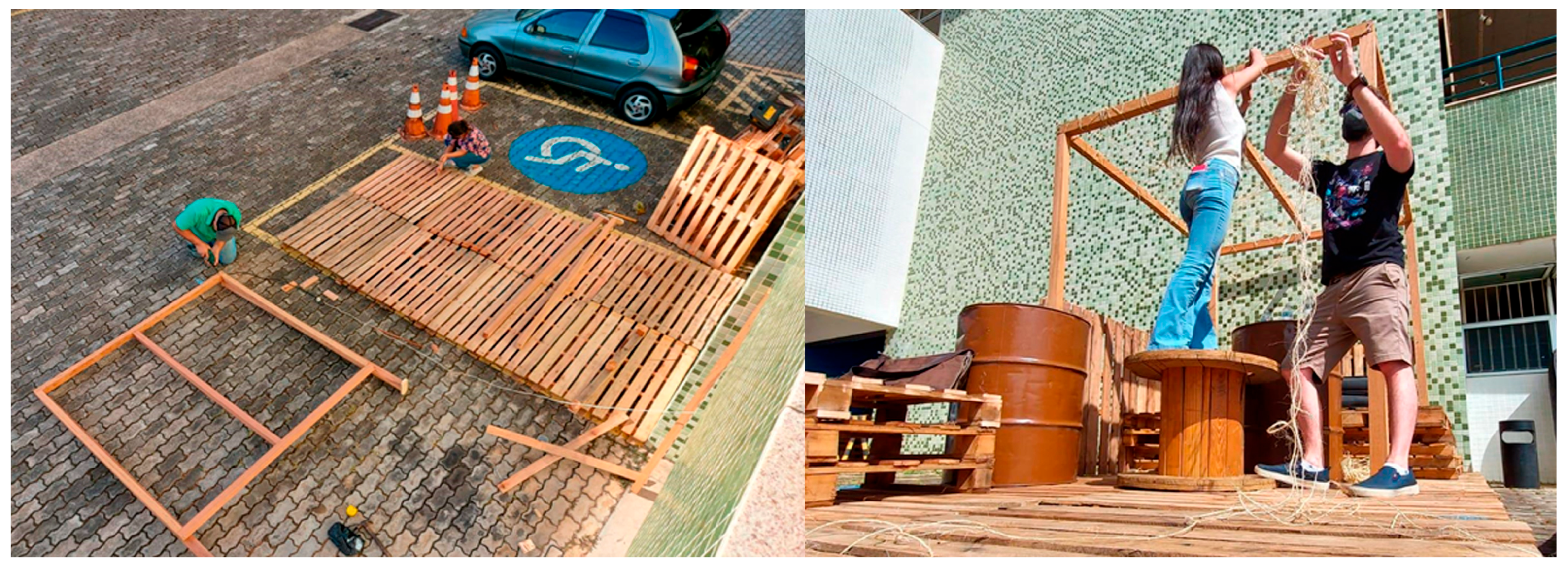
exp-EIA© methodology for assessment. The parklet’s design featured a sofa made from wooden pallets, outdoor cushions, and a wooden framework intertwined with sisal ropes. These ropes served dual purposes: supporting decorative lighting and offering users the flexibility to make modifications in the future. Volunteer students actively participated in assembling the intervention, as shown in
Figure 1.
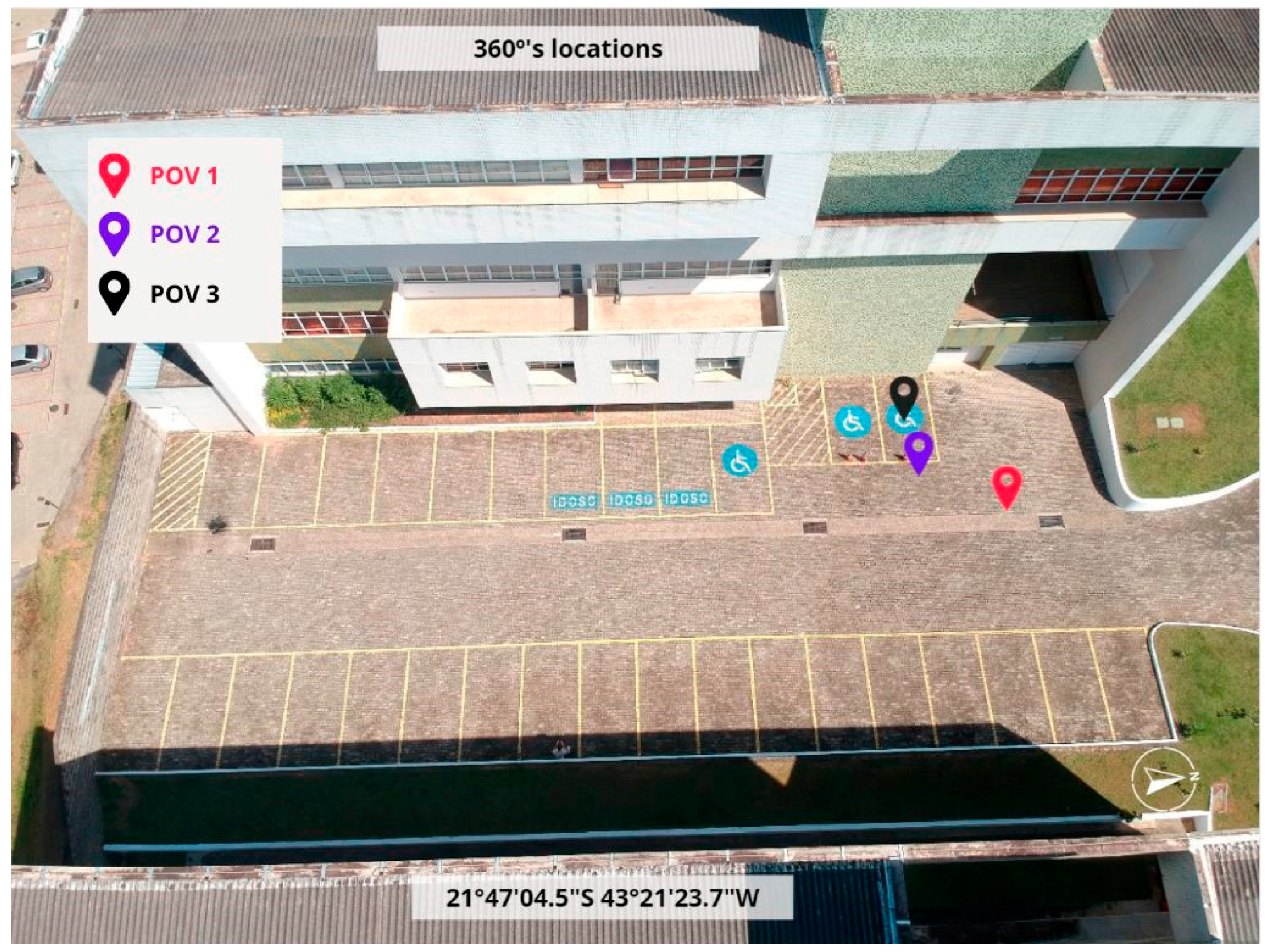
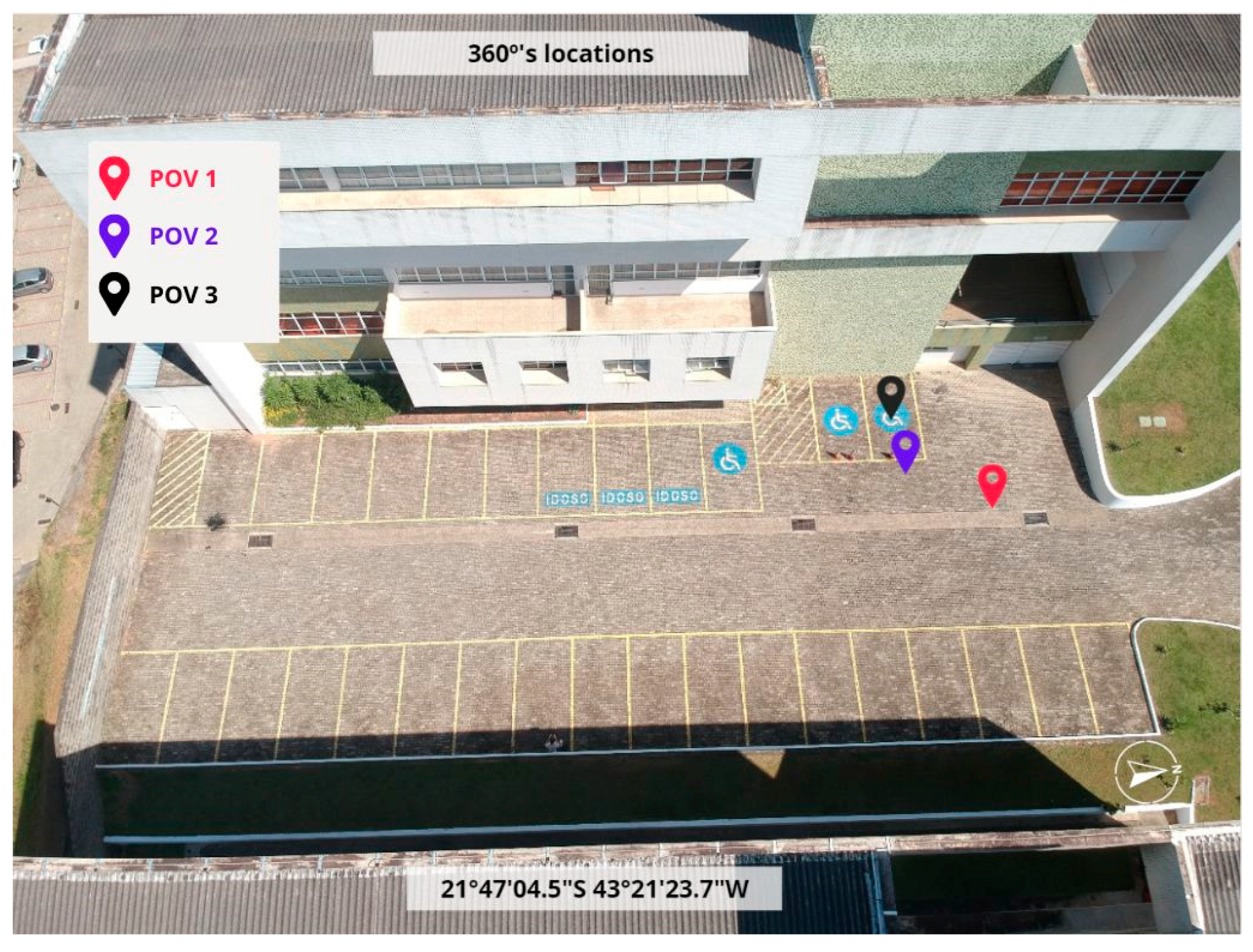
The experiment employed two methodological measures to ensure consistency and minimize biases or variables that could influence participants’ perceptions. The first measure involved establishing fixed points of view (POVs), providing all participants with predetermined perspectives in both the physical environment and the virtual simulation.
This approach ensured that every participant experienced the same initial conditions, reducing potential variations caused by differing observation points. By standardizing the viewpoints, the study facilitated a more accurate and objective comparison of participants’ perceptions.
Figure 2 illustrates the different POVs utilized in the case study.
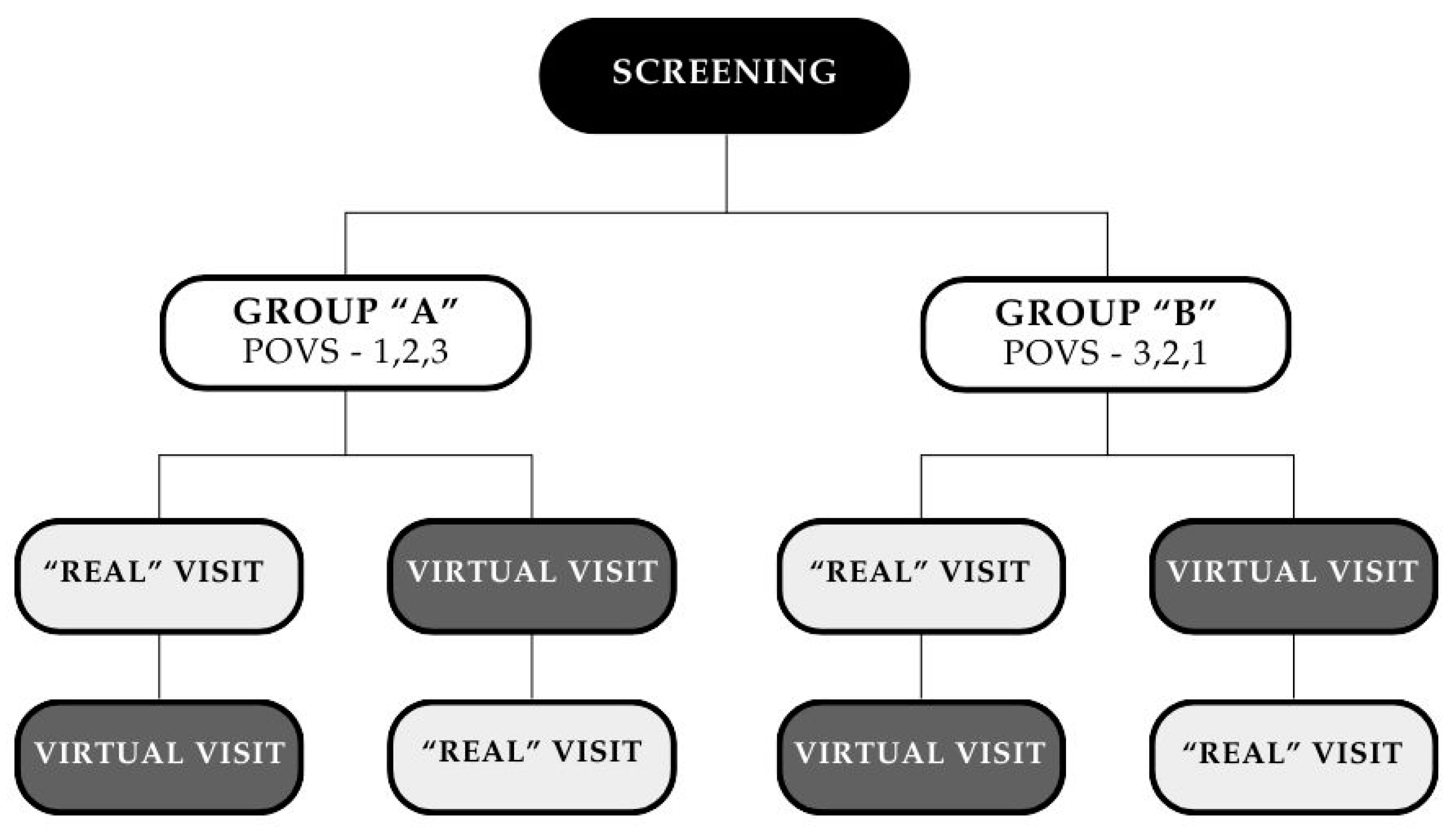
The second methodological measure implemented was a screening protocol to manage participants’ access to the designated viewpoints. This protocol ensured that participants were directed to specific observation points, preventing deviations or external interferences during their observations. By maintaining the integrity of the experimental conditions, the protocol allowed for consistent and comparable data collection.
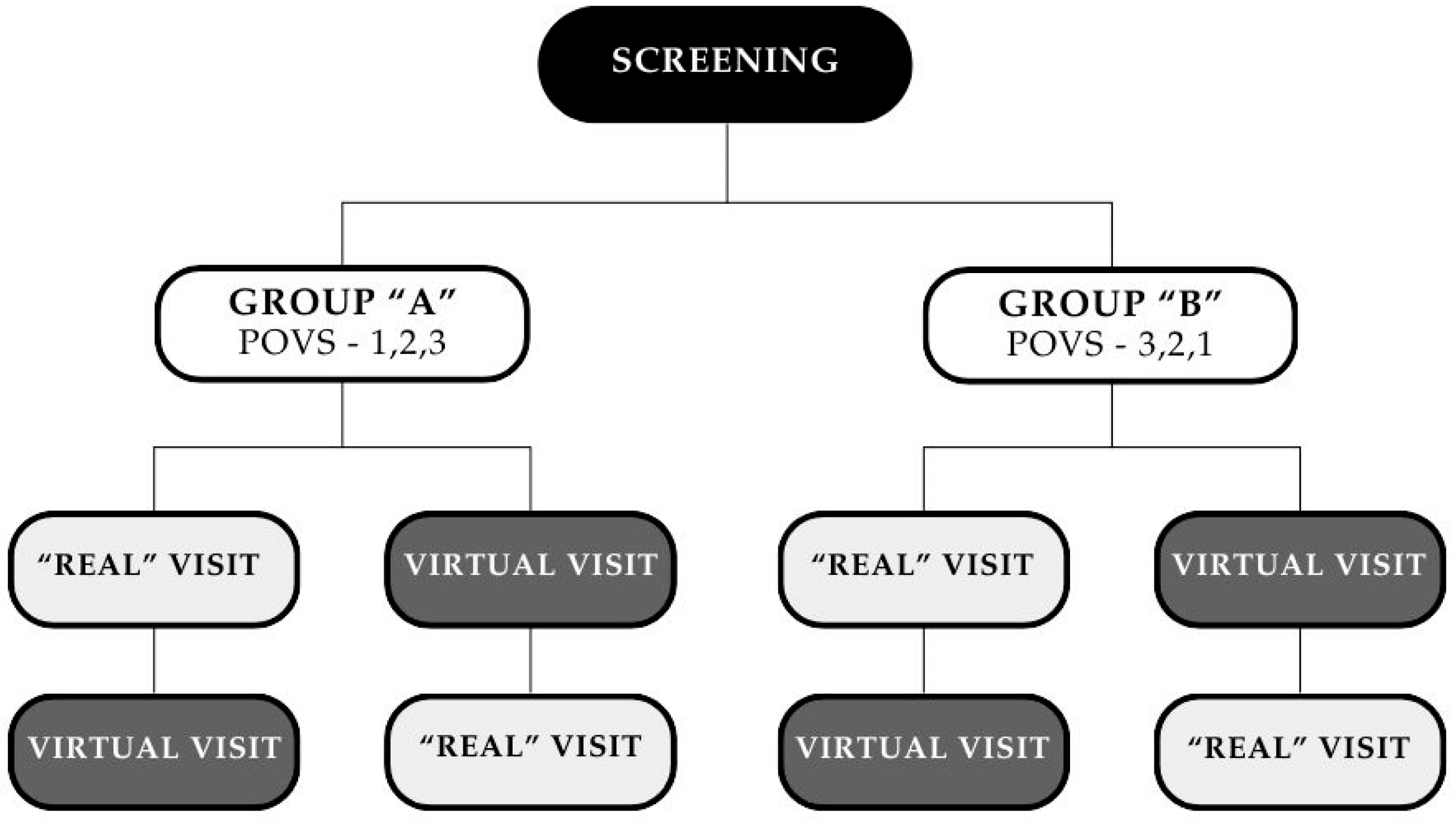
The protocol also established two groups, A and B, each following different sequences of viewpoints during the physical and virtual ’visits’. This approach preserved randomness, minimized the potential influence of one viewpoint on another, and streamlined the logistics of the experiment, particularly when multiple participants were present simultaneously. Participants were instructed to carefully observe their surroundings at each viewpoint and complete a questionnaire reflecting their emotional responses. After completing their observations, they were directed to the next designated viewpoint.
Figure 3 illustrates the screening protocol.
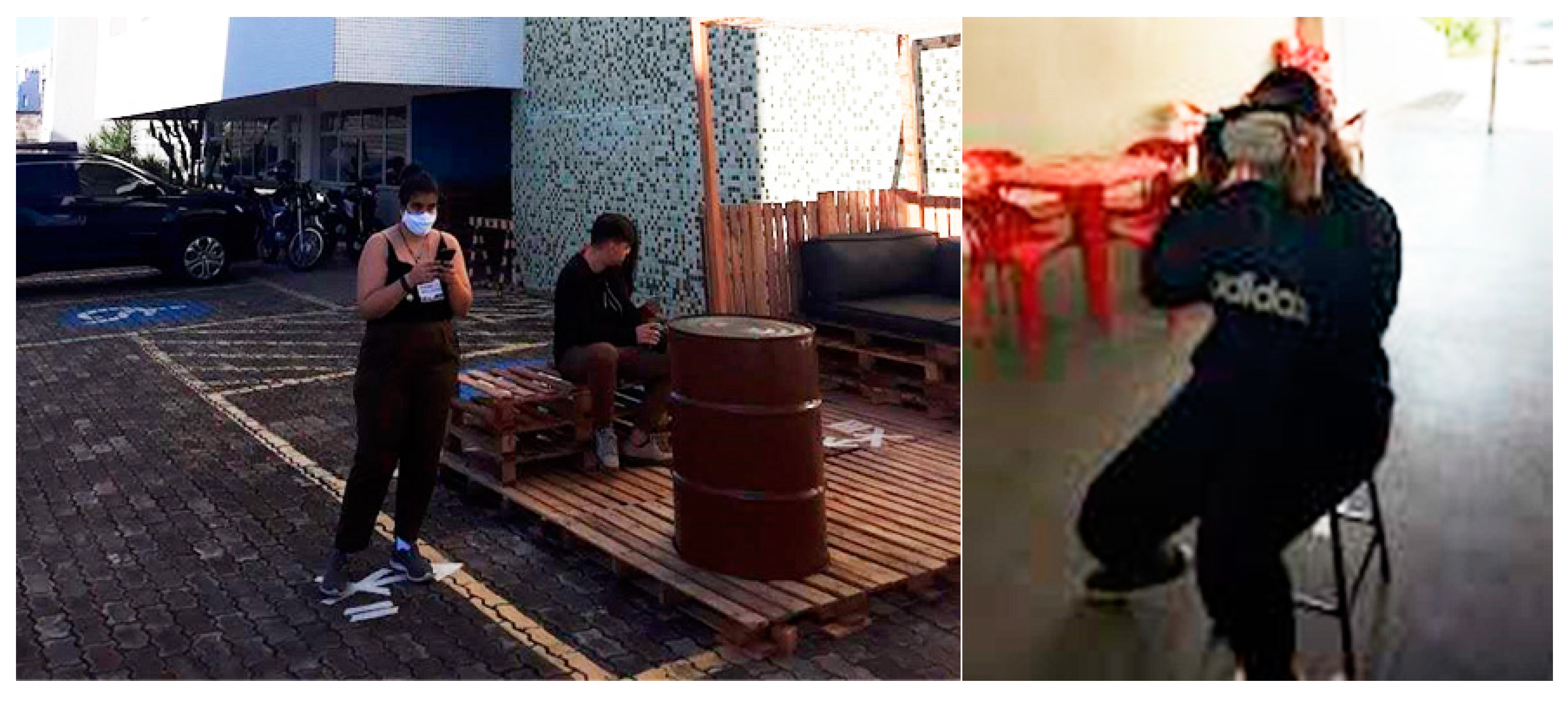
To facilitate virtual ’visits’, a VR Box was used, an affordable virtual reality headset that enables users to explore and interact with 360° content, including photos and videos, via a smartphone. This setup provided an accessible yet immersive way for participants to experience the digital recreation of the parklet. Some participants were seated due to dizziness experienced while using the headset. For safety reasons, they were instructed to remain seated while using the headset if they felt unwell. Despite this, the initial sense of the observation point remained consistent in both the real and virtual environments. Participants could not explore by walking; instead, they were limited to visual exploration in 360° from a fixed point, whether in the built environment or the 360° image. The observations were conducted simultaneously in the physical and virtual spaces to enable comparison. The average observation time at each point was approximately 30 s in both the real and virtual environments. To minimize the risk of bias, a maximum time limit of 45 s was set for each respondent at each POV. As part of the experimental process outlined above, participants were randomly assigned to a group starting with the physical or virtual environment, followed by the second type of environment, following the structured sequence of viewpoints established by the screening protocol. This approach ensured consistency in their experiences across both modes while minimizing external interferences.
Figure 4 illustrates the two distinct modes of visit employed in the case study: real and virtual.
3.2. Questionnaire Design and Data Collection
The exp-EIA© questionnaire was employed to gather data on participants’ reactions to the intervention. Comparing these results with data gathered on-site using the same questionnaire facilitated the assessment of the extent to which the VR experience accurately represented the physical intervention. Designed to allow for comparative analysis, the questionnaire administered to 65 participants was repeated after each viewpoint observation; after the data cleaning process, the valid collected responses were 185 for the Real Environment condition (64 participants), and 181 for the Virtual Environment condition (63 participants). The questionnaire was divided into two sections.
The first section focused on the user profiles, collecting demographic information such as age, gender, city of residence, ZIP code, nationality, ethnicity, and education level. The second section, in turn, focused on evaluating users’ spatial perception and was subdivided into three categories. The aim was to gather insights into emotional and cognitive reactions to the intervention, alongside perceived potential uses for the specific location.
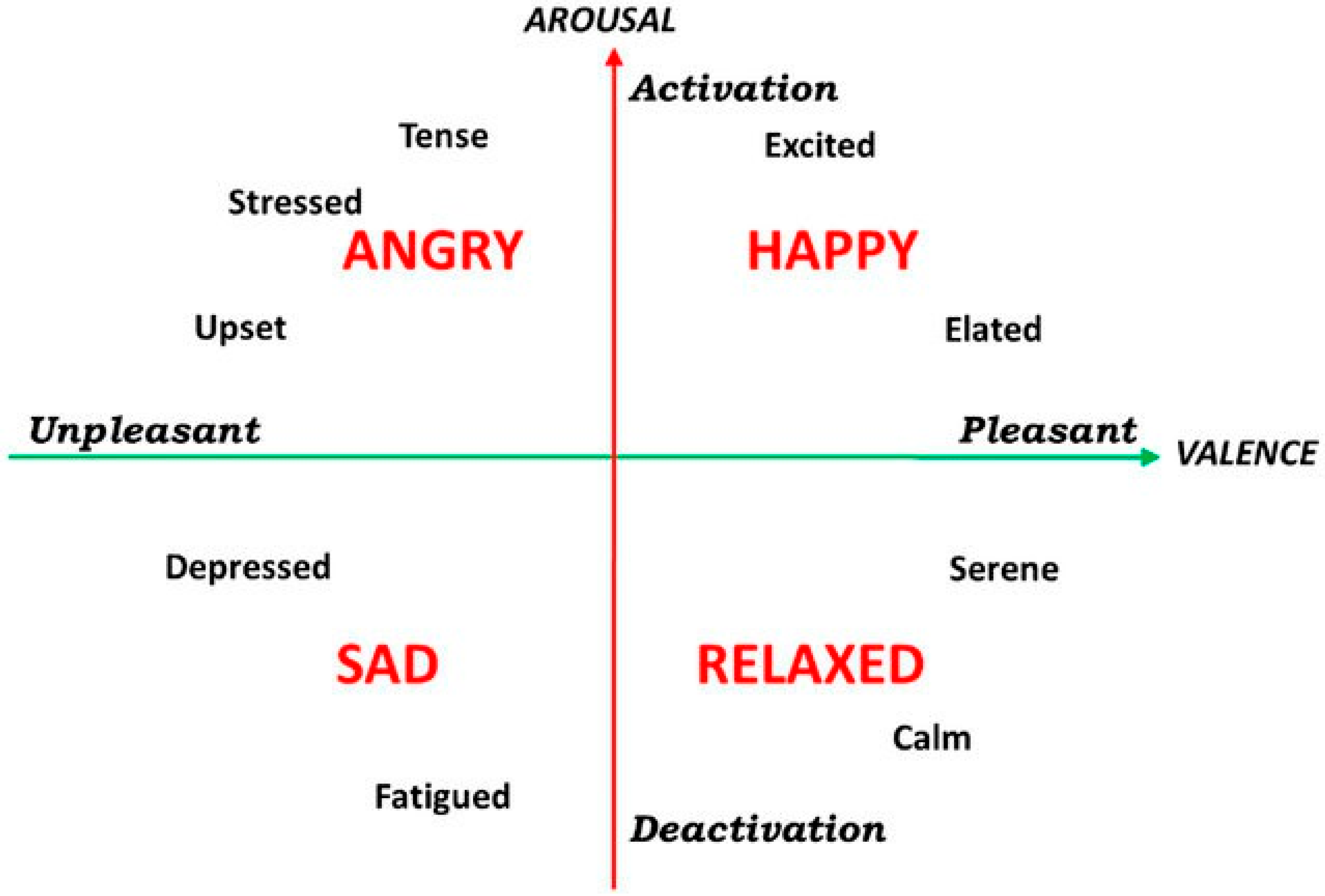
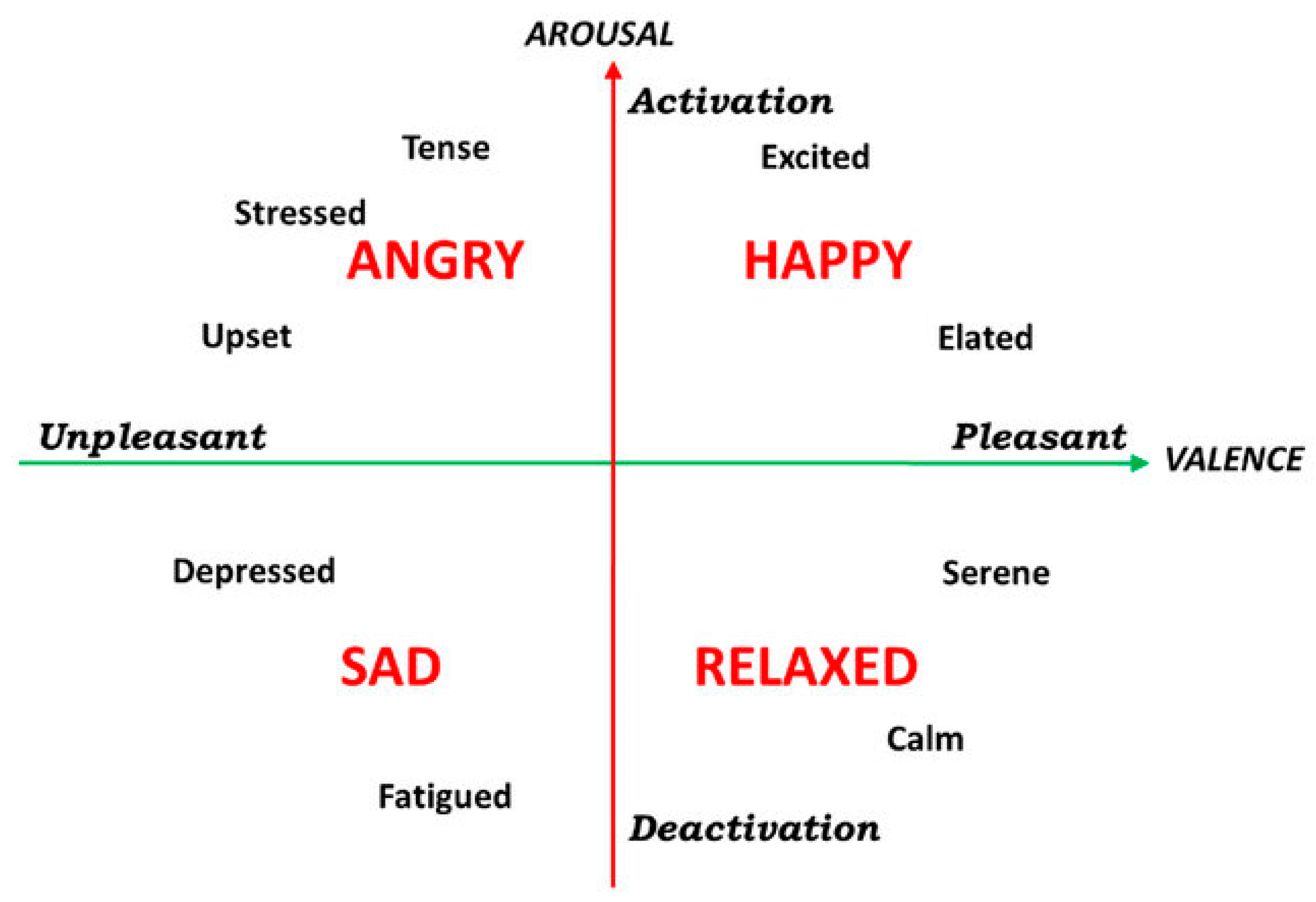
Figure 5.
Russell’s circumplex model of affect [
36] features a horizontal axis representing valence (pleasure) and a vertical axis representing arousal. The illustration is referenced from Valenza et al. [
38].
Figure 5.
Russell’s circumplex model of affect [
36] features a horizontal axis representing valence (pleasure) and a vertical axis representing arousal. The illustration is referenced from Valenza et al. [
38].
4. Results
The user demographics results showed that over two-thirds of the participants were aged 18 to 24, nearly 77% had completed only high school, and the majority were students enrolled in the Architecture and Urbanism program. These findings align with our expectations, as the experiment was conducted during a specialized academic event at a higher education institution.
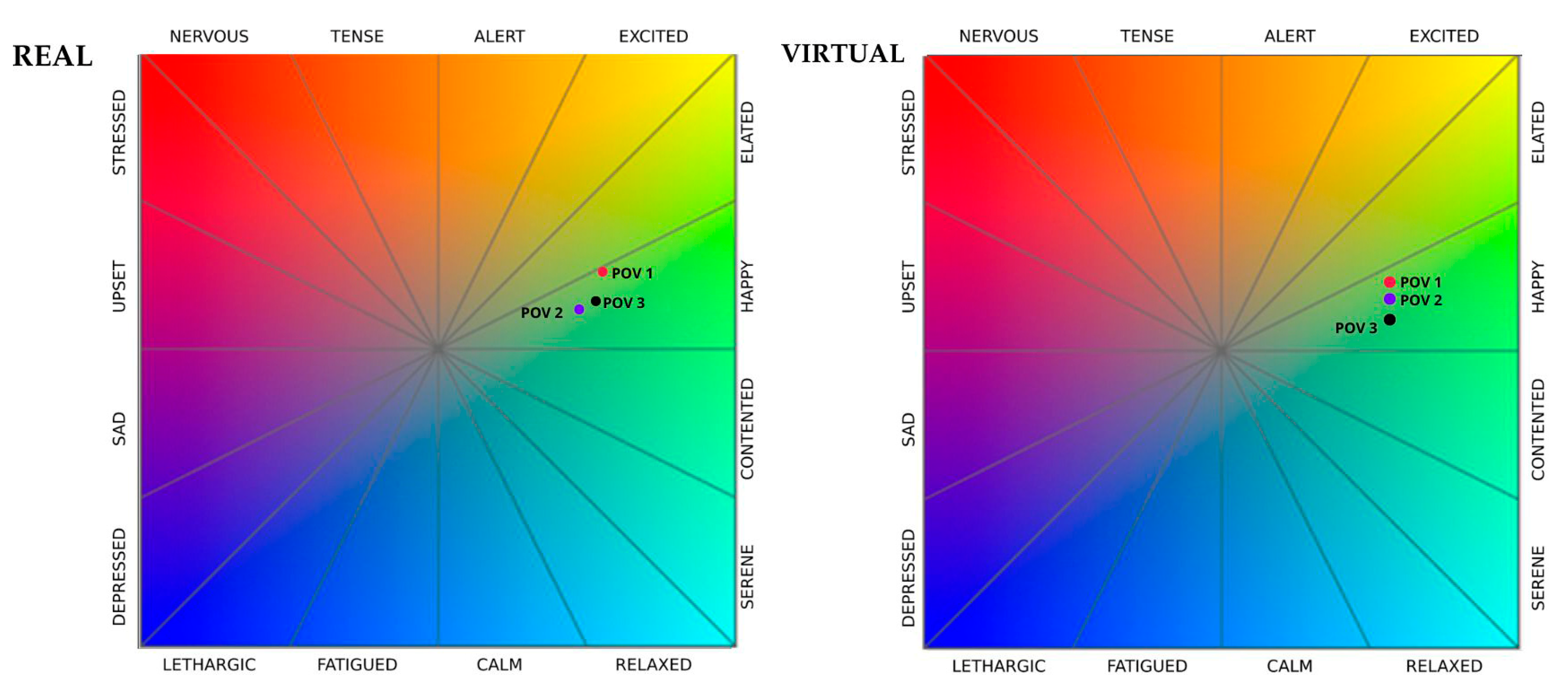
Participants’ responses regarding emotional reaction revealed a general trend of pleasant and slightly activating reactions to the intervention. Notably, in both the real and virtual environments—and across all addressed points of view—there was a clear predominance of the Happiness spectrum on Russell’s circumplex model. The average results also aligned with this spectrum, indicating that (i) the intervention was positively perceived, and (ii) the outcomes were remarkably consistent between the real and virtual scenarios.
Figure 6 illustrates the participants’ emotional perceptions in Russell’s circumplex model for both environments and all three points of view.
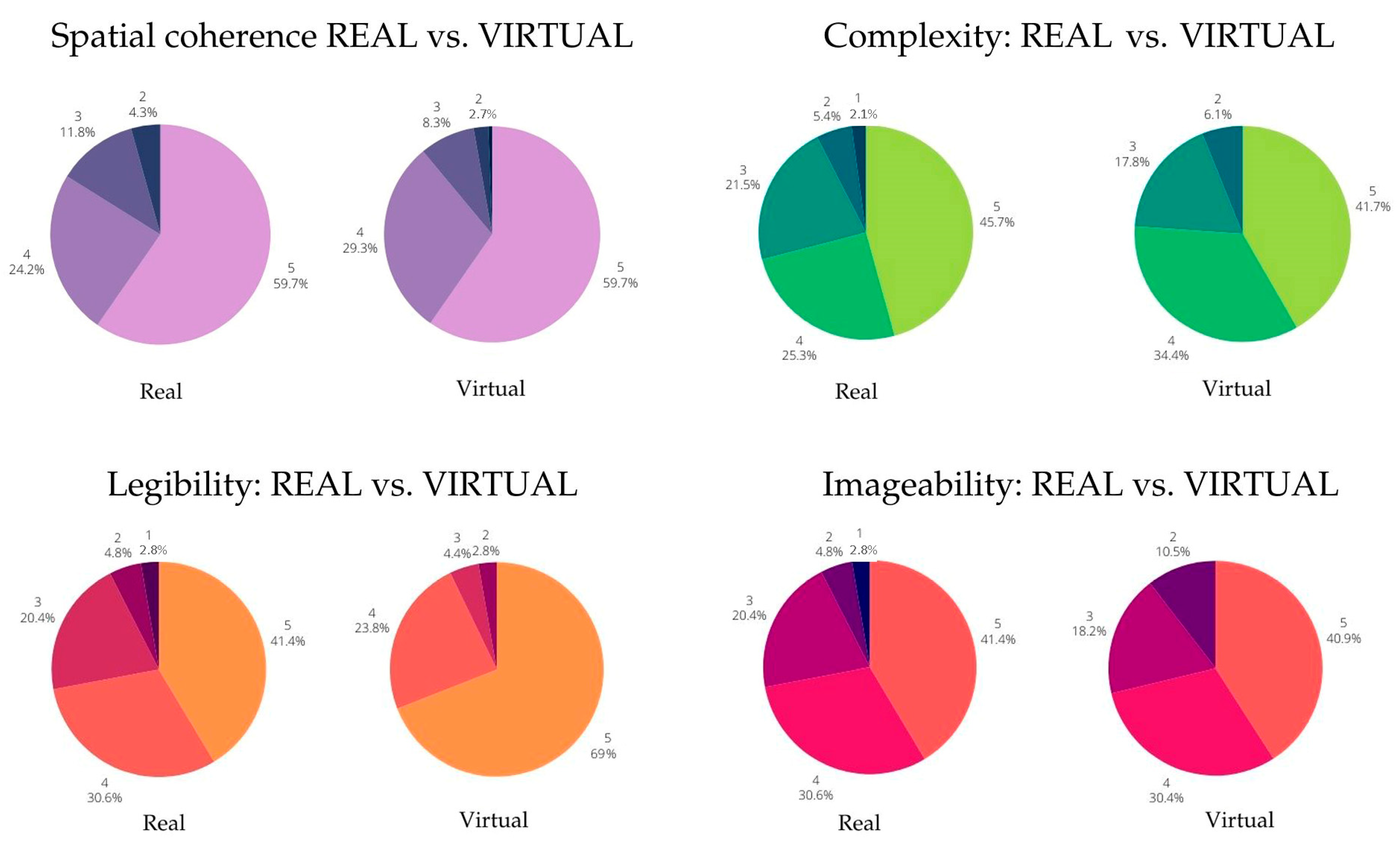
The environmental preference results demonstrate positive outcomes across all the evaluated aspects, with minimal variations between the two settings and among the three POVs. The average values ranged from 73.1% to 88.3%, indicating substantial appreciation of the environment. Values for Ease of Understanding (average of coherence and legibility) are consistently higher than those for Nudging Exploration (average of complexity and mystery), a pattern stable across all POVs in both real and virtual conditions. This suggests participants found the environment easily comprehensible, facilitating orientation and interaction with the surroundings. Although less pronounced, the environment also stimulated participants’ curiosity to explore further. Reactions were similar across all POVs, indicating the experience remains consistent regardless of viewpoint. Values for each POV are closely matched between real and virtual conditions, with virtual evaluations generally yielding higher values, except for Nudging Exploration at POV 2.
In summary, the findings highlight a high level of preference across all aspects, with the virtual environment showing slightly better performance in most of the POVs and preference factors. Both environments were well-received for their intelligibility and ability to foster an intriguing atmosphere.
Figure 7 provides a clear visual representation of these findings.
The results regarding perceived uses indicate that participants identified various activities they deemed most suitable for the parklet based on its features.
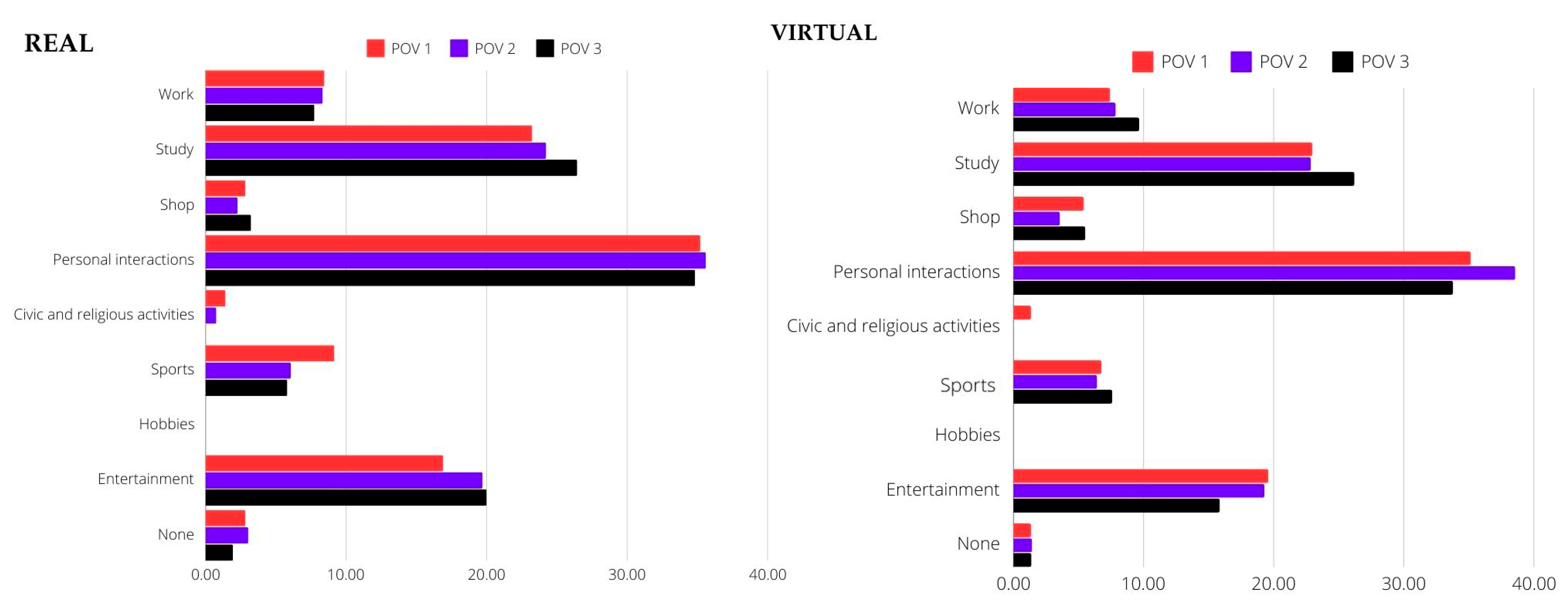
Figure 8 illustrates the frequency of each activity for both real and virtual environments, evaluated from the three adopted POVs. In both the real and virtual spaces, “Personal interactions” emerged as the most frequently identified activity across all three POVs, highlighting the space’s social and interactive potential. “Study” was the second most commonly cited activity, reflecting the participants’ perception of the environment as conducive to focused, academic, or work-related tasks.
For entertainment purposes, both real and virtual spaces received moderate mentions, suggesting the space provided opportunities for leisure activities but was not exclusively perceived as a recreational environment. Other activities, such as “Hobbies”, “Sports”, and “Civic and religious activities”, were less frequently mentioned, indicating they were not as strongly associated with the parklet’s characteristics.
“Work” also received considerable mentions, although its frequency was generally lower than for personal interactions and study. Interestingly, responses for “Shopping” and “None” were minimal, underscoring that the parklet’s features did not align with commercial uses or a lack of purpose.
Overall, the results emphasize that participants perceived the space as highly versa- tile, favoring activities centered around interaction, learning, and leisure. The similarity in responses between the real and virtual settings suggests a consistent perception of suitability, regardless of the environment’s format.
Figure 8 visually supports these findings by showcasing the distribution of perceived uses across both environments and all three POVs.
Results Analysis
Our initial findings highlight both similarities and notable differences in participants’ reactions and preferences. Emotional results indicate a consistent trend across both settings, with a predominance of happiness according to Russell’s circumplex model. This consistency suggests that the intervention successfully created spaces that fostered positive emotional responses, regardless of the environment format. Such uniformity underscores the capability of virtual environments to replicate the emotional impact of real spaces effectively.
In terms of environmental preference, positive results were reported across coherence, complexity, legibility, and mystery in both environments, indicating that the participants found the spaces harmonious, engaging, and worth exploring in both formats.
The perceived uses of the parklet further emphasize the similarities and distinctions between the two environments. In both settings, “Personal interactions” emerged as the most frequently identified activity, followed by “Study”, reflecting the parklet’s potential for social and academic functions. However, the virtual environment demonstrated a slightly higher preference for both activities, with 35–40 participants favoring social interaction (compared to 30–35 in the real environment) and 25–30 favoring studying (compared to 20–25 in the real setting). This trend suggests that the virtual environment may amplify the space’s perceived suitability for these activities, potentially due to the clarity and accessibility of the digital design.
The results also highlight moderate mentions of leisure activities such as entertainment, while activities like hobbies, sports, and civic or religious uses were less frequently identified. Shopping and “None” were rarely selected, indicating that participants did not perceive the parklet as suitable for commercial purposes or lacking in functionality. These findings affirm the parklet’s versatility as a space for interaction, learning, and leisure, while also showing that its design does not inherently support activities requiring specialized facilities.
Overall, the findings suggest that real and virtual environments align closely in fostering positive emotional responses and supporting versatile uses, with the virtual environment showing partial discrepancies on some variables. These results highlight the potential of combining both approaches to refine urban design, leveraging the strengths of virtual simulations for iterative testing while validating real-world usability through physical implementation.
5. Discussion
5.1. Virtual Reality as a Tool for Tactical Urbanism
The findings of this study provide valuable insights into the application of VR as a tool to support the understanding and design of TU projects. By enabling immersive and interactive simulations, VR offers a means to explore urban spaces in a controlled, cost-effective manner, aligning with the perspectives of Rodrigues and Porto [
21], who emphasize its capacity to engage users meaningfully with proposed interventions. The study demonstrated that VR facilitates the assessment of key spatial attributes, such as coherence, complexity, legibility, and mystery, while also capturing participants’ emotional responses and perceived uses of the space.
Participants’ consistent emotional responses across the real and virtual environments, as reflected in the predominance of the happiness spectrum in Russell’s circumplex model, highlight the efficacy of the intervention in fostering positive emotional experiences. These results underscore VR’s potential to replicate the emotional engagement typically associated with physical spaces.
5.2. Balancing Real and Virtual Approaches
A key takeaway from this study is the complementarity of real and virtual methodologies in urban planning. While real-world implementations allow participants to engage with the full sensory and contextual elements of space, VR offers unique advantages such as flexibility, scalability, and the ability to iterate designs before physical realization—even tactical urbanism ones. For example, the parklet’s perceived uses—social interaction and studying—were similarly identified in both settings, with slightly higher preferences in the virtual environment. This suggests that VR can effectively simulate the functional and emotional dimensions of urban spaces, enabling urban planners to refine designs in a low-risk, high-engagement digital context.
The combination of these approaches offers an enhanced framework for participatory urban planning. VR can be used to prototype and refine designs, while real-world testing validates usability and contextual factors. This iterative process not only saves time and resources but also ensures that interventions address both the practical and emotional needs of communities.
5.3. Tactical Urbanism
Tactical urbanism plays a critical role in revitalizing public spaces through quick, low-cost interventions that raise awareness, promote civic participation, and address community needs. This study’s findings reinforce the relevance of this approach, as participants reported high levels of acceptance and satisfaction with the intervention, perceiving the parklet as conducive to social interaction and leisure. The dominance of personal interactions and studying as preferred activities aligns with the intervention’s goal of creating spaces that foster meaningful human connections and support productive uses.
This alignment echoes the perspectives of Adler and Tanner [
5], who emphasize the importance of understanding spatial perception as a complex, subjective process shaped by sensory input, emotions, and past experiences. Designing spaces that encourage social engagement and emotional connection is essential for the success of TU projects, as demonstrated by the consistent positive responses in this study.
5.4. Limitations of VR in Urban Planning
Despite its advantages, VR has limitations that must be acknowledged. While it offers immersive and realistic experiences, VR cannot fully replicate the richness of real-world environments, including sensory details such as natural light, sound, and tactile elements. Additionally, VR simulations rely heavily on the user’s perception and engagement, which can vary based on their familiarity with digital tools. These limitations highlight the importance of combining VR with real-world methodologies to achieve a balanced and comprehensive understanding of urban spaces.
Moreover, accessibility to VR technologies remains a challenge, particularly in community-driven urban projects where technical expertise and resources may be limited. Addressing these barriers will be crucial for the widespread adoption of VR as a tool for urban planning.
5.5. Future Directions and Further Developments
This study highlights several promising avenues for future research aimed at advancing the integration of VR into TU practices. One key area of exploration is the impact of VR immersion and interactivity on users’ spatial perception. Understanding how different levels of immersion affect user engagement, navigation, and emotional responses can provide valuable insights into optimizing VR simulations for urban planning purposes.
Such research could also assess the role of interactive elements, such as dynamic models or user-controlled navigation, in enhancing the perceived realism and functionality of virtual environments.
Another important focus is the comparison of behavioral outcomes between TU interventions in real and virtual environments. While this study has shown consistent emotional responses and preferences for social interaction and leisure activities across both formats, further studies could investigate how these preferences translate into long-term behaviors and community engagement. For example, examining whether virtual experiences influence users’ real-world interactions with urban spaces or shape their participation in civic activities could help determine the broader impact of VR-supported TU interventions. A key aspect will include performing inferential statistical tests to compare different locations, pre- and post-intervention evaluations, alternative design solutions, and real-virtual environments, in order to emphasize statistically significant outcomes.
Additionally, future research should investigate the integration of VR into participatory urban planning processes. This includes exploring how VR tools can be made more accessible to diverse stakeholders, such as community members, planners, and policymakers, regardless of technical expertise or resource availability. Identifying best practices for using VR as a platform for collaborative design and decision-making could significantly enhance its effectiveness in creating public spaces that meet community needs and aspirations.
By addressing these areas, urban planners can refine the use of VR to complement tactical urbanism interventions, unlocking its potential to create more inclusive, engaging, and functional public spaces. The integration of VR into urban planning not only offers a cost-effective way to prototype and refine designs but also enables stakeholders to visualize and interact with proposed interventions before physical implementation. This approach ensures that urban spaces are better aligned with the expectations and preferences of their users.
Ultimately, VR represents a useful tool for urban design and planning. However, challenges such as simplifying complex environments, overcoming technical barriers, and ensuring equity in access remain critical considerations. As research progresses, integrating VR with real-world methodologies—e.g., TU—will provide a robust framework for developing innovative, responsive, and impactful urban interventions.
6. Conclusions
This study examined the application of VR as a tool to enhance the understanding of TU projects, focusing on its influence on spatial perception, social interaction, and the use of urban public spaces. By integrating concepts of spatial perception, tactical urbanism, and virtual reality, the research provided a comprehensive framework to analyze how VR can support and improve the design and evaluation of urban interventions.
The literature review confirmed several critical insights. First, as an immersive and interactive technology, VR provides a realistic platform to explore and experience urban spaces, enhancing the visualization and understanding of design projects. This capability introduces new dimensions for spatial analysis, making VR a valuable complement or, in some cases, an alternative to traditional TU approaches. Second, spatial perception—shaped by sensory input, emotions, past experiences, and memory—emerges as a complex but essential factor in urban design and VR implementation. Lastly, tactical urbanism’s emphasis on rapid, low-cost interventions and citizen involvement aligns seamlessly with the strengths of VR, empowering stakeholders to engage with and refine designs before physical implementation.
The results of this study strongly support the research premise, demonstrating that VR can be used to study the perception, usability, and social dynamics of urban spaces. Participants consistently reported positive experiences in both real and virtual environments, with a particular emphasis on the importance of social interactions. Socializing and studying were identified as the most common uses of the spaces, suggesting their perceived suitability for gatherings and productive activities. These findings validate the role of VR to assess social connections and leisure, offering critical insights for future urban design projects aiming to enhance public engagement and community well-being.
From the theoretical framework and empirical results, it can be concluded that VR is a powerful tool for tactical urbanism, providing a means to visualize, analyze, and refine urban projects prior to implementation. By creating immersive and interactive environments, VR enables users to explore spaces in detail, enhancing their understanding of an intervention’s potential impacts. This capacity to simulate and engage with spaces fosters more informed decision-making, reducing risks associated with design misalignment and increasing the likelihood of successful interventions.
However, it is important to recognize that VR complements rather than replaces traditional urban planning methods. While it offers a richer and more detailed understanding of space, the inclusion of real-world testing and community engagement remains vital. The successful integration of VR into tactical urbanism requires active citizen participation, ensuring that diverse voices and perspectives are considered throughout the planning process. Future research should continue to explore how VR can further enhance TU interventions, refine its methodologies, and assess its long-term impacts on user behavior and urban development. By combining VR’s immersive potential with the participatory ethos of tactical urbanism, urban planners can create more inclusive, functional, and socially vibrant public spaces.




 ,
,