

Clinical Applications of Tissue-Free Molecular Residual Disease (MRD) in Colorectal Cancer—Real-World Utilization and Case Series in Asian and Middle Eastern Patients
 ,
,
Abstract
1. Introduction
2. Methods
2.1. Plasma Sample Analysis Methods
2.2. Patient Cohort
2.3. Data Extraction and Statistical Analysis
3. Results
3.1. Demographics
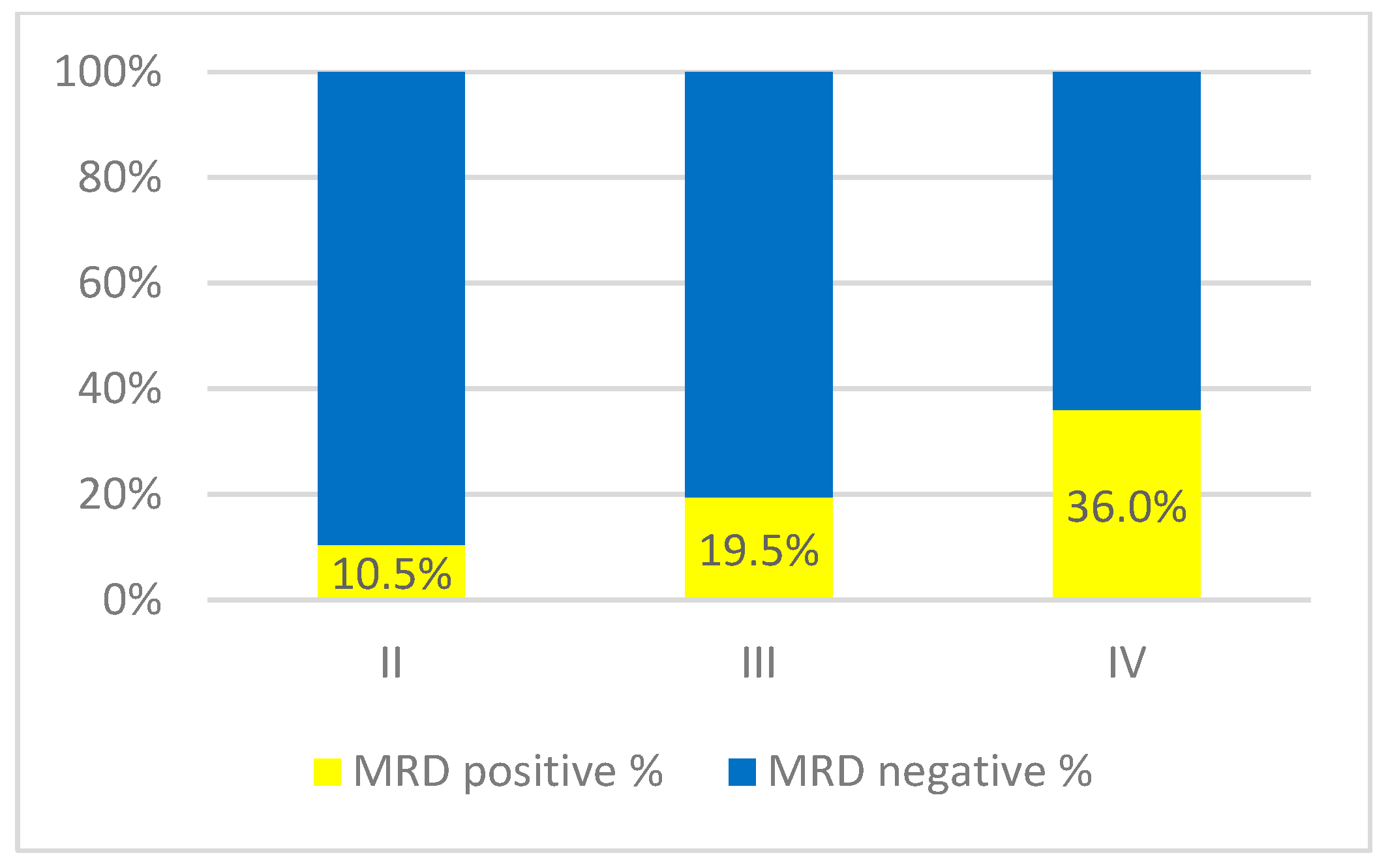
3.2. Test Utilization and ctDNA Positivity by Cancer Stage
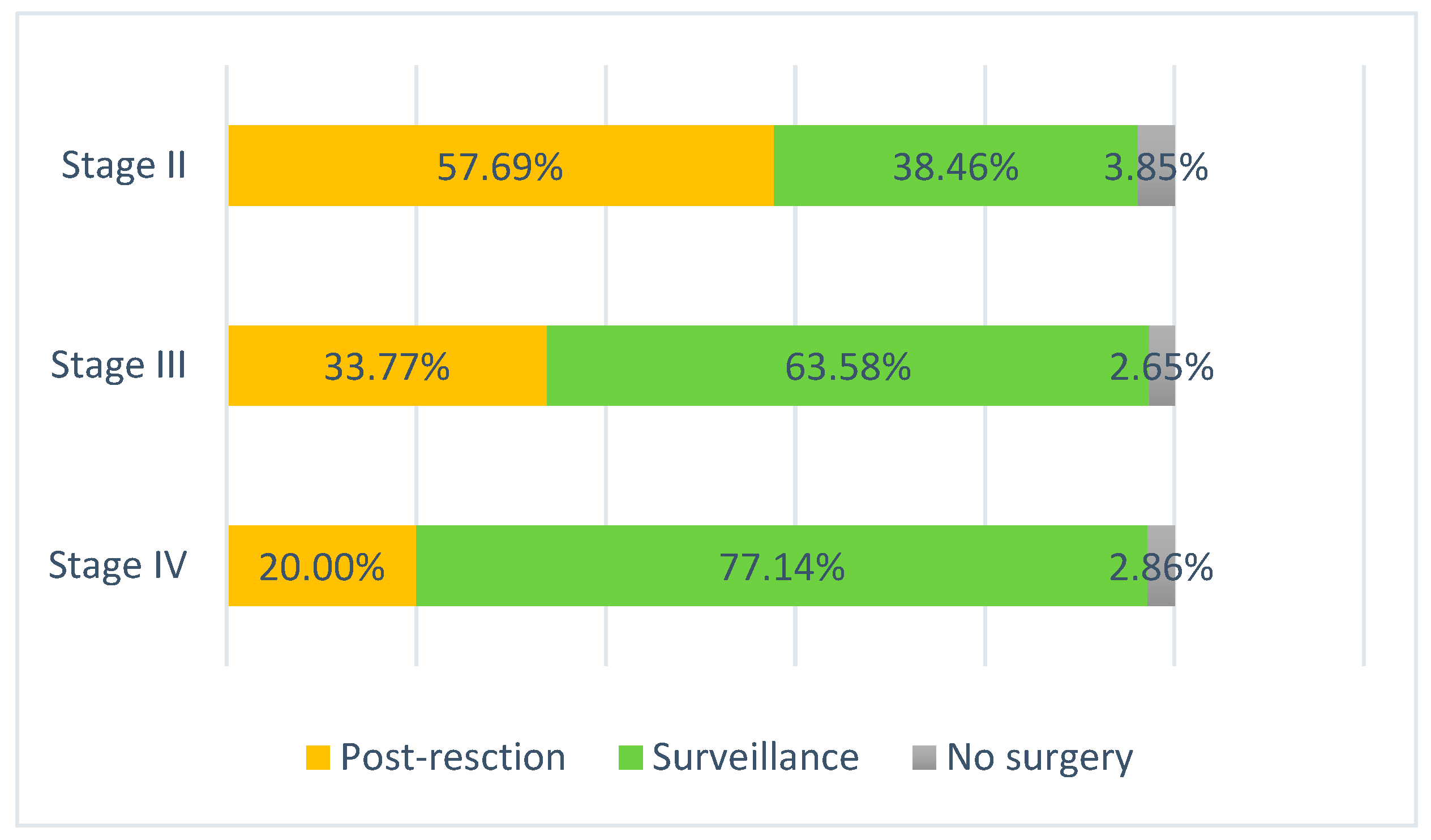
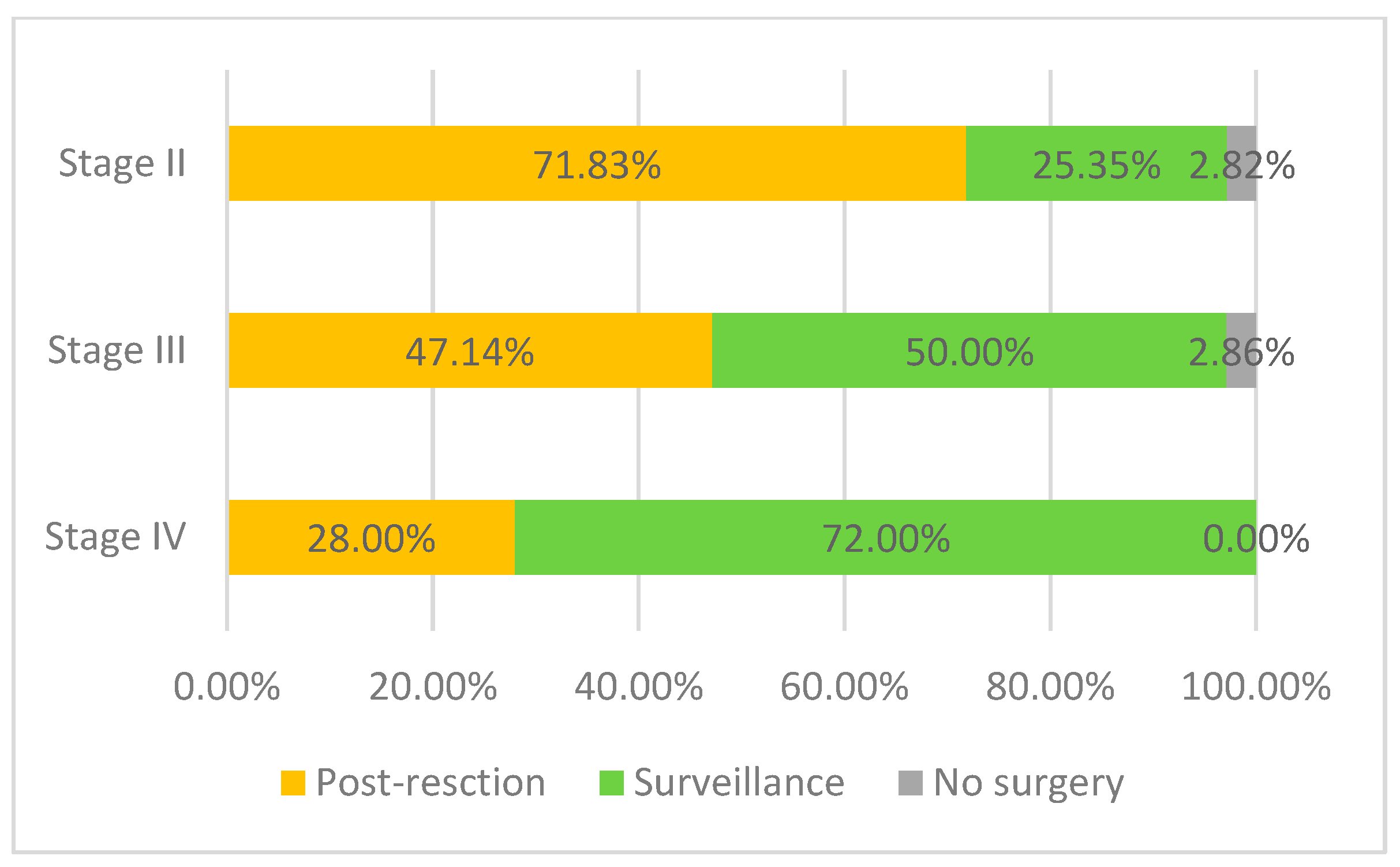
3.3. Stratification of MRD Test Order Timing by Cancer Stage
3.4. Timing of the First MRD Test Order by Cancer Stage
3.5. Median Timing of the MRD Test Order by Cancer Stage
4. Case Reports
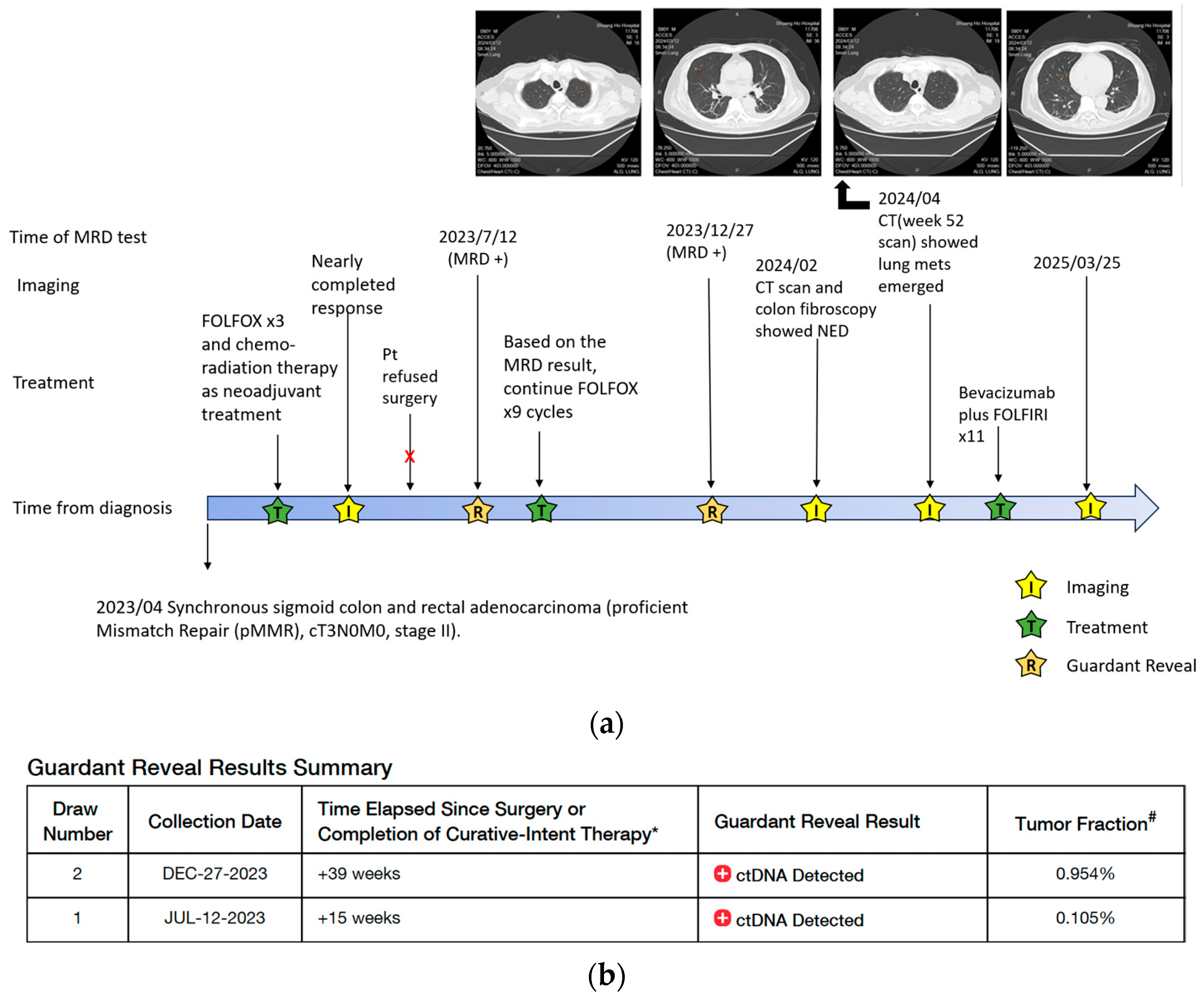
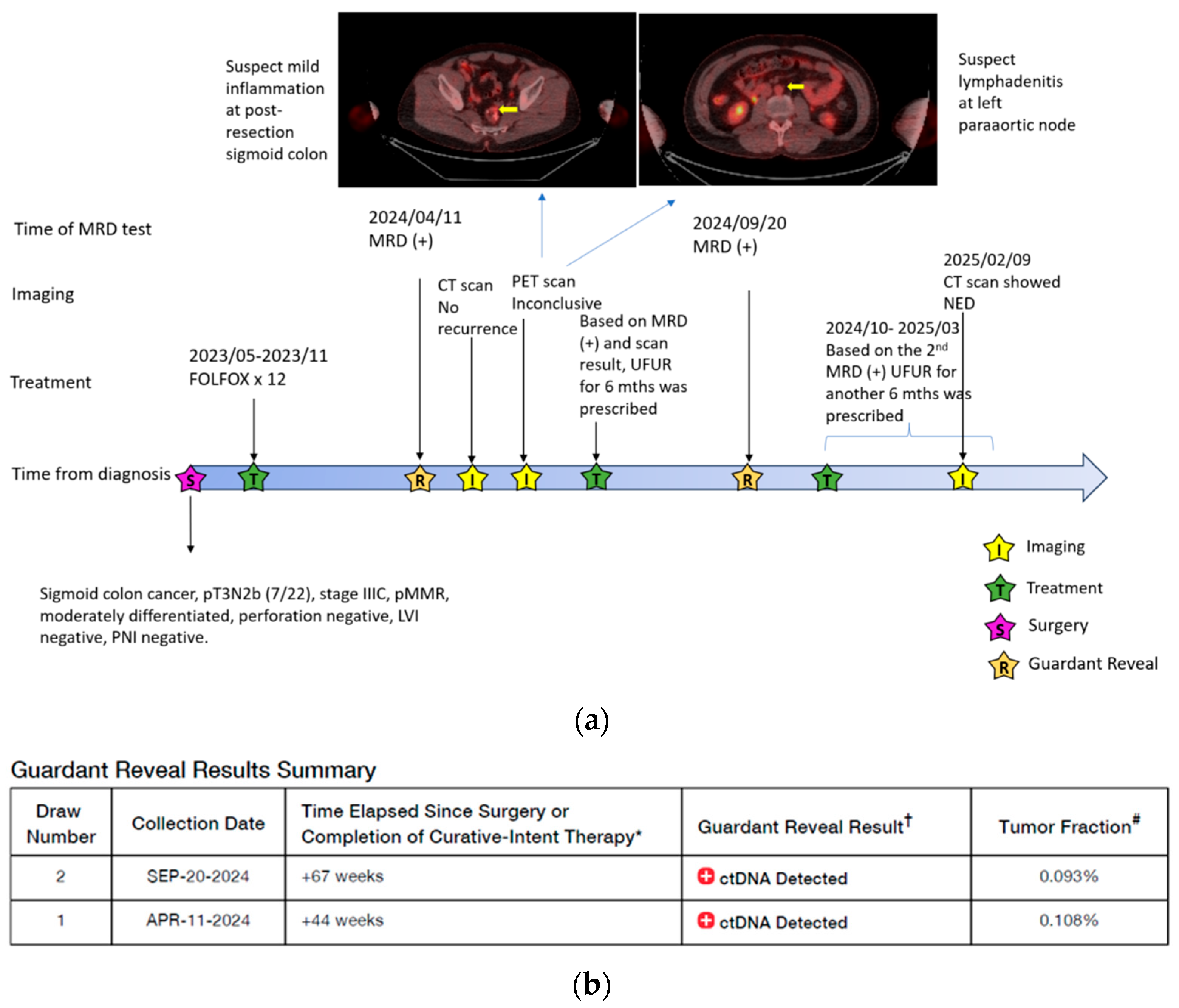
4.1. Case 1: Persistent MRD Positivity Led to Early Detection of the Recurrence
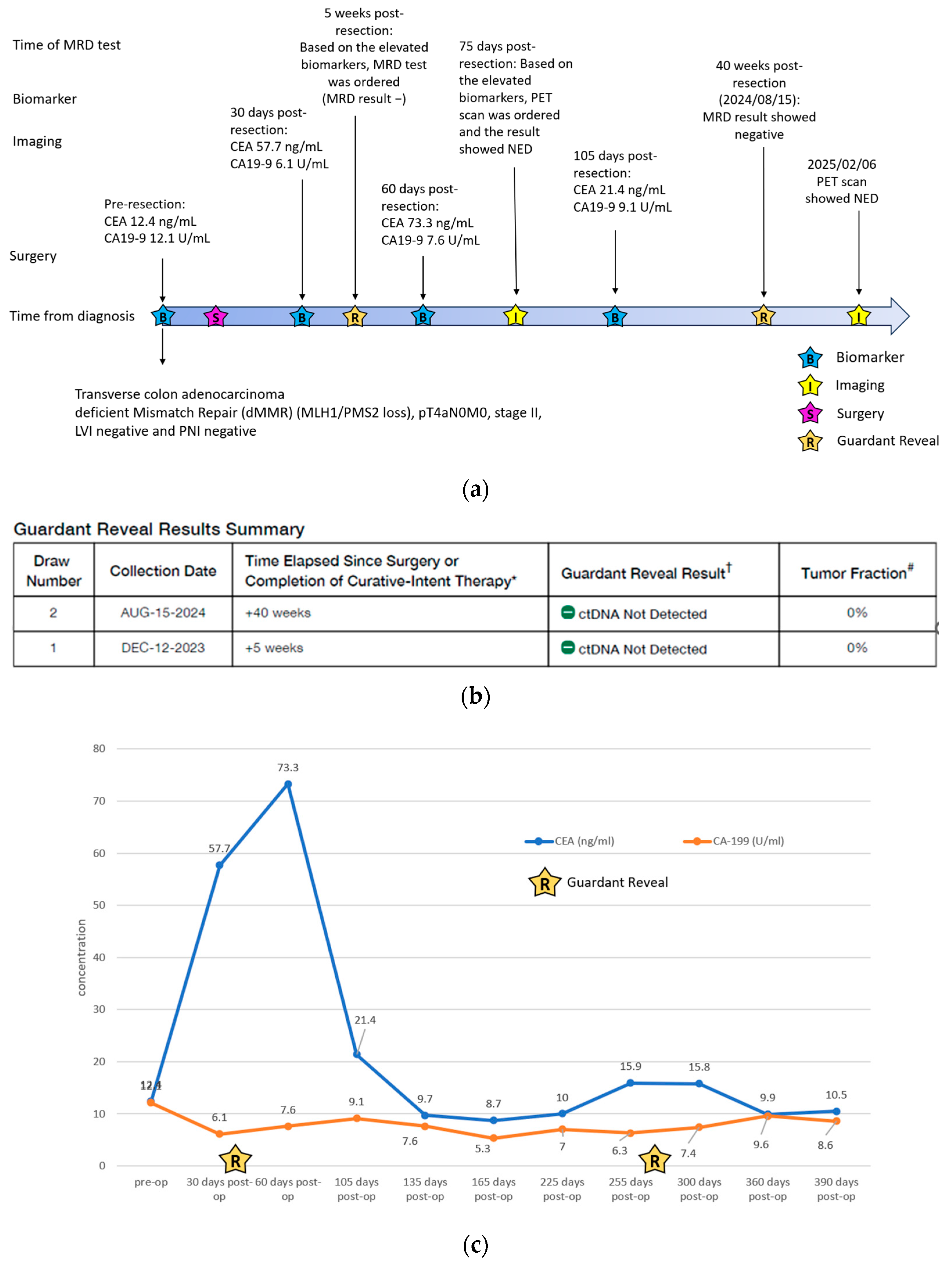
4.2. Case 2: Post-Surgery ctDNA Is More Specific than CEA
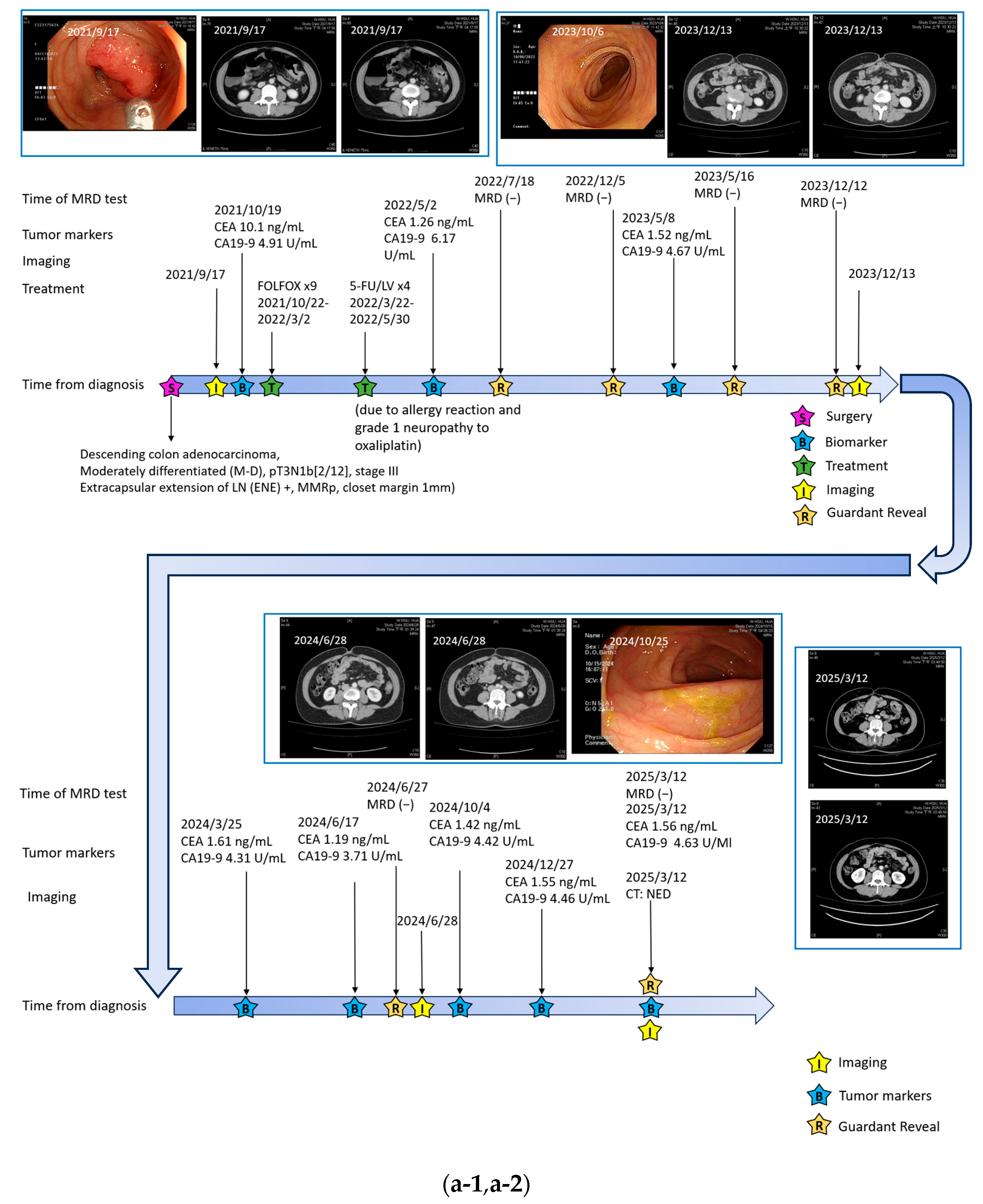
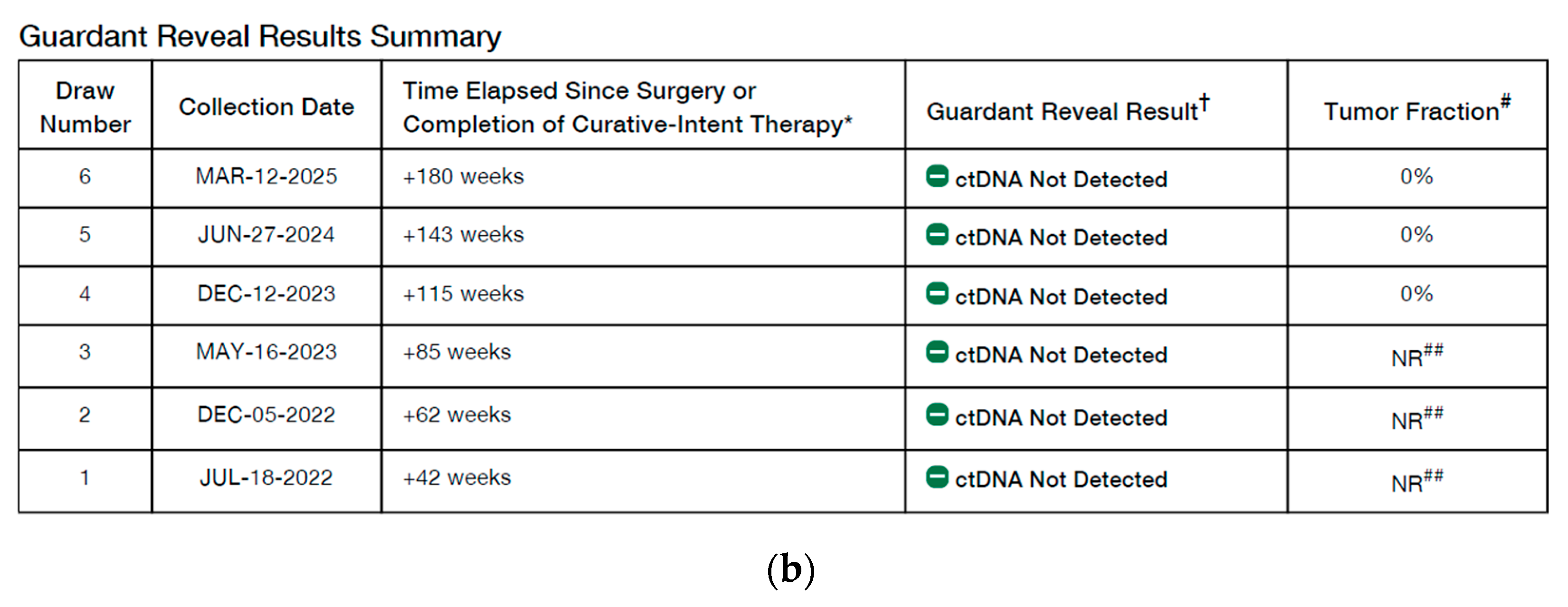
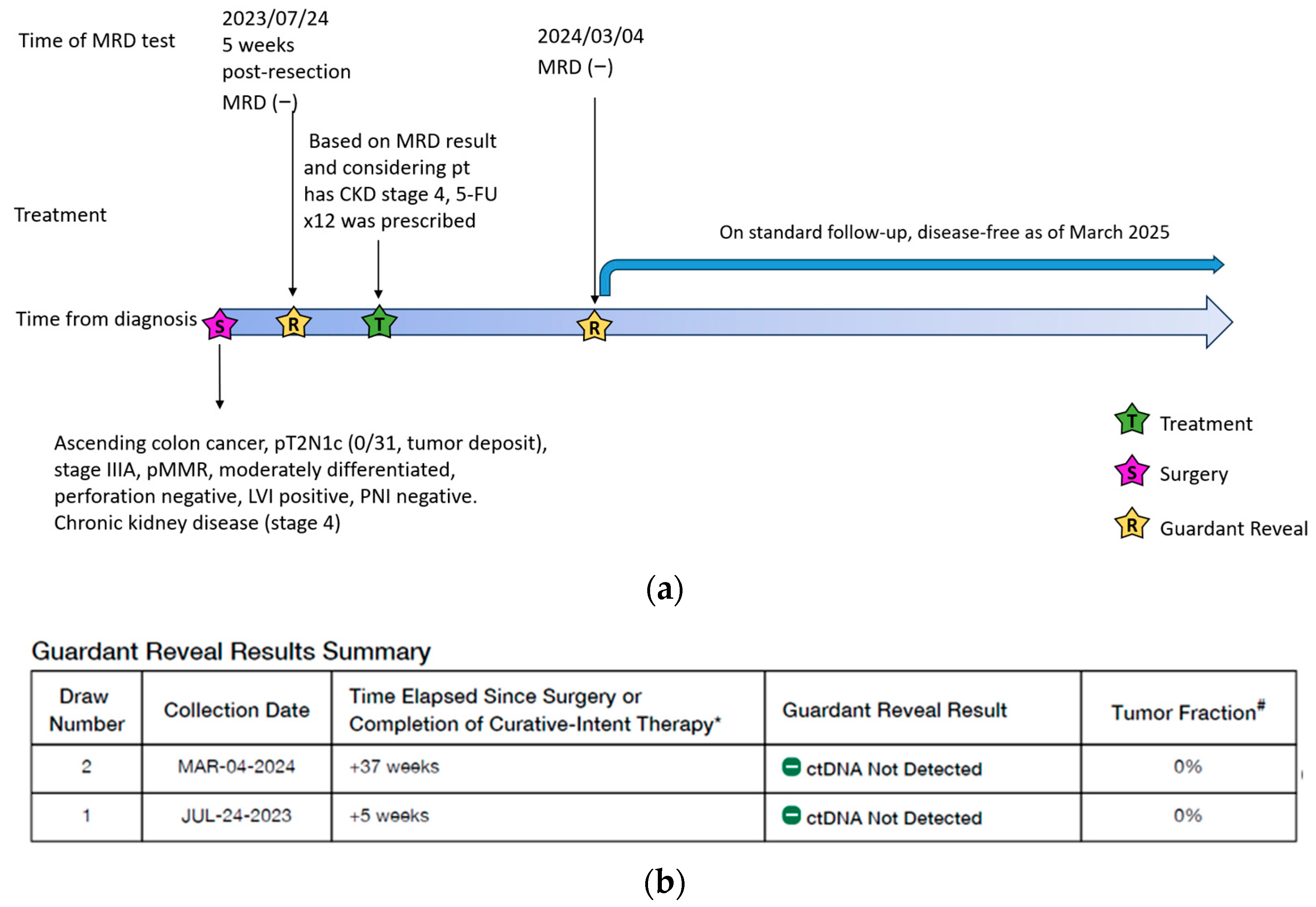
4.3. Case 3: Persistent Negative MRD Indicates Low Risk of Recurrence
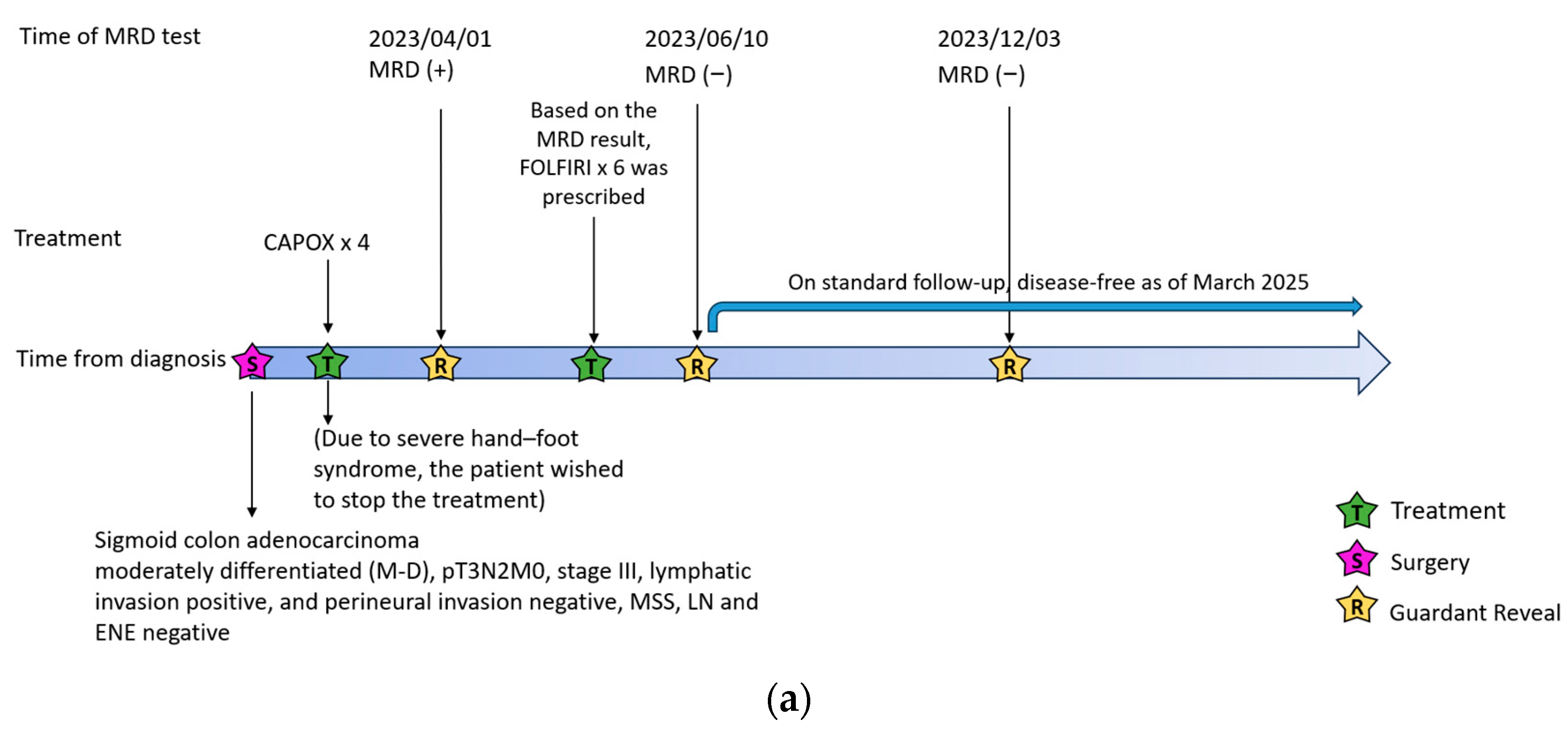
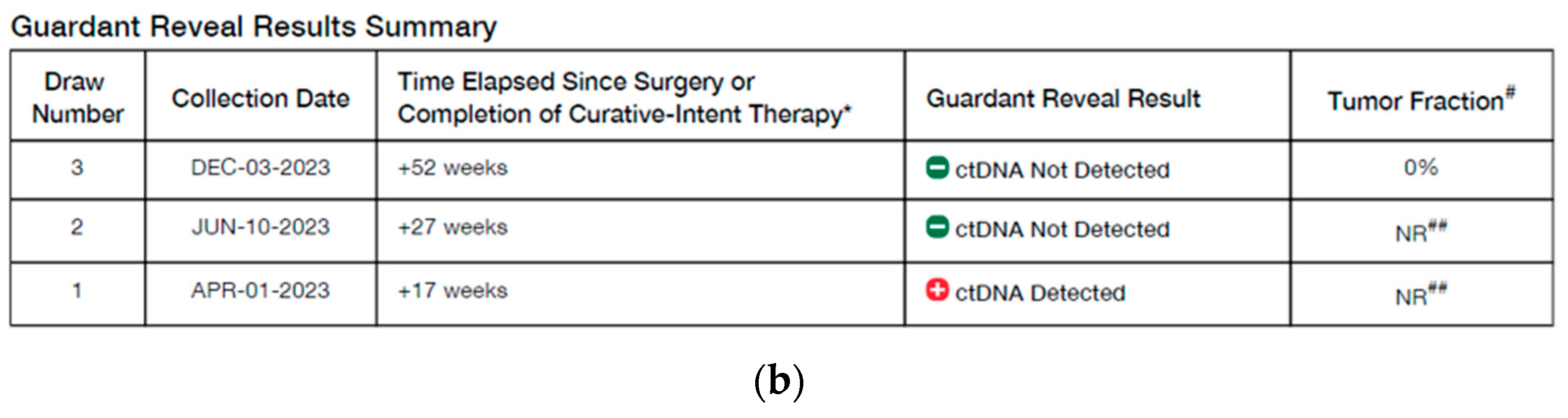
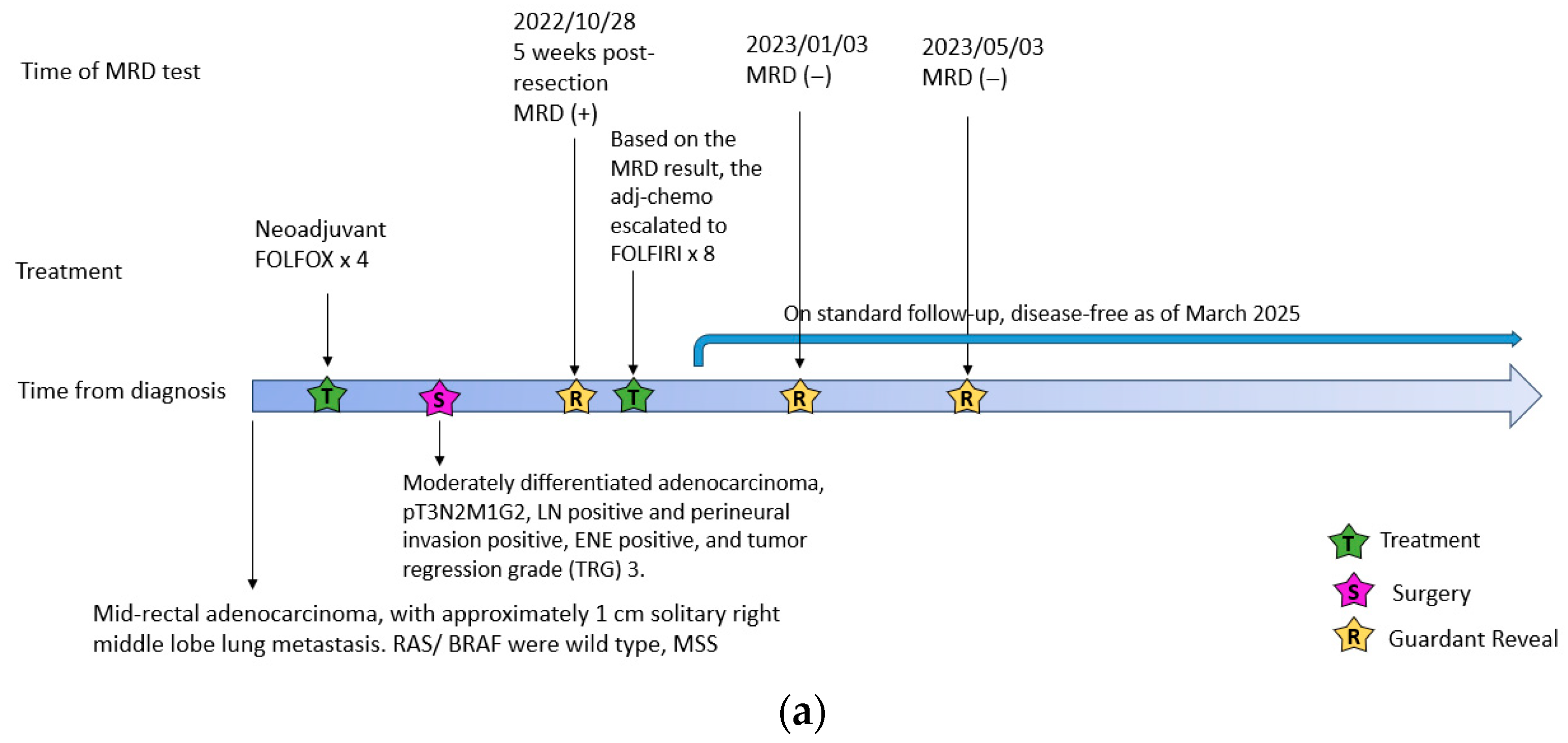
4.4. Case 4: MRD Positive Result Leading to the Escalation of Adjuvant Chemotherapy
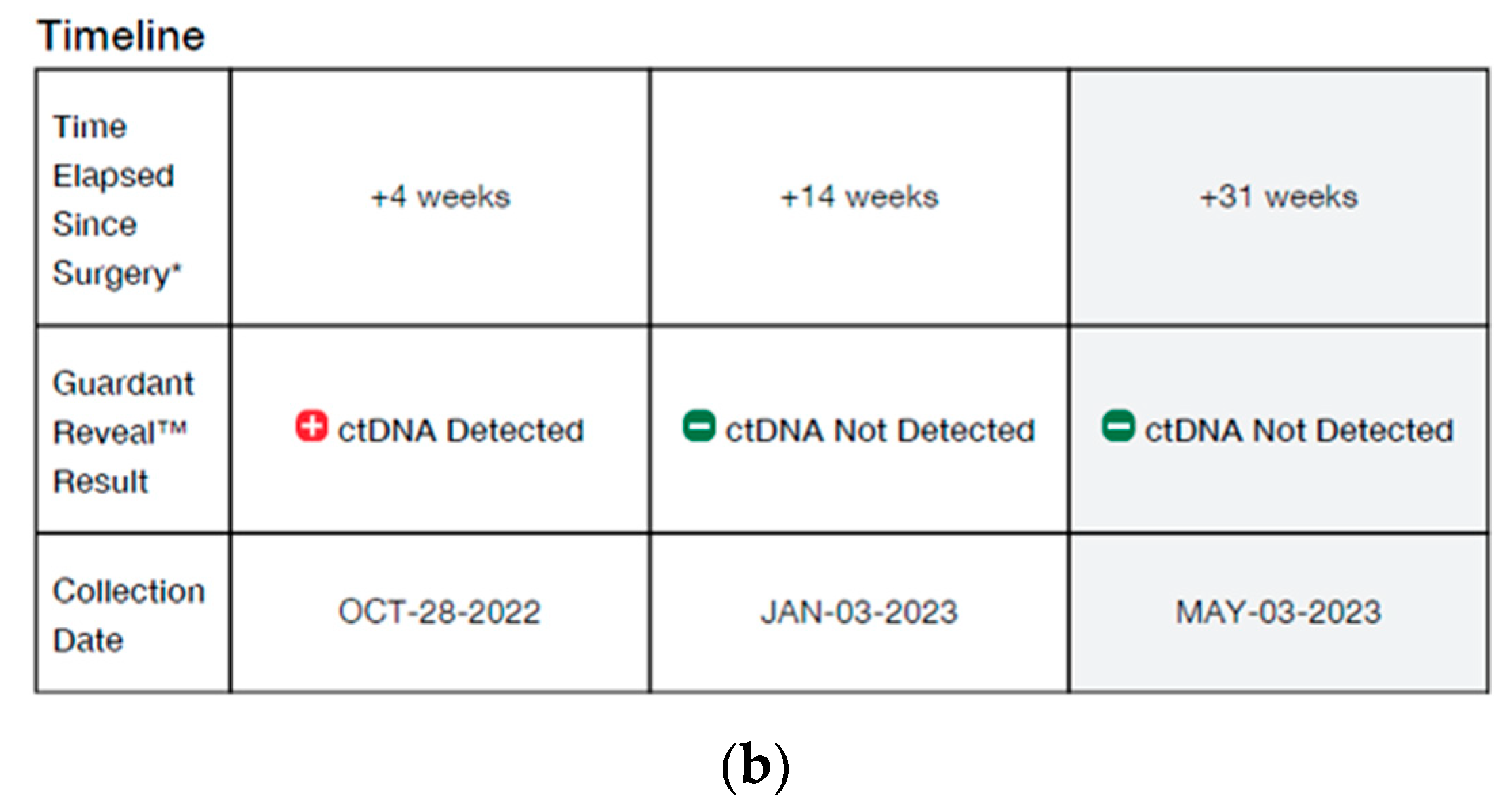
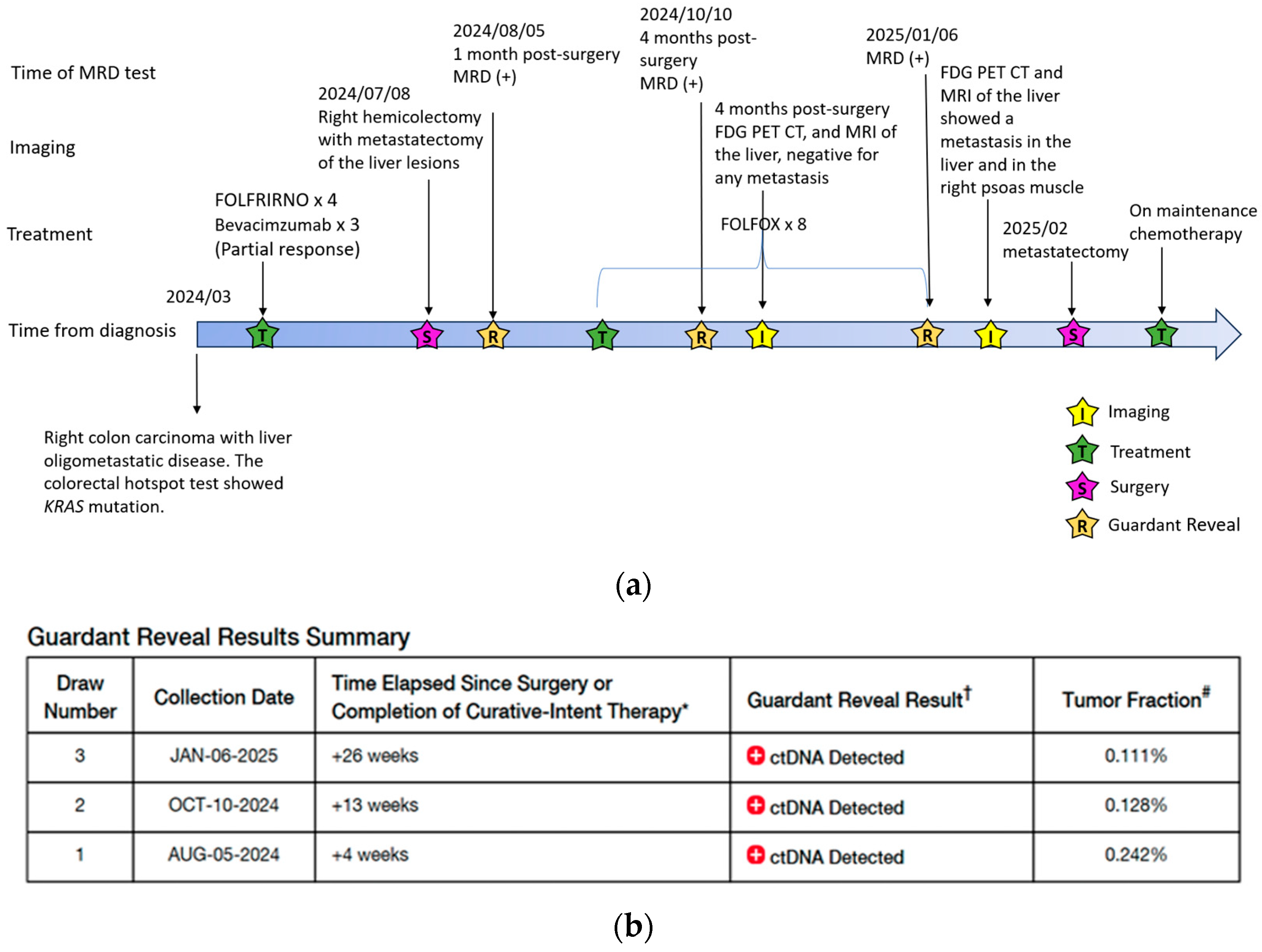
4.5. Case 5: MRD Positive Result Leading to Escalation of Adjuvant Chemotherapy in Stage IV Oligometastatic Rectal Adenocarcinoma
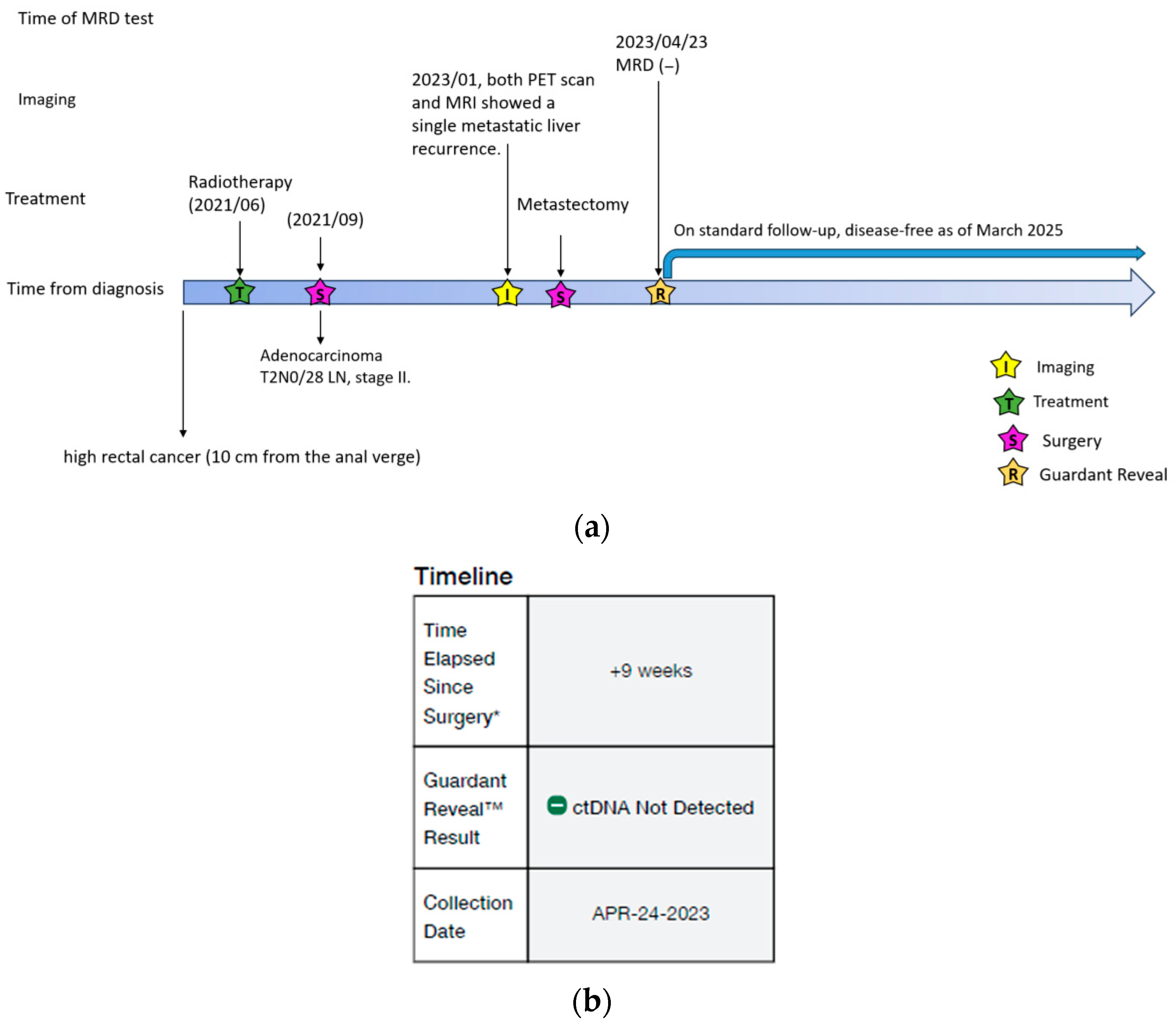
4.6. Case 6: Negative MRD Test Supported Sparing of Adjuvant Chemotherapy
4.7. Case 7: Persistent MRD Negative Results Supported Sparing of Adjuvant Therapy in an Elderly Patient
4.8. Case 8: MRD Negative Results Leading to De-Escalation of Adjuvant Chemotherapy
4.9. Case 9: Persistent MRD-Positive Results Leading to Extended Therapy
4.10. Case 10: MRD Positive Report Led to Early Detection of Recurrent Oligometastasis
5. Discussion
6. Conclusions
Author Contributions
Funding
Institutional Review Board Statement
Informed Consent Statement
Data Availability Statement
Acknowledgments
Conflicts of Interest
References
- Sung, H.; Ferlay, J.; Siegel, R.L.; Laversanne, M.; Soerjomataram, I.; Jemal, A.; Bray, F. Global cancer statistics 2020: GLOBOCAN estimates of incidence and mortality worldwide for 36 cancers in 185 countries. CA Cancer J. Clin. 2021, 71, 209–249. [Google Scholar] [CrossRef] [Scilit] [PubMed]
- World Health Organization. Colorectal cancer. Fact Sheet. 2023. Available online: https://www.who.int/news-room/fact-sheets/detail/colorectal-cancer (accessed on 11 July 2023).
- GBD 2019 Colorectal Cancer Collaborators. Global, regional, and national burden of colorectal cancer and its risk factors, 1990–2019: A systematic analysis for the Global Burden of Disease Study 2019. Lancet Gastroenterol. Hepatol. 2022, 7, 627–647. [Google Scholar] [CrossRef] [Scilit] [PubMed]
- Center, M.M.; Jemal, A.; Ward, E. International trends in colorectal cancer incidence rates. Cancer Epidemiol. Biomark. Prev. 2009, 18, 1688–1694. [Google Scholar] [CrossRef] [Scilit] [PubMed]
- Pardamean, C.I.; Sudigyo, D.; Budiarto, A.; Mahesworo, B.; Hidayat, A.A.; Baurley, J.W.; Pardamean, B. Changing colorectal cancer trends in Asians: Epidemiology and risk factors. Oncol. Rev. 2023, 17, 10576. [Google Scholar] [CrossRef] [Scilit] [PubMed]
- Xi, Y.; Xu, P. Global colorectal cancer burden in 2020 and projections to 2040. Transl. Oncol. 2021, 14, 101174. [Google Scholar] [CrossRef] [Scilit] [PubMed]
- Sifaki-Pistolla, D.; Poimenaki, V.; Fotopoulou, I.; Saloustros, E.; Mavroudis, D.; Vamvakas, L.; Lionis, C. Significant Rise of Colorectal Cancer Incidence in Younger Adults and Strong Determinants: 30 Years Longitudinal Differences between under and over 50s. Cancers 2022, 14, 4799. [Google Scholar] [CrossRef] [Scilit] [PubMed]
- Argilés, G.; Tabernero, J.; Labianca, R.; Hochhauser, D.; Salazar, R.; Iveson, T.; Laurent-Puig, P.; Quirke, P.; Yoshino, T.; Taieb, J.; et al. Localised colon cancer: ESMO Clinical Practice Guidelines for diagnosis, treatment and follow-up. Ann. Oncol. 2020, 31, 1291–1305. [Google Scholar] [CrossRef] [Scilit] [PubMed]
- Nicholson, B.D.; Shinkins, B.; Pathiraja, I.; Roberts, N.W.; James, T.J.; Mallett, S.; Perera, R.; Primrose, J.N.; Mant, D. Blood CEA levels for detecting recurrent colorectal cancer. Cochrane Database Syst. Rev. 2015, 12, CD011134. [Google Scholar] [CrossRef] [Scilit] [PubMed]
- André, T.; Boni, C.; Navarro, M.; Tabernero, J.; Hickish, T.; Topham, C.; Bonetti, A.; Clingan, P.; Bridgewater, J.; Rivera, F.; et al. Improved overall survival with oxaliplatin, fluorouracil, and leucovorin as adjuvant treatment in stage II or III colon cancer in the MOSAIC trial. J. Clin. Oncol. 2009, 27, 3109–3116. [Google Scholar] [CrossRef] [Scilit] [PubMed]
- Tie, J.; Wang, Y.; Springer, S.; Kinde, I.; Wong, H.-L.; Kosmider, S.; Tran, B.; Christie, M.; Thomson, B.N.; Wong, R.; et al. Serial circulating tumor DNA (ctDNA) and recurrence risk in patients (pts) with resectable colorectal liver metastasis (CLM). J. Clin. Oncol. 2016, 34, e15131. [Google Scholar] [CrossRef] [Scilit]
- Nakamura, Y.; Tsukada, Y.; Matsuhashi, N.; Murano, T.; Shiozawa, M.; Takahashi, Y.; Oki, E.; Goto, M.; Kagawa, Y.; Kanazawa, A.; et al. Colorectal Cancer Recurrence Prediction Using a Tissue-Free Epigenomic Minimal Residual Disease Assay. Clin. Cancer Res. 2024, 30, 4377–4387. [Google Scholar] [CrossRef] [Scilit] [PubMed]
- Reinert, T.; Henriksen, T.V.; Christensen, E.; Sharma, S.; Salari, R.; Sethi, H.; Knudsen, M.; Nordentoft, I.K.; Wu, H.-T.; Tin, A.S.; et al. Analysis of Plasma Cell-Free DNA by Ultradeep Sequencing in Patients With Stages I to III Colorectal Cancer. JAMA Oncol. 2019, 5, 1124–1131, Correction in JAMA Oncol. 2019, 5, 1232. [Google Scholar] [CrossRef] [Scilit] [PubMed]
- Diehl, F.; Li, M.; Dressman, D.; He, Y.; Shen, D.; Szabo, S.; Diaz, L.A.; Goodman, S.N.; David, K.A.; Juhl, H.; et al. Detection and quantification of mutations in the plasma of patients with colorectal tumors. Proc. Natl. Acad. Sci. USA 2005, 102, 16368–16373. [Google Scholar] [CrossRef] [Scilit] [PubMed]
- Nakamura, Y.; Watanabe, J.; Akazawa, N.; Hirata, K.; Kataoka, K.; Yokota, M.; Kato, K.; Kotaka, M.; Kagawa, Y.; Yeh, K.-H.; et al. ctDNA-based molecular residual disease and survival in resectable colorectal cancer. Nat. Med. 2024, 30, 3272–3283. [Google Scholar] [CrossRef] [Scilit] [PubMed]
- Lonardi, S.; Montagut, C.; Pietrantonio, F.; Elez, E.; Sartore-Bianchi, A.; Tarazona, N.; Sciallero, S.; Zampino, M.G.; Mosconi, S.; Muñoz, S.; et al. The PEGASUS trial: Post-surgical liquid biopsy-guided treatment of stage III and high-risk stage II colon cancer patients. J. Clin. Oncol. 2020, 38, TPS4124. [Google Scholar] [CrossRef] [Scilit]
- Benson, A.B.; Venook, A.P.; Al-Hawary, M.M.; Arain, M.A.; Chen, Y.-J.; Ciombor, K.K.; Cohen, S.; Cooper, H.S.; Deming, D.; Farkas, L.; et al. Colon cancer, version 2.2021, NCCN clinical practice guidelines in oncology. J. Natl. Compr. Cancer Netw. 2021, 19, 329–359. [Google Scholar] [CrossRef] [Scilit] [PubMed]
- Jain, S.; Dawood, S.; Lavingia, V.; Aderka, D.; Tahover, E.; Hsieh, Y.-Y.; Temper, M.; Goldman, A.; Akasheh, M.A.; Olsen, S.; et al. Utilization of tissue-free minimal residual disease testing in colorectal cancer patients from Asia and the Middle East. Front. Oncol. 2024, 14, 1426941. [Google Scholar] [CrossRef] [Scilit] [PubMed]
- Sinicrope, F.A.; Segovia, D.I.; Hardin, A.; Rich, T.A.; Alberts, S.R.; Shi, Q. Tissue-free circulating tumor DNA assay and patient outcome in a phase III trial of FOLFOX-based adjuvant chemotherapy (Alliance N0147). J. Clin. Oncol. 2025, 43, 3504. [Google Scholar] [CrossRef] [Scilit]
- Oki, E.; Nakanishi, R.; Ando, K.; Takemasa, I.; Watanabe, J.; Matsuhashi, N.; Kato, T.; Kagawa, Y.; Kotaka, M.; Hirata, K.; et al. Recurrence monitoring using ctDNA in patients with metastatic colorectal cancer: COSMOS-CRC-03 and AURORA studies. ESMO Gastrointest. Oncol. 2024, 3, 100034. [Google Scholar] [CrossRef] [Scilit] [PubMed]
- Bando, H.; Watanabe, J.; Kotaka, M.; Matsuhashi, N.; Oki, E.; Komatsu, Y.; Shiozawa, M.; Hirata, K.; Miyamoto, Y.; Yeh, K.-H.; et al. A randomized, double-blind, phase III study comparing trifluridine/tipiracil (FTD/TPI) versus placebo in patients with molecular residual disease following curative resection of colorectal cancer (CRC): The ALTAIR study. J. Clin. Oncol. 2025, 43, CT131. [Google Scholar] [CrossRef] [Scilit]





| Patient Characteristic | No. (n = 380) (%) |
|---|---|
| Gender (%) | |
| Male | 230 (60.5%) |
| Female | 150 (39.5%) |
| Median Age (range) | 59 (26–90 yrs) |
| Cancer Stage at the first MRD test | |
| I | 3 (0.8%) |
| II | 142 (37.4%) |
| III | 210 (55.3%) |
| IV (oligometastatic) | 25 (6.6%) |
| Median methylation TF% for MRD-positive samples per cancer stage | |
| I (n = 1) | 0.167% |
| II (n = 21) | 0.225% |
| III (n = 59) | 0.196% |
| IV (n = 13) | 0.336% |
| CRC Stage | Median Time for Ordering Post-resection MRD Test Weeks | Median Time for Ordering the First Surveillance MRD Test |
|---|---|---|
| II | 5 (range 2–5) | 32 (13–388) |
| III | 5 (Range: 3–5) | 44 (13–737) |
| IV (oligometastatic) | 5 (Range: 4–11) | 46 (16–138) |
Disclaimer/Publisher’s Note: The statements, opinions and data contained in all publications are solely those of the individual author(s) and contributor(s) and not of MDPI and/or the editor(s). MDPI and/or the editor(s) disclaim responsibility for any injury to people or property resulting from any ideas, methods, instructions or products referred to in the content. |
© 2026 by the authors. Licensee MDPI, Basel, Switzerland. This article is an open access article distributed under the terms and conditions of the Creative Commons Attribution (CC BY) license.
Share and Cite
Hsieh, Y.-Y.; Lavingia, V.; Perl, G.; Chen, C.-T.; Kuan, F.-C.; Vivek, S.; Hsing, S.S.; Jain, S. Clinical Applications of Tissue-Free Molecular Residual Disease (MRD) in Colorectal Cancer—Real-World Utilization and Case Series in Asian and Middle Eastern Patients. Int. J. Transl. Med. 2026, 6, 12. https://doi.org/10.3390/ijtm6020012
Hsieh Y-Y, Lavingia V, Perl G, Chen C-T, Kuan F-C, Vivek S, Hsing SS, Jain S. Clinical Applications of Tissue-Free Molecular Residual Disease (MRD) in Colorectal Cancer—Real-World Utilization and Case Series in Asian and Middle Eastern Patients. International Journal of Translational Medicine. 2026; 6(2):12. https://doi.org/10.3390/ijtm6020012
Chicago/Turabian StyleHsieh, Yao-Yu, Viraj Lavingia, Gali Perl, Ching-Tso Chen, Feng-Che Kuan, Sai Vivek, Sandra San Hsing, and Suyog Jain. 2026. "Clinical Applications of Tissue-Free Molecular Residual Disease (MRD) in Colorectal Cancer—Real-World Utilization and Case Series in Asian and Middle Eastern Patients" International Journal of Translational Medicine 6, no. 2: 12. https://doi.org/10.3390/ijtm6020012
APA StyleHsieh, Y.-Y., Lavingia, V., Perl, G., Chen, C.-T., Kuan, F.-C., Vivek, S., Hsing, S. S., & Jain, S. (2026). Clinical Applications of Tissue-Free Molecular Residual Disease (MRD) in Colorectal Cancer—Real-World Utilization and Case Series in Asian and Middle Eastern Patients. International Journal of Translational Medicine, 6(2), 12. https://doi.org/10.3390/ijtm6020012