
GATA-3 and Its Association with Allergic Diseases and Immune Regulation: A Systematic Review

Abstract
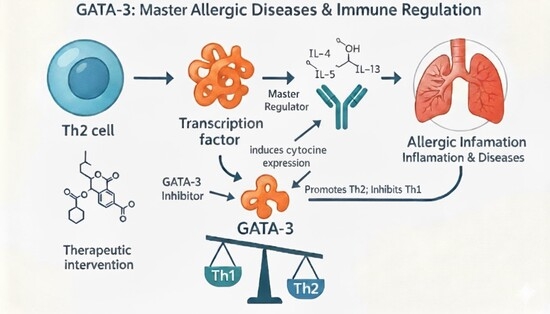
1. Introduction
2. Materials and Methods
2.1. Search Strategy and Information Sources
2.2. Inclusion and Exclusion Criteria
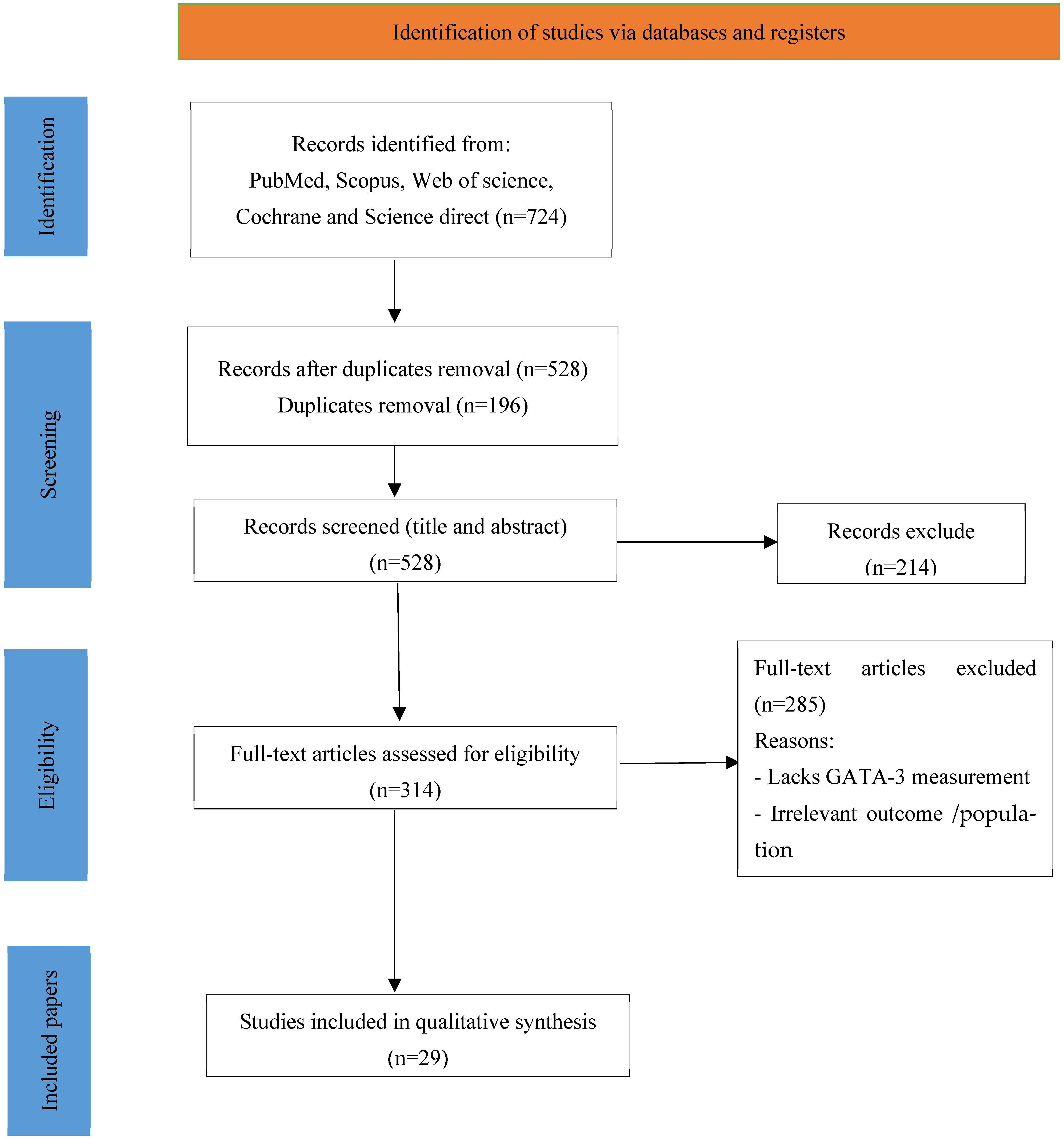
2.3. Study Selection Process
2.4. Data Extraction
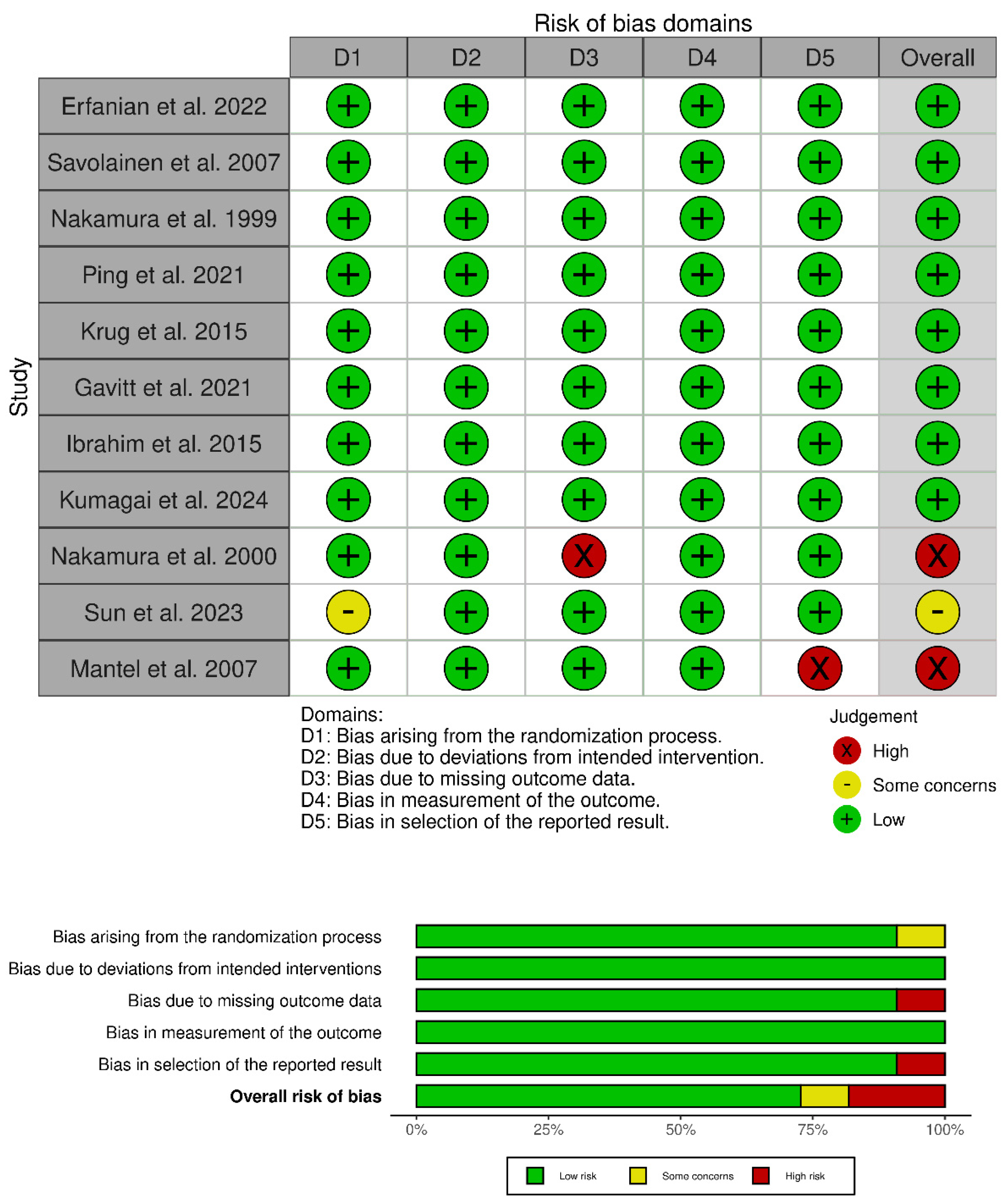
2.5. Risk of Bias and Quality Assessment
2.6. Data Synthesis
3. Results
3.1. Risk of Bias Assessment
3.2. Key Findings
3.2.1. Animal Models and In Vitro Studies
3.2.2. Clinical Studies (Human)
3.2.3. Mixed Studies (Animal and Human)
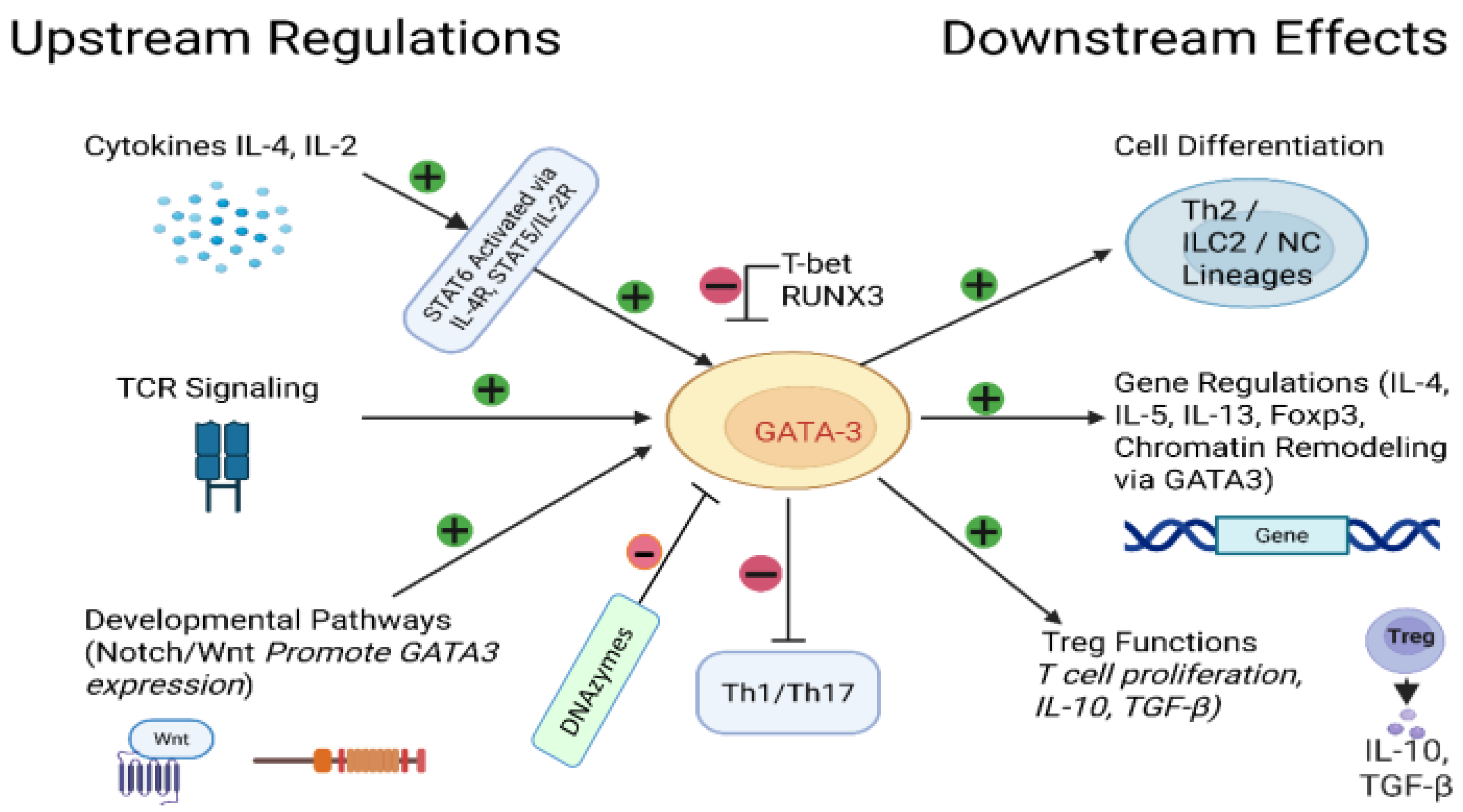
4. Discussion
Limitations
5. Conclusions
Supplementary Materials
Author Contributions
Funding
Data Availability Statement
Acknowledgments
Conflicts of Interest
Abbreviations
| Abbreviation | Full Term/Meaning |
| AAI | Allergic Airway Inflammation |
| AD | Atopic Dermatitis |
| AHR | Airway Hyperresponsiveness |
| AR | Allergic Rhinitis |
| BAL | Bronchoalveolar Lavage |
| BALB/c | Common laboratory mouse strain |
| BALF | Bronchoalveolar Lavage Fluid |
| CBP | CREB-binding protein |
| ChIP-Seq | Chromatin Immunoprecipitation Sequencing |
| CNS2 | Conserved Noncoding Sequence 2 |
| COPD | Chronic Obstructive Pulmonary Disease |
| CRD | Cochrane Register of Database (used in PROSPERO) |
| CRISPR | Clustered Regularly Interspaced Short Palindromic Repeats |
| DC | Dendritic Cell |
| DN | Double-Negative (thymocyte stage) |
| DNAzyme | Catalytic DNA enzyme |
| EAR | Early Asthmatic Response |
| ELISA | Enzyme-Linked Immunosorbent Assay |
| EPO | Eosinophil Peroxidase |
| FACS | Fluorescence-Activated Cell Sorting |
| FeNO | Fractional Exhaled Nitric Oxide |
| FEV1 | Forced Expiratory Volume in one second |
| FF cre | Cre recombinase-based gene knockout strain |
| Foxp3 | Forkhead box P3 |
| GATA-3 | GATA-binding protein 3 |
| GRADE | Grading of Recommendations, Assessment, Development, and Evaluation |
| H&E | Hematoxylin and Eosin |
| H&E/toluidine blue | Tissue staining methods |
| HAT | Histone acetyltransferase |
| HDM | House Dust Mite |
| IFN-γ | Interferon gamma |
| IgA | Immunoglobulin A |
| IgE | Immunoglobulin E |
| IgG1 | Immunoglobulin G1 |
| IL | Interleukin |
| IL-22 | Interleukin 22 |
| IL-4, IL-5, IL-13 | Interleukins 4, 5, and 13 |
| ILC2 | Type 2 innate lymphoid cell |
| ILC3 | Type 3 innate lymphoid cell |
| JAK-STAT | Janus Kinase–Signal Transducer and Activator of Transcription pathway |
| LAR | Late Asthmatic Response |
| MAPK | Mitogen-Activated Protein Kinase |
| MeSH | Medical Subject Headings |
| NAN | Nucleic Acid Nanocapsule |
| NC | Natural Cytotoxic Cell |
| OVA | Ovalbumin |
| PAS | Periodic Acid–Schiff |
| PBMC | Peripheral Blood Mononuclear Cell |
| PM2.5 | Particulate Matter ≤ 2.5 μm |
| PSA | Polysaccharide A |
| qPCR | Quantitative Polymerase Chain Reaction |
| RCT | Randomized Controlled Trial |
| RNAi | RNA interference |
| RoB 2 | Revised Risk of Bias Tool (for clinical trials) |
| RT-PCR | Reverse Transcription Polymerase Chain Reaction |
| RUNX3 | Runt-related transcription factor 3 |
| SB010 | GATA-3-specific DNAzyme (therapeutic agent) |
| SCFA | Short-Chain Fatty Acid |
| SNP | Single Nucleotide Polymorphism |
| STAT6 | Signal Transducer and Activator of Transcription 6 |
| SYRCLE | Systematic Review Centre for Laboratory animal Experimentation (bias tool) |
| TCR | T Cell Receptor |
| TGF-β | Transforming Growth Factor beta |
| Th2 | T helper type 2 cell |
| TNCB | 2,4,6-Trinitrochlorobenzene (used in dermatitis models) |
| Treg | Regulatory T cell |
References
- Wang, J.; Zhou, Y.; Zhang, H.; Hu, L.; Liu, J.; Wang, L.; Wang, T.; Zhang, H.; Cong, L.; Wang, Q. Pathogenesis of allergic diseases and implications for therapeutic interventions. Signal Transduct. Target. Ther. 2023, 8, 138. [Google Scholar] [CrossRef]
- Zemelka-Wiacek, M.; Agache, I.; Akdis, C.A.; Akdis, M.; Casale, T.B.; Dramburg, S.; Jahnz-Różyk, K.; Kosowska, A.; Matricardi, P.M.; Pfaar, O.; et al. Hot topics in allergen immunotherapy, 2023: Current status and future perspective. Allergy 2023, 79, 823–842. [Google Scholar] [CrossRef]
- Yagi, R.; Zhu, J.; Paul, W.E. An updated view on transcription factor GATA3-mediated regulation of Th1 and Th2 cell differentiation. Int. Immunol. 2011, 23, 415–420. [Google Scholar] [CrossRef] [PubMed]
- Bacha, R.; Alwisi, N.; Ismail, R.; Pedersen, S.; Al-Mansoori, L. Unveiling GATA3 Signaling Pathways in Health and Disease: Mechanisms, Implications, and Therapeutic Potential. Cells 2024, 13, 2127. [Google Scholar] [CrossRef]
- Ko, L.J.; Engel, J.D. DNA-binding specificities of the GATA transcription factor family. Mol. Cell. Biol. 1993, 13, 4011–4022. [Google Scholar] [CrossRef] [PubMed]
- Ho, I.C.; Vorhees, P.; Marin, N.; Oakley, B.K.; Tsai, S.F.; Orkin, S.H.; Leiden, J.M. Human GATA-3: A lineage-restricted transcription factor that regulates the expression of the T cell receptor alpha gene. EMBO J. 1991, 10, 1187–1192. [Google Scholar] [CrossRef] [PubMed]
- Zheng, W.; Flavell, R.A. The transcription factor GATA-3 is necessary and sufficient for Th2 cytokine gene expression in CD4 T cells. Cell 1997, 89, 587–596. [Google Scholar] [CrossRef]
- Zhu, J.; Yamane, H.; Cote-Sierra, J.; Guo, L.; Paul, W.E. GATA-3 promotes Th2 responses through three different mechanisms: Induction of Th2 cytokine production, selective growth of Th2 cells and inhibition of Th1 cell-specific factors. Cell Res. 2006, 16, 3–10. [Google Scholar] [CrossRef]
- Scheinman, E.J.; Avni, O. Transcriptional regulation of GATA3 in T helper cells by the integrated activities of transcription factors downstream of the interleukin-4 receptor and T cell receptor. J. Biol. Chem. 2009, 284, 3037–3048. [Google Scholar] [CrossRef]
- Liberman, A.C.; Antunica-Noguerol, M.; Ferraz-De-Paula, V.; Palermo-Neto, J.; Castro, C.N.; Druker, J.; Holsboer, F.; Perone, M.J.; Gerlo, S.; De Bosscher, K.; et al. Compound A, a dissociated glucocorticoid receptor modulator, inhibits T-bet (Th1) and induces GATA-3 (Th2) activity in immune cells. PLoS ONE 2012, 7, e35155, Correction in PLoS ONE 2012, 7. [Google Scholar] [CrossRef]
- Hoyler, T.; Klose, C.S.N.; Souabni, A.; Turqueti-Neves, A.; Pfeifer, D.; Rawlins, E.L.; Voehringer, D.; Busslinger, M.; Diefenbach, A. The transcription factor GATA-3 controls cell fate and maintenance of type 2 innate lymphoid cells. Immunity 2012, 37, 634–648. [Google Scholar] [CrossRef]
- Tong, Y.; Wang, L.; Wang, L.; Song, J.; Fan, J.; Lai, C.; Bao, J.; Weng, C.; Wang, Y.; Shuai, J.; et al. Allergen immunotherapy combined with Notch pathway inhibitors improves HDM-induced allergic airway inflammation and inhibits ILC2 activation. Front. Immunol. 2024, 14, 1264071. [Google Scholar] [CrossRef]
- Wang, Y.; Su, M.A.; Wan, Y.Y. An essential role of the transcription factor GATA-3 for the function of regulatory T cells. Immunity 2011, 35, 337–348. [Google Scholar] [CrossRef] [PubMed]
- Lipińska-Opałka, A.; Leszczyńska-Pilich, M.; Będzichowska, A.; Tomaszewska, A.; Rustecka, A.; Kalicki, B. The Role of Regulatory B Lymphocytes in Allergic Diseases. Biomedicines 2024, 12, 2721. [Google Scholar] [CrossRef] [PubMed]
- Wohlfert, E.A.; Grainger, J.R.; Bouladoux, N.; Konkel, J.E.; Oldenhove, G.; Ribeiro, C.H.; Hall, J.A.; Yagi, R.; Naik, S.; Bhairavabhotla, R.; et al. GATA3 controls Foxp3+ regulatory T cell fate during inflammation in mice. J. Clin. Investig. 2011, 121, 4503–4515. [Google Scholar] [CrossRef] [PubMed]
- Nakamura, Y.; Christodoulopoulos, P.; Cameron, L.; Wright, E.; Lavigne, F.; Toda, M.; Muro, S.; Ray, A.; Eidelman, D.H.; Minshall, E.; et al. Upregulation of the transcription factor GATA-3 in upper airway mucosa after in vivo and in vitro allergen challenge. J. Allergy Clin. Immunol. 2000, 105, 1146–1152. [Google Scholar] [CrossRef]
- Pascual, R.M.; Peters, S.P. The irreversible component of persistent asthma. J. Allergy Clin. Immunol. 2009, 124, 883–890. [Google Scholar] [CrossRef]
- Malmhäll, C.; Bossios, A.; Rådinger, M.; Sjöstrand, M.; Lu, Y.; Lundbäck, B.; Lötvall, J. Immunophenotyping of circulating T helper cells argues for multiple functions and plasticity of T cells in vivo in humans-possible role in asthma. PLoS ONE 2012, 7, e40012. [Google Scholar] [CrossRef]
- Zeitvogel, J.; Jokmin, N.; Rieker, S.; Klug, I.; Brandenberger, C.; Werfel, T. GATA3 regulates FLG and FLG2 expression in human primary keratinocytes. Sci. Rep. 2017, 7, 11847. [Google Scholar] [CrossRef]
- Moosbrugger-Martinz, V.; Leprince, C.; Méchin, M.-C.; Simon, M.; Blunder, S.; Gruber, R.; Dubrac, S. Revisiting the roles of filaggrin in atopic dermatitis. Int. J. Mol. Sci. 2022, 23, 5318. [Google Scholar] [CrossRef]
- Skapenko, A.; Leipe, J.; Niesner, U.; Devriendt, K.; Beetz, R.; Radbruch, A.; Kalden, J.R.; Lipsky, P.E.; Schulze-Koops, H. GATA-3 in human T cell helper type 2 development. J. Exp. Med. 2004, 199, 423–428. [Google Scholar] [CrossRef] [PubMed]
- Yang, I.V.; Schwartz, D.A. Epigenetic mechanisms and the development of asthma. J. Allergy Clin. Immunol. 2012, 130, 1243–1255. [Google Scholar] [CrossRef] [PubMed]
- Liu, Y.; Xu, K.; Yao, Y.; Liu, Z. Current research into A20 mediation of allergic respiratory diseases and its potential usefulness as a therapeutic target. Front. Immunol. 2023, 14, 1166928. [Google Scholar] [CrossRef] [PubMed]
- Toh, Z.Q.; Anzela, A.; Tang, M.L.K.; Licciardi, P.V. Probiotic therapy as a novel approach for allergic disease. Front. Pharmacol. 2012, 3, 30130. [Google Scholar] [CrossRef]
- Wang, J.; Zhu, N.; Su, X.; Gao, Y.; Yang, R. Gut-microbiota-derived metabolites maintain gut and systemic immune homeostasis. Cells 2023, 12, 793. [Google Scholar] [CrossRef]
- Krug, N.; Hohlfeld, J.M.; Kirsten, A.-M.; Kornmann, O.; Beeh, K.M.; Kappeler, D.; Korn, S.; Ignatenko, S.; Timmer, W.; Rogon, C.; et al. Allergen-induced asthmatic responses modified by a GATA3-specific DNAzyme. N. Engl. J. Med. 2015, 372, 1987–1995. [Google Scholar] [CrossRef]
- Greulich, T.; Hohlfeld, J.M.; Neuser, P.; Lueer, K.; Klemmer, A.; Schade-Brittinger, C.; Harnisch, S.; Garn, H.; Renz, H.; Homburg, U.; et al. A GATA3-specific DNAzyme attenuates sputum eosinophilia in eosinophilic COPD patients: A feasibility randomized clinical trial. Respir. Res. 2018, 19, 55. [Google Scholar] [CrossRef]
- Finotto, S.; De Sanctis, G.T.; Lehr, H.A.; Herz, U.; Buerke, M.; Schipp, M.; Bartsch, B.; Atreya, R.; Schmitt, E.; Galle, P.R.; et al. Treatment of allergic airway inflammation and hyperresponsiveness by antisense-induced local blockade of GATA-3 expression. J. Exp. Med. 2001, 193, 1247–1260. [Google Scholar] [CrossRef]
- Gavitt, T.D.; Hartmann, A.K.; Sawant, S.S.; Mara, A.B.; Szczepanek, S.M.; Rouge, J.L. A GATA3 targeting nucleic acid nanocapsule for in vivo gene regulation in asthma. ACS Nano 2021, 15, 11192–11201. [Google Scholar] [CrossRef]
- Maneechotesuwan, K.; Yao, X.; Ito, K.; Jazrawi, E.; Usmani, O.S.; Adcock, I.M.; Barnes, P.J. Suppression of GATA-3 nuclear import and phosphorylation: A novel mechanism of corticosteroid action in allergic disease. PLoS Med. 2009, 6, e1000076, Correction in PLoS Med. 2018, 15, e1002657. [Google Scholar] [CrossRef]
- Kotowski, M.; Sharma, S. CRISPR-based editing techniques for genetic manipulation of primary T cells. Methods Protoc. 2020, 3, 79. [Google Scholar] [CrossRef] [PubMed]
- Kumagai, T.; Iwata, A.; Furuya, H.; Kato, K.; Okabe, A.; Toda, Y.; Kanai, M.; Fujimura, L.; Sakamoto, A.; Kageyama, T.; et al. A distal enhancer of GATA3 regulates Th2 differentiation and allergic inflammation. Proc. Natl. Acad. Sci. USA 2024, 121, e2320727121. [Google Scholar] [CrossRef] [PubMed]
- Hoseini-Shahrestanak, S.; Bazargan, N.; Rahimian, L.; Nemati, M.; Solaymani, S.; Jafarzadeh, A. Imbalanced expression of Th2 and Treg cell-related parameters in peripheral blood mononuclear cells in patients with allergic asthma. Tanaffos 2018, 17, 1. [Google Scholar] [PubMed] [PubMed Central]
- Cheru, N.; Hafler, D.A.; Sumida, T.S. Regulatory T cells in peripheral tissue tolerance and diseases. Front. Immunol. 2023, 14, 1154575. [Google Scholar] [CrossRef]
- Ano, S.; Morishima, Y.; Ishii, Y.; Yoh, K.; Yageta, Y.; Ohtsuka, S.; Matsuyama, M.; Kawaguchi, M.; Takahashi, S.; Hizawa, N. Transcription factors GATA-3 and RORγt are important for determining the phenotype of allergic airway inflammation in a murine model of asthma. J. Immunol. 2013, 190, 1056–1065. [Google Scholar] [CrossRef]
- KleinJan, A.; Wolterink, R.G.J.K.; Levani, Y.; de Bruijn, M.J.W.; Hoogsteden, H.C.; van Nimwegen, M.; Hendriks, R.W. Enforced expression of Gata3 in T cells and group 2 innate lymphoid cells increases susceptibility to allergic airway inflammation in mice. J. Immunol. 2014, 192, 1385–1394. [Google Scholar] [CrossRef]
- Lee, C.-C.; Huang, H.-Y.; Chiang, B.-L. Lentiviral-mediated GATA-3 RNAi decreases allergic airway inflammation and hyperresponsiveness. Mol. Ther. 2008, 16, 60–65. [Google Scholar] [CrossRef]
- Hwang, D.Y.; Bae, C.J.; Lee, J.W.; Shim, S.B.; Jee, S.W.; Lee, S.H.; Woo, J.M.; Lee, C.K. GATA binding protein 3 overexpression and suppression significantly contribute to the regulation of allergic skin inflammation. Int. J. Mol. Med. 2011, 28, 171–179. [Google Scholar] [CrossRef]
- Tamauchi, H.; Amoh, Y.; Itoh, M.; Terashima, M.; Masuzawa, M.; Habu, S.; Katsuoka, K.; Iwabuchi, K. GATA-3 regulates contact hyperresponsiveness in a murine model of allergic dermatitis. Immunobiology 2012, 217, 446–454. [Google Scholar] [CrossRef]
- Pai, S.-Y.; Truitt, M.L.; Ho, I.-C. GATA-3 deficiency abrogates the development and maintenance of T helper type 2 cells. Proc. Natl. Acad. Sci. USA 2004, 101, 1993–1998. [Google Scholar] [CrossRef]
- Ranganath, S.; Ouyang, W.; Bhattarcharya, D.; Sha, W.C.; Grupe, A.; Peltz, G.; Murphy, K.M. Cutting edge: GATA-3-dependent enhancer activity in IL-4 gene regulation. J. Immunol. 1998, 161, 3822–3826. [Google Scholar] [CrossRef] [PubMed]
- Hosokawa, H.; Tanaka, T.; Suzuki, Y.; Iwamura, C.; Ohkubo, S.; Endoh, K.; Kato, M.; Endo, Y.; Onodera, A.; Tumes, D.J.; et al. Functionally distinct Gata3/Chd4 complexes coordinately establish T helper 2 (Th2) cell identity. Proc. Natl. Acad. Sci. USA 2013, 110, 4691–4696. [Google Scholar] [CrossRef] [PubMed]
- Xin, Y.; Yan, Y.; He, H.Y.; Min, W.; Yin, K.S.; Huang, M. GATA3 siRNA inhibits the binding of NFAT1 to interleukin-13 promoter in human T cells. Chin. Med. J. (Engl.) 2010, 123, 739–744. [Google Scholar] [PubMed]
- Ting, C.-N.; Olson, M.C.; Barton, K.P.; Leiden, J.M. Transcription factor GATA-3 is required for development of the T-cell lineage. Nature 1996, 384, 474–478. [Google Scholar] [CrossRef]
- He, F.; Wang, N.; Yu, X.; Zheng, Y.; Liu, Q.; Chen, Q.; Pu, J.; Li, N.; Zou, W.; Li, B.; et al. GATA3/long noncoding RNA MHC-R regulates the immune activity of dendritic cells in chronic obstructive pulmonary disease induced by air pollution particulate matter. J. Hazard. Mater. 2022, 438, 129459. [Google Scholar] [CrossRef]
- Liu, Z.; Liu, X.; Sang, L.; Liu, H.; Xu, Q.; Liu, Z. Boswellic acid attenuates asthma phenotypes by downregulation of GATA3 via pSTAT6 inhibition in a murine model of asthma. Int. J. Clin. Exp. Pathol. 2015, 8, 236. [Google Scholar] [PubMed] [PubMed Central]
- Lu, Y.; Malmhäll, C.; Sjöstrand, M.; Rådinger, M.; O’NEil, S.E.; Lötvall, J.; Bossios, A. Expansion of CD4+ CD25+ and CD25-T-bet, GATA-3, Foxp3 and RORγt cells in allergic inflammation, local lung distribution and chemokine gene expression. PLoS ONE 2011, 6, e19889. [Google Scholar] [CrossRef][Green Version]
- Tamauchi, H.; Terashima, M.; Ito, M.; Maruyama, H.; Ikewaki, N.; Inoue, M.; Gao, X.; Hozumi, K.; Habu, S. Evidence of GATA-3-dependent Th2 commitment during the in vivo immune response. Int. Immunol. 2004, 16, 179–187. [Google Scholar] [CrossRef]
- Erfanian, S.; Jafaripour, S.; Jokar, M.H.; Sedighi, S.; Jahromi, A.S.; Razavi, F.; Zargar, M.F.; Moradzadeh, M. The effect of vitamin D on GATA3 gene expression in peripheral blood mononuclear cells in allergic asthma. Adv. Respir. Med. 2022, 90, 118–124. [Google Scholar] [CrossRef]
- Savolainen, J.; Nieminen, K.; Laaksonen, K.; Laiho, T.; Jacobsen, L.; Lahesmaa, R.; Terho, E.O.; Valovirta, E. Allergen-induced in vitro expression of IL-18, SLAM and GATA-3 mRNA in PBMC during sublingual immunotherapy. Allergy 2007, 62, 949–953. [Google Scholar] [CrossRef]
- Nakamura, Y.; Ghaffar, O.; Olivenstein, R.; Taha, R.A.; Soussi-Gounni, A.; Zhang, D.-H.; Ray, A.; Hamid, Q. Gene expression of the GATA-3 transcription factor is increased in atopic asthma. J. Allergy Clin. Immunol. 1999, 103, 215–222. [Google Scholar] [CrossRef] [PubMed]
- Ping, Z.; Jun, X.; Yan, W.; Jun, Z. The comparison between the effect of Glycyrrhizae uralensis (Gan-Cao) and Montelukast on the expression of T-bet and GATA-3 genes in children with allergic asthma. Cell. Mol. Biol. 2021, 67, 306–312. [Google Scholar] [CrossRef] [PubMed]
- Sun, L.; Jiao, W.; Kong, Y.; Yang, C.; Xu, S.; Qiao, Y.; Chen, S. Changes in percentage of GATA3+ regulatory T cells and their pathogenic roles in allergic rhinitis. Nan Fang Yi Ke Da Xue Xue Bao = J. South Med. Univ. 2023, 43, 280–286. [Google Scholar] [CrossRef]
- Ibrahim, R.; Purath, U.; Turowska, A.; Homburg, U.; Runkel, F.; Schmidts, T.; Dobler, D.; Renz, H.; Garn, H.; Mueller, A. Effects of interference with GATA-3 expression by target-specific DNAzyme treatment on disease progression in a subacute oxazolone-induced mouse model of atopic dermatitis. Clin. Transl. Allergy 2015, 5, 1. [Google Scholar] [CrossRef]
- Mantel, P.-Y.; Kuipers, H.; Boyman, O.; Rhyner, C.; Ouaked, N.; Rückert, B.; Karagiannidis, C.; Lambrecht, B.N.; Hendriks, R.W.; Crameri, R.; et al. GATA3-driven TH2 responses inhibit TGF-β1–induced FOXP3 expression and the formation of regulatory T cells. PLoS Biol. 2007, 5, e329. [Google Scholar] [CrossRef]
- Cai, T.; Qiu, J.; Ji, Y.; Li, W.; Ding, Z.; Suo, C.; Chang, J.; Wang, J.; He, R.; Qian, Y.; et al. IL-17–producing ST2+ group 2 innate lymphoid cells play a pathogenic role in lung inflammation. J. Allergy Clin. Immunol. 2019, 143, 229–244.e9. [Google Scholar] [CrossRef]
- Golebski, K.; Ros, X.R.; Nagasawa, M.; van Tol, S.; Heesters, B.A.; Aglmous, H.; Kradolfer, C.M.A.; Shikhagaie, M.M.; Seys, S.; Hellings, P.W.; et al. IL-1β, IL-23, and TGF-β drive plasticity of human ILC2s towards IL-17-producing ILCs in nasal inflammation. Nat. Commun. 2019, 10, 2162. [Google Scholar] [CrossRef]
- Wang, H.-L.; Yu, C.-X.; Yu, X.-M.; Lin, J.-J.; Chen, Y.-Z.; Zhu, L. Differential Control of T-Cell Subsets by Recombinant Human PLD2 in a Mouse Model of Allergic Asthma. Immunol. Investig. 2025, 54, 334–351. [Google Scholar] [CrossRef]
- Leslie, E.; Miller, M.; Lafuze, A.; Svyatskaya, S.; Choi, G.-S.; Kennedy, J.L.; Huang, Y.-A.; Doherty, T.A.; Broide, D.H. PGAP3 is expressed at increased levels in asthmatic ASM and is associated with increased ASM proliferation, contractility and expression of GATA3 and ALOX5. PLoS ONE 2025, 20, e0320427. [Google Scholar] [CrossRef]



| Criteria | Inclusion | Exclusion |
|---|---|---|
| Study Design | Experimental studies (Animal models and in vitro studies and clinical trials), and observational human studies (e.g., cohort, case–control) | Review articles, systematic reviews, meta-analyses, and in silico studies. |
| Language | Published in English Language | Published in another languages with no available translation |
| Population | Human and animal (in vivo or in vitro) studies including allergic diseases and immune regulation. | In silico studies or theoretical research no involving human or animal models, and not addressing allergic diseases or immune regulation. |
| Outcome Reporting | Studies that directly assess GATA-3 levels about allergic diseases or immune regulation with sufficient data | Studies lacking GATA-3 measurements or missing relevant data. |
| No. | Study Title (Author and Year) | Study Design (Model & Measures) | Results (Key Findings) |
|---|---|---|---|
| 1 | “The transcription factor GATA-3 is necessary and sufficient for Th2 cytokine gene expression in CD4 T cells” [7]. | CD4-GATA-3 transgenic mice; Th1/Th2 differentiation models. | GATA-3 is necessary and sufficient for Th2 cytokine expression; overexpression redirects Th1 precursors to Th2 phenotype. |
| 2 | “ An essential role of the transcription factor GATA-3 for the function of regulatory T cells” [13]. | Treg-specific GATA-3 knockout mice; IBD model. | GATA-3 ensures Treg stability/function; deficiency causes Foxp3 loss, Th17 accumulation, and severe inflammation |
| 3 | “GATA3 controls Foxp3+ regulatory T cell fate during inflammation in mice” [15]. | Gata3 conditional knockout mice; T cell transfer colitis model. | GATA-3 stabilizes Treg immunosuppressive fate, maintains Foxp3 expression, and prevents conversion to inflammatory effector cells. |
| 4 | “Treatment of allergic airway inflammation and hyperresponsiveness by antisense-induced local blockade of GATA-3 expression” [28]. | OVA-induced asthma mice; intranasal GATA-3 antisense oligonucleotides. | Reduced lung GATA-3 mRNA, eosinophilic inflammation, Th2 cytokines, and AHR. |
| 5 | “Transcription Factors GATA-3 and RORyt Are Important for Determining the Phenotype of Allergic Airway Inflammation in a Murine Model of Asthma” [35]. | Wild-type and transgenic (GATA-3-tg & RORγt-tg) mice; OVA-induced asthma. | GATA-3 overexpression drove steroid-sensitive eosinophilic inflammation, distinct from RORγt-driven neutrophilic inflammation |
| 6 | “Enforced expression of Gata3 in T cells and group 2 innate lymphoid cells increases susceptibility to allergic airway inflammation in mice” [36]. | CD2-Gata3 transgenic mice; OVA/HDM-induced airway inflammation. | GATA-3 overexpression increased susceptibility to inflammation via ILC2 expansion/priming and elevated IL-5/IL-13. |
| 7 | “Lentiviral-mediated GATA-3 RNAi Decreases Allergic Airway Inflammation and Hyperresponsiveness” [37]. | BALB/c mice; OVA-induced asthma; Lentiviral GATA-3 RNAi. | Reduced GATA-3 expression, Th2 cytokines, eosinophilic inflammation, and airway hyperresponsiveness (AHR). |
| 8 | “GATA binding protein 3 overexpression and suppression significantly contribute to the regulation of allergic skin inflammation” [38]. | hGATA-3 transgenic mice; phthalic anhydride-induced dermatitis; D-pinitol treatment. | GATA-3 overexpression exacerbated allergic skin inflammation (IgE, Th2 cytokines); D-pinitol treatment reversed these effects. |
| 9 | “GATA-3 regulates contact hyperresponsiveness in a murine model of allergic dermatitis” [39]. | GATA-3 transgenic mice; TNCB-induced allergic dermatitis (CHS model). | Augmented ear swelling, cutaneous Th2 cytokines (IL-5, IL-13), and serum IgE. |
| 10 | “GATA-3 deficiency abrogates the development and maintenance of T helper type 2 cells” [40]. | Conditional knockout BALB/c mice; CD4/CD8 differentiation. | GATA-3 is essential for both Th2 development and maintenance; deficiency impairs Th2 cytokines and elevates IFN-γ. |
| 11 | “Cutting Edge: GATA-3-Dependent Enhancer Activity in IL-4 Gene Regulation” [41]. | Mouse (M12) and human (Jurkat) cell lines; primary T cells. | GATA-3 enhances IL-4 promoter activity via specific enhancer elements but requires cooperative interactions for full expression. |
| 12 | “Functionally distinct Gata3/Chd4 complexes coordinately establish T helper 2 (Th2) cell identity” [42]. | CD4+ T cells and asthma mice with Chd4 knockdown. | GATA3/CHD4 complex stabilizes Th2 identity by upregulating Th2 cytokines (via p300) and repressing T-bet (via NuRD complex). |
| 13 | “GATA3 siRNA inhibits the binding of NFAT1 to interleukin-13 promoter in human T cells” [43]. | Human T cell line (Hut-78); GATA-3 siRNA transfection. | GATA-3 siRNA inhibits NFAT1 binding to the IL-13 promoter, significantly reducing IL-13 transcription. |
| 14 | “Transcription factor GATA-3 is required for development of the T-cell lineage” [44]. | GATA-3 deficient ES cell chimeric mice; in vitro differentiation. | GATA-3 is essential for T-cell lineage initiation; deficiency arrests thymocyte development at the double-negative stage. |
| 15 | “GATA3/long noncoding RNA MHC-R regulates the immune activity of dendritic cells in chronic obstructive pulmonary disease induced by air pollution particulate matter” [45]. | COPD rat model; particulate matter (PM) exposure. | PM increased GATA-3 and lncRNA MHC-R; GATA-3/MHC-R axis exacerbated COPD via dendritic cell and CD8+ T cell modulation. |
| 16 | “Boswellic acid attenuates asthma phenotypes by downregulation of GATA3 via pSTAT6 inhibition in a murine model of asthma” [46]. | OVA-induced asthma mice; Boswellic acid aerosol treatment. | Attenuated AHR, IgE, and Th2 cytokines by downregulating GATA-3 via pSTAT6 inhibition |
| 17 | “Expansion of CD4(+) CD25(+) and CD25(-) T-Bet, GATA-3, Foxp3 and RORγt cells in allergic inflammation, local lung distribution and chemokine gene expression” [47]. | C57BL/6 mice; OVA-induced allergic inflammation. | Significant pulmonary expansion and accumulation of GATA-3+ T-cell subsets compared to other transcription factors. |
| 18 | “Evidence of GATA-3-dependent Th2 commitment during the in vivo immune response” [48]. | Double-transgenic mice (GATA-3/OVA-TCR); OVA immunization. | Increased GATA-3 activity drove Th2 polarization (IL-5, IL-13) and elevated specific antibodies (IgG1, IgE, IgA). |
| No. | Study Title (Author and Year) | Study Design, Model & Measures | Results (Key Findings) |
|---|---|---|---|
| 1 | “Allergen-Induced Asthmatic Responses Modified by a GATA3-Specific DNAzyme” [26]. | Multicenter RCT (eosin-ophilic asthma); SB010 DNAzyme treatment. | Attenuated Early and Late Asthmatic Responses (EAR/LAR) and Th2 inflammation, especially in eosinophilic patients. |
| 2 | “The effect of vitamin D on GATA3 gene expression in peripheral blood mononuclear cells in allergic asthma” [49]. | PBMCs from asthmatics vs. healthy controls; Vitamin D treatment. | Baseline GATA-3 lower in asthmatics; Vitamin D caused heterogeneous GATA-3 upregulation compared to robust response in controls. |
| 3 | “Allergen-induced in vitro expression of IL-18, SLAM and GATA-3 mRNA in PBMC during sublingual immunotherapy” [50]. | Phase II trial; children with Allergic Rhinitis; Sublingual Immunotherapy (SLIT). | No significant change in GATA-3 mRNA after 1 year of SLIT; elevated IL-18 and SLAM levels. |
| 4 | “Gene expression of the GATA-3 transcription factor is increased in atopic asthma” [51]. | Atopic asthmatics (n = 10) vs. healthy controls; airway tissue analysis. | Elevated airway GATA-3 mRNA (in T cells) correlates with IL-5 and eosinophilic inflammation. |
| 5 | “The comparison between the effect of Glycyrrhizae uralensis (Gan-Cao) and Montelukast on the expression of T-bet and GATA-3 genes in children with allergic asthma” [52]. | Children with allergic asthma; Glycyrrhizae uralensis (Gan-Cao) vs. Montelukast. | No significant difference in GATA-3 or T-bet expression between treatments (comparable efficacy). |
| No. | Study Title (Author and Year) | Study Design, Model & Measures | Results (Key Findings) |
|---|---|---|---|
| 1 | “Upregulation of the transcription factor GATA-3 in upper airway mucosa after in vivo and in vitro allergen challenge” [16]. | Murine asthma (OVA) & human airway mucosa/CD4+ T cells. | Allergen challenge upregulates GATA-3 in airway epithelium and BALF, amplifying local Th2 response. |
| 2 | “A GATA3 Targeting Nucleic Acid Nanocapsule for In Vivo Gene Regulation in Asthma” [29]. | Human immune cells & HDM-asthma mice; GATA-3 DNAzyme via Nanocapsules (NAN) | Efficient delivery/knockdown in human cells; reduced allergic lung inflammation in mice. |
| 3 | “A distal enhancer of GATA3 regulates Th2 differentiation and allergic inflammation” [32]. | mG900KO mice & human PBMCs; CRISPR-Cas9 analysis. | Identified G900 enhancer as a key regulator of GATA-3 and Th2 differentiation via chromatin modulation. |
| 4 | “Changes in percentage of GATA3+ regulatory T cells and their pathogenic roles in allergic rhinitis” [53]. | C57BL/6 AR mice; human PBMC & nasal mucosa. | Allergic Rhinitis associated with reduced GATA-3+ Treg frequency and increased Th2 cytokines/eosinophilia. |
| 5 | “Effects of interference with GATA-3 expression by target-specific DNAzyme treatment on disease progression in a subacute oxazolone-induced mouse model of atopic dermatitis” [54]. | Oxazolone-induced dermatitis mice; Topical GATA-3 DNAzyme (hgd40). | Reduced skin thickness, CD4+ T cell infiltration, and GATA-3 mRNA levels. |
| 6 | “GATA3-driven TH2 responses inhibit TGF-β1–induced FOXP3 expression and the formation of regulatory T cells” [55]. | Transgenic mice (GATA-3 overexpression); T-cell analysis. | GATA-3 inhibits Treg formation by directly antagonizing the FOXP3 gene promoter. |
Disclaimer/Publisher’s Note: The statements, opinions and data contained in all publications are solely those of the individual author(s) and contributor(s) and not of MDPI and/or the editor(s). MDPI and/or the editor(s) disclaim responsibility for any injury to people or property resulting from any ideas, methods, instructions or products referred to in the content. |
© 2026 by the authors. Licensee MDPI, Basel, Switzerland. This article is an open access article distributed under the terms and conditions of the Creative Commons Attribution (CC BY) license.
Share and Cite
Al-Maamari, J.N.S.; Khotib, J.; Rahmadi, M.; Pratama, Y.A.; Hosrom, N.A.N. GATA-3 and Its Association with Allergic Diseases and Immune Regulation: A Systematic Review. Int. J. Transl. Med. 2026, 6, 3. https://doi.org/10.3390/ijtm6010003
Al-Maamari JNS, Khotib J, Rahmadi M, Pratama YA, Hosrom NAN. GATA-3 and Its Association with Allergic Diseases and Immune Regulation: A Systematic Review. International Journal of Translational Medicine. 2026; 6(1):3. https://doi.org/10.3390/ijtm6010003
Chicago/Turabian StyleAl-Maamari, Jamal Nasser Saleh, Junaidi Khotib, Mahardian Rahmadi, Yusuf Alif Pratama, and Nadia Ahmed Nasser Hosrom. 2026. "GATA-3 and Its Association with Allergic Diseases and Immune Regulation: A Systematic Review" International Journal of Translational Medicine 6, no. 1: 3. https://doi.org/10.3390/ijtm6010003
APA StyleAl-Maamari, J. N. S., Khotib, J., Rahmadi, M., Pratama, Y. A., & Hosrom, N. A. N. (2026). GATA-3 and Its Association with Allergic Diseases and Immune Regulation: A Systematic Review. International Journal of Translational Medicine, 6(1), 3. https://doi.org/10.3390/ijtm6010003