Article

Leveraging the Advanced Capability of Laser Direct Infrared Imaging (LDIR): A Preliminary Analysis of Microplastics in Edible Tissue of Malaysian Fish


by
Aswir Abd Rashed
,
Nurliayana Ibrahim
and
Mohammad Adi Mohammad Fadzil
*
Nutrition, Metabolism and Cardiovascular Research Centre (NMCRC), Institute for Medical Research (IMR), National Institutes of Health (NIH), Ministry of Health Malaysia (MOH), No. 1, Jalan Setia Murni U13/52, Seksyen U13 Setia Alam, Shah Alam 40170, Selangor, Malaysia
*
Author to whom correspondence should be addressed.
Microplastics 2026, 5(2), 89; https://doi.org/10.3390/microplastics5020089
Submission received: 25 February 2026 / Revised: 10 April 2026 / Accepted: 9 May 2026 / Published: 13 May 2026

Abstract

Introduction: Microplastic (MP) contamination can endanger marine ecosystems and indirectly affect the well-being of humans through the ingestion of marine species. While most research investigates the digestive system, such as the gills and gastrointestinal tract of fish, it still fails to address a major oversight in understanding MP deposition in edible tissues, which is the primary route of human exposure. The differences in contamination levels among pelagic, demersal, and benthic fish in Malaysian waters remain poorly understood. This preliminary study uses Laser Direct Infrared Imaging (LDIR), a new, high-resolution, automated technique, to examine synthetic MP contamination in the edible portion of fish. Materials and Methods: The MPs were extracted from the edible tissue of three fish species representing pelagic (Fish A), benthic (Fish B), and demersal (Fish C) using KOH and sieved onto a gold mesh filter before analysis using LDIR. Results and Discussion: LDIR identified 162 MP particles, revealing clear differences by polymer type and habitat. Pelagic species mostly contained polyethylene (PE) and rubber (n = 8). Demersal species had mostly polyethylene terephthalate (PET) with small amounts of PE and rubber (n = 57). Benthic species showed the highest load, dominated by PET and polypropylene (PP) (n = 97). The morphological assessment of the MPs indicated that the polymers in pelagic fish were smaller, with an area of 2047.82 µm2 and a circularity range of 0.14–0.74, indicating consistent shape. Conversely, MPs are irregular and larger in benthic fish, with areas up to 38,837.50 µm2 and circularities ranging from 0.02 to 0.81. This pattern reflects specific accumulation related to habitat and potential environmental degradation processes. Conclusions: This preliminary study demonstrates the effectiveness of LDIR for detecting MPs in edible fish tissues. The findings provide a fundamental dataset on MP contamination in edible tissue and emphasize its distribution across ecological zones. Nevertheless, broader research is required to substantiate these data and assess the implications of MP contamination for the environmental stability of human and marine well-being.

1. Introduction

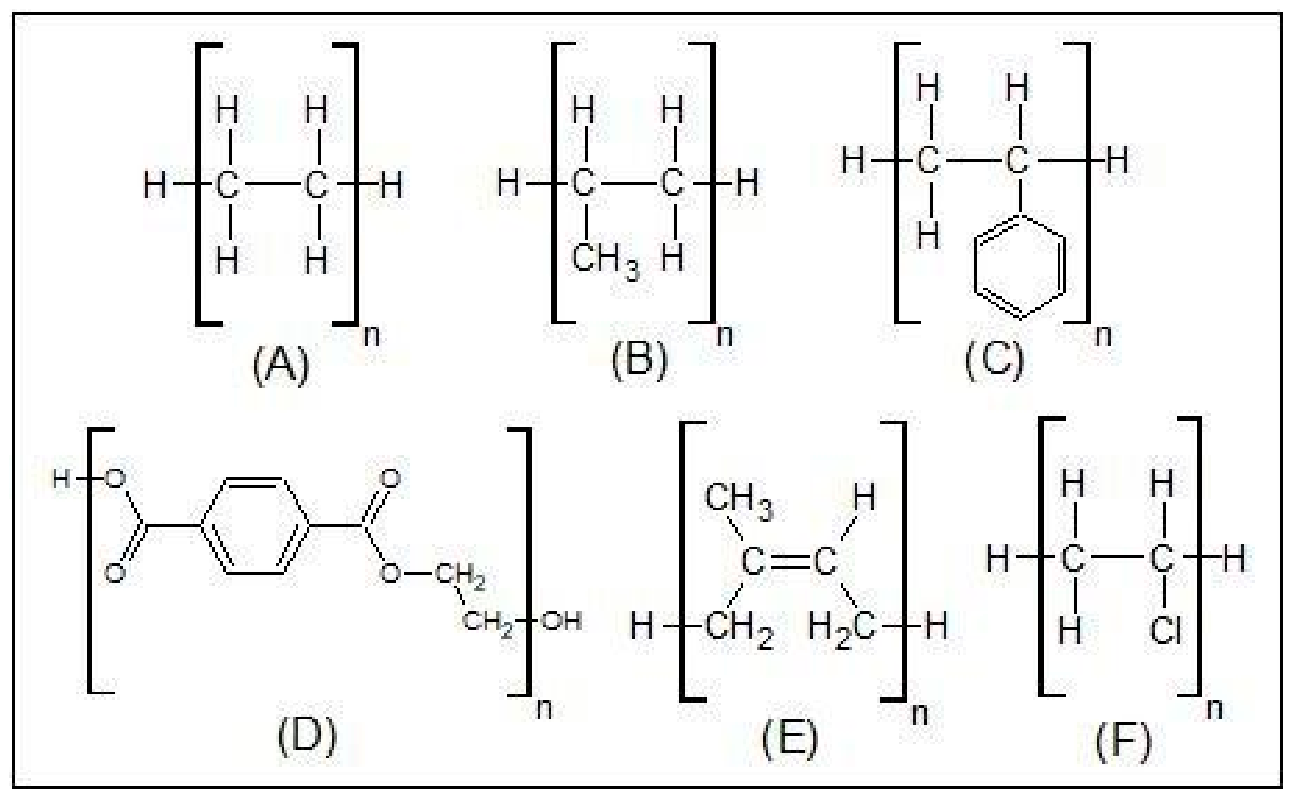
Microplastics (MPs) are synthetic polymer fragments that have become a critical environmental and public health concern nowadays due to their diminutive size of less than 5 mm [1]. Polyethylene (PE), polypropylene (PP), polyethylene terephthalate (PET), polystyrene (PS), polyvinyl chloride (PVC), and various synthetic rubbers are the most common MPs that are usually derived from the degradation of larger plastic debris, textile fibers, and microbeads [2]. The chemical structures of common MP polymers are illustrated in Figure 1. MPs are easily dispersed through urban runoff, sewage discharge, riverine inputs, and atmospheric sedimentation due to their durability and low density, leading to global dispersal across inland and oceanic ecosystems [3]. Due to their diminutive size, the potential ingestion and absorption by a diverse range of marine life, from plankton to top-tier consumers, until human consumption, heightens the concern regarding the MP accumulation in the marine tissue.
At the cellular and subcellular levels, MPs are known to cause immunological disruption, lipid degradation, structural cellular damage in vital organs such as the liver, intestine, and gills, and also oxidative stress [4,5]. Furthermore, gastrointestinal blockage, reduced feeding capacity, inefficient energy use, and interference with developmental stages and breeding success are among the diverse negative health outcomes caused by MP ingestion. Not only can MPs cause physical harm, but they may also dissolve upon ingestion and aggravate harmful effects, acting as carriers for co-contaminants such as persistent organic pollutants (POPs), polycyclic aromatic hydrocarbons (PAHs), heavy metals, and various microbes [6]. Moreover, the ability of smaller MPs to bypass biological barriers and accumulate in human secondary organs via seafood consumption consequently increases the risk of chronic low-level exposure [7,8].
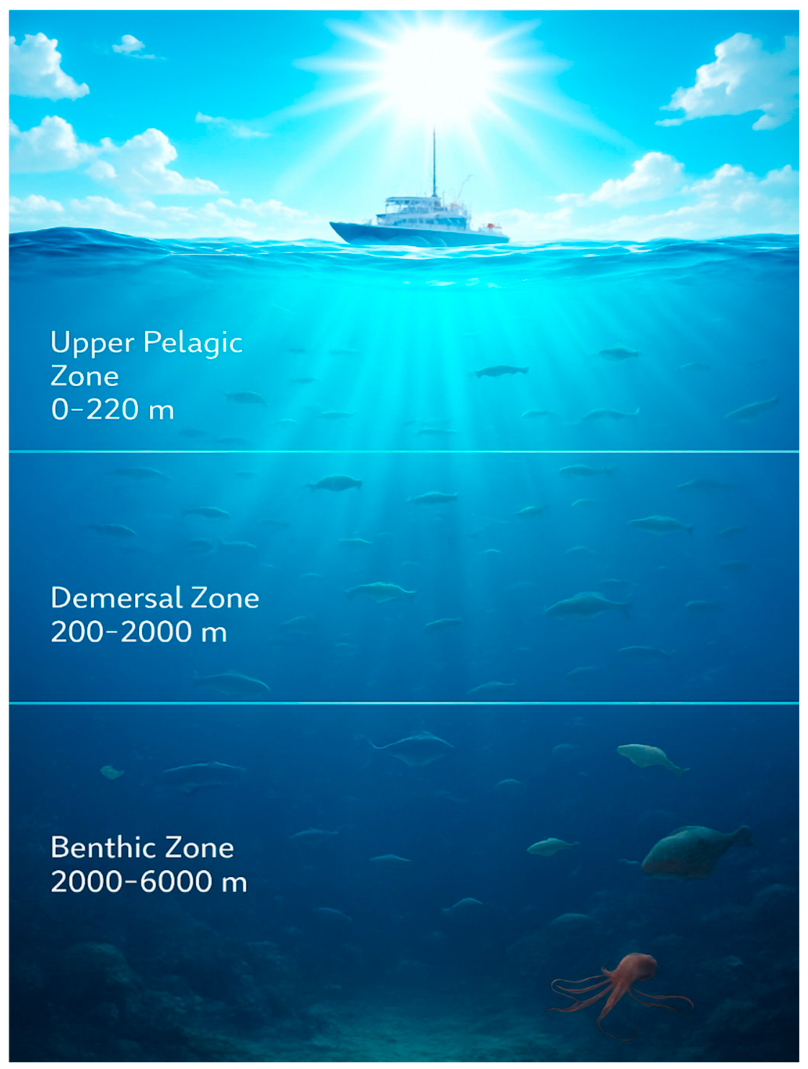
Globally, fish are the predominant dietary source of protein for humans. For Malaysians, fish is the most prevalent and essential part of the local diet, with per capita consumption among the highest in Southeast Asia [9,10]. Both marine and freshwater fish are frequently consumed across all socioeconomic groups, underscoring their importance for food security and public health. Due to the high intake of fish, especially marine species, the presence of MPs in these species has sparked growing concern about the potential ingestion risk in Malaysia. The majority of available data have been obtained using conventional analytical methods, which focus primarily on the gastrointestinal tract and gills, organs usually discarded before human consumption [11,12,13,14,15]. Despite MPs having been reported occasionally in edible tissue [5,16,17], the overrepresentation of gastrointestinal-based evidence likely underestimates direct dietary exposure risks. Moreover, habitat zone and feeding behavior have been consistently identified as important drivers of MP ingestion in aquatic species. As depicted in Figure 2, marine fish inhabit diverse habitat zones, including pelagic, demersal, and benthic zones, each distinguished by distinct exposure pathways.
Güven and his colleagues previously reported that 58% of 1337 fish sampled from the Turkish Mediterranean had ingested MPs, with pelagic and pelagic-neritic species demonstrating a greater prevalence of uptake compared to demersal species [18]. Consistent patterns were documented by Suwartiningsih et al. (2020) in Indonesian littoral zones, where pelagic species displayed higher MP occurrence and particle load per individual [19]. In contrast, current findings have emphasized benthic and demersal zones as substantial MP accumulation zones. Şimşek (2025) reported higher MP loads in demersal species than in pelagic species in the Mid-Black Sea [20]. Conversely, Kabir et al. (2025) reported pervasive MP contamination in benthic fish collected from the St. Lawrence River and Estuary [21], attributing these findings to benthic-related dietary habits. Taken together, these observations indicate that habitat-specific variations heavily influence MP uptake by fish; however, it remains inconsistent across different ecosystems.
Despite the growing research on MP contamination in fish, precise identification and classification remain analytically challenging. Established conventional methods such as Fourier Transform Infrared (FTIR) spectroscopy, Raman spectroscopy, and stereomicroscopy are commonly arduous, low-throughput, and limited by detection limits for fragment sizes, particularly for sub-micron fragments. These shortcomings may contribute to the systematic undervaluation of MP load and heterogeneity, particularly in tissues directly relevant to human consumption.
Recently, Laser Direct Infrared (LDIR) Imaging has emerged as a superior diagnostic method, enabling autonomous surface analysis, precise mapping, rapid processing, and robust chemical precision for fragments as small as 10 µm [22]. The LDIR system works through integrating automated infrared (IR) laser scanning with a reference spectral database, permitting rapid, in situ detection and molecular profiling of MP particles based on their distinctive IR spectral fingerprints. By allowing simultaneous detection, chemical identification, and morphometric characterization, LDIR reduces operator bias and enhances the reliability of MP assessment in complex biological matrices. To date, LDIR utilization has mainly focused on environmental samples and inedible aquatic species, such as sewage effluent, mussels, sea cucumbers, and fish gut [22,23,24,25,26]. Notably, Bruce-Vanderpuije et al. (2025) presented the first LDIR analysis of MP concentrations in the gastrointestinal tracts and gills of pelagic and demersal fish, highlighting the integrated impact of habitat zone and dietary patterns on MP bioaccumulation [27].
To date, the application of LDIR to edible fish tissue, particularly in pelagic, demersal, and benthic species worldwide, including Malaysia, has not been reported. This knowledge gap represents a critical limitation in current assessments of human dietary exposure to MPs. By leveraging the LDIR’s high sensitivity and automated chemical imaging capabilities, the present study aims to provide preliminary novel insights and generate baseline data on MP abundance, polymer composition, and particle morphology in the edible tissues of commercially fished species from different ecological zones and implicitly assess the MP contamination potential via human dietary exposure.

2. Materials and Methods

2.1. Apparatus Cleaning

A meticulous cleaning procedure was performed to minimize the risk of procedural contamination from residual MPs or other potential contaminants during sample processing and analysis. All apparatus, glassware, and plasticware were thoroughly cleaned using the previously described method with slight modifications [28]. First, the apparatus, glassware, and plasticware were rinsed with ultrapure water, then with absolute ethanol. The cleaned equipment was allowed to dry completely under a fume hood and subsequently stored in closed containers. To further mitigate airborne or procedural contamination, reagent blanks were analyzed via LDIR to detect MPs in all reagents. Any fibers or particles detected in these blanks were subsequently excluded from the final count of the samples.

2.2. Sample Collection and Preparation

For this preliminary study, three fish samples representing commonly consumed edible species were obtained from local markets of East Malaysia in October. Only fresh fish were selected based on appearance. Damaged and rotten fish were not included. This aims to represent how fish are normally purchased by consumers.
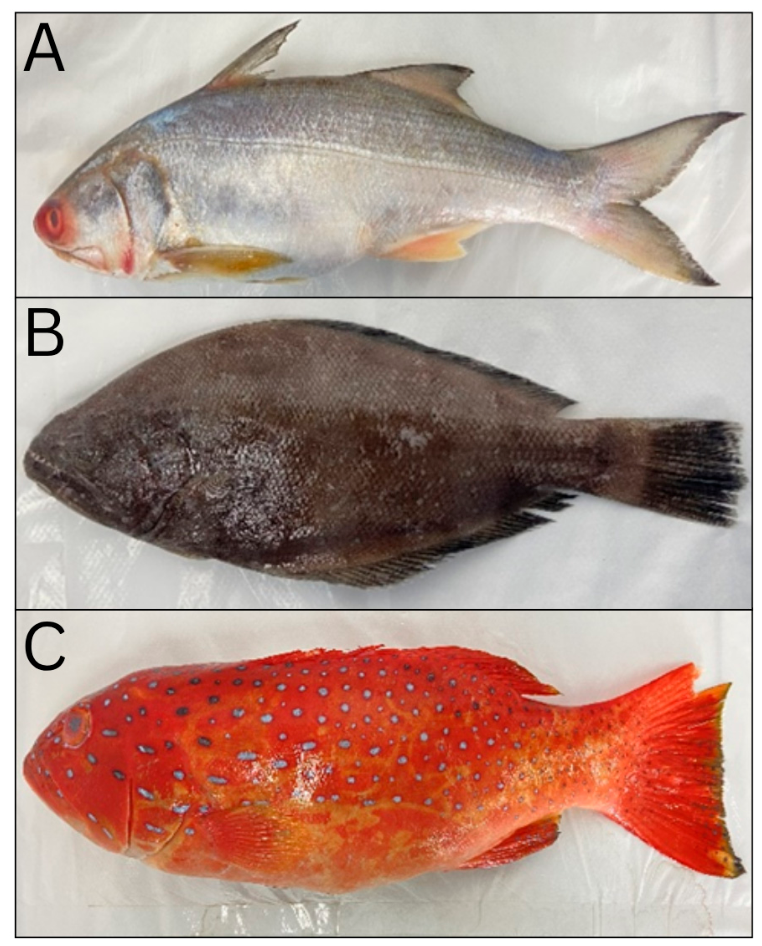
The selected species were chosen from three zones of the marine environment: the pelagic zone (near the surface), the demersal zone (middle), and the benthic zone (bottom). As shown in Figure 3, the samples were identified as Fourfinger Threadfin (Eleutheronema tetradactylum), a pelagic species found in brackish water that mostly inhabits the pelagic-neritic zone and feeds on smaller fish and crustaceans; secondly, Sole (Soleidae spp.), a benthic-neritic species that feeds on benthic invertebrates; and lastly, Coral Hind Grouper (Cephalopholis miniata), which is frequently found in demersal clear waters of coral reefs [29]. The selected samples were then labelled respectively, Fish A (pelagic), Fish B (benthic), and Fish C (demersal).
There was a diverse range of sizes and weights among the fish samples. The Coral Hind Grouper (Fish C) was the largest among the samples, nearly 1 kg, while the Sole (Fish B) was the smallest, at approximately 118 g. Although medium in size, Fish A recorded the lowest percentage of edible tissue with only 47.38% compared to the other two fish. The benthic fish of B was documented slightly higher, with 51.24% of the edible portion. Meanwhile, the Fish C demonstrated the highest edible tissue, accounting for 60.65% from its initial body weight.
Sampling, storage, and transportation were performed according to a previous protocol by [30]. Each sample was labeled accordingly, frozen at −20 °C and transported in ice-filled polystyrene boxes to the Institute for Medical Research (IMR), Setia Alam, Selangor, Malaysia. Upon arrival, the samples were stored at −20 °C in the cold room.
Each specimen was filleted using a stainless steel apparatus that had been washed to collect the edible portions. The collected edible portions were then pooled according to the labels. The pooled edible portions were transferred to a stainless-steel homogenizer (IKA-Werke, Staufen im Breisgau, Germany) at low speed to ensure uniformity of the sample. Approximately 5 g of edible tissues from each sample was weighed for alkaline-based digestion.

2.3. Alkaline-Based Digestion of Edible Tissue

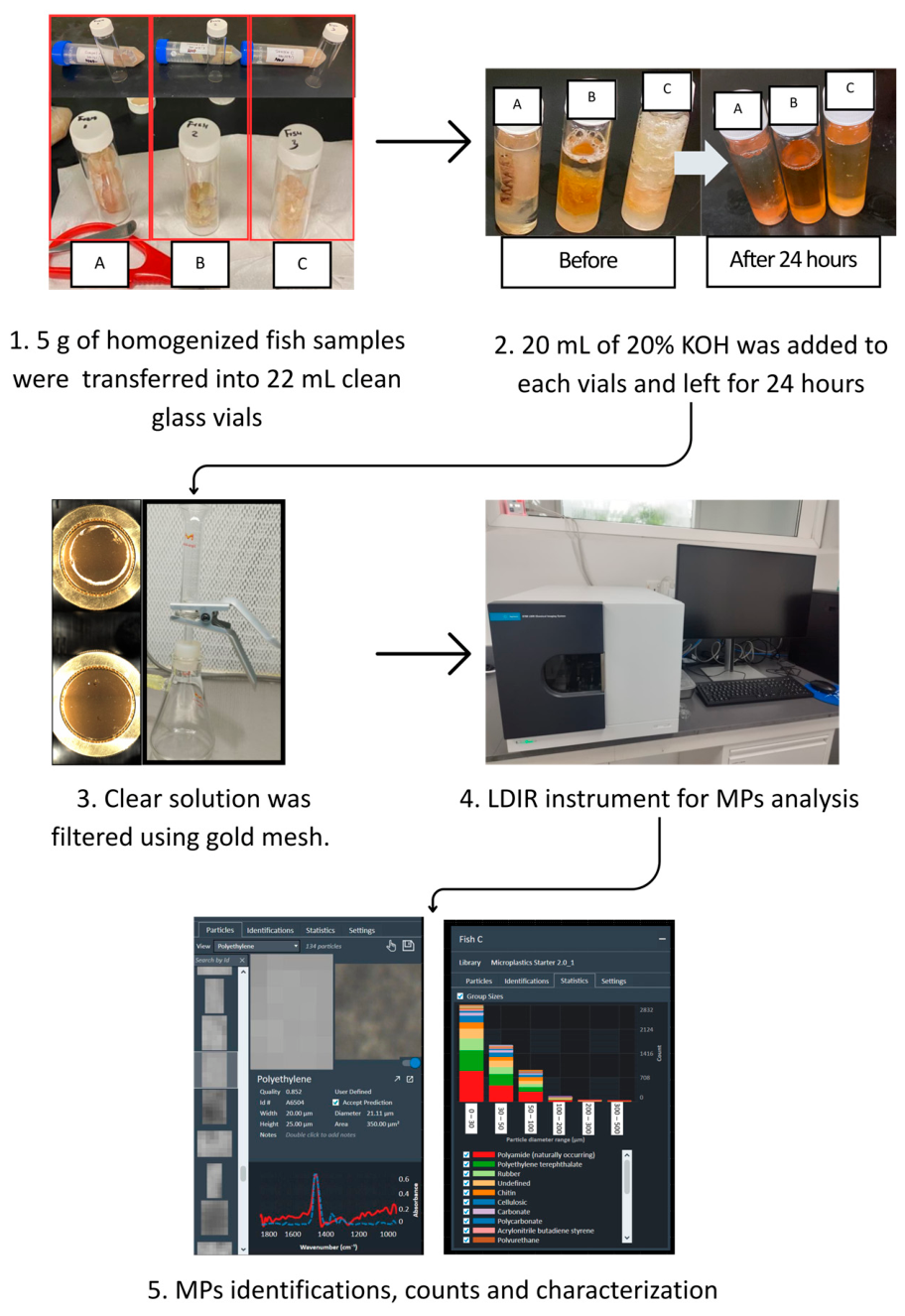
Alkaline digestion of edible tissue was performed using the previously described method with slight modifications [31]. This method was specifically chosen to efficiently remove the organic matrix (proteins and lipids) while preserving the integrity of any MPs. Figure 4 shows the flowchart of LDIR procedures. First, the samples were transferred to respective glass vials and labelled accordingly. The samples were then subjected to alkaline digestion by adding 20 mL of 20% potassium hydroxide (KOH) to the vials. KOH digestion has been described as the best solvent for seafood, yielding the highest MP recovery (>95%) with minimal morphological degradation [32]. The vials were left at room temperature for 24 h to allow for complete matrix digestion. After 24 h, digestion was considered complete, as the solution became clear, with no visible organic material remaining. The resulting digestates were then filtered through a gold mesh. The gold mesh was selected for its inert, nonreactive properties and compatibility with LDIR analysis. Finally, before LDIR analysis, it is essential to remove any residual organic matter and prevent contamination, which was done by thoroughly rinsing the mesh with deionized water followed by absolute ethanol. This final rinse also aided in drying and adherence of the particles to the mesh for scanning.

2.4. LDIR Analysis

The prepared gold mesh filters were directly scanned using the Agilent 8700 LDIR Chemical Imaging System (Agilent Technologies, Santa Clara, CA, USA) with Clarity Software (version 1.7.27, Agilent Technologies, Santa Clara, CA, USA). The system performed a full mid-infrared (IR) spectral acquisition for all particles on the filter within the 975–1800 cm−1 wavelength range.
The acquired spectra were converted to absorbance units and compared with an extensive polymer reference library. To enhance identification accuracy and account for background signals, the library was supplemented with spectra from certified reference polymers (RPPs). The scanning area covered the entire filter membrane at a resolution of 5.5 µm. Blank filter membranes were analyzed under identical conditions as quality control. For this study, a Hit Quality Index (HQI) threshold of ≥85% was used to identify high-confidence polymers, as previously described [24]. Each HQI result, including overlapping or irregular particles, was reviewed individually to confirm the similarity of the absorption frequencies with those of known polymers. Other than that, morphological analysis and comparison were carried out using the LDIR system’s features. Morphological parameters of the collected particles include width, height, diameter, area and perimeter. Other morphological parameters collected included shape descriptors such as eccentricity, circularity and solidity. These morphological parameters offer insights into potential particle sources and their transport mechanisms. In this study, the analysis focused on synthetic MPs; other types of particles, such as non-polymeric materials, were excluded. Examples of non-polymeric particles excluded were cellulose, chitin, and natural polyamides.

3. Results and Discussion

The LDIR software (version 1.7.27) includes 12 synthetic polymers that are widely recognized as potential risks to environmental and human health. These polymers include polyvinyl alcohol, polyurethane (PU), polymethyl methacrylate (PMMA), polycarbonate (PC), rubber, polybutadiene, chlorinated polyethylene, acrylonitrile butadiene, PE, PET, PP, and PS. Most of these MPs are manufactured worldwide, with PE, PP, PVC, PET, PS, PU, and PA being among the most commonly produced and frequently found in environmental and dietary studies [33]. Since these MPs are prevalent in packaging, textiles, and consumer products, this highlights the need to focus on these polymers, especially when assessing human exposure via seafood and other food sources during MP analysis. In this study, all identified MP particles exhibited Hit Quality Index (HQI) values within the high-confidence range of 0.85–0.97, confirming the robustness of polymer identification using LDIR (Table 1).
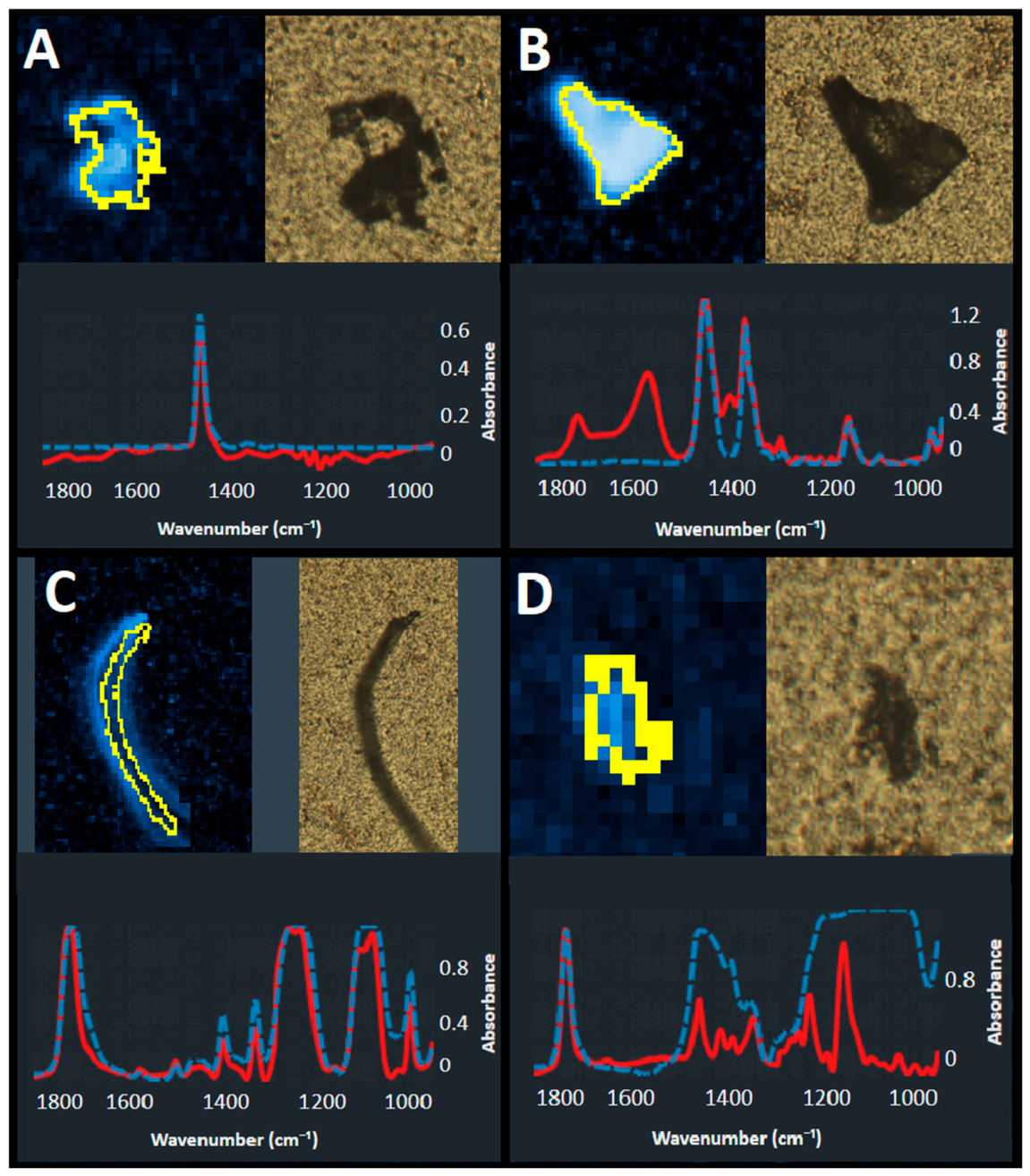
These values are consistent with the established high-confidence HQI criteria for LDIR analysis (0.85–0.99), with 1.00 representing a perfect spectral match to the reference library [34]. Figure 5 presents representative LDIR images and corresponding infrared spectra of the polymers, where blue lines indicate the reference spectra and red lines indicate the measured sample spectra; the HQI value reflects the degree of similarity between the measured and reference spectra. Analysis of the samples in the current study successfully identified four distinct synthetic polymers: polyethylene (PE), polyethylene terephthalate (PET), polypropylene (PP), and rubber (Table 2).
For the procedural contamination analysis, 5 particles were detected in blanks and identified as naturally occurring polyamides. These particles are biodegradable and do not cause adverse environmental effects compared to synthetic polyamide [35]. Thus, natural polyamides were not included as MPs for this study. The low level of contamination in the reagent blank suggests minimal contribution from the laboratory sources. Therefore, the results presented for each sample represent values after background contamination has been subtracted.

3.1. Comparison of MP Composition Between Habitat Zones

LDIR’s automated surface-scanning classified 162 MP particles across all samples, revealing apparent polymer-specific and zonation-related differences in fish edible tissues (Table 2). The least number of MPs was exhibited in the pelagic sample (Fish A) with n = 8, solely constituted by PE (n = 5) and rubber (n =3). In contrast, the Fish B (benthic) was the most contaminated (n = 97), mostly PET (n = 58) and PP (n = 38), with only n = 1 for PE. The demersal species (Fish C) showed a moderate MP load (n = 57), with the majority composed of PET (n = 51), along with small quantities from PE (n = 4) and rubber (n = 2).
These discoveries demonstrate a clear trend of increasing MP concentrations across species from pelagic to demersal to benthic habitats, possibly due to polymer density and habitat exposure. Heavy MPs like PET and PP sink and accrete in seafloor sediments, causing benthic species to be more vulnerable and exposed compared to light polymers such as PE that float at the surface water, causing lower exposure to pelagic species; thus, demersal species feeding near the seafloor exhibit an intermediate load (density-driven distribution) [36]. The observed polymer patterns further reflect distinct ecological and anthropogenic sources. PET is commonly associated with textile fibers, while PP is linked to packaging materials and urban runoff that undergoes sedimentation. At the same time, PE and rubber are typically buoyant, surface-associated polymers derived from fishing gear, floating debris, and coastal litter [37].
This pronounced zonation effect supports the role of seafloor environments as sinks for dense polymers, where sediment–particle interactions enhance MP accumulation [4,19,21,38]. Consequently, benthic and bottom-feeding species face higher risks of MP ingestion and retention [3], consistent with regional evidence of dense polymer deposition linked to mismanaged plastic waste in Southeast Asia [11].
Comparable findings using LDIR have been reported by Bruce-Vanderpuije et al. (2025) to analyze MP contamination in 24 marine fish species from Ghana’s Gulf of Guinea [27]. MPs were primarily detected in gastrointestinal tracts (58%) and gills (42%), with omnivorous pelagic-neritic fish showing the highest ingestion rates. Sixteen polymer types were identified, with PVC accounting for 80% of the total, and strong correlations in MP loads between carnivorous demersal and omnivorous pelagic-neritic fish highlighted the combined influence of feeding behavior and habitat on MP accumulation [27].

3.2. Morphological Comparison Between Different MPs and Different Zones

Beyond polymer composition and abundance, these zonation-related patterns are further reflected in the physical characteristics of MPs detected across ecological zones. Particle morphometric analysis derived from LDIR imaging (Table 2) revealed apparent differences in MP size and shape among species occupying different habitats.
Across all samples, shape descriptors (aspect ratio, moderate eccentricity, low circularity, and solidity) indicate that MPs were predominantly irregular and non-spherical (Figure 5), consistent with fragment-like morphologies formed by mechanical abrasion and environmental weathering. Such fragment dominance has been widely reported in marine fish and aquatic environments and is commonly attributed to the progressive breakdown of larger plastic debris rather than the presence of primary spherical or fibrous particles [39].
Collectively, the morphometric signatures obtained via LDIR not only confirm the secondary origin and environmental weathering of MPs in Malaysian fish species but also underscore their biological relevance, as particle size, shape irregularity, and polymer chemistry jointly influence uptake efficiency, tissue persistence, and potential human health risk through seafood consumption [40,41].

3.2.1. Area, Height, and Diameter

The parameter width refers to the shorter dimension of the MP, whereas the longer dimension is measured as the height. The diameter is measured using the longest distance between parallel tangents of the MP. These are standard parameters used to classify MP orientations and basic size classes, thereby distinguishing MPs from nanoplastics [39,42,43,44]. In the present analysis, MPs detected across pelagic (Fish A), benthic (Fish B), and demersal (Fish C) species ranged from 9.00 to 391.00 µm in width and 9.00 to 313.00 µm in height, with diameter values spanning 10.14–222.37 µm, indicating dominance of small MPs capable of translocating across intestinal epithelia and accumulating in edible tissues [42,44].

3.2.2. Aspect Ratio

Aspect ratio is the ratio of the particle’s central axis (length) to its minor axis (width). This parameter helps describe MPs’ elongation, thereby distinguishing bead-like from fiber-like MPs [34]. Aspect ratio values (0.32–3.44) reflect a mixture of compact fragments and elongated particles, where lower ratios (0.32–0.60), commonly observed in PET particles from Fish B and C, indicate flattened or film-like morphologies, while higher ratios (>2.00), particularly in PP from Fish B, suggest fibrous or stretched fragments derived from fishing gear or packaging degradation [34].

3.2.3. Area (µm2) and Perimeter (µm)

Area and perimeter are important parameters for describing the morphological properties of MPs, as they may be associated with their potential to adsorb toxic chemicals, as larger surface areas provide more sites for chemical binding [42,44]. Area (80.82–38,837.50 µm2) and perimeter (37.72–1691.18 µm) metrics further confirm extensive surface exposure, which is ecologically significant because larger surface-to-volume ratios enhance adsorption of hydrophobic contaminants such as polycyclic aromatic hydrocarbons and heavy metals [45]. Benthic species (Fish B), dominated by PET and PP, contained comparatively larger MP areas (up to 38,837.50 µm2), reflecting a greater presence of irregular fragments. The demersal species (Fish C) exhibited smaller MPs overall (up to 6955.03 µm2), driven mainly by smaller PET fragments, with minor contributions from PE and rubber. This may suggest that Fish B contains more irregularly shaped and weathered MPs with a larger surface area, which is associated with greater sorption potential for hydrophobic organic contaminants and trace metals [45].

3.2.4. Eccentricity and Circularity

Eccentricity and circularity were evaluated to determine the shape regularity. The parameters measure the deviations from the value of one (1), which would indicate that the shape of the particle is a perfect circle. As such, particles that elucidated eccentricity and circularity values with deviation from the value of one (1) would signify elongated fibre-like or fragmented particles [39,42,43,44]. In this study, eccentricity values ranged from 0.30 to 0.94, indicating varying deviations from circular particles. PET and PP particles showing higher eccentricity, consistent with spherical primary microbeads with possible mechanical fragmentation. The circularity values ranged from 0.02 to 0.82, reflecting irregular, jagged particle morphologies. This jagged particle morphology is typical of secondary MPs formed by UV photo-oxidation and abrasion in marine environments [42]. In the pelagic species (Fish A), MPs consisting of PE and rubber were relatively small and moderately uniform (with corresponding areas up to 2047.82 µm2 and circularity ranging from 0.14 to 0.74), indicating predominantly fine fragment-like particles. Benthic species (Fish B), dominated by PET and PP, contained comparatively larger MP areas (up to 38,837.50 µm2), reflecting a greater presence of irregular fragments with circularity ranging from 0.02 to 0.81. The demersal species (Fish C) exhibited smaller MPs overall (areas up to 6955.0 µm2), driven mainly by smaller PET fragments, with minor contributions from PE and rubber.

3.2.5. Solidity

Solidity was calculated as the ratio of a particle’s area to its convex hull area to assess the roughness or irregularity of its edges [39,42,43,44]. Solidity values (0.35–0.98) indicate varying degrees of edge roughness and internal concavity, where lower solidity particles, predominantly PET fragments, suggest advanced weathering, increasing their likelihood of cellular interaction and inflammatory response upon ingestion through sorption of pollutants [42,45].

3.2.6. Morphology of the MPs

Morphologically, PE, the most frequently detected polymer across all species, appeared predominantly as irregular fragments with moderate circularity (0.09–0.74) and relatively smooth edges (solidity > 0.45), consistent with its low density and widespread use in packaging, enabling prolonged suspension in the water column and subsequent ingestion by pelagic and demersal fish. PET particles, numerically dominant in benthic and demersal species (n = 58 in Fish B; n = 51 in Fish C), were smaller, thinner, and more angular, aligning with sediment-associated accumulation and resuspension processes, while PP particles in Fish B exhibited the widest dimensional range and highest areas, suggesting contribution from fishing activities and ropes [46].
Rubber MPs, which are commonly derived from tire wear particles or other elastic materials, are increasingly recognized as emerging contaminants in aquatic food webs [47]. In this study, although less abundant than the other MPs, rubber MPs showed higher circularity and solidity, suggesting abrasion-derived fragmentation. Moreover, studies report that MPs within the 50–200 µm size range, consistent with the majority of particles detected here, exhibit higher bioavailability and retention times in fish tissues, raising concerns for trophic transfer and human dietary exposure, particularly in populations with high seafood consumption [48,49].

3.3. Comparison with Previous Findings in Malaysia

Earlier research conducted in Malaysia has invariably shown the occurrence of MPs in local marine fish. However, most studies have focused on inedible parts of the fish, with limited numbers of species and restricted habitats, leaving gaps in knowledge of MP contamination in edible tissues and its relationship to habitat patterns. The demersal Eleutheronema tridactylum and benthopelagic Clarias gariepinus have been identified as potential indicator species by Karbalaei et al. (2019), who recorded 76.8% of MPs in 9 species from the viscera and gills of 110 fish across 11 commercial species [50]. Meanwhile, in 2021, Jaafar and colleagues reported the MP contamination in gastrointestinal tracts (86%) and gills (92%) of 158 fish across 16 species from two coastal locations, with fibers dominating, and the ingestion rate of up to 9.88 fragments/fish was higher in urbanized areas compared to less urbanized sites [51]. A year later, Foo et al. (2022) recorded 100% MP occurrence in the guts of four commercial marine species: Atule mate, Crenimugil seheli, Sardinella fimbriata, and Rastrelliger brachysoma of pelagic fish from northwest Peninsular Malaysia with a total of 432 MPs, primarily fragments and species-specific differences in ingestion [13]. Although concentrating on a riverine context, Kalwant-Singh et al. (2025) provided useful and relevant perspectives for Malaysia by reporting that MP types and amounts differed among species and tissue types, showing that MPs in internal organs are higher than in muscles, indicating that feeding habits and proximity to human activity affect pollution [52]. Furthermore, low abundance (0.067 fragments/fish) of organ contaminations by polymers such as PDAP, PBT, PP, PCT, and HDPE was documented by Nawawi et al. (2025) in the livers of Indian mackerel and yellowtail scad from Pahang and Kelantan [53]. In addition to prior research, Ibrahim et al. (2025) assessed 80 fish across 4 species collected from the South China Sea and the Straits of Malacca [54]. They recorded a high abundance of fibrous polymers with an average of 8.95 fragments per fish, and contamination was higher in pelagic compared to benthic species [54]. This difference is likely due to local water movements, the proximity of the sampling areas to land-based pollution sources, differences in how these fish feed, and the use of more sensitive instruments in the study. Overall, these findings elucidate the pervasive presence of MPs in Malaysian fish, including ubiquitous MPs such as PE, PP, PET, and more, and subsequently highlight the influence of species type, feeding habits, habitat, and urban development on MP ingestion.
Contrary to previous research that used only conventional methods, the current study employs high-definition LDIR imaging to investigate edible tissues across pelagic, demersal, and benthic species. This approach permits comprehensive identification of polymer type and structural morphology, alongside accumulation trends. Moreover, this study offers an additional framework for evaluating potential human risk from eating contaminated seafood and advances our knowledge of MP zonation-based distribution, correlating species’ dietary habits and habitat features with intake patterns identified.

3.4. Novelty, Significance, and Implications of the Study

Our study demonstrates that LDIR offers high sensitivity, efficiency, and morphometric resolution for detecting MPs in edible fish tissues. By integrating polymer-specific distributions with particle morphologies and zonation-related accumulation patterns, this approach advances understanding of MP infiltration into the human food chain and provides a foundation for larger-scale exposure and risk assessment studies.
This study provides a significant contribution to MP research in Malaysia by focusing on edible tissues of pelagic, demersal, and benthic marine fish, a tissue type directly relevant to human consumption. While previous Malaysian studies have predominantly examined gastrointestinal tracts, internal organs, or specific tissues, the present work extends existing knowledge by integrating zone-based comparisons with assessments of edible portions.
The application of high-resolution LDIR spectroscopy enables reliable polymer identification and detailed particle characterization, offering a complementary analytical approach to commonly used FTIR-based methods. LDIR directly identifies the polymer’s chemical structure using infrared light, eliminating the variability associated with relying on chemical markers. This reagent-free approach makes LDIR particularly well-suited for real-time monitoring of MP contamination, especially in complex marine environments where various polymer types are present [22]. This study provides supplementary insight into how habitat features and dietary habits dictate MP accumulation in edible tissues of the fish by comparing MP load across environmental niches.
From a wider perspective, the identification of MPs in Malaysian edible fish tissue underscores the potential risk to local people posed by seafood consumption. The detection of MPs in edible tissues represents a critical direct pathway for dietary exposure. Specifically, the high load of PET and PP fragments found in benthic and demersal species presents a health concern because these MPs can act as vectors for co-contaminants such as heavy metals and POPs [7]. Given that Malaysia has one of the highest per capita fish consumption rates in Southeast Asia, these findings indicate that human consumers face a heightened risk of ingesting particles small enough (9.00–391.00 µm) to potentially bypass biological barriers and accumulate in secondary organs, leading to chronic low-level physiological disruption. These observations align with national initiatives aimed at documenting MP contamination in marine ecosystems and providing information to shape future environmental surveillance, risk evaluation, and food safety protocols, without exaggerating novelty relative to existing past research.

Limitations and Recommendations

This preliminary study has a small sample size, limited to one fish per habitat zone, which limits the ability to extrapolate the observed contamination trends to specific zones. Hence, it is suggested that subsequent studies include large sample sizes with a wider range of species and ecological parameters, such as dietary patterns, sediment synergies, and seasonal changes, to improve understanding of MP accumulation patterns across different zones. Moreover, the alkaline-based tissue digestion method implemented in this study establishes a fundamental framework for developing standardized and validated methodologies for LDIR analysis. Despite LDIR’s superiority in MP detection with effective detection of ~10 µm, LDIR’s resolution is limited when it comes to characterizing nanoplastic (<1 µm) and smaller MPs (<9 µm). Although this method offers higher spatial resolution than traditional infrared spectroscopy, the instrument’s detection limit may lead to an underestimation of nanoplastic and smaller MPs in a sample. In the future, subsequent research is needed to optimise these protocols across a broader spectrum of fish species and tissue types, and a complementary analytical method would be needed for a thorough size-spectrum evaluation as well as an assessment of false-positive and false-negative rates.

4. Conclusions

This preliminary study shows that LDIR constitutes a rigorous and reliable instrument for identifying MPs in the edible parts of Malaysian fish. The current research manages to elucidate the occurrence of MPs within edible tissue of pelagic, demersal, and benthic fish from Malaysian waters, and subsequently, evaluate the exposure risk of MP contamination via seafood consumption. The benthic sample was found to possess the highest contamination, with overall species predominantly composed of irregular fragments of various polymers like PE, PP, PET, and rubber. These findings reveal contamination trends dictated by both ecological and anthropogenic factors.
By integrating analysis on the edible part of the fish with zone-related correlations, this study offers insights into how the role of feeding habits and habitat features might affect MP accumulation, presenting a critical background for prospective anthropogenic intake via seafood consumption. These findings offer baseline data for ecological monitoring and risk assessment and thus formulating a framework for subsequent study geared towards appraising both nature and human impacts.

Author Contributions

Conceptualization: A.A.R. and M.A.M.F.; methodology: A.A.R., M.A.M.F. and N.I.; formal analysis: N.I. and M.A.M.F.; resources: A.A.R. and M.A.M.F.; data curation and statistical analysis: M.A.M.F. and N.I.; sample analysis: A.A.R., M.A.M.F. and N.I.; investigation: A.A.R., M.A.M.F. and N.I.; writing—original draft preparation: A.A.R., M.A.M.F. and N.I.; writing—review and editing: A.A.R., M.A.M.F. and N.I.; visualization: A.A.R., M.A.M.F. and N.I.; funding acquisition: A.A.R.; project administration: A.A.R.; supervision: A.A.R. All authors have read and agreed to the published version of the manuscript.

Funding

This research received no external funding.

Institutional Review Board Statement

Not applicable.

Data Availability Statement

The raw data supporting the conclusions of this article will be made available by the authors upon request.

Acknowledgments

The authors thank the Director General of Health Malaysia and the Director of the Institute for Medical Research (IMR), Malaysia, for permitting us to publish this article.

Conflicts of Interest

The authors declare that they have no conflicts of interest.

References

  1. Arthur, C.; Baker, J.; Bamford, H. Proceedings of the International Research Workshop on the Occurrence, Effects, and Fate of Microplastic Marine Debris, University of Washington Tacoma, Tacoma, WA, USA, 9–11 September 2008; Technical Memorandum NOS-OR&R-30; National Oceanic and Atmospheric Administration: Silver Spring, MD, USA, 2009.
  2. Pilapitiya, P.G.C.N.T.; Ratnayake, A.S. The World of Plastic Waste: A Review. Clean. Mater. 2024, 11, 100220. [Google Scholar] [CrossRef]
  3. Kiehbadroudinezhad, M.; Gohel, K.; Ibrahim, N.; Seid Shazileh, H.; Hosseinzadeh-Bandbafha, H.; Saeedi, M.; Zoroufchi Benis, K. Microplastics in Aquatic Ecosystems: Pathways, Impacts and Integrated Solutions for Environment and Human. Planet. Sustain. 2025, 3, 2. [Google Scholar] [CrossRef]
  4. Barboza, L.G.A.; Gimenez, B.C.G. Microplastics in the Marine Environment: Current Trends and Future Perspectives. Mar. Pollut. Bull. 2015, 97, 5–12. [Google Scholar] [CrossRef]
  5. Hossain, M.B.; Pingki, F.H.; Azad, M.A.S.; Nur, A.A.U.; Banik, P.; Paray, B.A.; Arai, T.; Yu, J. Microplastics in Different Tissues of a Commonly Consumed Fish, Scomberomorus Guttatus, from a Large Subtropical Estuary: Accumulation, Characterization, and Contamination Assessment. Biology 2023, 12, 1422. [Google Scholar] [CrossRef]
  6. Bhattacharyya, S.; Greer, M.L.; Salehi, M. Impact of Micro- and Nanoplastics Exposure on Human Health: Focus on Neurological Effects from Ingestion. Front. Public Health 2025, 13, 1681776. [Google Scholar] [CrossRef] [PubMed]
  7. Tumwesigye, E.; Felicitas Nnadozie, C.; C Akamagwuna, F.; Siwe Noundou, X.; William Nyakairu, G.; Odume, O.N. Microplastics as Vectors of Chemical Contaminants and Biological Agents in Freshwater Ecosystems: Current Knowledge Status and Future Perspectives. Environ. Pollut. 2023, 330, 121829. [Google Scholar] [CrossRef]
  8. Habumugisha, T.; Zhang, Z.; Uwizewe, C.; Yan, C.; Ndayishimiye, J.C.; Rehman, A.; Zhang, X. Toxicological Review of Micro- and Nano-Plastics in Aquatic Environments: Risks to Ecosystems, Food Web Dynamics and Human Health. Ecotoxicol. Environ. Saf. 2024, 278, 116426. [Google Scholar] [CrossRef]
  9. York, R.; Gossard, M.H. Cross-National Meat and Fish Consumption: Exploring the Effects of Modernization and Ecological Context. Ecol. Econ. 2004, 48, 293–302. [Google Scholar] [CrossRef]
  10. Teh, E. Fisheries in Malaysia: Can Resources Match Demand? (Sea Views No 10/2012); Maritime Institute of Malaysia: Kuala Lumpur, Malaysia, 2012.
  11. Rochman, C.M.; Tahir, A.; Williams, S.L.; Baxa, D.V.; Lam, R.; Miller, J.T.; Teh, F.C.; Werorilangi, S.; Teh, S.J. Anthropogenic Debris in Seafood: Plastic Debris and Fibers from Textiles in Fish and Bivalves Sold for Human Consumption. Sci. Rep. 2015, 5, 14340. [Google Scholar] [CrossRef]
  12. Koongolla, J.B.; Lin, L.; Pan, Y.F.; Yang, C.P.; Sun, D.R.; Liu, S.; Xu, X.R.; Maharana, D.; Huang, J.S.; Li, H.X. Occurrence of Microplastics in Gastrointestinal Tracts and Gills of Fish from Beibu Gulf, South China Sea. Environ. Pollut. 2020, 258, 113734. [Google Scholar] [CrossRef]
  13. Foo, Y.H.; Ratnam, S.; Lim, E.V.; Abdullah, M.; Molenaar, V.J.; Hwai, A.T.S.; Zhang, S.; Li, H.; Mohd Zanuri, N. Microplastic Ingestion by Commercial Marine Fish from the Seawater of Northwest Peninsular Malaysia. PeerJ 2022, 10, e13181. [Google Scholar] [CrossRef]
  14. Amponsah, A.K.; Afrifa, E.A.; Essandoh, P.K.; Enyoh, C.E. Evidence of Microplastics Accumulation in the Gills and Gastrointestinal Tract of Fishes from an Estuarine System in Ghana. Heliyon 2024, 10, e25608. [Google Scholar] [CrossRef]
  15. Yanuhar, U.; Wiratno, E.N.; Suryanto, H.; Machfuda, D.R.; Caesar, N.R. Microplastic Contamination in the River and Its Impact on Fish Health. Glob. J. Environ. Sci. Manag. 2025, 11, 915–940. [Google Scholar] [CrossRef]
  16. Barboza, L.G.A.; Lopes, C.; Oliveira, P.; Bessa, F.; Otero, V.; Henriques, B.; Raimundo, J.; Caetano, M.; Vale, C.; Guilhermino, L. Microplastics in Wild Fish from North East Atlantic Ocean and Its Potential for Causing Neurotoxic Effects, Lipid Oxidative Damage, and Human Health Risks Associated with Ingestion Exposure. Sci. Total Environ. 2020, 717, 134625. [Google Scholar] [CrossRef]
  17. Traylor, S.D.; Granek, E.F.; Duncan, M.; Brander, S.M. From the Ocean to Our Kitchen Table: Anthropogenic Particles in the Edible Tissue of U.S. West Coast Seafood Species. Front. Toxicol. 2024, 6, 1469995. [Google Scholar] [CrossRef] [PubMed]
  18. Güven, O.; Gökdağ, K.; Jovanović, B.; Kıdeyş, A.E. Microplastic Litter Composition of the Turkish Territorial Waters of the Mediterranean Sea, and Its Occurrence in the Gastrointestinal Tract of Fish. Environ. Pollut. 2017, 223, 286–294. [Google Scholar] [CrossRef] [PubMed]
  19. Suwartiningsih, N.; Setyowati, I.; Astuti, R. Microplastics in Pelagic and Demersal Fishes of Pantai Baron, Yogyakarta, Indonesia. J. Biodjati 2020, 5, 33–49. [Google Scholar] [CrossRef]
  20. Şimşek, A. Determination of Microplastic Pollution in Commercial Fish in the Middle Black Sea (Samsun), Türkiye. Toxics 2025, 13, 865. [Google Scholar] [CrossRef]
  21. Kabir, A.H.M.E.; Michon, E.; Mingelbier, M.; Robert, D.; Soubaneh, Y.D.; Xie, H.; Lu, Z. Microplastics in the Benthic Fish from the Canadian St. Lawrence River and Estuary: Occurrence, Spatial Distribution and Ecological Risk Assessment. Mar. Pollut. Bull. 2025, 212, 117509. [Google Scholar] [CrossRef]
  22. Isaac Chandran, P.J.; Veerasingam, S. Laser Direct Infrared Spectroscopy: A Cutting-Edge Approach to Microplastic Detection in Environmental Samples. Talanta 2025, 284, 127284. [Google Scholar] [CrossRef]
  23. López-Rosales, A.; Andrade, J.; Fernández-González, V.; López-Mahía, P.; Muniategui-Lorenzo, S. A Reliable Method for the Isolation and Characterization of Microplastics in Fish Gastrointestinal Tracts Using an Infrared Tunable Quantum Cascade Laser System. Mar. Pollut. Bull. 2022, 178, 113591. [Google Scholar] [CrossRef]
  24. Pagliaccia, B.; Ascolese, M.; Vannini, E.; Carretti, E.; Lubello, C.; Gori, R. Methodologic Insights Aimed to Set-Up an Innovative Laser Direct InfraRed (LDIR)-Based Method for the Detection and Characterization of Microplastics in Wastewaters. Sci. Total Environ. 2025, 967, 178817. [Google Scholar] [CrossRef] [PubMed]
  25. Peñalver-Soler, R.M.; Pérez-Álvarez, M.D.; Pellerito, F.; Pérez-Ruzafa, Á.; Campillo, N.; Arroyo-Manzanares, N.; Viñas, P. Direct Laser Infrared Microscopy for the Monitoring of Microplastics in Holothuria Poli and Sediments of the Mar Menor Coastal Lagoon. Environ. Pollut. 2025, 378, 126478. [Google Scholar] [CrossRef] [PubMed]
  26. López-Rosales, A.; Andrade, J.M.; García-Tejedor, P.; del Castillo-Busto, M.E.; Iglesias-Cambón, E.; Muniategui-Lorenzo, S. Reliable Methodologies to Determine Microplastics in Mussels: Enhanced Digestion Protocols, Transference to Gold-Coated Filters and Determination via Laser-Based Transflectance Infrared Spectrometry. Mar. Pollut. Bull. 2026, 222, 118711. [Google Scholar] [CrossRef] [PubMed]
  27. Bruce-Vanderpuije, P.; Asmah, R.; Ameworwor, M.; Hotor, D.W.; Hildebrandt, L.; Pröfrock, D.; Ebinghaus, R.; Zaid, H.; Norvimagbe, I.C.; Asante, K.A.; et al. Quantitative Assessment of Microplastics in Fish from the Gulf of Guinea, Ghana, Using LDIR Spectroscopy: Implications for Marine Food Safety and Health Risk Evaluation. Environ. Pollut. 2025, 379, 126518. [Google Scholar] [CrossRef]
  28. Brander, S.M.; Renick, V.C.; Foley, M.M.; Steele, C.; Woo, M.; Lusher, A.; Carr, S.; Helm, P.; Box, C.; Cherniak, S.; et al. Sampling and Quality Assurance and Quality Control: A Guide for Scientists Investigating the Occurrence of Microplastics Across Matrices. Appl. Spectrosc. 2020, 74, 1099–1125. [Google Scholar] [CrossRef]
  29. Froese, R.; Pauly, D. FishBase. Available online: https://www.fishbase.org (accessed on 10 April 2026).
  30. Rashed, A.A.; Ibrahim, N.; Ahmad, N.I.; Marip, M.; Md Noh, M.F.; Mohammad Fadzil, M.A. Nutrient Analysis of Raw and Sensory Evaluation of Cooked Red Tilapia Fillets (Oreochromis Sp.): A Comparison Between Aquaculture (Red KenyirTM) and Wild Conditions. Fishes 2025, 10, 523. [Google Scholar] [CrossRef]
  31. Karami, A.; Golieskardi, A.; Choo, C.K.; Romano, N.; Ho, Y.B.; Salamatinia, B. A High-Performance Protocol for Extraction of Microplastics in Fish. Sci. Total Environ. 2017, 578, 485–494. [Google Scholar] [CrossRef]
  32. Bornt, K.; Linge, K.; How, J.; de Lestang, S.; Hovey, R.; Langlois, T. Microplastic Extraction from Digestive Tracts of Large Decapods. Mar. Pollut. Bull. 2024, 206, 116709. [Google Scholar] [CrossRef]
  33. Borriello, L.; Scivicco, M.; Cacciola, N.A.; Esposito, F.; Severino, L.; Cirillo, T. Microplastics, a Global Issue: Human Exposure Through Environmental and Dietary Sources. Foods 2023, 12, 3396. [Google Scholar] [CrossRef]
  34. Alwan, W.; Worth, C.; Wilson, P. Microplastics Analysis and the Infrared Spectrum: Is Spectral Range Selection Critical? White Paper; Agilent Technologies, Inc.: Santa Clara, CA, USA, 2025. [Google Scholar]
  35. Edo, G.I.; Ndudi, W.; Ali, A.B.M.; Yousif, E.; Jikah, A.N.; Isoje, E.F.; Igbuku, U.A.; Mafe, A.N.; Opiti, R.A.; Madueke, C.J.; et al. Biopolymers: An Inclusive Review. Hybrid Adv. 2025, 9, 100418. [Google Scholar] [CrossRef]
  36. Borges-Ramírez, M.M.; Mendoza-Franco, E.F.; Escalona-Segura, G.; Osten, J.R. von Plastic Density as a Key Factor in the Presence of Microplastic in the Gastrointestinal Tract of Commercial Fishes from Campeche Bay, Mexico. Environ. Pollut. 2020, 267, 115659. [Google Scholar] [CrossRef] [PubMed]
  37. Bhowmik, A.; Saha, G. Microplastics in the Rural Environment: Sources, Transport, and Impacts. Pollutants 2026, 6, 3. [Google Scholar] [CrossRef]
  38. Keerthika, K.; Padmavathy, P.; Rani, V.; Jeyashakila, R.; Aanand, S.; Kutty, R.; Tamilselvan, R.; Subash, P. Microplastics Accumulation in Pelagic and Benthic Species along the Thoothukudi Coast, South Tamil Nadu, India. Mar. Pollut. Bull. 2023, 189, 114735. [Google Scholar] [CrossRef]
  39. Lin, X.; Gowen, A.A.; Pu, H.; Xu, J.L. Microplastic Contamination in Fish: Critical Review and Assessment of Data Quality. Food Control 2023, 153, 109939. [Google Scholar] [CrossRef]
  40. Alberghini, L.; Truant, A.; Santonicola, S.; Colavita, G.; Giaccone, V. Microplastics in Fish and Fishery Products and Risks for Human Health: A Review. Int. J. Environ. Res. Public Health 2023, 20, 789. [Google Scholar] [CrossRef]
  41. Smith, M.; Love, D.C.; Rochman, C.M.; Neff, R.A. Microplastics in Seafood and the Implications for Human Health. Curr. Environ. Health Rep. 2018, 5, 375–386. [Google Scholar] [CrossRef]
  42. Cowger, W.; Gray, A.; Christiansen, S.H.; DeFrond, H.; Deshpande, A.D.; Hemabessiere, L.; Lee, E.; Mill, L.; Munno, K.; Ossmann, B.E.; et al. Critical Review of Processing and Classification Techniques for Images and Spectra in Microplastic Research. Appl. Spectrosc. 2020, 74, 989–1010. [Google Scholar] [CrossRef]
  43. Hildebrandt, L.; El Gareb, F.; Zimmermann, T.; Klein, O.; Emeis, K.-C. Fast, Automated Microplastics Analysis Using Laser Direct Chemical Imaging (Application Note 5994-2421EN); Agilent Technologies, Inc.: Santa Clara, CA, USA, 2020. [Google Scholar]
  44. Primpke, S.; Christiansen, S.H.; Cowger, W.; De Frond, H.; Deshpande, A.; Fischer, M.; Holland, E.B.; Meyns, M.; O’Donnell, B.A.; Ossmann, B.E.; et al. Critical Assessment of Analytical Methods for the Harmonized and Cost-Efficient Analysis of Microplastics. Appl. Spectrosc. 2020, 74, 1012–1047. [Google Scholar] [CrossRef]
  45. Guo, X.; Wang, J. The Chemical Behaviors of Microplastics in Marine Environment: A Review. Mar. Pollut. Bull. 2019, 142, 1–14. [Google Scholar] [CrossRef]
  46. Andrady, A.L. Microplastics in the Marine Environment. Mar. Pollut. Bull. 2011, 62, 1596–1605. [Google Scholar] [CrossRef]
  47. Kole, P.J.; Löhr, A.J.; Van Belleghem, F.G.A.J.; Ragas, A.M.J. Wear and Tear of Tyres: A Stealthy Source of Microplastics in the Environment. Int. J. Environ. Res. Public Health 2017, 14, 1265. [Google Scholar] [CrossRef] [PubMed]
  48. Barboza, L.G.A.; Dick Vethaak, A.; Lavorante, B.R.B.O.; Lundebye, A.K.; Guilhermino, L. Marine Microplastic Debris: An Emerging Issue for Food Security, Food Safety and Human Health. Mar. Pollut. Bull. 2018, 133, 336–348. [Google Scholar] [CrossRef] [PubMed]
  49. Atamanalp, M.; Köktürk, M.; Uçar, A.; Duyar, H.A.; Özdemir, S.; Parlak, V.; Esenbuğa, N.; Alak, G. Microplastics in Tissues (Brain, Gill, Muscle and Gastrointestinal) of Mullus Barbatus and Alosa Immaculata. Arch. Environ. Contam. Toxicol. 2021, 81, 460–469. [Google Scholar] [CrossRef] [PubMed]
  50. Karbalaei, S.; Golieskardi, A.; Hamzah, H.B.; Abdulwahid, S.; Hanachi, P.; Walker, T.R.; Karami, A. Abundance and Characteristics of Microplastics in Commercial Marine Fish from Malaysia. Mar. Pollut. Bull. 2019, 148, 5–15. [Google Scholar] [CrossRef]
  51. Jaafar, N.; Azfaralariff, A.; Musa, S.M.; Mohamed, M.; Yusoff, A.H.; Lazim, A.M. Occurrence, Distribution and Characteristics of Microplastics in Gastrointestinal Tract and Gills of Commercial Marine Fish from Malaysia. Sci. Total Environ. 2021, 799, 117509. [Google Scholar] [CrossRef]
  52. Kalwant-Singh, R.K.; Soo, C.L.; Chen, C.A. A Preliminary Study on Microplastics Contamination in Wild Fishes Caught from the Urbanised Sepanggar River of Kota Kinabalu, Sabah. J. Trop. Biol. Conserv. 2025, 22, 1–19. [Google Scholar] [CrossRef]
  53. Nawawi, A.W.N.A.; Ezraneti, R.; Miskon, M.F.; Mohamed, J. Microplastic Contamination in Pelagic Fishes from the East Coast of Peninsular Malaysia. J. Mar. Stud. 2025, 2, 2105. [Google Scholar] [CrossRef]
  54. Ibrahim, Y.S.; Abd Razak, N.I.; Roslan, N.S.; Yusof, K.M.K.K.; Mohd Ali, A.A.; Omar, N.F.; Chinglenthoiba, C.; Mohamad, N.N.; Anuar, S.T. Morphochemical Information on Microplastic Fibers Found in Edible Tissue of Local Commercial Fishes from the South China Sea and the Straits of Malacca for Potential Human Consumption. Environ. Sci. Adv. 2025, 4, 964–979. [Google Scholar] [CrossRef]
Figure 1. Chemical structures of (A) PE, (B) PP, (C) PS, (D) PET, (E) rubber, and (F) PVC.
Microplastics 05 00089 g001
Figure 2. Illustration of the pelagic, demersal, and benthic zones in the marine environment.
Microplastics 05 00089 g002
Figure 3. Pictures of fish samples: (A) Fourfinger Threadfin (pelagic), (B) Sole (benthic), and (C) Coral Hind Grouper (demersal).
Microplastics 05 00089 g003
Figure 4. Flowchart of the LDIR sample preparation and analysis procedures. The workflow includes: (1) transferring 5 g of homogenized fish samples labeled A (pelagic), B (benthic), and C (demersal) into clean glass vials; (2) adding 20 mL of 20% KOH for alkaline digestion, with the white arrow indicating the progression from the initial mixture to a completely clear digestate after 24 h; (3) filtering the clear solution onto a gold mesh filter; (4) transferring the gold mesh to the LDIR instrument for MPs scanning; and (5) MP identification, counting, and characterization, where the colored bars and lines denote the specific polymer types identified, their size distribution classifications, and their corresponding infrared spectral matches.
Microplastics 05 00089 g004
Figure 5. Image and IR spectrum of the detected MPs obtained from LDIR—(A) PE, (B) PP, (C) PET, and (D) Rubber. The solid red lines represent the measured sample spectra, while the dashed blue lines represent the reference library spectra.
Microplastics 05 00089 g005
Table 1. Summary of the morphometric characteristics of MPs identified across three fish samples (Fish A, B, and C).
SampleMP IdentificationCountWidth
(µm)
Height
(µm)
Diameter
(µm)
Aspect RatioArea
(µm2)
Perimeter (µm)EccentricityCircularitySolidityQuality (HQI)
Fish A—PelagicPolyethylene515.00–88.0015.00–103.0018.53–50.970.41–1.33269.58–2040.0667.79–412.400.61–0.760.15–0.740.48–0.960.85–0.86
Rubber315.00–90.0029.00–64.0020.24–51.060.50–1.39321.77–2047.8287.0–435.350.57–0.650.14–0.530.52–0.850.86–0.86
Total815.00–90.0015.00–103.0018.53–51.060.41–1.39269.58–2047.8267.79–435.350.57–0.760.14–0.740.48–0.960.85–0.86
Fish B—BenthicPolyethylene189.0043.0058.662.062702.39238.810.740.600.920.89
Polyethylene terephthalate589.00–171.0010.00–180.0010.79–104.610.32–3.2291.40–8593.9937.72–1691.180.47–0.860.02–0.810.35–0.980.85–0.91
Polypropylene3813.00–391.0020.00–313.0013.94–222.370.32–2.38152.53–38,837.5064.20–1146.030.43–0.900.12–0.480.38–0.860.85–0.97
Total979.00–391.0010.00–313.0010.79–222.370.32–3.2291.40–38,837.5037.72–1691.180.43–0.900.02–0.810.35–0.980.85–0.97
Fish C—DemersalPolyethylene424.00–162.0044.00–113.0025.14–94.100.35–1.79496.22–6955.03191.61–963.880.39–0.770.09–0.360.51–0.870.86–0.89
Polyethylene terephthalate519.00–127.009.00–87.0010.14–67.980.42–3.4480.82–3629.5345.68–710.660.30–0.940.09–0.820.45–0.980.85–0.87
Rubber29.00–26.0010.00–43.0010.57–26.600.60–0.9487.67–555.7237.59–133.530.55–0.750.39–0.780.73–0.980.85–0.85
Total579.00–162.009.00–113.0010.14–94.100.35–3.4480.82–6955.0337.59–963.880.30–0.940.09–0.820.45–0.980.85–0.89
Table 2. The table lists various types of polymers detected in three samples labelled A, B, and C, with corresponding numerical values indicating their relative amounts.
PolymerABC
Acrylonitrile Butadiene000
Polyethylene Chlorinated000
Polybutadiene000
Polycarbonate (PC)000
Polyethylene (PE)514
Polyethylene Terephthalate (PET)05851
Polymethylmethacrylate (PMMA)000
Polypropylene (PP)0380
Polystyrene (PS)000
Polyurethane (PU)000
Polyvinyl alcohol000
Rubber302
Total89757
Disclaimer/Publisher’s Note: The statements, opinions and data contained in all publications are solely those of the individual author(s) and contributor(s) and not of MDPI and/or the editor(s). MDPI and/or the editor(s) disclaim responsibility for any injury to people or property resulting from any ideas, methods, instructions or products referred to in the content.