1. Introduction
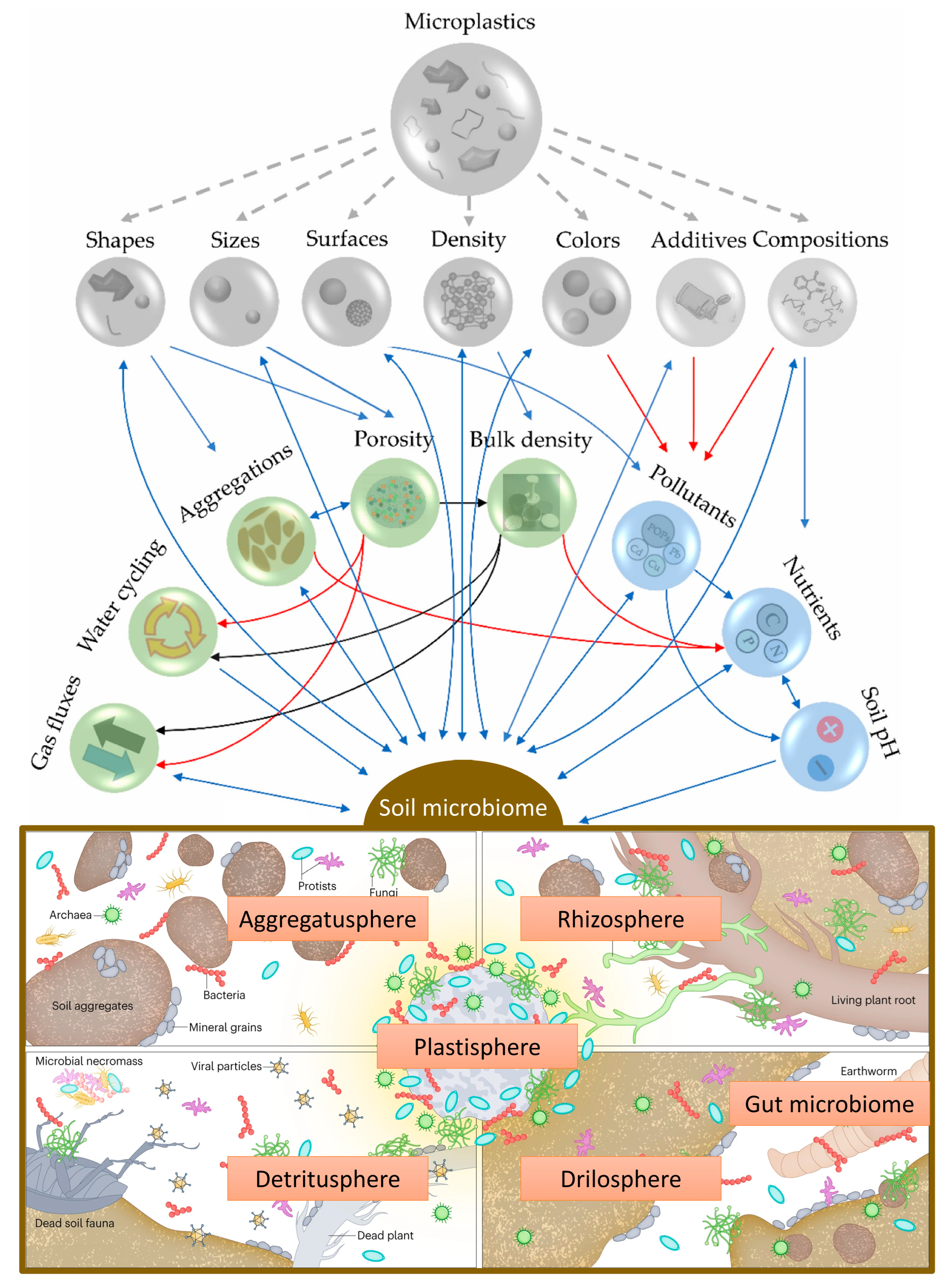
Plastic contamination is widespread in soils worldwide and impacts soil dwellers and their modus operandi in the environment. Although the effects of such interactions are still in their infancy, robust knowledge has already been produced in the field, allowing in-depth reflections on the impacts of plastics, microplastics (MPLs), and nanoplastics on soil fauna and soil–plant systems. However, data robustness is still intricate since the assessment of the effects of plastic, MPL, and NPL contamination in soil organisms and the ecotoxicity of MPLs and NPLs varies depending on their characteristics (e.g., shape, size, crystallinity, and chemical composition) and adsorbed chemical substances. The toxicological risks stem from the particles themselves, the impacted organisms, the release of contaminants (persistent organic pollutants, heavy metals, pharmaceuticals) adsorbed by the plastic, and the leaching of additives or chemicals associated with its polymer matrix. As an example, Figure 1 lists different plastic properties that affect the soil–plant system and, more specifically, the soil microbiome.
Studies assessed the impact of MPLs and NPLs on soil invertebrates, soil microorganisms, and terrestrial plants. When it comes to soil invertebrates, only a few species of earthworms are considered in the existing literature, pointing out that high concentrations of such contaminants may hamper earthworm development, as well as their movement dynamics, and can even lead to death after exposure to high concentrations of specific microplastics (
Section 3.1). Nevertheless, insufficient studies with a broad range of polymers and other soil invertebrate species undermine the proper understanding of MPLs’ and NPLs’ effects on that specific soil fauna taxa. Regarding soil microorganisms, the panorama is similar. It is evident that microplastics are responsible for community shifts, but most articles on soil microbiomes focus mainly on bacteria instead of other taxa, undermining the holistic understanding. Thorough knowledge of the impact of MPLs and NPLs on the soil microbiome is still lacking and is dependent on understanding heterogeneous soil properties, complex community dynamics, microbial functionality, microbiome complexity, and the interplay between protists, fungi, bacteria, and other taxa, as well as on the varying communities dwelling on soil aggregates, soil, rhizospheres, the plastic surface, etc. (
Section 3.2). Many studies have shown that plastic contamination may also affect terrestrial plants through direct and indirect associations.
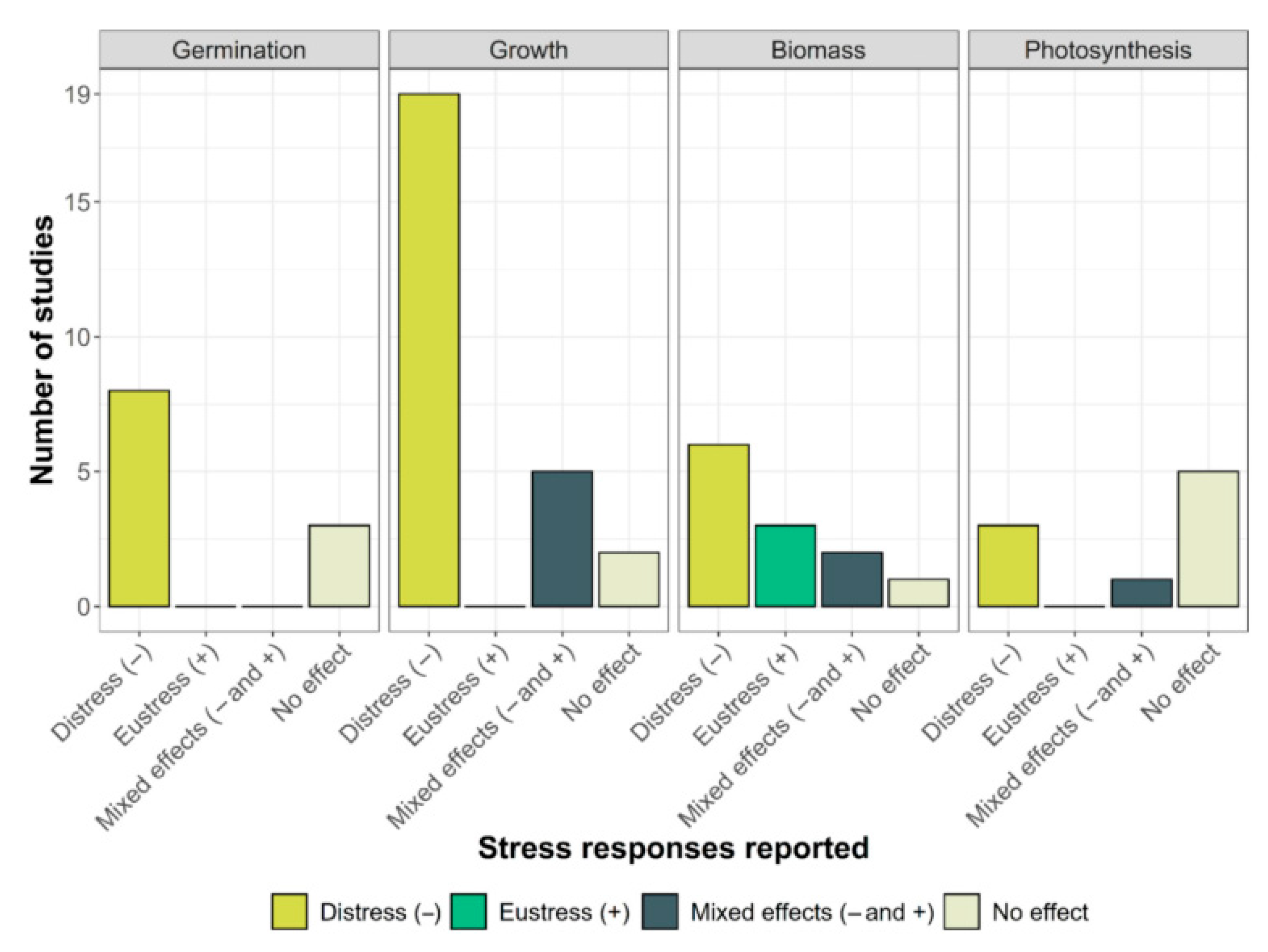
Section 3.3 details the data from several studies showing MPLs’ and NPLs’ impacts on plant stress parameters (germination, elongation growth, biomass, and photosynthesis) and the reported toxicological effects (distress, eustress, mixed effects, or no effects).
This chapter summarizes, through a methodological review approach, the already existing knowledge on the effects of plastic materials in their different forms on soil organisms (invertebrates, microorganisms, and terrestrial plants) at different levels, from subindividual to populational or community levels. Here, we gathered the available knowledge in this field and synthesized it harmonically by presenting the key messages on the current status quo of MPLs’ and NPLs’ impact on soil invertebrates, soil microorganisms, and terrestrial plants. To conclude, we also highlight further research needs in the field by summarizing the current knowledge gaps.
2. Materials and Methods
Data acquisition relied on a systematic review of data compiled from peer-reviewed literature using the Web of Science Core Collection (Thomson Reuters, Toronto, ON, Canada). This review followed up on the queries for the extensive report performed in 2023, with a detailed search for the Collective Scientific Assessment project “Plastics used in agriculture and for food” (see Acknowledgments). That resulted in 1091 peer-reviewed papers. Out of these, we scanned the abstracts of articles containing the following keywords: plastics*, biota*, soil invertebrates*, microplastics*, nanoplastics*, soil microbiome*, terrestrial plants*, terrestrial*, agriculture*, polymers*, and all other articles falling within our expertise in soil contaminants. After scanning 263 abstracts, publications lacking a connection with the impact of MPLs and NPLs on soil invertebrates, soil microbiomes, and terrestrial plants were excluded. The same researcher scanned all the abstracts to avoid observer bias. The selection prioritized reviews and meta-analysis from 2018 onwards to account for the most recent and sound information. We set the limit to 2018 to compile more than 5 years of research. We consider that this timeframe is sufficient to guarantee that the information in older articles has been compiled in the selected reviews. When papers published earlier were central to a specific topic, we included them in the selection to enhance the review’s robustness. It resulted in a list of 92 published peer-reviewed articles for a thorough reading. We also included eight articles to strengthen the review content on the impacts of plastic additives and another one on the effects of nano- and microplastics on soil microorganisms, since that was not properly covered with the initial keywords. Then, both co-authors thoroughly analyzed the selected papers to explore the articles comprehensively.
3. Results
3.1. Soil Invertebrates
3.1.1. Earthworms
Earthworms are the most widely studied soil organisms in ecotoxicological tests responding to microplastic (MPL) and nanoplastic (NPL) exposure. Most earthworms have a mouth size of about 3 mm, and, therefore, MPLs < 3 mm and NPLs could be ingested by earthworms. These animals, often classified as “ecosystem engineers” [
1], can be grouped based on their burrowing behavior (epigeic, anecic, and endogeic) and feeding behavior (detritivores and geophages) [
2]. Such characteristics spotlight earthworms as major players in MPL and NPL biogenic transport into the soil [
3] and fragmentation in soils [
4].
Due to the continuous efforts with
Lumbricus terrestris and
Eisenia fetida to assess the toxicology of MPLs and NPLs, the scientific community seems to have a clear take-home message: MPLs and NPLs hamper earthworm health. MPL and NPL size, concentration, and polymer type, together with earthworm species and soil physicochemical traits, may steer how the impacts take place. Even though a few studies pointed out that under certain conditions, MPLs and NPLs did not impact or lead to increased mortality of earthworms [
1,
5], the current scientific consensus is that MPLs and NPLs trigger a cascade of effects on earthworms.
Table 1 portrays the revised knowledge on the diverse range of damage provoked by exposure to MPLs and NPLs on earthworms.
Although only a few earthworm species have been studied to date, tissue and DNA damage, increased burrowing activity, altered gut microbiome, induced neurotoxicity, and increased mortality are recurrent outcomes found on ecotoxicological assays with varying plastic types and concentrations. The current consensual knowledge is built on most experiments pointing to bioaccumulation [
6,
7], and the majority of those are only testing PE and PS in the context of earthworm toxicity. Furthermore, histopathological damage and oxidative stress stand out as typical toxic mechanisms related to MPL effects on earthworms, and concentrations higher than 0.1% can trigger DNA damage and start hampering earthworm growth [
8]. Changes in earthworms’ antioxidant system to avoid oxidative damage, ROS accumulation, neurotoxicity, gut microbiome community shift, ingestion, and intestinal damage are examples of already reported damage caused by MPLs [
1]. It is noteworthy that aged polymers may affect earthworms differently, and special attention should be given to polymer aging and compounds leaching from the polymers [
9].
Table 1.
Summary of the reported effects of microplastics in earthworms based on the reviewed articles.
Table 1.
Summary of the reported effects of microplastics in earthworms based on the reviewed articles.
| Plastic Type | Plastic Particle Size | Concentration | Earthworm | Exposure Time | Effects | Reference |
|---|
| PES fibers | | 0.1 and 1% w/w | L. terrestris | | Changes in metallothionein gene expression | [1] |
| PE and UV-aged PE | | 20 mg/kg dry soil | Eisenia
andrei | 56 days | UV-aged PE decreased reproduction, while normal PE increased reproduction; UV-aged PE also more significantly hampered the gut microbiome alpha diversity | [9] |
| PE | <150 µm | [7%] w/w | L. terrestris | 14 days | Increased burrowing activity | [10] |
| PE | 250 and 1000 μm | 125, 250, 500, and 1000 mg/kg dry soil | E. andrei | 28 days | Serious gut damage and molecular changes | [11] |
| PS | 58 μm | 1% and 2% w/w | E. fetida | 30 days | Decreased body weight and increased mortality | [12] |
| PE | <150 μm | 28%, 45% and 60% | L. terrestris | 14 and 60 days | Increased mortality rate and decreased growth | [13] |
| PE and PS | 50–150 μm | | E. fetida | 28 days | MPLs worked as vector for hydrophobic organic contaminants | [14] |
| PS, PP, PET, LDPE | 250 µm | 2.5%, 5%, and 7% w/w | L. terrestris | 48 h | MPLs accumulation in tissues | [15] |
| PS, PP, PET, LDPE | 250 µm | 7% (w/w) | L. terrestris | 48 h | Physical damage to the mucus membranes of earthworms | [15] |
| LDPE | <400 µm | 1.5 g/kg of dry soil | E. fetida | 28 days | Skin damage | [16] |
| LDPE | <400 µm | 1.0 mg/kg dry soil | E. fetida | 28 days | Increase in CAT activity and MDA content | [16] |
| PS | 100 nm and 1300 nm | | E. fetida | | Decrease in SOD activity and increased GSH content | [17] |
| LDPE | 550–1000 µm | 0.25% w/w | E. fetida | 28 days | ROS accumulation; decrease in SOD, CAT, and GST activities; increase in MDA levels | [18] |
| PS | 100–1300 nm | 100 and 1000 µg/kg soil | E. fetida | | DNA damage | [17] |
| PS | | | E. fetida | 3, 7, 14, 21 days | Severe DNA damage in coelomocytes | [19] |
| PES fibers | | 1% w/w | L. terrestris | | Increase in the expression of stress biomarker genes mt-2 and hsp70 | [20] |
| PES fibers | 0.1, 1, 10, and 100 µm | 10 mg/kg soil | E. fetida | | Large MPLs upregulated the expression of HSP70, TCTP, SOD, and MT genes and downregulated the CAT and GST genes | [19] |
| LDPE | 550–1000 µm | 0.25% w/w | E. fetida | 28 days | Upregulation of the expression of calreticulin, annetocin, TCTP, and HSP70 genes | [18] |
| PE | 180–212 µm and 250–300 µm | 1000 mg/kg dry soil | E. andrei | 21 days | Decreased mature sperm bundles and sperm density; increased disorder of germ cells, loose tissue structure, and intestinal tissue; damaged sperm plasma membranes | [21] |
| LDPE | <400 µm | 1–1.5 g/kg dry soil | E. fetida | 21–28 days | Induced neurotoxicity and stimulated acetylcholine esterase activity | [16] |
| PS | 100 nm | | E. fetida | 3, 7, 14, 21 days | Altered gut microbiome | [19] |
| PS + phenanthrene | 100 nm | 10 mg/kg soil | E. fetida | 3, 7, 14, 21 days | Higher oxidative stress and reduced phenanthrene-degrading bacteria in the gut | [19] |
| LDPE + glyphosate | <150 µm | | L. terrestris | 14 days | Volume and weight of earthworm galleries affected | [22] |
| LDPE + atrazine | 550–1000 µm | 0.25% w/w | E. fetida | 28 days | Oxidative stress | [18] |
| Microplastics + dufulin | 40–50 μm | 300–3000 mg/kg | E. fetida | 28 days | Increased dufulin bioaccumulation and exacerbated oxidative damage | [23] |
| HDPE, LDPE, PS, PP, PVC with PAHs and PCBs | | | E. fetida | 28 days | Accumulation of HOCs, with the highest concentration of HOCs in earthworms’ tissues exposed to PE | [24] |
| EPS + HBCDDs | 830–2000 µm and <830 µm | | E. fetida & M. guillelmi | 28 days | Accumulated greater HBCDDs by E. fetida than M. guillelmi | [25] |
3.1.2. Nematodes
Nematodes are also considered model organisms for ecotoxicological studies since they are widely distributed in soils and play key roles in biological processes. Nematodes are a highly diverse group with over 15,000 described species and can be plant-, bacterial-, or fungal-feeders, and carnivorous and omnivorous feeders [
1]. Currently, studies evaluating the impact of MPLs and NPLs on nematodes were mainly carried out with a single model species, e.g.,
Caenorhabditis elegans, which hampers our understanding of the universality of the actual impact of MPLs and NPLs on such a diverse group of soil-dwellers [
5]. Several factors may play a role in the interaction of such organisms with MPLs and NPLs, for instance, body size, mouth opening, and feeding behavior of nematodes, as well as the diffusion rate of plastic-derived chemical compounds into the soil during dry–wet cycles.
Although some rare studies found that (i) MPLs and NPLs did not impact the abundance of fungal and bacterial nematodes and their survival rates [
1] and (ii) nematode survival rate [
5] did not respond significantly to MPLs and NPLs, the scientific community mainly agrees that exposure to MPLs and NPLs is inducing toxicity in nematodes. A study reported the presence of PS MPLs throughout the digestive tract, lumen, pharynx, gut lumen, and rectum of
C. elegans [
26]. MPL and NPL ingestion triggers bioaccumulation and intestinal damage of
C. elegans [
27], oxidative stress [
1,
26,
28], damaged gonad development and hampered reproduction [
29], neuronal damage, and altered locomotive behavior [
1,
26,
29], possibly impacting cholinergic and GABA neurons [
26], with reproductive toxicity echoing to next-generation nematodes [
6]. Other adverse effects reported include atypical defecation rhythm [
30], increased head thrashing and crawling speed [
31], lipid accumulation and altered gene expression [
1], energy metabolism [
28], reduced body length and lifespan [
26], and a higher mortality rate [
5]. MPLs seem to affect the total abundance of nematodes and, consequently, their community composition [
32].
Moreover, MPL and NPL toxicity on nematodes is size-dependent since MPLs > 0.5 μm can only be ingested by nematodes with a buccal cavity [
33]. For instance, −1 μm PS particles led to an increase in
C. elegans mortality by 32.3%, a pattern that stood out when compared to 0.1, 0.5, 2, and 5 µm PS particles [
26]. Hence, numerous studies pointed out more toxic effects of smaller-sized MPLs on soil fauna [
1]. Soil physicochemical parameters cannot be disregarded since they also play a major role in MPL and NPL toxicity on nematodes, and researchers reported that a decrease in PS toxicity correlated with clay content, cation exchange capacity, and other variables, such as dry and wet cycling, porosity, moisture, and pH, should also be taken into account [
34].
Some exposure patterns are still unclear since certain nematodes show dose-dependent responses to MPLs and NPLs [
6]. Researchers found that lower concentrations of PS MPLs may decrease the lifespan of
C. elegans more than higher concentrations of the same particles [
30]. Other studies brought to light that a concentration above 100 µg/L triggered toxic effects on nematodes and may have triggered a “maternal effect” due to observed transgenerational manifestation [
35]. Some studies found reductions in root-feeding, omnivorous, and predatory nematodes due to different body sizes and feeding behaviors among the exposed nematodes; that is, smaller sized particles may trigger more negative impacts on smaller nematodes.
Nevertheless, there is still a lack of studies assessing the impact of MPLs and NPLs on a diverse range of soil-dwelling nematodes. Therefore, the assessment of MPL and NPL impacts on a diverse range of nematodes can assist the scientific community in uncovering the unseen impacts of particulate plastics in soil fauna since studies on how MPLs and NPLs affect soil fauna often include only bacteria-feeding model species (e.g., C. elegans).
3.1.3. Collembola
Collembolans are another group of soil organisms often tested for ecotoxicological purposes due to their abundance, ecological functions, and their role in nutrient cycling and decomposition. The impact of MPLs and NPLs on collembolans is not as in-depth as for earthworms and nematodes; however, preliminary studies have already shed light on the toxic effects of MPLs on springtails and the complexity of the interactions between certain plastics and collembolans [
36].
Collembolans often tend to avoid interacting with MPLs in order to minimize damage. For instance,
Folsomia candida avoided PE MPLs in soil incubations [
36]. Hence, MPLs trigger collembolans’ behavioral change [
5]. The scientific literature points out that PVC MPLs ranging from 80 to 250 µm altered
F. candida feeding behavior and disturbed their C and N elemental absorption [
1]. Such avoidance of these MPLs and other plastic particles may explain energetic expenditure and, therefore, the inhibited growth and reproduction of collembolans when exposed to MPLs and NPLs. Chemicals and antibiotics adhered to and/or adsorbed to MPLs can also hamper
F. candida gut microbiota and lead to MPL bioaccumulation [
37]. Moreover, these microarthropods can transport MPLs through the soil profile since MPLs can become attached to their cuticle [
38].
Even though certain studies emphatically pointed out the detrimental effects of MPLs on certain collembolans [
36], there is a lack of scientific consensus on whether MPLs are mainly detrimental or not to collembolans due to the limited research carried out on the topic. Some studies pointed out that
F. candida’s mortality rate increased when exposed to 1%
w/
w MPLs, while lower concentrations (0.1%
w/
w) also decreased the number of juveniles, increased egg mortality due to changed behaviors [
36], decreased body weight and reproduction rate, affected the collembolan intestinal microbiome, undermined their standard diet [
39], and interfered with their movement [
40].
In contrast, other studies emphatically suggest that collembolans do not ingest microplastic particles [
38,
39]. Researchers found that PVC MPLs (80 to 250 µm) enhanced the bacterial diversity of the microbiome in the collembolan gut [
39], and the egg-laying behavior did not change due to MPL presence [
38], and short and long polyester fibers (12–2870 and 4000–24,000 µm) in the soil at mass concentrations of 0.02, 0.06, 0.17, 0.5, and 1.5% did not impact on mortality rate and reproduction of
F. candida [
40]. Such inconclusive data highlights the need for further research to break down the actual impact of different types and sizes of MPLs and NPLs on collembolans in soils.
3.1.4. Enchytraidae
Limited studies have targeted the effect of plastics on pot worms (Enchytraeidae), and the results are still inconclusive. Exposure to PS MPLs ranging from 0.05 to 0.1 µm in size at a concentration of 0.5%
w/
w led to increased investment in reproduction, i.e., more cocoons by
Enchytraeus crypticus. Such a shift towards reproduction may represent a response to handle the environmental toxicity together with decreased body weight and altered microbiome [
41]. Other studies have shown that pot worms produced more mucus when interacting with MPLs and long polyester fibers (4000–24,000 µm) in the soil, triggering
E. crypticus mortality and a damaged cuticle. However, ingested polyester fibers (12–2870 µm) did not trigger any significant damage to soil invertebrates upon short-term exposure [
40], and polystyrene particles ranging from 0.05 to 1 µm did not affect pot worms’ mortality rates [
41].
3.1.5. Snails
Only a few studies have assessed MPL impact on snails. MPL bioaccumulation has been reported in edible snails (
Helixaperta,
H. aspersa, and
H. pomatia), which could lead to histopathological damage in their digestive system [
42]. For instance, 0.71 g PET MPLs/kg of dry soil induced damage to the gastrointestinal tract of snails after a 28-day exposure.
Achatina fulica also underwent dose-dependent disruption in excretion due to high exposure to PET fibers and triggered fragmentation and deterioration of MPLs upon ingestion [
43].
3.1.6. Stinging Wasps
Hardly any work has been conducted on the impacts of MPLs on stinging wasps (
E. crypticus). One study showed that tire tread particles (13–1400 µm) hampered their survival and reproduction, and the authors hypothesized that such damage could result from enriched pathogens in their gut microbiota [
44]. High concentrations of PS NPLs in oatmeal used as a food source (50–100 nm, 10%
w/
w) undermined the abundance of N cycling microorganisms, such as Rhizobiaceae, Xanthobacteraceae, and Isosphaeraceae [
41]. PA and PVC (30 µm) and nylon MPLs (>90 g/kg Lufa 2.2 soil) also undermined
E. crypticus reproduction with greater effect for smaller size ranges (13–18 µm) [
45,
46].
3.1.7. Mites and Woodlice
The impact of MPLs and NPLs on other groups of soil dwellers is clearly in its infancy. Some studies pioneered such ecotoxicological tests and showed that polyester fibers in soil (0.5% mass concentration) did not impact
Oppia nitens reproduction and mortality rates [
5]; the presence of MPLs originating from different polyesters [
40] and facial cleanser or plastic bags did not trigger any changes on
Porcellio scaber feeding activity, defecation frequency, digestion efficiency, changes in body weight, and mortality rate [
47]. Out of 53 studies assessing organisms in forests and mangroves, only a limited number of studies assessed the impact on soil and/or sediment organisms, such as crabs and sea snails [
48].
3.2. Soil Microorganisms
The soil microbiome plays a major role in all soil functions. Most articles studying the soil microbiome consider bacteria, fungi, protists, and viruses, with bacteria being, by far, the most represented. The soil microbiome is a complex community of interdependent organisms, which is affected by many soil properties. Furthermore, the soil properties are very heterogeneous and dependent on different factors. Therefore, the soil microbiome is most often described in relation to the main driven factors and/or main properties of interest: plastisphere (plastic surface and soil under the influence of plastic), rhizosphere (soil under the influence of roots), aggregatusphere (soil aggregates as major building blocks of soil structure), drilosphere (soil influenced by earthworms), detritusphere (soil under the influence of dead organic material). In a similar way, the soil organisms’ gut microbiome is part of the soil microbiome, in the specific organisms’ gut conditions (
Figure 1). There is an open definition of the plastisphere, including everything from just the organisms strictly living on the plastic surface to organisms living in the surrounding soil under the influence of plastic contamination. The latter seems more widely accepted and it is the one we use in this section [
49].
Figure 1.
Plausible interaction pathways between MPLs, microorganisms, and soil properties. Gray bubbles represent MPLs, and green, blue, or brown bubbles represent physical, chemical, or biological factors. Gray arrows show physicochemical properties belonging to MPLs. Red arrows show positive effects, and black arrows represent negative effects. Blue arrows indicate unclear effects (these can be positive or negative) in different conditions. Adapted from [
50]. Diversity of the soil microbial community described in five systems: plastisphere (plastic surface and soil under the influence of plastic), rhizosphere (soil under the influence of roots), aggregatusphere (soil aggregates as major building blocks of soil structure), drilosphere (soil influenced by earthworms), detritusphere (soil under the influence of dead organic material), gut microbiome (microbial communities in soil organisms’ digestive system). Adapted from [
49].
Figure 1.
Plausible interaction pathways between MPLs, microorganisms, and soil properties. Gray bubbles represent MPLs, and green, blue, or brown bubbles represent physical, chemical, or biological factors. Gray arrows show physicochemical properties belonging to MPLs. Red arrows show positive effects, and black arrows represent negative effects. Blue arrows indicate unclear effects (these can be positive or negative) in different conditions. Adapted from [
50]. Diversity of the soil microbial community described in five systems: plastisphere (plastic surface and soil under the influence of plastic), rhizosphere (soil under the influence of roots), aggregatusphere (soil aggregates as major building blocks of soil structure), drilosphere (soil influenced by earthworms), detritusphere (soil under the influence of dead organic material), gut microbiome (microbial communities in soil organisms’ digestive system). Adapted from [
49].
3.2.1. Plastic Colonization and Plastisphere Microbial Community
Several studies describe that plastics serve as a novel ecological habitat for microorganisms living at the soil–plastic interface, allowing the formation of unique microbial communities [
49]. Plastics can be considered as an “exotic” carbon source and may provide diverse habitats to feed more rare microbial species [
51]. Overall, the plastisphere community has generally lower diversity than the bulk soil, and it is enriched in microorganisms with certain traits and genes. For example, there is a shift to a higher proportion of specific pathogenic bacteria and an increase in antibiotic resistance genes (ARGs) in the soil plastisphere. Such plastisphere is also enriched in plastic-degrading microorganisms, including fungi, contributing to a degradation of the plastic surface [
49].
Change in the microbial community is also observed in the soil surrounding plastic debris [
52]. For instance, a meta-analysis of 48 articles observed an overall significant decrease in microbial biomass in the presence of plastic [
53]. The same study shows contrasting effects on the α-diversity, showing a significant increase in the presence of PP, no effect with PE or PLA, and a decrease with PVC [
53]. Changes are also reported directly at the taxonomic level; for example, the presence of PE fragments induced abundant taxa, including plastic-degrading bacteria and pathogens [
54]. The presence of PVC particles increased
Desulfobulbaceae and
Desulfobacteraceae while decreasing
Sedimenticolaceae and
Chromatiaceae due to some antimicrobials, probably attributed to plastic additives. In addition, PS microbeads inhibited Bacteroidetes, Proteobacteria, and Firmicutes [
55]. Biodegradable MPLs (PHBV) increased the abundance of oligotrophic microorganisms and decreased fast-growing copiotrophs [
56]. Additionally, the abundance of arbuscules, hyphae, and arbuscular mycorrhizal fungi significantly increased with PS microfibers [
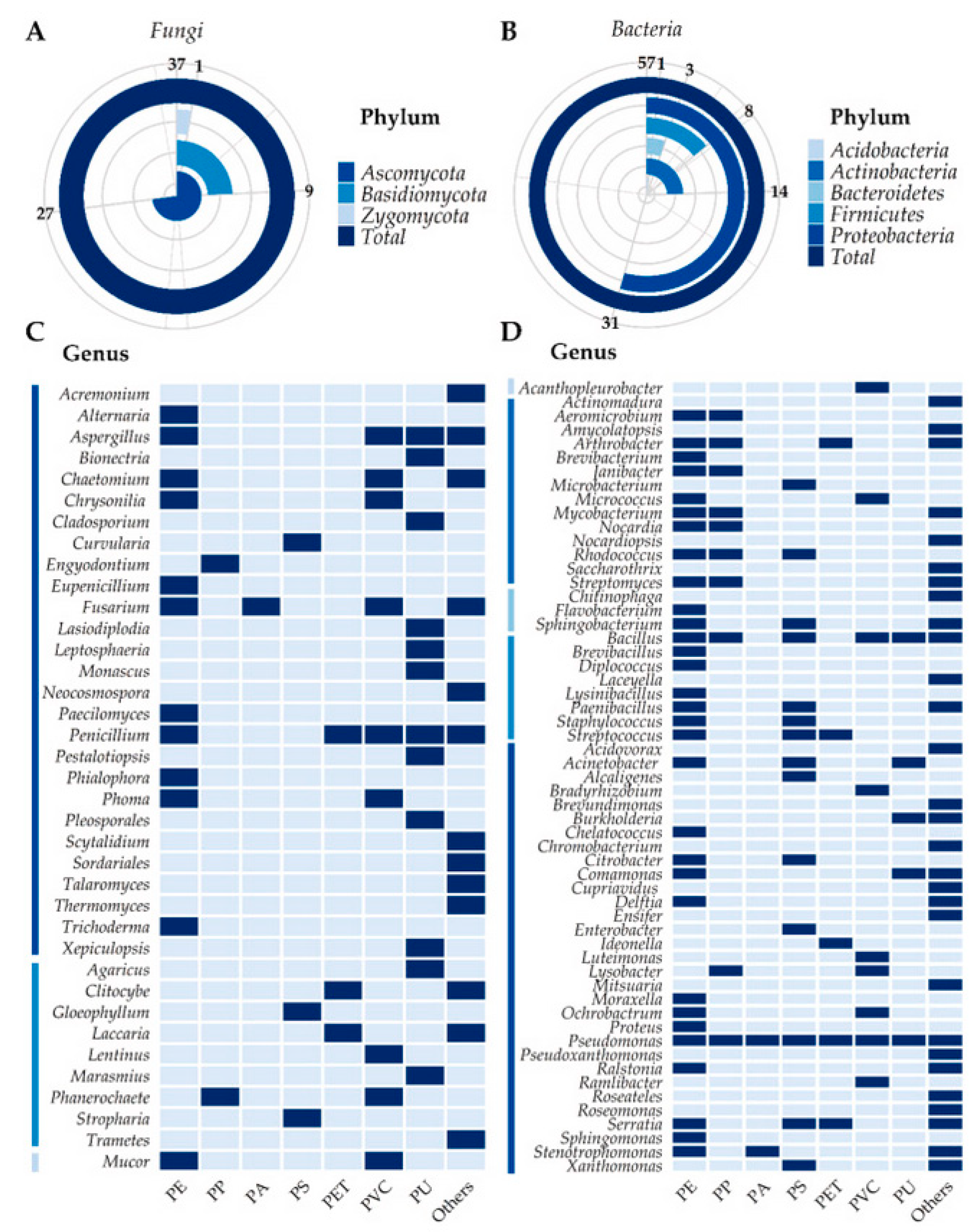
55]. Other examples, derived from [
50], are summarized in
Figure 2.
Different direct and indirect factors could explain changes in the soil microbial community. As direct effects we mainly include the increased toxicity and the additional source of nutrients. As indirect effects we include change in the soil properties (porosity, water retention, pH, sorption) and cascades from direct effects (predation and pathogenic dynamics) that can also induce changes in the soil microbial community. For example, a study reported an increase in the abundance of Gram-negative bacteria compared to Gram-positive ones in plastic-contaminated soil and suggested that MPLs may provide extra food sources to microbes and promote rapid proliferation of r-strategists of the soil microbial community (quick investment in reproduction—exponential growth) [
57]. The override of r-category over K-category led to declined richness of the soil microbial communities. Overall, all the plastic effects vary for different soils, climates, plastic contamination types (size shape of particulate plastics, main polymers, and plastics-related compounds) and concentrations.
3.2.2. Changes in the Microbial Activity
Plastic contamination results in either activation, suppression, or no change in soil microbial enzyme activities [
56]. For example, polyacrylic and polyester fibers (0.1%
w/
w) decreased microbial metabolic activity [
58]. PVC and PE powders (10%
w/
w) in a wheat–soil system resulted in decreased β-glucosidase and xylosidase activities by 16–43% [
59]. In contrast, MPLs could stimulate soil microbial activities and significantly promote the basal respiration rate of soil microbial communities, and it could be a simple response to more substrate available [
57]. The change of microbial activity is directly linked with the change of soil functions, for instance, the regulation of biogeochemical cycles.
3.2.3. Changes in the Biogeochemical Cycles
Since microorganisms facilitate biogeochemical cycles, they contribute significantly to soil ecosystems. Therefore, changes triggered by MPLs may change biogeochemical cycling, which may then have an impact on the overall functions and services of the soil ecosystem [
57]. For instance, MPLs decreased the abundance of soil nitrifiers and ammonia oxidation in soil. It is the same case for the nitrogen cycle, as well as for the carbon cycle. Indeed, PLA, PCL, PHA, PBAT, and starch-based bio-based polymer types have been approved as fixed C sources to enhance the concentration of fungal species, e.g.,
Fusarium,
Aspergillus, and
Penicillium [
55]. Finally, MPLs can alter (reduce or increase) the availability of emerging contaminants to soil microorganisms [
49]. In fact, it has been shown that plastics can carry with them organic contaminants (e.g., pesticides, antibiotics, pathogens) and release them in the soil. On the other hand, plastics can adsorb some contaminants present in the soil or provide a habitat free of specific soil contaminants.
3.2.4. Plastic-Contamination-Induced Toxicity
Another perspective on biogeochemical cycles is that plastics release not only nutrients but also toxic chemical compounds. MPLs can also activate inactive soil compounds, such as micropollutants and heavy metals. The increased availability of poisonous materials may trigger different damage to different strains [
57]. Additionally, small-sized particulate plastics, specifically nanoplastics with a size lower than 0.1 μm, are potentially able to penetrate cell membranes and thus exert cytotoxic effects because of the bioaccumulation in the cells of yeasts and filamentous fungi [
60].
3.2.5. Soil Microorganisms as Indicators of Plastic Contamination
As we have shown the effects of plastic contamination specifically induced on specific organisms, the microbial communities and their activities could be an indicator of such plastic contamination. This idea would need to be further explored before it could be used to assess plastic contamination based on its effects rather than its measured environmental concentrations.
3.2.6. Microplastics and Soil Protists: A Research Need
Even though MPL ingestion by protists has already been reported, the effects are not yet well-described in the literature. These groups are extremely important for soil health, and understanding how MPLs and NPLs impact their health is pivotal. After a call for research in 2018 [
61], researchers started to tackle the impact of microplastics on soil protists. Although protists interact with pollutants through adsorption, transformation, and predation, their ecological interaction with soil pollutants and microplastics remains unresolved.
3.3. Terrestrial Plants
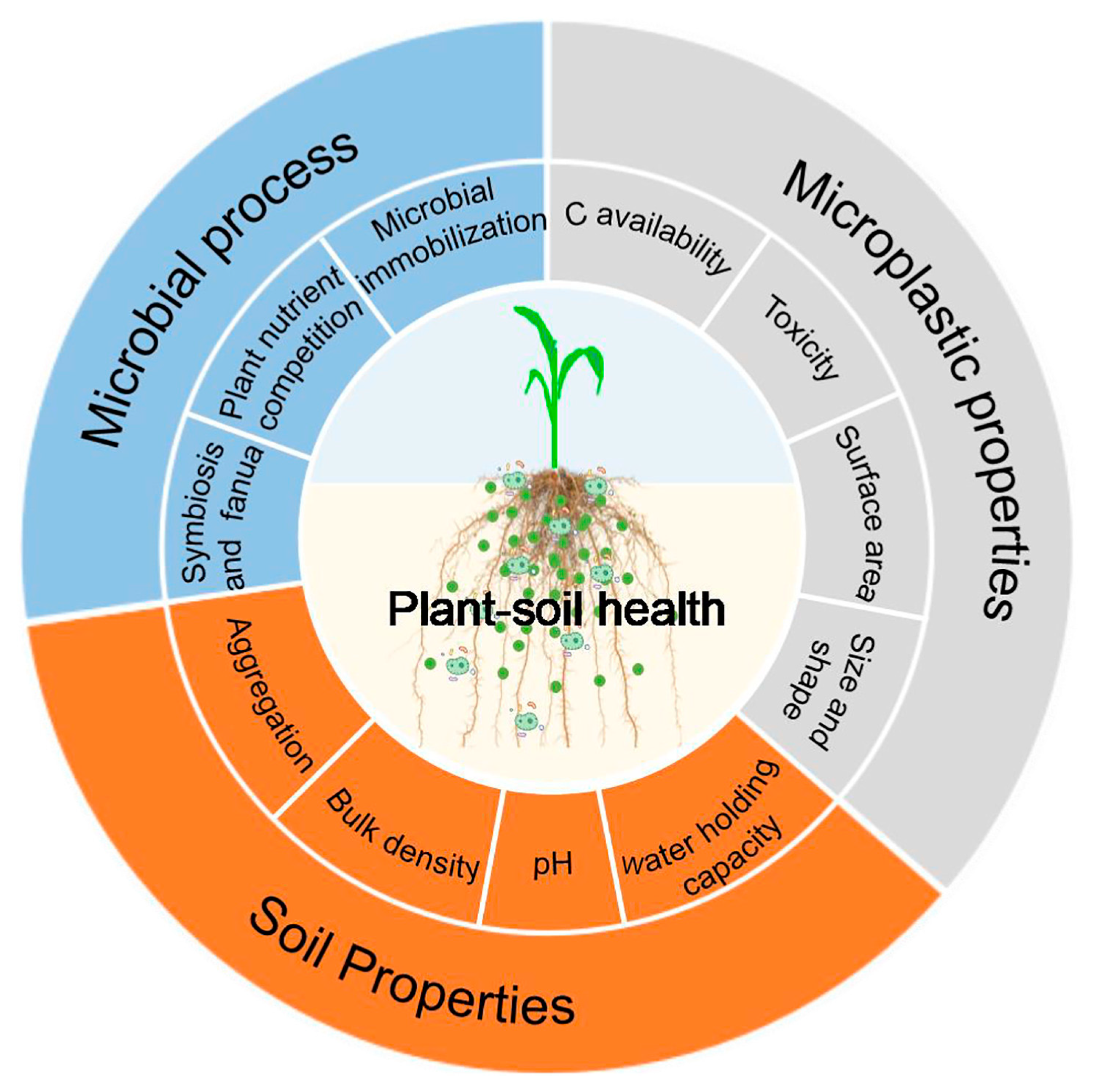
The previously described soil microbiome that has beneficial, neutral, and pathogenic microorganisms is a major factor that affects plant health (
Figure 3). Therefore, either through an indirect effect on the microbiome or a direct impact on plants, microplastic contamination is affecting terrestrial plants. For instance,
Figure 4 summarizes the reported toxicological effects (distress, eustress, mixed effects, or no effects) in 27 toxicological studies according to four major parameters of plant stress (germination, elongation growth, biomass, and photosynthesis) (
Figure 4) [
62]. In this section, we detail these potential effects.
3.3.1. Root Growth
Depending on the circumstances, plastic contamination can inhibit or stimulate root growth [
50]. For example, a study from a soil pot experiment showed that the root biomass of common bean (
Phaseolus vulgaris L.) in 1.5%, 2.0%, and 2.5%
w/
w biodegradable MPL treatments were significantly lower than that in the control treatment [
64]. On the contrary, more root growth compared to the control has been observed in lettuce (
Lactuca sativa L.) at 0.5 and 1% PVC MNPLs (100 nm–150 μm) in soil [
65] and in rice (
Oryza sativa L.) at 10–100 mg·L
−1 PS NPLs (20 nm) [
62]. It is worth noting that plants may respond to environmental stress by expanding root systems and accelerating water uptake. One hazard posed by plastic contamination is that some fibrous MPLs and MaPLs have the potential to entangle plant roots and hinder their development [
60].
Most studies have investigated the effects of PS. For instance, PS MPLs could greatly increase the percentage of late apoptotic cells and dead cells, indicating that the PS MPLs could trigger root margin cells to undergo apoptosis or thanatosis. Additionally, the rate of micronuclei in root samples exposed to PS MPLs was noticeably higher than that in the control group. Another study also reported that when exposed to MPLs, the root sample had a lower mitotic index than that in the control group [
66]. Moreover, PS MPLS presence can raise the level of ROS and lower antioxidase activity, leading to substantial oxidative stress [
60].
3.3.2. Effects on Germination
The effect of germination is the most described effect in ecotoxicological studies with observed inhibition or no effect under the different conditions reported to date. For instance, in an MPL assay, a significant reduction in seed germination of cress plants was observed at all selected sizes of MPLs: 50, 500, and 4800 nm [
67]. On the contrary, 0.01, 0.1 and 1 g·L
−1 of PS NPLs (50 nm) had negligible effects on the germination rates of Allium cepa after 72 h [
55]. In more detail, seed germination is also affected differently by the MPL polymer type. For example, after 21 days of adding 0.02% (
w/
w) of MPLs to the soil, the percentage of germination inhibition was significantly higher in garden cress (
Lepidium sativum) exposed to PE and PP compared to the control, while no significant change was observed with PVC exposure [
68]. Similarly, inhibition of seed germination by PLA (0.1%
w/
w) and PET fibers (0.001%
w/
w) was also observed in perennial ryegrass (
Lolium perenne) [
69]. The concentration of MPLs also appears to be a determining factor, and the germination rates of certain seeds can be restored and even promoted at higher concentrations of MPLs. For example, ethylene–vinyl acetate copolymer (EVA), LLDPE, and PMMA all had an inhibitory effect on wheat seed germination from low to medium concentrations (<500 mg·L
−1) in the range of 2.86% to 20%, while seed germination was promoted at a higher concentration (1000 mg·L
−1) [
51]. Interestingly, another study showed that although LDPE- and PBAT-based microplastics (0.2 and 2%
w/
w) had negligible effects on cotton, tomato, and
Arabidopsis germination, the leaching solution from PBAT-based polymers undermined
Arabidopsis germination [
70].
Effects on germination might also be caused by obstruction of root pores: MPLs physically block the pores in the seed capsule, preventing the seeds from absorbing water. Zhang et al. (2022) described that the effect can be the opposite due to a nano-priming effect of NPLs on seed germination, which are able to penetrate the seed coat and induce upregulation of water channel genes by creating small pores [
51]. In a similar manner, plastic residues can also enter the plant tissue, as detailed below.
3.3.3. Plastic Residues (NPs and Oligomers) in Plant Tissue
Due to their large size preventing their penetration through cellulose-rich plant cell walls, it is not expected that plants are able to take up MPLs [
71]. However, particles < 0.1 μm can traverse biological membranes and enter plants [
65]. This was demonstrated by [
72], who found that tobacco BY-2 cells could take up nano-polystyrene (20 and 40 nm) in cell culture. Similarly, PS NPLs (200 nm) were absorbed by wheat and lettuce roots. In more detail, 200 nm PS nanobeads have been observed entering the apical meristem through the epidermal layers of whole apical root sections [
72]. Azeem et al. (2021) indicate that transpiration pull is the dominant factor in the plant uptake and translocation of plastic particles [
55].
NPLs could therefore enter the wider food chain by ending up in plant parts intended for human or livestock consumption [
73]. Another study also found that common plasticizers, such as phthalates, could end up in wheat grains, exerting potential health risks to livestock and humans [
74]. Therefore, to preserve safe food production, the impacts of MPs, especially residues in the form of nanoplastics, oligomers, and additives, on plant growth in agroecosystems deserve further attention.
3.3.4. Damages to the Permeability of Root Cell Membrane
Evidence suggests that the surface roughness of MPs, combined with their low density and high surface tension, can cause damage to the permeability of the root cell membrane [
75]. For instance, Kalčíková et al. (2017) observed mechanical root damage in duck-weed plant when exposed to sharp-edged PE microbeads compared to its soft-edge particles [
76]. Nevertheless, both types of microbeads showed a significant reduction in root length. It is not known to which extent this mechanism is relevant for environmentally weathered MPLs.
3.3.5. Root Colonization of AMF
MPLs have been shown to affect the root colonization of Arbuscular mycorrhiza fungi (AMF) differently. For example, a spring onion experiment showed that polyester fibers (average length of 5000 μm and an average diameter of 8 μm, 0.2%) increased ~8-fold the root colonization by AMF, PP fragments (median 624 μm, 2.0%) triggered a ~1.4-fold increase, and PET fragments (median of 187 μm, 2.0%) led to a reduction of ~50% in root colonization by AMF. On the other hand, other treatments, such as PA beads (diameter of 15–20 μm, 2.0%), PEHD fragments (average 643 μm, 2.0%), and PS fragments (median 492 μm, 2.0%), had no detectable effects [
77]. In the same experiment, polyester fibers and PS fragments increased root length and biomass production, and all tested microplastics significantly increased total root length and decreased average root diameter. Similarly, in a maize experiment [
78], both tested plastics (virgin HDPE and commercial PLA, 100–154 μm, at 0.1–10%) altered the AMF community composition but without significant effects on the AMF diversity. The 10% PLA treatment significantly decreased maize shoot (by 16–40%) and root biomass (by 28–50%). In this subsection, we want to highlight the potential effects of plastic on the root colonization of AMF, but the available literature is too scarce to draw any conclusions.
3.3.6. Nutrient Cycle
MPLs are mostly composed of carbon (e.g., PS or PE are almost 90% C), thus their incorporation into soil can represent a source of non-plant-derived carbon [
79]. Therefore, MPL-derived C could make a hidden contribution to soil C storage in solid and dissolved organic matter pools, especially considering the input of relative bioavailable C during the breakdown of biodegradable MPLs in the plastisphere.
The altered N immobilization discussed above could decrease soil nutrient availability. For example, PVC (1–5%
w/
w) powder increased wheat-derived C allocated into the soil due to the stimulation of root growth and enhanced rhizodeposition [
59]. However, 10% PE and PVC powders increased the C allocated to roots but decreased the amount of C incorporated into soil.
3.3.7. Molecular Responses
All the effects are dependent on the plastics, plants, and soil properties. Detailed mechanisms are still to be further studied. Below, we describe molecular responses that have been depicted so far.
Oxidative Stress
Oxidative stress is a critical biometric index to evaluate the phytotoxicity of MPLs/NPLs. When plants are exposed to MPLs or NPLs, excess ROS, such as superoxide anions (O
2⋅–), hydrogen peroxide (H
2O
2), hydroxyl radicals (OH⋅), and singlet oxygen (O
2), may be generated, resulting in irreversible damage to plant cells [
80,
81]. These ROS species mainly occur in a variety of plant organelles, such as chloroplasts, mitochondria, peroxisomes, and the endoplasmic reticulum. For example, researchers found that all three concentrations, 10, 50, and 100 mg·L
−1, of 100 nm PS-NPLs caused genotoxicity and oxidative stress to
Vicia faba [
82]. Subsequently, a cytological result on onion (
Alium cepa) root meristem tissues indicates that PS-NPLs (50 nm) induced cytotoxicity (reduction in mitotic index) and genotoxicity (induction of cytogenetic abnormalities and micronuclei) to plants from the lowest exposure dose (0.01 g·L
−1) [
83]. Another research group found that the antioxidant levels of lettuce generally increased with the increasing PE (average size of 23 μm) [
84]. In addition to root treatment, foliar exposure of PS (average size of 93.6 nm) also triggered oxidative stress of lettuce, shown in the significantly increased electrolyte leakage rate and decreased total antioxidant capacity [
85].
Change in Gene Expression and Enzyme Activity
According to [
51], MPLs can cause the inhibition of plant-growth-related gene expression and negative regulation, as well as the restricted activity of key enzymes involved in carbohydrate metabolism. Additionally, MPLs can cause chromosomal aberrations or oncogenic aberrations in onion (
Allium cepa L.) by inhibiting the expression of the cell cycle regulator cdc2 gene and delaying the cell cycle time, resulting in DNA and spindle damage and genotoxicity [
81].
A transcriptomics analysis showed that high doses (50 and 100 mg·L
−1) of PS-NPLs can substantially alter the expression of genes specifically regulating resistance-related functions in rice roots and affect some important metabolic pathways against oxidative stress [
62]. The influence of particulate plastics on SOD enzymes (i.e., promotion or inhibition) depends on their concentration, size, and type. For example, the SOD activity of
V. faba root tips significantly increased (after exposure to 10, 50, and 100 mg·L
−1 of 5 μm and 100 nm PS-MNPLs) compared to the control [
82]. Furthermore, the SOD activity in rice (
Oryza sativa L.) roots was significantly increased by PS-NPLs at 50 and 100 mg·L
−1 but not at 10 mg·L
−1 [
62].
Furthermore, catalase (CAT) enzymes are key antioxidant enzymes in the plant defense system that break down H
2O
2 into H
2O and O
2, thereby reducing the ROS damage. The CAT activity of V. faba root tips decreased with increasing PS exposure concentration under a 5 μm MPL treatment compared to the control, whereas it increased significantly at all exposed concentrations (10, 50, and 100 mg·L
−1) under a 100 nm NPL treatment. The CAT enzyme activity in cucumber plants decreased significantly when exposed to 500 and 700 nm PS-NPLs, while at 100 and 300 nm, no difference was observed [
86]. Interestingly, when rice was exposed to PS-MPLs, the overall trend of leaf CAT activity showed an inverted U-shape, i.e., with an increase in activity from 0 to 50 mg·L
−1 and a significant decrease at 250 and 500 mg·L
−1 [
87].
Effect on Photosynthesis
The effect of plastics on photosynthesis depends on the contamination conditions. Some studies showed that MPLs did not affect plant photosynthesis [
67] and even promote it [
68]. MPLs can improve photosynthetic capacity probably because they stimulate plant nutrient uptake and conversion, which facilitates the rate of photosynthetic carbon reaction [
88]. In contrast, Zhang et al. (2022) concluded that photosynthesis disturbance was regarded as one of the main mechanisms contributing to the effect of MPLs/NPLs on terrestrial plants [
51]. The internal mechanisms of MPLs affecting photosynthesis primarily include the accumulation of ROS in plant cells, the limitation of proteases related to the synthesis of chlorophyll molecules, the primary reaction of photosynthesis, the transfer of photosynthetic electrons, the production of carbon dioxide, and the uptake of water and nutrients [
84].
3.3.8. Effect of Biodegradable Plastics
The degradability of plastic debris is a major plastic property influencing their effect on plants. Overall, biodegradable plastics tend to lead to more significant effects than that reported for their non-biodegradable counterparts. For instance, biodegradable starch-based MPLs had a greater negative impact on wheat height and biomass compared to non-biodegradable petroleum-based ones [
89]. Furthermore, biodegradable MPLs (i.e., those composed of PHBV) caused wheat death during a 4-week study [
62], which may be attributed to the intermediate and/or final metabolites produced during PHBV degradation. On the contrary, the degree of oxidative stress on rice shoot and root caused by PE mulch film MPLs was higher than that observed with poly(butyleneadipate-co-terephthalate)-based biodegradable mulch film MPLs. Overall, although biodegradable MPLs have been heralded as a sustainable alternative to petroleum-based plastics, our review indicates that it is also important to consider the potential disadvantages of such material on plant growth and performance.
3.3.9. Interaction with Other Soil Contaminants
Tourinho et al. (2023) reported that for plants, most studies observed a decrease in contaminants’ bioaccumulation in the presence of plastics [
7]. For example, researchers found that the presence of PS MPLs reduced the heavy metal accumulation and the accumulation of ROS in wheat [
90]. Furthermore, the toxicity of As(III) to rice could be enhanced or reduced when MPLs and arsenic were co-exposed, which depends on the concentration of MPLs [
91]. MPLs also increased DTPA-extractable Cd concentrations but did not alter Cd accumulation in plant tissues [
92]. In addition, PET particles, when coexisting with Cd, Pb, and Zn in wheat rhizosphere systems, remain together for a long time; thus, PET particles can act as a carrier and transport heavy metals to the rhizosphere zone [
93]. Within the same context, PS NPLs could accelerate the formation of long-lived radicals in wheat leaves after exposure to Cd and improve carbohydrate and amino acid metabolism, hence partially reducing Cd contents in leaves and alleviating Cd toxicity to wheat [
88].
3.4. A Quick Look at the Effect of Plastic Additives
Besides the main polymers and plastic-derived compounds, all plastics contain additives for their proper manufacturing and desired end properties. The additives can represent up to 80% of the initial plastic mass and are partly desorbed, volatilized, and degraded during the aging of the plastic [
94]. As mentioned in previous sections, plastic additives can be associated with various toxic effects. In this section we want to present some specific research about plastic additives’ effects.
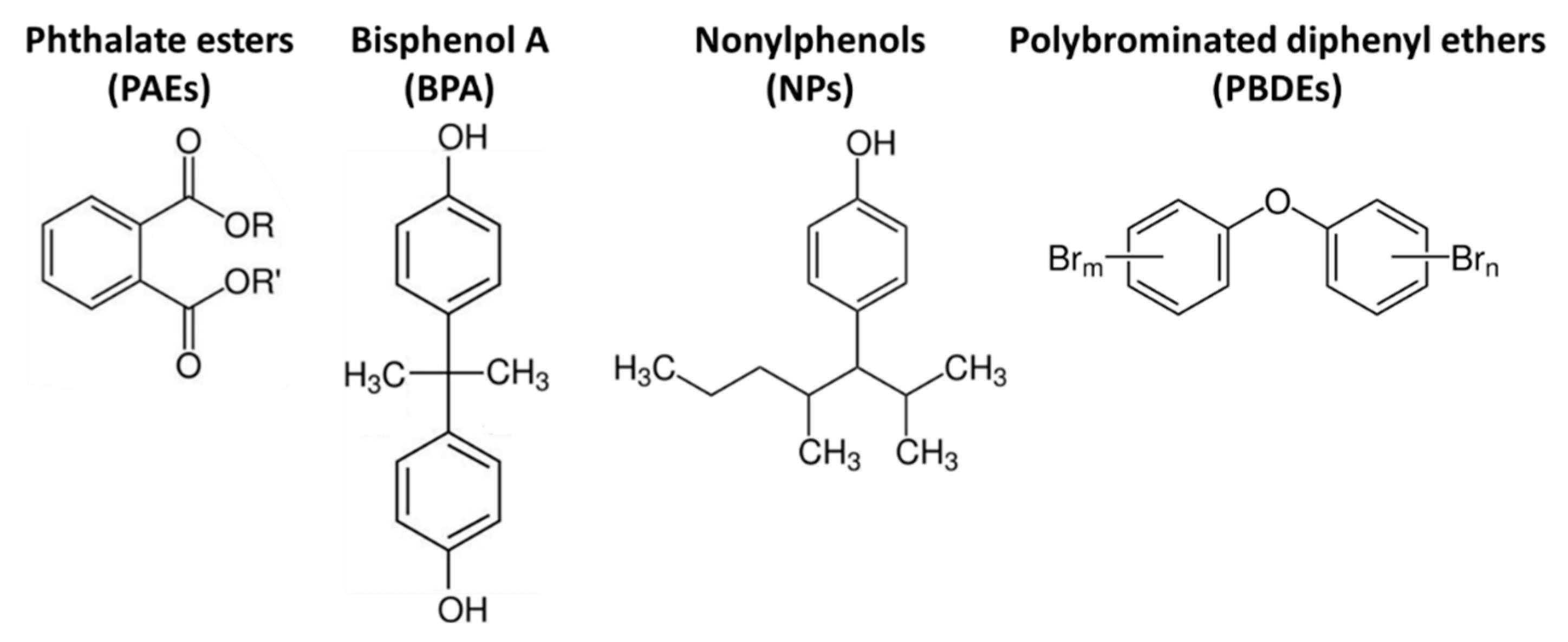
Most plastic additives are organic chemicals [
95]. They can be divided into four main groups of chemical compounds (
Figure 5). Additionally, and despite legal restrictions, metals and metalloids (e.g., arsenic, lead, cadmium, chromium(VI), cadmium) are also found in plastic composition as catalysts residues, inert fillers, pigments, stabilizers, biocides, antimicrobial agents, lubricants, and flame retardants [
96].
Plastic additives can enter the environment by leaking from plastics directly used in agriculture and through secondary sources, such as biofertilizer application or irrigation [
97]. Organic plastic additives have been reported in agricultural soils by several studies, with an average range of 10
−1 mg kg
−1 and a reported average detection rate of the analyzed chemical higher than 85% [
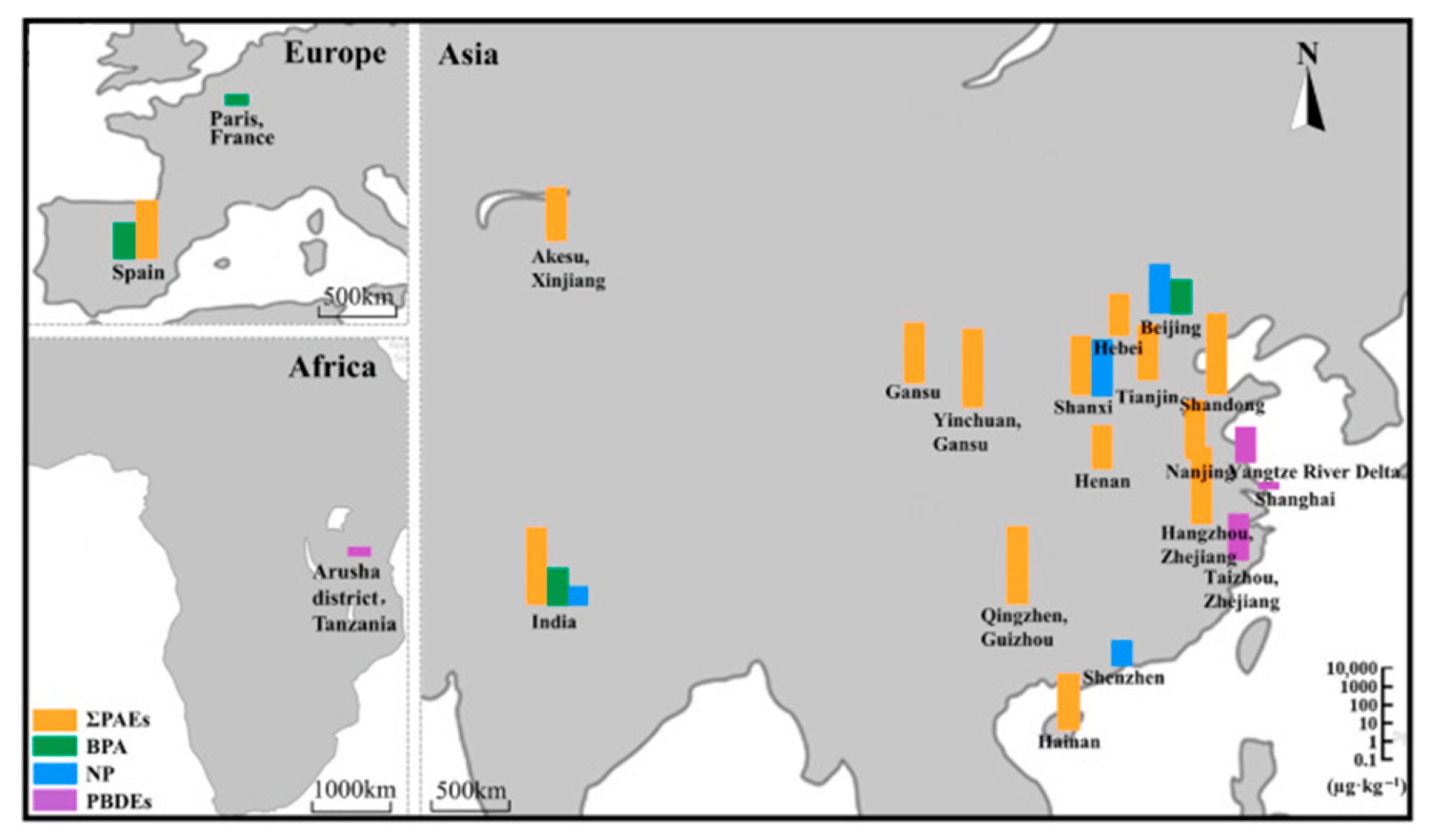
94]. The summary map below (
Figure 6) highlights the lack of studies for the diversity of agricultural systems around the globe. The mobilization of plastic additives depends on many factors, such as the aging of the plastic, the pH, and other compounds present in the matrix. For example, the bioavailability of Cd in PC (15,100 μg g
−1) reached 65% in solution of pH 2.5 with 1% pepsin when it was 17% at pH 7 [
98]. It shows that significant quantities of hazardous metals have the potential to be mobilized from plastics under certain environmental or physiological conditions, in particular, those representative of acidic digestive systems [
96].
The toxicity of some additives is assessed in many studies, whereas others are not yet well-documented. Phthalate esters are the most studied in terms of occurrence and effects and also represent a diverse category, with new molecules coming to the market [
99]. For instance, Berenstein et al. (2022) reported 0.6 to 8.8 mg kg
−1 PAEs in an Argentinean orchard’s soils and also effects on the earthworms
E. andrei for lower concentrations of the PAE dibutylphthalate (DBP), namely, reduced cholinesterases activity from 1 mg kg
−1 and reduced numbers of juveniles from 0.1 mg kg
−1 [
100]. DBP has also been reported to induce lesions in the reproductive systems of rabbits, reduce steroidogenesis in rodents, and impair spermatogenesis in frogs, among other adverse consequences [
99]. The toxicity of heavy metals is also well-documented but less in the context of mobilization from plastics.
The literature concludes that plastic additives may be the main contributors explaining the potential plastic toxicity and more research is needed to understand the mechanisms and which are the most toxic chemicals. Problematic chemicals should be replaced with environmentally benign additives [
101]. Plastic additives, especially the most persistent ones, metals and metalloids, also pose a problem for plastic recyclability. Indeed, even if banned in new plastics, these persistent additives can still be present in products made from recyclable plastics.
4. Conclusive Remarks and Knowledge Gaps
Microplastic (MPL) and nanoplastic (NPL) contamination in soils is widespread, impacting soil invertebrates, microbial communities, and soil–plant systems. The effects of these pollutants depend on multiple factors, including polymer composition, size, shape, concentration, and aging processes. While MPLs have been more extensively studied than NPLs, a holistic approach is needed to assess their combined effects. Research on soil invertebrates has largely focused on earthworms, which play a major role in MPL and NPL biogenic transport, often fragmenting these plastics into smaller particles. However, the detrimental effects on earthworm health varying according to polymer type, soil properties, and plastic concentration are yet understudied. Although some studies indicate potential long-term impacts on nematodes and collembolans, research on other groups, such as mites, millipedes, and insect larvae, is lacking. Current studies mainly assess single polymers on a few model species, such as Caenorhabditis elegans among nematodes or Lumbricus terrestris and Eisenia fetida among earthworms, while overlooking the broader soil faunal community. Expanding ecotoxicological assessments to community-level studies is essential to fully grasp the ecological consequences of MPL and NPL pollution.
Beyond soil invertebrates, plastics are also altering microbial communities at the soil–plastic interface, fostering the development of specialized microbial assemblages. It is noteworthy that bacteria and fungi play a key role in plastic biodegradation. Some bacteria and fungi with plastic-degrading potential become more prevalent in plastic-polluted soils, potentially shifting microbial functions in ways that remain poorly understood. Alarmingly, plant pathogens may be favored within the plastisphere, and studies that focus solely on microbial diversity and richness may misrepresent the functional consequences of these shifts. Research has largely centered on bacterial interactions with MPLs, leaving fungi, protists, and other soil microorganisms understudied. Furthermore, bioaccumulation and trophic transfer of MPLs and NPLs in microbial communities lack further assessments, likely due to analytical challenges. Improving the identification methodologies to detect and quantify these interactions is critical for assessing their environmental implications.
MPLs and NPLs also interact with terrestrial plants, and their harmful effects raise public awareness. Therefore, investigating how MPLs and NPLs are adsorbed and taken up by plant tissues, their translocation within plants, and their competition with essential nutrients is also crucial. Moreover, researchers should evaluate the interactive effects of MPLs and NPLs on soil aggregation, rhizodeposition, and organic matter decomposition to gain a deeper understanding of these interactions. Furthermore, MPLs and NPLs serve as vectors for co-contaminants, such as antibiotics, pharmaceuticals, flame retardants, and plastic additives, which may further disrupt soil–plant systems. We impel a thorough examination of the potential biodegradation of MPLs and NPLs (both conventional and biodegradable) in varied soils, under different environmental conditions, and considering trophic interactions. Although under certain circumstances, biodegradable and bio-based polymers are potential alternatives to tackle plastic pollution, case-specific life cycle (LCA) and risk assessments (including ecotoxicological experiments, such as LC50) are pivotal to comprehend possible toxicity from particles and chemicals leached from them before flooding the market with so-called biodegradable alternatives.
Given the complexity of these interactions, the diversity of scenarios, and the relative scarcity of available information, drawing specific conclusions is somewhat far-fetched. For instance, changing the type of polymer often leads to contrasting impacts on the assessed target. It is most likely due to the importance of other factors, such as the type of soil, incubation time and conditions, and plastic size, shape, and chemical composition. Therefore, when disregarding multifactor elaborateness, we limit extrapolations or general conclusions about “the plastic contamination”. Although meta-analyses encompass the complexity of assessing nano- and microplastics, they face many limitations. There is a lack of available studies, and the data is often not publicly accessible. In the example of a meta-analysis about the soil microbial community, only 48 articles were available, of which only three were deposited data in public databases [
53]. This is critical, especially for genomics analysis, where the data needs extensive recalculations and calibrations to compare outputs from different methods. The gap between environmentally relevant contamination and the available research is another hurdle. Researchers often elaborate experiments with relatively high concentrations of a unique plastic contaminant (mainly one polymer, one shape, homogeneous size) and a short incubation time, while more environmentally relevant contamination should ideally consider long-term exposure to relatively smaller amounts of diverse plastic contaminants. Therefore, we consider that well-replicated experiments across laboratory-, mesocosm-, and field-scales are necessary. Community- and ecosystem-level studies employing objective-driven technologies can provide insights into how MPLs and NPLs influence microbial and faunal diversity, functional traits, and soil ecosystem stability. Moreover, long-term monitoring of MPL and NPL effects on soil physicochemical properties and carbon dynamics in agroecosystems is relevant for developing sustainable agricultural practices. Since the role of MPLs and NPLs in modifying soil properties depends on variables such as soil texture, moisture, and temperature, interdisciplinary research efforts are needed to address these uncertainties. Advancing detection techniques and ecological assessments will be pivotal in comprehending the full extent of MPL and NPL contamination and guiding future prevention and mitigation strategies.
Author Contributions
D.R.M. and N.B. have contributed equally from “Conceptualization” to “Writing—review and editing” and have read and agreed to the published version of the manuscript. All authors have read and agreed to the published version of the manuscript.
Funding
This research was funded by the French Agency for Ecological Transition, the French Ministry of Agriculture and Food, and the French Ministry of Ecological Transition through the Collective Scientific Assessment project “Plastics used in agriculture and for food” conducted by INRAE together with the CNRS. This research was also funded by the European Union’s Horizon 2020 research and innovation program under the Marie Skłodowska-Curie grant agreement [No. 955334, 2020].
Data Availability Statement
No new data were created or analyzed in this study.
Acknowledgments
We thank the coordination team of the project: Muriel Mercier-Bonin (INRAE, Université de Toulouse), Sophie Duquesne (Centrale Lille, CNRS, Université Lille, INRAE), Baptiste Monsaingeon (URCA, CNRS), Lise Paresys (INRAE), and all experts having contributed to the project for their comments and fruitful discussions. We especially thank Christian Mougin (INRAE) and Anne Ferlay (INRAE) for their close collaboration.
Conflicts of Interest
The authors declare no conflicts of interest.
References
- Wang, Q.; Adams, C.A.; Wang, F.; Sun, Y.; Zhang, S. Interactions between microplastics and soil fauna: A critical review. Crit. Rev. Environ. Sci. Technol. 2022, 52, 3211–3243. [Google Scholar] [CrossRef]
- Cheng, Y.; Song, W.; Tian, H.; Zhang, K.; Li, B.; Du, Z.; Zhang, W.; Wang, J.; Wang, J.; Zhu, L. The effects of high-density polyethylene and polypropylene microplastics on the soil and earthworm Metaphire guillelmi gut microbiota. Chemosphere 2021, 267, 129219. [Google Scholar] [CrossRef] [PubMed]
- Ju, H.; Yang, X.; Osman, R.; Geissen, V. Effects of microplastics and chlorpyrifos on earthworms (Lumbricus terrestris) and their biogenic transport in sandy soil. Environ. Pollut. 2023, 316, 120483. [Google Scholar] [CrossRef] [PubMed]
- Meng, K.; Lwanga, E.H.; van der Zee, M.; Munhoz, D.R.; Geissen, V. Fragmentation and depolymerization of microplastics in the earthworm gut: A potential for microplastic bioremediation? J. Hazard. Mater. 2023, 447, 130765. [Google Scholar] [CrossRef] [PubMed]
- Leonov, V.D.; Tiunov, A.V. Interaction of Invertebrates and Synthetic Polymers in Soil: A Review. Russ. J. Ecol. 2020, 51, 503–517. [Google Scholar] [CrossRef]
- Ji, Z.; Huang, Y.; Feng, Y.; Johansen, A.; Xue, J.; Tremblay, L.A.; Li, Z. Effects of pristine microplastics and nanoplastics on soil invertebrates: A systematic review and meta-analysis of available data. Sci. Total Environ. 2021, 788, 147784. [Google Scholar] [CrossRef]
- Tourinho, P.S.; Loureiro, S.; Pavlaki, M.D.; Mocová, K.A.; Ribeiro, F. A Systematic Review of Nano- and Microplastic (NMP) Influence on the Bioaccumulation of Environmental Contaminants: Part I—Soil Organisms. Toxics 2023, 11, 154. [Google Scholar] [CrossRef]
- Guo, S.; Wang, Q.; Li, Z.; Chen, Y.; Li, H.; Zhang, J.; Wang, X.; Liu, J.; Cao, B.; Zou, G.; et al. Ecological risk of microplastic toxicity to earthworms in soil: A bibliometric analysis. Front. Environ. Sci. 2023, 11, 1126847. [Google Scholar] [CrossRef]
- Quigley, E.; Silva, A.L.P.; Chelinho, S.; Cunha, L.; Briones, M.J.I.; Sousa, J.P. Pristine and UV-aged polyethylene microplastics’ impact on gut microbiome and reproduction of earthworm Eisenia andrei. Eur. J. Soil Biol. 2024, 122, 103640. [Google Scholar] [CrossRef]
- Huerta Lwanga, E.; Gertsen, H.; Gooren, H.; Peters, P.; Salánki, T.; van der Ploeg, M.; Besseling, E.; Koelmans, A.A.; Geissen, V. Incorporation of microplastics from litter into burrows of Lumbricus terrestris. Environ. Pollut. 2017, 220, 523–531. [Google Scholar] [CrossRef]
- Rodriguez-Seijo, A.; Lourenço, J.; Rocha-Santos, T.A.P.; da Costa, J.; Duarte, A.C.; Vala, H.; Pereira, R. Histopathological and molecular effects of microplastics in Eisenia andrei Bouché. Environ. Pollut. 2017, 220, 495–503. [Google Scholar] [CrossRef]
- Cao, D.; Wang, X.; Luo, X.; Liu, G.; Zheng, H. Effects of polystyrene microplastics on the fitness of earthworms in an agricultural soil. IOP Conf. Ser. Earth Environ. Sci. 2017, 61, 12148. [Google Scholar] [CrossRef]
- Huerta Lwanga, E.; Gertsen, H.; Gooren, H.; Peters, P.; Salánki, T.; van der Ploeg, M.; Besseling, E.; Koelmans, A.A.; Geissen, V. Microplastics in the Terrestrial Ecosystem: Implications for Lumbricus terrestris (Oligochaeta, Lumbricidae). Environ. Sci. Technol. 2016, 50, 2685–2691. [Google Scholar] [CrossRef]
- Wang, J.; Li, J.; Wang, Q.; Sun, Y. Microplastics as a Vector for HOC Bioaccumulation in Earthworm Eisenia fetida in Soil: Importance of Chemical Diffusion and Particle Size. Environ. Sci. Technol. 2020, 54, 12154–12163. [Google Scholar] [CrossRef]
- Baeza, C.; Cifuentes, C.; González, P.; Araneda, A.; Barra, R. Experimental Exposure of Lumbricus terrestris to Microplastics. Water Air Soil Pollut. 2020, 231, 308. [Google Scholar] [CrossRef]
- Chen, Y.; Liu, X.; Leng, Y.; Wang, J. Defense responses in earthworms (Eisenia fetida) exposed to low-density polyethylene microplastics in soils. Ecotoxicol. Environ. Saf. 2020, 187, 109788. [Google Scholar] [CrossRef] [PubMed]
- Jiang, X.; Chang, Y.; Zhang, T.; Qiao, Y.; Klobučar, G.; Li, M. Toxicological effects of polystyrene microplastics on earthworm (Eisenia fetida). Environ. Pollut. 2020, 259, 113896. [Google Scholar] [CrossRef] [PubMed]
- Cheng, Y.; Zhu, L.; Song, W.; Jiang, C.; Li, B.; Du, Z.; Wang, J.; Wang, J.; Li, D.; Zhang, K. Combined effects of mulch film-derived microplastics and atrazine on oxidative stress and gene expression in earthworm (Eisenia fetida). Sci. Total Environ. 2020, 746, 141280. [Google Scholar] [CrossRef] [PubMed]
- Xu, G.; Liu, Y.; Song, X.; Li, M.; Yu, Y. Size effects of microplastics on accumulation and elimination of phenanthrene in earthworms. J. Hazard. Mater. 2021, 403, 123966. [Google Scholar] [CrossRef]
- Prendergast-Miller, M.T.; Katsiamides, A.; Abbass, M.; Sturzenbaum, S.R.; Thorpe, K.L.; Hodson, M.E. Polyester-derived microfibre impacts on the soil-dwelling earthworm Lumbricus terrestris. Environ. Pollut. 2019, 251, 453–459. [Google Scholar] [CrossRef]
- Kwak, J.I.; An, Y.-J. Microplastic digestion generates fragmented nanoplastics in soils and damages earthworm spermatogenesis and coelomocyte viability. J. Hazard. Mater. 2021, 402, 124034. [Google Scholar] [CrossRef]
- Yang, X.M.; Lwanga, E.H.; Bemani, A.; Gertsen, R.; Salanki, T.; Guo, X.T.; Fu, H.M.; Xue, S.; Ritsema, C.; Geissen, V. Biogenic transport of glyphosate in the presence of LDPE microplastics: A mesocosm experiment. Environ. Pollut. 2019, 245, 829–835. [Google Scholar] [CrossRef] [PubMed]
- Sun, W.; Meng, Z.; Li, R.; Zhang, R.; Jia, M.; Yan, S.; Tian, S.; Zhou, Z.; Zhu, W. Joint effects of microplastic and dufulin on bioaccumulation, oxidative stress and metabolic profile of the earthworm (Eisenia fetida). Chemosphere 2021, 263, 128171. [Google Scholar] [CrossRef] [PubMed]
- Wang, J.; Coffin, S.; Schlenk, D.; Gan, J. Accumulation of HOCs via Precontaminated Microplastics by Earthworm Eisenia fetida in Soil. Environ. Sci. Technol. 2020, 54, 11220–11229. [Google Scholar] [CrossRef] [PubMed]
- Li, B.; Lan, Z.; Wang, L.; Sun, H.; Yao, Y.; Zhang, K.; Zhu, L. The release and earthworm bioaccumulation of endogenous hexabromocyclododecanes (HBCDDs) from expanded polystyrene foam microparticles. Environ. Pollut. 2019, 255, 113163. [Google Scholar] [CrossRef]
- Lei, L.; Liu, M.; Song, Y.; Lu, S.; Hu, J.; Cao, C.; Xie, B.; Shi, H.; He, D. Polystyrene (nano)microplastics cause size-dependent neurotoxicity, oxidative damage and other adverse effects in Caenorhabditis elegans. Environ. Sci. Nano 2018, 5, 2009–2020. [Google Scholar] [CrossRef]
- Yu, Y.; Chen, H.; Hua, X.; Dang, Y.; Han, Y.; Yu, Z.; Chen, X.; Ding, P.; Li, H. Polystyrene microplastics (PS-MPs) toxicity induced oxidative stress and intestinal injury in nematode Caenorhabditis elegans. Sci. Total Environ. 2020, 726, 138679. [Google Scholar] [CrossRef]
- Kim, H.M.; Lee, D.-K.; Long, N.P.; Kwon, S.W.; Park, J.H. Uptake of nanopolystyrene particles induces distinct metabolic profiles and toxic effects in Caenorhabditis elegans. Environ. Pollut. 2019, 246, 578–586. [Google Scholar] [CrossRef]
- Qu, M.; Qiu, Y.; Kong, Y.; Wang, D. Amino modification enhances reproductive toxicity of nanopolystyrene on gonad development and reproductive capacity in nematode Caenorhabditis elegans. Environ. Pollut. 2019, 254, 112978. [Google Scholar] [CrossRef]
- Shang, X.; Lu, J.; Feng, C.; Ying, Y.; He, Y.; Fang, S.; Lin, Y.; Dahlgren, R.; Ju, J. Microplastic (1 and 5 μm) exposure disturbs lifespan and intestine function in the nematode Caenorhabditis elegans. Sci. Total Environ. 2020, 705, 135837. [Google Scholar] [CrossRef]
- Lei, L.; Wu, S.; Lu, S.; Liu, M.; Song, Y.; Fu, Z.; Shi, H.; Raley-Susman, K.M.; He, D. Microplastic particles cause intestinal damage and other adverse effects in zebrafish Danio rerio and nematode Caenorhabditis elegans. Sci. Total Environ. 2018, 619–620, 1–8. [Google Scholar] [CrossRef]
- Lin, D.; Yang, G.; Dou, P.; Qian, S.; Zhao, L.; Yang, Y.; Fanin, N. Microplastics negatively affect soil fauna but stimulate microbial activity: Insights from a field-based microplastic addition experiment. Proc. R. Soc. B Biol. Sci. 2020, 287, 20201268. [Google Scholar] [CrossRef]
- Fueser, H.; Mueller, M.-T.; Weiss, L.; Höss, S.; Traunspurger, W. Ingestion of microplastics by nematodes depends on feeding strategy and buccal cavity size. Environ. Pollut. 2019, 255, 113227. [Google Scholar] [CrossRef]
- Kim, S.W.; Kim, D.; Jeong, S.-W.; An, Y.-J. Size-dependent effects of polystyrene plastic particles on the nematode Caenorhabditis elegans as related to soil physicochemical properties. Environ. Pollut. 2020, 258, 113740. [Google Scholar] [CrossRef] [PubMed]
- Zhao, L.; Qu, M.; Wong, G.; Wang, D. Transgenerational toxicity of nanopolystyrene particles in the range of μg L−1 in the nematode Caenorhabditis elegans. Environ. Sci. Nano 2017, 4, 2356–2366. [Google Scholar] [CrossRef]
- Ju, H.; Zhu, D.; Qiao, M. Effects of polyethylene microplastics on the gut microbial community, reproduction and avoidance behaviors of the soil springtail, Folsomia candida. Environ. Pollut. 2019, 247, 890–897. [Google Scholar] [CrossRef] [PubMed]
- Xiang, Q.; Zhu, D.; Chen, Q.-L.; O’Connor, P.; Yang, X.-R.; Qiao, M.; Zhu, Y.-G. Adsorbed Sulfamethoxazole Exacerbates the Effects of Polystyrene (~2 μm) on Gut Microbiota and the Antibiotic Resistome of a Soil Collembolan. Environ. Sci. Technol. 2019, 53, 12823–12834. [Google Scholar] [CrossRef]
- Maaß, S.; Daphi, D.; Lehmann, A.; Rillig, M.C. Transport of microplastics by two collembolan species. Environ. Pollut. 2017, 225, 456–459. [Google Scholar] [CrossRef]
- Zhu, D.; Chen, Q.-L.; An, X.-L.; Yang, X.-R.; Christie, P.; Ke, X.; Wu, L.-H.; Zhu, Y.-G. Exposure of soil collembolans to microplastics perturbs their gut microbiota and alters their isotopic composition. Soil Biol. Biochem. 2018, 116, 302–310. [Google Scholar] [CrossRef]
- Selonen, S.; Dolar, A.; Jemec Kokalj, A.; Skalar, T.; Parramon Dolcet, L.; Hurley, R.; van Gestel, C.A.M. Exploring the impacts of plastics in soil—The effects of polyester textile fibers on soil invertebrates. Sci. Total Environ. 2020, 700, 134451. [Google Scholar] [CrossRef]
- Zhu, B.-K.; Fang, Y.-M.; Zhu, D.; Christie, P.; Ke, X.; Zhu, Y.-G. Exposure to nanoplastics disturbs the gut microbiome in the soil oligochaete Enchytraeus crypticus. Environ. Pollut. 2018, 239, 408–415. [Google Scholar] [CrossRef] [PubMed]
- Panebianco, A.; Nalbone, L.; Giarratana, F.; Ziino, G. First discoveries of microplastics in terrestrial snails. Food Control 2019, 106, 106722. [Google Scholar] [CrossRef]
- Song, Y.; Cao, C.; Qiu, R.; Hu, J.; Liu, M.; Lu, S.; Shi, H.; Raley-Susman, K.M.; He, D. Uptake and adverse effects of polyethylene terephthalate microplastics fibers on terrestrial snails (Achatina fulica) after soil exposure. Environ. Pollut. 2019, 250, 447–455. [Google Scholar] [CrossRef] [PubMed]
- Ding, J.; Zhu, D.; Wang, H.-T.; Lassen, S.B.; Chen, Q.-L.; Li, G.; Lv, M.; Zhu, Y.-G. Dysbiosis in the Gut Microbiota of Soil Fauna Explains the Toxicity of Tire Tread Particles. Environ. Sci. Technol. 2020, 54, 7450–7460. [Google Scholar] [CrossRef]
- Lahive, E.; Walton, A.; Horton, A.A.; Spurgeon, D.J.; Svendsen, C. Microplastic particles reduce reproduction in the terrestrial worm Enchytraeus crypticus in a soil exposure. Environ. Pollut. 2019, 255, 113174. [Google Scholar] [CrossRef]
- Ma, J.; Sheng, G.D.; O’Connor, P. Microplastics combined with tetracycline in soils facilitate the formation of antibiotic resistance in the Enchytraeus crypticus microbiome. Environ. Pollut. 2020, 264, 114689. [Google Scholar] [CrossRef]
- Jemec Kokalj, A.; Horvat, P.; Skalar, T.; Kržan, A. Plastic bag and facial cleanser derived microplastic do not affect feeding behaviour and energy reserves of terrestrial isopods. Sci. Total Environ. 2018, 615, 761–766. [Google Scholar] [CrossRef]
- Maghsodian, Z.; Sanati, A.M.; Tahmasebi, S.; Shahriari, M.H.; Ramavandi, B. Study of microplastics pollution in sediments and organisms in mangrove forests: A review. Environ. Res. 2022, 208, 112725. [Google Scholar] [CrossRef]
- Rillig, M.C.; Kim, S.W.; Zhu, Y.-G. The soil plastisphere. Nat. Rev. Microbiol. 2024, 22, 64–74. [Google Scholar] [CrossRef]
- Zhang, X.; Li, Y.; Ouyang, D.; Lei, J.; Tan, Q.; Xie, L.; Li, Z.; Liu, T.; Xiao, Y.; Farooq, T.H.; et al. Systematical review of interactions between microplastics and microorganisms in the soil environment. J. Hazard. Mater. 2021, 418, 126288. [Google Scholar] [CrossRef]
- Zhang, Z.; Cui, Q.; Chen, L.; Zhu, X.; Zhao, S.; Duan, C.; Zhang, X.; Song, D.; Fang, L. A critical review of microplastics in the soil-plant system: Distribution, uptake, phytotoxicity and prevention. J. Hazard. Mater. 2022, 424, 127750. [Google Scholar] [CrossRef] [PubMed]
- Wu, X.; Zhang, Z.; Guo, X. A systematic review of the mechanisms underlying the interactions between microplastics and microorganism in the environment. TrAC Trends Anal. Chem. 2024, 172, 117543. [Google Scholar] [CrossRef]
- Li, Y.; Hou, Y.; Hou, Q.; Long, M.; Wang, Z.; Rillig, M.C.; Liao, Y.; Yong, T. Soil microbial community parameters affected by microplastics and other plastic residues. Front. Microbiol. 2023, 14, 1258606. [Google Scholar] [CrossRef] [PubMed]
- Huang, Y.; Zhao, Y.; Wang, J.; Zhang, M.; Jia, W.; Qin, X. LDPE microplastic films alter microbial community composition and enzymatic activities in soil. Environ. Pollut. 2019, 254 Pt A, 112983. [Google Scholar] [CrossRef]
- Azeem, I.; Adeel, M.; Ahmad, M.A.; Shakoor, N.; Jiangcuo, G.D.; Azeem, K.; Ishfaq, M.; Shakoor, A.; Ayaz, M.; Xu, M.; et al. Uptake and Accumulation of Nano/Microplastics in Plants: A Critical Review. Nanomaterials 2021, 11, 2935. [Google Scholar] [CrossRef]
- Zhou, J.; Gui, H.; Banfield, C.C.; Wen, Y.; Zang, H.; Dippold, M.A.; Charlton, A.; Jones, D.L. The microplastisphere: Biodegradable microplastics addition alters soil microbial community structure and function. Soil Biol. Biochem. 2021, 156, 108211. [Google Scholar] [CrossRef]
- Wei, H.; Wu, L.; Liu, Z.; Saleem, M.; Chen, X.; Xie, J.; Zhang, J. Meta-analysis reveals differential impacts of microplastics on soil biota. Ecotoxicol. Environ. Saf. 2022, 230, 113150. [Google Scholar] [CrossRef]
- Judy, J.D.; Williams, M.; Gregg, A.; Oliver, D.; Kumar, A.; Kookana, R.; Kirby, J.K. Microplastics in municipal mixed-waste organic outputs induce minimal short to long-term toxicity in key terrestrial biota. Environ. Pollut. 2019, 252, 522–531. [Google Scholar] [CrossRef]
- Zang, H.; Zhou, J.; Marshall, M.R.; Chadwick, D.R.; Wen, Y.; Jones, D.L. Microplastics in the agroecosystem: Are they an emerging threat to the plant-soil system? Soil Biol. Biochem. 2020, 148, 107926. [Google Scholar] [CrossRef]
- Elbasiouny, H.; Mustafa, A.A.; Zedan, A.; Amer, S.M.; Albeialy, N.O.; Alkharsawey, D.S.; Aeash, N.R.; Abuomar, A.O.; Hamd, R.E.; Elbltagy, H.; et al. The Effect of Microplastic Pollution on Soil, Plants and Soil Microbes and Its Remediation. Egypt. J. Soil Sci. 2022, 62, 325–334. [Google Scholar] [CrossRef]
- Rillig, M.C.; Bonkowski, M. Microplastic and soil protists: A call for research. Environ. Pollut. 2018, 241, 1128–1131. [Google Scholar] [CrossRef]
- Mateos-Cárdenas, A.; van Pelt, F.N.A.M.; O’Halloran, J.; Jansen, M.A.K. Adsorption, uptake and toxicity of micro- and nanoplastics: Effects on terrestrial plants and aquatic macrophytes. Environ. Pollut. 2021, 284, 117183. [Google Scholar] [CrossRef]
- Zhou, J.; Wen, Y.; Marshall, M.R.; Zhao, J.; Gui, H.; Yang, Y.; Zeng, Z.; Jones, D.L.; Zang, H. Microplastics as an emerging threat to plant and soil health in agroecosystems. Sci. Total Environ. 2021, 787, 147444. [Google Scholar] [CrossRef]
- Meng, F.; Yang, X.; Riksen, M.; Xu, M.; Geissen, V. Response of common bean (Phaseolus vulgaris L.) growth to soil contaminated with microplastics. Sci. Total Environ. 2021, 755, 142516. [Google Scholar] [CrossRef] [PubMed]
- Li, L.; Luo, Y.; Li, R.; Zhou, Q.; Peijnenburg, W.J.G.M.; Yin, N.; Yang, J.; Tu, C.; Zhang, Y. Effective uptake of submicrometre plastics by crop plants via a crack-entry mode. Nat. Sustain. 2020, 3, 929–937. [Google Scholar] [CrossRef]
- Chen, X.; Wu, G.; Ma, Q.; Lai, J.; Luo, X.; Ji, X. Cytotoxic and genotoxic evaluation and the toxicological mechanism of uranium in Vicia faba root. Environ. Exp. Bot. 2020, 179, 104227. [Google Scholar] [CrossRef]
- Bosker, T.; Bouwman, L.J.; Brun, N.R.; Behrens, P.; Vijver, M.G. Microplastics accumulate on pores in seed capsule and delay germination and root growth of the terrestrial vascular plant Lepidium sativum. Chemosphere 2019, 226, 774–781. [Google Scholar] [CrossRef]
- Pignattelli, S.; Broccoli, A.; Renzi, M. Physiological responses of garden cress (L. sativum) to different types of microplastics. Sci. Total Environ. 2020, 727, 138609. [Google Scholar] [CrossRef]
- Boots, B.; Russell, C.W.; Green, D.S. Effects of Microplastics in Soil Ecosystems: Above and Below Ground. Environ. Sci. Technol. 2019, 53, 11496–11506. [Google Scholar] [CrossRef]
- Macan, G.P.; Munhoz, D.R.; Willems, L.A.; Monkley, C.; Lloyd, C.E.; Hageman, J.; Geissen, V.; Landa, B.B.; Harkes, P. Macro-and microplastics leachates: Characterization and impact on seed germination. J. Hazard. Mater. 2024, 480, 136013. [Google Scholar] [CrossRef]
- Teuten, E.L.; Saquing, J.M.; Knappe, D.R.U.; Barlaz, M.A.; Jonsson, S.; Björn, A.; Rowland, S.J.; Thompson, R.C.; Galloway, T.S.; Yamashita, R.; et al. Transport and release of chemicals from plastics to the environment and to wildlife. Philos. Trans. R. Soc. B Biol. Sci. 2009, 364, 2027–2045. [Google Scholar] [CrossRef]
- Bandmann, V.; Müller, J.D.; Köhler, T.; Homann, U. Uptake of fluorescent nano beads into BY2-cells involves clathrin-dependent and clathrin-independent endocytosis. FEBS Lett. 2012, 586, 3626–3632. [Google Scholar] [CrossRef] [PubMed]
- Bouwmeester, H.; Hollman, P.C.H.; Peters, R.J.B. Potential Health Impact of Environmentally Released Micro- and Nanoplastics in the Human Food Production Chain: Experiences from Nanotoxicology. Environ. Sci. Technol. 2015, 49, 8932–8947. [Google Scholar] [CrossRef] [PubMed]
- Shi, M.; Sun, Y.; Wang, Z.; He, G.; Quan, H.; He, H. Plastic film mulching increased the accumulation and human health risks of phthalate esters in wheat grains. Environ. Pollut. 2019, 250, 1–7. [Google Scholar] [CrossRef] [PubMed]
- Ren, F.; Huang, J.; Yang, Y. Unveiling the impact of microplastics and nanoplastics on vascular plants: A cellular metabolomic and transcriptomic review. Ecotoxicol. Environ. Saf. 2024, 279, 116490. [Google Scholar] [CrossRef]
- Kalčíková, G.; Žgajnar Gotvajn, A.; Kladnik, A.; Jemec, A. Impact of polyethylene microbeads on the floating freshwater plant duckweed Lemna minor. Environ. Pollut. 2017, 230, 1108–1115. [Google Scholar] [CrossRef]
- De Souza Machado, A.A.; Lau, C.W.; Kloas, W.; Bergmann, J.; Bachelier, J.B.; Faltin, E.; Becker, R.; Görlich, A.S.; Rillig, M.C. Microplastics Can Change Soil Properties and Affect Plant Performance. Environ. Sci. Technol. 2019, 53, 6044–6052. [Google Scholar] [CrossRef]
- Yang, W.; Cheng, P.; Adams, C.A.; Zhang, S.; Sun, Y.; Yu, H.; Wang, F. Effects of microplastics on plant growth and arbuscular mycorrhizal fungal communities in a soil spiked with ZnO nanoparticles. Soil Biol. Biochem. 2021, 155, 108179. [Google Scholar] [CrossRef]
- Rillig, M.C.; Lehmann, A. Microplastic in terrestrial ecosystems. Science 2020, 368, 1430–1431. [Google Scholar] [CrossRef]
- Li, S.; Wang, T.; Guo, J.; Dong, Y.; Wang, Z.; Gong, L.; Li, X. Polystyrene microplastics disturb the redox homeostasis, carbohydrate metabolism and phytohormone regulatory network in barley. J. Hazard. Mater. 2021, 415, 125614. [Google Scholar] [CrossRef]
- Maity, S.; Chatterjee, A.; Guchhait, R.; De, S.; Pramanick, K. Cytogenotoxic potential of a hazardous material, polystyrene microparticles on Allium cepa L. J. Hazard. Mater. 2020, 385, 121560. [Google Scholar] [CrossRef]
- Jiang, X.; Chen, H.; Liao, Y.; Ye, Z.; Li, M.; Klobučar, G. Ecotoxicity and genotoxicity of polystyrene microplastics on higher plant Vicia faba. Environ. Pollut. 2019, 250, 831–838. [Google Scholar] [CrossRef] [PubMed]
- Giorgetti, L.; Spanò, C.; Muccifora, S.; Bottega, S.; Barbieri, F.; Bellani, L.; Ruffini Castiglione, M. Exploring the interaction between polystyrene nanoplastics and Allium cepa during germination: Internalization in root cells, induction of toxicity and oxidative stress. Plant Physiol. Biochem. 2020, 149, 170–177. [Google Scholar] [CrossRef] [PubMed]
- Gao, M.; Liu, Y.; Song, Z. Effects of polyethylene microplastic on the phytotoxicity of di-n-butyl phthalate in lettuce (Lactuca sativa L. var. ramosa Hort). Chemosphere 2019, 237, 124482. [Google Scholar] [CrossRef] [PubMed]
- Lian, J.; Liu, W.; Meng, L.; Wu, J.; Chao, L.; Zeb, A.; Sun, Y. Foliar-applied polystyrene nanoplastics (PSNPs) reduce the growth and nutritional quality of lettuce (Lactuca sativa L.). Environ. Pollut. 2021, 280, 116978. [Google Scholar] [CrossRef]
- Li, Z.; Li, R.; Li, Q.; Zhou, J.; Wang, G. Physiological response of cucumber (Cucumis sativus L.) leaves to polystyrene nanoplastics pollution. Chemosphere 2020, 255, 127041. [Google Scholar] [CrossRef]
- Wu, X.; Liu, Y.; Yin, S.; Xiao, K.; Xiong, Q.; Bian, S.; Liang, S.; Hou, H.; Hu, J.; Yang, J. Metabolomics revealing the response of rice (Oryza sativa L.) exposed to polystyrene microplastics. Environ. Pollut. 2020, 266, 115159. [Google Scholar] [CrossRef]
- Lian, J.; Wu, J.; Xiong, H.; Zeb, A.; Yang, T.; Su, X.; Su, L.; Liu, W. Impact of polystyrene nanoplastics (PSNPs) on seed germination and seedling growth of wheat (Triticum aestivum L.). J. Hazard. Mater. 2020, 385, 121620. [Google Scholar] [CrossRef]
- Qi, Y.; Yang, X.; Pelaez, A.M.; Huerta Lwanga, E.; Beriot, N.; Gertsen, H.; Garbeva, P.; Geissen, V. Macro- and micro- plastics in soil-plant system: Effects of plastic mulch film residues on wheat (Triticum aestivum) growth. Sci. Total Environ. 2018, 645, 1048–1056. [Google Scholar] [CrossRef]
- Zong, X.; Zhang, J.; Zhu, J.; Zhang, L.; Jiang, L.; Yin, Y.; Guo, H. Effects of polystyrene microplastic on uptake and toxicity of copper and cadmium in hydroponic wheat seedlings (Triticum aestivum L.). Ecotoxicol. Environ. Saf. 2021, 217, 112217. [Google Scholar] [CrossRef]
- Cao, Y.; Zhao, M.; Ma, X.; Song, Y.; Zuo, S.; Li, H.; Deng, W. A critical review on the interactions of microplastics with heavy metals: Mechanism and their combined effect on organisms and humans. Sci. Total Environ. 2021, 788, 147620. [Google Scholar] [CrossRef] [PubMed]
- Wang, F.; Zhang, X.; Zhang, S.; Zhang, S.; Adams, C.A.; Sun, Y. Effects of Co-Contamination of Microplastics and Cd on Plant Growth and Cd Accumulation. Toxics 2020, 8, 36. [Google Scholar] [CrossRef] [PubMed]
- Abbasi, S.; Moore, F.; Keshavarzi, B.; Hopke, P.K.; Naidu, R.; Rahman, M.M.; Oleszczuk, P.; Karimi, J. PET-microplastics as a vector for heavy metals in a simulated plant rhizosphere zone. Sci. Total Environ. 2020, 744, 140984. [Google Scholar] [CrossRef] [PubMed]
- Cao, X.; Liang, Y.; Jiang, J.; Mo, A.; He, D. Organic additives in agricultural plastics and their impacts on soil ecosystems: Compared with conventional and biodegradable plastics. TrAC Trends Anal. Chem. 2023, 166, 117212. [Google Scholar] [CrossRef]
- Sridharan, S.; Kumar, M.; Saha, M.; Kirkham, M.B.; Singh, L.; Bolan, N.S. The polymers and their additives in particulate plastics: What makes them hazardous to the fauna? Sci. Total Environ. 2022, 824, 153828. [Google Scholar] [CrossRef]
- Turner, A.; Filella, M. Hazardous metal additives in plastics and their environmental impacts. Environ. Int. 2021, 156, 106622. [Google Scholar] [CrossRef]
- Scopetani, C.; Chelazzi, D.; Cincinelli, A.; Martellini, T.; Leiniö, V.; Pellinen, J. Hazardous contaminants in plastics contained in compost and agricultural soil. Chemosphere 2022, 293, 133645. [Google Scholar] [CrossRef]
- Smith, E.C.; Turner, A. Mobilisation kinetics of Br, Cd, Cr, Hg, Pb and Sb in microplastics exposed to simulated, dietary-adapted digestive conditions of seabirds. Sci. Total Environ. 2020, 733, 138802. [Google Scholar] [CrossRef]
- Tan, H.; Gao, P.; Luo, Y.; Gou, X.; Xia, P.; Wang, P.; Yan, L.; Zhang, S.; Guo, J.; Zhang, X.; et al. Are New Phthalate Ester Substitutes Safer than Traditional DBP and DiBP? Comparative Endocrine-Disrupting Analyses on Zebrafish Using In Vivo, Transcriptome, and In Silico Approaches. Environ. Sci. Technol. 2023, 57, 13744–13756. [Google Scholar] [CrossRef]
- Berenstein, G.; Hughes, E.A.; Zalts, A.; Basack, S.; Bonesi, S.M.; Montserrat, J.M. Environmental fate of dibutylphthalate in agricultural plastics: Photodegradation, migration and ecotoxicological impact on soil. Chemosphere 2022, 290, 133221. [Google Scholar] [CrossRef]
- Hofmann, T.; Ghoshal, S.; Tufenkji, N.; Adamowski, J.F.; Bayen, S.; Chen, Q.; Demokritou, P.; Flury, M.; Hüffer, T.; Ivleva, N.P.; et al. Plastics can be used more sustainably in agriculture. Commun. Earth Environ. 2023, 4, 332. [Google Scholar] [CrossRef]
| Disclaimer/Publisher’s Note: The statements, opinions and data contained in all publications are solely those of the individual author(s) and contributor(s) and not of MDPI and/or the editor(s). MDPI and/or the editor(s) disclaim responsibility for any injury to people or property resulting from any ideas, methods, instructions or products referred to in the content. |
© 2025 by the authors. Licensee MDPI, Basel, Switzerland. This article is an open access article distributed under the terms and conditions of the Creative Commons Attribution (CC BY) license (https://creativecommons.org/licenses/by/4.0/).