
Recognition Mechanism of Complementary Nucleobases and Sequences in DNA and RNA: Interplay of Watson–Crick Hydrogen Bond Formation and Base Stacking Interactions



Abstract
1. Introduction
2. Biological Roles of Base Pair Formation
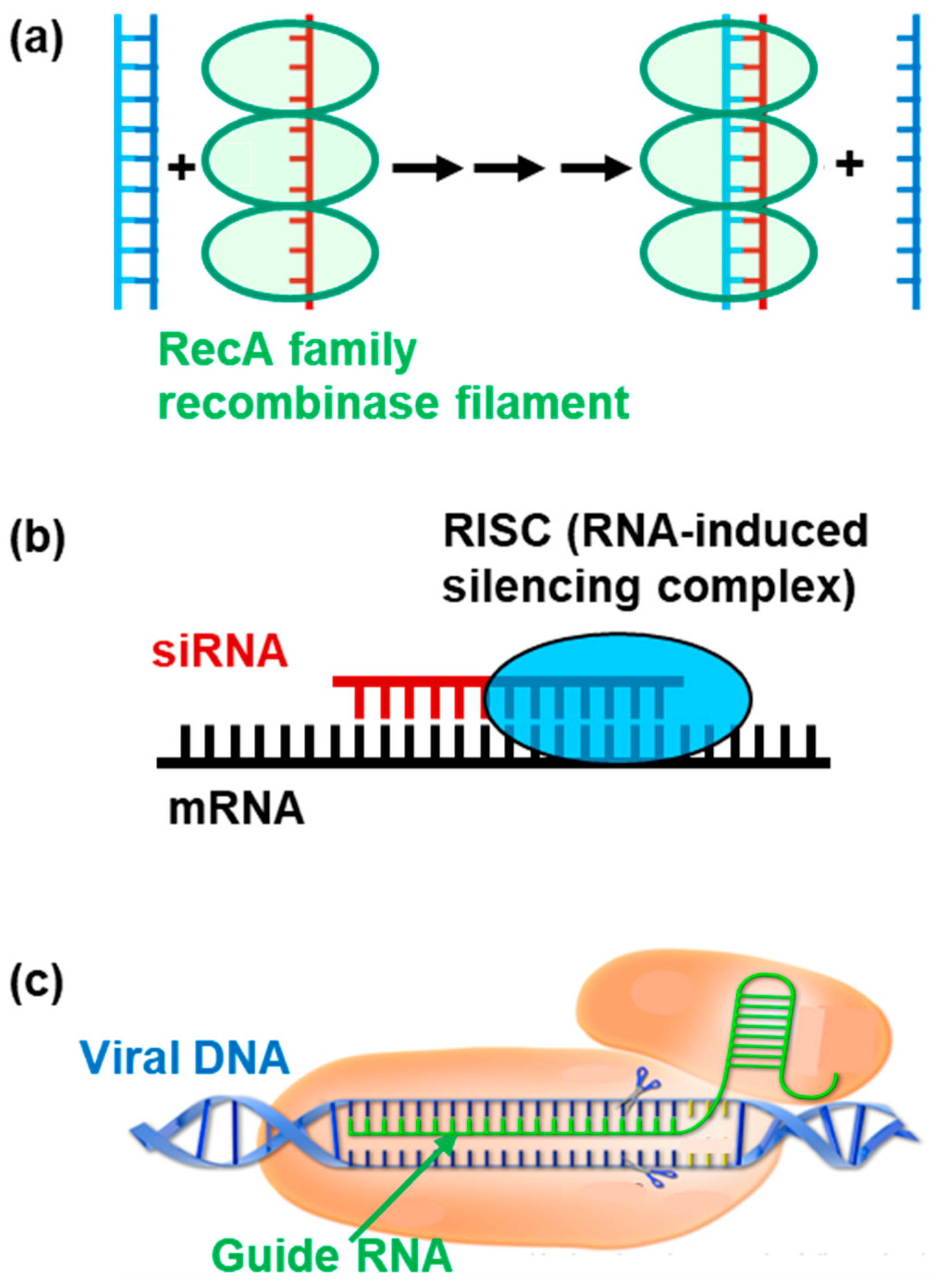
2.1. Homologous Recombination for DNA Repair and Meiosis
2.2. Regulation of Translation by siRNA and microRNA
2.3. Disruption of Virus DNA by the CRISPR–Cas9 System
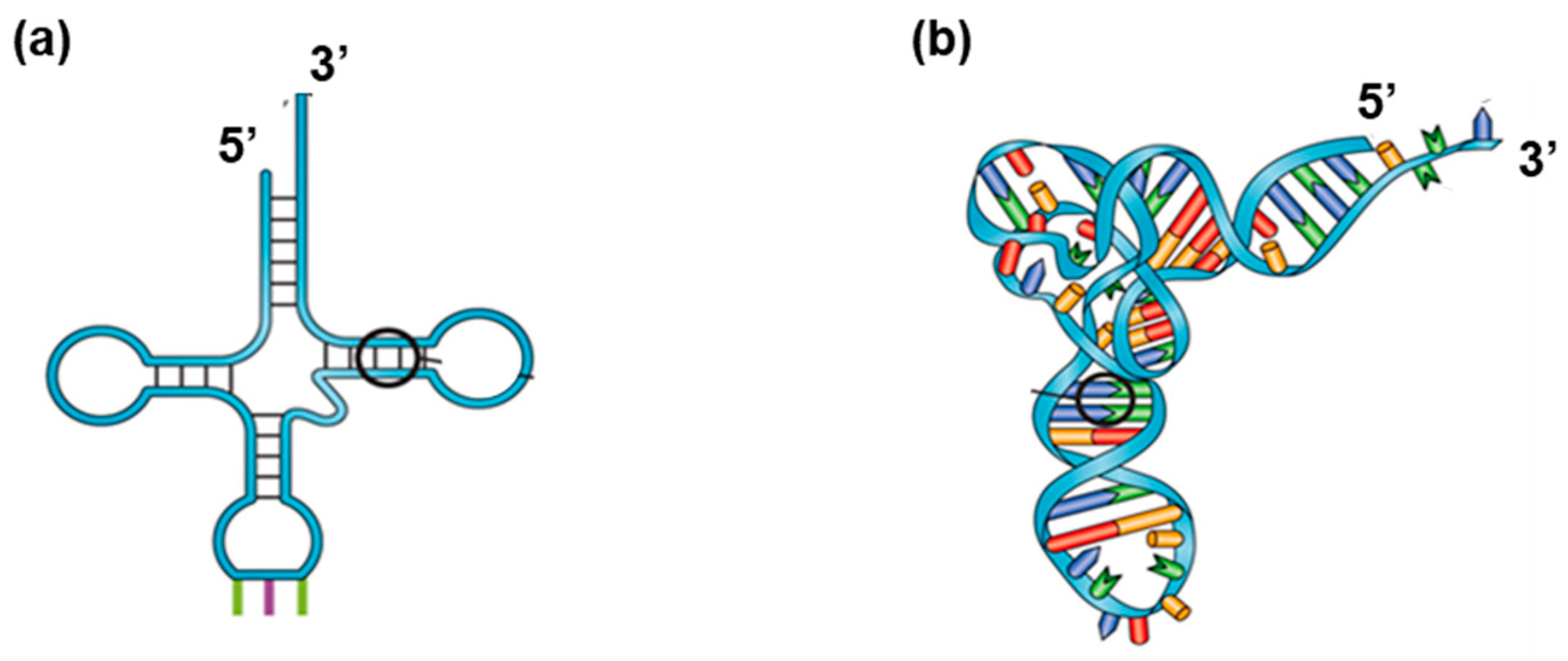
2.4. Structure of Non-Coding RNA
2.5. Size and Recognition Accuracy of Sequence Complementarity in the Reactions
3. Biotechnological Applications Using Base Pair Formation
3.1. Antisense- and siRNA-Based Gene Regulation and Drugs
3.2. Homologous Recombination- and CRISPR–Cas9-Assisted Gene Editing
3.3. DNA Hybridization
3.4. PCR for Amplification of a Specific DNA Segment (Or Fragment)
3.5. DNA Nanodevices
3.6. Aptamers (Chemical Antibodies)
3.7. Problems with Applications
4. Molecular Mechanism of Complementary Base Recognition
4.1. Existence of Factors Other than the Hydrogen Bond
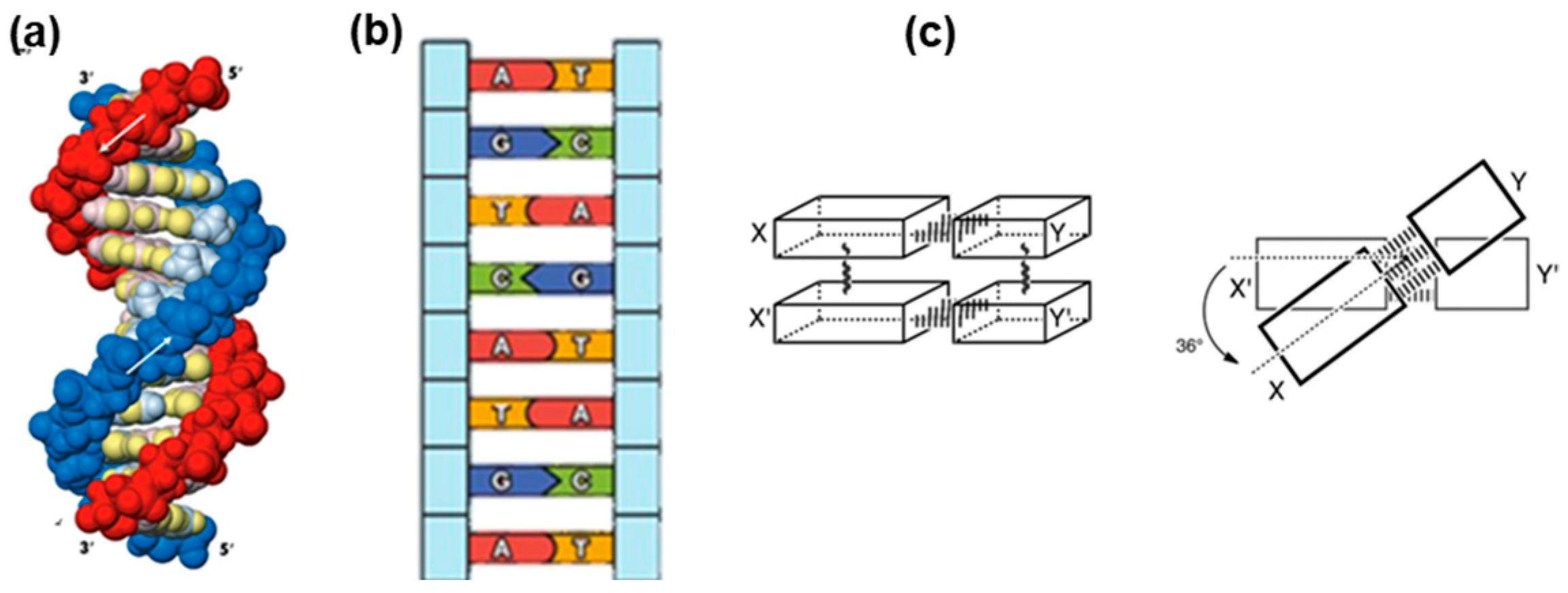
4.2. Geometry of Base Pairs
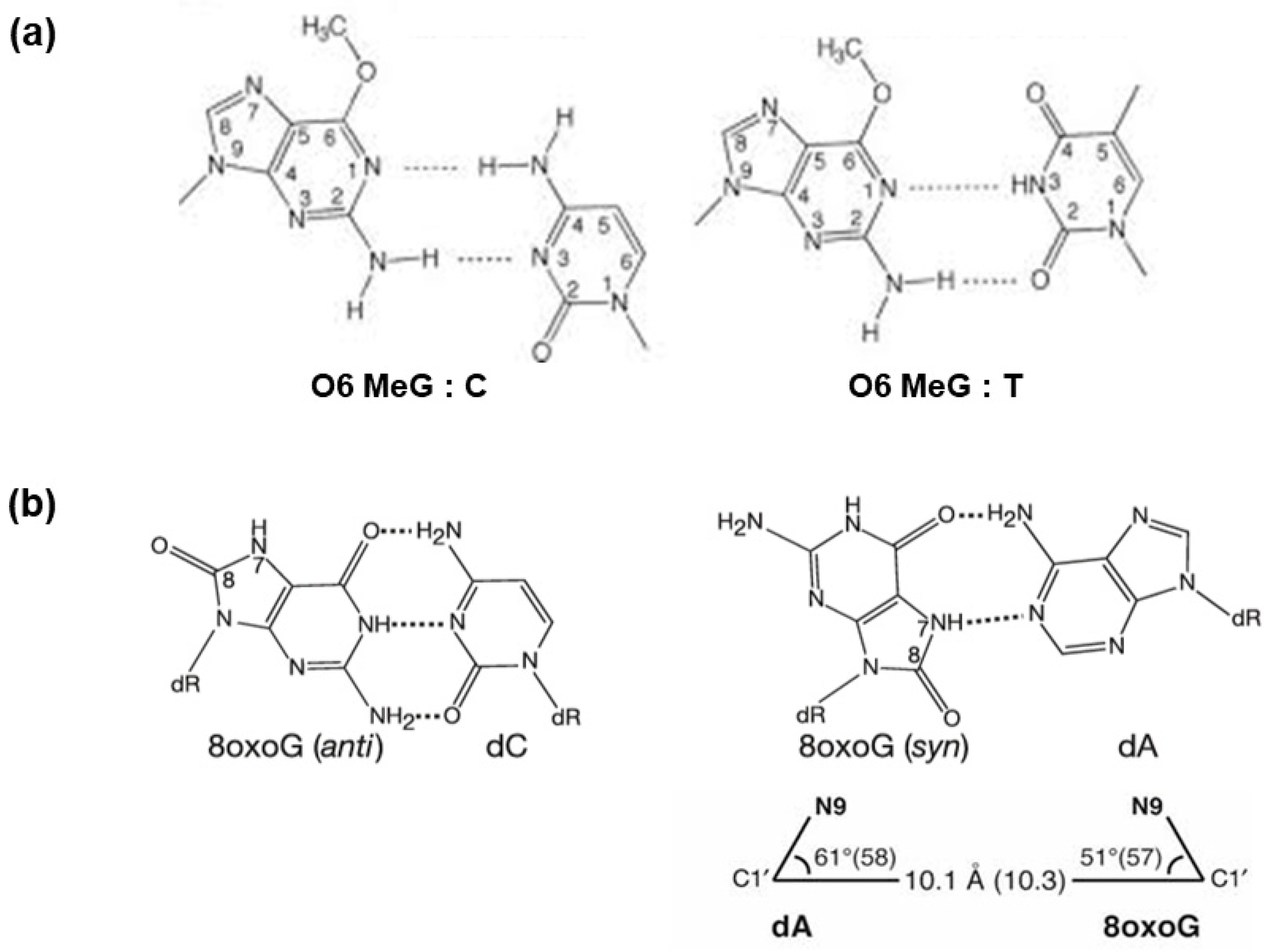
4.3. The Geometry of Base Pairs Explains the Mutagenic Effects of O6-Methyl G and 8-Oxo G
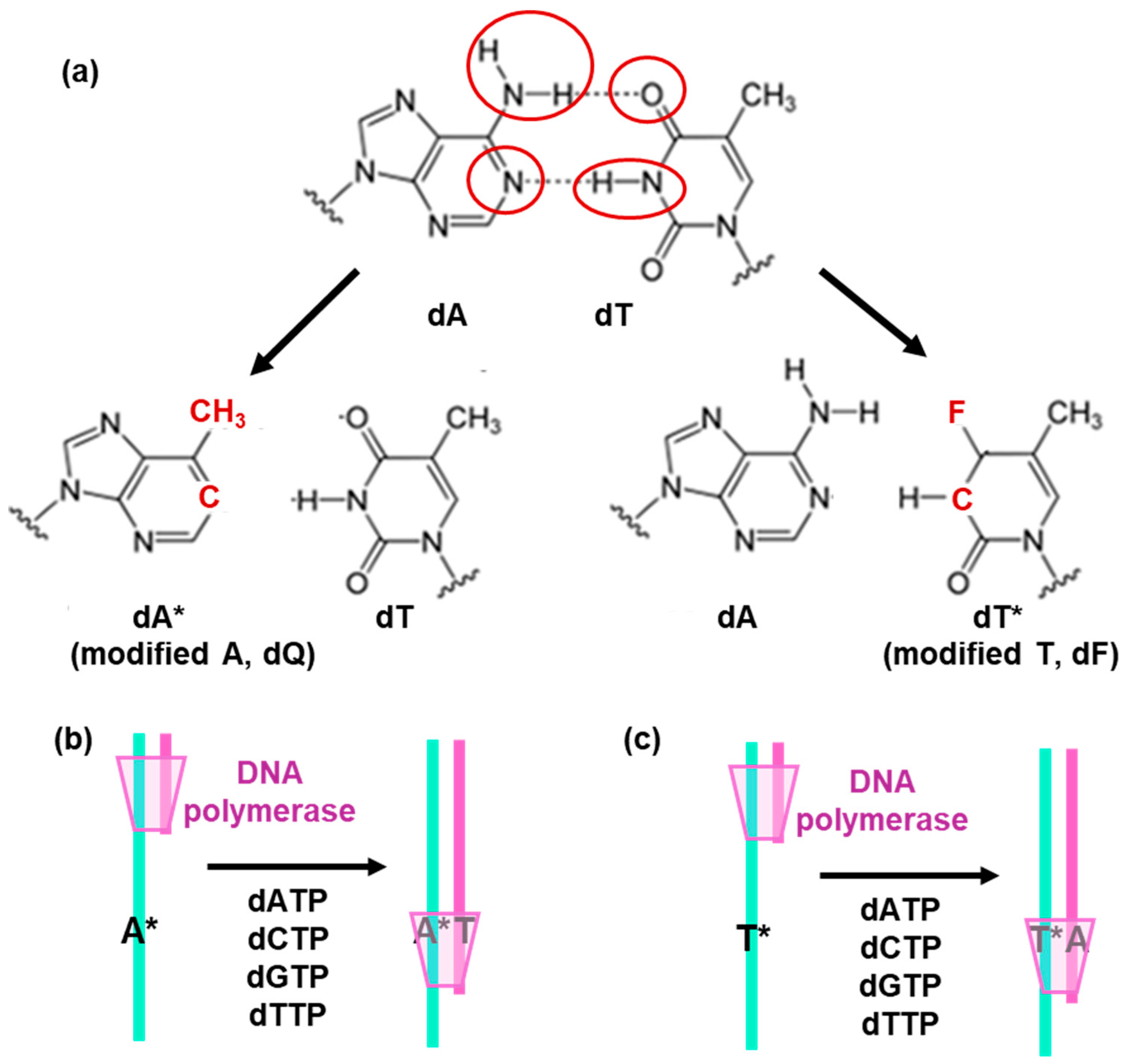
4.4. Artificial Base Pairs Without Hydrogen Bond Formation
4.5. Role of Base Stacking
5. Discussion
5.1. Kinetic Analyses
5.2. Existence of Multiple Mechanisms
5.3. Limitations of Perturbing Approaches
5.4. Examining the Strand Separation Step
5.5. Further Structure Investigations and Analytical Tools
6. Conclusions
Funding
Institutional Review Board Statement
Informed Consent Statement
Data Availability Statement
Acknowledgments
Conflicts of Interest
References
- Watson, J.; Crick, F. Molecular Structure of Nucleic Acids: A Structure for Deoxyribose Nucleic Acid. Nature 1953, 171, 737–738. [Google Scholar] [CrossRef] [Scilit] [PubMed]
- Crick, F. On protein synthesis. Symp. Soc. Exp. Biol. 1958, 12, 138–163. [Google Scholar]
- Meselson, M.; Stahl, F. The replication of DNA in Escherichia coli. Proc. Natl. Acad. Sci. USA 1958, 44, 671–682. [Google Scholar] [CrossRef] [Scilit]
- Cairns, J. The bacterial chromosome and its manner of replication as seen by autoradiography. J. Mol. Biol. 1961, 6, 208–213. [Google Scholar] [CrossRef] [Scilit]
- Lehman, I.R.; Bessman, M.J.; Simms, E.S.; Kornberg, A. Enzymatic synthesis of deoxyribonucleic acid. I. Preparation of substrates and partial purification of an enzyme from Escherichia coli. J. Biol. Chem. 1958, 233, 163–170. [Google Scholar] [CrossRef] [Scilit]
- Weiss, S.B.; Gladstone, L.A. A mammalian system for the incorporation of cytidine triphosphate into ribonucleic acid. J. Am. Chem. Soc. 1958, 81, 4118–4119. [Google Scholar] [CrossRef] [Scilit]
- Chapeville, F.; Lipmann, F.; Ehrenstein, G.V.; Weisblum, B.; Ray, W.J., Jr.; Benzer, S. On the role of soluble ribonucleic acid in coding for amino acids. Proc. Natl. Acad. Sci. USA 1962, 48, 1086–1092. [Google Scholar] [CrossRef] [Scilit] [PubMed]
- Matthaei, H.J.; Jones, O.W.; Martin, R.G.; Nirenberg, M.W. Characteristics and Composition of RNA Coding Units. Proc. Natl. Acad. Sci. USA 1962, 48, 666–677. [Google Scholar] [CrossRef] [Scilit] [PubMed]
- Fire, A.; Xu, S.; Montgomery, M.K.; Kostas, S.A.; Driver, S.E.; Mello, C.C. Potent and specific genetic interference by double-stranded RNA in caenorhabditis elegans. Nature 1998, 391, 806–811. [Google Scholar] [CrossRef] [Scilit]
- Dana, H.; Chalbatani, G.M.; Mahmoodzadeh, H.; Karimloo, R.; Rezaiean, O.; Moradzadeh, A.; Mehmandoost, N.; Moazzen, F.; Mazraeh, A.; Marmari, V.; et al. Molecular Mechanisms and Biological Functions of siRNA. Int. J. Biomed. Sci. 2017, 13, 48–57. [Google Scholar] [CrossRef] [Scilit]
- Wright, W.D.; Shah, S.S.; Heyer, W.D. Homologous recombination and the repair of DNA double-strand breaks. J. Biol. Chem. 2018, 293, 10524–10535. [Google Scholar] [CrossRef] [Scilit]
- Chakraborty, S.; Schirmeisen, K.; Lambert, S.A. The multifaceted functions of homologous recombination in dealing with replication-associated DNA damages. DNA Repair 2023, 129, 103548. [Google Scholar] [CrossRef] [Scilit]
- Székvölgyi, L.; Nicolas, A. From meiosis to postmeiotic events: Homologous recombination is obligatory but flexible. FEBS J. 2010, 277, 571–589. [Google Scholar] [CrossRef] [Scilit]
- Mojica, F.J.; Díez-Villaseñor, C.; García-Martínez, J.; Soria, E. Intervening sequences of regularly spaced prokaryotic repeats derive from foreign genetic elements. J. Mol. Evol. 2005, 60, 174–182. [Google Scholar] [CrossRef] [Scilit]
- Kleppe, K.; Ohtsuka, E.; Kleppe, R.; Molineux, I.; Khorana, H.G. Studies on polynucleotides. XCVI. Repair replications of short synthetic DNA’s as catalyzed by DNA polymerases. J. Mol. Biol. 1971, 56, 341–361. [Google Scholar] [CrossRef] [Scilit]
- Kang, H.; Ga, Y.J.; Kim, S.H.; Cho, Y.H.; Kim, J.W.; Kim, C.; Yeh, J.-Y. Small interfering RNA (siRNA)-based therapeutic applications against viruses: Principles, potential, and challenges. J. Biomed. Sci. 2023, 30, 88. [Google Scholar] [CrossRef] [Scilit] [PubMed]
- Chi, X.; Gatti, P.; Papoian, T. Safety of antisense oligonucleotide and siRNA-based therapeutics. Drug Discov. Today 2017, 22, 823–833. [Google Scholar] [CrossRef] [Scilit] [PubMed]
- Cox, D.B.; Platt, R.J.; Zhang, F. Therapeutic genome editing: Prospects and challenges. Nat. Med. 2015, 21, 121–131. [Google Scholar] [CrossRef] [Scilit] [PubMed]
- Fan, Q.; Yang, L.; Chao, J. Recent Advances in Dynamic DNA Nanodevice. Chemistry 2023, 5, 1781–1803. [Google Scholar] [CrossRef] [Scilit]
- Moran, S.; Ren, R.X.; Kool, E.T. A thymidine triphosphate shape analog lacking Watson–Crick pairing ability is replicated with high sequence selectivity. Proc. Natl. Acad. Sci. USA 1997, 94, 10506–10511. [Google Scholar] [CrossRef] [Scilit]
- Morales, J.C.; Kool, E.T. Efficient replication between non-hydrogen-bonded nucleoside shape analogs. Nat. Struct. Biol. 1998, 5, 950–954. [Google Scholar] [CrossRef] [Scilit]
- Kool, E.T.; Sintim, H.O. The Difluorotoluene Debate—A Decade Later. Chem. Commun. 2006, 38, 3665–3675. [Google Scholar] [CrossRef] [Scilit] [PubMed]
- Tikhomirova, A.; Beletskaya, I.V.; Chalikian, T.V. Stability of DNA Duplexes Containing GG, CC, AA, and TT Mismatches. Biochemistry 2006, 45, 10563–10571. [Google Scholar] [CrossRef] [Scilit]
- Ito, K.; Murayama, Y.; Takahashi, M.; Iwasaki, H. Two three-strand intermediates are processed during Rad51-driven DNA strand exchange. Nat. Struct. Mol. Biol. 2018, 25, 29–36. [Google Scholar] [CrossRef] [Scilit] [PubMed]
- Bartel, D.P. Metazoan MicroRNAs. Cell 2018, 173, 20–51. [Google Scholar] [CrossRef] [Scilit]
- O’Brien, J.; Hayder, H.; Zayed, Y.; Peng, C. Overview of MicroRNA Biogenesis, Mechanisms of Actions, and Circulation. Front. Endocrinol. 2018, 9, 402. [Google Scholar] [CrossRef] [Scilit]
- Komor, A.C.; Kim, Y.B.; Packer, M.S.; Zuris, J.A.; Liu, D.R. Programmable editing of a target base in genomic DNA without double-stranded DNA cleavage. Nature 2016, 533, 420–424. [Google Scholar] [CrossRef] [Scilit]
- Li, T.; Yang, Y.; Qi, H.; Cui, W.; Zhang, L.; Fu, X.; He, X.; Liu, M.; Li, P.-F.; Yu, T. CRISPR/Cas9 therapeutics: Progress and prospects. Signal Transduct. Target. Ther. 2023, 8, 36. [Google Scholar] [CrossRef] [Scilit] [PubMed]
- Biela, A.; Hammermeister, A.; Kaczmarczyk, I.; Walczak, M.; Koziej, L.; Lin, T.; Glatt, S. The diverse structural modes of tRNA binding and recognition. J. Biol. Chem. 2023, 299, 104966. [Google Scholar] [CrossRef] [Scilit]
- Leitão, A.L.; Enguita, F.J. The Unpaved Road of Non-Coding RNA Structure–Function Relationships: Current Knowledge, Available Methodologies, and Future Trends. Non-Coding RNA 2025, 11, 20. [Google Scholar] [CrossRef] [Scilit]
- Sloane, D.L.; Goodman, M.F.; Echols, H. The fidelity of base selection by the polymerase subunit of DNA polymerase III holoenzyme. Nucleic Acids Res. 1988, 16, 6465–6475. [Google Scholar] [CrossRef] [Scilit]
- Anand, R.; Beach, A.; Li, K.; Haber, J. Rad51-mediated double-strand break repair and mismatch correction of divergent substrates. Nature 2017, 544, 377–380. [Google Scholar] [CrossRef] [Scilit] [PubMed]
- Takahashi, M. RecA kinetically selects homologous DNA by testing a five- or six-nucleotide matching sequence and deforming the second DNA. Q. Rev. Biophys. 2018, 51, e11. [Google Scholar] [CrossRef] [Scilit]
- Kunkel, T.A.; Bebenek, K. DNA replication fidelity. Annu. Rev. Biochem. 2000, 69, 497–529. [Google Scholar] [CrossRef] [Scilit] [PubMed]
- Imashimizu, M.; Oshima, T.; Lubkowska, L.; Kashlev, M. Direct assessment of transcription fidelity by high-resolution RNA sequencing. Nucleic Acids Res. 2013, 41, 9090–9104. [Google Scholar] [CrossRef] [Scilit]
- Fijalkowska, I.J.; Schaaper, R.M.; Jonczyk, P. DNA replication fidelity in Escherichia coli: A multi-DNA polymerase affair. FEMS Microbiol. Rev. 2012, 36, 1105–1121. [Google Scholar] [CrossRef] [Scilit]
- Han, H. RNA Interference to Knock Down Gene Expression. Methods Mol. Biol. 2018, 1706, 293–302. [Google Scholar]
- Lauffer, M.C.; van Roon-Mom, W.; Aartsma-Rus, A. Possibilities and limitations of antisense oligonucleotide therapies for the treatment of monogenic disorders. Commun. Med. 2024, 4, 6. [Google Scholar] [CrossRef] [Scilit]
- Ratilainen, T.; Lincoln, P.; Nordén, B. A simple model for gene targeting. Biophys. J. 2001, 81, 2876–2885. [Google Scholar] [CrossRef] [Scilit] [PubMed]
- Neumeier, J.; Meister, G. SiRNA Specificity: RNAi Mechanisms and Strategies to Reduce Off-Target Effects. Front. Plant Sci. 2021, 11, 526455. [Google Scholar] [CrossRef] [Scilit]
- Hoshijima, K.; Jurynec, M.J.; Grunwald, D.J. Precise genome editing by homologous recombination. Methods Cell Biol. 2016, 135, 121–147. [Google Scholar] [PubMed]
- Hoheisel, J.D. Application of hybridization techniques to genome mapping and sequencing. Trends Genet. 1994, 10, 79–83. [Google Scholar] [CrossRef] [Scilit]
- Lao, A.I.K.; Su, X.; Aung, K.M.M. SPR study of DNA hybridization with DNA and PNA probes under stringent conditions. Biosens. Bioelectron. 2009, 24, 1717–1722. [Google Scholar] [CrossRef] [Scilit]
- Furst, A.L.; Klass, S.H.; Francis, M.B. DNA Hybridization to Control Cellular Interactions. Trends Biochem. Sci. 2019, 44, 342–350. [Google Scholar] [CrossRef] [Scilit]
- Bej, A.K.; Mahbubani, M.H.; Atlas, R.M. Amplification of Nucleic Acids by Polymerase Chain Reaction (PCR) and Other Methods and their Applications. Crit. Rev. Biochem. Mol. Biol. 1991, 26, 301–334. [Google Scholar] [CrossRef] [Scilit] [PubMed]
- Guan, C.; Zhu, X.; Feng, C. DNA Nanodevice-Based Drug Delivery Systems. Biomolecules 2021, 11, 1855. [Google Scholar] [CrossRef] [Scilit]
- Kong, L.; Kim, S.; Wang, C.; Lee, S.Y.; Oh, S.; Lee, S.; Jo, S.; Kim, T. Understanding nucleic acid sensing and its therapeutic applications. Exp. Mol. Med. 2023, 55, 2320–2331. [Google Scholar] [CrossRef] [Scilit]
- Sherman, W.B.; Seeman, N.C. A precisely controlled DNA biped walking device. Nano Lett. 2004, 4, 1203–1207. [Google Scholar] [CrossRef] [Scilit]
- Parker, J. Computing with DNA. EMBO Rep. 2003, 4, 7–10. [Google Scholar] [CrossRef] [Scilit] [PubMed]
- Shraim, A.S.; Abdel Majeed, B.A.; Al-Binni, M.A.; Hunaiti, A. Therapeutic Potential of Aptamer-Protein Interactions. ACS Pharmacol. Transl. Sci. 2022, 5, 1211–1227. [Google Scholar] [CrossRef] [Scilit]
- Nimjee, S.M.; White, R.R.; Becker, R.C.; Sullenger, B.A. Aptamers as Therapeutics. Annu. Rev. Pharmacol. Toxicol. 2017, 57, 61–79. [Google Scholar] [CrossRef] [Scilit]
- Yang, W.; Ran, C.; Lian, X.; Wang, Z.; Du, Z.; Bing, T.; Zhang, Y.; Tan, W. Aptamer-based targeted drug delivery and disease therapy in preclinical and clinical applications. Adv. Drug Deliv. Rev. 2025, 226, 115680. [Google Scholar] [CrossRef] [Scilit]
- Ali Zaidi, S.S.; Fatima, F.; Ali Zaidi, S.A.; Zhou, D.; Deng, W.; Liu, S. Engineering siRNA therapeutics: Challenges and strategies. J. Nanobiotechnol. 2023, 21, 381. [Google Scholar] [CrossRef] [Scilit] [PubMed]
- Guo, C.; Ma, X.; Gao, F.; Guo, Y. Off-target effects in CRISPR/Cas9 gene editing. Front. Bioeng. Biotechnol. 2023, 11, 1143157. [Google Scholar] [CrossRef] [Scilit]
- Cai, Y.; Yu, X.; Hu, S.; Yu, J. A Brief Review on the Mechanisms of miRNA Regulation. Genom. Proteom. Bioinform. 2009, 7, 147–154. [Google Scholar] [CrossRef] [Scilit]
- Delaney, J.C.; Henderson, P.T.; Helquist, S.A.; Morales, J.C.; Essigmann, J.M.; Kool, E.T. High-fidelity in vivo replication of DNA base shape mimics without Watson–Crick hydrogen bonds. Proc. Natl. Acad. Sci. USA 2003, 100, 4469–4473. [Google Scholar] [CrossRef] [Scilit]
- Chavarria, D.; Ramos-Serrano, A.; Hirao, I.; Berdis, A.J. Exploring the roles of nucleobase desolvation and shape complementarity during the misreplication of O6-methylguanine. J. Mol. Biol. 2011, 412, 325–339. [Google Scholar] [CrossRef] [Scilit]
- Hsu, G.W.; Ober, M.; Carell, T.; Beese, L.S. Error-prone replication of oxidatively damaged DNA by a high-fidelity DNA polymerase. Nature 2004, 431, 217–221. [Google Scholar] [CrossRef] [Scilit]
- Yamashige, R.; Kimoto, M.; Takezawa, Y.; Sato, A.; Mitsui, T.; Yokoyama, S.; Hirao, I. Highly specific unnatural base pair systems as a third base pair for PCR amplification. Nucleic Acids Res. 2012, 40, 2793–2806. [Google Scholar] [CrossRef] [Scilit] [PubMed]
- Guckian, K.M.; Krugh, T.R.; Kool, E.T. Solution structure of a nonpolar, non-hydrogen-bonded base pair surrogate in DNA. J. Am. Chem. Soc. 2000, 122, 6841–6847. [Google Scholar] [CrossRef] [Scilit] [PubMed]
- Feng, B.; Sosa, R.P.; Mårtensson, A.K.F.; Jiang, K.; Tong, A.; Dorfman, K.D.; Takahashi, M.; Lincoln, P.; Bustamante, C.J.; Westerlund, F.; et al. Hydrophobic catalysis and a potential biological role of DNA unstacking induced by environment effects. Proc. Natl. Acad. Sci. USA 2019, 116, 17169–17174. [Google Scholar] [CrossRef] [Scilit]
- Nordén, B.; Brown, T.; Feng, B. Mismatch detection in homologous strand exchange amplified by hydrophobic effects. Biopolymers 2021, 112, e23426. [Google Scholar] [CrossRef] [Scilit] [PubMed]
- Takahashi, M.; Ito, K.; Iwasaki, H.; Nordén, B. Linear dichroism reveals the perpendicular orientation of DNA bases in the RecA and Rad51 recombinase filaments: A possible mechanism for the strand exchange reaction. Chirality 2024, 36, e23664. [Google Scholar] [CrossRef] [Scilit]
- Freudenthal, B.D.; Beard, W.A.; Wilson, S.H. Structures of dNTP intermediate states during DNA polymerase active site assembly. Structure 2012, 20, 1829–1837. [Google Scholar] [CrossRef] [Scilit]
- Bhattacharya, S.; Satpati, P. Insights into the mechanism of CRISPR/Cas9-based genome editing from molecular dynamics simulations. ACS Omega 2022, 8, 1817–1837. [Google Scholar] [CrossRef] [Scilit]
- Jiang, F.; Doudna, J.A. The structural biology of CRISPR-Cas systems. Curr. Opin. Struct. Biol. 2015, 30, 100–111. [Google Scholar] [CrossRef] [Scilit]
- Lee, J.; Jeong, C. Single-molecule perspectives of CRISPR/Cas systems: Target search, recognition, and cleavage. BMB Rep. 2025, 58, 8–16. [Google Scholar] [CrossRef] [Scilit] [PubMed]
- Müller, M.; Fazi, F.; Ciaudo, C. Argonaute proteins: From structure to function in development and pathological cell fate determination. Front. Cell Dev. Biol. 2020, 7, 360. [Google Scholar] [CrossRef] [Scilit] [PubMed]
- Palermo, G. Establishing the allosteric mechanism in CRISPR-Cas9. Biophys. J. 2022, 121, 145a–146a. [Google Scholar] [CrossRef] [Scilit]
- Singh, D.; Wang, Y.; Mallon, J.; Yang, O.; Fei, J.; Poddar, A.; Ceylan, D.; Bailey, S.; Ha, T. Mechanisms of improved specificity of engineered Cas9s revealed by single-molecule FRET analysis. Nat. Struct. Mol. Biol. 2018, 25, 347–354. [Google Scholar] [CrossRef] [Scilit]
- Wang, J.; Arantes, P.R.; Ahsan, M.; Sinha, S.; Kyro, G.W.; Maschietto, F.; Allen, B.; Skeens, E.; Lisi, G.P.; Batista, V.S.; et al. Twisting and swiveling domain motions in Cas9 to recognize target DNA duplexes, make double-strand breaks, and release cleaved duplexes. Front. Mol. Biosci. 2023, 9, 1072733. [Google Scholar] [CrossRef] [Scilit] [PubMed]



Disclaimer/Publisher’s Note: The statements, opinions and data contained in all publications are solely those of the individual author(s) and contributor(s) and not of MDPI and/or the editor(s). MDPI and/or the editor(s) disclaim responsibility for any injury to people or property resulting from any ideas, methods, instructions or products referred to in the content. |
© 2026 by the authors. Licensee MDPI, Basel, Switzerland. This article is an open access article distributed under the terms and conditions of the Creative Commons Attribution (CC BY) license.
Share and Cite
Takahashi, M.; Nordén, B. Recognition Mechanism of Complementary Nucleobases and Sequences in DNA and RNA: Interplay of Watson–Crick Hydrogen Bond Formation and Base Stacking Interactions. DNA 2026, 6, 13. https://doi.org/10.3390/dna6010013
Takahashi M, Nordén B. Recognition Mechanism of Complementary Nucleobases and Sequences in DNA and RNA: Interplay of Watson–Crick Hydrogen Bond Formation and Base Stacking Interactions. DNA. 2026; 6(1):13. https://doi.org/10.3390/dna6010013
Chicago/Turabian StyleTakahashi, Masayuki, and Bengt Nordén. 2026. "Recognition Mechanism of Complementary Nucleobases and Sequences in DNA and RNA: Interplay of Watson–Crick Hydrogen Bond Formation and Base Stacking Interactions" DNA 6, no. 1: 13. https://doi.org/10.3390/dna6010013
APA StyleTakahashi, M., & Nordén, B. (2026). Recognition Mechanism of Complementary Nucleobases and Sequences in DNA and RNA: Interplay of Watson–Crick Hydrogen Bond Formation and Base Stacking Interactions. DNA, 6(1), 13. https://doi.org/10.3390/dna6010013