1. Introduction
Nutrigenomics has emerged as a transformative field at the intersection of molecular biology, nutrition, and genetics. It seeks to unravel how specific nutrients and dietary patterns modulate gene expression and epigenetic landscapes, ultimately influencing physiological performance, health, and disease susceptibility. The advent of high-throughput sequencing, omics integration, and bioinformatics has enabled a more comprehensive understanding of how diet shapes the genome’s functional output. In animal science, this knowledge has crucial implications for optimizing feed efficiency, improving metabolic health, and enhancing stress resilience, while in humans, it underpins precision nutrition and personalized healthcare. Despite rapid progress, the complexity of nutrient–gene interactions remains a major challenge. The molecular mechanisms connecting nutrient signals with transcriptional and post-transcriptional regulation are multifaceted, involving cross-talk between metabolic pathways, epigenetic remodeling, and environmental cues. This review consolidates current findings and integrates them into a system-level perspective to better understand how dietary inputs influence gene regulation and phenotype expression across species.
1.1. Overview of the Importance of Nutrition in Poultry Health and Performance
Proper nutritional management not only enhances productivity but also mitigates health issues, making it a cornerstone of successful poultry farming. The following sections outline the key aspects of poultry nutrition and its impact on health and performance. Poultry requires a balanced intake of proteins, carbohydrates, fats, vitamins, and minerals. Essential amino acids like lysine and methionine are critical for growth and development [
1]. Wheat and maize serve as primary energy sources, but must be complemented with protein sources such as soybean meals to meet nutritional needs [
2]. Adequate nutrition can prevent metabolic disorders and enhance immune function, reducing the reliance on antibiotics [
1]. Vitamin A is vital for immune response and overall productivity; deficiencies can lead to significant health issues [
3]. Nutrition accounts for more than 65% of production costs, making effective feed formulation essential for profitability [
4]. While the focus on optimizing nutrition is paramount, it is also essential to consider the potential for over-reliance on specific dietary components, which may lead to imbalances and health issues if not managed properly.
1.2. Rise of Nutrigenomics and Its Integration with Poultry Science
The rise of nutrigenomics represents a significant advancement in poultry science, focusing on the interaction between nutrition and genetics to enhance poultry health and production. This field explores how dietary components influence gene expression, thereby affecting growth, immunity, and overall performance. The integration of nutrigenomics into poultry science is poised to revolutionize feeding strategies and management practices. Nutrigenomics studies the effects of nutrients on gene expression, impacting metabolic pathways and phenotypic traits in poultry [
5,
6,
7]. It encompasses various omics technologies, including transcriptomics, proteomics, and metabolomics, to analyze how nutrients interact with genetic material [
8]. The next section examines how nutrigenomics integrates with poultry science to improve feeding strategies.
Despite its potential, the application of nutrigenomics in poultry is limited by technical complexities and the need for comprehensive studies to elucidate gene-nutrient interactions [
6,
9]. Future research should focus on utilizing advanced genomic techniques to understand these interactions better and optimize poultry nutrition [
10]. While nutrigenomics offers promising advancements in poultry science, it is essential to consider the broader environmental and management factors that also influence poultry health and productivity.
1.3. Relevance to DNA-Level Research and Molecular Breeding
Understanding nutrition at the DNA level has transformed the field of poultry science, linking molecular genetics with performance and health outcomes. Genomic insights have revealed that genetic variability among poultry populations plays a fundamental role in nutrient utilization, metabolic regulation, growth, and immune competence. One of the most significant molecular markers used to study this variability is the Single Nucleotide Polymorphisms (SNPs), a single-base-pair substitution within the genome that can alter gene expression, protein structure, or regulatory function [
11]. In poultry, SNPs in key metabolic and growth-regulating genes such as Insulin-like Growth Factor 1 (
IGF-1), Myostatin (
MSTN), Peroxisome Proliferator-Activated Receptors (
PPARs), and Fatty Acid Synthase (
FASN) have been identified as major modulators of nutrient response and performance [
12,
13]. For instance, polymorphisms in
IGF-1 are associated with enhanced muscle accretion and feed efficiency, while variants in
MSTN reduce the inhibition of muscle growth, resulting in increased lean mass [
14,
15]. Similarly,
PPARs and
FASN polymorphisms influence lipid metabolism and energy storage, thereby shaping how birds respond to dietary fatty acids and caloric intake [
16]. These DNA-level insights are critical for developing nutrigenomic strategies that align nutrient composition with specific genetic profiles to optimize production.
The integration of these molecular findings into breeding programs has revolutionized poultry improvement through Marker-Assisted Selection (MAS) and Genomic Selection (GS). Traditional breeding relied primarily on phenotypic traits such as body weight or egg production, which are often influenced by environmental variability. In contrast, MAS allows direct selection for specific genetic loci or SNPs associated with desired traits, such as growth rate, feed conversion, or disease resistance [
17,
18]. For example, MAS targeting
MSTN and
IGF-1 variants enables breeders to enhance muscle mass without compromising reproductive fitness or health. Genomic selection, which uses genome-wide SNP panels, further refines this process by predicting breeding values with high accuracy even in the absence of direct phenotypic data. When nutrigenomic data are incorporated into these models, it becomes possible to design feeding programs that are genotype-informed, that is, diets that match the genetic capacity of specific birds to metabolize amino acids, lipids, or vitamins efficiently. This integration of DNA-level data and nutritional modeling maximizes feed efficiency, reduces nutrient waste, and enhances overall flock productivity while maintaining sustainability and welfare standards.
Beyond traditional breeding and selection, functional genomics has emerged as a crucial tool for understanding how genes respond to nutritional inputs across molecular layers. By combining transcriptomic, proteomic, and metabolomic approaches, researchers can map nutrient-responsive gene networks that regulate physiological functions such as muscle growth, immune modulation, and lipid metabolism [
19]. Transcriptomic analyses have revealed that dietary components like methionine, fatty acids, and phytochemicals alter the expression of hundreds of genes involved in oxidative stress response, energy metabolism, and tissue development. At the same time, epigenetic modifications, including DNA methylation and histone acetylation, add a layer of regulatory complexity by mediating the long-term effects of nutrition on gene expression and phenotype. These epigenetic signatures can be inherited or persist across generations, offering new opportunities for epigenetic-assisted breeding strategy that combines genomic and nutritional interventions to achieve sustained improvements in performance and resilience. Thus, the convergence of DNA-level research, functional genomics, and nutrigenomics provides an integrated framework for precision breeding and feeding strategies in modern poultry production.
The principal aim of this review is to consolidate dispersed findings on nutrigenomic and epigenetic mechanisms into a coherent framework that connects nutrient availability, molecular signaling, and phenotypic adaptation. Rather than cataloging isolated studies, this review seeks to clarify the regulatory hierarchy, from dietary inputs to genomic responses, thereby providing a conceptual map for researchers and practitioners designing targeted nutritional interventions.
2. Molecular Basis of Nutrigenomics in Poultry
Nutrigenomics, as an emerging discipline within nutritional science, explores how nutrients influence gene expression and how genetic variation determines individual responses to dietary inputs. It bridges the gap between nutrition, genomics, and physiology by uncovering how nutrients act not merely as sources of energy or structural components, but also as signaling molecules capable of modulating metabolic and regulatory networks [
20]. In poultry, this field provides a molecular understanding of how dietary components, ranging from amino acids and fatty acids to vitamins and phytochemicals, interact with the genome to influence growth, feed efficiency, immunity, and overall performance [
21]. These findings highlight the practical value of combining DNA-level research with modern breeding and feeding programs.
The practical value of nutrigenomics lies in its contribution to the broader framework of precision nutrition, which integrates genetic information with accurate diet evaluation, real-time assessment of flock nutrient requirements, and data-driven management practices. While genomic insights identify the molecular basis of nutrient utilization [
22,
23], the actual nutritional response is shaped by multiple environmental factors, including housing conditions, health status, and management quality. Effective precision nutrition, therefore, depends on translating genomic data into practical feeding strategies that account for both genetic potential and environmental variability. Instead of formulating diets based on general nutrient requirements, nutrigenomic insights enable the design of genotype-specific feeding programs that align with birds’ molecular profiles. For example, certain broiler lines with higher expression of growth-related genes such as
IGF-1 and
MSTN may benefit from diets containing slightly elevated levels of lysine and methionine above the standard nutritional requirements. Such enrichment supports enhanced protein synthesis and muscle accretion in genotypes with greater anabolic potential, rather than serving as a general supplementation practice already common in all poultry diets. Integrating molecular biology, bioinformatics, and omics technologies, such as transcriptomics, metabolomics, and proteomics, has expanded the scope of nutrigenomic research, enabling scientists to construct nutrient–gene interaction networks that predict performance outcomes [
24]. Ultimately, nutrigenomics provides a framework for sustainable and efficient poultry production by linking nutrition to the molecular blueprint of the animal.
At the molecular level, nutrient-mediated regulation occurs through intricate interactions involving DNA, RNA, and proteins. At the DNA level, nutrients influence gene activity primarily via epigenetic mechanisms such as DNA methylation. Methyl donor nutrients, including methionine, folate, and choline, supply methyl groups for
S-adenosylmethionine synthesis, which, in turn, modifies cytosine residues on DNA, leading to either gene activation or silencing depending on the genomic context [
25,
26,
27]. These epigenetic modifications play a pivotal role in regulating genes associated with lipid metabolism and muscle development in broilers. At the RNA level, nutrients can influence transcription through the activation of nutrient-sensitive transcription factors, such as
PPARs, sterol regulatory element-binding proteins (SREBPs), and nuclear factor erythroid 2-related factor 2 (Nrf2), which bind to specific promoter sequences to modulate transcription of metabolic and antioxidant genes [
28,
29]. For instance, fatty acids activate
PPARs, enhancing lipid oxidation, while dietary antioxidants trigger Nrf2-mediated transcription of detoxifying enzymes.
Beyond transcription, nutrients also affect post-transcriptional regulation through mechanisms involving microRNAs (miRNAs) and RNA-binding proteins that alter mRNA stability and translation. At the protein level, dietary molecules influence enzyme activity and signal transduction cascades that govern metabolism and cellular homeostasis. Nutrient availability can alter phosphorylation states of key signaling proteins, such as AMP-activated protein kinase (AMPK) and mammalian target of rapamycin (
mTOR), which coordinate energy balance and protein synthesis [
30]. Micronutrients, including zinc, selenium, and manganese, serve as cofactors for critical enzymes such as glutathione peroxidase and superoxide dismutase, thereby maintaining oxidative balance and immune defense [
28]. Through such multilayered regulation, nutrients act as molecular cues that orchestrate gene expression, enzyme activation, and protein synthesis, reinforcing the concept that diet is a major determinant of genomic function and phenotypic expression in poultry.
Nutrient–gene interactions manifest through both transcriptional and post-transcriptional mechanisms that integrate dietary signals into cellular responses. Transcriptionally, nutrients act as ligands for nuclear receptors that regulate gene expression. Fatty acids and lipid metabolites, for instance, bind to
PPARs to stimulate genes involved in lipid transport and β-oxidation, whereas dietary carbohydrate availability modulates SREBPs, leading to altered expression of genes responsible for fatty acid synthesis and storage [
31]. Similarly, antioxidants such as vitamin E and polyphenols activate the Nrf2 signaling pathway, inducing transcription of genes encoding glutathione S-transferase, catalase, and other antioxidant defense enzymes that protect tissues against oxidative damage [
32,
33,
34]. These transcriptional adaptations are vital for maintaining metabolic balance and resilience under nutritional stress.
At the post-transcriptional level, dietary factors can regulate the processing and function of miRNAs, which serve as fine-tuning mechanisms in gene expression. MicroRNAs bind to complementary sequences in target mRNAs, repressing translation or triggering degradation. Nutrients influence the expression of specific miRNAs associated with growth, metabolism, and immunity. For instance, layers with specific lipid metabolism genotypes may respond differently to dietary fatty acid profiles [
1]. Diets enriched with long-chain polyunsaturated fatty acids (particularly omega-3 and omega-6 types) can modulate the expression of genes involved in lipid oxidation and membrane synthesis, whereas excess saturated fats may impair these regulatory pathways. Fatty acid supplementation modifies the expression of
miR-122, involved in hepatic lipid metabolism, while amino acid balance influences
miR-1 and
miR-206, which regulate muscle differentiation [
35,
36]. Vitamins and phytochemicals have also been shown to alter miRNA profiles related to immune modulation and stress tolerance. These findings demonstrate that nutrient-responsive miRNAs serve as molecular intermediaries between diet and genome, translating nutritional cues into coordinated metabolic outcomes. Collectively, these transcriptional and post-transcriptional mechanisms form the backbone of nutrigenomic regulation, providing a molecular explanation for the variability in growth, feed efficiency, and health responses among poultry lines exposed to different dietary regimes.
3. Epigenetic Mechanisms Mediating Dietary Effects
Epigenetic mechanisms represent a crucial layer of gene regulation in poultry, mediating the effects of diet on gene expression without altering the underlying DNA sequence. Nutrients and bioactive feed components can induce long-lasting changes in growth, metabolism, and immune function by modulating DNA methylation, histone modifications, and non-coding RNA activity. These molecular processes allow dietary inputs to influence phenotype in a precise and heritable manner, providing a foundational framework for nutrigenomics and precision nutrition strategies.
3.1. DNA Methylation
At the DNA level, nutrients influence gene activity primarily through methyl donor availability. Compounds such as methionine, folate, betaine, and choline provide methyl groups for S-adenosylmethionine synthesis. While these nutrients are routinely included in poultry diets, variations in their levels, either marginal deficiencies or targeted supplementation above basal requirements, can significantly alter DNA methylation and the transcription of genes related to muscle growth and lipid metabolism. Supplementation with these nutrients has been shown to alter methylation patterns in genes regulating muscle development, lipid metabolism, and immune function. In broilers, methionine supplementation enhances the expression of muscle-specific genes, promoting muscle growth and protein deposition [
37]. Similarly, in layer hens, betaine supplementation modifies methylation of reproductive genes, contributing to improved egg production and yolk quality [
38]. These findings illustrate how targeted dietary manipulation can harness DNA methylation to achieve favorable production traits, highlighting the potential for epigenetic programming in poultry nutrition.
Specific nutrients influence epigenetic marks and transcriptional programs through defined biochemical and signaling pathways that link dietary intake to chromatin remodeling and gene regulation. Methionine, folate, choline, and betaine serve as central methyl donors within the one-carbon cycle, generating S-adenosylmethionine (SAM), the universal methyl group donor for DNA and histone methylation. Dietary supplementation with methionine or folate increases SAM availability, enhancing methylation of genes such as IGF-1 and MSTN, which promote muscle growth and protein accretion in broilers. Conversely, methyl donor deficiency reduces global DNA methylation and dysregulates metabolic genes associated with lipid accumulation and oxidative stress.
Polyphenols, including resveratrol and catechins, exert epigenetic effects by modulating histone acetyltransferase (HAT) and histone deacetylase (HDAC) activity, resulting in relaxed chromatin and increased transcription of antioxidant and metabolic genes. Resveratrol has been shown to activate the Nrf2/Keap1 pathway, enhancing the transcription of detoxifying enzymes such as GPX1 (glutathione peroxidase 1), superoxide dismutase (SOD), and CAT (catalase), while simultaneously promoting mitochondrial biogenesis through peroxisome proliferator-activated receptor gamma coactivator 1-alpha (PGC-1α) and Peroxisome Proliferator-Activated Receptor alpha (PPARα) activation. These actions link dietary polyphenols to improved oxidative resilience and energy efficiency in poultry. Fatty acids act as ligands for PPARs and nuclear transcription factors that regulate genes involved in lipid transport and β-oxidation. Omega-3 fatty acid supplementation increases Peroxisome Proliferator-Activated Receptor gamma (PPARγ) and FASN expression, altering lipid deposition patterns and enhancing feed efficiency. Beyond transcriptional control, long-chain fatty acids influence histone acetylation status by modifying cellular acetyl-CoA levels, thereby coupling nutrient availability with chromatin dynamics.
In addition to direct epigenetic modulation, nutrients signal through key metabolic pathways that integrate cellular energy status with gene expression. The AMP-activated protein kinase (AMPK) pathway acts as an energy sensor, promoting catabolic gene expression and mitochondrial function under nutrient-limited conditions. The mTOR pathway, in contrast, stimulates anabolic processes and protein synthesis in response to amino acid abundance. Nutrient-sensitive activation of Nrf2 through redox signaling provides another layer of transcriptional regulation, coordinating antioxidant defense with metabolic adaptation. Together, these pathways form a nutrient-sensing network that translates dietary composition into epigenetic and transcriptional outcomes, linking metabolism to long-term performance and health in poultry. Epigenetic regulation, therefore, provides new options for targeted nutritional programming.
3.2. Histone Modifications
Histone modifications, including acetylation and methylation, regulate gene expression by altering chromatin accessibility. Acetylation of histone tails typically relaxes chromatin structure, promoting transcription, whereas certain methylation marks can either activate or repress gene expression depending on the residue and context. Dietary components such as vitamins, polyphenols, and fatty acids influence histone-modifying enzymes, thereby modulating gene expression. For example, resveratrol, a plant polyphenol, enhances histone acetylation in metabolic genes, leading to improved lipid metabolism and upregulation of antioxidant defense pathways [
39,
40,
41,
42]. Fatty acids have also been shown to affect histone acetylation in genes involved in energy metabolism, linking nutritional composition directly to transcriptional control of growth and feed efficiency. These epigenetic alterations provide a mechanistic basis for long-term diet-mediated effects on poultry performance.
3.3. Non-Coding RNAs
Non-coding RNAs (ncRNAs), including microRNAs (miRNAs) and long non-coding RNAs (lncRNAs), regulate gene expression post-transcriptionally, affecting mRNA stability, translation, and chromatin dynamics. Dietary factors modulate the expression of ncRNAs, thereby influencing critical biological processes such as muscle growth, lipid metabolism, and immune function. Amino acids and fatty acids have been reported to regulate specific miRNAs that suppress adipogenesis, helping to modulate fat deposition and improve carcass quality. Concurrently, lncRNAs respond to dietary cues by regulating cytokine gene expression, enhancing disease resistance and immune homeostasis [
43,
44,
45]. These interactions demonstrate the complex interplay between nutrients and epigenetic regulators, providing opportunities for nutritional programming to optimize performance and health in poultry.
4. Nutrigenetics: DNA Polymorphisms and Nutrient Response
Nutrigenetics represents a key intersection between molecular genetics and nutritional science, focusing on how genetic variations, particularly single-nucleotide polymorphisms (SNPs), influence an organism’s response to dietary inputs. In poultry, this field has become increasingly important, as genetic variability significantly affects feed efficiency, growth performance, lipid metabolism, immune function, and disease resistance [
46,
47], providing new opportunities for targeted nutritional programming through epigenetic regulation. By decoding how genotype determines nutrient metabolism and physiological outcomes, nutrigenetics provides the foundation for precision nutrition, where diets can be customized to align with the genetic profile of individual birds or specific lines. Such tailored approaches optimize production efficiency while maintaining health and sustainability. The ability to predict and exploit genotype–nutrient interactions mark a paradigm shift in poultry nutrition, transforming traditional feeding systems into genome-informed management strategies that integrate molecular biology with applied production science.
At the molecular level, genetic polymorphisms influence nutrient absorption, transport, metabolism, and utilization across multiple biological pathways, from enzymes and membrane transporters to transcriptional regulators and hormone signaling networks. These variations can alter enzymatic kinetics, receptor binding affinity, or transcriptional regulation, leading to differential responses to identical dietary inputs. This understanding forms the molecular basis for marker-assisted selection (MAS) and genome-informed breeding, where favorable alleles linked to nutrient efficiency are selected to improve performance traits. Several nutrient-metabolism genes have been extensively studied for SNP-associated variation in poultry. Among these,
PPARs, a family of nuclear transcription factors regulating fatty acid oxidation, adipogenesis, and energy metabolism, are particularly important. SNPs within
PPARα and
PPARγ genes have been associated with altered lipid utilization and fat deposition patterns in both broilers and layers, affecting carcass composition and egg yolk lipid profiles [
48]. Likewise,
FASN polymorphisms modify de novo lipogenesis rates by altering enzyme activity, contributing to variability in feed efficiency, intramuscular fat content, and meat quality [
49,
50]. The
IGF-1 gene is another central regulator of muscle accretion and protein synthesis; SNPs within
IGF-1 influence growth rate and skeletal muscle deposition, making it a key genomic marker in broiler selection programs [
51]. Moreover,
MSTN, a negative regulator of muscle growth, contains variants that modulate muscle fiber development. Loss-of-function or reduced-expression alleles in
MSTN lead to increased breast muscle mass and improved feed conversion, particularly when coupled with optimized dietary protein levels. Collectively, these examples underscore that nutrient–gene interactions are complex and genotype-dependent, reinforcing the need to integrate genetic information into diet formulation for enhanced performance outcomes.
Empirical studies provide compelling evidence of nutrigenetic influences on poultry production traits. For example, research on lipid metabolism demonstrated that broilers carrying specific
PPARγ alleles exhibited higher abdominal fat deposition when fed high-energy diets compared to alternative genotypes. Adjusting dietary energy density according to genotype minimized fat accumulation without compromising growth performance [
14,
15,
52]. Similarly, studies examining growth performance revealed that
IGF-1 polymorphisms significantly affected the broiler growth response to dietary protein and amino acid supplementation. Birds with favorable
IGF-1 alleles achieved higher weight gains and superior feed conversion ratios when diets were optimized for lysine and methionine content [
53]. In layers, genetic variants of
FASN were found to influence the incorporation of dietary omega-3 fatty acids into egg yolks, altering yolk fatty acid profiles and improving egg nutritional quality [
54]. These case studies collectively demonstrate that the expression of phenotypic traits is not solely dependent on diet composition but rather on the interaction between genotype and nutrient availability. Recognizing and managing this interaction allows producers to fine-tune feed formulation, reducing feed costs while improving carcass composition, egg quality, and overall flock performance.
Implications for Precision Feeding and Marker-Assisted Selection
Integrating nutrigenetic data into poultry production systems enables precision feeding, where nutrient levels and feed formulations are matched to the specific metabolic and genetic capacities of the birds. This approach minimizes nutrient wastage, reduces environmental impact through lower nitrogen and phosphorus excretion, and enhances growth consistency across flocks. For example, genotypes with enhanced lipid metabolism may benefit from lower energy-dense diets to avoid excessive fat deposition, while fast-growing genotypes with high protein accretion capacity may require elevated amino acid supplementation to sustain muscle development [
55]. Such genotype-specific feeding strategies represent a key advancement in sustainable poultry nutrition.
From a breeding perspective, Marker-Assisted Selection (MAS) and Genomic Selection (GS) leverage nutrigenetic insights to identify and propagate individuals with favorable alleles associated with nutrient efficiency, growth, and disease resilience. MAS enables direct selection for SNPs in target genes such as IGF-1, MSTN, and PPARγ, accelerating genetic gain for feed efficiency and carcass quality. When integrated with nutrigenomic data, linking dietary effects to gene expression, these tools facilitate the development of genetically and nutritionally optimized flocks. The outcomes include improved feed conversion ratios, enhanced immune competence, reduced fat deposition, and increased product quality. Furthermore, integrating nutrigenetics into molecular breeding programs supports environmental sustainability by optimizing nutrient utilization and lowering the ecological footprint of poultry production. As molecular databases expand and sequencing technologies become more accessible, the fusion of nutrigenetics, nutrigenomics, and precision feeding is poised to redefine the future of poultry breeding and nutritional management.
5. Mitochondrial DNA and Nutrient-Mediated Energy Metabolism
Mitochondria serve as the central hub of cellular energy metabolism, generating adenosine triphosphate (ATP) through oxidative phosphorylation to sustain essential physiological processes, including growth, reproduction, and muscle development. The mitochondrial DNA (mtDNA) encodes critical components of the electron transport chain (ETC), and its structural and functional integrity directly influences the efficiency of ATP production and overall metabolic capacity. In poultry, optimal mitochondrial performance is closely tied to feed conversion efficiency, growth rate, and oxidative balance, linking cellular bioenergetics to production outcomes [
56]. Nutritional inputs such as macronutrient balance, micronutrient status, and antioxidant intake play vital roles in modulating mitochondrial function, ensuring efficient nutrient utilization and reducing metabolic stress. As such, mitochondrial nutrigenomics represents an emerging field that bridges dietary composition with molecular regulation of energy metabolism, offering pathways to improve performance and sustainability in poultry systems.
5.1. Nutritional Impacts on mtDNA Function
Dietary components profoundly influence mtDNA stability, mitochondrial biogenesis, and respiratory efficiency. The balance between energy and protein intake is a critical determinant of mitochondrial health. Adequate levels of amino acids and energy substrates support the synthesis of mitochondrial proteins and enzymes required for efficient electron transport and ATP generation. Conversely, nutrient deficiencies impair oxidative phosphorylation, increase the production of reactive oxygen species (ROS), and ultimately compromise growth and feed efficiency [
57].
Micronutrients such as selenium, copper, and iron act as essential cofactors for mitochondrial enzymes, including cytochrome c oxidase and succinate dehydrogenase. Insufficient intake of these minerals can disrupt electron flow in the ETC, leading to ROS accumulation, oxidative damage, and reduced metabolic output. Additionally, fatty acid composition in the diet influences mitochondrial membrane fluidity and electron transport efficiency. Omega-3 fatty acids, in particular, enhance mitochondrial respiratory function, promote antioxidant defenses, and reduce lipid peroxidation, thereby improving both energy metabolism and carcass quality [
56]. Collectively, these findings underscore the intricate connections between nutrient composition, mitochondrial dynamics, and overall metabolic performance in poultry.
5.2. Dietary Antioxidants and mtDNA Protection
Given the high rate of electron transfer and consequent ROS production during oxidative phosphorylation, mitochondria are especially vulnerable to oxidative damage. mtDNA, lacking protective histones and efficient repair mechanisms, is highly susceptible to ROS-induced mutations that impair energy metabolism. Dietary antioxidants thus play a central role in maintaining mitochondrial integrity and performance. Vitamin E and vitamin C are potent scavengers of ROS, preventing peroxidative damage to mitochondrial membranes and preserving the function of ETC complexes. Selenium acts through the selenoprotein family, particularly glutathione peroxidase (GPx), to reduce hydrogen peroxide and lipid hydroperoxides, thereby limiting oxidative stress within the mitochondria. Coenzyme Q10 (ubiquinone), a key ETC component, not only facilitates electron transport between complexes I/II and III but also functions as an intrinsic antioxidant protecting mitochondrial lipids and DNA [
57].
Polyphenols, derived from plant-based feed additives such as green tea catechins and resveratrol, have gained attention for their capacity to activate the Nrf2 antioxidant signaling pathway, thereby enhancing the transcription of genes encoding detoxifying and antioxidant enzymes [
58,
59]. Moreover, these compounds stimulate mitochondrial biogenesis by activating signaling cascades involving
PGC-1α, the master regulator of mitochondrial replication and oxidative metabolism. Through these mechanisms, dietary antioxidants not only protect mtDNA from oxidative damage but also promote sustained ATP synthesis and metabolic efficiency, resulting in improved feed conversion ratios and growth performance.
5.3. Role in Feed Conversion and Metabolic Efficiency
The efficiency of mitochondrial oxidative phosphorylation is directly linked to feed conversion ratio (FCR), growth rate, and nutrient utilization in poultry. Birds with enhanced mitochondrial capacity exhibit superior energy efficiency, higher growth rates, and better overall performance. Conversely, mtDNA mutations or oxidative damage impair ATP synthesis, leading to metabolic inefficiency, increased feed consumption, and suboptimal muscle development [
56]. The mitochondrial coupling efficiency, defined as the ratio of ATP produced per oxygen molecule consumed, serves as a molecular indicator of feed efficiency. Poultry with greater coupling efficiency convert dietary energy more effectively into muscle accretion, while those with mitochondrial dysfunction experience excessive heat production and energy wastage.
Nutritional strategies that support mitochondrial health, such as optimized amino acid balance, targeted antioxidant supplementation, and fatty acid optimization, enhance mitochondrial resilience and bioenergetic output [
60]. These interventions improve FCR and overall metabolic efficiency, contributing to both economic and environmental sustainability. Furthermore, the inclusion of mitochondria-targeted compounds such as L-carnitine, coenzyme Q10, and specific polyphenols has been shown to enhance fatty acid oxidation and energy metabolism, offering practical avenues to improve feed efficiency under commercial conditions [
61]. Integrating mitochondrial function biomarkers into breeding and nutrition programs may thus serve as an innovative tool to select for metabolically superior and stress-resilient poultry genotypes.
5.4. Mitochondrial–Nuclear Crosstalk and Nutrigenomics
Mitochondrial activity is tightly coordinated with nuclear-encoded genes that regulate cellular energy metabolism, oxidative stress response, and apoptosis [
62]. This mitochondrial–nuclear crosstalk ensures synchronized expression of mitochondrial and cytosolic proteins necessary for metabolic homeostasis. Nutritional modulation of this communication affects gene expression, signaling pathways, and epigenetic regulation, influencing growth and performance outcomes. For example, amino acid availability activates the
mTOR signaling pathway, which promotes mitochondrial biogenesis and enhances oxidative phosphorylation capacity, aligning nutrient availability with energy production demands [
63]. Similarly, polyphenols and other bioactive nutrients activate
PGC-1α and Nrf1, transcriptional coactivators that drive mitochondrial replication and antioxidant enzyme synthesis [
57].
Epigenetic mechanisms also play a role in this cross-communication. Nutrients such as methionine and choline serve as methyl donors that influence DNA methylation patterns in both mitochondrial and nuclear genomes, modulating transcription of metabolic genes. The interaction between mitochondrial function and epigenetic regulation exemplifies a nutrigenomic feedback loop, where diet-induced mitochondrial adaptations can, in turn, influence nuclear gene expression through retrograde signaling. Understanding these interlinked pathways provides a molecular foundation for developing precision nutrition strategies that optimize both mitochondrial and genomic responses. This integrative approach holds significant potential for improving poultry performance, metabolic health, and resilience under intensive production systems.
5.5. Nutrient Regulation of Mitochondrial Biogenesis and Epigenetic Modifications
Nutrient availability and redox status directly regulate mitochondrial biogenesis and oxidative metabolism through coordinated signaling involving PGC-1α, sirtuin 1(SIRT1), and Nrf2. PGC-1α acts as the master transcriptional coactivator of mitochondrial biogenesis, promoting the expression of nuclear-encoded mitochondrial genes and enhancing oxidative phosphorylation. Its activation depends on SIRT1-mediated deacetylation, which is triggered by increased NAD+ levels during nutrient restriction or enhanced fatty acid oxidation. Simultaneously, Nrf2 signaling supports mitochondrial integrity by inducing antioxidant enzymes and coordinating the transcription of genes involved in detoxification and redox homeostasis. Together, these pathways link dietary inputs—such as amino acids, polyphenols, and fatty acids—to improved mitochondrial turnover and resilience under oxidative stress.
Emerging evidence also indicates that mitochondrial epigenetics contributes to feed efficiency and adaptive metabolism in poultry. Variations in mtDNA methylation patterns influence transcription of mitochondrial genes involved in ATP synthesis, while mtDNA copy number reflects the bioenergetic capacity of cells. Higher mtDNA copy numbers have been associated with superior feed conversion ratios and stress tolerance, suggesting their potential as biomarkers for metabolic efficiency. Nutritional modulation of these epigenetic traits—through methyl donor supplementation or antioxidant-rich diets—may therefore serve as a tool to enhance performance and resilience.
Furthermore, dietary antioxidants and fatty acids play central roles in maintaining mitochondrial–nuclear communication. Antioxidants such as vitamin E, selenium, and resveratrol enhance mitochondrial biogenesis by activating PGC-1α and SIRT1 signaling, while concurrently stimulating Nrf2-driven transcription of antioxidant defense genes. Likewise, omega-3 fatty acids modulate mitochondrial membrane composition and promote β-oxidation, improving the coordination of nuclear and mitochondrial gene networks that govern energy metabolism. These nutrient-driven interactions underscore the dynamic feedback between mitochondria and the nucleus, where redox balance and energy sensing determine gene expression patterns critical for growth, feed efficiency, and stress adaptation in poultry.
6. Nutrigenomic Approaches to Poultry Health and Disease Resistance
The application of nutrigenomics in poultry science has provided a molecular framework to understand how nutrients modulate DNA-level processes that govern health, immunity, and disease resistance. By elucidating nutrient–gene interactions, nutrigenomics bridges the gap between diet composition and physiological outcomes, demonstrating how nutritional inputs can alter the expression of genes involved in immune responses, oxidative stress regulation, and gut integrity. These interactions collectively shape phenotypic traits such as growth rate, feed efficiency, and resilience against pathogens. Integrating this genomic knowledge into practical poultry nutrition allows for the formulation of targeted dietary strategies that enhance immune competence and overall health, reducing dependence on antibiotics and synthetic growth promoters [
10,
23,
64,
65,
66,
67,
68]. Such approaches are essential for promoting sustainable poultry production in an era of increasing consumer demand for antibiotic-free and welfare-conscious products.
6.1. DNA-Level Immune Responses to Nutritional Interventions
Nutrients exert profound effects on the transcriptional and post-transcriptional regulation of immune-related genes. Fat-soluble vitamins, particularly vitamins A, D, and E, are key modulators of immune gene expression. Vitamin A, acting through its metabolite retinoic acid, regulates transcription of cytokine genes such as
IL-2 and
IL-10, thereby enhancing both humoral and cell-mediated immune responses. Vitamin D interacts with the vitamin D receptor (VDR) to influence the expression of antimicrobial peptides, including defensins and cathelicidins, strengthening innate immunity against bacterial and viral pathogens. Vitamin E, a potent lipid-soluble antioxidant, supports T-cell proliferation and modulates the NF-κB signaling pathway, mitigating inflammation while maintaining immune activation [
69,
70,
71,
72,
73,
74].
In addition to vitamins, amino acids such as arginine and glutamine serve as molecular substrates and signaling molecules that modulate immune gene expression. Arginine contributes to the synthesis of nitric oxide, which functions as both a signaling molecule and an antimicrobial agent. It influences transcription of genes encoding inducible nitric oxide synthase (iNOS) and various cytokines, enhancing pathogen clearance and reducing oxidative damage [
75]. Similarly, glutamine supports lymphocyte proliferation and the upregulation of genes involved in cellular stress responses [
76]. Trace minerals, notably selenium and zinc, also exert nutrigenomic effects on immune pathways. Selenium regulates the transcription of antioxidant enzymes such as glutathione peroxidase (GPX), while zinc is essential for the expression of superoxide dismutase (SOD) and metallothioneins, which protect immune cells from reactive oxygen species [
77,
78,
79]. Together, these nutrient-mediated genomic responses optimize immune efficiency, mitigate metabolic stress, and promote growth by minimizing the burden of subclinical infections. Thus, dietary modulation of gene expression provides a direct molecular route to improving disease resistance and productivity in poultry.
6.2. Gut–Liver Axis and Nutrient–Microbiome–Host Genomic Crosstalk
The gut–liver axis represents a central hub of metabolic and immune regulation in poultry, where nutrient absorption, microbial metabolism, and host genomic responses converge. The gut microbiota plays an integral role in shaping host gene expression through the production of microbial metabolites, particularly short-chain fatty acids (SCFAs) such as butyrate and propionate [
80]. These metabolites function as epigenetic modulators, influencing histone acetylation and DNA methylation patterns that regulate genes involved in gut integrity and immune signaling [
74]. Butyrate, for instance, upregulates the transcription of genes encoding tight junction proteins, thereby strengthening epithelial barrier function and preventing pathogen translocation.
Functionally, activation of
PPARγ has been shown in experimental models to protect epithelial barrier integrity via regulation of tight-junction dynamics. In vitro and in vivo studies using IPEC-J2 cells and weaned piglets report that
PPARγ agonists (including natural ligands such as EPA/DHA) inhibit endocytosis of claudin-4 and prevent mycotoxin (deoxynivalenol) induced barrier loss, with measurable improvements in transepithelial resistance and reduced inflammatory signaling [
81,
82]. These experiments provide an instructive example of how nutrient-derived ligands engage nuclear receptors to produce specific transcriptomic and functional outcomes in the intestinal epithelium [
81,
82].
Dietary modulation of the microbiome using prebiotics, probiotics, and polyphenols further enhances host–microbe genomic crosstalk.
Lactobacillus supplementation has been shown to increase mucin (
MUC2) and antimicrobial peptide gene expression, improving intestinal defense and immune competence [
76]. These interactions are complemented by liver-mediated responses, as microbial and dietary metabolites are transported to the liver via the portal circulation. Nutrient–microbiome interactions regulate hepatic genes involved in lipid metabolism, detoxification, and acute-phase protein synthesis. For instance, omega-3 fatty acids and plant polyphenols modulate transcription factors such as
PPARα and SREBP-1, balancing lipid homeostasis and enhancing anti-inflammatory activity. Together, the gut–liver–microbiome axis demonstrates how nutrigenomics integrates diet composition with systemic metabolic and immune outcomes, highlighting the importance of designing nutritional interventions that support both intestinal and hepatic genomic health.
6.3. Microbial Metabolites as Epigenetic Modulators in the Gut–Liver Axis
Microbial metabolites act as molecular intermediaries between diet, gut microbiome, and host genomic regulation. Among these, short-chain fatty acids (SCFAs), notably acetate, propionate, and butyrate, play a central role as epigenetic regulators. Butyrate functions as a histone deacetylase (HDAC) inhibitor, increasing histone acetylation at promoter regions of genes that control intestinal barrier integrity and immune modulation, such as MUC2, ZO-1, and IL-10. Enhanced histone acetylation promotes open chromatin conformation, facilitating transcription of genes involved in epithelial defense and anti-inflammatory responses. SCFAs also influence DNA methylation by modulating one-carbon metabolism, indirectly affecting the methylation status of metabolic and immune-related loci.
Tryptophan metabolites, including indole derivatives and kynurenine pathway products, serve as ligands for the aryl hydrocarbon receptor (AhR), a transcription factor that regulates mucosal immunity and epithelial homeostasis. AhR activation induces genes involved in detoxification and barrier maintenance, while also influencing histone acetylation at cytokine and tight junction gene promoters. Similarly, bile acids produced or modified by intestinal microbes activate farnesoid X receptor (FXR) and TGR5, which coordinate lipid metabolism and inflammatory signaling through epigenetic crosstalk with histone-modifying enzymes and nuclear receptors.
Dietary components profoundly influence these metabolite-driven regulatory networks. Fermentable fibers and prebiotics, such as inulin, β-glucans, and fructooligosaccharides, increase SCFA production, leading to enhanced acetylation of genes associated with gut integrity and immune tolerance. Phytochemicals, including polyphenols and flavonoids, further modulate the gut microbiome by promoting the growth of beneficial bacteria like Lactobacillus and Bifidobacterium, which, in turn, elevate SCFA and indole metabolite levels. Transcriptomic analyses in broilers supplemented with polyphenol-rich or fiber-enriched diets have revealed upregulation of genes linked to antioxidant defense (Nrf2, SOD, GPX) and tight junction assembly, demonstrating how microbiome-derived metabolites shape host gene expression through epigenetic and signaling pathways.
Recent primary studies in food-animal models provide experimental evidence that microbiome-derived metabolites mediate diet-driven changes in host gene expression and barrier function. Dietary galacto-oligosaccharide (GOS) supplementation increased beneficial bacterial taxa, raised SCFA production, and improved intestinal morphology and growth in weaned piglets, with concurrent transcriptomic signatures consistent with enhanced barrier and nutrient-absorption pathways. These findings demonstrate how fermentable fibers reshape the microbiome to produce epigenetically active metabolites that influence host physiology. Likewise, polyphenol or fiber-rich interventions alter microbiome composition and increase indole/SCFA outputs that activate AhR- and Nrf2-dependent programs in the gut epithelium, producing transcriptional upregulation of tight-junction, mucin, and antioxidant genes. These studies support the concept that targeted dietary fibers and phytochemicals can translate into reproducible microbiome → metabolite → host transcriptome or epigenome effects [
83].
Collectively, these findings highlight the microbiota–epigenome–host interface as a key regulatory axis in poultry nutrigenomics. By integrating microbial metabolite signaling with DNA methylation, histone modification, and transcriptional regulation, dietary strategies targeting the gut microbiota offer practical routes to enhance immune competence, intestinal resilience, and overall metabolic health.
6.4. Nutrigenomics of Oxidative Stress and Heat Tolerance
Heat stress remains one of the most significant environmental challenges in poultry production, leading to oxidative damage, immunosuppression, reduced feed intake, and impaired growth. Nutrigenomic approaches have provided insights into how dietary interventions can modulate stress-responsive gene expression to enhance thermal resilience and oxidative balance. Antioxidant nutrients such as vitamin E, selenium, and plant-derived polyphenols enhance transcription of antioxidant defense genes, including
SOD,
CAT (catalase), and
GPX, thereby neutralizing reactive oxygen species and maintaining cellular homeostasis [
78]. Selenium, in particular, acts through the selenoprotein gene family to maintain mitochondrial integrity and regulate redox-sensitive transcription factors.
Nutrients also influence the expression of heat shock proteins (HSPs), molecular chaperones that protect cellular proteins from denaturation and support protein refolding under thermal stress [
84,
85]. Dietary supplementation with arginine, zinc, or polyphenolic compounds has been shown to upregulate HSP70 and HSP90, conferring enhanced cellular protection and improved feed efficiency under heat stress conditions [
86,
87,
88,
89]. Moreover, epigenetic modulation plays a pivotal role in thermal adaptation. Microbial metabolites such as SCFAs, along with methyl donors like betaine and methionine, influence DNA methylation and histone acetylation of stress-response genes, promoting long-term adaptive responses to environmental fluctuations [
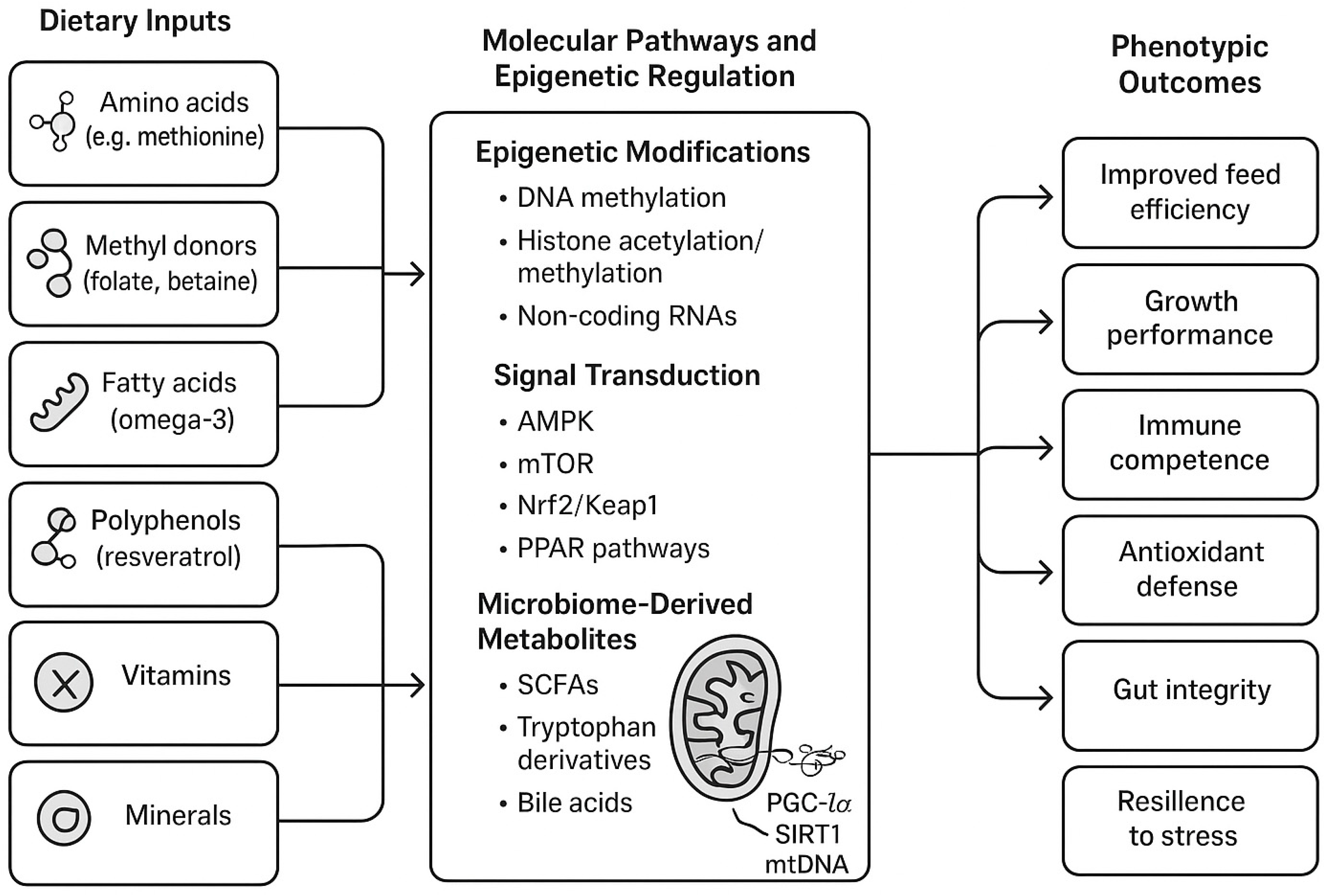
90]. Collectively, these findings emphasize that nutrigenomic interventions can enhance poultry resilience by fine-tuning stress-related gene networks, thereby improving performance and welfare in intensive production environments. A summary of studies showing the link between dietary interventions to microbiome-mediated transcriptomic and epigenetic regulation in poultry and livestock is provided in
Table 1. In addition, a conceptual overview of the nutrient-gene-phenotype axis in poultry is provided in
Figure 1.
7. Emerging Technologies in Poultry Nutrigenomics
7.1. Whole-Genome and Transcriptome Sequencing
The advent of high-throughput sequencing technologies has fundamentally reshaped poultry nutrigenomics by enabling the comprehensive exploration of how nutrients interact with the genome to regulate physiological functions. Whole-genome sequencing (WGS) allows identification of SNPs, structural variations, and regulatory elements that influence nutrient metabolism, growth, and immune competence. These genomic data form the foundation for associating specific alleles with phenotypic traits such as feed conversion efficiency, muscle accretion, and resistance to oxidative or infectious stressors. Meanwhile, transcriptome sequencing (RNA-seq) captures global gene expression dynamics in response to dietary interventions, uncovering nutrient-responsive pathways across metabolically active tissues, including muscle, liver, and the immune system [
92].
Applications of RNA-seq in poultry have provided unprecedented insights into gene–diet interactions. For instance, transcriptomic analyses in broilers subjected to variable amino acid or fatty acid supplementation have identified differential expressions in key growth and metabolism-related genes such as IGF-1 and MSTN (muscle development), FASN and PPARs (lipid metabolism), and SOD and GPX1 (antioxidant defense). These studies highlight the transcriptional plasticity of nutrient-regulated genes and the complex interplay between metabolic pathways. When transcriptomic data are integrated with WGS-based SNP analyses, researchers can delineate genotype-specific nutritional responses, allowing feed formulations to be optimized for specific genetic backgrounds. This genomic–transcriptomic integration bridges molecular biology and practical nutrition, providing a foundation for the development of precision feeding systems in commercial poultry operations.
7.2. Epigenome-Wide Association Studies (EWAS)
In parallel with genomic and transcriptomic advances, Epigenome-Wide Association Studies (EWAS) have emerged as a powerful tool to examine how dietary components induce heritable but reversible changes in gene regulation. EWAS investigates genome-wide patterns of DNA methylation and histone modifications in response to specific nutritional inputs, linking diet to gene expression without altering the DNA sequence itself. These studies have demonstrated that certain nutrients act as epigenetic modulators, shaping phenotypic outcomes such as growth rate, lipid metabolism, and immune resilience. For example, supplementation with methyl donors, notably methionine, folate, betaine, and choline, has been shown to modify promoter methylation patterns of genes associated with muscle accretion and lipid biosynthesis in both broilers and laying hens [
93,
94]. Such dietary methyl donors enhance methylation in key regulatory regions, leading to the downregulation of lipogenic genes and improved feed conversion efficiency.
Similarly, bioactive compounds like polyphenols and fatty acids have been identified as influential modulators of histone acetylation and methylation in genes governing metabolic and immune functions [
41]. Polyphenol-rich diets, for instance, have been reported to upregulate antioxidant defense genes by increasing histone acetylation at their promoter regions, thereby improving oxidative stress tolerance. These findings underscore the potential of EWAS to uncover the epigenetic signatures of nutrition, which may serve as biomarkers for predicting long-term responses to dietary interventions. As such, epigenome-wide approaches are increasingly viewed as the next frontier in nutrigenomic research, enabling epigenetically informed diet formulation that accounts for both short-term metabolic responses and long-term phenotypic adaptation.
7.3. Multi-Omics Integration and Systems Biology
Modern poultry nutrigenomics is moving toward multi-omics integration, combining genomics, transcriptomics, epigenomics, metabolomics, and microbiomics to capture the full complexity of nutrient–gene–microbiome interactions. Such systems biology approaches provide a holistic understanding of how dietary inputs influence cellular networks, metabolic fluxes, and physiological outputs. By integrating diverse molecular datasets, researchers can identify key regulatory nodes, metabolic bottlenecks, and epigenetic drivers that mediate growth, immune function, and stress resilience. This comprehensive framework transcends single-layer analyses, offering predictive insights into how individual nutrients or dietary patterns modulate the genome and its downstream molecular cascades.
A compelling example of this approach is the integrative analysis of the liver transcriptome, gut microbiome, and plasma metabolome in broilers, which revealed intricate crosstalk between amino acid availability, microbial SCFAs production, and hepatic lipid metabolism gene expression [
95]. Such studies demonstrate that the host’s metabolic state cannot be understood in isolation but must be contextualized within the broader host–microbiome–diet axis. Multi-omics integration enables the construction of predictive models of nutrient responsiveness, which can inform genotype-specific and even environment-specific feeding strategies. These system-level insights are driving a paradigm shift from empirical feeding toward mechanistically informed precision nutrition, where each dietary component is evaluated based on its molecular effects and network-level impact on performance and health.
7.4. Prospects for Genome Editing (Crispr-Based Nutrigenomic Studies)
Among the most promising tools in poultry nutrigenomics is genome editing, particularly using the CRISPR/Cas9 system, which allows precise manipulation of specific genes to assess or enhance nutrient responsiveness. CRISPR-based approaches provide a direct means of functional validation, enabling targeted knockout, knock-in, or activation of genes implicated in growth and metabolism. For example, editing of MSTN or IGF-1 can elucidate their roles in amino acid utilization and muscle development, while modifications of PPARα or PPARγ can reveal gene–diet interactions governing lipid oxidation and adipogenesis. Beyond research applications, genome editing holds practical potential for trait improvement, where genetic modifications informed by nutrigenomic data can produce birds with superior feed efficiency, growth performance, and disease resistance, without compromising welfare or reproductive capacity.
However, the deployment of genome-edited poultry raises critical ethical, regulatory, and consumer considerations. Regulatory frameworks must establish guidelines for evaluating the safety, traceability, and ecological implications of genome-edited animals. Likewise, public perception of gene-edited livestock remains mixed, necessitating transparent communication about the purpose, safety, and benefits of such technologies. Ethical oversight is essential to ensure that genome editing complements, rather than replaces, traditional breeding and nutritional management practices. When integrated with nutrigenomics, CRISPR-based studies offer an unprecedented opportunity to link dietary inputs to functional genomic outcomes, providing a molecular bridge between nutrition, genetics, and performance. The combination of genome editing with multi-omics data and precision feeding will likely define the next decade of poultry science, offering a pathway toward sustainable, efficient, and welfare-conscious production systems.
7.5. Challenges and Ethical Considerations in Multi-Omics and Genome Editing
While multi-omics integration offers an unprecedented view of nutrient–gene interactions, it also presents several challenges. Combining genomic, transcriptomic, metabolomic, epigenomic, and microbiomic datasets requires standardized sampling protocols, compatible analytical pipelines, and robust computational models capable of distinguishing causation from correlation. High-dimensional datasets often suffer from batch effects, incomplete annotation, and limited sample sizes, which can obscure meaningful biological relationships. Current computational modeling and systems biology approaches, though increasingly sophisticated, still face constraints in translating multi-omics correlations into actionable nutritional insights. Improved bioinformatics tools, greater cross-study standardization, and machine learning algorithms trained on diverse poultry populations are essential to enhance predictive accuracy and biological interpretation in nutrigenomic research.
Recent CRISPR-based functional validation studies are beginning to bridge the gap between association and causation. For example, targeted editing of MSTN and IGF-1 genes in broilers has confirmed their role in amino acid-driven muscle growth and protein synthesis, while manipulation of PPARα and PPARγ loci has elucidated their contribution to dietary lipid metabolism and adipogenesis. Similar approaches have been used to explore Nrf2-dependent antioxidant pathways in response to selenium and polyphenol supplementation. These studies demonstrate how genome editing can directly validate nutrigenomic hypotheses and clarify nutrient–gene mechanisms, advancing both basic and applied research.
However, the application of genome editing and molecular nutrition technologies in poultry must be guided by rigorous ethical and regulatory frameworks. Ethical oversight should ensure that genetic or nutritional interventions enhance animal welfare without compromising physiological stability or natural behaviors. Regulatory agencies will need to establish clear standards for assessing biosafety, traceability, and consumer transparency before genome-edited poultry enter production systems. Public perception also remains a key consideration—open communication about the safety, purpose, and benefits of these technologies is essential for societal acceptance. As a guiding principle, genome editing and nutrigenomics should be used to complement traditional breeding and nutrition practices, promoting sustainability, equity, and animal well-being rather than purely productivity-driven outcomes.
8. Future Perspectives and Applications
8.1. Toward DNA-Informed Precision Nutrition
Advances in nutrigenomics, genomics, and multi-omics technologies are transforming the conceptual framework of poultry nutrition, paving the way for DNA-informed precision nutrition [
96]. This emerging approach integrates genomic, epigenomic, transcriptomic, proteomic, and metabolomic data to design diets tailored to individual or flock-specific genetic profiles. The ultimate goals are to optimize nutrient utilization, enhance growth and immune function, improve reproductive efficiency, and reduce environmental impacts associated with poultry production [
7,
92]. Unlike conventional feeding systems, which apply uniform diets to genetically diverse populations, DNA-informed nutrition recognizes that birds differ in their metabolic pathways, nutrient absorption rates, and gene–diet interactions [
97]. By characterizing these molecular variations, producers can align feed formulations with genetic potential, leading to more efficient, health-oriented, and sustainable production systems.
One central strategy in this paradigm is the formulation of genotype-specific diets. Integration of SNP-based genotyping with functional genomic data enables the identification of allelic variants associated with nutrient metabolism. For instance, broilers harboring beneficial
IGF-1 polymorphisms may respond more efficiently to increased lysine supplementation, thereby enhancing muscle accretion and protein synthesis. Conversely, individuals with specific
PPARs variants may benefit from diets with adjusted lipid content to prevent excessive adiposity while maintaining metabolic efficiency [
92]. Another important frontier is epigenetic programming, wherein targeted dietary interventions during critical developmental windows, such as embryogenesis, early post-hatch periods, or through maternal feeding, can induce stable epigenetic modifications, including DNA methylation, histone acetylation, and non-coding RNA expression [
98,
99,
100]. Such programming can have long-lasting effects on muscle development, immune competence, and metabolic resilience. Furthermore, integration of nutrigenomic data with gut microbiome research adds a vital layer to precision nutrition. Multi-omics analyses of host–microbiome interactions have shown that dietary inclusion of prebiotics, probiotics, and phytogenic compounds can modulate microbiome composition, short-chain fatty acid production, and gut–liver–immune crosstalk, ultimately influencing systemic genomic responses and performance. Collectively, these developments position DNA-informed precision nutrition as a transformative framework for next-generation poultry production.
8.2. Ethical and Regulatory Considerations in Molecular Nutrition
Despite the promising potential of nutrigenomics and genome editing in poultry, their adoption raises ethical, regulatory, and societal challenges that must be carefully managed to ensure responsible innovation. From an ethical standpoint, animal welfare must remain paramount. Nutrigenomic interventions, whether dietary or genomic, should enhance physiological performance without compromising natural behaviors, stress resilience, or long-term health. Overemphasis on productivity at the expense of welfare could undermine public trust and ethical standards within the industry.
Regulatory oversight represents another critical dimension. The application of genome editing technologies such as CRISPR/Cas9 for validating nutrient–gene interactions or enhancing specific traits requires strict compliance with national and international biosafety and food security regulations. Authorities must ensure rigorous risk assessments, including evaluations of off-target effects, gene–environment interactions, and transgenerational impacts, before genome-edited poultry or nutrigenomic products reach commercial markets [
100]. Equally significant is consumer acceptance, which hinges on transparency, labeling accuracy, and effective communication about the scientific and safety aspects of nutrigenomic interventions. Public perception of genetically informed nutrition, gene-edited poultry, or epigenetic modification may vary across cultures and markets; hence, fostering dialogue between scientists, producers, regulators, and consumers is essential.
Finally, the drive toward sustainability and equity must be embedded within the molecular nutrition agenda. Precision nutrition should not only aim to improve productivity and resource efficiency but also promote environmental stewardship and equitable access to technology. This is particularly important to ensure that both smallholder and large-scale producers can benefit from nutrigenomic advancements without exacerbating socioeconomic disparities. Therefore, the implementation of nutrigenomic innovations must be guided by frameworks that balance technological progress with ethical responsibility, public engagement, and sustainable development goals.
8.3. Research Gaps and Recommendations
Despite rapid progress, several critical research gaps constrain the full realization of nutrigenomics in poultry. A major limitation lies in the incomplete genomic and epigenomic maps across different tissues, breeds, and developmental stages. Although whole-genome sequencing has advanced substantially, the current understanding of tissue-specific methylomes, histone landscapes, and non-coding RNA networks remains limited. Expanding comprehensive epigenome-wide association studies (EWAS) would enable the identification of nutrient-responsive regulatory elements and facilitate the discovery of biomarkers predictive of dietary efficiency [
101]. Furthermore, most current investigations are reductionist, focusing on a single omics layer, either genomics, transcriptomics, or metabolomics, while multi-omics integration remains underdeveloped. The adoption of systems biology frameworks that combine genomic, transcriptomic, proteomic, metabolomic, and microbiomic data will be crucial to uncover the full complexity of nutrient–gene–microbiome interactions.
Another key research frontier involves exploring long-term and maternal effects of nutrition on offspring performance. Few studies have systematically assessed how early-life or maternal dietary interventions shape the epigenetic landscape, immune programming, and metabolic outcomes of progeny. These investigations are critical to understanding the intergenerational persistence of nutrigenomic effects and optimizing feeding strategies during sensitive developmental stages. Functional validation of nutrigenomic candidates also remains a pressing need. While association studies have identified numerous diet-responsive genes and SNPs, their causal roles require experimental confirmation using advanced gene-editing tools, such as CRISPR/Cas9 knockouts and overexpression models. Furthermore, environmental variables, including heat stress, pathogen exposure, and feed composition, interact dynamically with genetic and epigenetic regulation. Future research should therefore incorporate environmental and stressor data into nutrigenomic analyses to develop context-dependent predictive models.
In summary, future work should prioritize large-scale genome and epigenome sequencing across diverse poultry breeds; implement integrative multi-omics studies combining host and microbiome data; evaluate maternal and early-life nutritional programming; and employ gene-editing approaches to validate nutrient–gene interactions. Development of predictive computational models that account for both genotype and environmental variability will further enable the transition toward personalized, sustainable, and resilient poultry feeding systems. Together, these efforts will solidify nutrigenomics as a cornerstone of modern animal nutrition and breeding science.
9. Conclusions
Nutrigenomics integrates nutrition, genomics, and epigenetics to explain how dietary components regulate gene expression, metabolism, and phenotypic outcomes in poultry. Nutrients act as molecular signals that modify DNA methylation, histone structure, and non-coding RNA activity, influencing growth, immunity, and stress resilience. Genetic polymorphisms and mitochondrial dynamics further determine nutrient responsiveness and feed efficiency, providing a foundation for precision feeding and marker-assisted selection.
Emerging tools, such as genome and transcriptome sequencing, EWAS, multi-omics integration, and CRISPR editing, enable deeper insights into nutrient–gene interactions and the design of genotype-informed diets. By aligning feed composition with genetic and epigenetic profiles, nutrigenomics promotes productivity, health, and sustainability while reducing reliance on antibiotics.
In summary, integrating molecular nutrition with genomics offers a pathway toward DNA-informed precision nutrition, ensuring efficient resource use, enhanced animal welfare, and sustainable poultry production.