Article

Chemical Characterization and Polyol-Based Liquefaction of Bay Laurel (Laurus nobilis) Leaves and Branches


1
Centre for Natural Resources, Technology and Management School, Polytechnic University of Viseu, Av. Cor. José Maria Vale de Andrade, 3504-510 Viseu, Portugal
2
IT Department, Technology and Management School, Polytechnic University of Viseu, Av. Cor. José Maria Vale de Andrade, 3504-510 Viseu, Portugal
3
Centre for Natural Resources, Agrarian School, Polytechnic University of Viseu, Av. Cor. José Maria Vale de Andrade, 3504-510 Viseu, Portugal
*
Author to whom correspondence should be addressed.
Biomass 2026, 6(3), 39; https://doi.org/10.3390/biomass6030039

Submission received: 30 March 2026 / Revised: 15 May 2026 / Accepted: 25 May 2026 / Published: 28 May 2026

Abstract

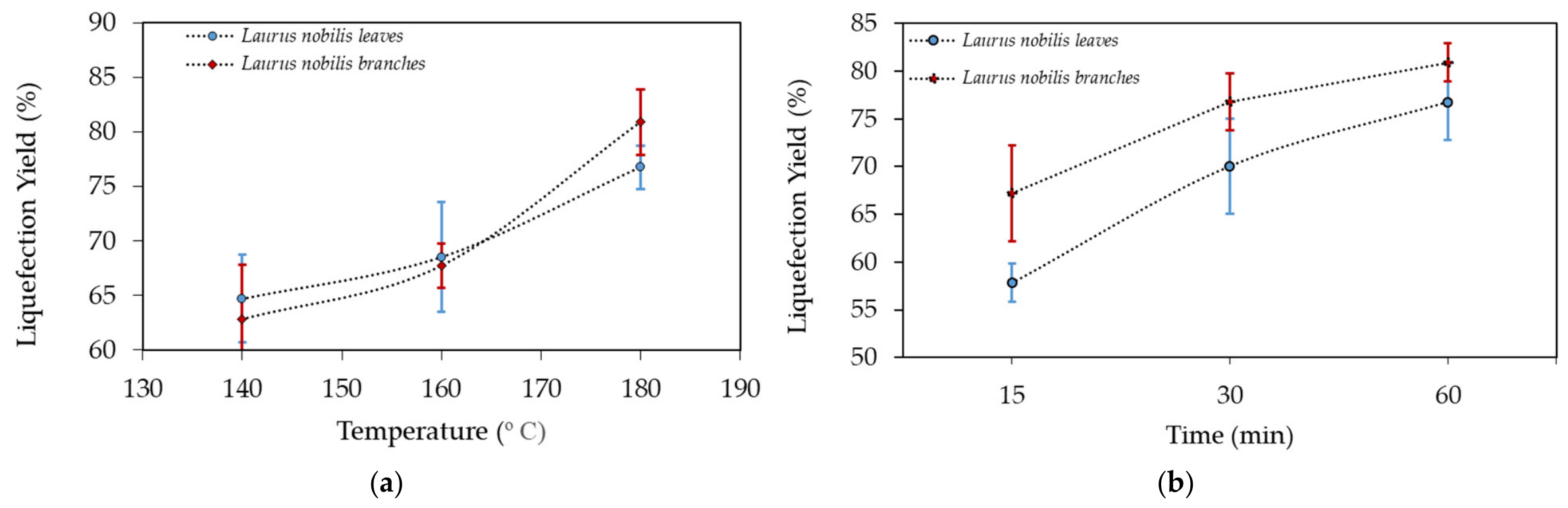
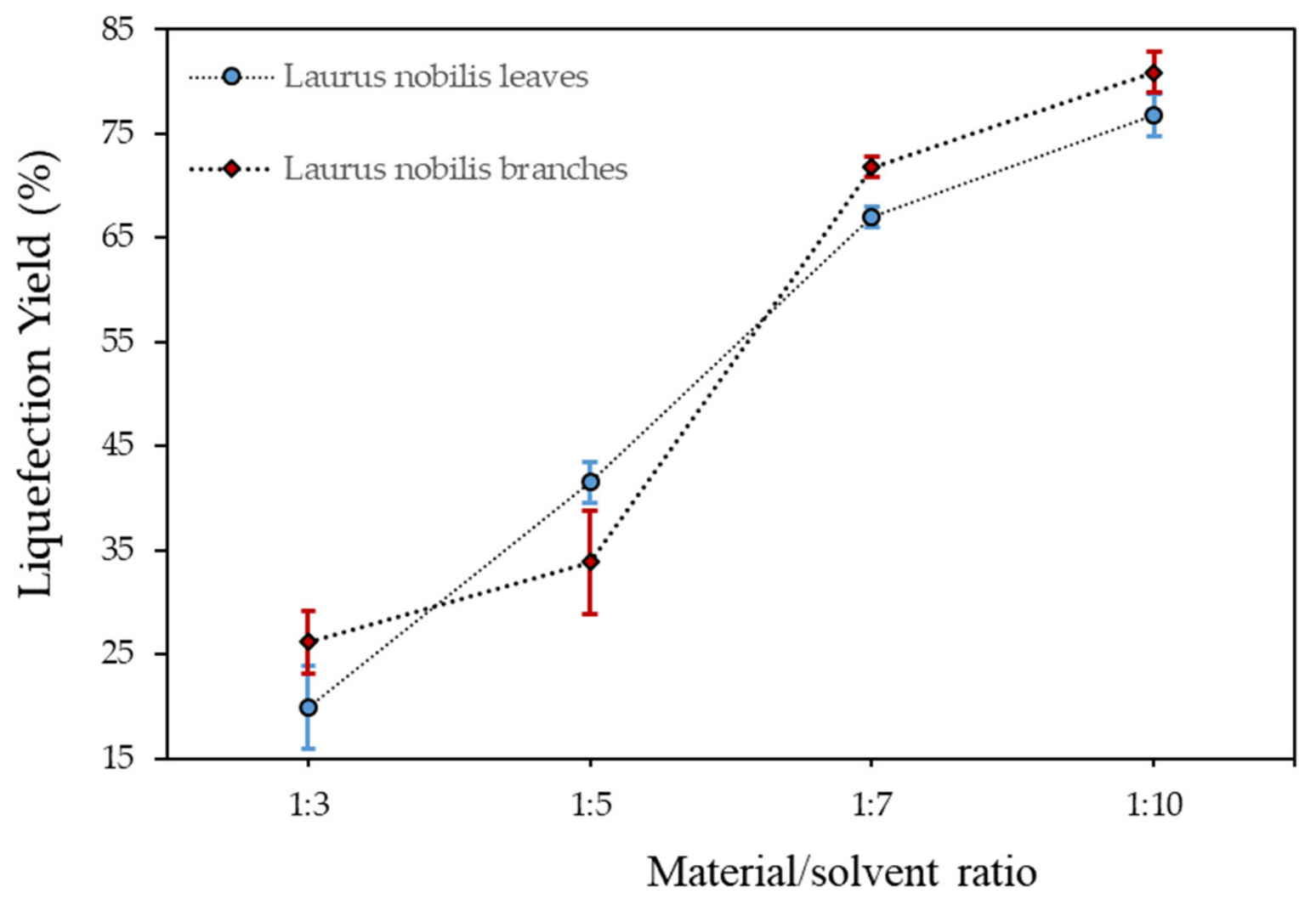
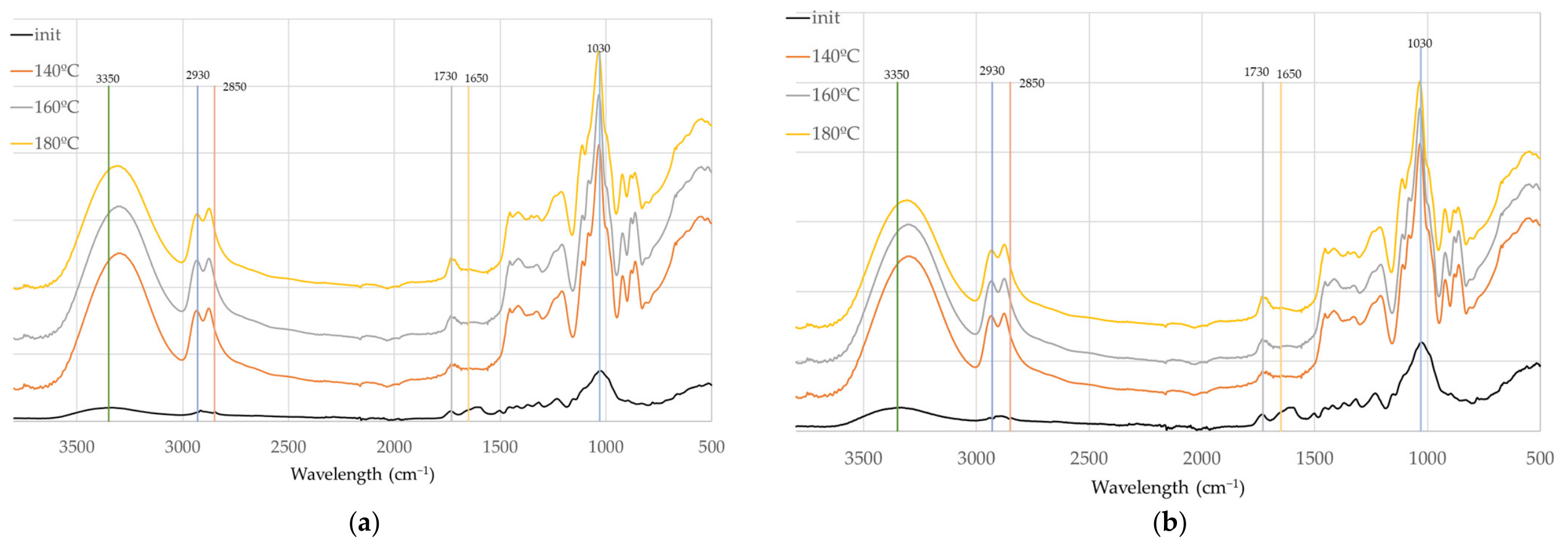
Bay laurel (Laurus nobilis) pruning residues, including leaves and small branches, were chemically characterized and subjected to polyol-based liquefaction to evaluate their valorization potential. Leaves exhibited higher ash and extractive contents (3.37% and 10.8% against 2.53% and 4.9%, reflecting greater accumulation of minerals and lipophilic compounds, whereas branches were richer in structural polysaccharides such as α-cellulose and hemicelluloses. Acid-insoluble lignin was higher in leaves, likely due to phenolic compounds and recalcitrant structures like cutin. Liquefaction experiments using a glycerol–ethylene glycol solvent system revealed that both biomass fractions respond positively to increases in temperature, residence time and solvent-to-biomass ratio. Leaves showed higher liquefaction yields under milder conditions (57.8% at 15 min compared to 67.2% for branches), likely related to their extractive-rich and less organized structure, while branches tended to surpass leaves at higher temperatures and longer reaction times, possibly due to the greater susceptibility of their lignocellulosic matrix to breakdown under more severe conditions. FTIR-ATR analysis of the liquefied products suggested an increased presence of hydroxyl and carbonyl groups, indicating gradual breakdown of polysaccharides, lignin, and other structural polymers. These results highlight the distinct reactivity of leaves and branches, providing insights for tailored conversion strategies in polyol-based liquefaction processes. The results provide a basis for tailoring the process to specific biomass fractions, contributing to more efficient and selective biomass conversion into useful products.
Keywords: agro-industrial residues; bay tree pruning; chemical composition; FTIR; liquefaction agro-industrial residues; bay tree pruning; chemical composition; FTIR; liquefaction