Skip to Content
BiomassBiomass
  • Article
  • Open Access

7 January 2026

Fast Catalytic Pyrolysis of Tamarind Pulp over Green HZSM-5 Zeolite

,
,
and
1
Chemical Engineering Department, University of Rio Grande do Sul (UFRGS), 2777 Ramiro Barcelos St., Santana, Porto Alegre 90035-007, RS, Brazil
2
Chemistry Institute, University of Rio Grande do Sul (UFRGS), 9500 Bento Gonçalves Ave., Agronomia, Porto Alegre 90650-001, RS, Brazil
3
Dinah Gonçalves State College, 328 Antonio Franco St., Valéria, Salvador 41306-025, BA, Brazil
*
Author to whom correspondence should be addressed.

Abstract

Aiming to obtain chemicals from renewable sources to mitigate global warming, the catalytic pyrolysis of tamarind pulp, obtained from juice industries, was studied. Catalysts based on HZSM-5 zeolite prepared from rice husk ash using ultrasound, microwaves, and a combination of both were used. The catalysts were characterized by elemental analysis, X-ray diffraction, specific surface area and porosity measurements, scanning electron microscopy, and acidity measurements. The specific surface areas and the micropore volumes were slightly affected by the treatments, with microwave alone or combined with ultrasound having the strongest effect. The number of acid sites increased, and the relative number of strong sites decreased with the treatments. The relative amount of Bronsted to Lewis sites was increased by ultrasound and decreased by microwave, alone or combined. These catalysts decreased oxygenated products and increased BTEX production during tamarind pulp pyrolysis. Product distribution was similar for all cases, meaning that HZSM-5 with the following characteristics is a selective catalyst for BTEX in tamarind pulp pyrolysis: specific surface area = 310–347 m2/g; micropore volume = 0.099–0.105 cm3 g−1; acidity = 327 to 571 µmol NH3 gcat−1; and ratio of Bronsted to Lewis acid sites = 0.034 to 0.044.

1. Introduction

Since the Industrial Revolution, the relationship between humans and the environment has been largely driven by the pursuit of maximizing commodity production to ensure greater societal comfort. However, the rapid expansion of industrial activities and the intensive use of fossil fuels have placed severe pressure on global ecosystems through increased atmospheric emissions and indiscriminate waste disposal. These impacts disrupt essential biogeochemical cycles and contribute to substantial climatic changes, most notably the rise in global mean temperature [1]. The petroleum industry has been historically identified as a major contributor to environmental pollution. Fossil fuel combustion releases carbon monoxide and carbon dioxide, the latter exacerbating the greenhouse effect, in addition to producing nitrogen oxides (NOx) and sulfur oxides (SOx), which contribute to acid rain and photochemical smog [2]. Restoring climate balance critically requires reducing energy dependence on petroleum-derived fuels and promoting greater use of renewable energy sources such as wind, solar, hydropower, and biomass [3].
Biomass is considered a 100% renewable resource since its chemical energy is solar-derived through photosynthesis [4,5]. It can be converted into energy via thermochemical processes to yield heat and electricity (cogeneration), synthesis gas (syngas), and valuable chemical products, including biofuels [6]. Among these processes, pyrolysis emerges as a major route because of its economy, flexibility, and simplicity [7]. The most advanced regime, flash pyrolysis, is distinguished by achieving virtually instantaneous heating by introducing the biomass directly into a pre-heated reactor. This approach represents the optimal condition for achieving the highest bio-oil yield [8,9].
However, the major constituents of biomass pyrolysis oil encompass a diverse array of oxygenated organic compounds, including carboxylic acids, ketones, phenols and their derivatives, furans, sugars, aldehydes, and alcohols [10]. This intrinsic compositional complexity and high oxygen content critically confer undesirable properties to bio-oil, specifically low heating value, chemical instability, and high corrosivity [10,11]. Consequently, comprehensive upgrading processes are mandatory for effective utilization as a fuel source or as a platform chemical feedstock.
An effective strategy to overcome these drawbacks is the in situ application of heterogeneous catalysts to directly hydrodeoxygenate the pyrolysis vapors. This approach yields a higher-quality bio-oil enriched in hydrocarbons, demonstrating superior product selectivity compared to conventional non-catalytic thermal pyrolysis [10,12]. The most widely employed catalysts used in pyrolysis are zeolites, favored for their exceptional characteristics such as high specific surface area, well-defined microporous structure, and significant Brønsted and Lewis acidity, properties indispensable for promoting the key hydrodeoxygenation (HDO) reaction pathways [12].
In line with these ideas, this work deals with the convergence of two residual biomass valorization strategies for obtaining high-value-added products. While rice husk ash is a sustainable silica source for catalytic zeolite synthesis, tamarind pulp (Tamarindus indica L.) is the biomass feedstock for pyrolysis. As both are abundant agricultural residues, this strategy not only reduces catalyst production costs but also establishes a circular economy pathway, in which agricultural waste is valorized to enable the processing of other agricultural residues.
Brazil, as one of the largest rice producers outside Asia, generates this agro-industrial byproduct on a large scale [13]. Due to its high calorific value, rice husk is widely used in thermal power plants for bioenergy generation. The ash resulting from thermal combustion can reach purity levels above 90%, meeting the reactivity requirements for the synthesis of zeolites such as ZSM-5 [14,15,16].
Moreover, alternative techniques have been used to reduce synthesis time, increase the porosity of the material, and promote the formation of nanoscale zeolites. Among these methodologies, ultrasound and microwave technologies stand out for making the process faster and more efficient [17,18], while also aligning the synthesis with more sustainable practices [19]. Through acoustic cavitation, ultrasound creates high-pressure and high-temperature microenvironments capable of accelerating the dissolution of silicon and aluminum precursors, thereby enhancing nucleation and promoting more homogeneous crystal growth. As a result, zeolites with reduced synthesis time, smaller and more uniform crystals, higher specific surface area, and increased mesoporosity are obtained, desirable properties for catalytic applications [17]. Microwave irradiation, in turn, provides rapid and uniform heating, favoring the early nucleation of nanocrystals and their self-assembly to form intercrystalline mesopores. This method not only significantly accelerates synthesis but also improves the purity and crystallinity of the final material [20,21,22]. The integration of these technologies represents a significant advancement in ZSM-5 synthesis, enabling the use of alternative silicon sources, such as rice husk ash, within a more sustainable framework [18,19]. Additionally, the possibility of synthesizing ZSM-5 without any organic template highlights the potential for more economical and environmentally friendly processes.
Similarly, tamarind, a widely cultivated tropical fruit, yields a significant agro-industrial residue, as its pulp (a byproduct of the juice industry), constitutes approximately 30% of the fruit mass [23]. Several studies have investigated the potential of tamarind seed husks for producing value-added chemicals. Kader et al. [24], for instance, performed tamarind seed pyrolysis at different temperatures and obtained the maximum bio-oil yield of 45 wt.% at 400 °C. Moreover, Mathiarasu & Pugazhvadivu [25] used microwave pyrolysis of tamarind seeds to extract high-quality bio-oil (36%) with a higher calorific value than the bio-oil produced via traditional pyrolysis.
Tamarind seed husk biomass has been explored to study its slow pyrolysis behavior and potential for bio-oil and biochar production. The first study on slow pyrolysis of seed husk of tamarind with detailed characterization of pyrolysis products and in-depth investigations into the breaking pathways during pyrolysis was carried out by Kaur et al. [26], using a temperature range of 300 to 450 °C. They concluded that 400 °C is the optimized temperature for bio-oil production (yield 38.8 wt.%; conversion 67.1%). Furthermore, ketones, aldehydes, carboxylic acids, furans, phenolics, and N-containing functionalities are the main products, and thus bio-oil can be a source of functional chemicals. However, as far as we know, no work has been reported on the catalytic pyrolysis of the tamarind pulp. The use of catalysts can provide the control of reactions towards the desirable products, for instance, high-value benzene, toluene, ethylbenzene, and xylenes (BTEX). In addition, this work presents the synthesis of HZSM-5 zeolite using rice husk ash (RHA) as a silicon source without any organic template under the influence of ultrasound and microwave technologies.

2. Materials and Methods

2.1. Biomass Preparation and Characterization

The tamarind pulp residue (TP) was dried in ambient conditions for 15 days, subsequently ground to fine powder by pestle and mortar, and sieved to 100 mesh. The resulting material was characterized by elemental analysis of carbon, hydrogen, and nitrogen (CHN), in a 2400 Series II Perkin Elmer equipment (Waltham, MA, USA) and by thermogravimetry in a TGA (Q50 V.67 Build 203) Exapro equipment (New Castle, DE, USA), from 25 to 700 °C at a heating rate of 5 °C min−1 under nitrogen flow.

2.2. Rice Husk Ash Characterization

The rice husk ash used as a source of silica was characterized by X-ray fluorescence (XRF), X-ray diffraction (XRD), specific surface area (Sg) measurements, scanning electron microscopy (SEM), and temperature programmed desorption of ammonia (NH3-TPD).
The chemical composition of the ash was determined via the X-Ray Fluorescence technique (XRF), using the WD-FRX model RIX 3100 Rigaku Dengui equipment (Rigaku Corporation, Tokyo, Japan). Quantitative analysis was performed using the fused sample technique with a calibration curve from rock patterns and artificial patterns for the most common element (manganese). The loss on ignition (LOI) was performed by heating 2 g of the sample to 1000 °C, the value being obtained by the difference in sample mass before and after being heated to 1000 °C.

2.3. Catalysts Preparation

The samples were synthesized according to the methodology adapted from Bortolini et al. [27], using crystallization seeds and rice husk ash (RHA) as a silica source, without any organic template. The RHA was obtained by burning rice husks in a fluidized bed during the rice processing and industrialization companies in Rio Grande do Sul, Brazil.
During zeolite preparation, an acidic aqueous solution containing aluminum sulfate and sulfuric acid was slowly dropped on a basic aqueous solution of sodium hydroxide and the silica source (RHA) under vigorous stirring. The mixture was then kept under constant stirring at 25 °C for 60 min to form the hydrogel. The hydrogel was transferred to a Teflon vessel containing ZSM-5 zeolite seeds (CBV 2314, Zeolyst, Conshohocken, PA, USA) and autoclaved. A quantity of seeds equivalent to 0.1% (w/w) of the reaction mixture was used. This system was kept in an oven at 190 °C for 24 h. The solid was then vacuum filtered and washed with deionized water until the conductivity was less than 50 μS m−1. The sample was dried at 80 °C for 12 h to obtain the Z sample.
Other samples were treated with ultrasound (NI1201D, Nova Instruments; Piracicaba, SP, Brazil) and microwave (ME044, Electrolux; Manaus, AM, Brazil) to improve the dissolution and homogenization of the reactants. In order to obtain the ZU sample, the basic solution was kept under an ultrasonic bath for 10 min before the addition of the acidic dispersion. The remaining subsequent steps followed the same methodology. For preparing the ZM sample, the resulting gel was kept for 30 s under microwave (760 W), followed by the same steps described. Another sample (ZUM) was obtained by using both treatments under the same conditions already described.
The acidic form of the zeolites was obtained by ion exchange, using a heated ammonium nitrate solution (80 °C) and keeping the dispersion under stirring for 2 h. Subsequently, the material was vacuum filtered and washed with deionized water until an electrical conductivity of less than 50 μS m−1 was obtained. The samples were then dried at 80 °C for 12 h and then calcined for 2 h at 600 °C to obtain the zeolite samples in their acidic form (HZ-HZSM-5 zeolite without any treatment, HZU-HZSM-5 zeolite with ultrasound treatment, HZM zeolite with microwave treatment, and HZUM zeolite with ultrasound and microwave treatment).

2.4. Catalyst Characterization

The silicon and aluminum contents of the catalysts were determined using the X-ray Fluorescence (XRF) technique with a Bruker S2 Puma XRF model (Karlsruhe, Germany). The analyses were carried out using a sample cup for XRF and 6μ Mylar Film in a Helium atmosphere.
The X-ray diffractograms were obtained using a Bruker D2 Phaser equipment, with Cu-Kα radiation. The specific surface area and porosity measurements were carried out in a NOVA 4200e model Quantachrome apparatus (Boynton Beach, FL, USA). Before experiments, the sample was heated at 300 °C for 3 h under vacuum. The specific surface area (Sg) was calculated using the BET method, and the micropore volume (Vmicro) was obtained by using the t-plot method. The pore size distribution was determined using the Barrett–Joyner–Halenda (BJH) method via nitrogen physisorption. The morphology of the samples was observed by scanning electron microscopy (SEM). An EVO 10 model Zeiss equipment (Cambridge, England) working at a 10 kV accelerating voltage was used. Before the analysis, the samples were placed on aluminum brackets with carbon tape and metalized with gold.
The acidity of the samples was measured by temperature-programmed desorption of ammonia (NH3-TPD) using a QME 200 model Pfeiffer quadrupole mass spectrometer. First, the sample was heated at 550 °C for 60 min, under helium flow (60 mL min−1). Then, the adsorption of NH3 was performed under a flow (60 mL min−1) of a 4 vol% NH3/He mixture, at 70 °C, for 30 min. Before heating, the sample was purged by helium flow for 60 min. Then, the temperature was raised (20 °C min−1) to 800 °C, under helium flow.
The Bronsted and Lewis acid sites of the catalysts were identified by Fourier transform infrared (FTIR) spectroscopy on samples previously adsorbed with pyridine. The catalyst (around 10 mg) was exposed to pyridine vapor for 15 h, dried at 100 °C for 18 h, cooled at room temperature, and then analyzed in FT-IR/NIR model Frontier equipment. The spectra were deconvoluted to calculate the ratio of Bronsted to Lewis acid sites.

2.5. Catalyst Evaluation

The catalysts were evaluated in the fast pyrolysis of tamarind pulp residue, using EGA/Py-3030D model Frontier equipment (Koriyama, Japan) coupled to a QP2010-Ultra Shimadzu (Kyoto, Japan) gas chromatograph-mass Spectrometer (GC/MS). Non-catalytic pyrolysis was also performed. For each run, a mixture of 0.88 mg of biomass and 4.4 mg of catalyst (catalyst/biomass ratio 5:1) was used. Pyrolysis was performed at 550 °C for 1 min, under helium (99.999% purity) flow at 100 mL min−1. Condensable vapors were fed to the GC/qMS via an injector port at 280 °C, operating in split mode (1:30). For separation, an SH-5MS capillary column (30 m × 0.25 mm × 0.25 μm Crossbond 5% diphenyl/95% dimethyl polysiloxane) was used. All experiments were performed in duplicate. The compound identification was tentatively achieved via retention indices and mass spectral data. Semi-quantitative analysis was performed by determining the chromatographic peak area percentage for each compound.

3. Results and Discussion

3.1. Biomass Characterization

The elemental analysis showed that the tamarind pulp is made of 43.26% carbon, 5.10% hydrogen, and 1.35% nitrogen, the remaining 50.29% being attributed to oxygen. This composition immediately highlights the high oxygen content and the notably low H/C ratio of approximately 0.12, which is characteristic of biomass [28,29].
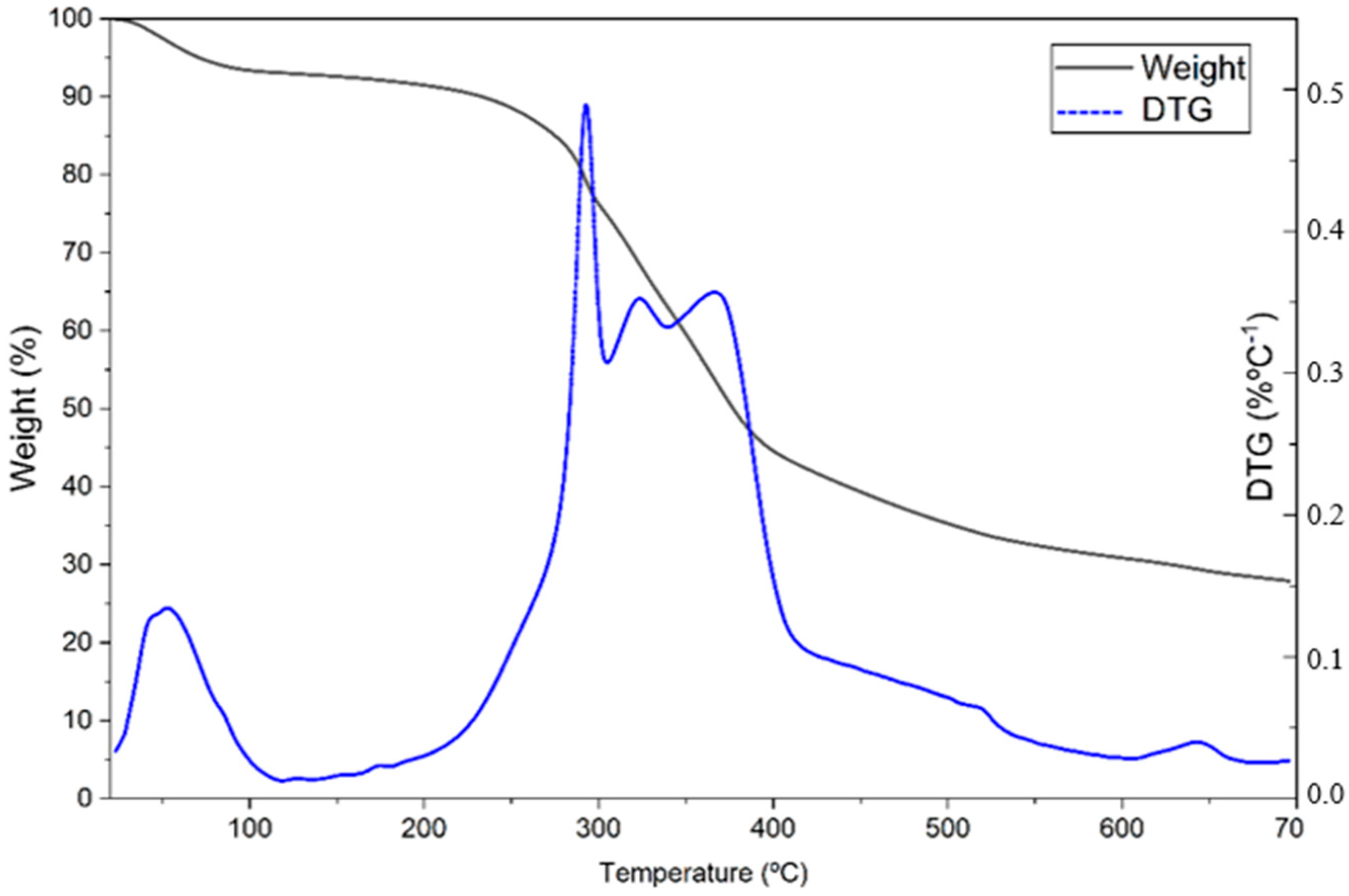
The thermogravimetric curve (Figure 1) shows two weight losses. The first one, up to 110 °C, is attributed to the loss of volatiles adsorbed on biomass, corresponding to a weight loss of 6.85%. The second event is associated with the successive degradation of hemicellulose, cellulose, and lignin. The final residue (27.9%) is related to the ash content and fixed carbon generated during analysis.
Figure 1. TG and DTG curves of tamarind pulp.

3.2. Rice Husk Ash Characterization

Table 1 presents the RHA composition obtained through XRF analysis. It is observed that it has high silica content (93.49%), a small amount of alumina (%), and few impurities. Similar results for rice husk ash were observed by Dey et al. [16] and Khoshbin & Karimzadeh [30]. Because of the high silicon content, RHA was used directly in the synthesis of ZSM-5 zeolite, without any prior treatment.
Table 1. Rice husk ash (RHA) composition determined by XRF analysis.

3.3. Catalyst Characterization Results

3.3.1. Si/Al Ratio Results

Table 2 shows that the Si and Al content remained similar across all zeolites. However, ultrasound and microwave treatments slightly reduced the Si/Al ratio. The combined treatment (ultrasound plus microwave) sample exhibited the lowest Si/Al ratio.
Table 2. Si/Al ratio (w/w) values of zeolite-based catalysts.

3.3.2. X-Ray Diffraction Results

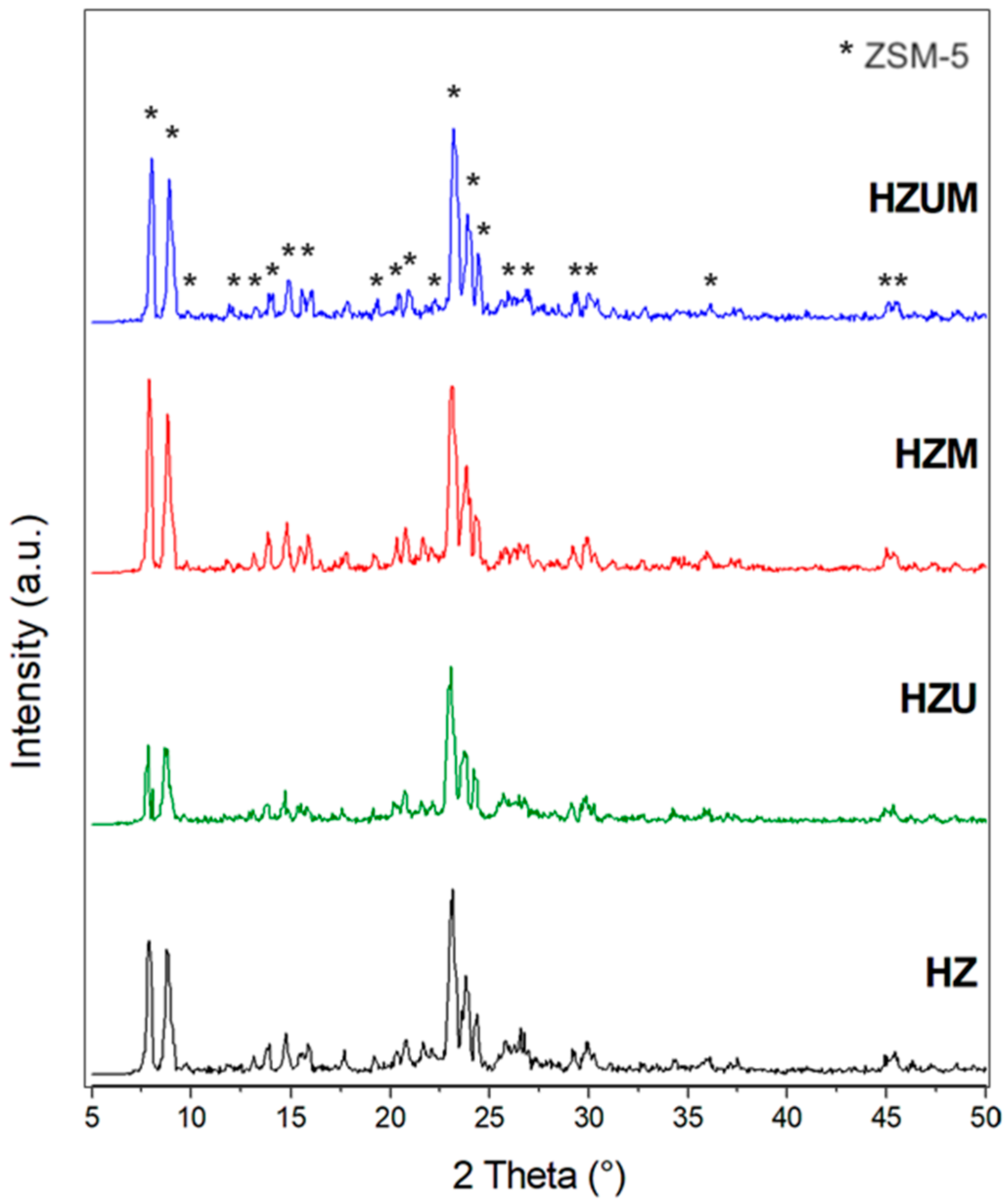
Figure 2 shows the X-ray diffractograms obtained for the prepared samples. The pattern exhibits characteristic Bragg reflections (peaks) at 2θ values, including 8.1°, 9.1°, 23.4°, 24.1°, and 24.7°. All synthesized samples exhibited reflections characteristic of HZSM-5 zeolite at 2θ angles between 8 and 10° and between 23 and 26° [31], confirming the formation of the ZSM-5 structure. The diffraction pattern is characteristic of the MFI (Mobil Five) framework type, which crystallizes in an orthorhombic system and belongs to the pentasil-type zeolite.
Figure 2. X-ray diffractograms of the catalysts. The asterisks denote the characteristic facets associated with the MFI framework type of ZSM-5.

3.3.3. Textural Properties Results

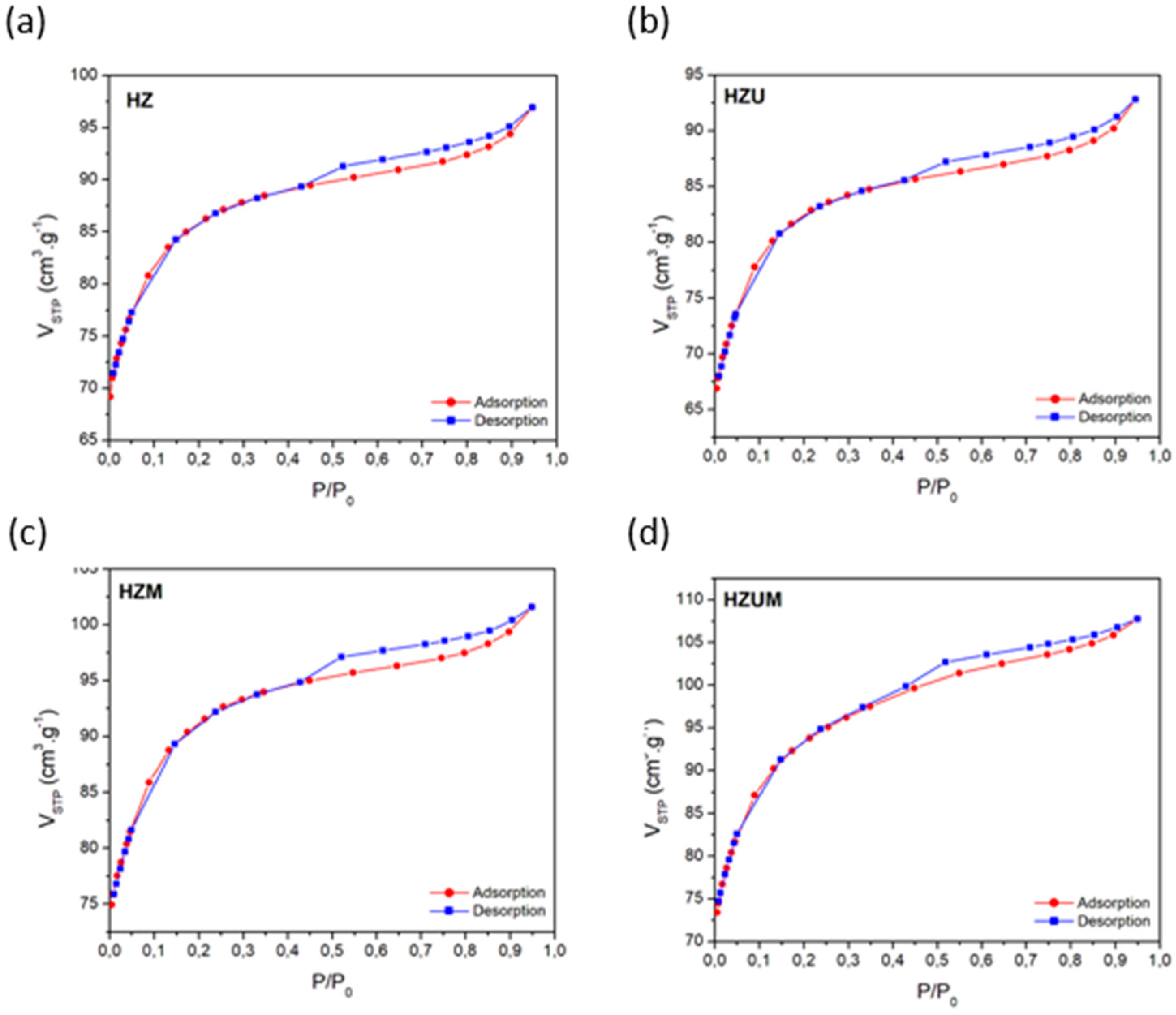
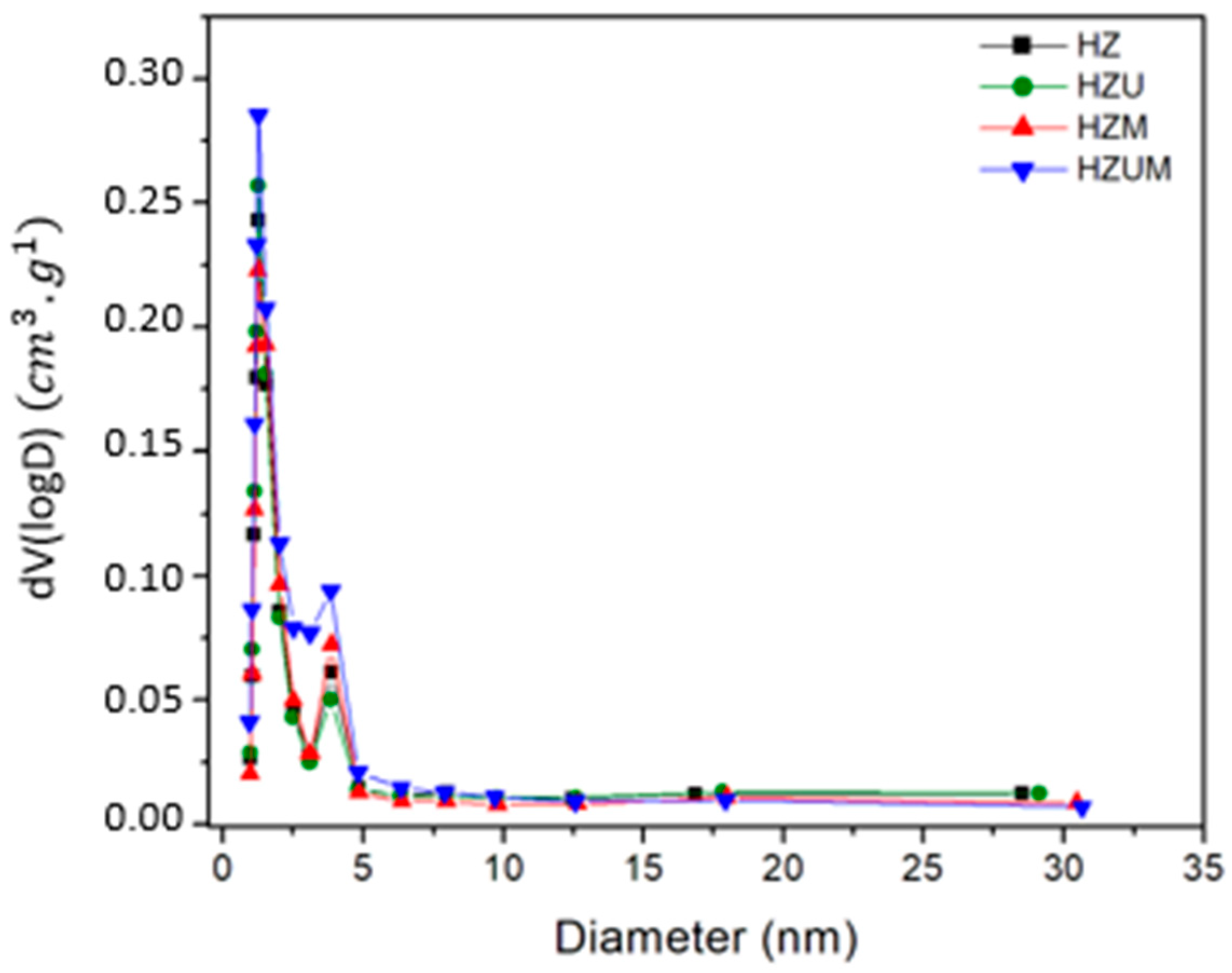
The results of the textural analysis are shown in Table 3, as well as Figure 3 and Figure 4. All samples show Type I isotherms, which are characteristic of zeolites and other primary microporous solids. Some interparticle mesopores were also observed at higher pressures. The values of specific surface area range between 310 and 347 m2 g−1, which are also typical of ZSM-5. It is observed that the different treatments influence micropore volumes, with the samples treated with microwaves showing the highest values. These results agree with the findings of Vichaphund et al. [32], in which the use of microwaves increased the micropore volume of HZSM-5 zeolite from 0.15 cm3 g−1 to 0.18 cm3 g−1. However, treatment with ultrasound alone slightly reduced the volume of micropores, as previously observed in the study by Khoshbin & Karimzadeh [30], in which the volume of micropores decreased from 0.084 cm3 g−1 to 0.063 cm3 g−1 with the use of ultrasound. The average pore diameters of the prepared samples were calculated from the pore distribution shown in Figure 4. It is observed that the use of ultrasound and microwave technologies favors an increase in the presence of micropores, with diameters smaller than 2 nm, resulting in smaller average pore diameters, especially for the HZUM sample, which presented an average pore diameter of 2.18 nm. This occurs due to the high energy densities, fast kinetics, and unique physicochemical effects induced by these technologies, which favor the formation of a larger volume of micropores.
Table 3. Textural properties of zeolite-based catalysts.
Figure 3. Nitrogen adsorption and desorption curves of HZSM5 zeolite-based catalysts.
Figure 4. Pore size distribution curves of HZSM5 zeolite-based catalysts.

3.3.4. Acidity Results

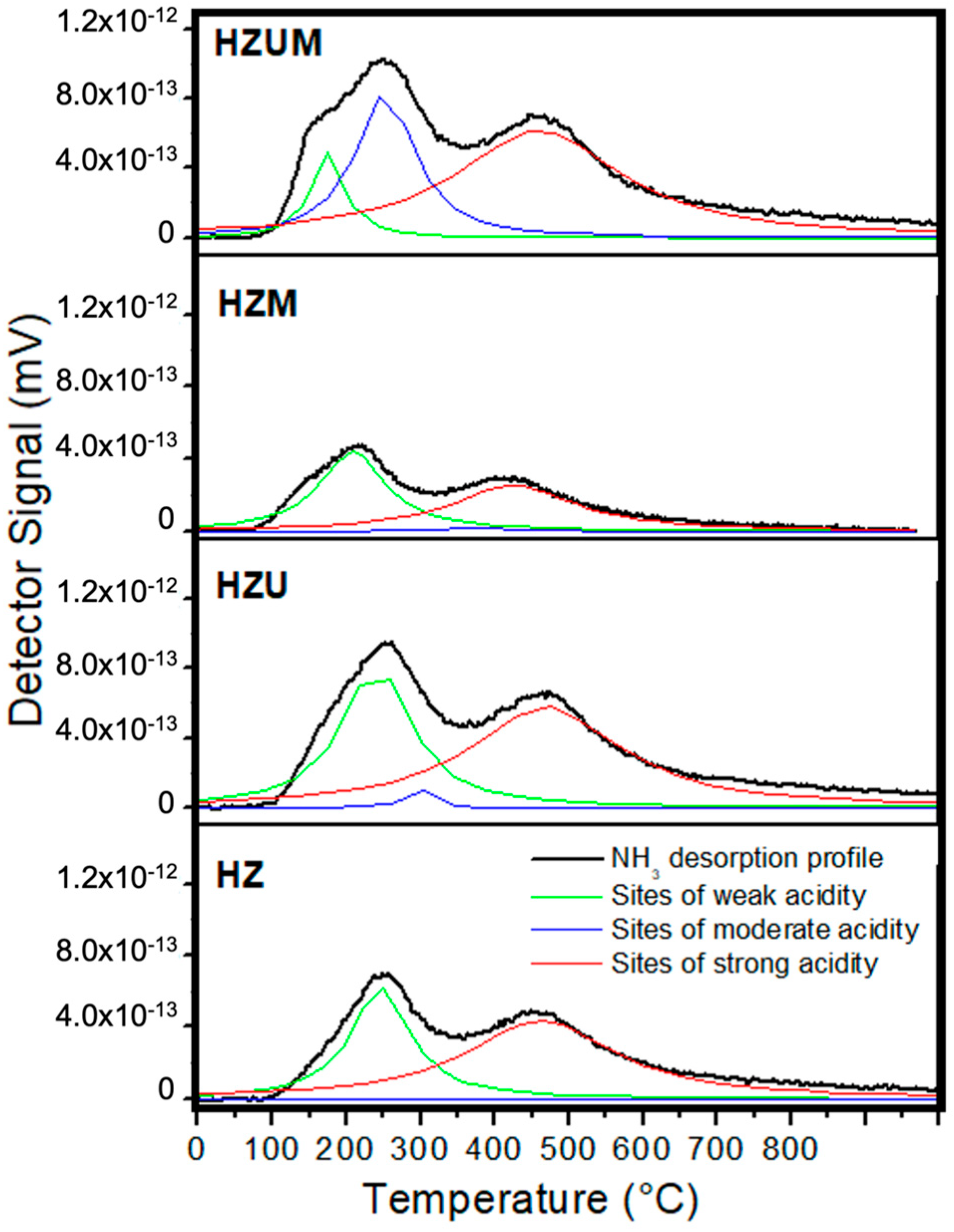
Figure 5 presents the NH3-TPD curves for the samples. All catalysts exhibit two desorption peaks, the first one centered at around 250 °C, related to weak acid sites. The second peak, with a maximum around 450 °C, is related to moderate and strong acid sites [33]. After deconvolution of the curves using the Lorentzian method, the number of weak, moderate, and strong acid sites was calculated, and the values are shown in Table 4. Weak, moderate, and strong acid sites were considered those between 150 and 250 °C; 250 and 400 °C, and 400 and 600 °C, respectively.
Figure 5. Curves of NH3-TPD for the samples.
Table 4. Acidity of the samples obtained by NH3-TPD.
It is notable that the different treatments significantly altered the strength and number of acid sites. The total acidity decreased in the order HZUM > HZU > HZM > HZ, indicating that the treatments increased the number of acid sites, ultrasound alone or combined with microwave being the most effective. However, it is observed that the use of ultrasound alone does not significantly alter the relative amount of acid sites with different strengths, while microwaves increase the relative amount of weak acid sites and decrease the strong acid sites. The combined treatment decreases the weak acid sites and increases the moderate ones. Furthermore, it is noted that ultrasound shifts the peak of moderate acid sites to lower temperatures, while the microwave does the opposite; the combined treatment led to major changes, with the HZUM sample showing mostly moderate and strong acid sites. Most of the samples (HZ, HZU, and HZUM) exhibited a predominance of strong acid sites (>59%), with HZ displaying the highest relative proportion (63.8%). The treatments decreased the relative amounts of strong acid sites and increased the moderate sites. The relative amount of Bronsted to Lewis acid sites in the catalysts was also affected by the treatments, as shown in Table 5. In general, ultrasound increases the relative number of Bronsted sites, while microwave, alone or combined, does the opposite.
Table 5. Bronsted and Lewis acid sites of the samples.

3.3.5. SEM Results

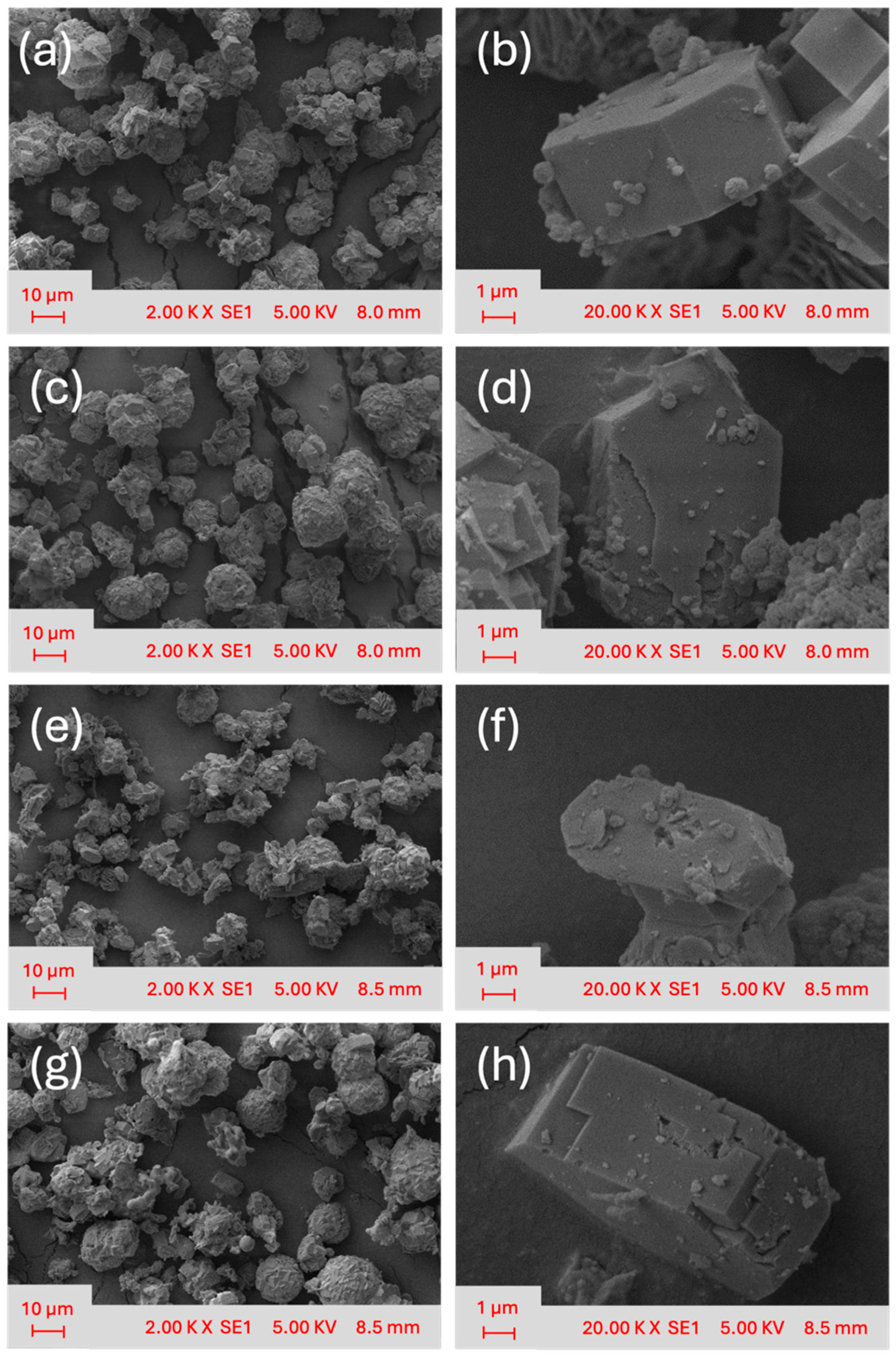
The SEM images of the catalysts are displayed in Figure 6. All catalysts predominantly exhibit a coffin-shaped morphology characteristic of ZSM-5 zeolite [34], indicating that the treatment does not alter the particles’ shape. However, the microwave caused certain “hole-like” imperfections in the formed crystals, which may be associated with the increased mesopore volume among the particles, as noted for HZM and HZUM samples.
Figure 6. Scanning electron micrographs for HZ: (a) 2000×, (b) 20,000×; for HZU: (c) 2000×, (d) 20,000×; for HZM: (e) 2000×, (f) 20,000×; and for HZUM: (g) 2000×, (h) 20,000×.

3.3.6. Catalytic Evaluation Results

Table 6 shows the compounds obtained from tamarind pulp pyrolysis. High concentrations of oxygenated compounds and a low content of hydrogenated compounds were found in bio-oil. This is expected, since biomasses typically exhibit a low H/C ratio and high oxygen content, as shown by CHN analysis. This concentration of oxygenated compounds (78.1 ± 1.3%) is similar to previous works on the pyrolysis of tamarind [24] and other lignocellulosic materials [35,36]. A drastic catalytic effect was observed for all samples. The catalysts caused an increase in hydrogenated fraction up to 89.7% and 92.3%, while simultaneously reducing the oxygenated fraction to values between 7.5% and 9.0%.
Table 6. Compounds formed during the catalytic and non-catalytic pyrolysis of tamarind pulp.
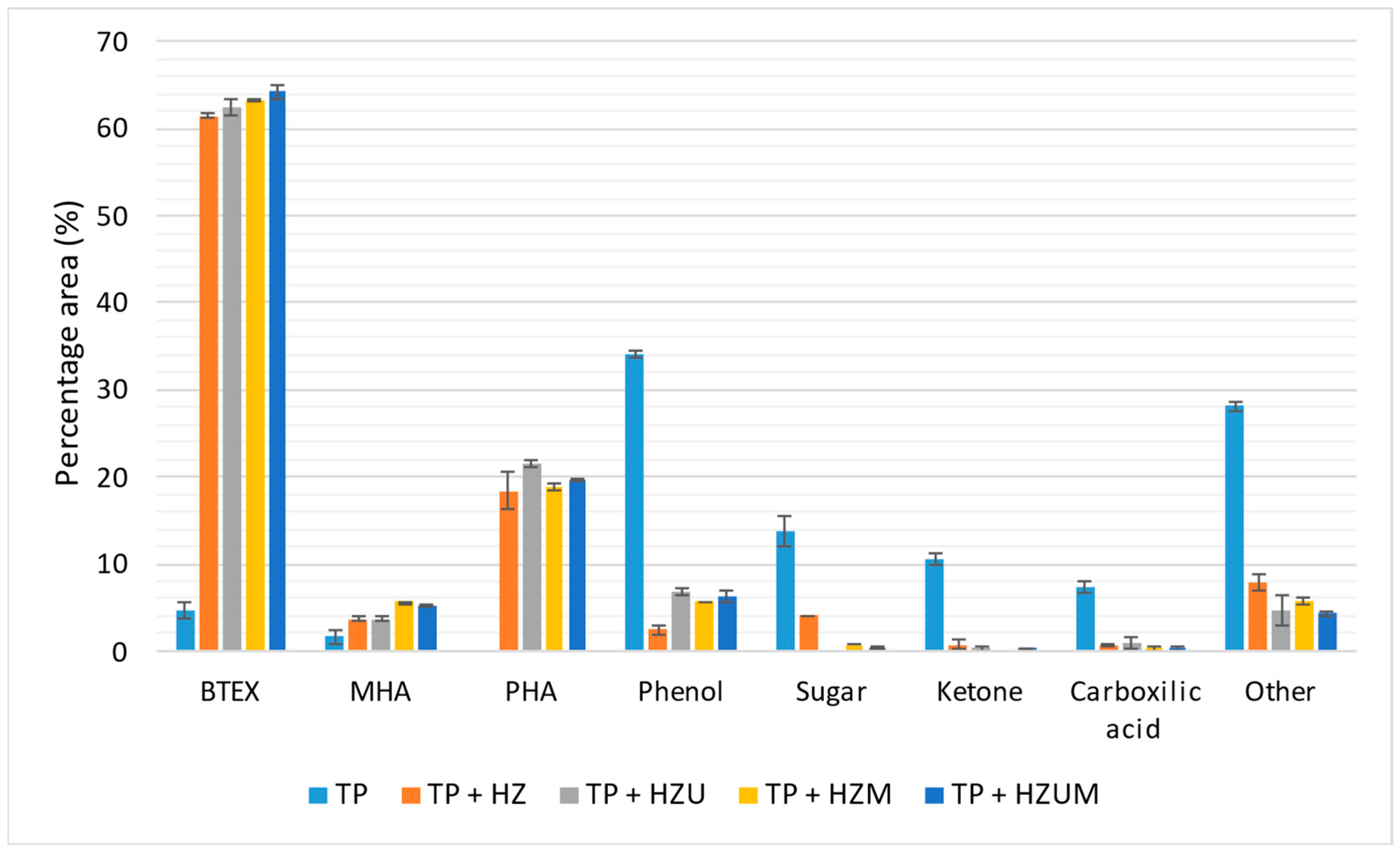
Figure 7 shows the distribution of compounds in bio-oil produced from catalytic and non-catalytic pyrolysis. The non-catalytic biomass pyrolysis (TP) results in bio-oil, which is dominated by unstable oxygenated compounds, primarily phenols, sugars, ketones, and others (furans, fatty acids, alcohols). These findings are typical of biomass pyrolysis, according to previous works [24,35,36]. Furthermore, the BTEX fraction is very low (4.7 ± 0.9%), and the undesirable polyaromatic hydrocarbons (PHAs) are not produced under these conditions.
Figure 7. Distribution of products obtained during non-catalytic pyrolysis and catalytic pyrolysis of TP.
The introduction of the catalysts promotes a massive conversion of oxygenated compounds into monoaromatic hydrocarbons (BTEX and other monoaromatic hydrocarbons-MHA), thus indicating a drastic increase in bio-oil quality. The bio-oil composition becomes dominated by BTEX (ranging from 61.5 to 64.2%) and PHA (ranging from 18.4 to 21.5%). Furthermore, there is a sharp reduction in undesirable compounds: phenol drops to 2.4–6.8%; sugars are nearly eliminated, especially with HZU, HZM, and HZUM; and ketones and carboxylic acids are drastically reduced to less than 1.0%.
Considering BTEX production, HZUM (64.2 ± 0.7%) is statistically superior to HZM and HZU, and to HZ (61.5 ± 0.2%), although the difference was not remarkably expressive. PHA is primarily composed of naphthalene, which is toxic and acts as a coke precursor, despite having market value. Among the catalysts, HZU produced the highest amount of PHA (21.5 ± 0.3%), with this value being statistically superior to the others.
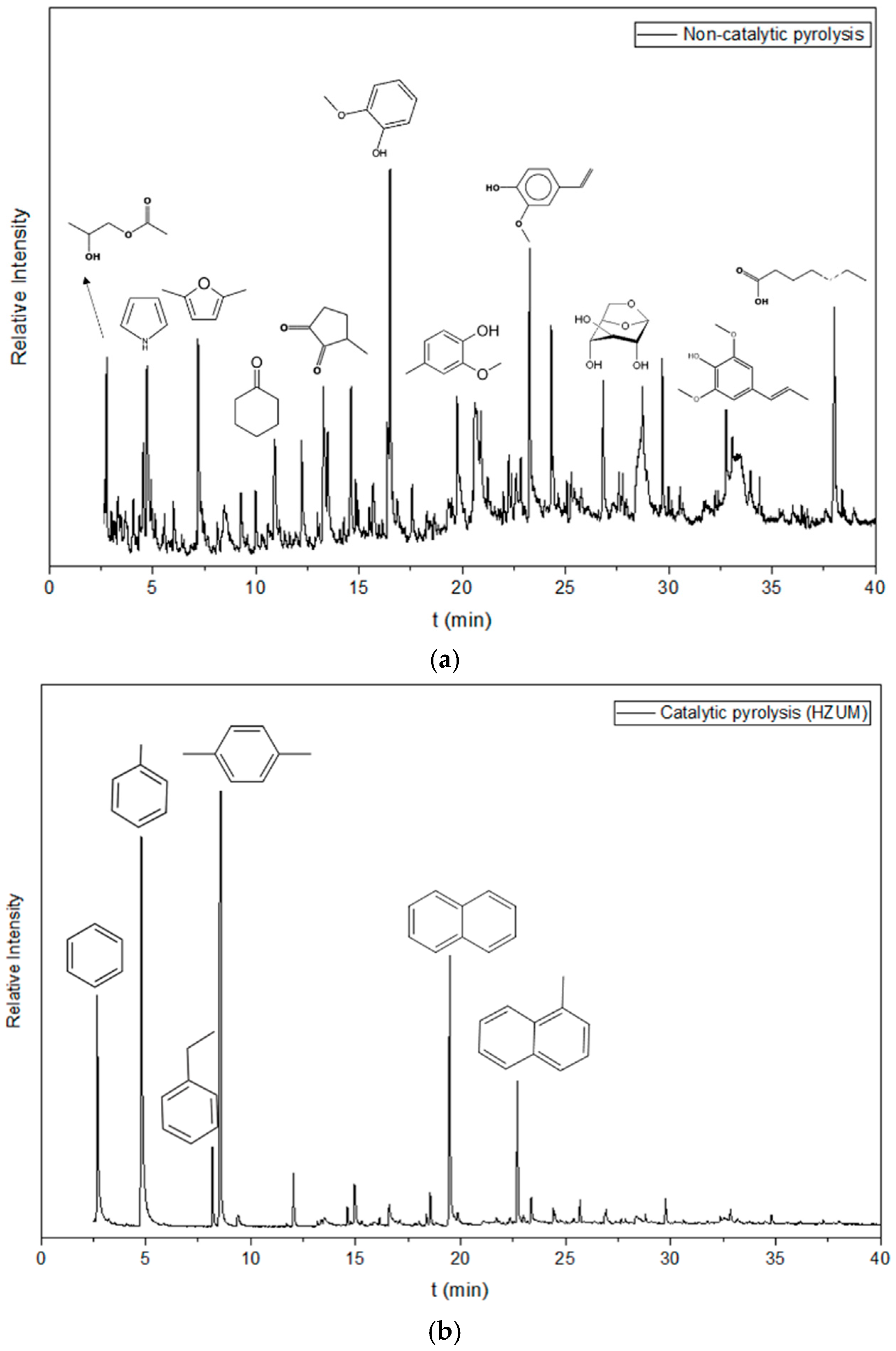
Figure 8 illustrates the differences found in chromatograms of non-catalytic and catalytic pyrolysis. Non-catalytic pyrolysis produces predominantly oxygenated compounds and some nitrogenated species. Conversely, catalytic pyrolysis produces mainly BTEX and naphthalenes. This is a valuable result, since these compounds are crucial feedstocks to produce various chemical and petrochemical products. They are utilized in the synthesis of polymers, including polystyrene, nylon, polyurethane, synthetic rubbers, and polyester; they function as solvents in paints, adhesives, and coatings; and they serve as high-value gasoline additives [37]. The commercial importance and value of these products are evident in market projections: the estimated production volume for BTEX is expected to reach approximately 143 million Tons in 2025, generating revenues of USD 269.1 billion, with an anticipated Compound Annual Growth Rate (CAGR) exceeding 7% [38].
Figure 8. Chromatograms of (a) non-catalytic pyrolysis (TP) and (b) catalytic pyrolysis over HZUM.
The results show that HZSM-5 is an efficient catalyst for producing BTEX from tamarind pulp, regardless of the use of ultrasound and microwaves or their combination. These treatments cause changes in specific surface area, micropore volume, strength, and distribution of acid sites and Bronsted to Lewis acid sites ratio, but these changes are not enough to significantly affect the selectivity of the catalysts to BTEX. Therefore, it can be stated that HZSM-5 samples with a specific surface area ranging from 310 to 347 m2 g−1, micropore volume from 0.099 to 0.105 cm3 g−1, acidity from 327 to 571 µmol NH3 gcat−1, and Bronsted-to-Lewis acid site ratio from 0.034 to 0.044 are efficient catalysts for producing BTEX.

4. Conclusions

Green HZSM-5-type zeolites were successfully obtained using rice husk ash and employing different treatment conditions, namely ultrasound, microwaves, and a combination of both. The different treatments slightly affect the specific surface area and the micropore volume; the samples treated with microwave alone or combined with ultrasound show the highest values. The treatments increase the number of acid sites and decrease the relative number of strong sites; the combined treatment causes a large decrease in weak sites. Ultrasound increases the relative amount of Bronsted to Lewis sites, while microwave, alone or combined, does the opposite. These catalysts largely affect tamarind pulp pyrolysis by decreasing oxygenated compounds and increasing BTEX production. However, no significant difference in product distribution was found, although ultrasound combined with microwave led to the highest amount of BTEX. This means that HZSM-5 with the following characteristics is a selective catalyst for BTEX in tamarind pulp pyrolysis: a specific surface area from 310 to 347 m2 g−1, micropore volume from 0.099 to 0.105 cm3 g−1, acidity from 327 to 571 µmol NH3 gcat−1, and a ratio of Bronsted to Lewis acid sites from 0.034 to 0.044.

Supplementary Materials

The following supporting information can be downloaded at: https://www.mdpi.com/article/10.3390/biomass6010005/s1.

Author Contributions

Conceptualization: all authors; methodology: L.C., D.d.S.L., and M.d.S.S.; software: L.C.; validation: all authors; writing—original draft preparation: all authors; writing—review and editing: all authors; visualization: all authors; supervision: M.d.C.R. and L.C.; project administration: M.d.C.R. and L.C.; funding acquisition: M.d.C.R. All authors have read and agreed to the published version of the manuscript.

Funding

This research was funded by FINEP (Financiadora de Estudos e Projetos), grant number 01.22.0231.00.

Data Availability Statement

The data presented in this study are openly available in the Supplementary Material. For further information, contact the authors upon request.

Acknowledgments

The authors would like to acknowledge the financial support provided by FINEP and CAPES (Coordenação de Aperfeiçoamento de Pessoa de Nível Superior) for the PhD scholarship granted to L.C. They would also like to thank Nilson Romeu Marcilio, coordinator of the Waste Processing Laboratory (LPR), for providing the infrastructure for the development of the catalysts.

Conflicts of Interest

The authors declare that they have no conflicts of interest. The founders had no role in the design of the study, in the collection, analysis, or interpretation of data, in the writing of the manuscript, or in the decision to publish the results.

Abbreviations

The following abbreviations are used in this manuscript:
RHARice Husk Ash
ZZSM-5 zeolite without any treatment
ZUZSM-5 zeolite treated with ultrasound
ZMZSM-5 zeolite treated with microwave
ZUMZSM-5 zeolite treated with ultrasound and microwave
HZHZSM-5 zeolite without any treatment in its acidic form
HZUHZSM-5 zeolite treated with ultrasound in its acidic form
HZMHZSM-5 zeolite treated with microwave in its acidic form
HZUMHZSM-5 zeolite treated with ultrasound and microwave in its acidic form
NH3-TPDTemperature Programmed Desorption of Ammonia
SgSpecific Surface Area
SEMScanning Electron Microscopy
FTIRFourier Transform Infrared Spectroscopy
HDOHydrodeoxygenation reaction
BTEXBenzene, Toluene, Ethylbenzene, and Xylenes
PHAPolyaromatic Hydrocarbons
MHAMonoaromatic Hydrocarbons
Py-GC/MSFast Catalytic Micropyrolysis

References

  1. Causes and Effects of Climate Change. Available online: https://www.un.org/en/climatechange/science/causes-effects-climate-change (accessed on 15 October 2025).
  2. Mahala, K.R. The Impact of Air Pollution on living things and the Environment: A review of the current evidence. World J. Adv. Res. Rev. 2024, 24, 3207–3217. [Google Scholar] [CrossRef]
  3. Nunes, L.J.R. The Rising Threat of Atmospheric CO2: A Review on the Causes, Impacts, and Mitigation Strategies. Environments 2023, 10, 66. [Google Scholar] [CrossRef]
  4. Perea-Moreno, M.-A.; Samerón-Manzano, E.; Perea-Moreno, A.-J. Biomass as Renewable Energy: Worldwide Research Trends. Sustainability 2019, 11, 863. [Google Scholar] [CrossRef]
  5. Saleem, M. Possibility of utilizing agricultural biomass as a renewable and sustainable future energy source. Heliyon 2025, 11, 15. [Google Scholar]
  6. Seo, M.W.; Lee, S.H.; Nam, H.; Lee, D.; Tokmurzin, D.; Wang, S.; Park, Y.-K. Recent advances in thermochemical conversion processes for biorefinery. Bioresour. Technol. 2022, 343, 126109. [Google Scholar] [CrossRef]
  7. Parvari, E.; Mahajan, D.; Hewitt, E.L. A Review of Biomass Pyrolysis for Production of Fuels: Chemistry, Processing, and Techno-Economic Analysis. Biomass 2025, 5, 54. [Google Scholar] [CrossRef]
  8. Aboelela, D.; Saleh, H.; Attia, A.M.; Elhenawy, Y.; Majozi, T.; Bassyouni, M. Recent Advances in Biomass Pyrolysis Processes for Bioenergy Production: Optimization of Operating Conditions. Sustainability 2023, 15, 11238. [Google Scholar] [CrossRef]
  9. Pahnila, M.; Koskela, A.; Sulasalmi, P.; Fabritius, T. A Review of Pyrolysis Technologies and the Effect of Process Parameters on Biocarbon Properties. Energies 2023, 16, 6936. [Google Scholar] [CrossRef]
  10. Mishra, R.K.; Kumar, D.J.P.; Sankannavar, R.; Binnal, P.; Mohanty, K. Hydro-deoxygenation of pyrolytic oil derived from pyrolysis of lignocellulosic biomass: A review. Fuel 2024, 360, 15. [Google Scholar] [CrossRef]
  11. Lachos-Perez, D.; Martins-Vieira, J.C.; Missau, J.; Anshu, K.; Siakpebru, O.K.; Thengane, S.K.; Morais, A.R.C.; Tanabe, E.H.; Bertuol, D.A. Review on Biomass Pyrolysis with a Focus on Bio-Oil Upgrading Techniques. Analytica 2023, 4, 182–205. [Google Scholar] [CrossRef]
  12. Rangel, M.d.C.; Mayer, F.M.; Carvalho, M.d.S.; Saboia, G.; de Andrade, A.M. Selecting Catalysts for Pyrolysis of Lignocellulosic Biomass. Biomass 2023, 3, 31–63. [Google Scholar] [CrossRef]
  13. García, R.R.M.; Giannetti, B.F.; Agostinho, F.; Almeida, C.M.V.B.; Sevegnani, F.; Pérez, K.M.P.; Velásquez, L. Assessing the sustainability of rice production in Brazil and Cuba. J. Agric. Food Res. 2021, 4, 100152. [Google Scholar] [CrossRef]
  14. Jia, H.; Du, T.; Fang, X.; Gong, H.; Qiu, Z.; Li, Y.; Wang, Y. Synthesis of Template-Free ZSM-5 from Rice Husk Ash at Low Temperatures and its CO2 Adsorption Performance. ACS Omega 2021, 6, 3961–3972. [Google Scholar] [CrossRef]
  15. Fard, A.M.; Ebrahimi, A.A. Eco-friendly synthesis of ZSM-5 from rice husk ash using top-down modifications for enhancing acetone-to-olefin conversion: Evaluation of catalytic performance and operating conditions. Fuel 2025, 386, 15. [Google Scholar]
  16. Dey, K.P.; Ghosh, S.; Naskar, M.K. Organic template-free synthesis of ZSM-5 zeolite particles using rice husk ash as silica source. Ceram. Int. 2013, 39, 2153–2157. [Google Scholar] [CrossRef]
  17. Dewes, R.M.; Mendoza, H.R.; Pereira, M.V.L.; Lutz, C.; Van Gerven, T. Experimental and numerical investigation of the effect of ultrasound on the growth kinetics of zeolite A. Ultrason. Sonochem. 2022, 82, 105909. [Google Scholar] [CrossRef]
  18. Khaleque, A.; Alam, M.; Hoque, M.; Mondal, S.; Bin, J.; Xu, B.; Johir, M.A.H.; Krishna, A.; Zhou, J.L.; Boshir, M.; et al. Zeolite synthesis from low-cost materials and environmental applications: A review. Environ. Adv. 2020, 2, 100019. [Google Scholar] [CrossRef]
  19. Lin, S.; Jiang, X.; Zhao, Y.; Yan, J. Zeolite greenly synthesized from fly ash and its resource utilization: A review. Sci. Total Environ. 2022, 851, 158182. [Google Scholar] [CrossRef]
  20. Fukasawa, T.; Otsuka, K.; Murakami, T.; Ishigami, T.; Fukui, K. Synthesis of zeolites with hierarchical porous structures using a microwave heating method. Colloid Interface Sci. Commun. 2021, 42, 100430. [Google Scholar] [CrossRef]
  21. Somani, O.G.; Choudhari, A.L.; Rao, B.S.; Mirajkar, S.P. Enhancement of crystallization rate by microwave radiation: Synthesis of ZSM-5. Mater. Chem. Phys. 2003, 82, 538–545. [Google Scholar] [CrossRef]
  22. Wu, Y.; Ren, X.; Wang, J. Effect of microwave-assisted aging on the static hydrothermal synthesis of zeolite MCM-22. Microporous Mesoporous Mater. 2008, 116, 386–393. [Google Scholar] [CrossRef]
  23. Vikram, B.; Gauram, D.K.; Yadav, H.C.; Gaurha, A.; Kumar, V.; Omer, S.; Chawla, R. Tamarind Cultivation, Value-Added Products and Their Health Benefits: A Review. Int. J. Plant Soil Sci. 2023, 35, 903–911. [Google Scholar] [CrossRef]
  24. Kader, M.A.; Islam, M.R.; Parveen, M.; Haniu, H.; Takai, K. Pyrolysis decomposition of tamarind seed for alternative fuel. Bioresour Technol. 2013, 149, 1–7. [Google Scholar] [CrossRef] [PubMed]
  25. Mathiarasu, A.; Pugazhvadivu, M. Studies on microwave pyrolysis of tamarind seed. AIP Conf. Proc. 2020, 2225, 040002. [Google Scholar]
  26. Kaur, R.; Kumar, A.; Biswas, B.; Krishna, B.; Bhaskar, T. Py-GC/MS and slow pyrolysis of tamarind seed husk. J. Mater. Cycles Waste Manag. 2024, 26, 1131–1146. [Google Scholar] [CrossRef]
  27. Bortolini, H.; Lima, D.S.; Perez-Lopez, O.W. Hydrothermal synthesis of analcime without template. J. Cryst. Growth 2020, 532, 125424. [Google Scholar] [CrossRef]
  28. Fajobi, M.O.; Lasode, O.A.; Adeleke, A.A.; Ikubanni, P.P.; Balogun, A.O. Investigation of physicochemical characteristics of selected lignocellulose biomass. Sci. Rep. 2022, 12, 2918. [Google Scholar] [CrossRef]
  29. Onokwai, A.O.; Ajisegiri, E.S.A.; Okokpujie, I.P.; Ibikunle, R.A.; Oki, M.; Dirisu, J.O. Characterization of lignocellulose biomass based on proximate, ultimate, structural composition, and thermal analysis. Mater. Today Proc. 2022, 65, 2156–2162. [Google Scholar] [CrossRef]
  30. Khoshbin, R.; Karimzadeh, R. Synthesis of mesoporous ZSM-5 from rice husk ash with ultrasound-assisted alkali-treatment method used in catalytic cracking of light naphta. Adv. Power Technol. 2017, 28, 1888–1897. [Google Scholar] [CrossRef]
  31. Koningsveld, H.V. High-temperature (350 K) orthorhombic framework structure of zeolite H-ZSM-5. Acta Cyst. 1990, 46, 731–735. [Google Scholar] [CrossRef]
  32. Vichaphund, S.; Sricharoenchaikul, V.; Atong, D. Selective aromatic formation from catalytic fast pyrolysis of Jatropha residues using ZSM-5 prepared by microwave-assisted synthesis. J. Anal. Appl. Pyrolysis 2019, 141, 104628. [Google Scholar] [CrossRef]
  33. Lima, D.S.; Lopez, O.W.P. Catalytic conversion of glycerol to olefins over Fe, Mo, and Nb catalysts supported on zeolite ZSM-5. Renew. Energy 2019, 136, 828. [Google Scholar] [CrossRef]
  34. Awoke, Y.; Sánchez-Sánchez, M.; Arnaiz, I.; Diaz, I. Synthesis of ZSM-5 from natural mordenite from Spain. Microporous Mesoporous Mater. 2025, 385, 113463. [Google Scholar] [CrossRef]
  35. Mayer, F.M.; Carvalho, M.d.S.; Mallmann, A.; Oliveira, A.P.S.; Ruiz, D.; Boeira, A.C.S.; Lima, D.d.S.; Rangel, M.d.C. Catalytic pyrolysis of MDF wastes over beta zeolite-supported platinum. Catal. Today 2025, 449, 115186. [Google Scholar] [CrossRef]
  36. Ojiha, D.K.; Viju, D.; Vinu, R. Fast pyrolysis kinetics of lignocellulosic biomass of varying compositions. Energy Convers. Manag. X 2021, 10, 100071. [Google Scholar] [CrossRef]
  37. Hayes, G.; Laurel, M.; Mackinnon, D.; Zhao, T.; Houck, H.A.; Becer, C.R. Polymers without Petrochemicals: Sustainable Routes to Conventional Monomers. Chem. Rev. 2023, 123, 2609–2734. [Google Scholar] [CrossRef] [PubMed]
  38. Benzene-Toluene-Xylene (BTX) Market Size & Share Analysis—Growth Trends and Forecast (2025–2030). Available online: https://www.mordorintelligence.com/industry-reports/benzene-toluene-xylene-btx-market (accessed on 7 November 2025).
Disclaimer/Publisher’s Note: The statements, opinions and data contained in all publications are solely those of the individual author(s) and contributor(s) and not of MDPI and/or the editor(s). MDPI and/or the editor(s) disclaim responsibility for any injury to people or property resulting from any ideas, methods, instructions or products referred to in the content.

Article Metrics

Citations

Article Access Statistics

Multiple requests from the same IP address are counted as one view.