Article

Hybrid Renewable Biomass Energy Systems for Decarbonization and Energy Security—A Case Study of Grenada County

by
Shaik Nasrullah Shareef
1,2,
Veera Gnaneswar Gude
1,2,3,* and
Mohammad Marufuzzaman
4
1
Purdue University Northwest Water Institute, 2540 169th St. Schneider Avenue Building, Hammond, IN 46323, USA
2
Department of Mechanical and Civil Engineering, Purdue University Northwest, Hammond, IN 46323, USA
3
School of Sustainability Engineering and Environmental Engineering, Purdue University, West Lafayette, IN 47907, USA
4
Department of Industrial and Systems Engineering, Mississippi State University, Mississippi State, MS 39762, USA
*
Author to whom correspondence should be addressed.
Biomass 2026, 6(1), 17; https://doi.org/10.3390/biomass6010017
Submission received: 22 December 2025 / Revised: 21 January 2026 / Accepted: 28 January 2026 / Published: 10 February 2026

Abstract

Renewable energy systems are increasingly critical for achieving decarbonization and long-term energy security, particularly in rural regions with abundant local resources. While solar and wind technologies have become cost-competitive, their intermittency limits reliability when deployed independently. Biomass, by contrast, offers dispatchable renewable power but faces economic challenges related to feedstock logistics. This study evaluates a biomass-led hybrid renewable energy system (HRES) for Grenada County, Mississippi, integrating biomass, solar photovoltaic (PV), and wind resources to enhance system reliability and reduce environmental impacts. System performance and optimization were assessed using the System Advisor Model (SAM) and the Hybrid Optimization of Multiple Energy Resources (HOMER). The proposed configuration comprises approximately 80% biomass, 10% solar PV, and the remaining share from wind, producing a total annual electricity output of about 423 GWh, sufficient to meet regional demand. The subsystem-level levelized cost of energy (LCOE) was estimated at 12.10 cents/kWh for biomass, 4.07 cents/kWh for solar PV, and 8.62 cents/kWh for wind, with the overall hybrid cost influenced primarily by biomass feedstock transportation and storage. Environmental impact assessment based on U.S. EPA eGRID and IPCC factors indicates that the hybrid system achieves a weighted emission intensity of approximately 28.4 kg CO2-eq/MWh, representing a reduction of over 94% compared to the regional grid. When scaled to annual generation, this corresponds to roughly 197,000 metric tons of avoided CO2-equivalent emissions per year, alongside 80–95% reductions in acidification and eutrophication impacts. The results demonstrate that biomass-anchored hybrid systems can provide a reliable, low-carbon pathway for rural energy development, with further cost reductions achievable through targeted policy incentives and financing support.

1. Introduction

Fossil fuels have powered economic growth for more than a century, but their finite nature and high greenhouse gas emissions make them unsustainable for long-term energy security and environmental protection. The development of renewable energy systems is essential to meet rising global electricity demand while reducing reliance on fossil fuels. The International Energy Agency (IEA) identifies the power sector as a critical focus for decarbonization due to its significant contribution to global greenhouse gas emissions [1]. Expanding renewable energy capacity enables a transition toward low-carbon electricity generation while improving long-term energy security. Renewable energy technologies also help reduce exposure to fuel price volatility and supply disruptions associated with conventional energy sources. According to the IEA, sustained investment in renewable energy is necessary to achieve climate objectives while maintaining affordable electricity. Therefore, accelerating renewable energy deployment has become a central objective of modern energy systems planning [2]. Global policy now emphasizes affordable, reliable, sustainable, and modern energy for all, as articulated in Sustainable Development Goal 7, which targets both expanded access and greater shares of renewable energy [3]. However, the transition remains uneven: renewable energy technologies often face site-specific variability, high capital requirements, and feasibility challenges that slow deployment outside major load centers [4].
Rural regions may offer favorable conditions for clean energy development due to the availability of land and locally accessible resources; however, the technical feasibility of solar and wind energy deployment is highly site-specific and depends on local climatic and geographic conditions and policies [5]. In locations where adequate solar irradiation, wind regimes, and sustainable biomass resources coexist, hybrid renewable energy systems can be effectively deployed to enhance reliability and energy security [6]. Relying on a single renewable energy source, however, is rarely cost-optimal because intermittency can require oversizing systems or relying on expensive storage [7]. Integrating multiple renewable energy resources such as biomass, solar, and wind and adding energy storage when appropriate will enable hybrid renewable energy systems to diminish variability in power output, enhance the effective capacity factor, and optimize the use of shared infrastructure [8].
Evidence from national laboratories indicates that co-located hybrid systems can also lower costs [9]. By sharing pads, roads, collection systems, substations, and interconnections, hybrid renewable energy systems can reduce balance-of-system costs compared to separate wind and solar plants. Modeling for the contiguous United States shows that PV–wind hybrids can minimize total system costs by making better use of existing transmission and land. At the same time, utility-scale PV capital costs have continued to decline, reinforcing the role of solar as a low LCOE source, a variable component within hybrid portfolios [10].
In Grenada County, Mississippi, a biomass-led hybrid where firm biomass generation provides most annual energy and PV and wind energy supply complementary variable output aligns well with local conditions and the policy context. The county and surrounding region have active forestry and agricultural sectors that produce residues suitable for energy use, supporting a sustainable biomass supply chain [11]. Life-cycle assessments suggest that electricity from locally sourced wood residues can significantly reduce global warming impact compared with coal or natural gas, particularly when biogenic carbon is accounted for using conventional methods [12]. For example, life-cycle emission intensities of electricity generated from wood residues have been reported in the range of 45–65 g CO2-eq/kWh, representing approximately 86–95% lower emissions than coal- and natural-gas-based electricity, which typically exceeds 700–1100 g CO2-eq/kWh [12,13]. Although Mississippi does not currently operate under a statewide Renewable Portfolio Standard, these resources remain underutilized in the state’s electricity mix [14]. A biomass-anchored hybrid therefore offers a practical pathway to increase the renewable share today while also supporting potential RPS-style targets in the future.
This paper examines a hybrid renewable energy system for Grenada County in which biomass provides dispatchable output to meet the bulk of demand, while PV and wind reduce fuel use and levelized costs during high-resource periods. The approach is intended to be transferable: communities with similar forestry residues and solar resources can adapt to the design, while windier or coastal regions can adjust the mix to their local advantages. In doing so, the study seeks to demonstrate a reliable, cost-effective pathway for rural clean energy that advances the objectives of Sustainable Development Goal 7 and provides a practical framework for future policy and market development.
Recent studies have demonstrated that hybrid renewable energy systems (HRES), which integrate solar, wind, biomass, and other renewable resources, offer significant advantages over single-source systems by improving energy reliability and overall sustainability. Alhijazi et al. [15] reviewed HRES configurations and found that hybridization enhances efficiency and resilience, with biomass-CSP systems showing promise for both energy generation and waste utilization. Their work also highlighted the widespread use of simulation tools such as HOMER, SAM, and TRNSYS for system design and optimization. In a case study focused on Palestine, Nassar et al. [16] designed a PV–wind–biomass hybrid system for the Jenin Governorate that achieved 100% demand coverage with only minimal unmet load and an estimated LCOE of 31.3 cents/kWh, illustrating that renewables can be a necessity rather than a choice in regions facing persistent energy crises. At the small-scale level, Figaj [17] evaluated a hybrid biogas–solar–wind system serving residential and agricultural users and concluded that, despite limited profitability without incentives, the configuration enabled substantial primary energy savings and significant CO2 reductions, underscoring its potential in decentralized generation.
Other research has focused on integrated optimization of hybrid systems to maximize efficiency and environmental performance. Zhang et al. [18] proposed a solar–biogas-driven combined cooling, heating, and power (CCHP) system, achieving a 20.94% primary energy saving, 11.73% cost reduction, and 40.79% CO2 emission reduction, while also demonstrating robustness against renewable resource variability. Similarly, Qin et al. [19] developed a novel solar–methanol hybrid CHP system that integrates thermochemical and dual-source storage, reporting an overall energy efficiency of 72%, a fuel saving rate of nearly 33%, and a CO2 reduction of 25%, highlighting its potential to stabilize intermittent solar supply while ensuring efficient energy conversion. Al-Rawashdeh et al. evaluated grid-connected hybrid renewable energy systems for the Petra Marriott Hotel using HOMER, compared five PV–wind–diesel–converter/battery scenarios across electrical, economic, and environmental criteria, and identified an optimal PV–WT–Converter–DG–Grid configuration with a total NPC of USD 1.16 million, a COE of 4.15 cents/kWh, an IRR of 15.8%, and ~77% CO2 reduction relative to the base case, illustrating a practical pathway to decarbonization [20]. Among distributed options, biomass-based energy systems stand out for delivering both heat and electricity from a single fuel stream, using widely available feedstocks to achieve high overall efficiency through co/trigeneration while providing flexible, dispatchable, and reliable decarbonization for remote or resource-rich regions [21].
Muller et al. investigated a solar–wind–storage hybrid configuration for an academic campus using HOMER simulations and demonstrated that storage-enabled systems can substantially reduce operating costs while enhancing local grid stability, underscoring the broader applicability of hybrid architectures beyond isolated microgrids [22]. Complementing this, Al-Ghussain et al. [23] developed a PV–wind–biomass system coupled with a hybrid energy storage scheme (battery and pumped-hydro storage) for a university campus microgrid and showed that the inclusion of storage increased autonomy and renewable fraction to nearly 100%, highlighting its critical role in balancing variability and enabling biomass to operate as a firm baseload resource. More recently, Bade and Tomomewo [24] optimized a wind–solar–biomass hybrid configuration incorporating both battery and hydrogen storage, demonstrating that multi-layered storage architectures can further enhance resilience, reduce supply losses, and improve techno-economic and environmental performance in grid-constrained settings. Together, these studies reinforce that storage is a key enabling component in hybrid renewable energy systems, particularly where biomass serves as the dispatchable anchor technology.
Environmental benefits of hybridization have also been quantitatively demonstrated in previous studies. For example, Zhang et al. [25] performed a life-cycle assessment of a hybrid solar–biomass energy supply system and reported that, although the solar subsystem accounted for up to 40% of primary energy depletion during construction, the operation stage produced net negative environmental impacts due to the substitution of fossil fuels and chemical fertilizers. Specifically, the hybrid system achieved a net life-cycle reduction of approximately 1.86 × 10⁵ kg CO2-eq, alongside substantial decreases in primary energy demand (3.8 × 10⁶ MJ), acidification potential (966 kg SO2-eq), and eutrophication potential (208 kg PO43−-eq) over its lifetime. These reductions were primarily attributed to the replacement of lignite coal by biogas and the utilization of digestate as organic fertilizer, supporting the characterization of optimized solar–biomass hybrid systems as net-negative emission technologies when waste valorization pathways are fully integrated [18].
Beyond techno-economic and environmental considerations, the social implications of hybrid systems have been highlighted in several works. Diemuodeke et al. [26] investigated a solar PV–agro-waste hybrid system for schools in rural Ghana and showed that it could supply affordable electricity and heat at a cost lower than diesel generators, while simultaneously contributing to Sustainable Development Goals by improving access to energy (SDG 7), education quality (SDG 4), and climate action (SDG 13) [3]. Complementing this, Rahman et al. [27] studied biogas–solar PV hybrids in rural Bangladesh and reported that households owning three to six cattle could meet both their cooking and electricity needs reliably. Their analysis revealed that cost savings from replacing traditional fuels exceeded the annualized system costs, highlighting the socio-economic viability of such configurations for poverty alleviation and rural electrification.
Despite growing interest in hybrid renewable energy systems, most existing studies focus on isolated microgrids, developing regions, or utility-scale solar–wind configurations, with comparatively limited attention to biomass-anchored hybrid systems in rural areas of the United States. There is a lack of integrated techno-economic and environmental assessments tailored to counties designated as Bioeconomy Development Opportunity (BDO) zones, where sustainable biomass resources coexist with moderate solar and wind potential [28]. Moreover, few studies explicitly quantify life-cycle greenhouse gas reductions and local air pollutant impacts relative to regional grid baselines using U.S.-specific emission inventories. As a result, decision-makers lack location-specific evidence to evaluate the role of biomass-led hybrid systems in advancing rural energy system decarbonization while maintaining energy reliability. These studies underscore the critical role of hybrid renewable energy systems in bridging the gap between resource variability, affordability, and environmental sustainability. They provide compelling evidence that integrating multiple renewable resources not only enhances energy system resilience but also addresses pressing global challenges by reducing emissions, lowering costs, and improving quality of life in both developed and developing regions.
To address these gaps, this study develops and evaluates a biomass-led hybrid renewable energy system for Grenada County, Mississippi, a region characterized by abundant woody biomass residues and growing renewable energy potential. Using SAM and HOMER, the study integrates detailed resource assessment, system sizing, economic analysis, and environmental impact assessment within a unified framework. The specific contributions of this work are threefold: (i) quantification of the techno-economic performance of a biomass–solar–wind hybrid system designed to meet regional electricity demand; (ii) evaluation of greenhouse gas, acidification, and eutrophication impacts relative to the regional grid using EPA eGRID and IPCC methodologies; and (iii) demonstration of the transferability of the proposed framework to other rural regions with similar biomass availability. By combining dispatchable bioenergy with variable renewables, the study provides practical insights into pathways for enhancing rural energy security while supporting deep decarbonization.

2. Materials and Methods

2.1. Layout and Operation of the System

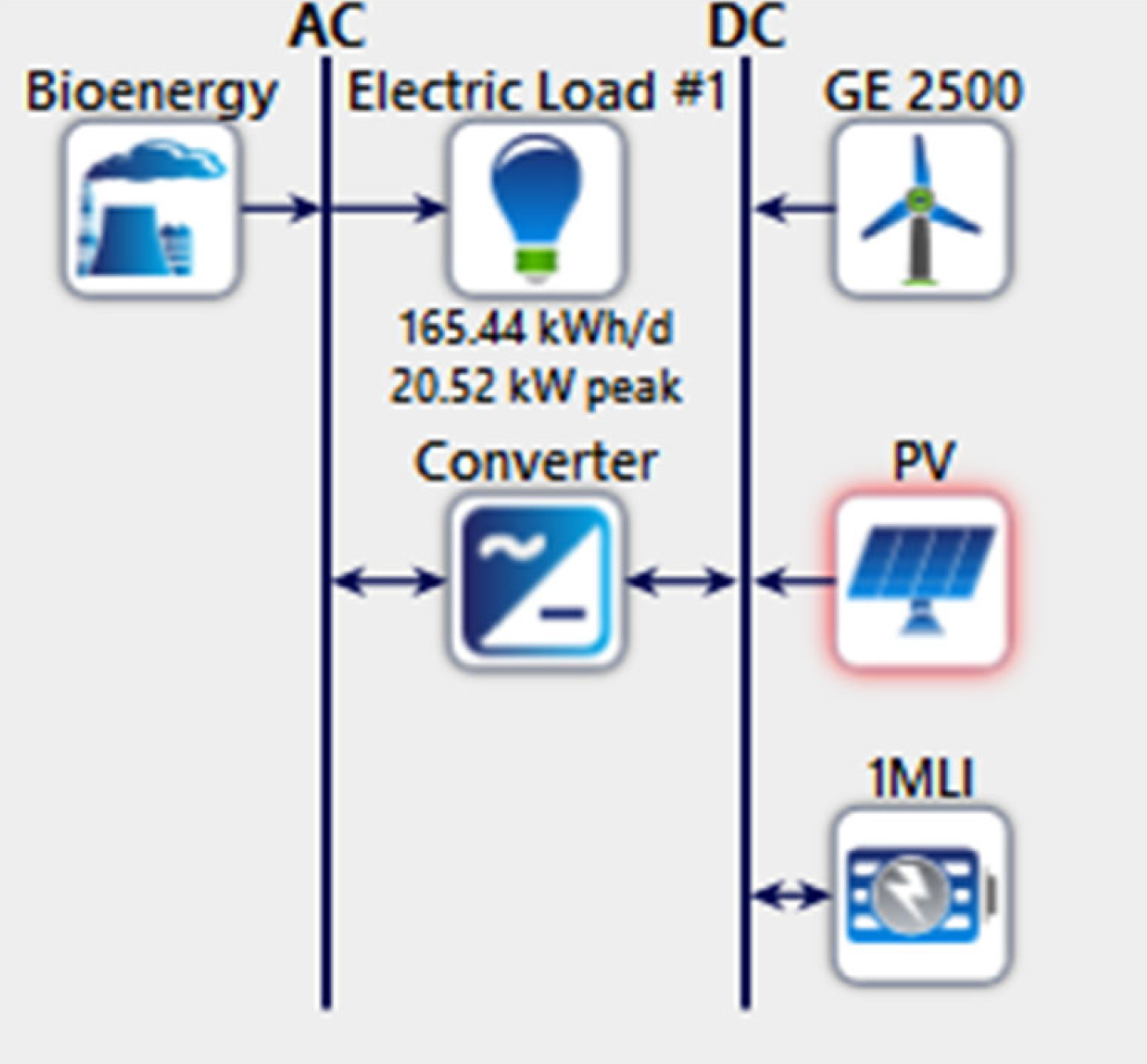
This study incorporates electrical, environmental, and economic analyses to examine the performance, reliability, and feasibility of a hybrid renewable energy system proposed for Grenada County, Mississippi. The research methodology was designed to evaluate how the integration of multiple renewable energy sources can enhance energy efficiency and reduce greenhouse gas emissions associated with conventional fossil fuel–based electricity generation. The hybrid renewable energy system (HRES) considered in this study combines biomass, solar photovoltaic (PV), and wind energy to overcome the limitations of single-resource systems. The overall configuration of the proposed system and the interaction between its components are illustrated in Figure 1.
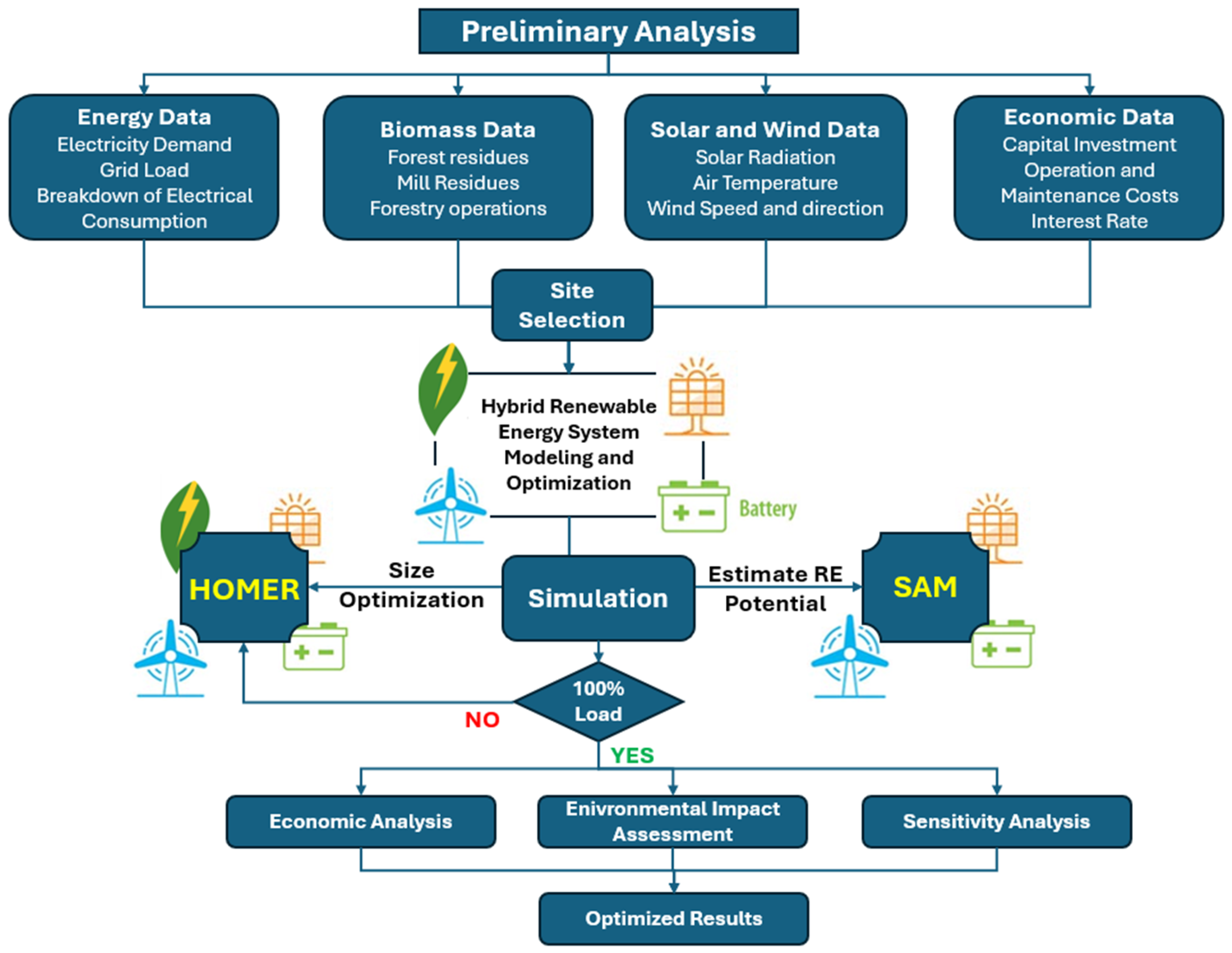
The methodological approach involved the collection and analysis of site-specific data, including electricity demand, renewable resource availability, and biomass feedstock characteristics. Each subsystem was modeled to estimate its technical performance and economic behavior under local operating conditions. The System Advisor Model (SAM) was used to simulate energy generation and cost parameters for the individual subsystems [29,30], while overall system integration and evaluation were carried out through an optimization-based framework in HOMER [31]. The sequence of steps followed in the analysis, from preliminary feasibility assessment to system modeling, performance evaluation, and sensitivity analysis, is presented in Figure 2. This structured framework enabled a consistent assessment of system design choices and their implications for cost, energy production, and environmental impact.

2.2. Study Area

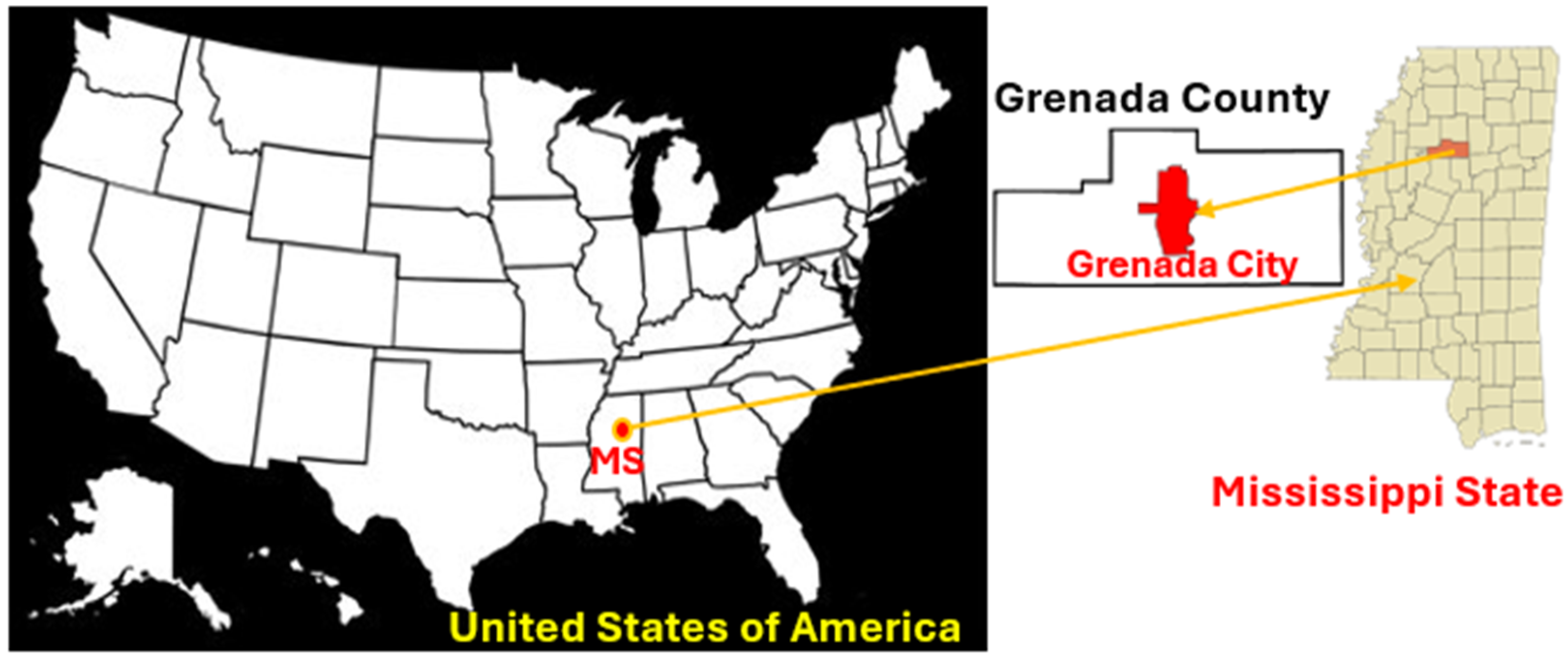
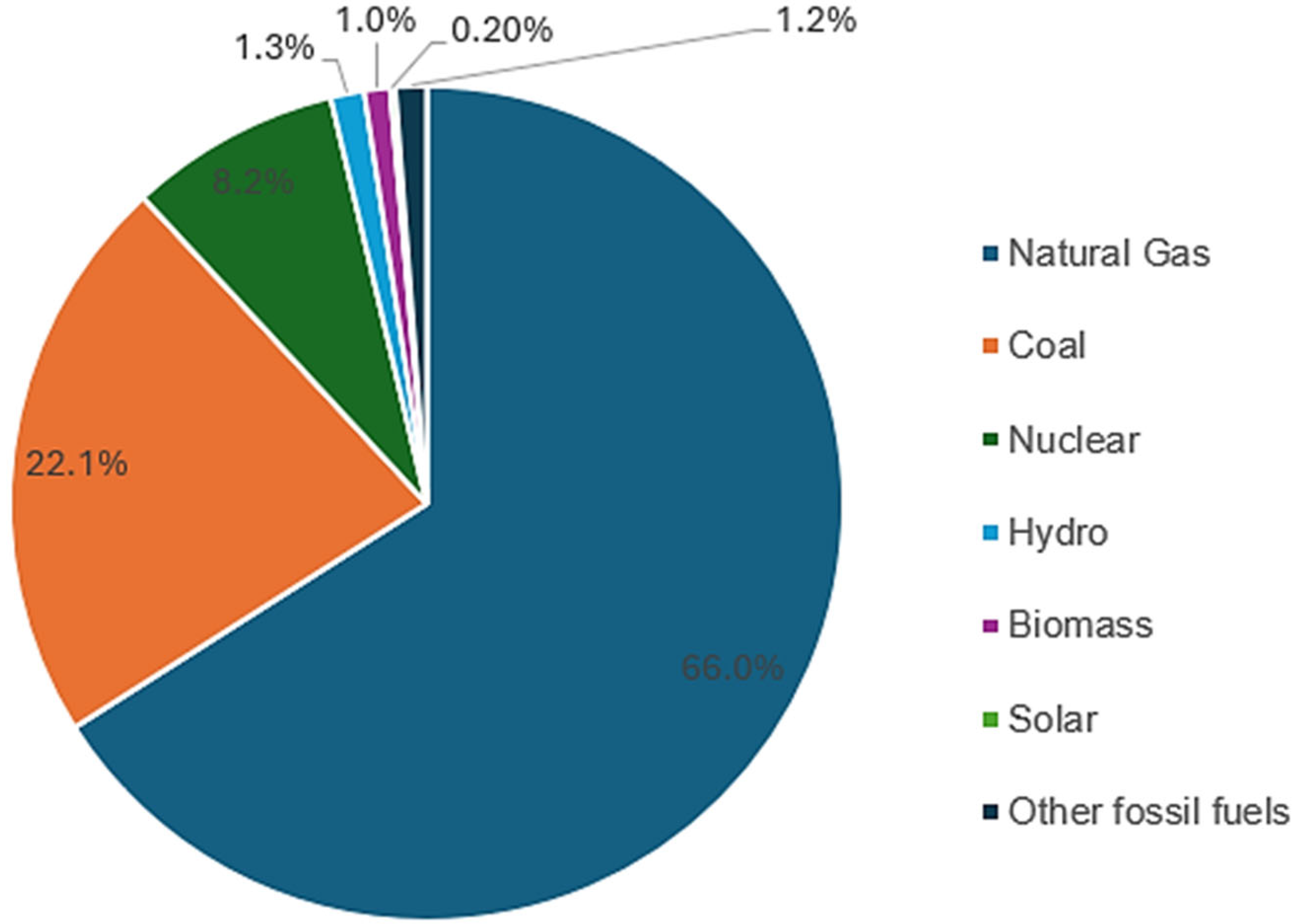
This study focuses on Grenada County, Mississippi, USA, located in the north of the state, and its geographical coordinates are 33°46′30″ N 89°48′32″ W. The county covers approximately 422 square miles (1093 km2) and has a total population of approximately 21,621 people [32]. The total yearly consumption of electricity in Grenada County is approximated to be 365,860 MWh, or a per capita average consumption of 16.92 MWh per year [33]. Entergy Mississippi is the largest electricity supplier in the city based on megawatt hours sold [34]. A geographical representation of the study area and a breakdown of the existing electricity generation fuel mix are provided in Figure 3 and Figure 4, respectively.

2.3. Solar PV Sizing

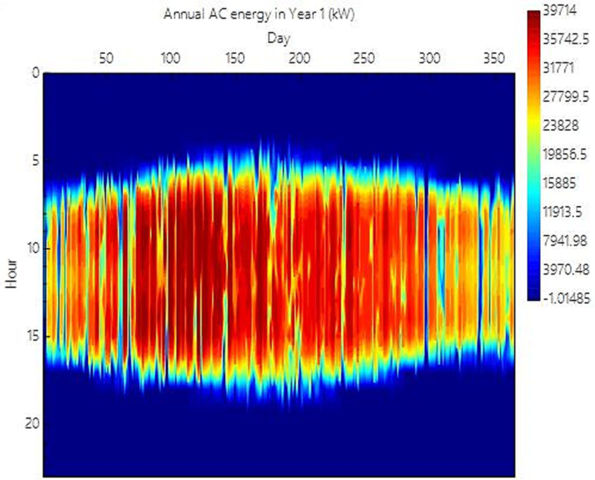
A monocrystalline silicon module was selected for its high efficiency and reliability, and the system was designed using the SAM platform. The array configuration consisted of 90,072 modules, arranged in 24 modules per string and 3753 parallel strings, connected through 16 inverters at a DC/AC ratio of 1.19. This resulted in a nameplate DC capacity of 47.81 MWdc and an inverter capacity of 40.12 MWac, with a total module surface area of approximately 232,386 m2. The system was modeled under a fixed-tilt orientation with the azimuth facing south, ensuring optimal alignment with the site’s solar path. As shown in Figure 5, the annual electricity generation of the PV system exhibits clear seasonal variability, with higher output during periods of increased solar irradiance. These sizing assumptions formed the technical basis for simulating the PV performance and integrating it into the hybrid energy system model. The key technical and economic parameters of the solar PV subsystem used in the SAM simulations are summarized in Table 1, while the electrical specifications of the selected PV module are provided in Table 2.

2.4. Wind Turbine Model

Energy yield simulations in SAM will use the GE 2.5xl (2.5 MW) onshore turbine from the SAM wind library as the representative machine; hub-height adjustment from the 80 m dataset to the turbine hub height will be handled within SAM’s shear/extrapolation settings [29,30]. Table 3 contains the technical and economic characteristics of the wind turbine system considered in this study.

2.5. Bioenergy Model

The Grenada BDO zone consists of a diverse range of tree species, including softwoods such as loblolly and shortleaf pine, and hardwoods such as white and red oak, ash, beech, sweetgum, cottonwood, poplar, hickory, and others. In addition to these primary species, the region also contains mixed stands of both softwood and hardwood forests. The woody biomass available for energy production in this zone primarily comes from forest residues, mill residues, and pulpwood [35].
The average moisture content of woody biomass in the region is estimated at 45% [36]. To ensure long-term ecological sustainability, a growth-to-drain ratio of 1.5 is adopted. This ratio ensures that biomass residues are harvested at a rate that does not compromise ecosystem productivity, carbon balance, or the availability of raw materials for competing uses such as food, fiber, or soil fertility maintenance.
For the feedstock cost structure, a fixed delivery cost of $6.00 per dry ton and a variable delivery cost of $0.12 per dry ton are considered [36]. Nevertheless, seasonal constraints, particularly reduced accessibility of forest residues during wet periods, may introduce short-term variability in feedstock delivery. In practice, such variability is commonly managed through a combination of diversified feedstock sources (forest and mill residues) and on-site or near-site biomass storage to ensure continuous plant operation. While a flat delivery cost was adopted to reflect average regional conditions, variations in transportation distance, fuel prices, and seasonal accessibility could influence logistics costs. These uncertainties are acknowledged as a potential limitation, and future work could incorporate a dedicated sensitivity analysis on biomass logistics and delivery costs.
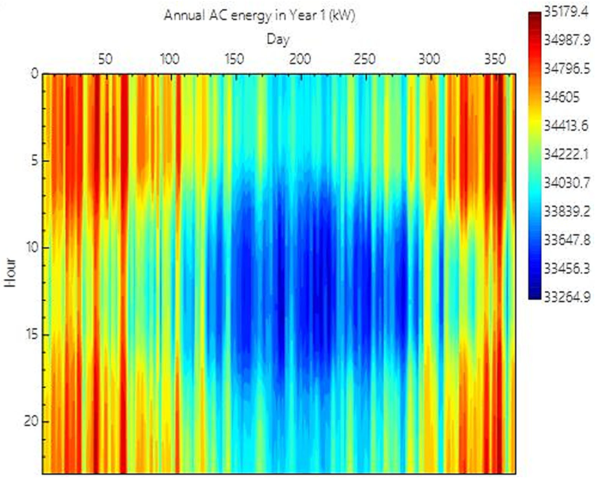
The feedstock is modeled for use in two fluidized bed combustion boilers operating with 20% excess fed air and accounting for a 6% parasitic load. This framework establishes the baseline parameters for evaluating the bioenergy potential and economic feasibility within the Grenada BDO zone. The key technical and economic parameters of the bioenergy subsystem are summarized in Table 4. Figure 6 shows the time-series power output of the biomass plant, indicating its role as a dispatchable baseload source within the hybrid system.

2.6. Battery Energy Storage System (BESS)

A Battery Energy Storage System (BESS) was incorporated into the hybrid biomass–solar–wind configuration to enhance grid stability, improve dispatchability, and mitigate renewable intermittency. The designed system consists of a 60 MW bank with a total storage capacity of 240 MWh, operating at a nominal voltage of 500 V and a 0.25 C-rate, allowing four hours of continuous discharge at rated power. The battery supports energy shifting by storing excess solar and wind generation during low-demand periods and supplying power during evening peaks or biomass maintenance intervals [37]. It also contributes to grid-frequency regulation, minimizes curtailment losses, and strengthens system resilience against fluctuations in renewable output. The BESS is DC-coupled with the solar PV subsystem, optimizing conversion efficiency and enabling smooth coordination among all renewable components in the hybrid energy network.

2.7. Resource Assessment

2.7.1. Biomass Resources

The BDO Zone Initiative has classified Grenada County with an “A” rating for woody biomass resources, indicating an estimated availability of about 1.85 million bone-dry tons of biomass annually [35]. This supply includes pulpwood, sawmill residues, and forest residues, all located within practical transport distance. With a collection radius of approximately 45 miles, transportation costs and associated emissions remain relatively low, supporting the economic and environmental feasibility of biomass utilization. The county is further advantaged by the presence of industrial parks and well-developed infrastructure, including road, rail, and air networks, which facilitate both the delivery of feedstock and the distribution of energy and by-products. Within this collection zone, forest residues are estimated at around 200,000 bone-dry tons per year with a moisture content of about 44 percent, while sawmill residues contribute an additional 400,000 bone-dry tons per year with a moisture content of roughly 48 percent. This substantial and accessible biomass resource base underscores the county’s suitability for sustainable bioenergy development.
The biomass supply considered in this study is limited to secondary resources, including forest residues, mill residues, and pulpwood by-products, with no dedicated harvesting assumed. However, the availability of these residues may vary seasonally due to fluctuations in forestry operations and weather conditions. In addition, a portion of the available residues is subject to competing uses by pulp and paper mills, pellet plants, and other wood-product industries within the regional competition zone, which may affect the fraction practically available for energy generation [35].

2.7.2. Solar Resources

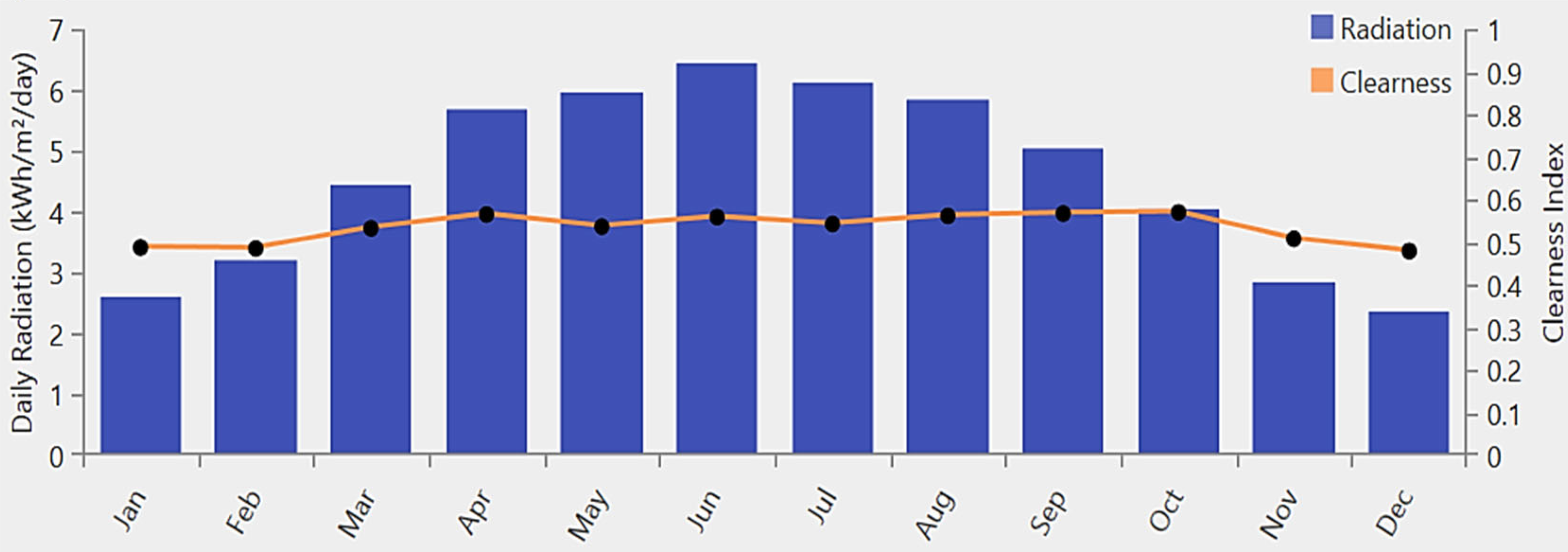
Figure 7 shows the monthly average daily solar Global Horizontal Irradiance (GHI) and Clarity Index (CI) for the study area. As can be observed, higher GHI values occur during late spring and summer months, while relatively stable CI values indicate consistent atmospheric conditions throughout the year. The monthly average daily solar Global Horizontal Irradiance (GHI) and Clarity Index (CI) data for Grenada City were selected for the photovoltaic panel. Site-specific solar resource data for Grenada County were used, with an average global horizontal irradiance (GHI) of 4.61 kWh/m2/day, direct normal irradiance of 4.76 kWh/m2/day, diffuse horizontal irradiance of 1.77 kWh/m2/day, and an average ambient temperature of 17.6 °C (see Supplementary Materials, SI1).

2.7.3. Wind Resources

The wind resource at 80 m in Grenada County, Mississippi (33.626° N, −89.716°), based on the NREL WIND Toolkit hourly series for 2014 (see Supplementary Materials, SI2), shows an annual mean wind speed of 6.09 m/s with a maximum recorded value of 21.22 m/s. Using 100 m pressure and 80 m temperature, the mean air density is 1.192 kg m−3, which corresponds to a mean wind power density of about 237 W m−2. Exceedance statistics indicate 84.9% of hours ≥3 m/s, 74.0% ≥4 m/s, 48.6% ≥6 m/s, and 10.0% ≥10 m/s; monthly means range from about 4.5–4.6 m/s in July–September to 6.6–7.7 m/s in January–April, with predominant directions from the south–southwest–west sectors. Supplementary Materials, SI3 shows the data applied in this study for the hybrid renewable energy system.

2.8. Cost Analysis

The economic performance of the proposed bioenergy system is evaluated using the Levelized Cost of Electricity (LCOE). The LCOE represents the discounted lifetime costs of a power plant divided by the total discounted electricity generation, thereby providing a consistent metric for comparing different energy technologies. It accounts for capital investment, operation and maintenance costs, fuel expenses, and financing costs over the system’s lifetime [38,39].
The LCOE is calculated using the following formula:
LCOE   =   t = 0 T ( I t + O t + M t + F t ) / ( 1 + r ) t t = 0 T E t / ( 1 + r ) t
where the total costs include investment costs ( I t ) incurred during the installation phase, operation costs ( O t ) and maintenance costs ( M t ) incurred annually to ensure reliable plant performance, and fuel costs ( F t ) when applicable, such as for biomass-based systems. The denominator represents the electricity generated in year, discounted over the project lifetime at a rate ‘r’, which accounts for the time value of money and project-specific financial risks. By incorporating both technical and financial parameters, the LCOE provides a comprehensive measure of economic competitiveness.

2.9. Environmental Impact Assessment

The Environmental Impact Assessment evaluates the greenhouse gas and pollutant emissions associated with the hybrid energy system by comparing its performance with the regional electricity grid of Grenada County, which belongs to the SERC Mississippi Valley (SRMV) subregion in the U.S. EPA eGRID database [40,41]. Grid emission factors for CO2, CH4, N2O, SO2, and NOx were obtained from eGRID 2023, while global warming potentials (GWPs) for CH4 and N2O follow IPCC AR5 values. Lifecycle emission intensities for solar PV and wind energy were adopted from peer-reviewed LCA studies, and biomass emissions included only CH4 and N2O due to the carbon-neutral treatment of biogenic CO2. Total hybrid system emissions were calculated by assigning emission factors to each subsystem and weighing them according to annual electricity generation. The resulting hybrid intensity was then compared with the grid to determine emissions avoided. Acidification and eutrophication impacts were assessed based on SO2 and NOx contributions using standard LCA conversion factors. Table 5 presents the emission factors and impact characterization coefficients used in the environmental impact assessment. These values form the basis for estimating global warming potential, acidification potential, and eutrophication potential for both grid electricity and the hybrid biomass–solar–wind system [42].

3. Results

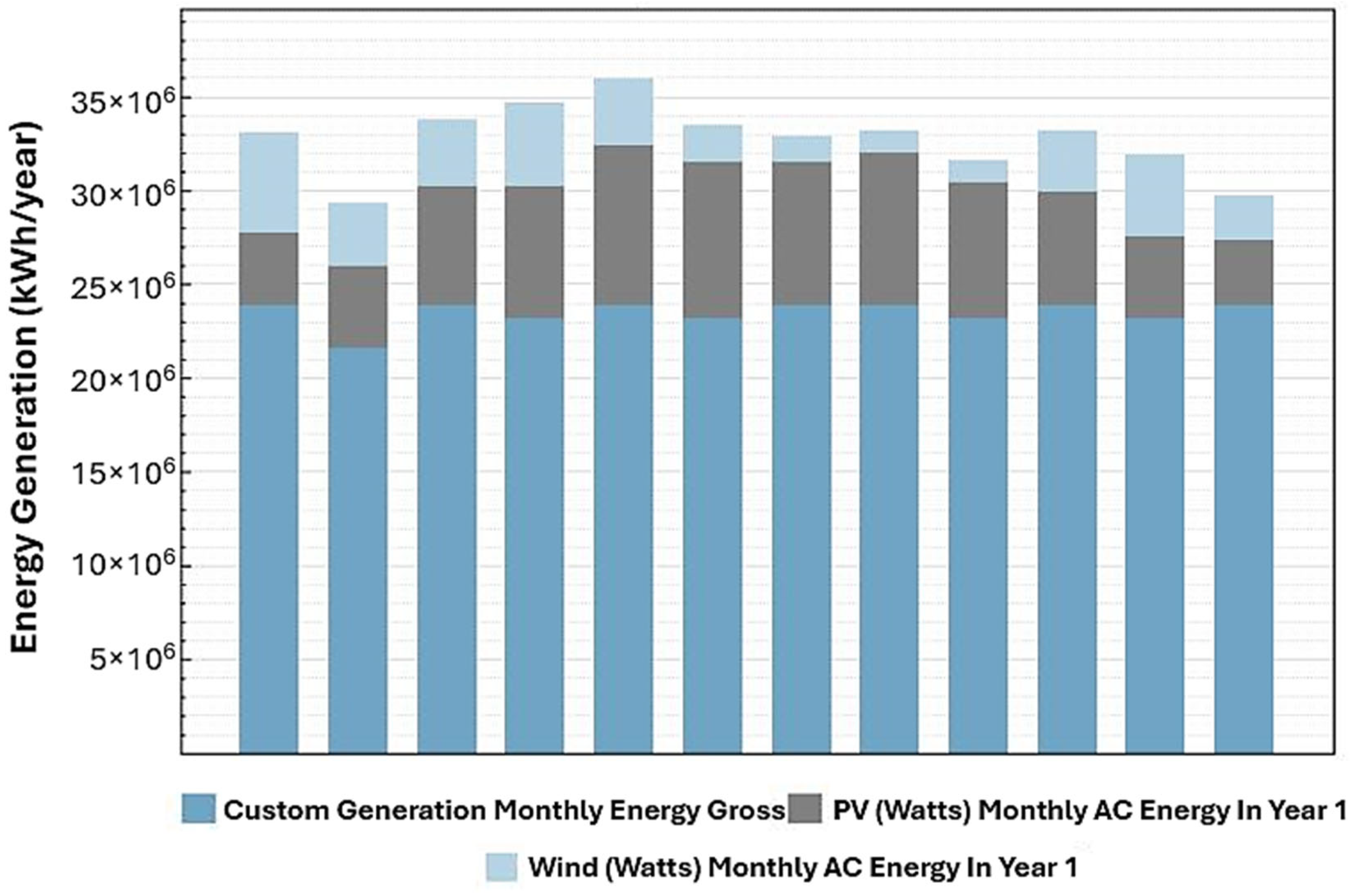
The hybrid biomass–solar–wind configuration produced a total annual electricity output of 423,201 MWh, of which 298,884 MWh (80%) originated from the biomass subsystem, 88,229 MWh (10%) from solar PV, and 36,088 MWh (9%) from wind generation. The corresponding subsystem capacity factors were 81.9% for biomass, 21.1% for solar PV, and 20.6% for wind. The modeled Levelized Cost of Energy (LCOE) values were 12.10 cents/kWh for biomass, 4.07 cents/kWh for solar PV, and 8.62 cents/kWh for wind (Table 6). The annual electricity generation of 423 GWh with almost complete demand coverage is comparable to the PV–wind–biomass system designed for the Jenin Governorate, which supplied 389 GWh yr to fully meet a 372 GWh yr load with only 4.57% excess electricity and <2 h yr of unmet demand [16]. However, unlike that study, where PV and wind contributed a larger share of output, the present configuration relies on biomass for 80% of annual generation, demonstrating that firm bioenergy can provide the backbone for regional supply while variable PV and wind primarily reduce fuel use. The subsystem-level LCOEs obtained fall well below the total cost of energy reported for isolated or building-scale HRES, such as 0.313 USD kWh for the Jenin system [16], 0.295 EUR kWh for the solar PV–biomass CHP system serving a secondary school in Ghana [26], and 0.0415 USD kWh for the optimal PV–WT–DG–Grid configuration in a green hotel in Petra, Jordan [20]. From an environmental perspective, the >94% reduction in CO2 equivalent emissions and 80–95% reductions in acidification and eutrophication potentials relative to the regional grid are at the upper end of the mitigation range reported for hybrid solar–biomass and other HRES configurations, where life-cycle assessments typically show substantial but somewhat smaller decreases in non-renewable energy use, greenhouse-gas emissions, and local pollutants [16,18,20]. These comparisons indicate that biomass-anchored hybrids, when designed around a robust local feedstock supply and complemented by PV and wind, can achieve reliability and environmental benefits comparable to or greater than those of previously studied hybrid systems in both developed and developing country contexts. Figure 8 further illustrates the monthly energy generation profile of the hybrid system, showing how solar and wind outputs vary seasonally and complement the more stable biomass generation throughout the year.

3.1. Sensitivity Analysis

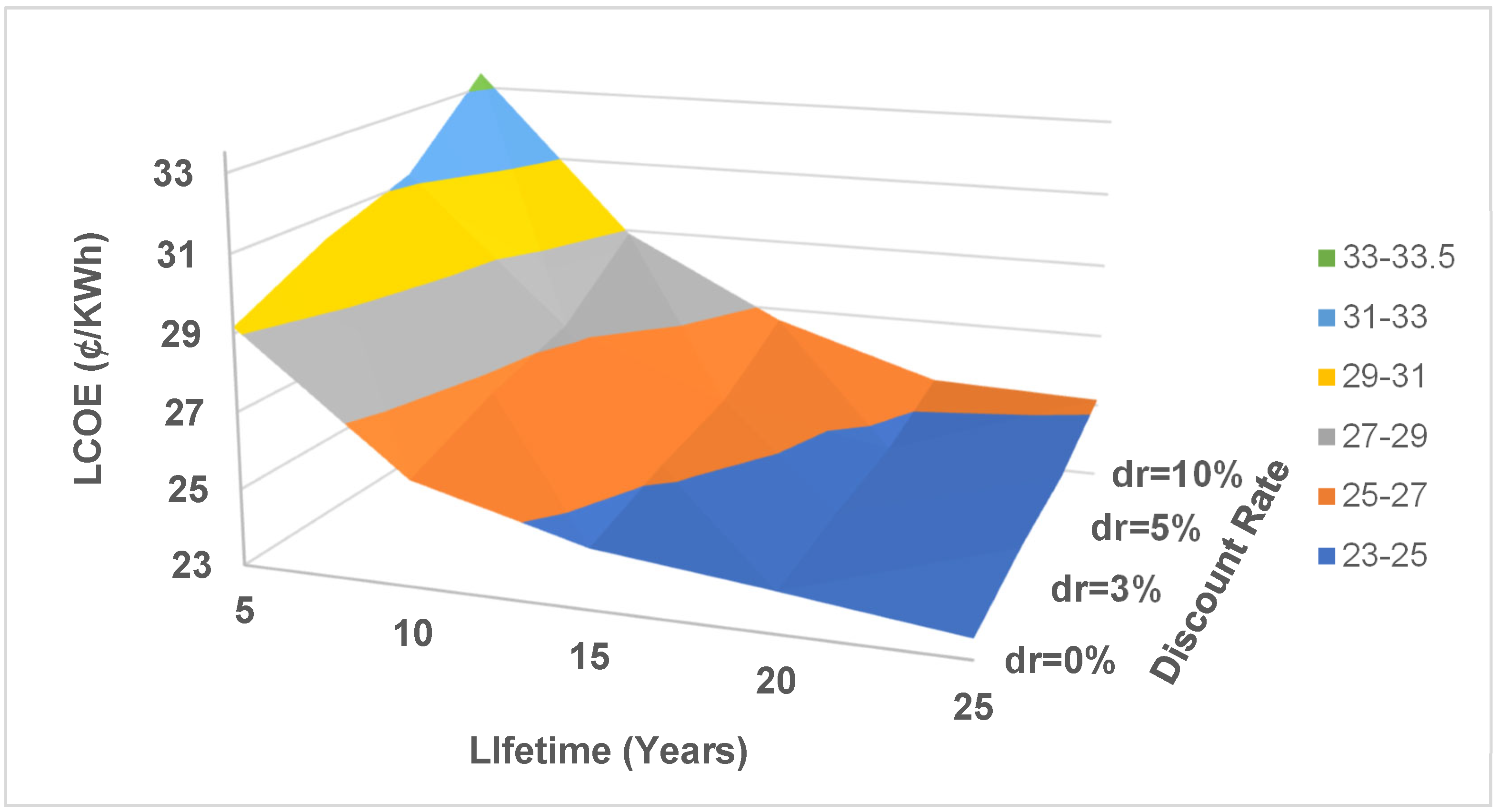
Figure 9 illustrates the effect of the discount rate on the levelized cost of energy. The effect of discount rates on LCOE shows a clear downward trend as project lifetime increases, with the most significant reductions occurring in the first 10–15 years. At lower discount rates (0–3%), the LCOE falls sharply, reaching values as low as 24–25 cents/kWh by year 25, indicating that cheaper financing greatly improves long-term project economics. In contrast, higher discount rates such as 10% lead to substantially higher costs, starting around 33 cents/kWh for a 5-year lifetime and remaining elevated even after 25 years. This demonstrates that the cost of capital is a critical driver of electricity prices and heavily influences the competitiveness of renewable energy projects.
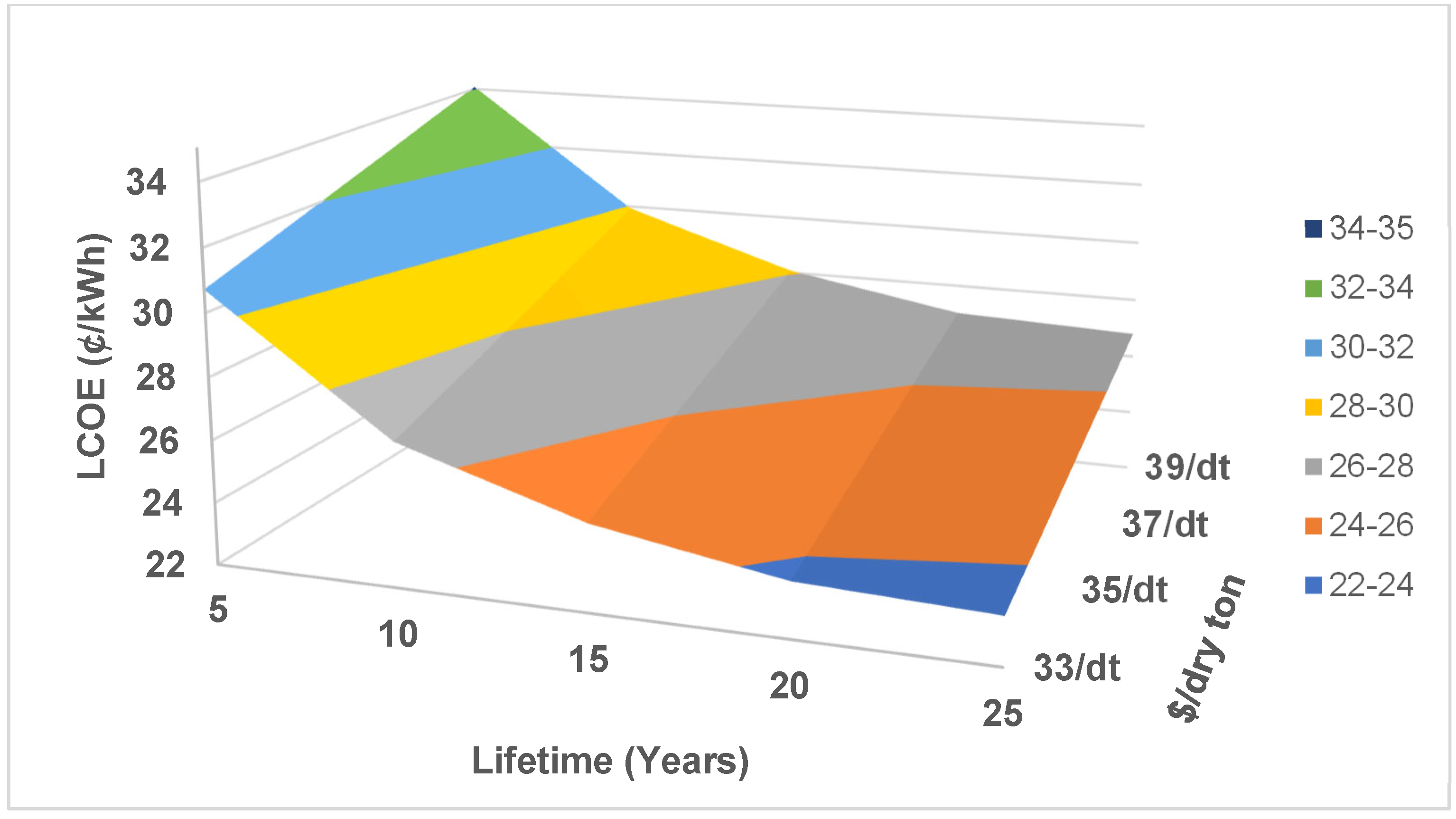
Figure 10 shows the influence of biomass feedstock cost on the system LCOE. When analyzing feedstock cost variations, a similar pattern of declining LCOE with longer lifetimes is observed. Systems with lower feedstock cost assumptions, such as 33/dt, achieve the lowest LCOE values, dropping to approximately 23–24 cents/kWh at 25 years, whereas higher feedstock costs result in consistently higher electricity costs above 26 cents/kWh even over the long term. The persistent gap between cost scenarios highlights that feedstock prices exert a strong and lasting influence on the system’s economic feasibility, reinforcing the importance of securing low-cost, reliable biomass resources for achieving competitive energy production.
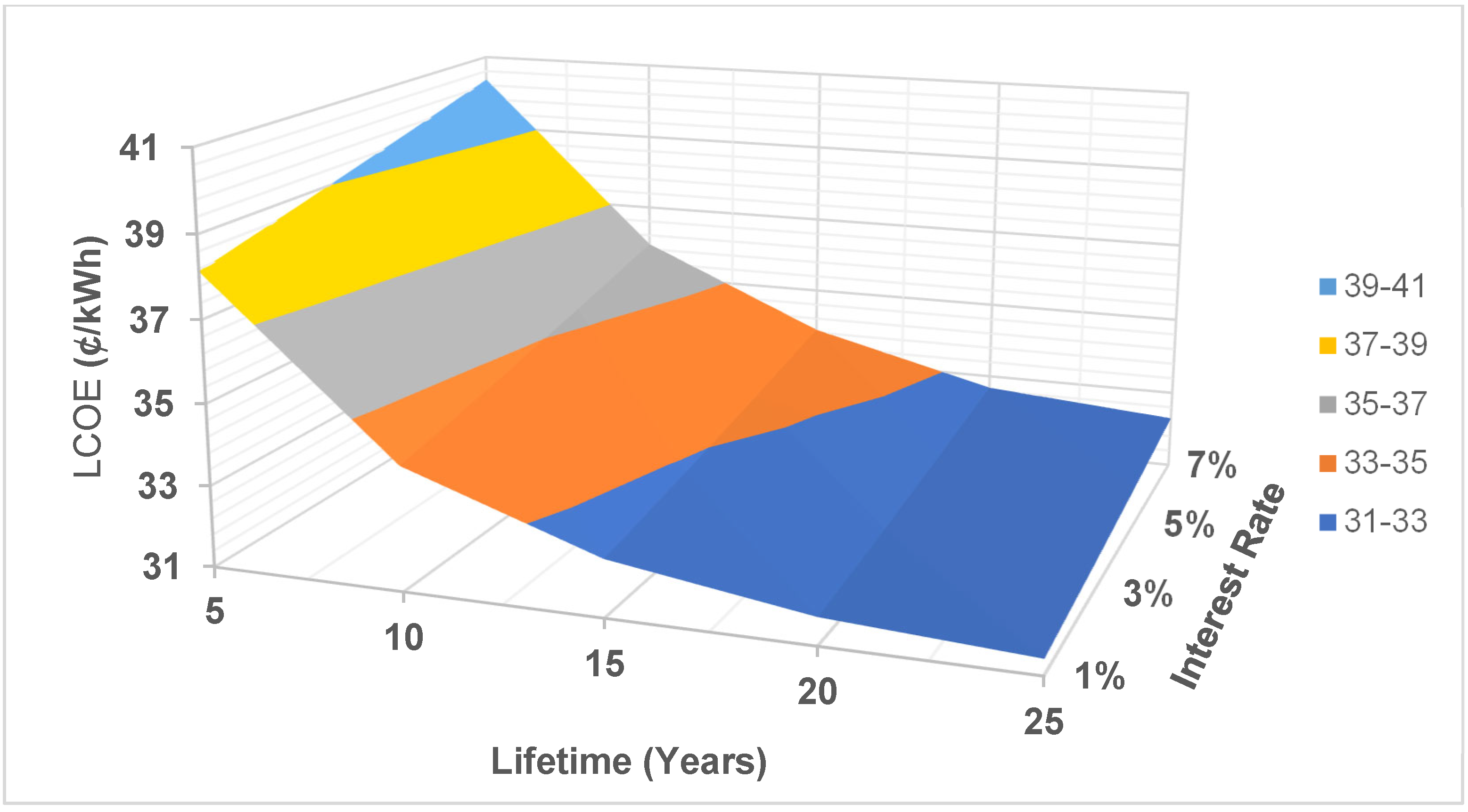
Figure 11 shows the effect of interest rate on the Levelized Cost of Energy (LCOE), demonstrating a decreasing trend in LCOE with increasing project lifetime, indicating that extended operational periods allow capital expenses to be distributed more effectively over time. Across all analysis periods, lower interest rates yield noticeably lower LCOE values, while higher rates such as 5% and 7% result in comparatively elevated costs. This trend highlights the sensitivity of LCOE to financing assumptions and demonstrates that both interest rate and project duration play an important role in determining the economic performance of the hybrid system.

3.2. Environmental Impact Analysis

The analysis yielded a grid emission intensity of 493.85 kg CO2 eq/MWh, an acidification potential of 1.741 kg SO2 eq/MWh, and a eutrophication potential of 0.0485 kg PO4 eq/MWh. In comparison, the hybrid biomass–solar–wind system achieved a weighted emission intensity of approximately 28.4 kg CO2 eq/MWh, representing a reduction of more than 94% relative to the regional grid. When scaled to the annual electricity generation of 423,201 MWh, the hybrid configuration results in an estimated 197,000 metric tons of avoided CO2 equivalent emissions per year. Similar reductions were observed for local air pollutants, with acidification and eutrophication impacts decreasing by approximately 80–95%, largely due to the negligible SO2 emissions and minimal NOx contributions associated with the renewable subsystems. The carbon neutrality of biomass combustion is generally considered in many studies focusing on biomass for power generation, but there is no consensus on this concept. When the biogenic emissions are considered in the environmental impact assessment, the resultant emissions profile will be significantly different, while there will be some benefits from the incorporation of solar and wind energy systems in this study. A case study comparing biogenic and non-biogenic contributions of power generation from biomass can be found elsewhere [13].

3.3. Battery Energy Storage System Performance

The BESS performance was evaluated for storage capacities of 0, 120, and 240 MWh to assess utilization, cycling behavior, and backup capability within the hybrid system [37]. As expected, the 0 MWh case showed no battery activity and served as a baseline. For the 120 MWh configuration, the battery delivered an annual discharge throughput of 24.9 GWh in Year 1, corresponding to approximately 208 equivalent full cycles per year, with a maximum discharge power of 57.6 MW (AC) and an average round-trip efficiency of 89.74%. Increasing the storage capacity to 240 MWh approximately doubled the annual discharged energy to 49.6 GWh, while maintaining a similar cycling intensity (206 cycles/year) and a slightly higher round-trip efficiency (90.23%); the peak discharge power remained unchanged at 57.6 MW, indicating inverter-limited operation. Considering a minimum allowable state of charge of 15%, the usable energy capacity was 102 MWh and 204 MWh for the 120 MWh and 240 MWh systems, respectively, corresponding to maximum backup durations of approximately 1.8 h and 3.5 h at peak discharge power. These results indicate that the 240 MWh configuration is not idle or excessively oversized but instead provides a substantially longer multi-hour backup window to support continuity of supply while operating under moderate cycling conditions that limit capacity degradation.

4. Conclusions

The case study shows that a biomass-anchored hybrid system can simultaneously advance decarbonization and strengthen energy security in Grenada County by integrating dispatchable bioenergy with complementary solar and wind resources. The proposed configuration delivers approximately 423 GWh of electricity per year, meeting regional demand while achieving a weighted emission intensity of about 28.4 kg CO2-eq/MWh and more than a 94% reduction in greenhouse gas emissions relative to the existing grid baseline. These outcomes highlight clear synergies between reliability and emissions reduction, supported by the availability of locally sourced biomass and the stabilizing role of firm generation. The sensitivity analysis indicates that system performance and economic robustness are strongly influenced by financing and feedstock-related parameters: lower discount and interest rates substantially improve long-term viability, while increases in biomass feedstock and logistics costs exert the greatest upward pressure on overall system costs. Overall, the findings substantiate the system’s value proposition as context-responsive rather than universally optimal: regions with comparable resource conditions and similar rural development objectives may adapt the framework, provided that ecological limits, institutional capacity, and feedstock governance are explicitly addressed. In this sense, the study offers generalizable lessons while underscoring that the balance between decarbonization outcomes and energy-security resilience must be evaluated case-by-case rather than assumed by design.

Supplementary Materials

The following supporting information can be downloaded at: https://www.mdpi.com/article/10.3390/biomass6010017/s1, SI1: Solar energy data for the Grenada County; SI2: Wind energy simulation tool kit; SI3: Process data input used in this study.

Author Contributions

Conceptualization, S.N.S., V.G.G., and M.M.; methodology, S.N.S., and V.G.G.; software, S.N.S.; validation, S.N.S., V.G.G., and M.M.; formal analysis, S.N.S., and V.G.G.; investigation, S.N.S., V.G.G., and M.M.; resources, S.N.S., and V.G.G.; data curation, S.N.S., and V.G.G.; writing—original draft preparation, S.N.S., V.G.G., and M.M.; writing—review and editing, S.N.S., V.G.G., and M.M.; visualization, S.N.S., and V.G.G.; supervision, V.G.G.; project administration V.G.G.; funding acquisition, V.G.G., and M.M. All authors have read and agreed to the published version of the manuscript.

Funding

This research was supported by the USDA-AFRI (United States Department of Agriculture) Competitive Research Grants 2020-67019-30772 and 2022-67022-37861. Any opinions, findings, and conclusions or recommendations expressed in this material are those of the authors and do not necessarily reflect the views of the USDA.

Data Availability Statement

The original contributions presented in this study are included in the article/Supplementary Material. Further inquiries can be directed to the corresponding author.

Acknowledgments

V.G.G. and S.N.S. acknowledge the support received from the NiSource-Meyer Foundation Professorship at the Purdue University Northwest and the Water Institute.

Conflicts of Interest

The authors declare no conflicts of interest. The funders had no role in the design of the study; in the collection, analyses, or interpretation of data; in the writing of the manuscript; or in the decision to publish the results.

Abbreviations

The following abbreviations are used in this manuscript:
HRESHybrid Renewable Energy System
LCOELevelized Cost of Energy
NPVNet Present Value
CHPCombined Heat and Energy Systems
PVPhotovoltaic
CCHPCombined Cooling, Heating and Power
CSPConcentrated Solar Power
BESSBattery Energy Storage System
GHIGlobal Horizontal Irradiance
CIClarity Index

References

  1. International Energy Agency. World Energy Outlook 2025; International Energy Agency: Paris, France, 2025; Available online: https://www.iea.org/reports/world-energy-outlook-2025 (accessed on 27 January 2026).
  2. International Energy Agency (IEA). World Energy Outlook 2023; International Energy Agency: Paris, France, 2023; Available online: https://www.iea.org/reports/world-energy-outlook-2023 (accessed on 27 January 2026).
  3. Gebara, C.H.; Laurent, A. National SDG-7 performance assessment to support achieving sustainable energy for all within planetary limits. Renew. Sustain. Energy Rev. 2023, 173, 112934. [Google Scholar] [CrossRef]
  4. Ma, W.; Xue, X.; Liu, G.; Zhou, R. Techno-economic evaluation of a community-based hybrid renewable energy system considering site-specific nature. Energy Convers. Manag. 2018, 171, 1737–1748. [Google Scholar] [CrossRef]
  5. Streimikiene, D.; Baležentis, T.; Volkov, A.; Morkūnas, M.; Žičkienė, A.; Streimikis, J. Barriers and drivers of renewable energy penetration in rural areas. Energies 2021, 14, 6452. [Google Scholar] [CrossRef]
  6. Afgan, N.H.; Carvalho, M.G. Sustainability assessment of a hybrid energy system. Energy Policy 2008, 36, 2903–2910. [Google Scholar] [CrossRef]
  7. Moncada, J.; de Goeij, B.; van den Ham, J.; Buskens, P.; Meulendijks, N.; Detz, R.J. Evaluating the Costs of Integrated Solar Hydrogen Systems: Exploring the Effect of Scale, Intermittency, and Energy Storage. Energies 2025, 18, 6069. [Google Scholar] [CrossRef]
  8. Hosseina, M.; Samiei Moghaddam, M.; Khademi, M.M.; Hassannia, A. Optimization framework for efficient and robust renewable energy hub operation. Sci. Rep. 2025, 15, 35860. [Google Scholar] [CrossRef]
  9. NREL. Hybrid Energy Systems: Opportunities for Coordinated Research; U.S. Department of Energy (DOE): Washington, DC, USA; Energy Efficiency & Renewable Energy (EERE): Washington, DC, USA, 2021. Available online: https://www.nrel.gov/docs/fy21osti/77503.pdf (accessed on 27 January 2026).
  10. Brown, P.R.; Williams, T.; Brown, M.L.; Murphy, C. System-Cost-Minimizing Deployment of PV-Wind Hybrids in Low-Carbon U.S. Power Systems. Appl. Energy 2024, 365, 123151. [Google Scholar] [CrossRef]
  11. Nandimandalam, H.; Aghalari, A.; Gude, V.G.; Marufuzzaman, M. Multi-objective optimization model for regional renewable biomass supported electricity generation in rural regions. Energy Convers. Manag. 2022, 266, 115833. [Google Scholar] [CrossRef]
  12. Thakur, A.; Canter, C.E.; Kumar, A. Life-cycle energy and emission analysis of power generation from forest biomass. Appl. Energy 2014, 128, 246–253. [Google Scholar] [CrossRef]
  13. Nandimandalam, H.; Gude, V.G.; Marufuzzaman, M. Environmental impact assessment of biomass supported electricity generation for sustainable rural energy systems—A case study of Grenada County, Mississippi, USA. Sci. Total Environ. 2022, 802, 149716. [Google Scholar] [CrossRef]
  14. Feldman, R.; Levinson, A. Renewable portfolio standards. Energy J. 2023, 44, 1–20. [Google Scholar] [CrossRef]
  15. Alhijazi, A.A.K.; Almasri, R.A.; Alloush, A.F. A Hybrid Renewable Energy (Solar/Wind/Biomass) and Multi-Use System Principles, Types, and Applications: A Review. Sustainability 2023, 15, 16803. [Google Scholar] [CrossRef]
  16. Nassar, Y.F.; Alsadi, S.Y.; El-Khozondar, H.J.; Ismail, M.S.; Al-Maghalseh, M.; Khatib, T.; Sa’ed, J.A.; Mushtaha, M.H.; Djerafi, T. Design of an isolated renewable hybrid energy system: A case study. Mater. Renew. Sustain. Energy 2022, 11, 225–240. [Google Scholar] [CrossRef]
  17. Figaj, R. Energy and Economic Sustainability of a Small-Scale Hybrid Renewable Energy System Powered by Biogas, Solar Energy, and Wind. Energies 2024, 17, 706. [Google Scholar] [CrossRef]
  18. Zhang, L.; Li, F.; Sun, B.; Zhang, C. Integrated Optimization Design of Combined Cooling, Heating, and Power System Coupled with Solar and Biomass Energy. Energies 2019, 12, 687. [Google Scholar] [CrossRef]
  19. Qin, Y.; Liu, T.; Li, P.; Zhao, K.; Jiao, F.; Pei, G.; Liu, Q. New Hybrid CHP System Integrating Solar Energy and Exhaust Heat Thermochemical Synergistic Conversion with Dual-Source Energy Storage. J. Therm. Sci. 2024, 33, 970–984. [Google Scholar] [CrossRef]
  20. Al-Rawashdeh, H.; Al-Khashman, O.A.; Al Bdour, J.T.; Gomaa, M.R.; Rezk, H.; Marashli, A.; Arrfou, L.M.; Louzazni, M. Performance Analysis of a Hybrid Renewable-Energy System for Green Buildings to Improve Efficiency and Reduce GHG Emissions with Multiple Scenarios. Sustainability 2023, 15, 7529. [Google Scholar] [CrossRef]
  21. Wegener, M.; Malmquist, A.; Isalgué, A.; Martin, A. Biomass-fired combined cooling, heating and power for small scale applications—A review. Renew. Sustain. Energy Rev. 2018, 96, 392–410. [Google Scholar] [CrossRef]
  22. Muller, D.C.; Selvanathan, S.P.; Cuce, E.; Kumarasamy, S. Hybrid Solar, Wind, and Energy Storage System for a Sustainable Campus: A Simulation Study. Sci. Technol. Energy Transit. 2023, 78, 13. [Google Scholar] [CrossRef]
  23. Al-Ghussain, L.; Ahmad, A.D.; Abubaker, A.M.; Mohamed, M.A. An Integrated Photovoltaic/Wind/Biomass and Hybrid Energy Storage System towards 100% Renewable Energy Microgrids in University Campuses. Sustain. Energy Technol. Assess. 2021, 46, 101273. [Google Scholar] [CrossRef]
  24. Bade, S.O.; Tomomewo, O.S. Optimizing a Hybrid Wind–Solar–Biomass System with Battery and Hydrogen Storage Using Generic Algorithm–Particle Swarm Optimization for Performance Assessment. Clean. Energy Syst. 2024, 9, 100157. [Google Scholar] [CrossRef]
  25. Zhang, C.; Sun, J.; Ma, J.; Xu, F.; Qiu, L. Environmental Assessment of a Hybrid Solar-Biomass Energy Supplying System: A Case Study. Int. J. Environ. Res. Public Health 2019, 16, 2222. [Google Scholar] [CrossRef] [PubMed]
  26. Diemuodeke, O.E.; Vera, D.; Ojapah, M.M.; Nwachukwu, C.O.; Nwosu, H.U.; Aikhuele, D.O.; Ofodu, J.C.; Nuhu, B.S. Hybrid Solar PV–Agro-Waste-Driven Combined Heat and Power Energy System as Feasible Energy Source for Schools in Sub-Saharan Africa. Biomass 2024, 4, 1200–1218. [Google Scholar] [CrossRef]
  27. Rahman, M.M.; Hasan, M.M.; Paatero, J.V.; Lahdelma, R. Hybrid application of biogas and solar resources to fulfill household energy needs: A potentially viable option in rural areas of developing countries. Renew. Energy 2014, 6, 35–45. [Google Scholar] [CrossRef]
  28. The BDO Zone Initiative, 2023. Available online: https://bdozone.org/bioeconomy-development-opportunity-bdo-zone-ratings-force-multipliers-for-attracting-clean-energy-manufacturing-to-rural-areas/ (accessed on 27 January 2026).
  29. Blair, N.; Dobos, A.; Freeman, J.; Neises, T.; Wagner, M.; Ferguson, T.; Gilman, P.; Janzou, S. System Advisor Model™, SAM™ 2014.1.14: General Description; NREL/TP-6A20-61019; National Renewable Energy Laboratory: Golden, CO, USA, 2014. [Google Scholar]
  30. System Advisor Model™ Version 2025.4.16 (SAM™ 2025.4.16); User Documentation; National Renewable Energy Laboratory: Golden, CO, USA, 2025.
  31. Lambert, T.; Gilman, P.; Lilienthal, P. Micropower system modeling with HOMER. Integr. Altern. Sources Energy 2006, 1, 379–385. [Google Scholar]
  32. US Census Bureau. Grenada County, Mississippi—County Profile; United States Census Bureau: Washington, DC, USA. Available online: https://data.census.gov/ (accessed on 27 January 2026).
  33. FindEnergy. Grenada County, MS: Electricity Rates, Providers & More. FindEnergy.com. Available online: https://findenergy.com/ms/grenada-county-electricity/ (accessed on 27 January 2026).
  34. Mississippi Public Utilities Staff (MPUS). Electric Division. Available online: https://www.mpus.ms.gov/electric/home (accessed on 27 January 2026).
  35. Ecostrat Inc. Bioeconomy Development Opportunity Zone Rating: Grenada, MS; Ecostrat Inc.: Seattle, WA, USA, 2024. [Google Scholar]
  36. Electric Power Research Institute (EPRI). Engineering and Economic Evaluation of Biomass Power Plants: 100% Biomass Repowering, Biomass Co-Firing, and Bubbling Fluidized Bed Biomass Combustion; Technical Update; EPRI: Palo Alto, CA, USA, 2010; Report 1019762; Available online: https://www.epri.com/research/products/000000000001019762 (accessed on 28 October 2025).
  37. Abdoos, M.; Shahee, A.; Salaripoor, H.; Zahedi, R.; Yousefi, H.; Sohrabi, A.A. Assessing technical, economic, and environmental impacts of solar-powered wastewater treatment with battery storage. Energy Convers. Manag. X 2025, 28, 101355. [Google Scholar] [CrossRef]
  38. IRENA. Renewable Energy Technologies: Cost Analysis Series–Volume 1 Power Sector–Concentrated Solar Power Chapter. 2012. Available online: https://www.irena.org/-/media/Files/IRENA/Agency/Publication/2012/RE_Technologies_Cost_Analysis-CSP.pdf (accessed on 27 January 2026).
  39. Bacenetti, J. Economic and Environmental Impact Assessment of Renewable Energy from Biomass. Sustainability 2020, 12, 5619. [Google Scholar] [CrossRef]
  40. epa.gov. Explore the Data Explore the Data with Visuals Power Profiler. 2024. Available online: https://www.epa.gov/egrid (accessed on 27 January 2026).
  41. Gao, C.; Na, H.; Song, K.; Dyer, N.; Tian, F.; Xu, Q.; Xing, Y. Environmental impact analysis of power generation from biomass and wind farms in different locations. Renew. Sustain. Energy Rev. 2019, 102, 307–317. [Google Scholar] [CrossRef]
  42. Fitzpatrick, J.J.; Carroll, J.; Macura, S.; Murphy, N. How Best to Use Forest Wood for Energy: Perspectives from Energy Efficiency and Environmental Considerations. Eng 2025, 6, 95. [Google Scholar] [CrossRef]
Figure 1. A generic scheme of the HRES configuration showing the contributions of biomass, solar and wind energy sources to meet the energy demands of Grenada County.
Biomass 06 00017 g001
Figure 2. A Flow chart of the simulation process-preliminary analysis includes collection of energy and economic data, estimation of electricity demands, and evaluation of solar and wind energy potentials.
Biomass 06 00017 g002
Figure 3. A geographical map showing Grenada County and the City of Grenada in Mississippi State, United States of America.
Biomass 06 00017 g003
Figure 4. Existing electricity generation fuel mix in Grenada County used as the reference baseline.
Biomass 06 00017 g004
Figure 5. Annual electricity generation of Solar PV system for Grenada County.
Biomass 06 00017 g005
Figure 6. A time series of electricity generation of biomass resources for Grenada County.
Biomass 06 00017 g006
Figure 7. The average daily solar Global Horizontal Irradiance (GHI) and Clarity Index (CI) data.
Biomass 06 00017 g007
Figure 8. Monthly energy generation profile of the hybrid biomass–solar–wind system in Year 1.
Biomass 06 00017 g008
Figure 9. Effect of discount rate (%) on the Levelized Cost of Energy (LCOE).
Biomass 06 00017 g009
Figure 10. Effect of feedstock cost ($/dry ton) on the Levelized Cost of Energy (LCOE).
Biomass 06 00017 g010
Figure 11. Effect of interest rate (%) on the Levelized Cost of Energy (LCOE).
Biomass 06 00017 g011
Table 1. Technical and Economic Parameters of Solar PV System.
ParameterValueUnit
Annual Energy Production88,229,248kWh
Capacity Factor21.1%%
AC to DC ratio1.19-
Installation Cost53,574,944.71USD
Operation Cost8,613,082USD
LCOE4.07Cents/kWh
Table 2. Solar PV Module Specifications.
ParameterValueUnit
NameAptos Solar Technology LLC DNA-144-BF10-530
TechnologyMono-c-Si
Max Power (Pmp)530.748Wdc
Nominal Efficiency20.57%%
Max Power Voltage (Vmp)41.4 Vdc
Max Power Current (Imp)12.8 Adc
Open circuit Voltage (Voc)49.2 Vdc
Short Circuit Current (Isc)13.7 Adc
BifacialYes
Table 3. Technical and Economic Parameters of Wind Energy System.
ParameterValueUnit
Annual Energy Production36,087,832kWh
Nameplate Capacity20,000kW
Capacity Factor20.6%
Number of turbines8-
Installation Cost1587USD/kW
Operation Cost40USD/kW-Yr
LCOE8.62Cents/kWh
NPV3,329,970USD
Table 4. Technical and Economic Parameters of Bioenergy System.
ParameterValueUnit
Annual Energy Production298,884,320kWh
Annual Biomass Usage250,000Dry tons/yr
Nameplate Capacity41,667kW
Capacity Factor81.9%
Installation Cost4124USD/kW
Operation Cost63USD/kW-yr
LCOE12.10Cents/kWh
NPV26,077,052USD
Table 5. Emission and Conversion Factors Used in Environmental Impact Assessment.
CategoryParameterValueUnitSource
Grid emissionsCO2492.36kg CO2/MWheGRID 2023
CH40.0059kg CH4/MWheGRID 2023
N2O0.0050kg N2O/MWheGRID 2023
GWP Factors (100-yr)CH428-IPCC AR5
N2O265-IPCC AR5
AcidificationSO21.402kg SO2/MWheGRID 2023
NOx0.485kg NOx/MWheGRID 2023
NOx to SO2-eq0.7-LCA standard
EutrophicationNOx to PO4-eq0.1-LCA standard
Table 6. Comparative techno-economic performance of biomass, solar PV, and wind subsystems in the proposed hybrid renewable energy system.
Feature/ParameterBiomass
(Residues Only)
Solar PVWind
Performance modelBiopowerFlat Plate PVWind Power
Levelized Cost of Electricity12.10 ¢/kWh4.07 ¢/kWh 8.62 ¢/kWh
Annual Energy Production298,884,320 kWh88,229,248 kWh36,087,832 kWh
Capacity Factor81.9%21.1%20.6%
Total Installation Cost$171,851,413$53,574,945$31,748,000
Operational Expenditures (present value)$45,889,684$8,613,082$10,298,690
Net Present Value$26,077,052$2,107,096$3,329,970
Internal Rate of Return18.4%11%12.8%
PPA Revenue (Year 1)$35,866,118$3,529,349$3,144,856
Disclaimer/Publisher’s Note: The statements, opinions and data contained in all publications are solely those of the individual author(s) and contributor(s) and not of MDPI and/or the editor(s). MDPI and/or the editor(s) disclaim responsibility for any injury to people or property resulting from any ideas, methods, instructions or products referred to in the content.