
Article

High-Field Magnetoresistance and Hall Effect of a Nanocrystalline Ni Metal at 3 K and 300 K

1
Institute for Solid State Physics and Optics, HUN-REN Wigner Research Centre for Physics, Konkoly-Thege Miklós út 29-33, H-1121 Budapest, Hungary
2
Walther-Meißner-Institute for Low Temperature Research, Bavarian Academy of Sciences and Humanities, Walther-Meißner-Straße 8, D-85748 Garching, Germany
3
Department of Physics, Faculty of Science, University of Zagreb, Bijenička cesta 32, 10000 Zagreb, Croatia
*
Author to whom correspondence should be addressed.
Current address: Bosch Hausgeräte GmbH, 81739 Munich, Germany.
Magnetism 2026, 6(2), 19; https://doi.org/10.3390/magnetism6020019

Submission received: 4 March 2026 / Revised: 24 April 2026 / Accepted: 30 April 2026 / Published: 31 May 2026

Abstract

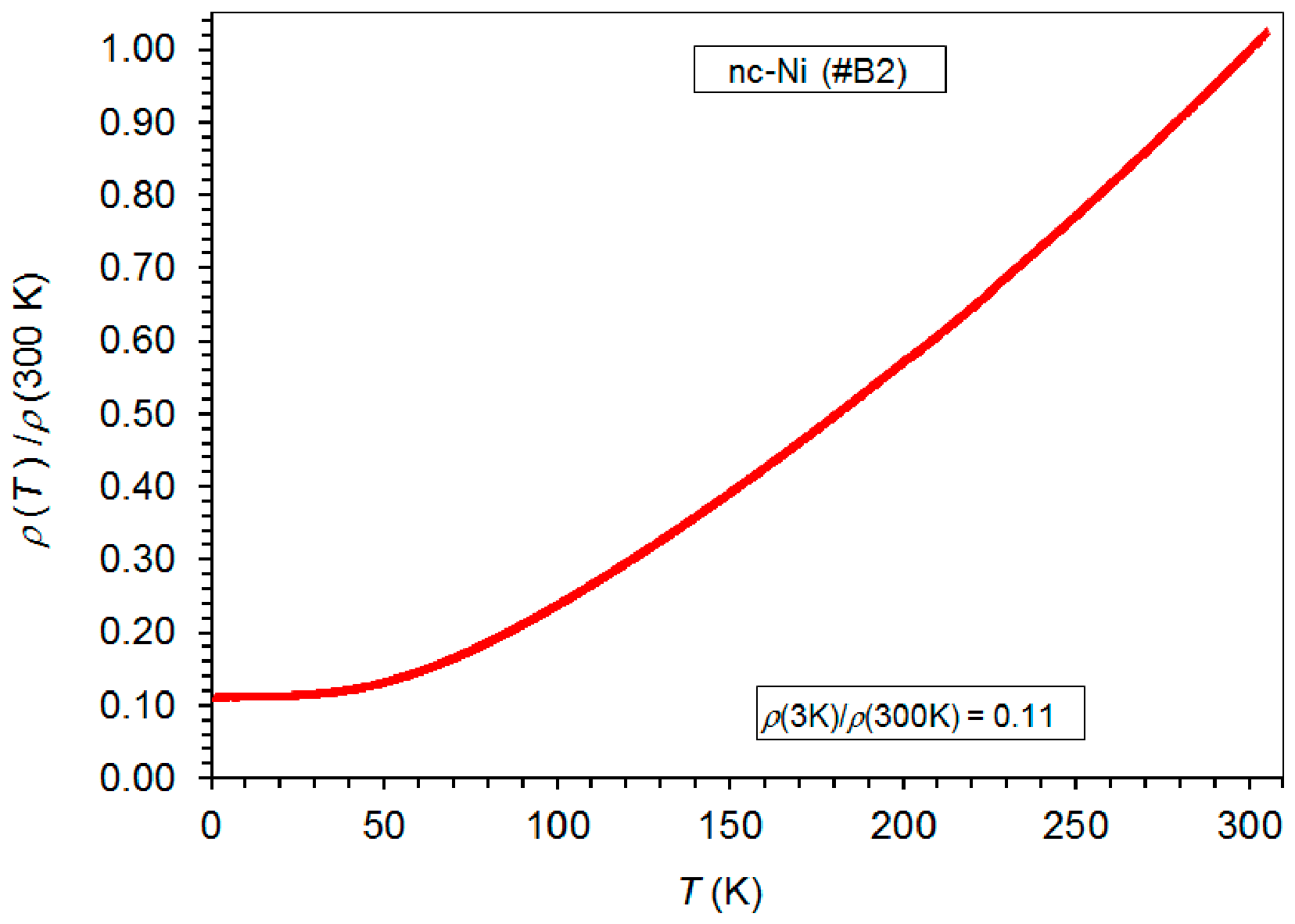
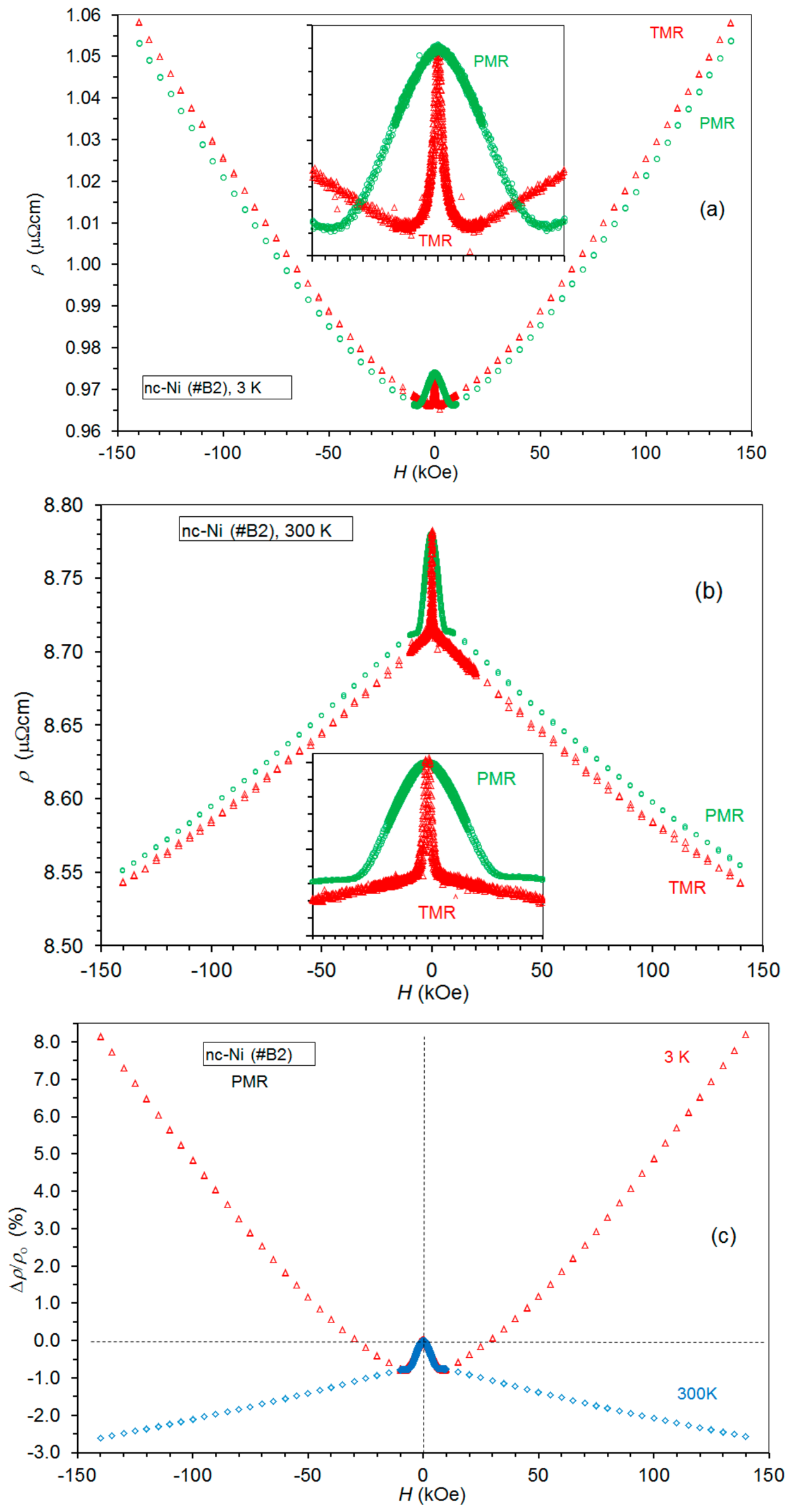
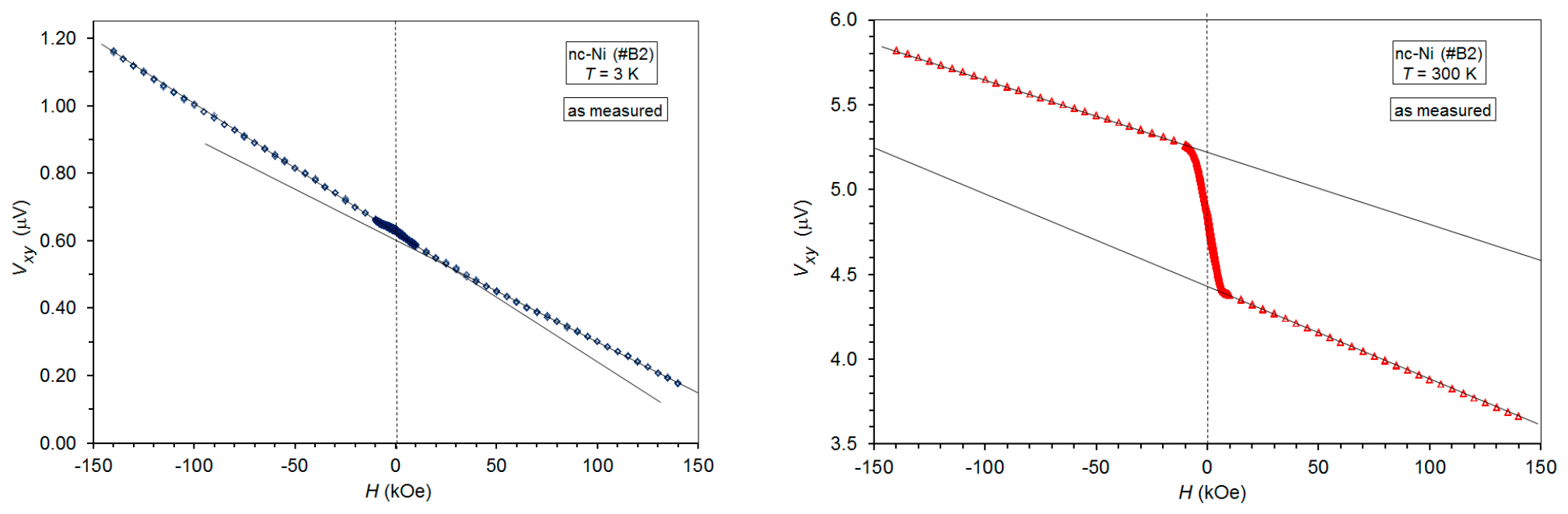
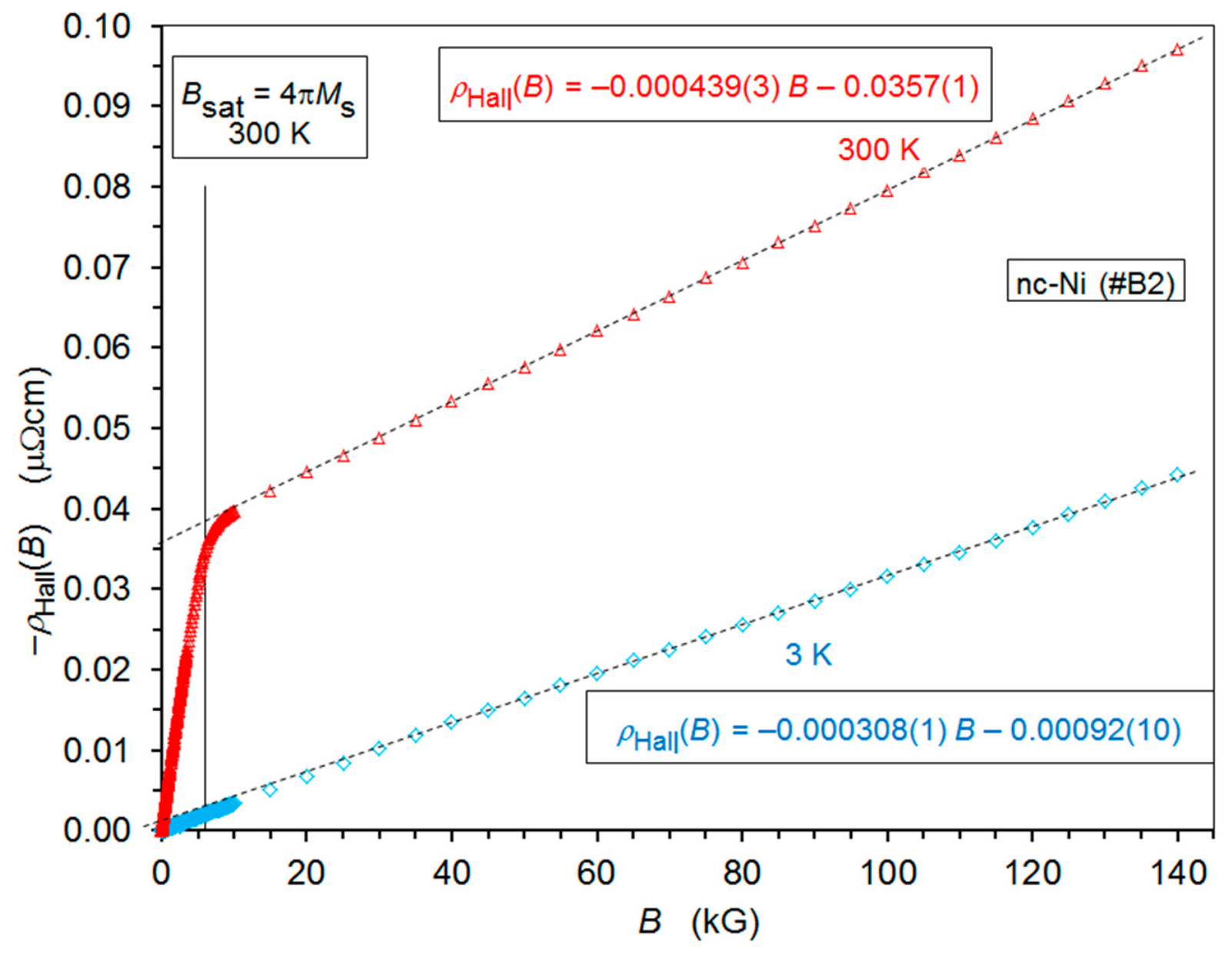
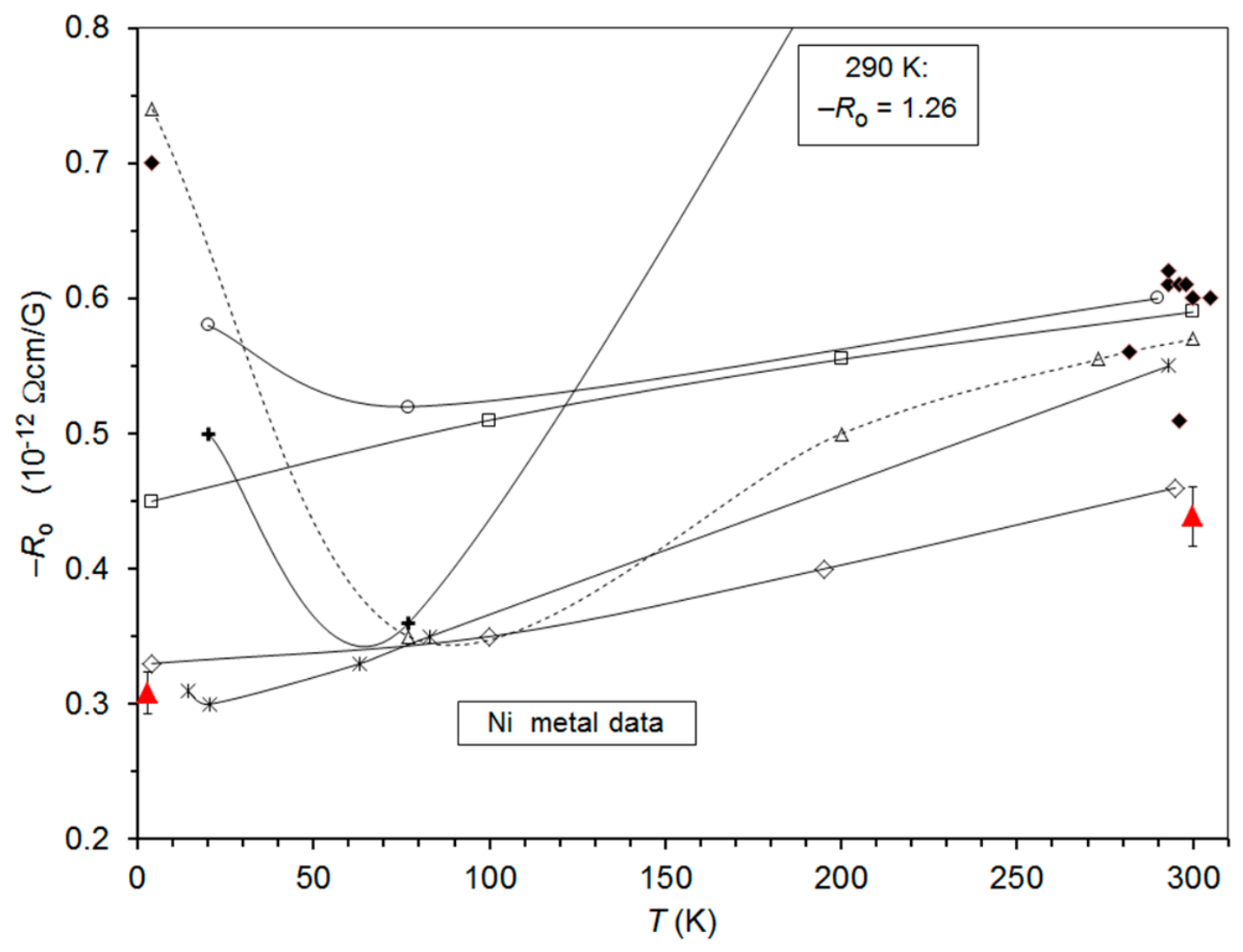
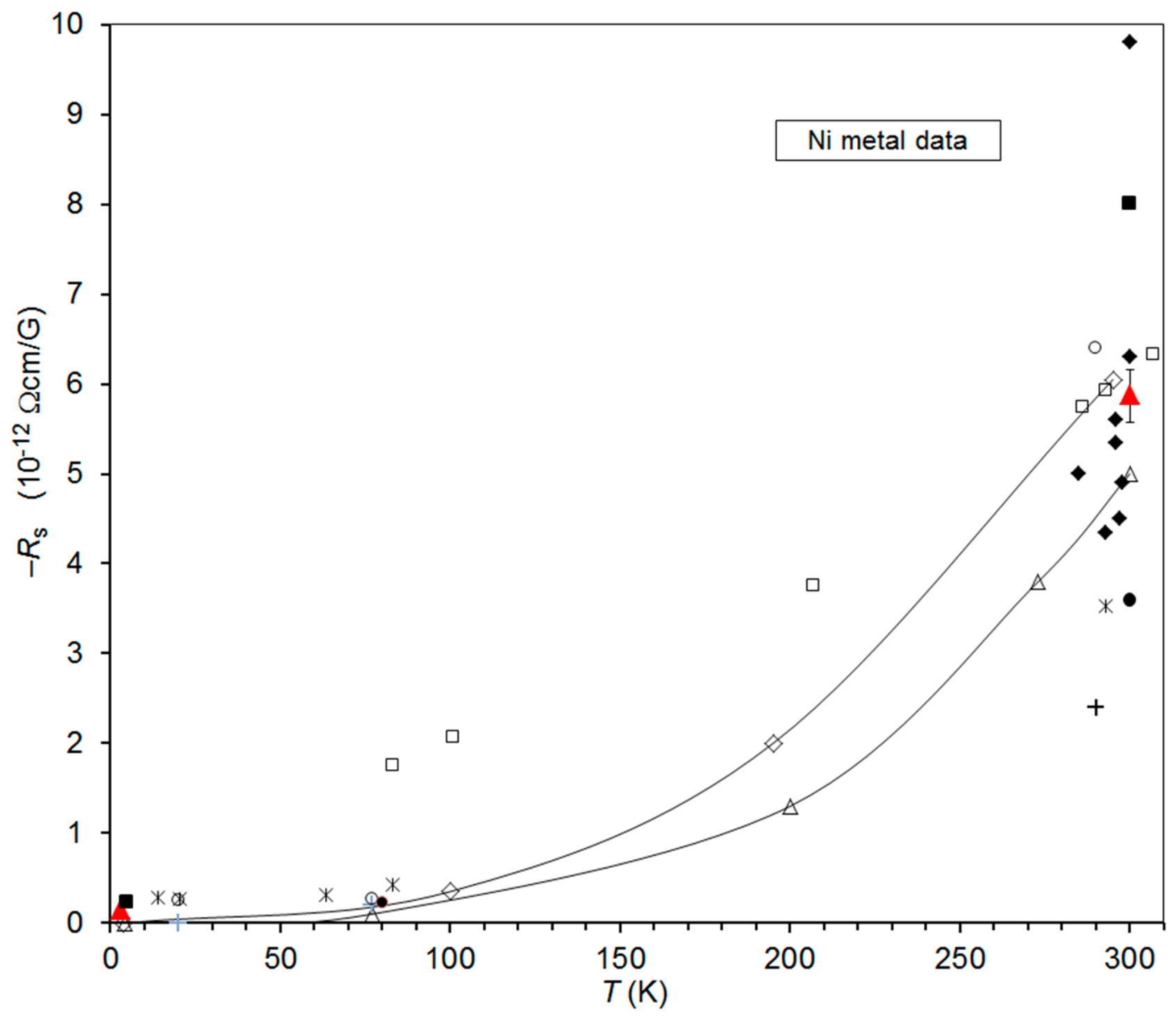
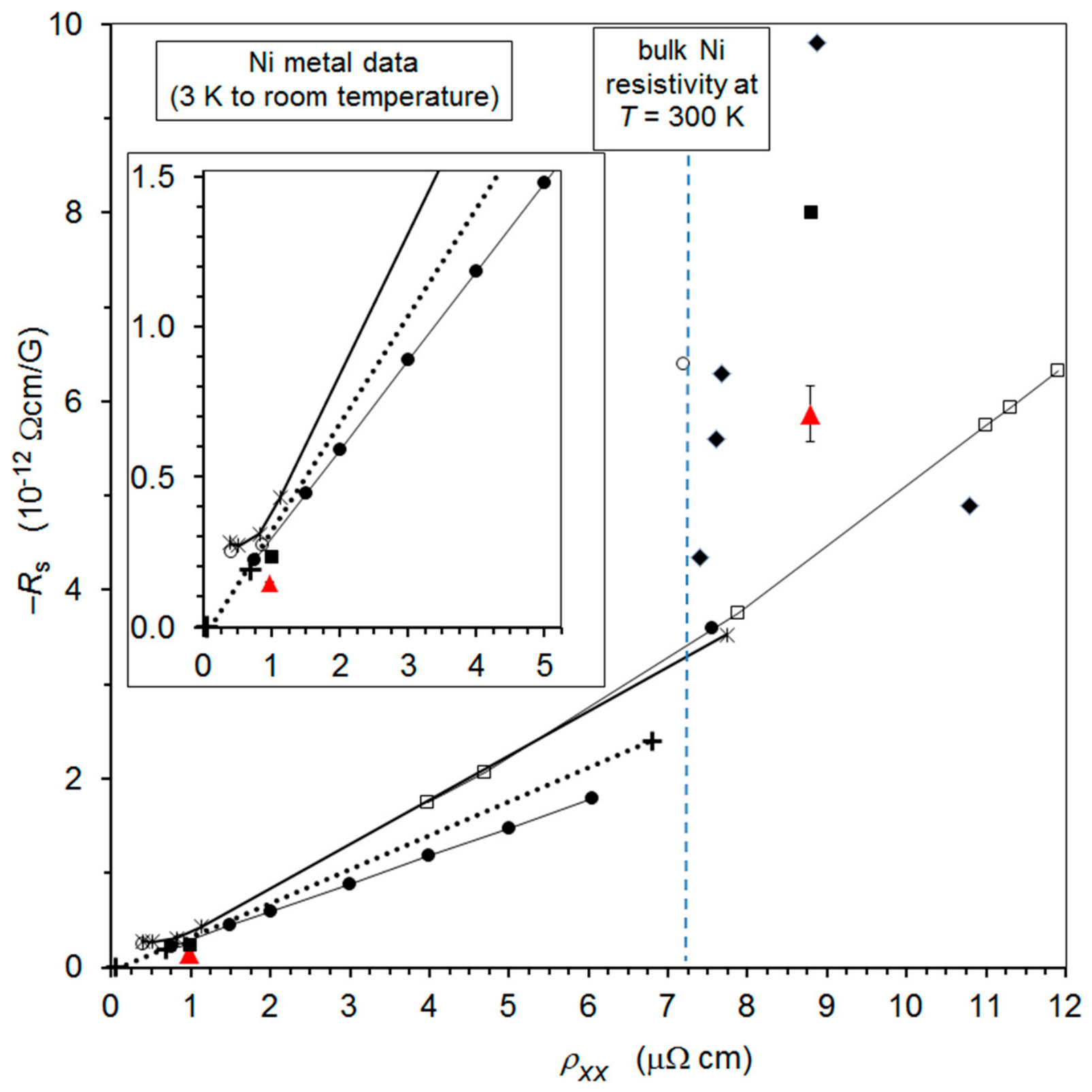
In a previous paper, in-plane magnetoresistance results were reported on a thin strip-shaped foil sample of nanocrystalline (nc) Ni metal. These studies have now been complemented by a measurement of the temperature dependence of the resistivity as well as the field dependence of the resistivity and the Hall effect on the same sample at 3 K and 300 K in polar magnetic fields up to 140 kOe, i.e., with the magnetic field perpendicular to the strip plane. Due to the strong contribution of grain-boundary scattering in the nc state, the residual resistivity was about 11% of the room-temperature value. The polar magnetoresistance (PMR) showed similar behavior to the previously reported transverse magnetoresistance (TMR), yielding an anisotropic magnetoresistance (AMR) value in good agreement with the AMR previously deduced from the in-plane MR data. As to the Hall effect, the results for the ordinary (Ro) and the anomalous (Rs) Hall coefficient fitted rather well with the rather dispersed reported data of bulk Ni at both temperatures. However, a closer look at the Rs values for nc-Ni revealed that at 300 K it is larger and at 3 K it is smaller than the corresponding bulk Ni values obtained on samples with the same zero-field resistivity as our nc-Ni foil. These deviations may be attributed to the nanocrystalline state containing a large density of grain boundaries.
Keywords: anisotropic magnetoresistance; Hall effect; nanocrystalline state; Ni anisotropic magnetoresistance; Hall effect; nanocrystalline state; Ni