
Review

Towards High-Strength Transparent Glass-Ceramics: Processing, Microstructure, and Applications

Department of Glass and Glass-Ceramics, Mendeleev University of Chemical Technology of Russia, 125480 Moscow, Russia
*
Author to whom correspondence should be addressed.
Encyclopedia 2026, 6(8), 176; https://doi.org/10.3390/encyclopedia6080176
Submission received: 22 June 2026 / Revised: 1 August 2026 / Accepted: 10 August 2026 / Published: 19 August 2026
(This article belongs to the Collection Vitreous and Glass-Based Materials for the Circular Economy)

Abstract

Glass-ceramics are inorganic, non-metallic materials obtained by controlled crystallization of glasses through different processing routes; they contain at least one functional crystalline phase together with a residual glass, and the crystallized fraction may range from trace levels to nearly complete crystallization. Transparent glass-ceramics (TGCs) constitute the optically transparent subset of this class and combine a controlled crystalline microstructure with a residual amorphous matrix. Their transparency distinguishes them from conventional opaque glass-ceramics and is achieved by minimizing light scattering through careful control of crystallite size, volume fraction, spatial distribution, and refractive-index mismatch between the crystalline and glassy phases. Unlike conventional sintered ceramics, TGCs retain many of the processing advantages of glass while incorporating crystalline phases that can enhance mechanical, thermal, optical, or functional properties. Depending on their composition and microstructure, TGCs may exhibit improved hardness, fracture toughness, thermal stability, chemical durability, luminescence, nonlinear optical response, or ion-exchange strengthening capability. These features make TGCs attractive for applications requiring both optical clarity and advanced performance, including protective cover glass, transparent armour, precision optical substrates, laser and photonic components, optical sensors, and multifunctional host materials for rare-earth ions and nanoparticles.

1. Introduction

In this review, the terminology follows the updated definition of glass-ceramics proposed by Deubener et al. [1]. The emergence of glass-ceramics as a distinct class of materials is associated with two largely independent lines of scientific and technological development. In the United States, S. Donald Stookey at Corning Glass Works discovered in the late 1950s that a lithium-silicate-based photosensitive glass, when accidentally overheated, transformed into a remarkably strong, opaque white partially crystalline material rather than simply deforming as expected. This observation led to the development and commercialization of Pyroceram® and demonstrated that controlled crystallization of glass could produce materials with mechanical properties far superior to those of the parent glass [2]. In parallel, in the Soviet Union, Isaak I. Kitaigorodskii developed and systematized the concept of glass-crystalline materials under the term “sitalls” (Russian: cитaллы), a neologism derived from the Russian words cтeклo (“glass”) and кpиcтaлл (“crystal”). His work emphasized the deliberate formation of crystalline phases within a glassy matrix and promoted the use of such materials in construction, chemical engineering, and electrical insulation [3]. By the mid-1960s, these converging developments had established glass-ceramics as a new family of engineering materials, combining the formability of glass with the hardness, strength, and thermal stability of crystalline ceramics.
A decisive advance occurred when the Schott company developed ZERODUR®, a lithium aluminosilicate (LAS) glass-ceramic whose β-quartz solid-solution nanocrystals exhibit a negative coefficient of thermal expansion (CTE) that, when combined with the positive CTE of the residual glass, yields a bulk CTE approaching zero (<±0.05 × 10⁻⁶ K−1). This property made ZERODUR the material of choice for telescope mirror substrates, ring-laser gyroscopes, and, more recently, extreme-ultraviolet lithography stages, applications where sub-nanometre dimensional stability is paramount [4]. The optical quality required for these precision components highlighted a critical insight: transparency in glass-ceramics is not merely a cosmetic attribute but a quantitative indicator that the crystallite dimensions and the refractive-index mismatch between crystals and matrix have been kept below the thresholds set by Rayleigh and Mie scattering theory [5,6].
The past two decades have witnessed a dramatic resurgence of interest in transparent glass-ceramics (TGCs), driven predominantly by the consumer-electronics industry. Corning’s Gorilla Glass Ceramic 2 illustrates the commercial availability of transparent, ion-exchange-strengthenable glass-ceramic cover materials. In Corning laboratory tests, 0.6 mm specimens survived face drops from up to 1.0 m onto a surface replicating concrete, whereas competitive lithium aluminosilicate cover glasses typically failed at 0.5 m or less [7]. This qualified commercial example demonstrates the potential of TGCs to combine ceramic-like damage resistance with scalable glass-forming processes.
From a scientific perspective, the appeal of TGCs lies in the synergistic interplay between the glassy matrix and the crystalline phases [8]. Such phases can contribute hardness, elastic-modulus enhancement, crack deflection, and tailored thermal expansion, while the continuous glassy phase preserves optical isotropy, enables near-net-shape forming, and, crucially, provides a medium amenable to alkali-ion-exchange strengthening—a post-processing step that introduces a compressive stress layer of several hundred megapascals into the surface [5,9,10]. Crystallization can, however, compromise transparency when the resulting microstructure produces appreciable optical scattering. No single crystal-size threshold is universal: transparency depends jointly on crystallite size and size distribution, crystal volume fraction, refractive-index mismatch between the crystalline and residual glass phases, crystallographic anisotropy and birefringence, and specimen thickness. Thus, crystals larger than λ/20 may remain compatible with high transparency when Δn is very small, whereas even finer crystals can cause substantial losses at high volume fractions or large index contrast [5,11].
Recent review articles have comprehensively surveyed glass-ceramic science, from the recent comprehensive survey by Höland, Beall and Smith [2] to specialized monographs on transparent variants [5] and commercial trajectories [9]. The present entry aims to provide a concise yet comprehensive overview of the field of transparent glass-ceramics with particular emphasis on (i) the physico-chemical fundamentals governing transparency retention during crystallization; (ii) the major oxide glass-ceramic families—LAS, MAS, and ZAS—together with emerging compositions; (iii) mechanical property enhancement via nanocrystallization and ion exchange; (iv) the growing role of computational methods and machine learning in accelerating composition design; and (v) current and prospective applications. Throughout, the discussion highlights the tension inherent in TGC design: maximizing the volume fraction and size of the crystalline phase (for mechanical benefit) while remaining below the optical scattering threshold (for transparency).

2. Processing Fundamentals: Nucleation, Crystallization, and Thermal Treatment

2.1. Nucleation Mechanisms

The transformation of a glass into a glass-ceramic begins with nucleation—the formation of stable embryos of the crystalline phase within the viscous melt. Classical nucleation theory describes this process in terms of a competition between the thermodynamic driving force for crystallization (the free-energy difference ΔGv between the liquid and crystal) and the kinetic penalty of creating a new interface (the interfacial energy σ). The critical nucleus radius r* = −2σ/ΔGv defines the minimum cluster size that will grow rather than dissolve, and the nucleation rate I follows an Arrhenius-like dependence on the work of forming this critical embryo, W* = 16πσ3/(3ΔGv2) [2,5]. In practice, homogeneous nucleation within bulk oxide glasses is exceedingly rare; instead, most TGC compositions rely on heterogeneous nucleation, in which the interfacial energy barrier is reduced by the presence of pre-existing catalytic sites.
Liquid–liquid phase separation (LLPS), either by spinodal decomposition or binodal nucleation-and-growth, is a second, often preceding, pathway. In many aluminosilicate systems, the supercooled melt decomposes into two immiscible amorphous phases of differing composition. The phase enriched in network modifiers (e.g., Li+, Mg2+, Zn2+) subsequently crystallizes more readily because it is already compositionally closer to the stoichiometry of the target crystal. LLPS is particularly well-documented in LAS [12] and MAS [13,14] glasses, where it controls both the spatial distribution and the size uniformity of the resulting nanocrystals.

2.2. Nucleating Agents

Because homogeneous nucleation is kinetically unfavourable in most glass compositions of practical interest, nucleating agents are added to lower the nucleation barrier and ensure a high density of crystallization sites. The four most widely used agents in TGC fabrication are ZrO2, TiO2, SnO2, and P2O5, either individually or in combination. Each operates through a distinct mechanism. ZrO2 forms nanoscale ZrO2 or ZrTiO4 clusters that act as epitaxial substrates for the nucleation of β-quartz solid solution in LAS glasses [12,15,16,17]. TiO2 promotes LLPS and can form anatase or rutile nanocrystals that template subsequent silicate crystallization; however, TiO2 also imparts amber colouration via Ti3+/Ti4+ intervalence charge transfer, which limits its use in high-clarity applications [12,18]. Maltsev et al. showed that the redox conditions during melting critically govern the Ti3+/Ti4+ ratio in TiO2-nucleated LAS glasses: melting without As2O3 (neutral atmosphere) produces black-coloured glass-ceramics due to octahedrally coordinated Ti3+ ions, whereas addition of As2O3 (oxidizing conditions) yields colourless, transparent glass-ceramics based on β-quartz s.s. and γ-Al2O3 nanocrystals [19]. SnO2 has recently gained favour as a colourless alternative, because Sn4+ remains in a single oxidation state under normal melting conditions and promotes heterogeneous nucleation without contributing to visible absorption [15,20,21]. P2O5 induces LLPS and facilitates nucleation in both LAS and MAS systems, and its effect is synergistic with ZrO2: combined ZrO2–P2O5 additions typically yield higher crystal densities and finer microstructures than either agent alone [16,22,23,24,25].
The choice and concentration of the nucleating agent directly determine crystal size, number density, and spatial uniformity—parameters that, in turn, govern the optical transmittance of the final glass-ceramic. Table 1 summarizes the principal agents and their effects.

2.3. Crystal Growth and Microstructure

Upon formation of stable nuclei, crystal growth proceeds at a rate governed by the diffusivity of glass-forming cations and the degree of undercooling relative to the liquidus. In TGCs, heat-treatment schedules are carefully designed as a two-step process: a nucleation hold at a temperature Tn slightly above Tg (typically 650–750 °C for aluminosilicates) to maximize nucleus density, followed by a growth hold at a higher temperature Tg + ΔT (typically 750–950 °C) to allow these nuclei to develop into the desired crystalline phase at a controlled rate [2,5]. The Johnson–Mehl–Avrami–Kolmogorov (JMAK) equation is commonly used to describe the overall transformation kinetics, with the Avrami exponent n providing insight into the dimensionality and mechanism of growth (n ≈ 3 for three-dimensional bulk crystallization with a constant nucleation rate; n ≈ 1 for surface crystallization) [27,28].
In systems such as LAS, a metastable precursor phase (β-quartz s.s.) often nucleates first and later transforms to the thermodynamically stable phase (β-spodumene or petalite) upon further heating—a sequence consistent with Ostwald’s step rule [2,6,29]. This polymorphic transformation is accompanied by a lattice expansion that can generate microcracks if not carefully managed, but it can also be exploited to tune the CTE, hardness, and refractive index of the final material [2,6].

2.4. Conditions for Transparency

The optical transparency of a glass-ceramic is governed by the total extinction caused by scattering and absorption. For scattering, the principal microstructural variables are crystallite size and size distribution, crystal number density or volume fraction, refractive-index mismatch between the crystalline and residual glass phases, crystallographic anisotropy and birefringence, and specimen thickness. In the Rayleigh regime (d ≪ λ), the scattering coefficient for an idealized population of isotropic particles scales strongly with particle size (approximately d6), number density, and (Δn)2; the transmitted intensity then decreases exponentially with thickness [5,11,30]. When crystal dimensions approach or exceed λ/4, Mie scattering dominates and the wavelength dependence weakens, producing the diffuse white or translucent appearance characteristic of over-crystallized samples [5,30].
These relationships impose stringent requirements on heat-treatment control. In practice, transparency is retained when (i) crystal sizes are kept below approximately 30–50 nm, or (ii) the crystalline phase has a refractive index very close to that of the matrix (Δn < 0.01), in which case crystals up to several hundred nanometres may be tolerable. The latter condition is met, for example, in β-quartz s.s. LAS glass-ceramics (ncrystal ≈ 1.53, nglass ≈ 1.52), which is precisely the reason for ZERODUR’s exceptional clarity [4,31]. It is worth noting that glass inhomogeneities—striae, inclusions, and residual phase-separation domains—can also act as secondary scattering centres; understanding their origin and spatial distribution is therefore essential for achieving reproducible optical quality in TGCs [32].
Light scattering is not the only source of optical loss in TGCs. Extrinsic absorption may arise from transition-metal impurities, redox-sensitive species, and colour centres generated during melting or subsequent treatment. Rare-earth dopants introduce discrete absorption bands that may be desirable for photonic function but reduce transmission in selected spectral regions. Residual pores, bubbles, unmelted particles, and secondary inclusions can contribute additional scattering and, where absorbing species are present, absorption. Optical quality should therefore be evaluated spectrally and cannot be inferred from crystal size and refractive-index matching alone [19,32].

2.5. Heat-Treatment Protocols and Processing Routes

The practical fabrication of TGCs hinges on the precise design of the thermal treatment schedule, which must balance the competing requirements of maximizing crystal number density (for mechanical benefit) while restricting crystal growth (for transparency retention) [2,5,6]. The standard protocol is a two-step heat treatment: the glass is first held at a nucleation temperature Tn, typically 20–100 °C above the glass-transition temperature Tg, for 1–4 h to generate a high density of stable nuclei, and then heated to a crystal-growth temperature Tgr (usually 100–250 °C above Tn) for 1–8 h to allow these nuclei to develop into the desired crystalline phase [2,28]. The nucleation hold exploits the maximum in the steady-state nucleation rate I(T), which in classical nucleation theory occurs at a temperature where the driving force for crystallization is large but the viscosity is still low enough to permit atomic rearrangement [6]. Differential thermal analysis (DTA) and differential scanning calorimetry (DSC) are the primary tools for identifying Tn and Tgr: the exothermic crystallization peak(s) in a DTA/DSC scan indicate the temperature window for crystal growth, while the onset of the first exotherm, combined with the Kissinger or Ozawa analysis of the peak shift with heating rate, permits estimation of the activation energy for nucleation and growth [27,28].
The choice of heating rate between the nucleation and growth stages is critical. Rapid heating (≥10 °C/min) from Tn to Tgr minimizes crystal growth during the transition and preserves the fine microstructure established during nucleation; conversely, slow heating rates can lead to premature coarsening and loss of transparency [12,18]. In LAS systems, the two-step schedule must also account for the β-quartz s.s. to β-spodumene polymorphic transformation, which occurs at ~850–950 °C and is accompanied by a volumetric expansion of 2–4%; exceeding Tgr beyond this transformation boundary produces translucent or opaque glass-ceramics with larger crystals [2,33,34].
An alternative strategy that has gained recent attention is a one-step heat treatment near the glass-transition temperature, in which nucleation and crystal growth proceed during a single isothermal hold. Lin et al. applied this approach to Cr3+-doped Gd2O3–Ga2O3–GeO2 glass-ceramics. A single treatment at 780 °C for 48 h produced uniformly distributed spheroidal grains with an average size of approximately 370 nm and retained a transmittance of 54% at 780 nm in specimens approximately 1 mm thick. By comparison, a two-step schedule comprising 780 °C for 48 h followed by 840 °C for 10 min yielded only 8% transmittance at the same wavelength, demonstrating that the one-step route can substantially reduce crystallization-induced optical losses in this system [35]. One-step schedules simplify the thermal processing and reduce energy consumption, but they require compositions with a sufficiently broad nucleation–growth overlap, which limits their applicability to specific glass families. Shakhgildyan et al. explored a related concept using a wide thermal gradient across the glass sample, achieving one-step crystallization of gahnite glass-ceramics with spatially graded crystallinity [36].
Beyond the heat treatment itself, the upstream processing steps—melting, fining, forming, and annealing—also influence the final glass-ceramic quality [2,5]. Glass melting is typically conducted at 1500–1650 °C for aluminosilicate compositions, with the melt homogeneity directly affecting the uniformity of subsequent nucleation. Forming is most commonly performed by casting (for small blanks), pressing (for cover-glass substrates), or float-glass processing (for large-area production). The cooling rate during forming determines the thermal history of the glass and can influence the extent of any pre-existing LLPS, which in turn affects the nucleation response during subsequent heat treatment [12,13,14].

2.6. Microstructural Characterization

The development and optimization of TGCs require a suite of complementary characterization techniques that probe the crystalline phases, crystal size and morphology, compositional partitioning, and mechanical response at multiple length scales [5,32].
X-ray diffraction (XRD) is the first-line technique for identifying the crystalline phases present in a glass-ceramic and for estimating the average crystallite size via the Scherrer equation or, more rigorously, by Rietveld refinement with an amorphous-phase contribution [28,37]. The broad diffraction peaks typical of TGCs—reflecting crystallite dimensions of 10–50 nm—require careful deconvolution from the amorphous halo of the residual glass, and quantitative phase analysis relies on the accurate modelling of this amorphous background [2,5].
Transmission electron microscopy (TEM), particularly high-resolution TEM (HRTEM) and scanning TEM with energy-dispersive X-ray spectroscopy (STEM-EDS), provides direct imaging of nanocrystals and their spatial distribution within the glass matrix. STEM-EDS mapping has been used extensively to visualize the compositional partitioning between the crystalline and vitreous phases—for example, revealing the enrichment of Zn2+ and Al3+ in gahnite nanocrystals and the complementary retention of Na+ and Si4+ in the surrounding glass [38]. Selected-area electron diffraction (SAED) confirms the crystal structure and orientation relationships between nanocrystals and the matrix.
Small-angle X-ray scattering (SAXS) and ultra-small-angle X-ray scattering (USAXS) are powerful techniques for determining the crystal size distribution, volume fraction, and inter-particle spacing in TGCs without the need for thin-section preparation [39]. Raghuwanshi et al. used anomalous SAXS (ASAXS) to selectively probe the ZrTiO4 nanocrystals in LAS glass-ceramics by tuning the X-ray energy to the Zr K-edge, resolving the nucleating-agent particles from the subsequently formed β-quartz s.s. crystallites—a distinction that is impossible with conventional SAXS or TEM alone [39]. SAXS is particularly valuable for in situ studies of crystallization kinetics, enabling real-time monitoring of nucleation and growth during heat treatment [39].
Atom probe tomography (APT) has emerged as a transformative technique for glass-ceramic research, offering three-dimensional compositional mapping with sub-nanometre spatial resolution. Mitchell et al. applied APT to transparent gahnite glass-ceramics and resolved the sharp compositional boundary between the ZnAl2O4 nanocrystals and the surrounding sodium aluminosilicate glass, quantifying the partitioning coefficients for each cation species [38]. These data are essential for predicting the refractive-index contrast Δn between the crystal and glass phases—the parameter that ultimately governs transparency.
Brillouin light scattering provides a non-destructive probe of the elastic properties of glass-ceramics, measuring the longitudinal and transverse sound velocities from which the elastic modulus, shear modulus, and Poisson’s ratio can be derived [40]. Gallo et al. used in situ Brillouin scattering to monitor the elastic modulus evolution during spinel crystallization in MAS glasses, demonstrating a continuous stiffening that correlates with the crystal volume fraction determined independently by XRD [40]. Femtosecond-laser techniques offer another avenue for local characterization: Sigaev et al. demonstrated that femtosecond-laser irradiation can selectively trigger different crystallization pathways within the same glass composition, providing a tool for probing the local nucleation landscape with micrometre spatial resolution [41].

3. Glass-Ceramic Systems

3.1. Lithium Aluminosilicate (LAS) Systems

The Li2O–Al2O3–SiO2 system is the most extensively studied and commercially significant family of transparent glass-ceramics [2,5]. Its prominence stems from the existence of several crystalline phases—β-quartz solid solution (β-quartz s.s.), β-spodumene solid solution, petalite (LiAlSi4O10), and lithium disilicate (Li2Si2O5)—each offering a distinct combination of coefficient of thermal expansion, hardness, and refractive index that can be tailored through composition and heat treatment [2].
The classic LAS glass-ceramic, exemplified by ZERODUR® and related cooktop panels, relies on the precipitation of β-quartz s.s. nanocrystals (space group P6222 or P6422). In this stuffed-derivative structure, Li+ and Al3+ substitute into the quartz lattice, producing a phase with a strongly negative CTE (approximately −1 to −3 × 10⁻⁶ K−1 over 20–300 °C). When embedded in a residual glass with a positive CTE of +3 to +4 × 10⁻⁶ K−1, the volumetric average can be driven to near zero, an attribute indispensable for telescope mirror substrates and laser gyroscopes [4,31]. Because the refractive index of β-quartz s.s. (n ≈ 1.53) is closely matched to that of the aluminosilicate matrix (n ≈ 1.52), crystals up to several tens of nanometres are tolerated without significant scattering loss [4,5,31]. Recent work on low-Li2O LAS glasses has demonstrated that reducing the Li2O content to below 4 mol % while increasing the Al2O3/SiO2 ratio suppresses the β-quartz s.s. to β-spodumene transition, stabilizing the fine-grained transparent microstructure to higher temperatures [22,42]. Zhou et al. confirmed the critical role of Al2O3 in LAS glass-ceramics prepared from β-spodumene, showing that Al2O3 contents above 20 mol % refine the crystal size and raise both transparency and Vickers hardness [43]. Hu et al. recently examined the interplay of Al2O3/Li2O ratio with ZrO2 nanocrystal formation, finding that an optimized ratio yields a uniform dispersion of 8–12 nm ZrO2 particles that act as heterogeneous nucleation centres for subsequent β-quartz s.s. precipitation [44]. A distinct concept of dual-function nucleating agents has been introduced by Dymshits et al., who demonstrated that rare-earth orthoniobates (Ho3+:YNbO4 and Ho3+/Yb3+:YNbO4) serve simultaneously as nucleating agents for β-quartz s.s. crystallization and as optically active nanocrystals (7–25 nm) providing up-conversion luminescence in transparent LAS glass-ceramics [45].
Upon prolonged or higher-temperature heat treatment, β-quartz s.s. transforms to β-spodumene solid solution (LiAlSi2O6), which has a positive but still low CTE (~0.5–1.5 × 10⁻⁶ K−1) [2]. This transformation is accompanied by grain growth (crystal dimensions can reach 0.5–2 μm), and the resulting glass-ceramic typically becomes translucent or opaque. However, the larger β-spodumene grains introduce crack-deflection and microcracking toughening mechanisms, leading to substantially higher fracture toughness (KIC up to 2.5 MPa·m0.5) compared with the nanoscale β-quartz s.s. variant (KIC ~ 0.8–1.2 MPa·m0.5) [28,46]. Zhang et al. studied the crystal growth and structural evolution in this system using molecular dynamics and showed that the transformation proceeds via cooperative rearrangement of the [SiO4] and [AlO4] tetrahedra, with Li+ channels playing a decisive role in the diffusion-controlled kinetics [47].
Petalite-based glass-ceramics represent a recently revitalized sub-family within the LAS system [9,27]. Petalite (LiAlSi4O10) possesses a monoclinic structure with channels that can accommodate alkali ions for ion exchange, and its refractive index (n ≈ 1.50–1.51) provides excellent index matching with SiO2-rich residual glasses [5]. Kaity et al. reported ultra-strong petalite glass-ceramics with Vickers hardness of 7.16 GPa and optical transmittance exceeding 85% at 550 nm, achieved by co-crystallization of petalite and β-spodumene solid solution [27]. Notably, Luo et al. demonstrated that optimized petalite–β-spodumene glass-ceramics at 0.8 mm thickness can achieve haze values as low as 0.12%, rivalling the optical clarity of the parent glass while delivering KIC = 1.7 MPa·m0.5—the highest reported for a transparent LAS glass-ceramic [46]. The petalite structure is especially attractive for cover-glass applications because it combines a moderate positive CTE (~1 × 10⁻⁶ K−1) with the structural openness needed for efficient K+-for-Li+ ion exchange.
Lithium disilicate (Li2Si2O5, LS2) glass-ceramics were initially developed for dental restorations (e.g., IPS e.max), where translucency rather than full transparency is sufficient. More recently, researchers have explored low-crystallinity LS2 variants that retain transparency and can be chemically strengthened [48]. Cao et al. investigated the effect of ZrO2 on the crystallization of transparent LS2 glass-ceramics and found that 4 mol % ZrO2 yielded nano-sized crystals (d ~ 20 nm) with transmittance above 80% and Vickers hardness of 6.67 GPa [37]. Chemical strengthening of transparent lithium-disilicate glass-ceramics by alkali-ion exchange has been demonstrated directly [48,49]. Partial replacement of Li2O by ZnO has separately been investigated as a route to tune LAS crystallization and properties [50].
Experimental investigation of early and advanced crystallization stages in LAS glasses provides a complement to atomistic modelling. Revelo et al. studied lithia–alumina–silica glasses nucleated by ZrO2 and characterized how the microstructure evolves from the initial nucleation stage to advanced crystallization [17]. Such studies supply the experimentally constrained phase and microstructure data needed to validate computational descriptions of crystallization.

3.2. Magnesium Aluminosilicate (MAS) Systems

The MgO–Al2O3–SiO2 system has emerged as a versatile platform for TGCs, offering a lithium-free alternative that avoids the supply-chain and cost concerns associated with lithium-bearing raw materials [2,5]. The three principal crystalline phases precipitated in MAS glasses—spinel (MgAl2O4), cordierite (α- or μ-Mg2Al4Si5O18), and, less commonly, sapphirine (Mg3.5Al9Si1.5O20) or enstatite (MgSiO3)—each exhibit high hardness, chemical durability, and, importantly, refractive indices amenable to transparency retention [40,51].
Spinel glass-ceramics represent the most intensively studied sub-family [40,51]. MgAl2O4 crystallizes in the cubic Fd3m space group, with n ≈ 1.72, which is substantially higher than the index of a typical aluminosilicate glass (n ≈ 1.50–1.55). Importantly, the cubic symmetry renders spinel optically isotropic, eliminating birefringence-induced scattering that would otherwise degrade transparency in anisotropic crystalline phases—a significant advantage that partially compensates for the large refractive-index mismatch with the glass matrix [5,52]. This refractive-index mismatch means that transparency can only be maintained if crystal sizes are rigorously kept below 20–30 nm. Gallo et al. demonstrated in situ crystallization monitoring by Brillouin scattering and showed that spinel crystallites of 10–15 nm could be precipitated with transmittance values exceeding 80% in the visible range, while simultaneously increasing the elastic modulus from 86 to 110 GPa [40]. In a subsequent study, the same group reported that fracture toughness increased from 0.7 MPa·m0.5 (base glass) to 1.4 MPa·m0.5 upon spinel crystallization, attributing the enhancement to crack deflection at the crystal–glass interfaces [51]. Han et al. systematically investigated the influence of MgO/Al2O3 ratio on the structure and properties of MAS transparent glass-ceramics and found that compositions approaching the stoichiometric spinel ratio (MgO:Al2O3 = 1:1) yielded the highest crystallinity before the onset of opacity [13,14].
Cordierite glass-ceramics are attractive because cordierite possesses a very low CTE (~1.5 × 10⁻⁶ K−1) and a refractive index (n ≈ 1.52–1.54) well-matched to the residual glass. Hao et al. reported transparent cordierite TGCs with transmittance > 85% at 550 nm and Vickers hardness of 7.35 GPa, prepared by a two-stage heat treatment at 750/900 °C using P2O5–ZrO2 as combined nucleating agents [53]. Deng et al. further demonstrated that co-doping with P2O5, ZrO2, and TiO2 permits independent control of the nucleation and growth stages, producing a bimodal size distribution of smaller cordierite and larger μ-cordierite nanocrystals, each contributing distinct mechanical benefits [24]. A notable recent advance is the fabrication of transparent MAS glass-ceramics entirely without nucleating agents (agent-free) by exploiting LLPS as the sole precursor to crystallization. Bao et al. prepared a novel Mg0.6Al1.2Si1.8O6 glass-ceramic from the MAS system without added ZrO2 or TiO2, achieving 82% transmittance at 550 nm and demonstrating that spinodal decomposition in the MgO–Al2O3–SiO2 miscibility gap can suffice as the nucleation pathway [54].
Nucleation in MAS glasses is complicated by the high field strength of Mg2+ ions, which promote LLPS but can also lead to surface crystallization and devitrification if the melting temperature or cooling rate is inadequate. Gao et al. showed that Y2O3 additions (1–3 mol %) suppress surface nucleation while promoting volume crystallization of spinel, yielding a more uniform microstructure and higher transparency [55]. Huang et al. further demonstrated that combining ZrO2 and SnO2 as dual nucleating agents in MAS glasses enables preparation of transparent glass-ceramics with spinel crystallites below 30 nm [26]. Liu et al. systematically compared TiO2, ZrO2, and CaF2 as nucleating agents in high-Al2O3 (26.5 mol %) spinel glass-ceramics of the SiO2–Al2O3–ZnO–MgO–Li2O–Na2O system, demonstrating that TiO2 promotes zinc/magnesium aluminotitanate amorphous regions that facilitate ZnAl2O4/MgAl2O4 nucleation, ZrO2 forms locally ordered heterogeneous regions enabling epitaxial spinel growth, while CaF2 is ineffective for controlled spinel crystallization; the ZrO2-nucleated glass-ceramic exhibited the best combination of transmittance (88.7% in the visible range) and microhardness (8.23 GPa) [56]. Xu et al. investigated the effect of substituting Na2O with B2O3 on MAS glass crystallization and demonstrated that B2O3 incorporation lowered the crystallization temperature by ~30 °C and refined the spinel crystal size from 35 to 18 nm, with a concomitant increase in transmittance from 72% to 88% [57]. Lu et al. showed that the choice of metastable precursor phase—whether amorphous phase separation or an intermediate μ-cordierite—critically determines the final spinel crystal size and volume fraction, offering an additional lever for microstructural control [58]. Bukina et al. explored the competing crystallization mechanisms in iron-doped MAS glasses nucleated by TiO2 and ZrO2, showing that Mg-petalite (~30 nm) and MgAl2O4 spinel (9–12 nm) form via distinct pathways: Mg-petalite crystallizes from weakly phase-separated glass in a narrow temperature window (850–900 °C), whereas spinel preferentially nucleates from glasses with a well-developed LLPS structure; Fe2+ ions partition selectively into the spinel nanocrystals, yielding a broad NIR absorption band at ~1090 nm relevant for saturable-absorber applications [59]. These strategies expand the MAS processing window and reduce the thermal budget required to achieve transparent glass-ceramics.
The ion-exchange behaviour of MAS glass-ceramics has attracted recent attention, particularly for cover-glass applications [9]. Because the residual glass surrounding the spinel crystals typically contains Na+ or mixed Na+/K+ alkali ions, conventional K+-for-Na+ exchange in molten KNO3 at 400–450 °C can generate compressive stresses of 300–600 MPa at depths of 20–40 μm [60,61]. Wang et al. reported a synergistic enhancement in a transparent MAS glass-ceramic where ion exchange increased the Vickers hardness from 710 to 7.65 GPa and the flexural strength from 350 to 620 MPa, an improvement attributed to the compressive stress field acting in concert with the crack-blunting effect of the nanocrystalline spinel dispersoids [60]. This combination of high hardness, moderate CTE, and ion-exchange strengthenability positions MAS glass-ceramics as strong competitors to LAS compositions for next-generation device covers.

3.3. Zinc Aluminosilicate (ZAS) and ZnO–MgO–Al2O3–SiO2 (ZMAS) Systems

The ZnO–Al2O3–SiO2 (ZAS) system has attracted rapidly growing interest as a platform for transparent glass-ceramics with exceptional mechanical properties [62,63]. The primary crystalline phase, gahnite (ZnAl2O4), belongs to the spinel family (Fd3m) and possesses a Vickers hardness of approximately 12.75 GPa in its single-crystal form—substantially higher than that of cordierite or β-quartz s.s. [64]. When precipitated as nanocrystals (10–40 nm) within a sodium-bearing aluminosilicate glass, gahnite TGCs can combine visible-range transparency with high hardness, making them attractive for cover-glass and protective-glazing applications [62,63,64,65].
The crystallization behaviour of ZAS glasses is strongly influenced by the Al2O3/SiO2 ratio and the choice of nucleating agent [62,66]. Cormier et al. investigated the vitrification and crystallization of ZnO–Al2O3–SiO2 glasses by combining X-ray diffraction, EXAFS, and NMR spectroscopy, and identified a glass-forming region centred around 20ZnO–20Al2O3–60SiO2 (mol %) where bulk crystallization of gahnite can be achieved without competing willemite (Zn2SiO4) formation [66]. Kurajica et al. studied the influence of composition on crystallization kinetics and showed that increasing the ZnO content beyond 25 mol % promoted willemite co-crystallization, reducing both hardness and transmittance [67]. Wei et al. recently demonstrated that increasing Al2O3 from 15 to 25 mol % selectively promoted gahnite at the expense of willemite and raised the Vickers hardness from 6.67 to 8.04 GPa [63]. The refinement of gahnite crystals has also been achieved by non-conventional processing routes, such as the thermoelectric coupling field applied by Yi et al., which produced a nanocrystal size distribution centred at 12 nm with transmittance of 87% at 550 nm [68]. At the nanoscale, Mitchell et al. used APT to reveal the three-dimensional compositional partitioning between gahnite nanocrystals and the surrounding glass matrix with sub-nanometre resolution, demonstrating that Zn2+ and Al3+ are sharply enriched in the crystals while Na+ and Si4+ remain in the glass—information that is critical for predicting both the refractive-index contrast and the ion-exchange behaviour of these materials [38].
A distinctive feature of sodium-bearing ZAS glass-ceramics is their amenability to K+-for-Na+ ion exchange despite the absence of lithium [62,65,69]. Shakhgildyan et al. showed that ion exchange modifies the near-surface microhardness of low-alkali, transparent gahnite glass-ceramics [65]. In a related MAS system, Li et al. demonstrated that pre-heating changes subsequent crystallization and ion-exchange behaviour [70]. Guo et al. studied glass-ceramics containing co-crystallized ZnAl2O4 and β-quartz solid solution and established that crystallization affects ion-exchange depth and strengthening response [69]. Together, these studies show that the residual-glass chemistry and crystal fraction must be considered jointly when designing chemically strengthened spinel-containing TGCs.
The quaternary ZMAS (ZnO–MgO–Al2O3–SiO2) system extends the compositional flexibility by introducing MgO, which partially substitutes into the spinel lattice to form (Zn,Mg)Al2O4 solid solutions [21,62]. This substitution allows tuning of the lattice parameter, refractive index, and CTE of the crystalline phase. Xu et al. prepared ZMAS glass-ceramics with SnO2 and ZrO2 as nucleating agents and reported that MgO additions of 5–8 mol % refined the spinel crystal size and improved the transmittance by reducing the Δn between the crystal and the matrix [21]. Veselov et al. achieved ultra-strong ZMAS glass-ceramics with Vickers hardness of 8.53 GPa after ion exchange, attributing the record values to the combined effect of dense gahnite nanocrystal dispersion and a high surface compressive stress [62]. Zheng et al. reported a remarkable synergy in MgO–Al2O3–SiO2–ZnO–B2O3 glass-ceramics containing α-cordierite: by tailoring the ZnO/B2O3 ratio, they achieved an unprecedented combination of indentation fracture toughness KIC (indentation-derived) = 2.1 MPa·m1⁄2, Vickers hardness Hv= 9.2 GPa, and optical transmittance of ~74% at 550 nm; ZnO acts as a network modifier promoting α-cordierite crystallization (~119 nm grains), while B2O3 stabilizes the matrix through BO4 linkages, suppressing interfacial stress and microcracking [71]. Phase-separation studies by Sigaev et al. using femtosecond-laser irradiation revealed that the local thermal history can selectively trigger different crystallization pathways (gahnite vs. willemite) within the same glass composition, opening possibilities for spatially patterned glass-ceramics [41]. Ion-exchange strengthening has also been examined in Na2O-enriched parent glasses designed for this ZMAS glass-ceramic-forming system [72].
Beyond structural applications, gahnite glass-ceramics have attracted attention as functional optical materials. Rodrigues et al. explored chromatic tuning in ZAS glass-ceramics by controlling Co2+ and Cr3+ incorporation into the gahnite lattice via tailored ZrO2/TiO2 nucleating-agent ratios, achieving a palette ranging from blue to green-pink while maintaining hardness above 6.86 GPa [73]. Molla et al. prepared transparent gahnite glass-ceramics and characterized both their optical (transmittance > 80%) and mechanical properties (HV ≈ 6.86 GPa), establishing gahnite as a dual-function structural and optical material [64]. These studies illustrate the potential of ZAS glass-ceramics as simultaneously structural and functional materials. Gold-nanoparticle additions provide a separate plasmonic route for tuning optical response without altering gahnite formation [74].

3.4. Emerging Systems

While LAS, MAS, and ZAS constitute the established pillars of TGC technology, several emerging compositional families are attracting increasing attention for their unique properties [2,5].
The Na2O–Al2O3–SiO2 (NAS) system offers a lithium-free, low-cost alternative in which carnegieite (NaAlSiO4)—a cubic stuffed-derivative of cristobalite—can be precipitated as nanocrystals with n ≈ 1.51, providing excellent refractive-index matching with the host glass. She et al. investigated NAS glass-ceramics with ZrO2 nucleation and reported carnegieite crystal sizes of 15–25 nm and transmittance of 83% at 550 nm [75]. Rao et al. recently demonstrated novel nanostructured NAS glass-ceramics with carnegieite-type crystallites below 10 nm, achieving transmittance exceeding 88% and Vickers hardness of 7.06 GPa; notably, the presence of Na+ in the crystals allows K+-for-Na+ ion exchange to be performed directly through the crystalline lattice channels, an unusual feature not available in most MAS or ZAS variants [76]. These results suggest that NAS glass-ceramics could become competitive for cover-glass applications if their chemical durability and long-term stability under humid conditions are confirmed.
Cristobalite-based glass-ceramics have been explored as a means to reduce lithium content while retaining the SiO2-rich compositions familiar to glass manufacturers [77]. Li et al. prepared transparent cristobalite glass-ceramics in the Li2O–Al2O3–SiO2 system by partially substituting Li2O with MgO, stabilizing a β-cristobalite solid solution at crystal sizes of 20–30 nm with transmittance of 81% [77]. The challenge in cristobalite systems, however, is the large volumetric change associated with the β→α displacive transformation near 270 °C, which can generate microcracks during thermal cycling [2,5].
Interest in fresnoite-type (Ba2TiSi2O8) glass-ceramics has grown because their crystallization can be balanced against transparency and fracture resistance [78]. In the Y2O3–Al2O3–SiO2 system, Zheng et al. examined how BaO modifies glass structure, crystallization, and mechanical properties [79]. Beyond these families, transparent anorthite-based glass-ceramic glazes extend the design space into the CaO–Al2O3–SiO2 system [80], while high-entropy garnet-based nanoceramics produced by full glass crystallization provide a distinct route to transparent, high-modulus materials [81].
These emerging systems, while at an earlier stage of development than LAS or MAS, considerably broaden the compositional design space for transparent glass-ceramics and introduce functional capabilities—ferroelectricity, nonlinear optics, luminescence—that transcend the purely structural applications of conventional TGCs [8].
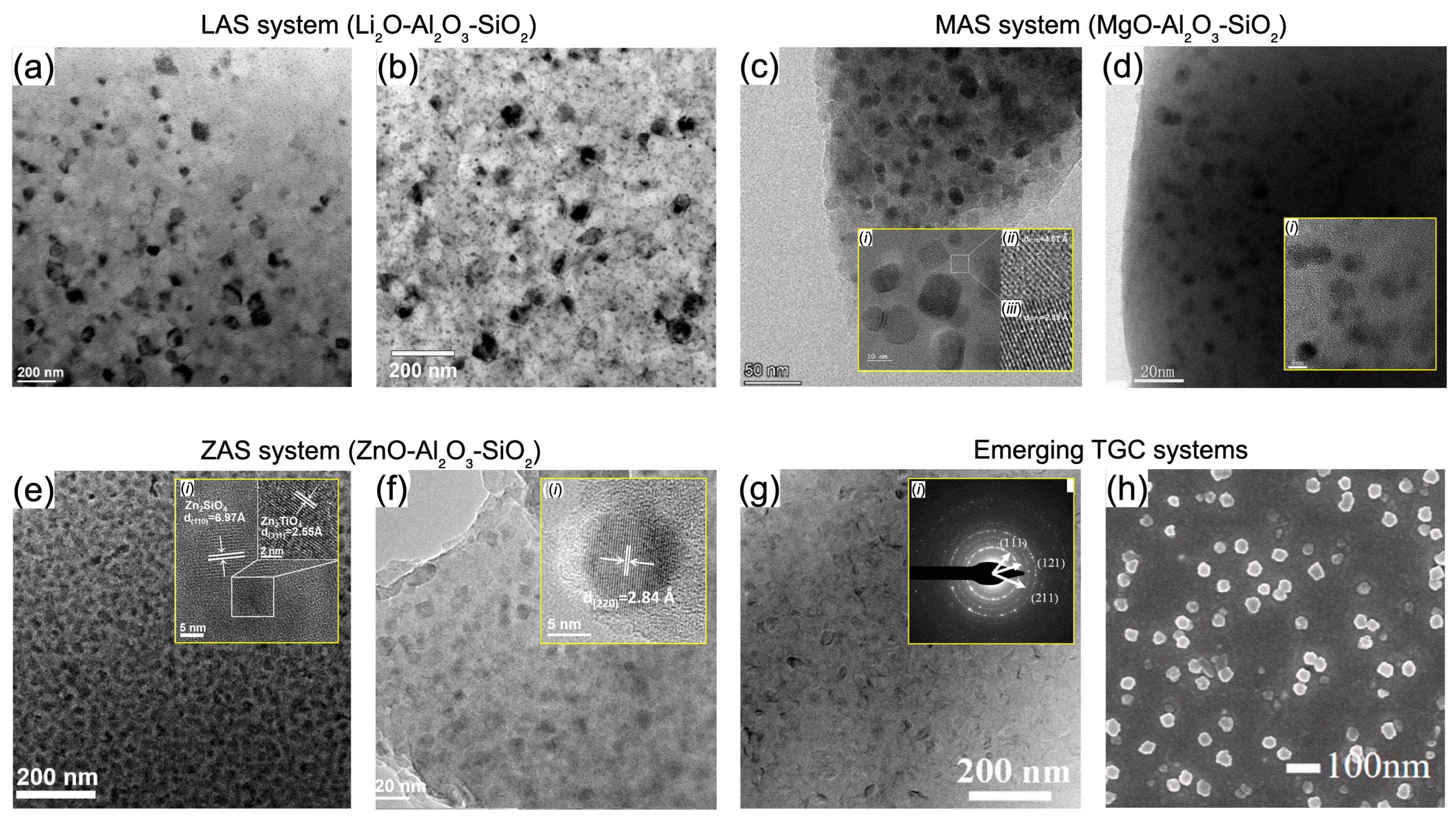
Table 2 provides a compositional overview of the principal TGC families discussed in this section, summarizing the key oxide constituents, crystalline phases, refractive indices, and thermal-expansion characteristics that define each system, and Figure 1 provides an overview of the microstructure of the observed glass-ceramics.

4. Mechanical Properties and Strengthening Strategies

4.1. Hardness and Elastic Modulus

The precipitation of nanocrystalline phases within a glassy matrix invariably increases the Vickers hardness (HV), because crystalline phases possess denser atomic packing and stronger bond networks than the disordered matrix. In practical TGC compositions, the degree of hardness enhancement depends on the crystal volume fraction, crystal hardness, and the residual stress state at the crystal–glass interface. For β-quartz s.s. LAS glass-ceramics, HV values typically range from 6.37 to 7.35 GPa, compared with 4.90–5.88 GPa for the parent glass [28,43]. Spinel (MgAl2O4 or ZnAl2O4) glass-ceramics achieve higher values, commonly 7.35–8.53 GPa, because the cubic spinel phase itself has a single-crystal hardness exceeding 12.75 GPa [51,62]. Ren et al. recently demonstrated that optimizing the Al2O3 content in high-alumina glass-ceramics can push HV to 8.14 GPa while maintaining transmittance above 78% [85]. Liu et al. showed that enhancing MAS nucleation with SnO2 yielded an additional ~0.49 GPa hardness increment, attributable to a finer crystal size distribution and more uniform dispersoid spacing [86].
The elastic modulus follows similar trends: crystallization increases the Young’s modulus of LAS glasses from ~70 GPa to 85–95 GPa, and of MAS glasses from ~86 GPa to 105–115 GPa. The Gallo et al. Brillouin-scattering measurements of spinel MAS TGCs documented a continuous increase in elastic constants with crystallinity, with values approaching those of single-crystal spinel at ~30 vol % crystalline fraction [40].

4.2. Fracture Toughness and Toughening Mechanisms

Fracture toughness is the mechanical property most profoundly altered by controlled crystallization. In base aluminosilicate glasses, KIC is typically 0.6–0.8 MPa·m0.5, insufficient for many structural applications. The introduction of a nanocrystalline dispersion can increase KIC by 50–200% through several concurrent mechanisms: (i) crack deflection at crystal–glass interfaces, which increases the effective crack path length; (ii) crack bridging by intact nanocrystals spanning the crack wake, which supplies a closing traction; (iii) microcracking ahead of the main crack front, wherein thermally induced microcracks around CTE-mismatched crystals create a process zone that dissipates elastic strain energy; and (iv) transformation toughening in systems where a stress-induced phase change (e.g., tetragonal-to-monoclinic ZrO2) creates local compressive stresses that oppose crack opening [51,87,88].
Gallo et al. measured KIC = 1.4 MPa·m1⁄2 in transparent spinel MAS glass-ceramics, representing a twofold improvement over the base glass, and attributed the enhancement predominantly to crack deflection at 10–15 nm spinel crystallites [51]. In LAS systems, the fracture response is strongly phase-dependent: co-crystallized petalite and β-spodumene solid solution can combine transparency with enhanced toughness [46], while ion exchange of a multi-component lithium-disilicate glass-ceramic further increases fracture resistance through the compressive surface layer [49]. Sun et al. used machine-learning-assisted atomistic modelling to investigate the structure and fracture behaviour of spodumene glass-ceramics [88].

4.3. Ion-Exchange Strengthening

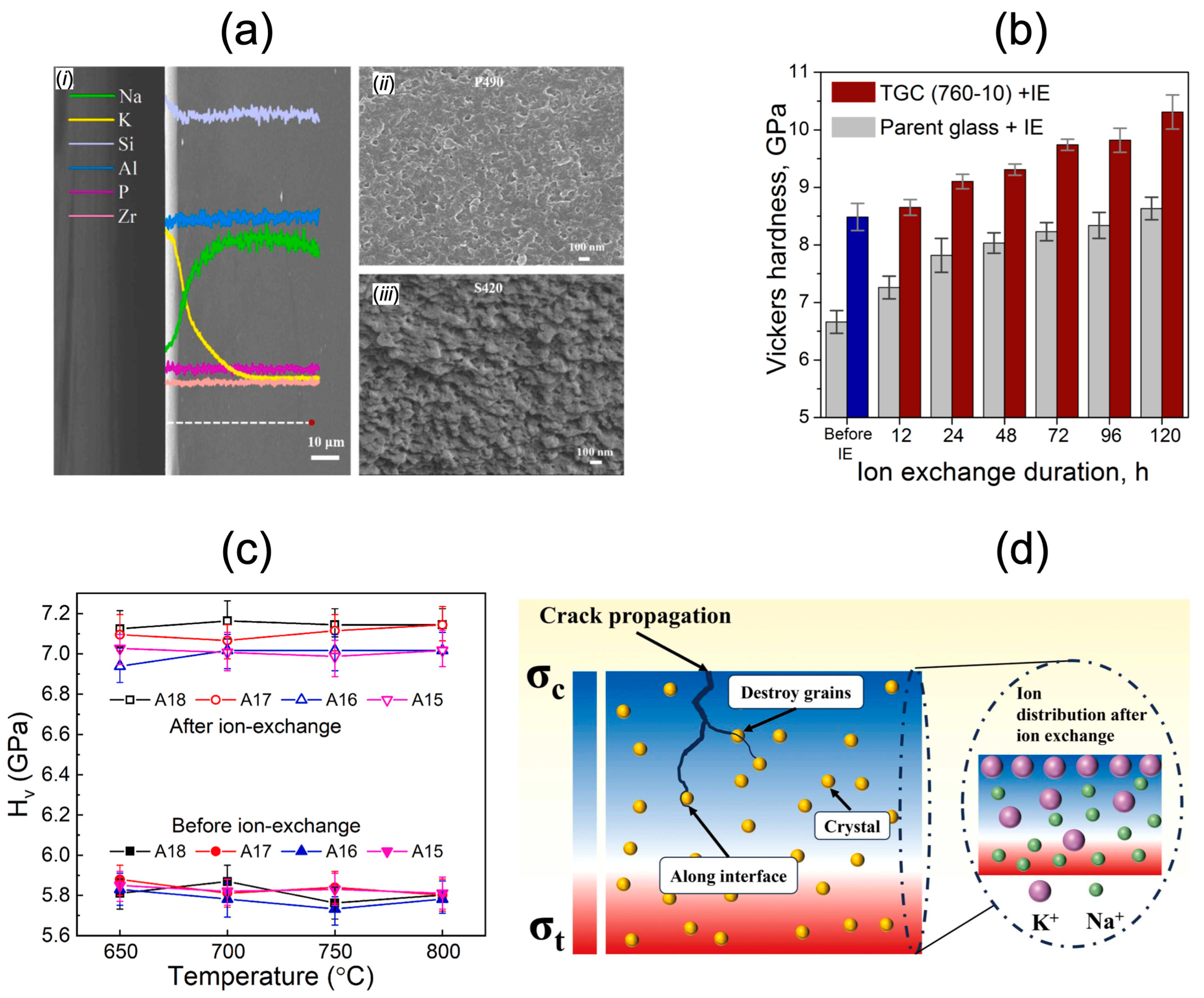
Chemical strengthening by ion exchange (IE) is the most commercially important technique for enhancing the surface strength of TGCs. Table 3 provides an overview of the IE conditions. In the standard process, a glass or glass-ceramic substrate is immersed in molten KNO3 at 380–480 °C for 2–16 h, during which K+ ions from the salt replace the smaller Na+ ions in the glass surface (Figure 2). The volumetric mismatch between the larger K+ and the vacated Na+ site generates a compressive stress (CS) layer extending to a characteristic depth known as the depth of layer (DOL). In the best TGC compositions, CS values of 400–900 MPa and DOL values of 15–60 μm have been reported [9,48,49,82,89].
Beall et al. provided a comprehensive overview of ion exchange in glass-ceramics and established that the crystalline fraction and the phase connectivity strongly influence the K+ diffusion kinetics: in glass-ceramics where the crystalline phase forms a percolating network, the effective diffusion coefficient is reduced and DOL is limited, but CS is correspondingly intensified [9]. Macrelli developed analytical models for the stress profile in ion-exchanged glasses and glass-ceramics and showed that the commonly used complementary-error-function approximation underestimates the near-surface stress by 10–20% in compositions with high crystalline fraction [90]. Li et al. further demonstrated that the Al2O3 content exerts a dual influence on ion-exchange behaviour in ZrO2-containing aluminosilicate glass-ceramics: increasing Al2O3 enhances the glass network connectivity and thereby raises CS, but simultaneously reduces DOL, necessitating a compositional compromise [91]. Zheng et al. investigated the strengthening of LAS glass-ceramics via a two-step ion exchange (first Na+-for-Li+, then K+-for-Na+), achieving a surface CS of 850 MPa and DOL of 55 μm, with a four-point bending strength of 950 MPa [89]. Tian et al. recently reported that ion exchange can promote phase transformation in certain LAS glass-ceramics—K+ ingress into the β-quartz_ss lattice destabilizes the metastable phase and drives its transformation to petalite, resulting in a remarkable flexural strength of 1200 MPa and an impact resistance superior to existing commercial cover glasses [82]. Mu et al. corroborated and extended these findings, showing that ion-exchange-induced microstructural modifications in LAS glass-ceramics include localized amorphization of the crystal–glass interface and a redistribution of residual stresses, both of which contribute to the observed flexural-strength gain [92]. Nunes et al. systematically characterized the mechanical behaviour of ion-exchanged alkali aluminosilicate glass-ceramics under biaxial and four-point bending, establishing that the Weibull modulus increases from ~5 to ~12 after IE, indicating a dramatic improvement in flaw-tolerance and reliability [93]. Earlier, Łączka et al. demonstrated IE strengthening of LAS glass-ceramics in a KNO3 salt bath and showed that even modest K+ penetration depths of 10–15 μm could double the flexural strength of ZERODUR-type compositions, providing a practical pathway for strengthening precision-optic substrates [94].
Figure 2. The effect of crystallization and IE on TGC. (a) Cross-sectional SEM image of a TGC after second-step IE in KNO3 molten salt (420 °C, 4 h), insets: (ai) line-scan elemental analysis (white dotted line), scale bar 10 μm, (aii,aiii) microstructure of TGC after the first-step and the second-step IE respectively, scale bar 100 nm (reprinted with permission from Ref. [82], Copyright 2026 Elsevier); (b) Evolution of the Vickers hardness during IE for the parent glass and the TGCs, blue bar is for TGC before IE (adapted from Ref. [62]); (c) Vickers hardness of the glass and TGCs before and after IE (reprinted with permission from Ref. [91], Copyright 2025 Elsevier); and (d) Mechanism of strength enhancement via crystallization and IE (reprinted with permission from Ref. [60], Copyright 2026 Elsevier).
Encyclopedia 06 00176 g002

4.4. Synergistic Nanocrystallization and Ion Exchange

The most promising strengthening paradigm in TGC design is the synergistic combination of nanocrystallization with subsequent ion exchange [2,9]. In this approach, the nanocrystalline dispersion provides intrinsic hardness and toughness enhancement, while the compressive surface layer from IE adds extrinsic bending and impact strength (Table 4). Veselov et al. [62] demonstrated this strategy in ZMAS glass-ceramics, achieving HV ≈10–10.5 GPa after a combined two-step heat treatment and KNO3 exchange. Wang et al. reported an analogous synergy in MAS systems, where ion exchange after spinel crystallization raised the Vickers hardness from 6.8 to 8.1 GPa [60].

5. Computational Design and Machine Learning

The design of TGCs has traditionally been guided by empirical intuition and combinatorial experimentation—an approach that becomes increasingly inefficient as compositional spaces expand from ternary to quinary or higher-order systems [2,5]. Over the past five years, computational methods ranging from atomistic molecular dynamics (MD) to data-driven machine learning (ML) have begun to transform TGC development by providing predictive capability at multiple length and time scales [6,88].

5.1. Molecular Dynamics Simulations

Classical and ab initio MD simulations have been applied to elucidate the atomic-scale mechanisms of nucleation, crystal growth, and fracture in glass-ceramics. Deng et al. performed large-scale MD simulations of Al2O3–SiO2-based glass-ceramics to probe fracture-toughness mechanisms at the nanoscale, revealing that crack deflection at the crystal–glass interfaces is the dominant toughening mechanism when crystal sizes are below 20 nm, while crack bridging becomes significant for larger crystallites [87]. Zhang et al. used MD to track the evolution of short- and medium-range order during LAS crystallization, identifying a cooperative rotation mechanism by which [SiO4] and [AlO4] tetrahedra rearrange to form the β-quartz s.s. lattice, with Li+ ions acting as catalysts for the rotation by weakening the surrounding Si–O–Al linkages [47].
A significant recent development is the use of machine-learning methods in atomistic studies of glass-ceramics [6,88]. Sun et al. applied a machine-learning-based computational framework to investigate the structure and fracture toughness of spodumene glass-ceramics, illustrating how data-driven atomistic models can connect local structure with mechanical response [88]. Claims about simulation size, accessible time scale, or quantitative agreement should nevertheless be reported only for the validated domain of a specific model.

5.2. Mesoscale and Continuum-Level Modelling

Bridging the gap between atomistic simulations and experimentally observable microstructures requires reduced-order approaches [6]. McKenzie et al. introduced an implicit glass model (IGM) that replaces the surrounding glass by a continuous medium so that computation can focus on nucleating clusters or heterogeneous sites. They applied the model to barium-silicate, lithium-silicate, and soda-lime-silicate systems and compared the resulting lithium-metasilicate microstructure with experiment [95].
Shepilov developed a model for anomalous light scattering in nanostructured glasses formed by simultaneous nucleation and diffusion-limited particle growth [30]. The framework explicitly addresses evolving particle size distributions and is therefore relevant to predicting optical losses during controlled crystallization. Experimental studies of ZrO2-rich transparent MAS glass-ceramics provide a complementary materials context for such scattering analyses [52].
Komatsu and Honma applied a complementary thermodynamic approach to the MgO/CaO–Al2O3–SiO2 system, combining Ostwald’s step rule with a composition-fluctuation model to predict the crystallization sequence (i.e., which metastable phases form first and in what order they transform to the stable assemblage) [29]. Their framework correctly predicted the observed sequence cordierite to spinel to sapphirine in MAS glasses and identified the compositional boundaries at which the sequence changes, providing a rational basis for selecting heat-treatment temperatures without extensive trial-and-error experimentation.

5.3. Machine Learning for Property Prediction and Composition Design

Machine-learning studies relevant to glass-ceramic design currently include prediction of crystalline phase identity [96], estimation of ion-exchange depth of layer [97], and prediction of optical properties in oxide-glass datasets using autoencoder-based representations [98]. Experimental mapping of crystallization and ion-exchange response provides an additional source of structured data for future models [99].
Zhu et al. developed a random-forest classifier trained on a dataset of 800+ glass-ceramic compositions from the literature and achieved 89% accuracy in predicting the dominant crystalline phase (e.g., β-quartz s.s. vs. β-spodumene vs. spinel vs. cordierite) from the oxide composition alone [96]. Feature-importance analysis via SHAP (SHapley Additive exPlanations) identified SiO2/Al2O3 ratio and the total modifier content as the two most influential predictors, consistent with the established understanding that these parameters govern the competition between framework- and modifier-rich crystalline phases. Guo et al. complemented this approach from the experimental side by systematically mapping the effect of ZrO2 crystallization on ion-exchange properties in aluminosilicate glasses, generating a dataset that directly supports ML model training for predicting ion-exchange response as a function of crystallinity [99].
Ghaffari, Eftekhari Yekta and Zakeri-Nasrabadi applied an ensemble voting regressor to predict the depth of layer (DOL) in ion-exchanged glasses and glass-ceramics, achieving an R2 of 0.88 on a held-out test set. Their SHAP analysis revealed that Na2O content and the exchange temperature are the dominant features, while the Al2O3/SiO2 ratio contributed a modest but statistically significant effect attributed to its influence on glass network connectivity [97]. These models offer practical utility for pre-screening candidate compositions before committing to experimental synthesis and ion-exchange trials.
An emerging frontier is inverse design: specifying desired optical, mechanical, and thermal properties and searching for candidate compositions that satisfy the constraints simultaneously. Recent studies provide forward models for individual phase, ion-exchange, or optical targets [96,97,98], but they do not yet demonstrate an end-to-end generative inverse-design workflow specifically for TGCs. Coupling validated forward models with uncertainty-aware optimization is therefore a prospective research direction rather than an established capability.
Despite their promise, ML approaches for glass-ceramics face a fundamental data limitation: the available datasets are small (typically 500–2000 entries), heterogeneous in experimental methodology, and often lack critical processing parameters such as nucleation temperature, hold time, and cooling rate [96,97]. Addressing this “small-data” challenge will require coordinated community efforts to standardize reporting of glass-ceramic processing conditions and to adopt FAIR (Findable, Accessible, Interoperable, Reusable) data principles in the field [98].
Reported ML performance must nevertheless be interpreted cautiously. Literature-derived datasets often contain near-duplicate compositions, correlated samples from the same study, and properties measured by non-equivalent protocols. Random train-test splits can therefore place closely related records in both subsets and overestimate generalization. More stringent validation should group data by publication, base-glass family, or compositional cluster and should include an external experimental dataset whenever possible. Standardized descriptors for melting history, nucleation and growth schedules, cooling rate, specimen thickness, and measurement method are as important as composition descriptors for models intended to predict TGC performance.
A second limitation is extrapolation. Most statistical models are reliable only within the compositional and processing domain represented by their training data, whereas inverse design deliberately searches near or beyond that domain. Predictions should therefore be accompanied by uncertainty estimates and an explicit applicability-domain analysis; high-uncertainty candidates should be treated as hypotheses rather than validated materials. The most credible workflow is an iterative closed loop in which model recommendations are synthesized and characterized experimentally, negative as well as positive results are returned to the dataset, and the model is recalibrated before the next design cycle [96,97,98].

6. Applications

The unique combination of transparency, hardness, toughness, and tailorable thermal expansion that TGCs offer has enabled a diverse range of commercial and emerging applications. This section surveys the four principal application domains.

6.1. Cover Glass for Electronic Devices

Transparent, strengthenable glass-ceramics are established candidates for protective covers in smartphones, tablets, and wearable devices. Corning describes Gorilla Glass Ceramic 2 as a transparent, strengthenable glass-ceramic in which crystals embedded in a glass matrix contribute crack deflection and ion exchange improves retained strength [7]. In Corning laboratory face-drop tests on a concrete-replicating surface, 0.6 mm Gorilla Glass Ceramic 2 specimens survived drops from up to 1.0 m, while competitive lithium aluminosilicate cover glasses typically failed at 0.5 m or less [7]. The precise phase assemblage and industrial strengthening schedule are proprietary and should not be inferred from public data.
Recent research illustrates several cover-material design routes. Guan et al. reported a dual-phase petalite/lithium-disilicate LAS glass-ceramic with 86.4% visible transmittance, 7.6 GPa Vickers hardness, and 1.03 MPa·m1⁄2 indentation fracture toughness; double ion exchange produced a 219 MPa surface compressive-stress layer [100]. Wang et al. demonstrated that crystallization and ion exchange can act synergistically in a transparent MAS glass-ceramic containing an alkali-free nanocrystalline phase [60]. Veselov et al. showed that sodium-modified ZnAl2O4-based glass-ceramics can combine optical clarity, high hardness, and ion-exchange strengthenability [62]. These studies support continued comparison of LAS, MAS, and zinc-containing systems under standardized optical and mechanical test protocols.

6.2. Transparent Armour

Transparent armour for military vehicles, aircraft canopies, and personal protection requires optical clarity, controlled areal density, and ballistic performance established under standardized test conditions [101]. AlON, sapphire, and transparent spinel have comparatively mature ballistic datasets, whereas TGCs offer a potentially scalable melt-forming route. Published cost comparisons are highly sensitive to panel size, finishing, laminate architecture, production volume, and qualification requirements; a universal cost advantage therefore cannot yet be assigned.
Hardness, elastic modulus, flexural strength, and laboratory impact resistance are useful screening indicators but do not by themselves establish ballistic equivalence. The high flexural strength and impact resistance reported for ion-exchanged petalite TGCs [82] demonstrate potential for damage-resistant transparent components. Multi-hit response has been modelled for laminated transparent-armour systems in general [102], but standardized V50, multi-hit, environmental-durability, and full-scale laminated-panel data specifically for TGC face sheets remain limited. Direct competitiveness with AlON or spinel armour should therefore be regarded as a prospective research objective rather than a generally demonstrated conclusion.

6.3. Precision Optics and Telescope Substrates

ZERODUR, the archetypal LAS glass-ceramic with near-zero CTE, remains the reference material for telescope mirror substrates and precision metrology stages. Authors reviewed more than forty years of ZERODUR’s application in ground-based and space telescopes, noting that blanks up to 8.6 m in diameter have been produced for the European Extremely Large Telescope (ELT) by Schott AG [4]. The critical material requirement is a CTE below ±0.02 × 10⁻⁶ K−1 over the operating temperature range (−30 to +30 °C), which necessitates extremely precise control of the β-quartz s.s. volume fraction and composition. Recent developments include ZERODUR variants for extreme-ultraviolet (EUV) lithography optics operating at 13.5 nm wavelength, where dimensional stability at the sub-angstrom level is required during high-power illumination [4,31]. Naumov et al. demonstrated that the CTE of transparent LAS glass-ceramics can be continuously tuned from −0.5 to +1.2 × 10⁻⁶ K−1 by a two-stage heat treatment that controls the β-quartz s.s. to β-spodumene transformation ratio, expanding the range of optical substrates addressable by a single base composition [83].

6.4. Photonic and Luminescent Applications

Transparent glass-ceramics have found growing use as hosts for optically active ions. Tran et al. reviewed sol–gel-derived transparent glass-ceramics for photonics—a parallel processing paradigm to the melt-quench–anneal route emphasized in this review—highlighting their potential as fibre-compatible gain media, frequency upconverters, and scintillators [103]. Molla et al. demonstrated that Co2+ and other transition-metal ions partition into the gahnite nanocrystals and can serve as optically active centres, enabling applications such as saturable absorption for Q-switching of near-infrared lasers [64]. Golubev et al. showed that Al2O3 additions (1.5–4.5 mol %) to gallium germanosilicate glasses lead to the formation of γ-Ga23xAlxO3 spinel solid-solution nanocrystals (~5–6 nm) with enhanced donor–acceptor pair luminescence intensity up to fivefold compared with Al-free glass-ceramics, without loss of transparency; the enhancement is attributed to increased nucleation density and narrower nanocrystal size distribution enabling more efficient UV-to-visible optical conversion [104]. The advantage of TGCs over single-crystal hosts is the combination of broadband emission (from the disordered glass environment) with enhanced luminescence efficiency (from the ordered crystal field within the nanocrystals), a duality that is unique to these composite materials.
An early study by Kishi, Tanabe, and co-workers demonstrated efficient infrared-to-visible up-conversion in Er3+/Yb3+-codoped CaF2 nanocrystals precipitated in a transparent glass-ceramic, illustrating the benefit of partitioning rare-earth ions into a low-phonon-energy fluoride phase [105].
A particularly active area is the development of rare-earth-doped transparent glass-ceramics for photonic applications. Oxyfluoride glass-ceramics, in which lanthanide ions (Er3+, Yb3+, Nd3+) partition into fluoride nanocrystals (e.g., CaF2, LaF3, LiYF4) embedded in an oxide glass matrix, have demonstrated efficient up-conversion luminescence, converting near-infrared excitation into visible emission for applications in biological imaging, anti-counterfeiting, and solar energy conversion [106,107]. Because the low-phonon-energy fluoride lattice suppresses non-radiative relaxation, luminescence quantum yields in these glass-ceramics can approach those of single-crystal fluorides while retaining the mechanical robustness and formability of the glass host [107]. Ce3+-doped garnet-type glass-ceramics have also attracted attention as wavelength converters for white-LED packaging, where the glass-ceramic architecture provides superior thermal stability compared with conventional organic phosphor-in-silicone encapsulants [103]. As device integration demands increasingly complex optical functionality, transparent glass-ceramics that combine structural integrity with tailored photonic response represent a compelling materials platform.
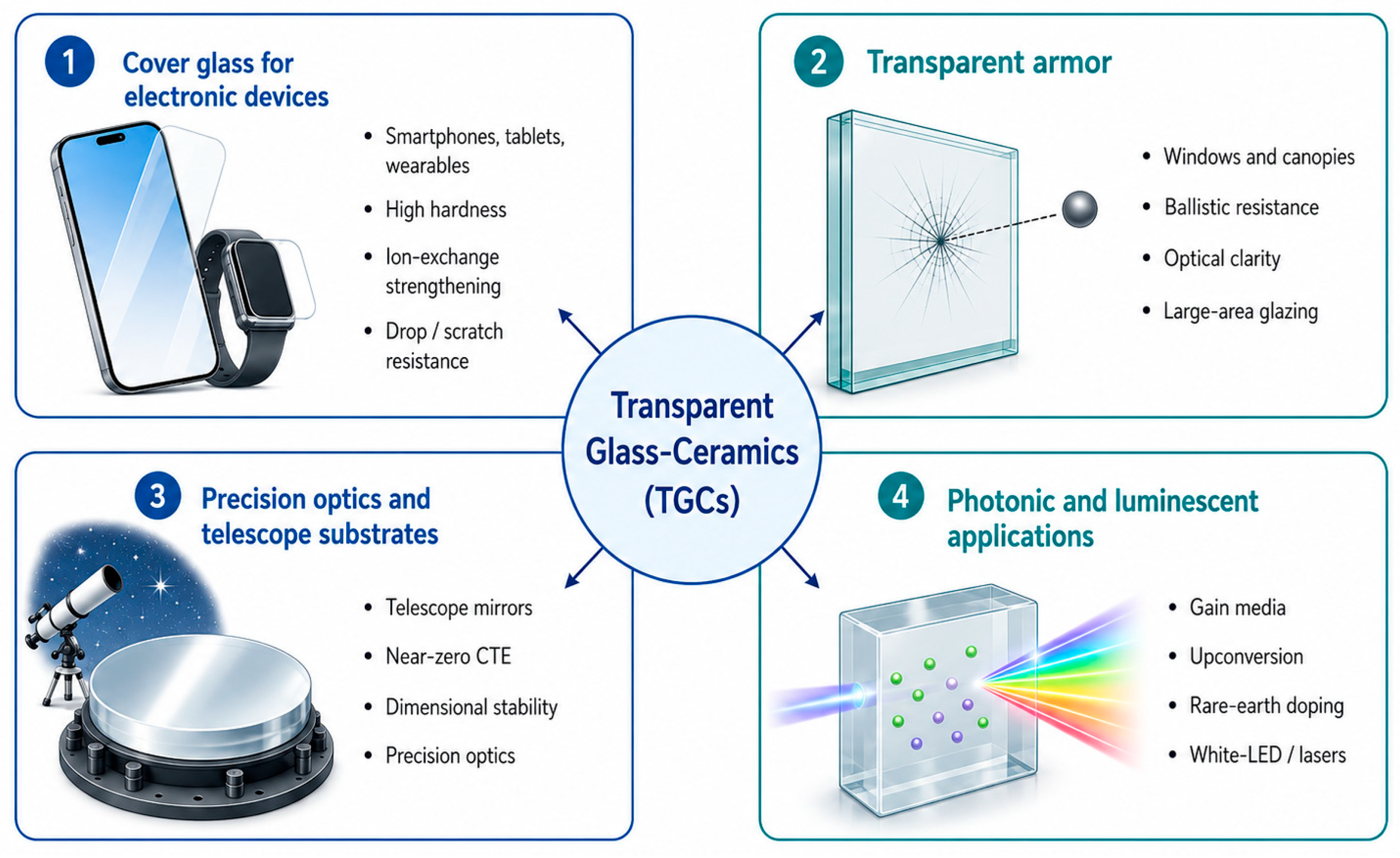
Figure 3 summarizes the key application domains of the TGCs.

7. Conclusions and Future Directions

TGCs have evolved from a laboratory curiosity into a technologically indispensable class of materials within a remarkably short period. This entry has surveyed the key aspects of TGC science and technology as it stands in 2026, and several overarching conclusions emerge.
First, the fundamental understanding of nucleation and crystallization in aluminosilicate glasses has matured to the point where transparency can be designed in, rather than obtained by trial and error. The interplay between liquid–liquid phase separation, heterogeneous nucleation by agents such as ZrO2 and SnO2, and controlled crystal growth now allows reproducible fabrication of TGCs with crystal sizes below 30 nm and transmittances exceeding 85% across the visible spectrum. Table 1 and the discussion in Section 2 illustrate that the choice and combination of nucleating agents remain the most critical compositional variables.
Second, the traditional dominance of LAS systems is being challenged by lithium-free alternatives. MAS glass-ceramics containing MgAl2O4 spinel, ZAS glass-ceramics with ZnAl2O4 gahnite, and even NAS carnegieite-based compositions now achieve mechanical properties competitive with—or superior to—those of established LAS formulations, while eliminating dependence on lithium, a strategically scarce element. The ZMAS quaternary system, in particular, offers a uniquely flexible compositional landscape for co-optimizing hardness, toughness, and ion-exchange response.
Third, the synergistic combination of nanocrystallization with ion-exchange strengthening has opened a new performance envelope. Flexural strengths and Vickers hardness values unattainable in any glass or conventional glass-ceramic have been demonstrated in ion-exchanged glass-ceramics. The recent discovery that ion exchange can itself promote phase transformations (Section 4.3) adds a further degree of design freedom.
Fourth, innovations in thermal processing protocols, including single-step heat treatments and gradient processing, combined with advanced microstructural characterization techniques such as atom probe tomography and anomalous small-angle X-ray scattering, have provided unprecedented insights into the nanoscale architecture of glass-ceramics and simplified their manufacture.
Fifth, computational tools—molecular dynamics with machine-learned potentials and machine-learning models for property prediction—are beginning to accelerate the traditionally slow cycle of composition design, melting, heat treatment, and characterization. While data scarcity remains a bottleneck, the integration of FAIR data practices and high-throughput experimentation is expected to accelerate progress substantially.
Several open challenges and future directions deserve emphasis:
  • Transitioning laboratory-scale TGC compositions to industrial production at float-glass volumes requires overcoming challenges related to melt homogeneity, nucleation uniformity over large areas, and the management of stress gradients during cooling and heat treatment.
  • Achieving damage tolerance in TGCs that can arrest cracks after initial ballistic impact remains an unresolved engineering challenge; architectures combining TGC faceplates with polymeric interlayers and ceramic backing are under active investigation.
  • As environmental regulations tighten, the development of TGC compositions based on abundant, low-toxicity raw materials—including recycled glass feedstocks—is an increasingly important yet largely unexplored research direction.
  • Closing the loop between ML-predicted compositions and automated robotic synthesis offers the prospect of reducing the typical 5–10-year development cycle for a new TGC product to 1–2 years.
  • The growing demand for rare-earth-doped luminescent hosts, wavelength converters for solid-state lighting, and nonlinear optical elements positions TGCs as versatile photonic platforms whose potential extends well beyond structural applications.
The convergence of advanced glass science, nano-engineering, and data-driven design positions transparent glass-ceramics at the frontier of materials innovation, with applications spanning consumer electronics, defence, aerospace, and photonics.

Author Contributions

Conceptualization, I.V. and G.S.; methodology, K.T. and D.V.; validation, K.T., D.V. and V.S.; writing—original draft preparation, G.S. and I.V.; writing—review and editing, G.S.; visualization, D.V. and K.T.; funding acquisition, V.S. All authors have read and agreed to the published version of the manuscript.

Funding

This work was supported by Grant of the Russian Science Foundation (RSF Project No. 25-43-01075).

Institutional Review Board Statement

Not applicable.

Informed Consent Statement

Not applicable.

Data Availability Statement

No new data were created or analyzed in this study. Data sharing is not applicable to this article.

Acknowledgments

During the preparation of this manuscript, the authors used ChatGPT Sol 5.6 for the purposes of the image generation (Figure 3 and Graphical Abstract) with the following prompts (i) “generate an image depicting applications of transparent glass-ceramics as cover glasses for mobile devices; transparent armor; precision optics; photonics”; (ii) “generate an image summarizing the core idea of the following text <…>”, where <…> consists of the abstract and conclusions. The authors have reviewed and edited the output and take full responsibility for the content of this publication.

Conflicts of Interest

The authors declare no conflicts of interest.

Abbreviations

The following abbreviations are used in this manuscript:
AlONAluminum oxynitride
APTAtom probe tomography
CSCompressive stress
CTECoefficient of thermal expansion
DFTDensity functional theory
DOLDepth of layer
DSCDifferential scanning calorimetry
DTADifferential thermal analysis
EUVExtreme ultraviolet
FAIRFindable, Accessible, Interoperable, and Reusable
HRTEMHigh-resolution transmission electron microscopy
IEIon exchange
IGMImplicit glass model
JMAKJohnson–Mehl–Avrami–Kolmogorov
LASLithium aluminosilicate
LEDLight-emitting diode
LLPSLiquid–liquid phase separation
MASMagnesium aluminosilicate
MDMolecular dynamics
MLMachine learning
MLIPMachine-learned interatomic potential
NIRNear-infrared
SAXSSmall-angle X-ray scattering
SEMScanning electron microscopy
SHAPSHapley Additive exPlanations
s.s.Solid solution
STEM-EDSScanning transmission electron microscopy with energy-dispersive X-ray spectroscopy
TEMTransmission electron microscopy
USAXSUltra-small-angle X-ray scattering
UVUltraviolet
XRDX-ray diffraction
YAGYttrium aluminum garnet
YASYttrium aluminosilicate
ZASZinc aluminosilicate
ZMASZinc-magnesium aluminosilicate

References

  1. Deubener, J.; Allix, M.; Davis, M.J.; Durán, A.; Höche, T.; Honma, T.; Komatsu, T.; Krüger, S.; Mitra, I.; Müller, R.; et al. Updated definition of glass-ceramics. J. Non-Cryst. Solids 2018, 501, 3–10. [Google Scholar] [CrossRef] [Scilit]
  2. Höland, W.; Beall, G.H.; Smith, C.M. Glass-ceramics: From ideas to products. J. Am. Ceram. Soc. 2025, 108, e20086. [Google Scholar] [CrossRef] [Scilit]
  3. Montazerian, M. Isaak Il’ich Kitaigorodskii and the evolution of glass-ceramics. Am. Ceram. Soc. Bull. 2024, 103, 36–38. [Google Scholar]
  4. Mitra, I. ZERODUR: A glass-ceramic material enabling optical technologies. Opt. Mater. Express. 2022, 12, 3563–3576. [Google Scholar] [CrossRef] [Scilit]
  5. Liu, X.; Zhou, J.; Zhou, S.; Yue, Y.; Qiu, J. Transparent glass-ceramics functionalized by dispersed crystals. Prog. Mater. Sci. 2018, 97, 38–96. [Google Scholar] [CrossRef] [Scilit]
  6. Montazerian, M.; Zanotto, E.D. Nucleation, Growth, and Crystallization in Oxide Glass-formers. A Current Perspective. Rev. Mineral. Geochem. 2022, 87, 405–429. [Google Scholar] [CrossRef] [Scilit]
  7. Corning® Gorilla® Glass Ceramic 2. Product Information Sheet; Corning Incorporated: Corning, NY, USA, 2025. [Google Scholar]
  8. Shakhgildyan, G.Y.; Xu, X.; Ojovan, M.I. Synergy in Polyphase Materials—Harnessing the Power of Glass and Ceramics. Materials 2026, 19, 478. [Google Scholar] [CrossRef] [Scilit] [PubMed]
  9. Beall, G.H.; Comte, M.; Dejneka, M.J.; Marques, P.; Pradeau, P.; Smith, C. Ion-Exchange in Glass-Ceramics. Front. Mater. 2016, 3, 41. [Google Scholar] [CrossRef] [Scilit]
  10. Seidel, S.; Dittmer, M.; Höland, W.; Rüssel, C. High-strength, translucent glass-ceramics in the system MgO-ZnO-Al2O3 -SiO2 -ZrO2. J. Eur. Ceram. Soc. 2017, 37, 2685–2694. [Google Scholar] [CrossRef] [Scilit]
  11. Tick, P.A.; Borrelli, N.F.; Reaney, I.M. The relationship between structure and transparency in glass-ceramic materials. Opt. Mater. 2000, 15, 81–91. [Google Scholar] [CrossRef] [Scilit]
  12. Kleebusch, E.; Patzig, C.; Krause, M.; Hu, Y.; Höche, T.; Rüssel, C. The titanium coordination state and its temporal evolution in Li2O–Al2O3–SiO2 (LAS) glasses with ZrO2 and TiO2 as nucleation agents—A XANES investigation. Ceram. Int. 2020, 46, 3498–3501. [Google Scholar] [CrossRef] [Scilit]
  13. Han, L.; Song, J.; Zhang, Q.; Luo, Z.; Lu, A. Crystallization, structure and characterization of MgO-Al2O3-SiO2-P2O5 transparent glass-ceramics with high crystallinity. J. Non-Cryst. Solids 2018, 481, 123–131. [Google Scholar] [CrossRef] [Scilit]
  14. Han, L.; Song, J.; Lin, C.; Liu, J.; Liu, T.; Zhang, Q.; Luo, Z.; Lu, A. Crystallization, structure and properties of MgO-Al2O3-SiO2 highly crystalline transparent glass-ceramics nucleated by multiple nucleating agents. J. Eur. Ceram. Soc. 2018, 38, 4533–4542. [Google Scholar] [CrossRef] [Scilit]
  15. Zhang, J.; Huang, J.; Yu, Y.; Zhang, Z.; Bai, H.; Huang, Y. Effect of substitution of ZrO2 by SnO2 on crystallization and properties of environment-friendly Li2O–Al2O3–SiO2 system (LAS) glass-ceramics. Ceram. Int. 2022, 48, 21355–21361. [Google Scholar] [CrossRef] [Scilit]
  16. Wu, J.; Lin, C.; Liu, J.; Han, L.; Gui, H.; Li, C.; Liu, T.; Lu, A. The effect of complex nucleating agent on the crystallization, phase formation and performances in lithium aluminum silicate (LAS) glasses. J. Non-Cryst. Solids 2019, 521, 119486. [Google Scholar] [CrossRef] [Scilit]
  17. Revelo, R.J.; Souza, M.L.; Pena, R.B.; Yoshida, S.; Zanotto, E.D. Early and advanced crystallization stages in lithia-alumina-silica glasses nucleated by ZrO2. Ceram. Int. 2025, 51, 30416–30428. [Google Scholar] [CrossRef] [Scilit]
  18. Aliyu, Z. Effect of Different Concentrations of Titanium Oxide (TiO2) Addition on the Crystallization Behaviour and Some Properties of Alkaline Earth Aluminosilicate Glass-Ceramics. Uniosun J. Eng. Environ. Sci. 2025, 3, 2. [Google Scholar] [CrossRef] [Scilit]
  19. Maltsev, S.; Dymshits, O.; Alekseeva, I.; Volokitina, A.; Tenevich, M.; Bachina, A.; Bogdanov, K.; Zapalova, S.; Shakhgildyan, G.; Zhilin, A. Glass-Ceramics of the Lithium Aluminosilicate System Nucleated by TiO2: The Role of Redox Conditions of Glass Melting in Phase Transformations and Properties. Materials 2025, 18, 785. [Google Scholar] [CrossRef] [Scilit] [PubMed]
  20. Liu, Y.; Ren, B.; Huang, X.; Jiang, H.; Dong, C.; Xiong, C.; Wang, T.; Wang, N.; Hao, H. Effect of nucleating agents on structure and crystallization behavior of high-aluminum glass-ceramics system. J. Eur. Ceram. Soc. 2024, 44, 116692. [Google Scholar] [CrossRef] [Scilit]
  21. Xu, W.; Tian, X.; Wang, J.; Li, L.; Han, J. Crystallization behavior and properties of ZnO–MgO–Al2O3–SiO2 transparent glass-ceramics with SnO2 and ZrO2 as nucleating agents. Ceram. Int. 2024, 50, 23150–23156. [Google Scholar] [CrossRef] [Scilit]
  22. Ji, C.; Li, L.; Gao, W.; Wang, J.; Han, J. Influence of Al2O3/SiO2 ratio in multicomponent LNAS glasses and glass-ceramics on the crystallization behavior, microstructure and mechanical performance. Ceram. Int. 2023, 49, 10652–10662. [Google Scholar] [CrossRef] [Scilit]
  23. He, D.; Ma, H.; Zhong, H. Effect of different nucleating agent ratios on the crystallization and properties of MAS glass ceramics. J. Eur. Ceram. Soc. 2021, 41, 342–350. [Google Scholar] [CrossRef] [Scilit]
  24. Deng, L.; Fu, Z.; Gao, L.; Li, H.; Du, Y.; Chen, H.; Zhao, M.; He, J.; Ma, Y. P2O5/ZrO2/TiO2 codoped transparent cordierite glass ceramics: Stability, crystallization and light transmittance. Opt. Mater. 2023, 138, 113661. [Google Scholar] [CrossRef] [Scilit]
  25. Venkateswaran, C.; Sreemoolanadhan, H.; Pant, B.; Sharma, S.; Chauhan, V.; Vaish, R. Processing Li2O-Al2O3-SiO2 (LAS) glass-ceramic with and without P2O5 through bulk and sintering route. J. Non-Cryst. Solids 2020, 550, 120289. [Google Scholar] [CrossRef] [Scilit]
  26. Huang, J.; Zhang, J.; Yu, Y.; Bai, H.; Zhang, Z.; Huang, Y. Transparent MgO-Al2O3-SiO2 glass-ceramics prepared with ZrO2 and SnO2 as nucleating agents. J. Non-Cryst. Solids 2022, 588, 121585. [Google Scholar] [CrossRef] [Scilit]
  27. Kaity, S.; Dutta, A.; Amir, M.; Molla, A.R. Ultra-strong petalite glass-ceramics: Crystallization kinetics, thermal, optical, and mechanical properties. J. Non-Cryst. Solids 2025, 660, 123539. [Google Scholar] [CrossRef] [Scilit]
  28. Zhang, X.; Wang, J.; Han, J. Crystallization kinetics, structural and mechanical properties of transparent lithium aluminosilicate glass-ceramics. J. Non-Cryst. Solids 2023, 603, 122113. [Google Scholar] [CrossRef] [Scilit]
  29. Komatsu, T.; Honma, T. A comprehensive approach to crystallization sequence in novel MgO/CaO-Al2O3-SiO2 glass-ceramics by Ostwald’s step rule and composition fluctuation model. Ceram. Int. 2023, 49, 13666–13676. [Google Scholar] [CrossRef] [Scilit]
  30. Shepilov, M. Anomalous light scattering in nanostructured glasses formed by simultaneous nucleation and diffusion-limited growth of particles: Modelling. J. Non-Cryst. Solids 2023, 600, 121958. [Google Scholar] [CrossRef] [Scilit]
  31. Kumar, A.; Chakrabarti, A.; Shekhawat, M.S.; Molla, A.R. Transparent ultra-low expansion lithium aluminosilicate glass-ceramics: Crystallization kinetics, structural and optical properties. Thermochim. Acta 2019, 676, 155–163. [Google Scholar] [CrossRef] [Scilit]
  32. Shakhgildyan, G.; Ojovan, M.I. Inhomogeneities in Glass: From Defects to Functional Nanostructures. Encyclopedia 2025, 5, 136. [Google Scholar] [CrossRef] [Scilit]
  33. Geng, K.; Guo, Y.; Liu, C. Microstructure and ion-exchange properties of transparent glass–ceramics containing Mg2SiO4 crystals. Int. J. Appl. Glass Sci. 2025, 16, e16693. [Google Scholar] [CrossRef] [Scilit]
  34. Wang, P.; Zhang, Z.; Yang, G.; Sun, M.; Li, X.; Wang, Z. The structure and physical properties of peraluminous Li2O-Al2O3-SiO2 transparent glass-ceramics free of nucleating agents. J. Non-Cryst. Solids 2025, 653, 123427. [Google Scholar] [CrossRef] [Scilit]
  35. Lin, X.; Liang, H.; Jiang, X.; Liu, T.; Zhou, Z.; Luo, Z.; Lu, A.; Jiang, Y. Preparation, structure, and property evolution of transparent germanate glass-ceramics based on a new strategy: One-step heat treatment around Tg. Ceram. Int. 2024, 50, 41692–41702. [Google Scholar] [CrossRef] [Scilit]
  36. Shakhgildyan, G.Y.; Alekseev, R.O.; Golubev, N.V.; Savinkov, V.I.; Naumov, A.S.; Presnyakova, N.N.; Sigaev, V.N. One-Step Crystallization of Gahnite Glass-Ceramics in a Wide Thermal Gradient. ChemEngineering 2023, 7, 37. [Google Scholar] [CrossRef] [Scilit]
  37. Cao, S.; Zhang, T.; Tian, X.; Luo, L.; Li, L.; Wang, J.; Han, J.; Yuan, B.; Li, S. The effect of ZrO2 on the structure, properties and crystallization behavior of transparent lithium disilicate based glass-ceramics. Ceram. Int. 2025, 51, 3383–3393. [Google Scholar] [CrossRef] [Scilit]
  38. Mitchell, A.L.; Perea, D.E.; Wirth, M.G.; Ryan, J.V.; Youngman, R.E.; Rezikyan, A.; Fahey, A.J.; Schreiber, D.K. Nanoscale microstructure and chemistry of transparent gahnite glass-ceramics revealed by atom probe tomography. Scr. Mater. 2021, 203, 114110. [Google Scholar] [CrossRef] [Scilit]
  39. Raghuwanshi, V.S.; Rüssel, C.; Hoell, A. Crystallization of ZrTiO4 Nanocrystals in Lithium-Alumino-Silicate Glass Ceramics: Anomalous Small-Angle X-ray Scattering Investigation. Cryst. Growth Des. 2014, 14, 2838–2845. [Google Scholar] [CrossRef] [Scilit]
  40. Sant’Ana Gallo, L.; Célarié, F.; Audebrand, N.; Martins Rodrigues, A.C.; Dutra Zanotto, E.; Rouxel, T. In situ crystallization and elastic properties of transparent MgO–Al2O3–SiO2 glass-ceramic. J. Am. Ceram. Soc. 2017, 100, 2166–2175. [Google Scholar] [CrossRef] [Scilit]
  41. Sigaev, V.N.; Naumov, A.S.; Lipat’ev, A.S.; Shakhgil’dyan, G.Y.; Lotarev, S.V.; Fedotov, S.S.; Karateev, I.A. Phase Transformations Under the Action of Femtosecond Pulses in ZnO–MgO–Al2O3–SiO2 Sitalls. Glass Ceram 2023, 80, 3–8. [Google Scholar] [CrossRef] [Scilit]
  42. Chen, M.; He, F.; Shi, J.; Xie, J.; Yang, H.; Wan, P. Low Li2O content study in Li2O-Al2O3-SiO2 glass-ceramics. J. Eur. Ceram. Soc. 2019, 39, 4988–4995. [Google Scholar] [CrossRef] [Scilit]
  43. Zhou, Z.; He, F.; Shi, M.; Xie, J.; Wan, P.; Cao, D.; Zhang, B. Influences of Al2O3 content on crystallization and physical properties of LAS glass-ceramics prepared from spodumene. J. Non-Cryst. Solids 2022, 576, 121256. [Google Scholar] [CrossRef] [Scilit]
  44. Hu, G.; Wu, Y.; Yang, J.; Qian, J.; Gong, F.; Zheng, Q.; Zhang, D.; Wang, M. Transparent aluminosilicate glass-ceramics containing ZrO2 nanocrystals: Role of Al2O3/Li2O in glass structure and mechanical properties. J. Alloys Compd. 2025, 1018, 179257. [Google Scholar] [CrossRef] [Scilit]
  45. Dymshits, O.; Volokitina, A.; Loiko, P.; Alekseeva, I.; Tsenter, M.; Zapalova, S.; Bogdanov, K.; Mateos, X.; Baranov, A.; Zhilin, A. Structure and optical properties of lithium aluminosilicate glass-ceramics containing Ho3+-doped and Ho3+/Yb3+ co-doped YNbO4 nanocrystals. Opt. Mater. 2026, 170, 117745. [Google Scholar] [CrossRef] [Scilit]
  46. Luo, Y.; Qu, C.; Mauro, J.C. High toughness transparent glass-ceramics with petalite and β-spodumene solid solution as two major crystal phases. J. Am. Ceram. Soc. 2022, 105, 6116–6127. [Google Scholar] [CrossRef] [Scilit]
  47. Zhang, Y.; McKenzie, M.E.; Yan, J.; Wang, F.; Liu, J.; Li, B.; Jiang, F.; Zhang, Q.; Fu, Q.; Deng, L.; et al. Crystal growth and structural evolution in Lithium aluminosilicate glass-ceramics from molecular dynamics simulations. Ceram. Int. 2025, 51, 27688–27698. [Google Scholar] [CrossRef] [Scilit]
  48. Zhang, T.; Zhang, Z.; Han, J.; Wang, J.; Liu, C.; Ruan, J. The structure and properties of chemical strengthened transparent lithium disilicate glass ceramics with various P2O5 contents. J. Non-Cryst. Solids 2022, 588, 121626. [Google Scholar] [CrossRef] [Scilit]
  49. Li, X.; Meng, M.; Li, D.; Wei, R.; He, L.; Zhang, S. Strengthening and toughening of a multi-component lithium disilicate glass-ceramic by ion-exchange. J. Eur. Ceram. Soc. 2020, 40, 4635–4646. [Google Scholar] [CrossRef] [Scilit]
  50. Li, M.; Xu, G.; Dong, J.; Liu, J.; Wang, F.; Zhu, H.; Liao, Q.; Liu, L. Effect of substituting Li2O with ZnO on the crystallization and properties of Li2O–Al2O3–SiO2 transparent glass ceramics. Ceram. Int. 2024, 50, 24521–24530. [Google Scholar] [CrossRef] [Scilit]
  51. Sant’Ana Gallo, L.; Célarié, F.; Bettini, J.; Rodrigues, A.C.M.; Rouxel, T.; Zanotto, E.D. Fracture toughness and hardness of transparent MgO–Al2O3–SiO2 glass-ceramics. Ceram. Int. 2022, 48, 9906–9917. [Google Scholar] [CrossRef] [Scilit]
  52. Lu, Y.; Xie, J.; Guo, Y.; Liu, C. Transparent magnesium aluminosilicate glass-ceramics with high content of ZrO2. J. Eur. Ceram. Soc. 2024, 44, 116721. [Google Scholar] [CrossRef] [Scilit]
  53. Hao, X.; Hu, X.; Luo, Z.; Liu, T.; Li, Z.; Wu, T.; Lu, A.; Tang, Y. Preparation and properties of transparent cordierite-based glass-ceramics with high crystallinity. Ceram. Int. 2015, 41, 14130–14136. [Google Scholar] [CrossRef] [Scilit]
  54. Bao, Z.; Wang, X.; Luo, W.; Wang, S.; Miao, L. A novel transparent glass-ceramic with the crystallization of Mg0.6Al1.2Si1.8O6 from MgO-Al2O3-SiO2 system without adding nucleating agents. Ceram. Int. 2025, 51, 6824–6834. [Google Scholar] [CrossRef] [Scilit]
  55. Gao, C.; Zhao, X.; Li, B. Influence of Y2O3 on microstructure, crystallization, and properties of MgO-Al2O3-SiO2 glass-ceramics. J. Non-Cryst. Solids 2021, 560, 120728. [Google Scholar] [CrossRef] [Scilit]
  56. Liu, Y.; Ren, B.; Yu, J.; Huang, W.; Gong, Z.; Wang, T.; Wang, N.; Huang, X.; Hao, H. Unveiling the role of nucleating agents in modulating the structure and performance of high-Al2O3 spinel glass-ceramic. J. Am. Ceram. Soc. 2026, 109, e70776. [Google Scholar] [CrossRef] [Scilit]
  57. Xu, G.; Li, M.; Dong, J.; Wang, F.; Liao, Q.; Liu, L.; Zhang, J. Effect of substituting Na2O with B2O3 on the crystallization and properties of MgO–Al2O3–SiO2 transparent glass-ceramics. Ceram. Int. 2024, 50, 2670–2679. [Google Scholar] [CrossRef] [Scilit]
  58. Lu, J.; Wang, H.; Li, Y.; Zhou, Y.; Jiang, W. Effect of metastable phase on the crystallization and mechanical properties of MgO-Al2O3-SiO2 glass-ceramics without nucleating agents. Ceram. Int. 2023, 49, 7737–7745. [Google Scholar] [CrossRef] [Scilit]
  59. Bukina, V.; Dymshits, O.; Alekseeva, I.; Volokitina, A.; Tenevich, M.; Bachina, A.; Zhilin, A. Iron-Doped Magnesium Aluminosilicate Transparent Glass-Ceramics. Mg-Petalite or Spinel Nanocrystals? Competing Mechanisms. Glass Eur. 2025, 3, 45–75. [Google Scholar] [CrossRef] [Scilit]
  60. Wang, Y.; Yang, D.; Zhao, H.; Liu, C.; He, F.; Tian, Y.; Zhao, Z. Synergistic enhancement of transparent magnesium–aluminium–silicon glass-ceramic containing alkali-free nanocrystalline phase: Effects of crystallisation and ion exchange. J. Eur. Ceram. Soc. 2026, 46, 118060. [Google Scholar] [CrossRef] [Scilit]
  61. Xu, G.; Zhang, J.; He, H.; Dong, J.; Liu, J.; Wang, F.; Liao, Q.; Li, M.; Gu, Y.; Liu, L.; et al. The effect of ion exchange on the properties of MgO-Al2O3-SiO2 transparent glass-ceramics. Ceram. Int. 2025, 51, 33245–33253. [Google Scholar] [CrossRef] [Scilit]
  62. Veselov, I.; Shakhgildyan, G.; Savinkov, V.; Golubev, N.; Tregubov, K.; Vinogradov, D.; Avakyan, L.; Ojovan, M.; Ghosh, M.; Sigaev, V. Ultra-Strong Transparent ZnAl2O4 Glass-Ceramics via Controlled Crystallization and Ion Exchange. Materials 2025, 18, 5230. [Google Scholar] [CrossRef] [Scilit] [PubMed]
  63. Wei, S.; Jiang, H.; Dong, C.; Xiong, C.; Hao, H.; Ma, Y.; Li, M. Effects of Al2O3 on crystallization, microstructure, and properties of zinc spinel glass–ceramics. Ceram. Int. 2025, 51, 23244–23254. [Google Scholar] [CrossRef] [Scilit]
  64. Molla, A.R.; Rodrigues, A.M.; Singh, S.P.; Lancelotti, R.F.; Zanotto, E.D.; Rodrigues, A.C.; Dousti, M.R.; de Camargo, A.S.S.; Magon, C.J.; Silva, A.A. Crystallization, mechanical, and optical properties of transparent, nanocrystalline gahnite glass-ceramics. J. Am. Ceram. Soc. 2017, 100, 1963–1975. [Google Scholar] [CrossRef] [Scilit]
  65. Shakhgil’dyan, G.Y.; Alekseev, R.O.; Naumov, A.S.; Zolikova, A.A.; Savinkov, V.I.; Sigaev, V.N. Investigation of the Structure and Influence of Ion-Exchange on the Microhardness of Low-Alkali, Transparent, Gahnite-Based Glass-Ceramics. Glass Ceram 2023, 80, 94–99. [Google Scholar] [CrossRef] [Scilit]
  66. Cormier, L.; Delbes, L.; Baptiste, B.; Montouillout, V. Vitrification, crystallization behavior and structure of zinc aluminosilicate glasses. J. Non-Cryst. Solids 2021, 555, 120609. [Google Scholar] [CrossRef] [Scilit]
  67. Kurajica, S.; Šipušić, J.; Zupancic, M.; Brautović, I.; Albrecht, M. ZnO-Al2O3-SiO2 glass ceramics: Influence of composition on crystal phases, crystallite size and appearance. J. Non-Cryst. Solids 2021, 553, 120481. [Google Scholar] [CrossRef] [Scilit]
  68. Yi, L.; Zhang, R.; Kong, F.; Chen, Z.; Liang, X.; Rao, Y.; Wang, D.; Jiang, H.; Li, C. Refinement of ZnAl2O4 crystal in ZnO–Al2O3–SiO2 glass-ceramics by application of thermoelectric coupling field. Ceram. Int. 2022, 48, 14618–14625. [Google Scholar] [CrossRef] [Scilit]
  69. Guo, Y.; Lu, Y.; Liu, C.; Wang, J.; Han, J.; Ruan, J. Effect of ZnAl2O4 crystallization on ion-exchange properties in aluminosilicate glass. J. Alloys Compd. 2021, 851, 156891. [Google Scholar] [CrossRef] [Scilit]
  70. Li, W.; Xiang, W.; Li, C.; Wang, J.; Li, L.; Han, J. Influence of pre-heating treatment on the crystallization and ion-exchange behavior of MgO-Al2O3-SiO2 glass-ceramics. Ceram. Int. 2024, 50, 42933–42938. [Google Scholar] [CrossRef] [Scilit]
  71. Zheng, X.; Yan, Z.; Zhang, Z.; Ono, M.; Zhu, J.; Wang, L.; Ding, L. Transparent glass-ceramics with high hardness and fracture toughness. J. Am. Ceram. Soc. 2026, 109, e70562. [Google Scholar] [CrossRef] [Scilit]
  72. Veselov, I.A.; Naumov, A.S.; Savinkov, V.I.; Fedotov, S.S.; Alekseev, R.O.; Ignatieva, E.S.; Shakhgildyan, G.Y.; Sigaev, V.N. Ion Exchange Strengthening of Glasses of the ZnO–MgO–Al2O3–SiO2 Glass-Ceramic-Forming System with an Increased Content of Na2O. Glass Ceram 2024, 81, 11–16. [Google Scholar] [CrossRef] [Scilit]
  73. Rodrigues, L.R.; dos Santos, G.G.; Ramírez Acosta, M.H.; Koike, A.; Akiba, S.; Sawamura, S.; Yoshida, S.; Mastelaro, V.R.; Nascimento, O.R.; Zanotto, E.D. Balancing Color and Hardness in ZnO–Al2O3–SiO2 Glass-Ceramics by Tailoring the ZrO2/TiO2 Nucleating Agents Ratio. Cryst. Growth Des. 2024, 24, 9914–9924. [Google Scholar] [CrossRef] [Scilit]
  74. Shakhgildyan, G.; Durymanov, V.; Ziyatdinova, M.; Atroshchenko, G.; Golubev, N.; Trifonov, A.; Chereuta, O.; Avakyan, L.; Bugaev, L.; Sigaev, V. Effect of Gold Nanoparticles on the Crystallization and Optical Properties of Glass in ZnO-MgO-Al2O3-SiO2 System. Crystals 2022, 12, 287. [Google Scholar] [CrossRef] [Scilit]
  75. She, W.; Xu, W.; Yang, T.; Cao, S.; Wang, J.; Han, J. Microstructure and crystallization behavior of Na2O-Al2O3-SiO2 glass-ceramics with MgO additions. Ceram. Int. 2023, 49, 22644–22653. [Google Scholar] [CrossRef] [Scilit]
  76. Rao, Y.; Zhang, X.; Wang, M.; Xu, Y.; Lu, P. Novel nanostructured transparent Na2O–Al2O3–SiO2 carnegieite-based glass ceramics with high crystallinity. J. Eur. Ceram. Soc. 2025, 45, 116816. [Google Scholar] [CrossRef] [Scilit]
  77. Li, M.; Xu, G.; Liu, J.; Dong, J.; Wang, F.; Zhu, H.; Liao, Q.; Liu, L. The preparation of transparent Cristobalite glass ceramics by substituting Li2O with MgO. J. Non-Cryst. Solids 2025, 653, 123423. [Google Scholar] [CrossRef] [Scilit]
  78. Sun, D.; Zhang, Q.; Liu, P.; Jensen, L.R.; Wang, D.; Smedskjaer, M.M. Balancing fracture toughness and transparency in barium titanosilicate glass-ceramics. Ceram. Int. 2023, 49, 17479–17487. [Google Scholar] [CrossRef] [Scilit]
  79. Zheng, W.; Liu, G.; Zhang, M.; Yuan, J.; Tian, P. Effect of BaO on the structure, crystallization and mechanical properties of Y2O3-Al2O3-SiO2 glass-ceramics. Ceram. Int. 2025, 51, 20954–20963. [Google Scholar] [CrossRef] [Scilit]
  80. Bao, Z.; Wang, S.; Miao, L.; Xu, Y.; Cheng, Z.; Wang, X. Preparation, properties and formation mechanism of transparent anorthite-based glass-ceramic glaze with high hardness. Ceram. Int. 2024, 50, 26182–26192. [Google Scholar] [CrossRef] [Scilit]
  81. Ma, Z.; Gao, Y.; Xu, W.; Bai, L.; Zhang, Y.; Xu, S.; Zhang, G.; Li, J. High-entropy transparent (Eu0.2Gd0.2Y0.2Yb0.2Lu0.2)3Al5O12-based nanoceramics elaborated from full glass crystallization. J. Am. Ceram. Soc. 2025, 109, e70497. [Google Scholar] [CrossRef] [Scilit]
  82. Tian, X.; Chen, Z.; Mu, Y.; Ji, C.; Li, L.; Wu, L.; Qiu, J.; Wang, J.; Han, J. Promotion of phase transformation on ion-exchange: Transparent glass-ceramics with ultra-high flexural strength and impact resistance. J. Eur. Ceram. Soc. 2026, 46, 117885. [Google Scholar] [CrossRef] [Scilit]
  83. Naumov, A.S.; Shakhgildyan, G.Y.; Golubev, N.V.; Lipatiev, A.S.; Fedotov, S.S.; Alekseev, R.O.; Ingat’eva, E.S.; Savinkov, V.I.; Sigaev, V.N. Tuning the Coefficient of Thermal Expansion of Transparent Lithium Aluminosilicate Glass-Ceramics by a Two-Stage Heat Treatment. Ceramics 2023, 7, 1–14. [Google Scholar] [CrossRef] [Scilit]
  84. Wang, S.; Guo, Y.; Lu, Y.; Liu, C.; Deng, Z.; Han, N.; Cui, J. Microstructure and ion-exchange properties of transparent glass-ceramics containing Zn2TiO4/α-Zn2SiO4 nanocrystals. J. Eur. Ceram. Soc. 2022, 42, 3595–3602. [Google Scholar] [CrossRef] [Scilit]
  85. Ren, B.; Liu, Y.; Yu, J.; Huang, W.; Gong, Z.; Jiang, H.; Wang, T.; Wang, N.; Huang, X.; Hao, H. Balancing hardness and transparency in high-alumina glass–ceramics by B2O3 addition. Ceram. Int. 2025, 51, 57874–57885. [Google Scholar] [CrossRef] [Scilit]
  86. Liu, Y.; Ren, B.; Yu, J.; Huang, X.; Jiang, H.; Dong, C.; Xiong, C.; Wang, T.; Wang, N.; Zhou, L.; et al. Enhancing hardness and transmittance of high-aluminum glass-ceramics through nucleating agent content regulation. J. Alloys Compd. 2025, 1021, 179656. [Google Scholar] [CrossRef] [Scilit]
  87. Deng, B.; Luo, J.; Harris, J.T.; Smith, C.M.; McKenzie, M.E. Molecular dynamics simulations on fracture toughness of Al2O3-SiO2 glass-ceramics. Scr. Mater. 2019, 162, 277–280. [Google Scholar] [CrossRef] [Scilit]
  88. Sun, D.; Shi, M.; Ge, X.; Cao, F.; Jensen, L.R.; Ding, J.; Zhao, J.; Du, T.; Smedskjaer, M.M. Show more. Investigating the structure and fracture toughness of spodumene glass-ceramics using machine learning. Ceram. Int. 2025, 51, 47563–47576. [Google Scholar] [CrossRef] [Scilit]
  89. Zheng, W.; Gao, Z.; Huang, M.; Zhang, H.; Yuan, J.; Tian, P.; Peng, Z.; Du, X. Chemical strengthening of lithium aluminosilicate glass-ceramic with different crystallinity. J. Non-Cryst. Solids 2022, 598, 121940. [Google Scholar] [CrossRef] [Scilit]
  90. Macrelli, G. Chemically strengthened glass by ion exchange: Strength evaluation. Int. J. Appl. Glass Sci. 2018, 9, 156–166. [Google Scholar] [CrossRef] [Scilit]
  91. Li, H.; Guo, Y.; Liu, C. Effects of Al2O3 content on ZrO2 crystallization and ion-exchange behavior in aluminosilicate glass-ceramics. Ceram. Int. 2025, 51, 34599–34607. [Google Scholar] [CrossRef] [Scilit]
  92. Mu, Y.; Qiu, J.; Wu, L.; Tian, X.; Wang, J.; Li, L.; Han, J. Ion-exchange induced mechanical properties enhancement and microstructural modifications of transparent lithium aluminosilicate glass-ceramics. Ceram. Int. 2024, 50, 14878–14883. [Google Scholar] [CrossRef] [Scilit]
  93. Nunes, B.M.F.; Dinis, A.; Fernandes, J.C.; Almeida, R.M.; Santos, L.F. Mechanical Behavior of Ion-Exchanged Alkali Aluminosilicate Glass Ceramics. Crystals 2024, 15, 16. [Google Scholar] [CrossRef] [Scilit]
  94. Łączka, K.; Cholewa-Kowalska, K.; Środa, M.; Rysz, J.; Marzec, M.M.; Łączka, M. Glass–ceramics of LAS (Li2O–Al2O3–SiO2) system enhanced by ion-exchange in KNO3 salt bath. J. Non-Cryst. Solids 2015, 428, 90–97. [Google Scholar] [CrossRef] [Scilit]
  95. McKenzie, M.E.; Goyal, S.; Loeffler, T.; Cai, L.; Dutta, I.; Baker, D.E.; Mauro, J.C. Implicit glass model for simulation of crystal nucleation for glass-ceramics. npj Comput. Mater. 2018, 4, 59. [Google Scholar] [CrossRef] [Scilit]
  96. Zhu, J.; Sun, G.; Ding, L.; Wang, L. Advancing the prediction of crystalline phases in glass-ceramics via machine learning. J. Non-Cryst. Solids 2024, 646, 123251. [Google Scholar] [CrossRef] [Scilit]
  97. Banapour Ghaffari, O.; Eftekhari Yekta, B.; Zakeri-Nasrabadi, M. Estimating “depth of layer” (DOL) in ion-exchanged glasses using explainable machine learning. Materialia 2024, 33, 102027. [Google Scholar] [CrossRef] [Scilit]
  98. Liu, H.; Su, Y. Prediction of optical properties of oxide glass combined with autoencoder and machine learning. J. Non-Cryst. Solids 2024, 645, 123166. [Google Scholar] [CrossRef] [Scilit]
  99. Guo, Y.; Liu, C.; Wang, J.; Ruan, J.; Li, X.; Han, J.; Xie, J. Effect of ZrO2 crystallization on ion exchange properties in aluminosilicate glass. J. Eur. Ceram. Soc. 2020, 40, 2179–2184. [Google Scholar] [CrossRef] [Scilit]
  100. Guan, B.; Liu, S.; Liu, J.; Zheng, X.; Shan, X.; Ji, Y.; Qin, Z.; Zhu, J.; Zheng, Q.; Wang, L.; et al. Phase evolution and mechanical properties in Li2O–Al2O3–SiO2 glass-ceramics: Influence of heat treatment parameters. J. Am. Ceram. Soc. 2026, 109, e70364. [Google Scholar] [CrossRef] [Scilit]
  101. Benitez, T.; Gómez, S.Y.; de Oliveira, A.P.N.; Travitzky, N.; Hotza, D. Transparent ceramic and glass-ceramic materials for armor applications. Ceram. Int. 2017, 43, 13031–13046. [Google Scholar] [CrossRef] [Scilit]
  102. Grujicic, M.; Pandurangan, B.; Coutris, N. A Computational Investigation of the Multi-Hit Ballistic-Protection Performance of Laminated Transparent-Armor Systems. J. Mater. Eng. Perform. 2012, 21, 837–848. [Google Scholar] [CrossRef] [Scilit]
  103. Lam Tran, T.N.; Szczurek, A.; Carlotto, A.; Varas, S.; Righini, G.C.; Ferrari, M.; Krzak, J.; Lukowiak, A.; Chiaseraet, A. Sol-gel-derived transparent glass-ceramics for photonics. Opt. Mater. 2022, 130, 112577. [Google Scholar] [CrossRef] [Scilit]
  104. Golubev, N.V.; Ignat’eva, E.S.; Lipatiev, A.S.; Ziaytdinova, M.Z.; Lapushkin, G.I.; Sigaev, V.N.; Poliakov, M.V.; Paleari, A.; Lorenzi, R. Effects of Al2O3 addition on microstructure and luminescence of transparent germanosilicate glass-ceramics with incorporated spinel Ga-oxide nanocrystals. Ceram. Int. 2023, 49, 1657–1666. [Google Scholar] [CrossRef] [Scilit]
  105. Kishi, Y.; Tanabe, S.; Tochino, S.; Pezzotti, G. Fabrication and efficient infrared-to-visible upconversion in transparent glass ceramics of Er-Yb co-doped CaF2 nanocrystals. J. Am. Ceram. Soc. 2005, 88, 3423–3426. [Google Scholar] [CrossRef] [Scilit]
  106. Truong, N.; Sedano, M.; Durán, A.; Balda, R.; Pascual, M.; Klement, R. Er/Yb co-doped LiYF4 transparent oxyfluoride glass-ceramics with up-conversion optical properties. Ceram. Int. 2023, 49, 41201–41209. [Google Scholar] [CrossRef] [Scilit]
  107. Feng, L.; Lai, B.; Wang, J.; Du, G.; Su, Q. Spectroscopic properties of Er3+ in a oxyfluoride glass and upconversion and temperature sensor behaviour of Er3+/Yb3+-codoped oxyfluoride glass. J. Lumin. 2010, 130, 2418–2423. [Google Scholar] [CrossRef] [Scilit]
Figure 1. Overview of the microstructure of different transparent glass-ceramic systems: (a,b) TEM images of LAS glass-ceramics (adapted from Refs. [4,83]); (c,d) TEM images of MAS glass-ceramics, insets: (ci) HR-TEM image of the precipitated crystals (scale bar 10 nm); (cii,ciii) lattice fringes with the corresponding d-spacings 4.67Å and 2.89Å; (di) HR-TEM image of the precipitated crystals (scale bar 5 nm) (reprinted with permission from Ref. [52], Copyright 2024 Elsevier, [53], Copyright 2015 Elsevier); (e,f) TEM images of ZAS glass-ceramics, insets: (ei) HR-TEM image of the precipitated crystals (scale bar 5 nm) with the corresponding d-spacings 6.97Å and 2.55Å; (fi) HR-TEM image of the precipitated crystals (scale bar 5 nm) with the corresponding d-spacing 2.84Å (reprinted with permission from Ref. [69], Copyright 2021 Elsevier, [84], Copyright 2021 Elsevier); (g) TEM image of an NAS glass-ceramic, inset: (gi) corresponding selected-area electron diffraction patterns (reprinted with permission from Ref. [76], Copyright 2025 Elsevier); and (h) TEM image of a yttrium aluminosilicate (YAS) glass-ceramic (reprinted with permission from Ref. [79], Copyright 2025 Elsevier).
Encyclopedia 06 00176 g001
Figure 3. Main application domains of the TGCs.
Encyclopedia 06 00176 g003
Table 1. Principal nucleating agents used in transparent glass-ceramics.
Nucleating AgentTypical Loading (mol %)MechanismTarget SystemsEffect on TransparencyKey References
ZrO22–8Heterogeneous nucleation; ZrO2 clusters template silicate growthLAS, ZAS, NASExcellent (colourless)[15,17,21]
TiO22–6LLPS promotion; anatase/rutile templatingLAS, MASModerate (amber tint)[10,14,22]
SnO21–4Heterogeneous nucleation; single oxidation stateMAS, ZAS, ZMASExcellent (colourless)[15,20]
P2O51–4LLPS induction; synergistic with ZrO2LAS, MASGood[23,24,25]
ZrO2 + TiO23 + 2Combined epitaxy + LLPSLASGood (slight tint possible)[16,22]
ZrO2 + SnO23 + 2Combined epitaxy, colourlessZAS, MASExcellent[20,26]
Table 2. Compositional overview of transparent glass-ceramic systems.
SystemKey Oxides (mol %)Primary Crystal PhasencrystalCTE (×10−6 K−1)Key ApplicationsRef.
LASLi2O 3–5, Al2O3 20–25, SiO2 55–70β-quartz s.s.1.53−1 to −3ZERODUR, cooktops[4,31,44]
LASLi2O 5–10, Al2O3 15–20, SiO2 60–70Petalite/β-spodumene1.50–1.510.5–1.5Cover glass[27,46,82]
LASLi2O 10–15, SiO2 65–75Li2Si2O5 (LS2)1.558–10Dental, cover glass[37,48,49]
MASMgO 10–20, Al2O3 15–25, SiO2 50–65MgAl2O4 spinel1.723–4Cover glass[13,14,40,51,60]
MASMgO 8–15, Al2O3 20–30, SiO2 50–60Cordierite1.52–1.541.5Thermal substrates[23,24,53]
ZASZnO 15–25, Al2O3 15–25, SiO2 50–60ZnAl2O4 gahnite1.724–5Cover glass, optics[62,63,64,65,66]
ZMASZnO + MgO 15–25, Al2O3 15–25, SiO2 50–60(Zn,Mg)Al2O41.65–1.723–5Cover glass[21,41,62,71]
NASNa2O 10–15, Al2O3 20–25, SiO2 55–65Carnegieite (NaAlSiO4)1.513–4Cover glass (emerging)[75,76]
Table 3. Ion-exchange conditions and strengthening results for representative TGC compositions.
SystemCrystal PhaseIE SaltT (°C)Time (h)CS (MPa)DOL (μm)Ref.
LASLiAlSiO4NaNO3 + KNO34904557111[82]
LASpetaliteNaNO34506318167[89]
LASLi2Si2O5KNO34106250102[48]
LASLi2Si2O5NaNO3 + KNO338564[49]
MASMgAl2O4 spinelKNO36104[60]
MASMgAl2O4 spinelKNO3450516996[61]
ZASZnAl2O4 gahniteKNO34208550[65]
ZMAS(Zn,Mg)Al2O4KNO34308600[62]
Table 4. Representative mechanical properties of transparent glass-ceramics from major systems.
SystemCrystal PhaseHV (GPa)KIC (MPa·m0.5)σf (MPa)T (%) @ 550 nmRef.
LASLixAlxSi1−xO28.071.3785[28]
LASPetalite + β-spodumene7.161.575085[27,46,82]
LASLi2Si2O56.672.065080[37,48,49]
MASMgAl2O4 spinel7.351.462082[40,51,60]
MASCordierite8.180[53]
ZASZnAl2O4 gahnite8.041.250084[62,63,64,65]
ZMAS(Zn,Mg)Al2O48.531.375080[21,62,71]
NASCarnegieite7.1586[76]
LAS (IE)Petalite (K+ exchanged)7.651.8120082[82,89]
Disclaimer/Publisher’s Note: The statements, opinions and data contained in all publications are solely those of the individual author(s) and contributor(s) and not of MDPI and/or the editor(s). MDPI and/or the editor(s) disclaim responsibility for any injury to people or property resulting from any ideas, methods, instructions or products referred to in the content.