
Review

The New Era of Curative Therapies for Sickle Cell Disease: A Comprehensive Review of Allogeneic Transplantation and Autologous Gene Therapy

by
Ahmed Hashim Azeez
1,*,
Harshitha Vallabhaneni
2,
Adhith Theyver
3,
Sreesha Phani Durga Rithika Kodamanchili
2,
Taha Kassim Dohadwala
4,
Vraj JigarKumar Rangrej
5,
Yan Leyfman
6 and
Chandler Park
7
1
Department of Medicine, Tbilisi State Medical University, Tbilisi 0186, Georgia
2
Apollo Institute of Medical Sciences and Research, Hyderabad 517001, India
3
West Ranch High School, Stevenson Ranch, CA 91381, USA
4
Department of Medicine, David Tvildiani Medical University, Tbilisi 0159, Georgia
5
Department of Medicine, GMERS Medical College Gotri, Vadodara 390021, India
6
NewYork Presbyterian Hospital, Brooklyn, NY 11215, USA
7
Norton Cancer Institute, Louisville, KY 40202, USA
*
Author to whom correspondence should be addressed.
Encyclopedia 2026, 6(6), 131; https://doi.org/10.3390/encyclopedia6060131
Submission received: 6 April 2026 / Revised: 1 June 2026 / Accepted: 4 June 2026 / Published: 12 June 2026
(This article belongs to the Section Medicine & Pharmacology)

Abstract

Sickle Cell Disease (SCD) is a pervasive monogenic disorder characterized by chronic hemolytic anemia, unpredictable vaso-occlusive crises, and progressive multi-organ damage, representing a significant global health burden. Driven by a point mutation in the β-globin gene, the resulting abnormal Hemoglobin S (HbS) polymerizes under deoxygenated conditions, leading to erythrocyte sickling and systemic endothelial dysfunction. While supportive therapies such as hydroxyurea and transfusions manage symptoms, the mandate for definitive curative therapies is urgent. Historically, allogeneic hematopoietic stem cell transplantation (HSCT) utilizing matched sibling donors (MSD) has been the sole curative option, offering high survival rates but constrained by limited donor availability and the risk of graft-versus-host disease (GVHD). Consequently, alternative donor sources, including matched unrelated donors, umbilical cord blood, and haploidentical donors, have expanded patient access, particularly with the integration of post-transplant cyclophosphamide (PTCy) to mitigate alloreactivity. Concurrently, the advent of autologous gene therapy, encompassing lentiviral gene addition (Lyfgenia) and CRISPR-Cas9 gene editing (Casgevy) offers a revolutionary donor-independent approach that eliminates GVHD risk. Lyfgenia employs a lentiviral vector to introduce an anti-sickling βT87Q hemoglobin variant into autologous hematopoietic stem cells, while Casgevy employs CRISPR-Cas9 to disrupt the erythroid-specific enhancer of the BCL11A transcription factor, derepressing γ-globin expression and elevating fetal hemoglobin. This review synthesizes the pathophysiological mechanisms of SCD, evaluates the clinical outcomes and limitations of both allogeneic HSCT and autologous gene therapies, and outlines the clinical decision-making paradigms and future innovations required to achieve equitable global access to these transformative treatments.

1. Introduction

This review advances a central argument: that the field of curative therapy for Sickle Cell Disease has reached an inflection point at which the primary barrier to progress is no longer biological but structural [1,2]. The science of curing SCD is, by any measure, mature: two autologous gene therapies (Casgevy and Lyfgenia) received FDA approval in December 2023 [1,3,4], haploidentical transplantation with post-transplant cyclophosphamide achieves outcomes comparable to matched sibling transplant [1,5,6], and myeloablative conditioning protocols are well established [5,7,8]. What has not kept pace is the architecture of delivery. Curative therapies remain concentrated in high-income, high-infrastructure settings [1,9], while approximately 75% of global SCD births occur in sub-Saharan Africa [2,9,10], where gene therapy remains unavailable and transplant infrastructure is limited to seven countries [1,11], serving a population of over 300 million affected individuals [12]. This review therefore evaluates allogeneic hematopoietic stem cell transplantation (HSCT) and autologous gene therapy not only on their clinical efficacy but on their scalability, logistical requirements, and fitness for deployment across diverse healthcare environments, a lens that distinguishes this synthesis from descriptive overviews of existing literature.
Sickle Cell Disease (SCD) represents a group of inherited hemoglobinopathies that constitute a profound global health burden, characterized by chronic hemolytic anemia, unpredictable vaso-occlusive crises, and progressive multi-organ damage [2,13,14]. As a monogenic disorder with complex systemic manifestations, SCD remains a primary focus of hematologic research due to its significant morbidity and mortality. At its molecular core, SCD is caused by a highly specific single-point mutation in the β-globin gene (HBB) located on chromosome 11, where the nucleotide adenine is substituted by thymine (GAG → GTG) [13,14]. This genetic alteration results in the replacement of the hydrophilic amino acid glutamic acid with the hydrophobic amino acid valine at the sixth position of the β-globin protein chain, leading to the production of abnormal Hemoglobin S (HbS) [13,14].
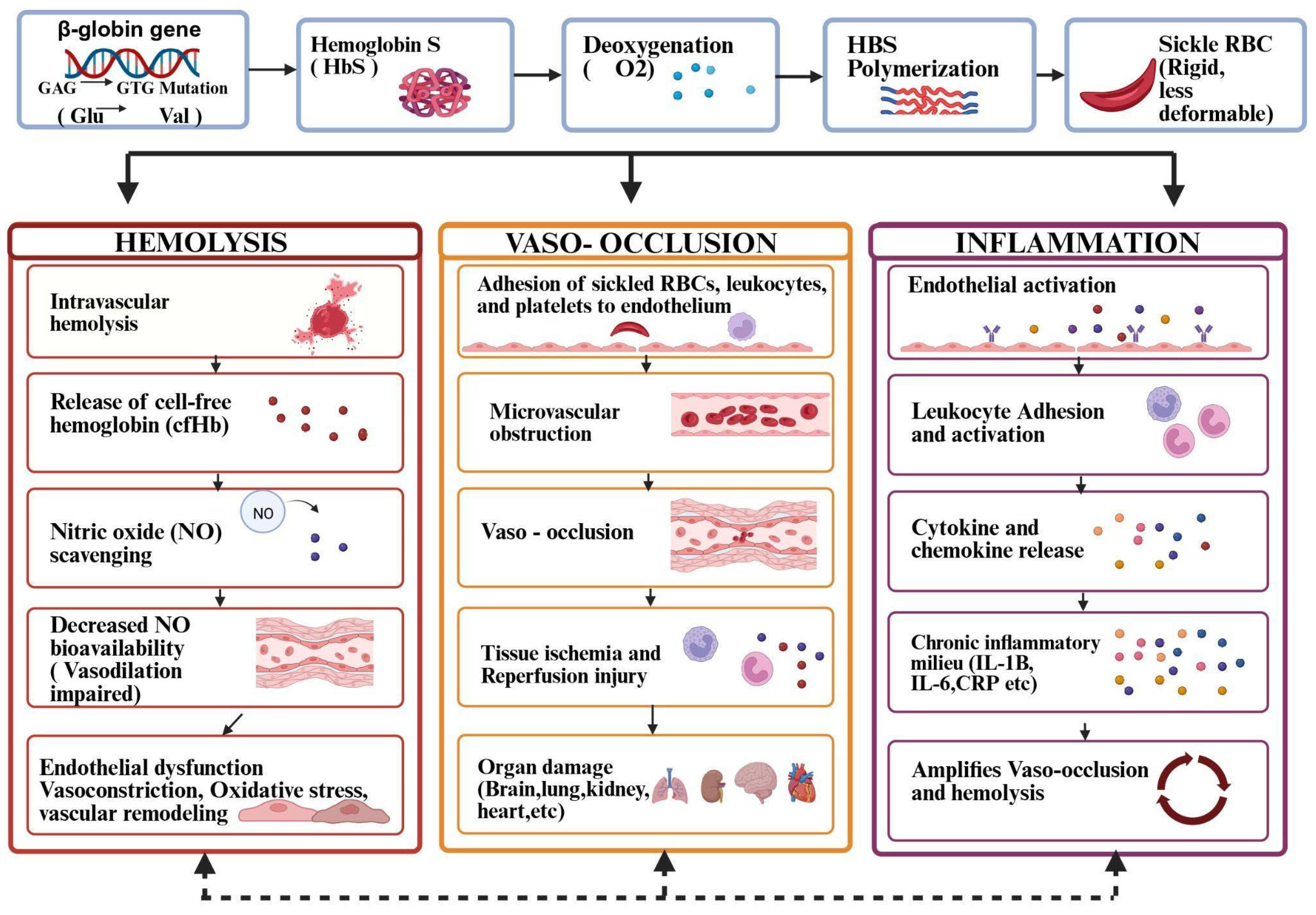
The primary driver of the disease’s clinical severity is the behavior of HbS under physiological stress. Unlike normal adult Hemoglobin A (HbA), which remains soluble regardless of oxygen tension, HbS molecules undergo rapid hydrophobic interactions and polymerize into long, rigid, multi-stranded filaments when deoxygenated [13,15]. This polymerization fundamentally alters the erythrocyte’s structure, distorting it from a flexible biconcave disc into a rigid, “sickle” shape [13,14]. This morphological change is initially reversible upon reoxygenation, but repeated cycles of sickling and unsickling eventually lead to permanent membrane damage and a perpetually dehydrated, dense erythrocyte [13,14]. The pathophysiology of SCD is an integrated process involving rheological obstruction, hemolysis, and systemic inflammation [13,14]. The rigid, sickled cells possess increased adherence to the vascular endothelium, primarily in the post-capillary venules, which triggers vaso-occlusion [13,14]. Furthermore, the fragile nature of the sickled membrane leads to both intravascular and extravascular hemolysis [13,14]. The resulting release of cell-free hemoglobin and arginase into the plasma depletes nitric oxide, a critical vasodilator, thereby driving systemic endothelial dysfunction, oxidative stress, and a chronic inflammatory milieu [14].
These mechanisms culminate in the hallmark of the disease: the vaso-occlusive episode (VOE) [2,13,14]. Beyond acute pain, these episodes can manifest as life-threatening acute chest syndrome (ACS), cerebral infarcts leading to overt stroke, and splenic sequestration [13,14]. Over the long term, repeated ischemic insults and chronic hemolysis result in irreversible organ damage, including chronic kidney disease, pulmonary hypertension, and osteonecrosis, which significantly shorten life expectancy [2,13]. The integrated pathophysiology of SCD is summarized in Figure 1.
Epidemiologically, SCD is one of the most common and lethal genetic disorders worldwide. It is estimated that over 300,000 infants are born with SCD annually, with a disproportionate burden, approximately 75% of cases occurring in Sub-Saharan Africa [2,3,9,10,16]. While newborn screening and comprehensive prophylactic care have transformed SCD into a manageable chronic condition in high-income countries, mortality remains alarmingly high in low-resource settings, where many children succumb to infection or anemia before the age of five [9,17,18]. The disparity in outcomes is stark: median survival exceeds 50 years in the United States [19], while early-life mortality in parts of sub-Saharan Africa reaches 50–90% [17,18], with many children succumbing to infection or anemia before age five [9], underscoring a critical global health inequality.
The clinical heterogeneity of SCD is shaped by both genotype and haplotype [20]. At the genotypic level, SCD encompasses several distinct molecular entities beyond the classic homozygous HbSS genotype, including sickle cell-β thalassemia (HbSβ-thal) and compound heterozygous HbSC [20]. HbSβ0-thalassemia, in which no functional β-globin is produced from the affected allele, results in a phenotype clinically similar to HbSS in terms of severity and complication profile [20]. By contrast, HbSβ+-thalassemia, in which residual β-globin production is preserved, typically produces a milder phenotype with higher baseline hemoglobin levels [20]. The compound heterozygous HbSC genotype, arising from coinheritance of one HbS and one HbC allele, produces an intermediate phenotype notable for a higher hematocrit and distinct complication patterns including proliferative retinopathy and splenic complications persisting into adulthood [20]. Disease severity varies considerably based on these genetic factors and baseline fetal hemoglobin levels [6,21].
Current therapeutic strategies remain largely supportive. Hydroxyurea, the pharmacological mainstay approved by the FDA in 1998 [22], functions primarily by inducing the production of fetal hemoglobin (HbF), which prevents HbS polymerization [6,14,21]. While the clinical efficacy of hydroxyurea is primarily due to its HbF induction, the exact mechanism of how it increases HbF remains not fully understood [6]. Additionally, chronic blood transfusions are utilized to dilute HbS concentrations and reduce the risk of stroke [14]. However, these treatments require lifelong adherence and carry risks of iron overload and alloimmunization [22,23].
Hematopoietic stem cell transplantation (HSCT) was the only established curative option until late 2023, when two autologous gene therapies received FDA approval [3,4], though HSCT remains more widely accessible and has decades of outcome data [1,24]. Allogeneic HSCT offers a 90% success rate with suitable donors [7,24], but its application is severely limited by the scarcity of HLA-matched sibling donors, with less than 20–25% of patients having a suitable donor [16,25]. Furthermore, individuals with SCD face an elevated risk of complications during stem cell transplantation, including graft-versus-host disease and graft rejection [4,7]. Consequently, there is an urgent clinical mandate to advance curative approaches, such as gene editing and lentiviral-based gene therapy, to provide definitive resolution for this debilitating condition [1,2,3].

Literature Search Strategy

A structured narrative review was conducted to synthesize the clinical and translational evidence base for curative therapies in SCD. Electronic searches were performed in PubMed/MEDLINE, Embase, and ClinicalTrials.gov from inception through March 2026. Search terms included combinations of the following: “sickle cell disease”, “hematopoietic stem cell transplantation”, “haploidentical transplantation”, “post-transplant cyclophosphamide”, “gene therapy”, “lentiviral vector”, ”CRISPR-Cas9”, “BCL11A”, “Lyfgenia”, “Casgevy”, “exagamglogene autotemcel”, and “lovotibeglogene maroxaparvovec”. Reference lists of included articles and relevant systematic reviews were manually screened for additional sources. Priority was given to prospective clinical trials, peer-reviewed cohort studies, and authoritative consensus documents; case reports and non-peer-reviewed sources were excluded. As this is a narrative rather than a systematic review, a formal PRISMA protocol was not registered; the synthesis is therefore subject to inherent selection bias, and the authors acknowledge this limitation explicitly. The review focuses on comparative clinical outcomes, decision-making frameworks, and equity-of-access considerations rather than exhaustive enumeration of all available literature.

2. Allogeneic Hematopoietic Stem Cell Transplantation (Allo-HSCT)

2.1. Concept and Matched Sibling Donor Transplantation

Since SCD originates from defective hematopoietic stem cells (HSCs), replacing the host hematopoietic system with healthy donor stem cells offers a definitive cure [26,27,28]. In allo-HSCT, healthy donor HSCs are infused into the patient, migrating to the bone marrow through a multi-step physiological process known as “homing” [29,30]. To facilitate stem cell movement from the recipient’s bloodstream to stem cell niches in the bone marrow, where they develop into healthy erythropoietic progenitors, this homing process successively activates a variety of adhesion molecules [29,30]. The infused HSCs subsequently generate sufficient progenitors to repopulate the host hematopoietic system with healthy mature cells [26,29].
In allo-HSCT, stem cells are obtained from a donor other than the recipient [31,32,33,34]. The donor and recipient are ideally identical or “matched” for Human Leukocyte Antigens (HLA) [31,32,33]. Each individual inherits one set of HLA genes (haplotype) from each parent. HLA genes are located within the major histocompatibility complex (MHC) on chromosome 6, with the most critical loci being HLA-A, HLA-B, HLA-C, HLA-DR, and HLA-DQ [31,32]. HLA genes are inherited in haplotype blocks, one complete set from each parent. Each individual therefore carries two alleles at each HLA locus, one maternal and one paternal. When two siblings inherit the same two haplotype blocks from their parents, they are considered a full HLA match [11,31,35]. In practice, this is described as a “6 of 6” match, referring to a match at both alleles of HLA-A, HLA-B, and HLA-DR, six alleles total across three loci [31,35]. Modern high-resolution typing typically evaluates 8/8 or 10/10 matching including HLA-C and HLA-DQ [31]. Because HLA-B and HLA-C are in very close genetic proximity and are rarely separated by recombination, a sibling matched at HLA-B is almost invariably also matched at HLA-C. A full sibling match therefore typically implies concordance across all major HLA loci, not merely the three used in the 6/6 nomenclature.
Without HSCT, median life expectancy for patients with SCD is substantially reduced compared to the general population, with survival remaining approximately 30 years below population norms despite advances in medical therapy [27,36]. Although matched sibling donors are available for fewer than 20% of patients, with some studies reporting rates as low as 15% [16,25,35], clinical results after HSCT using matched grafts from siblings are excellent, exceeding 95% overall survival and more than 80% event-free survival [4,27,34,37,38].

2.2. Conditioning Regimens and Outcomes

Once an allogeneic stem cell source has been identified, patients undergo conditioning regimens combining chemotherapy and occasionally radiation to prepare the marrow for the infusion of donor HSCs [4,39,40]. To date, there is no universally standardized protocol for conditioning in SCD patients [4,5,39]. Early studies utilized maximum doses of chemotherapy (i.e., high-dose myeloablative regimens) to eradicate the disease and provide adequate immunosuppression to prevent graft rejection [4,5,40,41,42,43]. The extreme myelosuppression induced by these doses is nearly universally fatal without the subsequent rescue infusion of HSCs [5,39]. Myeloablative matched sibling transplantation completely replaces the patient’s bone marrow with full-donor chimerism [4,5,44]. In pediatric SCD patients, this approach offers excellent long-term survival, yielding overall and event-free survival rates of over 95% and 90%, respectively [4,5,40,41,42,45].
However, the substantial toxicities associated with traditional myeloablative conditioning regimens have largely restricted allogeneic transplantation to younger patients with optimal performance status [4,5,40,41,42,46]. In response, non-myeloablative conditioning regimens have been developed [4,5,27,41,46]. These are intentionally designed to allow for mixed chimerism (a stable coexistence of recipient and donor cells) [5,27,44]. This chimeric state has proven sufficient for the production of donor-type red blood cells and the reversion of the SCD phenotype, with as little as 20% donor chimerism sufficient to ameliorate disease manifestations [5,44]. This approach is associated with significantly reduced rates of severe graft-versus-host disease (GVHD) compared to myeloablative conditioning [4,5,41,46,47], thereby facilitating the safer application of allogeneic HSCT to eligible adult populations [4,5,41,42,46]. While HSCT improves organ function, mitigates SCD-related organ damage, and significantly enhances overall survival and quality of life [41,46,48,49], risks of GVHD, opportunistic infections, infertility, and long-term transplant-related complications remain prevalent, especially following myeloablative regimens [4,5,41,49].

3. Expansion of Donor Options: MUD, Cord Blood, and Haploidentical HSCT

3.1. Matched Unrelated Donors and Cord Blood

The curative landscape for SCD has historically been constrained by the availability of HLA-matched sibling donors (MSD), an option available to fewer than 20% of patients [16,25,39,50,51]. To address this critical therapeutic gap, the field has transitioned toward alternative donor sources, including matched unrelated donors (MUD), umbilical cord blood (UCB), and haploidentical donors [4,5,39,52].
While MUD transplantation utilizes large-scale international donor registries, it faces significant barriers in the context of SCD [39,50,51]. Patients of African ancestry, who bear the highest burden of the disease, are severely underrepresented in global registries [4,39,50,51]. This results in a low probability (less than 20%) of finding a high-resolution 8/8 HLA match, compared to approximately 75% for patients of European descent [39,50,51]. Furthermore, even when a match is successfully identified, MUD transplants in SCD have historically been associated with higher rates of GVHD and graft failure compared to MSD cohorts [5,39,51,52,53,54].
Umbilical cord blood transplantation emerged as a potential solution due to its less stringent HLA-matching requirements and lower risk of chronic GVHD [16,28,39,52,55,56]. The biological immaturity of neonatal lymphocytes allows for successful engraftment across HLA barriers [28,57]; however, UCB is plagued by the significant limitation of low total nucleated cell (TNC) doses [16,39,52,55,56]. In adult SCD patients or those with higher body weights, this low cell dose frequently leads to delayed hematopoietic recovery and an elevated risk of primary graft failure [16,39,52,55,56]. Despite these hurdles, UCB remains a viable niche option, particularly in pediatric populations where cell dose-to-weight ratios are more favorable [16,39,52,55,56].

3.2. Haploidentical Transplantation and PTCy

The most transformative advancement in the last decade has been the rise in haploidentical HSCT [44,58,59]. By utilizing “half-matched” family members such as parents, children, or siblings, nearly every patient with SCD has an immediately available donor [44,58,60]. The primary challenge of haploidentical HSCT is the high concentration of alloreactive T-cells, which can trigger lethal GVHD or cause rapid graft rejection [59,60,61,62].
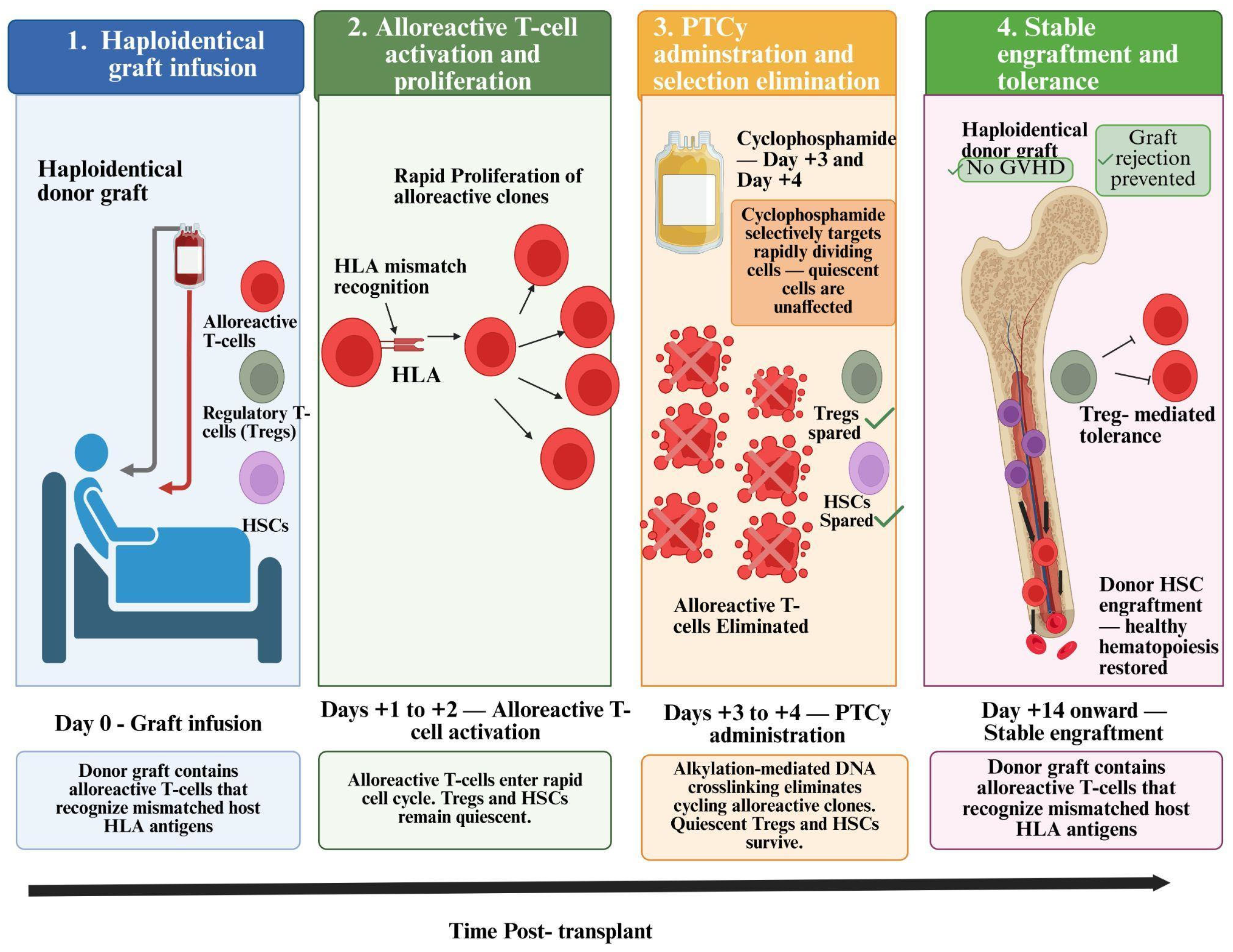
The introduction of high-dose Post-Transplant Cyclophosphamide (PTCy) has effectively bypassed this immunological barrier [63,64]. PTCy operates through a sophisticated selective mechanism: administered typically on days +3 and +4 post-transplant [44,58,61,62,65,66,67], it targets and eliminates rapidly proliferating, alloreactive T-cells while sparing non-alloreactive, quiescent regulatory T-cells and hematopoietic stem cells [63,64].
The selectivity of PTCy for alloreactive T-cells is rooted in cell cycle kinetics. Alloreactive T-cells, upon encountering foreign HLAs, rapidly enter a proliferative state within the first 72 h post-transplant [59]. Cyclophosphamide, administered at this precise window, is selectively toxic to cycling cells, eliminating the alloreactive clones while leaving quiescent regulatory T-cells, memory T-cells, and hematopoietic progenitors intact [63,64]. This sparing of regulatory T-cells is functionally important: the preserved Treg population actively suppresses residual alloreactivity, contributes to tolerance induction, and reduces both GVHD incidence and graft rejection risk over the subsequent weeks [64,65]. The net result is a state of bidirectional tolerance in which neither the host mounts an effective immune response against donor cells nor donor T-cells mount a destructive response against host tissues [59,60]. The mechanism of PTCy-mediated tolerance induction is illustrated in Figure 2.
In terms of clinical outcomes, recent multicenter studies have demonstrated overall survival rates exceeding 90% with low rates of severe acute GVHD in haploidentical HSCT with PTCy [5,44,58,68]. Event-free survival rates are becoming comparable to MSD transplantation in carefully selected patients, provided that robust conditioning regimens are utilized [44,58,69]. Across published haploidentical cohorts, graft failure rates have generally ranged from approximately 5–15% depending on conditioning intensity [61,69], and chronic GVHD has been reported in fewer than 10–30% of evaluable patients depending on the specific protocol used [61,62,66].
Clinical outcomes for haploidentical HSCT utilizing PTCy have demonstrated remarkable promise, with overall survival rates now exceeding 90% in many specialized centers [5,44,68]. Recent cohort studies indicate that event-free survival in haploidentical protocols is becoming comparable to traditional MSD transplants, provided that robust thiotepa-based conditioning regimens are utilized to ensure stable engraftment [5,44,58,69]. Across published haploidentical cohorts, graft failure rates have generally ranged from approximately 5–15% depending on conditioning intensity [61,69], and chronic GVHD has been reported in fewer than 10–30% of evaluable patients depending on the specific protocol used [61,62,66], a critical metric for a non-malignant disease where maximizing quality of life is paramount.
Currently, haploidentical HSCT is shifting from an experimental last resort to a frontline curative option for high-risk SCD patients lacking an MSD [44,58,59]. The high accessibility of family donors ensures that geographic and ethnic disparities in donor registries are no longer absolute barriers to a cure [44,58,60]. As protocols continue to refine the delicate balance between immunosuppression and engraftment, haploidentical platforms supported by PTCy represent the most scalable allogeneic curative strategy for the global SCD population [5,44,58,59].

4. Autologous Gene Therapy

4.1. Concept and Mechanism of Action

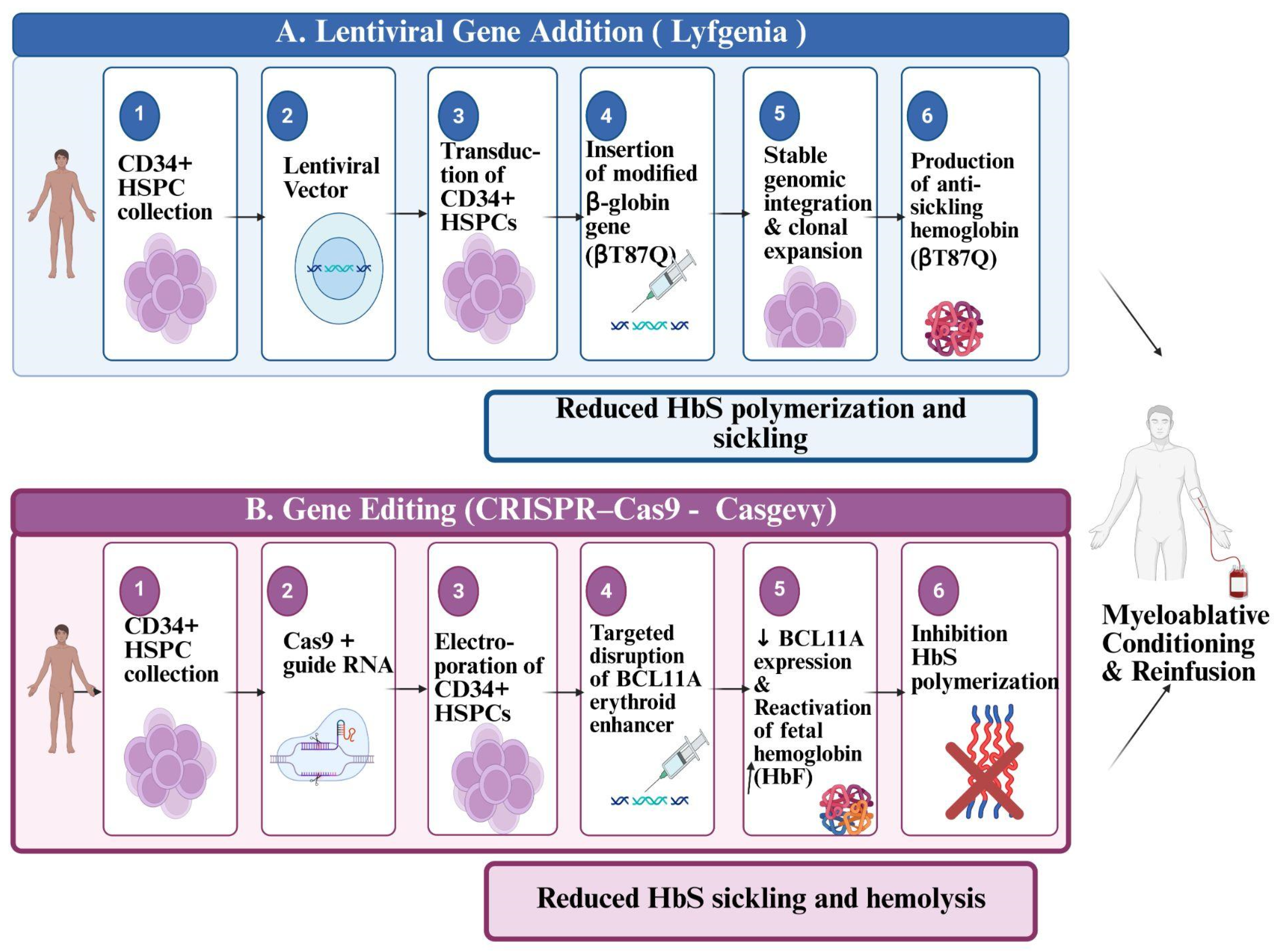
Autologous gene therapy for SCD represents a rapidly advancing therapeutic frontier; however, converting a patient’s own HSC into a durable source of anti-sickling erythrocytes is a highly intensive clinical process [3,70,71,72]. Patients first receive HSC mobilization agents—specifically plerixafor, as G-CSF is contraindicated in SCD due to risk of severe vaso-occlusive crises and death [70,73,74,75,76], to stimulate the migration of CD34+ stem cells from the bone marrow niches into the peripheral bloodstream for collection [75,77,78,79]. Once mobilized, HSCs are harvested via apheresis, a procedure that selectively separates CD34+ cells and returns the remaining blood components to the patient [70,77,78,79,80,81]. These collected cells are then genetically modified at a highly specialized manufacturing facility [3,70,71,72]. The mechanisms of both autologous gene therapy approaches are illustrated in Figure 3.
In normal physiology, BCL11A functions as a molecular switch that represses the production of fetal hemoglobin (HbF) after birth [3,72]. Modern CRISPR gene therapies for SCD manipulate the erythroid-specific enhancer of BCL11A, utilizing it as a tunable switch to lower BCL11A expression specifically in red blood cell precursors while sparing other hematopoietic lineages [3,72]. BCL11A is a zinc-finger transcription factor that directly represses γ-globin genes, driving the developmental switch from fetal to adult hemoglobin in early infancy [3,72]. Because higher baseline HbF levels inherently mitigate SCD severity, BCL11A is considered a vital target for disease-modifying HbF induction [3,72].
Fundamentally, BCL11A expression is controlled by various regulatory elements. Research demonstrates that a +58 kb erythroid-specific enhancer site drives high BCL11A expression in erythroid cells, whereas other regulatory sites drive its expression in HSCs and lymphoid tissues [72]. Therefore, a global knockout of BCL11A would negatively impact HSC maintenance and lymphoid development [72]. Gene therapies precisely disrupt the erythroid-specific enhancer to reduce BCL11A exclusively in erythroid progenitors, effectively slowing the genetic switch rather than destroying it completely [3,72]. In SCD, the therapeutic goal is to reactivate fetal hemoglobin only in the erythroid lineage so that newly generated RBCs are immune to sickling [3,72]. By inducing a partial reduction in BCL11A in erythroid progenitors, HbF levels significantly increase, preventing HbS polymerization and vastly improving red blood cell survival outcomes [3,72].

4.2. Clinical Applications: Lyfgenia and Casgevy

In the modern therapeutic landscape, there are currently two FDA-approved gene therapies: Vertex/CRISPR’s exagamglogene autotemcel (Casgevy) and bluebird bio’s lovotibeglogene autotemcel (Lyfgenia) [1,2,3,23,82,83]. These therapies have successfully translated the theoretical mechanisms of HbF reactivation and genetic modification into commercial products, receiving FDA approval in December 2023 [23,82,83,84,85].
Lyfgenia utilizes a lentiviral vector to insert a modified β-globin gene into the patient’s autologous CD34+ HSPCs, driving the long-term production of an anti-sickling hemoglobin capable of diluting pathological HbS concentrations [2,3,23,24,82]. Specifically, the therapy introduces a T87Q amino acid substitution that alters the polymer contact surface, heavily reducing HbS polymerization [23,82]. Mechanistically, without this polymerization, sickle hemoglobin cannot form the rigid fibers that distort RBC architecture, thereby increasing erythrocyte lifespan in systemic circulation [23,24,82].
Conversely, Casgevy utilizes CRISPR/Cas9 to downregulate BCL11A and elevate HbF in RBC lineages [1,2,3,23,82,83,84,86,87,88,89]. As the first-ever FDA-approved CRISPR therapy (approved in late 2023), Casgevy has produced rapid and lasting increases in total hemoglobin and HbF, leading to near-complete elimination of vaso-occlusive crises (VOCs) in treated cohorts [2,82,83,84,85,87]. Mean HbF levels increased to approximately 40–44% by month 4–6 and were sustained at 2 years [85,87]. Current research now aims to expand on these milestones by focusing on long-term safety, engraftment stability, and the maintenance of protective HbF thresholds [2,82].
Clinical trials highlight the profound effectiveness of both therapies regarding VOE/VOC outcomes, though current data are insufficient to definitively claim clinical superiority of one over the other [2,24,82]. In Lyfgenia trials, 28 of 32 treated patients (87.5%) were completely free from severe VOEs during the 6-to-18-month observation period [82,83]. For Casgevy, 29 of 30 patients (97%) with at least 12 months of follow-up were entirely free of VOCs for more than 12 consecutive months [82,83,87].

5. Comparative Analysis and Future Directions

5.1. HSCT vs. Autologous Gene Therapy

Evaluating allogeneic HSCT against autologous gene therapy requires analysis across multiple clinically distinct dimensions [5,24,44,58]. No prospective randomized controlled trial has directly compared the two modalities, and indirect comparisons are further complicated by differences in patient populations, follow-up durations, and outcome definitions across published cohorts [5,44,58].
Conditioning burden. Both modalities require myeloablative conditioning prior to stem cell infusion, and this is a critically underappreciated point of parity between them [4,5,40,71]. The frequent framing of gene therapy as a “gentler” alternative to transplant is not supported by current protocols: both Casgevy and Lyfgenia require full myeloablative conditioning with busulfan, and conditioning-related toxicity, including gonadotoxicity, hepatic sinusoidal obstruction syndrome, and neurocognitive risk, applies to both [4,41,49,71].
In practice, the conditioning regimens used in current gene therapy protocols are pharmacologically equivalent to those used in myeloablative allogeneic HSCT; both typically employ weight-based intravenous busulfan with pharmacokinetic monitoring and available safety data do not suggest a clinically meaningful difference in conditioning-related toxicity between the two modalities at this level of evidence [4,5,40]. The key distinction is therefore not in conditioning severity per se, but in the post-engraftment risk profile: gene therapy eliminates GVHD and its associated immunosuppression burden, while allogeneic HSCT retains the option of non-myeloablative conditioning in adults, an option not yet available in gene therapy protocols [27,41,42,46].
The conditioning-free or reduced-intensity gene therapy paradigm remains investigational. In allogeneic HSCT, non-myeloablative regimens utilizing fludarabine and low-dose total body irradiation have demonstrated clinical utility in adults, achieving stable mixed chimerism sufficient for phenotypic correction, while meaningfully reducing the conditioning toxicity burden [27,41,46].
Donor dependency. Allogeneic HSCT is entirely donor-dependent, which represents its principal structural limitation [16,25,39,50,51]. Matched sibling donors are available to fewer than 20% of patients globally [16,25]; matched unrelated donors are identified in fewer than 20% of patients of African ancestry due to registry underrepresentation [39,50,51]. Haploidentical donors address this gap substantially; nearly every patient has an available half-matched family member [44,58,60] but introduce immunological complexity. Autologous gene therapy eliminates donor dependency entirely and is available to any patient with accessible CD34+ stem cells, though mobilization in SCD patients carries specific clinical challenges and G-CSF is relatively contraindicated due to vaso-occlusive risk, necessitating plerixafor-based protocols [70,73,74,75,76,79].
GVHD risk. Graft-versus-host disease is an exclusive risk of allogeneic HSCT and constitutes the primary driver of transplant-related morbidity and mortality in non-malignant disease [4,5,41]. In MSD transplantation, severe acute GVHD (Grade III–IV) occurs in fewer than 10% of patients; in haploidentical transplantation using PTCy, rates have similarly been reported below 10% in recent cohorts [62,66,67]. Autologous gene therapy carries zero GVHD risk by definition, which is its most clinically meaningful immunological advantage [44,58].
Graft failure. Primary graft failure occurs in approximately 5–15% of haploidentical HSCT cases depending on conditioning intensity and is virtually absent in well-matched MSD transplantation [61]. Gene therapy carries an analogous risk of engraftment failure or subtherapeutic vector integration, though the term is not directly equivalent [71,82]. Inadequate gene marking, insufficient HSC mobilization, or manufacturing failure can result in inadequate therapeutic hemoglobin levels; the clinical significance of this varies across individual patients [71,82].
Fertility implications. Both modalities carry significant fertility risk through myeloablative conditioning [41,49]. Busulfan-based regimens are strongly gonadotoxic and can cause premature ovarian insufficiency and azoospermia [41,49]. This is clinically equivalent between the two approaches at present, given that gene therapy currently also requires busulfan conditioning [71]. Fertility counseling and gamete cryopreservation are therefore mandatory for both pathways prior to treatment initiation [49]. The development of antibody-based non-genotoxic conditioning discussed in Section 5.3 holds promise for meaningfully reducing this risk in both modalities.
Durability of response. Allogeneic HSCT, when successful, is considered a permanent cure; the longest follow-up data span more than 30 years in pediatric MSD cohorts [24]. Autologous gene therapy trials currently provide follow-up of only 2–5 years for the majority of treated patients [24,83]. While hemoglobin and HbF levels have remained stable in most published cohorts within this window [82,83,87], the long-term durability of lentiviral integration and CRISPR-mediated gene editing beyond 10 years remains unknown [24]. This is not a reason to dismiss gene therapy, but it is a clinically material uncertainty that should be incorporated into informed consent and follow-up planning [2,24].
Late toxicity and oncogenic risk. Allogeneic HSCT carries well-characterized long-term toxicities including chronic GVHD, secondary malignancies, and endocrine dysfunction [4,41,49]. Lentiviral gene therapy carries a theoretical insertional oncogenesis risk; two cases of acute myeloid leukemia were identified in participants in the earlier HGB-206 LentiGlobin trial for SCD, though subsequent investigation deemed these unlikely related to insertional oncogenesis [71,82]. CRISPR-based editing raises additional questions about off-target cleavage events and long-term clonal dynamics, the full profile of which requires longer follow-up to characterize [2,24,86]. Neither modality has a clearly superior late-toxicity profile at this stage of evidence [2,24].
Infrastructure requirements. This dimension most sharply differentiates the two modalities with respect to global access [1,9,11]. Allogeneic HSCT, particularly haploidentical transplantation, requires a transplant center with bone marrow transplantation capacity, HLA typing infrastructure, blood banking, and isolation facilities [4,11]. This is achievable in many middle-income country settings and is already present in parts of Latin America, the Middle East, and South Asia [11]. Autologous gene therapy requires, in addition to a transplant center, a specialized GMP-grade manufacturing facility capable of lentiviral vector production or electroporation-based gene editing, infrastructure that does not currently exist in any high-burden, low-income country [1,3,9]. The patient’s cells must typically be shipped internationally to a manufacturing facility, processed over several weeks, and returned [3]. This logistical chain is fragile and entirely incompatible with health systems in sub-Saharan Africa in its current form [1,9].
Geographic and economic access. Gene therapies are currently priced at approximately $2.2 million (Casgevy) and $3.1 million (Lyfgenia) per patient in the United States [83]. Even with negotiated pricing in other markets, these costs place both therapies beyond the reach of health systems in high-burden countries [1,2,9]. Haploidentical HSCT, by comparison, has an estimated median cost of approximately $200,000 per patient in high-income settings (with range of $140,000–$320,000 for allogeneic HSCT) [90], and considerably lower in middle-income countries with h existing transplant infrastructure [9,11]. Optimized haplo-HSCT is therefore currently the more scalable curative modality for global deployment [5,44,58,59].
Maturity of evidence. Allogeneic HSCT has decades of follow-up data, thousands of patients across multiple international registries, and validated outcome benchmarks [24]. Autologous gene therapy clinical trial datasets are small—with pivotal trials enrolling fewer than 50 patients per therapy and follow-up periods ranging from 6 to 32 months—insufficient to characterize late effects [24,82,83]. This asymmetry in evidence maturity is important context for clinical decision-making, particularly in centers without access to gene therapy-specific expertise or long-term monitoring infrastructure [24].
Taken together, this comparison supports the following characterization: allogeneic HSCT, particularly haploidentical transplantation with PTCy, is currently the more accessible, more evidence-mature, and more globally scalable curative modality [5,44,59]. Autologous gene therapy offers a uniquely donor-independent and GVHD-free alternative with extraordinary promise [24,44,58], but its current cost, manufacturing complexity, and evidence immaturity position it as a high-income setting option for the near future [1,2,9]. The trajectory of each modality—if gene therapy conditioning becomes less toxic and manufacturing costs fall, and if HSCT infrastructure expands into high-burden regions, will determine which approach ultimately reaches more patients [1,2,44,58].

5.2. Clinical Decision Making

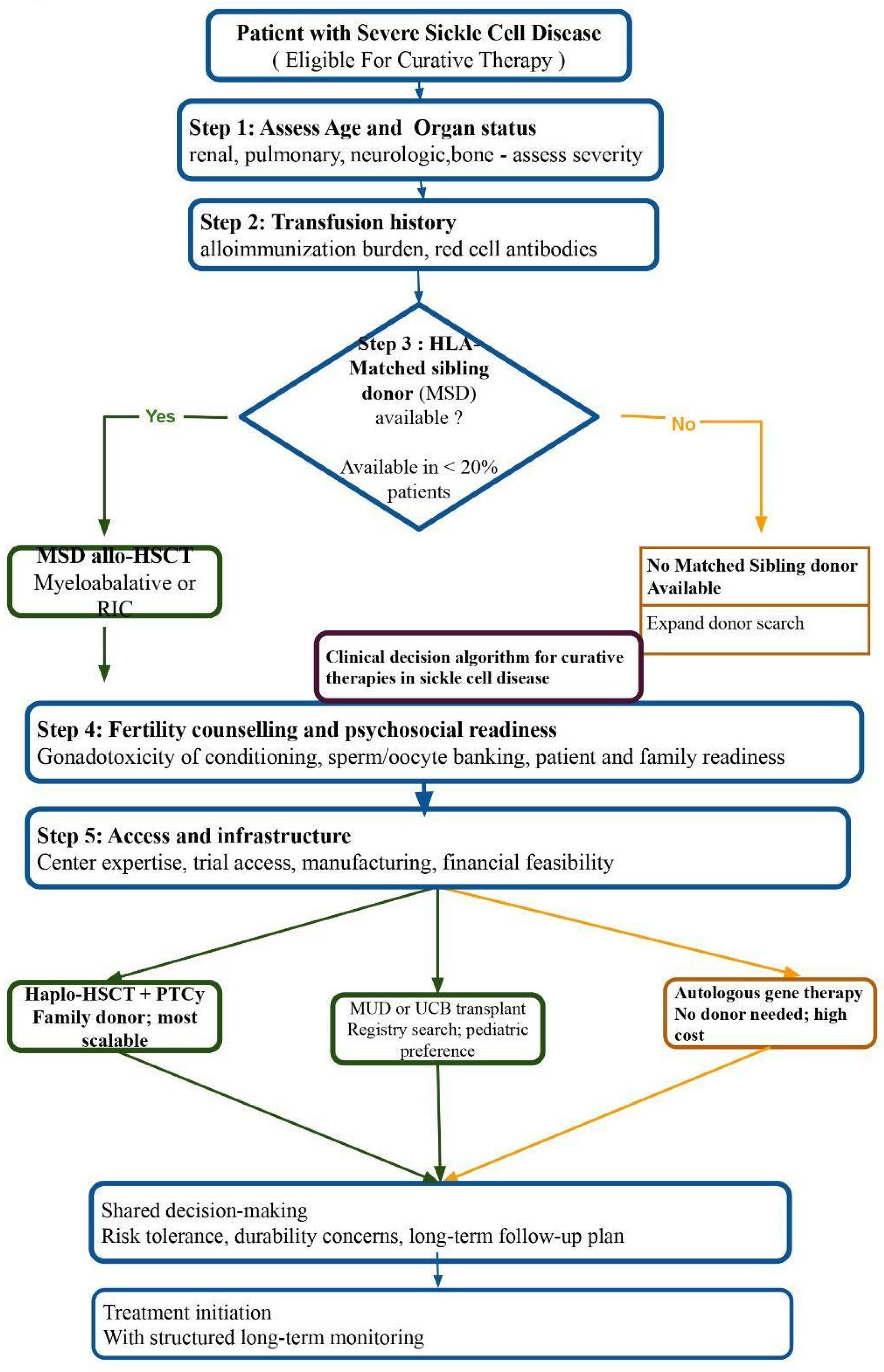
Treatment selection in SCD is a multivariable clinical problem that cannot be reduced to the presence or absence of a matched sibling donor, though donor availability remains one important determinant among many [44,47,91]. The following factors collectively inform the decision, and should be evaluated for each patient prior to therapeutic referral.
Patient age and organ status. Younger patients tolerate conditioning more effectively, are less likely to have accumulated irreversible organ damage, and derive greater long-term benefit from a curative intervention with decades of follow-up ahead [47,49,91,92]. Early referral, ideally before the onset of significant end-organ damage, is strongly recommended [92,93]. Organ status assessment should include renal function (GFR, proteinuria), pulmonary status (echocardiography for tricuspid regurgitation velocity, pulmonary function testing), neurological history (prior overt or silent infarcts on MRI), and bone health (osteonecrosis) [49,91,93,94]. Significant organ dysfunction may preclude myeloablative conditioning in either modality, shifting the calculus toward non-myeloablative HSCT where evidence supports it, or toward clinical trial enrollment for reduced-intensity gene therapy protocols [91,92].
Transfusion history and alloimmunization. Chronic transfusion programs are associated with red cell alloimmunization in 20–40% of SCD patients, a rate substantially higher than in other chronically transfused populations, reflecting the antigenic divergence between predominantly European donor pools and patients of African ancestry [93,95,96,97]. Alloimmunization complicates both transplant and gene therapy pathways: in HSCT, multiply alloimmunized patients face elevated graft rejection risk, requiring intensified conditioning regimens [57,95,96,98]. In gene therapy, alloimmunization does not directly affect efficacy but may complicate supportive transfusion management during the conditioning and recovery period [5,9]. Alloimmunization burden—including identification of clinically significant antibodies—should be characterized before either pathway is initiated [93,94,95].
Donor availability. When a fully HLA-matched sibling donor is available, myeloablative MSD-HSCT remains the curative option with the longest track record and the most mature evidence base, and should be the default recommendation in eligible patients [5,14,47,91,92,93,94,99]. In the absence of an MSD, the decision among haploidentical HSCT, MUD transplantation, UCB transplantation, and autologous gene therapy depends on the additional factors described below [44,91,94].
Fertility counseling. Myeloablative conditioning with busulfan is strongly gonadotoxic and should be considered likely to cause permanent infertility in the absence of fertility preservation [5,49,100]. This counseling must occur before either transplant or gene therapy is initiated [93,100]. Sperm banking and oocyte or embryo cryopreservation should be offered to all patients with reproductive potential [5,93,100]. The development of antibody-mediated non-genotoxic conditioning discussed in Section 5.3 may substantially alter this dimension of the decision, but is not currently available outside clinical trials.
Psychosocial readiness. Both pathways involve prolonged hospitalization, strict isolation, and intensive post-treatment follow-up that demands significant patient and caregiver commitment [47,93]. Psychosocial assessment including evaluation of social support, housing stability, health literacy, and prior adherence to hydroxyurea or transfusion programs should be incorporated into pretransplant evaluation [47,93,101]. Patients without adequate social support for post-transplant care may not be appropriate candidates for myeloablative approaches regardless of clinical eligibility [47,93].
Center expertise and trial access. Outcomes in both HSCT and gene therapy are strongly center-volume dependent [3,5,101]. Referral to a center with demonstrated experience in the relevant modality—and ideally in SCD specifically, given the distinct immunological features of the disease compared to malignant indications—is a clinical priority [3,5,14,101]. Where clinical trials of novel conditioning regimens or next-generation gene editing platforms are available, trial enrollment should be actively considered and discussed with patients [5,93].
Manufacturing access and financial feasibility. For autologous gene therapy, patients must be evaluated for eligibility for cell collection, and the treatment site must have an established relationship with a manufacturing facility [3,5]. In the United States, both Casgevy and Lyfgenia require prior authorization processes, and the manufacturing timeline must be incorporated into clinical planning [5]. Financial feasibility, including insurance coverage, patient assistance program eligibility, and the institutional capacity to support the full treatment episode, must be assessed before the pathway is initiated [1,5]. In settings where gene therapy is financially inaccessible, haploidentical HSCT should be presented not as a second-best alternative but as a curative option with its own compelling evidence base [44]. The multivariable clinical decision algorithm incorporating all factors discussed above is summarized in Figure 4.

5.3. Future Innovations, Cost, and Accessibility

To overcome the limitations of current protocols, evolving therapies are focused on drastically reducing the toxicities of conditioning [3,44,99,102,103,104]. A highly promising approach utilizes antibody-drug conjugates to selectively eliminate host hematopoietic stem cells while minimizing collateral damage to surrounding tissues [99,102,103]. By targeting the CD117 receptor expressed on HSCs, this method can create necessary bone marrow space for engraftment without the systemic devastation of traditional chemotherapy [99,102,103].
Another vital research focus is simplifying the delivery of gene therapy [3,44,104]. Current ex vivo approaches require apheresis, specialized off-site genetic modification, and subsequent reinfusion [3,44,105]. Emerging strategies aim to develop in vivo gene editing systems delivered directly into the patient’s body to modify stem cells within the native bone marrow [3,44,104]. Successfully translating this into clinical practice could substantially reduce logistical complexities and vastly increase access for numerous patients worldwide, even in low-income countries with the most significant disease burden [3,44,104,106].
However, despite these remarkable scientific innovations, treatment costs remain a prohibitive barrier to widespread access [20,83,107,108,109,110,111,112]. Gene therapies currently carry extremely high upfront costs, reflecting the immense complexity of manufacturing individualized treatments [20,24,83,112]. These financial barriers are especially concerning given that the global burden of SCD is heavily concentrated in low- and middle-income countries, where advanced healthcare infrastructure is inherently limited [1,5,9,106,111]. Addressing these global disparities will demand innovative healthcare financing strategies and heavily simplified therapeutic delivery mechanisms [1,5,9,106,111]. Future research must prioritize improving safety, enhancing the precision of genetic corrections, reducing conditioning toxicity, and expanding clinical trials to diverse populations to ensure comprehensive long-term efficacy [3,20,44,99,102,103,104].
Several limitations of this review merit acknowledgment. The clinical evidence base for autologous gene therapies remains constrained by small trial cohorts, with pivotal trials enrolling fewer than 50 patients per therapy, and follow-up periods ranging from 6 to 32 months—insufficient to characterize long-term durability or late adverse effects [24,82,83,87]. Furthermore, the absence of prospective head-to-head randomized controlled trials directly comparing allogeneic HSCT to gene therapy precludes definitive efficacy conclusions [5,44]. The predominantly high-income, specialized center origins of existing trial data also limit generalizability to the low and middle-income settings where the global SCD burden is concentrated [1,5,9,106,111]. Finally, as a narrative rather than a systematic review, the synthesis presented here is subject to inherent selection bias in source literature.

6. Conclusions

Over the past decade, the therapeutic landscape for Sickle Cell Disease (SCD) has undergone a major transformation. Allogeneic HSCT, once limited by donor scarcity and GVHD-related morbidity, has become increasingly accessible through haploidentical platforms supported by post-transplant cyclophosphamide (PTCy). At the same time, the approval of gene therapies such as Casgevy and Lyfgenia has introduced a donor-independent curative approach, overcoming many of the immunologic barriers that historically constrained curative therapy.
However, the most important challenge facing the field is no longer scientific, but structural. Current discourse often frames gene therapy as the future of SCD treatment while viewing access disparities as secondary concerns. We argue the opposite: because most patients with SCD live in low and middle-income countries where gene therapy remains financially and logistically inaccessible, expanding equitable access to curative therapy must become the central priority.
A tiered access strategy may provide the most realistic global framework. In high-income countries, efforts should focus on optimizing gene therapy, reducing conditioning toxicity, and strengthening long-term outcome monitoring. In middle-income countries with developing transplant infrastructure, priority should be given to scaling haploidentical HSCT programs, training transplant specialists, and developing affordable PTCy-based protocols. In the lowest-resource settings, investments in newborn screening, hydroxyurea access, chronic transfusion programs, and foundational transplant infrastructure are essential to bridge patients toward future curative therapies.
Gene therapy cannot meaningfully address the global burden of SCD unless major structural barriers are addressed, including treatment cost, manufacturing limitations, and lack of regional infrastructure. Long-term progress will require coordinated international investment, regional manufacturing capacity, and policies designed specifically to expand access in high-burden regions.
Ultimately, the defining challenge of the next decade is not discovering how to cure SCD, but ensuring that curative therapies reach the populations most affected by the disease.

Author Contributions

Conceptualization, A.H.A.; methodology, A.H.A. and H.V.; formal analysis, A.H.A., H.V., A.T., S.P.D.R.K., T.K.D., V.J.R., Y.L. and C.P.; investigation, A.H.A., H.V. and A.T.; resources, A.H.A., H.V., A.T., S.P.D.R.K., T.K.D., V.J.R., Y.L. and C.P.; data curation, A.H.A., H.V., A.T., S.P.D.R.K., T.K.D. and V.J.R.; writing—original draft preparation, A.H.A., H.V., A.T., S.P.D.R.K., T.K.D., V.J.R., Y.L. and C.P.; writing—review and editing, A.H.A., Y.L. and C.P.; visualization, A.H.A., H.V. and T.K.D.; supervision, A.H.A., Y.L. and C.P.; project administration, A.H.A., Y.L. and C.P. All authors have read and agreed to the published version of the manuscript.

Funding

This research received no external funding.

Institutional Review Board Statement

Not applicable.

Informed Consent Statement

Not applicable.

Data Availability Statement

No new data were created or analyzed in this study. Data sharing is not applicable to this article.

Acknowledgments

We thank Markus Mapara for his insights provided during his keynote presentation at the MedNews Week Conference.

Conflicts of Interest

The authors declare no conflicts of interest.

Abbreviations

The following abbreviations are used in this manuscript:
ACSAcute chest syndrome
Allo-HSCTAllogeneic hematopoietic stem cell transplantation
FDAFood and Drug Administration
G-CSFGranulocyte colony-stimulating factor
GVHDGraft-versus-host disease
HbAHemoglobin A
HbFFetal hemoglobin
HbSHemoglobin S
HBBβ-globin gene
HLAHuman leukocyte antigen
HSCsHematopoietic stem cells
HSCTHematopoietic stem cell transplantation
HSPCsHematopoietic stem and progenitor cells
MHCMajor histocompatibility complex
MSDMatched sibling donor
MUDMatched unrelated donor
PTCyPost-transplant cyclophosphamide
RBCRed blood cell
SCDSickle cell disease
TNCTotal nucleated cell
UCBUmbilical cord blood
VOCVaso-occlusive crisis
VOEVaso-occlusive episode

References

  1. Bangolo, A.; Amoozgar, B.; Zhang, L.; Gill, S.; Lushimba Milolo, D.; Ngindu Kankonde, J.; Mbuyi Batakamuna, C.; Tassan, R.; Cho, C.; Bukasa-Kakamba, J.; et al. Curative Therapies for Hemophilias and Hemoglobinopathies in Adults: Immune, Gene, and Stem Cell Approaches in a Global Context. Biomedicines 2025, 13, 2022. [Google Scholar] [CrossRef] [PubMed]
  2. Duesberg, M.S.; Schiller, G. Emerging Therapies for Sickle Cell Disease: From Symptom Management to Curative Gene Therapy. Cureus 2025, 17, e95112. [Google Scholar] [CrossRef] [PubMed]
  3. Kansal, R. Curing Sickle Cell Disease by Allogeneic Hematopoietic Stem Cell (HSC) Transplantation Toward In Vivo HSC Gene Therapy. Genes 2025, 16, 1367. [Google Scholar] [CrossRef]
  4. Rostami, T.; Rad, S.; Rostami, M.R.; Mirhosseini, S.A.; Alemi, H.; Khavandgar, N.; Janbabai, G.; Kiumarsi, A.; Kasaeian, A.; Mousavi, S.A. Hematopoietic Stem Cell Transplantation in Sickle Cell Disease: A Multidimentional Review. Cell Transplant. 2024, 33. [Google Scholar] [CrossRef] [PubMed]
  5. Leonard, A.; Bertaina, A.; Bonfim, C.; Cohen, S.; Prockop, S.; Purtill, D.; Russell, A.; Boelens, J.J.; Wynn, R.; Ruggeri, A.; et al. Curative Therapy for Hemoglobinopathies: An International Society for Cell & Gene Therapy Stem Cell Engineering Committee Review Comparing Outcomes, Accessibility and Cost of Ex Vivo Stem Cell Gene Therapy versus Allogeneic Hematopoietic Stem Cell Transplantation. Cytotherapy 2022, 24, 249–261. [Google Scholar] [CrossRef]
  6. Salinas Cisneros, G.; Thein, S.L. Research in Sickle Cell Disease: From Bedside to Bench to Bedside. HemaSphere 2021, 5, e584. [Google Scholar] [CrossRef]
  7. Doerfler, P.A.; Sharma, A.; Porter, J.S.; Zheng, Y.; Tisdale, J.F.; Weiss, M.J. Genetic Therapies for the First Molecular Disease. J. Clin. Investig. 2021, 131, e146394. [Google Scholar] [CrossRef]
  8. Motta, I.; Ghiaccio, V.; Cosentino, A.; Breda, L. Curing Hemoglobinopathies: Challenges and Advances of Conventional and New Gene Therapy Approaches. Mediterr. J. Hematol. Infect. Dis. 2019, 11, e2019067. [Google Scholar] [CrossRef]
  9. John, T.D.; Namazzi, R.; Chirande, L.; Tubman, V.N. Global Perspectives on Cellular Therapy for Children with Sickle Cell Disease. Curr. Opin. Hematol. 2022, 29, 275–280. [Google Scholar] [CrossRef]
  10. Bukini, D.; Kassim, K.; Kanza, C.; Rifai, A.; Chanzi, R.; Amando, A.; Amin, E.; Spector, J.; Makani, J. I Know That One Day I Will Be Cured, and All Will Be Well: Perspectives on Acceptability of Curative Therapies for Sickle Cell Disease in Tanzania. medRxiv 2025. [Google Scholar] [CrossRef]
  11. Ogunniyi, T.J.; Abdulkareem, R.R.; Emiola, A.R.; Bamidele, T.R.; Wazhi, G.B.; Arinde, P.O.; Yisa, S.S.; Makanjuola, O.; Batisani, K.; Ilesanmi, A. Advancing Hematopoietic Stem Cell Transplantation (HSCT) in Africa: A Pathway to Curing Hematological Disorders. Health Sci. Rep. 2025, 8, e71464. [Google Scholar] [CrossRef] [PubMed]
  12. Mboowa, G.; Sserwadda, I.; Kanyerezi, S.; Tukwasibwe, S.; Kidenya, B. The Dawn of a Cure for Sickle Cell Disease through CRISPR-based Treatment: A Critical Test of Equity in Public Health Genomics. Ann. Hum. Genet. 2025, 89, 188–194. [Google Scholar] [CrossRef]
  13. Benz, E.J.; Mondoro, T.H.; Gibbons, G.H. Accelerating the Science of SCD Therapies—Is a Cure Possible? JAMA 2019, 322, 921. [Google Scholar] [CrossRef]
  14. Meier, E.R.; Rampersad, A. Pediatric Sickle Cell Disease: Past Successes and Future Challenges. Pediatr. Res. 2017, 81, 249–258. [Google Scholar] [CrossRef]
  15. Obeagu, E.I.; Akinleye, C.A.; Obeagu, G.U. The Role of Nucleation in Sickle Cell Pathophysiology: Opportunities for Innovative Treatments. Ann. Med. Surg. 2025, 87, 1341–1350. [Google Scholar] [CrossRef]
  16. Abraham, A.; Jacobsohn, D.A.; Bollard, C.M. Cellular Therapy for Sickle Cell Disease. Cytotherapy 2016, 18, 1360–1369. [Google Scholar] [CrossRef]
  17. Goodman, M.A.; Malik, P. The Potential of Gene Therapy Approaches for the Treatment of Hemoglobinopathies: Achievements and Challenges. Ther. Adv. Hematol. 2016, 7, 302–315. [Google Scholar] [CrossRef]
  18. Piel, F.B.; Steinberg, M.H.; Rees, D.C. Sickle Cell Disease. N. Engl. J. Med. 2017, 376, 1561–1573. [Google Scholar] [CrossRef]
  19. Kelkar, A.H.; Achebe, M.O.; Hantel, A. An Ethical Allocation Scheme for Scarce Gene Therapies in Sickle Cell Disease and Transfusion-Dependent β-Thalassemia. Blood Adv. 2025, 9, 4502–4512. [Google Scholar] [CrossRef] [PubMed]
  20. Tariq, H.; Khurshid, F.; Khan, M.H.; Dilshad, A.; Zain, A.; Rasool, W.; Jawaid, A.; Kunwar, D.; Khanduja, S.; Akbar, A. CRISPR/Cas9 in the Treatment of Sickle Cell Disease (SCD) and Its Comparison with Traditional Treatment Approaches: A Review. Ann. Med. Surg. 2024, 86, 5938–5946. [Google Scholar] [CrossRef] [PubMed]
  21. Salinas Cisneros, G.; Thein, S.L. Recent Advances in the Treatment of Sickle Cell Disease. Front. Physiol. 2020, 11, 435. [Google Scholar] [CrossRef]
  22. Barak, M.; Hu, C.; Matthews, A.; Fortenberry, Y.M. Current and Future Therapeutics for Treating Patients with Sickle Cell Disease. Cells 2024, 13, 848. [Google Scholar] [CrossRef] [PubMed]
  23. Rahmat, Z.S.; Ali, M.H.; Talha, M.; Hasibuzzaman, M.A. FDA Approval of Casgevy and Lyfgenia: A Dual Breakthrough in Gene Therapies for Sickle Cell Disease. Ann. Med. Surg. 2024, 86, 4966–4968. [Google Scholar] [CrossRef]
  24. Abdelazim, O.T.F.; Sharafeldin, A.-B.K.; Kawari, M.; Hasan, Z.A.I.Y.; Toorani, Z.A. Advances in Sickle Cell Disease Treatment: A Comparative Review of Hematopoietic Stem Cell Transplantation and Gene Therapy (Casgevy and Lyfgenia). Stem Cells Dev. 2025, 34, 363–373. [Google Scholar] [CrossRef]
  25. Tanhehco, Y.C.; Nathu, G.; Vasovic, L.V. Development of Curative Therapies for Sickle Cell Disease. Front. Med. 2022, 9, 1055540. [Google Scholar] [CrossRef]
  26. Abood, H.B.A.; Alharbi, A.H.M.; Alghamdi, A.S.A.; Alshahrani, A.A.S.; Asiri, A.A.M.; Bedaiwi, A.S.K.; Al Mani, A.N.I.; Khubrani, A.A.M.; Hakami, O.S.A.; Alsaluli, A.H.A.; et al. Infections after Bone Marrow Transplantation Among Irritable Bowel Syndrome Patients: Review Article. Saudi Med. Horiz. J. 2022, 3, 29–35. [Google Scholar] [CrossRef]
  27. Fuchs, E.J. Transplantation Tolerance: From Theory to Clinic. Immunol. Rev. 2014, 258, 64–79. [Google Scholar] [CrossRef] [PubMed]
  28. Shi, C.; Pan, L.; Hu, Z. Experimental and Clinical Progress of in Utero Hematopoietic Cell Transplantation Therapy for Congenital Disorders. Front. Pharmacol. 2022, 13, 851375. [Google Scholar] [CrossRef] [PubMed]
  29. Fu, Y.; Sun, Z.; Fuchs, E.J.; Wang, Y.; Shen, Z.-Y.; Maeda, H.; Lin, Q.; Warren, D.S.; Williams, G.M.; Montgomery, R.A. Successful Transplantation of Kidney Allografts in Sensitized Rats After Syngeneic Hematopoietic Stem Cell Transplantation and Fludarabine. Am. J. Transplant. 2014, 14, 2375–2383. [Google Scholar] [CrossRef]
  30. Wang, L.; Cao, J.; Wang, Y.; Lan, T.; Liu, L.; Wang, W.; Jin, N.; Gong, J.; Zhang, C.; Teng, F.; et al. Immunogenicity and Functional Evaluation of iPSC-Derived Organs for Transplantation. Cell Discov. 2015, 1, 15015. [Google Scholar] [CrossRef]
  31. Elsantawy, E.; Bahgat, R.; Elshanshory, M.; Dawood, B. Effect of Implementing Evidence Based Nursing Guidelines on Nurses’ Performance and Clinical Outcomes for Children Undergoing Stem Cells Transplantation. Tanta Sci. Nurs. J. 2023, 28, 159–177. [Google Scholar] [CrossRef]
  32. Ebomoyi, E. Bone Marrow Transplantation to Cure Sickle Cell Disease Using the Diffusion of Innovation Theoretical Model. Int. J. Trop. Dis. Health 2014, 2, 257–271. [Google Scholar] [CrossRef][Green Version]
  33. Boyd, A.S.; Rodrigues, N.P.; Lui, K.O.; Fu, X.; Xu, Y. Concise Review: Immune Recognition of Induced Pluripotent Stem Cells. Stem Cells 2012, 30, 797–803. [Google Scholar] [CrossRef]
  34. Varma, S.; Malhotra, P.; Lad, D.P. Hematopoietic Stem Cell Applications: Past, Present and Future. J. Postgrad. Med. Educ. Res. 2012, 46, 69–74. [Google Scholar] [CrossRef]
  35. Olatundun, O. Sickle Cell Disease (SCD) and Stem Cell Therapy (SCT): Implications for Psychotherapy and Genetic Counselling in Africa. In Innovations in Stem Cell Transplantation; Demirer, T., Ed.; InTech: London, UK, 2013. [Google Scholar]
  36. Stenger, E.O.; Krishnamurti, L.; Galipeau, J. Mesenchymal Stromal Cells to Modulate Immune Reconstitution Early Post-Hematopoietic Cell Transplantation. BMC Immunol. 2015, 16, 74. [Google Scholar] [CrossRef] [PubMed]
  37. Falahati, R.; Zhang, J.; Flebbe-Rehwaldt, L.; Shi, Y.; Gerson, S.L.; Gaensler, K.M. Chemoselection of Allogeneic HSC After Murine Neonatal Transplantation Without Myeloablation or Post-Transplant Immunosuppression. Mol. Ther. 2012, 20, 2180–2189. [Google Scholar] [CrossRef] [PubMed][Green Version]
  38. Schwartz, J.E.; Yeager, A.M. Reduced-intensity Allogeneic Hematopoietic Cell Transplantation: Graft versus Tumor Effects with Decreased Toxicity. Pediatr. Transplant. 2003, 7, 168–178. [Google Scholar] [CrossRef] [PubMed]
  39. Limerick, E.; Fitzhugh, C. Choice of Donor Source and Conditioning Regimen for Hematopoietic Stem Cell Transplantation in Sickle Cell Disease. J. Clin. Med. 2019, 8, 1997. [Google Scholar] [CrossRef]
  40. Builes, N. Fludarabine-Based Reduced-Intensity Conditioning Regimen for Hematopoietic Stem Cell Transplantation in a Pediatric Patient with Sickle Cell Disease: A Case Report. Int. J. Hematol.-Oncol. Stem Cell Res. 2024, 18, 104–109. [Google Scholar] [CrossRef]
  41. Dovern, E.; Aydin, M.; DeBaun, M.R.; Alizade, K.; Biemond, B.J.; Nur, E. Effect of Allogeneic Hematopoietic Stem Cell Transplantation on Sickle Cell Disease-related Organ Complications: A Systematic Review and Meta-analysis. Am. J. Hematol. 2024, 99, 1129–1141. [Google Scholar] [CrossRef]
  42. Dovern, E.; Aydin, M.; Hazenberg, M.D.; Tang, M.W.; Suijk, E.M.; Hoogendoorn, G.M.; Van Tuijn, C.F.J.; Kerkhoffs, J.; Rutten, C.E.; Zeerleder, S.S.; et al. Azathioprine/Hydroxyurea Preconditioning Prior to Nonmyeloablative Matched Sibling Donor Hematopoietic Stem Cell Transplantation in Adults with Sickle Cell Disease: A Prospective Observational Cohort Study. Am. J. Hematol. 2024, 99, 1523–1531. [Google Scholar] [CrossRef]
  43. Freed, J.; Talano, J.; Small, T.; Ricci, A.; Cairo, M.S. Allogeneic Cellular and Autologous Stem Cell Therapy for Sickle Cell Disease: ‘Whom, When and How’. Bone Marrow Transplant. 2012, 47, 1489–1498. [Google Scholar] [CrossRef]
  44. Kassim, A.A.; Leonard, A. Debating the Future of Sickle Cell Disease Curative Therapy: Haploidentical Hematopoietic Stem Cell Transplantation vs. Gene Therapy. J. Clin. Med. 2022, 11, 4775. [Google Scholar] [CrossRef]
  45. Thompson, A.L.; Bridley, A.; Twohy, E.; Dioguardi, J.; Sande, J.; Hsu, L.L.; Kamani, N.; Meier, E.R. An Educational Symposium for Patients with Sickle Cell Disease and Their Families: Results from Surveys of Knowledge and Factors Influencing Decisions about Hematopoietic Stem Cell Transplant: Transplant for Sickle Cell Symposium. Pediatr. Blood Cancer 2013, 60, 1946–1951. [Google Scholar] [CrossRef] [PubMed]
  46. Dovern, E.; Nijland, S.J.A.M.; Braamse, A.M.J.; Van Muilekom, M.M.; Suijk, E.M.J.; Hoogendoorn, G.M.; Van Tuijn, C.F.J.; DeBaun, M.R.; Biemond, B.J.; Haverman, L.; et al. Changes in the Quality of Life of Adults with Sickle Cell Disease Following Allogeneic Stem Cell Transplantation: A Mixed-methods, Prospective Cohort Study. HemaSphere 2025, 9, e70100. [Google Scholar] [CrossRef] [PubMed]
  47. Hulbert, M.L.; Shenoy, S. Hematopoietic Stem Cell Transplantation for Sickle Cell Disease: Progress and Challenges. Pediatr. Blood Cancer 2018, 65, e27263. [Google Scholar] [CrossRef]
  48. Gallo, A.M.; Patil, C.L.; Knafl, K.A.; Angst, D.A.; Rondelli, D.; Saraf, S.L. The Experience of Adults with Sickle Cell Disease and Their HLA-matched Adult Sibling Donors after Allogeneic Hematopoietic Stem Cell Transplantation. J. Adv. Nurs. 2019, 75, 2943–2951. [Google Scholar] [CrossRef]
  49. Fitzhugh, C.D.; Volanakis, E.J.; Idassi, O.; Duberman, J.A.; DeBaun, M.R.; Friedman, D.L. Long-Term Health Effects of Curative Therapies on Heart, Lungs, and Kidneys for Individuals with Sickle Cell Disease Compared to Those with Hematologic Malignancies. J. Clin. Med. 2022, 11, 3118. [Google Scholar] [CrossRef] [PubMed]
  50. Maio, K.T. Immunogenetics in Sickle Cell Disease. Doctoral Dissertation, Universidade de São Paulo, Ribeirão Preto, Brazil, 2020. [Google Scholar]
  51. Fitzhugh, C.D.; Abraham, A.A.; Tisdale, J.F.; Hsieh, M.M. Hematopoietic Stem Cell Transplantation for Patients with Sickle Cell Disease. Hematol. Oncol. Clin. N. Am. 2014, 28, 1171–1185. [Google Scholar] [CrossRef]
  52. Fitzhugh, C.D.; Abraham, A.; Hsieh, M.M. Alternative Donor/Unrelated Donor Transplants for the β-Thalassemia and Sickle Cell Disease. In Gene and Cell Therapies for Beta-Globinopathies; Malik, P., Tisdale, J., Eds.; Advances in Experimental Medicine and Biology; Springer: New York, NY, USA, 2017; Volume 1013, pp. 123–153. [Google Scholar]
  53. Kogel, F.; Hakimeh, D.; Sodani, P.; Lang, P.; Kühl, J.; Hundsdoerfer, P.; Künkele, A.; Eggert, A.; Oevermann, L.; Schulte, J.H. Allogeneic Hematopoietic Stem Cell Transplantation from Sibling and Unrelated Donors in Pediatric Patients with Sickle Cell Disease—A Single Center Experience. Pediatr. Transplant. 2021, 25, e13892. [Google Scholar] [CrossRef]
  54. De Franceschi, L.; Locatelli, F.; Rees, D.; Chabannon, C.; Dalle, J.; Rivella, S.; Iolascon, A.; Lobitz, S.; Abboud, M.R.; De La Fuente, J.; et al. Selecting Patients with Sickle Cell Disease for Gene Addition or Gene Editing-based Therapeutic Approaches: Report on Behalf of a Joint EHA Specialized Working Group and EBMT Hemoglobinopathies Working Party Consensus Conference. HemaSphere 2025, 9, e70089. [Google Scholar] [CrossRef]
  55. Gabelli, M.; Veys, P.; Chiesa, R. Current Status of Umbilical Cord Blood Transplantation in Children. Br. J. Haematol. 2020, 190, 650–683. [Google Scholar] [CrossRef]
  56. Shenoy, S. Hematopoietic Stem-Cell Transplantation for Sickle Cell Disease: Current Evidence and Opinions. Ther. Adv. Hematol. 2013, 4, 335–344. [Google Scholar] [CrossRef] [PubMed]
  57. Costa, T.; Darrigo-Junior, L.; Grecco, C.; Pieroni, F.; Faria, J.; Stracieri, A.B.; Dias, J.; Vieira, A.C.; Mesquita, C.; Laurindo, P.; et al. HLA-Identical Sibling Hematopoietic Stem Cell Transplantation Following Reduced-Toxicity Myeloablative Conditioning Regimen in Sickle Cell Disease. Res. Sq. 2023, preprint. [Google Scholar]
  58. Leonard, A.; Tisdale, J.; Abraham, A. Curative Options for Sickle Cell Disease: Haploidentical Stem Cell Transplantation or Gene Therapy? Br. J. Haematol. 2020, 189, 408–423. [Google Scholar] [CrossRef]
  59. Zhang, P.; Tey, S.-K. Adoptive T Cell Therapy Following Haploidentical Hematopoietic Stem Cell Transplantation. Front. Immunol. 2019, 10, 1854. [Google Scholar] [CrossRef]
  60. Fabricius, W.A.; Ramanathan, M. Review on Haploidentical Hematopoietic Cell Transplantation in Patients with Hematologic Malignancies. Adv. Hematol. 2016, 2016, 5726132. [Google Scholar] [CrossRef]
  61. Marszołek, A.; Leśniak, M.; Sekunda, A.; Siwek, A.; Skiba, Z.; Lejman, M.; Zawitkowska, J. Haploidentical HSCT in the Treatment of Pediatric Hematological Disorders. Int. J. Mol. Sci. 2024, 25, 6380. [Google Scholar] [CrossRef]
  62. Zhang, W.; Gui, R.; Zu, Y.; Zhang, B.; Li, Z.; Zhang, Y.; Wang, X.; Guo, S.; Zhan, X.; Fu, Y.; et al. Reduced-dose Post-transplant Cyclophosphamide plus Low-dose Post-transplant Anti-thymocyte Globulin as Graft-versus-host Disease Prophylaxis with Fludarabine–Busulfan–Cytarabine Conditioning in Haploidentical Peripheral Blood Stem Cell Transplantation: A Multicentre, Randomized Controlled Clinical Trial. Br. J. Haematol. 2023, 200, 210–221. [Google Scholar] [CrossRef] [PubMed]
  63. Wu, R.; Ma, L. Haploidentical Hematopoietic Stem Cell Transplantation Versus Umbilical Cord Blood Transplantation in Hematologic Malignancies: A Systematic Review and Meta-Analysis. Cell Transplant. 2020, 29, 096368972096477. [Google Scholar] [CrossRef] [PubMed]
  64. Heo, B.Y.; Lee, M.-W.; Choi, S.; Jung, Y.; Pham, T.T.D.; Jang, Y.; Park, J.-H.; Kang, S.; Koh, J.S.; Jo, D.-Y.; et al. Autoimmune Limbic Encephalitis in Patients with Hematologic Malignancies after Haploidentical Hematopoietic Stem Cell Transplantation with Post-Transplant Cyclophosphamide. Cells 2023, 12, 2049. [Google Scholar] [CrossRef]
  65. Sheikh, I.N.; Alqahtani, S.; Ragoonanan, D.; Tewari, P.; Petropoulos, D.; Mahadeo, K.M.; Popat, U.; Shpall, E.J.; Khazal, S. Post-Transplant Cyclophosphamide after Matched Sibling and Unrelated Donor Hematopoietic Stem Cell Transplantation in Pediatric Patients with Acute Myeloid Leukemia. Int. J. Mol. Sci. 2022, 23, 8748. [Google Scholar] [CrossRef] [PubMed]
  66. Li, T.; He, Q.; Yang, J.; Cai, Y.; Huang, C.; Xu, X.; Qiu, H.; Niu, J.; Zhou, K.; Zhang, Y.; et al. Low-Dose Anti-Thymocyte Globulin Plus Low-Dose Posttransplant Cyclophosphamide as an Effective Regimen for Prophylaxis of Graft Versus Host Disease After Haploidentical Peripheral Blood Stem Cell Transplantation With Maternal/Collateral Related Donors. Cell Transplant. 2022, 31, 09636897221139103. [Google Scholar] [CrossRef]
  67. Sharma, A.; Rastogi, N.; Chatterjee, G.; Kapoor, R.; Nivargi, S.; Yadav, S.P. Haploidentical Stem Cell Transplantation with Post-Transplant Cyclophosphamide for Pediatric Acute Leukemia Is Safe and Effective. J. Pediatr. Hematol. Oncol. 2021, 43, e1033–e1036. [Google Scholar] [CrossRef]
  68. Kashif, R.; Horn, B.; Milner, J.; Joyce, M.; Dalal, M.; Lee, J.; McNerney, K.; Cline, J.; Fort, J.; Castillo, P.; et al. The Role of Donor Type and Pre-transplant Immunosuppression on Outcomes of Hematopoietic Stem Cell Transplantation in Children and Young Adults with Severe Aplastic Anemia. Pediatr. Transplant. 2024, 28, e14784. [Google Scholar] [CrossRef]
  69. Patel, D.A.; Hanna, R.; Karnik, L.; Connelly, J.A.; Kitko, C.L.; Kassim, A.A.; Fuente, J.D.L. Non-Myeloablative Bone Marrow Transplant with Post-Transplant Cyclophosphamide Plus Thiotepa Improves Donor Engraftment in Patients with Transfusion Dependent Thalassemia: Results of an International Consortium (VGC2). Biol. Blood Marrow Transplant. 2020, 26, S221–S222. [Google Scholar] [CrossRef]
  70. Yannaki, E.; Karponi, G. Current Status and Developments in Gene Therapy for Thalassemia and Sickle Cell Disease. Thalass. Rep. 2014, 4, 4876. [Google Scholar] [CrossRef]
  71. Kanter, J.; Thompson, A.A.; Pierciey, F.J.; Hsieh, M.; Uchida, N.; Leboulch, P.; Schmidt, M.; Bonner, M.; Guo, R.; Miller, A.; et al. Lovo-cel Gene Therapy for Sickle Cell Disease: Treatment Process Evolution and Outcomes in the Initial Groups of the HGB -206 Study. Am. J. Hematol. 2023, 98, 11–22. [Google Scholar] [CrossRef]
  72. Rosanwo, T.O.; Bauer, D.E. Editing Outside the Body: Ex Vivo Gene-Modification for β-Hemoglobinopathy Cellular Therapy. Mol. Ther. 2021, 29, 3163–3178. [Google Scholar] [CrossRef] [PubMed]
  73. Cashen, A.F.; Lazarus, H.M.; Devine, S.M. Mobilizing Stem Cells from Normal Donors: Is It Possible to Improve upon G-CSF? Bone Marrow Transplant. 2007, 39, 577–588. [Google Scholar] [CrossRef]
  74. McCullough, J.; Kahn, J.; Adamson, J.; Anderlini, P.; Benjamin, R.; Confer, D.; Eapen, M.; Hirsch, B.; Kuter, D.; Lazarus, E.; et al. Hematopoietic Growth Factors—Use in Normal Blood and Stem Cell Donors: Clinical and Ethical Issues: Summary of a Conference. Transfusion 2008, 48, 2008–2025. [Google Scholar] [CrossRef]
  75. Leonard, A.; Weiss, M.J. Hematopoietic Stem Cell Collection for Sickle Cell Disease Gene Therapy. Curr. Opin. Hematol. 2024, 31, 104–114. [Google Scholar] [CrossRef]
  76. Fitzhugh, C.D.; Hsieh, M.M.; Bolan, C.D.; Saenz, C.; Tisdale, J.F. Granulocyte Colony-Stimulating Factor (G-CSF) Administration in Individuals with Sickle Cell Disease: Time for a Moratorium? Cytotherapy 2009, 11, 464–471. [Google Scholar] [CrossRef]
  77. Ruminski, P.G.; Rettig, M.P.; DiPersio, J.F. Development of VLA4 and CXCR4 Antagonists for the Mobilization of Hematopoietic Stem and Progenitor Cells. Biomolecules 2024, 14, 1003. [Google Scholar] [CrossRef] [PubMed]
  78. Babic, A.; Trigoso, E. Cell Source and Apheresis. In The European Blood and Marrow Transplantation Textbook for Nurses; Kenyon, M., Babic, A., Eds.; Springer International Publishing: Cham, Switzerland, 2018; pp. 71–87. [Google Scholar]
  79. Tisdale, J.F.; Kanter, J.; Hsieh, M.; Krishnamurti, L.; Kwiatkowski, J.L.; Kamble, R.T.; Von Kalle, C.; Miller, A.; Pierciey, F.J.; Shi, W.; et al. Single-Agent Plerixafor Mobilization to Collect Autologous Stem Cells for Use in Gene Therapy for Severe Sickle Cell Disease. Biol. Blood Marrow Transplant. 2018, 24, S174. [Google Scholar] [CrossRef][Green Version]
  80. Tormey, C.A.; Snyder, E.L.; Cooper, D.L. Mobilization, Collection, and Transplantation of Peripheral Blood Hematopoietic Progenitor Cells in a Patient with Multiple Myeloma and Hemoglobin SC Disease. Transfusion 2008, 48, 1930–1933. [Google Scholar] [CrossRef] [PubMed]
  81. Huang, L.; Liu, L.; Song, Z.; Li, Q.; He, D.; Guo, G.; Zhu, G.; Jiang, E.; Xia, Y. Hematopoietic Progenitor Cell Count as a Potential Quantitative Marker in Apheresis Products during Allogeneic Stem Cell Transplantation. Transfusion 2024, 64, 348–356. [Google Scholar] [CrossRef]
  82. Lesmana, H.; Kim, S.Y.; Corado, A.M.; Poskanzer, S.A. Casgevy (Exagamglogene Autotemcel) and Lyfgenia (Lovotibeglogene Autotemcel) for Individuals 12 Years and Older with Sickle Cell Disease (SCD) and Recurrent Vaso-Occlusive Crises (VOC): A Therapeutics Bulletin of the American College of Medical Genetics and Genomics (ACMG). Genet. Med. Open 2024, 2, 101875. [Google Scholar] [CrossRef] [PubMed]
  83. Solano, L. Novel Gene Therapies for Sickle Cell Disease, Duchenne Muscular Dystrophy, and Hemophilia A. JAAPA 2024, 37, 17–22. [Google Scholar] [CrossRef]
  84. Kang, C.Y.; Been, K.W.; Kang, M.-H.; Choi, M.S.; Kang, R.H.; Hur, J.W.; Hur, J.K. Advances in Therapeutic Applications of CRISPR Genome Editing for Spinal Pain Management. Neurospine 2025, 22, 421–440. [Google Scholar] [CrossRef]
  85. Greco, F.; Cosentino, M.; Marino, F. The Italian Breakthrough in CRISPR Trials for Rare Diseases: A Focus on Beta-Thalassemia and Sickle Cell Disease Treatment. Front. Med. 2024, 11, 1356578. [Google Scholar] [CrossRef] [PubMed]
  86. Kerwash, E.; Sajic, M.; Rantell, K.R.; McBlane, J.W.; Johnston, J.D.; Niewiarowska, A.; Butler, A.S.; Cole, S. Regulatory Assessment of Casgevy for the Treatment of Transfusion-Dependent β-Thalassemia and Sickle Cell Disease with Recurrent Vaso-Occlusive Crises. Curr. Issues Mol. Biol. 2024, 46, 8209–8225. [Google Scholar] [CrossRef]
  87. Weaver, S.B.; Singh, D.; Wilson, K.M. Gene Therapies for Sickle Cell Disease. J. Pharm. Technol. 2024, 40, 236–247. [Google Scholar] [CrossRef]
  88. George, C.A.; Sahu, S.U.; De Oñate, L.; Souza, B.S.D.F.; Wilson, R.C. Genome Editing Therapy for the Blood: Ex Vivo Success and In Vivo Prospects. CRISPR J. 2024, 7, 231–248. [Google Scholar] [CrossRef] [PubMed]
  89. Feng, Q.; Li, Q.; Zhou, H.; Wang, Z.; Lin, C.; Jiang, Z.; Liu, T.; Wang, D. CRISPR Technology in Human Diseases. MedComm 2024, 5, e672. [Google Scholar] [CrossRef]
  90. Shah, G.L.; Majhail, N.; Khera, N.; Giralt, S. Value-Based Care in Hematopoietic Cell Transplantation and Cellular Therapy: Challenges and Opportunities. Curr. Hematol. Malig. Rep. 2018, 13, 125–134. [Google Scholar] [CrossRef]
  91. Kapoor, S.; Little, J.A.; Pecker, L.H. Advances in the Treatment of Sickle Cell Disease. Mayo Clin. Proc. 2018, 93, 1810–1824. [Google Scholar] [CrossRef]
  92. Lucarelli, G.; Isgro, A.; Sodani, P.; Gaziev, J. Hematopoietic Stem Cell Transplantation in Thalassemia and Sickle Cell Anemia. Cold Spring Harb. Perspect. Med. 2012, 2, a011825. [Google Scholar] [CrossRef]
  93. Bernaudin, F. Why, Who, When, and How? Rationale for Considering Allogeneic Stem Cell Transplantation in Children with Sickle Cell Disease. J. Clin. Med. 2019, 8, 1523. [Google Scholar] [CrossRef]
  94. Al-Khabori, M.; Al-Huneini, M.; Al-Rawas, A. Stem Cell Transplantation in Patients with Sickle Cell Disease. In Sickle Cell Disease-Pain and Common Chronic Complications; Inusa, B.P.D., Ed.; InTech: London, UK, 2016. [Google Scholar]
  95. Migdady, Y.; Pang, Y.; Kalsi, S.S.; Childs, R.; Arai, S. Post–Hematopoietic Stem Cell Transplantation Immune-Mediated Anemia: A Literature Review and Novel Therapeutics. Blood Adv. 2022, 6, 2707–2721. [Google Scholar] [CrossRef] [PubMed]
  96. Pereda, M.A.; Hosahalli Vasanna, S.; Desai, N.J.; Deng, V.; Owusu-Ansah, A.; Dallas, M.H.; Pateva, I.; Dalal, J. Case Report: Daratumumab Treatment in Pre-Transplant Alloimmunization and Severe Hemolytic Anemia. Front. Immunol. 2022, 13, 1055473. [Google Scholar] [CrossRef]
  97. Shet, A.S.; Thein, S.L. Therapeutic Advances in Sickle Cell Disease in the Last Decade. Indian J. Med. Res. 2017, 145, 708–712. [Google Scholar] [CrossRef]
  98. Adkins, B.D.; Jacobs, J.W.; Booth, G.S.; Savani, B.N.; Stephens, L.D. Transfusion Support in Hematopoietic Stem Cell Transplantation: A Contemporary Narrative Review. Clin. Hematol. Int. 2024, 6. [Google Scholar] [CrossRef]
  99. Gallicchio, V.S.; McGill, E. Stem Cells in the Treatment of Sickle Cell Disease. J. Stem Cell Res. Ther. 2020, 6, 32–39. [Google Scholar] [CrossRef]
  100. Pecker, L.H.; Maher, J.Y.; Law, J.Y.; Beach, M.C.; Lanzkron, S.; Christianson, M.S. Risks Associated with Fertility Preservation for Women with Sickle Cell Anemia. Fertil. Steril. 2018, 110, 720–731. [Google Scholar] [CrossRef]
  101. Hulbert, M.L.; Manwani, D.; Meier, E.; Alvarez, O.; Brown, R.C.; Callaghan, M.U.; Campbell, A.; Coates, T.; Frei-Jones, M.; Hankins, J.; et al. Consensus Definition of Essential, Optimal, and Suggested Components of a Pediatric Sickle Cell Disease Center. Pediatr. Blood Cancer 2022, 70, e29961. [Google Scholar] [CrossRef]
  102. Lipton, J.M. Curing Sickle Cell Disease: Mission Accomplished? Pediatr. Blood Cancer 2015, 62, 1129–1130. [Google Scholar] [CrossRef] [PubMed]
  103. Stenger, E.O.; Shenoy, S.; Krishnamurti, L. How I Treat Sickle Cell Disease with Hematopoietic Cell Transplantation. Blood 2019, 134, 2249–2260. [Google Scholar] [CrossRef]
  104. Krishnamurti, L. Hematopoietic Cell Transplantation for Sickle Cell Disease. Front. Pediatr. 2021, 8, 551170. [Google Scholar] [CrossRef] [PubMed]
  105. Sinha, C.B.; Meacham, L.R.; Bakshi, N.; Ross, D.; Krishnamurti, L. Parental Perspective on the Risk of Infertility and Fertility Preservation Options for Children and Adolescents with Sickle Cell Disease Considering Hematopoietic Stem Cell Transplantation. Pediatr. Blood Cancer 2023, 70, e30276. [Google Scholar] [CrossRef] [PubMed]
  106. Wishner, C.; Taylor, C.; Williams, M.; Kuneman, D. The Role of Hematopoietic Stem Cell Transplantation in the Treatment of Sickle Cell Disease. Int. J. Med. Sci. Clin. Invent. 2020, 7, 5024–5032. [Google Scholar] [CrossRef]
  107. Saraf, S.L.; Oh, A.L.; Patel, P.R.; Sweiss, K.; Koshy, M.; Campbell-Lee, S.; Gowhari, M.; Jain, S.; Peace, D.; Quigley, J.G.; et al. Haploidentical Peripheral Blood Stem Cell Transplantation Demonstrates Stable Engraftment in Adults with Sickle Cell Disease. Biol. Blood Marrow Transplant. 2018, 24, 1759–1765. [Google Scholar] [CrossRef]
  108. Quarmyne, M.-O.; Ross, D.; Sinha, C.; Bakshi, N.; Boudreaux, J.; Krishnamurti, L. Decision-Making about Gene Therapy in Transfusion Dependent Thalassemia. BMC Pediatr. 2022, 22, 536. [Google Scholar] [CrossRef] [PubMed]
  109. Angelucci, E.; Pilo, F.; Targhetta, C.; Pettinau, M.; Depau, C.; Cogoni, C.; Usai, S.; Pani, M.; Dessì, L.; Baronciani, D. Hematopietic Stem Cell Transplantation in Thalassemia and Related Disorders. Mediterr. J. Hematol. Infect. Dis. 2009, 1, e2009015. [Google Scholar] [CrossRef]
  110. Trigg, M.E. Milestones in the Development of Pediatric Hematopoietic Stem Cell Transplantation—50 Years of Progress. Pediatr. Transplant. 2002, 6, 465–474. [Google Scholar] [CrossRef] [PubMed]
  111. Darrigo Junior, L.G.; Mello Costa, T.C.; Vieira, A.K.; Albino, C.D.; Navarro Barros, G.M.; Garcia, J.L.; Rigolin Fortunato, L.; Souza Santos, F.L.; Fonseca, G.; Guerino-Cunha, R.L.; et al. Hematopoietic Stem Cell Transplantation in Children with Hemoglobinopathies: Brazilian Society of Bone Marrow Transplantation Consensus. J. Bone Marrow Transplant. Cell. Ther. 2021, 2, 132. [Google Scholar] [CrossRef]
  112. Jones, R.J.; Kassim, A.A.; Brodsky, R.A.; DeBaun, M.R. Is Allogeneic Transplantation for Sickle Cell Disease Still Relevant in the Era of Gene Therapy? Blood Adv. 2025, 9, 877–883. [Google Scholar] [CrossRef] [PubMed]
Figure 1. Pathophysiology of Sickle Cell Disease: From Molecular Mutation to Systemic Consequence. A point mutation in the β-globin gene (GAG → GTG) substitutes valine for glutamic acid at position 6, producing Hemoglobin S (HbS). Under deoxygenated conditions, HbS polymerizes into rigid fibers, distorting erythrocytes into the characteristic sickle morphology. This triggers three parallel downstream pathways: hemolysis (top), characterized by intravascular red cell destruction, release of cell-free hemoglobin, nitric oxide depletion, and progressive endothelial dysfunction; vaso-occlusion (center), in which rigid sickled cells obstruct the microvasculature, causing recurrent tissue ischemia and cumulative end-organ damage including chronic kidney disease, pulmonary hypertension, osteonecrosis, and stroke; and systemic inflammation (bottom), driven by leukocyte and platelet activation, endothelial adhesion molecule upregulation, and a self-perpetuating chronic inflammatory milieu. These three pathways are mechanistically interconnected and collectively account for the clinical severity of SCD. Created in BioRender. Vallabhaneni, H. (2026) https://BioRender.com/wykbwq9.
Encyclopedia 06 00131 g001
Figure 2. Mechanism of Post-Transplant Cyclophosphamide (PTCy) in Haploidentical HSCT. Following infusion of haploidentical donor cells, alloreactive T-cells recognize mismatched HLAs and rapidly proliferate. PTCy administered on days +3 and +4 selectively eliminates these cycling alloreactive clones through alkylation-mediated DNA crosslinking. Quiescent regulatory T-cells (Tregs), memory T-cells, and hematopoietic stem cells remain intact due to their non-proliferative state. The preserved Treg population subsequently mediates active suppression of residual alloreactivity, facilitating bidirectional tolerance, stable engraftment, and low rates of both graft rejection and GVHD. Created in BioRender. Abc, J. (2026) https://BioRender.com/j8207i9.
Encyclopedia 06 00131 g002
Figure 3. Mechanisms of Autologous Ex Vivo Gene Therapy for Sickle Cell Disease: Lyfgenia and Casgevy. Both therapies begin with mobilization and apheresis of autologous CD34+ hematopoietic stem and progenitor cells (HSPCs), followed by ex vivo genetic modification and reinfusion after myeloablative conditioning. (A. Upper panel) (Lyfgenia—lentiviral gene addition): A lentiviral vector delivers a modified β-globin gene carrying the T87Q amino acid substitution into CD34+ HSPCs. Engrafted cells produce anti-sickling βT87Q hemoglobin, which dilutes HbS concentrations and prevents polymerization, restoring normal erythrocyte morphology. (B. Down panel) (Casgevy—CRISPR-Cas9 gene editing): A Cas9 ribonucleoprotein complex guided by a sequence-specific guide RNA disrupts the erythroid-specific +58 kb enhancer of BCL11A. This reduces BCL11A expression selectively in erythroid progenitors, derepressing γ-globin transcription and elevating fetal hemoglobin (HbF) production. Elevated HbF inhibits HbS polymer nucleation and stabilizes erythrocyte architecture. Each panel includes a schematic before-and-after representation of erythrocyte morphology. The bar chart at the bottom summarizes approximate therapeutic hemoglobin levels achieved in pivotal clinical trials: Lyfgenia (HGB-206) achieved median total hemoglobin of approximately 11–12 g/dL with >40% βT87Q contribution; Casgevy (CLIMB SCD-121) achieved median HbF of approximately 40% of total hemoglobin, sustained at follow-up. Created in BioRender. Vallabhaneni, H. (2026) https://BioRender.com/k22boyx.
Encyclopedia 06 00131 g003
Figure 4. Multivariable Clinical Decision Algorithm for Curative Therapies in Sickle Cell Disease. Treatment selection requires sequential evaluation across five clinical domains prior to therapeutic referral. Step 1 assesses patient age and organ status, including renal, pulmonary, neurological, and musculoskeletal function, as significant organ dysfunction may preclude myeloablative conditioning. Step 2 characterizes transfusion history and alloimmunization burden, which affects conditioning intensity requirements and supportive transfusion management. Step 3 determines HLA-matched sibling donor (MSD) availability; when present, myeloablative MSD-HSCT is the default recommendation given its mature evidence base. Step 4 mandates fertility counseling and psychosocial readiness assessment prior to either pathway, given the gonadotoxicity of busulfan-based conditioning. Step 5 evaluates access and infrastructure—center expertise, clinical trial availability, gene therapy manufacturing access, and financial feasibility—determining the preferred modality among haploidentical HSCT with PTCy, matched unrelated or cord blood transplantation, or autologous gene therapy. All pathways converge on a formal shared decision-making process incorporating patient risk tolerance and long-term monitoring planning before treatment initiation. MSD, matched sibling donor; PTCy, post-transplant cyclophosphamide; MUD, matched unrelated donor; UCB, umbilical cord blood.
Encyclopedia 06 00131 g004
Disclaimer/Publisher’s Note: The statements, opinions and data contained in all publications are solely those of the individual author(s) and contributor(s) and not of MDPI and/or the editor(s). MDPI and/or the editor(s) disclaim responsibility for any injury to people or property resulting from any ideas, methods, instructions or products referred to in the content.