


Definition
Digital transformation in port logistics represents a profound and systemic shift in the way maritime trade and supply chain operations are designed, coordinated, and governed through the pervasive integration of advanced digital technologies and data-driven management practices. It extends beyond the mere digitization of paper-based documents into electronic formats and beyond the digitalization of isolated processes with IT tools. Transformation involves reconfiguring organizational structures, decision-making logics, and value creation models around connectivity, automation, and predictive intelligence. In practice, it includes the adoption of smart port technologies such as the Internet of Things, 5G communication networks, digital twins, blockchain-based trade documentation, and artificial intelligence applied to vessel scheduling and cargo planning. It also encompasses collaborative platforms like port community systems that link shipping companies, terminal operators, freight forwarders, customs, and hinterland transport providers into data-driven ecosystems. The purpose of digital transformation is not only to improve efficiency and reduce operational bottlenecks, but also to enhance resilience against disruptions, ensure sustainability in line with decarbonization goals, and reposition ports as orchestrators of trade networks rather than passive providers of physical infrastructure.
1. Introduction
Ports have long been the engines of globalization, serving as gateways for more than eighty percent of the world’s merchandise trade by volume [1]. Their performance shapes trade costs, influences supply chain strategies, and determines the competitiveness of national economies [2]. For most of the twentieth century, port logistics relied heavily on manual labor, mechanized handling equipment, and vast quantities of paperwork that governed the movement of goods [3,4]. Even after containerization revolutionized cargo handling in the 1960s and 1970s, the administrative backbone of shipping remained dominated by bills of lading, manifests, and clearance documents printed on paper and carried across offices [5]. The first wave of computerization, marked by the spread of electronic data interchange in the late twentieth century, reduced transcription errors and expedited customs declarations but did not fundamentally alter the organizational models of ports [6,7]. Gradually, community systems were established to centralize communication among port authorities, carriers, and terminal operators, while early automation in container yards introduced automated stacking cranes and guided vehicles [8,9]. Yet these initiatives often remained fragmented, leaving large parts of the logistics chain disconnected or dependent on legacy procedures [10].
The twenty-first century brought new pressures and opportunities that redefined the digital agenda of ports [11]. Global value chains became longer and more interdependent, requiring synchronized flows of goods across continents [12,13]. The competitive differentiation of ports was no longer determined solely by location or water depth, but increasingly by the reliability and transparency of their information systems. Emerging technologies such as artificial intelligence, big data analytics, and the Internet of Things offered the promise of real-time situational awareness, predictive planning, and adaptive optimization of resources [14]. At the same time, the challenges of congestion, environmental sustainability, and trade volatility underscored the limitations of paper-based and siloed processes. It is within this context that digital transformation emerged as a strategic imperative rather than a discretionary innovation [15,16].
The COVID-19 pandemic in 2020 served as an inflection point in this trajectory [17]. As lockdowns disrupted physical operations, labor shortages curtailed port capacity, and sudden shifts in demand produced volatility in shipping schedules, digital solutions were rapidly deployed to maintain continuity [18]. Remote customs clearance, contactless gate operations, blockchain-based health and crew management systems, and AI-driven forecasting of cargo flows became vital instruments of resilience [19,20]. Far from being temporary improvisations, these applications revealed structural weaknesses in traditional port logistics and accelerated the normalization of digital-first strategies. In the aftermath of the pandemic, digital transformation is increasingly recognized as an indispensable pillar of competitiveness and resilience in global shipping, a recognition reinforced by governments, international organizations, and industry associations alike [21].
The concept of transformation emphasizes that digital technologies must be embedded into the very fabric of logistics operations rather than bolted onto existing practices [22,23]. Digitization, which converts analog data such as bills of lading into PDFs, improves accessibility but does not change process logic [24,25]. Digitalization, which uses IT systems to enhance existing workflows such as online booking or RFID-enabled gate entries, increases efficiency but often perpetuates legacy inefficiencies [26]. True transformation occurs when technologies like digital twins enable managers to simulate entire port operations, test alternative policies, and optimize decisions proactively [27]. Similarly, blockchain-based bills of lading do not simply replace paper with digital files but reconfigure trust mechanisms and eliminate courier delays by providing immutable, instantly verifiable records [28]. Artificial intelligence applied to berth allocation does not merely speed up existing scheduling practices but allows for adaptive learning from real-time data, fundamentally altering how resources are assigned [29]. In this sense, digital transformation in port logistics is a reorganization of socio-technical systems encompassing technology, governance, human capital, and regulation.
The drivers of this transformation are multifaceted. From an operational perspective, ports seek to increase berth productivity, reduce vessel turnaround time, optimize yard utilization, and improve gate flows [30]. From a resilience standpoint, digital tools provide the ability to forecast disruptions such as weather events, labor strikes, or equipment failures, and to adjust proactively [31]. From a sustainability perspective, ports and carriers must comply with decarbonization targets set by the International Maritime Organization, requiring new approaches to monitoring, reporting, and verifying emissions [32]. Digital solutions such as IoT-enabled fuel monitoring, AI-powered route optimization, and automated energy management systems are indispensable for meeting these requirements [33]. Finally, from a strategic governance perspective, ports increasingly position themselves as ecosystem orchestrators rather than infrastructure landlords, facilitating collaboration across public agencies, private operators, and logistics service providers through shared platforms and interoperable data systems [34,35].
Examples from leading ports illustrate the tangible manifestations of digital transformation. The Port of Rotterdam has pioneered the use of digital twin technologies, creating virtual replicas of port operations that integrate meteorological data, vessel positions, and terminal performance metrics to simulate future scenarios [36]. The Port of Singapore has deployed extensive automation and AI-driven scheduling systems to handle record container volumes with high efficiency [37]. The Port of Antwerp has piloted blockchain solutions to secure container release processes, reducing fraud and delays. In China, the Port of Shanghai has leveraged 5G-enabled IoT networks for real-time monitoring of cargo and equipment [38]. These initiatives show that transformation is not theoretical but operational, producing measurable improvements in efficiency, transparency, and resilience [39].
Yet the path toward digital transformation is fraught with challenges. The high capital intensity of automation and advanced digital systems can exacerbate inequalities between major hubs and smaller regional ports, potentially excluding developing economies from the benefits of digital trade [40]. Interoperability remains a persistent issue, as proprietary standards and closed architectures create data silos and vendor lock-in. Cybersecurity risks escalate as more systems are connected, with the 2017 Maersk cyberattack serving as a reminder of the systemic vulnerabilities that can paralyze global shipping [41]. Organizational resistance also impedes transformation, as entrenched practices, lack of digital skills, and misaligned incentives discourage data sharing and collaborative innovation [42]. Addressing these barriers requires coordinated strategies that balance investment in infrastructure with investment in human capital, governance frameworks, and international regulatory harmonization [43].
Digital transformation in port logistics must therefore be understood as both a technological and an institutional project. It is not enough to procure IoT devices or AI software; success depends on cultivating a digital culture that values data-driven decision-making, on creating governance mechanisms that ensure fairness and accountability, and on developing skills across the workforce that bridge the gap between operational technology and information systems [44]. Ports that embrace this holistic perspective are more likely to achieve sustained competitiveness, resilience, and alignment with global sustainability agendas. As the maritime sector moves deeper into the digital era, the transformation of port logistics will not only reshape how goods move across oceans but also how value is created, distributed, and regulated in the global economy [45]. Accordingly, this entry adopts a socio-technical and institutional perspective to examine digital transformation in port logistics, recognizing that technological change is inseparable from governance structures, organizational capabilities, and regulatory environments. The logical structure of the paper is illustrated in Figure 1.
Figure 1.
Logical structure and organizational flowchart of the paper.
2. Conceptual Framework
The conceptual framework of digital transformation in port logistics revolves around the recognition that technology alone does not guarantee change; transformation arises when digital tools are embedded within organizational processes, governance systems, and strategic imperatives [46]. From a theoretical perspective, this framework is informed by insights from socio-technical systems theory, which emphasizes the co-evolution of technological infrastructures, organizational practices, and human actors. Digital transformation in port logistics is therefore understood not merely as a technological upgrade, but as an institutional process shaped by governance arrangements, regulatory frameworks, and inter-organizational power relations. By integrating technological, organizational, and strategic layers, the framework also reflects key assumptions from institutional theory, highlighting how norms, rules, and stakeholder coordination influence the adoption and effectiveness of digital innovations. Scholars often distinguish among digitization, digitalization, and digital transformation to clarify the scope of change [47]. While digitization concerns the technical act of converting analog information into digital form and digitalization involves using information technologies to optimize existing processes, transformation is more radical. It reconfigures the structure and culture of logistics systems, shifting ports from transaction processors to intelligent, adaptive ecosystems capable of coordinating complex, dynamic supply chains [1,2]. This framework acknowledges that transformation is socio-technical, meaning outcomes depend as much on institutional arrangements, managerial decisions, and workforce capabilities as on hardware and software deployment [48].
At its core, the framework can be conceived as comprising three interconnected layers: technological, organizational, and strategic [49]. The technological layer includes the adoption of enabling tools such as the Internet of Things for real-time cargo visibility, big data analytics for pattern recognition and predictive planning, artificial intelligence for dynamic optimization, blockchain for trusted documentation, digital twins for scenario modeling, and cloud-based infrastructures for scalable computing [50,51]. These technologies provide the raw capabilities necessary to collect, process, and analyze information at unprecedented speed and scale [52]. However, the mere presence of these technologies does not ensure value creation if they are not supported by institutional reforms and governance arrangements that encourage integration and data sharing [53].
The organizational layer involves the redesign of internal and inter-organizational processes to leverage digital capabilities [54]. Ports must move beyond isolated automation projects to create integrated port community systems where terminal operators, customs agencies, shipping lines, freight forwarders, and hinterland transport providers exchange data through standardized interfaces [55]. The effectiveness of this integration depends on governance models that balance commercial confidentiality with the need for transparency and collaboration [56]. The landlord model, in which ports primarily manage physical infrastructure, is giving way to a platform orchestrator model in which the port authority assumes responsibility for convening diverse stakeholders into a digital ecosystem [57]. This organizational reconfiguration also requires investments in workforce training, as digital skills in data analytics, cybersecurity, and systems integration are essential for realizing the potential of new tools [58]. Without a cultural shift toward valuing data-driven decision-making and continuous innovation, ports risk falling into the trap of technological determinism, where expensive systems remain underutilized because organizational routines remain unchanged [3,4].
The strategic layer highlights how digital transformation aligns with broader objectives of competitiveness, resilience, and sustainability [59]. From a competitiveness perspective, ports that implement advanced digital systems are better able to attract shipping lines and logistics providers by offering reliability, visibility, and reduced turnaround times [60]. From a resilience perspective, digital platforms provide predictive insights that allow ports to anticipate disruptions, reroute cargo, and allocate resources dynamically, minimizing the cascading effects of delays [61]. From a sustainability perspective, digital systems enable precise monitoring of energy use and emissions, facilitating compliance with international regulations such as the International Maritime Organization’s decarbonization strategy [62]. The framework thus positions digital transformation not merely as a means of improving efficiency but as a comprehensive strategy for securing the long-term viability of maritime trade in an era of uncertainty and environmental responsibility [5,6].
A critical feature of this framework is the recognition of interdependencies among layers. Technological adoption without organizational reform may create islands of automation that fail to deliver system-wide benefits [63]. Organizational reforms without strategic alignment may generate temporary improvements but fail to secure long-term competitiveness or resilience [64]. Strategic commitments without investment in technology and organizational capacity remain aspirational [65]. Therefore, successful transformation requires coherence across all three layers, reinforced by strong leadership and policy frameworks that guide standardization, interoperability, and trust [66]. Emerging initiatives such as the European Union’s electronic freight transport information regulation and the development of global data standards for electronic bills of lading illustrate how policy interventions can support coherence by mandating interoperability and creating legal certainty for digital transactions [7].
The framework also emphasizes the role of data as a central asset in port logistics [67]. In traditional models, data were fragmented across terminals, carriers, and authorities, often duplicated in paper or isolated IT systems [68]. Digital transformation reframes data as a shared resource whose value increases when aggregated and analyzed collaboratively. This requires robust data governance, including clear rules for access, ownership, privacy, and security [69]. Federated data-sharing models, where sensitive information remains under the control of its owner but is made accessible through standardized interfaces and trust frameworks, represent an emerging solution [70]. The development of logistics data spaces in Europe, for example, illustrates efforts to enable secure, decentralized data sharing that balances commercial confidentiality with the benefits of visibility and coordination [8].
Another component of the conceptual framework is the recognition of digital maturity levels as a descriptive concept rather than a prescriptive assessment model [71]. Rather than adopting a specific formal maturity model, the literature commonly employs conceptual classifications of digital maturity to describe how ports progress from basic digitization to more advanced forms of transformation. Such classifications are broadly consistent with staged digital maturity frameworks discussed in the wider digital transformation literature (e.g., Gartner- or MIT-inspired maturity perspectives) as well as industry-oriented notions of smart port maturity, although no single model is universally applied in port logistics research [71,72]. At the lower end, ports may rely on electronic documentation and simple process automation [73]. At intermediate levels, ports deploy integrated Port Community System (PCS) platforms and adopt Internet of Things (IoT)–enabled tracking systems. At advanced levels, ports operate digital twins, apply artificial intelligence (AI) to dynamic resource allocation, and participate in international digital trade corridors where data are exchanged seamlessly across borders. This maturity perspective highlights that transformation is a journey rather than a binary state, and that policy interventions should be tailored to the specific stage of each port [9].
Finally, the framework underscores that transformation in port logistics is embedded within global supply chain dynamics [74]. Ports do not operate in isolation but as nodes within corridors that extend across continents [75]. A port’s digital maturity can be undermined if its hinterland connections remain analog, creating bottlenecks in the flow of goods [76]. Conversely, advanced digital coordination along trade corridors can amplify the benefits of port transformation by synchronizing vessel arrivals, customs processes, and inland transport [77]. Thus, digital transformation should be conceived not only as a port-level project but also as a corridor- and network-level initiative that requires alignment among multiple jurisdictions and industries [78]. International organizations such as UNCTAD and the World Bank have highlighted the need for cross-border collaboration to prevent fragmentation and ensure that digital transformation contributes to inclusive and sustainable trade facilitation [10].
In sum, the conceptual framework of digital transformation in port logistics situates technology within a socio-technical system comprising organizational processes, governance arrangements, and strategic imperatives [79]. Transformation succeeds when ports deploy technologies such as IoT, AI, blockchain, and digital twins in ways that are integrated into organizational workflows, governed by collaborative data-sharing agreements, and aligned with strategic goals of competitiveness, resilience, and sustainability [80]. It is a dynamic, multi-layered process that evolves across maturity stages and requires both local initiatives and international coordination [81]. The framework thus provides a lens for analyzing not only what technologies are adopted but also how they are embedded in institutions and strategies to reshape the global maritime logistics landscape [82].
The pathways of digital transformation in port logistics also vary significantly across regions, reflecting broader institutional and geopolitical contexts. In the European Union, digital transformation is strongly shaped by regulatory harmonization efforts, most notably through initiatives such as the electronic Freight Transport Information (eFTI) regulation, which aims to mandate interoperability, legal certainty, and cross-border data exchange across member states. This regulatory-driven approach emphasizes standardization, data governance, and compliance as key enablers of transformation. In contrast, China’s approach is characterized by centralized coordination and large-scale state-led initiatives, where port digitalization is closely aligned with national strategies for logistics modernization, industrial upgrading, and digital infrastructure deployment. Chinese ports often benefit from integrated planning across ports, hinterland transport, and digital platforms, enabling rapid implementation at scale. The United States, by comparison, follows a more market-driven and decentralized model, in which digital transformation is led primarily by private terminal operators, technology providers, and logistics firms, with comparatively limited federal-level standard-setting. In developing regions, including parts of Africa, South Asia, and Latin America, digital transformation is frequently constrained by institutional capacity, fragmented governance, and financing limitations, resulting in incremental and uneven adoption. These regional differences highlight that digital transformation in port logistics is not a purely technological process, but one embedded in geopolitical priorities, regulatory traditions, and power relations that shape how data, infrastructure, and platforms are governed.
3. Applications of Digital Transformation in Port Logistics
The practical applications of digital transformation in port logistics can be observed across a wide spectrum of technologies and organizational practices that collectively reconfigure how ports and maritime supply chains operate [83]. Among the most visible innovations are the development of smart port initiatives, which employ sensors, connectivity, and analytics to generate real-time situational awareness of port activities [84]. By deploying Internet of Things devices across cranes, trucks, and containers, ports gain the ability to monitor equipment utilization, detect anomalies, and forecast congestion. These sensors, connected through 5G or other low-latency networks, feed data into integrated systems that allow managers to coordinate yard operations, optimize traffic flows, and provide shippers with accurate estimated times of arrival [85]. The Port of Rotterdam’s digital twin program exemplifies this trend, as it integrates sensor data, vessel traffic information, and weather forecasts into a virtual model that simulates future port states [86]. Managers can test different scenarios, such as adding or reassigning cranes, changing berthing windows, or adjusting yard block strategies, before implementing them in real operations, thereby reducing risks and improving performance [87].
Another critical application of digital transformation lies in blockchain-based solutions for trade documentation and cargo release processes [88]. Traditional paper bills of lading are vulnerable to loss, forgery, and procedural delays, often requiring days or even weeks for verification and transfer among carriers, banks, and consignees. Blockchain technologies address these inefficiencies by enabling immutable, time-stamped records that can be instantly verified by authorized parties, thereby significantly shortening transaction cycles and reducing the risk of fraud [89]. The TradeLens platform, originally initiated by Maersk and IBM, demonstrated how distributed ledger technologies can provide end-to-end visibility of container movements across global supply chains. Similarly, the Port of Antwerp has piloted blockchain-based systems for secure container release, ensuring that only authenticated stakeholders are authorized to retrieve cargo while eliminating reliance on paper-based authorizations [90]. Although challenges related to interoperability across different blockchain standards remain, these initiatives illustrate how digital transformation can reconfigure trust mechanisms and streamline trade documentation processes [91].
Taken together, leading ports exhibit both commonalities and differences in their digital transformation trajectories. The Port of Rotterdam emphasizes digital twin technologies and advanced data integration to enhance predictive planning and situational awareness, whereas Singapore prioritizes large-scale automation and AI-driven scheduling to maximize throughput efficiency under capacity constraints. Antwerp’s initiatives concentrate on blockchain-enabled documentation and secure container release, targeting greater transparency and trust in inter-organizational processes. By contrast, the Port of Shanghai leverages 5G-enabled IoT infrastructures to achieve real-time monitoring and large-scale operational synchronization. Despite these differing strategic emphases, measurable outcomes across cases consistently include reduced vessel turnaround times, improved coordination among stakeholders, enhanced visibility of cargo flows, and strengthened resilience to disruptions. Collectively, these outcomes underscore the empirical relevance of digital transformation in contemporary port logistics.
At the same time, the trajectory of digital transformation differs markedly in ports located in Africa, South Asia, and Latin America, where structural and institutional constraints shape both the pace and scope of adoption. In many ports within these regions, limited digital infrastructure, fragmented governance arrangements, skills shortages, and financial constraints pose significant barriers to the deployment of advanced technologies such as digital twins, large-scale automation, or blockchain-based documentation. Nevertheless, incremental digital initiatives—such as the introduction of port community systems, electronic customs clearance, and basic cargo tracking platforms—have begun to improve transparency, reduce administrative delays, and enhance coordination among public and private stakeholders. These experiences highlight that, in developing-economy contexts, digital transformation often follows a phased and adaptive pathway, emphasizing institutional capacity building and governance reform alongside technological upgrading. Incorporating these regional challenges and trajectories underscores the global relevance of digital transformation while cautioning against one-size-fits-all models derived solely from leading global hubs.
Artificial intelligence and big data analytics also play a central role in applications of digital transformation [92]. By analyzing vast datasets that include vessel schedules, tidal information, cargo flows, and equipment telemetry, AI systems can identify patterns and generate predictive insights. For example, predictive analytics can forecast congestion at berths or gates, enabling ports to reschedule arrivals or allocate additional resources before bottlenecks occur [93]. Machine learning algorithms can also assist in berth allocation by dynamically assigning quay cranes and yard blocks based on vessel characteristics, expected dwell times, and real-time conditions. These applications move beyond static rule-based systems and allow ports to adapt to changing circumstances with agility [94]. The Port of Singapore, for instance, employs AI-driven scheduling systems to optimize container handling in one of the world’s busiest maritime hubs, while Chinese ports such as Shanghai have leveraged AI for demand forecasting and truck appointment management [95]. These cases demonstrate how AI applications enhance both operational efficiency and resilience by enabling proactive, data-driven decision-making [96].
The integration of port community systems into broader supply chain platforms represents another important application [97]. Originally designed to standardize communication within ports, PCS have evolved into multi-stakeholder platforms that connect not only terminal operators and port authorities but also customs agencies, freight forwarders, shipping lines, and hinterland transport providers [98]. Through API-enabled data sharing, PCS provides visibility of cargo milestones, streamlines customs clearance, and supports just-in-time logistics by synchronizing vessel arrivals with inland transportation [99]. The European Union’s push for electronic freight transport information reflects the recognition that PCS must interconnect across borders to enable corridor-wide visibility and coordination. In practical terms, these systems reduce dwell times by allowing customs authorities to pre-clear cargo based on shared data, minimize congestion by spreading truck arrivals across time slots, and enhance trust among stakeholders through transparent event reporting [100]. The evolution of PCS illustrates how digital transformation transcends individual port boundaries and extends into supply chain orchestration.
Sustainability applications of digital transformation are increasingly prominent as ports and shipping lines face mounting pressure to reduce greenhouse gas emissions [101]. Digital technologies support sustainability objectives by providing accurate monitoring, reporting, and verification of emissions from ships, yard equipment, and trucks. IoT sensors installed on vessels can monitor fuel consumption in real time, while AI algorithms optimize vessel speeds and routes to minimize fuel use, a practice known as just-in-time arrival [102]. Digital twins allow ports to model the impact of different operational strategies on energy use, while blockchain can create transparent records of carbon credits and green supply chain initiatives [103]. The International Maritime Organization’s 2050 decarbonization targets have created urgency for ports to implement digital solutions that enable compliance, while also positioning themselves as leaders in sustainable logistics. Green corridors, which coordinate vessel scheduling and emissions monitoring across multiple ports on a trade route, rely heavily on digital platforms for data sharing and alignment of operational practices [104]. These initiatives illustrate how digital transformation applications align with global sustainability agendas while generating competitive advantages for forward-looking ports [105].
Cybersecurity applications must also be recognized as integral to digital transformation, given the increasing reliance on interconnected systems [106]. Ports are high-value targets for cyberattacks, as demonstrated by the 2017 ransomware attack on Maersk that disrupted global shipping operations and caused billions of dollars in losses. In response, ports have invested in cybersecurity applications such as intrusion detection systems, network segmentation, and zero-trust architectures that safeguard critical operational technology networks [107]. Digital transformation thus requires not only the deployment of innovative technologies but also the development of robust security frameworks that protect data integrity and operational continuity [108]. The integration of cybersecurity into digital strategies ensures that ports can reap the benefits of transformation without exposing themselves to systemic vulnerabilities [109].
Taken together, these applications highlight that digital transformation in port logistics is multifaceted, encompassing operational, organizational, and strategic dimensions [110]. Smart port technologies improve visibility and control of physical flows; blockchain reconfigures documentation and trust; artificial intelligence enables predictive and adaptive optimization; port community systems orchestrate collaboration across stakeholders; sustainability applications align operations with global environmental objectives; and cybersecurity measures safeguard the integrity of increasingly digital infrastructures [111]. Each of these applications illustrates a piece of the larger puzzle, and their combined implementation represents the essence of transformation—moving from fragmented, paper-based, and reactive processes to integrated, data-driven, and proactive ecosystems that redefine the role of ports in global trade [112].
4. Challenges of Digital Transformation in Port Logistics
Despite its significant promise, digital transformation in port logistics faces a range of challenges that are technological, organizational, financial, and geopolitical in nature [113]. One of the most evident obstacles is the high capital intensity required to deploy advanced digital infrastructures. The development of smart ports involves substantial investment in IoT sensors, 5G connectivity, automated handling equipment, and cloud-based analytics platforms [114]. For many ports, especially those in developing regions, such costs can be prohibitive. Even where funding is available, the return on investment is often uncertain, since benefits such as improved visibility, predictive analytics, and resilience are difficult to monetize directly. Unlike traditional infrastructure investments such as cranes or dredging, digital assets may depreciate more quickly as technologies evolve, raising concerns about obsolescence and vendor lock-in. Managers and policymakers must therefore grapple with difficult cost–benefit calculations, while also considering innovative financing models and public–private partnerships to spread risk and facilitate adoption [115].
Another persistent challenge is the problem of interoperability and standardization. The maritime industry is characterized by a wide array of stakeholders, each with its own legacy systems, proprietary platforms, and internal data models. Without common standards, digital transformation risks creating islands of automation that cannot communicate effectively with one another [116]. This fragmentation undermines the potential of digital technologies to deliver ecosystem-wide efficiencies [117]. The proliferation of blockchain pilots illustrates the difficulty: multiple platforms for electronic bills of lading exist, but their lack of interoperability prevents widespread adoption. Similarly, port community systems may function effectively within individual ports, but when cargo moves across borders, incompatible data formats and protocols often generate delays [118]. International organizations such as the International Maritime Organization and the World Customs Organization have called for global standards in electronic trade documentation and data exchange, but progress remains uneven [119]. The challenge for managers lies in choosing technologies that balance innovation with interoperability, while policymakers must accelerate the development and enforcement of harmonized standards to unlock network effects [120].
Data governance and trust present another significant barrier [121]. Digital transformation depends on the willingness of stakeholders to share information, yet commercial sensitivities and competitive concerns often discourage transparency [122]. Shipping lines may hesitate to share schedule reliability data, fearing it could reveal vulnerabilities to competitors, while freight forwarders may withhold cargo visibility information to maintain control over customer relationships [123]. Without trust frameworks that guarantee security, privacy, and clear rules of data ownership, ports struggle to achieve the level of collaboration necessary for real transformation [124]. Federated data-sharing models and neutral governance arrangements are emerging as potential solutions, but their implementation is still in its infancy [125]. Moreover, concerns over cybersecurity exacerbate hesitations around data sharing. As systems become increasingly connected, the risk of cyberattacks grows, and stakeholders worry that shared platforms may become gateways for malicious intrusions. Building confidence in data-sharing platforms thus requires not only technical safeguards but also robust governance institutions that enforce accountability and protect against misuse [126].
The digital divide between advanced and less-developed ports and regions further complicates the landscape [19]. Leading ports in Europe, East Asia, and North America have advanced rapidly with the deployment of digital twins, AI-driven scheduling, and blockchain-based documentation. In contrast, many ports in Africa, South Asia, and Latin America still struggle with basic digitalization, lacking reliable internet connectivity or the resources to implement sophisticated systems. This uneven progress risks reinforcing global inequalities in trade facilitation, as cargo owners and shipping lines increasingly prefer digitally mature ports that can guarantee transparency, predictability, and efficiency. Smaller or underfunded ports may be marginalized, excluded from major shipping alliances, or relegated to feeder status with limited bargaining power. Policymakers face the challenge of ensuring that digital transformation does not exacerbate inequality, but rather contributes to more inclusive globalization [127]. International financial institutions and development banks have a role to play in providing technical assistance, grants, and concessional loans that enable ports in developing regions to catch up.
Cultural resistance and organizational inertia are also major barriers [128]. Ports are traditionally conservative institutions where operational practices have been entrenched for decades. Workers, managers, and even regulators may resist the introduction of new technologies due to fears of redundancy, loss of control, or lack of familiarity. The introduction of automation, for example, often triggers labor opposition due to concerns about job security, while middle managers may resist data-driven decision-making if it challenges their authority or accumulated tacit knowledge [129]. Successful digital transformation requires cultural change, including the cultivation of digital literacy across all levels of the workforce and the creation of incentives that reward data sharing, innovation, and collaboration [130]. Change management thus becomes as critical as technology procurement, and without addressing human factors, digital transformation initiatives are likely to fail or deliver suboptimal results [131].
Beyond general resistance to change, digital transformation in port logistics raises concrete challenges related to workforce skills and organizational capabilities. As ports increasingly rely on data-driven decision-making and digital platforms, demand grows for new professional profiles such as data analysts and data scientists capable of interpreting operational data, cybersecurity specialists responsible for protecting interconnected port systems, and digital platform managers who can coordinate data sharing across port community systems. At the same time, traditional operational roles must evolve, requiring hybrid skills that combine domain knowledge of port operations with digital literacy and systems thinking. Addressing these gaps necessitates systematic retraining and upskilling strategies, rather than ad hoc technology-specific training. From a change management perspective, successful transformation within port communities depends on inclusive governance, transparent communication, and the early involvement of labor unions, terminal operators, and public authorities. Gradual implementation, pilot projects, and incentive structures that reward data sharing and collaborative innovation can help mitigate resistance and build trust. Without such coordinated change management strategies, investments in digital technologies risk being undermined by human and organizational constraints, limiting their transformative impact.
Cybersecurity remains one of the most pressing challenges in an era of digital transformation. Ports are increasingly exposed to sophisticated cyber threats that can disrupt critical infrastructure and paralyze global trade flows. The ransomware attack on Maersk in 2017, which disrupted operations worldwide and cost the company billions, serves as a stark reminder of the systemic vulnerabilities associated with digital interconnectedness. As ports integrate operational technology with information technology, their attack surface expands, encompassing not only corporate IT networks but also cranes, automated guided vehicles, and IoT-enabled sensors [132]. The consequences of a cyberattack on port infrastructure extend far beyond financial losses, potentially disrupting supply chains, endangering safety, and undermining national security. Addressing this challenge requires the adoption of robust cybersecurity frameworks, including zero-trust architectures, continuous monitoring, threat intelligence sharing, and regular resilience drills. Yet many ports, especially smaller ones, lack the expertise or resources to implement such measures comprehensively, leaving critical gaps in the global maritime system [133].
Regulatory uncertainty further complicates digital transformation. Legal frameworks for electronic trade documents, blockchain transactions, and cross-border data flows remain fragmented across jurisdictions. Some countries recognize electronic bills of lading as legally binding, while others still require paper documents, creating inconsistencies that hinder adoption [134]. Similarly, data privacy laws such as the European Union’s General Data Protection Regulation impose strict requirements on data handling, while other jurisdictions maintain more permissive regimes. For global shipping lines and logistics providers, navigating this patchwork of regulations creates compliance risks and operational complexity [135]. Without harmonized legal frameworks, the scalability of digital transformation remains constrained. Policymakers thus face the dual challenge of updating national regulations and contributing to international efforts that establish common legal standards for digital trade [136].
Finally, there is the challenge of aligning digital transformation with sustainability objectives [137]. While digital tools can facilitate emissions monitoring and optimization, they also consume significant energy, particularly when involving large-scale data centers, blockchain networks, or AI model training. Critics warn of the environmental costs associated with energy-intensive digital infrastructures, raising questions about the net sustainability benefits of digital transformation [138]. Balancing the efficiencies gained through optimization against the energy consumed by digital systems is an emerging policy concern. Ports and governments must explore green IT strategies, including renewable-powered data centers, energy-efficient algorithms, and carbon offset mechanisms, to ensure that digital transformation does not inadvertently undermine sustainability agendas [139].
In summary, the challenges of digital transformation in port logistics are multifaceted and deeply intertwined. High costs and uncertain returns make investment decisions difficult. Lack of interoperability and standardization undermines the scalability of innovations. Data governance and trust deficits prevent effective collaboration. The digital divide threatens to widen inequalities in global trade’ [140]. Cultural resistance and organizational inertia slow adoption. Cybersecurity vulnerabilities expose critical infrastructure to systemic risks. Regulatory fragmentation hampers legal certainty. Environmental concerns complicate the alignment with sustainability goals. Overcoming these barriers requires a combination of managerial foresight, cultural change, robust governance, and international cooperation [141]. Digital transformation will succeed not merely through the deployment of technologies, but through the creation of ecosystems that align incentives, distribute benefits equitably, and safeguard against risks.
5. Future Directions
The trajectory of digital transformation in port logistics points toward an increasingly intelligent, interconnected, and sustainable maritime ecosystem [142]. One of the most promising directions is the expansion of digital twin technologies, which are expected to evolve from pilot projects into comprehensive platforms that integrate vessel traffic management, yard operations, hinterland connectivity, and energy systems into a unified simulation environment [143]. Digital twins will not only allow for scenario testing but also enable real-time autonomous adjustments, gradually moving ports toward AI-native operations. Closely related is the growing application of autonomous technologies, including autonomous trucks within port yards and, in the longer term, autonomous vessels that interact seamlessly with smart port infrastructures. These developments will redefine safety protocols, liability frameworks, and human–machine collaboration models, requiring both managerial innovation and regulatory adaptation [144].
Blockchain technologies are also anticipated to mature beyond isolated pilots toward globally interoperable platforms for electronic bills of lading, cargo release, and trade finance. Achieving interoperability and widespread legal recognition will unlock the efficiency gains of fully paperless trade, reducing transaction times and increasing trust across borders [145]. The creation of global or regional data spaces, where logistics actors can share data securely and selectively through federated architectures, is another key frontier. Such initiatives aim to balance the benefits of transparency and coordination with the need to protect commercial confidentiality and sovereignty over data. International standard-setting efforts will be critical to ensure that these systems interconnect rather than fragment global trade flows [146].
Sustainability imperatives will further shape the future of port digitalization. The International Maritime Organization’s decarbonization strategy requires significant reductions in greenhouse gas emissions, and digital solutions will be essential in monitoring, reporting, and optimizing energy use. Green corridors, where ports along specific trade routes align their schedules, fuel strategies, and emissions reporting, will rely heavily on digital platforms to coordinate across multiple jurisdictions. The convergence of digital transformation with environmental policy thus positions ports as central actors in the global transition toward low-carbon trade. Emerging concepts of Industry 5.0, which emphasize human-centric, resilient, and sustainable production systems, are also likely to influence port logistics [147]. Rather than pursuing automation for its own sake, future digital transformations may prioritize systems that enhance human decision-making, improve resilience against disruptions, and integrate sustainability into every operational layer [148].
The future will also bring increasing attention to cybersecurity and resilience as integral elements of digital transformation. As ports adopt ever more complex digital infrastructures, the risks of systemic cyberattacks or cascading failures increase [149]. This will necessitate the integration of cybersecurity not as an afterthought but as a design principle embedded within every digital system. Moreover, the geopolitical environment will influence the direction of digital transformation, as competition between global powers may shape standards, data governance, and access to technologies. Ports and policymakers will need to navigate these geopolitical dynamics carefully, ensuring that digital transformation contributes to inclusive globalization rather than technological fragmentation. Overall, the future of digital transformation in port logistics will be characterized by deeper integration of advanced technologies, closer alignment with sustainability and resilience agendas, and increasing demands for international cooperation in governance and regulation.
From an economic perspective, the financial viability of digital transformation remains difficult to assess. Traditional investment appraisal methods based on short-term return on investment (ROI) are often ill-suited to digital projects, whose benefits—such as improved resilience, enhanced visibility, and reduced systemic risk—are indirect, long-term, and distributed across multiple stakeholders. Similarly, the total cost of ownership (TCO) for digital infrastructures extends beyond initial capital expenditure to include software upgrades, cybersecurity, data governance, and skills development, increasing uncertainty over lifecycle costs. To address these challenges, some ports have explored public–private partnership (PPP) models, in which risks and returns are shared between port authorities, technology providers, and logistics operators. More recently, emerging concepts such as “Digital Port-as-a-Service” propose cloud-based, modular digital solutions that lower entry barriers by shifting investments from capital-intensive ownership to service-based subscription models. While these approaches offer potential pathways to reduce financial constraints, their effectiveness depends on regulatory clarity, governance arrangements, and the ability to align incentives among diverse stakeholders.
6. Conclusions
Beyond its academic contributions, this entry also yields important policy implications for port authorities, governments, and international organizations. First, digital transformation in port logistics should be guided by coherent policy frameworks that promote interoperability, data sharing, and standardization across ports and logistics actors, rather than fragmented and project-based digital initiatives. Second, public policies need to acknowledge the socio-technical nature of digital transformation by coupling investments in digital infrastructure with capacity building in human capital, digital skills, and organizational change management. Third, greater regulatory clarity regarding electronic trade documentation, data governance, and cybersecurity is essential to reduce uncertainty and foster broader adoption of digital solutions. Finally, enhanced international cooperation is required to mitigate emerging digital divides between leading global hubs and smaller or developing ports, ensuring that digital transformation supports inclusive, resilient, and sustainable maritime trade.
More broadly, digital transformation in port logistics represents a comprehensive reconfiguration of how ports and their stakeholders create value, manage risks, and contribute to global trade, rather than a simple introduction of new technologies [150]. By embedding digital tools such as IoT, artificial intelligence, blockchain, and digital twins into organizational processes and governance structures, ports are evolving from reactive, paper-based systems toward proactive, data-driven ecosystems [151]. This transformation improves operational performance through predictive optimization, enhances resilience by enabling anticipation and adaptive responses to disruptions, and advances sustainability by facilitating the monitoring and reduction of environmental impacts. In doing so, it also reshapes the role of ports from passive infrastructure providers to active orchestrators of digital trade networks, with significant implications for competitiveness and global supply chain integration.
At the same time, the path toward digital transformation remains constrained by substantial challenges, including high investment costs, interoperability gaps, governance deficits, digital divides, cultural resistance, cybersecurity vulnerabilities, regulatory fragmentation, and environmental concerns [152]. These obstacles underscore that successful transformation cannot be achieved through technology deployment alone, but instead requires coordinated organizational change, institutional capacity building, and supportive policy environments. Looking ahead, the continued development of digital twins, autonomous logistics, blockchain-enabled trade, federated data spaces, and green corridors is expected to push digital transformation into new frontiers, while the principles of Industry 5.0 emphasize the importance of human-centricity, resilience, and sustainability [153]. Ultimately, digital transformation in port logistics is both a necessity and an opportunity: a necessity for maintaining competitiveness and resilience in an uncertain global environment, and an opportunity to make maritime trade more transparent, sustainable, and inclusive through strategic and responsible governance.
Funding
This research received no external funding.
Institutional Review Board Statement
Not applicable.
Informed Consent Statement
Not applicable.
Data Availability Statement
No new data were created or analyzed in this study. Data sharing is not applicable to this article.
Conflicts of Interest
The author declares no conflicts of interest.
References
- Bonacich, E.; Wilson, J.B. Getting the Goods: Ports, Labor, and the Logistics Revolution; Cornell University Press: New York, NY, USA, 2011. [Google Scholar]
- Qi, Y.; Huo, B.; Wang, Z.; Yeung, H.Y.J. The impact of operations and supply chain strategies on integration and performance. Int. J. Prod. Econ. 2017, 185, 162–174. [Google Scholar] [CrossRef] [Scilit]
- Su, M.; Su, Z.; Cao, S.; Park, K.S.; Bae, S.H. Fuel consumption prediction and optimization model for pure car/truck transport ships. J. Mar. Sci. Eng. 2023, 11, 1231. [Google Scholar] [CrossRef] [Scilit]
- Goetschalckx, M.; Vidal, C.J.; Dogan, K. Modeling and design of global logistics systems: A review of integrated strategic and tactical models and design algorithms. Eur. J. Oper. Res. 2002, 143, 1–18. [Google Scholar] [CrossRef] [Scilit]
- Wu, L. Containerization of Seafarers in the International Shipping Industry: Contemporary Seamanship, Maritime Social Infrastructures, and Mobility Politics of Global Logistics. Doctoral Dissertation, City University of New York, New York, NY, USA, 2024. [Google Scholar]
- Pfeiffer, H.K. The Diffusion of Electronic Data Interchange; Springer Science & Business Media: Berlin/Heidelberg, Germany, 2012. [Google Scholar]
- Boss, A.H. The international commercial use of electronic data interchange and electronic communications technologies. Bus. Lawyer 1991, 46, 1787–1802. [Google Scholar]
- Jasim, J.H. Management of Containers by the Use of Automatic Cranes-New Handling Method. Master’s Thesis, Chalmers University of Technology, Gothenburg, Sweden, 2015. [Google Scholar]
- Rodrigue, J.P.; Notteboom, T. Automation in container port systems and management. TR News 2021, 334, 20–25. [Google Scholar]
- Coe, N.M. Missing links: Logistics, governance and upgrading in a shifting global economy. Rev. Int. Political Econ. 2017, 21, 224–256. [Google Scholar] [CrossRef] [Scilit]
- Pinder, D.; Slack, B. Shipping and Ports in the Twenty-First Century; Routledge: London, UK, 2012. [Google Scholar]
- Blyde, J.S. Synchronized Factories: Latin America and the Caribbean in the Era of Global Value Chains; Springer Nature: Berlin/Heidelberg, Germany, 2014; p. 141. [Google Scholar]
- Gereffi, G.; Lee, J. Why the world suddenly cares about global supply chains. J. Supply Chain Manag. 2012, 48, 24–32. [Google Scholar] [CrossRef] [Scilit]
- Notteboom, T.; Yap, W.Y. Port competition and competitiveness. In The Blackwell Companion to Maritime Economics; Blackwell Publishing Ltd.: Oxford, UK, 2012; pp. 549–570. [Google Scholar]
- Meersman, H.; Van de Voorde, E.; Vanelslander, T. Port competition revisited. Rev. Bus. Econ. 2010, 55, 210–232. [Google Scholar]
- Zhou, X. Competition or cooperation: A simulation of the price strategy of ports. Int. J. Simul. Model. 2015, 14, 463–474. [Google Scholar] [CrossRef] [Scilit]
- Sun, L.; Wang, Y.; Yang, Y.; Xiong, Y. The volatility in shipping market: Relationship between container freight rates and inflation. Res. Transp. Econ. 2025, 114, 101674. [Google Scholar] [CrossRef] [Scilit]
- Notteboom, T.; Pallis, T.; Rodrigue, J.P. Disruptions and resilience in global container shipping and ports: The COVID-19 pandemic versus the 2008–2009 financial crisis. Marit. Econ. Logist. 2021, 23, 179. [Google Scholar] [CrossRef] [Scilit]
- Su, Z.; Liu, Y.; Gao, Y.; Park, K.S.; Su, M. Critical success factors for green port transformation using digital technology. J. Mar. Sci. Eng. 2024, 12, 2128. [Google Scholar] [CrossRef] [Scilit]
- Su, M.; Su, Z.; Bae, S.H.; Li, J.; Park, K.S. An exploration of shipbuilding price prediction for container ships: An integrated model application of deep learning. Res. Transp. Bus. Manag. 2025, 59, 101248. [Google Scholar] [CrossRef] [Scilit]
- Mourtzis, D.; Panopoulos, N. Digital transformation process towards resilient production systems and networks. In Supply Network Dynamics and Control; Springer: Cham, Switzerland, 2022; pp. 11–42. [Google Scholar]
- Mergel, I.; Edelmann, N.; Haug, N. Defining digital transformation: Results from expert interviews. Gov. Inf. Q. 2019, 36, 101385. [Google Scholar] [CrossRef] [Scilit]
- Van Veldhoven, Z.; Vanthienen, J. Digital transformation as an interaction-driven perspective between business, society, and technology. Electron. Mark. 2022, 32, 629–644. [Google Scholar] [CrossRef] [Scilit]
- Wunderlich, S.; Saive, D. The electronic bill of lading: Challenges of paperless trade. In International Congress on Blockchain and Applications; Springer: Cham, Switzerland, 2019; pp. 93–100. [Google Scholar]
- Smerichevska, S.V.; Prodanova, L.; Yakushev, O. Digitization of logistics and supply chain management. Intellectualization Logist. Supply Chain Manag. 2024, 26, 113–123. [Google Scholar] [CrossRef] [Scilit]
- Legner, C.; Eymann, T.; Hess, T.; Matt, C.; Böhmann, T.; Drews, P.; Mädche, A.; Urbach, N.; Ahlemann, F. Digitalization: Opportunity and challenge for the business and information systems engineering community. Bus. Inf. Syst. Eng. 2017, 59, 301–308. [Google Scholar] [CrossRef] [Scilit]
- Park, K.; Kim, M.; Bae, H. A predictive discrete event simulation for predicting operation times in container terminal. IEEE Access 2024, 12, 58801–58822. [Google Scholar] [CrossRef] [Scilit]
- Walker, A. Blockchain and the Supply Chain. 2019. Available online: https://wpassets.porttechnology.org/wp-content/uploads/2020/03/25160842/CSUN.pdf (accessed on 12 January 2025).
- Zhu, J.; Fan, F.; Pu, C.; Tai, N.; Huang, W.; Li, C. Multi-Task Trustworthy Learning for Optimal Scheduling of Port Energy-Logistics Integrated Microgrids. IEEE Trans. Ind. Appl. 2025; early access.
- Saragiotis, P. Business process management in the port sector: A literature review. Marit. Bus. Rev. 2019, 4, 49–70. [Google Scholar] [CrossRef] [Scilit]
- Rane, N.; Choudhary, S.; Rane, J. Artificial intelligence for enhancing resilience. J. Appl. Artif. Intell. 2024, 5, 1–33. [Google Scholar] [CrossRef] [Scilit]
- McKinnon, A. Decarbonizing Logistics: Distributing Goods in a Low Carbon World; Kogan Page Publishers: London, UK, 2018. [Google Scholar]
- Zhang, Y.; Su, Z.; Li, J.; Su, M.; Bae, S.H. Doing shipping well with predictions: Machine learning-based port congestion analysis. Marit. Policy Manag. 2025, 1–22. [Google Scholar] [CrossRef] [Scilit]
- Su, Z.; Park, K.S.; Liu, Z.; Su, M. Key factors for non-polar use of the Northern Sea Route: A Korean point of view. J. Transp. Geogr. 2025, 124, 104183. [Google Scholar] [CrossRef] [Scilit]
- Li, A.; Zhao, J.; Su, Z.; Su, M. Does Industrial Structure Upgrading Promote China’s Outward Foreign Direct Investment (OFDI) in ASEAN Countries? Evidence from Provincial Panels. Economies 2024, 12, 228. [Google Scholar] [CrossRef] [Scilit]
- Issa, M.; Rizk, P.; Boulon, L.; Rezkallah, M.; Rizk, R.; Ilinca, A. Smart, connected, and sustainable: The transformation of maritime ports through electrification, IoT, 5G, and green energy. Sustainability 2025, 17, 7568. [Google Scholar] [CrossRef] [Scilit]
- Yang, Y.C.; Hsieh, Y.H. The critical success factors of smart port digitalization development in the post-COVID-19 era. Case Stud. Transp. Policy 2024, 17, 101231. [Google Scholar] [CrossRef] [Scilit]
- Daamen, T. Strategy as Force: Towards Effective Strategies for Urban Development Projects: The Case of Rotterdam City Ports; IOS Press: Amsterdam, The Netherlands, 2010. [Google Scholar]
- Bosman, R.; Loorbach, D.; Rotmans, J.; Van Raak, R. Carbon lock-out: Leading the fossil port of Rotterdam into transition. Sustainability 2018, 10, 2558. [Google Scholar] [CrossRef] [Scilit]
- Andrade, M.J.; Jiménez-Morales, E.; Rodríguez-Ramos, R.; Martínez-Ramírez, P. Reuse of port industrial heritage in tourist cities: Shipyards as case studies. Front. Archit. Res. 2024, 13, 164–183. [Google Scholar] [CrossRef] [Scilit]
- Valenciaport, F. Smart Ports Manual: Strategy and Roadmap; Inter-American Development Bank: Washington, DC, USA, 2020. [Google Scholar]
- Jacobs, W.A.A. Political Economy of Port Competition: Institutional Analyses of Rotterdam, Southern California and Dubai; Academic Press Europe: Nijmegen, The Netherlands, 2007. [Google Scholar]
- Konvitz, J.W. Cities & the Sea: Port City Planning in Early Modern Europe; JHU Press: Baltimore, MD, USA, 2020. [Google Scholar]
- Hein, C.; van Mil, Y.; Momirski, L.A. (Eds.) Port City Atlas: Mapping European Port City Territories: From Understanding to Design; TU Delft OPEN Publishing: Delft, The Netherlands, 2023. [Google Scholar]
- Hsu, C.T.; Chou, M.T.; Ding, J.F. Key factors for the success of smart ports during the post-pandemic era. Ocean Coast. Manag. 2023, 233, 106455. [Google Scholar]
- Heilig, L.; Lalla-Ruiz, E.; Voß, S. Digital transformation in maritime ports: Analysis and a game theoretic framework. Netnomics Econ. Res. Electron. Netw. 2017, 18, 227–254. [Google Scholar] [CrossRef] [Scilit]
- Mazzarino, M. Strategic scenarios of global logistics: What lies ahead for Europe? Eur. Transp. Res. Rev. 2012, 4, 1–18. [Google Scholar] [CrossRef] [Scilit]
- Han, Z.; Zhu, X.; Su, Z. Forecasting maritime and financial market trends: Leveraging CNN-LSTM models for sustainable shipping and China’s financial market integration. Sustainability 2024, 16, 9853. [Google Scholar] [CrossRef] [Scilit]
- Heilig, L.; Schwarze, S.; Voß, S. An Analysis of Digital Transformation in the History and Future of Modern Ports. 2017. Available online: https://scholarspace.manoa.hawaii.edu/items/56dffdc6-c8db-42de-9c4e-8585cce8515c (accessed on 12 January 2025).
- Tsiulin, S.; Reinau, K.H.; Hilmola, O.P.; Goryaev, N.; Karam, A. Blockchain-based applications in shipping and port management: A literature review towards defining key conceptual frameworks. Rev. Int. Bus. Strategy 2020, 30, 201–224. [Google Scholar] [CrossRef] [Scilit]
- Iman, N.; Amanda, M.T.; Angela, J. Digital transformation for maritime logistics capabilities improvement: Cases in Indonesia. Mar. Econ. Manag. 2022, 5, 188–212. [Google Scholar] [CrossRef] [Scilit]
- Triska, Y.; Frazzon, E.M.; Silva, V.M.D.; Heilig, L. Smart port terminals: Conceptual framework, maturity modeling and research agenda. Marit. Policy Manag. 2024, 51, 259–282. [Google Scholar] [CrossRef] [Scilit]
- Su, Z.; Liu, Y.; Fang, M.; Liu, Z.; Su, M. Couples traveling together and long-haul truckers’ transport performance: A theory-based empirical test. Travel Behav. Soc. 2024, 37, 100833. [Google Scholar] [CrossRef] [Scilit]
- Gróbarczyk, M. Port Community System (PCS) as a digital platform for autonomous ships: A Polish perspective. In 40 Years of the United Nations Convention on the Law of the Sea; Routledge: Oxfordshire, UK, 2025; pp. 345–360. [Google Scholar]
- Raballand, G.; Refas, S.; Beuran, M.; Isik, G. Why Does Cargo Spend Weeks in Sub-Saharan African Ports?: Lessons from Six Countries; World Bank Publications: Washington, DC, USA, 2012. [Google Scholar]
- McNicholas, M. Maritime Security: An Introduction; Butterworth-Heinemann: Oxford, UK, 2016. [Google Scholar]
- Durlik, I.; Miller, T.; Kostecka, E.; Łobodzińska, A.; Kostecki, T. Harnessing AI for sustainable shipping and green ports: Challenges and opportunities. Appl. Sci. 2024, 14, 5994. [Google Scholar] [CrossRef] [Scilit]
- Musso, E.; Casaca, A.C.P.; Lynce, A.R. Economics of short sea shipping. In The Handbook of Maritime Economics and Business; Informa Law from Routledge: Oxfordshire, UK, 2013; pp. 421–460. [Google Scholar]
- Wei, J.; Shen, Y. Impact and mechanism of digital transformation on performance in manufacturing firms. Innov. Green Dev. 2025, 4, 100205. [Google Scholar] [CrossRef] [Scilit]
- Grimm, C.M.; Lee, H.; Smith, K.G. (Eds.) Strategy as Action: Competitive Dynamics and Competitive Advantage; Oxford University Press: Oxford, UK, 2006. [Google Scholar]
- Dowgiewicz, K. How Technology Can Advance Port Operations and Address Supply Chain Disruptions. Ph.D. Thesis, Pepperdine University, Malibu, CA, USA, 2022. [Google Scholar]
- Żywiołek, J.; Szymonik, A.; Smal, T. Navigating Supply Chain Turbulence: Leveraging Modern Technologies for Safety, Resilience, and Risk Reduction; CRC Press: Boca Raton, FL, USA, 2025. [Google Scholar]
- Kashem, M.A.; Shamsuddoha, M.; Nasir, T. Digital-era resilience: Navigating logistics and supply chain operations after COVID-19. Businesses 2024, 4, 1–17. [Google Scholar] [CrossRef] [Scilit]
- Allioui, H.; Allioui, A.; Mourdi, Y. Maintaining effective logistics management during and after COVID-19 pandemic: Survey on the importance of artificial intelligence to enhance recovery strategies. Opsearch 2024, 61, 918–962. [Google Scholar] [CrossRef] [Scilit]
- Adenuga, T.; Ayobami, A.T.; Okolo, F.C. AI-Driven Workforce Forecasting for Peak Planning and Disruption Resilience in Global Logistics and Supply Networks. Int. J. Multidiscip. Res. Growth Eval. 2020, 2, 71–87. [Google Scholar] [CrossRef] [Scilit]
- Khan, R.S.; Sirazy, M.R.M.; Das, R.; Rahman, S. An ai and ml-enabled framework for proactive risk mitigation and resilience optimization in global supply chains during national emergencies. Sage Sci. Rev. Appl. Mach. Learn. 2022, 5, 127–144. [Google Scholar]
- Manners-Bell, J.; Lyon, K. Logistics and Supply Chain Innovation: A Practical Guide to Disruptive Technologies and New Business Models; Kogan Page Publishers: London, UK, 2022. [Google Scholar]
- Havale, D.S.; Chavan, P.; Kokate, H.; Dutta, P.K. Shaping the future: Navigating new horizons in supply chain management. In Illustrating Digital Innovations Towards Intelligent Fashion: Leveraging Information System Engineering and Digital Twins for Efficient Design of Next-Generation Fashion; Springer Nature: Cham, Switzerland, 2024; pp. 149–177. [Google Scholar]
- Al-Banna, A.; Yaqot, M.; Menezes, B.C. Investment strategies in Industry 4.0 for enhanced supply chain resilience: An empirical analysis. Cogent Bus. Manag. 2024, 11, 2298187. [Google Scholar] [CrossRef] [Scilit]
- Su, Z.; Li, J.; Pang, Q.; Su, M. China futures market and world container shipping economy: An exploratory analysis based on deep learning. Res. Int. Bus. Financ. 2025, 76, 102870. [Google Scholar] [CrossRef] [Scilit]
- Makarova, I.; Shubenkova, K.; Mavrin, V.; Mukhametdinov, E.; Boyko, A.; Almetova, Z.; Shepelev, V. Features of logistic terminal complexes functioning in the transition to the circular economy and digitalization. In Modelling of the Interaction of the Different Vehicles and Various Transport Modes; Springer: Cham, Switzerland, 2019; pp. 415–527. [Google Scholar]
- Anene, U.N.; Clement, T. A resilient logistics framework for humanitarian supply chains: Integrating predictive analytics, IoT, and localized distribution to strengthen emergency response systems. Int. J. Sci. Res. Comput. Sci. Eng. Inf. Technol. 2022, 8, 398–424. [Google Scholar]
- Ardolino, M.; Bino, A.; Ciano, M.P.; Bacchetti, A. Enabling digital capabilities with technologies: A multiple case study of manufacturing supply chains in disruptive times. Systems 2025, 13, 39. [Google Scholar] [CrossRef] [Scilit]
- Mamun, A.A.; Islam, M.S. The Impact of Artificial Intelligence on Global Supply Chains. 2024. Available online: https://www.theseus.fi/bitstream/handle/10024/859583/Mamun_Islam.pdf?sequence=2 (accessed on 12 January 2025).
- Touloumidis, D.; Madas, M.; Zeimpekis, V.; Ayfantopoulou, G. Weather-Related Disruptions in Transportation and Logistics: A Systematic Literature Review and a Policy Implementation Roadmap. Logistics 2025, 9, 32. [Google Scholar] [CrossRef] [Scilit]
- Horton, R.A. Quantifying Airport Resilience Through Operational Critical Functions. Ph.D. Thesis, University of Florida, Gainesville, FL, USA, 2024. [Google Scholar]
- Sheffi, Y. The Resilient Enterprise: Overcoming Vulnerability for Competitive Advantage; MIT Press: Cambridge, MA, USA, 2007. [Google Scholar]
- Enyejo, J.O.; Fajana, O.P.; Jok, I.S.; Ihejirika, C.J.; Awotiwon, B.O.; Olola, T.M. Digital twin technology, predictive analytics, and sustainable project management in global supply chains for risk mitigation, optimization, and carbon footprint reduction through green initiatives. Int. J. Innov. Sci. Res. Technol. 2024, 9, 1344. [Google Scholar] [CrossRef] [Scilit]
- Raja Santhi, A.; Muthuswamy, P. Pandemic, war, natural calamities, and sustainability: Industry 4.0 technologies to overcome traditional and contemporary supply chain challenges. Logistics 2022, 6, 81. [Google Scholar] [CrossRef] [Scilit]
- Agarwal, P.; Malhotra, S.K.; Swami, S. The role of smart technologies in managing supply chain post pandemic: An exploratory scientific procedures and rationales for systematic literature review. J. Sci. Technol. Policy Manag. 2025, 16, 706–732. [Google Scholar] [CrossRef] [Scilit]
- Veena, G.; Balamurugan, B.B.; Mariofanna, M.; Yovan, F.A. Blockchain, IoT, and AI Technologies for Supply Chain Management: Apply Emerging Technologies to Address and Improve Supply Chain Management; Apress Publishing: New York, NY, USA, 2024. [Google Scholar]
- Al Zami, M.B.; Shaon, S.; Quy, V.K.; Nguyen, D.C. Digital twin in industries: A comprehensive survey. IEEE Access 2025, 13, 47291–47336. [Google Scholar] [CrossRef] [Scilit]
- Wang, Y.; Sarkis, J. Emerging digitalisation technologies in freight transport and logistics: Current trends and future directions. Transp. Res. Part E Logist. Transp. Rev. 2021, 148, 102291. [Google Scholar]
- Goswami, S.S.; Mondal, S.; Sarkar, S.; Gupta, K.K.; Sahoo, S.K.; Halder, R. Artificial intelligence-enabled supply chain management: Unlocking new opportunities and challenges. Artif. Intell. Appl. 2025, 3, 110–121. [Google Scholar]
- Ocicka, B.; Mierzejewska, W.; Brzeziński, J. Creating supply chain resilience during and post-COVID-19 outbreak: The organizational ambidexterity perspective. Decision 2022, 49, 129–151. [Google Scholar] [CrossRef] [Scilit]
- Sys, C.; Vanelslander, T. Future maritime supply networks: Key issues in and solutions. In Maritime Supply Chains; Elsevier: Amsterdam, The Netherlands, 2020; pp. 261–282. [Google Scholar]
- Liu, Y. Cognitive Smart City Logistics: A New Approach for Sustainable Last Mile in the Era of Digitization. Doctoral Dissertation, Université Paris Sciences et Lettres, Paris, France, 2022. [Google Scholar]
- Mohamed, O.A.M. How Generative AI Transforming Supply Chain Operations and Efficiency? 2023. Available online: https://www.politesi.polimi.it/retrieve/5bc695e9-7c91-46e6-a46a-5cab3932d98f/2024_04_Mohamed.pdf (accessed on 12 January 2025).
- Magableh, G.M. Supply chains and the COVID-19 pandemic: A comprehensive framework. Eur. Manag. Rev. 2021, 18, 363–382. [Google Scholar] [CrossRef] [Scilit]
- Troia, S.; Borgianni, L.; Sguotti, G.; Giordano, S.; Maier, G. A comprehensive survey on software-defined wide area network. IEEE Commun. Surv. Tutor. 2025, 28, 2805–2845. [Google Scholar] [CrossRef] [Scilit]
- Millar, M. Global Supply Chain Ecosystems: Strategies for Competitive Advantage in a Complex, Connected World; Kogan Page Publishers: London, UK, 2015. [Google Scholar]
- Wang, L.M.; Song, P.Y. Financial Decentralization, Government Attention to STI and SME Growth. J. Digit. Intell. Econ. Growth 2025, 2, 1–21. [Google Scholar] [CrossRef] [Scilit]
- McDonald, S.D. Navigating the Tech Landscape: Implementing Innovation in Vietnam’s Logistics. In Transforming Logistics in a Developing Nation: Vietnam’s Technology Imperative; Springer Nature: Singapore, 2024; pp. 73–189. [Google Scholar]
- Oyedokun, T.T.; Ishola, J.A. Leveraging Artificial Intelligence (AI) for Resilience in Industry 5.0: Strategies for Small Businesses. In Insights Into Digital Business, Human Resource Management, and Competitiveness; IGI Global Scientific Publishing: Hershey, PA, USA, 2025; pp. 35–68. [Google Scholar]
- Ogbuefi, E.; Mgbame, A.C.; Akpe, O.E.; Abayomi, A.A.; Adeyelu, O.O. Operationalizing SME growth through real-time data visualization and analytics. Int. J. Adv. Multidiscip. Res. Stud. 2024, 4, 2033–2054. [Google Scholar] [CrossRef] [Scilit]
- Sanders, N.R. Supply Chain Management, with eBook Access Code: A Global Perspective; John Wiley & Sons: Hoboken, NJ, USA, 2025. [Google Scholar]
- Collart, A.J.; Canales, E. How might broad adoption of blockchain-based traceability impact the US fresh produce supply chain? Appl. Econ. Perspect. Policy 2022, 44, 219–236. [Google Scholar] [CrossRef] [Scilit]
- Monferdini, L.; Bottani, E. Examining the Response to COVID-19 in Logistics and Supply Chain Processes: Insights from a State-of-the-Art Literature Review and Case Study Analysis. Appl. Sci. 2024, 14, 5317. [Google Scholar] [CrossRef] [Scilit]
- Zavvos, E.; Zavitsas, K.; Latinopoulos, C.; Leemen, V.; Halatsis, A. Digital Twins for Synchronized Port-Centric Optimization Enabling Shipping Emissions Reduction. In State-of-the-Art Digital Twin Applications for Shipping Sector Decarbonization; IGI Global Scientific Publishing: Hershey, PA, USA, 2024; pp. 137–160. [Google Scholar]
- Alshammari, B.; Singh, M.M. A Systematic Literature Review on Tackling Cyber Threats for Cyber Logistic Chain and Conceptual Frameworks for Robust Detection Mechanisms. IEEE Access 2025, 13, 67661–67692. [Google Scholar] [CrossRef] [Scilit]
- Musella, L. The Impact of COVID-19 on Thesupply Chain: Review of the Effects of a Pandemic Crisis on the Global Supplysystem and Analysis of its Fragilities. 2023. Available online: https://www.diva-portal.org/smash/record.jsf?pid=diva2%3A1751221&dswid=5953 (accessed on 12 January 2025).
- Pettit, S.; Wang, Y.; Beresford, A. The impact of digitalization on contemporary and future logistics. In The Digital Supply Chain; Elsevier: Amsterdam, The Netherlands, 2022; pp. 111–125. [Google Scholar]
- Song, D.P. A literature review of seaport decarbonisation: Solution measures and roadmap to net zero. Sustainability 2024, 16, 1620. [Google Scholar] [CrossRef] [Scilit]
- Christopher, M. Logistics and Supply Chain Management; Pearson: London, UK, 2022. [Google Scholar]
- Lara, C.L.; Wassick, J. The future of supply chain-a perspective from the process and online retail industries. Comput. Chem. Eng. 2023, 179, 108401. [Google Scholar] [CrossRef] [Scilit]
- Wisner, J.D.; Tan, K.C.; Leong, G.K. Principles of Supply Chain Management; Cengage: Mason, OH, USA, 2008; pp. 95–110. [Google Scholar]
- Zhao, Z.; Zhang, M.; Wu, W.; Huang, G.Q.; Wang, L. Spatial-temporal traceability for cyber-physical industry 4.0 systems. J. Manuf. Syst. 2024, 74, 16–29. [Google Scholar] [CrossRef] [Scilit]
- Rao, P.H.N.; Vihari, N.S.; Jabeen, S.S. Reimagining the fashion retail industry through the implications of COVID-19 in the Gulf Cooperation Council (GCC) countries. FIIB Bus. Rev. 2021, 10, 327–338. [Google Scholar] [CrossRef] [Scilit]
- Jim Wu, Y.C.; Kevin Huang, S.; Goh, M.; Hsieh, Y.J. Global logistics management curriculum: Perspective from practitioners in Taiwan. Supply Chain. Manag. Int. J. 2013, 18, 376–388. [Google Scholar] [CrossRef] [Scilit]
- de la Peña Zarzuelo, I. Cybersecurity in ports and maritime industry: Reasons for raising awareness on this issue. Transp. Policy 2021, 100, 1–4. [Google Scholar] [CrossRef] [Scilit]
- Ahokas, J.; Kiiski, T.; Malmsten, J.; Ojala, L.M. Cybersecurity in ports: A conceptual approach. In Digitalization in Supply Chain Management and Logistics: Smart and Digital Solutions for an Industry 4.0 Environment, Proceedings of the Hamburg International Conference of Logistics (HICL), Hamburg, Germany, 12–13 October 2017; epubli GmbH: Berlin, Germany, 2017; Volume 23, pp. 343–359. [Google Scholar]
- Punt, E.; Monstadt, J.; Frank, S.; Witte, P. Navigating cyber resilience in seaports: Challenges of preparing for cyberattacks at the Port of Rotterdam. Digit. Policy Regul. Gov. 2023, 25, 420–438. [Google Scholar] [CrossRef] [Scilit]
- Kramek, J. The Critical Infrastructure Gap: US Port Facilities and Cyber Vulnerabilities. Center for 21st Century Security and Intelligence. 2013. Available online: https://www.brookings.edu/wp-content/uploads/2016/06/03-cyber-port-security-kramek.pdf (accessed on 12 January 2025).
- Sun, N.; Zhang, J.; Rimba, P.; Gao, S.; Zhang, L.Y.; Xiang, Y. Data-driven cybersecurity incident prediction: A survey. IEEE Commun. Surv. Tutor. 2018, 21, 1744–1772. [Google Scholar]
- Almeida, F. Challenges in the digital transformation of ports. Businesses 2023, 3, 548–568. [Google Scholar] [CrossRef] [Scilit]
- Pei, R.; Su, Z. Key Success Factors for Export Structure Optimization in East Asian Countries Through Global Value Chain (GVC) Reorganization. Systems 2025, 13, 2. [Google Scholar] [CrossRef] [Scilit]
- Chen, L.; Liu, J.; Pei, R.; Su, Z.; Liu, Z. Shanghai Containerised Freight Index Forecasting Based on Deep Learning Methods: Evidence from Chinese Futures Markets. East Asian Econ. Rev. (EAER) 2024, 28, 359–388. [Google Scholar] [CrossRef] [Scilit]
- Sheu, J.B. A hybrid fuzzy-based approach for identifying global logistics strategies. Transp. Res. Part E Logist. Transp. Rev. 2004, 40, 39–61. [Google Scholar] [CrossRef] [Scilit]
- Raza, Z.; Woxenius, J.; Vural, C.A.; Lind, M. Digital transformation of maritime logistics: Exploring trends in the liner shipping segment. Comput. Ind. 2023, 145, 103811. [Google Scholar] [CrossRef] [Scilit]
- Egorov, D.; Levina, A.; Kalyazina, S.; Schuur, P.; Gerrits, B. The challenges of the logistics industry in the era of digital transformation. In International Conference on Technological Transformation: A New Role for Human, Machines and Management; Springer: Cham, Switzerland, 2020; pp. 201–209. [Google Scholar]
- Mvubu, M.; Naude, M.J. Digital transformation at third-party logistics providers: Challenges and best practices. J. Transp. Supply Chain Manag. 2024, 18, 1023. [Google Scholar] [CrossRef] [Scilit]
- Xie, X.; Gong, C.; Su, Z.; Nie, Y.; Kim, W. Consumers’ behavioral willingness to use green financial products: An empirical study within a theoretical framework. Behav. Sci. 2024, 14, 634. [Google Scholar] [CrossRef] [Scilit]
- Sarkar, B.D.; Shankar, R.; Kar, A.K. Port logistic issues and challenges in the Industry 4.0 era for emerging economies: An India perspective. Benchmarking Int. J. 2023, 30, 50–74. [Google Scholar]
- Margaretha, R.; Syuzairi, M.; Mahadiansar, M. Digital transformation in the maritime industry: Opportunities and challenges for Indonesia. J. Marit. Policy Strategy 2024, 1, 1–12. [Google Scholar] [CrossRef] [Scilit]
- Brunila, O.P.; Kunnaala-Hyrkki, V.; Inkinen, T. Hindrances in port digitalization? Identifying problems in adoption and implementation. Eur. Transp. Res. Rev. 2021, 13, 62. [Google Scholar] [CrossRef] [Scilit]
- Tran-Dang, H.; Kim, D.S. The physical internet in the era of digital transformation: Perspectives and open issues. Ieee Access 2021, 9, 164613–164631. [Google Scholar] [CrossRef] [Scilit]
- Cidell, J. Distribution centers among the rooftops: The global logistics network meets the suburban spatial imaginary. Int. J. Urban Reg. Res. 2011, 35, 832–851. [Google Scholar] [CrossRef] [Scilit]
- Notteboom, T.; Neyens, K. The Future of Port Logistics: Meeting the Challenges of Supply Chain Integration; ING Bannk: Bruselas, Belgium, 2017. [Google Scholar]
- Ferreira, P.S.A. Developing a roadmap for implementing digital transformation to improve the resilience of port operations. Int. J. Sci. Manag. Tour. 2024, 10, e888. [Google Scholar] [CrossRef] [Scilit]
- Kassou, M.A.; Bourekkadi, S.A.; El Imrani, O.U.; Boulaksili, A.B.; Aharouay, S.O.; Ourdi, A.S.; Chikri, H.A.; Khoulji, S.A. Digital transformation in flow planning: The case of container terminals at a smart port. J. Theor. Appl. Inf. Technol. 2021, 99, 1966–1976. [Google Scholar]
- Sakita, B.M.; Helgheim, B.I.; Bråthen, S. Drivers, barriers, and enablers of digital transformation in maritime ports sector: A review and aggregate conceptual analysis. In International Conference on Intelligent Transport Systems; Springer: Cham, Switzerland, 2024; pp. 3–33. [Google Scholar]
- Quitzau, J.; Tontara, N.; Vöpel, H.; Jahn, M.; Otto, A.H.; Wolf, A. Shipping in an Era of Digital Transformation. 2018. Available online: https://www.econstor.eu/handle/10419/177894 (accessed on 12 January 2025).
- Utama, D.R.; Hamsal, M.; Abdinagoro, S.B.; Rahim, R.K. Developing a digital transformation maturity model for port assessment in archipelago countries: The Indonesian case. Transp. Res. Interdiscip. Perspect. 2024, 26, 101146. [Google Scholar] [CrossRef] [Scilit]
- Inkinen, T.; Helminen, R.; Saarikoski, J. Port digitalization with open data: Challenges, opportunities, and integrations. J. Open Innov. Technol. Mark. Complex. 2019, 5, 30. [Google Scholar] [CrossRef] [Scilit]
- Sullivan, M.; Kern, J. (Eds.) The Digital Transformation of Logistics: Demystifying Impacts of the Fourth Industrial Revolution; John Wiley & Sons: Hoboken, NJ, USA, 2021. [Google Scholar]
- Acciaro, M.; Renken, K.; El Khadiri, N. Technological change and logistics development in European ports. In European Port Cities in Transition: Moving Towards More Sustainable Sea Transport Hubs; Springer Nature: Berlin/Heidelberg, Germany, 2020; pp. 73–88. [Google Scholar]
- Basulo-Ribeiro, J.; Pimentel, C.; Teixeira, L. Digital transformation in maritime ports: Defining smart gates through process improvement in a Portuguese container terminal. Future Internet 2024, 16, 350. [Google Scholar] [CrossRef] [Scilit]
- An, J. Maritime logistics and digital transformation with big data: Review and research trend. Marit. Bus. Rev. 2024, 9, 229–242. [Google Scholar] [CrossRef] [Scilit]
- Alahmadi, D.H.; Baothman, F.A.; Alrajhi, M.M.; Alshahrani, F.S.; Albalawi, H.Z. Comparative analysis of blockchain technology to support digital transformation in ports and shipping. J. Intell. Syst. 2022, 31, 55–69. [Google Scholar] [CrossRef] [Scilit]
- González-Cancelas, N.; Palacios Calzada, J.P.C.; Vaca-Cabrero, J.; Camarero-Orive, A. Optimizing Sustainable Port Logistics in Spanish Ports with Emerging Technologies. Sustainability 2025, 17, 3392. [Google Scholar] [CrossRef] [Scilit]
- Zaychenko, I.; Smirnova, A.; Gorshechnikova, P.; Piminov, N. Sustainable digital transformation of the port equipment management system. In E3S Web of Conferences; EDP Sciences: London, UK, 2021; Volume 258, p. 02014. [Google Scholar]
- Ilin, I.; Jahn, C.; Weigell, J.; Kalyazina, S. Digital technology implementation for smart city and smart port cooperation. In International Conference on Digital Technologies in Logistics and Infrastructure (ICDTLI 2019); Atlantis Press: Dordrecht, The Netherlands, 2019; pp. 493–496. [Google Scholar]
- Tsvetkova, A.; Gustafsson, M.; Wikström, K. Digitalizing maritime transport: Digital innovation as a catalyzer of sustainable transformation. In A Modern Guide to the Digitalization of Infrastructure; Edward Elgar Publishing: Cheltenham, UK, 2021; pp. 123–148. [Google Scholar]
- Delenclos, F.X.; Rasmussen, A.; Riedl, J. To Get Smart, Ports Go Digital. 2018. Available online: https://fightingmonarch.com/wp-content/uploads/2022/08/to-get-smart-ports-go-digital.pdf (accessed on 12 January 2025).
- Wohlleber, A.J.; Bock, M.; Birkel, H.; Hartmann, E. Implementing vital dynamic capabilities to succeed in digital transformation: A multiple-case study in maritime container shipping. IEEE Trans. Eng. Manag. 2022, 71, 13627–13645. [Google Scholar] [CrossRef] [Scilit]
- Notteboom, T.E.; Winkelmans, W. Structural changes in logistics: How will port authorities face the challenge? Marit. Policy Manag. 2001, 28, 71–89. [Google Scholar] [CrossRef]
- Fruth, M.; Teuteberg, F. Digitization in maritime logistics—What is there and what is missing? Cogent Bus. Manag. 2017, 4, 1411066. [Google Scholar]
- Jović, M.; Tijan, E.; Vidmar, D.; Pucihar, A. Factors of digital transformation in the maritime transport sector. Sustainability 2022, 14, 9776. [Google Scholar] [CrossRef] [Scilit]
- Bocayuva, M. Cybersecurity in the European Union port sector in light of the digital transformation and the COVID-19 pandemic. WMU J. Marit. Aff. 2021, 20, 173–192. [Google Scholar] [CrossRef] [Scilit]
- Bottalico, A. The logistics labor market in the context of digitalization: Trends, issues and perspectives. In Digital Supply Chains and the Human Factor; Springer: Cham, Switzerland, 2021; pp. 111–124. [Google Scholar]
- Paulauskas, V.; Filina-Dawidowicz, L.; Paulauskas, D. Ports digitalization level evaluation. Sensors 2021, 21, 6134. [Google Scholar] [CrossRef] [Scilit]
- Wan, Z.; Nie, A.; Chen, J.; Pang, C.; Zhou, Y. Transforming ports for a low-carbon future: Innovations, challenges, and opportunities. Ocean Coast. Manag. 2025, 264, 107636. [Google Scholar] [CrossRef] [Scilit]
- Liao, H.T.; Lo, T.M.; Pan, C.L. Knowledge mapping analysis of intelligent ports: Research facing global value chain challenges. Systems 2023, 11, 88. [Google Scholar] [CrossRef] [Scilit]
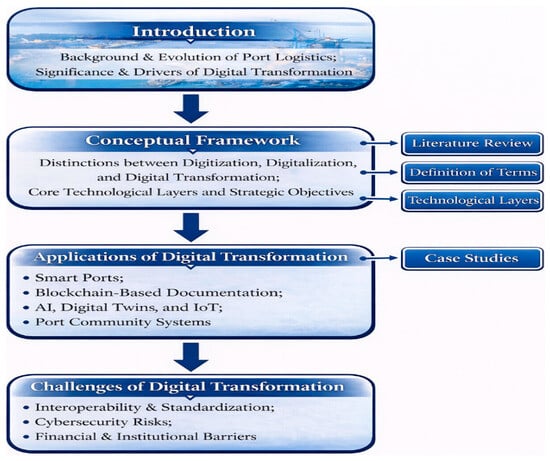
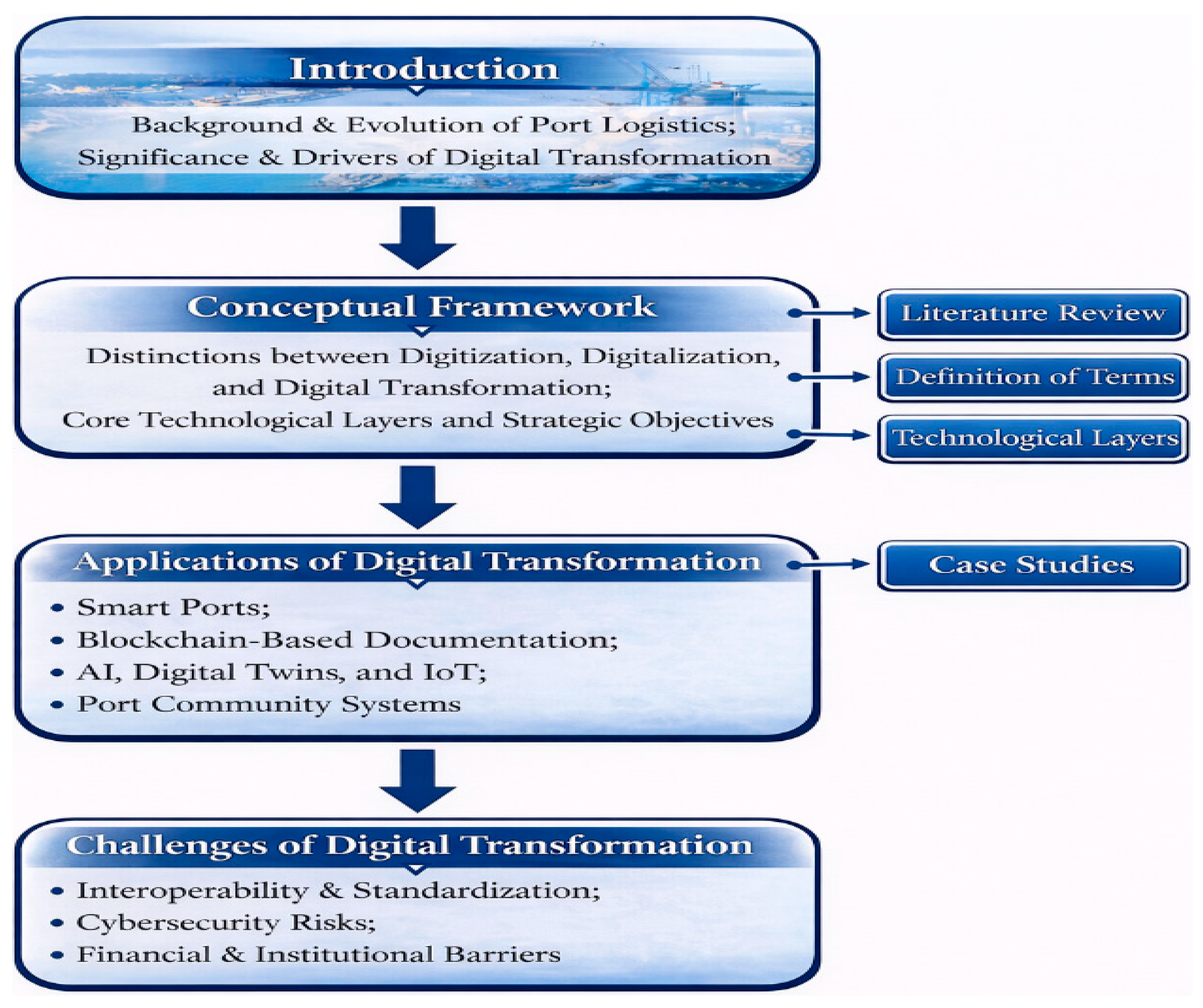
Disclaimer/Publisher’s Note: The statements, opinions and data contained in all publications are solely those of the individual author(s) and contributor(s) and not of MDPI and/or the editor(s). MDPI and/or the editor(s) disclaim responsibility for any injury to people or property resulting from any ideas, methods, instructions or products referred to in the content. |
© 2026 by the author. Licensee MDPI, Basel, Switzerland. This article is an open access article distributed under the terms and conditions of the Creative Commons Attribution (CC BY) license.