Systematic Review

Access to Heritage for People with Neurodevelopmental Disorders (NDDs): A Systematic Review

by
Patricia Castro-López
1,2,
Pablo Fernández-Arias
2,3 and
Diego Vergara
2,3,*
1
Doctoral School of Cultural Heritage and Digitalization, Catholic University of Ávila, C/Canteros s/n, 05005 Ávila, Spain, and Catholic University of Valencia San Vicente Mártir, C/ de Quevedo, 2, 46001 Valencia, Spain
2
Technology, Instruction and Design in Engineering and Education Research Group (TiDEE.rg), Catholic University of Avila, C/Canteros s/n, 05005 Avila, Spain
3
Research Department, Interamerican University for Development (UNID), Av. Bolivia 626, Lima 15082, Peru
*
Author to whom correspondence should be addressed.
Encyclopedia 2026, 6(1), 15; https://doi.org/10.3390/encyclopedia6010015
Submission received: 26 November 2025 / Revised: 29 December 2025 / Accepted: 7 January 2026 / Published: 9 January 2026
(This article belongs to the Section Social Sciences)

Abstract

Neurodevelopmental disorders (NDDs) are neurobiological conditions that arise in childhood and affect the personal, social, academic, and occupational development of those who exhibit them. The aim of this study is to analyze scientific research on neurodevelopmental disorders and their relationship to accessibility in cultural heritage, to identify the methodological approaches that currently predominate, and to examine which types of NDD are most studied and which ones are currently overlooked in scientific research. Existing adaptations for people with autism spectrum disorder (ASD) and attention deficit hyperactivity disorder (ADHD) were used as a reference point for the analysis, given their high prevalence in the child population. This study was conducted following the DSM-5-TR criteria and the PRISMA 2020 protocol to select and analyze scientific articles published in the last decade, between 2015 and 2025, obtained from the Scopus database. The results show an increase in the dissemination of scientific literature on access to cultural heritage for people with NDDs, although in a very limited way. Furthermore, within the NDDs themselves, it is ASD that appears to be most represented, with an increase in applied techniques and inclusive experiences. Based on these findings, it is recommended that future research focus on finding educational tools and best practices that promote inclusion and accessibility to cultural heritage for people with other developmental disabilities, such as ADHD.

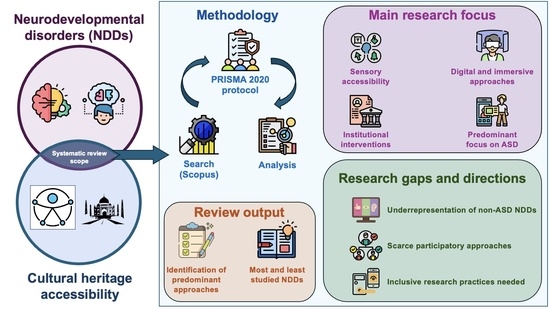
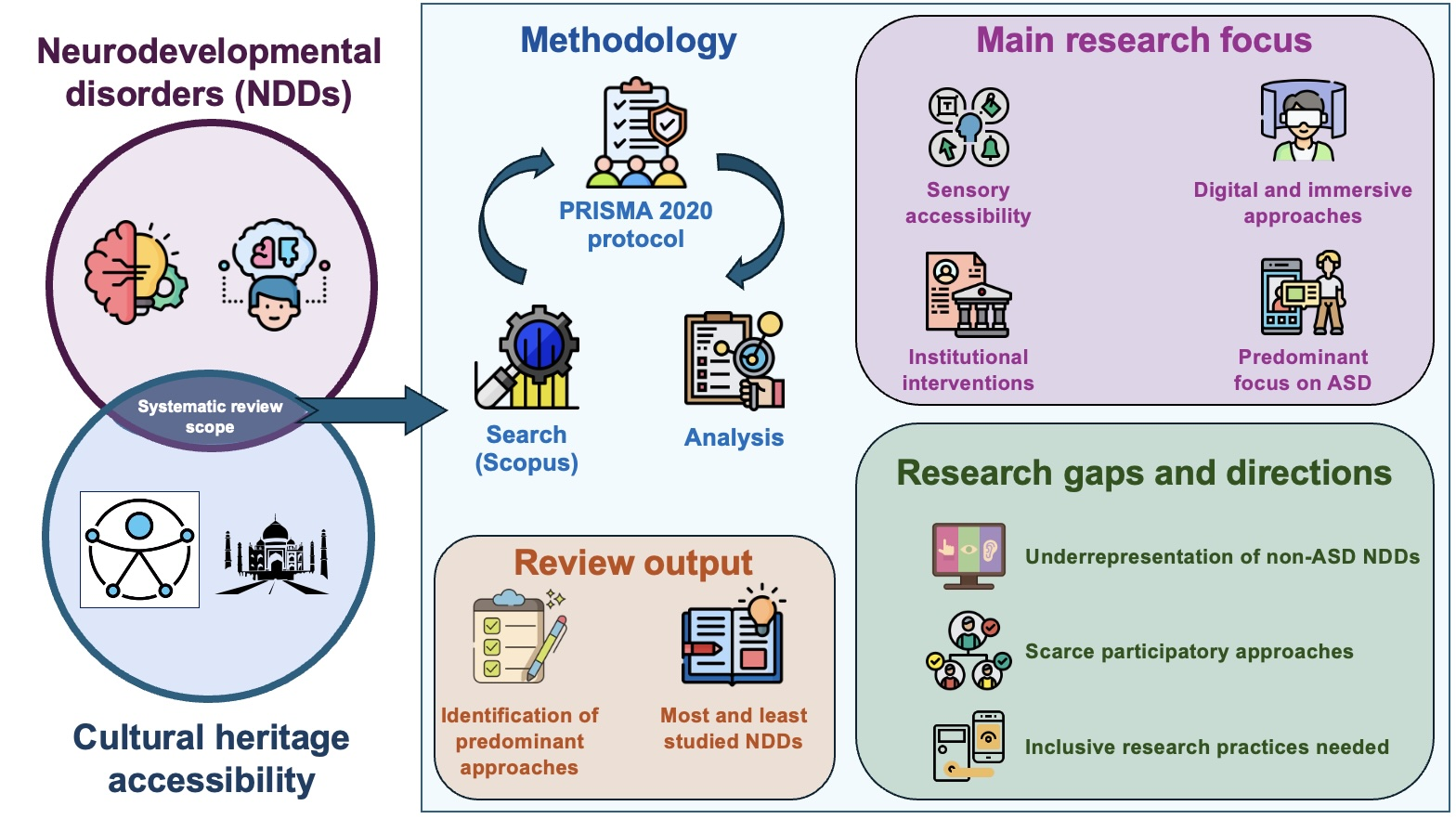
Graphical Abstract

1. Introduction

Neurodevelopmental disorders (NDDs) are characterized by a heterogeneous set of conditions that begin in childhood and affect the development of the central nervous system (CNS), significantly impacting executive, motor, social, and communication functions [1]. According to the Diagnostic and Statistical Manual of Mental Disorders, Fifth Edition (DSM-5-TR), NDDs include autism spectrum disorder (ASD), attention deficit hyperactivity disorder (ADHD), specific learning disorders (including dyslexia and dyscalculia), communication disorders, and motor disorders, among others [2]. Although these disorders are the subject of multiple studies in education and clinical settings, their relationship to access to cultural heritage has received less attention [3,4]. Furthermore, according to the diagnostic criteria of both the DSM-5-TR and the International Classification of Diseases, Eleventh Revision (ICD-11), the conditions presented by people with NDDs, in addition to sharing a neurological basis, also have functional implications that persist throughout the life cycle, such that their relationship with their environment [1,2] and, therefore, with cultural heritage.
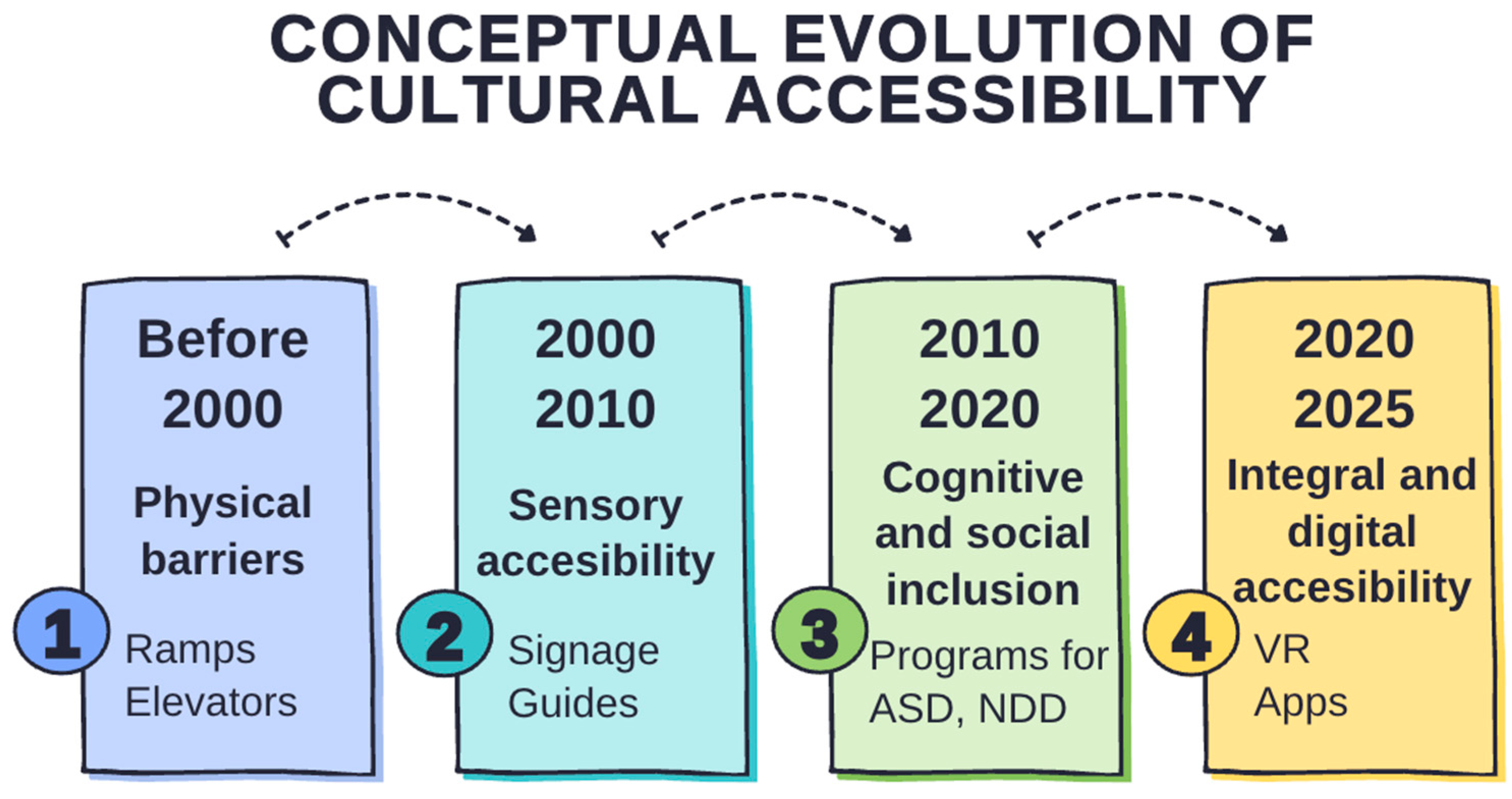
On the other hand, access to culture is a fundamental right that is enshrined in the Convention on the Rights of Persons with Disabilities [5] and advocates for the full and effective participation of all people in cultural life, regardless of their individual differences [4,6]. In this context, as reflected in Figure 1, the concept of cultural accessibility has evolved over the years and has been broadened to consider all key access-related dimensions, not only physical and sensory, but also cognitive, social, symbolic, and communicative dimensions that affect neurodivergent people [7]. In the museum context, identified as the predominant setting in the studies analyzed, prior to the 21st century, strategies primarily focused on removing physical barriers, such as ramps and elevators, in line with a rights-based approach centered on the principles of the Declaration of Human Rights [8]. During the first decade of this century (2000–2010), the objective expanded to include sensory accessibility. The first adaptations appeared, such as tactile guides and signage, all based on major international frameworks such as the International Classification of Diseases (ICD-11) [1], which recognizes NDD as conditions that affect communication, perception, and social interaction. Between 2010 and 2020, the focus shifted to cognitive and social inclusion, with the principles of the Convention on the Rights of Persons with Disabilities [5] gaining momentum. In addition, evidence highlights the effectiveness of sensory adjustments and staff training in improving participation, autonomy, and social interaction, particularly among families with children with ASD in museums [3], as well as inclusive leisure experiences that promote autonomy and social interaction [6]. Finally, between 2020 and 2025, and based on the objectives set out in the 2030 Agenda for Sustainable Development [9], accessibility is influenced by a comprehensive and digital perspective. This most recent stage is characterized by the incorporation of immersive technologies, which extend access beyond the physical space.
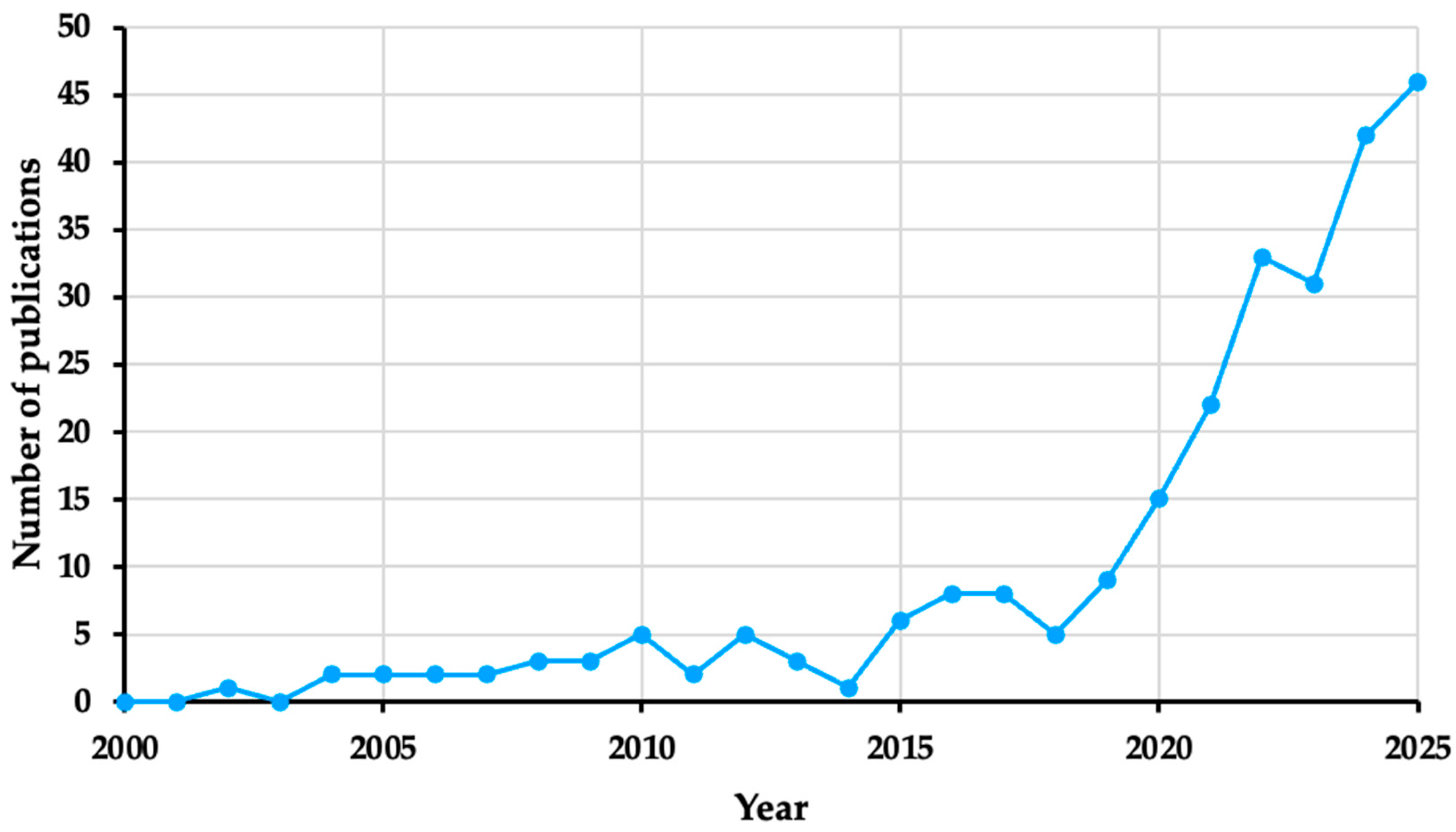
Reinforcing this conceptual synthesis, the results shown in Figure 2 illustrate the evolution of scientific production on accessibility and NDD during the 21st century. According to Scopus data, there has been a steady increase in publications since 2000, with a significant rise since 2019. This growth is observed alongside the expansion of global policies aimed at cultural and educational inclusion [5,9] and the consolidation of digital accessibility as a new axis of heritage innovation. Furthermore, the increase between 2020 and 2025 suggests a possible relationship between technological advances and research on cognitive and sensory inclusion.
However, despite this evolution in regulatory principles and research, people with NDDs continue to find obstacles and barriers in practice, making access to cultural heritage less than effective [6,7]. These difficulties are not only physical or motor-related, as people with NDDs also encounter limitations in sensory, cognitive and communicative access, both in museums and in historical sites or libraries [3,10]. To address these barriers, some studies show the effectiveness and positive impact of using technological tools [11,12]. One example is Virtual Reality (VR) tours to improve the inclusion of people with NDD, specifically for children with ASD and their support groups [11,13,14]. In addition, some museums have begun to incorporate sensory accessibility methodologies that are specifically aimed at people with ASD [15], giving rise to innovative experiences and demonstrating a commitment to cultural inclusion [16].
Collectively, these examples and the analysis of scientific literature on NDD suggest greater involvement and growth in cultural accessibility. Some adaptations appear to have positive effects in specific contexts, although limitations remain, particularly due to their focus on disabilities in general. This pattern reflects a stronger emphasis on inclusion strategies for people with ASD and their families in museums, libraries, and digital environments [6,17]. By contrast, other neurodevelopmental disorders receive less attention. In the case of ADHD, where executive functions such as sustained attention and self-control are affected, representation in inclusive cultural initiatives remains limited. This gap indicates underexplored areas in heritage accessibility research and may hinder a comprehensive understanding of neurodevelopmental diversity and the development of inclusive cultural accessibility policies.
In terms of context, the most recent research shows how museums are excelling in more inclusive approaches with interventions to promote predictable, safe, and more sensory-regulated environments [7,18]. Furthermore, participation in different cultural activities can help improve self-esteem, emotional well-being, and social skills in people with NDDs [16].
Given this scenario, the objective of this systematic review is to study the scientific literature on neurodevelopmental disorders and their relationship with accessibility to cultural heritage, to explore the methods currently in use, as well as to analyze which types of NDDs are most studied and which ones are currently lacking in scientific interest. To achieve this objective, the following research questions have been formulated:
  • RQ1. What type of intervention and methodology is used in access to cultural heritage for people with NDDs and what results do they reflect in terms of accessibility and participation?
  • RQ2. How has scientific production descriptively evolved (type of NDD, heritage context, volume, etc.)?
  • RQ3. What gaps remain in research on access to heritage for people with NDDs?

2. Materials and Methods

2.1. Registration

The protocol was registered in the Open Science Framework (OSF) under registration number 10.17605/OSF.IO/A65BS. This systematic review was conducted following the guidelines of the PRISMA 2020 protocol (Preferred Reporting Items for Systematic Reviews and Meta-Analyses) [19]. The completed PRISMA-P checklist is included in the Supplementary File S1 [19].

2.2. Review Design

The objective was to identify scientific studies that analyzed the relationship between neurodevelopmental disorders (NDDs) and access to cultural heritage.
The process was structured in five successive phases, as shown in Figure 3: (i) search and identification of scientific literature; (ii) screening and selection of studies; (iii) data extraction; (iv) synthesis and visualization of findings; and (v) interpretation and conclusions.

2.3. Search Strategy

The search was conducted using the Scopus database, one of the most important international databases in the field of social sciences, humanities, and education [20]. The search process was structured based on the query shown in Table 1, which yielded 218 articles combining general terms related to NDDs between 2015 and 2025. In addition, the search was refined by adding the terms ASD and ADHD and their access to cultural heritage to focus it and try to identify a set of relevant and rigorous documents.
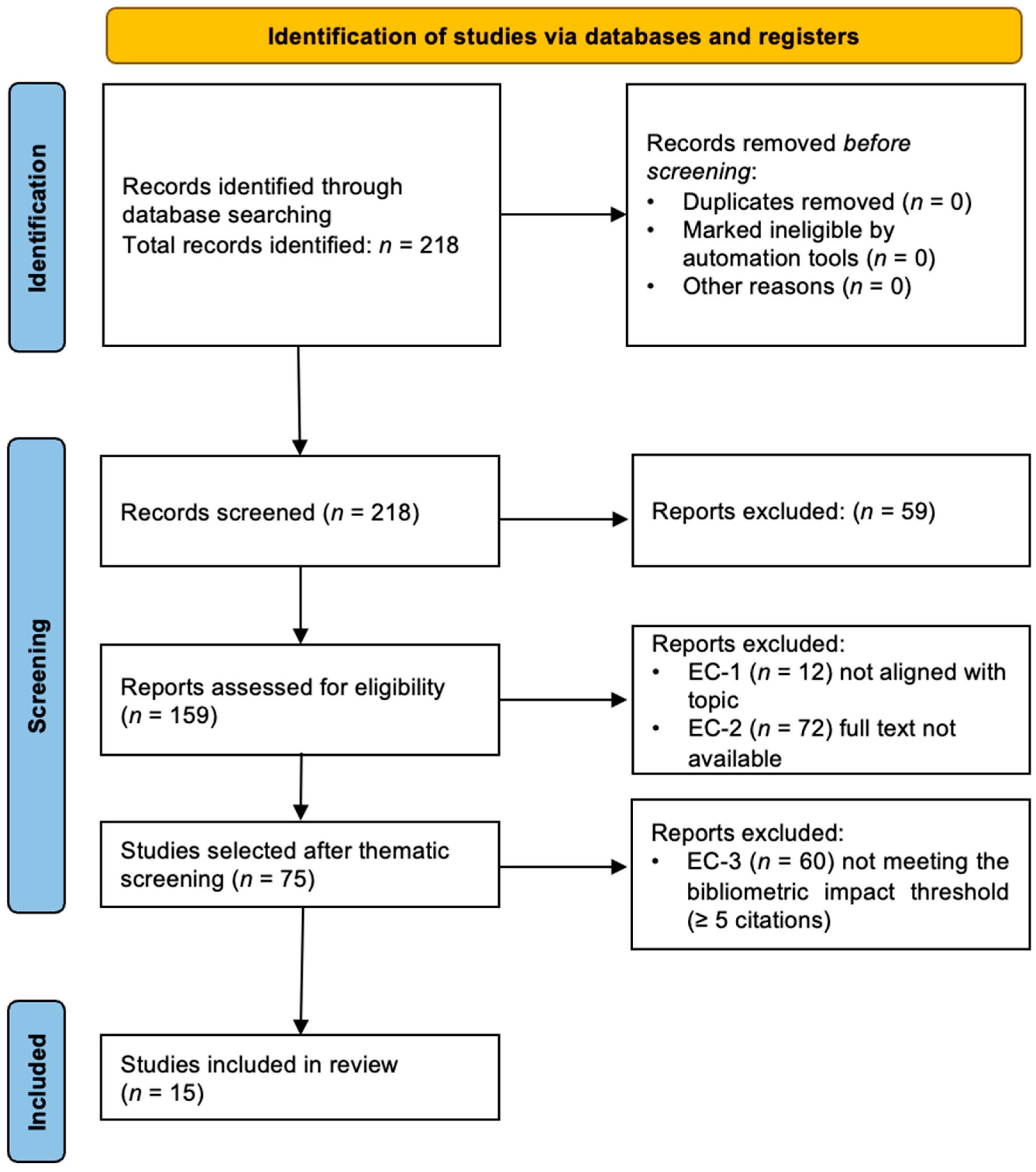
Below is the methodology used to identify the most relevant studies for this systematic review. First, the titles and abstracts of the articles were reviewed, automatically excluding those that were not focused on the topic (59 documents) and those that were not related to the study objective (such as clinical health or formal education, among others). Second, articles with full-text access were selected for reading, resulting in 87 documents, of which 12 were not aligned with the objective of the review after reading. Finally, 75 articles were selected that, due to their thematic relevance and compliance with the inclusion and exclusion criteria, provided relevant and scientific evidence.
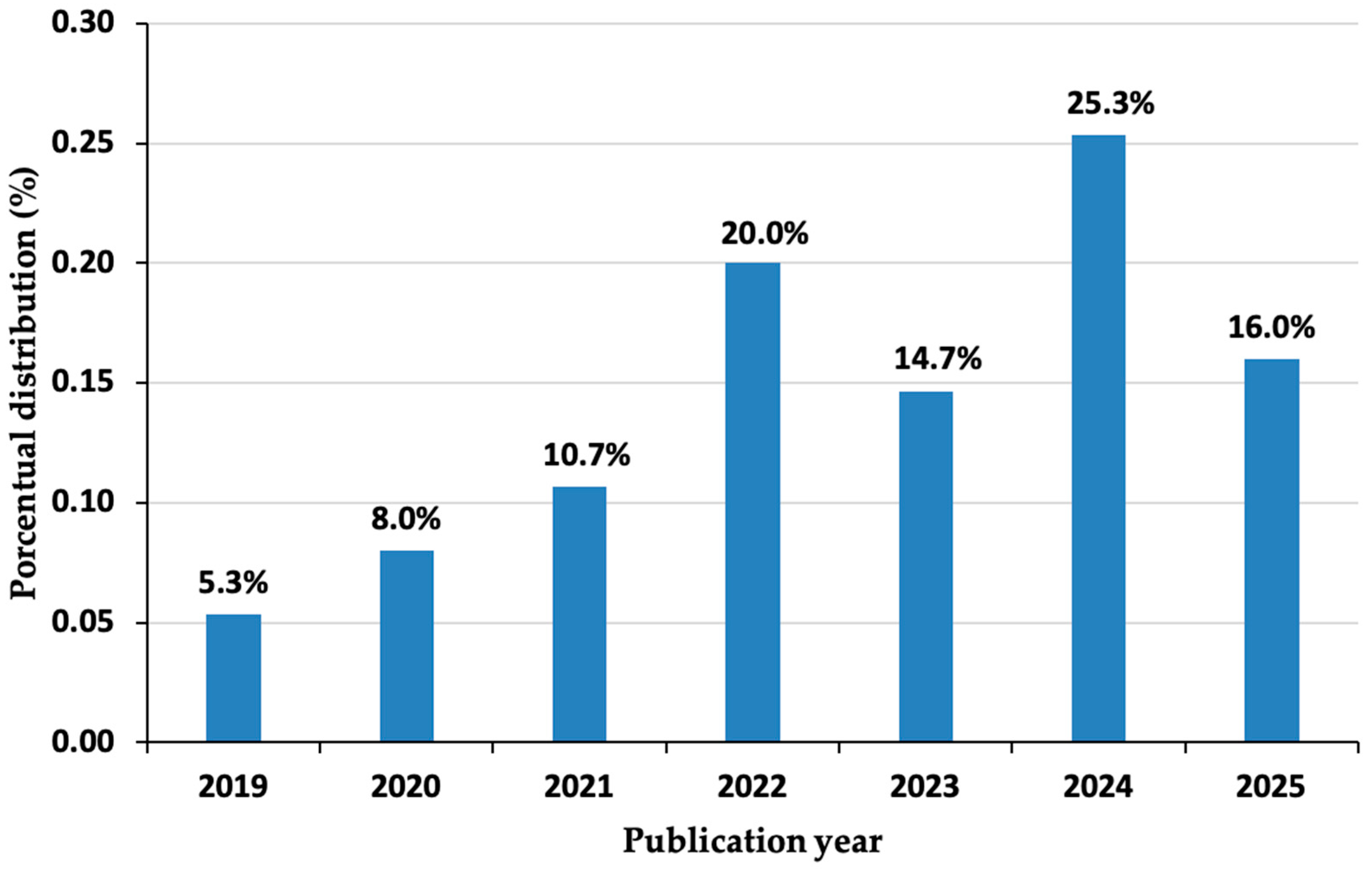
Using these 75 documents as a reference, and as shown in Figure 4, the number of publications has experienced sustained growth since 2019, with a turning point in 2022 and reaching its highest point in 2024 with 19 publications (25.3%). Therefore, this increase in the number of studies reflects a growing interest in the cultural inclusion of people with NDDs. Furthermore, it coincides with the increase and impact of international initiatives and policies on accessibility and cultural inclusion [1,4,21]. However, despite this growth, accessibility to cultural heritage focused on neurodevelopmental diversity remains an emerging field, with significant gaps that limit the construction of solid, transferable evidence.
The inclusion and exclusion criteria predefined in the screening phase (Figure 5) ensure methodological consistency and the relevance of the studies analyzed. The selected articles met the following inclusion criteria: IC-1: original peer-reviewed articles published in the last decade, between 2015 and 2025; IC-2: articles in English; IC-3: articles focusing on the relationship between NDDs and access to cultural heritage (tangible and intangible). The following exclusion criteria were established: EC-1: articles that did not fit the objective of the review; EC-2: undetected duplicate articles or articles without access to the full text.
Following this thematic and eligibility screening phase, and to assess the bibliometric impact, a complementary analysis was added to identify the most impactful works, considering the number of citations recorded in the Scopus database [20]. Based on the 75 selected studies, the average number of citations per article was calculated ( x ¯ = 4.55 ) . This value was used to identify the studies with the greatest bibliometric impact within the review corpus. Therefore, articles with more citations than the average value ( 5   c i t a s ) were considered to have greater impact. At this stage, studies classified as EC-3 were excluded for not reaching this bibliometric threshold. Only 15 of the 75 studies met this criterion (20% of the sample). This criterion allows us to isolate the most cited publications, in line with the purpose of this review. This result was also compared with a theoretical counting model (Poisson) with a mean value (λ) of 4.55 citations per article. The probability function of this distribution is presented in Formula (1).
P X = k = λ k k ! e λ , X Poisson λ
On the other hand, the selection criterion for articles with the greatest impact was established as X 5 citations, which is expressed in probabilistic terms in Formula (2).
P X 5 = 1 P X 4
To calculate this probability, the complement of the cumulative distribution up to 4 appointments is applied, as detailed in Formula (3):
P X 5 = 1 e λ k = 0 4 λ k k ! 1 = e 4.55 1 + 4.55 + 4.55 2 2 ! + 4.55 3 3 ! + 4.55 4 4 ! 0.5279
Based on these data, Formula (4) presents the calculation of the expected number of articles (E) that would meet this criterion within the total sample analyzed, adjusting it to a binomial distribution (n = 75, p = 0.5279). To do this, the probability (p is multiplied by the total number of articles considered (n = 75), resulting in a total of 39.6 articles.
E = n P X 5 = 75 0.5279 39.60
Given that the actual number is significantly low—15 articles—than expected under a random counting model (E = 39.60), this shows a marked concentration of citations in a small subset of works. This distribution pattern suggests the presence of a strong asymmetry in citation dynamics, where a limited number of studies account for most of the impact. Consequently, the selection of these 15 articles can be considered methodologically justified and representative of the most relevant core within the analyzed corpus, constituting a solid basis for the present systematic review.
Consequently, the criterion adopted of selecting only those articles with ≥5 citations help to define a rigorous and restricted subset. This analysis has made it possible to classify the studies according to their impact and has been incorporated as an additional phase within the PRISMA 2020 protocol process [19]. That is, of the total of 75 studies included after screening, those with a consolidated impact ( 5 c i t a s ; n = 15) were selected for further analysis, reinforcing their suitability to reflect the most relevant contributions in the field of cultural heritage accessibility and neurodevelopmental disorders (NDDs).
This process is shown in Figure 5, which presents the flowchart in accordance with the PRISMA 2020 protocol guidelines [19]. This diagram provides a structured overview of the identification of records, the elimination of duplicates, screening through review of titles and abstracts, selection based on full-text reading, and the final choice of studies that met the established criteria [22]. The application of clearly defined inclusion and exclusion criteria, together with a systematic screening process and independent review by several researchers, minimized the risk of bias in the selection of studies included in this review. Similarly, the use of standardized tools for data extraction and the use of the adapted RoB2 ensured a consistent and transparent assessment of methodological quality, reinforcing the robustness and reliability of the results obtained.
The search for this systematic review identified 218 documents published in the last decade, between 2015 and 2025. After applying the inclusion and exclusion criteria, 75 articles were selected for analysis. Subsequently, through the final screening based on the bibliometric study, the 15 articles with the highest impact in terms of number of citations were chosen. This bibliometric threshold was applied as a pragmatic analytical delimitation to focus the final analysis and should not be interpreted as a quality-based exclusion criterion within the eligibility process defined by the PRISMA protocol.
This final sample allowed us to identify the most relevant thematic, methodological, and contextual trends regarding accessibility to cultural heritage and neurodevelopmental disorders (NDDs).

3. Results

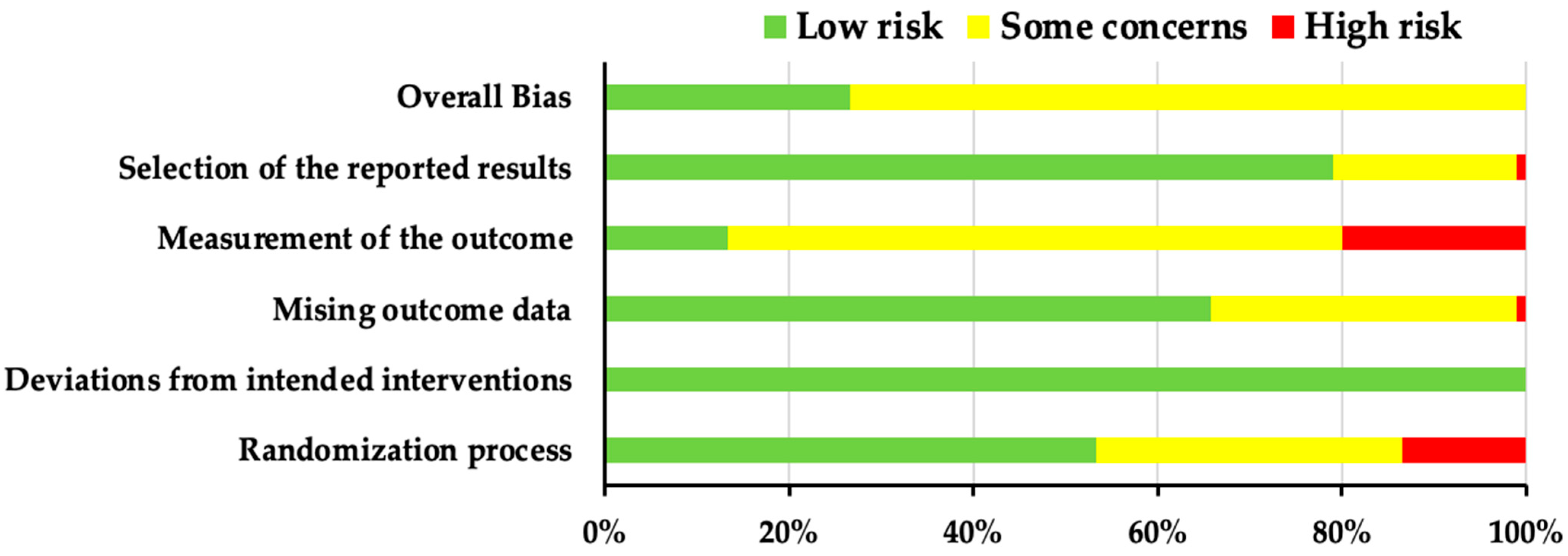
Regarding the risk of bias assessment, Figure 6 illustrates how the 15 included studies were rated across the five domains of the adapted RoB2 tool, as well as their overall risk of bias. Low-risk judgments were most common in deviations from the planned interventions (100%), in the selection of reported outcomes (79.0%), and in missing outcome data (65.7%). Assessments of “some concerns” appeared more frequently in the randomization/selection domain (33.3%) and, in particular, in outcome measurement (66.7%). This pattern is consistent with the predominance of qualitative and mixed-methods designs in the review, many of which relied on self-reported information or non-probabilistic sampling. High-risk ratings were uncommon and were limited to the randomization/selection (13.3%) and outcome-measurement (20.0%) domains. Overall, most studies were judged as presenting “some concerns” (73.3%), with a smaller proportion classified as low risk (26.7%) and none rated as high risk—indicating that, despite certain methodological limitations, the general credibility of the findings remains largely intact.
The study presents the evolution of scientific production on neurodevelopmental disorders and their relationship with accessibility in cultural heritage, the analysis of heritage contexts, the methodological approaches that currently predominate, and the types of NDDs that have been most studied, as well as those that present a gap in current scientific interest.
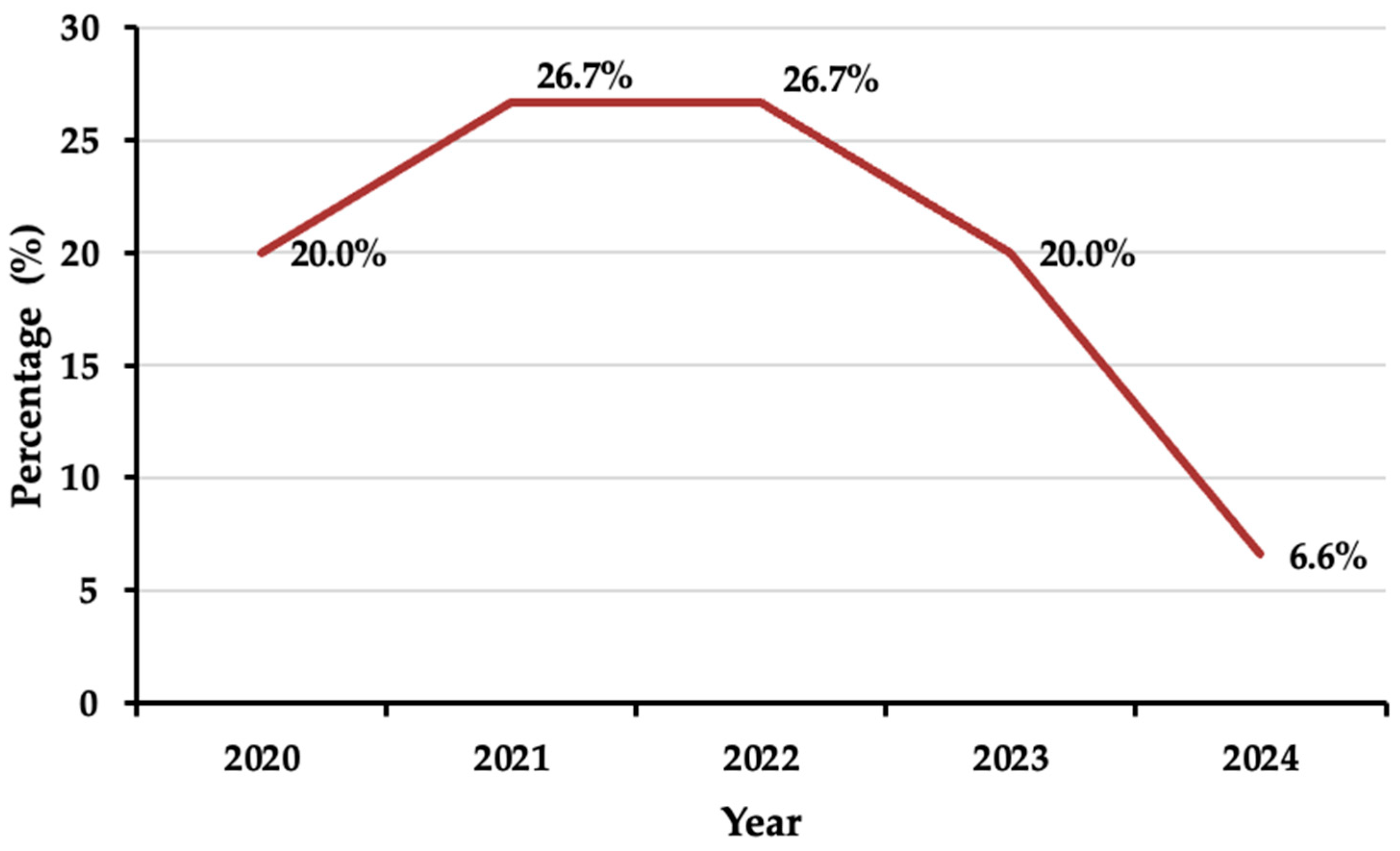
In terms of temporal distribution, as can be seen in Figure 7, the 15 most cited articles are concentrated between 2020 and 2024, with no records in 2025, which is consistent with the citation criterion, since the works of the current year (2025) have not yet achieved sufficient visibility to appear in the sample.
The highest production is observed between 2020 and 2022, a period that accounts for 73.4% of publications. This coincides with the expansion of interest in museum accessibility since the COVID-19 pandemic and cultural digitization [23,24]. Between 2023 and 2024 (26.6%), research on educational mediation, immersive technologies, and inclusive policies is consolidating, evolving toward an applied and evaluative approach and demonstrating the consolidation of the field.
In relation to the analysis of heritage contexts, museums are the most representative of the sample analyzed and the main setting for the development of accessibility policies and actions such as sensory adjustments, the organization of accessible tours, and the transformation of exhibitions with more inclusive approaches.
A thematic coding framework was applied to classify the selected studies according to the primary type of accessibility intervention. Coding categories were defined based on the objectives of the review and applied systematically, with each article assigned to the category that best represented its main analytical focus. Given the exploratory and integrative nature of this systematic review, the coding framework was intended to support thematic synthesis rather than exhaustive category replication, prioritizing analytical coherence and interpretative clarity over statistical agreement metrics.
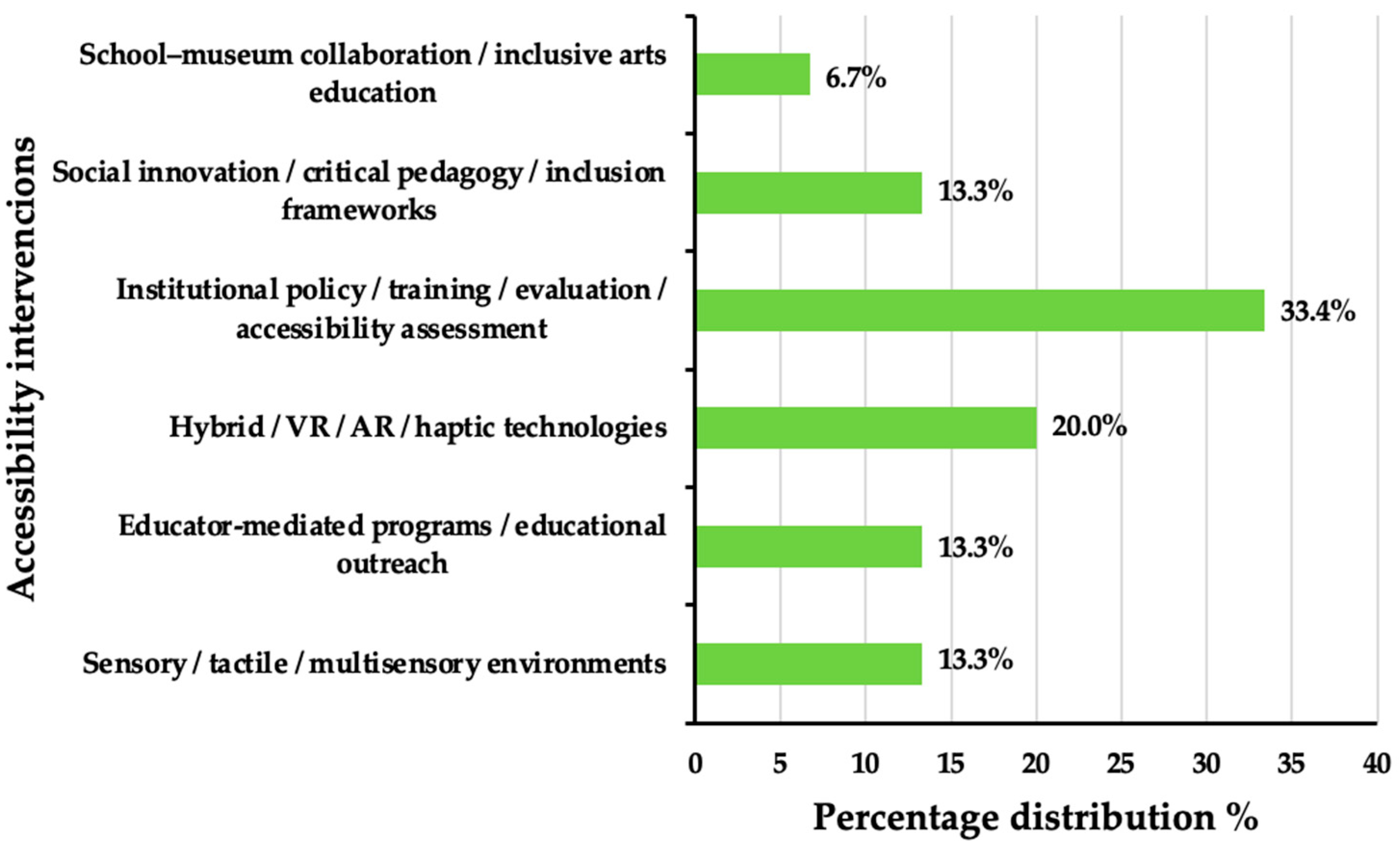
Among the different methodological strategies or types of intervention, as can be seen in Figure 8, the category “Institutional policy/training/evaluation/accessibility assessment” (33.4%) is the most representative. This category includes studies that address accessibility from the perspective of museum management, the development of action protocols, and the implementation of institutional evaluations. This is followed by “Hybrid/VR/AR/haptic technologies” (20%), which shows how virtual reality (VR), augmented reality (AR), and hybrid environments are becoming indispensable tools for anticipating visits and preparing individuals, regulating sensory overload, and assisting in the interpretation of heritage. Complementing this, the categories “Sensory/tactile/multisensory environments” (13.3%) and “Educator-mediated programs/educational outreach” (13.3%) confirm that both educational mediation and multisensory strategies represent one of the most widely used types of intervention to promote inclusion in museums and heritage spaces. One example is how sensory adaptations promote stimulus regulation and help create calm spaces to reduce sensory overload, especially in people with ASD. On the other hand, approaches based on “social innovation/critical pedagogy/inclusion frameworks” (13.3%) propose a reinterpretation of access to heritage, proposing inclusion as a process of institutional and cultural transformation beyond mere physical adaptation. Finally, studies analyzing “School–museum collaboration/inclusive arts education” (6.7%) extend the concept of inclusion to arts education and intercultural training so that people with disabilities can participate more fully.
In terms of methodology, most of the studies analyzed take a descriptive and exploratory approach. Quantitative and mixed designs appear to a lesser extent and are used, in most cases, for evaluative or complementary purposes.
Table 2 shows the 15 most cited articles that make up the final corpus of the systematic review (Figure 5), allowing us to identify the dominant trends and the most innovative contributions. The selection was made according to three fundamental criteria: (i) methodological rigor in terms of design, sample, and procedures used; (ii) thematic diversity and type of interventions so that accessible technologies, face-to-face initiatives, and institutional proposals are represented; and (iii) the impact of each work reflected in the number of citations. In addition, the full title of each article has been included to facilitate identification, maintaining criteria of transparency and traceability.
The most relevant aspects of the studies included in Table 2 are detailed below, selected for their representativeness of the different types of intervention and methodological approaches. Martin et al. (2020) analyze inclusive programs aimed at children with ASD in museums, with positive results in improving understanding and participation in real contexts through co-design and sensory mediation [25]. Kruczek et al. (2024) evaluate accessibility in Krakow’s main museums, showing through their results the advances in physical accessibility, but pointing out the limitations in sensory and cognitive accessibility [36]. De Luca et al. (2023) present a VR- and AR-based intervention applied to the museum experience, with positive results in sensory anticipation and in reducing the overload experienced by people with NDDs [27]. In addition, Kantaros et al. (2023) study the digitization and creation of 3D tactile replicas as an inclusive learning tool in a cultural experience [29]. In this same sensory field, Mastrogiuseppe et al. (2021) delve into the adaptation of heritage environments for people with ASD, combining environmental regulation strategies, anticipatory signage, and personal mediation [28]. This study reflects how reducing sound stimuli or controlling lighting improves the cultural experience, contributing to a model of accessibility that goes beyond adaptations or the removal of physical barriers and addresses cognitive and perceptual accessibility in a comprehensive manner [28].
Other studies focus on the impact of institutional organization, educational mediation, and digital transformations. Cecilia (2021) analyzes the effect of the COVID-19 pandemic on accessibility for visitors with blindness or low vision, showing how the health crisis acted as an opportunity to promote more inclusive digital solutions, especially in terms of remote mediation and content adaptation [26]. Todorov et al. (2022) analyze the accessibility of regional museum websites in Bulgaria, reflecting improvements in basic technical aspects but identifying significant deficiencies in usability, navigation, and compliance with international standards [35]. From a social justice perspective, Eisenhauer et al. (2022) propose an educational approach focused on disability justice and access, highlighting the importance of rethinking traditional museum practices and promoting the participation of people with disabilities in educational processes [37]. In the field of interinstitutional collaboration, Gigerl et al. (2022) analyze cooperation between schools and museums to promote inclusive cultural education, emphasizing the need for stable collaborative structures and shared training [38]. Finally, Roque-Martins and Crespillo-Marí (2022) propose a virtual reality-based methodology aimed at people with visual impairments, demonstrating that these tools can offer new ways of accessing museum content and spaces through adapted sensory mediation strategies [39].
In addition, other studies explore accessibility from the point of view of institutional organization and management and inclusion policies. Cerdán-Chiscano and Jiménez-Zarco (2021) start from the lack of training on the part of those responsible for the institutions themselves to propose a museum management model centered on accessibility as the main axis [30]. Along the same lines, Revko et al. (2020) identified through their study the main barriers to access to cultural infrastructure, such as lack of funding and limitations associated with disability itself, among others [31]. Rocha et al. (2020) examine accessibility in science museums, highlighting the importance of inclusive education and staff training to encourage participation by all [32]. Zakaria (2023) analyzes work practices and inclusion policies in Egypt’s national museums, revealing progress in both staff training and accommodations, although limitations in cognitive accessibility persist [33]. Finally, Solima et al. (2021) analyze how incorporating new approaches to interpretation can lead to more inclusive and accessible environments for people with behavioral disorders or cognitive difficulties [34].
Finally, the 15 selected articles [25,26,27,28,29,30,31,32,33,34,35,36,37,38,39] show great thematic and methodological diversity, ranging from emerging technologies such as VR or AR to inclusive strategies and programs that bring the reader closer to multiple possibilities for improving accessibility, as well as reflecting a greater commitment to making cultural heritage accessible to all. This translates into more opportunities, transforming both access to heritage and learning itself. Therefore, the analysis of the scientific literature in this review allows us to understand the real scope of the adaptations implemented, as well as to highlight the most significant approaches and results that have been identified in this review.

4. Discussion

The analysis of the 15 articles selected for in-depth analysis reflects a field that is consolidating in a gradual and still limited manner, combining technological advances with certain methodological and thematic shortcomings. It should be noted that these statements are based on this selected corpus, which, although composed of highly cited and widely recognized contributions within the field, may not fully capture the variability that could emerge when considering the broader body of available literature. Accordingly, these interpretations should be understood as descriptive of this analytical focus rather than exhaustive in scope. The review of the scientific literature also indicates a growing interest in cultural accessibility, driven by international inclusion policies and digital innovation.
Below, we present the main findings, organized according to the questions that guided the start of this systematic review. In relation to RQ1, the interventions identified include both technological solutions and institutional actions, linked to staff training, the development of accessibility guidelines and policies, and the sensory adaptation of cultural spaces. These strategies bring benefits in terms of visitor understanding and experience, as well as reducing physical, communicative, and perceptual barriers, improving the experience and well-being of visitors [25,28,36]. Likewise, the incorporation of immersive and digital technologies also influences the improvement of users’ understanding, participation, and autonomy.
Some studies analyze the use of technologies such as VR and AR, highlighting their potential to facilitate sensory anticipation and reduce anxiety about cultural experiences by making them more personalized [27,39,40]. At the same time, another study points out how 3D digitization and the creation of tactile replicas broaden access to heritage for people with visual impairments and constitute a model of inclusive learning [29]. Another example along these lines is autonomous navigation using mobile applications and accessible interfaces, which allow visitors to move independently in more complex environments [28,41], or multisensory orientation, through a combination of tactile, auditory, and visual cues adapted to improve orientation [26]. On the other hand, interventions based on participation and co-design, although representing a minority in the final corpus of this review, provide significant evidence of the impact they can have on the inclusion of people with NDDs by allowing them to participate in the creation of accessible content and tools. In this vein, there are studies that agree that collaborative processes with people with disabilities generate more relevant results that are better adapted to their needs [27,37,38].
As for RQ2, the temporal evolution of the corpus descriptively reveals sustained growth since 2019, with a concentration of publications between 2022 and 2024, coinciding with the consolidation of international regulatory and policy frameworks on universal accessibility. This boom is also related to the development of European and Latin American projects that promote accessibility as a cornerstone of cultural sustainability, and to a growing interest in the inclusion of all people in museum planning [33]. Regarding the analysis of heritage contexts, the museum is the most representative experimental space, where efforts to integrate criteria of physical, cognitive, and emotional inclusion are concentrated. One example is the study of the main museums in Krakow [36], which show notable advances in physical accessibility, especially in infrastructure and mobility, but still have deficits in sensory and cognitive accessibility, limiting the participation of people with visual or hearing disabilities. Thus, accessibility strategies depend not only on spatial adaptation, but also on sustained institutional planning linked to cultural management and staff training [41,42]. In terms of methodology, qualitative and descriptive approaches predominate. Experimental designs and quantitative approaches are in the minority. This methodological imbalance limits the possibility of establishing solid correlations between interventions and outcomes in terms of participation, understanding, and well-being. Another important aspect is the increase in interdisciplinarity. Many of the studies in the final corpus integrate psychological, educational, or museology-related perspectives [27,43]. These results should be interpreted as descriptive patterns of the analyzed corpus, reflecting publication volume and distribution rather than statistically inferential trends.
The results answering RQ3 show that certain gaps persist and must be addressed in future research. First, there is a thematic gap related to the small number of studies explicitly focused on NDDs. Although ASD is the most diagnosed condition, there is virtually no research addressing cultural accessibility in people with ADHD, learning disorders, or language disorders, despite their relevance within the DSM-5-TR [2]. Most research groups people with disabilities into the same category, which obscures the cognitive and sensory specificities of different NDDs.
Secondly, the methodological gap stems from the limited use of evaluative, longitudinal, and comparative designs. The lack of validated instruments to measure the degree of cultural accessibility and the absence of impact indicators make it impossible to assess the real effectiveness of interventions. Some studies emphasize that accessibility continues to be addressed in a fragmented manner and depends on individual initiatives, rather than being a structural pillar of cultural policy [42,43].
Finally, the participatory gap is evident in the limited presence of people with NDDs in the definition, design, and evaluation of actions. Although there are successful co-design experiences [27,38], most projects continue to be driven from an institutional perspective, without incorporating feedback processes or participatory evaluation mechanisms. This reveals the need to evolve from a model of accessibility where the lived experience of people with NDDs is the primary source of knowledge and design.
Overall, the reviewed articles reflect a growing line of research characterized by significant advances in sensory and communicative accessibility, as well as an increase in digital resources and tools. These observations are informed by the quantitative patterns reported in Section 3, including publication trends over time, the distribution of NDDs addressed, and the relative weight of interevention categories.
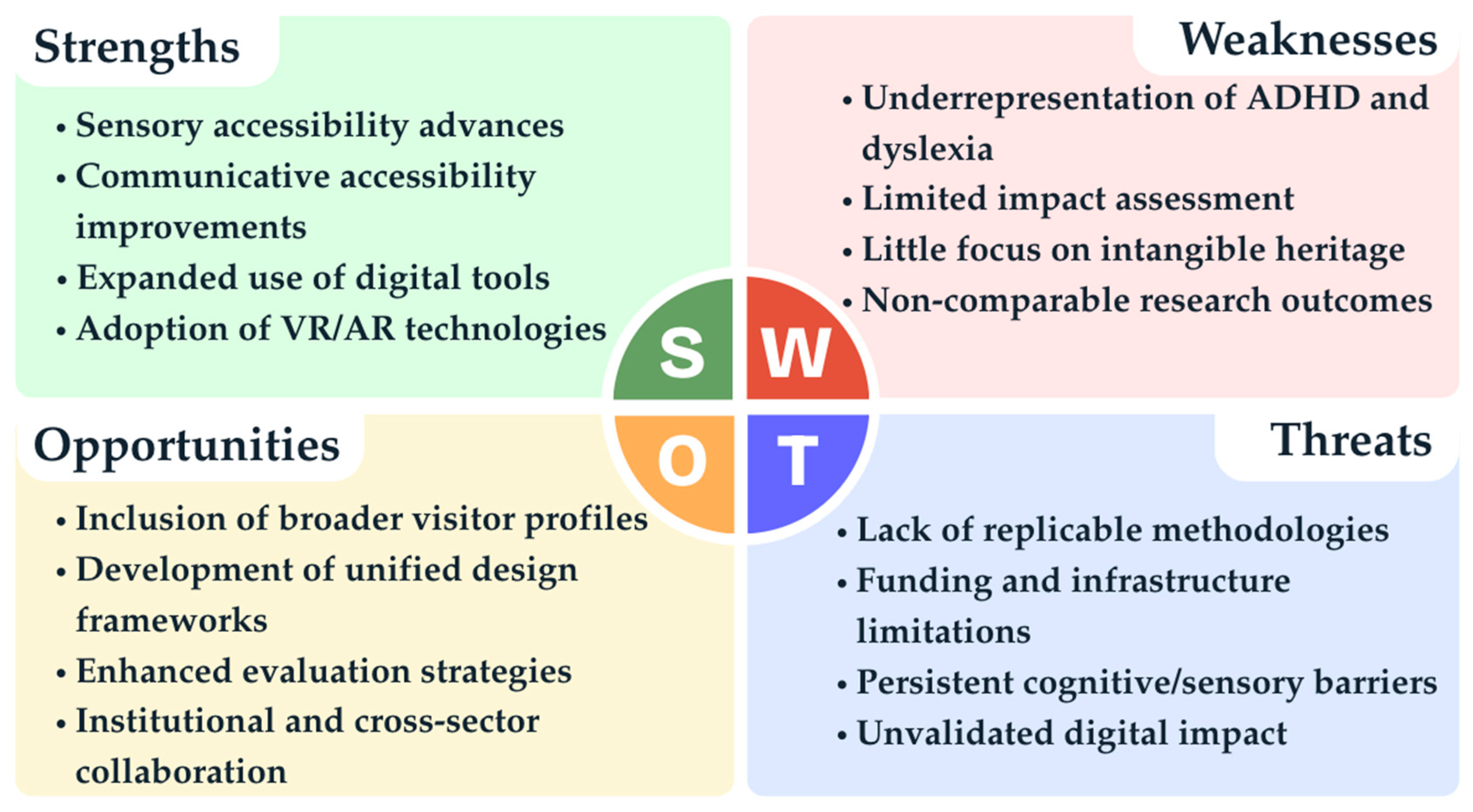
In the field of neurodevelopmental disorders, the results are mainly directed towards people with ASD, reflecting an approach that is still limited to other types of NDDs. On this basis, Figure 9 summarizes the most relevant aspects of the current state of research using a SWOT (Strengths, Weaknesses, Opportunities, and Threats) framework: Strengths (S): include advances in multisensory accessibility and in the use of digital and immersive technologies that expand the possibilities for interaction; Weaknesses (W): reflect the underrepresentation of other NDDs and lack of evaluative studies; Opportunities (O): point to the broadening of visitor profiles and the consolidation of coordinated lines of work; and Threats (T): relate to the absence of unified criteria, limited resources, and persistent structural barriers that may hinder further progress.
Despite the advances identified, this review has several limitations that should be considered when interpreting the results. First, the research shows a significant gap in the study of other neurodevelopmental disorders beyond ASD, especially in the case of ADHD, which limits the possible generalization of the conclusions to other neurodivergent profiles. In addition, there is a lack of methodological variety and a limited assessment of the real impact that interventions have on the understanding, orientation, and participation of people with NDDs during cultural experiences. These limitations can be turned into future lines of research, including the integration of broader and more comparable methodologies, the development of interactive technologies designed according to universal design principles, and the expansion of evaluation systems to objectively measure the effectiveness of interventions. Similarly, it is essential to involve people with NDDs themselves in the design, implementation, and validation of proposals, truly ensuring participatory approaches. It is also considered necessary to expand this research to other types of heritage, such as intangible, natural, and digital heritage.

5. Conclusions and Prospects

The results obtained in this research reflect clear patterns about: (i) temporal distribution; (ii) the type of NDD addressed; (iii) heritage contexts; (iv) the methodological strategies developed; and (v) the research methodologies used. The review shows that the scientific literature focuses mainly on experiences centered on accessibility to cultural heritage, taking disability into account in a generic way and leaving NDDs in the background. However, as an original contribution of this study, it has been found that, among the variety that exists within the neurodevelopmental disorders defined in the DSM-5-TR, it is autism spectrum disorder (ASD) that, although to a limited extent, appears in greater proportion in relation to new methodologies or adaptations to cultural heritage. Other neurodevelopmental disorders, such as attention deficit hyperactivity disorder (ADHD), dyslexia, or other neurodivergent profiles, do not appear or do so in a tangential and anecdotal manner. This gap highlights the need for further research focused on neurodevelopmental diversity, which will enable progress towards strategies that facilitate the participation of people with NDDs in cultural heritage.
The results found in this systematic review suggest that, as the main contribution of this study, accessibility interventions for people with NDDs in heritage contexts have focused mainly on environmental, educational, and sensory adaptations. These approaches have produced positive results, but methodological diversity is limited and there are hardly any impact assessments. This suggests the need to move towards a universal accessibility model that also considers cognitive, communicative, and personal dimensions. Achieving this universal accessibility model requires the direct participation of people with disabilities in general or with NDD, in addition to the constant support of institutions.
The review also identifies gaps in research on other NDDs, such as ADHD. Considering these results, it is proposed to integrate different methodologies and expand their variety, use interactive technologies designed according to universal design principles, and expand the evaluation of interventions. The review suggests that greater attention to the understanding, guidance, and participation of people with NDDs may enhance cultural accessibility.
Finally, it is important to include people with NDDs in the design and validation of proposals. It is also considered appropriate to extend these strategies beyond the museum context, incorporating intangible, natural, digital, and community heritage.

Supplementary Materials

The following supporting information can be downloaded at: https://www.mdpi.com/article/10.3390/encyclopedia6010015/s1, Supplementary File S1: Completed PRISMA 2020 checklist for systematic review. Reference [19] is cited in the Supplementary Material.

Author Contributions

Conceptualization, P.C.-L. and D.V.; methodology, P.C.-L. and P.F.-A.; formal analysis, P.C.-L., P.F.-A., and D.V.; data curation, P.C.-L., P.F.-A., and D.V.; writing—original draft preparation, P.C.-L., P.F.-A., and D.V.; writing—review and editing, P.C.-L., P.F.-A., and D.V.; supervision, P.F.-A., and D.V. All authors have read and agreed to the published version of the manuscript.

Funding

This research received no external funding.

Institutional Review Board Statement

Not applicable.

Informed Consent Statement

Not applicable.

Data Availability Statement

The original contributions presented in this study are included in the article/Supplementary Material. Further inquiries can be directed to the corresponding author.

Conflicts of Interest

The authors declare no conflicts of interest.

References

  1. World Health Organization. International Classification of Diseases, 11th Revision (ICD-11); World Health Organization: Geneva, Switzerland, 2018. [Google Scholar]
  2. American Psychiatric Association. Diagnostic and Statistical Manual of Mental Disorders, 5th ed.; Text Rev (DSM-5-TR); American Psychiatric Publishing: Washington, DC, USA, 2022. [Google Scholar]
  3. Lussenhop, A.; Mesiti, L.A.; Cohn, E.S.; Orsmond, G.I.; Goss, J.; Reich, C.; Osipow, A.; Pirri, K.; Lindgren-Streicher, A. Social participation of families with children with autism spectrum disorder in a science museum. Mus. Soc. Issues 2016, 11, 122–137. [Google Scholar] [CrossRef]
  4. Hladik, L.; Meyer, R.; Allen, S.; Bonnici, S.; Froelke, N.A.; Romaniak, H.; Ougayour, Y.; Nelson, N.; Alkhamees, A.K.; Davis, H.; et al. Accessibility and inclusion for families with children with autism spectrum disorders in cultural institutions. Curator Mus. J. 2022, 65, 435–449. [Google Scholar] [CrossRef] [PubMed]
  5. United Nations. Convention on the Rights of Persons with Disabilities. Available online: https://www.un.org/disabilities/documents/convention/convoptprot-e.pdf (accessed on 2 October 2025).
  6. Villalba, C.M. Inclusive leisure among people on the autism spectrum: Some experiences in museums. Eikon/Imago 2019, 8, 259–284. [Google Scholar] [CrossRef]
  7. Pagliano, A.; Ansaldi, B. Digital visualization and multimedia for cultural heritage accessibility: Designing ‘for all’ video-tours at the Archaeological National Museum of Naples (MANN). Sci. Res. Inf. Technol. 2023, 13, 85–102. [Google Scholar] [CrossRef]
  8. United Nations. Universal Declaration of Human Rights; United Nations: Paris, France, 1948; Available online: https://www.un.org/en/about-us/universal-declaration-of-human-rights (accessed on 2 October 2025).
  9. United Nations. Transforming Our World: The 2030 Agenda for Sustainable Development; United Nations: New York, NY, USA, 2015; Available online: https://sdgs.un.org/2030agenda (accessed on 2 October 2025).
  10. Gibson, A.N.; Hanson-Baldauf, D. Beyond sensory story time: An intersectional analysis of information seeking among parents of autistic individuals. Libr. Trends 2019, 67, 550–575. [Google Scholar] [CrossRef]
  11. Drageset, D.; Kao, Y.C.; Newbutt, N.A.; Crippen, K.J. Promoting inclusive visits to a natural history museum with a pre-visit VR tour for autistic families. Res. Sci. Educ. 2025, 55, 511–528. [Google Scholar] [CrossRef]
  12. Fonseca, D.; Navarro, I.; de Renteria, I.; Moreira, F.; Ferrer, Á.; de Reina, O. Assessment of wearable virtual reality technology for visiting World Heritage buildings: An educational approach. J. Educ. Comput. Res. 2018, 56, 940–973. [Google Scholar] [CrossRef]
  13. Varriale, L.; Cuel, R.; Ravarini, A.; Briganti, P.; Minucci, G. Smart and Inclusive Museums for Visitors with Autism: The App Case “A Dip in the Blue”. In Sustainable Digital Transformation: Paving the Way Towards Smart Organizations and Societies; Za, S., Winter, R., Lazazzara, A., Eds.; Lecture Notes in Information Systems and Organisation; Springer: Cham, Switzerland, 2023; Volume 59, pp. 133–152. [Google Scholar] [CrossRef]
  14. Pillay, Y.; Brownlow, C.; March, S. Autism and inclusive practices: Mothers speak out. Int. J. Incl. Educ. 2023, 27, 419–434. [Google Scholar] [CrossRef]
  15. Sorce, S.; Gentile, V.; Oliveto, D.; Barraco, R.; Malizia, A.; Gentile, A. Exploring usability and accessibility of avatar-based touchless gestural interfaces for autistic people. In Proceedings of the 7th ACM International Symposium on Pervasive Displays (PerDis 2018), Munich, Germany, 6–8 June 2018; Association for Computing Machinery: New York, NY, USA, 2018; pp. 1–2. [Google Scholar] [CrossRef]
  16. Deng, L. Equity of access to cultural heritage: Museum experience as a facilitator of learning and socialization in children with autism. Curator 2017, 60, 411–426. [Google Scholar] [CrossRef]
  17. Drageset, D.B.; Crippen, K.J. A systematic review of the use of virtual reality in formal, informal, and non-formal learning environments for individuals with autism. Interact. Learn. Environ. 2025, 33, 1929–1944. [Google Scholar] [CrossRef]
  18. Svaler, T.B. On making libraries and museums more accessible for autistic people. IFLA J. 2023, 50, 42–52. [Google Scholar] [CrossRef]
  19. Page, M.J.; McKenzie, J.E.; Bossuyt, P.M.; Boutron, I.; Hoffmann, T.C.; Mulrow, C.D.; Shamseer, L.; Tetzlaff, J.M.; Akl, E.A.; Brennan, S.E.; et al. The PRISMA 2020 statement: An updated guideline for reporting systematic reviews. BMJ 2021, 372, n71. [Google Scholar] [CrossRef] [PubMed]
  20. Mongeon, P.; Paul-Hus, A. The journal coverage of Web of Science and Scopus: A comparative analysis. Scientometrics 2016, 106, 213–228. [Google Scholar] [CrossRef]
  21. Edelstein, R. New foundations: Principles for disability-inclusive museum practice. J. Mus. Educ. 2022, 47, 192–205. [Google Scholar] [CrossRef]
  22. Waffenschmidt, S.; Knelangen, M.; Sieben, W.; Bühn, S.; Pieper, D. Single screening versus conventional double screening for study selection in systematic reviews: A methodological systematic review. BMC Med. Res. Methodol. 2019, 19, 132. [Google Scholar] [CrossRef]
  23. Noehrer, L.; Gilmore, A.; Jay, C.; Yehudi, Y. The impact of COVID-19 on digital data practices in museums and art galleries in the UK and the US. Humanit. Soc. Sci. Commun. 2021, 8, 236. [Google Scholar] [CrossRef]
  24. Palumbo, R. Surviving Covid-19: What museums and cultural institutions can do to attract cultural tourists and get through the pandemic. Int. Rev. Public Nonprofit Mark. 2023, 20, 905–926. [Google Scholar] [CrossRef]
  25. Martin, W.B.; Yu, J.; Wei, X.; Vidiksis, R.; Patten, K.K.; Riccio, A. Promoting Science, Technology, and Engineering Self-Efficacy and Knowledge for All With an Autism Inclusion Maker Program. Front. Educ. 2020, 5, 75. [Google Scholar] [CrossRef]
  26. Cecilia, R.R. COVID-19 pandemic: Threat or opportunity for blind and partially sighted museum visitors? J. Conserv. Mus. Stud. 2021, 19, 122–137. [Google Scholar] [CrossRef]
  27. De Luca, V.; Gatto, C.; Liaci, S.; Corchia, L.; Chiarello, S.; Faggiano, F.; Sumerano, G.; De Paolis, L.T. Virtual reality and spatial augmented reality for social inclusion: The “Includiamoci” Proyect. museum experiences. Information 2023, 14, 38. [Google Scholar] [CrossRef]
  28. Mastrogiuseppe, M.; Span, S.; Bortolotti, E. Improving accessibility to cultural heritage for people with Intellectual Disabilities: A tool for observing the obstacles and facilitators for the access to knowledge. Alter. Eur. J. Disabil. Res. 2021, 15, 113–123. [Google Scholar] [CrossRef]
  29. Kantaros, A.; Soulis, E.; Alysandratou, E. Digitization of ancient artefacts and fabrication of sustainable 3D-Printed Replicas for Intended Use by Visitors with Disabilities: The Case of Piraeus Archaeological Museum. Sustainability 2023, 15, 12689. [Google Scholar] [CrossRef]
  30. Cerdán-Chiscano, M.; Jiménez-Zarco, A.I. Towards an Inclusive Museum Management Strategy. An Exploratory Study of Consuption Experience in Visitors with Disabilities. The Case of the CosmoCaixa Science Museum. Sustainability 2021, 13, 660. [Google Scholar] [CrossRef]
  31. Revko, A.M.; Butko, M.; Popelo, O.V. Methodology for assessing the influence of Cultural Infrastructure on Regional Development in Poland and Ukraine. Comp. Econ. Res. Cent. East. Eur. 2020, 23, 21–39. [Google Scholar] [CrossRef]
  32. Rocha, J.N.; Massarani, L.; Abreu, W.V.; Inacio, L.G.B.; Molenzani, A.O. Investigating accessibility in Latin American science museums and centers. An. Acad. Bras. Ciências 2020, 92, e20191156. [Google Scholar] [CrossRef]
  33. Zakaria, N.N. Assessing the working practices and inclusion policies of Egyptian museums: Challenges and possibilities for facilitating learning and promoting inclusion. Front. Educ. 2023, 8, 1111695. [Google Scholar] [CrossRef]
  34. Solima, L.; Tani, M.; Sasso, P. Social innovation and accessibility in museum: Some evidence from the SoStare al MANN project. Capit. Cultur. 2021, 23, 23–56. [Google Scholar] [CrossRef]
  35. Todorov, T.; Bogdanova, G.; Todorova-Ekmekci, M. Accessibility of Bulgarian regional museums websites. Int. J. Adv. Comput. Sci. Appl. 2022, 13, 28–34. [Google Scholar] [CrossRef]
  36. Kruczek, Z.; Gmyrek, K.; Zizka, D.; Korbiel, K.; Nowak, K. Accessibility of cultural heritage sites for people with disabilities: A case study on Krakow museums. Sustainability 2024, 16, 318. [Google Scholar] [CrossRef]
  37. Eisenhauer Richardson, J.T.; Carlisle Kletchka, D. Museum education for disability justice and liberatory access. J. Mus. Educ. 2022, 47, 138–149. [Google Scholar] [CrossRef]
  38. Gigerl, M.; Sanahuja-Gavaldà, J.M.; Petrinska-Labudovikj, R.; Moron-Velasco, M.; Rojas-Pernia, S.; Tragatschnig, U. Collaboration between schools and museums for inclusive cultural education: Findings from the INARTdis project. Front. Educ. 2022, 7, 979260. [Google Scholar] [CrossRef]
  39. Roque-Martins, P.; Crespillo-Marí, L. O Grupo do Leão, a new Visuality of Access: A methodological proposal around the use of virtual reality in people with visual disabilities. Arte. Individ. Soc. 2022, 35, 29–51. [Google Scholar] [CrossRef]
  40. Lampropoulos, G.; Fernández-Arias, P.; Antón-Sancho, Á.; Vergara, D. Affective Computing in Augmented Reality, Virtual Reality, and Immersive Learning Environments. Electronics 2024, 13, 2917. [Google Scholar] [CrossRef]
  41. Small, R.V.; Schriar, S.; Kelly, M.P. Targeting autism in libraries: A comprehensive and collaborative training program for librarians. Int. J. Inf. Divers. Incl. 2019, 3, 78–88. [Google Scholar] [CrossRef]
  42. Chaidemenaki, L.; Kolokytha, O. Whose culture is it anyway? Perceptions of accessibility in museums by professionals working with people with intellectual disabilities in Greece. Mus. Manag. Curatorship 2025, 40, 494–511. [Google Scholar] [CrossRef]
  43. Lištiaková, I. Creative arts in the National Museum of Computing. Curator Mus. J. 2024, 67, 499–517. [Google Scholar] [CrossRef]
Figure 1. Conceptual evolution of cultural accessibility. Based on international frameworks and the literature reviewed.
Encyclopedia 06 00015 g001
Figure 2. Publication trends in accessibility and neurodevelopmental disorders research: a Scopus analysis (2000–2025). Data collected in November 2025.
Encyclopedia 06 00015 g002
Figure 3. Five methodology phases for research.
Encyclopedia 06 00015 g003
Figure 4. Percentage distribution of 75 articles on NDDs and heritage access, distributed between 2019 and 2025. Data collected in November 2025.
Encyclopedia 06 00015 g004
Figure 5. Flow diagram of the systematic review process PRISMA 2020. Developed by the authors based on Page et al. (2021) [19].
Encyclopedia 06 00015 g005
Figure 6. Analysis of the risk of bias in the included studies.
Encyclopedia 06 00015 g006
Figure 7. Percentage distribution of the 15 most-cited articles on museum accessibility (2020–2024) (n = 15).
Encyclopedia 06 00015 g007
Figure 8. Types of accessibility interventions in cultural heritage (% of studies, n = 15).
Encyclopedia 06 00015 g008
Figure 9. SWOT analysis of research on neurodevelopmental disorders and access to cultural heritage.
Encyclopedia 06 00015 g009
Table 1. Search string.
Search String
TITLE-ABS-KEY((autism OR “autism spectrum disorder” OR “attention deficit hyperactivity disorder” OR “neurodevelopmental disorder” OR “neurodevelopmental disorders” OR disability OR disabilities) AND (“cultural heritage” OR “world heritage” OR museum OR museums OR “science museum” OR “science museums” OR “cultural institution” OR “cultural institutions” OR “heritage site” OR “heritage sites”) AND (access OR inclusion OR accessibility OR participation)) AND PUBYEAR > 2015 AND PUBYEAR < 2026 AND DOCTYPE(ar)
Table 2. Representative studies from the analyzed corpus.
Ref.Author(s) and YearArticle TitleType of InterventionContributionCited by
[25]Martin et al.
2020
Promoting Science, Technology, and Engineering for Children with Autism through Inclusive Museum ProgramsSensory-adapted, educator-mediated museum programs (STEM)Qualitative evidence from real settings on practices that foster STEM engagement in autistic children36
[26]Cecilia, RR.
2021
COVID-19 Pandemic: Threat or Opportunity for Blind and Partially Sighted Museum Visitors?Hybrid accessibility model combining multisensory, tactile, and digital strategiesExplores how museums adapted accessibility for blind and partially sighted visitors during COVID-19, integrating physical and remote participation tools.34
[27]De Luca et al.
2023
Virtual Reality and Spatial Augmented Reality for Inclusive Museum ExperiencesVR/AR technologyExperimental study implementing immersive technologies to enhance accessibility and multisensory experience for neurodivergent visitors.33
[28]Mastrogiuseppe et al.
2021
Improving Accessibility to Cultural Heritage for People with AutismCognitive accessibility and inclusive research toolQualitative study developing and applying an easy-to-read questionnaire to identify barriers and facilitators for visitors with intellectual disabilities in heritage sites.29
[29]Kantaros et al.
2023
Digitization of Ancient Artifacts and Fabrication of Tactile Replicas for Inclusive LearningSensory/tactile environmentApplied technical study using haptic replicas of archeological artifacts as universal design resources to improve accessibility for visually impaired visitors.29
[30]Cerdán-Chiscano & Jiménez-Zarco
2021
Towards an Inclusive Museum Management StrategyInstitutional policy/trainingStrategic institutional analysis of inclusive museum management; combines policy review with governance and staff training perspectives.22
[31]Revko et al.
2020
Methodology for Assessing the Influence of Cultural Heritage Accessibility on Community DevelopmentInstitutional evaluationQuantitative study proposing indicators to measure the relationship between heritage accessibility and community development.18
[32]Rocha et al.
2020
Investigating Accessibility in Latin American Science MuseumsInstitutional and diagnostic assessment of accessibility in science museumsComparative descriptive study on inclusive practices in Latin American science museums, highlighting gaps in inclusive science education and the need for staff training.16
[33]Zakaria NN
2023
Assessing the Working Practices and Inclusion Policies of Egyptian MuseumsEducational outreachInstitutional analysis of inclusion policies in Egyptian museums; highlights staff training and communication strategies for visitors with disabilities.12
[34]Solima et al.
2021
Social Innovation and Accessibility in Museum ManagementSocial innovation/institutional policyQualitative case study addressing accessibility in museum management as a dimension of social innovation, promoting inclusive governance and participatory strategies.10
[35]Todorov et al.
2022
Accessibility of Bulgarian regional museums websitesEvaluation of web accessibility standards in museum communication.Assesses web accessibility of Bulgarian regional museum websites using automated tools (TAW, WAVE, Lighthouse) complemented by manual testing, revealing inconsistencies and the need for comprehensive accessibility auditing.9
[36]Kruczek et al.
2024
Accessibility of Cultural Heritage Sites for People with Disabilities: A Case Study on Krakow MuseumsInstitutional accessibility/policyDescriptive research assessing physical and digital accessibility across 31 Krakow museums; provides a systematic evaluation of sensory, cognitive, and technological adaptations in cultural spaces.9
[37]Eisenhauer et al.
2022
Museum Education for Disability Justice and Liberatory AccessCritical pedagogy/disability justice frameworkTheoretical study proposing a critical museum education model grounded in disability justice, crip theory, and collective care; redefines accessibility as participatory, relational, and liberatory practice.8
[38]Gigerl et al.
2022
Collaboration between schools and museums for inclusive cultural education: Findings from the INARTdis-projectSchool–museum collaboration/inclusive arts educationMixed-method European study examining the INARTdis project; analyzes how collaborative programs between schools and museums foster inclusive arts education, accessibility, and social participation for students with disabilities and migrant backgrounds.6
[39]Roque-Martins & Crespillo-Marí
2022
O Grupo do Leão, A new Visuality of Access: a methodological proposal around the use of virtual reality in people with visual disabilities;VR/haptic technologyExperimental methodological proposal using photogrammetry and haptic-feedback VR to enhance esthetic and cognitive access for visually impaired visitors through multisensory museum interaction.5
Disclaimer/Publisher’s Note: The statements, opinions and data contained in all publications are solely those of the individual author(s) and contributor(s) and not of MDPI and/or the editor(s). MDPI and/or the editor(s) disclaim responsibility for any injury to people or property resulting from any ideas, methods, instructions or products referred to in the content.