1. Introduction
The reliability of high-voltage electrical equipment is dependent on the integrity of its insulation system. Partial discharge (PD) activity is widely recognized as one of the earliest indicators of insulation degradation and incipient faults. For this reason, continuous PD monitoring can be an essential tool for Condition-Based Maintenance strategies, enabling early fault detection and reducing the risk of unexpected failures and costly outages [
1,
2,
3,
4]. PDs are both a symptom and a cause of electrical insulation degradation; their presence reflects ongoing deterioration processes within the insulation system, therefore representing a means to evaluate the aging and condition of insulating systems of electrical components [
3,
4].
The estimation of the insulation condition traditionally passes through the analysis of Phase-Resolved Partial Discharge (PRPD) patterns, which condense essential information such as partial discharges amplitude, phase of occurrence, and number. Different PD sources, such as internal voids, delaminations, surface discharges, and corona, present characteristic PRPD patterns that permit their identification. This diagnostic capability is critical because each PD mechanism is associated with different risk levels and degradation progression within the insulation system.
Detecting and analyzing PD signals enables the implementation of predictive maintenance strategies, reducing downtime and preventing catastrophic breakdowns [
5,
6,
7]. Traditionally, PD measurements have been performed using offline methods; however, the increasing demand for real-time diagnostics and integration with advanced analytics has driven the development of continuous monitoring systems [
1,
8]. Continuous on-line monitoring systems must deal with numerous aspects, ranging from sensor type, sensor positioning, and proper management of all recorded data [
9]. Selecting appropriate sensors is crucial and requires careful evaluation of bandwidth, measurement accuracy, system responsiveness, and overall performance.
Each partial discharge event generates fast transient current pulses with limited amplitude and extremely short duration, typically in the range of microseconds. Given the extremely short rise time, the spectrum of these impulses can easily extend into high frequencies, from hundreds of kHz to tens of MHz.
Sensors used for partial discharge (PD) measurements must be capable of detecting fast transient pulses with specific characteristics, including wide bandwidth, high sensitivity, and good linearity. In addition, practical considerations such as low cost, lightweight, ease of installation, and the ability to perform non-intrusive measurements are essential to ensure the safety of both the system under test and operating personnel. Over the years, various sensors have been developed and evaluated for online PD monitoring. Among these, High-Frequency Current Transformers (HFCTs), together with Ultra-High-Frequency Antennas (UHFAs) and Transient Earth Voltage (TEV) sensors, have emerged as optimal solutions, due to their ability to reliably capture PD-related signals and to enable safe and continuous condition assessment of insulation systems. HFCTs offer galvanic isolation, robustness, and compatibility with various installation environments, making them suitable for continuous acquisition systems [
10,
11,
12] and reducing problems relevant to environmental noise and positioning compared to UHFA [
13,
14,
15,
16] and TEV [
17,
18].
Depending on the installation site, different HFCT designs and characteristics are preferable. For cable monitoring and for retrofit installation on conductors carrying large power currents, split-core HFCTs are commonly used because they can be clamped around an existing conductor without interrupting service. Solid-core HFCTs, a single closed core through which the conductor must be passed, are often selected for permanent, new installations and for measurements on dedicated ground conductors and neutral point connections. Ferrite core saturation from high 50/60 Hz load currents is an important concern for HFCTs [
19,
20,
21], to avoid magnetic saturation, designers may employ several mitigation strategies, including the selection of appropriate ferrite materials, the introduction of intentional air gaps, and the use of core geometries and materials that increase low-frequency flux capacity. In addition, split-core designs with controlled gap geometries have been proposed to ensure avoidance of magnetic saturation under all operating conditions of the cable [
21,
22]. For permanent PD monitoring on cable systems, HFCTs are typically installed on the cable’s ground/earth strap near a solid ground point, and band-pass filtering/surge protection are used to separate PD pulses from power-frequency and transient disturbances [
23]. However, the performance of HFCTs is strongly influenced by their design parameters, including ferrite core material, winding configuration, and number of turns [
11,
20,
21,
23,
24,
25]. These factors determine the sensor’s sensitivity, bandwidth, and frequency response, which are critical for accurate PD measurement. A poorly optimized HFCT may introduce attenuation or resonance effects, compromise the quality of PD signals, and affect subsequent processing. For HFCT, ferrites are usually employed. Ferrites are made of ceramic compounds consisting of transition metals bonded with oxygen; they exhibit pronounced ferromagnetic properties and high electrical resistivity. Ferrites used in electromagnetic cores contain iron oxides combined with nickel, zinc, and/or manganese compounds. They have a low coercivity value and are known as “soft ferrites,” in contrast to “hard ferrites,” which are used to manufacture permanent magnets. The low coercivity allows the direction of magnetization to be reversed without dissipating a large amount of energy due to hysteresis losses, while the high resistivity limits the flow of eddy currents within the core. This results in low losses at high frequencies compared to other ferromagnetic materials.
The soft ferrites most used currently are:
It is important to choose the most suitable material for each application; the ferrite appropriate for 100 kHz differs from that used in applications at higher frequencies.
Furthermore, another fundamental characteristic to consider is the temperature to which ferrites are subjected; exceeding the critical Néel temperature leads to a change in the magnetic behavior of the material.
Continuous acquisition systems that feed machine-learning algorithms require consistent signal quality to ensure reliable feature extraction and classification performance. Consequently, optimization of HFCT design is not limited to maximizing sensitivity to PD pulses but must also ensure a stable and well-defined frequency response over the spectral range relevant to PD activity, typically from several hundred kilohertz up to several tens of megahertz. Therefore, HFCTs intended for continuous monitoring and data-driven diagnostics must be designed to provide not only high sensitivity but also frequency constancy, linearity, and long-term stability, ensuring that the acquired signals are suitable for reliable machine-learning-based analysis.
Continuous monitoring systems generate large volumes of data, making manual interpretation increasingly challenging for operators.
In recent years, artificial intelligence (AI) and advanced data-driven techniques have been extensively investigated to enhance the analysis of PD signals. Techniques such as expert systems, artificial neural networks, support vector machines, and deep learning models have been applied to PD pattern recognition, fault classification, and source identification. Supervised learning approaches can achieve high classification accuracy, but they often require large, well-labeled datasets [
8,
26,
27,
28,
29,
30].
Unsupervised learning techniques, particularly clustering algorithms, can be helpful for continuous PD monitoring applications. Clustering methods allow PD data to be grouped based on intrinsic similarities without the need for prior labeling, making them well-suited for identifying emerging discharge patterns associated with incipient faults. Rather than replacing human expertise, clustering algorithms act as a decision-support tool, assisting operators by highlighting changes in PD behavior and separating multiple discharge sources. The use of clustering joins the strengths of both AI and human judgment and supports more informed and timely maintenance decisions [
31,
32,
33,
34,
35]. In this context, continuous monitoring of partial discharge (PD) activity plays a crucial role in assessing insulation condition, as the analysis of signal amplitude and waveform characteristics enables the identification and tracking of defect evolution over time, provided that signals from different defect sources are reliably distinguished among them and from the background noise.
This study addresses these requirements by presenting a characterization methodology for HFCTs intended for on-line PD measurement for new systems where a solid core can be easily installed. The approach involves analyzing different commercial ferrite core materials and winding configurations, including both concentrated and distributed arrangements. Each configuration has been evaluated in terms of its frequency response and a fast transient representative of PD. Experimental measurements are performed employing sinusoidal waveforms varying the frequency and IEC 60270 [
36]-compliant calibrator impulses to simulate typical PD pulses. Furthermore, signals acquired using two different HFCTs during a laboratory test on an ad hoc specimen are presented. The results are compared with a simplified theoretical model [
23] to validate trends. Attention is given to the trade-offs between sensitivity and bandwidth, as well as the influence of the number of turns on achieving a wider frequency range.
The proposed methodology aligns with previous research on HFCT optimization but extends the analysis by incorporating considerations for continuous acquisition and AI-based processing. By systematically evaluating core selection, winding distribution, and turn number, this work aims to establish guidelines for designing HFCTs that deliver accurate PD measurements under real-world conditions. The findings contribute to the development of advanced monitoring systems capable of supporting predictive maintenance and enhancing the reliability of high-voltage assets.
2. Materials and Methods
A comparative study was conducted to evaluate different ferrite materials and determine their suitability for partial discharge (PD) detection and continuous autonomous signal acquisition. Commercially available ferrites were selected and tested to characterize their performance under sinusoidal excitation across a wide frequency range and their response to IEC 60270-compliant calibrator impulses representative of typical PD events. Furthermore, a brief illustrative comparison was conducted through controlled laboratory partial discharge tests using an ad hoc test specimen. This allowed a comparative assessment of the signals acquired by the measurement system when different HFCT configurations were employed. The experimental campaign was designed to quantify the influence of core material properties on sensor performance, with particular emphasis on frequency response, bandwidth, sensitivity, and overall signal fidelity.
The ferrite cores analyzed in this work are standard industrial products.
In
Table 1 are summarized their physical and magnetic properties, including core dimensions and initial permeability, along with the identification codes adopted in this paper, winding arrangement, and number of turns. This classification provides a clear reference for comparing the impact of core material and winding configuration on High-Frequency Current Transformer (HFCT) performance.
To assess the influence of winding configuration on sensor performance, the ferrite cores were wound with two different numbers of turns, namely three turns and ten turns. These configurations were intentionally selected to introduce controlled variations in the sensor response, sufficient to highlight the effects of changing the number of turns, particularly in terms of signal attenuation and transfer impedance (), without aiming for exhaustive optimization.
Since PD phenomena predominantly occur at high frequencies, the impedance characteristics of the High-Frequency Current Transformer (HFCT) play a critical role in ensuring accurate and faithful signal acquisition. The indications obtained from these winding configurations establish a reference framework that supports sensor selection for specific installation constraints and acquisition strategies, as well as for the design and implementation of complete and optimized PD monitoring systems.
Each HFCT consists of a secondary winding on the toroidal core, while the primary winding is represented by the conductor carrying the current to be measured, which may be a power or grounding cable.
The current flowing through the conductor, including components associated with PD pulses, generates a magnetic field concentrated within the HFCT core. This magnetic flux induces a voltage in the secondary winding, which is then acquired and processed.
Each ferrite core exhibits permeability characteristics that vary with both material properties and frequency. These characteristics are inherently nonlinear and depend on the magnetic history of the material, including saturation and hysteresis phenomena.
The permeability µ
c can be expressed in complex form, in (1), as:
Both the real, µ′, and imaginary, µ″, components are frequency dependent.
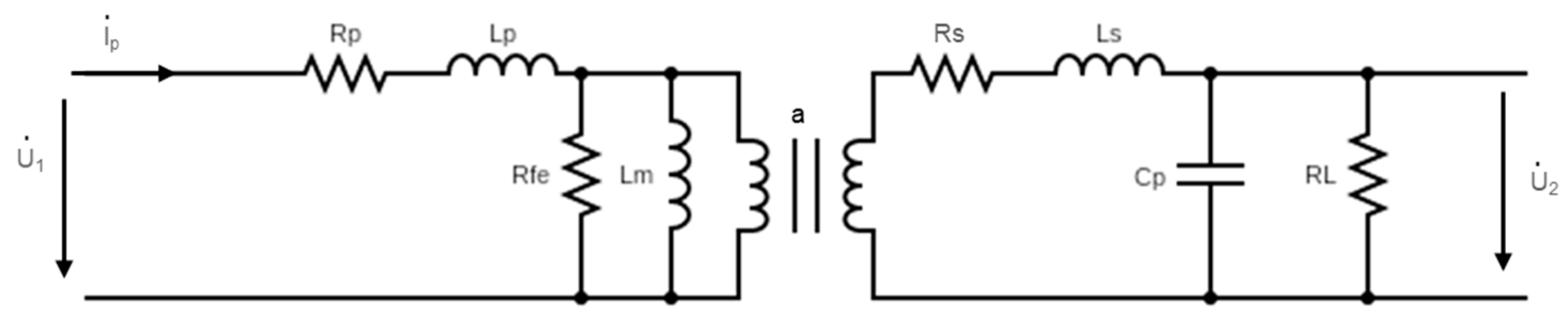
The equivalent circuit model of a conventional transformer remains applicable to HFCTs; a sketch is reported in
Figure 1, and the model employed in this work, Equations (2) to (7), is a simplified representation as proposed in [
23], where parasitic elements are neglected, such as the parasitic capacitance and leakage flux losses.
The parameter “a” is the transformer ratio and, in this case, it corresponds to the number of secondary windings. The primary winding is the cable passing through the HFCT, so the primary number of turns is one.
The magnetizing inductance
, given in (2), is determined by the vacuum permeability
, the frequency-dependent complex permeability of the core material
, the core height
, and the number of primary turns
which is one. The logarithmic term accounts for the toroidal core geometry through the ratio of the outer and inner radii,
and
[
37].
The load resistance, RL, connected to the output of the HFCT is referred to the primary side as shown in (3), where the transformer ratio accounts for the turns relationship between the primary and secondary windings.
In Equation (4) Rs’ is the resistance of secondary winding reported to the primary side, ω is the angular frequency in rad/s, σco = 58.14 × 10⁶ S/m is the electrical conductivity of the copper conductor, μ0 ≈ 1.25664 × 10⁻⁶ H/m is the vacuum permeability, μco ≈ 1 is the relative permeability of copper, r2 is the radius of the secondary winding, l2 is the length one turn of the secondary winding. For the frequency range and for the dimensions of the cores here considered, the RL >> Rs, the load resistance is much higher than the resistance of the secondary winding. The magnetizing impedance is expressed in (5) as a function of the angular frequency and the magnetizing inductance.
As shown in (6), the total magnetizing impedance is obtained by the parallel combination of the magnetizing impedance and the equivalent core loss resistance, thereby modeling both magnetic energy storage and core losses. The primary current is related to the applied voltage through , as expressed in (7), and equivalently through the secondary voltage scaled by the transformer ratio, assuming ideal transformer behavior.
The HFCT transfer impedance is defined as the ratio of the secondary voltage to the primary current.
Finally, the transfer impedance
of the HFCT is defined in (8) as the ratio between the secondary voltage
and the primary current
.
The parasitic effects due to the presence of straight capacitances are not taken into account in this study, and they will be discussed in a future paper. Nevertheless, the experimental results are in good agreement with the model predictions. This, in the first instance, allows us to assert that, in the considered frequency range, the parasitic effects can be neglected.
The HFCT prototypes were fabricated using cables with LDPE insulation, tightly wound around the core.
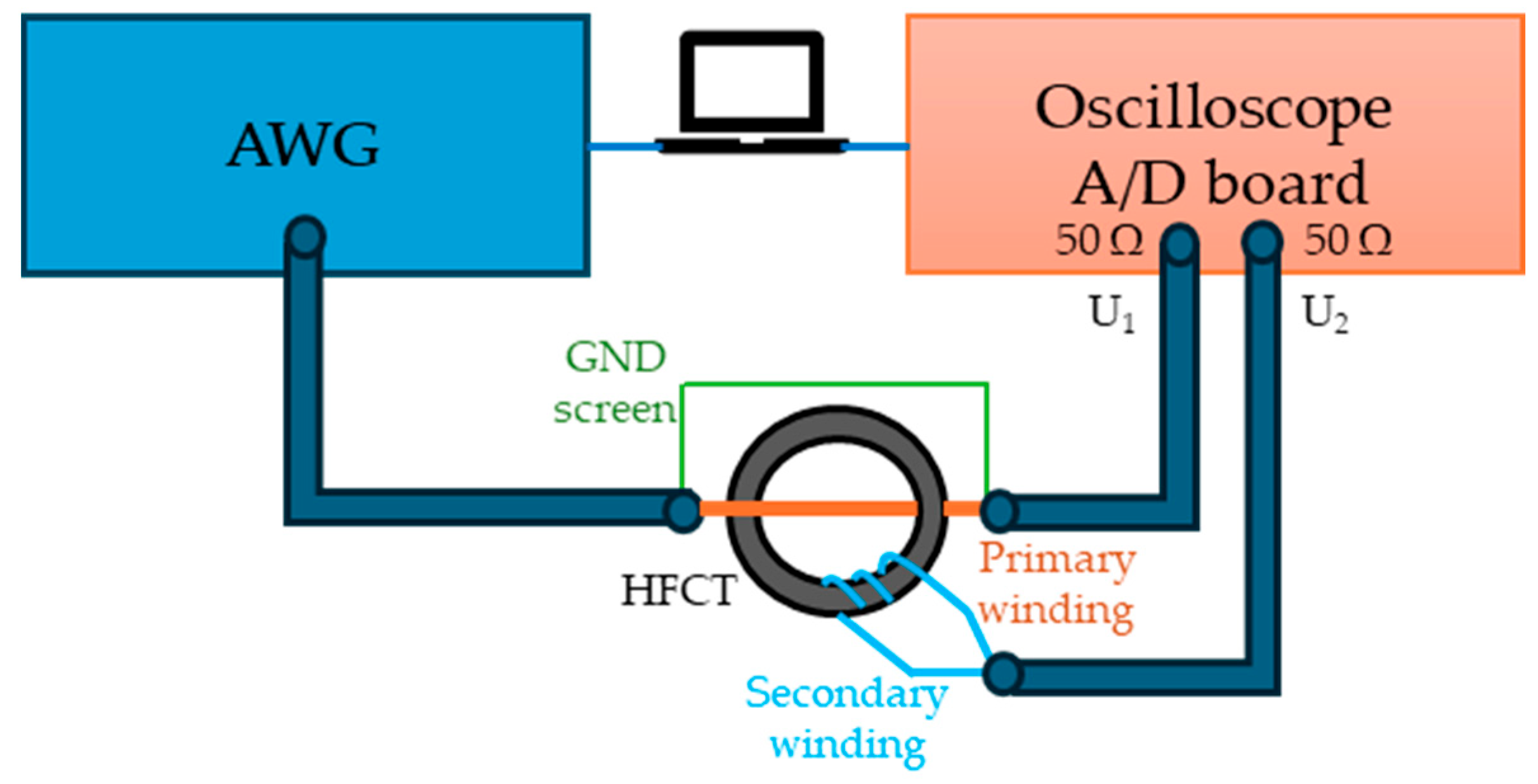
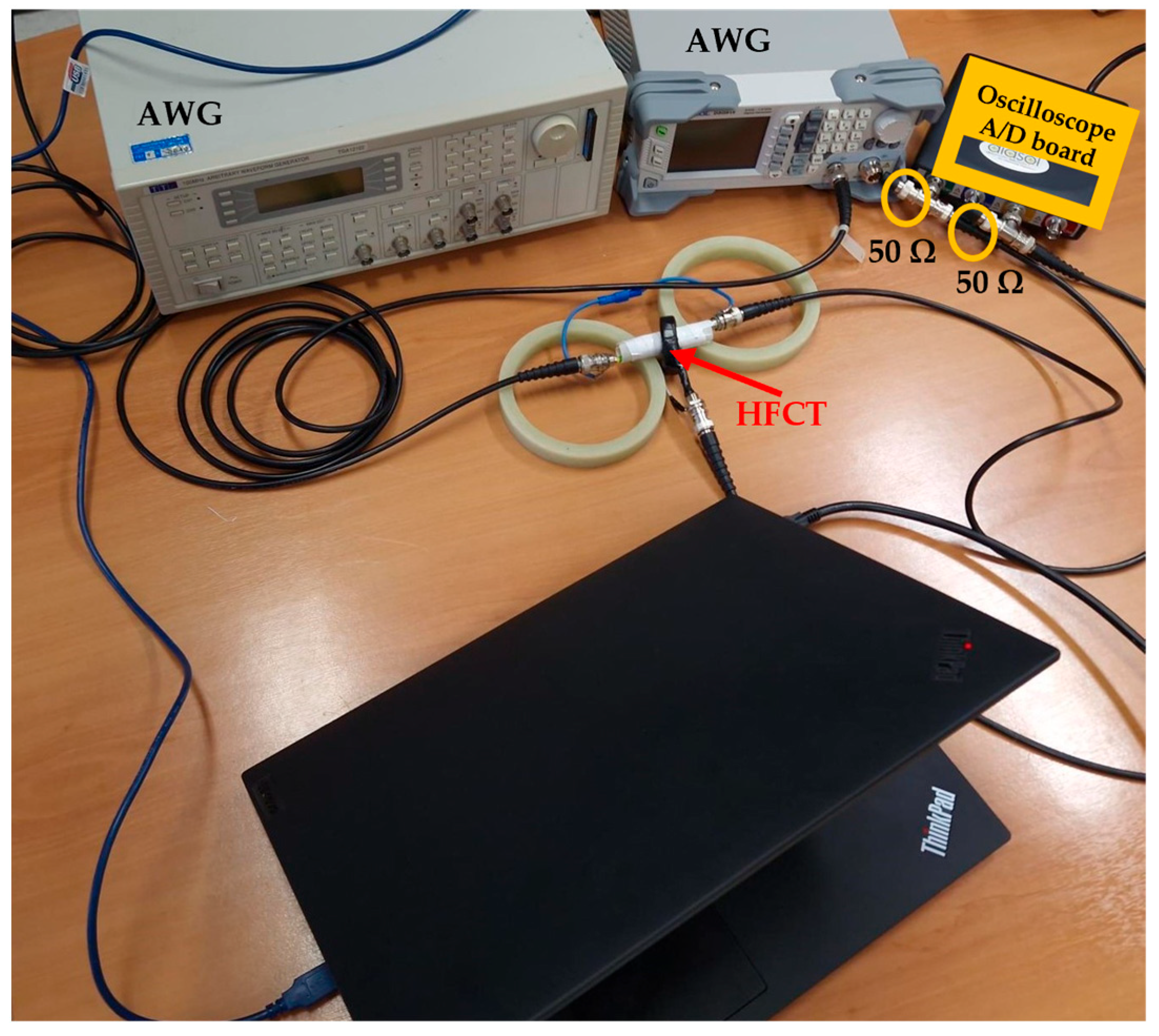
The experimental setups are illustrated in
Figure 2,
Figure 3,
Figure 4 and
Figure 5. The experimental setup used for analyzing the HFCT behavior under sinusoidal waveforms is illustrated in
Figure 2 and
Figure 3. A flexible conductor was passed through the ferrite core, while an LDPE insulating system was employed to guarantee proper and repeatable centering of the cable.
Signal generation was performed using an arbitrary waveform generator (AWG), TTi model TGA 12102, programmed to produce sinusoidal waveforms with an amplitude of 1 V over incremental frequency steps from 50 Hz up to 40 MHz. For higher frequencies, from 40 MHz to 100 MHz, a Rigol DSG815 signal generator was employed, generating the same 1 V sinusoidal waveform. The switch between the two signal generators was performed manually. Data acquisition was automated throughout the test. A 50 Ω resistor was inserted at the oscilloscope input. The used oscilloscope has a 200 MHz bandwidth with a 2 GS/s sampling rate. The analyzed parameters included attenuation, expressed in decibels (dB), and transfer impedance, expressed in Ω, obtained as defined in Equation (8).
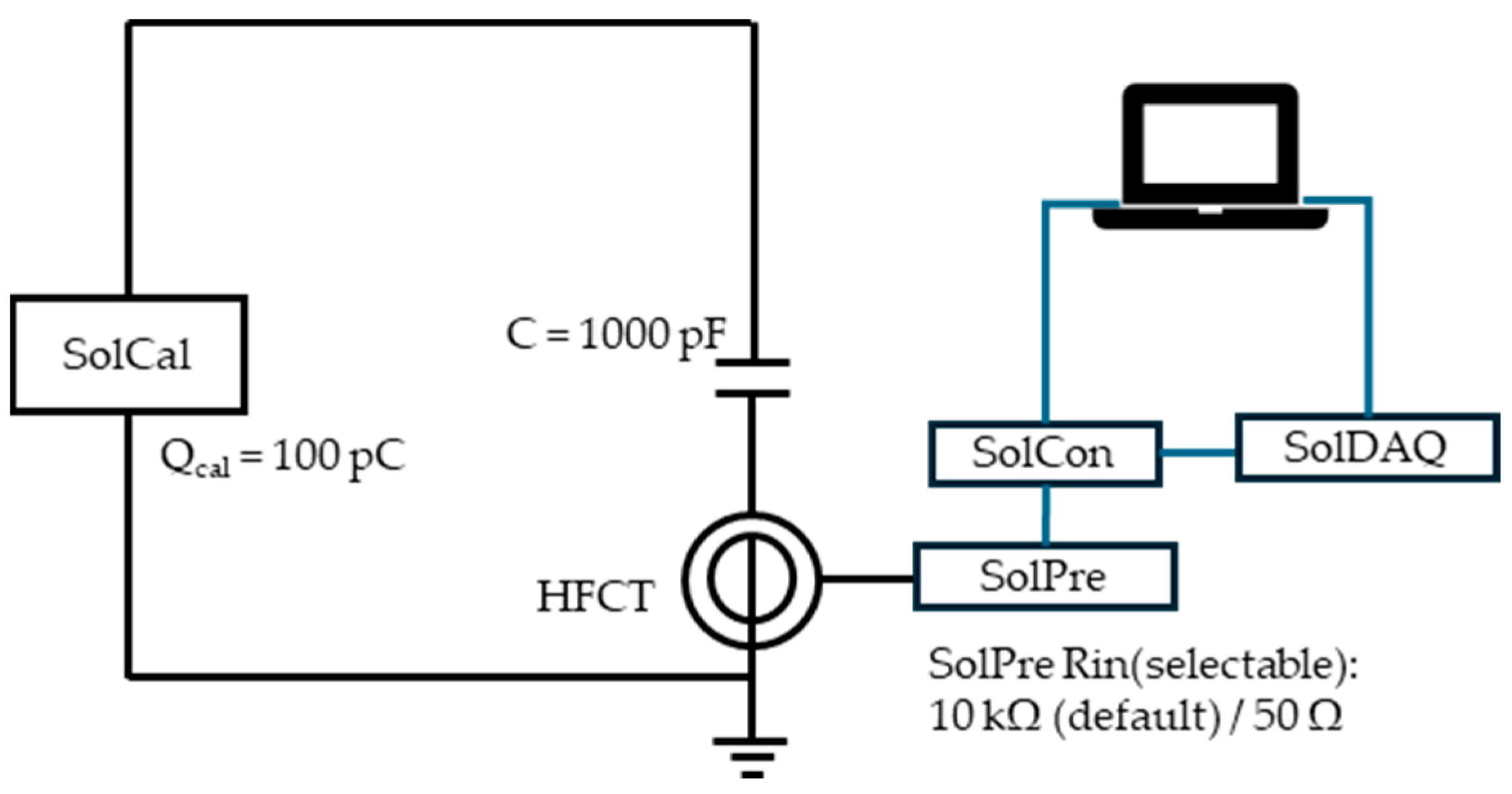
The HFCT response was also verified using an IEC 60270-compliant calibrator,
Figure 4. The standard IEC 60270-compliant calibrator is based on a step front generator having in series a capacitor. In this way, specific pulses are generated simulating PD discharges with a defined charge of 100 pC. For this test, the following were employed:
the calibrator SolCal, compliant with IEC 60270, is set at 100 pC,
as test object reference capacitor C = 1000 pF,
amplification stage SolPre units with two bandwidth settings:
SolPreLF 40 kHz–1 MHz and SolPreHF 3 MHz–100 MHz,
The SolPre units have a default impedance of 10 kΩ or 50 Ω,
controlling unit SolCon,
acquisition unit SolDAQ A/D converter with 14-bit resolution and a sampling rate of 100 MS/s.
The evaluation performed in this test consisted of detecting the signal generated by the calibrator SolCal using the different HFCT configurations under consideration and obtaining the corresponding calibration constants through dedicated software for PD acquisition. The calibration constant K
cal, defined in (9), relates the HFCT output voltage conditioned by the amplification stage (in mV) to the applied charge (in pC), expressed as pC/mV.
The charge value Qcal corresponds to the pulse generated by the IEC 60270-compliant calibrator, while the voltage VHFCT represents the true HFCT output, calculated as the voltage measured by the oscilloscope divided by the amplifier gain. This procedure ensures accurate normalization across different amplification settings and guarantees an adequate signal-to-noise ratio.
The combined analysis of HFCT behavior under IEC 60270-compliant calibrator impulses and sinusoidal excitation enables the identification and selection of the most suitable configurations for continuous monitoring systems. Such systems require sensors that provide a reliable response to PD pulses while maintaining a wide bandwidth, as real PD events can vary significantly in pulse shape and frequency content. These characteristics are essential for automated processing and storage of PD data, supporting advanced diagnostic strategies and AI-based clustering in Condition-Based Maintenance applications.
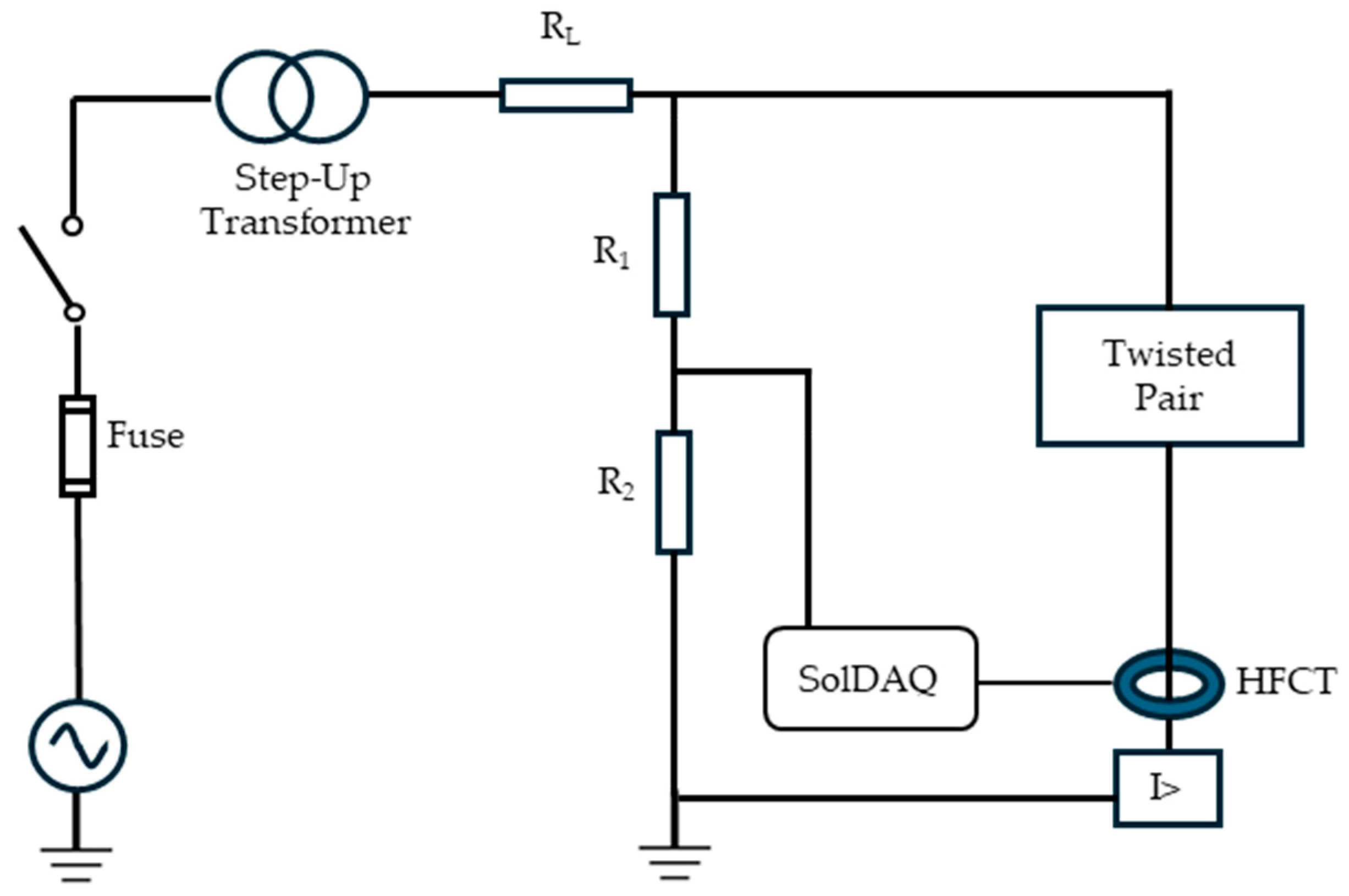
Figure 5 sketches the test circuit used to detect PD on a specimen ad hoc prepared following the IEC 60851-5 standard [
38], a twisted pair. Partial discharge (PD) signals were acquired under sinusoidal excitation at a frequency of 50 Hz. The test voltage was generated using an arbitrary waveform generator, amplified, and applied through a step-up transformer with a transformation ratio of 15:5000. An overcurrent protection device (I>) was implemented to interrupt the test and disconnect the supply in the event of a short circuit, while the short-circuit current was limited by a series limiting resistor
of 50 kΩ.
The PD signals were acquired using a 14-bit A/D acquisition board (SolDAQ), operating at a sampling rate of 100 MS/s. This is intended to assess how PD signals are acquired and stored using different HFCTs, and to provide an example of data that can subsequently be processed for PD analysis. The phase reference was obtained from the resistive voltage divider composed of R1 and R2.
3. Results
3.1. Measurements on Ferrites ZT Calculation and Comparison
The results presented in this section compare the performance of different ferrite cores, considering the effects of winding distribution, concentrated versus distributed arrangement, and the number of turns. The measured transfer impedance (
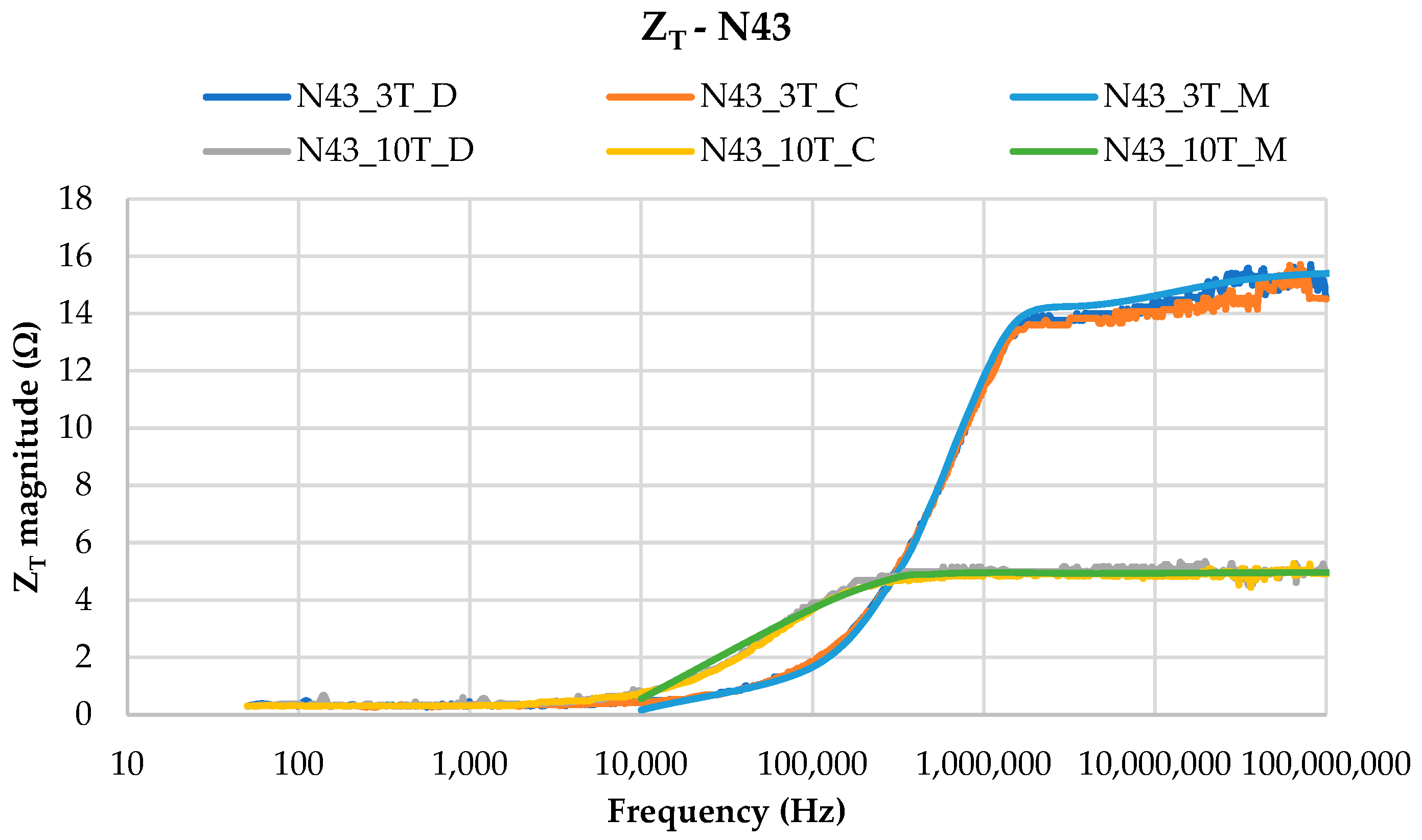
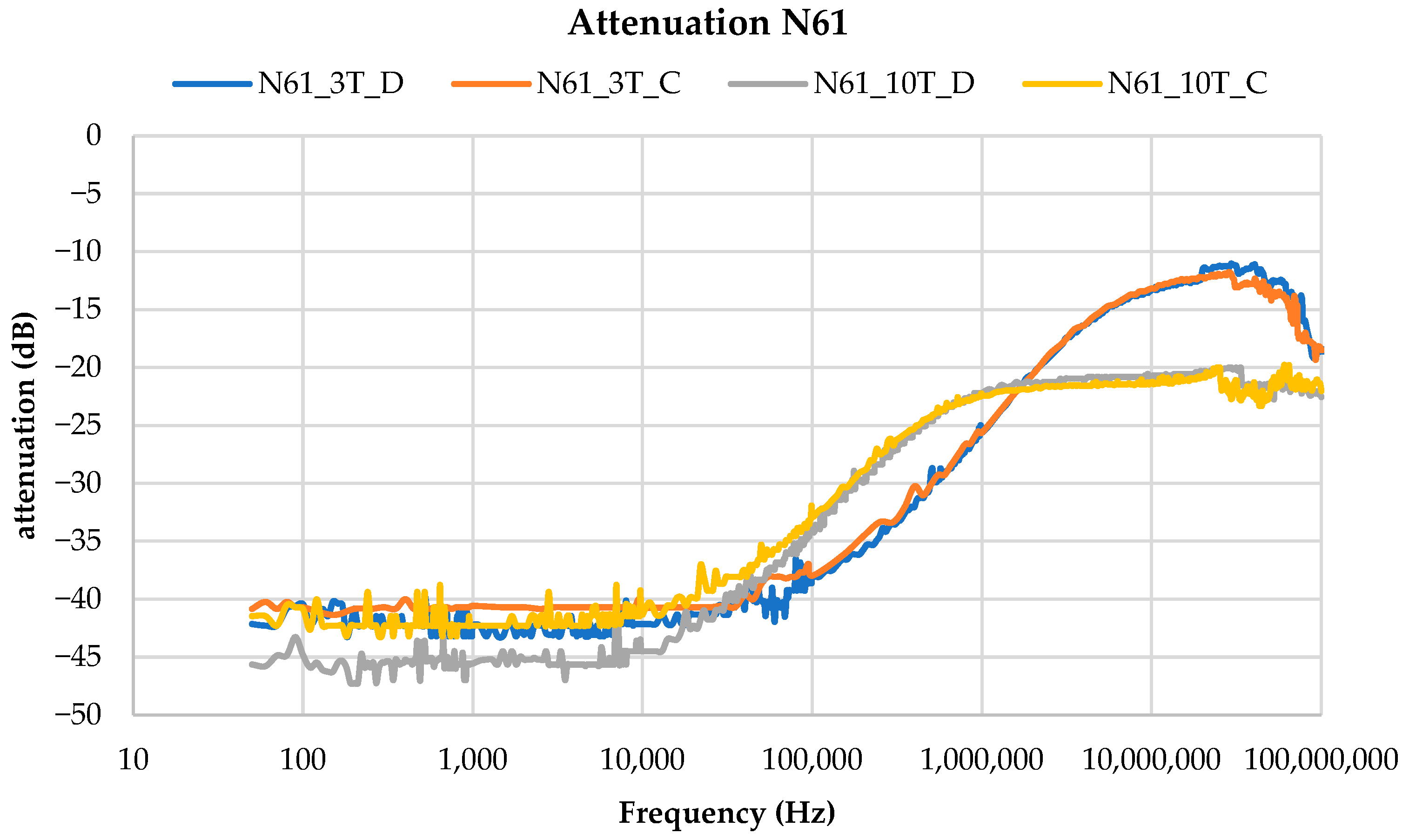
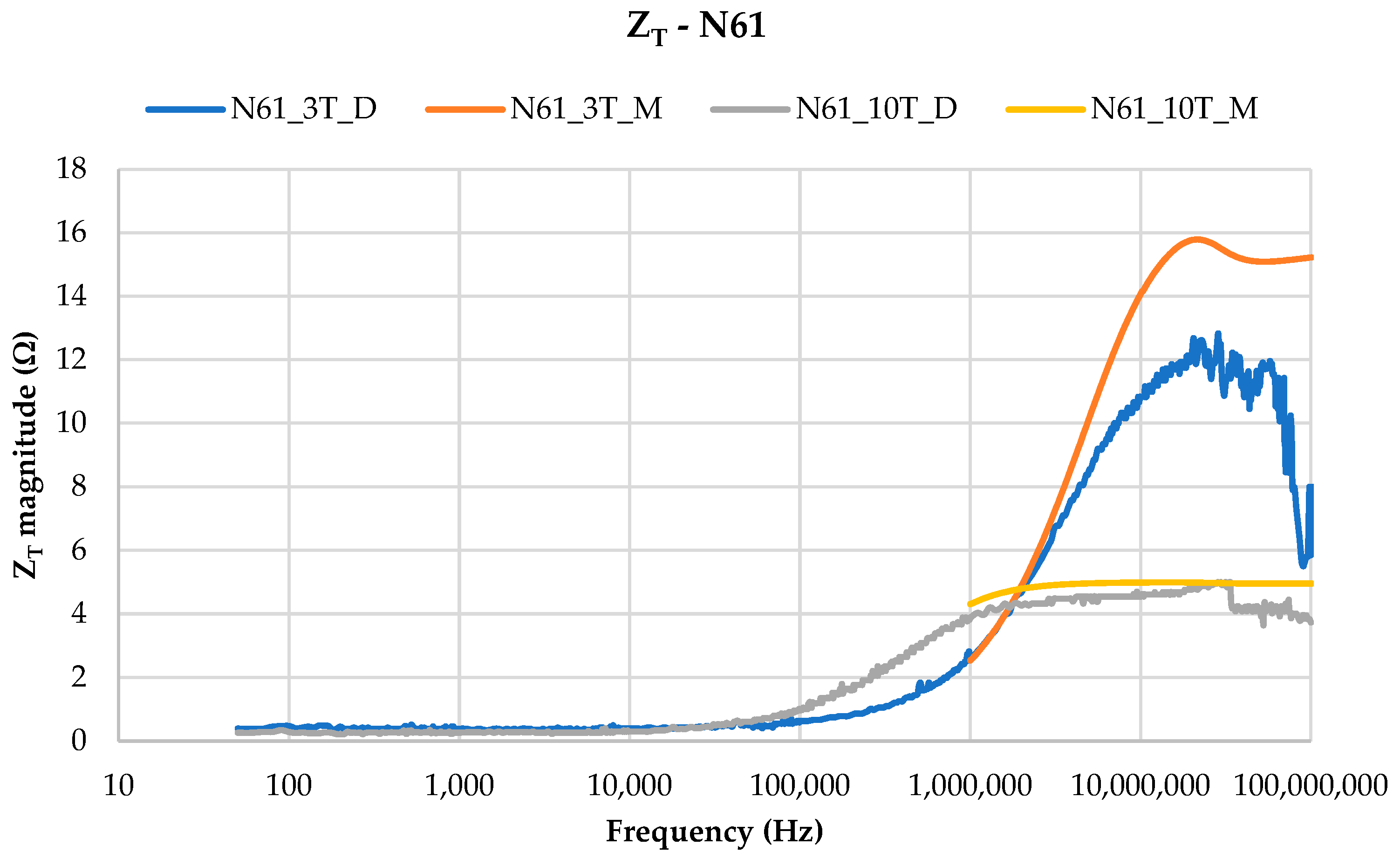
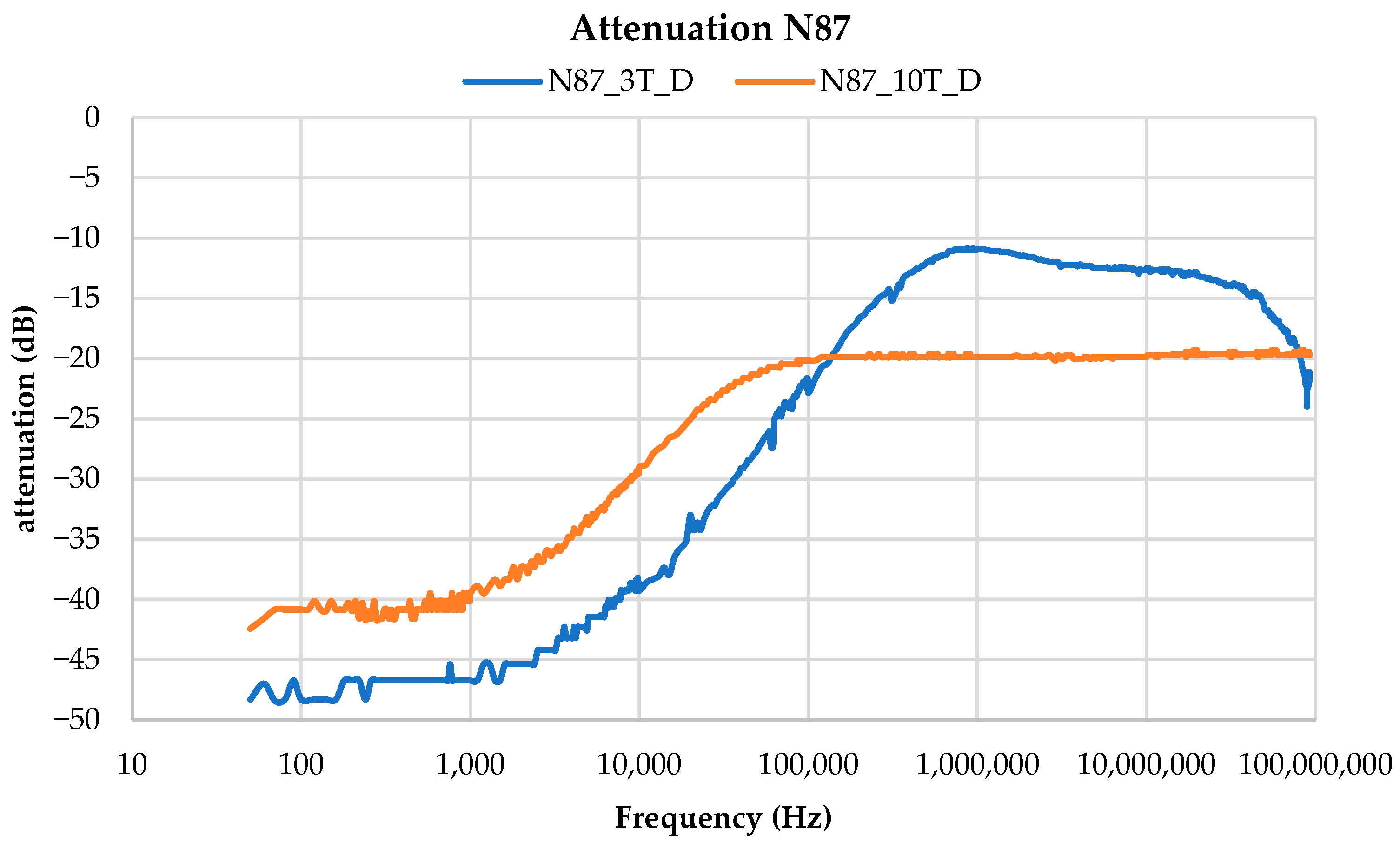
) curves were evaluated against the calculated values obtained from the simplified model described in Equation (6) and indicated in the plots with the letter “M” at the end of the identification code that follows the system presented in
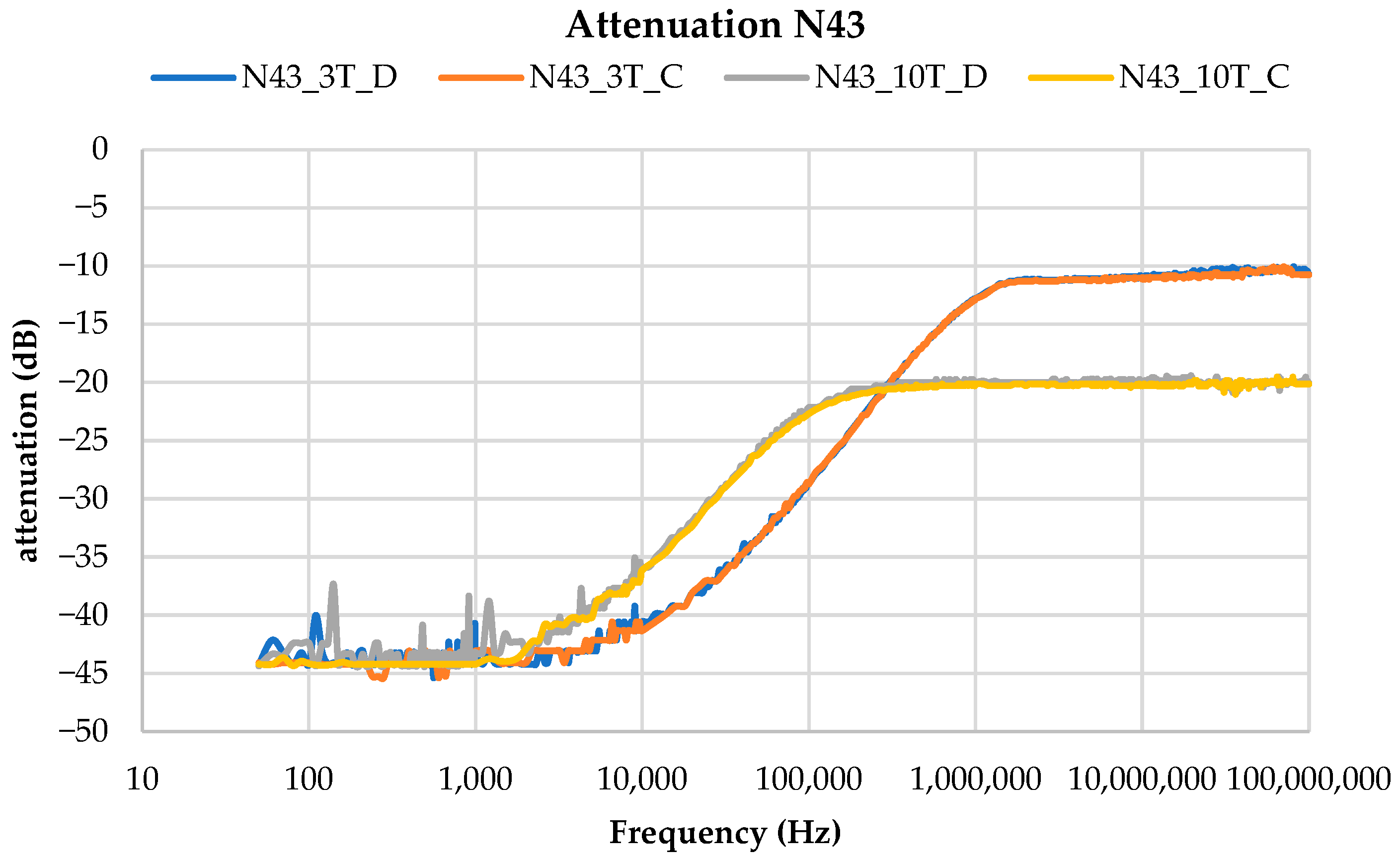
Table 1. Complex permeability data are available from the manufacturer for N43 and N61, while for N87, such data are not provided. The plots are reported in
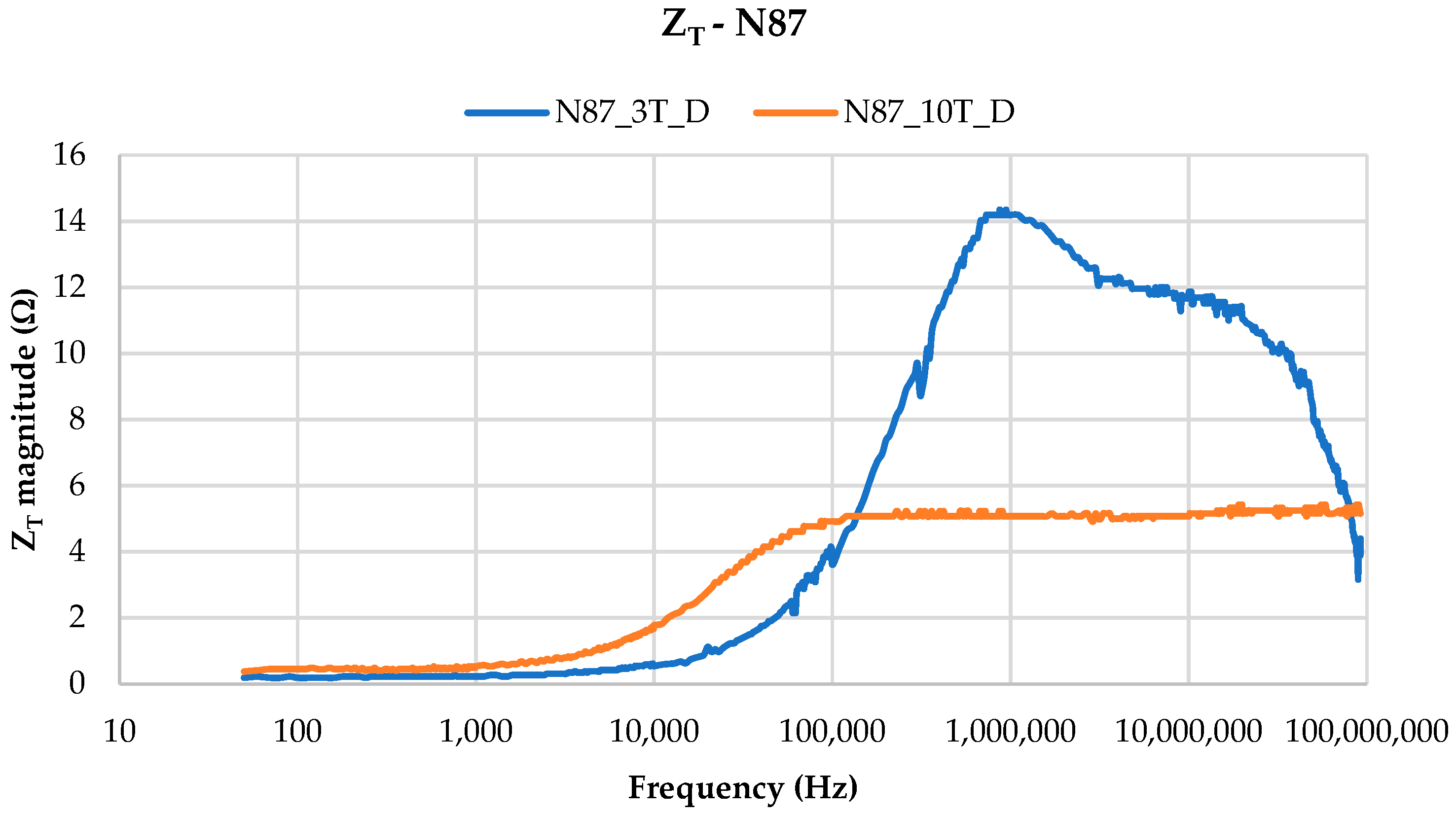
Figure 6,
Figure 7,
Figure 8,
Figure 9,
Figure 10 and
Figure 11.
The analysis indicates that, considering the low cut-off frequency, the most promising configuration is the N43 core with ten turns, as it achieves a low cut-off frequency with a −6 dB at 50 kHz. In contrast, the corresponding three-turn configuration exhibits a significantly higher low cut-off frequency, −6 dB at 400 kHz.
Furthermore, for the N43 core in both configurations, the high cut-off frequency exceeds 100 MHz.
The N87 core, in the ten-turn configuration, shows a behavior similar to that of the N43, having a low cut-off frequency of −6 dB at 20 kHz. However, in the three-turn configuration, the N87 core exhibits a more limited high cut-off frequency compared to the N43, with −6 dB bandwidth from 200 kHz to 60 MHz. Finally, the N61 core, in the three-turn configuration, presents a significantly reduced bandwidth compared to both N43 and N87, showing −6 dB bandwidth from 2 MHz to 100 MHz. In the ten-turn configuration, it shows a relatively high low cut-off frequency of −6 dB at 300 kHz.
Both the N87 and N43 cores exhibit similar trends: the three-turn configurations show lower attenuation compared to the ten-turn solutions. Conversely, when the transfer impedance is considered, the configurations with fewer turns consistently provide higher impedance values.
3.2. Measurements with an IEC 60270:2025-Compliant Calibrator
The measurements with the IEC 60270:2025-compliant calibrator permit obtaining values for the calibration constant () as defined in Equation (9).
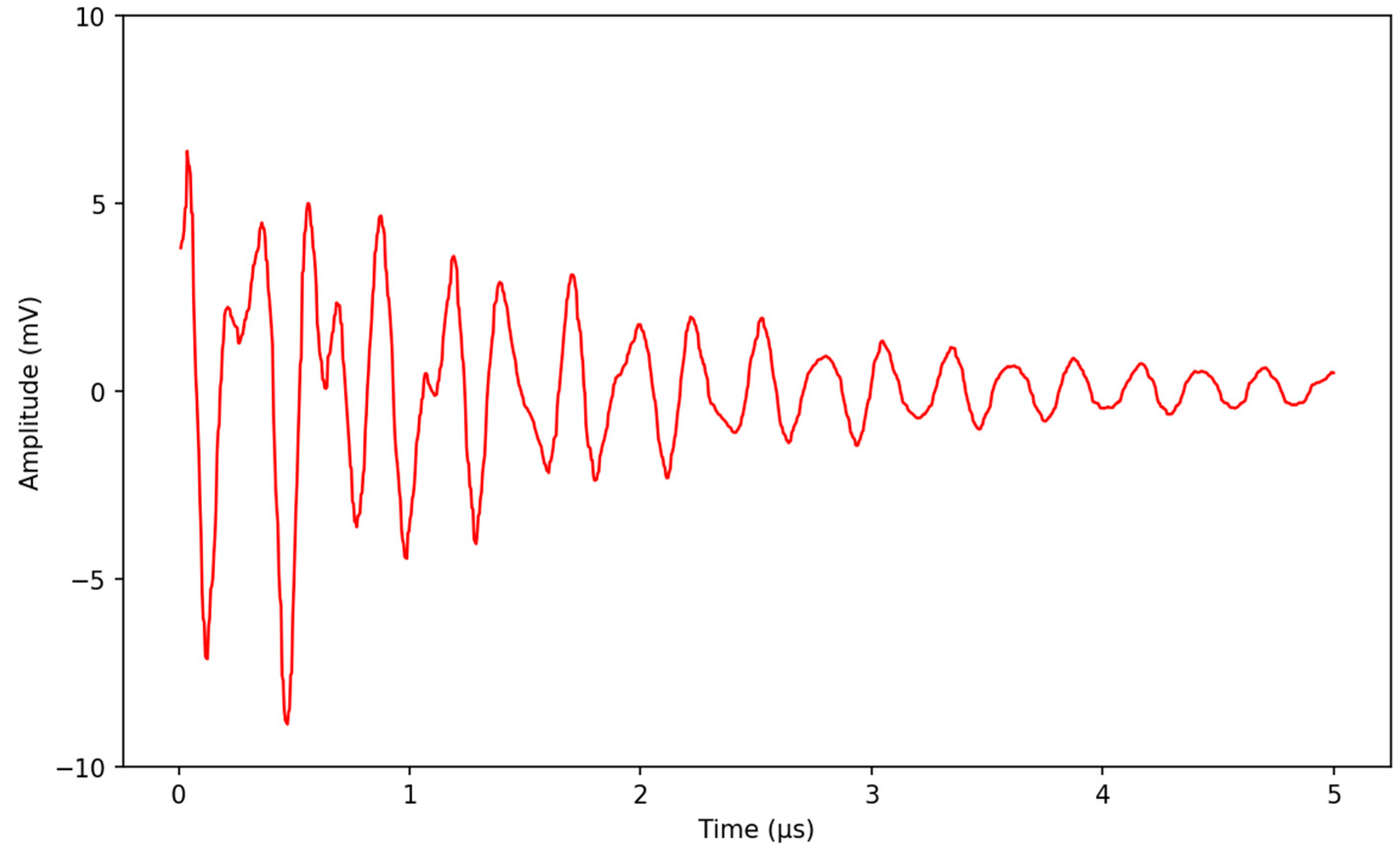
It must not be interpreted as a calibration for PD measurements when SolPreHF (3 MHz–100 MHz bandwidth) is employed. The test is to compare the sensor’s design using the same reference excitation. An example of a calibration pulse obtained from the sensor N43_10T_D is reported in
Figure 12. The calibration constants (
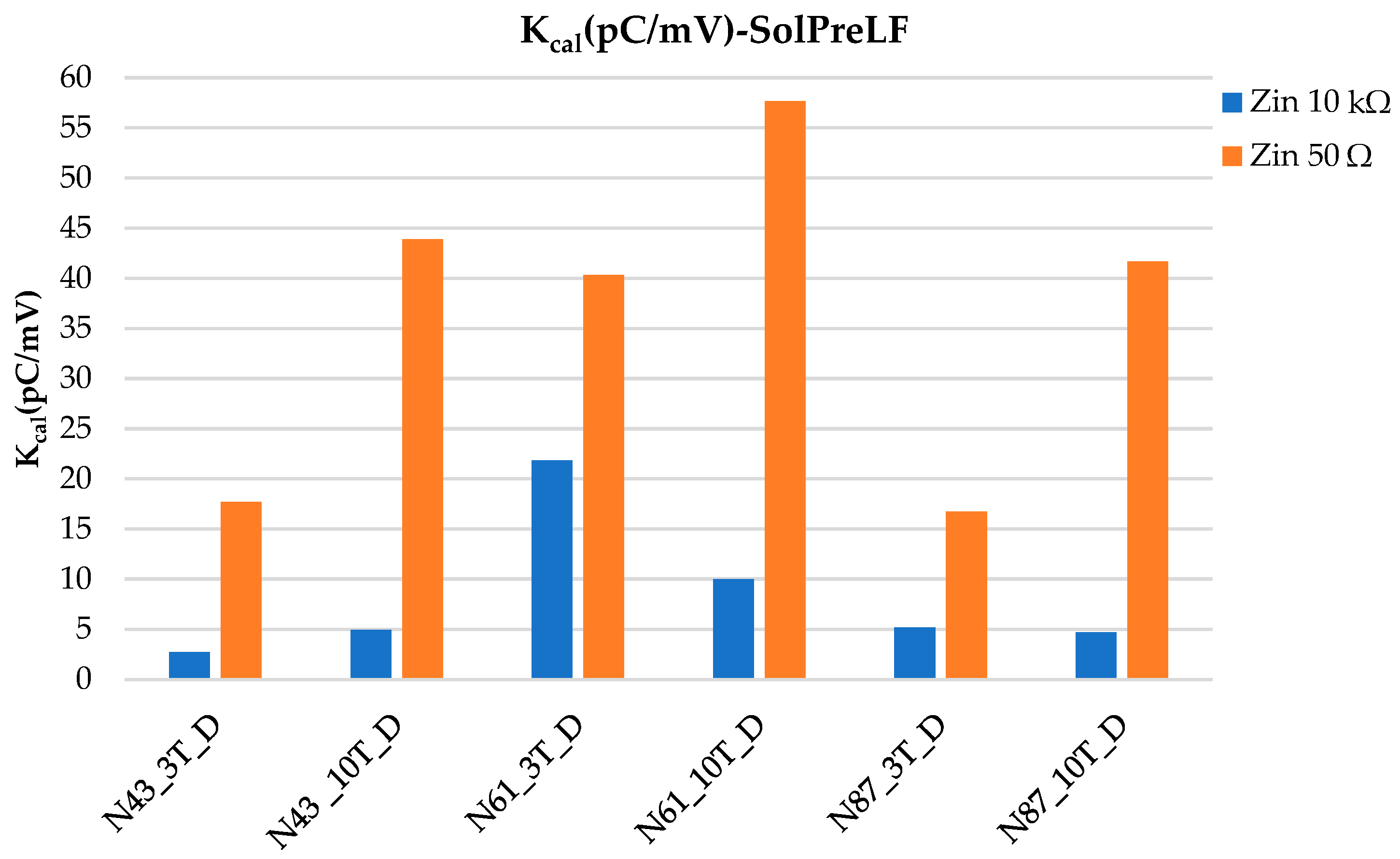
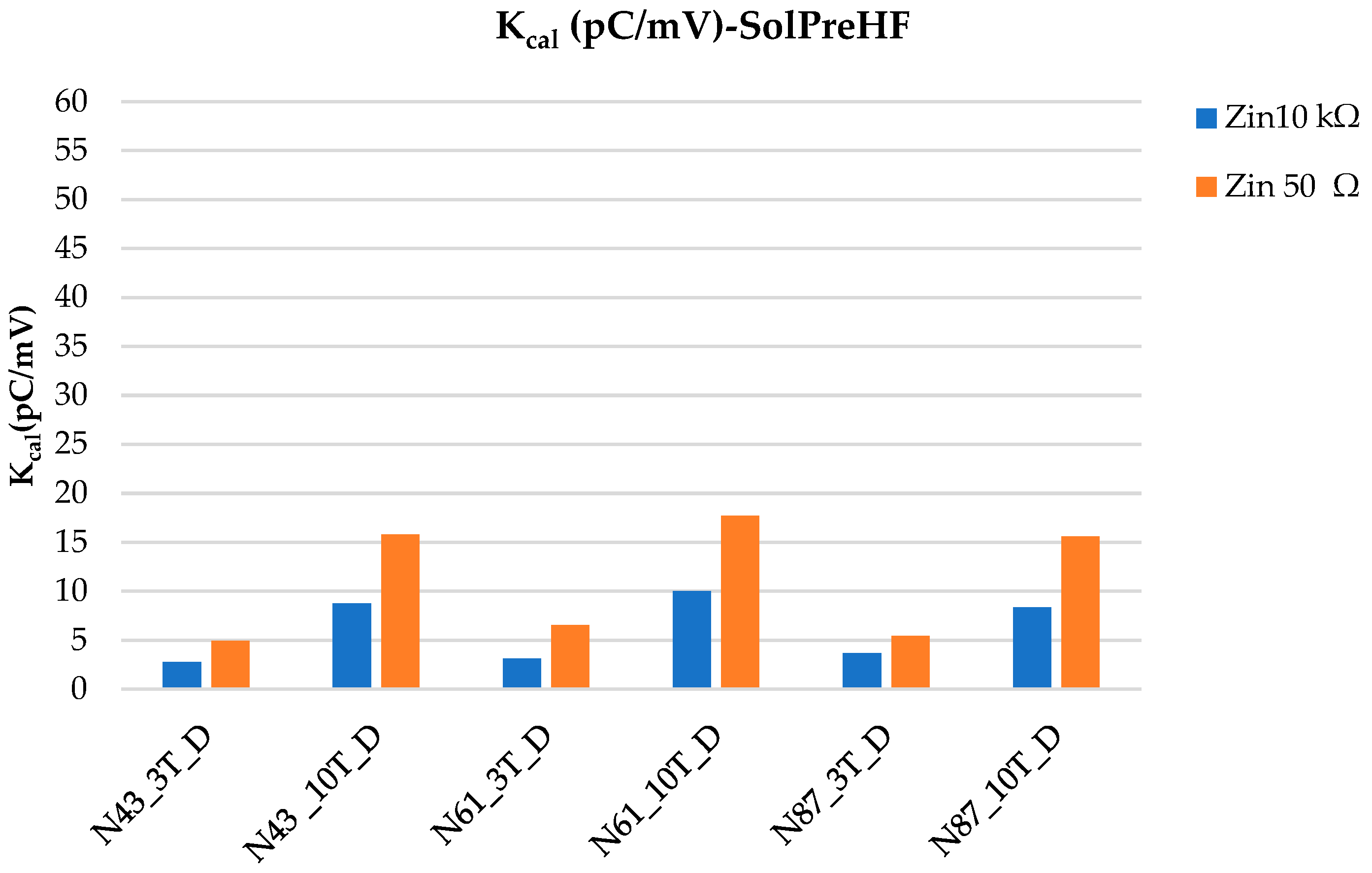
) obtained from the measurements are presented in
Figure 13 and
Figure 14.
Figure 13 shows the results obtained using the SolPreLF amplifier, while
Figure 14 refers to measurements performed with the SolPreHF amplifier.
The SolPreLF amplifier is designed for partial discharge calibration in accordance with IEC 60270, and, in this case, the amplifier bandwidth is limited from 40 kHz to 1 MHz.
Consequently, the calibration constants obtained using SolPreLF are generally higher. Conversely, the SolPreHF amplifier is specifically designed for high-frequency PD measurements and provides a wider effective bandwidth from 3 MHz to 100 MHz. This frequency range is higher than the bandwidth specified in the IEC 60270 standard. Consequently, it is not possible to calibrate the PD measurement circuit according to the standard procedure. However, it is possible to determine the ratio between the injected charge and the peak value of the corresponding measured voltage. This ratio is referred to here as the calibration constant, , similarly to the case of low-frequency measurements, since the corresponding units are .
The high-frequency configuration is typically used for on-site measurements, where low-frequency noise can significantly reduce the signal-to-noise ratio.
When the same calibration pulse is applied, as in the SolPreLF case, the SolPreHF setup yields lower calibration constants, meaning that a higher output voltage (mV) is obtained for the same charge injected into the reference capacitor. This behavior reflects an increased measurement sensitivity, enabling the detection of partial discharges with lower amplitudes. Among the investigated HFCTs, the N43 core with three turns (N43_3T_D) exhibits comparable calibration constants in both the SolPreLF and SolPreHF set-ups with , confirming its superior performance. Furthermore, a higher input impedance () leads to increased measurement sensitivity.
3.3. PD Measurement on Twisted Pairs, Ad Hoc Specimen, and PRPD Pattern Clustering
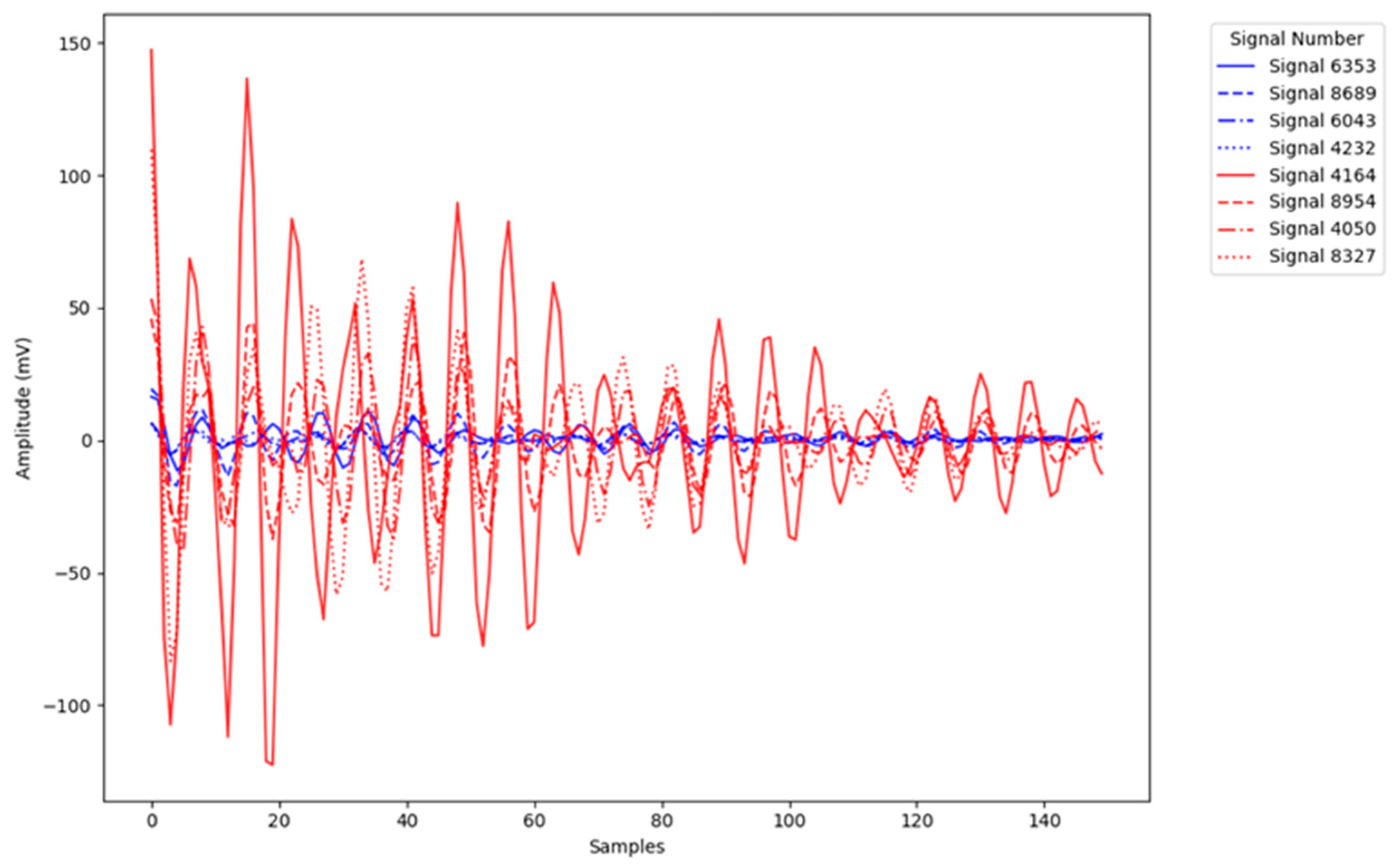
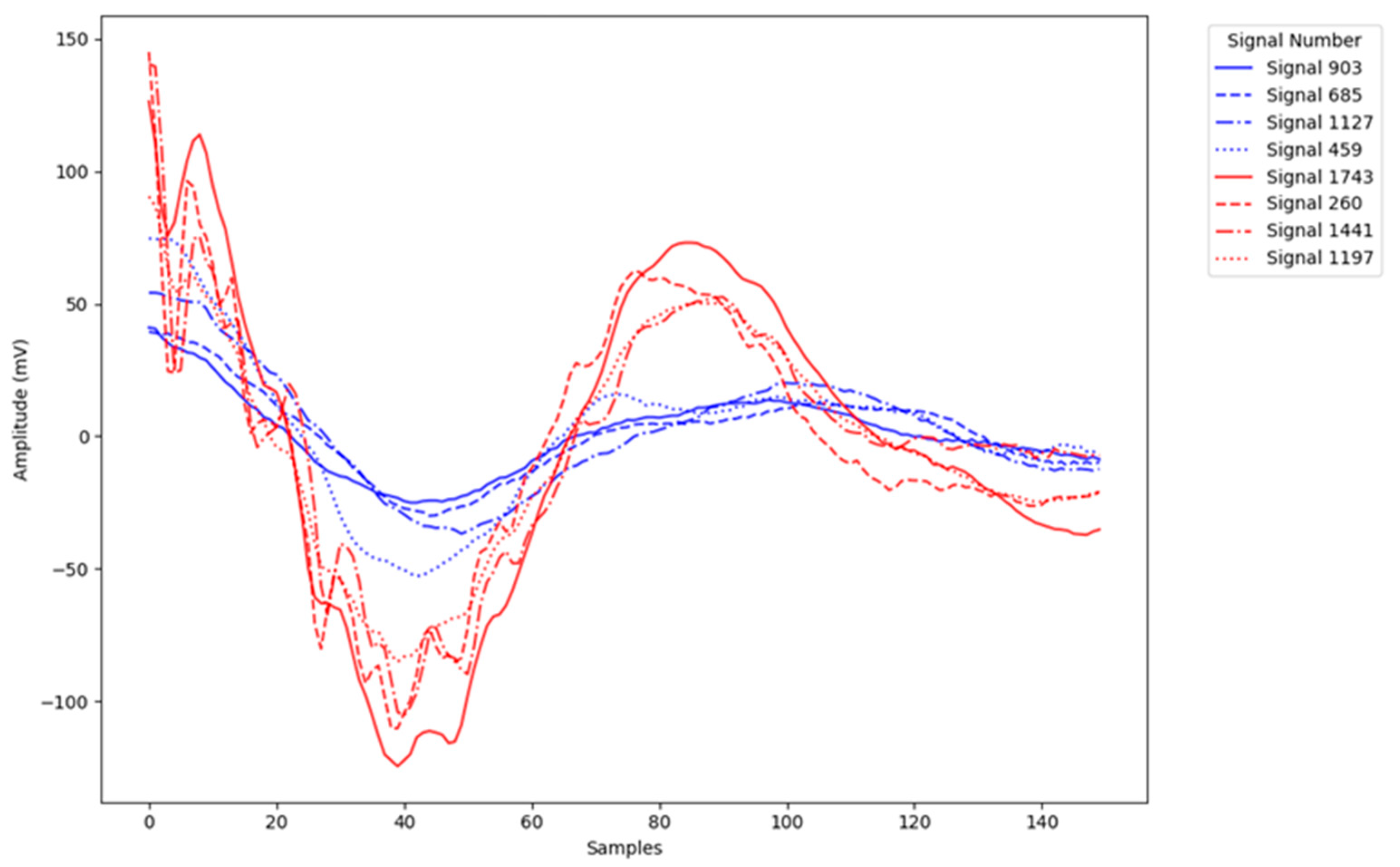
To highlight the differences in the signals acquired by the partial discharge measurement system, the responses obtained using an N61 core with three turns (N61-3T-D) and an N43 core with three turns (N43-3T-D) are compared under identical test conditions. The measurements were performed on the same twisted-pair specimen, prepared in accordance with IEC 60851-5, using the same acquisition chain. Despite the identical test sample and measurement setup, the signals acquired with the N43 three-turn configuration,
Figure 15, exhibit a wider bandwidth than those obtained with the N61 three-turn configuration,
Figure 16. The displayed signals were selected as representative samples from 5 s acquisition intervals, each containing several thousand partial discharge events, with the applied voltage set above the partial discharge inception voltage (PDIV).
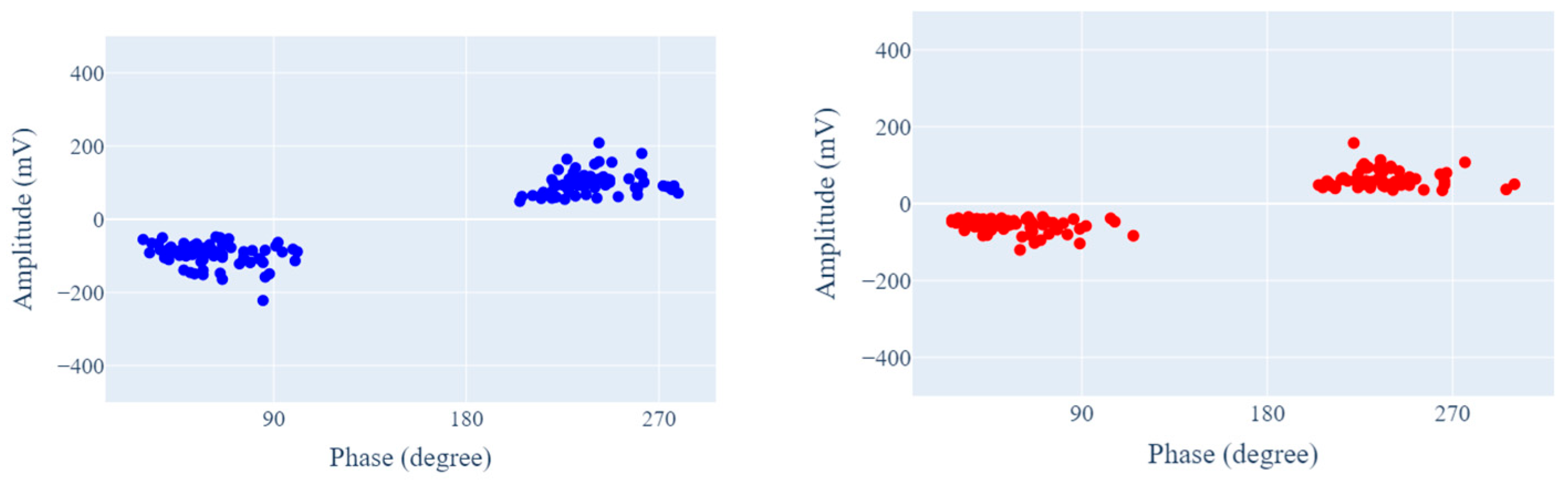
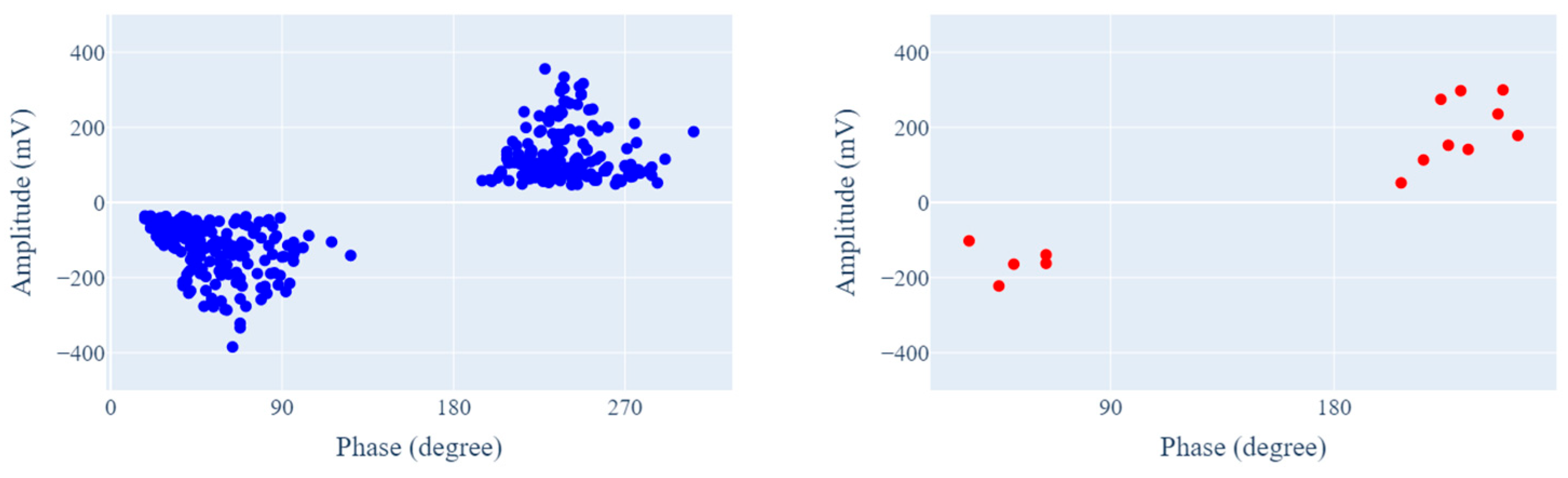
The data acquired are processed, and
Figure 17 and
Figure 18 report the PRPD patterns obtained after the application of a clustering procedure based on the autocorrelation function and hierarchical algorithm [
39].
First, the impulse signals were temporally aligned to ensure waveform comparability. Each signal was shifted so that its absolute peak was positioned at the same reference sample. For positive impulses, alignment was performed at the maximum peak, while for negative impulses, it was performed at the minimum peak. In this way, all signals were synchronized at their absolute extremum.
For each aligned partial discharge (PD) pulse, the autocorrelation function (ACF) was calculated. During each 5 s acquisition, several PD pulses were recorded and processed individually.
The standard deviation of the ACF was calculated at every sampling point across all PD signals. This operation yielded a standard deviation profile as a function of the sampling instant, highlighting the dispersion of autocorrelation values within the dataset. From this profile, the first three relative maxima were identified, as they correspond to the most significant variability regions in the ACF domain.
The amplitudes associated with these three standard deviation maxima were then extracted for each individual signal. These three amplitude values were adopted as feature descriptors to construct a three-dimensional (3D) space. In this representation, each point corresponds to a single PD signal.
Finally, hierarchical clustering based on Ward’s linkage method was applied to the resulting feature dataset in order to group signals exhibiting similar statistical characteristics. This procedure led to the identification of two distinct clusters, each associated with a specific partial discharge pattern, as illustrated in
Figure 17 and
Figure 18.
The obtained patterns are consistent with surface partial discharges, as expected for the type of sample under test. Owing to the intrinsic characteristics of the specimen, PD activity is mainly expected at the turn points of the sample, while a smaller portion may occur at the two extremities, and different signal characteristics can be expected due to the different distances at the central turns with respect to the extremities.
For the employed samples, the discharges occurring at the extremities typically account for approximately 10–20% of the total activity. However, in the case of sample N61_3T_D, the observed distribution deviates from this expected proportion. This suggests that the cluster separation is not fully accurate for this dataset, as the contribution of discharges attributed to the extremities appears to be underestimated. The results presented, obtained through the clustering procedure, are intended to demonstrate how, even when testing the same sample and using the same acquisition system, the use of two different sensors can lead to significantly different outcomes.
This example highlights the strong influence of the measurement chain, and in particular of the sensor characteristics, on the clustering results. Therefore, the observed differences should not be interpreted as definitive conclusions but rather as an illustration of the variability that may arise solely due to the sensing element.
It is important to emphasize that these findings represent a preliminary application.
4. Discussion
The measurements presented in this study were designed to establish a structured methodology for comparing High-Frequency Current Transformers (HFCTs) not solely in terms of bandwidth, but also with respect to sensitivity and their capability to detect IEC 60270-compliant calibrator impulses. It is important to emphasize that, within the proposed framework, the IEC 60270-compliant calibrator is employed exclusively as a reference excitation to compare sensor designs. It must not be interpreted as a calibration for PD measurements at high frequencies. The procedure provides a consistent benchmark for assessing relative sensor performance.
In continuous online monitoring for Condition-Based Maintenance (CBM) applications, HFCTs represent a particularly suitable sensing solution. Compared to alternative technologies, they generally offer a favorable combination of wide bandwidth, adequate sensitivity, galvanic isolation, and ease of installation. However, for CBM systems integrated with AI, sufficient sensitivity is essential to detect incipient faults, enabling AI algorithms to distinguish true partial discharge (PD) signals from noise and to identify different defect types or locations.
Early-stage defects generate low-amplitude PD activity, and reliable detection is essential to allow AI-based models to discriminate genuine PD signals from background noise and to differentiate among defect types or locations.
Depending on the installation site constraints and operating conditions, different HFCT constructions and characteristics may be preferable.
The ferrite materials selected for this study were chosen based on their promising characteristics and expected performance within the frequency range relevant to PD activity.
The simplified theoretical model was validated, and experimental results confirmed that up to 100 MHz, the winding distribution around the ferrite does not significantly affect performance, provided that proper centering of the primary conductor is maintained.
To ensure repeatability and enable a proper and meaningful comparison among different ferrite materials and winding configurations, strict control of cable length and conductor positioning was maintained throughout the experiments.
The measurements were designed for comparative analysis; therefore, absolute measurement uncertainty is not the primary concern, provided that the measurement system remains unchanged. What is essential is the consistency of uncertainty across all measurements.
Consequently, for comparative purposes, uncertainty that is not precisely quantified can be considered acceptable and does not affect the validity of the results.
The experimental comparison presented in this work demonstrates that HFCT performance is strongly influenced by design parameters such as ferrite core material, winding configuration, and number of turns.
The results show that an inadequate combination of these parameters may introduce excessive attenuation or resonance effects, directly degrading the quality of the acquired PD signals.
These findings are particularly relevant for continuous acquisition systems supporting Condition-Based Maintenance and machine-learning-based diagnostics. Such systems require stable and repeatable signal characteristics to ensure reliable feature extraction and classification.
The experimental results confirm that HFCT optimization cannot be limited to maximizing sensitivity alone but must also ensure a well-defined and stable frequency response over the spectral range relevant to PD activity, typically from several hundred kilohertz up to several tens of megahertz.
Therefore, the comparative analysis of different ferrite materials presented in this study provides practical guidance for HFCT selection in real monitoring applications. HFCTs are intended for continuous PD monitoring and data-driven diagnostics.
Future research will extend this work by evaluating sensor performance under real online PD measurement conditions and by investigating their integration into AI-based clustering and diagnostic frameworks for automated defect identification and trend analysis.
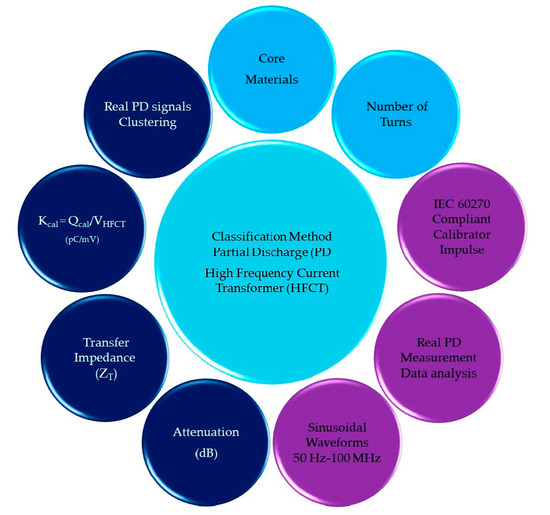
Table 2 summarizes the structured experimental methodology adopted to evaluate the influence of ferrite core properties and winding arrangement on the performance of HFCT for partial discharge (PD) detection.
The experimental sequence was designed to progressively assess:
frequency-domain behavior,
IEC 60270-compliant calibrator impulse response,
performance under realistic PD conditions.
The aim of this assessment is to have comparison metrics also related to the aspects that could have an impact on AI-aided PD diagnostics and electrical equipment monitoring.
5. Conclusions
This work presents a structured evaluation of High-Frequency Current Transformer (HFCT) sensors for partial discharge (PD) acquisition, with the objective of qualifying them for continuous online monitoring and artificial intelligence (AI)-based applications.
The proposed methodology supports the selection of suitable ferrite cores and winding configurations for PD acquisition systems operating under service conditions, particularly within Condition-Based Maintenance (CBM) frameworks.
The study emphasizes the importance of accurate and stable PD signal acquisition to enable reliable discrimination between genuine PD events and environmental noise, especially when artificial intelligence (AI) algorithms are used. In this context, sensor optimization must ensure adequate sensitivity together with a consistent frequency response and signal fidelity.
HFCTs were characterized in terms of transfer impedance (ZT) and bandwidth, as these parameters directly influence sensor sensitivity and frequency response, and therefore the effectiveness of PD detection.
The response of the HFCTs to IEC 60270-compliant calibrator impulses was also investigated to evaluate their behavior under controlled and repeatable conditions.
Furthermore, experimental results obtained from PD measurements performed in the laboratory are briefly presented.
Three different measurement circuits were implemented to assess six HFCTs in different configurations involving core material–number of turns, allowing a systematic evaluation of sensor performance and highlighting the influence on the acquired PD signals.
The results demonstrate that HFCT performance strongly depends on ferrite material properties and winding design.
Although the validation was conducted under controlled laboratory conditions and limited to selected commercial ferrite materials, the study provides practical design guidelines for real monitoring applications.
Future work will extend the comparative analysis to the aging assessment of different electrical equipment under laboratory and service-like conditions, supporting the development of reliable, application-oriented monitoring solutions and reducing unnecessary maintenance interventions.