
Article

Applying Nondestructive Ultrasonic Technique in the Metrological Control of Heat Treatment of AISI 1045 Steels

by
Carlos Otávio Damas Martins
1,*,
José Carlos Bizerra Costa Junior
1,
Luciano Volcanoglo Biehl
2 and
Jorge Luís Braz Medeiros
2
1
Materials Science and Engineering Department, Federal University of Sergipe (UFS), Av. Marcelo Deda Chagas, São Cristóvão 49100-000, Sergipe, Brazil
2
Mechanical Engineering Department, Federal University of Rio Grande (FURG), Avenida Itália, km 8, Rio Grande 96203-900, Rio Grande do Sul, Brazil
*
Author to whom correspondence should be addressed.
Metrology 2026, 6(1), 15; https://doi.org/10.3390/metrology6010015
Submission received: 14 December 2025 / Revised: 30 January 2026 / Accepted: 11 February 2026 / Published: 24 February 2026

Abstract

The characterization of mechanical properties in heat-treated carbon steels, which is crucial for quality control, traditionally relies on destructive testing. This study evaluated the reliability of the non-destructive ultrasonic technique as a metrological alternative for AISI 1045 steel. Samples subjected to six heat treatment conditions (Annealing, Normalizing, Quenching, and Tempering) were characterized by hardness, metallography, and ultrasound. Through linear regression analyses, the multiparametric model combining sound velocity, attenuation, and FWHM demonstrated exceptional metrological precision, resulting in a coefficient of determination of (R2 = 96.687%). The metrological robustness of the model was validated by quantifying the Expanded Uncertainty (U), following the GUM (Guide to the Expression of Uncertainty in Measurement). It is concluded that the multiparametric ultrasonic methodology is an accurate, robust, and non-destructive alternative for the quantitative determination of Vickers Hardness in AISI 1045 steels, contributing to the optimization of industrial processes and metrological rigor.

1. Introduction

The quality and reliability of engineering materials are critical factors in a wide range of industrial applications, especially for the automotive, civil construction, energy, and aerospace sectors [1]. Medium carbon steels, such as AISI 1045, are widely used in industry due to their balance between mechanical strength and cost-effectiveness. To ensure their safety and structural performance, quality control following heat treatments—which critically modify the microstructure and hardness—is indispensable. Traditionally, this metrological control requires the use of destructive testing (such as large-scale Vickers hardness testing and metallography), which is costly and unsuitable for 100% inspection of production or in-service components [2,3,4,5].
In this scenario, Non-Destructive Testing (NDT) methods, particularly Ultrasonic Testing (UT), have emerged as the preferred solution due to their high sensitivity and in situ inspection capability [1]. The relevance of this field is growing, with the recent literature validating the use of advanced ultrasonic techniques in industrial safety and quality control inspections [6,7]. Current research shows a trend towards more rigorous and comprehensive methods, such as the use of ultrasonic scattering techniques for microstructural anisotropy characterization and the integration of UT with image processing to optimize alloy characterization [7,8,9,10]. The critical relevance of this work lies in the need to establish quantitative metrological traceability between mechanical properties (hardness) and ultrasonic parameters in AISI 1045 steels, as the existing literature often focuses on qualitative correlations or less common alloys. Our goal is to transform ultrasonic testing into a measurement tool with known uncertainty, rather than just a flaw detection tool.
The physical principle underlying this application is that linear ultrasonic parameters (velocity and attenuation) are measurably influenced by the material’s microstructural changes and elastic constants [9,10]. Heat treatment modifies the steel’s microstructure (formation of pearlite, ferrite, martensite), which generates variations in density and crystalline defects that, in turn, measurably alter the velocity and attenuation of the US wave [11].
Several studies point to the cross-use of non-destructive parameters as a performance criterion in the characterization and metrological control of mechanical components [12,13,14,15,16,17,18,19,20].
Carvajal et al. [13] demonstrated the capacity of the ultrasonic technique to evaluate different heat treatments performed on carbon and low-alloy steel samples, monitoring the microstructural modifications associated with these processes based on the correlation between ultrasonic parameters and the material’s elastic constants.
Freitas et al. [14] evidenced the potential of ultrasonic testing to characterize different types of microstructures in heat-treated carbon steels, based on indirect measurements of ultrasonic velocities and attenuations using the pulse-echo technique.
Lin et al. [15] evaluated the effect of microstructural variations on ultrasonic parameters. For this, they used thermally aged stainless-steel samples, evaluating the influence of the microstructure on sonic velocity and attenuation.
Neves et al. [18] correlated the variations in ultrasonic parameters with the evolution of the corrosive process in heat-treated aluminium samples. The results showed the importance of multiparametric analysis for material characterization and selection in inspection and integrity analysis activities of engineering components.
The literature shows that ultrasonic parameters such as propagation velocity and attenuation are sensitive to microstructural variations such as grain size, phase presence (e.g., ferrite, pearlite, martensite), and dislocation density induced by heating and cooling. This sensitivity positions ultrasound as a promising resource for the quantitative characterization of the material’s properties [12,13,14,15,16,17,18,19,20]. Despite advances in NDT, the literature demonstrates the effectiveness of approaches that combine multiple ultrasonic parameters to overcome the limitations of each individual parameter. Recent studies have validated the application of multiparametric methodologies for structural characterization and hardness evaluation in heat-treated alloys [21,22,23,24,25,26,27,28,29,30].
The present work addresses this metrological gap by proposing a rigorous method for the metrological control of hardness in AISI 1045 steels subjected to different heat treatments. The article demonstrates the development of a multiple linear regression model that combines the ultrasonic velocity, attenuation, and full width at half maximum (FWHM), achieving a coefficient of determination (R2) of 96.89%. This multiparametric methodology proves to be highly accurate and effective, offering a non-destructive and quantitative metrological alternative for industrial quality control [31,32,33].
It is important to contextualize these findings within the broader field of ultrasonic testing. While conventional linear ultrasonic parameters (velocity and attenuation) have shown sensitivity to large microstructural changes, nonlinear ultrasonic techniques (NLT), such as second harmonic generation, have been demonstrated to offer significantly higher sensitivity to subtle microstructural features like dislocation density, precipitates, and early-stage damage in metallic alloys. Research confirms that NLT methods are crucial for characterizing critical phenomena such as thermal embrittlement and sensitization (carbide precipitation)—microstructural changes that linear methods struggle to detect [34,35,36,37,38,39]. The NLT approach is a powerful tool for academic research due to its capacity to decouple microstructural effects from elastic effects. However, this work focuses specifically on linear ultrasonic techniques which, despite their inherent sensitivity limitations compared to NLT, remain the standard for high-throughput, low-cost industrial quality control. Therefore, the methodological challenge here is to enhance the performance of the conventional linear method by combining multiple parameters and applying rigorous metrological processing.
The article is organized as follows: Section 2 details the materials and the different heat treatments used on the AISI 1045 samples and the ultrasonic testing methodology and the metrological procedure for data acquisition and processing. Section 3 provides the results and correlation analysis. Section 4 discusses the implications of the metrological model and Section 5 presents the conclusions of the work.

2. Materials and Methods

2.1. Sample Preparation and Chemical Characterization

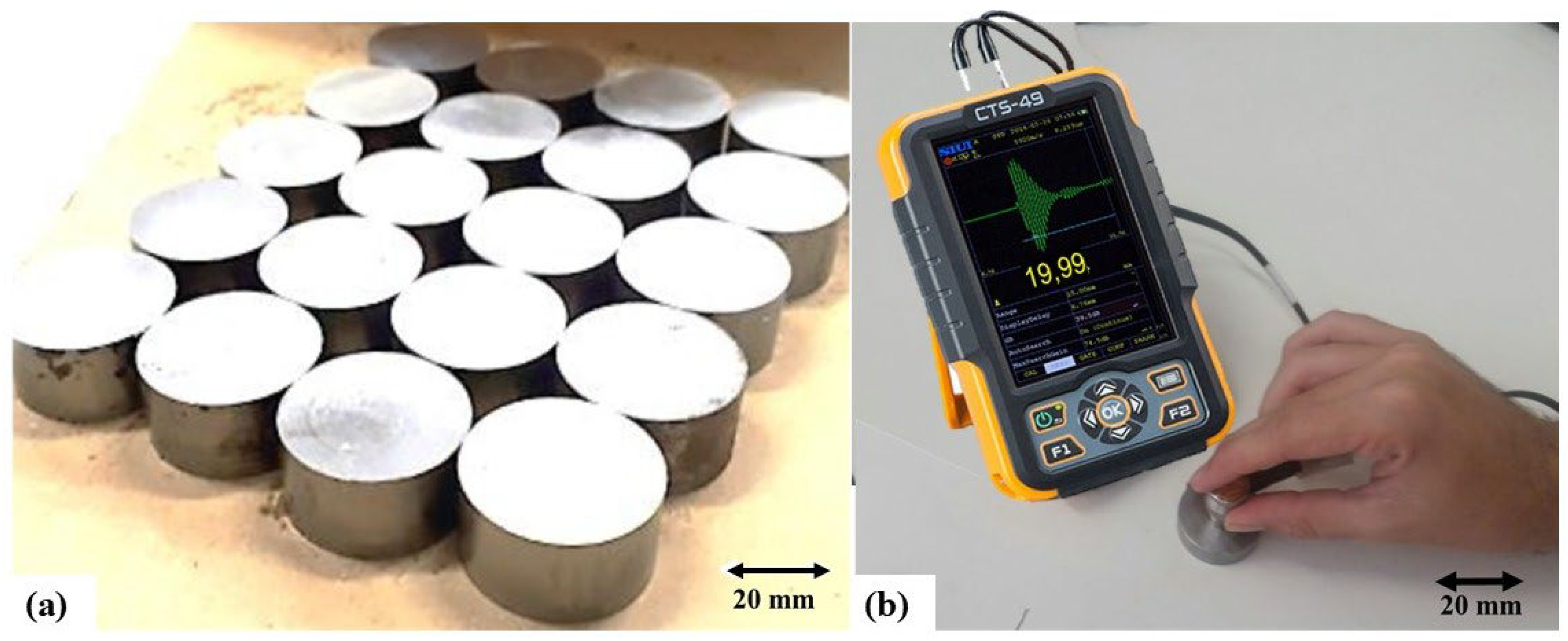
This research investigated the applicability of the non-destructive ultrasonic technique for the metrological quality control of heat-treated steels. For this purpose, cylindrical samples of AISI 1045 steel (from Gerdau, Aracaju, Brazil) were used, with a diameter of 40 ± 1 mm and a height of 20 ± 0.5 mm (Figure 1).
First, the material was identified through chemical analysis by optical emission spectroscopy using a Foundry Master Xpert equipment from Oxford Instruments (Oxford, UK). The following composition was identified: AISI 1045 = 0.46 C, 98.4 Fe, 0.60 Mn, P and S < 0.02 [% weight].
Based on this composition, the Ac3 temperature was calculated using Andrews’ equation (Equation (1)) [2,3,5,11].
A c 3 ° C = 910 203 % C 15.2 ( % N i ) + 44.7 ( % S i ) + 104 ( % V ) + 31.5 ( % M o ) + 13.1 ( % W ) A c 3 ° C = 910 203 0.46 = 910 137.68 = 772.32
The Ac3 temperature is the point where the transformation of ferrite into austenite is complete upon heating. This value is crucial for determining the correct austenitizing temperature for heat treatment processes like hardening and normalizing [3,5,10].
For proper hardening, the literature indicates to use temperature typically 20–40 °C above its Ac3 (to ensure the fully austenitic transformation). For AISI 1045, the recommended hardening temperature is typically in the range of 820–850 °C [40,41,42].

2.2. Heat Treatment Cycles

The samples were subjected to six heat treatments conditions, divided into two sets:
(1)
Set 1: Annealing; Normalizing; Quenching.
(2)
Set 2: Quenching + Tempering at three distinct temperatures (300, 450 and 550 °C).
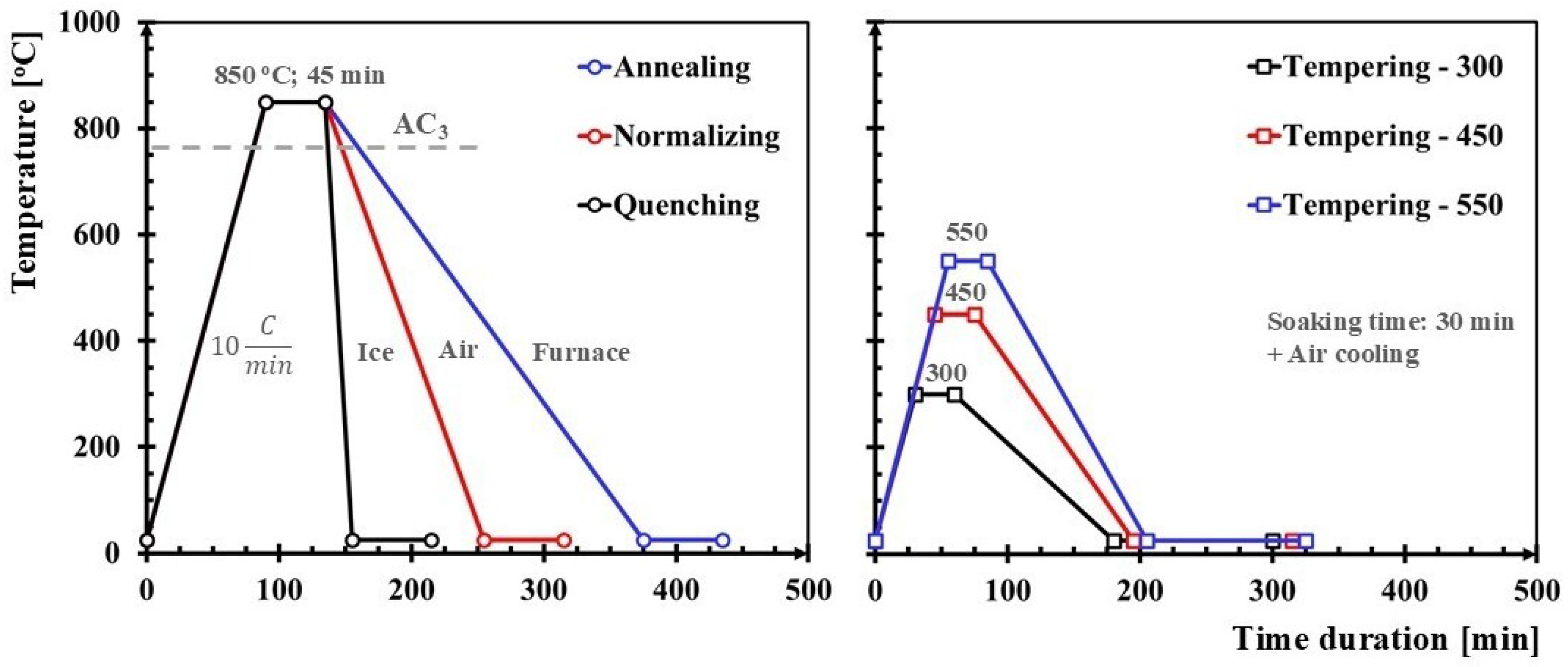
All samples were initially heated to a temperature of 850 °C for 45 min. Cooling was performed as follows: Quenched samples were cooled in an ice bath; normalized samples were cooled in air; and annealed samples were cooled inside the furnace. For the second set, quenched samples were reheated for 30 min at their respective tempering temperatures (300, 450 and 550 °C), followed by air cooling.
Figure 2 presents a graphical representation of the thermal cycles used in this research.
The heat treatments were applied with the intention of producing microstructures with distinct characteristics (according to Appendix A).

2.3. Characterization Methodology

The heat-treated samples were characterized through tests of Ultrasonic NDT, Vickers Hardness, and Microstructural Analysis. All tests were performed in triplicates (3 samples per heat treatment) and 10 points per analysis (180 hardness and ultrasound measurements).
The ultrasonic analyses were performed on a portable equipment from SIUI model CTS 59 (from Shantou, China), with a dual crystal transducer with a diameter of 10 mm and a nominal frequency of 5 MHz. The analysis was conducted in Pulse-Echo mode, determining the Velocity (SV), Attenuation (ATN) and Full Width at Half Maximum for the signal in the frequency domain (FWHM) based on the principles outlined in the Ultrasonic nondestructive testing of materials handbook [10]. More details in Appendix B.

2.3.1. Data Acquisition and Metrological Processing

The measurement procedure was designed to ensure high metrological rigor:
  • Surface Preparation and Couplant Mitigation: To minimize the influence of the coupling agent (couplant) and ensure maximum acoustic energy transmission, the surface of each sample was prepared to a low roughness through sanding and final polishing.
  • Measurement Points: The analysis consisted of 10 distinct measurement points distributed across the cross-section of each sample.
  • Time of Flight (ToF) and Velocity Determination: The Time of Flight (t) was determined by the time interval registered between the first and second back wall echoes (interval between A1 and A2 in the A-Scan graph). The Ultrasonic Velocity (SV) was calculated using the conventional formula for the Pulse-Echo method (SV = 2 h/t, where h is the sample height).
  • Attenuation and FWHM: The sound attenuation (ATN) was calculated based on the decrease in amplitude between consecutive backwall echoes. Signals were analyzed in the frequency domain (RF mode) to obtain the Full Width at Half Maximum (FWHM) of the pulse spectrum, a parameter particularly sensitive to microstructural changes and signal scattering.
  • Signal Processing and ToF Determination: The ToF determination utilized the First Zero Crossing (FZC) method of the radio frequency (RF) pulse to ensure accuracy in calculating the time of arrival (ToA) of the A1 and A2 echoes. This method is robust against amplitude and noise variations. The 5 MHz radio frequency signal was digitized with a sampling rate of 100 MHz. The ultrasonic pulse employed had a nominal duration of 1.5 cycles, ensuring good temporal resolution for the accurate ToF calculation, which is crucial for velocity determination. The choice of short pulses (1.5 cycles) was a metrological compromise to optimize axial resolution at the expense of penetration, ensuring clear separation of echoes in the 20 mm sample [10].
  • Frequency Domain Analysis (FWHM): The temporal signal of the second backwall echo (A2) was isolated and subjected to Fast Fourier Transform (FFT) to obtain the frequency spectrum. The FWHM was calculated as the width of the spectrum corresponding to half the maximum peak amplitude, serving as an indicator of microstructural signal dispersion [10].

2.3.2. Physical and Metrological Justification

  • Transducer Justification (Far-Field) and Frequency: The choice of 5 MHz frequency was a metrological compromise to achieve a balance between high sensitivity (to detect microstructural variations) and sufficient penetration depth. The decision to use the 10 mm transducer was based on its focal relationship. The Far-Field zone (N) for a 10 mm transducer at 5 MHz in steel (with SV ≅ 5900 m/s) is calculated as N = D2f/(4SV) ≅ 2.1 mm. Given that the sample thickness is 20 mm, all measurements were carried out well within the Far-Field zone, as required by the conventional Pulse-Echo method. This geometry ensures that the wave propagates as a plane wave, metrologically validating the velocity measurement (SV = 2 h/t) and attenuation. While measurements with smaller diameters or different pulse durations are of scientific interest, they were not performed as the current configuration meets the fundamental metrological requirements for characterizing the sample volume. The theoretical basis for the correlation is that ultrasonic velocity (SV) is a function of the material’s elastic constants and density. The microstructural changes induced by heat treatment modify these constants, establishing the physical correlation between the US parameters and Vickers Hardness (HV) [1,10,30,43].
  • Velocity Uncertainty: The apparent discrepancy between the dimensional tolerance of the sample height (20 ± 0.5 mm, suggesting an uncertainty of 2.5% in the dimension h) and the dispersion reported in Table 1 (approximately 0.1% Type A uncertainty) is explained by the principle of uncertainty propagation (GUM). The velocity calculation is given by SV = 2 h/t. The ultrasonic equipment has a high time-of-flight resolution (Δt) of 0.01 ≅ µs. The combined uncertainty (uSV) is dominated by the high precision of the ToF measurement, which proved to be statistically much more accurate than the Type B uncertainty of the dimensional measurement h (uh) [4,10,43,44]. The equipment’s high temporal precision compensates for the sample’s dimensional tolerance, justifying the low dispersion (Type A uncertainty) of the results in Table 1.

2.3.3. Vickers Hardness

Vickers hardness measurements (HV) were performed on a digital micro-hardness tester from TIME model HVS-1000 (from Jinan, Shandong, China). A diamond pyramidal indenter was used, with a penetration time of 10 s and an applied force of 9.8 N.

2.3.4. Microstructural Analysis

Microstructural analyses were performed in two stages. First, metallographic preparation involved sanding and polishing, followed by chemical etching in 2% Nital solution for 10 s. Second, microscopic analysis was conducted using an optical microscope from LEICA model DM2500 (from São Paulo city, São Paulo, Brazil) and a Scanning Electron Microscope from JEOL model JSM-5700 (from Peabody, MA, USA) (10 kV voltage, up to 3000× magnification).
Statistical regression analyses were performed, seeking to verify the existence of a correlation between the ultrasonic parameters and the variations in material hardness [25,41].

3. Results

3.1. Microstructural Analysis

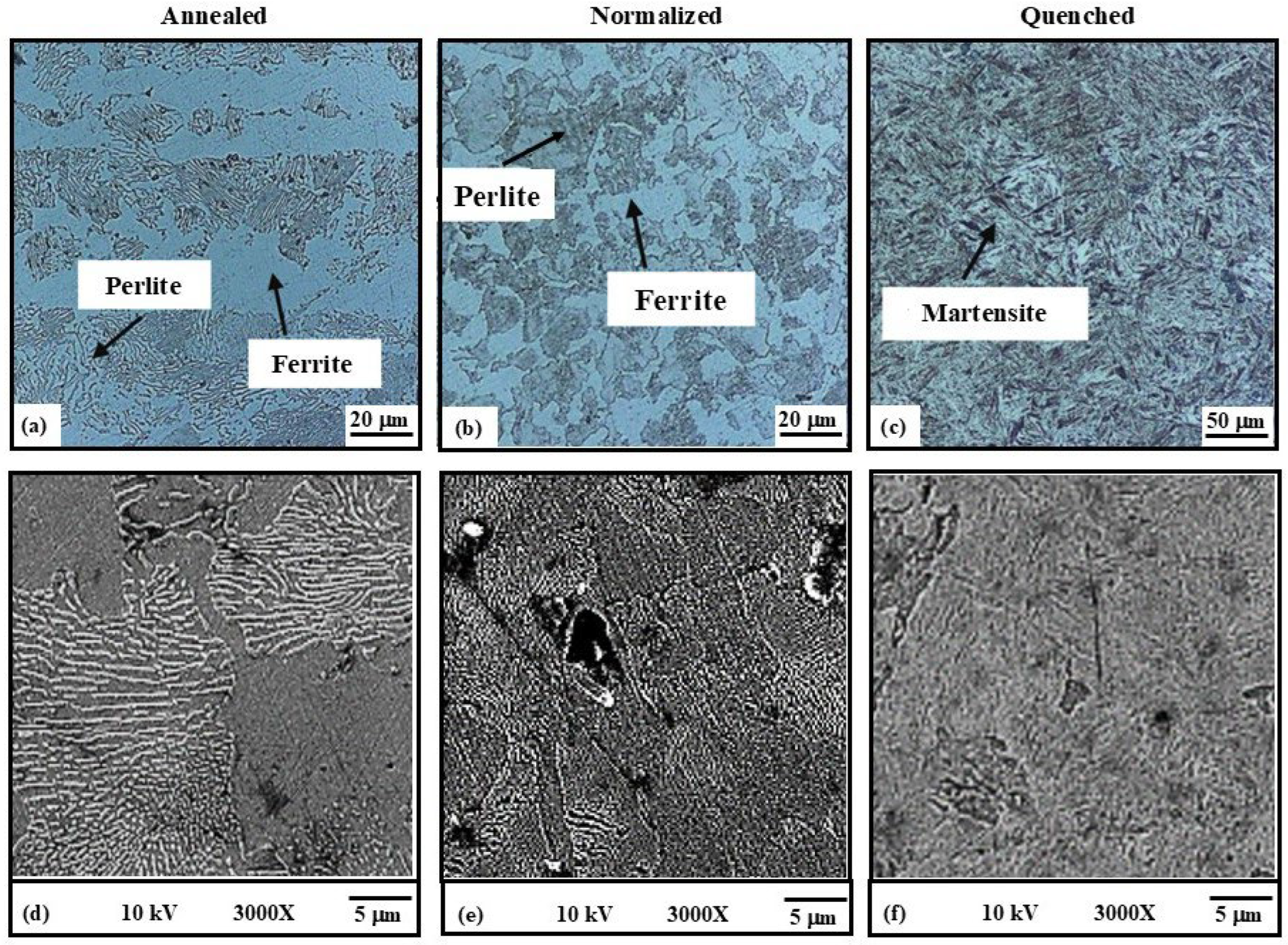
The heat treatments (Annealing, Normalizing, Quenching, and Tempering) were successful in producing a spectrum of distinct microstructures in the AISI 1045 steel samples. The as-quenched condition (Q) resulted in a predominantly martensitic microstructure. The annealed condition (A) resulted in a ferrite/pearlite microstructure [2,3,11].
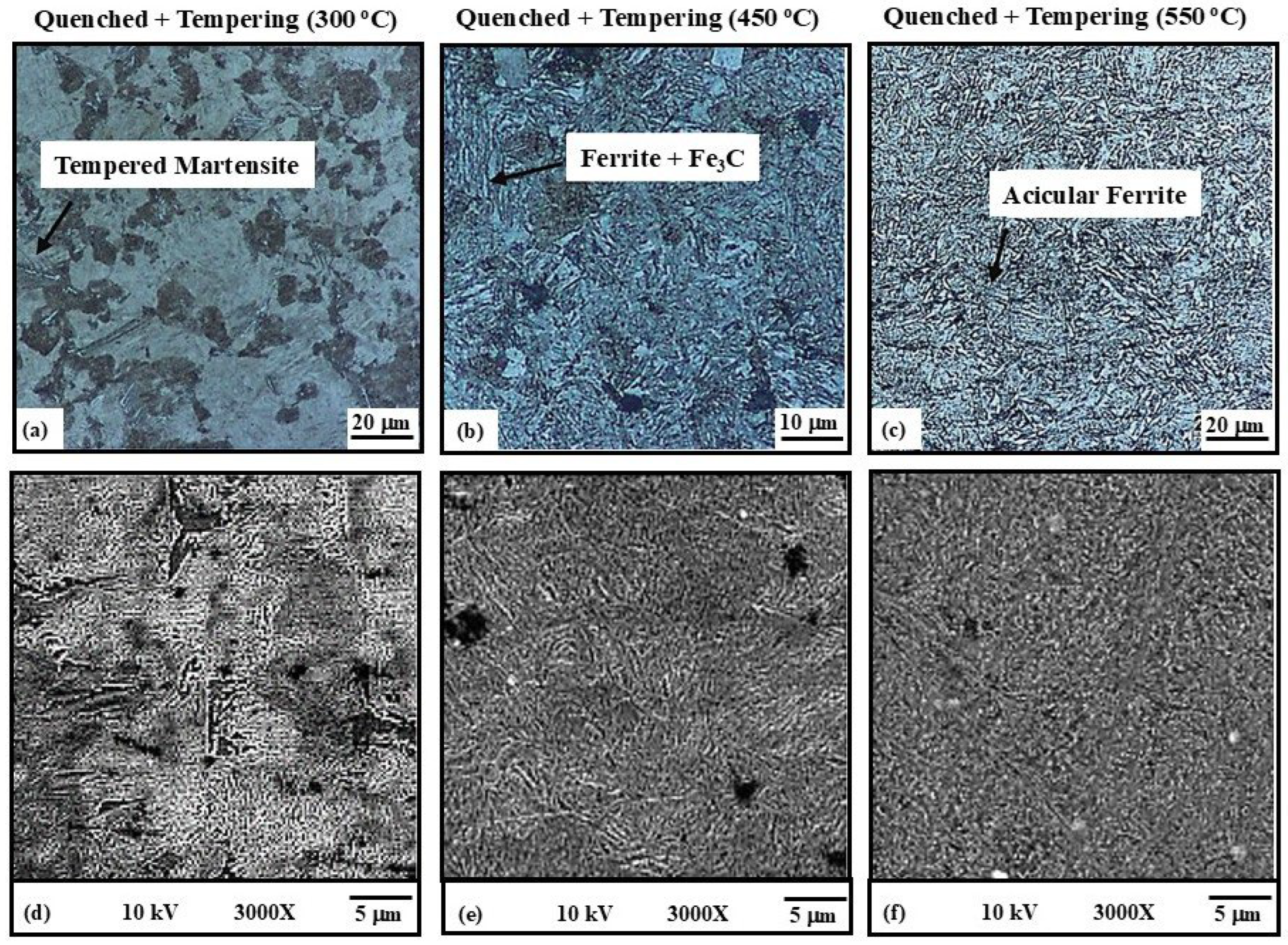
Figure 3 and Figure 4 present the microstructures obtained for the samples subjected to the first and second heat treatment cycles. The variation in tempering temperatures (T300, T450, T550) also induced the expected microstructural evolutions, with the progressive reduction in martensite brittleness and the precipitation of carbides [11]. The correlation between heat treatment and microstructure is fundamental for the performance of AISI 1045 steel in various applications, such as the determination of mechanical properties and the investigation of thermomechanical phenomena in machining [3,11,40,41,42].

3.2. Vickers Hardness

The Vickers Hardness results are presented in Table 1, serving as the destructive metrological reference for the present study. The maximum hardness was observed in the Quenched condition (Q) (660 ± 30 HV), and the minimum in the Annealed condition (A) (170 ± 10 HV). The test successfully recorded the variation between the microstructures (Annealing, Normalizing, and Quenching) and the gradual reduction in the values obtained for the tempered samples (T300, T450 and T550).

3.3. Ultrasound and Metrological Model

The ultrasonic parameters Sound Velocity (SV), Sound Attenuation (ATN), and Full Width at Half Maximum (FWHM) were measured for all heat treatment conditions, as detailed in Table 1.
Metrological Clarification: The dispersion values presented in Table 1 (e.g., 170 ± 10 HV; 5920.65 ± 4.777 m/s) correspond to the Standard Deviation (SD) of the measurements (n = 10 for US and n = 30 for Hardness) taken across the three samples of each condition. These values represent the Type A Standard Uncertainty (statistical) of the collected data [25]. The final Expanded Uncertainty (U) of the model is addressed in Section 4.3.
Addressing Velocity Uncertainty: The high precision in the Sound Velocity (SV) measurement, with a dispersion of approximate 0.1% (Type A uncertainty), is justified by the rigor of the metrological procedure:
(1)
The uncertainty of the sample height (20 ± 0.5 mm) is combined with the high precision of the Time of Flight (ToF) measurement [43].
(2)
The final uncertainty is calculated using the Propagation of Uncertainty method (GUM), which combines the uncertainties of all variables (Δh and Δt), demonstrating that the precision of the US equipment’s time resolution outweighs the dimensional tolerance [43].
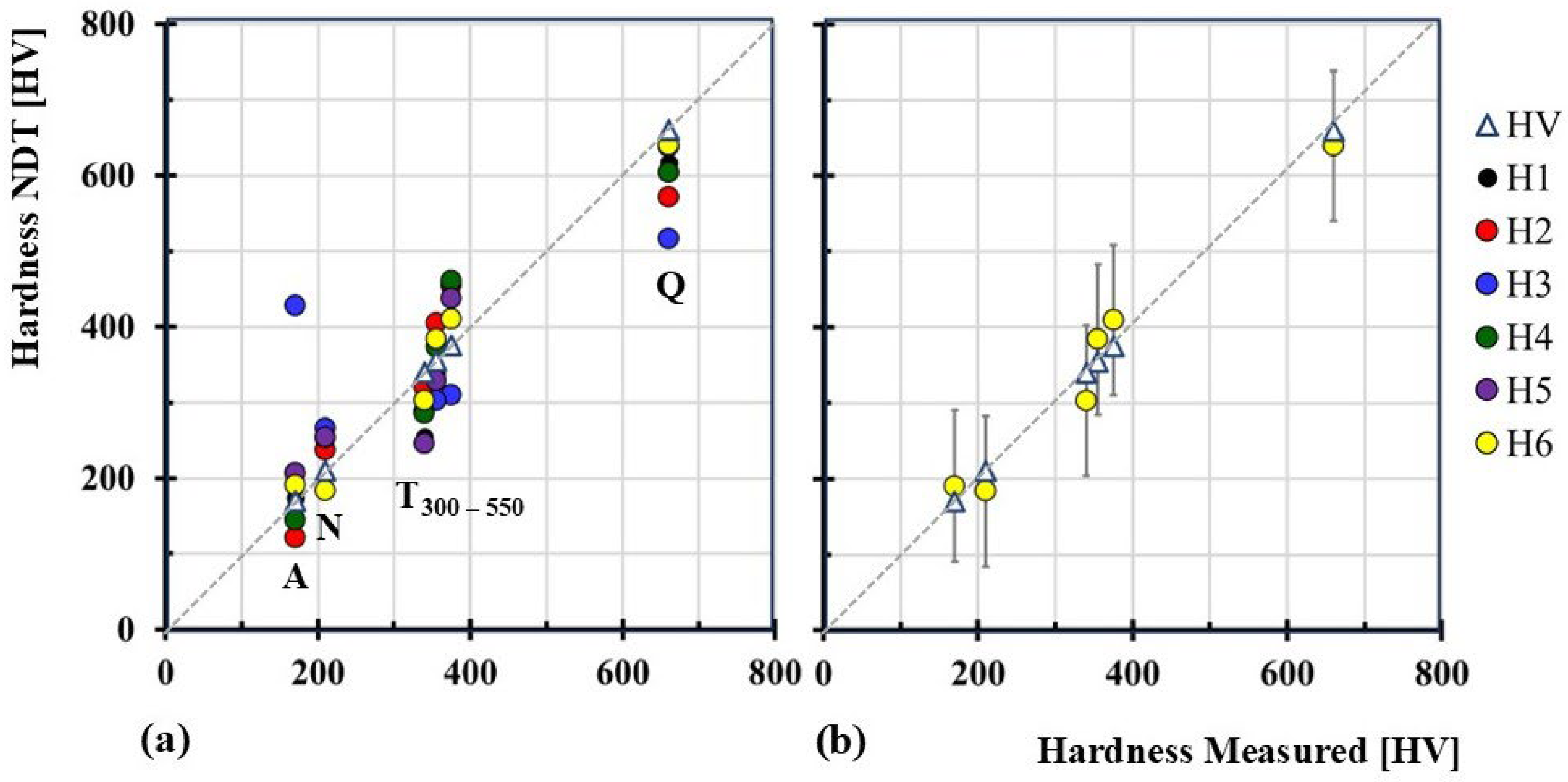
Model Acquisition: Based on the collected ultrasonic parameters and the Vickers hardness values, Multiple Linear Regression analyses were performed to evaluate the correlation between the properties, considering different combinations of ultrasonic parameters. The statistical analysis of the data’s normality was confirmed by the Shapiro–Wilk test, validating the use of linear regression [25,43]. The analysis utilized a total dataset derived from 180 Vickers Hardness measurements (30 points × 6 conditions) and 60 Ultrasonic measurements (10 points × 6 conditions). The results are presented in Table 2, and the regression plots are shown in Figure 5.
The analyses were conducted considering univariate (Models 1, 2, and 3), bivariate (Models 4 and 5) and multiparametric (Model 6) approaches. Model 6 (Equation (2)), which combined SV, ATN and FWHM (Table 2), resulted in a coefficient of determination (R2) of 96.687% [43].
The Figure 5 presents the scatter plots obtained from the linear regression analysis, comparing the destructively measured hardness values (metrological reference) with the hardness values predicted by the non-destructive ultrasonic (NDT) models.
Subfigure Figure 5a shows the dispersion of all calculated hardness data relative to the measured hardness. This graph includes the performance of all tested regression models (H1 to H6), visually demonstrating the correlation between the properties and the models’ prediction capability. The concentration of data points close to the ideal correlation line indicates the precision achieved by the multiparametric model H6.
Subfigure Figure 5b is exclusively dedicated to the metrological validation of Model 6 (H6), which demonstrated superiority with the highest Coefficient of Determination (R2) of 96.687%. The H6 plot is presented with the error bars, which represent the Expanded Uncertainty (U). This uncertainty was calculated as U = ±99.31 HV (using a coverage factor of k = 2), following the principles of the GUM (Guide to the Expression of Uncertainty in Measurement). The inclusion of error bars quantifies the metrological robustness and predictive power of Model H6, confirming its acceptability for the quantitative classification of different heat treatment conditions. This result validates the multiparametric methodology for the non-destructive determination of Vickers Hardness.
H N D T = 3.6483   ×   S V + 19824.7952   ×   A T N 519.3172   ×   F W H M 23871.094

4. Discussion

4.1. Validation of Destructive Reference and Microstructure

The Vickers Hardness results (Section 3.2), which served as the destructive metrological reference for this study, confirmed the expected and well-established trends in materials science [4,10]. The maximum hardness in the Quenched (Q) condition is a direct reflection of the formation of the highly stressed, metastable martensitic phase, while the minimum hardness in the Annealed (A) condition is characteristic of the equilibrium ferrite/pearlite microstructure. The gradual reduction in hardness in the tempered samples (T300, T450, T550) is a direct result of martensite decomposition and the controlled precipitation of carbides, a primary mechanism controlling the evolution of strength and hardness in steels [3,41,42]. The importance of precise measurement of these properties is crucial, as they are intrinsically linked to the material’s application and final performance [43]. It is acknowledged that, as elastic waves, wave velocity (SV) is primarily governed by elastic moduli and is generally insensitive to fine microstructural features associated with hardness or plasticity, and attenuation (ATN) is expected to exhibit greater sensitivity at frequencies above 10 MHz [36,37,38,39]. However, the measurable correlations obtained here are justified by the scale of the microstructural variations, as discussed below.

4.2. Ultrasonic Sensitivity and Microstructural Complexity

The ultrasonic parameters (Sound Velocity, Attenuation, and Full Width at Half Maximum) proved to be sensitive to the microstructural variations induced by the heat treatments, a finding consistent with other studies on heat-treated steels [9,13,15].
Velocity (SV): The correlation between SV and HV is physically justified because the ultrasonic velocity is a function of the material’s elastic constants and density. The microstructural changes induced by the heat treatments directly alter these constants, establishing a robust physical mechanism for the SV measurement to track the hardening process. The formation of martensite and the accompanying high dislocation density and internal residual stresses measurably modify the elastic constants, thereby justifying the SV’s observed correlation with the macroscopically determined hardness [1,10,13,18,21]. Its success in monitoring the tempering process, in particular, corroborates studies that use ultrasound to characterize the properties of heat-treated steels, such as AISI 4340 [16].
Attenuation (ATN): The highest ATN in the Quenched (Q) sample is justified by the high density of crystalline defects and internal stresses in the martensite, which act as powerful scatterers of ultrasonic wave energy. Despite the low frequency of 5 MHz, the observed attenuation is primarily attributed to scattering and absorption caused by the significant micro-heterogeneity and the high density of defects resulting from the non-equilibrium phase transformations (martensite) and is not solely dependent on grain-size effects (which dominate at higher frequencies). It is recognized that attenuation sensitivity increases with frequency (above 10 MHz), but studies show that linear attenuation, even at lower frequencies, can effectively track major microstructural changes such as static recrystallization and grain growth in superalloys [37]. This supports the validity of using ATN at 5 MHz, in conjunction with other parameters, to track the large microstructural changes present in AISI 1045. The literature confirms that the heat treatment generates defects and alters the grain structure, which increases the ultrasonic scattering and the measured attenuation [7,8,9,11,13,16,22]. This confirms the direct correlation between the hardness/defect density and the attenuation, a sensitivity that is fundamental for the multiparametric model. The amplitude of the ultrasonic signal (related to attenuation) is sensitive to changes in mechanical properties, such as hardness and internal stresses. Studies such as that by Cao et al. [7] on magnetostrictive magnetoacoustic conversion reveal that mechanical properties (including hardness) are critical parameters that directly affect the structural reliability of ferromagnetic materials.
Comparison with Previous Studies: The small variation in velocity and attenuation observed across the different heat treatment conditions is consistent with results reported in previous studies for similar carbon and low-alloy steels [7,8,9,13,14,15,16,17,18,19,20,21,22,23,24]. This consistency validates the sensitivity of the multiparametric approach to detect both macroscopic (Annealed vs. Quenched) and subtle alterations (Tempering).

4.3. Superiority of the Multiparametric Model and Advanced Metrology

The main finding of this study lies in the decisive superiority of the multiparametric approach. Although univariate and bivariate models showed significant correlations, the optimized combination of SV, ATN, and FWHM in Model 6 resulted in a Coefficient of Determination (R2) of 96.687% (Table 2).
Advanced Metrology and Validation: This superior performance is crucial and is aligned with the principles of advanced NDE metrology. The model’s robustness is ensured by rigorous metrological control:
Uncertainty Quantification: The result is presented with Expanded Uncertainty (U), calculated according to the principles of the Guide to the Expression of Uncertainty in Measurement (GUM) [25]. The final Expanded Uncertainty for the Model 6 prediction was calculated as U = ±99.31 HV (using a coverage factor of k = 2). The Error Bars presented in Figure 5b represent this value, providing a complete metrological picture of the model’s predictive power.
Acceptability of Uncertainty: Despite the absolute margin of ±99.31 HV, this value is fully acceptable and robust for the metrological objective of the study. Given the wide range of hardness (from 170 to 660 HV), this uncertainty is highly effective for distinguishing and quantitatively classifying the different heat treatment conditions (e.g., distinguishing between Annealed and Quenched samples), which is the primary requirement for industrial quality control. The high R2 confirms that the model is fundamentally robust for the characterization of mechanical properties [43].
Multiparametric Rationale: The combination of multiple parameters allows the model to effectively decouple and quantify the complex microstructural changes (phase variations, internal stresses, grain size) more effectively than isolated parameters. This approach is validated in recent NDT literature for structural characterization of materials with complex microstructures [13,18,19,20,21,22,23,24].
Optimization and Precision: Ultrasonic precision is strongly influenced by the optimization of testing and signal processing parameters [26,27,28]. The principle that “algorithm performance is better when the number of features is higher” [26] justifies the choice of our multiparametric model, which uses FWHM (extracted from the frequency domain) to capture signal characteristics that SV and ATN in the time domain cannot isolate.
Statistical Validation: The high correlation obtained, along with the use of statistical significance tests (p-value) in regression models, fulfills the same metrological function as ANOVA in similar studies, statistically validating that the precision of our multiparametric method is robust and reliable, overcoming the uncertainties inherent in non-destructive metrology [4,10,25,29].

4.4. Implications and Scientific Contribution

Our work contributes to the field of non-destructive metrology by establishing a quantitative model that can be applied to finished components, where destructive testing is unfeasible. The success of Model 6 in AISI 1045 steels, a widely used structural alloy, reinforces that ultrasound is a reliable tool and applicable to a wide range of steel microstructures [30]. The high metrological precision achieved (R2 = 96.687%) establishes a new standard for quality control and the optimization of heat treatment processes, aligning with the concepts of Nondestructive Evaluation 4.0 (NDE 4.0) [31,32,33]. While the current scope focused on metrological validation under a standard industrial configuration that demonstrated compliance with the Far-Field criteria, future investigations should focus on expanding the model’s generality by exploring the influence of parameters such as frequency dependence, sample height, and the use of smaller transducer diameters. The study of these parameters will be addressed in subsequent work.
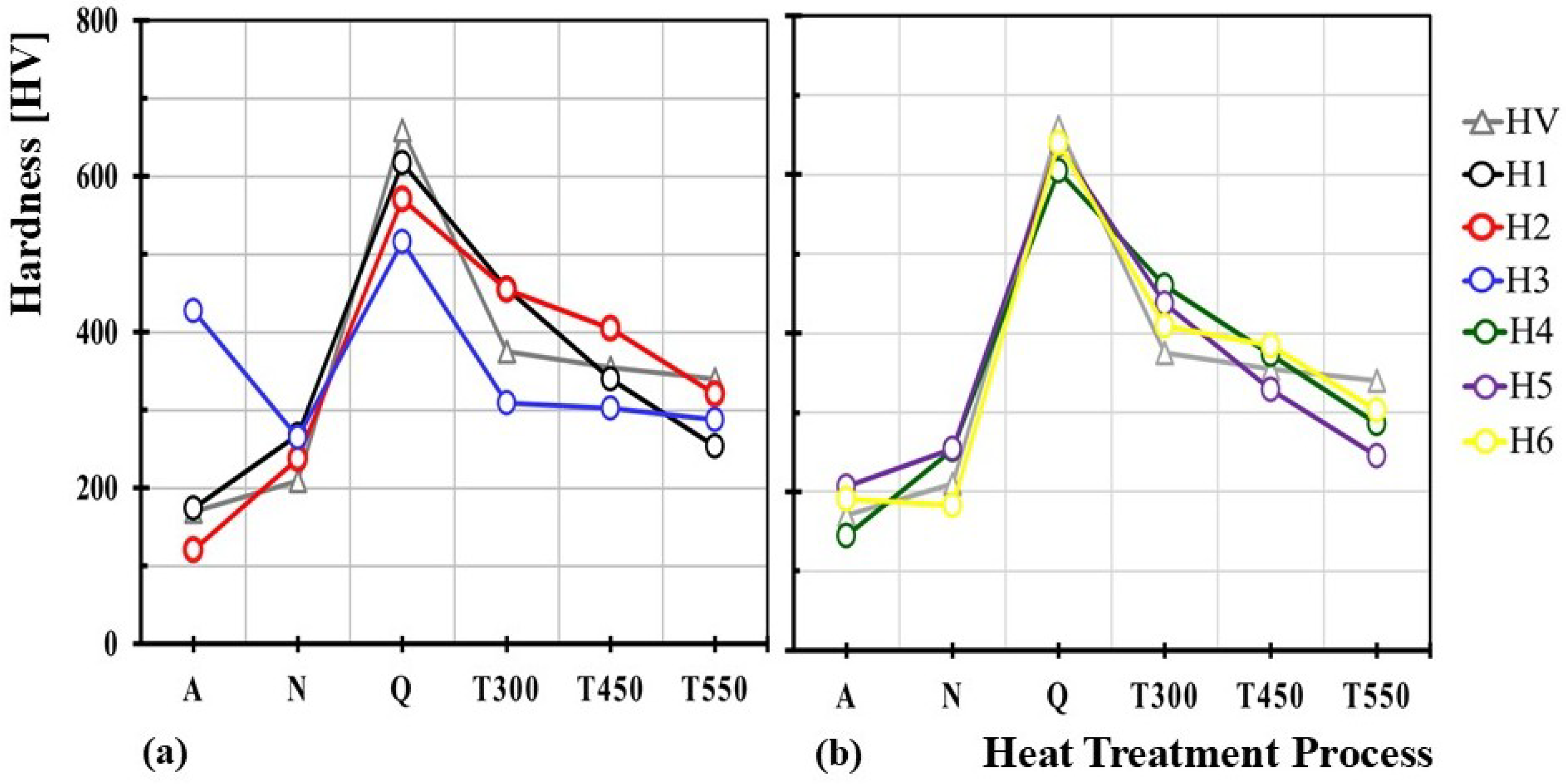
Figure 6 presents a comparison of the regression curves obtained in this analysis.

5. Conclusions

The evaluation of the potential of ultrasonic testing for the metrological control of heat-treated steels was successfully conducted, resulting in a robust quantitative model for the non-destructive characterization of mechanical properties.
1. 
Microstructural Sensitivity: Ultrasonic parameters are sensitive to microstructural variations induced by heat treatments (annealing, normalizing, quenching, and tempering). It is recognized that the frequency of 5 MHz represents a limitation in sensitivity compared to higher frequencies (>10 MHz) or nonlinear techniques. However, the sensitivity achieved is justified by the measurable changes in elastic constants (SV) and the strong scattering mechanisms (ATN) resulting from the wide range of microstructures produced. This sensitivity confirms the validity of the linear ultrasound technique, when used multiparametrically, as an effective tool for monitoring the microstructural evolution of carbon steels. Furthermore, the sensitivity of the measured amplitude (attenuation) to properties like hardness and internal stress is consistent with advanced physical models in the literature.
2. 
Multiparametric Superiority and Metrological Precision: The correlation model that utilized the multiparametric approach, combining SV, ATN, and FWHM, demonstrated exceptional metrological precision, achieving a Coefficient of Determination (R2) of 96.89%. This result is significantly superior to the univariate and bivariate models, validating the optimization of parameter combination for property quantification. The model’s robustness was confirmed by the rigorous quantification of the Expanded Uncertainty (U), calculated according to the principles of the Guide to the Expression of Uncertainty in Measurement (GUM), providing a high level of confidence in the model’s predictive capability.
3. 
Metrological Contribution and Future Work: The NDT model establishes a robust and non-destructive alternative for the quantitative determination of Vickers Hardness in AISI 1045 steels, overcoming the limitations of destructive testing. This methodology aligns directly with the principles of Non-Destructive Evaluation 4.0 (NDE 4.0) and meets industry demands for faster, reliable, and scientifically grounded quality control solutions. Given that the metrological validation was performed under a standard industrial configuration (ensuring Far-Field compliance), future work will focus on expanding the general applicability of the model by investigating the influence of parameters such as frequency, sample height, and alternative transducer diameters.

Author Contributions

C.O.D.M. and J.C.B.C.J. were uncharged of the NDT development and application. J.C.B.C.J. also conduced the microstructural and hardness characterizations. J.L.B.M. and L.V.B. were uncharged of the heat treatment selection and application. All the authors contribute to the article writing and discussing. All authors have read and agreed to the published version of the manuscript.

Funding

This research received no external funding.

Institutional Review Board Statement

Not applicable.

Informed Consent Statement

Not applicable.

Data Availability Statement

Data available on request due to restrictions.

Acknowledgments

The authors acknowledge the CNPq, FAPITEC/SE and FAPERGS/RS.

Conflicts of Interest

The authors declare no conflicts of interest.

Abbreviations

The following abbreviations are used in this manuscript:
NDTNondestructive test
NDE 4.0Nondestructive Evaluation 4.0
SVSound velocity
ATNSound attenuation
FWHMFull Width at Half Maximum
ToFTime of Flight
GUMUncertainty in Measurement
UExpanded Uncertainty
HVVickers Hardness

Appendix A

Fundamentals on Heat Treatment Processes in Carbon Steels
Heat treatments are strictly controlled thermodynamic and kinetic processes of heating and cooling metallic materials in the solid state. Their primary purpose is to modify the material’s internal microstructure, such as morphology, phase distribution, and grain size, in order to impart a specific set of mechanical properties (hardness, strength, and toughness) for a given engineering application [2,3,11,40,41,42]. For carbon steels, such as AISI 1045, these processes explore the phase transformations of the Iron–Carbon (Fe-C) system and the cooling kinetics.
A heat treatment consists of three distinct stages:
(a) Heating phase. (b) Temperature holding (soaking). (c) Cooling phase [3].
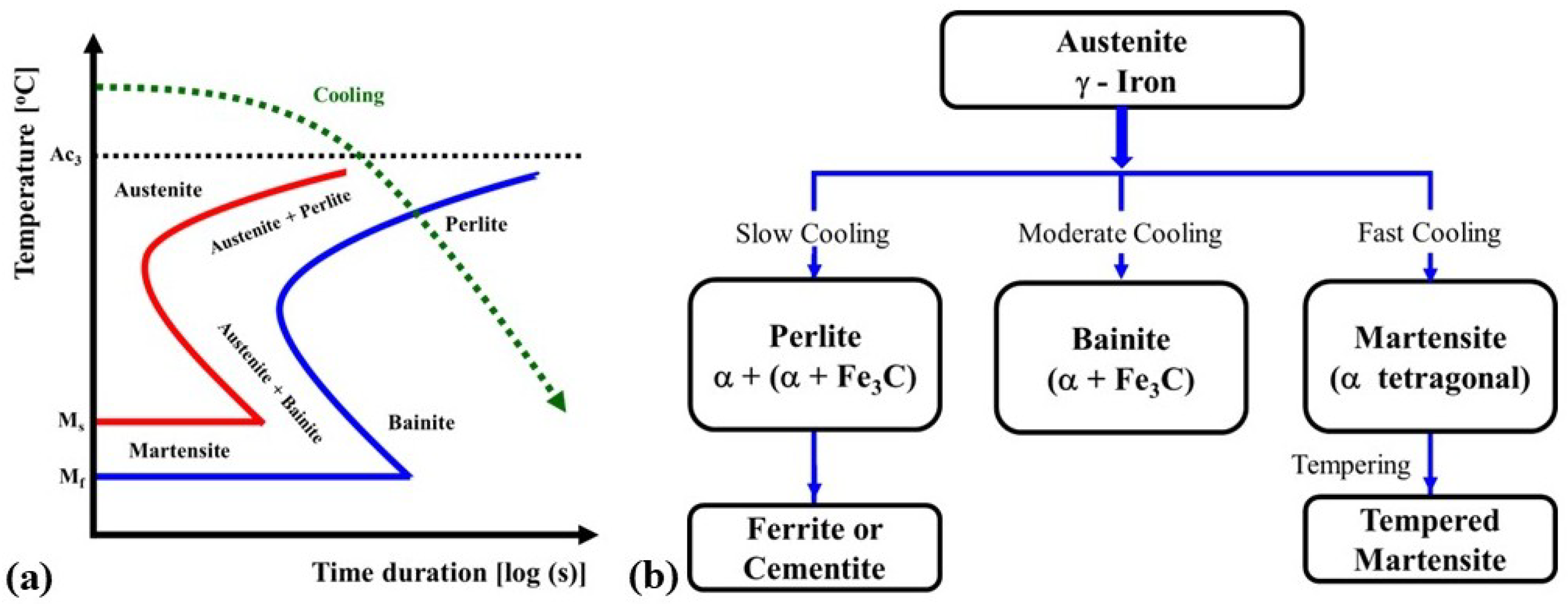
Heat treatments are applied to obtain specific microstructures and properties to favor processing and/or a given application (Figure A1). Their effectiveness depends on factors such as the metal’s chemical composition, the part’s geometry and application, and the control of process parameters (temperature, soaking time, cooling rate, parts protection) [2,3].
Figure A1. Time, Temperature Transformation diagram representation (a) and the microstructure obtained by different types of cooling rates (b) (adapted from [3]).
Metrology 06 00015 g0a1
The main heat treatments investigated in this study were:
1. 
Annealing
Annealing aims to achieve the microstructure closest to the equilibrium state (thermodynamically most stable) for the steel. This results in the maximum reduction in internal stresses, maximum softness (low hardness), and maximum ductility, essential for improving formability and machinability. For this purpose, the samples are heated above the upper critical temperature (Ac3) until they reach the austenite phase (face-centered cubic—FCC structure). The subsequent cooling is extremely slow, generally carried out inside the furnace itself, allowing sufficient time for the complete diffusion of carbon atoms. The resulting microstructure is formed by the combination of Ferrite and coarse Pearlite (for hypoeutectoid steels) [2,3,11].
2. 
Normalizing
Normalizing aims to refine the steel’s grain size, homogenize the microstructure, and restore the material’s properties after mechanical forming processes. Grain refinement simultaneously increases the material’s toughness and mechanical strength. In a process similar to annealing, the steel is heated above the Ac3 temperature for complete austenitization. The cooling, however, is carried out in air, resulting in a cooling rate superior to that of annealing. As a result, we have a microstructure formed by the finer and more distributed Ferrite and Pearlite phases (compared to annealing), conferring greater hardness and strength [2,3].
3. 
Quenching
Quenching aims to obtain the steel’s microstructure with maximum hardness and strength, sacrificing toughness and ductility. In this process, after austenitization (heating above Ac3), the steel is subjected to very rapid cooling in a medium such as water, oil, or an ice bath. The accelerated cooling prevents carbon diffusion, resulting in a martensitic transformation (a shear and non-diffusive transformation). As results, we have a predominantly Martensite microstructure (metastable, body-centered tetragonal—BCT structure), characterized by high hardness and brittleness, in addition to high internal stresses [2,3,5,11,29,40].
4. 
Tempering
Tempering is a mandatory treatment after quenching. Its purpose is to relieve internal stresses, increase the material’s toughness and ductility, and stabilize the microstructure, by means of a controlled reduction in hardness. In this process, the quenched steel is reheated to a temperature below the critical Ac1 and held for a specific time, followed by air cooling. The tempering time and temperature control the final microstructure. As a result, we have the tempered Martensite microstructure, characterized by the precipitation of fine carbides in the ferrite matrix, resulting in a tougher microstructure with controlled hardness [2,3,5,11,29,40].

Appendix B

Fundamentals of Ultrasonic Inspection and Microstructural Metrology
Ultrasonic inspection is a fundamental Non-Destructive Testing (NDT) method for ensuring the integrity and characterization of materials, governed by international standards. The technique uses high-frequency sound waves (typically in the range of 0.5 to 25 MHz) to interact with the internal volume of the materials [1,6,10].
In the context of heat treatment metrology, it acts as a sensor for microstructural variations that influence the mechanical properties of the steel. The most common operating principle is Pulse-Echo. A transducer converts electrical energy into an ultrasonic pulse that propagates in the material. Upon encountering an acoustic interface (e.g., the back wall, a defect, or a grain boundary), the wave is reflected (echo) and captured by the transducer, which converts the energy back into an electrical signal [1,10,44].
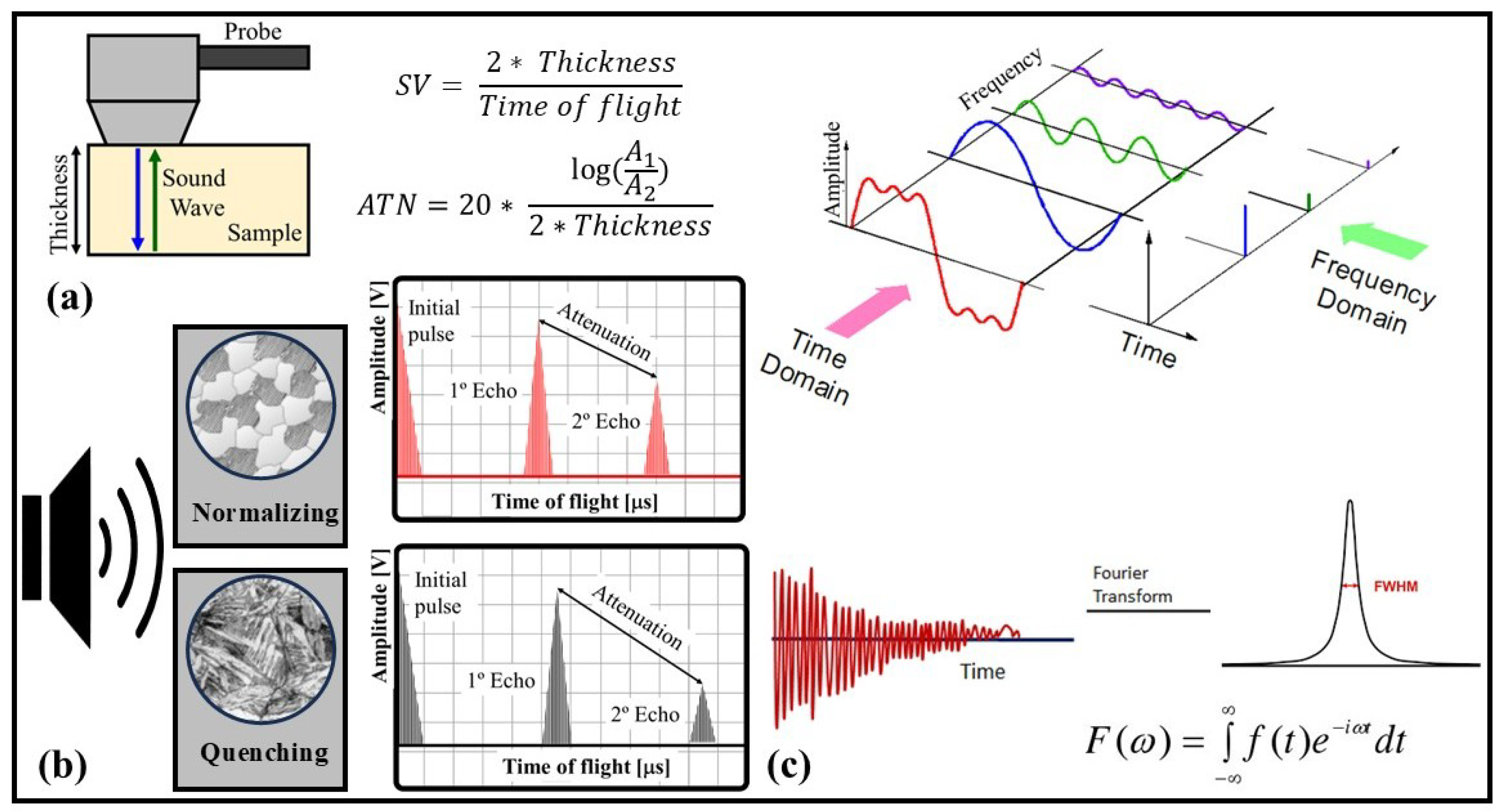
The analysis of the raw signal in the time and frequency domains allows for the extraction of parameters that directly correlate with the steel’s microstructure. For the purpose of metrological accuracy, Time of Flight (ToF) is determined using the First Zero Crossing (FZC) method of the radiofrequency pulse, which ensures high precision. The short pulse duration (1.5 cycles) employed is critical for achieving the necessary axial resolution for accurate ToF calculation [9,36,37,38,39,40,41,42,43,44,45,46,47]. Figure A2 shows a schematic representation of the ultrasonic pulse–echo configuration and signal analysis.
Figure A2. Schematic representation of the ultrasonic analysis of heat-treated materials: (a) Ultrasonic pulse-echo configuration. (b) Ultrasonic A-Scan presentation. (c) Time–frequency domains transformations [1,10,42].
Metrology 06 00015 g0a2
Three ultrasonic parameters were used in this study:
Sound Velocity (SV): Propagation speed of the wave in the analyzed material.
It is a direct indicator of the material’s stiffness (modulus of elasticity) and density.
Sound Wave Attenuation (ATN): Measure of the ultrasonic pulse’s energy loss as it propagates through the analyzed material. Attenuation primarily occurs due to Scattering, which is sensitive to microstructural heterogeneity (grain size, phase boundaries, and dislocation density). Microstructures with high dislocation density (martensite) exhibit higher ATN. ATN is also a crucial parameter for tracking changes in mechanical properties such as hardness and yield strength, as it directly reflects the absorption and scattering mechanisms related to internal stress [10,42].
Full Width at Half Maximum of the pulse in the frequency domain (FWHM): Measure of the width of the analyzed echo’s frequency spectrum. It is a signal analysis parameter that quantifies dispersion and homogeneity. Its use refines multiparametric models, ensuring that signal processing supports metrological measurement [42].
The application of ultrasound has evolved into the concept of NDE 4.0 [31,32,33].
In this modern approach, inspection is not limited to flaw detection but transforms ultrasonic data into strategic information:
The combination of multiple parameters with advanced regression analyses is a central characteristic of NDE 4.0, resulting in high-precision models (e.g., R2 of 96.89% demonstrated in this study) [31,32,33].
The technique allows for real-time quality control and characterization of mechanical properties, without the need for part destruction (Industry 4.0 benefit), feeding the optimization cycle of heat treatment processes.

References

  1. Hellier, C.J. Handbook of Nondestructive Evaluation; McGraw-Hill Ed.: New York, NY, USA, 2020. [Google Scholar]
  2. da Costa e Silva, A.L.; Mei, P.R. Aços e Ligas Especiais, 3rd ed.; Blucher: São Paulo, Brazil, 2010. [Google Scholar]
  3. Bhadeshia, H.K.D.H.; Honeycombe, R.W.K. Steels: Microstructure and Properties, 4th ed.; Elsevier: London, UK, 2017; 490p. [Google Scholar]
  4. Krishnan, K.M. Principles of Materials Characterization and Metrology; Oxford University Press: Oxford, UK, 2021; 869p. [Google Scholar]
  5. Daniyan, I.A.; Mpofu, K.; Adeodu, A.; Azeez, T. Investigating the Quality and Conformity of Carbon Steel AI-SI 1035 Under Varying Heat Treatment Conditions. Procedia Manuf. 2019, 35, 1111–1116. [Google Scholar] [CrossRef]
  6. Shi, X. Application of ultrasonic non-destructive testing in industrial pipeline inspection. Appl. Math. Nonlinear Sci. 2024, 9, 1–16. [Google Scholar] [CrossRef]
  7. Cao, W.; Wu, B.; Yuan, Y.; Wang, Z.; Gao, X.; Liu, X. Non-destructive characterization of mechanical properties using magnetostrictive magnetoacoustic conversion: Theory and experiment. Ultrasonics 2026, 160, 107900. [Google Scholar] [CrossRef]
  8. Du, H. Characterization of microstructural anisotropy using the mode-converted ultrasonic scattering in titanium alloy. Ultrasonics 2022, 119, 106633. [Google Scholar] [CrossRef] [PubMed]
  9. Zhang, J.; Song, Y.; Li, X.; Zhong, C. Comparison of Experimental Measurements of Material Grain Size Using Ultrasound. J. Nondestruct. Eval. 2020, 39, 30. [Google Scholar] [CrossRef]
  10. Langenber, K.J.; Marklein, R.; Mayer, K. Ultrasonic Nondestructive Testing of Materials: Theoretical Foundations; CRC Press: Boca Raton, FL, USA, 2012. [Google Scholar]
  11. Kandpal, B.C.; Gupta, D.K.; Kumar, A.; Jaisal, A.K.; Ranjan, A.K.; Srivastava, A.; Chaudhary, P. Effect of heat treatment on properties and microstructure of steels. Mater. Today Proc. 2021, 44, 199–205. [Google Scholar] [CrossRef]
  12. Muthumari, S.; Singh, A. Review of Various Ultrasonic Techniques Employed in Modern Industries. Int. J. Eng. Sci. Technol. 2011, 3, 3078–3085. [Google Scholar]
  13. Carvajal, L.; Artigas, A.; Monsalve, A.; Arévalo, E. Monitoring Heat Treatments in Steels by a Non Destructive Ultrasonic Method. Mater. Res. 2017, 20, 347–352. [Google Scholar] [CrossRef]
  14. de Araújo Freitas, V.L.; de Albuquerque, V.H.C.; de Macedo Silva, E.; Silva, A.A.; Tavares, J.M.R. Nondestructive characterization of microstructures and determination of elastic properties in plain carbon steel using ultrasonic measurements. Mater. Sci. Eng. A 2010, 527, 4431–4437. [Google Scholar] [CrossRef]
  15. Lin, Y.J.; Yang, C.H.; Huang, J. Influence of Microstructural Changes’ Effects on the Linear and Nonlinear Ultrasonic Parameters of Cast Stainless Steels. Appl. Sci. 2020, 10, 3476. [Google Scholar] [CrossRef]
  16. Rayes, M.M.E.; El-Danaf, E.A.; Almajid, A.A. Ultrasonic characterization of heat-treatment effects on SAE-1040 and- 4340 steels. J. Mater. Process. Technol. 2015, 216, 188–198. [Google Scholar] [CrossRef]
  17. Rayes, M.M.E.L.; El-Danaf, E.A.; Almajid, A.A. Characterization and correlation of mechanical, microstructural and ultrasonic properties of power plant steel. Mater. Charact. 2015, 100, 120–134. [Google Scholar] [CrossRef]
  18. das Neves, E.C.; do Nascimento, E.G.; Sacilotto, D.G.; Ferreira, J.Z.; Medeiros, J.L.B.; Biehl, L.V.; Lemos, G.V.B.; Martins, C.O.D.; de Jesus Pacheco, D.A. Nondestructive analysis of corrosion in ageing hardened AA6351 aluminum alloys. Mater. Chem. Phys. 2022, 291, 126664. [Google Scholar] [CrossRef]
  19. Toozandehjani, M.; Matori, K.A.; Ostovan, F.; Mustapha, F.; Zahari, N.I.; Oskoueian, A. On the correlation between microstructural evolution and ultrasonic properties: A review. J. Mater. Sci. 2015, 50, 2643–2665. [Google Scholar] [CrossRef]
  20. Hwang, Y.I.; Sung, D.; Kim, H.-J.; Song, S.-J.; Kim, K.-B.; Kang, S.-S. Propagation and Attenuation Characteristics of an Ultrasonic Beam in Dissimilar-Metal Welds. Sensors 2020, 20, 6259. [Google Scholar] [CrossRef]
  21. das Neves, E.C.; Costa, I.; Medeiros, J.L.B.; Biehl, L.V.; Martins, C.O.D. Applying multiparametric ultrasonic nondestructive test for structural characterization of age hardened aluminum alloy. Tecnol. Metal. Mater. Miner. 2021, 18, e2467. [Google Scholar] [CrossRef]
  22. Markja, I.; Dhoska, K.; Elezi, D.; Moezzi, R.; Petru, M. Effect of the Grain Sizes on the Ultrasonic Propagation and Attenuation on Different Types of Steels Microstructure During Non-Destructive Testing. Ann. Chim.—Sci. Mater. 2021, 45, 329–334. [Google Scholar] [CrossRef]
  23. Rigas, N.; Lypchanskyi, O.; Prahl, U.; Merklein, M. Ultrasound-assisted material characterization: An innovative method for the non-destructive in-situ detection of microstructural changes of high-strength aluminum alloys. J. Mater. Process. Technol. 2024, 325, 118282. [Google Scholar] [CrossRef]
  24. Zhang, F.; Song, Y.; Li, X.; Ni, P. Long-Term Ultrasonic Benchmarking for Microstructure Characterization with Bayesian Updating. Metals 2022, 12, 1088. [Google Scholar] [CrossRef]
  25. Crowder, S.; Delker, C.; Forrest, E.; Martin, N. Introduction to Statistics in Metrology; Springer: New York, NY, USA, 2020. [Google Scholar]
  26. de Siqueira, N.C.; Arenas, M.P.; de Almeida, P.D.; Araújo, L.S.; Eckstein, C.B.; Nogueira, L., Jr.; de Almeida, L.H.; Pereira, G.R. Characterization of the aging state of modified HP steels by ultrasonic signal processing and the effect of creep voids in the interdendritic region. J. Mater. Res. Technol. 2018, 7, 361–365. [Google Scholar] [CrossRef]
  27. da Silva, F.P.; Matos, R.S.; Filho, H.D.d.F.; da Silva, M.R.; Ţălu, Ş.; dos Santos, Y.T.; da Silva, I.C.; Martins, C.O. Non-destructive ultrasonic testing and machine learning-assisted early detection of carburizing damage in HP steel pyrolysis furnace tubes. Measurement 2023, 218, 113221. [Google Scholar] [CrossRef]
  28. da Silva, F.P.; Martins, C.O.D.; Filho, H.D.d.F.; Matos, R.S.; Silva, I.C. Frequency-Optimized Ultrasonic and Machine Learning Framework for Early Detection of Carburization in HP Steel Tubes. J. Nondestruct. Eval. 2025, 44, 126. [Google Scholar] [CrossRef]
  29. Joseph, O.O.; Leramo, R.O.; Ojudun, O.S. Effect of Heat Treatment on Microstructure and Mechanical Properties of SAE 1025 Steel: Analysis by one-way ANOVA. J. Mater. Environ. Sci. 2015, 6, 101–106. [Google Scholar]
  30. Ramachandran, K.; Ganesan, V. Correlation Between Ultrasonic Parameters, Mechanical Properties and Microstructures of MOD T91 Ferritic—Martensitic Steel (PFBR). Int. J. Mech. Eng. Res. 2015, 5, 102–108. [Google Scholar]
  31. Vrana, J.; Singh, R. NDE 4.0—A Design Thinking Perspective. J. Nondestruct. Eval. 2021, 40, 8. [Google Scholar] [CrossRef]
  32. Singh, R.; Fernandez, R.S.; Vrana, J. Principles for Successful Deployment of NDE 4.0. J. Non Destr. Test. Eval. 2022, 19, 28–34. [Google Scholar]
  33. Meyendorf, N.; Ida, N.; Singh, R.; Vrana, J. NDE 4.0: Progress, promise, and its role to industry 4.0. NDT E Int. 2023, 140, 102957. [Google Scholar] [CrossRef]
  34. Zeitvogel, D.; Matlack, K.H.; Kim, J.-Y.; Jacobs, L.J.; Singh, P.M.; Qu, J. Characterization of stress corrosion cracking in carbon steel using nonlinear Rayleigh surface waves. NDT E Int. 2014, 62, 144–152. [Google Scholar] [CrossRef]
  35. Doerr, C.; Kim, J.-Y.; Singh, P.; Wall, J.J.; Jacobs, L.J. Evaluation of sensitization in stainless steel 304 and 304L using nonlinear Rayleigh waves. NDT E Int. 2017, 88, 17–23. [Google Scholar] [CrossRef]
  36. Gutierrez-Vargas, G.; Ruiz, A.; Kim, J.-Y.; Jacobs, L.J. Characterization of thermal embrittlement in 2507 super duplex stainless steel using nonlinear acoustic effects. NDT E Int. 2018, 94, 101–108. [Google Scholar] [CrossRef]
  37. Ruiz, A.; Rodríguez, V.M.; Becerra, H.G.; Kim, J.-Y. Ultrasonic characterization of microstructural changes due to static recrystallization and grain growth in Inconel 625 and Inconel 718 superalloy. Ultrasonics 2024, 142, 107383. [Google Scholar] [CrossRef]
  38. Kim, J.; Song, D.; Jhang, K.Y. A method to estimate the absolute ultrasonic nonlinearity parameter from relative measurements. Ultrasonics 2017, 77, 197–202. [Google Scholar] [CrossRef]
  39. Kim, J.; Jhang, K.Y. Evaluation of Ultrasonic Nonlinear Characteristics in Heat-Treated Aluminum Alloy (Al-Mg-Si-Cu). Adv. Mater. Sci. Eng. 2013, 2013, 407846. [Google Scholar] [CrossRef]
  40. Zhang, H.; Huo, M.; Ma, Z.; Wu, H.; Su, G.; Li, L.; Zhang, T.; Lin, F.; Chen, F.; Jiang, Z. Effects of Quenching and Tempering Heat Treatment Processing on the Microstructure and Properties of High-Strength Hull Steel. Metals 2022, 12, 914. [Google Scholar] [CrossRef]
  41. Zois, A.K. Heat Treatment of Steel Measurement of Hardness and Tensile Strength: A Case Study at the Laboratory. J. Mater. Sci. Res. 2017, 6, 63. [Google Scholar] [CrossRef][Green Version]
  42. Ramos, N.P.; de Melo Antunes, M.; da Silva, A.A.A.P.; Guimaraes, G. Influence of quenching and tempering heat treatment on heat flux to the workpiece in dry milling of AISI 1045 steel. Case Stud. Therm. Eng. 2024, 64, 105567. [Google Scholar] [CrossRef]
  43. Aswal, D.K.; Yadav, S.; Takatsuji, T.; Rachakonda, P.; Kumar, H. Handbook of Metrology and Applications; Springer Nature: Singapore, 2023. [Google Scholar]
  44. Cheeke, J. Fundamentals and Applications of Ultrasonic Waves, 2nd ed.; Taylor & Francis Group: New York, NY, USA, 2012. [Google Scholar]
  45. Bonifazi, F.; Burrascano, P.; Di Schino, A.; Mengaroni, S.; Petrucci, F.; Ricci, M.; Senni, L. Ultrasonic NDT of Steel: Effect of the Grain Size on the Ultrasonic Propagation and Attenuation. J. Chem. Technol. Metall. 2018, 53, 346–353. [Google Scholar]
  46. Rossi, M.; Frasca, M. Ultrasonic Signal Time-Expansion Using DAC Frequency Modulation. Vibration 2023, 6, 466–476. [Google Scholar] [CrossRef]
  47. Diogo, A.R. A Review of Signal Processing Techniques for Ultrasonic Guided Wave Testing. Metals 2022, 12, 936. [Google Scholar] [CrossRef]
Figure 1. (a) Samples and (b) ultrasonic inspection representations.
Metrology 06 00015 g001
Figure 2. Representation for the Heat treatment cycle applied in this research.
Metrology 06 00015 g002
Figure 3. Microstructural analysis of the (a,d) annealed, (b,e) normalized and (c,f) quenched samples.
Metrology 06 00015 g003
Figure 4. Microstructural analysis of the quenched and tempered at (a,d) 300 °C, (b,e) 450 °C and (c,f) 550 °C samples.
Metrology 06 00015 g004
Figure 5. Scatter Plot of the measurement and the calculated Hardness values (a) and Scatter Plot of the H6 results with the error bars (b).
Metrology 06 00015 g005
Figure 6. Comparison of the destructive and nondestructive hardness curves for the AISI 1045 heat treated samples ((a) H1–H3; (b) H4–H6).
Metrology 06 00015 g006
Table 1. Experimental data presentation.
Properties/
Heat Treatment
Hardness [HV]Sound Velocity [m/s]Sound Atennuation [dB]Widht at Half [MHz]
HSVATNFWHM
AnnealingA170 ± 105920.65 ± 4.7770.148 ± 0.0050.91 ± 0.073
NormalizingN210 ± 105911.96 ± 3.7060.155 ± 0.0041.13 ± 0.090
QuenchingQ660 ± 305879.93 ± 3.9330.175 ± 0.0050.79 ± 0.063
Tempering 300 °CT300375 ± 20589476 ± 2.7680.168 ± 0.0041.07 ± 0.086
Tempering 450 °CT450355 ± 155905.42 ± 1.2150.165 ± 0.0051.08 ± 0.086
Tempering 550 °CT550340 ± 155913.323 ± 5.1450.160 ± 0.0061.10 ± 0.088
Table 2. Ultrasonic data linear regression evaluation.
Independent
Variables
R2R2 AdjustedStandard ErrorEquation
SV86.91483.64269,778H1 = 64,559.42 − 10.8747 × SV
ATN86.44483.05571.021H2 = 16,672.67 × ATN − 2346.53
FWHM32.84516.056158.073H3 = 1101.269 − 739.739 × FWHM
SV; ATN88.20682.01073.177H4 = 33,556.859 − 5.848 × SV + 8190.1985 × ATN
SV; FWHM88.38880.64775.900H5 = 59,888.089 − 10.0524 × SV − 181.2105 × FWHM
SV; ATN; FWHM96.68791.71749.654H6 = 3.6483 × SV + 19,824.7952 × ATN − 519.3172 × FWHM – 23,871.094
Disclaimer/Publisher’s Note: The statements, opinions and data contained in all publications are solely those of the individual author(s) and contributor(s) and not of MDPI and/or the editor(s). MDPI and/or the editor(s) disclaim responsibility for any injury to people or property resulting from any ideas, methods, instructions or products referred to in the content.