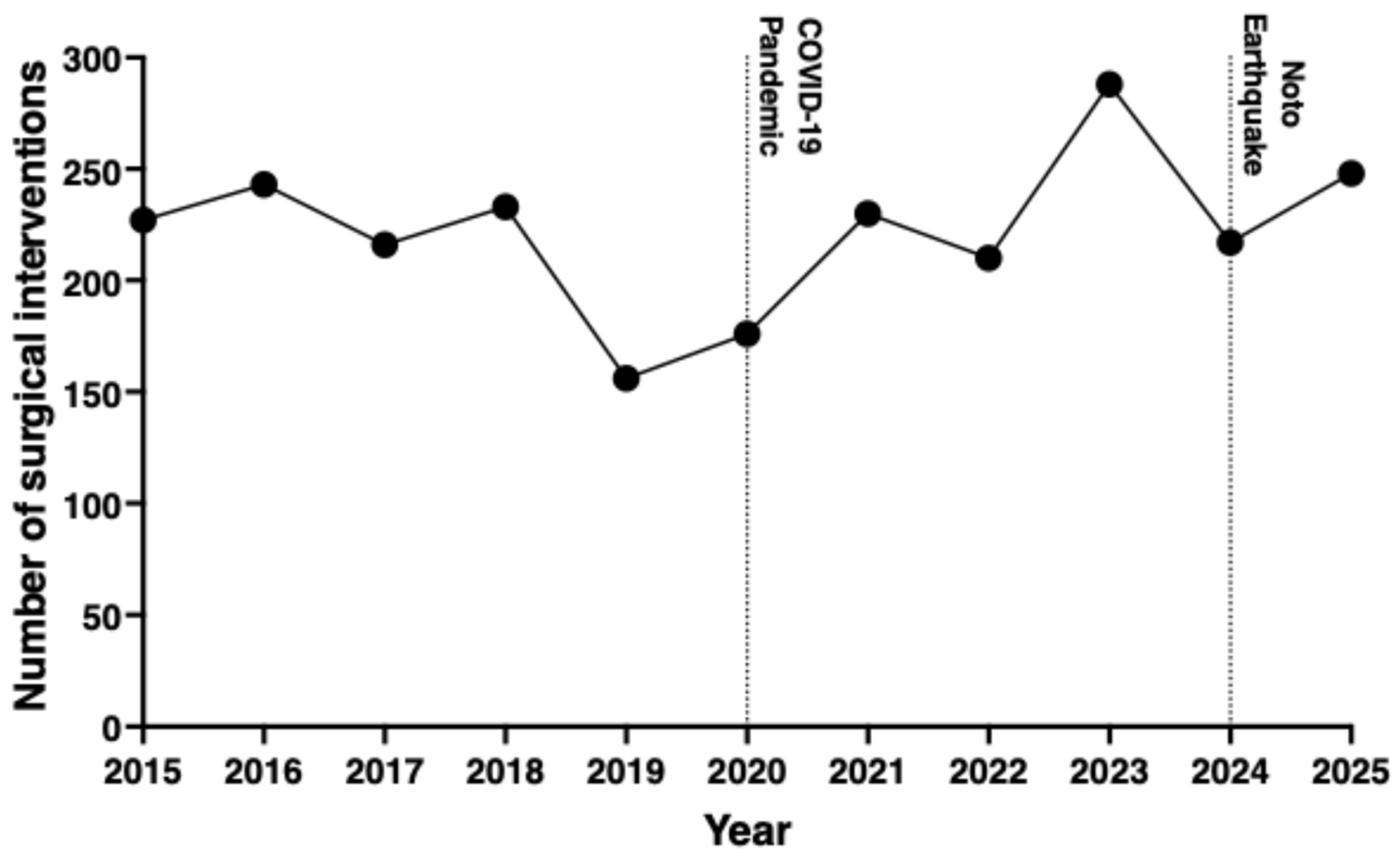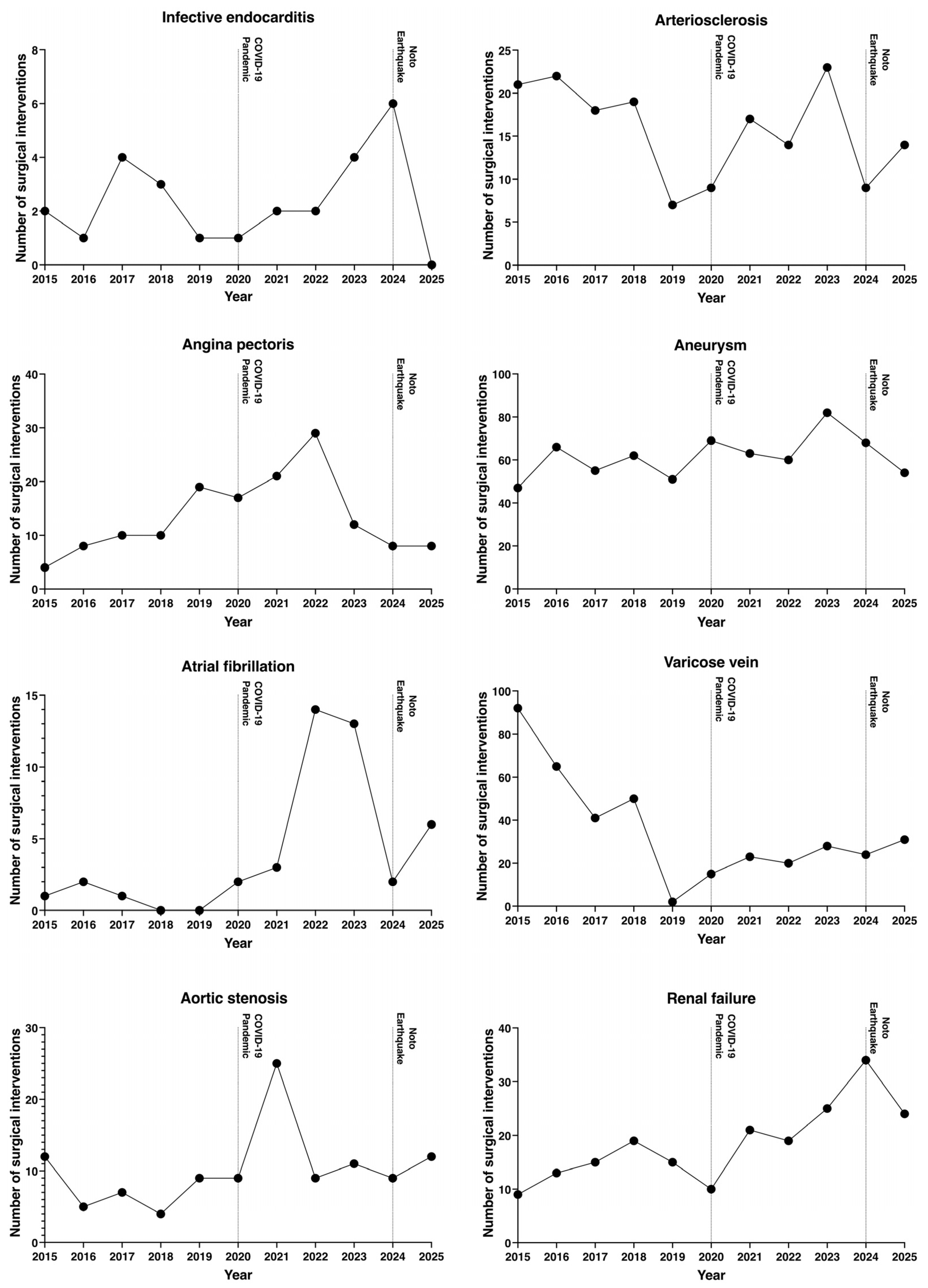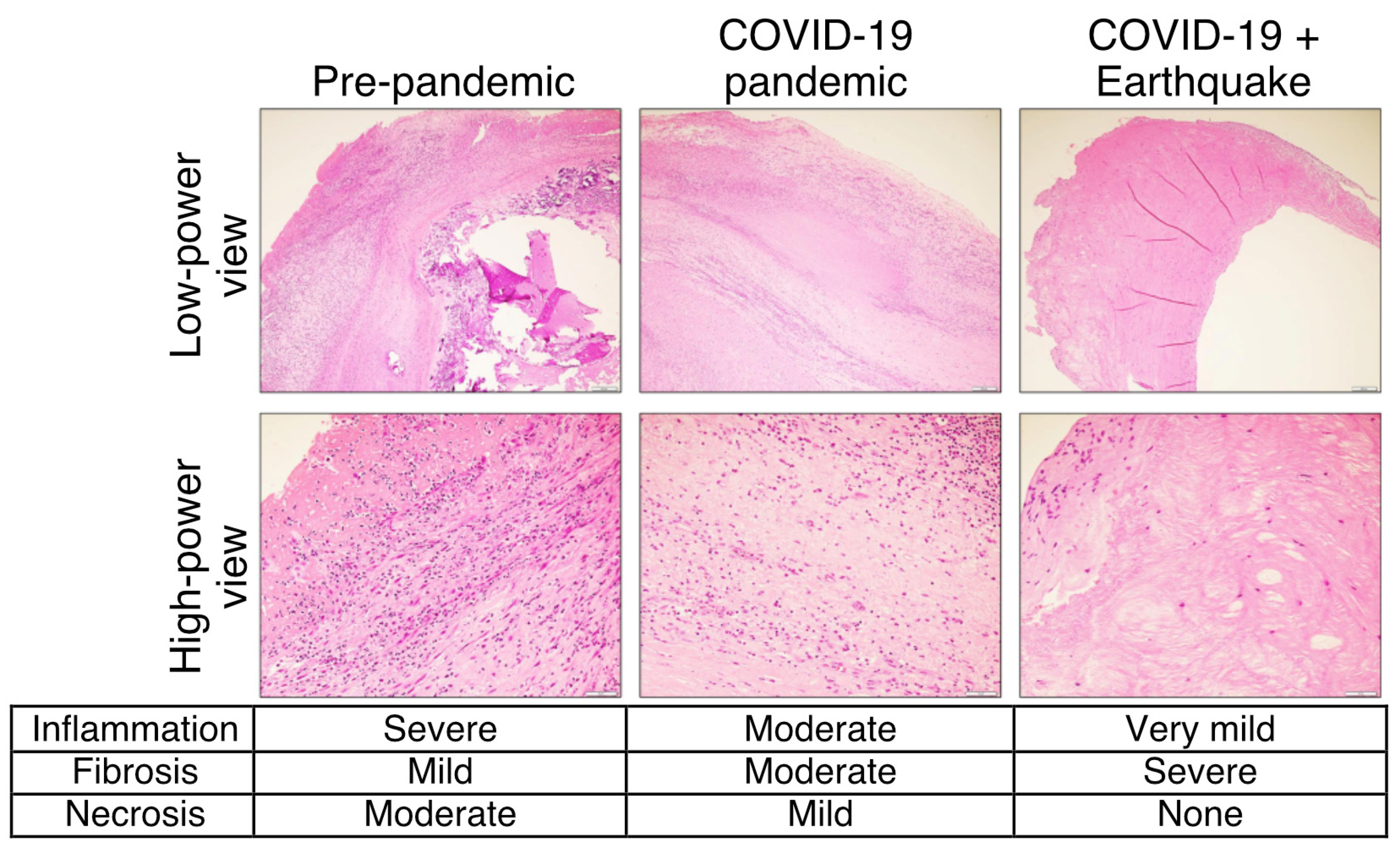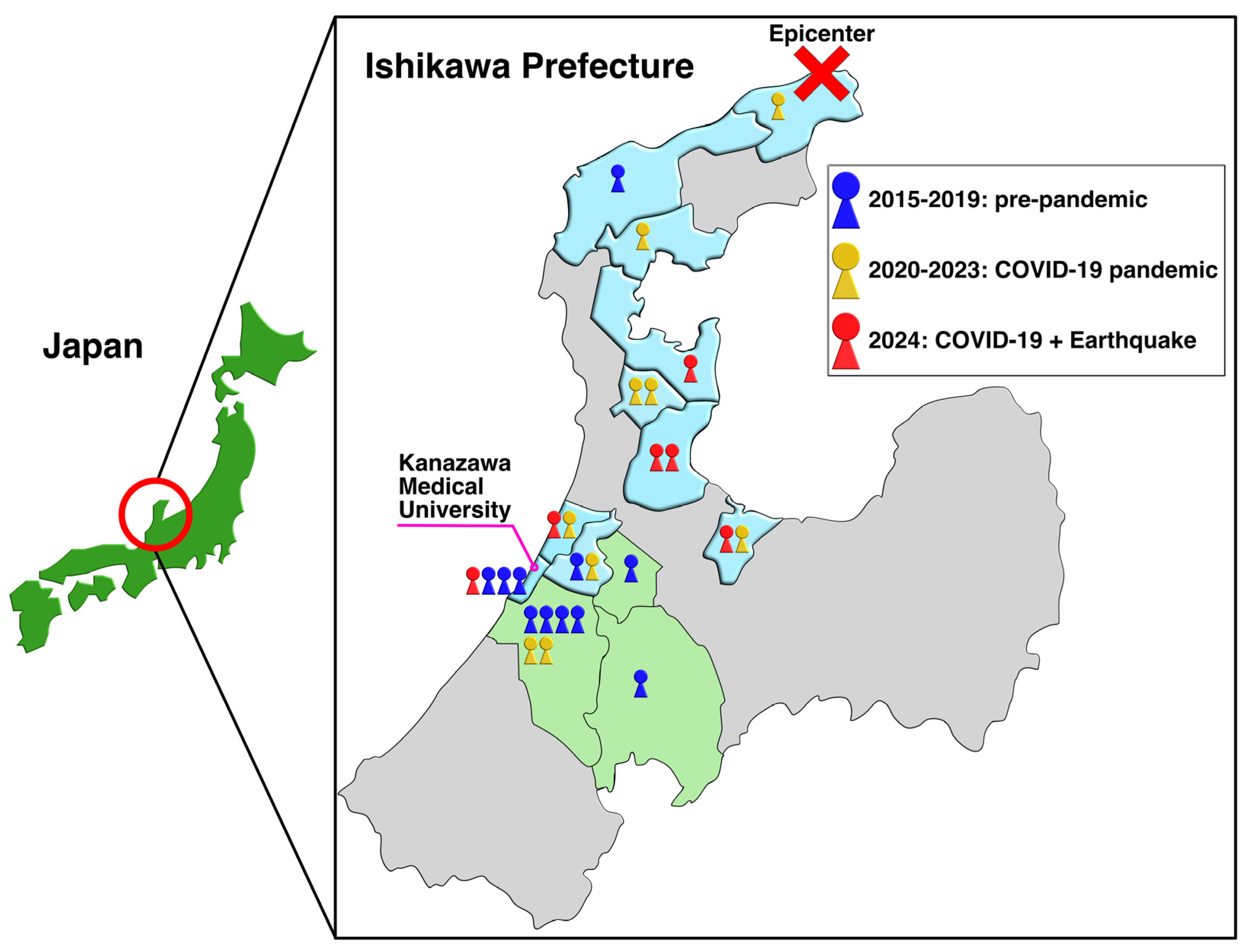

Impact of Compound Disasters on Surgical Interventions for Infective Endocarditis: Insights from COVID-19 and the 2024 Noto Earthquake

 ,
, Abstract
Share and Cite
Miyazawa, K.; Sakamoto, T.; Sakamoto, D.; Kanda, T.; Takano, T. Impact of Compound Disasters on Surgical Interventions for Infective Endocarditis: Insights from COVID-19 and the 2024 Noto Earthquake. COVID 2026, 6, 64. https://doi.org/10.3390/covid6040064
Miyazawa K, Sakamoto T, Sakamoto D, Kanda T, Takano T. Impact of Compound Disasters on Surgical Interventions for Infective Endocarditis: Insights from COVID-19 and the 2024 Noto Earthquake. COVID. 2026; 6(4):64. https://doi.org/10.3390/covid6040064
Chicago/Turabian StyleMiyazawa, Ko, Takuya Sakamoto, Daisuke Sakamoto, Tsugiyasu Kanda, and Tamaki Takano. 2026. "Impact of Compound Disasters on Surgical Interventions for Infective Endocarditis: Insights from COVID-19 and the 2024 Noto Earthquake" COVID 6, no. 4: 64. https://doi.org/10.3390/covid6040064
APA StyleMiyazawa, K., Sakamoto, T., Sakamoto, D., Kanda, T., & Takano, T. (2026). Impact of Compound Disasters on Surgical Interventions for Infective Endocarditis: Insights from COVID-19 and the 2024 Noto Earthquake. COVID, 6(4), 64. https://doi.org/10.3390/covid6040064