Article

Placental Autophagy Modulation and Ultrastructural Changes in COVID-19 Patients: A Pilot Study Using Immunohistochemistry and Transmission Electron Microscopy


by
Vaidyanathan Gowri
1,
Marwa Al-Riyami
2,
Deepthy Geetha
1,
Shadia Al-Sinawi
2,
Khalfan Al Jabri
2,
Younis Al-Mufargi
3,
Nadia Al-Abri
2,
Adham Al-Rahbi
4,* and
Srinivasa Rao Sirasanagandla
5,*
1
Department of Obstetrics & Gynecology, College of Medicine and Health Sciences, University Medical City, Sultan Qaboos University, Al-Khoudh 123, Oman
2
Department of Pathology, College of Medicine and Health Sciences, University Medical City, Sultan Qaboos University, Al-Khoudh 123, Oman
3
Department of General Surgery, Medical City Hospital for Military and Security Services, Muscat 123, Oman
4
Anatomical Pathology Program, Oman Medical Specialty Board, Al-Khoudh, Muscat 123, Oman
5
Department of Human and Clinical Anatomy, College of Medicine and Health Sciences, Sultan Qaboos University, Al-Khoudh 123, Oman
*
Authors to whom correspondence should be addressed.
COVID 2026, 6(3), 45; https://doi.org/10.3390/covid6030045
Submission received: 14 December 2025 / Revised: 4 March 2026 / Accepted: 7 March 2026 / Published: 12 March 2026
(This article belongs to the Section COVID Clinical Manifestations and Management)

Abstract

Background: Autophagy is a conserved intracellular degradation pathway essential for maintaining cellular homeostasis by recycling damaged organelles and proteins. Dysregulation of autophagy has been implicated in pregnancy-related complications such as preeclampsia and fetal growth restriction, underscoring its importance in maternal and fetal health. However, the autophagy status in the placental tissue of COVID-19-infected pregnant women remains unknown. Objective: To investigate autophagy activity in term placentas from pregnant women infected with COVID-19 compared to those from uninfected control pregnant women. Methods: In this prospective cross-sectional single-center study, 15 COVID-19-positive and 15 COVID-19-negative term pregnant women who delivered at Sultan Qaboos University Hospital between January 2020 and December 2022 were included. Immediately after delivery, the placental tissue samples were collected and assessed for autophagy activity using immunohistochemistry for LC3B and p62 markers, histopathological examination, and transmission electron microscopy. The proportion and intensity of LC3B and p62 staining were quantified. Statistical analysis was performed using the Mann–Whitney U test. Results: There was a significant reduction in p62 and LC3B expression in both the proportion and intensity in COVID-19 placentas compared to the control group. The proportion of p62 (p = 0.001) and LC3B (U = 46.000, p = 0.003) was significantly reduced in infected placentas. Similarly, intensity levels of both markers showed significant differences (p < 0.05), supporting the evidence of reduced LC3B/p62, suggesting autophagy modulation in COVID-19 patients’ placentas. Additionally, abnormal ultrastructural changes were observed in COVID-19–positive placentas, including mitochondrial injury, endoplasmic reticulum stress, microvillus loss, and basement membrane thickening. Conclusion: The study results from a limited sample size demonstrate a significantly altered autophagy flux in the placental tissues of term pregnant women with COVID-19 infection. These findings highlight the potential impact of COVID-19 infection on placental function and fetal development and underscore the need for further investigation into autophagy-modulating strategies to improve maternal–fetal health.

1. Introduction

The COVID-19 pandemic, caused by SARS-CoV-2, has significantly impacted public health, presenting unique challenges for pregnant individuals. Pregnancy involves complex physiological and immunological adaptations that may increase the susceptibility to complications from infectious diseases [1]. Notably, COVID-19 infection during pregnancy has been associated with adverse outcomes such as maternal vascular malperfusion, preterm delivery, fetal growth restriction, and, in some instances, stillbirth [2]. These complications highlight the critical role of the placenta in mediating maternal–fetal health and its potential vulnerability to COVID-19 infection.
Autophagy is a conserved intracellular degradation pathway essential for maintaining cellular homeostasis by recycling damaged organelles and proteins [3]. In pregnancy, autophagy is vital for normal placental function, including trophoblast differentiation, nutrient sensing, and response to oxidative stress [4]. Dysregulation of autophagy has been implicated in pregnancy-related complications such as preeclampsia and fetal growth restriction, underscoring its importance in maternal and fetal health [5]. Emerging evidence suggests that COVID-19 can disrupt autophagy processes in various tissues, including the lungs, heart, and nervous system, thereby contributing to the severity of COVID-19 [6]. Autophagy is a complex biological process regulated through the coordinated interaction of multiple signaling pathways [7]. It plays a crucial role in normal placental development by maintaining the balance between maternal and fetal components [8]. Experimental evidence has demonstrated its role in various stages of placental development through endometrial remodeling [9]. In viral infections, including COVID-19, autophagy has been shown to play an important regulatory role [10]. Emerging evidence suggests that COVID-19 infection promotes autophagy activation and leads to the accumulation of autophagosomes [10]. Given the placenta’s critical function as the maternal–fetal interface, investigating how COVID-19 influences autophagy in this organ is essential to understand the mechanisms underlying adverse pregnancy outcomes.
Although recent study has reported the increased expression of LC3B and co-localization of LC3B with the viral SPIKE protein in COVID-19-infected placentas, these investigations did not evaluate the additional autophagy markers, which are necessary to understand the autophagy flux [11]. The evaluation of p62/SQSTM1 in addition to LC3B is essentially important to understand the modulation of autophagy activity in a given tissue. The immunohistochemistry of the above two autophagy markers will reveal the functional status of cells or a tissue in response to external stimuli or stress such as a diseased state or a viral infection [7], while transmission electron microscopy (TEM) provides the subcellular changes in response to these stimuli. Previous research has described morphological alterations in placentas from COVID-19-positive mothers; however, only a few studies [12,13] have reported ultrastructural findings. To date, no study has comprehensively examined both autophagy activity and ultrastructural changes in placental tissues affected by COVID-19. Therefore, the present study aimed to investigate the potential impact of COVID-19 on autophagy flux by assessing LC3B and p62 expression through immunohistochemistry as compared to control placentas. Additionally, ultrastructural alterations were evaluated using TEM to provide pathological insight into the subcellular changes associated with COVID-19 infection.

2. Methodology

The present prospective cross-sectional study was conducted at Sultan Qaboos University Hospital (SQUH) between January 2020 and December 2022. The present study was approved by the institutional medical research ethics committee (REF. NO. SQU-EC/246/2020 MREC #2232). After obtaining ethical approval, a total of 15 Omani women who tested positive for COVID-19 (COVID-19 group) and 15 healthy pregnant Omani women (control group) were included in this study. Informed consent was obtained from each participant.
Inclusion criteria: For the COVID-19 group, women diagnosed with COVID-19 during pregnancy were included. Diagnosis was confirmed by PCR detection of SARS-CoV-2 RNA in upper respiratory tract swabs at the time of admission, with the disease severity ranging from mild to severe according to the WHO classification. On the other hand, the control group included pregnant women with no history of COVID-19 symptoms during pregnancy and matched to the COVID-19 group with respect to gestational age and relevant maternal characteristics.
Exclusion criteria: Pregnant women with a prolonged rupture of membranes, sickle cell disease, thyroid problems, and hypertension-related disorders were excluded from the study. The other critical variables, including smoking and multiple gestations, were also considered.

2.1. Demographic Characteristics

In both groups, the age of the pregnancy was ≥35 weeks of gestation. This cutoff was used, as the placenta is structurally and functionally completely developed. Among COVID-19 patients, the mode of delivery was spontaneous vaginal delivery (n = 15), and none of the patients had received vaccination against the infection (n = 15). The average birth weight of newborns in the COVID-19 group was 3.07 kg, and the APGAR score was 9/10 in all participants. In this group, one infant required neonatal intensive care unit (NICU) admission. The range of interval between the diagnosis of maternal infection and delivery was 3 weeks to 25 weeks. According to the WHO classification, in all the patients (n = 15), the severity of the infection was moderate. In the control group, all participants had spontaneous vaginal delivery (n = 15), and the average birth weight of the newborns was 3.11 kg, and one infant required NICU admission. All newborns had a 9/10 APGAR score. In both the COVID-19 and control groups, all women were singleton pregnancies and none of the women had a history of smoking. In both groups, three participants had gestational diabetes managed with diet. This number was identical in both groups; hence, this comorbidity was considered a matched variable. Immediately after delivery, 2 cm thick placental tissue was collected in fixatives without any delay for the histopathological examination. After collection, the placenta was used for transmission electron microscopy (TEM). The remaining part of the placental tissue was fixed in formalin and processed for paraffin embedding. Hematoxylin and eosin staining was performed to observe the pathological changes in the placenta [14].

2.2. Immunohistochemistry

The immunohistochemical method was carried out on 4 μm thick tissue sections from formalin-fixed paraffin-embedded tissue samples to detect LC3B-MAP1 and p62. The IHC staining for p62 and LC3B-MAP1 antibodies is done using the UltraView Universal DAB Detection Kit on the BenchMark Ultra Plus (Ventana, Tucson, AZ, USA) Autostainer. p62 (3/p62 LCK ligand) was purchased from Vitro Master Diagnostica as a ready-to-use antibody (Ref. MAD-00552 QD-12, Lot 05520011). The 3/p62 LCK ligand is used to detect protein p62/SQSTM1. Rabbit anti-LC3B/MAP1 antibody was purchased from Novus Biologicals (Cat. No. NB100-2220) and used at a 1:500 dilution. The antibody was diluted using Ventana antibody diluent (Ref. 251-018; Cat. No. (240) 04015630971008, Ventana, Tucson, USA). The slides were baked at 60 °C overnight and loaded onto the BenchMark Ultra Plus Autostainer (Basel, Switzerland). Automatic deparaffinization is performed by the instrument using EZ Prep solution (Ventana, Tucson, USA) at 72 °C. For antigen retrieval, ULTRA Cell conditioning solution-1 (Ventana, Tucson, USA) was used at a temperature of 97 °C for 64 min as the standard retrieval mode. The process of blocking endogenous peroxidase was carried out using Ultra View Peroxidase Inhibitor (Ventana, Tucson, USA), which contains a 3.0% hydrogen peroxide solution, selected as per the manufacturer’s instructions. In the primary antibody (p62 or LC3), incubation was done as follows. For p62 (also known as Sequestosome 1 or SQSTM1), the 3/p62 LCK LIGAND primary antibody was applied typically for 1 h and 52 min at a temperature of 37 °C (instrument-controlled). For LC3B, the rabbit Anti-LC3B-MAP1 (NB100-2220)-NOVOS (1:500) primary antibody was applied for 1 h and 52 min at a temperature of 37 °C (instrument-controlled). Then, IHC detection was done automatically using UltraView Universal DAB kit (Ventana, Tucson, USA). Later, the slides were cleaned with detergent and warm water, dehydrated through graded alcohols (Fisher Scientific, Geel, Beilgium) (70%, 95%, 100%), cleared in xylene, and mounted with an automated coverslipper (Torranse, CA, USA). The results of the IHC for LC3B-MAP1 and p62 was evaluated and scored under the microscope, focusing on the intensity and the proportion of brown chromogen (DAB) precipitate that reflects the presence of the target antigens. The proportion of cells showing positive staining for LC3B-MAP1 and P62 was graded on a scale from 0 to 3. For the proportion, 0 indicates the complete absence of positive stained cells, 1 for 10% stained cells, 2 for 11–50%, and 3 for >50% of cells showing positive staining [15]. Similarly, the intensity of staining was scored from 0 to 3 by keeping the control as a reference [15]. Only one observer (consultant pathologist) was involved in the semi-quantitative assessment of all the images and scoring.

2.3. Transmission Electron Microscopic TEM Examination

A portion of the placenta was processed for TEM (n = 10 samples in each group). After careful dissection, tissues were fixed in glutaraldehyde (2.5%) solution in sodium cacodylate buffer. For primary fixation, the samples were kept at 4 °C temperature. After overnight fixation, tissues were washed in a phosphate buffer and kept for two hours in osmium tetroxide. Then, the samples were subjected to dehydration in serial acetone solutions. Later, the tissues were processed for embedding (epoxy resin kit) and sectioning. Very thin sections (60–90 nm) were stained first by uranyl acetate and then with lead citrate, as described by Bozzola and Russell [16]. Each stained section was examined in a blinded manner across six randomly selected non-overlapping fields to evaluate the cellular changes.

2.4. Statistical Analysis

The results were analyzed using Statistical Package for the Social Sciences (SPSS version 26.0) software. A comparison of the intensity and proportion of LC3B and p62 markers between the two groups was conducted using the Mann–Whitney U test, and the effective size was calculated. Statistical significance is considered at p < 0.05. No formal correction for multiple comparisons was applied, as analyses were hypothesis-driven and limited to predefined markers.

3. Results

3.1. Immunohistochemistry Analysis

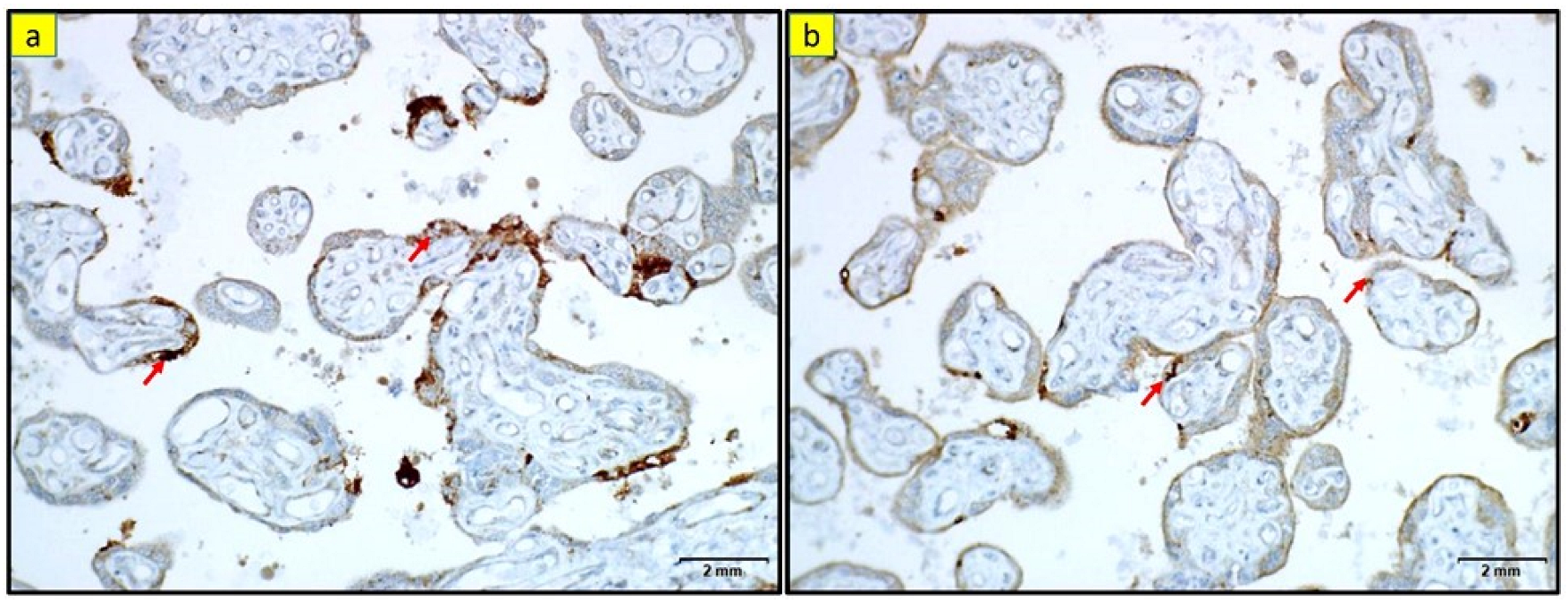
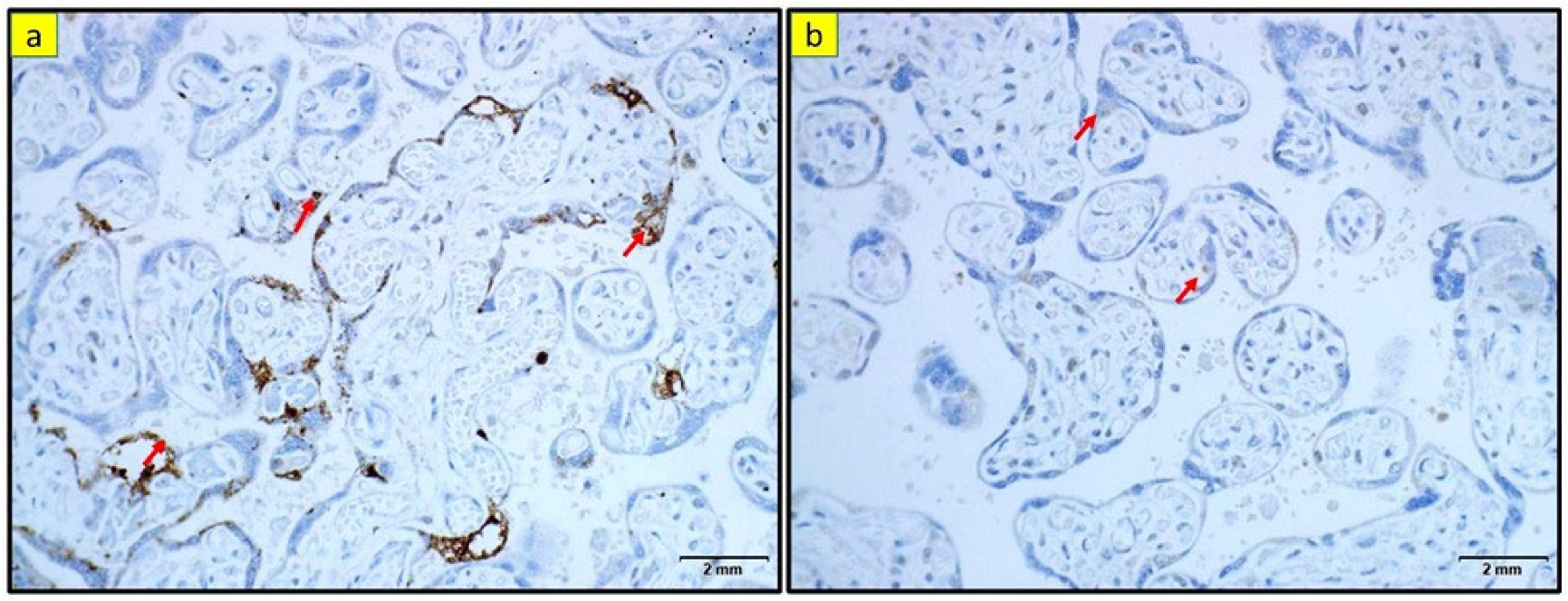
Non-parametric Mann–Whitney U testing revealed statistically significant differences between the control and COVID-19 groups for both p62 and LC3B markers (Table 1). A significant difference was observed in the proportion of p62 expression (U = 21.0, Z = −3.984, p = 0.001), with a large effect size (r = 0.73, 95% CI 0.49–0.87), indicating a substantial separation between groups. The median p62 proportion scores were higher in controls (3 [2–3]) compared to the COVID-19 group (1 [0–1]). A statistically significant difference was also observed in p62 intensity (U = 69.0, Z = −1.971, p = 0.049), demonstrating a moderate effect size (r = 0.36, 95% CI 0.01–0.63), suggesting a modest but potentially meaningful group difference. For LC3B, significant differences were found in both proportion (U = 46.0, Z = −3.022, p = 0.003) and intensity (U = 57.5, Z = −2.392, p = 0.017). The proportion difference demonstrated a moderate-to-large effect (r = 0.55, 95% CI 0.22–0.77), while the intensity difference showed a moderate effect (r = 0.44, 95% CI 0.10–0.68), indicating consistent but less pronounced differences compared to p62 proportion.
The distributional differences in intensity and proportion scores for both markers are illustrated in Figure 1 and Figure 2.

3.2. Ultrastructural Changes in the Placenta

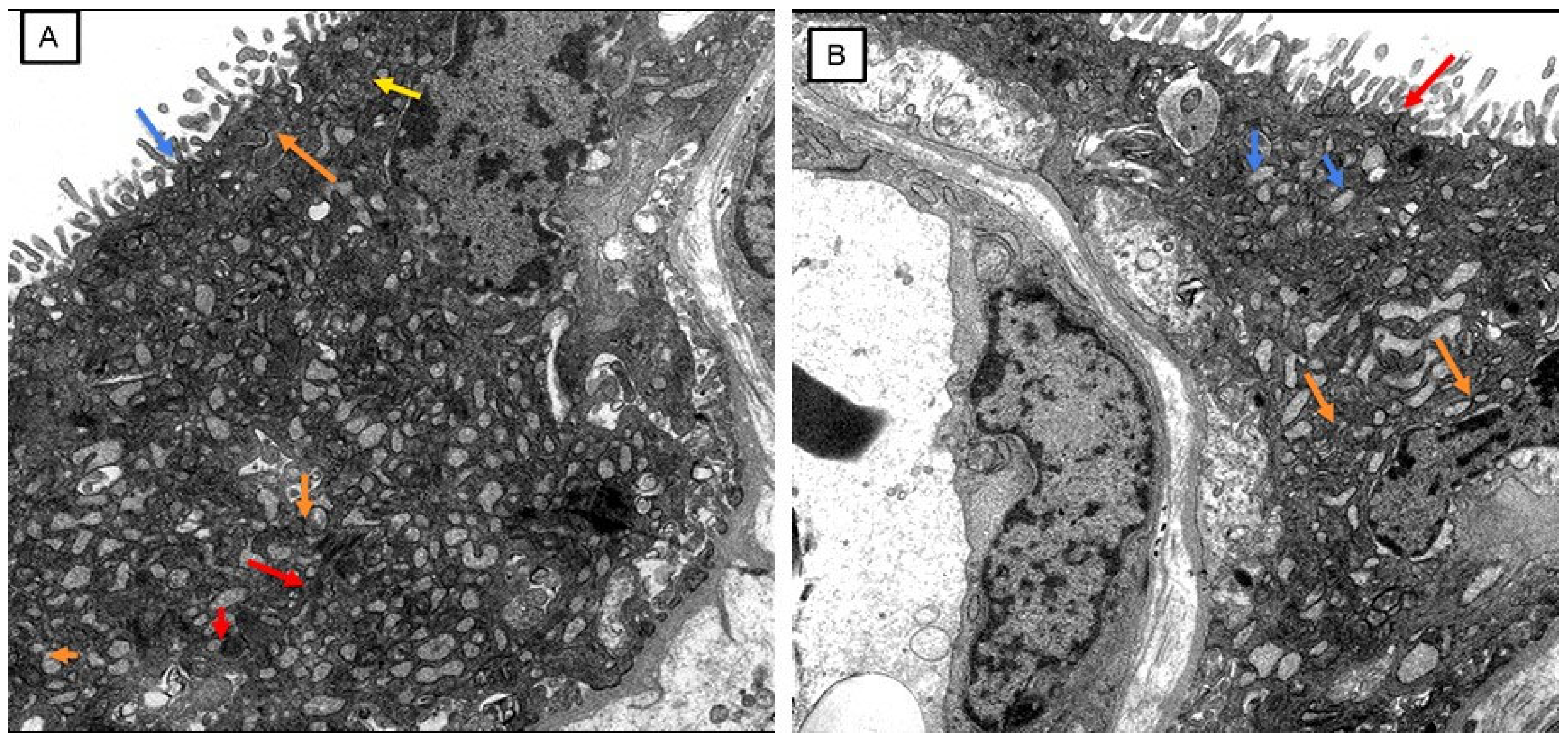
Examination of the placenta under an electron microscope is considered the gold standard for detecting ultrastructural changes [17]. This study used TEM to evaluate placental tissue and revealed clear differences between COVID-19-negative and COVID-19-positive placental ultrastructure. COVID-19-negative placental tissues, as shown in Figure 3, demonstrated intact syncytiotrophoblast with dense microvilli, which expand the exchange surface area and facilitate nutrient and gas transfer, abundant mitochondria, and well-preserved rough endoplasmic reticulum and Golgi apparatus. In contrast, COVID-19-positive placental tissues (Figure 4, Figure 5, Figure 6 and Figure 7) showed syncytiotrophoblast thinning, thickened and irregular basement membranes, stromal edema, disrupted microvilli, and cytoplasmic vacuolation. Swollen mitochondria with fragmented cristae, dilated endoplasmic reticulum, and apoptotic nuclei were also observed.
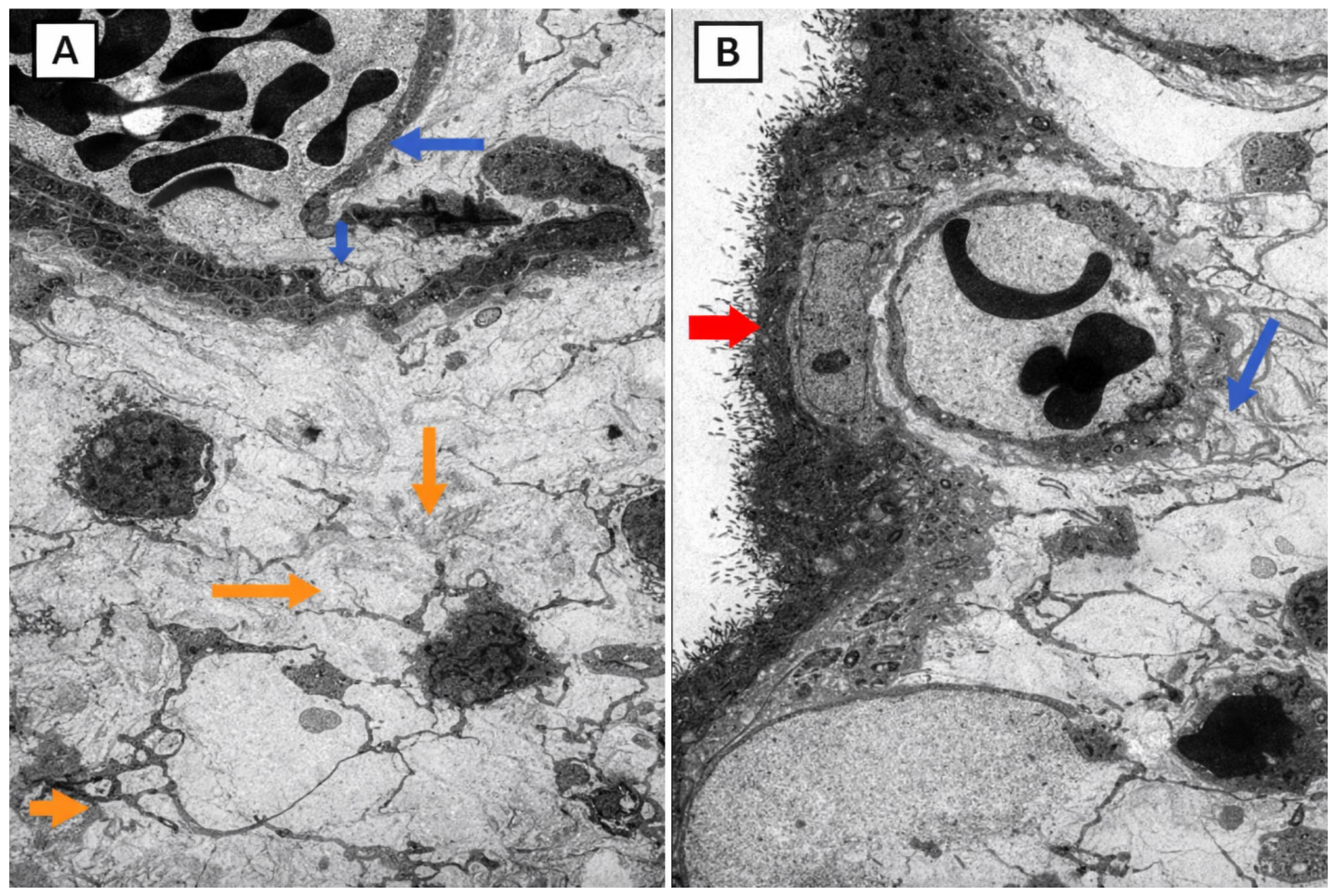
In COVID-19-positive placentas, ultrastructural changes were observed in the trophoblastic villi, including alterations in microvilli and the small organelles such as mitochondria and endoplasmic reticulum. The basement membrane was thickened, and the syncytiotrophoblast cytoplasm appeared electron-lucent, with reduced organelle density and patchy degeneration. The disruption of the syncytiotrophoblast layer was observed with loss of its continuous integrity and focal thinning. The apical surface showed reduced microvilli density, which may cause diminished absorptive and exchange capacity and subsequent maternal–fetal exchange. The underlying stromal compartment contained swollen mitochondria and vacuolated cytoplasm. Figure 4 presents a TEM micrograph demonstrating the structural abnormalities within placental villous tissue.
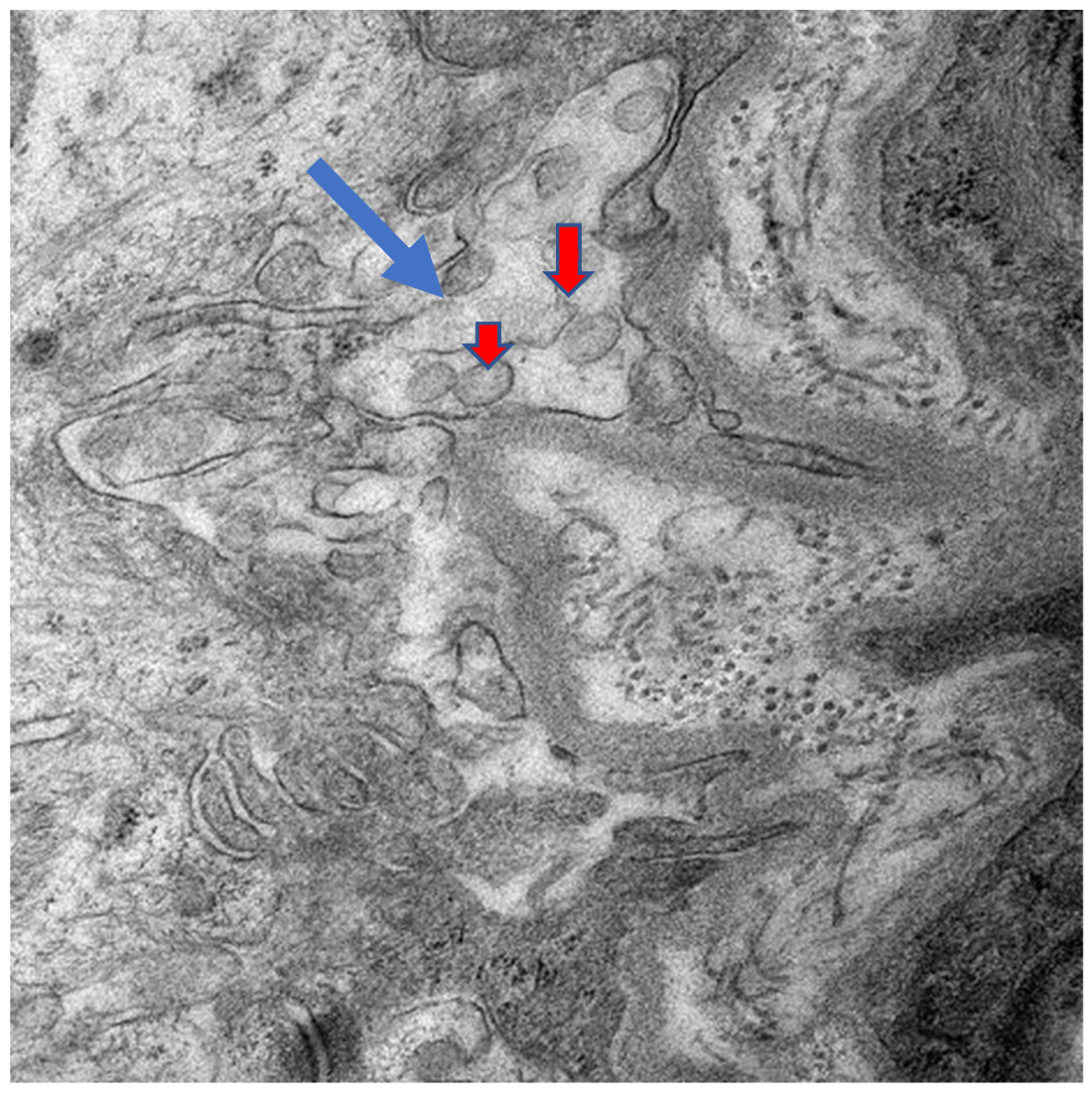
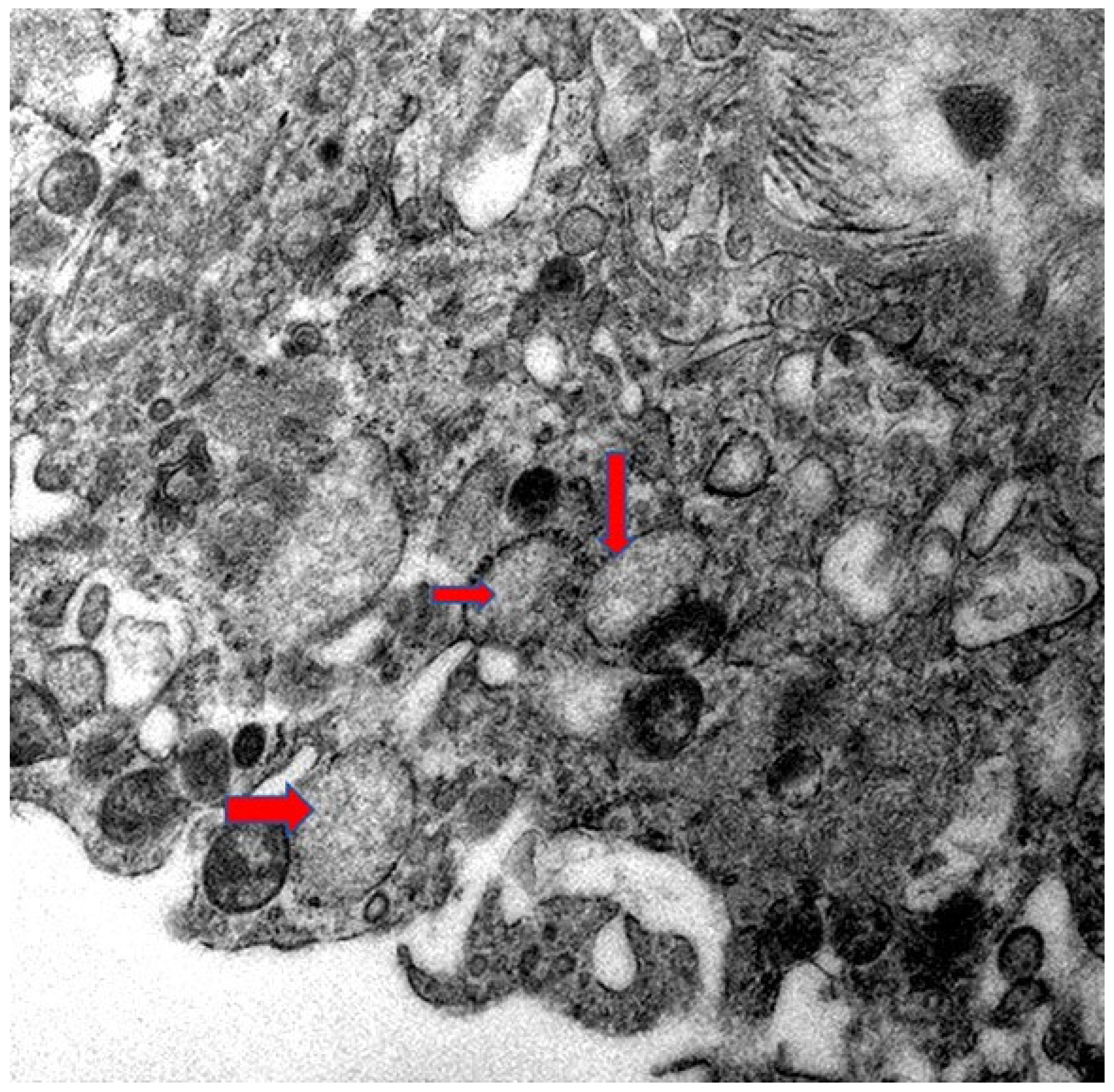
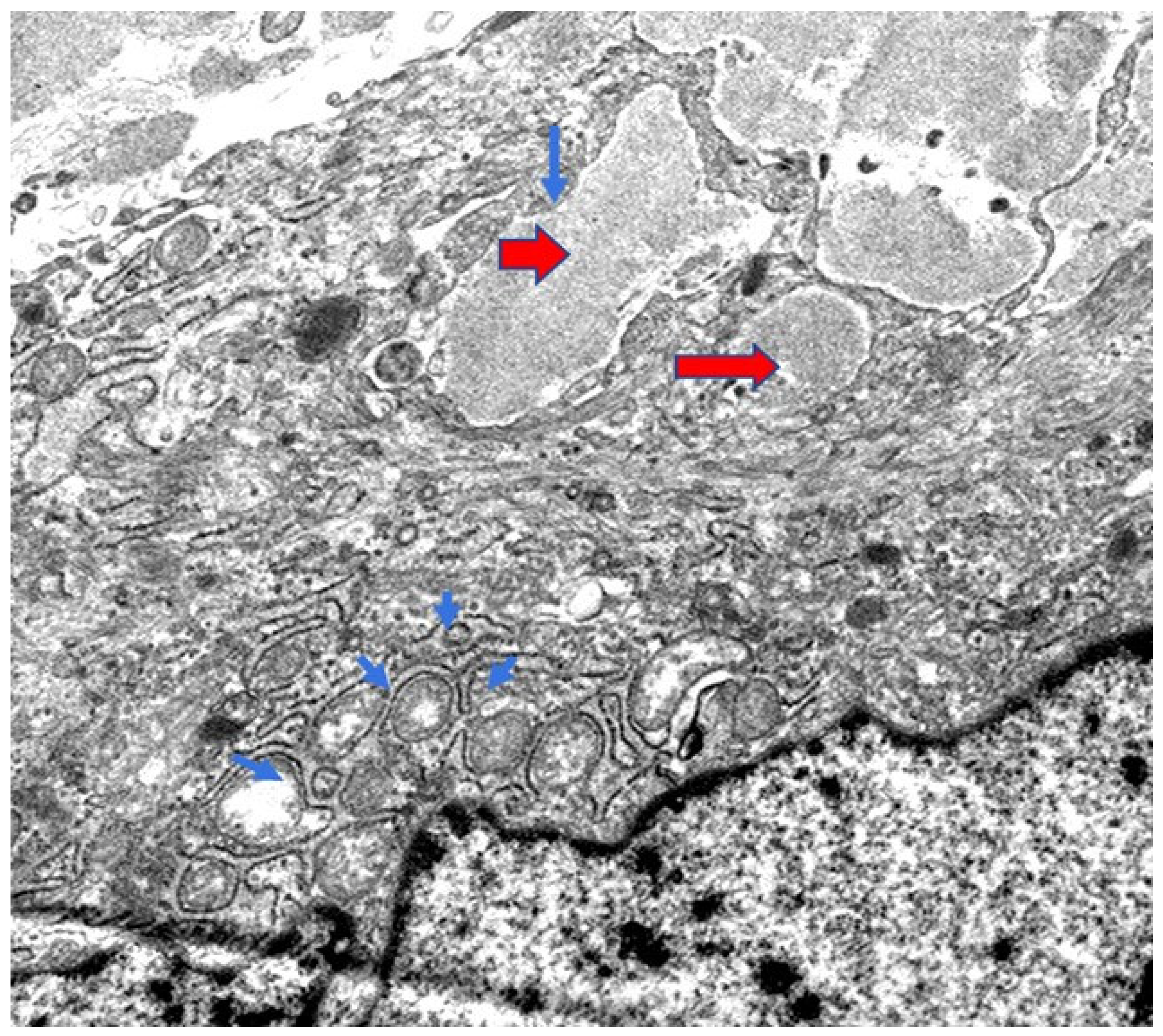
The micro-organelles, such as the endoplasmic reticulum, are affected as well. There was evidence of endoplasmic reticulum dilation, reflecting cellular stress and disturbed protein synthesis. Figure 5 shows changes in the rough endoplasmic reticulum of COVID-19-positive placentas. In the COVID-19-positive placentas, there were prominent abnormalities in mitochondria within the syncytiotrophoblast cytoplasm. The mitochondria appeared heterogeneous in size and shape; many showed marked swelling and abnormal cristae organization or even absent cristae, indicating severe mitochondrial injury. Some mitochondria appeared vacuolated with electron-lucent matrices, consistent with advanced degenerative change, while others exhibited densely packed or concentric cristae, resembling “onion-like” inclusions (a feature indicative of chronic stress and degenerative change). The surrounding cytoplasm exhibited rarefaction and vesicular profiles, representing the breakdown of the normal organelle network. Figure 6 shows numerous mitochondria, but instead of the normal oval morphology with intact cristae, they show abnormal features. Additionally, Figure 7 demonstrates placental organelles of COVID-19-positive cases under TEM examination.
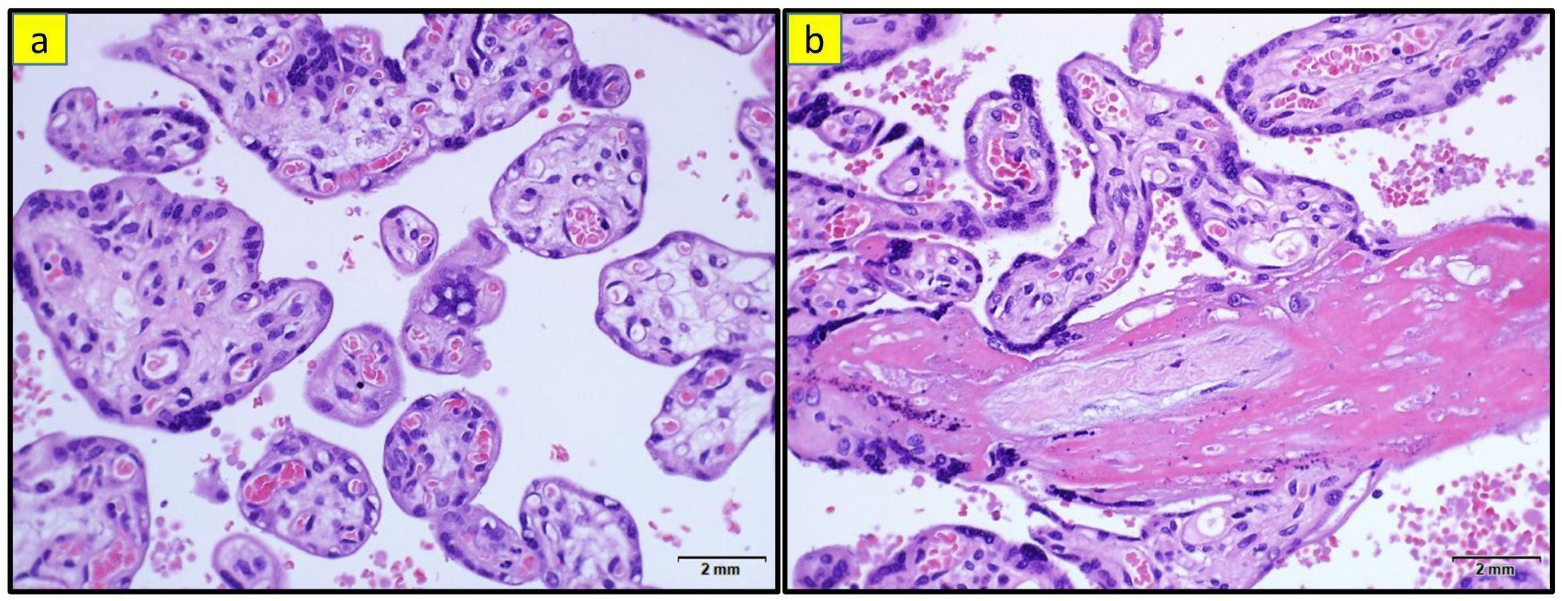
In this study, histopathological examination in COVID-19-positive placentas showed fibrin deposition and inflammatory infiltration in villi (villitis) and intervillous space (intervillositis). A few cases showed necrosis of trophoblasts and thrombosis in decidua vessels. The H&E images of normal placenta compared to COVID-19 positive cases are shown in Figure 8.

4. Discussion

This study explores the potential impact of COVID-19 on placental autophagy markers, highlighting the intersection between viral infection, autophagy dysregulation. To the best of our knowledge, this is the first study that explore the autophagy modulation and ultrastructural changes in the COVID-19 positive placenta. Autophagy is a dynamic catabolic process that involves multiple steps contributing to nutrient recycling of senescent organelles through lysosomal digestion and metabolic adaptation. It also digests the invasive pathogens [18]. Autophagy is activated by various stimuli, such as starvation, endoplasmic reticular stress, infection, inflammation, hypoxia, oxidative stress, reactive oxygen species, and intracellular damage, particularly to the mitochondria. The signaling pathways associated with each stimulus that induces autophagy are discovered to be distinct [19]. Autophagy was demonstrated to have dynamic changes at different stages of the embryo’s development. For example, autophagy is activated during the early stages of zygote formation after fertilization, but it is downregulated during the later stages [20]. In an earlier study, activated autophagy was observed in placentas from cesarean delivery when compared to vaginal delivery [21]. Activated autophagy was also identified in the villous trophoblasts of pregnancies that are complicated by preeclampsia, intrauterine growth restriction, or both [22].
A study demonstrated that increasing the autophagic capacity may be beneficial against SARS-CoV-2 infection [23]. Furthermore, the existing evidence clearly indicates that autophagy induction can counteract SARS-CoV-2 infection at multiple levels [23]. Therefore, autophagy modulation may represent an important strategy against SARS-CoV-2. In this view, understanding the autophagy in the placental tissue of COVID-19-infected women is clinically important. To date, to the best of the authors’ knowledge, there are no data regarding the status of autophagy in the placental tissue of COVID-19 patients using p62-LCK and LC3B-MAP1 as IHC markers. Hence, this study explores the potential impact of COVID-19 on placental autophagy markers, highlighting the intersection between viral infection, autophagy dysregulation, and placental health. Autophagy is a multistep lysosomal degradation pathway contributing to nutrient recycling and metabolic adaptation. It is involved in the initiation and progression of numerous diseases as a part of an immune response [12,24].
LC3s (MAP1-LC3A, B and C) are key component of proteins of autophagosomal membranes, frequently evaluated as biomarkers of autophagy [25]. LC3B-MAP1 (Light Chain 3 Beta Microtubule-Associated Protein-1) form was used in this study as a marker of autophagy because it is a key component of autophagosomes. Its presence in the autophagosome allows the quantification of autophagic activity [26,27]. It is important to understand that LC3B is different from LC3II, as the former is an isoform of the LC3 protein, while the latter refers to the different forms of the protein based on its modification state during autophagy (LC3B-I and LC3B-II), which have an inner and outer part in autophagosome [25]. Detection of LC3B has multiple approaches; one of them is to detect LC3B conversion (LC3B-I to LC3B-II) [28]. The literature indicates that activation of LC3I to LC3II may be necessary but not sufficient to trigger cellular autophagy; as a result, changes in the p62 level of expression are used to monitor autophagic flux [29]. p62-lck refers to the protein 62 ligand, which is a phosphotyrosine-independent ligand. It is a cytoplasmic protein that binds to the SH2 domain of lck (a T cell src tyrosine kinase). It is known to work as a scaffold protein in cellular signaling and autophagy [11]. p62 is expected to be degraded by increased autophagic activity. It is considered a selective substrate of autophagy because it binds LC3 in the autophagosome membrane. Therefore, p62 is expected to accumulate when autophagy is reduced [29]. The current study found a significant reduction in p62 and LC3B expression in both the proportion and intensity in COVID-19 placentas compared to non-COVID-19. The LC3B protein is part of the autophagosome membrane; as a result, its reduction indicates a reduction in autophagosome formation or an increase in its degradation (altered autophagic flux) [29]. This is because prolonged activation of autophagic processes leads to increased autolysosomal degradation [29]. The low levels observed in this study are likely due to increased degradation (altered autophagic flux) in placental tissue, because the p62 levels are also reduced. However, the main limitation is that autophagic flux cannot be distinguished by IHC alone; therefore, these findings only suggest autophagy modulation. The autophagy modulation in the placenta may represent an adoptive or protective response to the COVID-19 infection. This is supported by evidence that host autophagy is activated to counteract viral infection, during which viral particles and components are degraded, subsequently reducing viral replication [30].
Previous studies have investigated the role of autophagy in placental pathologies associated with various conditions. It has been reported that the dysregulation of autophagy in placental tissue is closely related to pregnancy complications such as premature delivery, miscarriage, intrauterine growth restriction, pregnancy-induced hypertension, gestational diabetes, and gestational obesity [19]. Ceccariglia and colleagues studied autophagy markers LC3 and p62 in a multiple sclerosis animal model of hippocampal neurons. In this study, low LC3B and p62 levels were found to be associated with altered autophagy activation similar to the present study [29]. Simioni and colleagues studied different marker presentations in the placenta of SARS COVID-19-infected mothers, particularly SPIKE, CD34, VEGF, and LC3B [11]. They found COVID-19-infected placentas show an increase in LC3B expression (as autophagy marker) in both the spread and staining intensity compared with non-COVID-19 cases. However, they did not study p62, which is important to determine whether LC3B increased because more autophagosomes were made and not degraded rapidly [11]. Additionally, they found LC3B co-localization with SPIKE in the villi and decidua sections. As a result, these findings suggest the formation of autophagosomes in COVID-19-positive cases; however, it is not possible to evaluate whether this reflects increased autophagosome formation with rapid degradation or an accumulation of autophagosomes due to impaired autophagy and blocked fusion with lysosomes [11]. In contrast to their study findings [11], the present study’s results demonstrating diminished LC3B and p62 levels clearly indicate altered autophagy; however, these results do not allow a definitive distinction between reduced autophagosome formation, altered protein expression or turnover, and conclusively enhanced autophagic degradation.
The ultrastructural abnormalities observed in this study (i.e., mitochondrial swelling, cristae disruption, vacuolation, endoplasmic reticulum dilation, loss of microvilli, and thickened basement membranes) are consistent with the findings from mechanisms of placental injury described in recent studies [31,32]. The present study found that mitochondria appear heterogeneous in size and shape, dilated with marked swelling and abnormal cristae organization, which is consistent with a previous study that found that swollen mitochondria in syncytiotrophoblasts indicate autophagy (mitophagy) activation and oxidative stress leading to organelle damage [33]. Zhou and colleagues (2024) reported that further investigation with electron microscopy revealed that the autophagy level in villi of patients with recurrent miscarriage is lower compared to the normal population [34]. Mitochondrial dysfunction and oxidative stress have been strongly implicated in adverse pregnancy outcomes, including preeclampsia and fetal growth restriction [31,32]. Classic studies of placental structure confirmed that normal syncytiotrophoblasts exhibit abundant mitochondria, intact microvilli, and well-preserved endoplasmic reticulum to sustain maternal–fetal exchange [35,36].
In this study, the COVID-19-positive specimens were observed to have features of endoplasmic reticulum cisternae dilation and cytoplasmic vacuolation, which are features of cellular stress responses, which can impair protein synthesis and trophoblast function [37]. Interestingly, endoplasmic reticulum stress has been found to be closely interconnected with autophagy activation and autophagosome activation, which supports our finding [29]. Thickened basement membranes are reported in diabetic pregnancies as well, representing maladaptive remodeling that increases the diffusion distance and reduces nutrient and gas transfer efficiency [38]. Parcial and colleagues investigated the ultrastructure of COVID-19-positive placentas and found a predominance of apoptotic features [12]. Additionally, there is retraction of both syncytiotrophoblast and cytotrophoblast with condensed peripheral chromatin and pyknotic nuclei of the syncytiotrophoblasts [12]. Furthermore, placental tissue shows a loss of microvilli and secretion vesicles and the presence of large amounts of apoptotic bodies and myelin figures throughout the cytoplasm. Cytotrophoblasts also have an absence of mitochondria and endoplasmic reticulum with dilated cisterns. Additionally, some cells were found to have viral particles of 70nm compatible with SARS-CoV-2 size [12]. Similarly, dystrophic and destructive changes in trophoblastic villi, along with significant structural alterations in the fetoplacental barrier, were reported in another recent study [13]. Overall, the convergence of mitochondrial injury, endoplasmic reticulum stress, microvillus loss, and basement membrane thickening illustrates that placental pathology is multifactorial and supports the involvement of autophagy modulation in COVID-19-positive placentas. The associated placental ultrastructural changes, along with altered autophagy, suggest a new hypothesis regarding the causal relationship between these factors. Further studies are warranted to better understand this interrelationship.
The study’s findings highlight the altered autophagy activity in COVID-19-positive placenta; however, there are several limitations that could be addressed in future studies. The present study could not assess the effect of autophagy dysregulation/alteration on pregnancy or fetal outcomes. Additionally, there is a need to investigate other markers of autophagy to understand the complete machinery involved in this alteration in infectious state, including the study of Beclin-1, ATG proteins, and LAMP1/2 markers and flow assays of lysosomal inhibitors and LC3-II turnover. Further explanation of autophagy markers in COVID-19-positive patients in other organs such as the liver, ovary and breast is important. Furthermore, the study findings should be interpreted with caution due to the small sample size, lack of functional autophagy flux assays, descriptive TEM quantification, and clinical heterogeneity of the COVID-19 group. The role of clinical characteristics such as gestational age at infection, severity of the disease and birthweight in the scoring of markers has not been evaluated. Larger multi-center studies are needed to validate the observed patterns of autophagy marker expression in placentas from COVID-19-positive mothers. Additionally, the effect of endoplasmic reticulum stress on the activation of autophagy also needs to be explored.

5. Conclusions

The present study demonstrates diminished LC3B and p62 expression, suggesting altered autophagy with a possible increase in autophagic flux. Essentially, this study provides a basis for the elucidation of altered autophagy in the placenta, which appears not to be adequately investigated. However, the exact role of autophagy in this context remains incompletely understood and warrants further comprehensive investigation to evaluate its impact on placental health and fetal outcomes. Additionally, viral infection induces various abnormal ultrastructural changes, including mitochondrial injury, endoplasmic reticulum stress, microvillus loss, and basement membrane thickening. The study results pave the way for future studies to better understand placental health in viral infection and to provide better maternal care.

Author Contributions

Conceptualization, V.G. and S.R.S.; methodology, S.R.S., A.A.-R., V.G. and M.A.-R.; formal analysis, Y.A.-M. and N.A.-A.; data curation, N.A.-A., S.A.-S., K.A.J. and D.G.; visualization, S.R.S., V.G., M.A.-R. and A.A.-R.; writing—original draft preparation, A.A.-R., Y.A.-M., N.A.-A., V.G. and S.R.S.; writing—review and editing, S.R.S., A.A.-R. and V.G.; supervision, V.G. and S.R.S. All authors have read and agreed to the published version of the manuscript.

Funding

This research was funded by the Sultan Qaboos University deanship of research fund with reference number: RF/MED/OBGY/23/01.

Institutional Review Board Statement

This study was conducted in accordance with the Declaration of Helsinki and was approved by the Institutional Review Board (IRB) at Sultan Qaboos University (REF. NO. SQU-EC/246/2020 MREC #2232, 30 August 2020).

Informed Consent Statement

Informed consent was obtained from the patient for publication of this information.

Data Availability Statement

The data are available upon request from the corresponding author.

Acknowledgments

The ChatGPT, GPT-4-Turbo model (2025) was used for the language enhancement.

Conflicts of Interest

The authors declare no conflicts of interest.

References

  1. Allotey, J.; Fernandez, S.; Bonet, M.; Stallings, E.; Yap, M.; Kew, T.; Zhou, D.; Coomar, D.; Sheikh, J.; Lawson, H.; et al. Clinical manifestations, risk factors, and maternal and perinatal outcomes of coronavirus disease 2019 in pregnancy: Living systematic review and meta-analysis. BMJ 2020, 370, m3320. [Google Scholar] [CrossRef] [PubMed]
  2. Hecht, J.L.; Quade, B.; Deshpande, V.; Mino-Kenudson, M.; Ting, D.T.; Desai, N.; Dygulska, B.; Heyman, T.; Salafia, C.; Shen, D.; et al. SARS-CoV-2 can infect the placenta and is not associated with specific placental histopathology: A series of 19 placentas from COVID-19-positive mothers. Mod. Pathol. 2020, 33, 2092–2103. [Google Scholar] [CrossRef]
  3. Levine, B.; Kroemer, G. Biological Functions of Autophagy Genes: A Disease Perspective. Cell 2019, 176, 11–42. [Google Scholar] [CrossRef]
  4. Nakashima, A.; Aoki, A.; Kusabiraki, T.; Cheng, S.-B.; Sharma, S.; Saito, S. Autophagy regulation in preeclampsia: Pros and cons. J. Reprod. Immunol. 2017, 123, 17–23. [Google Scholar] [CrossRef] [PubMed]
  5. Hung, T.-H.; Hsieh, T.-T.; Chen, S.-F.; Li, M.-J.; Yeh, Y.-L. Autophagy in the Human Placenta throughout Gestation. PLoS ONE 2013, 8, e83475. [Google Scholar] [CrossRef]
  6. Gassen, N.C.; Papies, J.; Bajaj, T.; Emanuel, J.; Dethloff, F.; Chua, R.L.; Trimpert, J.; Heinemann, N.; Niemeyer, C.; Weege, F.; et al. SARS-CoV-2-mediated dysregulation of metabolism and autophagy uncovers host-targeting antivirals. Nat. Commun. 2021, 12, 3818. [Google Scholar] [CrossRef]
  7. Sharifi, M.N.; Mowers, E.E.; Drake, L.E.; Macleod, K.F. Measuring autophagy in stressed cells. Methods Mol. Biol. 2015, 1292, 129–150. [Google Scholar] [CrossRef]
  8. Gong, J.S.; Kim, G.J. The role of autophagy in the placenta as a regulator of cell death. Clin. Exp. Reprod. Med. 2014, 41, 97–107. [Google Scholar] [CrossRef]
  9. Mizushima, N.; Levine, B. Autophagy in mammalian development and differentiation. Nat. Cell Biol. 2010, 12, 823–830. [Google Scholar] [CrossRef]
  10. Ivanova, T.; Mariienko, Y.; Mehterov, N.; Kazakova, M.; Sbirkov, Y.; Todorova, K.; Hayrabedyan, S.; Sarafian, V. Autophagy and SARS-CoV-2-Old Players in New Games. Int. J. Mol. Sci. 2023, 24, 7734. [Google Scholar] [CrossRef] [PubMed]
  11. Simioni, C.; Sanz, J.M.; Gafà, R.; Tagliatti, V.; Greco, P.; Passaro, A.; Neri, L.M. Effects of SARS-CoV-2 on molecules involved in vascularization and autophagy in placenta tissues. J. Mol. Histol. 2024, 55, 753–764. [Google Scholar] [CrossRef]
  12. Parcial, A.; Salomão, N.; Portari, E.; Arruda, L.; De Carvalho, J.; De Matos Guedes, H.; Conde, T.; Moreira, M.; Batista, M.; Paes, M.; et al. SARS-CoV-2 is persistent in placenta and causes macroscopic, histopathological, and ultrastructural changes. Viruses 2022, 14, 1885. [Google Scholar] [CrossRef]
  13. Kramar, S.; Nebesna, Z.; Yakymchuk, Y.; Boychuk, A.; Shevchuk, O.; Korda, M.; Vari, S.G. Changes in Placentas of Pregnant Women Infected with COVID-19. Int. J. Mol. Sci. 2025, 26, 8596. [Google Scholar] [CrossRef]
  14. Suvarna, K.S.; Layton, C.; Bancroft, J.D. Bancroft’s Theory and Practice of Histological Techniques E-Book; Elsevier Health Sciences: Amsterdam, The Netherlands, 2018. [Google Scholar]
  15. Shojaei, S.; Behrooz, A.B.; Cordani, M.; Aghaei, M.; Azarpira, N.; Klionsky, D.J.; Ghavami, S. A non-fluorescent immunohistochemistry method for measuring autophagy flux using MAP1LC3/LC3 and SQSTM1 as core markers. FEBS Open Bio 2025, 15, 898–905. [Google Scholar] [CrossRef]
  16. Bozzola, J.J.; Russell, L.D. Electron Microscopy: Principles and Techniques for Biologists; Jones & Bartlett Learning: Burlington, MA, USA, 1999. [Google Scholar]
  17. Ylä-Anttila, P.; Vihinen, H.; Jokitalo, E.; Eskelinen, E. Chapter 10 Monitoring autophagy by electron microscopy in mammalian cells. Methods Enzymol. CD-ROM/Methods Enzymol. 2009, 452, 143–164. [Google Scholar] [CrossRef]
  18. Pohl, C.; Dikic, I. Cellular quality control by the ubiquitin-proteasome system and autophagy. Science 2019, 366, 818–822. [Google Scholar] [CrossRef] [PubMed]
  19. Oh, S.-Y.; Roh, C.-R. Autophagy in the placenta. Obstet. Gynecol. Sci. 2017, 60, 241. [Google Scholar] [CrossRef]
  20. Sato, M.; Sato, K. Dynamic regulation of autophagy and endocytosis for cell remodeling during early development. Traffic 2013, 14, 479–486. [Google Scholar] [CrossRef]
  21. Signorelli, P.; Avagliano, L.; Virgili, E.; Gagliostro, V.; Doi, P.; Braidotti, P.; Bulfamante, G.P.; Ghidoni, R.; Marconi, A.M. Autophagy in term normal human placentas. Placenta 2011, 32, 482–485. [Google Scholar] [CrossRef]
  22. Avagliano, L.; Virgili, E.; Garò, C.; Quadrelli, F.; Doi, P.; Samaja, M.; Pietro Bulfamante, G.; Marconi, A.M. Autophagy and Human Parturition: Evaluation of LC3 Expression in Placenta from Spontaneous or Medically Induced Onset of Labor. BioMed Res. Int. 2013, 2013, 689768. [Google Scholar] [CrossRef] [PubMed]
  23. Carmona-Gutierrez, D.; Bauer, M.A.; Zimmermann, A.; Kainz, K.; Hofer, S.J.; Kroemer, G.; Madeo, F. Digesting the crisis: Autophagy and coronaviruses. Microb. Cell 2020, 7, 119–128. [Google Scholar] [CrossRef]
  24. Shan, T.; Li, L.-Y.; Yang, J.-M.; Cheng, Y. Role and clinical implication of autophagy in COVID-19. Virol. J. 2023, 20, 125. [Google Scholar] [CrossRef]
  25. Koukourakis, M.I.; Kalamida, D.; Giatromanolaki, A.; Zois, C.E.; Sivridis, E.; Pouliliou, S.; Mitrakas, A.; Gatter, K.C.; Harris, A.L. Autophagosome proteins LC3A, LC3B and LC3C have distinct subcellular distribution kinetics and expression in cancer cell lines. PLoS ONE 2015, 10, e0137675. [Google Scholar] [CrossRef] [PubMed]
  26. Huang, J.; Pan, W.; Ou, D.; Dai, W.; Lin, Y.; Chen, Y.; Chen, X. LC3B, a protein that serves as an autophagic marker, modulates angiotensin II-induced myocardial hypertrophy. J. Cardiovasc. Pharmacol. 2015, 66, 576–583. [Google Scholar] [CrossRef]
  27. Vadlamudi, R.K.; Joung, I.; Strominger, J.L.; Shin, J. p62, a Phosphotyrosine-independent Ligand of the SH2 Domain of p56, Belongs to a New Class of Ubiquitin-binding Proteins. J. Biol. Chem. 1996, 271, 20235–20237. [Google Scholar] [CrossRef]
  28. Mizushima, N.; Yoshimori, T. How to interpret LC3 immunoblotting. Autophagy 2007, 3, 542–545. [Google Scholar] [CrossRef]
  29. Ceccariglia, S.; Sibilia, D.; Parolini, O.; Michetti, F.; Di Sante, G. Altered expression of autophagy biomarkers in hippocampal neurons in a multiple sclerosis animal model. Int. J. Mol. Sci. 2023, 24, 13225. [Google Scholar] [CrossRef]
  30. Liang, S.; Wu, Y.S.; Li, D.Y.; Tang, J.X.; Liu, H.F. Autophagy in Viral Infection and Pathogenesis. Front. Cell Dev. Biol. 2021, 9, 766142. [Google Scholar] [CrossRef] [PubMed]
  31. Voros, C.; Stavros, S.; Sapantzoglou, I.; Mavrogianni, D.; Daskalaki, M.A.; Theodora, M.; Antsaklis, P.; Drakakis, P.; Loutradis, D.; Daskalakis, G. The role of placental mitochondrial dysfunction in adverse perinatal outcomes: A systematic review. J. Clin. Med. 2025, 14, 3838. [Google Scholar] [CrossRef] [PubMed]
  32. Hu, Y.; Lin, Y.; Yang, J.; Wang, S.; Gao, L.; Bi, Y.; Wang, Y. Mitochondrial dysfunction and oxidative stress in selective fetal growth restriction. Placenta 2024, 156, 46–54. [Google Scholar] [CrossRef]
  33. Ji, L.; Chen, Z.; Xu, Y.; Xiong, G.; Liu, R.; Wu, C.; Hu, H.; Wang, L. Systematic characterization of autophagy in gestational diabetes mellitus. Endocrinology 2017, 158, 2522–2532. [Google Scholar] [CrossRef] [PubMed]
  34. Zhou, P.; Wang, J.; Wang, J.; Liu, X. When autophagy meets placenta development and pregnancy complications. Front. Cell Dev. Biol. 2024, 12, 1327167. [Google Scholar] [CrossRef] [PubMed]
  35. Jones, C.J.P.; Fox, H. Ultrastructure of the normal human placenta. Electron. Microsc. Rev. 1991, 4, 129–178. [Google Scholar] [CrossRef]
  36. Samuel, C.A.; Allen, W.R.; Steven, D.H. Studies on the equine placenta II. Ultrastructure of the placental barrier. Reproduction 1976, 48, 257–264. [Google Scholar] [CrossRef]
  37. Novak, R.F. A Brief Review of the Anatomy, Histology, and Ultrastructure of the Full-Term Placenta. Arch. Pathol. Lab. Med. 1991, 115, 654–659. [Google Scholar] [PubMed]
  38. Verma, R.; Mishra, S.; Kaul, J.M. Ultrastructural Changes in the Placental Membrane in Pregnancies Associated with Diabetes. Int. J. Morphol. 2011, 29, 1398–1407. [Google Scholar] [CrossRef]
Figure 1. Representative images of IHC analysis of LC3B marker from Control group (a) and COVID-19 group (b). Magnification 200x. Arrows (red) indicate the LC3B-positive stained cells in the placental tissue.
Covid 06 00045 g001
Figure 2. Representative images of IHC analysis of p62 marker from Control group (a) and COVID-19 (b). Magnification 200x. Arrows (red) indicate the p62-positive stained cells in the placental tissue.
Covid 06 00045 g002
Figure 3. Representative transmission electron micrographs of placenta from the control group showing the syncytiotrophoblast layer. (A) Numerous mitochondria (orange arrow) are visible throughout the cytoplasm. The apical surface shows well-developed microvilli (blue arrow). Interspersed within the cytoplasm are profiles of rough endoplasmic reticulum and Golgi complexes (yellow arrow). Occasional electron-dense inclusions are present, likely representing lysosomal bodies (red arrow); (B) The (blue arrow) indicates syncytiotrophoblast cytoplasm exhibiting abundant mitochondria, while (orange arrow) indicates rough endoplasmic reticulum and Golgi profiles. The apical surface shows dense microvilli projecting into the intervillous space (red arrow).
Covid 06 00045 g003
Figure 4. Representative transmission electron micrographs of placenta from the COVID-19 group showing structural abnormalities within placental villous tissue. (A) Placental villous tissue, where the overlying trophoblastic layer appears markedly thinned and irregular (blue arrow). The underlying stroma shows extensive vacuolation and edema, disrupting the normal dense collagenous framework of the villous core. Several nuclei within the stromal cells appear condensed and irregularly shaped, consistent with degenerative or apoptotic changes (orange arrow). (B) Placental villus shows thin syncytiotrophoblast layer overlying the basement membrane with reduced microvilli density on the apical surface (red arrow). The underlying stromal region (blue arrow) shows evidence of degeneration, with vacuolated cytoplasm and swollen mitochondria, reflecting oxidative stress. Occasional nuclear condensation is visible, consistent with apoptosis.
Covid 06 00045 g004
Figure 5. Representative transmission electron micrographs of placenta from the COVID-19 group showing structural abnormalities within placental villous tissue. Note the extensive swelling of the rough endoplasmic reticulum within the syncytiotrophoblast cytoplasm (blue arrow). In some regions, ribosomes seem reduced or unevenly distributed along the membranes (red arrow), indicating disturbed protein synthesis.
Covid 06 00045 g005
Figure 6. Representative transmission electron micrographs of placenta from the COVID-19 group showing mitochondrial abnormalities. Mitochondria appear swollen, rounded, and electron-lucent (red arrow). Many exhibit disrupted or fragmented cristae or complete loss of internal structure.
Covid 06 00045 g006
Figure 7. Representative transmission electron micrographs of placenta from the COVID-19 group. Note the widespread cytoplasmic degeneration within the syncytiotrophoblast. The cytoplasm is filled with swollen rounded mitochondria (blue arrow). Additionally, the cytoplasm contains regions of irregular vesicular profiles (red arrows), suggesting disorganization of the endoplasmic reticulum and Golgi complex.
Covid 06 00045 g007
Figure 8. Representative light microscopy photomicrographs of the placentas from Control group (a) and COVID-19 group (b). Hematoxylin-eosin staining, Magnification 200×.
Covid 06 00045 g008
Table 1. Mann–Whitney U test summary table.
Marker Under TestControl (n = 15)COVID-19 (n = 15)UZpr (95% CI)
Median (IQR)Mean RankMedian (IQR)Mean Rank
p62-LCKProportion3 (2–3)21.601 (0–1)9.4021.0−3.9840.0010.727 (0.49–0.87)
Intensity1 (1–2)18.401 (0–1)12.6069.0−1.9710.0490.360 (0.01–0.63)
LC3B-MAP1Proportion3 (3–3)19.931 (0–3)11.0746.0−3.0220.0030.552 (0.22–0.77)
Intensity2 (1–3)19.171 (0–2)11.8357.5−2.3920.0170.437 (0.10–0.68)
Note: Mann–Whitney U test was applied due to the non-normal distribution of ordinal variables. Effect sizes were calculated using r = Z / N . Ninety-five percent confidence intervals for r were derived using Fisher’s z transformation. Effect size magnitude was interpreted using conventional thresholds (small: 0.1, moderate: 0.3, large: 0.5).
Disclaimer/Publisher’s Note: The statements, opinions and data contained in all publications are solely those of the individual author(s) and contributor(s) and not of MDPI and/or the editor(s). MDPI and/or the editor(s) disclaim responsibility for any injury to people or property resulting from any ideas, methods, instructions or products referred to in the content.