
Article

Assessing COVID-19 Effects on Inflation, Unemployment, and GDP in Africa: What Do the Data Show via GIS and Spatial Statistics?

Department of Statistics, Addis Ababa University, Addis Ababa P.O. Box 1176, Ethiopia
*
Author to whom correspondence should be addressed.
COVID 2023, 3(7), 956-974; https://doi.org/10.3390/covid3070069
Submission received: 19 May 2023 / Revised: 11 June 2023 / Accepted: 15 June 2023 / Published: 28 June 2023
(This article belongs to the Special Issue Analysis of Modeling and Statistics for COVID-19)

Abstract

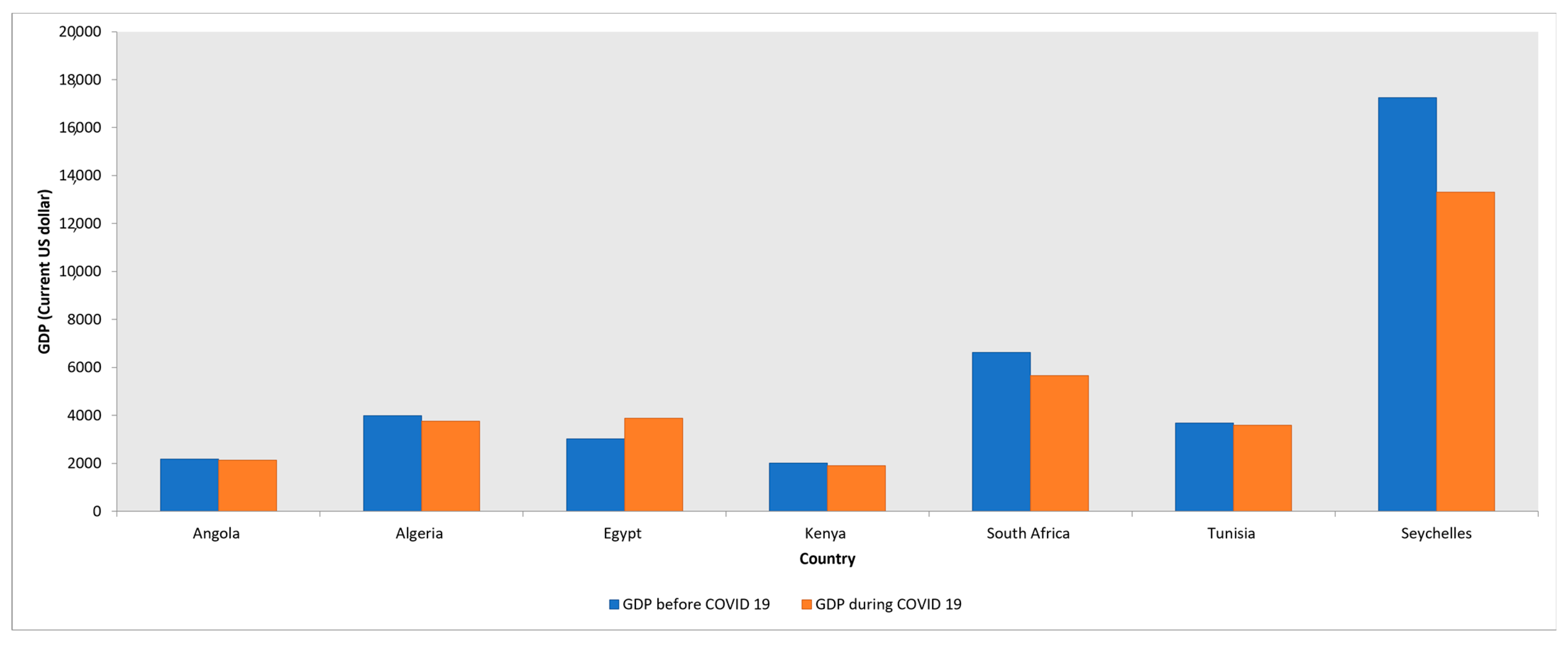
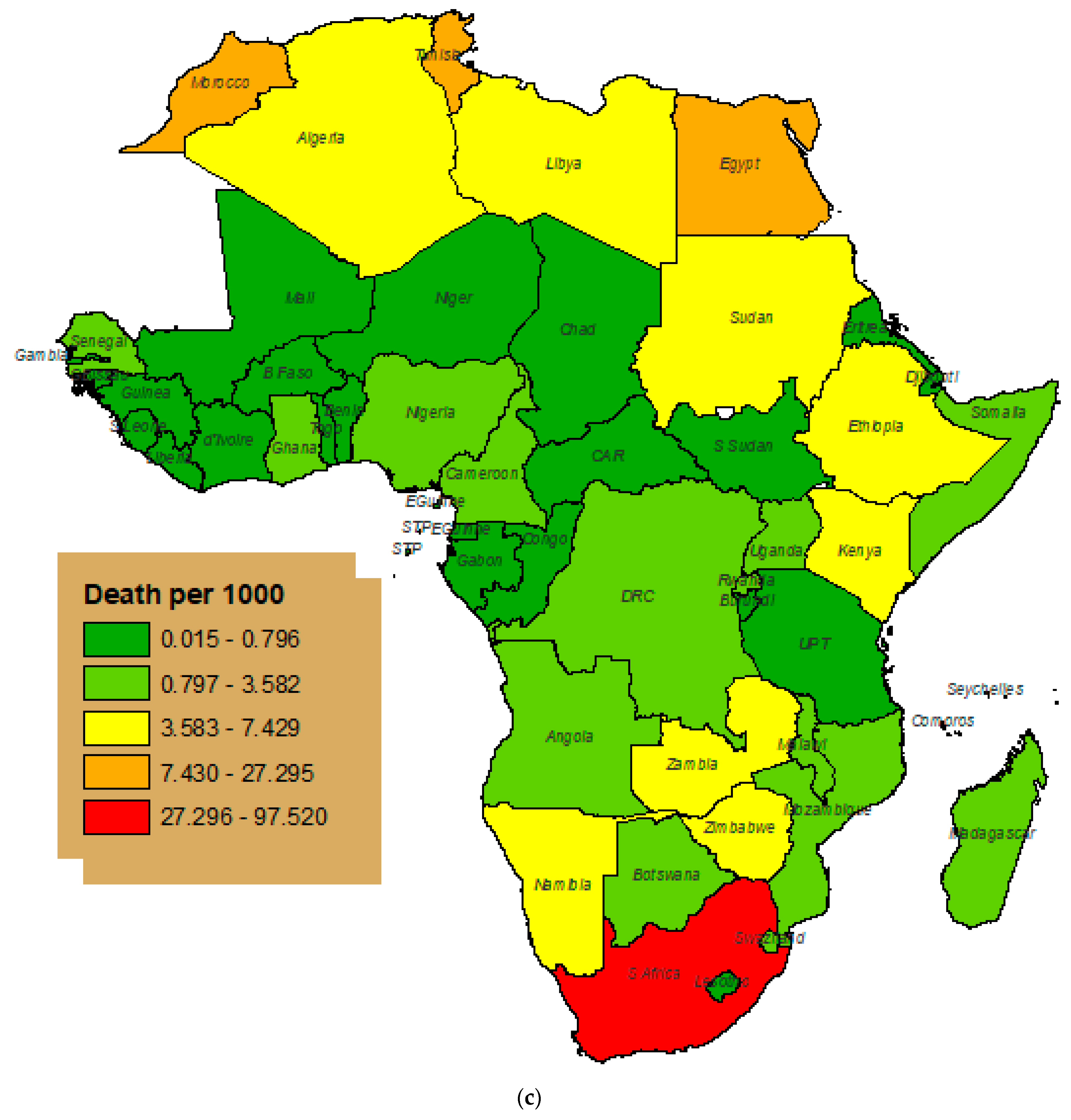
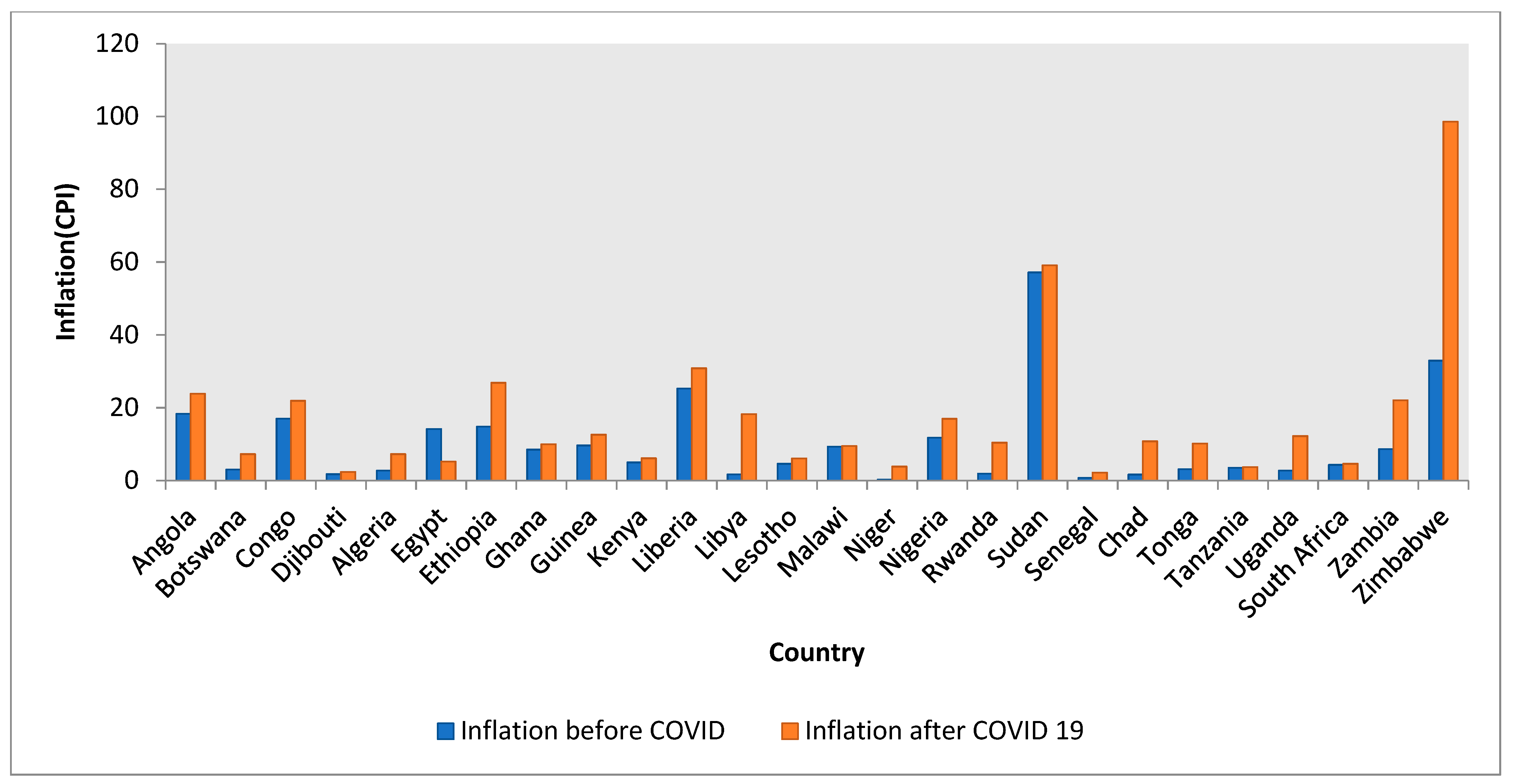
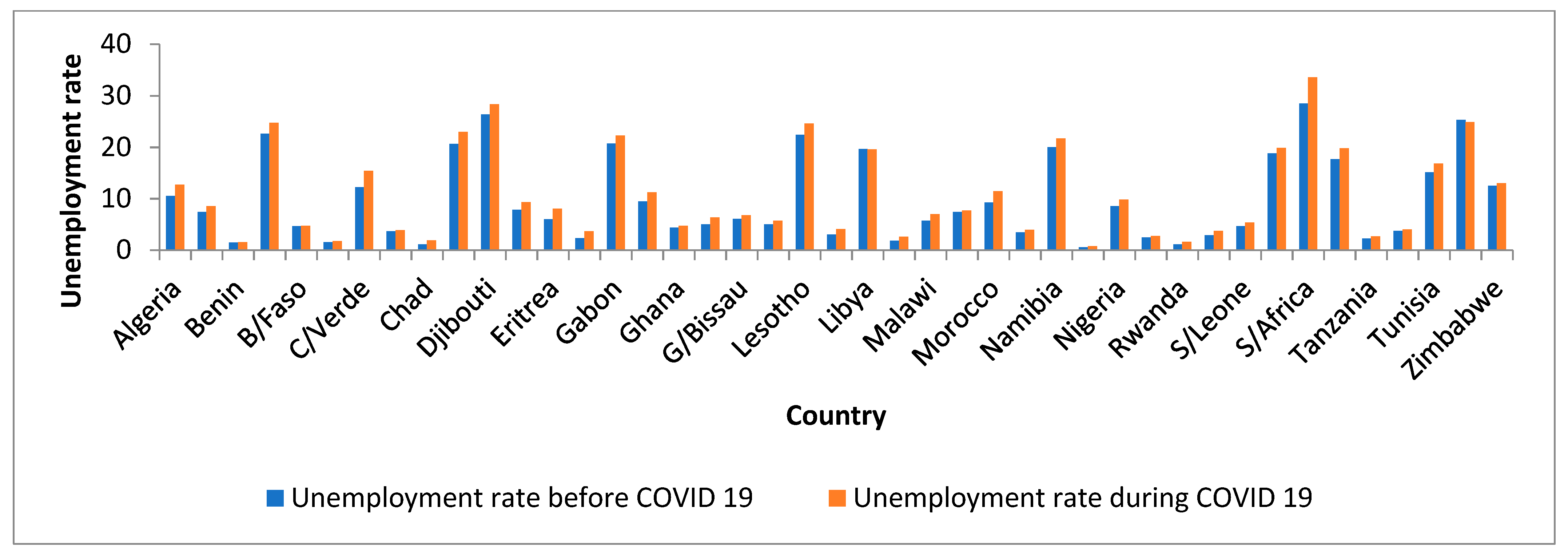
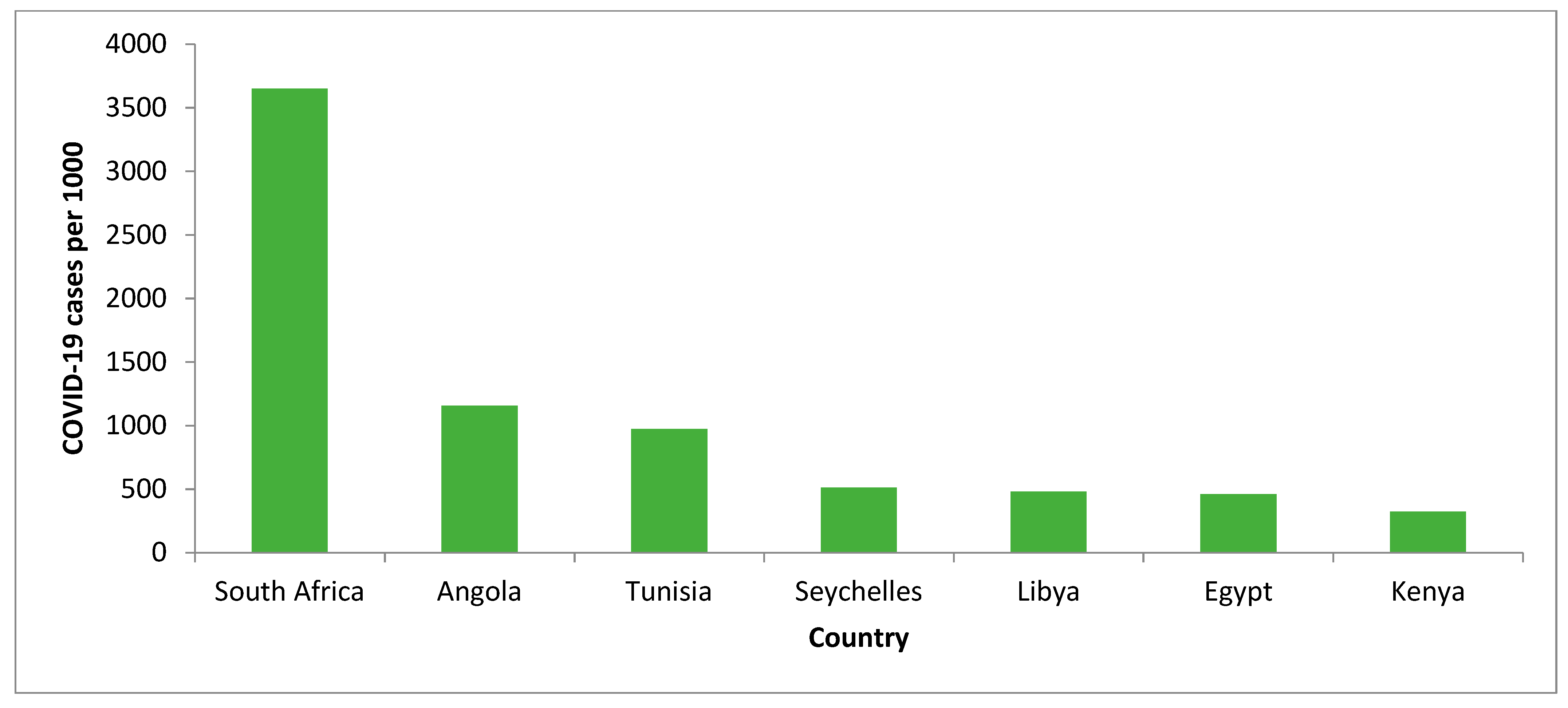
What are the effects of Corona Virus Disease 19 (COVID-19) on inflation, unemployment, and GDP in Africa? Using geo-coded cross-sectional data taken from the World Health Organization and International Monetary Fund, we investigate the spatial distribution of COVID-19 and its effects on inflation, unemployment, and Gross Domestic Product (GDP) in Africa by employing the Geographic Information System (GIS), multivariate analysis of covariance (MANCOVA), and spatial statistics. The entire dataset was analyzed using Stata, ArcGIS, and R software. The result shows (1) that there is evidence of a spatial pattern of COVID-19 cases and death rate clustering behavior in Africa, verifying the existence of spatial autocorrelation. The result also reveals (2) that COVID-19 has a negative effect on unemployment, inflation, and GDP in Africa. We confirmed that (3) temperature, rainfall, and humidity were statistically significantly associated with the spread of the COVID-19 pandemic in Africa. The comparison of the GDP of African countries before and after the pandemic shows (4) a large decrease in GDP, the highest in Seychelles (23 percent). The result of the study shows (5) that there has been a significant increase in inflation and unemployment rates in all countries since the outbreak of the pandemic as compared to the time before the outbreak. There is also evidence that (6) there is a significant relationship between death rate due to COVID-19 and population density; temperature with COVID-19 cases and death rate; and precipitation with death rate due to COVID-19. Therefore, respective governments and the international community need to pay attention to controlling/reducing the impact of COVID-19 on inflation, unemployment, and GDP, focusing on the indicated demographic and environmental variables.
Keywords: spatial pattern; GIS; GDP; COVID-19; inflation and unemployment spatial pattern; GIS; GDP; COVID-19; inflation and unemployment