
Abstract
This paper presents the design and fabrication of flexible and gel-less electrodes using carboxylic acid-functionalized single-walled carbon nanotubes (SWCNT-COOHs) and polydimethylsiloxane (PDMS) at thirteen different concentrations. The dispersion was attained by magnetic stirring and sonication using isopropyl alcohol (IPA). Physical characterizations like Scanning Electron Microscopy (SEM), Transmission Electron Microscopy (TEM), and Fourier Transform Infrared Spectroscopy (FTIR) were performed. The electrodes were fabricated using molds. The percolation threshold was achieved at 4 wt%. The ECG results were compared with conventional ECG electrodes and 3.5 wt% displayed the best results. Also, after using the electrodes for 5 days, the ECG signals did not degrade and no skin allergies were observed. The fabricated electrodes are suitable for long-term and continuous ECG monitoring, facilitated with the help of an Internet of Things (IoT) tracking system. The data can then be transmitted to the medical expert and loaded onto the cloud server for analysis.
1. Introduction
Rising healthcare costs and the growing prevalence of cardiovascular diseases underscore the need for efficient diagnostics [1,2,3]. While ECGs are essential for heart monitoring, traditional systems are bulky, rely on gel-based electrodes, and limit long-term use [4,5,6]. Traditional ECG systems, however, typically involve bulky, immobile machines equipped with multiple gel-based electrodes placed on the chest, arms, and limbs [7,8,9]. Prolonged usage of these electrodes can lead to drying of the conductive gel, potential skin irritation, and cross-coupling artifacts between adjacent electrode sites, thus reducing signal quality and overall patient comfort [10]. Furthermore, the cumbersome setup often restricts patient mobility, making it unsuitable for long-term, continuous monitoring.
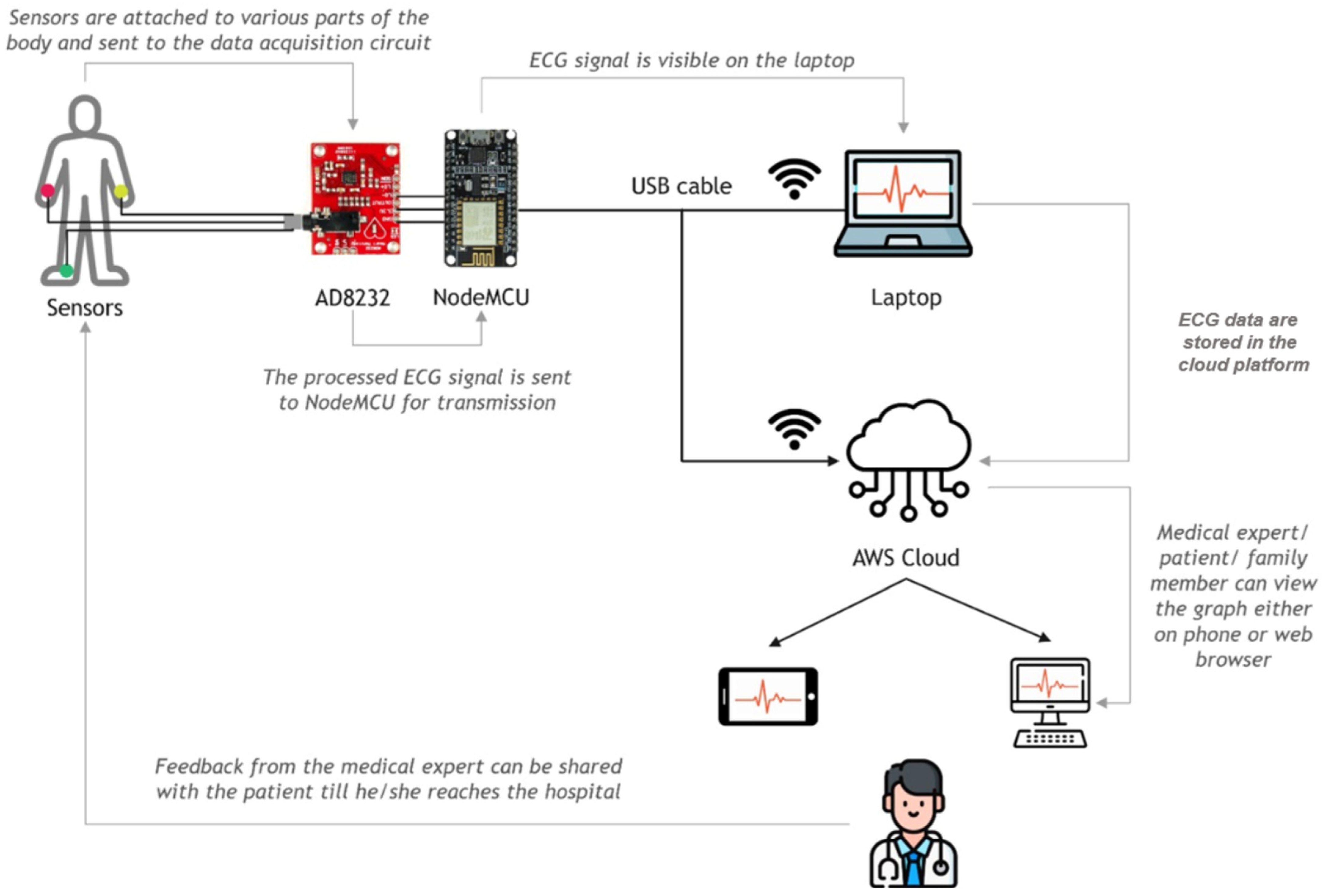
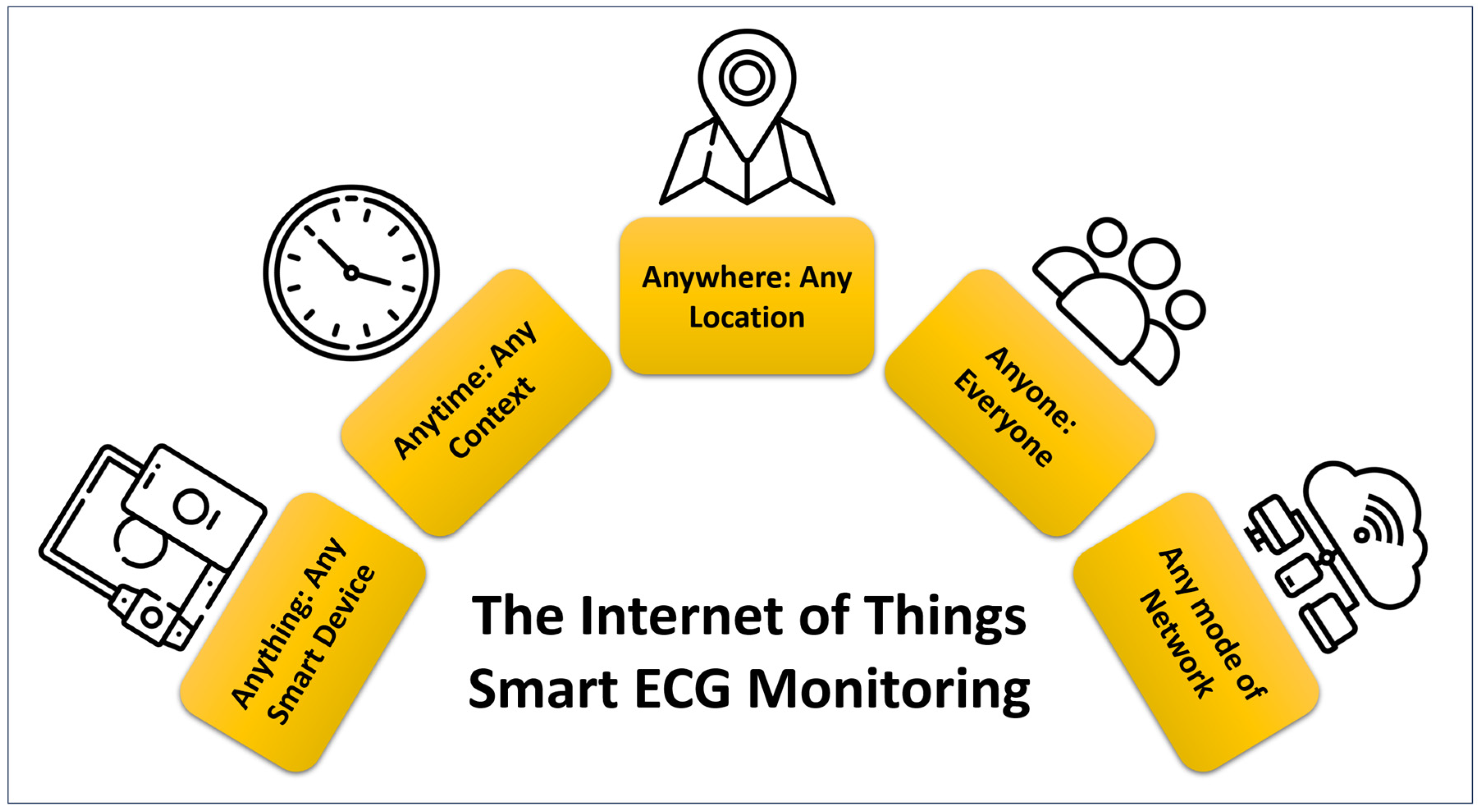
Recent advances in nanomaterials and flexible electronics have prompted extensive research into wearable ECG devices that aim to overcome these limitations [8,10,11]. For instance, several studies have investigated polymer/nanomaterial composites, such as polydimethylsiloxane (PDMS) blended with carbon-based fillers, to create lightweight, flexible, dry electrodes that maintain high conductivity and biocompatibility [10]. These emerging devices can conform to curved body surfaces, enabling stable skin contact and reducing motion artifacts. Moreover, integrating Internet of Things (IoT) architectures in wearable health technologies has opened new possibilities for real-time, cloud-based data acquisition and analysis, greatly enhancing remote patient monitoring [12,13,14]. The system can be seen in Figure 1. By combining flexible electrode materials with wireless data transfer, recent research has demonstrated the potential for truly portable, long-duration cardiac monitoring systems that are more comfortable, user-friendly, and effective in various clinical and home settings. Wearable ECG devices using nanomaterials and IoT technology offer flexible, biocompatible electrodes for real-time, remote monitoring [15,16,17,18].
Figure 1.
Internet of Things: smart ECG monitoring.
However, electrode performance, skin adhesion, and data integration are some challenges that still remain. This study addresses these gaps through improved materials, fabrication, and system design.
2. Materials and Methods
2.1. Mold Formation
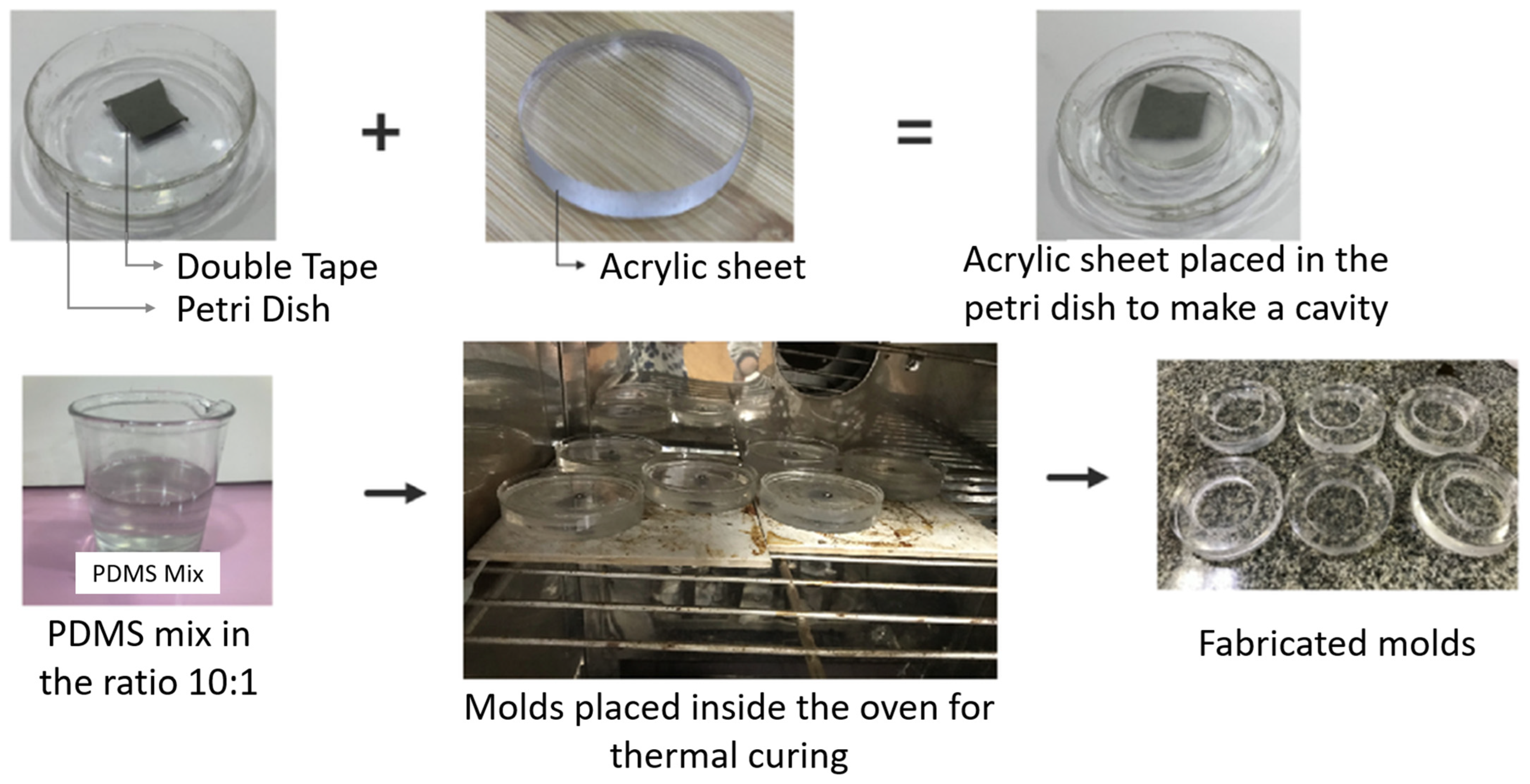
The electrodes were fabricated by pouring the carbon nanotubes/polydimethylsiloxane (CNT/PDMS) composite into the molds. The molds were cast using the Sylgard 184 Silicone Elastomer (Dow Corning, Midland, MI, USA) base 184A and curing agent Sylgard 184B [19]. The process of making the molds [20] was initiated by sticking a double tape inside the petri dish. Over the double tape, an acrylic sheet, with a diameter of 50 mm and thickness of 15 mm, was placed. Then, a mix of PDMS base and PDMS curing agent in the ratio of 10:1 was prepared. The PDMS composite was poured into petri dishes. The petri dishes were then placed in the oven for 30 min at 80 °C. After the composite was thermally cured, the molds were separated from the petri dishes immediately after taking out them from the oven after a 30 min curing period at 80 °C. The end products achieved were molds with a cavity (formed due to the acrylic sheet). The cavity was framed to hold the CNT/PDMS composite [21,22]. The process is shown in Figure 2.
Figure 2.
Mold casting procedure.
2.2. CNT/PDMS Composite Preparation
2.2.1. Materials
The electrodes were fabricated using SWCNT-COOHs, which were purchased from Nano Research Elements (Haryana, India) with specifications shown in Table 1. Functionalized SWCNTs were chosen for fabricating the electrodes because their dispersing capabilities were better than those of unfunctionalized CNTs. New functionalized groups upsurge the number of bands close to the Fermi level, stimulating electron transfer between the carbon atoms, which enhances the conductivity [23,24,25]. The polymer used with the filler was Sylgard 184 Silicone Elastomer purchased from Dow Corning with specifications shown in Table 1. It consists of PDMS A, the base, and PDMS B, the cross-linking agent. PDMS is used to bind the CNTs, give them their shape, and make the electrode flexible. Another important element for the fabrication is the solvent required for dispersing the composite. Isopropyl alcohol (IPA) was used for dispersing SWCNT-COOHs and PDMS as both of these materials are soluble in IPA; it was purchased from Loba Chemie with specifications shown in Table 1. IPA has large surface tension, with twice the vapor density of air, which helps in removing the air bubbles from the solvent. Solvents like methanol, which are non-polar, swell the PDMS matrix [26].
Table 1.
Specifications of SWCNT-COOHs, PDMS, and IPS.
2.2.2. Distribution of SWCNT-COOHs
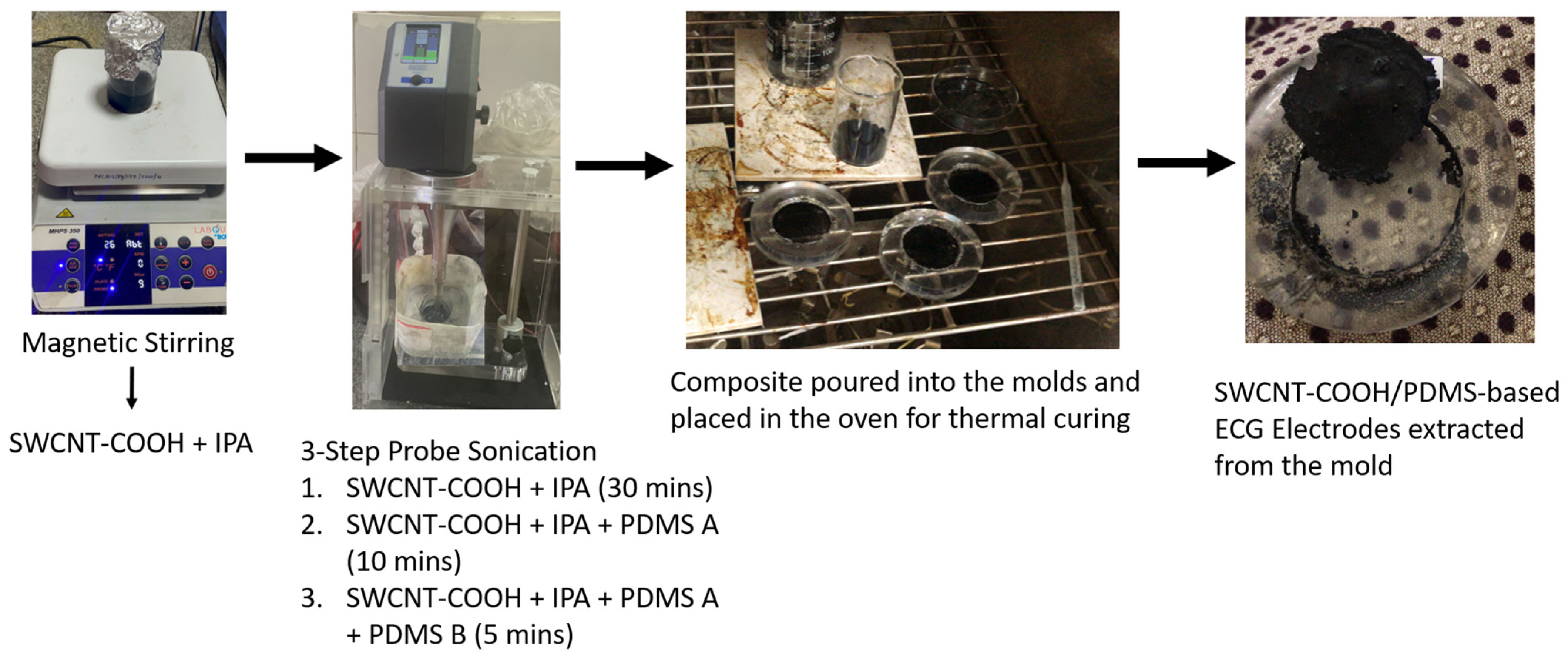
SWCNTs are capable of forming agglomerates due to strong Van der Waals force. Hence, to attain uniform dispersion of the SWCNT in PDMS, first, the filler is mixed and distributed using the magnetic stirrer with IPA (REMI 5 MLH). As a result, the SWCNT-COOH is distributed evenly. Different concentrations of SWCNT-COOHs (0.1 wt%, 0.25 wt%, 0.50 wt%, 0.75 wt%, 1 wt%, 1.5 wt%, 2 wt%, 2.5 wt%, 3 wt%, 3.5 wt%, 4 wt%, 4.5 wt%, and 5 wt%) were mixed with a proportionate amount of IPA. The stirring was performed at 300 RPM for 10 min. The process is portrayed in Figure 3.
Figure 3.
Process of electrode fabrication.
2.2.3. Dispersion Process:
SWCNT-COOHs with IPA
SWCNT-COOHs were sonicated with IPA as agglomerates are formed quickly. Since stirring was only used for mixing purposes, sonication blends the sample vigorously with rapid agitation and movement. The solution was sonicated using a probe sonicator (Hielscher UP400St) with 34 W (power) and the amplitude was set to 44% for 30 min. A black well-blended solution of SWCNT-COOHs with IPA was formed, and no agglomerates were seen. The process is displayed in Figure 3.
SWCNT-COOH Solution with PDMS
PDMS (polymer) is required for shaping the electrode and making it flexible. PDMS requires strong agitation due to its high viscosity. First, the PDMS A (base) was added to the SWCNT-COOH/IPA solution sonicated for 10 min at 34 W and 58% amplitude. Then, PDMS B (curing agent/cross-linking agent) was added to the above solution and sonicated for 5 min, 31 W, with an amplitude of 56%. PDMS A provides flexibility and PDMS B hardens the composite.
2.2.4. Fabrication of Final Composite
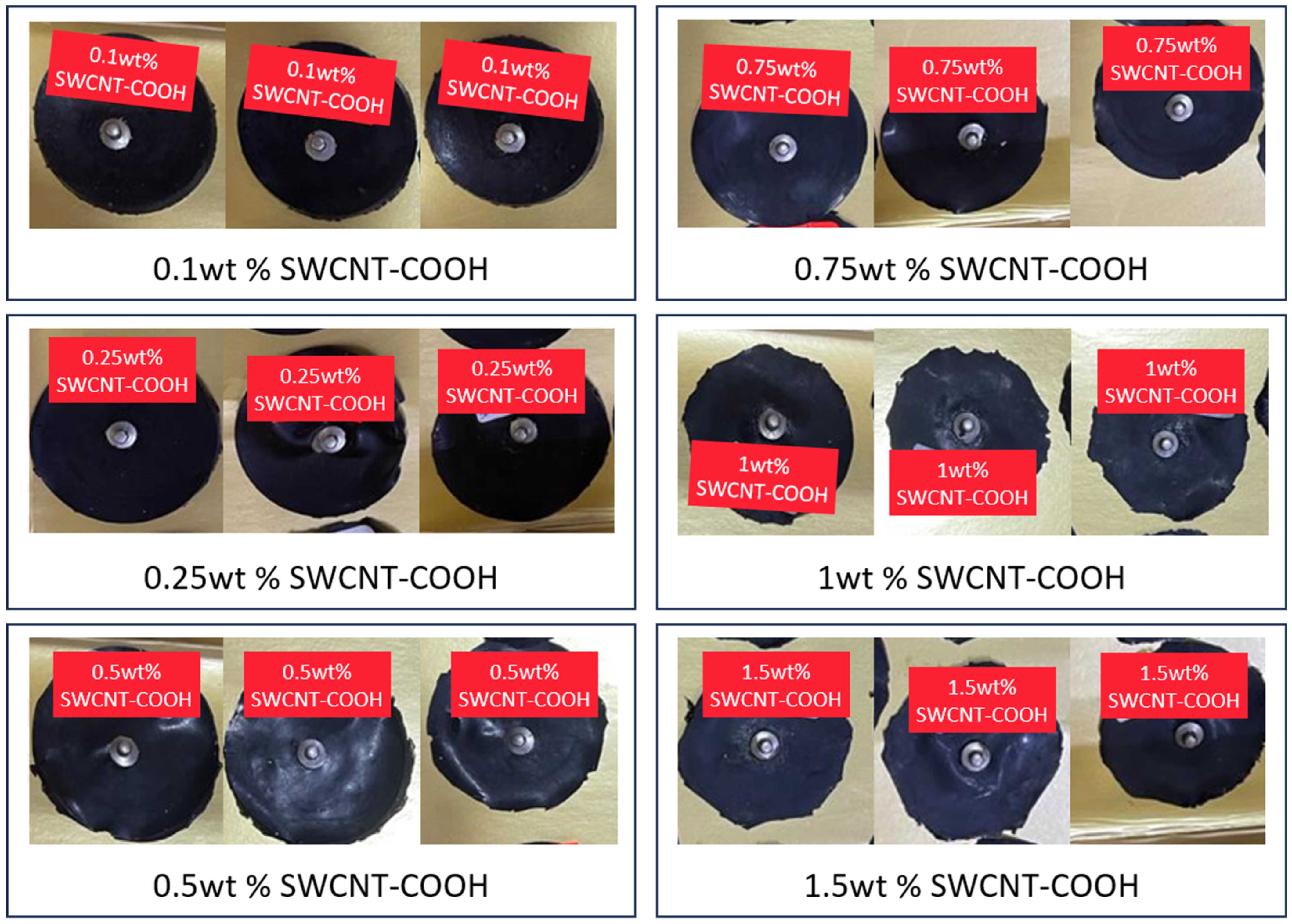
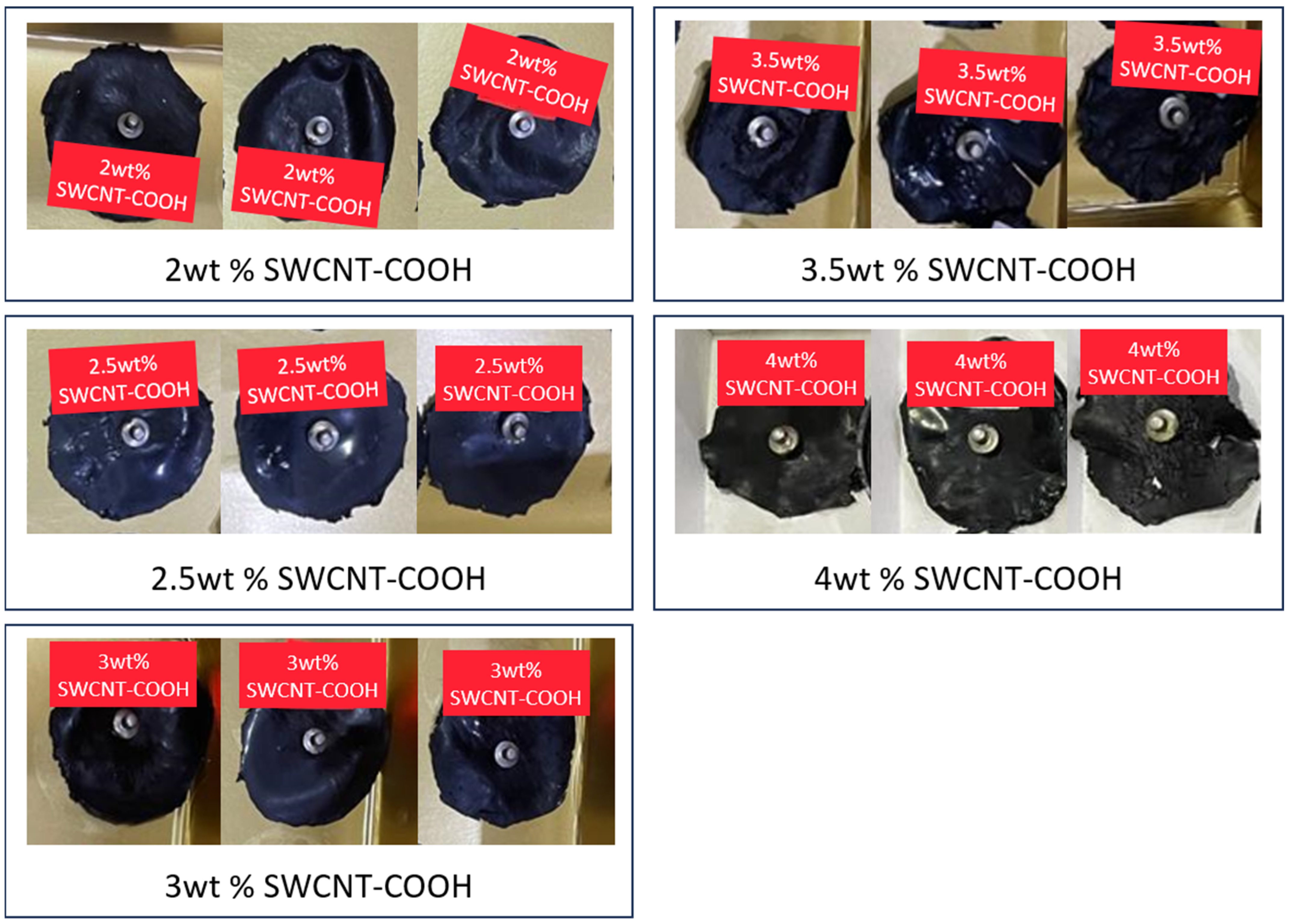
The SWCNT-COOH/PDMS nanocomposite was poured into the molds and kept inside the oven at 100 °C. Different compositions required different durations to dry in the oven, but the temperature was kept constant. The duration ranged from 2–10 h. The molds were then taken out of the oven and electrodes were removed from the molds. Most of the electrodes were easily extracted from the mold. Some electrodes are required to be immersed in methanol before extraction. The last step was to place the conductive steel snaps on the electrode; this was carried out with the help of conductive Ten20 paste. The Ten20 paste was purchased from Weaver and Company (Aurora, CO, USA). The percolation threshold was achieved at 4 wt% SWCNT-COOH; above this concentration, electrodes were not fabricated properly, as these were too fragile and could not be used for monitoring. The final fabricated electrodes can be seen in Figure 4.

Figure 4.
Fabricated ECG electrodes with different concentrations of SWCNT-COOHs in PDMS.
3. Results
3.1. Physical Characterization of SWCNT-COOHs
SWCNT-COOHs were evaluated as a solid residue with the help of various chemical-physical procedures like Scanning Electron Microscopy (SEM), Transmission Electron Microscopy (TEM), and Fourier Transform Infrared (FTIR) spectroscopy.
3.2. Scanning Electron Microscopy (SEM)
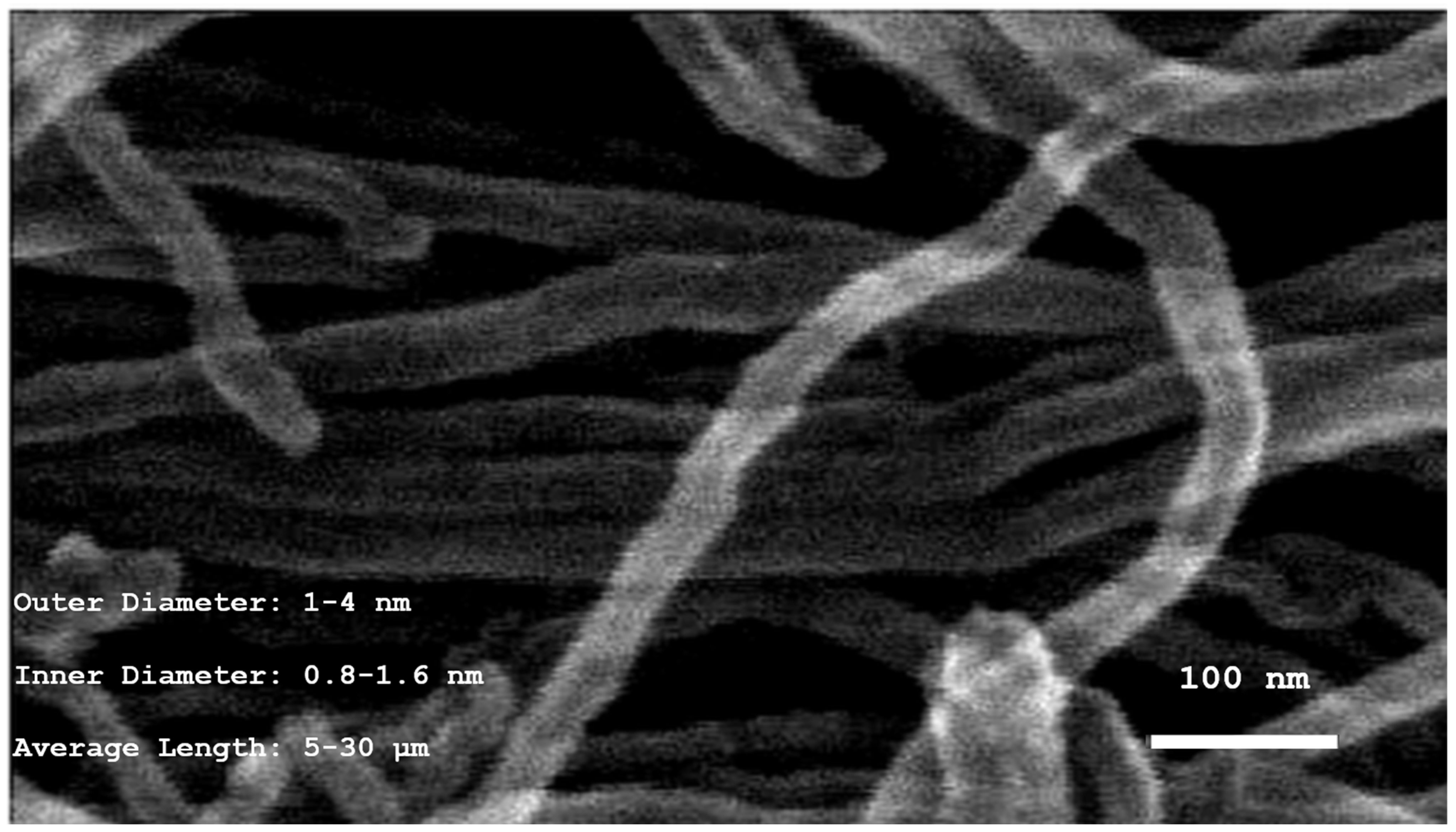
It is mandatory to characterize the material to detect and analyze any surface contaminations or fractures. Therefore, SEM was performed to provide information on the morphology, composition, and topography of SWCNT-COOHs. SEM is depicted in Figure 5. Structural stability was confirmed after functionalization. As can be seen, the tubular structure remained intact but some surface roughness is observed due to the covalent attachment of -COOH groups. The tubes are well separated with negligible agglomeration thus indicating successful dispersion and functionalization. SEM analysis specification can be seen in Table 2.
Figure 5.
SEM of SWCNT-COOHs.
Table 2.
SEM and TEM analysis specifications for SWCNT-COOHs.
3.3. Transmission Electron Microscopy (TEM)
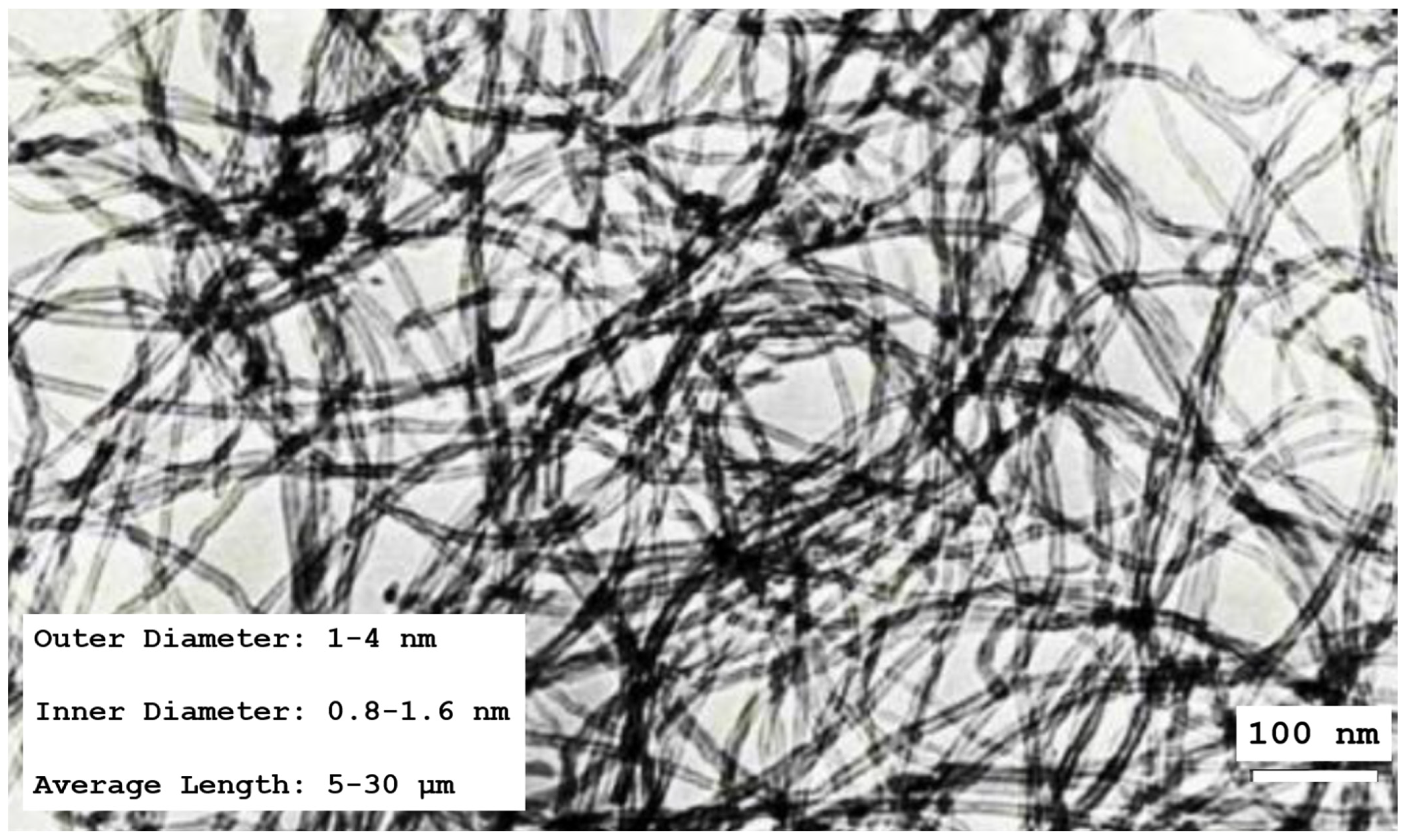
While SEM provides information on the surface details and composition, TEM includes information on the SWCNT-COOH internal structures. The TEM image is depicted in Figure 6. TEM confirmed the tubular structure of the functionalized SWCNTs. The inner diameter ranges from 1–4 nm and the outer diameter from 0.8–1.6 nm. A thin amorphous layer around the nanotubes demonstrated that the -COOH groups were successfully attached without damaging the structural foundation. SEM analysis specification can be seen in Table 2.
Figure 6.
TEM of SWCNT-COOHs.
3.4. Fourier Transform Infrared Spectroscopy (FTIR)
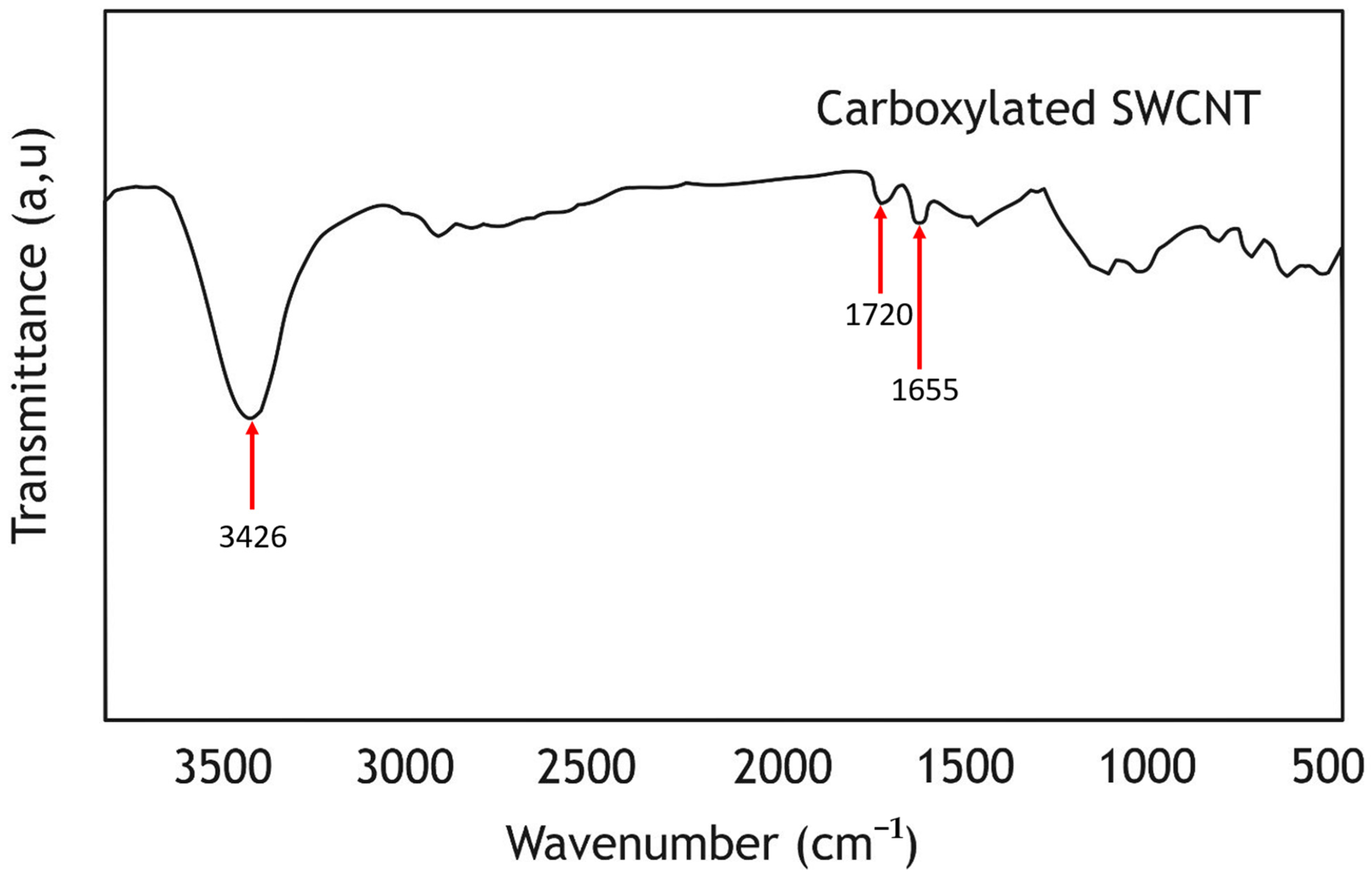
FTIR was conducted to identify the chemical bonds and characterize covalent bond information in this molecule by producing an infrared absorption spectrum. FTIR assessment exhibited peaks at 1720 cm−1 and 3000–3500 cm−1, representing C=O and O-H stretching vibrations, respectively, indicating the presence of carboxylic acid groups visible in Figure 7. Additional C-O stretching at ~1200 cm−1 demonstrated effective functionalization.
Figure 7.
FTIR of SWCNT-COOHs.
3.5. ECG Experimental Setup
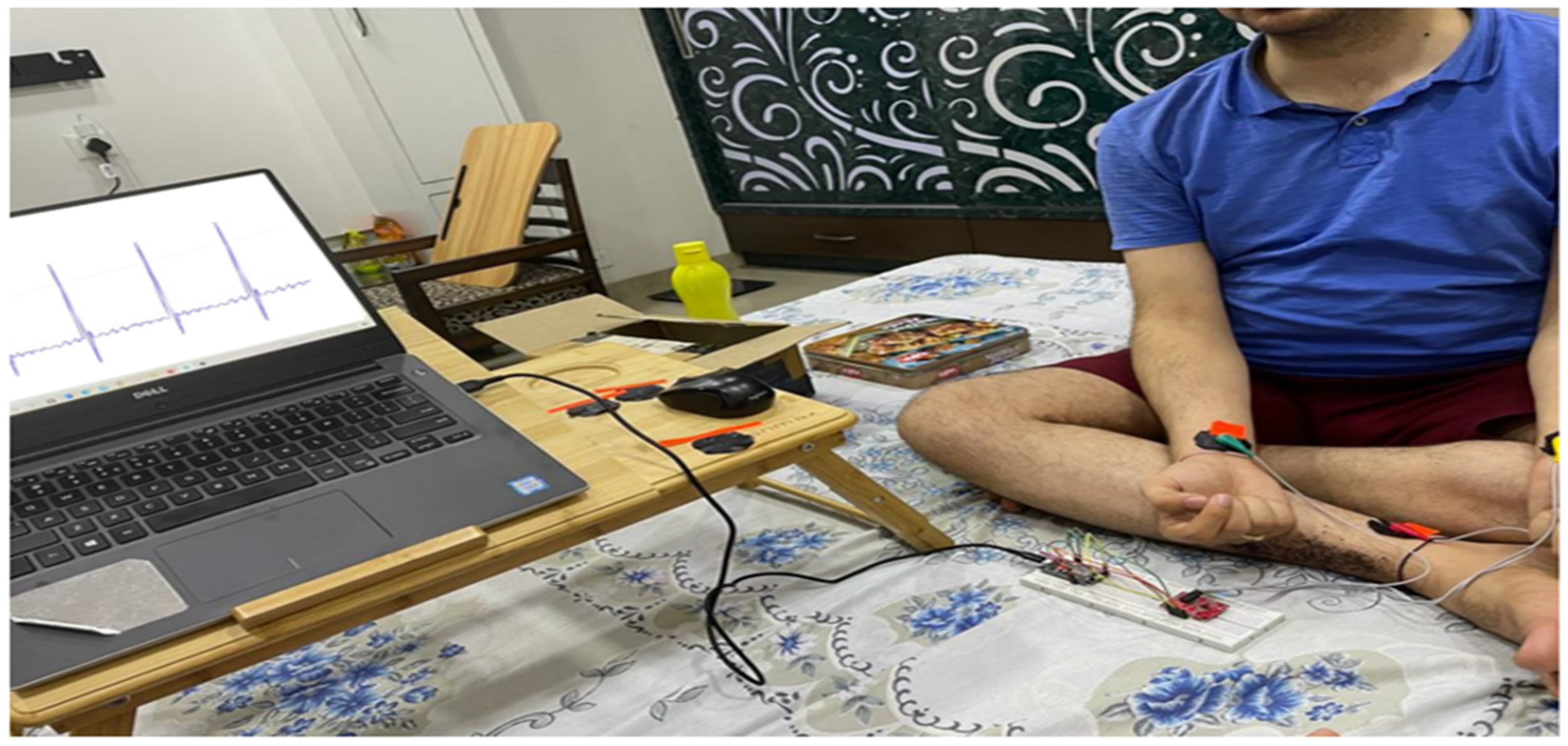
The whole system has been divided into four stages. Stage 1 consists of the ECG sensing elements. Stage 2 is used to obtain the ECG through an acquisition circuit and then further processing the received signal. Stage 3 is used for transmitting the processed ECG signal. Lastly, Stage 4 consists of a display device to observe the transmitted signal. The pictorial representation can be seen in Figure 8. And the actual implementation can be seen in the results section.
Figure 8.
Pictorial depiction of the implemented smart ECG monitoring system.
The ECG sensing node(s)/mote(s) is utilized for accumulating the ECG signals from the patient. The sensing element is the base for the sensing node(s)/mote(s). In this work, an AD8232 has been utilized to acquire and condition the ECG data. Specifications of the AD8232 can be seen in Table 3a. It is an integrated front-end module for extracting, amplifying, and filtering the ECG signals in the presence of noise. Thereafter, a controller module is employed to process the accumulated ECG data. In this work, a Node Microcontroller Unit (NodeMCU) has been employed for this purpose. It is an open-source, programmable, low-cost, and Wi-Fi-enabled development board. Its hardware design is open to build, edit, and modify IoT-based applications. It consists of an ESP8266 Wi-Fi-enabled chip. Specifications of the ESP8266 can be seen in Table 3b. Additionally, a USB cable was used to supply power to the NodeMCU and AD8232. An API was developed and framed to build context-based applications, that allows interaction between the IoT device, the internet, and all other elements present within the network. Here, Node.js was used as a programming language for developing the API. After the system has acquired the data via the sensing module, an IoT cloud platform is required for speedy, reliable, and convenient display and storage of ECG signals as and when needed. In this work, Amazon Web Services (AWS) has been utilized as a cloud platform. In this implementation, an HTTP server is responsible for providing a GUI for the ECG waveform. Later, a file that is scripted in the Hypertext Markup Language (HTML) is sent to the browser via HTTP. A browser can transform the HTML file to a user-friendly GUI for logging on to the server and later viewing the ECG data. A storage database is required to store the ECG files and data so that the data can be viewed perpetually. MongoDB is used for this purpose. In this work, the ECG signals can be viewed on a laptop, IoT-based platform, and smartphone. The signal on the laptop can be observed through the NodeMCU. The programming is carried out using the Arduino IDE platform. Also, the signal can be viewed on the AWS cloud platform, where the user can log in with his credentials. Furthermore, the same ECG graph can be obtained on a smartphone. In the next section, the ECG measurements and results are discussed.
Table 3.
(a). Specifications of AD8232. (b). Specifications of NodeMCU.
4. ECG Measurements and Analysis
4.1. Short-Term Measurements
The electrodes were worn by a volunteer for 5 h. The results were recorded again after 5 h. The results were almost comparable to the results recorded earlier. In addition, no signs of skin allergy or irritation were observed. Therefore, the electrodes are construed as safe to be used on the human skin surface. The electrodes were attached to the participant’s left wrist, right wrist, and right ankle as shown in Figures 12 and 13, and were held using a compression bandage.
4.2. Long-Term Measurements
The fabricated electrodes were worn by the volunteer for 5 days. The electrodes were attached to the participant’s left wrist, right wrist, and right ankle as shown in Figures 12 and 13. They were held on the electrode sites with the help of a compression bandage. The results were measured on the first day, third day, and fifth day. The results degraded on the third day and fifth day as compared to the first day. However, the results improved after cleaning the electrodes with methanol. Also, no kind of skin allergy or irritation was observed after the fifth day.
4.3. Capacitance of the Fabricated Electrodes
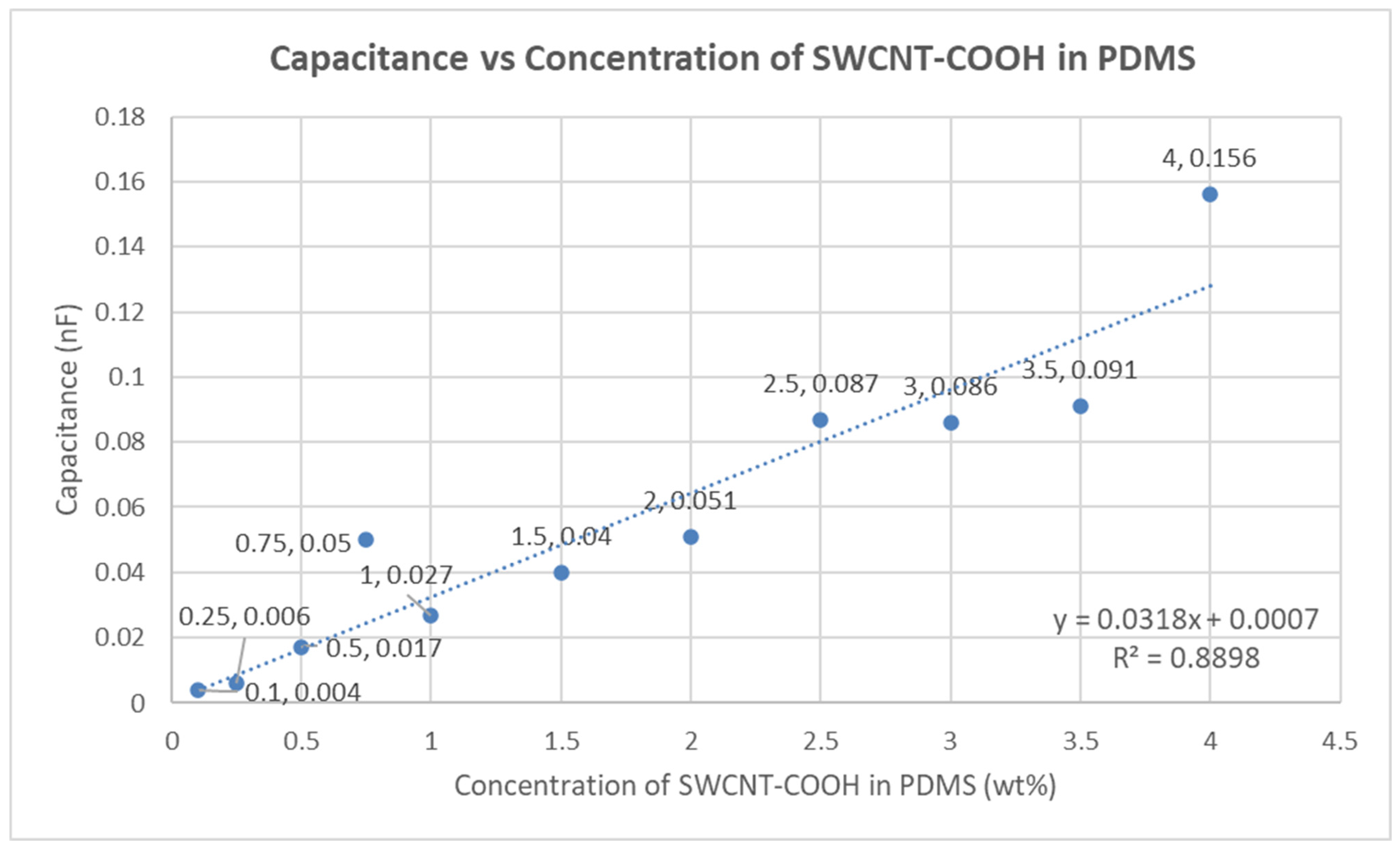
The capacitance of the fabricated electrodes was measured using an ESCORT ELC-133A. The capacitance depends on the size of the conductors, the size of the gap between them, and the material used. Capacitance gives an idea of how the electrons are flowing in the conductor, as capacitance is directly proportional to the charge. A graph is plotted between capacitance and the fabricated electrodes (different concentrations of SWCNT-COOHs in PDMS). As seen in Figure 9, the graph shows a positive correlation where capacitance increases with higher SWCNT-COOH concentration in PDMS. The R2 value of 0.8898 indicates a strong and positive fit explaining that SWCNT-COOHs predominantly affect the capacitance behavior. The linear trend shows improved charge storage because of conductive networks formed in the composite. The almost linear trendline, with minor variations mostly at higher SWCNT-COOH loadings, is due to SWCNT-COOH agglomerations reaching the percolation threshold. A high R2 value confirms that the trendline is reliable. It also suggests that incorporating SWCNT-COOHs can effectively and efficiently tune the dielectric properties of SWCNT-COOH/PDMS-based composites. This means that the flow of electrons is high when the concentration is high. SWCNT-COOHs increase charge carrier density and conductivity. The functional -COOH group improves compatibility with the matrix and enables electron transport.
Figure 9.
Capacitance vs. concentration of SWCNT-COOHs in PDMS.
The nanotube network provides an interconnected structure that improves charge storage by expanding the specific surface area accessible for electrochemical processes. The -COOH group also boosts the contact with ions in the electrolyte, thus enhancing the double-layer capacitance and pseudocapacitive effects.
The percolation threshold was achieved at 4 wt% since proper electrodes could not be fabricated beyond this concentration. Also, the graph (Figure 9) shows the saturation point between 2.5 wt% and 3.5 wt%.
The capacitance of the SWCNT-COOH/PDMS sensors was modeled as a function of SWCNT-COOH concentration (wt%) (in PDMS) with the help of a linear polynomial (first-order) equation (fit). The data were fitted using the following mathematical equation:
where x is the concentration of SWCNT-COOH (in PDMS) wt%; y is the capacitance in nF.
With the help of regression analysis on the data points from 0.1–4 wt%, the best-fit parameters were calculated as follows using the least-squares regression:
Slope, ;
Intercept, ;
Coefficient of determination, R2 ≈ 0.8898.
Hence, the fitted line is approximately expressed as:
From Equation (2), it can be inferred that for every 1 wt% increase in the SWCNT-COOH concentration in PDMS, the capacitance increases approximately by 0.037 nF, but initially, it started with a small offset of about 0.001 nF.
4.4. Surface Resistance of the Fabricated Electrodes
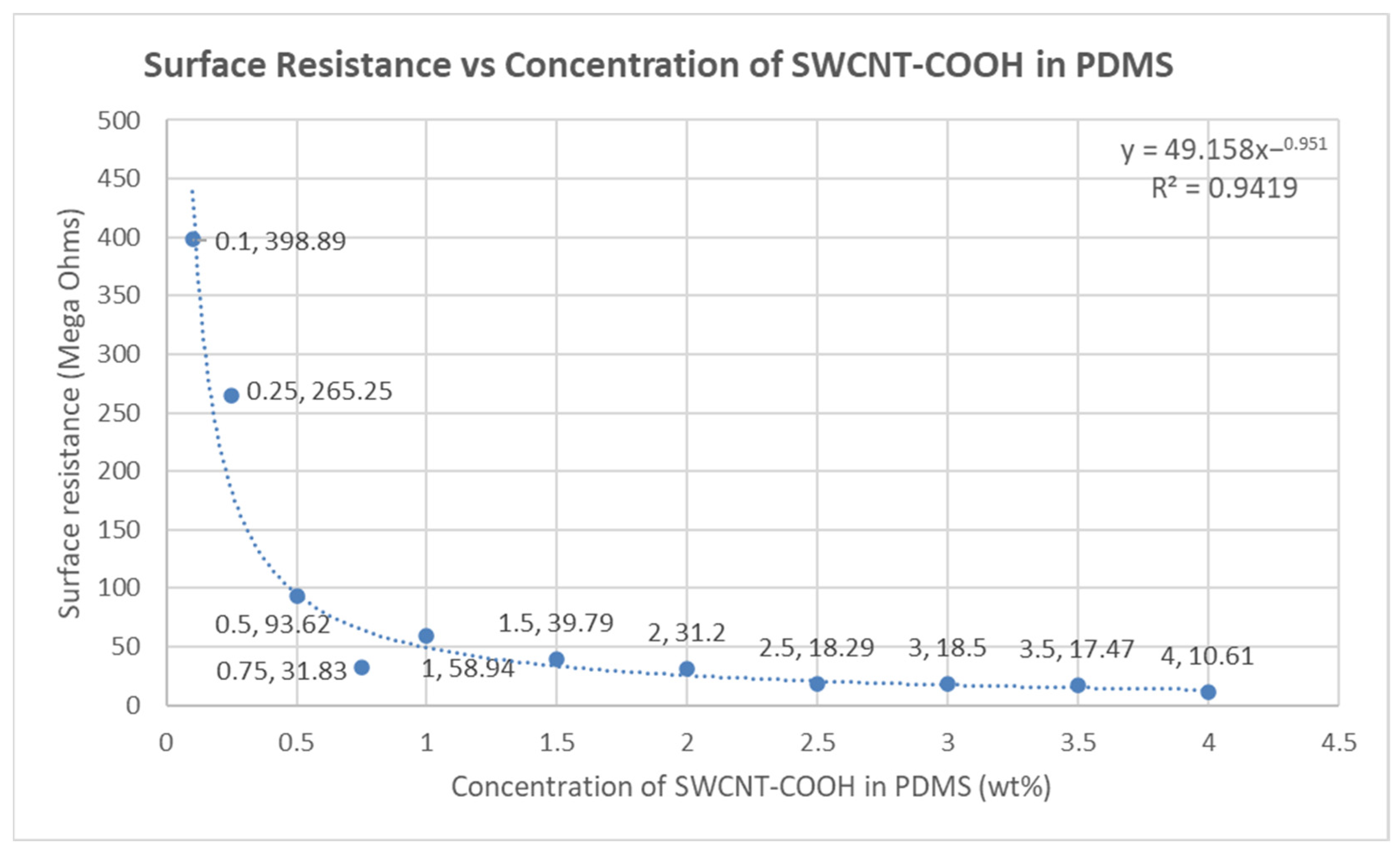
Surface resistance measures the ability of a material to oppose the flow of electricity. It is a common electrical property for characterizing thin films of semiconducting and conducting materials. It was measured using an ESCORT ELC-133A. The probes were attached to the two ends of the electrode, voltage was applied, and the resistance values were observed. A graph has been used to depict the values of various fabricated electrodes in Figure 10. The surface resistance (MΩ) is measured as a function of SWCNT-COOH concentration in PDMS (wt%) using a power-law mathematical model. A power-law model is often used where percolation-driven conductive networks are observed within polymer composites. The power-law model is used rather than a conventional polynomial model because it provides a more meaningful portrayal of the initial steep decline and then a subsequent gradual decline in the surface resistance with increasing filler concentration. This means the best ECG results will be seen where the opposition is least. Therefore, as the concentration increases, the resistance decreases, and results improve. The inclusion of SWCNT-COOHs increases the electrode’s overall conductivity by providing improved electron routes.
Figure 10.
Surface resistance vs. concentration of SWCNT-COOHs in PDMS.
The drop in surface resistance is mostly due to lower charge transfer resistance at the electrode–electrolyte interface.
Greater concentrations of SWCNTs increase percolation effects, resulting in a more continuous conducting network within the composite. This decreases interfacial impedance and bulk resistance.
The power-law equation used for modeling is as follows:
where x is the concentration of SWCNT-COOH (in PDMS) wt%; y is the surface resistance in MΩ.
The parameters were obtained with the help of regression analysis on the log-transformed data points from 0.1–4 wt%. The process included taking the natural logarithm of Equation (3). It helps in linearizing the relationship for applying the least-squares regression. The result can be seen in Equation (4).
The best-fit parameters were obtained as follows:
a (the prefactor) ≈ ; the prefactor sets the overall scale of the resistance;
b (the exponent) ≈ −0.951 (indicates an inverse relationship between surface resistance and SWCNT-COOH concentration in PDMS);
Coefficient of determination, R2 ≈ 0.9419.
Hence, the fitted line is approximately expressed as:
4.5. Impedance of the Fabricated Electrodes
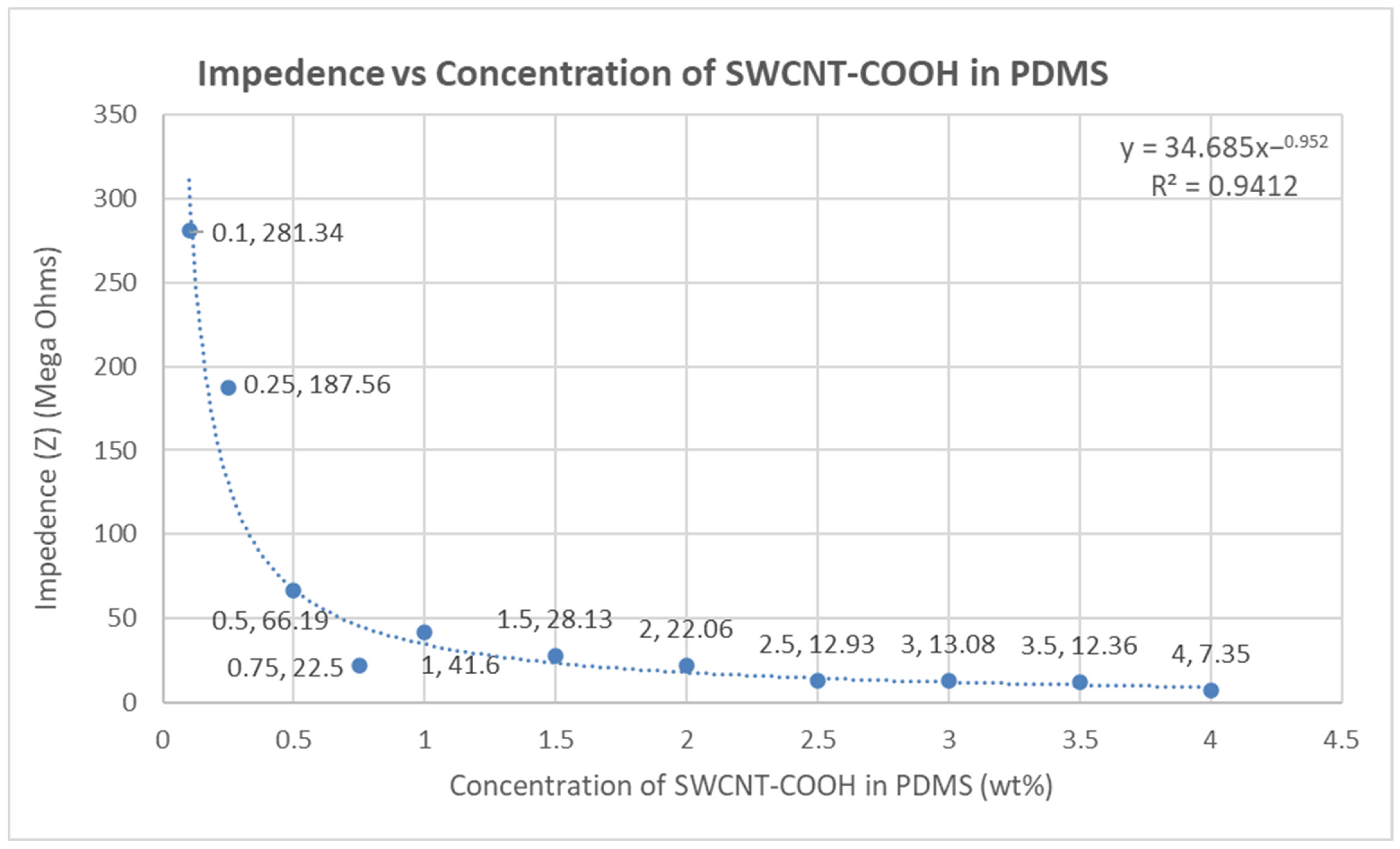
For bio-electric measurements like ECG, EEG, etc., the impedance measurement is necessary so that motion artifacts can be taken care of; also, if the impedance is high it can lead to signal distortion and attenuation. As capacitive elements are present in the electrodes and usually high in dry electrodes (compared to wet electrodes), it becomes important to gauge the impedance. The impedance was measured at 100 Hz. The graph has been plotted between impedance (at 100 Hz) and concentration of various fabricated electrodes. As observed from Figure 11, the highest impedance is for the lowest concentration. As the concentration increases the impedance decreases. After 1 wt% of the SWCNT-COOH/PDMS matrix, the trendline shows a gradual reduction. The overall graph and trendline are in accordance with the percolation theory that increasing the SWCNT-COOH concentration in a composite decreases the impedance because of better electron transport networks.
Figure 11.
Impedance vs. concentration of SWCNT-COOHs in PDMS.
The impedance of the SWCNT-COOH/PDMS sensor was measured as a function of SWCNT-COOHs in PDMS (wt%). A power-law mathematical model (single-term) was used to evaluate a steep and rapid decline at low concentrations of the filler concentrations and a slow and gradual decrease at higher concentrations.
The single-term power-law equation used for modeling is as follows:
where x is the concentration of SWCNT-COOH (in PDMS) wt%; Z is the surface resistance in MΩ.
The power-law model depicts percolation-like behavior which is often observed in conductive polymer/filler systems, it means a small addition of filler in the composite drastically alters the composite’s electrical properties.
The parameters were obtained with the help of regression analysis on the log-transformed data points from 0.1–4 wt%. The process included taking the natural logarithm of Equation (3). It helps in linearizing the relationship for applying the least-squares regression. The result can be seen in Equation (4).
The best-fit parameters were obtained as follows:
a (the prefactor) ≈ ; the prefactor sets the overall scale of the resistance;
b (the exponent) ≈ −0.952 (indicates an inverse relationship between surface resistance and SWCNT-COOH concentration in PDMS);
Coefficient of determination, R2 ≈ 0.9412.
Hence, the fitted line is approximately expressed as:
4.6. Comparison with Ag/AgCl Electrodes
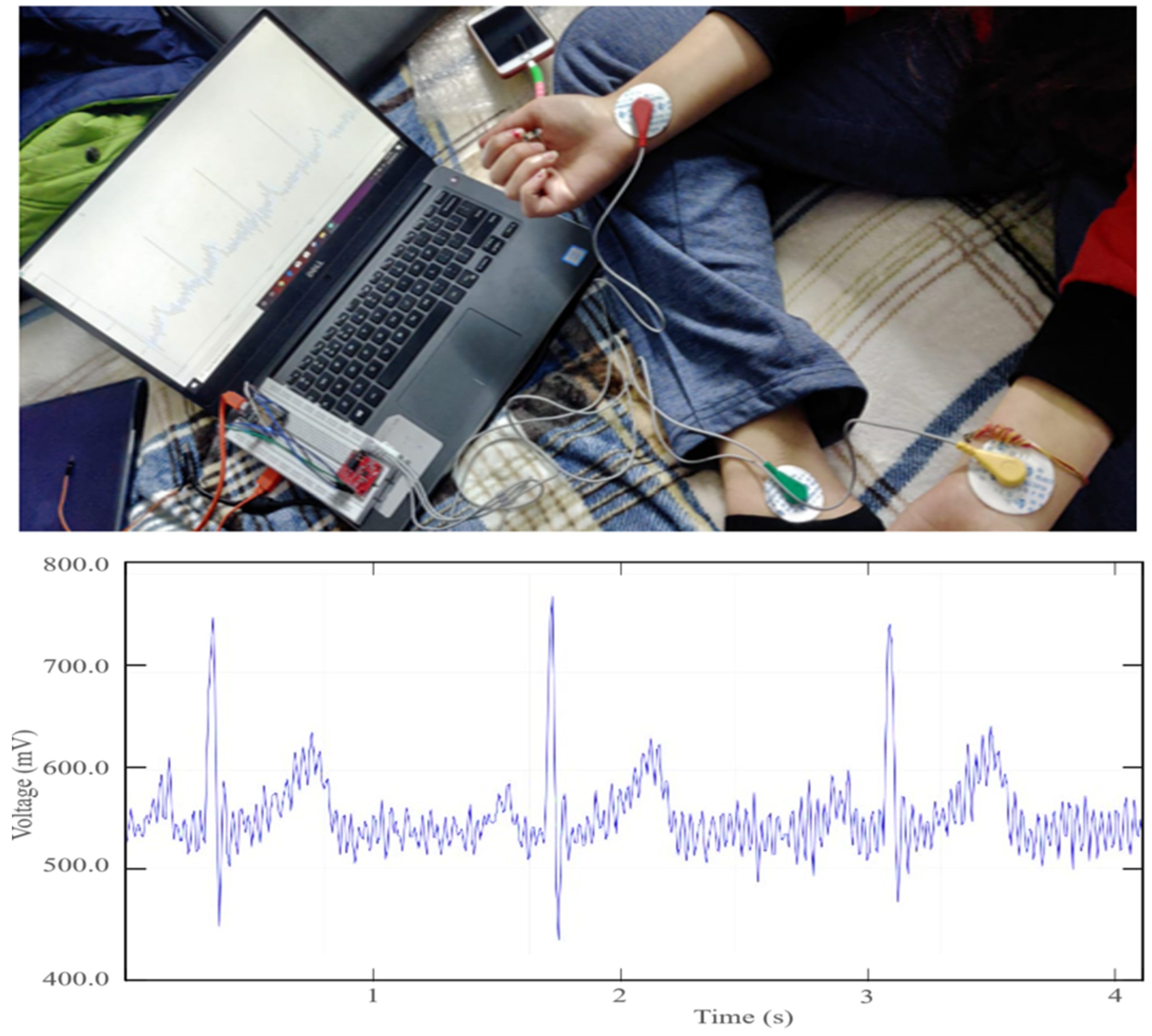
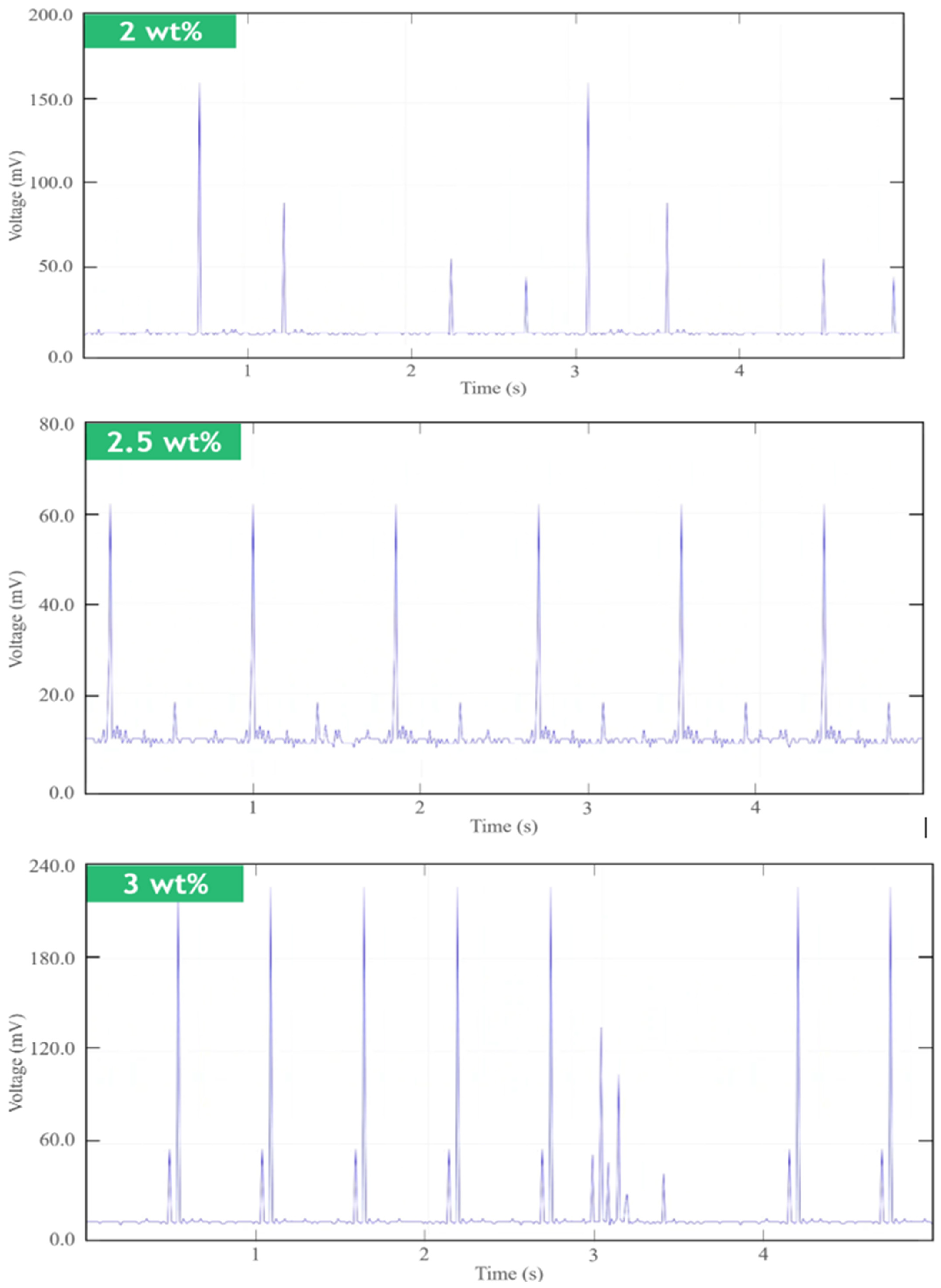
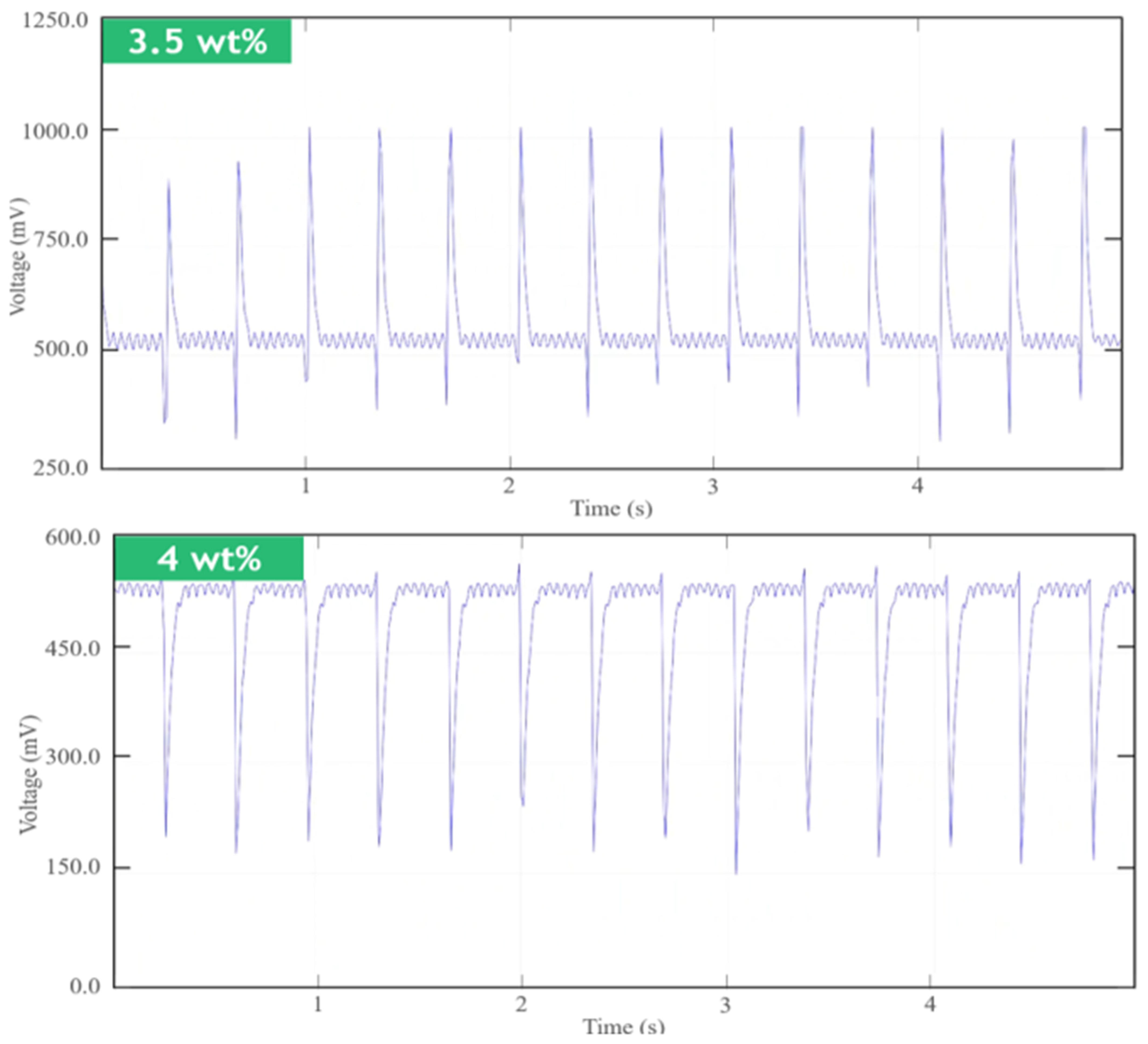
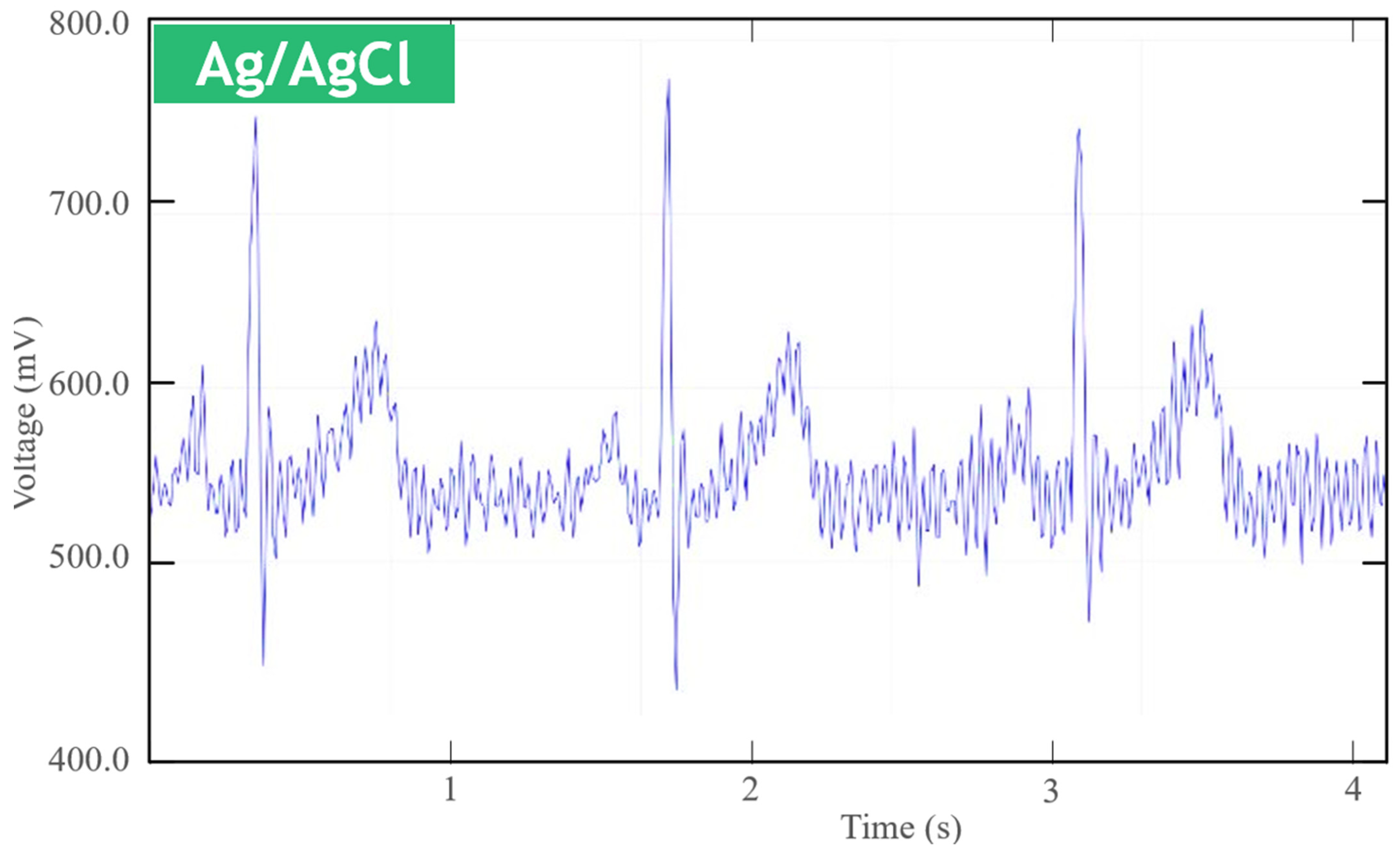
The ECG results were simulated from the system developed as discussed earlier. Figure 12 shows the results from various fabricated electrodes.
Figure 12.
ECG results obtained from Ag/AgCl electrodes.
4.6.1. Signal-to-Noise Ratio (SNR)
SNR is a metric that compares the intensity of a desired signal to that of background noise. In the context of ECG electrodes, SNR refers to the ratio between the ECG signal and the noise/interference like respiration, body movements, electromyography (EMG) noise, disturbance from cables, etc., that may distort the ECG readings.
SNR is calculated in MATLAB; the setup is the same as discussed in the ECG Experimental Setup section.
Once the ECG signal is plotted in MATLAB using Equation (8), a bandpass filter is used to reduce the noise, estimate the noise, and calculate the SNR. The SNRs of Ag/AgCl and SWCNT-COOH/PDMS electrodes are −9.9 dB and −10.51 dB, respectively (Table 4). Both values are low, indicating noise overpowering the signal. This can happen due to electrode–skin interface quality skin impedance and environmental noise.
Table 4.
SNR and sensitivity of ECG electrodes.
4.6.2. Sensitivity
ECG sensitivity is the electrode’s ability to detect minor changes in the electrical signals generated by the heart, which is usually assessed in terms of voltage resolution or signal amplitude. Sensitivity is also calculated using MATLAB, using Equation (9), and the results are depicted in Table 4.
The sensitivity value of both electrodes is 1. It means the electrodes function under ideal conditions, meaning no signal loss, attenuation, or degradation.
4.6.3. Durability
The durability of the electrodes was tested in 5 h intervals and 5-day intervals. Both electrodes did not show any signs of wear and tear for 5 h interval usage. The Ag/AgCl electrode gel did not dry significantly when removed and applied again after every hour. The SWCNT-COOH/PDMS electrodes did not show any signs of degradation after 5 h when removed and applied again after every hour.
For a 5-day durability test, both electrodes were removed and applied again each morning. The adhesiveness decreased over time which negatively affected the ECG signal. The results started degrading after the third day (no well-defined peaks). The SWCNT-COOH/PDMS electrodes are gel-less, hence the results were not very negatively affected, but on the fourth day of re-application the electrodes became cracked. The SWCNT-COOH/PDMS electrodes had better conformality to the skin surface even after 5 days of re-application.
4.6.4. User Testing and Anticipated Usability Challenges
Both electrodes were tested on human subjects to evaluate their performance under physiological conditions, as depicted in Figure 12, Figure 13 and Figure 14.
Figure 13.
ECG results obtained from CNT-based electrodes.


Figure 14.
ECG results obtained from the ECG tracking system.
Some anticipated challenges for the fabricated electrodes may include minimal skin irritation due to PDMS if not properly dispersed. Some allergic reactions may occur due to impurities in SWCNT-COOHs.
The signal stability might decrease if rigorous movements happen or the electrodes are loosely held or misplaced.
Since the system uses a smart transmission process, the system should be connected to the internet. Also, the devices should be well-charged.
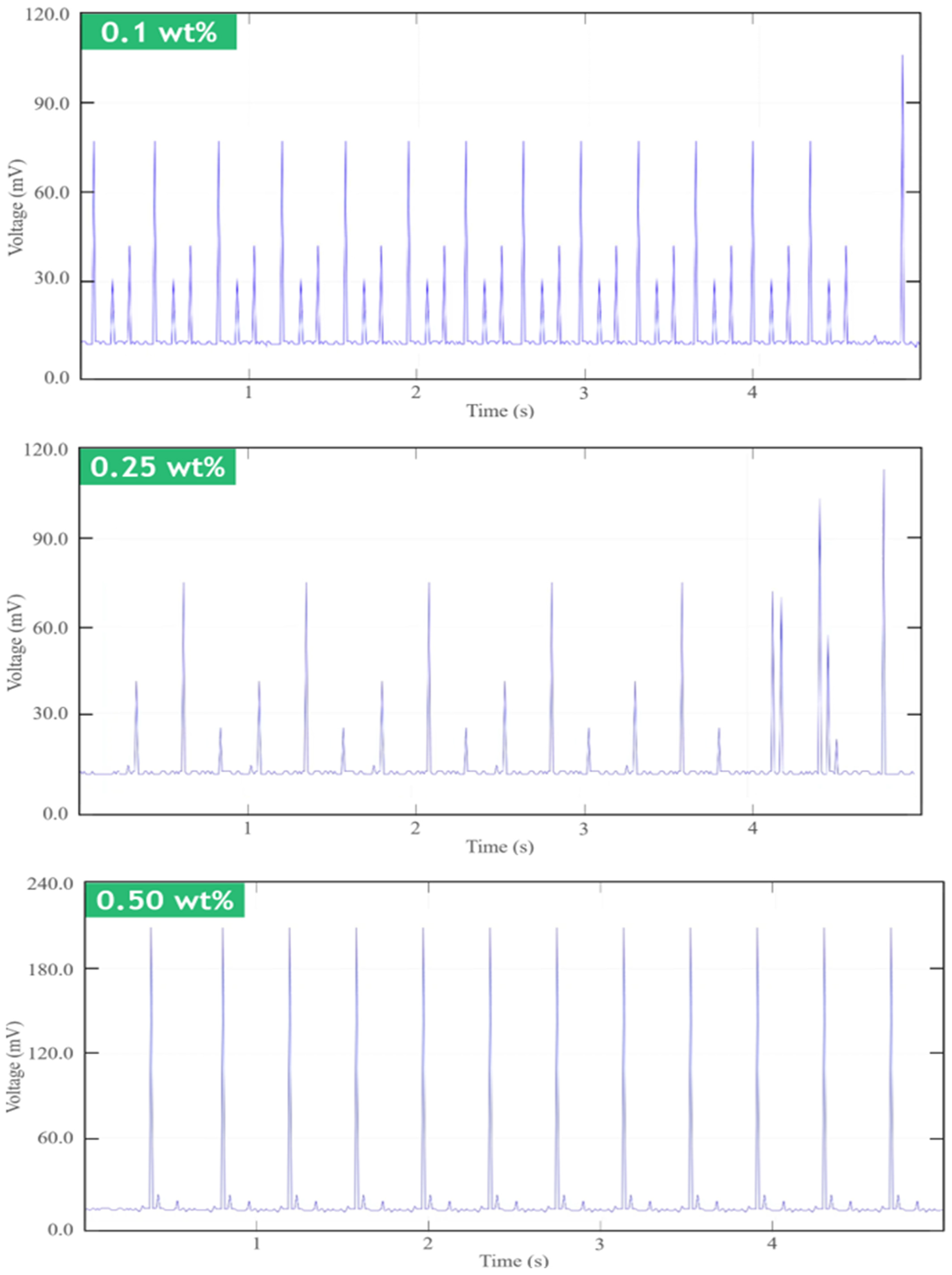
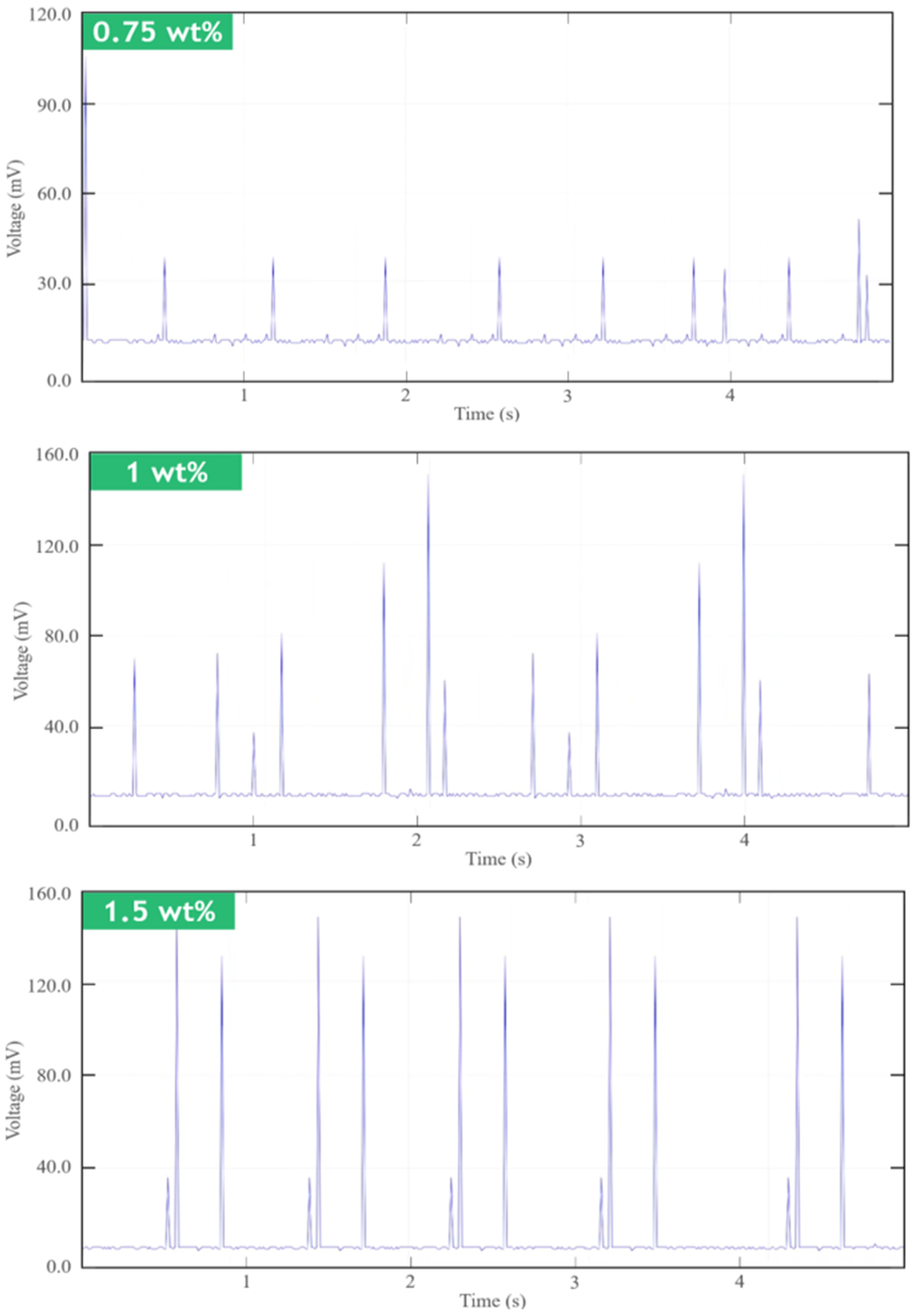
As seen from the results, the initial peaks are also unclear and do not synchronize with the peaks of the ECG waveform (P, QRS, T). As the concentration of the SWCNT-COOHs increases in PDMS, the peaks become well-defined. The sharpest peaks are observed at 3.5 wt% and 4 wt%. The electrode with 3.5 wt% has the closest result to the Ag/AgCl electrodes.
5. Discussion
5.1. Overview of Key Findings
The fabricated electrodes exhibited comparable ECG results at 3.5 wt%. The fabrication technique is simple and cost-effective. Also, the types of equipment used are not expensive and are readily available. The electrodes can be fabricated in bulk using molds. The ECG is sent successfully to the medical expert using an IoT smart system.
It was observed that capacitance increased as the concentration of the SWCNT-COOH increased, indicating that electrons are free to move and enhance the conductivity of the electrodes. Also, the resistance and impedance decreased as the concentration of the filler material increased, which means the electrodes with higher concentrations will yield better results. The electrode which depicted the best result and is closest to the conventional electrodes has a 3.5 wt% concentration.
5.2. Comparison with Previous Work
This section of the paper presents a comparison table with other works as shown in Table 5.
Table 5.
Comparative analysis of the current work with other works.
The methods used for fabricating the sensors in some works were either tedious [27,28,34] or require expensive equipment for fabrication [32,33,35]. Also, some of the works were not equipped with the transmission of ECG data. On the other hand, some of the works had simpler techniques for fabrication, but a tough pre-requisite for forming the material [29,30,31]. However, most of the works depicted good ECG waveform acquisition. In this work, the fabrication process was simple, pocket-friendly, and equipped with an ECG data transmission process.
5.3. Ethical Implications and Data Privacy Measures
The system is protected with credentials for logging in. The credentials will differ for each user, including the patient and the medical expert. Users have sole control of the collected data and they will only be used for analysis.
In this study, AWS cloud services are used for data storage which ensures data security, backup, and recovery (paid services). AWS complies with standards like ISO, GDPR, etc., ensuring compliance.
5.4. Strengths of Work Performed
SWCNT-COOH/PDMS electrodes are flexible and light-weight. Both the materials used are bio-compatible. The electrodes can be used for continuous, long-term, real-time, and cloud-based remote ECG monitoring. The fabrication process is simple and economical.
5.5. Limitations of Work Performed and Improvement Areas
Both electrodes had comparable SNR values of −9.9 dB (Ag/AgCl) and −10.51 dB (SWCNT-COOH/PDMS at 3.5 wt%) under identical test conditions. Both values are negative and indicative of higher noise. Here, we can improve the SNR by using techniques like Wavelet Transform, Adaptive Filtering, and protecting wires and equipment against electromagnetic interference by employing pre-amplifiers close to the electrodes to boost the signal prior to transmission.
The sensitivity of the fabricated electrodes is 1 which means the ECG signal is captured with minimal distortion, i.e., better signal detection.
The durability of the fabricated electrodes decreases over time and the wear and tear of the electrodes were observed after 5 days of utilization. The electrodes cracked after 5 days of re-application. To protect the electrodes, apply a thin coating of conductive, durable materials, such as PEDOT, graphene oxide, or conductive polymers. This protects the surface from environmental damage such as dampness or abrasion.
It would be possible to combine SWCNT-COOHs with other nanomaterials to fill voids and strengthen the overall structure.
Bulk manufacturing of electrodes is easy and advisable using this process. We agree that the cost of the materials (SWCNT-COOH and PDMS) is high but if materials are bought in bulk, they will have significantly reduced prices.
5.6. Risks and Hazards of SWCNT-COOH in Human Contact
In our research, we have identified some potential and anticipated issues when SWCNT-COOH comes in contact with humans. Issues may include allergic reactions because of residual catalysts, mild skin irritation, and long-term biocompatibility challenges if SWCNT-COOH particles unhook from the electrode surface.
Electrical safety was also considered as SWCNT-COOH is highly conductive and current leakage should be properly addressed with proper insulation. To make sure proper insulation was achieved, the SWCNT-COOHs were encapsulated in PDMS to minimize direct exposure.
By maintaining thorough hazard assessments and implementing best practices in handling and design, both participant safety and effective device performance can be ensured.
5.7. Ethics and Safety
In our study, we strictly followed the relevant Safety Data Sheet (SDS) procedures while performing the experiments with SWCNT-COOH, PDMS, and isopropyl alcohol (IPA). This included performing experiments in the lab (fume hood) wearing lab coats, safety goggles, and nitrile gloves to minimize exposure risks. SWCNT-COOH was stored responsibly per the SDS recommendations, ensuring minimal environmental impact. PDMS, known for its biocompatibility and low toxicity, was handled per its SDS, and IPA was managed with strict fire and ventilation precautions. As our research required human ECG readings including skin contact with our CNT/PDMS composite electrodes, we obtained consent from all the participants, ensuring that ethical guidelines were strictly taken into consideration.
5.8. Future Scope
In this study, only ECG is measured; other physiological signals such as EEG, EMG, and pH could also be monitored. We could also incorporate other nanomaterials with SWCNT-COOH to improve the SNR, conductivity, flexibility, and bio-compatibility. In this study, a three-lead system is used; however, a one-lead system might be used for portability. Furthermore, the fabrication process can be streamlined to save time.
We could develop protocols for safe data disposal after deletion, and also implement an alert or notification system for emergency cases.
6. Conclusions
PDMS-based SWCNT-COOH ECG electrodes were fabricated in this research. The electrodes were worn for 5 h (short-term) and 5 days (long-term) and no skin irritations or allergies were detected. The electrodes were found to be flexible and suitable for long-term ECG sensing. The electrodes did not cause any sort of skin allergy or irritation. We used functionalized SWCNTs as their dispersing capabilities are better than unfunctionalized CNTs. The addition of the functional group increases the conductivity which is the most important parameter. Thirteen electrodes were fabricated with various concentrations: 0.1 wt%, 0.25 wt%, 0.5 wt%, 0.75 wt%, 1 wt%, 1.5 wt%, 2 wt%, 2.5 wt%, 3 wt%, 3.5 wt%, 4 wt%, 4.5 wt%, and 5 wt%. The percolation threshold was achieved at 4 wt%. Above this concentration, electrodes were not fabricated properly. The fabrication process was not tedious, requiring only three readily available and user-friendly pieces of equipment (magnetic stirrer, probe sonicator, and oven). Moreover, the fabrication technique is economical and easy to implement, unlike other techniques like bar coating, inkjet printing, etc. The molds are created once and thousands of electrodes can be replicated using the same molds.
Another striking feature of our research is the IoT-based smart system for obtaining ECG results Furthermore, it transmits the data to the medical expert even at a remote location for analysis.
Author Contributions
Conceptualization, B.G. and R.S.N.; methodology, B.G.; software, B.G.; validation, R.S.N.; formal analysis, B.G. and R.S.N.; investigation, B.G.; resources, B.G.; data curation, B.G.; writing—original draft preparation, B.G.; visualization, R.S.N.; supervision, R.S.N.; project administration, R.S.N.; funding acquisition, B.G. All authors have read and agreed to the published version of the manuscript.
Funding
This research received no external funding.
Institutional Review Board Statement
The study was conducted in accordance with the Delhi Technological University for studies involving humans.
Informed Consent Statement
Informed consent was obtained from all subjects involved in the study.
Data Availability Statement
All results are included in the manuscript.
Conflicts of Interest
The authors declare no conflict of interest.
References
- Yoo, J.; Jin, Y.; Ko, B.; Kim, M.S. K-Labelsets Method for Multi-Label ECG Signal Classification Based on SE-ResNet. Appl. Sci. 2021, 11, 7758. [Google Scholar] [CrossRef]
- Iqbal, S.M.A.; Leavitt, M.A.; Mahgoub, I.; Asghar, W. Advances in Cardiovascular Wearable Devices. Biosensors 2024, 14, 525. [Google Scholar] [CrossRef] [PubMed]
- Moshawrab, M.; Fatani, B.; Zaki, S.; Tayeb, H.; Meccawy, M.; Rashid, M. Smart Wearables for the Detection of Cardiovascular Diseases: A Systematic Literature Review. Sensors 2023, 23, 828. [Google Scholar] [CrossRef] [PubMed]
- Nigusse, A.B.; Malengier, B.; Mengistie, D.A.; Van Langenhove, L. A Washable Silver-Printed Textile Electrode for ECG Monitoring. Eng. Proc. 2021, 6, 63. [Google Scholar] [CrossRef]
- Rafie, N.; Kashou, A.H.; Noseworthy, P.A. ECG Interpretation: Clinical Relevance, Challenges, and Advances. Hearts 2021, 2, 39. [Google Scholar] [CrossRef]
- An, X.; Wang, H.; Li, Z.; Zhao, Y.; Feng, Z.; Song, S. Research on a Lightweight Arrhythmia Classification Model for Wearable Single-Lead ECG. Sensors 2024, 24, 7896. [Google Scholar] [CrossRef]
- Nigusse, A.B.; Mengistie, D.A.; Malengier, B.; Tseghai, G.B.; Van Langenhove, L. Wearable Smart Textiles for Long-Term Electrocardiography Monitoring—A Review. Sensors 2021, 21, 4174. [Google Scholar] [CrossRef]
- Avanu, A.E.; Dodi, G. Wear Your Heart on Your Sleeve: Smart Textile ECG Wearables for Comfort, Integration, Signal Quality, and Continuous Monitoring in Paroxysmal Atrial Fibrillation. Sensors 2025, 25, 676. [Google Scholar] [CrossRef]
- Chi, M.; Li, X.; Li, Z.; Liu, H.; Zhao, J.; Wu, Y. Flexible Carbon Nanotube-Based Polymer Electrode for Long-Term Electrocardiographic Recording. Materials 2019, 12, 971. [Google Scholar] [CrossRef]
- Fu, Y.; Zhao, J.; Dong, Y.; Wang, X. Dry Electrodes for Human Bioelectrical Signal Monitoring. Sensors 2020, 20, 3651. [Google Scholar] [CrossRef]
- Rauf, S.; Hassan, M.; Liu, H.; Tariq, A.; Zhang, X.; Zhu, J. A Wearable ECG System with Printed Electrodes for Heart Health Monitoring and Diagnosis. In Proceedings of the 2024 IEEE SENSORS, Kobe, Japan, 20–23 October 2024; pp. 1–4. [Google Scholar]
- Demirel, B.U.; Bayoumy, I.A.; Faruque, M.A.A. Energy-Efficient Real-Time Heart Monitoring on Edge–Fog–Cloud Internet of Medical Things. IEEE Internet Things J. 2022, 9, 12472–12481. [Google Scholar] [CrossRef]
- Bushnag, A. A Wireless ECG Monitoring and Analysis System Using the IoT Cloud. Intell. Automat. Soft Comput. 2022, 33, 51–70. [Google Scholar] [CrossRef]
- Alimbayeva, Z.; Kim, D.; Jeong, S.; Park, J.; Lee, J. Wearable ECG Device and Machine Learning for Heart Monitoring. Sensors 2024, 24, 4201. [Google Scholar] [CrossRef]
- Tasneem, N.T.; Rahman, M.S.; Hossain, A. A Low-Power On-Chip ECG Monitoring System Based on MWCNT/PDMS Dry Electrodes. IEEE Sens. J. 2020, 20, 12799–12806. [Google Scholar] [CrossRef]
- Oh, J.; Kim, H.; Park, S.; Lee, J.; Choi, H. Flexible Dry Electrode Based on a Wrinkled Surface That Uses Carbon Nanotube/Polymer Composites for Recording Electroencephalograms. Materials 2024, 17, 668. [Google Scholar] [CrossRef]
- Shao, M.; Zhang, J.; Wang, L.; Liu, Z.; Wang, X.; Li, H. A Wearable Electrocardiogram Telemonitoring System for Atrial Fibrillation Detection. Sensors 2020, 20, 606. [Google Scholar] [CrossRef]
- Bhattarai, A.; Xu, T.; Lee, S.; Park, H. Adaptive Partition of ECG Diagnosis Between Cloud and Wearable Sensor Net Using Open-Loop and Closed-Loop Switch Mode. IEEE Access 2022, 10, 63684–63697. [Google Scholar] [CrossRef]
- Technical Datasheet. 1995. Available online: https://www.dow.com/en-us/document-viewer.html?randomVar=4328647061587729765&docPath=/content/dam/dcc/documents/11/11-3184-01-sylgard-184-elastomer.pdf (accessed on 30 July 2017).
- Bani, G.; Raghava, N.S. Fabrication Techniques for Carbon Nanotubes Based ECG Electrodes: A Review. IETE J. Res. 2020, 71, 1. [Google Scholar] [CrossRef]
- Jung, H.C.; Moon, J.H.; Baek, D.H.; Lee, J.H.; Choi, Y.Y.; Hong, J.S.; Lee, S.H. CNT/PDMS Composite Flexible Dry Electrodes for Long-Term ECG Monitoring. IEEE Trans. Biomed. Eng. 2021, 59, 1472–1479. [Google Scholar] [CrossRef]
- Liu, B.; Chen, Y.; Luo, Z.; Zhang, W.; Tu, Q.; Jin, X. A Novel Method of Fabricating Carbon Nanotubes Polydimethylsiloxane Composite Electrodes for Electrocardiography. Biomater. Sci. Polym. Ed. 2015, 26, 1229–1235. [Google Scholar] [CrossRef]
- Shadpour, M.; Soltaniana, S. Surface Functionalization of Carbon Nanotubes: Fabrication and Applications. RSC Adv. 2016, 6, 109916–109935. [Google Scholar] [CrossRef]
- Yan, Z.; Yi, F.; Ramaraja, P.R. Non-Covalent Functionalization of Carbon Nanotubes for Electrochemical Biosensor Development. Sensors 2019, 19, 392. [Google Scholar] [CrossRef]
- Philip, G.W.; Adrian, A.G.; Geoffrey, M.S.; Kerry, J.G.; Gordon, G. Free Standing Carbon Nanotube Composite Bio-Electrodes. J. Biomed. Mater. Res. Part B Appl. Biomater. 2006, 37, 43. [Google Scholar] [CrossRef]
- Kim, J.H.; Hwang, J.Y.; Hwang, H.R.; Kim, H.S.; Lee, J.H.; Seo, J.W.; Shin, U.S.; Lee, S.H. Simple and Cost-Effective Method of Highly Conductive and Elastic Carbon Nanotube/Polydimethylsiloxane Composite for Wearable Electronics. Sci. Rep. 2018, 8, 1375. [Google Scholar] [CrossRef]
- Nidhi, P.; Asad, N.; Ashok, M.B.; Ashok, M.; Rajesh, K. Conducting Polymer Functionalized Single-Walled Carbon Nanotube-Based Chemiresistive Biosensor for the Detection of Human Cardiac Myoglobin. Appl. Phys. Lett. 2014, 105, 153701. [Google Scholar] [CrossRef]
- Santosh, A.; Bertram, R.; Mace, Z.S.; Sclabassi, R.J.; Boyle, C.; Whiting, D.M.; Saadyah, A.; Nel, T.L. Novel Organic Conductive Fibers as Nonmetallic Electrodes and Neural Interconnects. Ind. Eng. Chem. Res. 2018, 57, 7866–7871. [Google Scholar] [CrossRef]
- Gilshteyn, E.P.; Lin, S.; Kozlov, V.A.; Kuzin, D.S.; Timonina, A.P.; Anisimov, A.S.; Hart, A.J.; Zhao, X.; Nasibulin, A.G. A One-Step Method of Hydrogel Modification by Single-Walled Carbon Nanotubes for Highly Stretchable and Transparent Electronics. ACS Appl. Mater. Interfaces 2018, 10, 28069–28075. [Google Scholar] [CrossRef] [PubMed]
- Zhou, Y.; Chen, Y.; Liu, J.; Zheng, Z.; Chen, X.; Lin, W.J. Single-Wall Carbon Nanotube-Coated Cotton Yarn for Electrocardiography Transmission. Micromachines 2018, 9, 132. [Google Scholar] [CrossRef] [PubMed]
- Lee, E.; Cho, G. PU Nanoweb-Based Textile Electrode Treated with Single-Walled Carbon Nanotube/Silver Nanowire and Its Application to ECG Monitoring. Smart Mater. Struct. 2019, 28, 045004. [Google Scholar] [CrossRef]
- Rao, M.S.G. ECG Electrode (Sensor) Printing with Ion Sensitive Membrane on Flexible Substrate. IOSR J. Electr. Electron. Eng. 2015, 10, 13–18. [Google Scholar]
- Sun, P.; Rizkalla, M. Temperature, Gas, and Pressure ECG Sensor by Using Carbon Nanotube. In Proceedings of the 2013 IEEE 56th International Midwest Symposium on Circuits and Systems (MWSCAS), Columbus, OH, USA, 4–7 August 2013; pp. 721–723. [Google Scholar] [CrossRef]
- Hwang, D.H.; Choi, S.; Han, P.; Park, J.H.; Seol, J.W.; Kim, D.H.; Hong, J.T.; Choi, J.H. Multifunctional Smart Textronics with Blow-Spun Nonwoven Fabrics. Adv. Funct. Mater. 2019, 29, 1900025. [Google Scholar] [CrossRef]
- Young, G.O. Synthetic Structure of Industrial Plastics. In Plastics, 2nd ed.; Peters, J., Ed.; McGraw-Hill: New York, NY, USA, 1964; Volume 3, pp. 15–64. [Google Scholar]
Disclaimer/Publisher’s Note: The statements, opinions and data contained in all publications are solely those of the individual author(s) and contributor(s) and not of MDPI and/or the editor(s). MDPI and/or the editor(s) disclaim responsibility for any injury to people or property resulting from any ideas, methods, instructions or products referred to in the content. |
© 2025 by the authors. Licensee MDPI, Basel, Switzerland. This article is an open access article distributed under the terms and conditions of the Creative Commons Attribution (CC BY) license (https://creativecommons.org/licenses/by/4.0/).