Article

Effect of Lactic Acid Bacteria (Weissella confusa and Lactiplantibacillus plantarum) and Fermentation Type on the Quality of Nacional and CCN-51 Cocoa (Theobroma cacao L.)


by
Jhoan Alfredo Plua-Montiel
1,
Luis Humberto Vásquez-Cortez
2,*,
Juan Diego Valenzuela-Cobos
3,
Roberto Johan Barragan-Monrroy
4,
Simón Pérez-Martínez
3,
Naga Raju Maddela
5,*,
Matteo Radice
6,
Diego Barzallo
7,
Fernando Javier Cobos-Mora
2 and
Sanyi Lorena Rodríguez-Cevallos
3
1
Facultad de Ciencias de la Industria y Producción, Carrera de Agroindustria, Universidad Técnica Estatal de Quevedo, Quevedo 120550, Ecuador
2
Facultad de Ciencias Agropecuarias, Universidad Técnica de Babahoyo, Babahoyo 120150, Ecuador
3
Facultad de Investigación, Universidad Estatal de Milagro (UNEMI), Milagro 091050, Ecuador
4
Facultad de Ciencias de la Ingeniería, Universidad Técnica Estatal de Quevedo, Quevedo 120550, Ecuador
5
Departamento de Ciencias Biológicas, Facultad de Ciencias de la Salud, Universidad Técnica de Manabí, Portoviejo 130105, Ecuador
6
Departamento de Matemáticas y Ciencias Físicas, Universidad Estatal Amazónica, Puyo 160150, Ecuador
7
Facultad de Ciencias, Escuela Superior Politécnica de Chimborazo ESPOCH, Panamericana Sur Km 1 ½, Riobamba 060155, Ecuador
*
Authors to whom correspondence should be addressed.
Appl. Microbiol. 2026, 6(8), 97; https://doi.org/10.3390/applmicrobiol6080097
Submission received: 9 June 2026 / Revised: 7 August 2026 / Accepted: 10 August 2026 / Published: 13 August 2026
(This article belongs to the Special Issue Applied Microbiology of Foods, 3rd Edition)

Abstract

Cocoa fermentation is a critical postharvest process that determines the physicochemical and sensory quality of cocoa beans through complex microbial and biochemical transformations. This study evaluated the effect of selected lactic acid bacteria (LAB), i.e., Weissella confusa and Lactiplantibacillus plantarum, and the fermentation system on the fermentation dynamics and final quality of two cocoa genotypes (i.e., Theobroma cacao L.; Nacional and CCN-51). A completely randomized 2 × 2 × 2 factorial design was applied, considering cocoa genotypes, LAB species, and fermentation system (i.e., laboratory fermentation and cascade-type box fermentation). During fermentation, pH, temperature, and total soluble solids (°Brix) were monitored at 0, 24, 48, and 72 h. In addition, cut test parameters and the physicochemical properties of the final cocoa paste were evaluated. The results showed a progressive decrease in pH (from 3.13 to 4.17), accompanied by a temperature increase up to 46.50 °C and a marked reduction in soluble solids during the final fermentation stages, reflecting intense microbial metabolism and substrate utilization. Treatments inoculated with L. plantarum achieved the highest proportion of well-fermented beans (up to 93.73%), indicating enhanced fermentation performance. Furthermore, the physicochemical properties of the final cocoa paste, including moisture, fat, ash, pH, and °Brix, were significantly influenced by the interaction among cocoa genotype, LAB species, and fermentation system. Overall, controlled fermentation using selected LAB species represents a promising biotechnological strategy for improving cocoa fermentation consistency and enhancing postharvest cocoa quality.

1. Introduction

The fermentation of cocoa (Theobroma cacao L.) is a pivotal post-harvest process that determines the chemical composition and sensory quality of paste by generating the precursors of its characteristic aroma and flavor. From a microbiological perspective, cocoa fermentation is driven by the coordinated activity of yeasts, lactic acid bacteria (LAB), and acetic acid bacteria (AAB), which sequentially metabolize pulp sugars, produce ethanol and organic acids, and promote the biochemical transformations that determine the final quality of fermented beans. In addition to their technological role in cocoa, LAB are widely recognized as key microorganisms in fermented plant-based foods [1] and beverages [2,3], where they contribute to acidification, flavor development, and potential probiotic effects, as reported for indigenous fermented vegetables and fruits from Malaysia [4] and for emerging fermented mushroom beverages with probiotic, prebiotic, and symbiotic properties. Therefore, the use of selected LAB starter cultures in cocoa fermentation aligns with broader evidence demonstrating that functionally characterized LAB can improve process control while also contributing to products with enhanced functional attributes.
In recent years, controlled fermentation through the inoculation of selected starter cultures has emerged as an effective strategy for improving fermentation reproducibility, reducing process variability, and enhancing cocoa quality. The selection of microbial starter cultures should not rely exclusively on taxonomic identification but rather on well-defined physiological, metabolic, ecological, and technological characteristics directly associated with fermentation performance. These selection criteria include tolerance to acidic environments, elevated fermentation temperatures, ethanol accumulation, osmotic stress, rapid carbohydrate utilization, competitive ecological fitness, and the ability to maintain metabolic activity throughout fermentation, all of which are considered essential characteristics of efficient starter cultures for controlled food fermentations [5]. An ideal LAB starter culture should tolerate the acidic conditions (i.e., pH 3.5–5.5) of cocoa pulp, elevated fermentation temperatures (i.e., 40–50 °C), ethanol accumulation, and osmotic stress generated by the high concentrations of fermentable sugars. These physiological characteristics are particularly important in cocoa fermentation because microbial populations are exposed to rapidly changing environmental conditions, requiring strains capable of maintaining viability and metabolic activity under multiple stress factors [6]. Furthermore, candidate strains should maintain high metabolic activity throughout fermentation, efficiently metabolize available carbohydrates, rapidly acidify the cocoa pulp, compete successfully with the indigenous microbiota, and contribute to the establishment of a stable microbial community capable of promoting consistent biochemical transformations [7,8]. Among the LAB proposed as starter cultures, Weissella confusa and Lactiplantibacillus plantarum were selected because they combine physiological robustness in acidic, high-temperature, and high-sugar environments with relevant technological characteristics for controlled food fermentations. L. plantarum has shown high tolerance to low pH, ethanol, and osmotic stress, efficient carbohydrate metabolism, and the ability to improve fermentation performance in cocoa and other plant substrates, while W. confusa contributes to early acidification and microbial succession [9]. Similar LAB species have been described in fermented fruits, vegetables, and mushroom-based beverages, where their metabolic activities support the development of natural probiotic products and symbiotic matrices that can modulate gut health.
In addition to their physiological adaptation, both species possess functional metabolic characteristics that support their application as starter cultures. They contribute to rapid lactic acid production, efficient carbohydrate metabolism, and the stabilization of microbial succession throughout fermentation. Moreover, these LAB strains have been associated with enzymatic activities involved in cocoa pulp degradation and flavor precursor development, including pectinolytic activity and carbohydrate-transforming enzymes that facilitate substrate utilization and enhance the release of compounds required for subsequent aroma formation during roasting. These activities include β-glucosidase, β-galactosidase, esterase, and other carbohydrate-active enzymes that facilitate substrate degradation and contribute to aroma precursor formation during food fermentations [10]. Their antagonistic activity, mediated by the production of organic acids and bacteriocin-like antimicrobial metabolites, inhibits undesirable microorganisms, reduces microbial competition, and promotes a more controlled and reproducible fermentation process. The production of bacteriocins and other antimicrobial metabolites enables selected LAB to suppress undesirable microorganisms, thereby improving microbial stability and fermentation consistency [11]. Collectively, their physiological robustness, ecological fitness, enzymatic potential, antagonistic activity, and capacity to promote aroma precursor formation constitute the principal criteria supporting their selection as starter cultures for controlled cocoa fermentation [12].
Although several studies have demonstrated that LAB-assisted fermentation significantly improves microbial succession, acidification kinetics, fermentation efficiency, and aroma precursor formation compared with spontaneous fermentation, the magnitude of these improvements depends on multiple interacting factors, including cocoa genotype, fermentation system, environmental conditions, and the structure of the indigenous microbial community [13,14]. Consequently, the successful application of starter cultures requires evaluating their performance under different fermentation systems and cocoa genotypes to identify strains capable of maintaining functional stability and consistently improving cocoa quality. Therefore, selecting bacterial strains according to specific physiological, metabolic, enzymatic, and technological characteristics is essential for maximizing fermentation performance and ensuring reproducible improvements in the physicochemical and sensory quality of cocoa beans.
This issue is particularly relevant in Ecuador, where Nacional and CCN-51 represent the two most economically important cocoa varieties but differ substantially in their chemical composition and sensory characteristics. Nacional cocoa is internationally recognized for its fine-flavor profile, floral aroma, and superior organoleptic quality, whereas CCN-51 is valued for its high productivity and disease tolerance but generally exhibits stronger acidity, greater bitterness, and lower aromatic complexity. These contrasting characteristics provide an appropriate model for evaluating the interaction between starter cultures and cocoa genotype during fermentation. Indeed, the interaction between microbial communities and cocoa genotype has been recognized as one of the principal determinants of the final physicochemical and sensory quality of fermented cocoa beans [15].
Although the effectiveness of starter cultures may be influenced by the composition of the indigenous microbiota naturally present on fresh cocoa beans, characterization of this native microbial community was beyond the scope of the present study. Therefore, this research was designed to evaluate the technological performance of selected LAB starter cultures under controlled fermentation conditions, focusing on their effects on fermentation dynamics and cocoa quality rather than on describing microbial competition with the indigenous microbiota.
Despite the considerable progress achieved in the application of LAB as starter cultures for controlled cocoa fermentation, important knowledge gaps remain regarding the combined influence of cocoa genotype, LAB species, and fermentation system on fermentation performance and final cocoa quality. Previous studies have mainly evaluated these factors independently, focusing either on starter culture inoculation, cocoa genotype, or fermentation conditions, without comprehensively assessing their interactive effects under a unified experimental design. Consequently, it remains unclear how functionally selected LAB strains perform across different cocoa genotypes under distinct fermentation systems and how these interactions affect fermentation dynamics and the physicochemical quality of cocoa. Therefore, the novelty of the present study lies in the integrated evaluation of cocoa genotypes, LAB starter cultures, and fermentation system within a single factorial design, providing new evidence on their individual and interactive effects on fermentation performance and postharvest cocoa quality.
Therefore, the objective of this study was to evaluate the effect of inoculating the LAB species W. confusa and L. plantarum under different fermentation systems on the physicochemical and sensory quality of two cocoa varieties (Theobroma cacao L.), Nacional and CCN-51. We hypothesized that inoculation with functionally selected LAB, in combination with an appropriate fermentation system and cocoa genotypes, would improve microbial succession, optimize biochemical transformations within the cotyledons, reduce fermentation variability, and enhance the physicochemical and sensory quality of cocoa beans. Ultimately, this approach is expected to generate a more consistent and higher-quality raw material for paste manufacture while supporting the implementation of sustainable biotechnological strategies for cocoa postharvest processing.

2. Materials and Methods

2.1. Sample Collection and Study Location

Cocoa beans (Theobroma cacao L.) of the Nacional and CCN-51 varieties were obtained from ripe pods at a plantation located in the Chucaple district, Quinindé canton, Esmeraldas province, Ecuador (Lat: 0.562176; Long: −79.566290; altitude: 120 m a.s.l). To ensure the quality of the raw material including kernels, only pods in optimal physiological maturity were selected, free from mechanical damage and without visible evidence of disease symptoms, particularly infections caused by Moniliophthora roreri (frosty pod rot). The kernels were manually extracted and used as raw material for the development of the fermentation treatments evaluated in this study. This criterion allowed for the reduction of external variability and ensured that the differences observed during the experimental process were primarily attributed to the effect of the type of fermentation and the inoculation of selected LAB.
Prior to fermentation, microbiological isolation, enumeration, or characterization of the indigenous cocoa microbiota were performed. The experimental design focused exclusively on evaluating the effect of inoculating the selected LAB strains (i.e., W. confusa and L. plantarum) on fermentation dynamics and cocoa quality under standardized fermentation conditions. Consequently, the present study was not intended to assess microbial succession or competitive interactions between inoculated strains and the native microbial community.
The preparation of culture media (i.e., MRS medium) for LAB, as well as the activation and inoculation of the cultures, were carried out in the microbiology and food science laboratories of the Quevedo State Technical University, La María Campus, Mocache. Meanwhile, the physicochemical analyses of the resulting paste, including determinations of moisture, ash, pH, acidity, and other food science parameters, were performed in the Food Chemistry laboratory at the State University of Milagro (UNEMI), Guayas province, Ecuador under controlled conditions and using standardized analytical methodologies.

2.2. Research Design

In this study, a completely randomized design (CRD) with a three-factor arrangement (i.e., 2 × 2 × 2 = 8; i.e., 2 cocoa types × 2 bacterial species × 2 fermentation types = a total of 8 treatments) was used, consisting of a total of 8 treatments, with 3 replicates per treatment, resulting in 24 experimental units. The factors evaluated were as follows: Factor A (Cocoa type), represented by two genetic materials widely cultivated in Ecuador, i.e., Nacional and CCN-51; Factor B (type of LAB; i.e., W. confusa and L. plantarum); and Factor C (type of fermentation; i.e., controlled laboratory fermentation and fermentation in a cascade type box system, as presented in Table 1). A control treatment without inoculation of LAB was not included in the present experimental design, due to (i) the objective of the study was focused on comparing the effects of different LAB species and fermentation types on cocoa fermentation dynamics and quality; and (ii) spontaneous fermentation dynamics for these varieties in the region are extensively documented in existing literature. Therefore, this research prioritized the metabolic differentiation between W. confusa and L. plantarum to establish a precision biotechnological protocol.
Lactic acid bacteria were inoculated using cultures previously activated in MRS medium under sterile conditions, reaching a concentration of 107 CFU·mL−1, determined by growth in the exponential phase. The inoculum was applied at a dose of 1% (v/w), equivalent to 10 mL of culture per kilogram of fresh cocoa mass under fermentation and was distributed uniformly over the mass by manual surface application to ensure adequate dispersion of the bacteria in the fermentation system. The dose was selected based on previous studies that reported effective concentrations for cocoa fermentation using LAB starter cultures, which improved fermentation dynamics and the quality of the final product [5,7].
During the fermentation process, measurements were taken at intervals of 0, 24, 48, and 72 h, evaluating physicochemical variables, in order to monitor the dynamics of the process. Subsequently, the paste produced from the fermented beans was subjected to the analysis of bromatological parameters (i.e., moisture, ash, fat content, pH, acidity, and soluble solids).

2.3. Combination of Treatments

Table 2 summarizes the eight experimental treatments evaluated, based on the combination of three factors: cocoa type (Factor A), LAB type (Factor B), and fermentation type (Factor C). Eight treatments were labelled as T1 to T8, respectively as shown in Table 2.

2.4. Cocoa Pods and Fermentation Systems

A total of 360 mature cocoa pods from two cocoa varieties were harvested to provide sufficient raw material for the experimental treatments. The cocoa pods were opened manually, and the beans were carefully separated from the placental tissue. The extracted beans were placed in clean containers and subsequently distributed according to the established fermentation treatments. For the controlled laboratory fermentation, the cocoa mass was placed in glass containers with perforated bases, each having a capacity of 2500 cm3 and containing exactly 1.0 kg of fresh cocoa beans per experimental unit.
In controlled laboratory fermentation, the perforations of glass containers facilitated the drainage of the mucilage and adequate aeration of the system (Figure 1a,b). The process was carried out by maintaining a temperature of ~45 °C and a relative humidity of ~10%, monitored using a portable digital hygrometer (HTC-1, HTC Instruments, Mumbai, India) [11,16]. On day 0, the fermentation process began, allowing the mucilage to drain. After the first 24 h (day 1), the first removal and turning were performed to homogenize the mass and promote gas exchange. Subsequently, the process continued on days 2 and 3, maintaining stable conditions that promoted the development of the microorganisms responsible for fermentation.
For the cascade-box fermentation system, each experimental unit consisted of 1.0 kg of fresh cocoa beans placed in new stepped laurel-wood boxes (20 cm width × 20 cm length × 20 cm height), where fermentation was carried out under semi-controlled conditions. The use of new boxes for all experimental units minimized the possibility of microbiological interference from residues of previous fermentations and ensured comparable initial conditions among treatments. The boxes were equipped with holes in the base to facilitate mucilage drainage (Figure 1c). On day 0, the cocoa mass was placed in the first box and covered with jute bags for 24 h to promote initial drainage [12,17]. On day 1, the cocoa mass was manually mixed using a clean stainless-steel spatula by turning the entire mass from the bottom to the top for approximately 2 min to ensure homogeneous aeration and temperature distribution. Immediately after mixing, the entire cocoa mass was transferred to the next fermentation box. The same manual turning procedure was repeated every 24 h during days 2 and 3 before transferring the cocoa mass to the subsequent box. During this period, fermentation continued under semi-controlled conditions, during which the metabolic activity of yeasts, LAB, and ACB transformed pulp sugars into ethanol and organic acids, accompanied by a progressive increase in temperature. Regular turning promoted mass homogenization, improved oxygen distribution, and simulated traditional cocoa fermentation conditions. Although fermentation was conducted under semi-controlled conditions, no attempt was made to eliminate the indigenous microbiota naturally associated with the fresh cocoa beans, as the objective was to evaluate the performance of the inoculated LAB starter cultures under conditions representative of practical cocoa fermentation. For both fermentation systems, physicochemical parameters were monitored at 0, 24, 48, and 72 h to evaluate fermentation dynamics.

2.5. Preparation of LAB Inoculum

The LAB strains (i.e., W. confusa and L. plantarum) were selected based on their reported ability to regulate acidification, contribute to sugar metabolism, and improve cocoa fermentation performance [9,15], Each strain was cultivated in De Man, Rogosa and Sharpe (MRS) broth prepared according to the manufacturer’s instructions. The cultures were incubated overnight until reaching a concentration of 107 CFU/ML [18,19]. Subsequently, each bacterial culture was used to inoculate sterile MRS broth at 1% (v/v) (i.e., 1 mL of bacterial culture per 100 mL of medium) [1,16,17]. The resulting inoculum was applied directly to fresh cocoa beans at a rate of 10 mL per kilogram of fermentable cocoa mass, corresponding to approximately 107 CFU/g [13,14], and was homogeneously distributed over the cocoa mass to promote microbial colonization and controlled fermentation development [20,21].

2.6. Assessment of Physicochemical Attributes of Fermented and Dried Cocoa Beans

The pH of cocoa samples was determined by taking ~10 g of finely pulverized cocoa beans in a 10 mL of distilled water previously heated to 40 °C to facilitate extraction. pH reading was obtained using a digital pH meter (Thermo Orion, Waterproof, Beverly, MA, USA), in triplicate samples [9,22].
The total soluble solids content (°Brix) was determined by using a digital refractometer (OPTI + 38-A1, range 0–95 °Brix; Bellingham and Stanley, Tunbridge Wells, Kent, UK). To do this, 10 g of cocoa beans were randomly selected, finely ground, and then homogenized with 10 mL of pre-warmed distilled water. The resulting suspension was filtered to obtain a clear extract prior to analysis. Finally, 1 to 3 drops of the extract were placed on the surface of the prism, and readings were taken in triplicate for each sample [6,8].
To ensure proper fermentation, the temperature was maintained within a range of ~45–50 °C and monitored using a pre-calibrated digital thermometer (Hanna Instruments, Woonsocket, RI, USA). Temperature above this range can lead to excessive fermentation, while lower temperatures can limit microbial activity, affecting both grain quality and process efficiency [18,23]. Temperature fluctuations were rectified by using cooling systems, allowing for a controlled thermal environment throughout the fermentation process [19,24].
Drying of cocoa beans was carried out through direct exposure to sunlight, using suitable wooden surfaces to prevent any type of contamination. This stage is crucial, as it significantly contributes to the development of the cocoa’s sensory characteristics [20,25]. Drying took place over a period of approximately 7 to 8 days, until the moisture content of the beans was reduced to levels around 6–7%, a range considered optimal for ensuring the stability, preservation, and final quality of the product [21,26]. Once the drying process was complete, the cocoa beans were stored in paper bags, which allowed for proper air circulation and prevented moisture retention; such conditions helped in preserving the product’s quality [22,27]. Therefore, the properties developed during the fermentation and drying stages remained stable, ensuring the integrity of the beans until their subsequent analytical evaluation [28,29].

2.7. Physicochemical Variables of Cocoa Beans

The cob index (Cl) was estimated as a productivity indicator reflecting the number of cocoa pods required to produce 1 kg of dried beans using Equation (1). A representative sample of approximately 100 g of fermented and dried cocoa beans was collected using a quadrat sampling approach to ensure sample uniformity [30]. This parameter was considered a key yield indicator, as it is influenced by both the genetic characteristics of the cocoa variety and the conditions applied during postharvest processing [25,29]:
C o b   i n d e x = N u m b e r   o f   c o b s   e v a l u a t e d C o c o a   a l m o n d s   d r y   w e i g h t   ( g ) × 1000
Prior to conducting the cut test, the seed index (SI) was determined by weighing a batch of 100 previously fermented and dried cocoa beans using a high-precision analytical balance (MX analytical balance, Mettler Toledo, OH, USA) [25,26]. The average weight per bean was calculated according to Equation (2) [31,32]:
S e e d   I d e x = W e i g h t   o f   100   f e r m e n t e d   a n d   d r i e d   c o c o a   a l m o n d s   ( g ) 100
The proportions of shell and cotyledon were determined using a 30 g sample of fermented and dried cocoa beans. The components were weighed separately using a precision analytical balance, and their respective percentages were calculated according to Equation (3) [28]:
S h e l l   % = S h e l l   w e i g h t C o c o a   w e i g h t   ( 30   g ) × 100
The cutting test was performed on a randomly selected sample of 100 cocoa beans to assess the degree of fermentation. Each bean was cut lengthwise with a knife and then classified based on its internal characteristics as well-fermented, moderately fermented, violet, slate-gray or moldy, following established classification criteria [29,33]. The number of cocoa beans per 100 g was estimated based on a randomly selected sample counting the number of beans required to reach that weight [9,14].
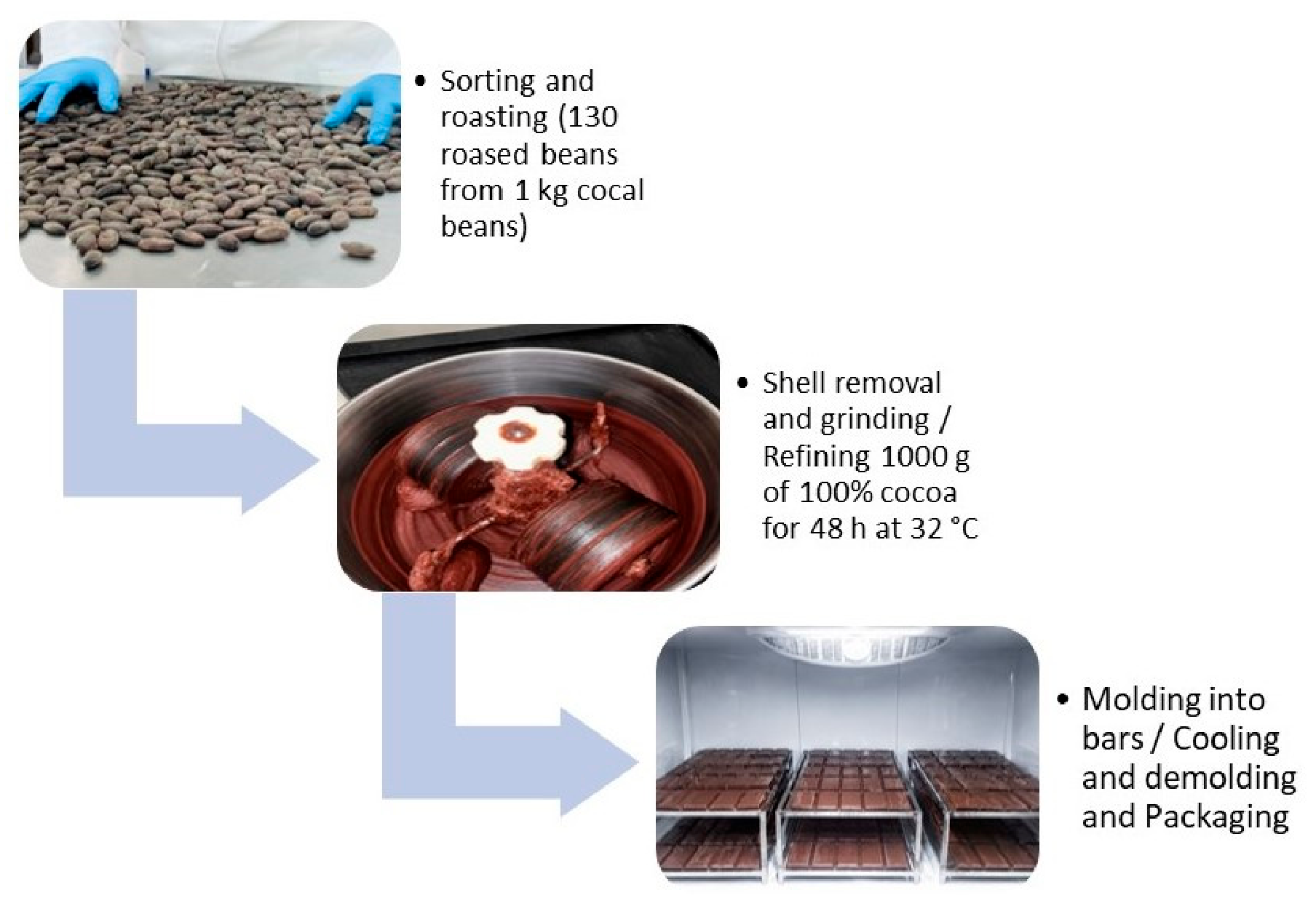
The moisture content of the cocoa beans was determined using a grain moisture meter (Aqua Boy III, (KPM Moisture Meters Ltd, Rotherham, UK)) [6,8] after the fermentation and drying stages were completed. This parameter is critical for the preservation and commercial value of the product, with a range of approximately 6–7%, considered appropriate [30,34]; whereas values below this range may result in economic losses because they negatively affect bean quality and market value during processing. The production process for 100% cocoa paste is illustrated in the flowchart (Figure 2).
The cocoa raw material underwent a thorough manual inspection to remove impurities, and defective beans. This step ensured the quality and purity of the beans used in the process. Then, beans were roasted under controlled conditions at 120 °C for 18 to 25 min, to reduce residual moisture and develop the aromatic compounds characteristic of cocoa. Then, manual shelling was performed to separate the shell from the cotyledons (nibs). The resulting nibs were stored under appropriate conditions to prevent contamination and preserve their integrity. Thereafter, the cotyledons were ground using a traditional hand mill, to reduce the particle size and produce a homogeneous cocoa mass, which facilitated subsequent processing stages. Refining was performed using a melanger-type refiner (Spectra 11 Stone Melanger, Spectra, Coimbatore, India) until a particle size of less than 40 µm was achieved, resulting in a uniform texture and eliminating the presence of detectable particles in the final product. The refined cocoa mass underwent a conching process under controlled conditions (i.e., 60 °C for 12 h) to improve texture, reduce residual acidity, and the development of the sensory profile through the removal of undesirable volatile compounds. Subsequently, the cocoa paste underwent a tempering process through controlled temperature reduction to stabilize its crystalline structure. The paste was then poured into pre-sanitized molds until the desired consistency was achieved. Finally, the cocoa paste was wrapped in aluminum foil, labeled with codes for traceability, and stored at 4 °C to preserve its physicochemical and organoleptic properties and minimize the risk of contamination [31,35].

2.8. Determination of Physicochemical Parameters in Cocoa Paste

The pH of the cocoa paste was determined by taking a 10 g of previously homogenized sample in 10 mL of distilled water to obtain a uniform suspension suitable for semisolid matrices. The pH was determined in duplicate using a digital potentiometer (pH meter) equipped with a glass electrode (Thermo Orion, Waterproof, Beverly, MA, USA) [36].
The titratable acidity of the cocoa paste was determined using an acid-base titration method, employing a previously homogenized sample. Approximately 10 g of the sample was weighed and transferred to 250 mL Erlenmeyer flask, to which 50 mL of distilled water was added. The resulting suspension was titrated with a 0.1 N sodium hydroxide (NaOH) solution, added gradually until a pH of 8.3 was reached, corresponding to the endpoint of the titration for this type of matrix. The volume of NaOH consumed was recorded, and the titratable acidity was calculated using Equation (4), with the results expressed as a percentage of acidity [3,33,37].
The physicochemical analyses were performed on the final cocoa paste obtained after completion of the entire processing sequence, including fermentation, sun drying of cocoa beans, roasting, grinding, refining, conching, tempering, and molding. Therefore, the moisture values reported in this study correspond to the residual moisture of the finished cocoa paste and should not be interpreted as the moisture content of fermented or dried cocoa beans:
%   A c i d i t y = V 1 × N 1 × M × 100 V 2
where
  • V1 = Volume of NaOH used in titration (mL);
  • N1 = Normality of the NaOH solution;
  • M = Molecular weight of the acid considered as a reference (g mol−1);
  • V2 = Volume of the sample taken for analysis (mL).
To assess the humidity of cocoa paste, the samples were first placed in porcelain crucibles, which were then dried in an oven at 100 °C for approximately 30 min; and crucibles were subsequently allowed to cool to room temperature, and their mass was recorded using a precision analytical balance. Two g of previously homogenized cocoa paste was added to each crucible. Then, the samples were dried in an oven at 130 °C for 2 h. After this period, the crucibles were transferred to a desiccator, where they remained for approximately 30 min to cool to room temperature. The final weight of each crucible was recorded and moisture content of the cocoa paste was determined using Equation (5) [21,26]:
%   H u m i d i t y = M 2 M 3 M 2 M 1 × 100
where
  • M1 = Empty crucible mass (g);
  • M2 = Mass of the crucible plus the sample (g);
  • M3 = Constant mass of the dried sample (g).
To determine the ash content, approximately 2 g of previously homogenized cocoa paste was placed in pre-conditioned porcelain crucibles (following the procedure described in the section on humidity determination). The samples were incinerated in a muffle furnace at 600 ± 20 °C for 3 h. The weight of each crucible was recorded twice before and after heat treatment. Based on the mass differences obtained, the ash content was calculated using Equation (6) [34,38]:
%   A s h = M 3 M 1 M 2 M 1 × 100
where
  • M1: Empty crucible mass (g);
  • M2: Crucible mass plus sample (g);
  • M3: Crucible mass with ash (g).
The total soluble solids content (°Brix) in cocoa paste was determined using a digital refractometer (OPTI + 38-A1, range 0–95 °Brix; Bellingham and Stanley, UK). For this analysis, 10 g of previously homogenized cocoa paste was dispersed in 10 mL of pre-warmed distilled water, and filtered to obtain a clear extract. Then, 1 to 3 drops of the extract were placed on the prism surface, and readings were recorded (in triplicates) once the system reached stabilization, following method described elsewhere [35,36,39].
The fat content in cocoa paste was determined using a solvent extraction method (Soxhlet-type, Goldfish system), following the official AOAC 963.15 method for the quantification of crude fat in food matrices. Prior to analysis, the extraction vessels were conditioned by drying in an oven at 105 °C for 2 h, followed by cooling in a desiccator for 30 min, and their initial mass (M1) was recorded. Then, a previously homogenized cocoa paste sample of 1–2 g (M0) was weighed and placed into an extraction thimble, covered with cotton to prevent sample loss. The thimble was then inserted into the extraction apparatus. Approximately 40 mL of organic solvent (e.g., hexane) was added to the extraction vessel, and the system was subjected to controlled heating, allowing continuous reflux cycles until complete extraction of the lipid fraction was achieved. After extraction, the solvent was removed by evaporation in an oven 105 °C for 30 min until constant weight was obtained. The vessels were then cooled in a desiccator and weighed again to determine the final mass (M2), corresponding to the extracted fat. The fat content was expressed as a percentage of crude fat, calculated using the following Equation (7) [37,40]:
%   F a t = M 2 M 1 M 0 × 100
where
  • M0: Sample mass (g);
  • M1: Mass of the empty, dry vessel (g);
  • M2: Mass of the vessel containing the extracted fat (g).

2.9. Statistical Analysis

The statistical analysis was performed using a three-factorial analysis of variance (ANOVA). Statistical analyses were conducted using InfoStat software Version 2014, while GraphPad Prism 9.0.0 was used for data visualization and graphical representation of the results. Statistical significance was established at p ≤ 0.05. Whenever significant differences were detected, treatment means were compared using Tukey’s Honestly Significant Difference (HSD) multiple comparison test, providing a robust statistical basis for identifying differences among treatments.

3. Results and Discussion

3.1. pH Dynamics During Fermentation

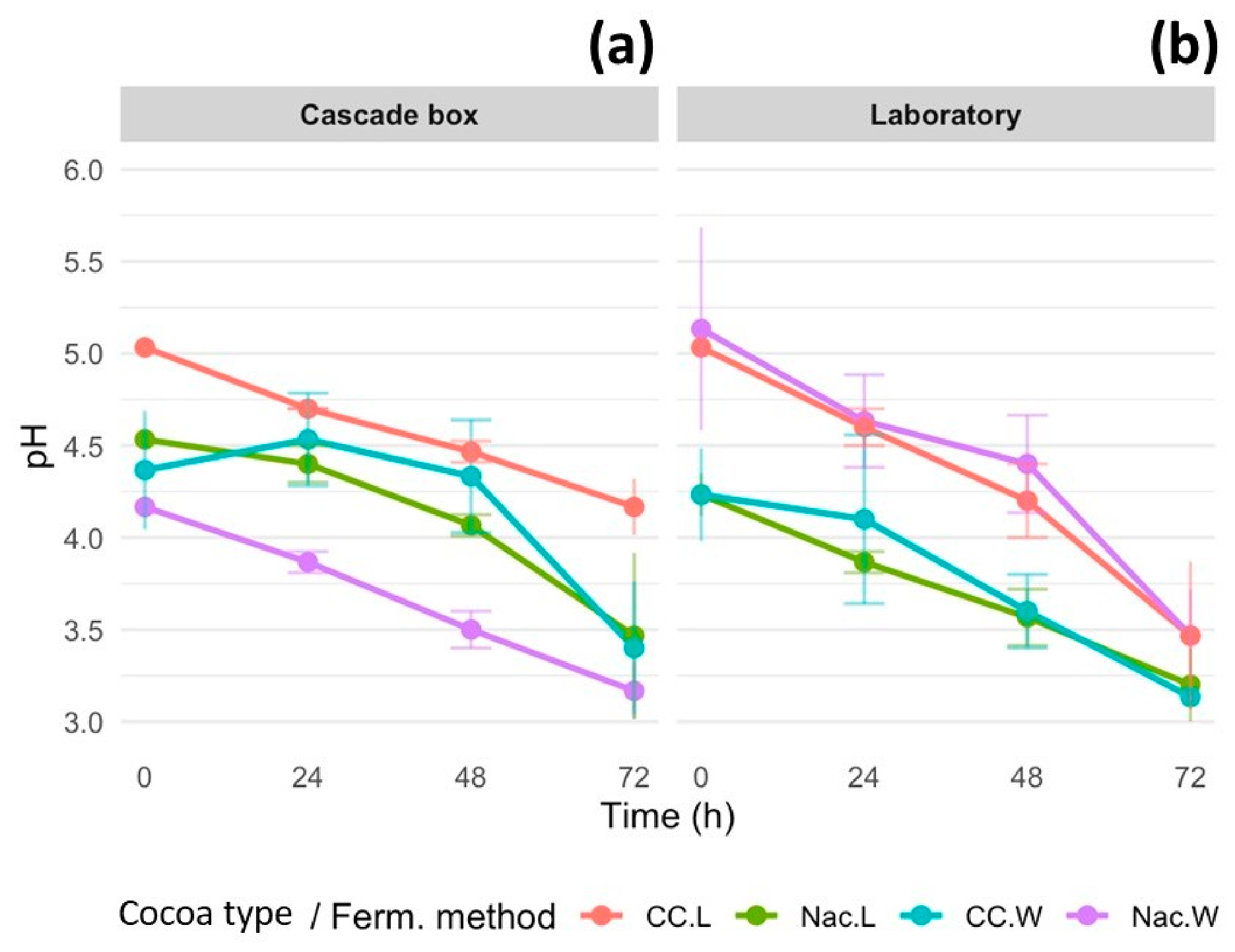
The evolution of pH during cocoa fermentation (Figure 3a,b) showed a progressive decreasing trend from day 0 to day 3 across all treatments, reflecting the production of acidic microbial metabolites (such as lactic acid and acetic acid) during fermentation. Final pH values ranged between 3.13 and 4.17, with the most pronounced acidification observed in Nacional cocoa under cascade fermentation inoculated with W. confusa, which suggests a greater susceptibility of this genotype to acid production, likely associated with differences in pulp composition, sugar content, and buffering capacity. In contrast, CCN-51 inoculated with L. plantarum maintained comparatively higher pH values during the early and intermediate fermentation stages, suggesting differences in buffering capacity and biochemical composition between cocoa genotypes. In addition to genotype-related characteristics, the acidogenic activity of the inoculated LAB strains may also have been influenced by the natural availability of fermentable substrates and nutrients present in the cocoa pulp, which are known to modulate bacterial metabolism during fermentation. Nevertheless, because all treatments were conducted under identical experimental conditions, the observed differences can be primarily attributed to the evaluated experimental factors. Similar genotype-dependent responses have been reported, where cocoa variety significantly influences fermentation kinetics and metabolite production [8,41].
Slight fluctuations in pH were observed during the intermediate stages of fermentation, particularly under cascade fermentation conditions, indicating transitional metabolic dynamics during the active fermentative phase. The effect of LAB varied according to fermentation stage. For instance, W. confusa promoted a more rapid acidification during the initial stages, whereas L. plantarum exhibited a more gradual and stable pH decrease throughout fermentation, reflecting differences in metabolic activity and acid production profiles between two bacterial species.
The Cocoa × LAB interaction showed significant effects at days 1 and 2 (p < 0.05) (Table 3), indicating that the response to bacterial inoculation depended on cocoa genotype. Similarly, the LAB × Fermentation interaction significantly affected pH dynamics (p < 0.05), confirming that microbial performance was influenced by the fermentation environment. Furthermore, the three-way interaction (i.e., Cocoa type × LAB strains × Fermentation types) was highly significant during the early stages of fermentation (p < 0.01), highlighting the combined influence of genotype, LAB, and fermentation system on pH evolution. This interaction effect decreased toward the final fermentation stage, suggesting a progressive convergence of physicochemical conditions as fermentation advanced.
The pH dynamics observed in this study confirm that cocoa fermentation is a complex biochemical process governed by the interaction between microbial activity, substrate availability, and fermentation conditions.
The differential behavior between W. confusa and L. plantarum highlights the importance of LAB metabolic characteristics. W. confusa, is a heterofermentative bacterium, is known for rapid initial acidification due to the production of lactic acid, ethanol, and CO2, which explains the sharper pH decrease observed during early fermentation stages. In contrast, L. plantarum, a facultative heterofermentative species, exhibited a more gradual and stable acidification, likely due to its ability to adapt to changing environmental conditions and efficiently metabolize available sugars over time. This agrees with recent findings indicating that LAB starter cultures can modulate fermentation dynamics and improve process control [5,35,42].
The significant interaction between cocoa type and LAB (p < 0.05) indicates that the effectiveness of bacterial inoculation is strongly dependent on the cocoa matrix. These findings indicate that the response to LAB inoculation depended on the physicochemical characteristics of the cocoa matrix and the fermentation conditions evaluated in this study. Because the indigenous microorganisms were not characterized prior to fermentation, the present results do not allow direct conclusions regarding competitive interactions between the inoculated LAB and the native microbial community. Likewise, the LAB × fermentation type interaction confirms that environmental conditions, such as aeration and heat transfer, influence microbial performance and acid production. The cascade fermentation system, characterized by greater oxygen availability and temperature gradients, likely enhanced microbial activity and acidification compared with controlled laboratory conditions.
The highly significant three-way interaction during the early stages (p < 0.01) demonstrated that pH evolution was governed by a synergistic effect of genotype, LAB inoculum, and fermentation system. However, the loss of significance in three-way interaction at the final stage suggests a convergence of physicochemical conditions, where microbial metabolism reaches equilibrium and the stabilized system 39The use of beneficial microorganisms as starter cultures in cocoa fermentation has been widely recognized as an effective strategy to improve process control and pH dynamics [8,14].
Overall, the present findings demonstrate that the effectiveness of targeted LAB inoculation depends on the combined interaction among bacterial strain, cocoa genotype, and fermentation system rather than on the inoculum alone. The present study provides an integrated evaluation of these experimental factors within a single factorial experimental design, allowing their individual and interactive effects on pH dynamics during cocoa fermentation to be assessed simultaneously. This integrated approach extends current knowledge on controlled cocoa fermentation and provides scientific evidence supporting the development of genotype-specific and fermentation system-specific inoculation strategies to improve the consistency and quality of postharvest cocoa processing.

3.2. Temperature Variation During Fermentation

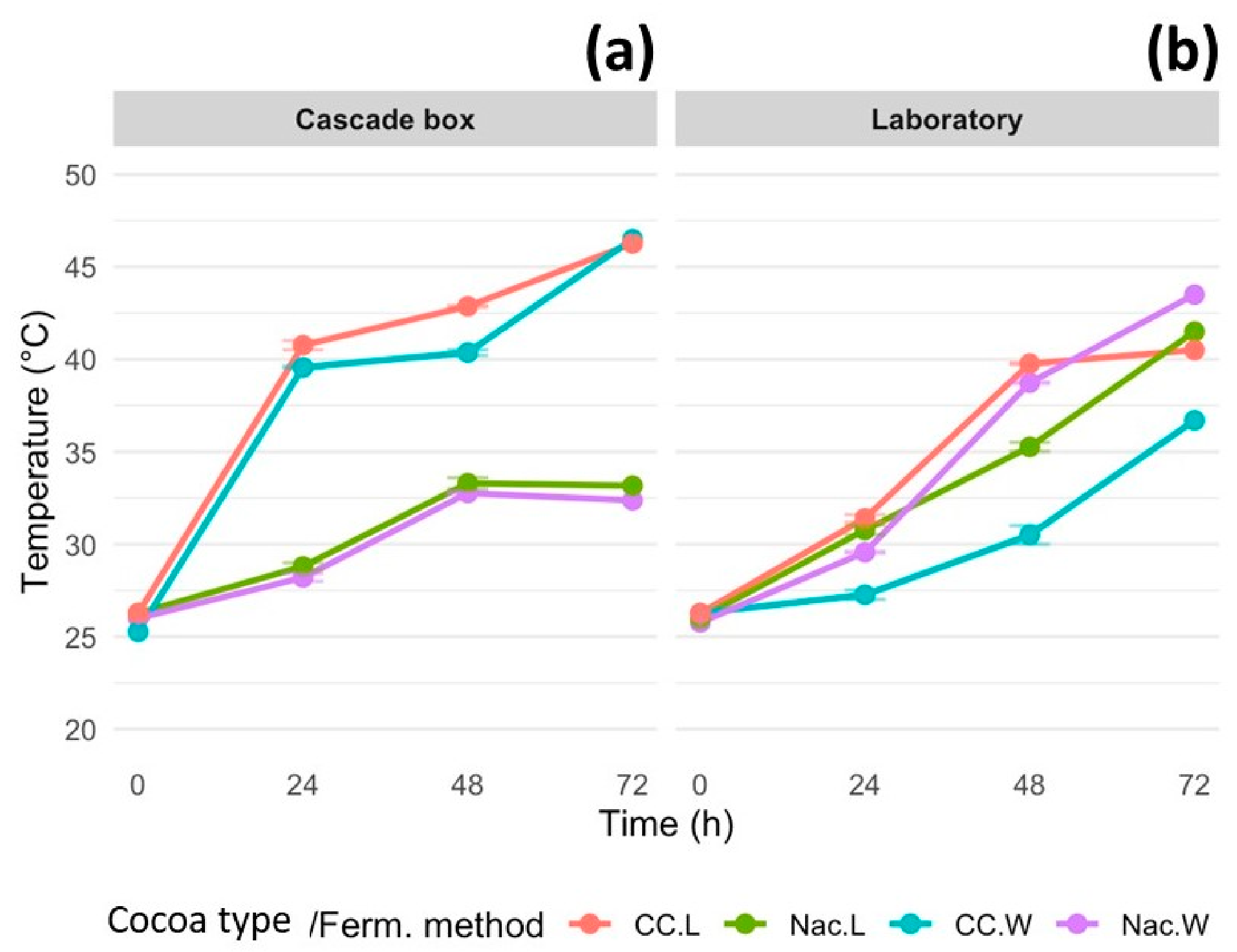
Temperature increased progressively throughout the fermentation process in all treatments (Figure 4a,b), reflecting the intensification of microbial metabolic activity and the exothermic nature of cocoa fermentation. Initial temperatures were relatively similar among the treatments, ranging from 25.25 to 26.50 °C at day 0. However, marked differences became evident from day 1 onwards, depending on the variables, i.e., cocoa type, LAB, and fermentation system. The highest temperature values were observed in CCN-51 cocoa under cascade fermentation, particularly in treatments inoculated with LAB, reaching values above 46 °C towards the end of fermentation. In contrast, Nacional cocoa showed a more moderate thermal increase, especially under laboratory fermentation, where temperatures remained between 32 and 43 °C during the later stages of fermentation. The cascade-type box system promoted higher temperature peaks compared to laboratory fermentation, particularly from 24 h onwards, suggesting more intense microbial activity and greater heat accumulation within the fermentative mass. Treatments inoculated with L. plantarum exhibited higher temperatures during the intermediate and final stages of fermentation, indicating enhanced fermentative metabolism and substrate transformation. Thus, the fermentation system significantly influenced thermal behavior.
The progressive increase in temperature from ~25 °C to above 45 °C reflects the metabolic activity of yeasts, LAB, and AAB, which convert sugars into ethanol and subsequently into organic acids, in an exothermic reaction. Similar temperature profiles have been reported in controlled cocoa fermentations, where microbial succession has been closely associated with heat generation and fermentation efficiency [36].
The higher temperatures recorded in CCN-51 cocoa, particularly under cascade fermentation (up to 46.50 °C), suggested a more intense metabolic activity compared to Nacional cocoa. This behavior may be attributed to differences in pulp composition, sugar availability, and aeration conditions, which influence microbial growth and oxidation reactions. Recent studies have demonstrated that fermentation systems with improved aeration and mass transfer—such as box or cascade systems—have promoted higher temperatures due to enhanced activity of AAB, which were responsible for ethanol oxidation and heat production [43,44,45,46]. Likewise, the role of LAB in temperature dynamics during fermentation was evident in this study. Treatments inoculated with L. plantarum showed higher temperatures, indicating a more efficient utilization of fermentable substrates and stimulation of subsequent microbial groups. However, the presence of W. confusa also contributed to temperature increments in specific conditions, confirming that thermal development depends on the interaction between microbial species and fermentation environment. This is in line with the findings by Korcari et al. [5], who reported that selected LAB strains could enhance fermentation performance by influencing microbial succession, substrate degradation, and heat generation [43,47].
Statistical analysis confirmed significant interaction effects among the evaluated factors (Table 4). The Cocoa × LAB, Cocoa × Fermentation, and LAB × Fermentation interactions were significant from day 1 onwards (p < 0.0001), indicating that temperature evolution depended on the combined influence of cocoa genotype, LAB inoculum, and fermentation environment. Furthermore, the three-way interaction (i.e., Cocoa genotype × LAB strain × Fermentation system) was highly significant at day-1, -2, and -3 (p < 0.0001), highlighting the complexity of thermal dynamics during cocoa fermentation. The significant interaction between LAB and the fermentation system further supports the importance of environmental conditions in regulating microbial activity. The cascade-type box system promoted higher temperature peaks, likely due to improved oxygen availability, which favors the activity of AAB responsible for the oxidation of ethanol into acetic acid—a highly exothermic reaction [23,46]. According to Veiga et al. [47], temperature increases during cocoa fermentation are closely linked to this oxidative phase, which is critical for flavor precursor formation and overall bean quality. Temperature evolution is not determined by a single factor but rather by the combined influence of genotype, microbial inoculation, and process conditions. While previous studies have demonstrated that the use of starter cultures and optimized fermentation systems can improve thermal profiles and fermentation performance [13]. The present study further demonstrates that the interaction among cocoa genotypes, LAB inoculation, and fermentation system significantly influenced the temperature dynamics throughout cocoa fermentation. By simultaneously evaluating these experimental factors within a single factorial experimental design, this work provides additional evidence of their individual and interactive effects on thermal evolution, contributing to a better understanding of the mechanisms regulating cocoa fermentation and supporting the development of genotype-specific and fermentation system-specific strategies to improve fermentation consistency and cocoa quality [48].

3.3. Total Soluble Solids (°Brix) During Cocoa Fermentation

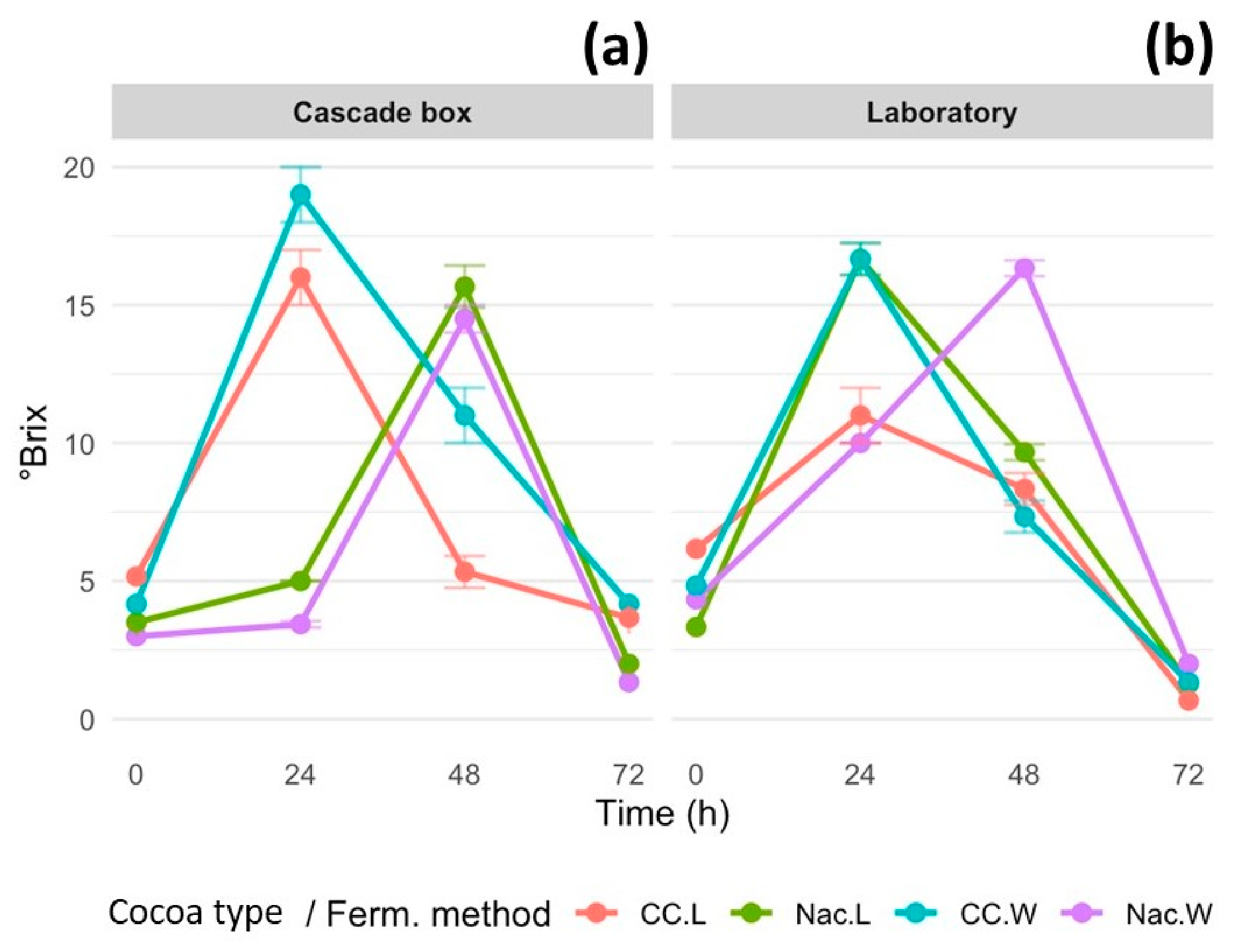
Initial °Brix values ranged from ~3.00 to 6.17 at day 0, with significant effects of cocoa type, LAB, and fermentation system (p < 0.05). From 24 to 48 h, soluble solids reached their highest values across most treatments, particularly in CCN-51 cocoa inoculated with W. confusa under cascade fermentation (Figure 5a), where values reached 19.0 °Brix. Similarly, Nacional cocoa inoculated with L. plantarum exhibited elevated °Brix values during the middle stages of fermentation, especially under laboratory fermentation conditions (Figure 5b). The increase in soluble solids during the early fermentation phase was associated with the enzymatic degradation of mucilaginous polysaccharides, which released fermentable sugars into the cocoa mass. However, from 48 h onward, °Brix values declined sharply, reaching final values between 0.67 and 4.17 at 72 h, indicating active microbial consumption of soluble sugars and the progression of fermentation metabolism.
Cocoa genotype significantly influenced soluble solids dynamics throughout the fermentation process (p < 0.0001) (Figure 5b). In general, CCN-51 cocoa exhibited higher °Brix values during the peak fermentation stages, suggesting greater substrate availability and more intense mucilage degradation compared to Nacional cocoa. The significantly higher °Brix values observed in CCN-51, particularly under cascade fermentation inoculated with W. confusa, suggested a greater availability of fermentable substrates in this genotype. CCN-51 cocoa is characterized by higher pulp content and sugar concentration compared with Nacional cocoa, which may explain the elevated soluble solids recorded during the peak fermentation stage. Similar genotype-dependent responses have been reported in recent studies evaluating cocoa fermentation kinetics and pulp metabolism, where differences in substrate composition directly influenced sugar transformation and microbial activity [49,50].
The effect of LAB also varies according to fermentation stage (Table 5). Although no significant differences were observed at day 1 (p > 0.05), significant effects were detected in the rest of the days of fermentation i.e., 0, 2, and 3 (p < 0.05). Treatments inoculated with W. confusa generally showed higher peak °Brix values, whereas L. plantarum promoted a more rapid reduction in soluble solids during the final stages, suggesting more efficient sugar utilization.
The cascade-type box system promoted higher peaks of soluble solids during the active fermentation phase, whereas laboratory fermentation showed more moderate increases and faster declines. Furthermore, significant interaction effects were observed among the evaluated factors (Figure 5b). The Cocoa genotype × LAB strains interaction was significant during most fermentation stages, except at day 2, while the Cocoa genotype × Fermentation system interaction became significant from day 1 onwards, highlighting the influence of the fermentation environment on substrate transformation. Finally, the three-way interaction (i.e., Cocoa type × LAB species × Fermentation systems) was significant across most fermentation stages (p < 0.05), confirmed that soluble solids dynamics were governed by the combined influence of cocoa genotype, LAB inoculants, and fermentation system.
The dynamics of total soluble solids (°Brix) observed in this study reflected the intense biochemical transformations occurring during cocoa fermentation. The initial increase in °Brix values during the early fermentation stages, followed by a progressive decline toward day 3, is consistent with the degradation of mucilaginous polysaccharides into fermentable sugars and their subsequent microbial consumption. Similar patterns have been reported in controlled cocoa fermentations, where the hydrolysis of pulp carbohydrates increased the concentration of soluble sugars during the initial stages, followed by a reduction associated with yeast, LAB, and AAB metabolism [8,14].
The increase in °Brix values during day 1 is associated with the enzymatic breakdown of pectin compounds and complex carbohydrates present in the cocoa mucilage. This process promotes the release of simple sugars that serve as substrates for fermentative microorganisms. Subsequently, the marked reduction in °Brix values from day 2 onwards indicates active microbial utilization of these soluble sugars, particularly by yeasts and LAB involved in ethanol and organic acid production. According to Intriago et al. [51], the depletion of soluble solids during cocoa fermentation is directly associated with microbial succession and metabolic conversion of sugars into ethanol, lactic acid, and acetic acid.
The effect of LAB on soluble solids dynamics was particularly evident in the present study, and the observed results are consistent with previous reports describing the stability of soluble solids during cocoa fermentation [7,52] Treatments inoculated with W. confusa showed higher peak °Brix values, whereas L. plantarum promoted a faster decline in soluble solids during the later fermentation stages. This behavior may be related to differences in carbohydrate metabolism between the two bacterial species. L. plantarum is recognized for its efficient sugar utilization and acidification capacity under fermentation conditions, which may accelerate substrate depletion.
The fermentation system also played a significant role in °Brix evolution. The cascade-type box system promoted higher °Brix peaks during the intermediate stage, likely due to improved aeration and more efficient pulp degradation. Enhanced oxygen availability can stimulate microbial activity and accelerate substrate transformation, thereby affecting soluble solids concentration [17]. Previous studies have shown that fermentation systems with improved aeration and drainage promoted more active microbial metabolism and faster pulp degradation, directly influencing sugar dynamics during cocoa fermentation [23,47,53]. These findings support the growing evidence that controlled fermentation using selected microbial inoculants can improve fermentation consistency and optimize biochemical transformations associated with cocoa quality [54,55].
The present results confirm that targeted inoculation with W. confusa and L. plantarum can modulate pH, temperature, and soluble solids dynamics during cocoa fermentation, leading to a higher proportion of well-fermented beans and more consistent physicochemical properties of the final paste. These findings are consistent with reports in other fermented plant matrices, where LAB-driven fermentation of indigenous vegetables, fruits, and mushroom-based beverages improves process reproducibility and generates products with potential probiotic and symbiotic characteristics. Although our study focused on technological performance in cocoa, the choice of LAB species that are also documented in functional beverage systems supports the future exploration of cocoa-based products with added gut-health benefits.

3.4. Variable Cut Test

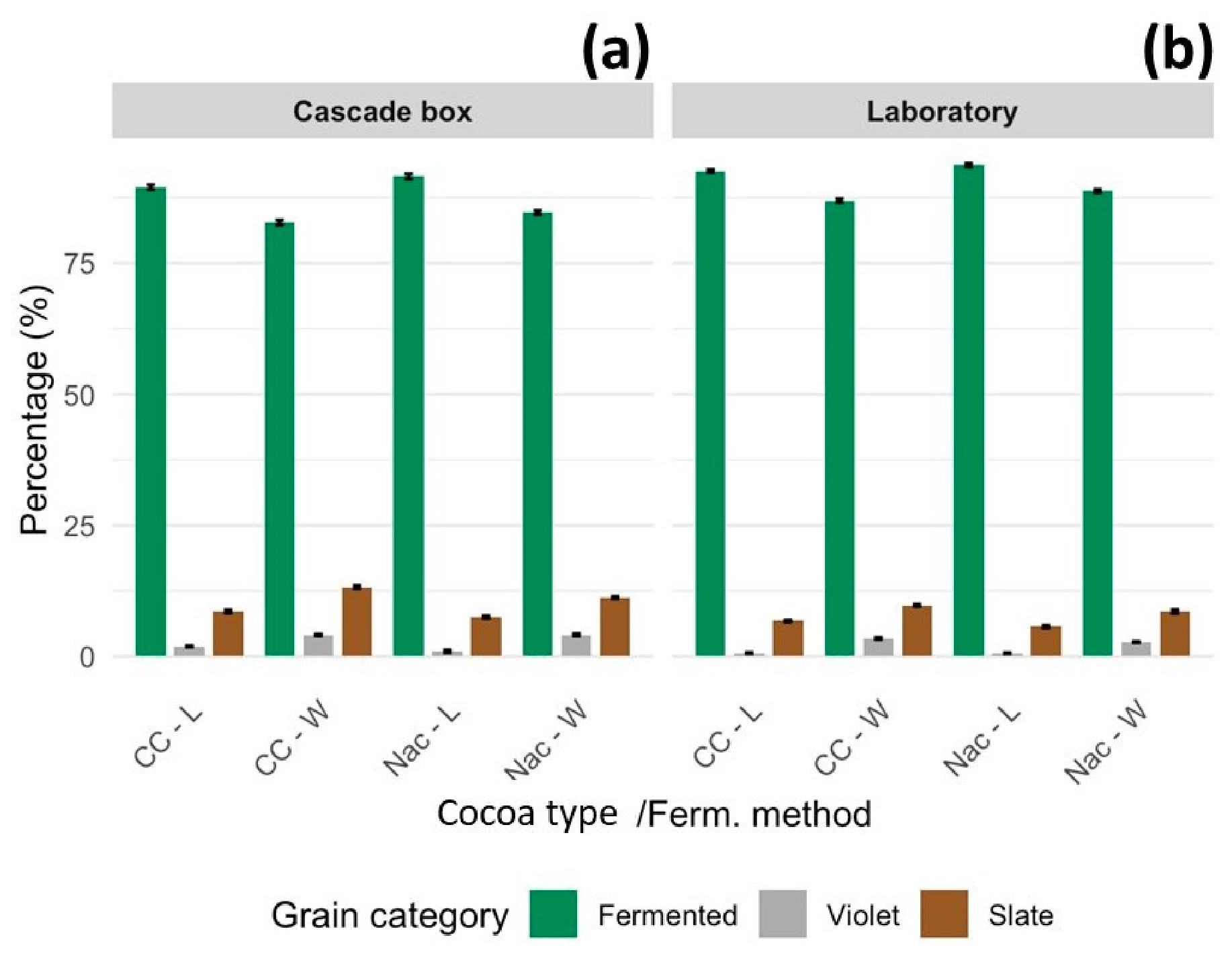
The cut test revealed significant differences among treatments in relation to fermentation quality and physical characteristics of cocoa beans (Figure 6a,b and Table 6). Treatments inoculated with L. plantarum showed higher and lower percentages of well-fermented and defective beans, respectively, compared to treatments inoculated with W. confusa. The percentage of fermented beans ranged from 82.76 to 93.73%. The highest fermentation level was observed in Nacional cocoa inoculated with L. plantarum under laboratory fermentation (i.e., 93.73%), followed by CCN-51 cocoa with 92.59% under similar conditions. In contrast, the lowest percentage (i.e., 82.76%) of fermented beans was recorded in CCN-51 cocoa inoculated with W. confusa under cascade fermentation. These results indicated that L. plantarum promoted a more efficient and homogeneous fermentation process.
Violet beans ranged between 5.66 and 13.19%, while slate beans varied from 0.60 to 4.11%. The lowest percentages of violet and slate beans were observed in treatments inoculated with L. plantarum, particularly under laboratory fermentation. Higher percentages of defective beans were generally associated with cascade fermentation treatments inoculated with W. confusa. These findings suggested differences in cotyledon transformation and acid penetration efficiency during fermentation. Additional physical parameters also varied among treatments (Table 7). Dry weight ranged from 532.02 to 560.40 g, with higher values generally observed in treatments inoculated with L. plantarum, particularly in Nacional cocoa under laboratory fermentation. The other values, such as cotyledon percentage, seed index, cob index, and moisture content were in the range of 86.02 to 88.13%, 1.62 to 1.70, 24.86 to 25.71, and 6.37 to 6.73%, respectively.
Statistical analysis demonstrated that the cocoa type, LAB, and fermentation system exhibited highly significant effects (p < 0.0001) on most evaluated variables (Table 6). The Cocoa type × LAB interaction was significant for seed index, violet beans, and cob index (p < 0.05), indicating that the response to bacterial inoculants depended partially on cocoa genotype. Likewise, the LAB × Fermentation system interaction significantly affected dry weight, fermented beans, violet beans, cob index, and moisture content (p < 0.05), confirming that fermentation performance was influenced by the interaction between LAB and fermentation environment.
In contrast, the Cocoa × Fermentation system interaction did not show significant effects for most variables (p > 0.05), except for cotyledon percentage (p = 0.0543). Furthermore, the three-way interaction (i.e., Cocoa type × LAB species × Fermentation systems) showed limited significance, being significant only for dry weight and slate beans (p < 0.05), while the remaining variables were not significant (p > 0.05). Overall, the results demonstrated that the combination of cocoa genotype, selected LAB inoculants, and fermentation systems strongly influenced fermentation efficiency and postharvest cocoa quality.
The cut test variables obtained in this study confirmed that cocoa fermentation quality was significantly influenced by cocoa genotype, LAB, and fermentation system. Treatments inoculated with L. plantarum, particularly in Nacional cocoa under laboratory fermentation, showed higher percentages of fermented beans and lower proportions of violet and slaty beans, indicating a more homogeneous fermentation process. In contrast, treatments with W. confusa under cascade fermentation, especially in CCN-51 cocoa, exhibited higher percentages of violet and slaty beans, suggesting incomplete cotyledon transformation and lower fermentation efficiency [56,57].
The reduction of violet and slaty beans in treatments inoculated with L. plantarum is particularly relevant because these defects are associated with insufficient acid diffusion, incomplete polyphenol oxidation, and inadequate biochemical conversion inside the cotyledon. According to Ouattara et al. [58], the decrease in anthocyanins and violet pigmentation during fermentation was directly associated with increasing temperature, acid penetration, and oxidation reactions occurring within the bean. Aguayo et al. [59], reported that fermentation management significantly influences physicochemical transformation, acidity, and sensory quality in cocoa beans, confirming that fermentation conditions strongly determine cut-test quality parameters.
The significant effect of LAB observed in this study supports the growing interest in beneficial microorganisms as starter cultures to improve fermentation uniformity and reduce quality variability. Inoculation with selected LAB has been associated with improved microbial succession, stabilization of fermentation conditions, and enhanced transformation of cocoa cotyledons [60]. According to Vásquez et al. [6], the decrease in anthocyanins and violet pigmentation during fermentation was directly associated with increasing temperature, acid penetration, and oxidation reactions occurring within the bean. Vásquez et al. [9] reported that fermentation management significantly influences physicochemical transformation, acidity, and sensory quality in cocoa beans, confirming that fermentation conditions strongly determine cut-test quality parameters. Coria et al. [61] evaluated a mixed starter culture composed of the non-Saccharomyces yeasts Hanseniaspora opuntiae and Kluyveromyces marxianus during the fermentation of Forastero cocoa. The authors reported that the inoculated fermentation reduced the processing time compared with spontaneous fermentation, decreased acetic acid accumulation, and favored the formation of aromatic esters associated with desirable floral and fruity notes. High-throughput sequencing further identified K. marxianus as the dominant yeast during the inoculated process. Although their study focused on yeast-driven modulation of microbial dynamics and volatile compounds rather than on LAB-mediated changes in bean fermentation status, the findings support the broader application of selected starter cultures to improve the control and consistency of cocoa fermentation. In the present study, treatments inoculated with Lactiplantibacillus plantarum showed higher percentages of well-fermented beans and lower proportions of violet and slaty beans. These findings suggest that L. plantarum contributed to a more controlled biochemical transformation of the cotyledons, although this effect should be interpreted specifically within the experimental conditions and cocoa genotypes evaluated in the present study, García et al. [35] demonstrated that the application of L. plantarum HL-15 improved cocoa fermentation quality and generated more uniform fermentation profiles, while Korcari et al. [48] reported that alternative LAB species may positively influence cocoa fermentation performance and microbial adaptation.
The fermentation system also played an important role in determining cut-test characteristics. Although the cascade-type box system promoted adequate fermentation in several treatments, higher percentages of violet and slate beans were observed under specific conditions, particularly in CCN-51 cocoa inoculated with W. confusa. This behavior may be associated with differences in oxygen availability, heat transfer, pulp drainage, and microbial activity between fermentation systems. Shen et al. [62] reported that starter cultures and fermentation conditions significantly affected microbial metabolism and cocoa quality attributes, especially under large-scale fermentation conditions where environmental variability could alter fermentation uniformity.
The significant interaction between LAB and fermentation system observed for fermented beans, violet beans, cob index, and moisture content indicates that the effect of microbial inoculation depended on the fermentation environment [7,48]. These findings suggest that starter cultures do not act independently, but rather interact with aeration conditions, temperature profiles, substrate composition, and indigenous microbiota. Likewise, the significant three-way interaction observed for dry weight and slate beans which demonstrated that cocoa genotype, LAB, and fermentation system collectively influenced fermentation efficiency and cotyledon transformation [4,13,30].
Overall, these findings reinforce the importance of controlled microbial fermentation as a biotechnological strategy to improve cocoa quality [62,63,64,65]. The use of selected LAB, particularly L. plantarum, showed strong potential to enhance fermentation uniformity, increase the proportion of well-fermented beans, and reduce defective categories associated with incomplete fermentation. These results are consistent with recent studies highlighting the importance of starter cultures for improving cocoa fermentation consistency, microbial control, and final beans quality [66,67,68].

3.5. Physicochemical Parameters of Cocoa Paste

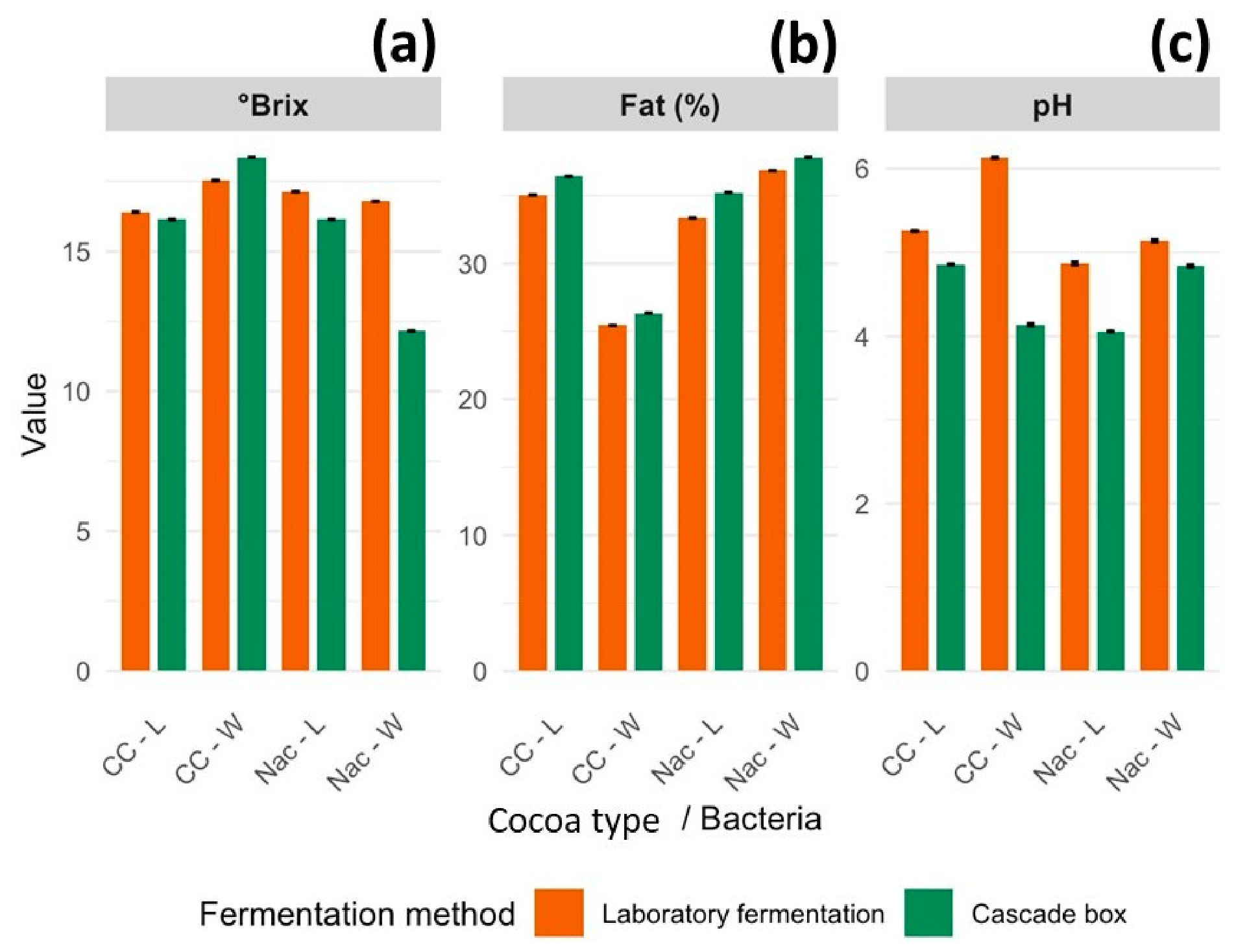
The physicochemical properties of the final cocoa paste showed significant variation according to cocoa genotype, LAB species, and fermentation system (Figure 7). The moisture values reported in this study correspond to the residual moisture of the final cocoa paste obtained after the complete postharvest and processing sequence. Therefore, the reported values represent the residual moisture of the finished cocoa paste rather than the moisture content of fermented or dried cocoa beans. Residual moisture ranged from 0.87 to 4.76%, with lower values generally observed in Nacional cocoa inoculated with L. plantarum under laboratory fermentation, whereas higher values were recorded in CCN-51 cocoa fermented in cascade boxes with W. confusa. Ash content varied between 0.87 and 4.14%, with higher values predominantly associated with CCN-51 treatments under cascade fermentation conditions. Fat content showed considerable variation among treatments, ranging from 25.46 to 37.83% (Figure 7b). Nacional cocoa exhibited higher fat percentages than CCN-51 cocoa, irrespective of the fermentation system. The highest fat content (i.e., 37.83%) was recorded in Nacional cocoa inoculated with W. confusa under laboratory fermentation, whereas lower values were observed in CCN-51 cocoa fermented in cascade boxes. These physicochemical differences are likely associated with the combined effects of microbial metabolism, organic acid production, substrate utilization, and biochemical transformations occurring within the cotyledon during fermentation. Together, these processes influence moisture loss, lipid retention, mineral distribution, and the final composition of cocoa paste. From a technological perspective, understanding these interactions is important for optimizing controlled fermentation protocols and for selecting appropriate combinations of cocoa genotype, LAB starter cultures, and fermentation systems, thereby facilitating process standardization and future industrial scale-up while maintaining consistent cocoa quality.
The pH of the final cocoa paste ranged from 4.06 to 6.13 (Figure 7c), indicating substantial differences in acidification patterns among treatments. Lower pH values were observed in Nacional cocoa inoculated with L. plantarum under laboratory fermentation, whereas higher values were recorded in CCN-51 cocoa inoculated with W. confusa under cascade fermentation. Similarly, total soluble solids (°Brix) varied between 12.16 and 18.37 (Figure 7a), with the highest value observed in CCN-51 cocoa inoculated with W. confusa under laboratory conditions. Titratable acidity ranged from 0.0026 to 0.0038, showing comparatively low variability among treatments.
Statistical analysis demonstrated that cocoa genotype exerted highly significant effects (p < 0.0001) on moisture, ash content, fat percentage, pH, and °Brix, whereas no significant effect was observed for titratable acidity (p > 0.05) (Figure 7b, Table 8 and Table 9). Likewise, inoculation with LAB and fermentation system significantly affected most of the evaluated variables (p < 0.0001). Interaction effects were also highly relevant. The Cocoa genotype × LAB interaction significantly affected all evaluated physicochemical parameters (p < 0.0001), indicating that the response to microbial inoculation depended strongly on cocoa genotype. Similarly, the Cocoa genotype × Fermentation system and LAB × Fermentation system interactions showed highly significant effects across the analyzed variables (p < 0.0001). Furthermore, the three-way interaction (i.e., Cocoa genotype × LAB × Fermentation system) was highly significant for moisture, ash content, fat percentage, pH, and °Brix (p < 0.0001), confirming that the physicochemical characteristics of the final cocoa paste were jointly influenced by cocoa genotype, microbial inoculation, and fermentation environment. In contrast, titratable acidity was not significantly affected by the three-way interaction (p = 0.2001). Overall, the final cocoa paste exhibited low residual moisture (0.87–4.76%) and ash contents (0.87–4.14%), particularly in treatments inoculated with L. plantarum, while titratable acidity remained within a narrow range (0.0026–0.0038) across all treatments.
Ramírez et al. [57] reported that cocoa fermentation significantly affected the biochemical, physical, and sensory attributes of cocoa (e.g., changes in pH, fat, and moisture content) during postharvest processing. The physicochemical properties of the final cocoa paste showed significant variation according to cocoa genotype, LAB species, and fermentation system. In this study, lower moisture values were associated with Nacional cocoa inoculated with L. plantarum under laboratory fermentation, whereas higher values were observed in CCN-51 cocoa under cascade fermentation with W. confusa. Calvo et al. [36] emphasized that fermentation dynamics, especially pH and temperature profiles, must be monitored and controlled to obtain homogeneous, high-quality cocoa raw material for paste processing. The variation in ash content observed in this study may be associated with differences in mineral concentration, organic matter degradation, and mass transfer during fermentation and drying. Similar behavior was reported in the study published by Díaz et al. [8] where controlled fermentation with microbial inoculants significantly influenced the mineral and physicochemical composition of cocoa beans and cocoa paste, including ash-related parameters and quality indicators. Obinze et al. [69] reported that fermentation stages could alter the nutritional and mineral composition of cocoa beans due to pH reduction and the penetration of organic acids into the cotyledon, affecting both proximate composition and final cocoa quality. The variation in ash content suggests differences in mineral concentration and mass transfer during fermentation and drying.
Djaafar et al. [70] reported that fermentation stages modified the nutritional and mineral composition of cacao beans, with changes associated with pH reduction and organic acid penetration into the cotyledon. Fat content showed marked differences among treatments, with higher values in Nacional cocoa and lower values in CCN-51 cocoa under cascade conditions. These differences may be associated with genotype, fermentation intensity, and the structural transformation of cotyledon tissues during processing.
These differences can be mechanistically explained by the biochemical changes occurring during cocoa fermentation. The diffusion of organic acids and ethanol from the pulp into the cotyledon promotes membrane disruption, protein denaturation, and the breakdown of intracellular structures, thereby modifying the integrity of the lipid–protein matrix and influencing the extractability and apparent retention of cocoa butter in the final paste. In addition, the increase in fermentation temperature and the progressive acidification of the cotyledon enhance enzymatic and microbial activities that contribute to cellular disorganization and the redistribution of lipid components within the cocoa bean. Consequently, the higher fat content observed in Nacional cocoa may reflect greater lipid preservation and extractability under the evaluated fermentation conditions, whereas the lower values observed in CCN-51 cocoa under cascade fermentation may be associated with more pronounced structural modifications of cotyledon tissues during fermentation.
Alvarez et al. [60] have observed that fat and moisture content varied with fermentation time, confirming that fermentation management affects bromatological composition and final quality. Likewise, Obinze et al. [69] demonstrated that box fermentation and controlled drying significantly modified crude fat, ash, and moisture content in cocoa beans, highlighting the importance of fermentation intensity and microbial succession on the nutritional and bromatological composition of cocoa products. The pH and °Brix values of cocoa paste were closely related to acid diffusion, sugar consumption, and microbial metabolism during fermentation. The higher pH observed in CCN-51 cocoa under cascade fermentation may indicate differences in buffering capacity and acid distribution within the beans, whereas the variation in °Brix suggests changes in residual soluble compounds after fermentation and processing. Djaafar et al. [70] reported that cocoa beans fermented with L. plantarum HL-15 could produce good-quality cocoa beans and affected pH-related stability, supporting the role of LAB in improving the quality of cocoa-derived products.

4. Conclusions

The present study demonstrated that controlled cocoa fermentation using selected LAB significantly influenced the fermentative dynamics and postharvest quality of Nacional and CCN-51 cocoa. Treatments inoculated with L. plantarum showed greater fermentation uniformity and improved physicochemical characteristics compared to W. confusa, particularly under laboratory fermentation conditions. Nacional cocoa exhibited a more stable and homogeneous fermentation behavior than CCN-51 cocoa, characterized by a progressive pH decrease, rise in temperature, and a marked reduction in soluble solids, supporting efficient substrate utilization and proper fermentation development. Fermentation quality was significantly improved in the presence of L. plantarum. The physicochemical properties of cocoa paste were also significantly influenced by cocoa type, LAB, and fermentation system. In general, the use of selected strains of LAB as starter cultures represents a promising biotechnological strategy for improving the uniformity of cocoa fermentation and enhancing post-harvest quality. From an industrial perspective, the use of these starter cultures enables producers to meet the rigorous quality standards of the global specialty cocoa market, where consistency across batches is a fundamental requirement for securing higher prices and increasing competitive value. One key limitation of this investigation was not to include uninoculated control; it is greatly warranted that future studies will include non-inoculated controls to find out the contribution of inoculation under identical experimental conditions.

Author Contributions

Conceptualization: L.H.V.-C., J.A.P.-M. and S.L.R.-C.; Methodology: L.H.V.-C., J.A.P.-M. and F.J.C.-M.; Investigation: L.H.V.-C., J.A.P.-M., J.D.V.-C., S.P.-M. and S.L.R.-C.; Writing—Original Draft Preparation: L.H.V.-C., J.A.P.-M., S.L.R.-C. and D.B.; Writing—Review and Editing: N.R.M., M.R., F.J.C.-M. and R.J.B.-M.; Supervision: N.R.M., M.R. and F.J.C.-M.; All authors have read and agreed to the published version of the manuscript.

Funding

This research received no external funding.

Institutional Review Board Statement

Not applicable.

Informed Consent Statement

Not applicable.

Data Availability Statement

The original contributions presented in this study are included in the article. Further inquiries can be directed to the corresponding authors.

Acknowledgments

The authors express their gratitude to the Universidad Técnica Estatal de Quevedo, Universidad Estatal de Milagro, and Universidad Técnica de Babahoyo for the academic, technical, and scientific support provided during the development and execution of this research. The authors also acknowledge the institutions and collaborators who contributed to the experimental development and analysis of the obtained results. Cocoa pods (T. cacao L.) of the Nacional and CCN-51 varieties were kindly provided by Nelly Eugenia Loor Mero from a plantation (field name La oportunidad) located in the Chucaple district, Quinindé canton, Esmeraldas province, Ecuador (Lat: 0.562176; Long: −79.566290; altitude: 120 m a.s.l).

Conflicts of Interest

The authors declare no conflicts of interest.

References

  1. Xiao, H.; Molina, G.; Tovar, M.; Quoc, H.; Hansen, E.; Bang, C. Isolation and characterization of plant-based lactic acid bacteria from spontaneously fermented foods using a new modified medium. LWT 2024, 192, 115695. [Google Scholar] [CrossRef] [Scilit]
  2. Sánchez, A.; Landete, J.; Plaza, L.; Rivas, B.; Muñoz, R. Exploring the introduction of microbial ochratoxinases in lactic acid bacteria to enhance the safety of fermented plant-based beverages. Food Biosci. 2026, 75, 108172. [Google Scholar] [CrossRef] [Scilit]
  3. Cui, R.; Xiao, Y.; Huai, L.; Xue, J.; Cui, Z.; Cheng, C.; Liu, X.; Song, L. Preparation of fermented plant-based beverages using grape seed: Comparison of lactic acid bacteria strains, physicochemical characteristics and flavor profiles. Food Chem. X 2026, 35, 103845. [Google Scholar] [CrossRef] [Scilit] [PubMed]
  4. Olawunmi, O.; Thomas, R.; Femi, B. Selected fermented indigenous vegetables and fruits from Malaysia as potential sources of natural probiotics for improving gut health. Food Sci. Hum. Wellness 2023, 12, 1493–1509. [Google Scholar] [CrossRef] [Scilit]
  5. Korcari, D.; Fanton, A.; Ricci, G.; Rabitti, N.S.; Laureati, M.; Hogenboom, J.; Pellegrino, L.; Emide, D.; Barbiroli, A.; Fortina, M.G. Fine cocoa fermentation with selected lactic acid bacteria: Fermentation performance and impact on chocolate composition and sensory properties. Foods 2023, 12, 340. [Google Scholar] [CrossRef] [Scilit] [PubMed]
  6. Cortez, L.H.V.; Cevallos, S.L.R.; Velázquez, S.C.C.; Zenteno, M.D.C.; Maddela, N.R.; Radice, M.; Cabeza, M.S. Impact of Microbial Inoculants and Fruit Extracts on Cadmium Reduction and Quality Parameters in Cocoa (Theobroma cacao L.): From Beans to Cocoa Paste. Processes 2026, 14, 1348. [Google Scholar] [CrossRef] [Scilit]
  7. Vásquez, L.; Cevallos, C.; Uvidia, M.; Segobia, S.; Plua, J. Evaluación de métodos fermentativos de cacao Nacional y CCN51 induciendo microorganismos en yute y cajas Rohan para mejora organoléptico. Luna Azul 2025, 60, 168–181. [Google Scholar] [CrossRef] [Scilit]
  8. Díaz-Muñoz, C.; Van de Voorde, D.; Comasio, A.; Verce, M.; Hernandez, C.E.; Weckx, S.; De Vuyst, L. Curing of cocoa beans: Fine-scale monitoring of the starter cultures applied and metabolomics of the fermentation and drying steps. Front. Microbiol. 2021, 11, 616875. [Google Scholar] [CrossRef] [Scilit] [PubMed]
  9. Vásquez, L.; Vásquez, K.; Intriago, F.; Chang, J.; Maddela, N.; Prasad, R. Banana and apple extracts with efficient microorganisms and their effect on cadmium reduction in cocoa beans (Theobroma cacao L.). Discov. Food 2024, 4, 163. [Google Scholar] [CrossRef] [Scilit]
  10. Vásquez Cortez, L.H.; Montoya Ramos, E.A.; Cadenas Morales, L.I.; Plua Montiel, J.A.; Camacho López, C.O.; Cobos Mora, F.J.; Rodríguez Cevallos, S.L.; Pazmiño Pérez, Á.M. Physical, chemical and sensory evaluation of cocoa (Theobroma cacao L.) CCN51 fermented with Saccharomyces cerevisiae and fruit extract (Manila mango) at different stages of ripeness. Nutr. Clin. Diet. Hosp. 2025, 45, 117–128. [Google Scholar] [CrossRef] [Scilit]
  11. Aldas, J.; Revilla, K. Estudio del Proceso Fermentativo de Cacao Nacional (Theobroma cacao) Considerando Distintos Tipos y su Incidencia en las Características [Internet]; Universidad Técnica Estatal de Quevedo: Quevedo, Ecuador, 2020; Available online: https://repositorio.uteq.edu.ec/items/0b1cbc9b-4a4a-4e7d-a8f5-726c9443f89e (accessed on 1 May 2026).
  12. Rocha, S.O.d.S.B.d.; Vilhena, M.d.P.S.P.; de Souza, J.N.S.; Balcázar-Zumaeta, C.R.; Castro-Alayo, E.M.; Pajuelo-Muñoz, A.J.; da Silva, B.S.F.; Trindade, M.J.d.S.; Chagas-Junior, G.C.A.; Ferreira, N.R. Can different fermentation boxes improve the nutritional composition and the antioxidant activity of fermented and dried floodplain cocoa beans in the Brazilian Amazon? Foods 2025, 14, 1391. [Google Scholar] [CrossRef] [Scilit] [PubMed]
  13. Liu, C.; Liu, Y.; Yu, X.; Jing, Y.; Zhang, L.; Zhang, Z.; Liu, L.; Hu, H.; Yao, S. Validation and application of quantitative methods for D-Lactic acid and L-Lactic acid determination in lactic acid bacteria. Foods 2026, 15, 1537. [Google Scholar] [CrossRef] [Scilit] [PubMed]
  14. Lefeber, T.; Janssens, M.; Camu, N.; De Vuyst, L. Kinetic analysis of strains of lactic acid bacteria and acetic acid bacteria in cocoa pulp simulation media toward development of a starter culture for cocoa bean fermentation. Appl. Environ. Microbiol. 2010, 76, 7708–7716. [Google Scholar] [CrossRef] [Scilit] [PubMed]
  15. Camu, N.; De Winter, T.; Addo, S.; Takrama, J.; Bernaert, H.; De Vuyst, L. Fermentation of cocoa beans: Influence of microbial activities and polyphenol concentrations on the flavour of chocolate. J. Sci. Food Agric. 2008, 88, 2288–2297. [Google Scholar] [CrossRef] [Scilit]
  16. Papalexandratou, Z.; Vrancken, G.; De Bruyne, K.; Vandamme, P.; De Vuyst, L. Spontaneous organic cocoa bean box fermentations in Brazil are characterized by a restricted species diversity of lactic acid bacteria and acetic acid bacteria. Food Microbiol. 2011, 28, 1326–1338. [Google Scholar] [CrossRef] [Scilit] [PubMed]
  17. Falconí, C.; Yánez, V.; Haro, R.; Claudio, D. Inoculum of a Native Microbial Starter Cocktail to Optimize Fine-Aroma Cocoa (Theobroma cacao) Bean Fermentation. Agronomy 2023, 13, 2572. [Google Scholar] [CrossRef] [Scilit]
  18. Streule, S.; Freimüller, S.; Galler, M.; Motzer, D.; Poulose, M.; Miescher, S. Variations in Ecuadorian cocoa fermentation and drying at two locations: Implications for quality and sensory. Foods 2024, 13, 137. [Google Scholar] [CrossRef] [Scilit] [PubMed]
  19. Nascimento, L.L.; Pereira, M.S.; de Almeida, L.S.; Ferreira, L.d.S.; Pita, B.L.d.M.; de Souza, C.O.; Ribeiro, C.D.F.; Fricks, A.T. Innovation in cocoa fermentation: Evidence from patent documents and scientific articles. Fermentation 2024, 10, 251. [Google Scholar] [CrossRef] [Scilit]
  20. Erazo, C.; Tuárez, D.; Zambrano, C.; Moreno, J.; Rodríguez, R. Monitoring changes in the volatile profile of Ecuadorian cocoa during different steps in traditional on-farm processing. Plants 2023, 12, 3904. [Google Scholar] [CrossRef] [Scilit] [PubMed]
  21. Santander, M.; Chica, V.; Correa, H.A.M.; Rodríguez, J.; Villagran, E.; Vaillant, F.; Escobar, S. Unravelling cocoa drying technology: A comprehensive review of the influence on flavor formation and quality. Foods 2025, 14, 721. [Google Scholar] [CrossRef] [Scilit] [PubMed]
  22. Subroto, E.; Djali, M.; Indiarto, R.; Lembong, E.; Baiti, N. Microbiological activity affects post-harvest quality of cocoa (Theobroma cacao L.) beans. Horticulturae 2023, 9, 805. [Google Scholar] [CrossRef] [Scilit]
  23. Mougang, N.N.; Tene, S.T.; Zokou, R.; Kohole, H.A.F.; Solefack, E.N.; Mboukap, A.N.; Abaoabo, A.A.F.; Womeni, H.M. Influence of fermentation time, drying time and temperature on cocoa pods (Theobroma cacao L.) marketability. Appl. Food Res. 2024, 4, 100460. [Google Scholar] [CrossRef] [Scilit]
  24. Vera, J.; Vásquez, L.; Alvarado, K.; Intriago, F.; Raju, M.; Radice, M. Physical and Organoleptic Evaluation of 12 Cocoa Clones (Theobroma cacao L.) of National Type, in Cocoa Liquor—A Study from Ecuador. In Systems, Smart Technologies and Innovation for Society; Salgado, J., Vega, H., García, G., Robles, V., Eds.; Springer: Guayaquil, Ecuador, 2024; pp. 199–211. [Google Scholar] [CrossRef] [Scilit]
  25. Chang, J.V.; Vera, J.I.B.; Cortez, L.V.; Vásquez, K.A.; Pérez, J.J.R.; Flor, F.I.; Maddela, N.R.; Triana, V.L.C. Effects of two fermentative methods on cacao (Theobroma cacao L.) Trinitario, induced with Rhizobium japonicum to reduce cadmium. Rev. Colomb. Investig. Agroindustriales. 2023, 10, 95–106. [Google Scholar] [CrossRef] [Scilit]
  26. Silva, N.; Sousa, C.; Dos Santos, R.; Rogez, H.; Silva, J. Exploring variations in quality parameters of Theobroma cacao L. beans from Eastern Amazonia. Heliyon 2024, 10, e39295. [Google Scholar] [CrossRef] [Scilit] [PubMed]
  27. Tobias, A.; Avendaño, C.; García, R.; Carrera, A.; García, P. Determination of geometric properties of cocoa beans (Theobroma cacao L.). Agro Product. 2024, 17, 11. [Google Scholar] [CrossRef] [Scilit]
  28. Sanchez-Capa, M.; Viteri-Sanchez, S.; Burbano-Cachiguango, A.; Abril-Donoso, M.; Vargas-Tierras, T.; Suarez-Cedillo, S.; Mestanza-Ramón, C. New Characteristics in the fermentation process of Cocoa (Theobroma cacao L.) “Super Árbol” in La Joya de los Sachas, Ecuador. Sustainability 2022, 14, 7564. [Google Scholar] [CrossRef] [Scilit]
  29. Vera, J.; Vásquez, L.; Erazo, C.; Intriago, F. Induction of rhizobium japonicum in the fermentative mass of two varieties of cocoa (Theobroma cacao L.) as a strategy for the decrease of cadmium. Int. J. Health Sci. 2022, 6, 11354–11371. [Google Scholar] [CrossRef] [Scilit]
  30. Nzendjang, A.; Nzoundja, C.; Désire, A.; Tchakounté, H.; Innocentia, A. Improving Cocoa Drying Efficiency with a Mixed Forced Convection Solar Dryer in an Equatorial Climate. Thermo 2025, 5, 18. [Google Scholar] [CrossRef] [Scilit]
  31. Füllemann, D.; Neiens, S.; Steinhaus, M. Impact of processing on important cocoa off-flavour compounds. Eur. Food Res. Technol. 2022, 248, 197–205. [Google Scholar] [CrossRef] [Scilit]
  32. Priambodo, D.; Saputro, D.; Pahlawan, M.; Saputro, A.; Masithoh, R. Determination of acid level (pH) and moisture content of cocoa beans at various fermentation level ssing visible near-infrared (Vis-NIR) spectroscopy. IOP Conf. Ser. Earth Environ. Sci. 2022, 985, 012045. [Google Scholar] [CrossRef] [Scilit]
  33. Moussoyi, S.; Petit, J.; Betty, C.; Scher, J.; Mathurin, J. Impact of cocoa variety on merchant quality and physicochemical characteristics of raw cocoa beans and roasted cocoa mass. Discov. Food 2024, 4, 115. [Google Scholar] [CrossRef] [Scilit]
  34. Chapa-Gonza, S.R.; Rondinel-Mendoza, N.V.; Mansilla-Córdova, P.J.; Sanchez-Aguilar, W.D.; Alviárez-Gutierrez, E.; Silva-Zuta, M.Z.; Guerrero-Abad, J.C.; Caetano, A.C. Volatile organic compound profile of roasted and unroasted fine aroma cocoa genotypes from Peru. Eur. Food Res. Technol. 2025, 251, 3905–3915. [Google Scholar] [CrossRef] [Scilit]
  35. García, P.; Núñez, J.; Bahamón, A. Physicochemical and sensory characteristics of fermented almonds of national cacao (Theobroma cacao L.) with addition of probiotics in the amazonic research center, Cimaz Macagual (Caquetá, Colombia). Ing. Compet. 2021, 23, e21210885. [Google Scholar] [CrossRef] [Scilit]
  36. Calvo, A.; Botina, B.; García, M.; Cardona, W.; Montenegro, A.; Criollo, J. Dynamics of cocoa fermentation and its effect on quality. Sci. Rep. 2021, 11, 16746. [Google Scholar] [CrossRef] [Scilit] [PubMed]
  37. Vera Chang, J.; Radice, M.; Vásquez Cortez, L.; Intriago Flor, F. Chemical Profile of 12 National Type Cocoa (Theobroma cacao L.). Univ. Soc. 2024, 16, 126–136. Available online: https://rus.ucf.edu.cu/index.php/rus/article/view/4311 (accessed on 9 August 2026).
  38. Papalexandratou, Z.; Falony, G.; Romanens, E.; Jimenez, J.C.; Amores, F.; Daniel, H.-M.; De Vuyst, L. Species diversity, community dynamics, and metabolite kinetics of the microbiota associated with traditional ecuadorian spontaneous cocoa bean fermentations. Appl. Environ. Microbiol. 2011, 77, 7698–7714. [Google Scholar] [CrossRef] [Scilit] [PubMed]
  39. Gopaulchan, D.; Moore, C.; Ali, N.; Sukha, D.; González, S.L.F.; Rocha, F.E.H.; Yang, N.; Lim, M.; Dew, T.P.; Barrios, A.F.G.; et al. A defined microbial community reproduces attributes of fine flavour chocolate fermentation. Nat. Microbiol. 2025, 10, 2130–2152. [Google Scholar] [CrossRef] [Scilit] [PubMed]
  40. Quintana, L.; García, A.; Rodríguez, A.; Hoyos, N.; Alvis, A. Impact of spontaneous fermentation on the physicochemical and sensory qualities of Cacao. Fermentation 2025, 11, 377. [Google Scholar] [CrossRef] [Scilit]
  41. Santander, M.; Leguizamón, L.; Vaillant, F.; Boulanger, R.; Zuluaga, M.; Maraval, I.; Rodríguez, J.; Llano, S.; Sommerer, N.; Meudec, E.; et al. Influence of driven fermentation of cacao in bioreactors on quality: Decoding the effect of temperature, mixing, and pH on metabolomic, sensory, and volatile profiles. LWT 2025, 231, 118313. [Google Scholar] [CrossRef] [Scilit]
  42. Thuy, V.; Zhao, J.; Fleet, G. The effect of lactic acid bacteria on cocoa bean fermentation. Int. J. Food Microbiol. 2015, 205, 54–67. [Google Scholar] [CrossRef] [Scilit] [PubMed]
  43. Taylor, A.; Cardenas, E.; Miller, M.; Zhao, S.; Engeseth, N. Microbes associated with spontaneous cacao fermentations—A systematic review and meta-analysis. Curr. Res. Food Sci. 2022, 5, 1452–1464. [Google Scholar] [CrossRef] [Scilit] [PubMed]
  44. De Vuyst, L.; Leroy, F. Functional role of yeasts, lactic acid bacteria and acetic acid bacteria in cocoa fermentation processes. FEMS Microbiol. Rev. 2020, 44, 432–453. [Google Scholar] [CrossRef] [Scilit] [PubMed]
  45. González, M.; Urgiles, J.; Pérez, F.; Vélez, M.; Cáceres, R. Physicochemical changes during controlled laboratory fermentation of cocoa (CCN-51) with the inclusion of fruits and on-farm inoculation. Braz. J. Food Technol. 2023, 26, e2023013. [Google Scholar] [CrossRef] [Scilit]
  46. López Martha Criollo, J.; Hernández, M.; Lozano, M. Physicochemical and microbiological dynamics of the fermentation of the CCN51 cocoa material in three maturity stages. Rev. Bras. Frutic. 2019, 41, e-010. [Google Scholar] [CrossRef] [Scilit]
  47. Veiga, I.; Cruz, M.; Ferreira, W.; Ribeiro, D.; Freitas, R. Microbial succession and the dynamics of metabolites and sugars during the fermentation of three different cocoa (Theobroma cacao L.) hybrids. Food Res. Int. 2013, 54, 9–17. [Google Scholar] [CrossRef] [Scilit]
  48. Korcari, D.; Ricci, G.; Fanton, A.; Emide, D.; Barbiroli, A.; Grazia, M. Exploration of Lactiplantibacillus fabifermentans and Furfurilactobacillus rossiae as potential cocoa fermentation starters. J. Appl. Microbiol. 2022, 133, 1769–1780. [Google Scholar] [CrossRef] [Scilit] [PubMed]
  49. Erazo, C.; Bravo, K.; Tuárez, D.; Fernández, Á.; Torres, Y.; Vera, J. Effect of the fermentation of cocoa (Theobroma cacao L.), National and Trinitary variety, in non-conventional wood boxes on the physical and sensory quality of cocoa liquor. Rev. Investig. Talent. 2021, 8, 42–55. [Google Scholar] [CrossRef] [Scilit]
  50. Balcázar-Zumaeta, C.R.; Pajuelo-Muñoz, A.J.; Trigoso-Rojas, D.F.; Iliquin-Chavez, A.F.; Fernández-Romero, E.; Yoplac, I.; Muñoz-Astecker, L.D.; Rodríguez-Hamamura, N.; Maza Mejía, I.M.; Cayo-Colca, I.S.; et al. Reduction in the cocoa spontaneous and starter culture fermentation Time based on the antioxidant profile characterization. Foods 2023, 12, 3291. [Google Scholar] [CrossRef] [Scilit] [PubMed]
  51. Intriago Flor, F.; Cedeño Loor, J.; Parraga Muñoz, C.; Alvarado Vásquez, K.; Vásquez Cortez, L.; Revilla Escobar, K.; Aldas Morejon, J. Induction of effective microorganisms (EM) in the fermenting mass of cocoa (Theobroma cacao L.) and their impact on physicochemical and antioxidant characteristics. Biotecnia 2024, 26, e2422. [Google Scholar] [CrossRef] [Scilit]
  52. Agurto-Hidalgo, Y.F.; Valdiviezo-Rumiche, K.E.; Castillo-Rogel, R.T.; Rosales-Cuentas, M.M.; Cornelio-Santiago, H.P.; Portalatino-Zevallos, J.C.; Vega-Portalatino, E.J. Lactiplantibacillus from Peruvian Criollo Blanco Cocoa and Cadmium Removal via a Bacterial Consortium During Cocoa Fermentation. Curr. Microbiol. 2025, 82, 491. [Google Scholar] [CrossRef] [Scilit] [PubMed]
  53. Lagos Quispe, T.M.; Vásquez Montenegro, E.E.; Rojas Yauri, G.; Huamani Urpe, I.L.; Sosa Choque, J.C. Fermentation of Cocoa Criollo and CCN-51: Lactobacillus fermentum Bacterium and Saccharomyces Cerevisiae Yeast. Univ. Soc. 2024, 16, 52–63. Available online: https://rus.ucf.edu.cu/index.php/rus/article/view/4524 (accessed on 4 May 2026).
  54. Leischtfeld, S.F.; Hämmerli, A.; Lehmann, A.; Tönz, A.; Beck, B.M.; Wild, J.; Weis, S.; Neutsch, L.; Schwenninger, S.M. Wickerhamomyces pijperi: An up-and-coming yeast with pectinolytic activity suitable for cocoa bean fermentation. Appl. Microbiol. 2025, 5, 43. [Google Scholar] [CrossRef] [Scilit]
  55. Lima, G.V.S.; Pinto, A.S.O.; Correia, M.G.d.S.; Filho, M.P.M.; Freitas, A.d.L.d.; Santos, P.O.; Rogez, H. Starter culture-induced fermentation reveals genotype-driven variability in the composition and quality of Brazilian Amazon Forastero Cocoa beans. J. Food Sci. 2026, 91, e70908. [Google Scholar] [CrossRef] [Scilit] [PubMed]
  56. Garcia, E.; Serna, A.; Córdoba, D.; Martín, J.; Montalvo, C.; Ordoñez, G. Study of the spontaneous cocoa fermentation (Theobroma cacao L.) and evaluation of bean quality in a productive unit in small-scale. Rev. Colomb. Investig. Agroind. 2019, 6, 41–51. [Google Scholar] [CrossRef] [Scilit]
  57. Ramírez, A.; Gutiérrez, G.; Polonía, P.; López, L.; Suárez, J. Fermentation and its effect on the physicochemical and sensory attributes of cocoa beans in the Colombian Amazon. PLoS ONE 2024, 19, e0306680. [Google Scholar] [CrossRef] [Scilit] [PubMed]
  58. Ouattara, H.; Ouattara, H.; Droux, M.; Reverchon, S.; Nasser, W.; Niamke, S. Lactic acid bacteria involved in cocoa beans fermentation from Ivory Coast: Species diversity and citrate lyase production. Int. J. Food Microbiol. 2017, 256, 11–19. [Google Scholar] [CrossRef] [Scilit] [PubMed]
  59. Aguayo, K.; Zambrano, M.; García, R.; Fajardo, P. Starter cultures and their effect on the quality of almonds and cocoa liquor. Rev. Cienc. UNEMI 2026, 19, 152–165. [Google Scholar] [CrossRef]
  60. Alvarez, K.; Ledesma, C.; Priego, F.; Robles, V.; García, P. Influence of the starter culture on the volatile profile of processed cocoa beans by gas chromatography–mass spectrometry in high resolution mode. Food Biosci. 2022, 47, 101669. [Google Scholar] [CrossRef] [Scilit]
  61. Coria-Hinojosa, L.M.; Velásquez-Reyes, D.; Alcázar-Valle, M.; Kirchmayr, M.R.; Calva-Estrada, S.; Gschaedler, A.; Mojica, L.; Lugo, E. Exploring volatile compounds and microbial dynamics: Kluyveromyces marxianus and Hanseniaspora opuntiae reduce Forastero cocoa fermentation time. Food Res. Int. 2024, 193, 114821. [Google Scholar] [CrossRef] [Scilit] [PubMed]
  62. Shen, X.; Wang, Q.; Zheng, T.; Li, X.; Zheng, J.; Yin, Z.; Liu, K.; Zhang, J.; Yuan, W. Enhanced fermentation with Lactiplantibacillus plantarum improved coffee flavor by changing microbial communities and organic compounds of Coffea arabica. LWT 2025, 215, 117298. [Google Scholar] [CrossRef] [Scilit]
  63. Pacheco, M.; Dávila, L.; Botero, L.; Reyes, A.; Caro, A. Fine resolution analysis of microbial communities provides insights into the variability of cocoa bean fermentation. Front. Microbiol. 2020, 11, 650. [Google Scholar] [CrossRef] [Scilit] [PubMed]
  64. Van, D.; Díaz, C.; Hernandez, C.; Weckx, S.; Vuyst, L. Yeast strains do have an impact on the production of cured cocoa beans, as assessed with Costa Rican Trinitario cocoa fermentation processes and chocolates thereof. Front. Microbiol. 2023, 14, 1232323. [Google Scholar] [CrossRef] [Scilit] [PubMed]
  65. Nara, N.; Lacerda, C.; Ribeiro, D.; Marques, A.; Freitas, R. The impact of yeast starter cultures on the microbial communities and volatile compounds in cocoa fermentation and the resulting sensory attributes of chocolate. J. Food Sci. Technol. 2016, 53, 1101–1110. [Google Scholar] [CrossRef] [Scilit] [PubMed]
  66. Criollo, J.; Sandoval, A.; Bolívar, G.; Ramiréz, C. Selection of promising yeast for starter culture development promoter of cocoa fermentation. Ing. Y Compet. 2024, 26, 2. [Google Scholar] [CrossRef] [Scilit]
  67. Chamorro, O.; Manosalvas, L.; Pinto, N.; Samaniego, I. Effect of fermentation parameters on the antioxidant activity of Ecuadorian cocoa (Theobroma cacao L.). AIMS Agric. Food 2024, 9, 872–886. [Google Scholar] [CrossRef] [Scilit]
  68. Millena, C.; Balonzo, A.; Rentoy, J.; Ruivivar, S.; Bobiles, S. Effect of fermentation stages on the nutritional and mineral bioavailability of cacao beans (Theobroma cacao L.). J. Food Compos. Anal. 2023, 115, 104886. [Google Scholar] [CrossRef] [Scilit]
  69. Obinze, S.; Ojimelukwe, P.; Eke, B. Box fermentation and solar drying improve the nutrient composition and organoleptic quality of chocolate from cocoa beans. Front. Sustain. Food Syst. 2022, 6, 1023123. [Google Scholar] [CrossRef] [Scilit]
  70. Djaafar, T.F.; Rahayu, E.S.; Atika, A.; Purwandari, F.A.; Utami, T.; Marwati, T.; Hatmi, R.U. Physicochemical, microbiological, and sensory properties of probiotic chocolate bar Dad-13 made from cocoa beans fermented with Lactiplantibacillus plantarum HL-15 during storage. Food Sci. Technol. 2024, 44, 1–8. [Google Scholar] [CrossRef] [Scilit]
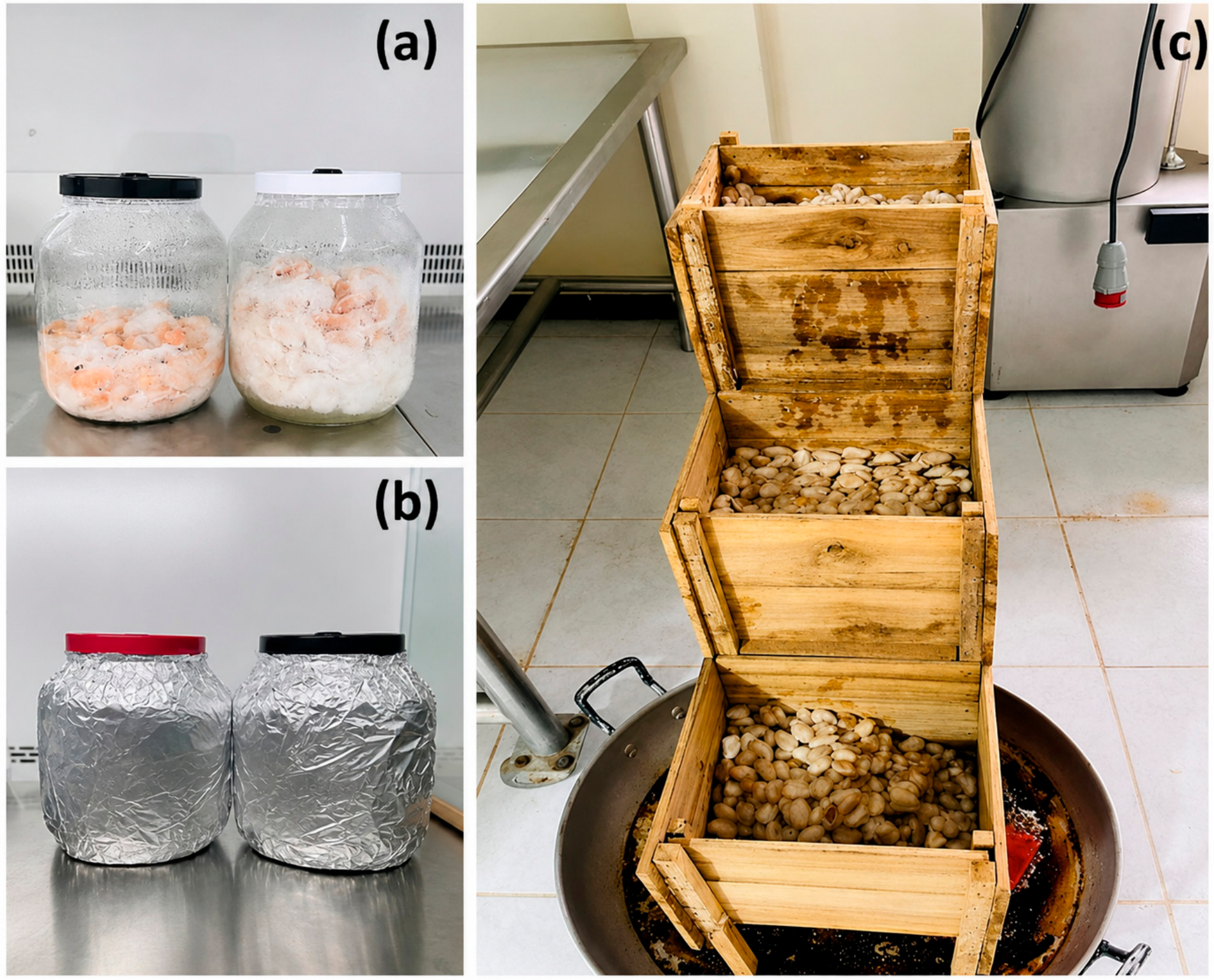
Figure 1. Fermentation systems evaluated in the study. (a,b) Controlled laboratory fermentation in glass containers with perforated bases, which allow for the drainage of mucilage and gas exchange. (c) Fermentation in cascade-style wooden boxes, which promoted progressive aeration and a natural rise in temperature during the process.
Applmicrobiol 06 00097 g001
Figure 2. Diagram of the process of obtaining 100% cocoa paste.
Applmicrobiol 06 00097 g002
Figure 3. Dynamics of pH during cocoa fermentation as affected by cocoa type (Nac, Nacional cocoa; CC, CCN-51 cocoa), lactic acid bacteria (W, W. confuse; L, L. plantarum), and fermentation method (Cascade-type box system (a) vs. laboratory fermentation (b)). Data presented are means ± SD (n = 3 per treatment). The values range on the y-axis are the same in figure panel (a,b).
Applmicrobiol 06 00097 g003
Figure 4. Temperature evolution during cocoa fermentation as affected by cocoa type (Nac, Nacional cocoa; CC, CCN-51 cocoa), lactic acid bacteria (W, W. confuse; L, L. plantarum), and fermentation method (Cascade-type box system (a) vs. laboratory fermentation (b)). Data presented are means ± SD (n = 3 per treatment). The values range on the y-axis are the same in figure panel (a,b).
Applmicrobiol 06 00097 g004
Figure 5. Evolution of total soluble solids (°Brix) during cocoa fermentation as affected by cocoa type (Nac, Nacional cocoa; CC, CCN-51 cocoa), lactic acid bacteria (W, W. confuse; L, L. plantarum), and fermentation method (Cascade-type box system (a) vs. laboratory fermentation (b)). Data presented are means ± SD (n = 3). The increase in °Brix at 24–48 h reflects mucilage degradation and sugar release, followed by a decline due to microbial consumption. The values range on the y-axis are the same in figure panel (a,b).
Applmicrobiol 06 00097 g005
Figure 6. Cut test evaluation of cocoa beans: percentage of well-fermented, violet, and slate beans as affected by cocoa type (Nac, Nacional cocoa; CC, CCN-51 cocoa), lactic acid bacteria (W, W. confuse; L, L. plantarum), and fermentation method (Cascade-type box system (a) vs. laboratory fermentation (b)). Data presented are means ± SD (n = 3). The values range on the y-axis are the same in figure panel (a,b).
Applmicrobiol 06 00097 g006
Figure 7. Key physicochemical properties of cocoa paste: soluble solids (°Brix) (a), fat (%) (b), and pH (c), and as affected by cocoa type (Nac, Nacional cocoa; CC, CCN-51 cocoa), lactic acid bacteria (W, W. confuse; L, L. plantarum), and fermentation method (laboratory fermentation and cascade box). Bars represent means ± SD (n = 3).
Applmicrobiol 06 00097 g007
Table 1. Outlines of variables of the investigation.
Factor A
(Cocoa Type)
Factor B
(Lactic Acid Bacteria, LAB)
Factor C
(Fermentation Type)
NacionalWeissella confusaControlled laboratory fermentation
CCN-51Lactiplantibacillus plantarumCascade type box system
Table 2. Treatment codes and variables of the study.
Treatment N°CodeCocoa TypeLactic Acid Bacteria (LAB)Fermentation Type
T1naLAB1TF0NacionalW. confusaLaboratory fermentation
T2naLAB1TF1NacionalW. confusaCascade type box system
T3naLAB2TF0NacionalL. plantarumLaboratory fermentation
T4naLAB2TF1NacionalL. plantarumCascade type box system
T5ccLAB1TF0CCN-51W. confusaLaboratory fermentation
T6ccLAB1TF1CCN-51W. confusaCascade type box system
T7ccLAB2TF0CCN-51L. plantarumLaboratory fermentation
T8ccLAB2TF1CCN-51L. plantarumCascade type box system
Note: Treatment codes: na, Nacional cocoa; cc, CCN-51 cocoa; LAB1, W. confuse; LAB2, L. plantarum; TF0, Laboratory fermentation; TF1, Cascade type box system.
Table 3. Analysis of the data related to pH dynamics during cocoa fermentation as affected by cocoa type (i.e., Nacional cocoa and CCN-51 cocoa), lactic acid bacteria (i.e., W. confuse and L. plantarum), and fermentation method (Cascade-type box system vs. laboratory fermentation). Data presented are means ± SD (n = 3 per treatment).
AnlysispH-Day0pH-Day1pH-Day2pH-Day3
LSD0.704350.602430.531990.80577
SEM 0.140.120.110.16
Coefficient varient5.434.914.698.30
Cocoa type0.15970.0040 *0.0032 *0.0811
Lactic acid bacteria, LAB0.0357 *0.23100.14840.0270 *
Fermentation type0.20840.40140.06860.0622
CocoaxLAB0.0002 *0.0199 *0.0050 *0.0358 *
CocoaxFermentation0.06690.0426 *0.0003 *0.0473 *
LABxFermetation0.0132 *0.0134 *0.0078 *0.0473 *
CocoaxLABxFermentation0.0034 *0.0002 *<0.0001 **0.7782
LSD: Least Significant Difference; SEM: Standard Error Mean, * is <0.05 and ** is <0.0001.
Table 4. Analysis of the data related to temperature evolution during cocoa fermentation as affected by cocoa type (i.e., Nacional cocoa and CCN-51 cocoa), lactic acid bacteria (i.e., W. confuse and L. plantarum), and fermentation method (Cascade-type box system vs. laboratory fermentation).
AnlysisTem.Day0Tem.Day1Tem.Day3Tem.Day4
LSD0.790120.558700.657761.04703
SEM 0.160.110.130.21
Coefficient varient1.080.620.630.92
Cocoa type>0.9999<0.0001 **<0.0001 **<0.0001 **
Lactic acid bacteria, LAB0.0047 *<0.0001 **<0.0001 **0.0013 *
Fermentation type0.2895<0.0001 **<0.0001 **<0.0001 **
CocoaxLAB0.2895<0.0001 **<0.0001 **<0.0001 **
CocoaxFermentation0.0047 *<0.0001 **<0.0001 **<0.0001 **
LABxFermentation0.0436 *<0.0001 **<0.0001 **0.0553 *
CocoaxLABxFermentation0.0436 *<0.0001 **<0.0001 **<0.0001 **
LSD: Least Significant Difference; SEM: Standard Error Mean, * is <0.05 and ** is <0.0001.
Table 5. Analysis of the data related to the evolution of total soluble solids (°Brix) during cocoa fermentation as affected by cocoa type (i.e., Nacional cocoa, and CCN-51 cocoa), lactic acid bacteria (i.e., W. confuse; and L. plantarum), and fermentation method (Cascade-type box system vs. laboratory fermentation).
Anlysis°Brixday0°Brixday1°Brixday2°Brixday3
LSD0.865541.919201.731080.85343
SEM 0.180.390.350.17
Coefficient varient7.105.565.5614.71
Cacao Type<0.0001 **<0.0001 **<0.0001 **<0.0001 **
Lactic acid bacteria, LAB0.0021 *0.7120<0.0001 **0.0220 *
Fermentation type<0.0001 **<0.0001 **0.0002 *<0.0001 **
CocoaxLAB<0.0001 **<0.0001 **0.4169<0.0001 **
CocoaxFermentation0.3322<0.0001 **0.0030 *<0.0001 **
LABxFermentation0.0330 *0.0446 *0.26040.0054 *
CocoaxLABxFermentation0.0021 *<0.0001 **<0.0001 **0.0220 *
LSD: Least Significant Difference; SEM: Standard Error Mean, * is <0.05 and ** is <0.0001.
Table 6. Analysis of the data related to the cut test evaluation of cocoa beans: percentage of well-fermented, violet, and slate beans as affected by cocoa type (i.e., Nacional cocoa and CCN-51 cocoa), lactic acid bacteria (i.e., W. confuse and L. plantarum), and fermentation method (Cascade-type box system vs. laboratory fermentation).
AnlysisDry WeightCotiledon (%)Seed IndexFermented GrainsViolet GrainsSlate GrainsCob IndexHumedad (%)
LSD1.274050.327890.017131.107440.725630.447520.09640.05413
SEM 0.260.070.00350.230.150.090.020.01
Coefficient variant0.080.130.360.442.896.880.140.29
Cocoa type<0.0001 **<0.0001 **<0.0001 **<0.0001 **<0.0001 **<0.0001 **<0.0001 **<0.0001 **
Lactic acid bacteria, LAB<0.0001 **<0.0001 **<0.0001 **<0.0001 **<0.0001 **<0.0001 **<0.0001 **<0.0001 **
Fermentation type<0.0001 **<0.0001 **<0.0001 **<0.0001 **<0.0001 **<0.0001 **<0.0001 **<0.0001 **
CocoaxLAB0.81680.91720.0036 *0.33940.0343 *0.2070<0.0001 **0.8339
CocoaxFermentation0.68250.05430.34310.15430.06320.64880.27210.2191
LABxFermentation<0.0001 **0.13280.62020.0002 **<0.0001 **0.10330.016 *0.0322 *
CocoaxLABxFermentation0.02840.41070.41200.25820.0561<0.0001 **0.51950.5315
LSD: Least Significant Difference; SEM: Standard Error Mean, * is <0.05 and ** is <0.0001.
Table 7. Additional cut test variables (dry weight, cotyledon percentage, seed index, cob index, and moisture content) of cocoa beans after fermentation. Values are expressed as mean ± SD (n = 3). Data presented are grouped by fermentation method, cocoa type, and lactic acid bacteria species.
Cocoa TypeBacteriaDry Weight
(g)
Cotyledon
(%)
Seed IndexCob IndexHumidity (%)
Cascade Box
CCN-51L. plantarum547.10 ± 0.4087.10 ± 0.101.70 ± 0.0025.23 ± 0.066.50 ± 0.00
W. confusa532.00 ± 0.4086.00 ± 0.101.60 ± 0.0025.70 ± 0.006.80 ± 0.00
NacionalL. plantarum552.90 ± 0.4087.60 ± 0.101.70 ± 0.0025.00 ± 0.006.40 ± 0.10
W. confusa536.90± 0.5086.50 ± 0.201.63 ± 0.0625.33 ± 0.066.70 ± 0.00
Laboratory fermentation
CCN-51L. plantarum555.50 ± 0.5087.90 ± 0.101.70 ± 0.0025.07 ± 0.066.40 ± 0.00
W. confusa542.80 ± 0.4086.90 ± 0.201.60 ± 0.0025.47 ± 0.066.70 ± 0.00
NacionalL. plantarum560.40 ± 0.5088.10 ± 0.101.70 ± 0.0024.87 ± 0.066.40 ± 0.00
W. confusa548.40 ± 0.7087.20 ± 0.201.70 ± 0.0025.10 ± 0.006.60 ± 0.00
Table 8. Analysis of the data related to the key physicochemical properties of cocoa paste: soluble solids (°Brix), fat (%), and pH, and as affected by cocoa type (i.e., Nacional cocoa and CCN-51 cocoa), LAB strain (i.e., W. confuse and L. plantarum), and fermentation method (laboratory fermentation, and cascade box). [* is <0.05 and ** is <0.0001].
AnlysisHumidity (%)Ash (%)Fat %pH°BrixAcidity
DMS0.045070.035570.043940.036040.035570.00022
EEM 0.010.010.010.010.010.0038
Coefficient varient0.610.700.050.260.082.28
Cocoa Type<0.0001 **<0.0001 **<0.0001 **<0.0001 **<0.0001 **0.4344
Lactic acid bacteria, LAB<0.0001 **<0.0001 **<0.0001 **<0.0001 **<0.0001 **<0.0001 **
Type of Fermentation<0.0001 **<0.0001 **<0.0001 **<0.0001 **<0.0001 **0.0001 *
CocoaxLAB<0.0001 **<0.0001 **<0.0001 **<0.0001 **<0.0001 **<0.0001 **
CocoaxFermentation<0.0001 **<0.0001 **<0.0001 **<0.0001 **<0.0001 **<0.0001 **
LABxFermetation<0.0001 **<0.0001 **<0.0001 **<0.0001 **<0.0001 **<0.0001 **
CocoaxLABxFermentation<0.0001 **<0.0001 **<0.0001 **<0.0001 **<0.0001 **0.2001
Table 9. Additional physicochemical properties of cocoa paste: moisture (%), ash (%), and acidity. Treatments are arranged by fermentation method (laboratory or cascade box), cocoa type (i.e., Nacional cocoa and CCN-51 cocoa), and LAB strain (i.e., W = W. confusa, L = L. plantarum).
Cocoa_TypeBacteriaMoistureAshAcidity
Cascade box
CCN-51L. plantarum3.03 ± 0.02 *1.44 ± 0.010.0012 ± 0.0015
CCN-51W. confusa4.76 ± 0.014.14 ± 0.020.0033 ± 1 × 10⁻⁴
NacionalL. plantarum1.87 ± 0.021.64 ± 0.030.0038 ± 1 × 10⁻⁴
NacionalW. confusa1.65 ± 0.011.39 ± 0.010.0036 ± 1 × 10⁻⁴
Laboratory fermentation
CCN-51L. plantarum1.36 ± 0.010.87 ± 0.020.0038 ± 1 × 10⁻⁴
CCN-51W. confusa4.23 ± 0.031.86 ± 0.010.0034 ± 1 × 10⁻⁴
NacionalL. plantarum0.87 ± 0.021.16 ± 0.010.0033 ± 1 × 10⁻⁴
NacionalW. confusa3.24 ± 0.011.86 ± 0.010.0026 ± 1 × 10⁻⁴
* Values are means ± standard deviation (n = 3).
Disclaimer/Publisher’s Note: The statements, opinions and data contained in all publications are solely those of the individual author(s) and contributor(s) and not of MDPI and/or the editor(s). MDPI and/or the editor(s) disclaim responsibility for any injury to people or property resulting from any ideas, methods, instructions or products referred to in the content.