
Isolation and Characterization of Flavin-Secreting Bacteria from Apple Roots and Evaluation of Their Plant Growth-Promoting Potential



Abstract
1. Introduction
2. Materials and Methods
2.1. Isolation of Root-Associated Bacteria with Increased Fluorescence at 470/530 nm Wavelength
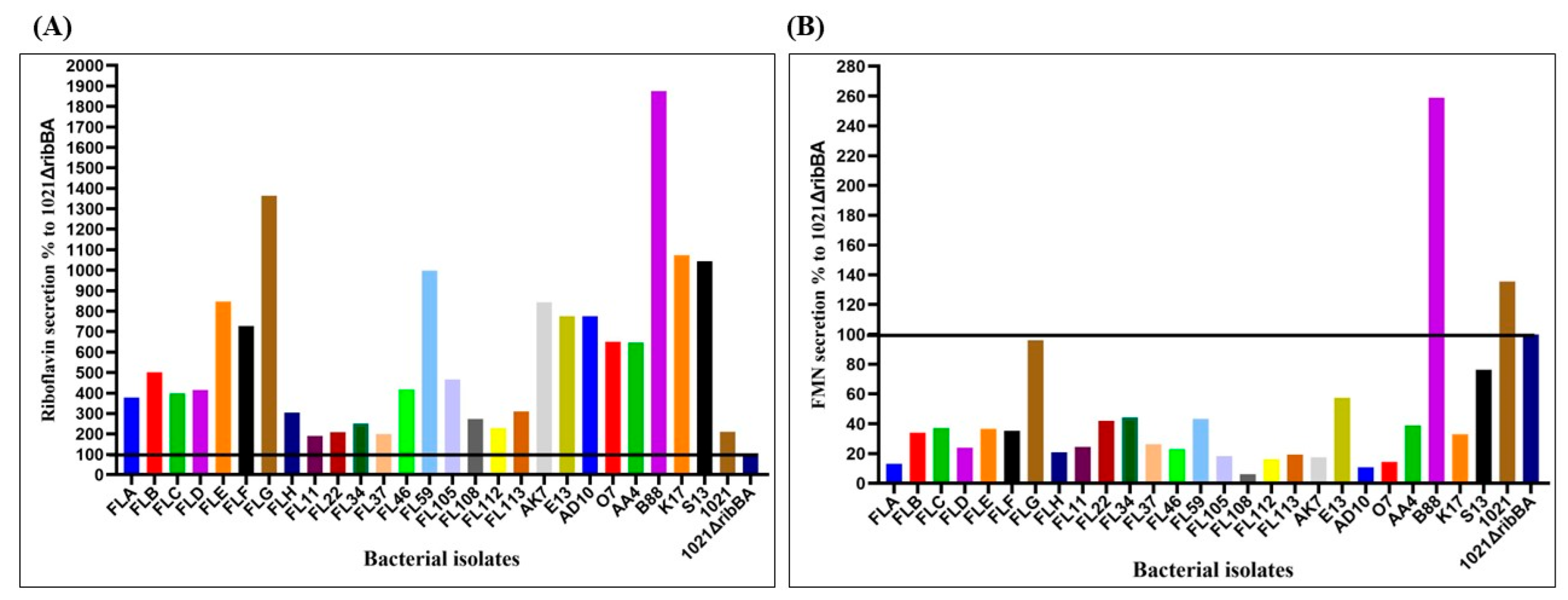
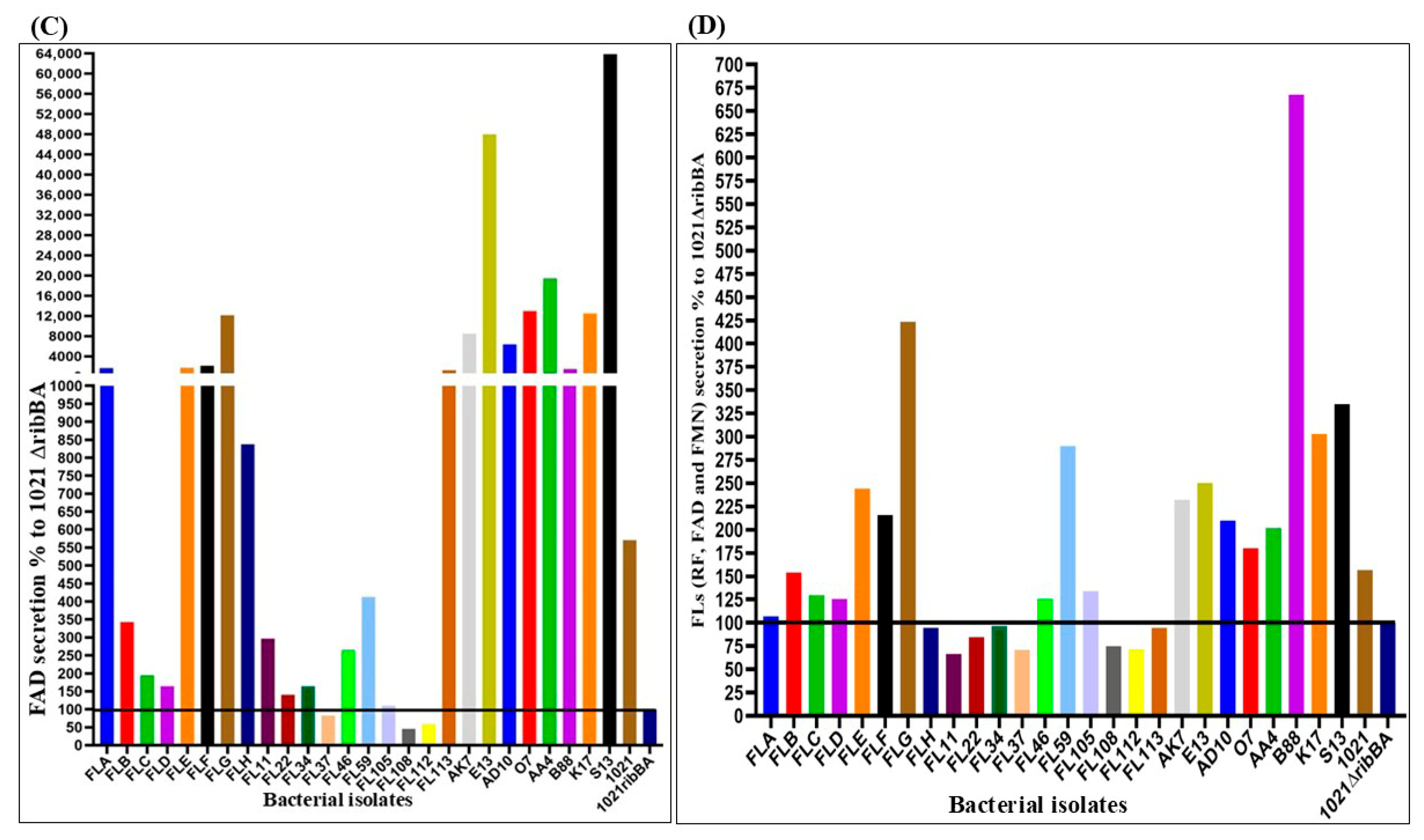
2.2. Analysis of Flavins (FLs) Secretion by Mass Spectrometry
2.3. Phosphate Solubilization Assay
2.4. ACC Deaminase Enzyme Activity Test
2.5. IAA Production Test
2.6. Plant Test
2.7. Nitrogen (N) Balance Analysis
2.8. DNA Extraction
2.9. DNA Sequencing Process and Analysis
2.10. Statistical Analysis
3. Results
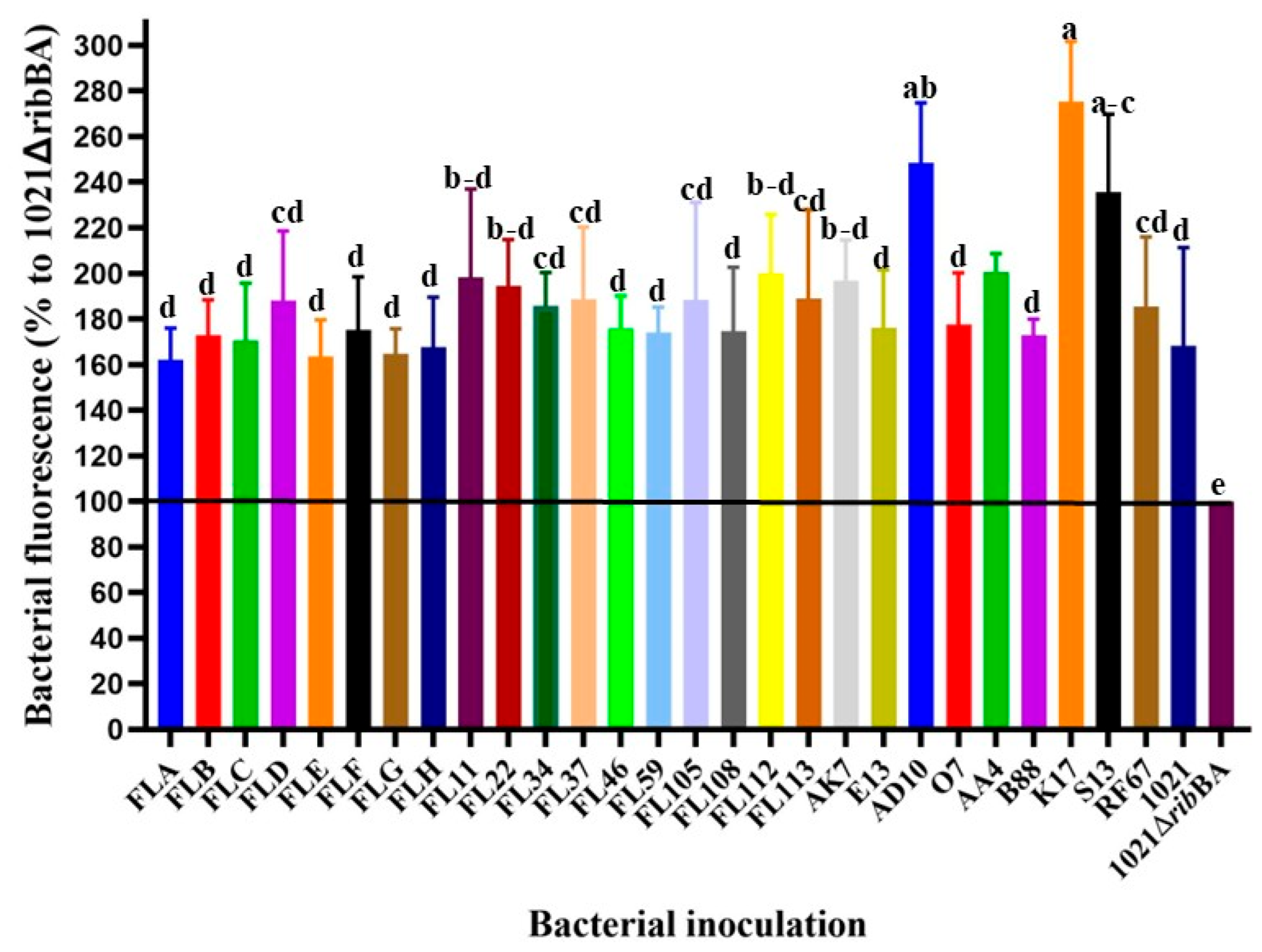
3.1. Quantification of Flavin Secretion by Fluorescence Characterization
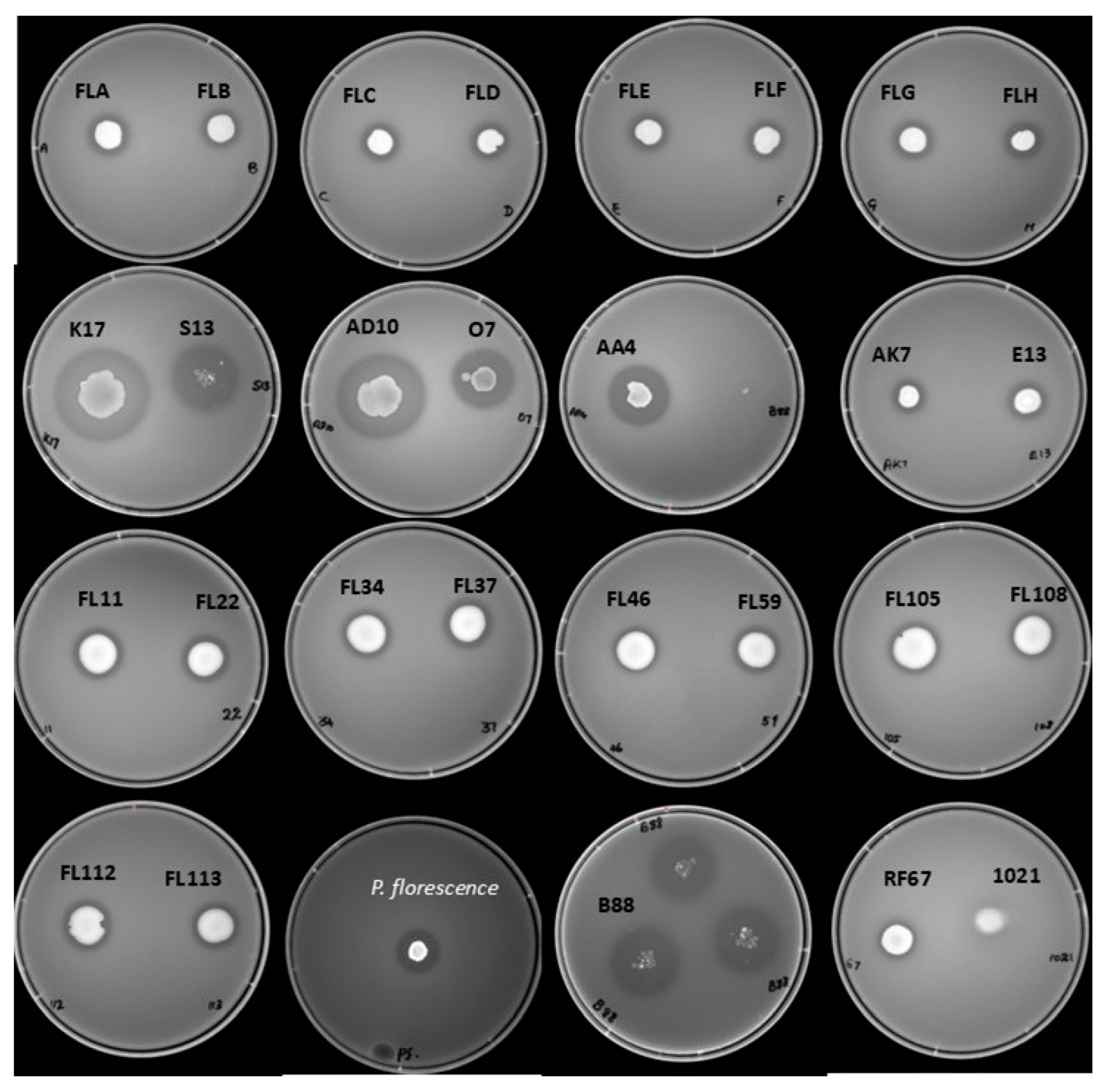
3.2. Quantification Assay of Phosphate Solubilization of PGP Bacteria
3.3. Qualitative Assay for ACC Deaminase Enzyme Activity and IAA Production Test
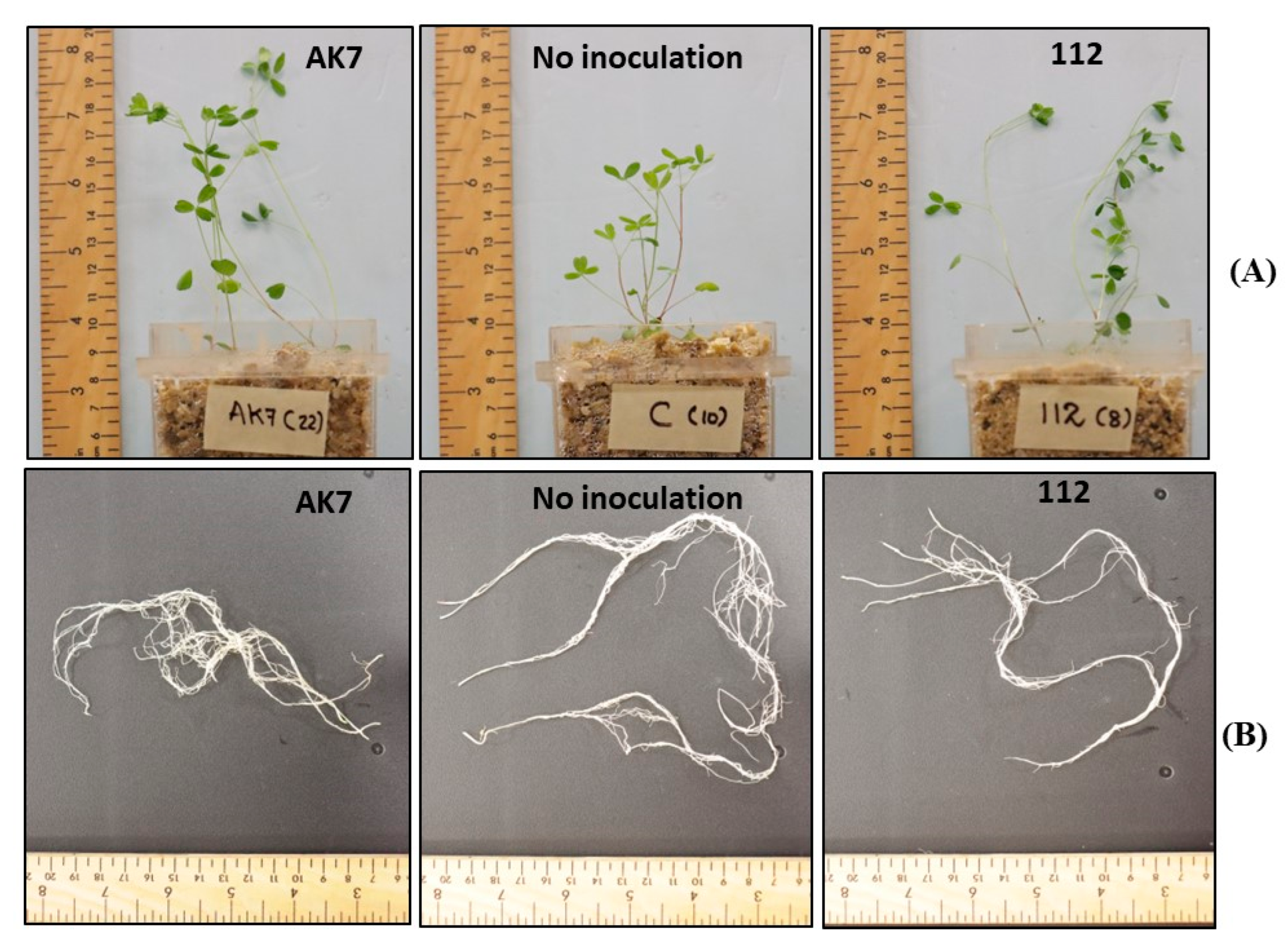
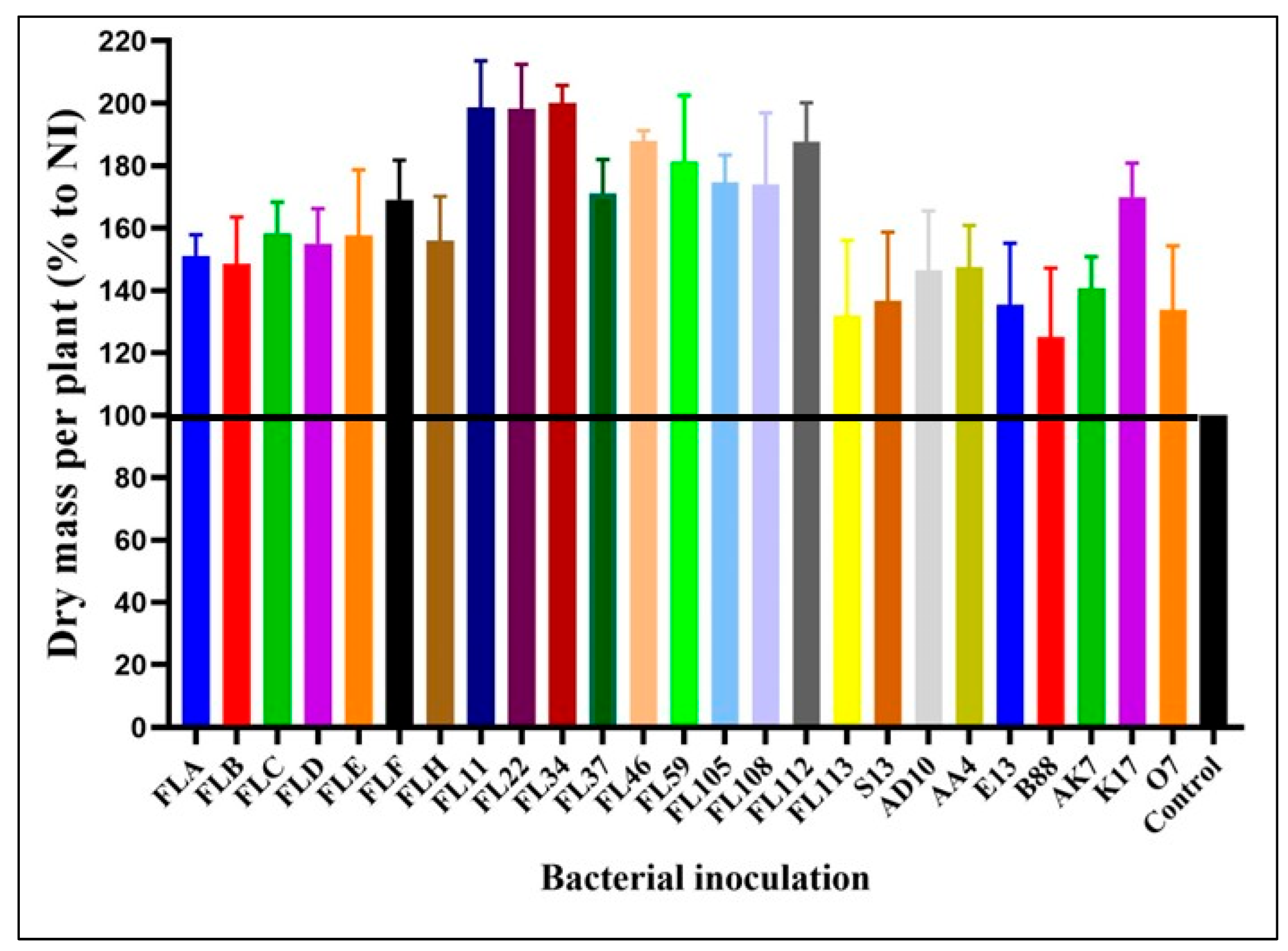
3.4. Plant Growth Response to Bacterial Inoculation
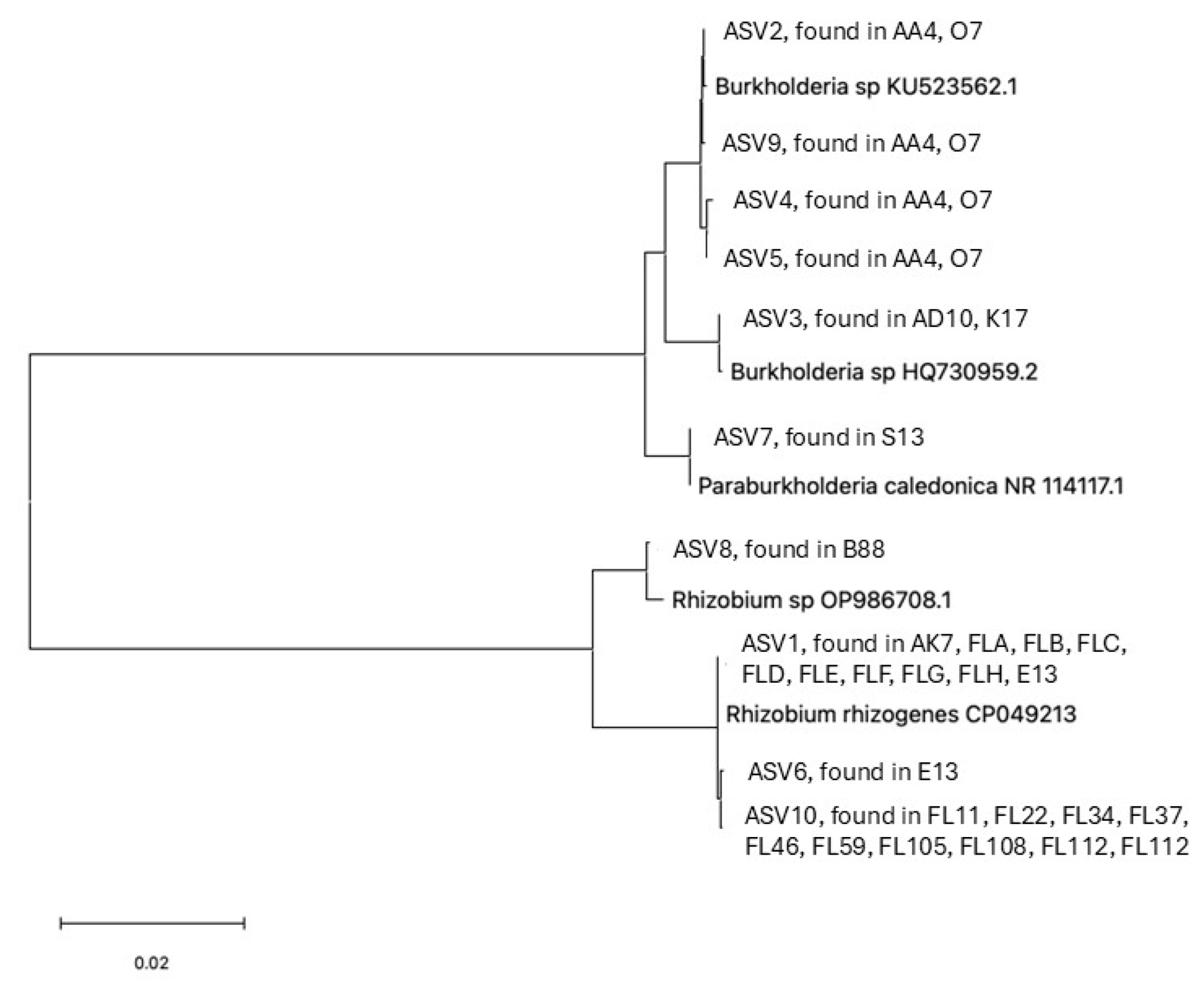
3.5. Genetic Characterization and Analysis
4. Discussion
5. Conclusions
Supplementary Materials
Author Contributions
Funding
Institutional Review Board Statement
Informed Consent Statement
Data Availability Statement
Acknowledgments
Conflicts of Interest
Abbreviations
| ACC | 1-aminocyclopropane-1-carboxylic acid |
| ANOVA | Analysis of variance |
| ASV | Assigned sequence variant |
| CO2 | Carbon dioxide |
| DNA | Deoxyribonucleic acid |
| FAD | Flavin adenine dinucleotides |
| FLs | Flavins |
| FMN | Flavin mononucleotides |
| IAA | Indole-3-acetic acid |
| N | Nitrogen |
| PGP | Plant growth promoting |
| PSB | Phosphate-solubilizing bacteria |
| RF | Riboflavin |
| RibBA | 3,4-Dihydroxy-2-butanone 4-phosphate synthase; GTP cyclohydrolase II |
| RNA | Ribonucleic acid |
| rRNA | Ribosomal ribonucleic acid |
| HPLC | High-Performance Liquid Chromatography |
| UPLC | Ultra-Performance Liquid Chromatography |
| MMNH4 | Minimal Mannitol medium containing NH4 |
| OD | Optical Density |
| PVK | Pikovskaya |
| PSI | Phosphate Solubilization Index |
| PNS | Plant Nutrient Solution |
References
- Murton, J. Subsistence production and commodity production in the british imperial food system: The case of nova scotia apples. Hist. Soc. 2021, 54, 335–358. [Google Scholar] [CrossRef]
- de Souza, R.; Ambrosini, A.; Passaglia, L.M.P. Plant growth-promoting bacteria as inoculants in agricultural soils. Genet. Mol Biol. Braz. J. Genet. 2015, 38, 401–419. [Google Scholar] [CrossRef]
- Patil, R.; Satpute, R.; Nalage, D. Plant microbiomes and their role in plant health. Microenviron. Microecol. Res. 2023, 5, 2. [Google Scholar] [CrossRef]
- Kempes, C.P.; van Bodegom, P.M.; Wolpert, D.; Libby, E.; Amend, J.; Hoehler, T. Drivers of bacterial maintenance and minimal energy requirements. Front. Microbiol. 2017, 8, 31. [Google Scholar] [CrossRef]
- Kai, M.; Effmert, U.; Piechulla, B. Bacterial-plant-interactions: Approaches to unravel the biological function of bacterial volatiles in the rhizosphere. Front. Microbiol. 2016, 7, 108. [Google Scholar]
- Yue, H.; Yue, W.; Jiao, S.; Kim, H.; Lee, Y.H.; Wei, G.; Song, W.; Shu, D. Plant domestication shapes rhizosphere microbiome assembly and metabolic functions. Microbiome 2023, 11, 70. [Google Scholar] [CrossRef] [PubMed]
- Clouse, K.M.; Wagner, M.R. Plant Genetics as a Tool for Manipulating Crop Microbiomes: Opportunities and Challenges. Front. Bioeng. Biotechnol. 2021, 743, 140682. [Google Scholar] [CrossRef] [PubMed]
- Oleńska, E.; Małek, W.; Wójcik, M.; Swiecicka, I.; Thijs, S.; Vangronsveld, J. Beneficial features of plant growth-promoting rhizobacteria for improving plant growth and health in challenging conditions: A methodical review. Sci. Total Environ. 2020, 743, 140682. [Google Scholar] [PubMed]
- Saleem, M.; Arshad, M.; Hussain, S.; Bhatti, A.S. Perspective of plant growth promoting rhizobacteria (PGPR) containing ACC deaminase in stress agriculture. J. Ind. Microbiol. Biotechnol. 2007, 34, 635–648. [Google Scholar] [CrossRef]
- Olanrewaju, O.S.; Glick, B.R.; Babalola, O.O. Mechanisms of action of plant growth promoting bacteria. World J. Microbiol. Biotechnol. 2017, 33, 197. [Google Scholar] [CrossRef]
- Glick, B.R. Plant Growth-Promoting Bacteria: Mechanisms and Applications. Scientifica 2012, 2012, 963401. [Google Scholar] [CrossRef] [PubMed]
- Nadeem, S.M.; Ahmad, M.; Zahir, Z.A.; Javaid, A.; Ashraf, M. The role of mycorrhizae and plant growth promoting rhizobacteria (PGPR) in improving crop productivity under stressful environments. Biotechnol. Adv. 2014, 32, 429–448. [Google Scholar] [CrossRef]
- Jaiswal, S.K.; Mohammed, M.; Ibny, F.Y.I.; Dakora, F.D. Rhizobia as a Source of Plant Growth-Promoting Molecules: Potential Applications and Possible Operational Mechanisms. Front. Sustain. Food Syst. 2021, 4, 619676. [Google Scholar] [CrossRef]
- Matiru, V.N.; Dakora, F.D. The rhizosphere signal molecule lumichrome alters seedling development in both legumes and cereals. New Phytol. 2005, 166, 439–444. [Google Scholar] [CrossRef] [PubMed]
- Ajeethan, N.; Yurgel, S.N.; Abbey, L. Role of Bacteria-Derived Flavins in Plant Growth Promotion and Phytochemical Accumulation in Leafy Vegetables. Int. J. Mol. Sci. 2023, 24, 13311. [Google Scholar] [CrossRef] [PubMed]
- Gutiérrez-Preciado, A.; Torres, A.G.; Merino, E.; Bonomi, H.R.; Goldbaum, F.A.; García-Angulo, V.A. Extensive identification of bacterial riboflavin transporters and their distribution across bacterial species. PLoS ONE 2015, 10, e0126124. [Google Scholar] [CrossRef] [PubMed]
- Jordan, D.B.; Bacot, K.O.; Carlson, T.J.; Kessel, M.; Viitanen, P.V. Plant riboflavin biosynthesis: Cloning, chloroplast localization, expression, purification, and partial characterization of spinach lumazine synthase. J. Biol. Chem. 1999, 274, 22114–22121. [Google Scholar] [CrossRef] [PubMed]
- Wu, Y.; Cheng, S.; Ding, X.; Lin, X.; Deng, S.; Peng, L.; Tian, H. Exogenous Riboflavin Application at Different Growth Stages Regulates Photosynthetic Accumulation and Grain Yield in Fragrant Rice. Agriculture 2024, 14, 1979. [Google Scholar] [CrossRef]
- Phillips, D.A.; Joseph, C.M.; Yang, G.-P.; Martínez-Romero, E.; Sanborn, J.R.; Volpin, H. Identification of lumichrome as a Sinorhizobium enhancer of alfalfa root respiration and shoot growth. Proc. Natl. Acad. Sci. USA 1999, 96, 12275–12280. [Google Scholar] [CrossRef]
- Palacios, O.A.; López, B.R.; Palacios-Espinosa, A.; Hernández-Sandoval, F.E.; de-Bashan, L.E. The immediate effect of riboflavin and lumichrome on the mitigation of saline stress in the microalga Chlorella sorokiniana by the plant-growth-promoting bacterium Azospirillum brasilense. Algal Res. 2021, 58, 102424. [Google Scholar] [CrossRef]
- Yurgel, S.N.; Rice, J.; Domreis, E.; Lynch, J.; Sa, N.; Qamar, Z.; Rajamani, S.; Gao, M.; Roje, S.; Bauer, W.D. Sinorhizobium meliloti flavin secretion and bacteria-host interaction: Role of the bifunctional RibBA protein. Mol. Plant-Microbe Interact. 2014, 27, 437–445. [Google Scholar] [CrossRef]
- Yurgel, S.N.; Lynch, J.; Rice, J.; Adhikari, N.; Roje, S. Quantification of Flavin Production by Bacteria. Bio-Protocol 2014, 4, e1197. [Google Scholar] [CrossRef]
- Hustad, S.; Ueland, P.M.; Schneede, J. Quantification of riboflavin, flavin mononucleotide, and flavin adenine dinucleotide in human plasma by capillary electrophoresis and laser-induced fluorescence detection. Clin. Chem. 1999, 45, 862–868. [Google Scholar] [CrossRef] [PubMed]
- Sieber, R. Note Determination of flavins in dairy products by high-performance liquid chromatography using sorboflavin as internal standard. J. Chromatogr. 1990, 511, 359–366. [Google Scholar]
- Ghann, W.E.; Ho, C.-N.; Wardeska, J.; Jiang, Y.-L. Studies of Surfactants Effect on Riboflavin Fluorescence and Its Determination in Commercial Food Products and Vitamin Tablets. Master’s Thesis, East Tennessee State University, Johnson City, TN, USA, 2008. [Google Scholar]
- Ajeethan, N.; Ali, S.; Fuller, K.D.; Abbey, L.; Yurgel, S.N. Apple Root Microbiome as Indicator of Plant Adaptation to Apple Replant Diseased Soils. Microorganisms 2023, 11, 1372. [Google Scholar] [CrossRef] [PubMed]
- Somerville, J.E.; Kahn, M.L. Cloning of the Glutamine Synthetase I Gene from Rhizobium meliloti. J. Bacteriol. 1983, 156, 168–176. [Google Scholar] [CrossRef] [PubMed]
- Galibert, F.; Finan, T.M.; Long, S.R.; Pühler, A.; Abola, P.; Ampe, F.; Barloy-Hubler, F.; Barnet, M.J.; Becker, A.; Boistard, P.; et al. The composite genome of the legume symbiont Sinorhizobium meliloti. Science 2001, 293, 668–672. [Google Scholar] [CrossRef] [PubMed]
- Manzoor, M.; Abbasi, M.K.; Sultan, T. Isolation of Phosphate Solubilizing Bacteria from Maize Rhizosphere and Their Potential for Rock Phosphate Solubilization–Mineralization and Plant Growth Promotion. Geomicrobiol. J. 2017, 34, 81–95. [Google Scholar] [CrossRef]
- Oteino, N.; Lally, R.D.; Kiwanuka, S.; Lloyd, A.; Ryan, D.; Germaine, K.J.; Dowling, D.N. Plant growth promotion induced by phosphate solubilizing endophytic Pseudomonas isolates. Front. Microbiol. 2015, 6, 745. [Google Scholar] [CrossRef]
- Nascimento, F.X.; Tavares, M.J.; Franck, J.; Ali, S.; Glick, B.R.; Rossi, M.J. ACC deaminase plays a major role in Pseudomonas fluorescens YsS6 ability to promote the nodulation of Alpha- and Betaproteobacteria rhizobial strains. Arch. Microbiol. 2019, 201, 817–822. [Google Scholar] [CrossRef] [PubMed]
- Penrose, D.M.; Glick, B.R. Methods for isolating and characterizing ACC deaminase-containing plant growth-promoting rhizobacteria. Physiol. Plant. 2003, 118, 10–15. [Google Scholar] [CrossRef] [PubMed]
- Ehmann, A. The Van Urk-Salkowski reagent—A sensitive and specific chromogenic reagent for silica gel thin-layer chromatographic detection and identification of indole derivatives. J. Chromatogr. 1977, 132, 267–276. [Google Scholar] [CrossRef] [PubMed]
- Mohite, B. Isolation and characterization of indole acetic acid (IAA) producing bacteria from rhizospheric soil and its effect on plant growth. J. Soil Sci. Plant Nutr. 2013, 13, 638–649. [Google Scholar] [CrossRef]
- Gordon, S.A.; Weber, R.P. Colorimetric Estimation of Indoleacetic Acid (with One Figure). Plant Physiol. 1951, 26, 192–195. [Google Scholar] [PubMed]
- Yurgel, S.N.; Berrocal, J.; Wilson, C.; Kahn, M.L. Pleiotropic effects of mutations that alter the Sinorhizobium meliloti cytochrome c respiratory system. Microbiology 2007, 153, 399–410. [Google Scholar] [CrossRef] [PubMed]
- Yurgel, S.N.; Kahn, M.L. Sinorhizobium meliloti dctA mutants with partial ability to transport dicarboxylic acids. J. Bacteriol. 2005, 187, 1161–1172. [Google Scholar] [CrossRef] [PubMed]
- Mahuku, G.S. A Simple Extraction Method Suitable for PCR-Based Analysis of Plant, Fungal, and Bacterial DNA. Mol. Biol. Report. 2004, 22, 71–81. [Google Scholar] [CrossRef]
- Fichot, E.B.; Norman, R.S. Microbial phylogenetic profiling with the Pacific Biosciences sequencing platform. Microbiome 2013, 1, 10. [Google Scholar] [CrossRef]
- Comeau, A.M.; Douglas, G.M.; Langille, M.G.I. Microbiome Helper: A Custom and Streamlined Workflow for Microbiome Research. mSystems 2017, 2, 28066818. [Google Scholar] [CrossRef]
- Quast, C.; Pruesse, E.; Yilmaz, P.; Gerken, J.; Schweer, T.; Yarza, P.; Peplies, J.; Glöckner, F.O. The SILVA ribosomal RNA gene database project: Improved data processing and web-based tools. Nucleic Acids Res. 2013, 41, D590–D596. [Google Scholar] [CrossRef] [PubMed]
- Saitou, N.; Nei, M. The neighbor-joining method: A new method for reconstructing phylogenetic trees. Mol. Biol. Evol. 1987, 4, 406–425. [Google Scholar] [CrossRef]
- Felsenstein, J. Confidence limits on phylogenies: An approach using the bootstrap. Evolution 1985, 39, 783–791. [Google Scholar]
- Tamura, K.; Nei, M.; Kumar, S. Prospects for inferring very large phylogenies by using the neighbor-joining method. Proc. Natl. Acad. Sci. USA 2004, 101, 11030–11035. [Google Scholar]
- Tamura, K.; Stecher, G.; Kumar, S. MEGA 11: Molecular Evolutionary Genetics Analysis Version 11. Mol. Biol. Evol. 2021, 38, 3022–3027. [Google Scholar] [CrossRef] [PubMed]
- Stecher, G.; Tamura, K.; Kumar, S. Molecular Evolutionary Genetics Analysis (MEGA) for macOS. Mol. Biol. Evol. 2020, 37, 1237–1239. [Google Scholar] [CrossRef] [PubMed]
- Bell, K.L.; Hiatt, H.D.; Niles, W.E. Seasonal Changes in Biomass Allocation in Eight Winter Annuals of the Mojave Desert. J. Ecol. 1979, 67, 781–787. [Google Scholar] [CrossRef]
- Ferioun, M.; Bouhraoua, S.; Srhiouar, N.; Tirry, N.; Belahcen, D.; Siang, T.C.; Louahlia, S.; El Ghachtouli, N. Optimized drought tolerance in barley (Hordeum vulgare L.) using plant growth-promoting rhizobacteria (PGPR). Biocatal. Agric. Biotechnol. 2023, 50, 102691. [Google Scholar] [CrossRef]
- Zhang, H.; Kim, M.-S.; Sun, Y.; Dowd, S.E.; Shi, H.; Paré, P.W. Soil Bacteria Confer Plant Salt Tolerance by Tissue-Specific Regulation of the Sodium Transporter HKT1. Mol. Plant-Microbe Interact. 2008, 21, 737–744. [Google Scholar] [CrossRef]
- Aslantaş, R.; Çakmakçi, R.; Şahin, F. Effect of plant growth promoting rhizobacteria on young apple tree growth and fruit yield under orchard conditions. Sci. Hortic. 2007, 111, 371–377. [Google Scholar] [CrossRef]
- Dakora, F.D.; Matiru, V.N.; Kanu, A.S. Rhizosphere ecology of lumichrome and riboflavin, two bacterial signal molecules eliciting developmental changes in plants. Front. Plant Sci. 2015, 6, 700. [Google Scholar] [CrossRef]
- Fahde, S.; Boughribil, S.; Sijilmassi, B.; Amri, A. Rhizobia: A Promising Source of Plant Growth-Promoting Molecules and Their Non-Legume Interactions: Examining Applications and Mechanisms. Agriculture 2023, 13, 1279. [Google Scholar] [CrossRef]
- Dent, D.; Cocking, E. Establishing symbiotic nitrogen fixation in cereals and other non-legume crops: The Greener Nitrogen Revolution. Agric. Food Secur. 2017, 6, 7. [Google Scholar] [CrossRef]
- Gopalakrishnan, S.; Sathya, A.; Vijayabharathi, R.; Varshney, R.K.; Gowda, C.L.L.; Krishnamurthy, L. Plant growth promoting rhizobia: Challenges and opportunities. 3 Biotech 2015, 5, 355–377. [Google Scholar] [CrossRef]
- Offringa, I.A.; Melchers, L.S.; Regensburg-Tuink, A.J.G.; Costantinot, P.; Schilperoort, R.A.; Hooykaas, P.J.J. Complementation of Agrobacterium tumefaciens tumor-inducing aux mutants by genes from the TR-region of the Ri plasmid of Agrobacterium rhizogenes (hairy root disease/phytohormones). Proc. Natl. Acad. Sci. USA 1986, 83, 6935–6939. [Google Scholar] [CrossRef]
- Ying, W.; Wen, G.; Xu, W.; Liu, H.; Ding, W.; Zheng, L.; He, Y.; Yuan, H.; Yan, D.; Cui, F.; et al. Agrobacterium rhizogenes: Paving the road to research and breeding for woody plants. Front. Plant Sci. 2023, 14, 1196561. [Google Scholar] [CrossRef]
- Bagal, D.; Chowdhary, A.A.; Mehrotra, S.; Mishra, S.; Rathore, S.; Srivastava, V. Metabolic engineering in hairy roots: An outlook on production of plant secondary metabolites. Plant Physiol. Biochem. 2023, 201, 107847. [Google Scholar] [CrossRef]
- Hall, C.M.; Busch, J.D.; Shippy, K.; Allender, C.J.; Kaestli, M.; Mayo, M.; Sahl, J.W.; Schupp, J.M.; Colman, R.E.; Keim, P.; et al. Diverse Burkholderia species isolated from soils in the southern United States with no evidence of B. pseudomallei. PLoS ONE 2015, 10, e0143254. [Google Scholar] [CrossRef] [PubMed]
- Banik, A.; Mukhopadhaya, S.K.; Dangar, T.K. Characterization of N2-fixing plant growth promoting endophytic and epiphytic bacterial community of Indian cultivated and wild rice (Oryza spp.) genotypes. Planta 2016, 243, 799–812. [Google Scholar] [CrossRef] [PubMed]
- Eberl, L.; Vandamme, P. Members of the genus Burkholderia: Good and bad guys. F1000Research 2016, 5, 1007. [Google Scholar] [CrossRef]
- Lardi, M.; de Campos, S.B.; Purtschert, G.; Eberl, L.; Pessi, G. Competition experiments for legume infection identify Burkholderia phymatum as a highly competitive β-rhizobium. Front. Microbiol. 2017, 8, 1527. [Google Scholar] [CrossRef]
- Tapia-García, E.Y.; Hernández-Trejo, V.; Guevara-Luna, J.; Rojas-Rojas, F.U.; Arroyo-Herrera, I.; Meza-Radilla, G.; Vásquez-Murrieta, M.S.; Estrada-de los Santos, P. Plant growth-promoting bacteria isolated from wild legume nodules and nodules of Phaseolus vulgaris L. trap plants in central and southern Mexico. Microbiol. Res. 2020, 239, 126522. [Google Scholar] [CrossRef] [PubMed]
- Arshadl, M.; Frankenberger, W.T. Plant Growth-Regulating Substances in the Rhizosphere: Microbial Production and Functions. Adv. Agron. 1998, 62, 45–151. [Google Scholar]
- Vial, L.; Groleau, M.C.; Dekimpe, V.; Deziel, E. Burkholderia Diversity and Versatility: An Inventory of the Extracellular Products. J. Microbiol. Biotechnol. 2007, 17, 1407–1429. [Google Scholar] [PubMed]
- Li, X.; Li, Y.; Wang, R.; Wang, Q.; Lu, L. Toxoflavin Produced by Burkholderia gladioli from Lycoris aurea Is a New Broad-Spectrum Fungicide. Appl. Environ. Microbiol. 2019, 85, e00106-19. [Google Scholar] [CrossRef]
- Stolyar, S.; Van Dien, S.; Hillesland, K.L.; Pinel, N.; Lie, T.J.; Leigh, J.A.; Stahl, D.A. Metabolic modeling of a mutualistic microbial community. Mol. Syst. Biol. 2007, 3, 92. [Google Scholar] [CrossRef] [PubMed]
- Massot, F.; Bernard, N.; Alvarez, L.M.M.; Martorell, M.M.; Mac Cormack, W.P.; Ruberto, L.A.M. Microbial associations for bioremediation. What does “microbial consortia” mean? Appl. Microbiol. Biotechnol. 2022, 106, 2283–2297. [Google Scholar] [CrossRef]
- Bhatt, P.; Bhatt, K.; Sharma, A.; Zhang, W.; Mishra, S.; Chen, S. Biotechnological basis of microbial consortia for the removal of pesticides from the environment. Crit. Rev. Biotechnol. 2021, 41, 317–338. [Google Scholar] [CrossRef] [PubMed]
- Nunes, P.S.O.; Lacerda-Junior, G.V.; Mascarin, G.M.; Guimarães, R.A.; Medeiros, F.H.V.; Arthurs, S.; Bettiol, W. Microbial consortia of biological products: Do they have a future? Biol. Control 2024, 188, 105439. [Google Scholar]
- Gyaneshwar, P.; Naresh Kumar, G.; Parekh, L.J.; Poole, P.S. Role of soil microorganisms in improving P nutrition of plants. Plant Soil 2002, 245, 83–93. [Google Scholar] [CrossRef]
- de Andrade, L.A.; Santos, C.H.B.; Frezarin, E.T.; Sales, L.R.; Rigobelo, E.C. Plant growth-promoting rhizobacteria for sustainable agricultural production. Microorganisms 2023, 11, 1088. [Google Scholar] [CrossRef]
- Rawat, P.; Das, S.; Shankhdhar, D.; Shankhdhar, S.C. Phosphate-Solubilizing Microorganisms: Mechanism and Their Role in Phosphate Solubilization and Uptake. J. Soil. Sci. Plant Nutr. 2021, 21, 49–68. [Google Scholar] [CrossRef]
- Richardson, A.E.; Simpson, R.J. Soil microorganisms mediating phosphorus availability. Plant Physiol. 2011, 156, 989–996. [Google Scholar] [CrossRef]
- Khoso, M.A.; Wagan, S.; Alam, I.; Hussain, A.; Ali, Q.; Saha, S.; Poudel, T.R.; Manghwar, H.; Liu, F. Impact of plant growth-promoting rhizobacteria (PGPR) on plant nutrition and root characteristics: Current perspective. Plant Stress 2024, 11, 100341. [Google Scholar] [CrossRef]
- Damam, M.; Kalpana, K.; Bagyanarayana, G.; Rana, K. Plant Growth Promoting Substances (Phytohormones) Produced by Rhizobacterial Strains Isolated from the Rhizosphere of Medicinal Plants. Int. J. Pharm. Sci. Rev. Res. 2016, 24, 130–136. [Google Scholar]
- Patten, C.L.; Glick, B.R. Role of Pseudomonas putida indoleacetic acid in development of the host plant root system. Appl. Environ. Microbiol. 2002, 68, 3795–3801. [Google Scholar] [CrossRef] [PubMed]
- Thimann, K.V. On the physiology of the formation of nodules on legume roots. Proc. Natl. Acad. Sci. USA 1936, 22, 511–514. [Google Scholar] [CrossRef] [PubMed]
- Tang, J.; Li, Y.; Zhang, L.; Mu, J.; Jiang, Y.; Fu, H.; Zhang, Y.; Cui, H.; Yu, X.; Ye, Z. Biosynthetic pathways and functions of indole-3-acetic acid in microorganisms. Microorganisms 2023, 11, 2077. [Google Scholar] [CrossRef] [PubMed]
- Spaepen, S.; Vanderleyden, J.; Remans, R. Indole-3-acetic acid in microbial and microorganism-plant signaling. FEMS Microbiol. Rev. 2007, 31, 425–448. [Google Scholar] [CrossRef]
- Spaepen, S.; Vanderleyden, J. Auxin and plant-microbe interactions. Cold Spring Harb. Perspect. Biol. 2011, 3, a001438. [Google Scholar] [CrossRef]
- Patten, C.L.; Blakney, A.J.; Coulson, T.J. Activity, distribution and function of indole-3-acetic acid biosynthetic pathways in bacteria. Crit. Rev. Microbiol. 2013, 39, 395–415. [Google Scholar] [CrossRef]
- Chandra, D.; Srivastava, R.; Glick, B.R.; Sharma, A.K. Drought-Tolerant Pseudomonas spp. Improve the Growth Performance of Finger Millet (Eleusine coracana (L.) Gaertn.) Under Non-Stressed and Drought-Stressed Conditions. Pedosphere 2018, 28, 227–240. [Google Scholar] [CrossRef]
- Zhang, G.; Sun, Y.; Sheng, H.; Li, H.; Liu, X. Effects of the inoculations using bacteria producing ACC deaminase on ethylene metabolism and growth of wheat grown under different soil water contents. Plant Physiol. Biochem. 2018, 125, 178–184. [Google Scholar] [CrossRef] [PubMed]
- Ali, S.; Kim, W.C. Plant growth promotion under water: Decrease of waterlogging-induced ACC and ethylene levels by ACC deaminase-producing bacteria. Front. Microbiol. 2018, 9, 1096. [Google Scholar] [CrossRef]
- Gupta, S.; Pandey, S. ACC deaminase producing bacteria with multifarious plant growth promoting traits alleviates salinity stress in French Bean (Phaseolus vulgaris) plants. Front. Microbiol 2019, 10, 1506. [Google Scholar] [CrossRef] [PubMed]
- Masson-Boivin, C.; Sachs, J.L. Symbiotic nitrogen fixation by rhizobia—The roots of a success story. Curr. Opin. Plant Biol. 2018, 44, 7–15. [Google Scholar] [CrossRef] [PubMed]
- Chi, F.; Yang, P.; Han, F.; Jing, Y.; Shen, S. Proteomic analysis of rice seedlings infected by Sinorhizobium meliloti 1021. Proteomics 2010, 10, 1861–1874. [Google Scholar] [CrossRef] [PubMed]
- Wang, X.L.; Cui, W.J.; Feng, X.Y.; Zhong, Z.M.; Li, Y.; Chen, W.X.; Chen, W.F.; Shao, X.M.; Tian, C.F. Rhizobia inhabiting nodules and rhizosphere soils of alfalfa: A strong selection of facultative microsymbionts. Soil Biol. Biochem. 2018, 116, 340–350. [Google Scholar] [CrossRef]
- Peix, A.; Ramírez-Bahena, M.H.; Velázquez, E.; Bedmar, E.J. Bacterial associations with legumes. Crit. Rev. Plant Sci. 2015, 34, 17–42. [Google Scholar] [CrossRef]
- Kiba, T.; Kudo, T.; Kojima, M.; Sakakibara, H. Hormonal control of nitrogen acquisition: Roles of auxin, abscisic acid, and cytokinin. J. Exp. Bot. 2011, 62, 1399–1409. [Google Scholar] [CrossRef]
- Ristova, D.; Carré, C.; Pervent, M.; Medici, A.; Kim, G.J.; Scalia, D.; Ruffel, S.; Birnbaum, K.D.; Lacombe, B.; Busch, W.; et al. Combinatorial interaction network of transcriptomic and phenotypic responses to nitrogen and hormones in the Arabidopsis thaliana root. Sci. Signal. 2016, 9, rs13. [Google Scholar] [CrossRef]
- O’Brien, J.A.; Vega, A.; Bouguyon, E.; Krouk, G.; Gojon, A.; Coruzzi, G.; Gutiérrez, R.A. Nitrate transport, sensing, and responses in plants. Mol. Plant 2016, 9, 837–856. [Google Scholar] [CrossRef] [PubMed]
- Liu, Y.; von Wirén, N. Ammonium as a signal for physiological and morphological responses in plants. J. Exp. Bot. 2017, 68, 2581–2592. [Google Scholar] [CrossRef] [PubMed]
- Cheng, Y.; Dai, X.; Zhao, Y. Auxin biosynthesis by the YUCCA flavin monooxygenases controls the formation of floral organs and vascular tissues in Arabidopsis. Genes Dev. 2006, 20, 1790–1799. [Google Scholar] [CrossRef]
- Mazzola, M. Assessment and management of soil microbial community structure for disease suppression. Annu. Rev. Phytopathol. 2004, 42, 35–59. [Google Scholar] [CrossRef]
- Tardy, V.; Mathieu, O.; Lévêque, J.; Terrat, S.; Chabbi, A.; Lemanceau, P.; Ranjard, L.; Maron, P.A. Stability of soil microbial structure and activity depends on microbial diversity. Environ. Microbiol. Rep. 2014, 6, 173–183. [Google Scholar] [CrossRef] [PubMed]
- Santhanam, R.; Luu, V.T.; Weinhold, A.; Goldberg, J.; Oh, Y.; Baldwin, I.T. Native root-associated bacteria rescue a plant from a sudden-wilt disease that emerged during continuous cropping. Proc. Natl. Acad. Sci. USA 2015, 112, E5013–E5020. [Google Scholar] [CrossRef]



| Screening | Round 1 Number of Bacteria | Round 2 Number of Bacteria | Round 3 number of Bacteria |
|---|---|---|---|
| Initial | 175 | 188 | 470 |
| First screening | 78 | 72 | 282 |
| Second screening | 36 | 45 | 114 |
| Third screening | 25 | 24 | 63 |
| Fourth screening | 8 (final) | 18 | 34 |
| Fifth screening | - | 10 (final) | 16 |
| Sixth screening | - | - | 8 (final) |
| Isolates | Colony + Halo Diameter (cm) | Colony Diameter (cm) | Halo Diameter (cm) | Phosphate Solubilization Index (PSI) |
|---|---|---|---|---|
| FLA | 1.500 | 1.000 | 0.500 | 0.50 ± 0.05 fgh |
| FLB | 1.533 | 1.033 | 0.500 | 0.48 ± 0.02 fghi |
| FLC | 1.500 | 1.000 | 0.500 | 0.50 ± 0.05 fgh |
| FLD | 1.500 | 1.000 | 0.500 | 0.50 ± 0.05 fgh |
| FLE | 1.433 | 1.000 | 0.433 | 0.43 ± 0.05 ghij |
| FLF | 1.400 | 0.933 | 0.467 | 0.50 ± 0.06 fgh |
| FLG | 1.467 | 0.967 | 0.500 | 0.52 ± 0.03 fg |
| FLH | 1.433 | 0.967 | 0.467 | 0.48 ± 0.03 fghi |
| FL11 | 1.767 | 1.333 | 0.433 | 0.33 ± 0.05 hij |
| FL22 | 1.767 | 1.300 | 0.467 | 0.36 ± 0.04 ghij |
| FL34 | 1.800 | 1.333 | 0.467 | 0.35 ± 0.04 ghij |
| FL37 | 1.767 | 1.333 | 0.433 | 0.33 ± 0.05 hij |
| FL46 | 1.700 | 1.333 | 0.367 | 0.28 ± 0.04 j |
| FL59 | 1.733 | 1.333 | 0.400 | 0.30 ± 0.03 j |
| FL105 | 1.800 | 1.400 | 0.400 | 0.29 ± 0.02 j |
| FL108 | 1.700 | 1.300 | 0.400 | 0.31 ± 0.01 ij |
| FL112 | 1.767 | 1.333 | 0.433 | 0.33 ± 0.05 hij |
| FL113 | 1.767 | 1.333 | 0.433 | 0.33 ± 0.05 hij |
| AK7 | 1.250 | 0.750 | 0.500 | 0.66 ± 0.04 f |
| E13 | 1.333 | 0.967 | 0.367 | 0.38 ± 0.04 ghij |
| AA4 | 2.367 | 0.967 | 1.400 | 1.45 ± 0.13 c |
| AD10 | 2.733 | 1.233 | 1.500 | 1.25 ± 0.10 de |
| O7 | 2.267 | 1.000 | 1.267 | 1.27 ± 0.13 d |
| B88 | 2.450 | 0.740 | 1.710 | 2.31 ± 0.23 b |
| K17 | 3.333 | 1.600 | 1.733 | 1.08 ± 0.04 e |
| S13 | 2.367 | 0.567 | 1.800 | 3.20 ± 0.30 a |
| P. fluorescence F113 | 1.433 | 0.667 | 0.767 | 1.15 ± 0.01 de |
| 1021 | 0.967 | 0.967 | 0.000 | 0.00 ± 0.00 k |
| Isolates | IAA Production (OD 520) | ACC Deaminase Activity |
|---|---|---|
| FLA | 0.219 + 0.01 de | 3 |
| FLB | 0.190 + 0.03 e–h | 3 |
| FLC | 0.157 + 0.01 j | 2 |
| FLD | 0.205 + 0.03 ef | 5 |
| FLE | 0.188 + 0.01 f–i | 3 |
| FLF | 0.160 + 0.00 ij | 6 |
| FLG | 0.166 + 0.01 g–j | 3 |
| FLH | 0.183 + 0.01 f–j | 2 |
| FL11 | 0.164 + 0.01 g–j | 4 |
| FL22 | 0.172 + 0.00 g–j | 6 |
| FL34 | 0.175 + 0.02 f–j | 5 |
| FL37 | 0.162 + 0.01 hij | 6 |
| FL46 | 0.172 + 0.01 g–j | 6 |
| FL59 | 0.163 + 0.02 g–j | 6 |
| FL105 | 0.181 + 0.03 f–j | 3 |
| FL108 | 0.165 + 0.02 g–j | 5 |
| FL112 | 0.157 + 0.01 j | 4 |
| FL113 | 0.153 + 0.00 j | 4 |
| AK7 | 0.272 + 0.01 ab | 6 |
| E13 | 0.193 + 0.00 efg | 6 |
| AA4 | 0.242 + 0.01 bcd | 3 |
| AD10 | 0.268 + 0.01 abc | 3 |
| O7 | 0.241 + 0.02 cd | 4 |
| B88 | 0.292 + 0.01 a | 2 |
| K17 | 0.259 + 0.01 bc | 4 |
| S13 | 0.255 + 0.00 bc | 6 |
| Isolate | Shoots Dry Weight (mg) | N% in Shoots | N Found in Shoots (mg) | Estimated Root Weight (mg) * | Estimated N Content in Roots | Estimated N Content in Plants | Applied N per Plant (mg) |
|---|---|---|---|---|---|---|---|
| AK7 | 11.3 | 2.67 | 0.3017 | 2.486 | 0.0664 | 0.3681 | 0.5227 |
| FL112 | 13.9 | 2.77 | 0.3850 | 3.058 | 0.0847 | 0.4697 | 0.5227 |
| Control | 7.4 | 2.45 | 0.1813 | 1.628 | 0.0399 | 0.2212 | 0.5227 |
Disclaimer/Publisher’s Note: The statements, opinions and data contained in all publications are solely those of the individual author(s) and contributor(s) and not of MDPI and/or the editor(s). MDPI and/or the editor(s) disclaim responsibility for any injury to people or property resulting from any ideas, methods, instructions or products referred to in the content. |
© 2026 by the authors. Licensee MDPI, Basel, Switzerland. This article is an open access article distributed under the terms and conditions of the Creative Commons Attribution (CC BY) license.
Share and Cite
Ajeethan, N.; Abbey, L.; Yurgel, S.N. Isolation and Characterization of Flavin-Secreting Bacteria from Apple Roots and Evaluation of Their Plant Growth-Promoting Potential. Appl. Microbiol. 2026, 6, 22. https://doi.org/10.3390/applmicrobiol6020022
Ajeethan N, Abbey L, Yurgel SN. Isolation and Characterization of Flavin-Secreting Bacteria from Apple Roots and Evaluation of Their Plant Growth-Promoting Potential. Applied Microbiology. 2026; 6(2):22. https://doi.org/10.3390/applmicrobiol6020022
Chicago/Turabian StyleAjeethan, Nivethika, Lord Abbey, and Svetlana N. Yurgel. 2026. "Isolation and Characterization of Flavin-Secreting Bacteria from Apple Roots and Evaluation of Their Plant Growth-Promoting Potential" Applied Microbiology 6, no. 2: 22. https://doi.org/10.3390/applmicrobiol6020022
APA StyleAjeethan, N., Abbey, L., & Yurgel, S. N. (2026). Isolation and Characterization of Flavin-Secreting Bacteria from Apple Roots and Evaluation of Their Plant Growth-Promoting Potential. Applied Microbiology, 6(2), 22. https://doi.org/10.3390/applmicrobiol6020022