


Abstract
In this study, we used a culture-dependent approach to explore the biochemical potential of bacteria associated with two genera of soft corals collected from the Red Sea (phylum Cnidaria, class Anthozoa, subclass Octocorallia, order Alcyonaceae, and family Alcyoniidae). The soft corals were identified as Cladiella sp. and Paralemnalia sp. The associated bacteria were isolated on marine agar, nutrient agar, starch casein agar, ISP2 Agar, and M1 agar. The highest proportion of strains was recovered using marine agar, followed by nutrient agar and M1. We focused on Gram-positive bacteria and evaluated their cytotoxicity and antimicrobial activity. About 24% of the bacterial samples demonstrated promising cytotoxicity against Ehrlich ascites carcinoma (EAC). Out of 12 bioactive isolated strains, two bacterial isolates showed strong cytotoxicity, with IC50 values of 134.47 and 148.5 µg/mL, respectively. Nine isolates displayed significant antimicrobial activity against two tested pathogens. Based on the 16S rRNA gene sequence, two bioactive bacterial isolates were identified as Bacillus subtilis and Microbacterium sp. These findings indicate that bacteria associated with soft corals could be a valuable source of new bioactive compounds with potential uses in drug development. Furthermore, our data add important insights to the understudied field of host-microbiome relationships in soft corals.
1. Introduction
Antibiotic resistance and the high mortality rate linked to cancer, which is the second leading cause of death globally [1], are two of the most significant global health threats [2], suggesting the urgent need for new antibiotics and anticancer treatments. A major issue with certain powerful antibiotics and anticancer drugs is their high toxicity at effective doses, underscoring the need to develop new antibiotics with fewer side effects [3]. Marine ecosystems are highly biodiverse, inhabited by a variety of animals and microbes, and are important sources of bioactive chemicals [4,5]. Invertebrates account for about 65% of the marine natural products reported. Soft corals are an intriguing source of bioactive natural compound products, particularly diterpenes, triterpenes, and steroids. Anticancer properties against several cancers are the most frequently reported bioactivities of soft coral-derived natural products [6]. Marine invertebrates produce complex secondary metabolites that are valuable for pharmaceutical development, providing compounds for drug design [7] and helping the organisms survive in extreme environments. However, isolating these metabolites is challenging due to limited biomass availability. Additionally, many substances initially thought to come from marine invertebrates are produced by symbiotic microorganisms or derived from the organisms they consume [8,9]. Therefore, microorganisms associated with marine invertebrates are regarded as important sources of bioactive compounds in the marine environment [7].
The Red Sea has a distinctive marine environment characterized by unique geochemical and physical properties with surface temperatures ranging from 24 °C to 35 °C and dropping to 22 °C at 200 m depth [10]. Its high salinity stems from high evaporation, the lack of major river inflows, and low rainfall. Additionally, the region is known for its exceptional coral reef systems and seasonal variations in air temperature. These factors contribute to the Red Sea’s remarkable microbial diversity and the presence of unique primary and secondary metabolites [10,11]. This study aimed to explore the bioactive potential of bacterial isolates from two soft coral species collected in the Red Sea, using culture-dependent methods. We specifically focused on Gram-positive bacteria, as they are known for their prolific production of natural compounds [12]. Bacteria were isolated from homogenates of these animals and tested for their cytotoxic and antibiotic properties.
2. Materials and Methods
2.1. Soft Coral Collection and Processing
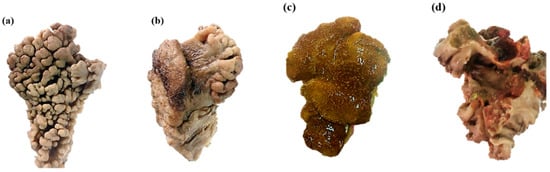
Soft corals were collected via SCUBA diving in the Red Sea near El Tor, in the Gulf of Suez, Egypt (28°12′41.8″ N 33°35′19.5″ E). Samples were collected at depths ranging from two to six meters (Faculty of Science, Suez University, Research Ethical Committee approval number: Suez Sci_IRB:07/05/2025/20). Two specimens from two different species were carefully hand-picked (Figure 1). Each specimen was individually placed in a sterilized bag filled with seawater and kept in an ice-filled container until transferred to the laboratory. A sample from each animal was then homogenized to enable precise microbial isolation.
Figure 1.
Soft coral species used in this study: (a) Cladiella sp. frontal view; (b) Cladiella sp. dorsal view; (c) Paralemnalia thyrsoides frontal view; (d) Paralemnalia thyrsoides dorsal view.
2.2. Identification of Invertebrates
A preliminary morphological identification of the collected soft coral specimens was performed using the hydrogen peroxide (H2O2) protocol. For identification, the two samples were rinsed with seawater to remove any debris. A sufficient amount of 10% H2O2 solution was added to each sample to ensure the coral was fully covered, and the mixture was left to react for one hour, with continuous monitoring to prevent overexposure. The release of oxygen bubbles helped break down the organic material. Once disaggregation was complete, each sample was rinsed with sterile seawater to retain the invertebrates. The samples were then prepared for microscopic examination and taxonomic analysis [13].
Genomic DNA was extracted from individual soft corals preserved in DNA/RNA later using the Quick-DNA Fungal/Bacterial Miniprep Kit (Zymo Research, Irvine, CA, USA) for molecular identification. Each sample was homogenized using liquid nitrogen. Amplification of the partial mitochondrial cytochrome oxidase I (COI) gene sequence was performed using LCO1490-JJ and HCO2198-JJ primers (Bento Lab, London, UK) [14] in a 25 μL PCR using Platinum® PCR SuperMix (Thermo Scientific, Waltham, MA, USA). The thermocycling conditions were as follows: an initial denaturation at 98 °C for 30 s, followed by 35 cycles of denaturation at 98 °C for 5 s, annealing at 55 °C for 5 s, extension at 72 °C for 60 s, and a final extension at 72 °C for 5 min. Amplicons were visualized via agarose gel electrophoresis and then sequenced. The resulting sequences were then queried against the NCBI database using BLAST version 2.17.0+ to determine the species identity. Partial mitochondrial COI gene sequences have been submitted to NCBI with the accession number PX210475.
2.3. Isolation of Soft Coral-Associated Bacteria
Each soft coral specimen was carefully rinsed three times with sterilized seawater (NSW) to remove debris and unattached bacterial cells. A sterile razor blade was then used to dissect the coral samples into small pieces. These pieces were processed in a blender to create a homogenized mixture. The resulting homogenate was serially diluted using NSW and inoculated with 100 μL onto solid media, including marine agar, nutrient agar, starch casein agar, ISP2 Agar, and M1 agar [15,16]. All media were prepared with NSW, except for the marine agar, which was made with distilled water and enriched with 20% NaCl. To suppress fungal growth, 100 µg/mL cycloheximide and 25 µg/mL nystatin were added to all media. Additionally, to inhibit the growth of fast-growing Gram-negative bacteria, 25 µg/mL of nalidixic acid was added [16]. The plates were incubated at 30 °C for one month and inspected periodically for the development of distinct colonies. Morphologically unique isolates were selected from each of the five media types for each specimen and purified. These isolates were repeatedly streaked onto fresh agar plates until axenic colonies were obtained.
2.4. Extraction of Secondary Metabolites
Single colonies were transferred to their respective isolation media and incubated on a rotary shaker at 150 rpm and 30 °C for 3 to 5 days to develop starter cultures. These cultures were then inoculated with 100 mL of previously used isolation media in Erlenmeyer flasks, which were incubated at 30 °C with shaking at 150 rpm until they reached the stationary phase, approximately after 4 days. Once the cultures entered the stationary phase, they were stored at −20 °C for 24 h. An equal volume of ethyl acetate was then added to the liquid cultures, which were vigorously mixed at 150 rpm for 1 h at room temperature. The mixture was transferred to a separatory funnel for phase separation, and this extraction step was repeated three times. The organic solvent was evaporated from the organic phase residue, which was then weighed and dissolved in DMSO to produce a 5 mg/mL solution.
2.5. Screening for Antimicrobial Activity
2.5.1. The Well Diffusion Methods
A modified agar well diffusion assay [17] was used to assess the antimicrobial potential of 100 bacterial isolates and their effectiveness against four bacteria, namely, Staphylococcus aureus (ATCC 25923), Escherichia coli (ATCC 25922), Pseudomonas sp. (ATCC 27853), and Candida albicans (ATCC 10231) as the fungal model. In brief, a well measuring 6 mm in diameter was created in the agar using a sterile base of yellow tips. To prevent leakage of the extract, each well was filled with 20 µL of nutrient agar and allowed to solidify. Next, 50 µL of the metabolic extract dissolved in DMSO at 5 mg/mL was added to each well. The plates were incubated for 24 h for the bacteria and 48 h for the yeast at 37 °C. Additionally, the effects of DMSO were tested against all pathogenic strains as negative controls. The diameter of inhibition zones was measured in millimeters to evaluate the antimicrobial activity.
2.5.2. Minimal Inhibitory Concentration (MIC) for Promising Isolates
The MIC of promising isolates (with inhibition zone diameter ≥ 7 mm) was determined using the broth microdilution method [18]. The stock solution was 1 mg/mL. For bacterial testing, 100 μL of a 1% w/v sample solution in DMSO was added to a U-bottom 96-well microtiter plate, followed by 100 μL of Mueller-Hinton broth. The samples were then serially diluted (1:1) by transferring 100 μL of the mixture to the next well and adding 100 μL of fresh Mueller-Hinton broth, resulting in concentrations from 500 μg/mL down to approximately 4 μg/mL. A microbial inoculum prepared from a fresh culture was added to each well at approximately 106 to 107 CFU/mL. The plates were incubated at 37 °C for 24 h. Growth was visually checked, and the MIC was identified as the lowest concentration with no turbidity. Amoxicillin and Imipenem/cilastatin served as positive controls, while DMSO was used as the negative control.
2.6. Screening for Cytotoxicity Against Ehrlich Ascites Carcinoma Cells
Ehrlich’s ascites carcinoma (EAC) cells were collected from female Swiss albino mice at the National Cancer Institute, Cairo University, Egypt. These cells were suspended in sterile isotonic saline (0.9%). Cell viability was assessed and found to be 99% using the trypan blue assay [19]. EAC cells (1 × 10⁷ cells/mL in phosphate buffer) were treated with bacterial metabolic extracts at concentrations of 1000, 500, 250, and 50 µg/mL in DMSO. After incubating for 120 min at 37 °C, a 50% trypan blue solution was added to part of the EAC mixture. The number of damaged cells, indicated by stain penetration, was counted using a hemocytometer and light microscope.
2.7. DNA Extraction of Bacterial Isolates
Genomic DNA from the bacterial isolates exhibiting promising bioactivity was isolated using the Quick-DNA Fungal/Bacterial Miniprep Kit (Zymo Research, Irvine, CA, USA). A single colony was cultivated in 5 mL of nutrient broth and incubated on a shaker at 150 rpm and 30 °C for three days until turbidity was reached. The resulting cells were then pelleted and resuspended in Bashing Bead Buffer. Proteinase K (50 μL) was added, and the mixture was incubated at 56 °C for 1 h to facilitate cell lysis. Following this, DNA extraction was carried out following the manufacturer’s instructions. The DNA’s concentration and purity were measured using a NanoDrop OneC Microvolume UV-Vis Spectrophotometer (Thermo Scientific, Waltham, MA, USA), checked via gel electrophoresis, and stored at −20 °C.
2.8. Bacterial DNA Amplification and Taxonomy Determination
Two bacterial isolates with notable antimicrobial and cytotoxic properties were identified through their 16S rRNA gene sequences. Genomic DNA (50 ng) served as a template for amplification of the 16S rRNA gene, which was approximately 1400 bp. Amplification was performed using the universal primers 27f and 1492r [4]. All PCR reactions were conducted in a total of 25 μL using Platinum® PCR SuperMix (Thermo Scientific, Waltham, MA, USA). The thermal cycling protocol started with an initial denaturation at 95 °C for 3 min, followed by 34 cycles consisting of denaturation at 95 °C for 30 s, annealing at 56 °C for 30 s, and extension at 72 °C for 1 min. A final extension was conducted at 72 °C for 5 min. To verify the genomic DNA and amplified products, agarose gel electrophoresis was performed using 1% agarose (Biobasic Inc., Markham, Ontario, Canada) in 1x TAE buffer, with 5 µL of ethidium bromide (Thermo Scientific, Waltham, MA, USA) and 5 µL of 50 bp–1 Kb DNA Ladder (-Lo DNA) (Minnesota Molecular, Falcon Heights, MN, USA). The resulting amplicons served as templates for bidirectional Sanger sequencing.
3. Results and Discussion
3.1. Soft Coral Identification
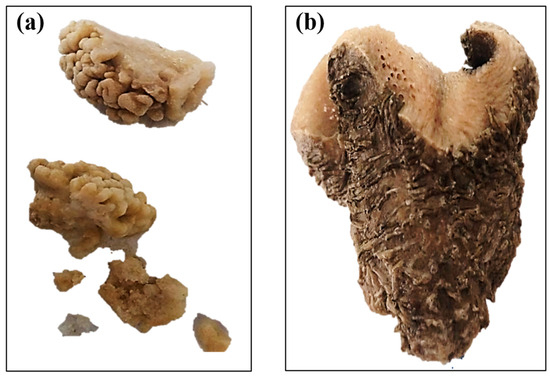
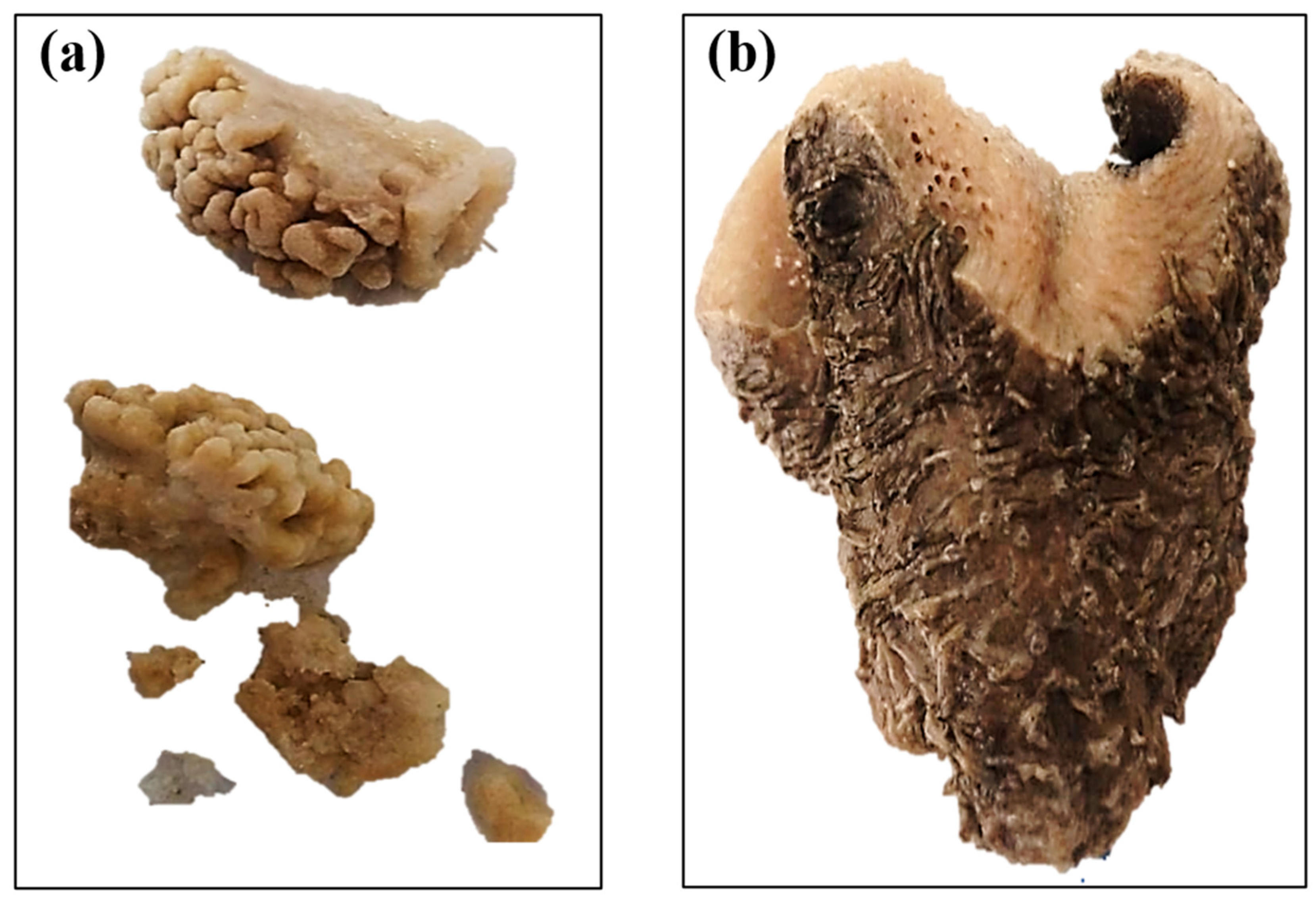
The two samples were identified based on their morphological characteristics [20]. Both specimens were classified as soft corals belonging to the phylum Cnidaria, class Anthozoa, subclass Octocorallia, order Alcyonaceae, and family Alcyoniidae. Morphological analysis identified the specimens as Cladiella sp. and Paralemnalia sp. (Figure 2). Additionally, the second animal was confirmed through DNA barcoding using COI gene sequences, identifying it as Paralemnalia thyrsoides. Unfortunately, we were unable to confirm the species of the other animal due to insufficient samples.
Figure 2.
The soft coral animals after treatment with 10% H2O2: (a) Cladiella sp. and (b) Paralemnalia thyrsoides.
The marine environment is famous for its rich biological and chemical diversity, especially the Red Sea, which is a hotspot for bioactive compounds. Organisms like sponges, soft corals, and algae are significant sources of novel metabolites. This study focuses on soft corals, which comprise about 40% of known species worldwide [21]. Cladiella sp. and Paralemnalia sp. were identified and have been previously reported along the Egyptian Red Sea coast [10]. Notably, Paralemnalia thyrsoides was collected in December 2019 from Hurghada, and Cladiella sp. was sampled in March 2021 from various sites. In this research, both specimens were collected near El Tor, Sinai, Egypt.
3.2. Isolation of Marine Invertebrate Associated Bacteria
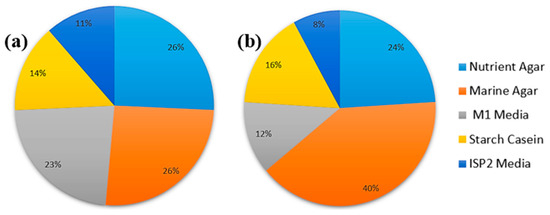
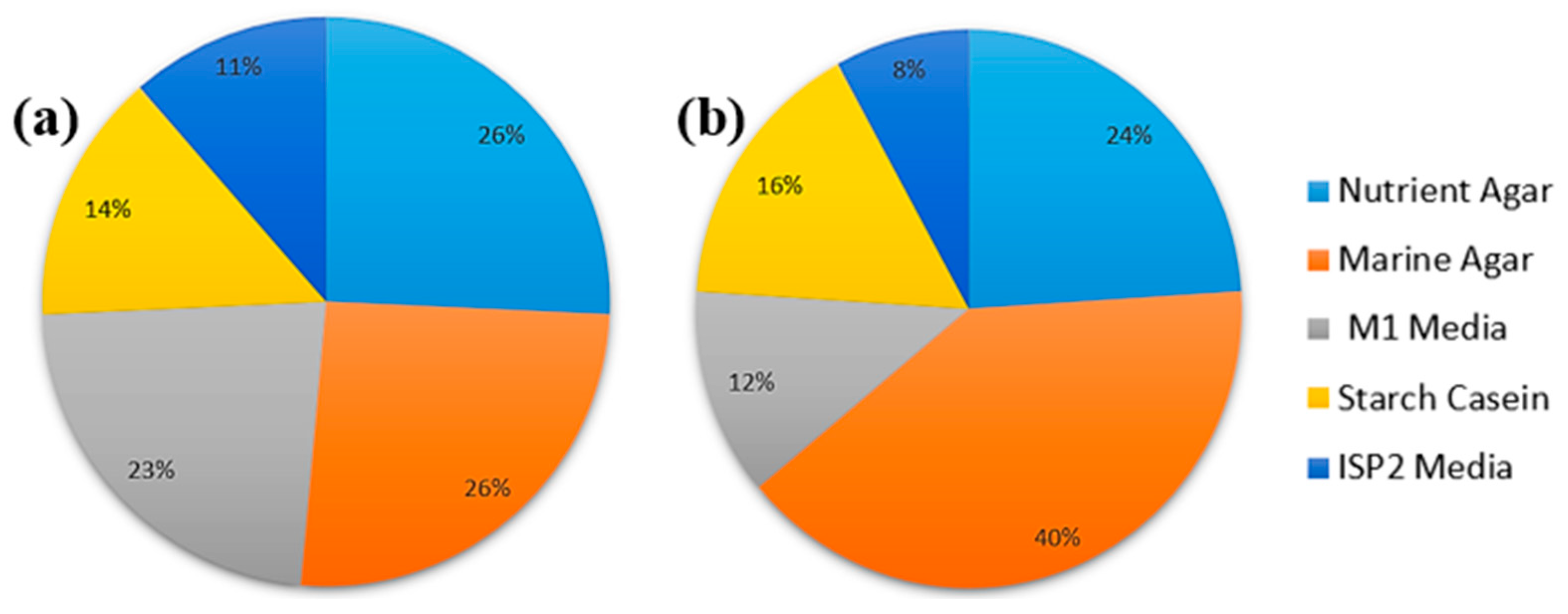
From each soft coral, 50 bacterial isolates were collected. Figure 3 illustrates the number of bacterial strains obtained from different invertebrates across various media types. Marine agar yielded the highest number of strains, followed by Nutrient agar and then M1. Fewer isolates were obtained on Starch Casein and ISP2 media. These results are consistent with prior research emphasizing that marine and nutrient agar media are more effective for cultivating marine-associated bacteria because they supply essential nutrients and maintain salinity conditions suitable for marine microbes. This also agrees with Radwan et al., who reported that the highest diversity of bacterial morphotypes isolated from the Red Sea sponge H. erectus was observed on marine agar plates [22]. The observation from our study indicates that lower recovery rates with ISP2 and S.C. media suggest these media may not be optimal for a broad spectrum of marine bacteria, or that certain bacterial groups require more specialized growth conditions.
Figure 3.
The percentage of bacterial strains isolated by different types of media from each soft coral. (a) Cladiella sp.; and (b) Paralemnalia thyrsoides.
3.3. Antimicrobial Activity of Bacterial Isolates
The metabolic extracts of 100 isolates were tested for antimicrobial activity. About 24 isolates showed varying levels of antimicrobial effects against at least one tested organism; four isolates had activity against E. coli with an inhibition zone diameter of approximately 5 mm, and four isolates demonstrated activity against S. aureus with an inhibition zone diameter ranging from 4 to 6 mm. Five isolates possessed activity against Pseudomonas sp., and 9 isolates displayed antimicrobial activity against S. aureus and Pseudomonas sp. Isolates of Microbacterium sp. and Bacillus sp. possessed antimicrobial activity against all three tested bacterial pathogens. No isolate possesses antimicrobial activity against C. albicans. The inhibition zone diameters of the bacterial extracts were illustrated (Table 1). Furthermore, MICs for these nine bacterial isolates were determined. Among them, Microbacterium sp. and Bacillus sp. showed the strongest antibacterial activity, with MIC values ranging from approximately 8 to 62.5 µg/mL against S. aureus and Pseudomonas sp. The most effective antibacterial activity was observed for Microbacterium sp. against Pseudomonas sp., with a MIC of 8 µg/mL, compared with amoxicillin, which had a MIC of approximately 16 µg/mL.
Table 1.
Antimicrobial activity of crude extracts of isolated bacteria.
3.4. Cytotoxicity of Bacterial Isolates
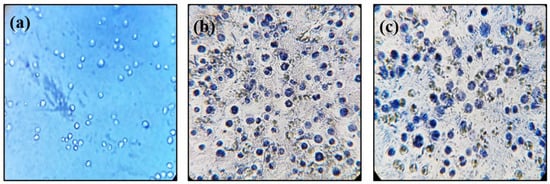
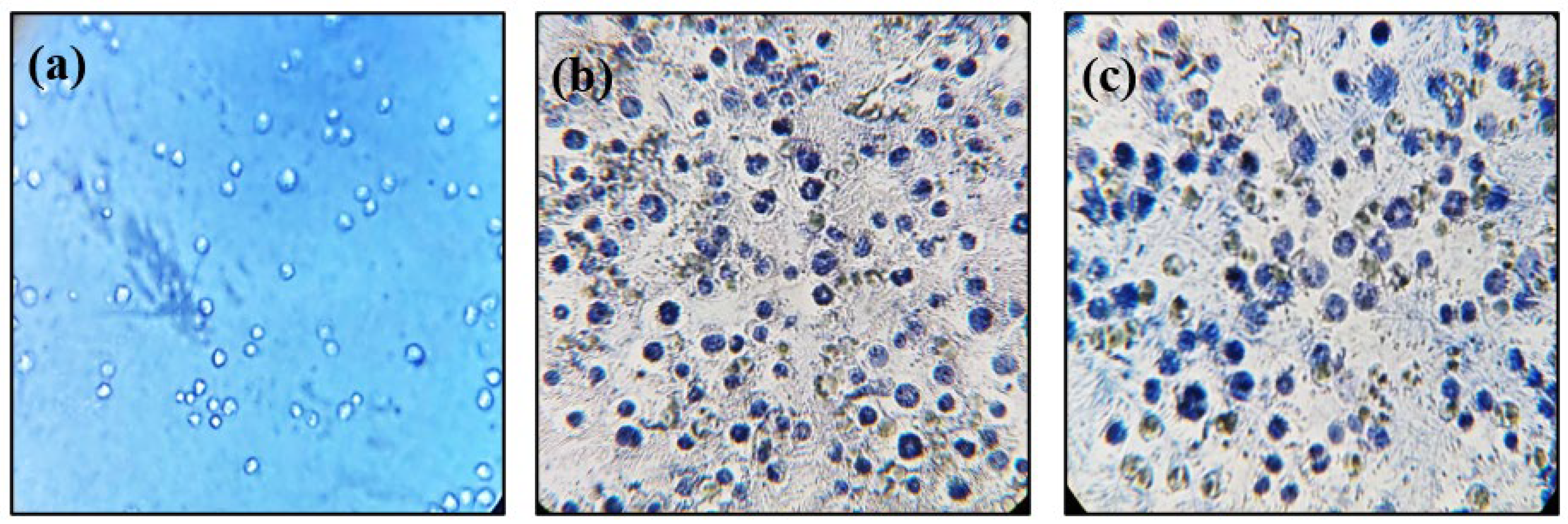
Twelve out of the twenty-four bioactive isolates showed cytotoxicity against EAC cells (Figure 4); nine of which also demonstrated strong antibacterial activity. Three extracts exhibited the strongest cytotoxicity activity against EAC, with IC50 values below 200 µg/mL, while four bacterial isolates showed moderate cytotoxicity against EAC with IC50 values under 500 µg/mL. Additionally, five bacterial isolates displayed low cytotoxicity, with IC50 values exceeding 600 µg/mL (Table 2).
Figure 4.
Bacterial isolates with positive cytotoxic activity against EAC: (a) control, (b) isolate 215, and (c) isolate 206.
Table 2.
Cytotoxicity of crude extracts of isolated bacteria against EAC.
Several secondary metabolites from marine soft corals have gained attention because of their possible anti-cancer effects. [23]. Natural products from Cladiella have shown promising anticancer effects on various human cancer cell lines. An ethyl acetate extract of Cladiella pachyclados, collected from the Red Sea, inhibited human breast cancer cells (MCF7 and MDA-MB-231) in vitro, with IC50 values of 24.32 ± 1.1 and 9.55 ± 0.19 µg/mL, respectively [6]. However, no reports of this species have been published until now. Genus Paralemnalia produces numerous chemical components that have biological activities, including anti-inflammatory and cytotoxic effects [24].
3.5. Molecular Identification of Soft Coral-Associated Bacteria
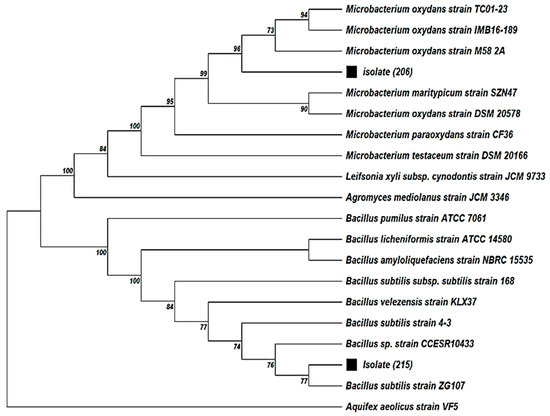
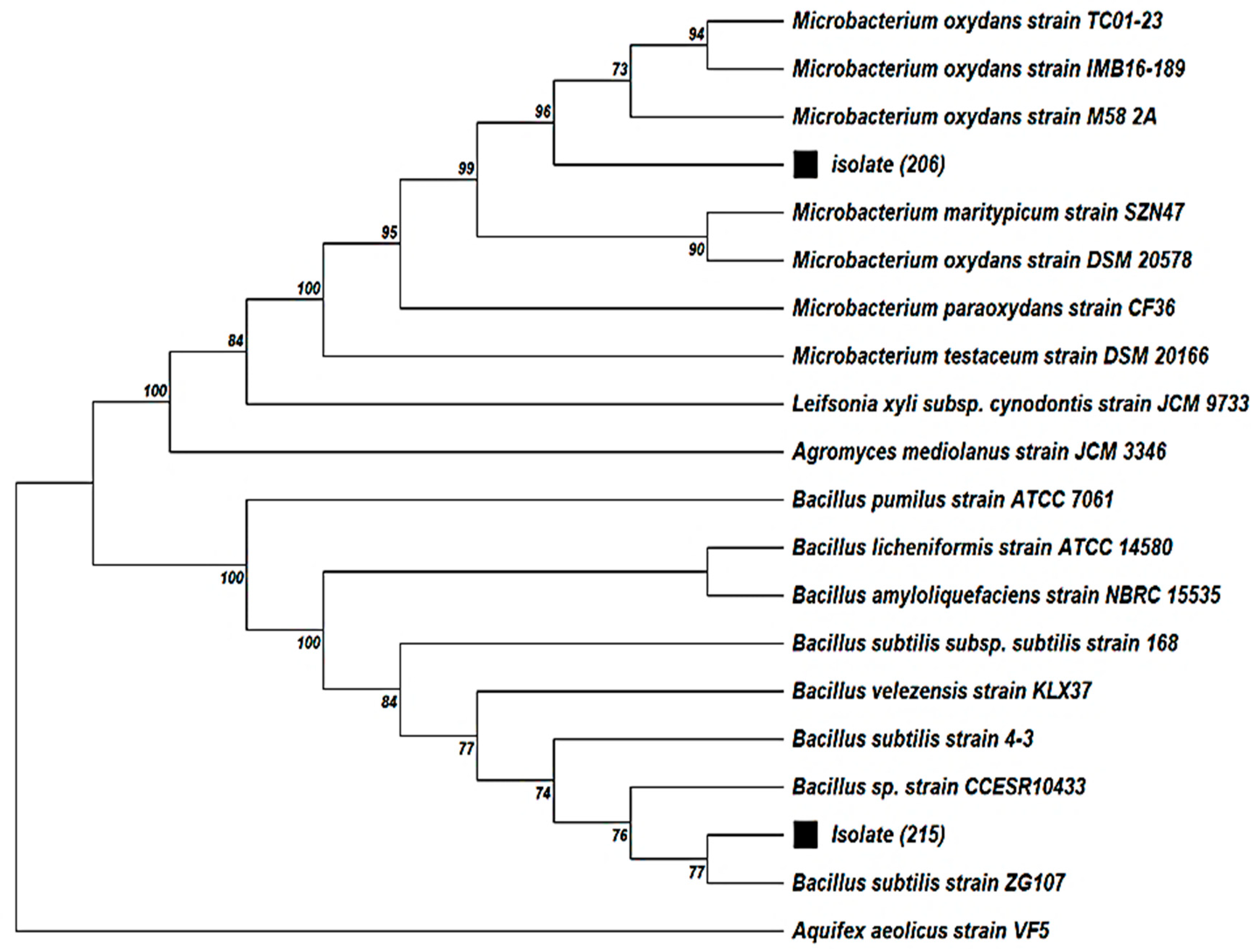
Two promising isolates exhibiting strong cytotoxic activity against EAC cells and antimicrobial activity against more than 2 tested pathogens were selected for identification using 16S rRNA sequencing. The isolates were identified as Microbacterium sp. and Bacillus subtilis, with 100% similarity (Figure 5). The 16S rRNA gene sequences of the bacterial isolates have been submitted to NCBI under accession numbers PV926641 and PX210476. The cytotoxic activity observed in the Bacillus subtilis isolate is consistent with previous findings reporting that this species produces bioactive lipopeptides such as surfactin, iturin, and fengycin. These compounds induce cytotoxic effects by disrupting cancer cell membranes and triggering apoptotic pathways [25,26]. Furthermore, Sivapathasekaran demonstrated that lipopeptides extracted from marine Bacillus species induced DNA fragmentation, reduced cancer cell viability, and activated apoptosis, confirming their strong anticancer potential [27].
Figure 5.
Molecular rooted phylogenetic analysis based on the 16S rRNA gene using the Maximum Likelihood method. The tree was rooted using the 16S rRNA partial gene sequence of Aquifex pyrophilus strain VF5. The percentage of trees with which the associated taxa clustered together in the bootstrap test (1000 replicates) is shown next to the branches. Evolutionary analyses were performed in MEGA11 version 11.0.1.
Similarly, Microbacterium sp. exhibited promising cytotoxic activity, aligning with previous studies that highlight the ability of certain Microbacterium strains to produce cytotoxic and antimicrobial secondary metabolites. Microbacterium isolated from the marine sponge Halichondria panicea was found to produce a glycolipid compound with notable anticancer properties [28].
These findings support the idea that marine invertebrates and their associated microorganisms represent a relatively untapped source of structurally unique bioactive compounds [26]. Taken together, the results suggest that the cytotoxic effects observed in B. subtilis and Microbacterium sp. may be due to the production of potent secondary metabolites with membrane-disruptive or pro-apoptotic mechanisms. Given the unique metabolic profiles of marine bacteria and their adaptation to competitive marine environments, further studies are necessary to isolate and characterize specific compounds and assess their therapeutic potential in cancer treatment.
4. Conclusions
In this study, we identified bioactive bacteria associated with Cladiella sp. and Paralemnalia sp. soft corals from the Red Sea, highlighting their potential as sources of novel compounds. Based on our culture-dependent approach, marine agar proved to be the most effective medium for isolating Gram-positive bacterial strains. Approximately 24% of the bacterial isolates showed promising cytotoxicity against Ehrlich ascites carcinoma (EAC). Three specific strains exhibited strong cytotoxicity with notable IC50 values, while nine isolates demonstrated antimicrobial activity against selected pathogens, positioning them as candidates for further pharmaceutical exploration. Additionally, Bacillus subtilis and Microbacterium sp. were successfully identified. Both isolates displayed notable cytotoxic activity, indicating that bacteria from marine sources could be promising sources of novel cytotoxic agents. These results emphasize the potential of marine bacterial metabolites as a valuable source for developing anticancer drugs. Further research into their chemical makeup, mechanisms of action, and therapeutic uses could lead to the discovery of new cancer treatments.
Author Contributions
Conceptualization, A.-H.M.R., S.M.A. and A.A.A.; methodology, S.M.A. and D.S.A.; software, S.M.A., D.S.A. and N.S.D.; validation, S.M.A., N.S.D., A.A.A. and A.-H.M.R.; formal analysis, S.M.A. and D.S.A.; investigation, S.M.A. and A.-H.M.R.; resources, D.S.A., N.S.D. and A.A.A.; data curation, S.M.A. and A.-H.M.R.; writing—original draft preparation, S.M.A., A.-H.M.R., D.S.A. and N.S.D.; writing—review and editing, S.M.A., N.S.D., A.A.A., D.S.A. and A.-H.M.R.; visualization, D.S.A., N.S.D. and S.M.A.; supervision, A.A.A., A.-H.M.R. and S.M.A. All authors have read and agreed to the published version of the manuscript.
Funding
This research received no external funding.
Institutional Review Board Statement
The animal study protocol was approved by the Institutional Review Board of Faculty of Science, Suez University (Suez Sci_IRB:07/05/2025/20 and 2025-05-07).
Informed Consent Statement
Not applicable.
Data Availability Statement
The original contributions presented in this study are included in the article. Further inquiries can be directed to the corresponding author.
Acknowledgments
We thank Hossam H. Elfeky for his valuable efforts in collecting soft coral samples.
Conflicts of Interest
The authors declare no conflicts of interest.
References
- Gupta, V.; Satlin, M.J.; Yu, K.; Martei, Y.M.; Sung, L.; Westblade, L.F.; Howard, S.C.; Ai, C.; Flayhart, D.C. Burden of antimicrobial resistance in adult hospitalized patients with cancer: A multicenter analysis. Cancer Med. 2024, 13, e70495. [Google Scholar] [CrossRef] [Scilit] [PubMed]
- Torre, L.A.; Siegel, R.L.; Ward, E.M.; Jemal, A. Global Cancer Incidence and Mortality Rates and Trends--An Update. Cancer Epidemiol. Biomark. Prev. 2016, 25, 16–27. [Google Scholar] [CrossRef] [Scilit]
- Gomes, N.G.; Dasari, R.; Chandra, S.; Kiss, R.; Kornienko, A. Marine Invertebrate Metabolites with Anticancer Activities: Solutions to the “Supply Problem”. Mar. Drugs 2016, 14, 98. [Google Scholar] [CrossRef] [Scilit] [PubMed]
- Ehrenreich, I.M.; Waterbury, J.B.; Webb, E.A. Distribution and diversity of natural product genes in marine and freshwater cyanobacterial cultures and genomes. Appl. Environ. Microbiol. 2005, 71, 7401–7413. [Google Scholar] [CrossRef] [Scilit]
- Ameen, F.; AlNadhari, S.; Al-Homaidan, A.A. Marine microorganisms as an untapped source of bioactive compounds. Saudi J. Biol. Sci. 2021, 28, 224–231. [Google Scholar] [CrossRef] [Scilit] [PubMed]
- Alhadrami, H.A.; Alkhatabi, H.; Abduljabbar, F.H.; Abdelmohsen, U.R.; Sayed, A.M. Anticancer potential of green synthesized silver nanoparticles of the soft coral cladiella pachyclados supported by network pharmacology and in silico analyses. Pharmaceutics 2021, 13, 1846. [Google Scholar] [CrossRef] [Scilit]
- Carroll, A.R.; Copp, B.R.; Davis, R.A.; Keyzers, R.A.; Prinsep, M.R. Marine natural products. Nat. Prod. Rep. 2022, 39, 1122–1171. [Google Scholar] [CrossRef] [Scilit]
- Macedo, M.W.F.S.; da Cunha, N.B.; Carneiro, J.A.; da Costa, R.A.; da Alencar, S.A.; Cardoso, M.H.; Franco, O.L.; Dias, S.C. Marine Organisms as a Rich Source of Biologically Active Peptides. Front. Mar. Sci. 2021, 8, 667764. [Google Scholar] [CrossRef] [Scilit]
- Zheng, Z.; Zeng, W.; Huang, Y.; Yang, Z.; Li, J.; Cai, H.; Su, W. Detection of antitumor and antimicrobial activities in marine organism associated actinomycetes isolated from the Taiwan Strait, China. FEMS Microbiol. Lett. 2000, 188, 87–91. [Google Scholar] [CrossRef]
- El-Hossary, E.M.; Abdel-Halim, M.; Ibrahim, E.S.; Pimentel-Elardo, S.M.; Nodwell, J.R.; Handoussa, H.; Abdelwahab, M.F.; Holzgrabe, U.; Abdelmohsen, U.R. Natural Products Repertoire of the Red Sea. Mar. Drugs 2020, 18, 457. [Google Scholar] [CrossRef] [Scilit]
- Rateb, M.E.; Abdelmohsen, U.R. Bioactive Natural Products from the Red Sea. Mar. Drugs 2021, 19, 289. [Google Scholar] [CrossRef] [Scilit]
- Genilloud, O. Actinomycetes: Still a source of novel antibiotics. Nat. Prod. Rep. 2017, 34, 1203–1232. [Google Scholar] [CrossRef] [Scilit]
- Ho, M.C.; Ong, V.Z.; Wu, T.Y. Potential use of alkaline hydrogen peroxide in lignocellulosic biomass pretreatment and valorization—A review. Renew. Sustain. Energy Rev. 2019, 112, 75–86. [Google Scholar] [CrossRef] [Scilit]
- Astrin, J.J.; Stüben, P.E. Phylogeny in cryptic weevils: Molecules, morphology and new genera of western Palaearctic Cryptorhynchinae (Coleoptera : Curculionidae). Invertebr. Syst. 2008, 22, 503–522. [Google Scholar] [CrossRef] [Scilit]
- Mincer, T.J.; Jensen, P.R.; Kauffman, C.A.; Fenical, W. Widespread and persistent populations of a major new marine actinomycete taxon in ocean sediments. Appl. Environ. Microbiol. 2002, 68, 5005–5011. [Google Scholar] [CrossRef] [Scilit] [PubMed]
- Webster, N.S.; Hill, R.T. The culturable microbial community of the great barrier reef sponge Rhopaloeides odorabile is dominated by an α-Proteobacterium. Mar. Biol. 2001, 138, 843–851. [Google Scholar] [CrossRef] [Scilit]
- Chen, Y.H.; Kuo, J.; Sung, P.J.; Chang, Y.C.; Lu, M.C.; Wong, T.Y.; Liu, J.K.; Weng, C.F.; Twan, W.H.; Kuo, F.W. Isolation of marine bacteria with antimicrobial activities from cultured and field-collected soft corals. World J. Microbiol. Biotechnol. 2012, 28, 3269–3279. [Google Scholar] [CrossRef] [Scilit] [PubMed]
- Wiegand, I.; Hilpert, K.; Hancock, R.E.W. Agar and broth dilution methods to determine the minimal inhibitory concentration (MIC) of antimicrobial substances. Nat. Protoc. 2008, 3, 163–175. [Google Scholar] [CrossRef] [Scilit]
- McLimans, W.F.; Giardinello, F.E.; Davis, E.V.; Kucera, C.J.; Rake, G.W. Submerged culture of mammalian cells: The five liter fermentor. J. Bacteriol. 1957, 74, 768–774. [Google Scholar] [CrossRef] [Scilit]
- Fabricius, K.; Alderslade, P. Soft Corals and Sea Fans: A Comprehensive Guide to the Tropical Shallow Water Genera of the Central-West Pacific, the Indian Ocean and the Red Sea; Australian Institute of Marine Science: Townsville, Australia, 2001; pp. 1–264. [Google Scholar]
- Alian, A.; Abdel Shakor, A.B.; Geba, K.; Osman, A. Cytotoxicity and antimicrobial activities of some soft corals inhabiting the red sea, Egypt. Al-Azhar Bull. Sci. 2021, 1, 1–7. [Google Scholar] [CrossRef] [Scilit]
- Radwan, M.; Hanora, A.; Zan, J.; Mohamed, N.M.; Abo-Elmatty, D.M.; Abou-El-Ela, S.H.; Hill, R.T. Bacterial community analyses of two red sea sponges. Mar. Biotechnol. 2010, 12, 350–360. [Google Scholar] [CrossRef] [Scilit]
- Rafiudeen, R.A.; Anwardeen, N.H.; Lavanya, V.; Jamal, S.; Ahmed, N. Coral Reef Metabolites for Cancer Treatment. Curr. Pharmacol. Rep. 2025, 11, 3. [Google Scholar] [CrossRef] [Scilit]
- Mohie el-dien, R.T.; Maher, S.A.; Hisham, M.; Saber, E.A.; Khedr, A.I.M.; Fouad, M.A.; Kamel, M.S.; Mahmoud, B.K. Network pharmacology, molecular docking study, and in vivo validation of the wound healing activity of the Red Sea soft coral Paralemnalia thyrsoides (Ehrenberg 1834) ethanolic extract and bioactive metabolites. Beni-Suef Univ. J. Basic Appl. Sci. 2024, 13, 54. [Google Scholar] [CrossRef] [Scilit]
- Akpa, E.; Jacques, P.; Wathelet, B.; Paquot, M.; Fuchs, R.; Budzikiewicz, H.; Thonart, P. Influence of culture conditions on lipopeptide production by Bacillus subtilis. Appl. Biochem. Biotechnol.—Part A Enzym. Eng. Biotechnol. 2001, 91–93, 551–561. [Google Scholar] [CrossRef] [Scilit] [PubMed]
- Hu, G.P.; Yuan, J.; Sun, L.; She, Z.G.; Wu, J.H.; Lan, X.J.; Zhu, X.; Lin, Y.C.; Chen, S.P. Statistical research on marine natural products based on data obtained between 1985 and 2008. Mar Drugs 2011, 9, 514–525. [Google Scholar] [CrossRef] [Scilit] [PubMed]
- Sivapathasekaran, C.; Das, P.; Mukherjee, S.; Saravanakumar, J.; Mandal, M.; Sen, R. Marine bacterium derived lipopeptides: Characterization and cytotoxic activity against cancer cell lines. Int. J. Pept. Res. Ther. 2010, 16, 215–222. [Google Scholar] [CrossRef] [Scilit]
- Lang, S.; Beil, W.; Tokuda, H.; Wicke, C.; Lurtz, V. Improved production of bioactive glucosylmannosyl-glycerolipid by sponge-associated Microbacterium species. Mar. Biotechnol. 2004, 6, 152–156. [Google Scholar] [CrossRef] [Scilit] [PubMed]

Disclaimer/Publisher’s Note: The statements, opinions and data contained in all publications are solely those of the individual author(s) and contributor(s) and not of MDPI and/or the editor(s). MDPI and/or the editor(s) disclaim responsibility for any injury to people or property resulting from any ideas, methods, instructions or products referred to in the content. |
© 2025 by the authors. Licensee MDPI, Basel, Switzerland. This article is an open access article distributed under the terms and conditions of the Creative Commons Attribution (CC BY) license.