
Review

GWAS-Derived Marker–Trait Associations and KASP Marker Development for Barley Breeding in Kazakhstan: Achievements, Limitations, and Future Prospects

Laboratory of Molecular Genetics, Institute of Plant Biology and Biotechnology, Almaty 050040, Kazakhstan
*
Author to whom correspondence should be addressed.
Crops 2026, 6(5), 89; https://doi.org/10.3390/crops6050089
Submission received: 8 August 2026 / Revised: 10 September 2026 / Accepted: 14 September 2026 / Published: 17 September 2026
(This article belongs to the Special Issue Molecular Marker Technology for Crop Breeding Improvement)

Abstract

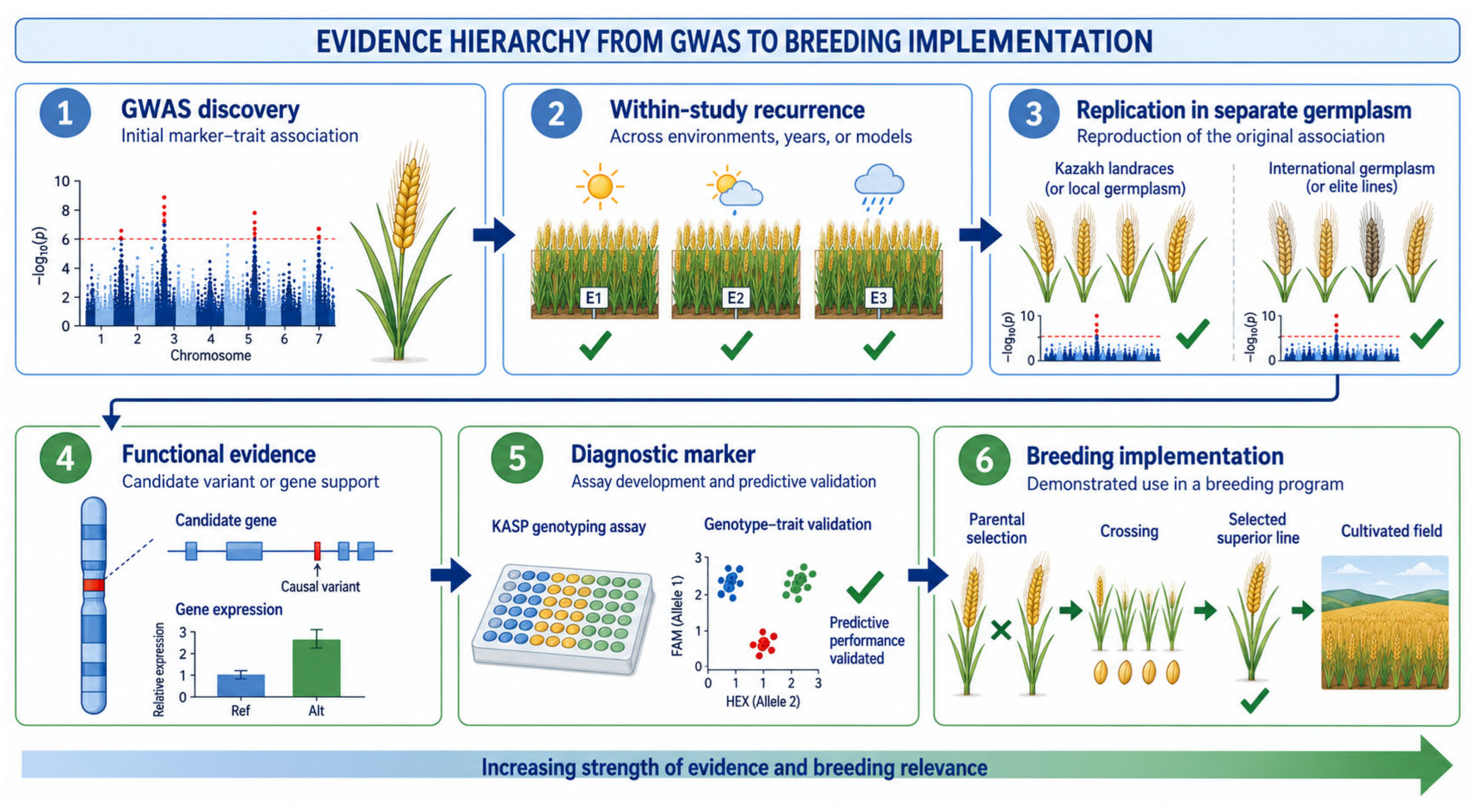
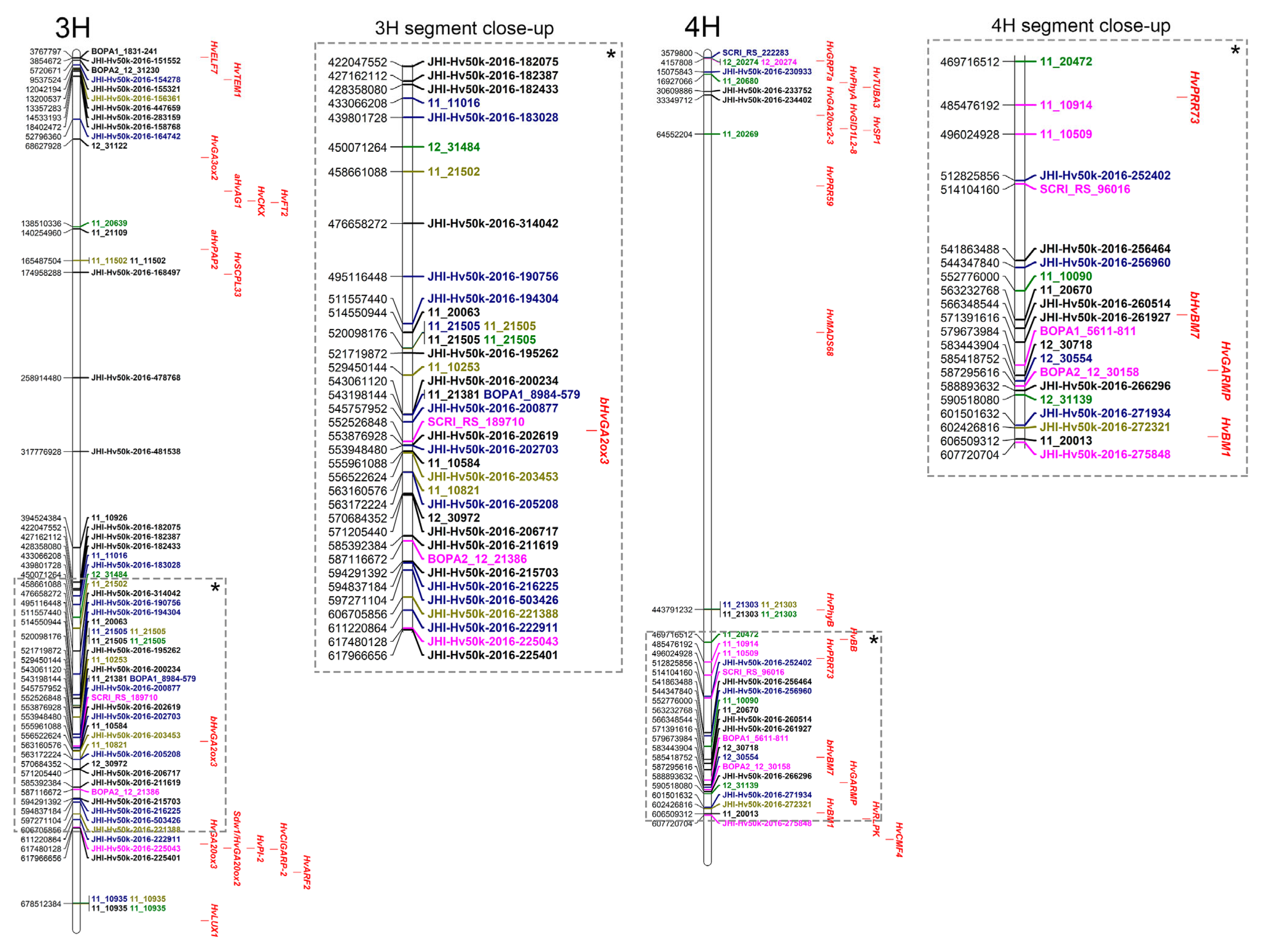
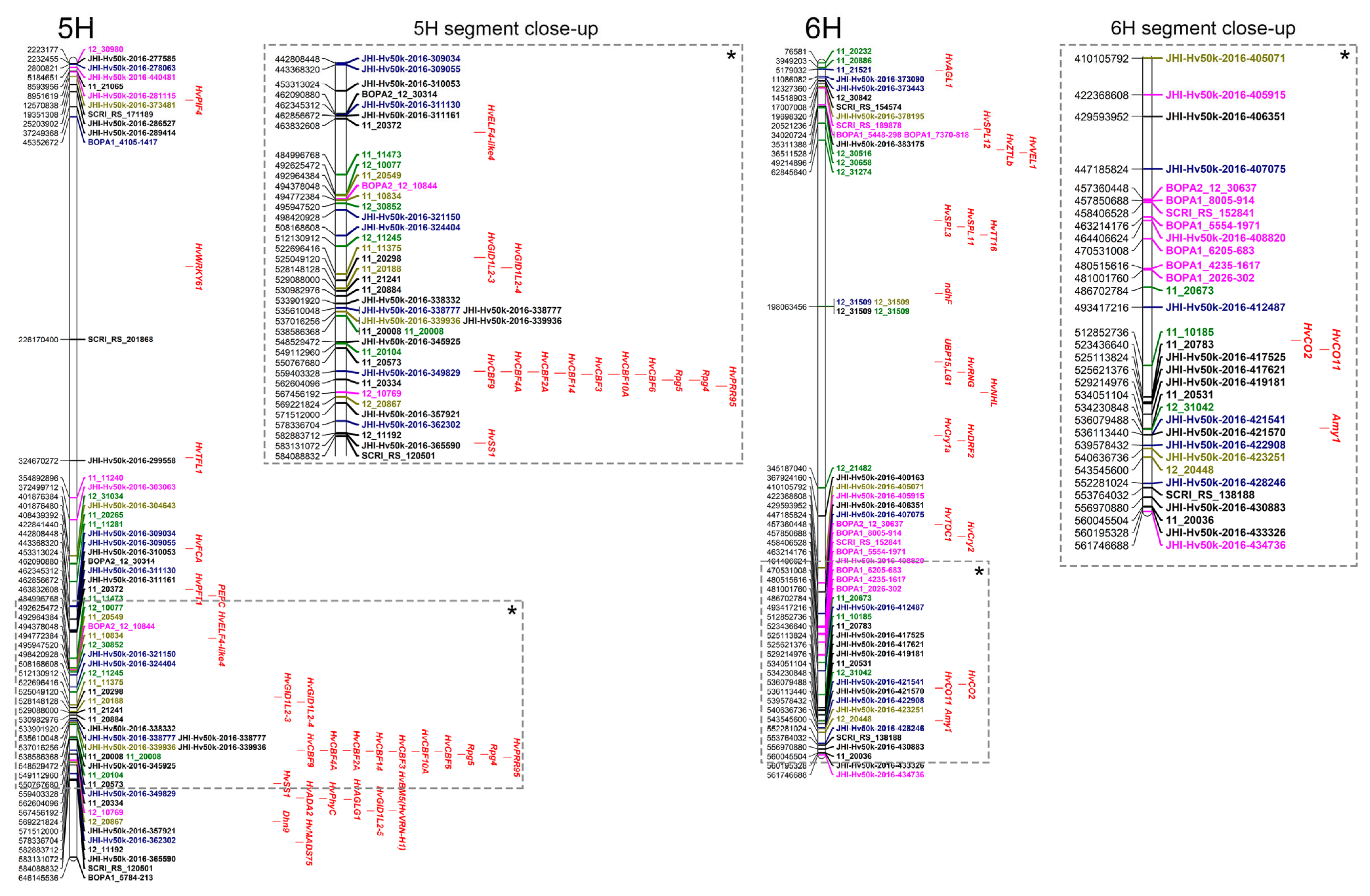
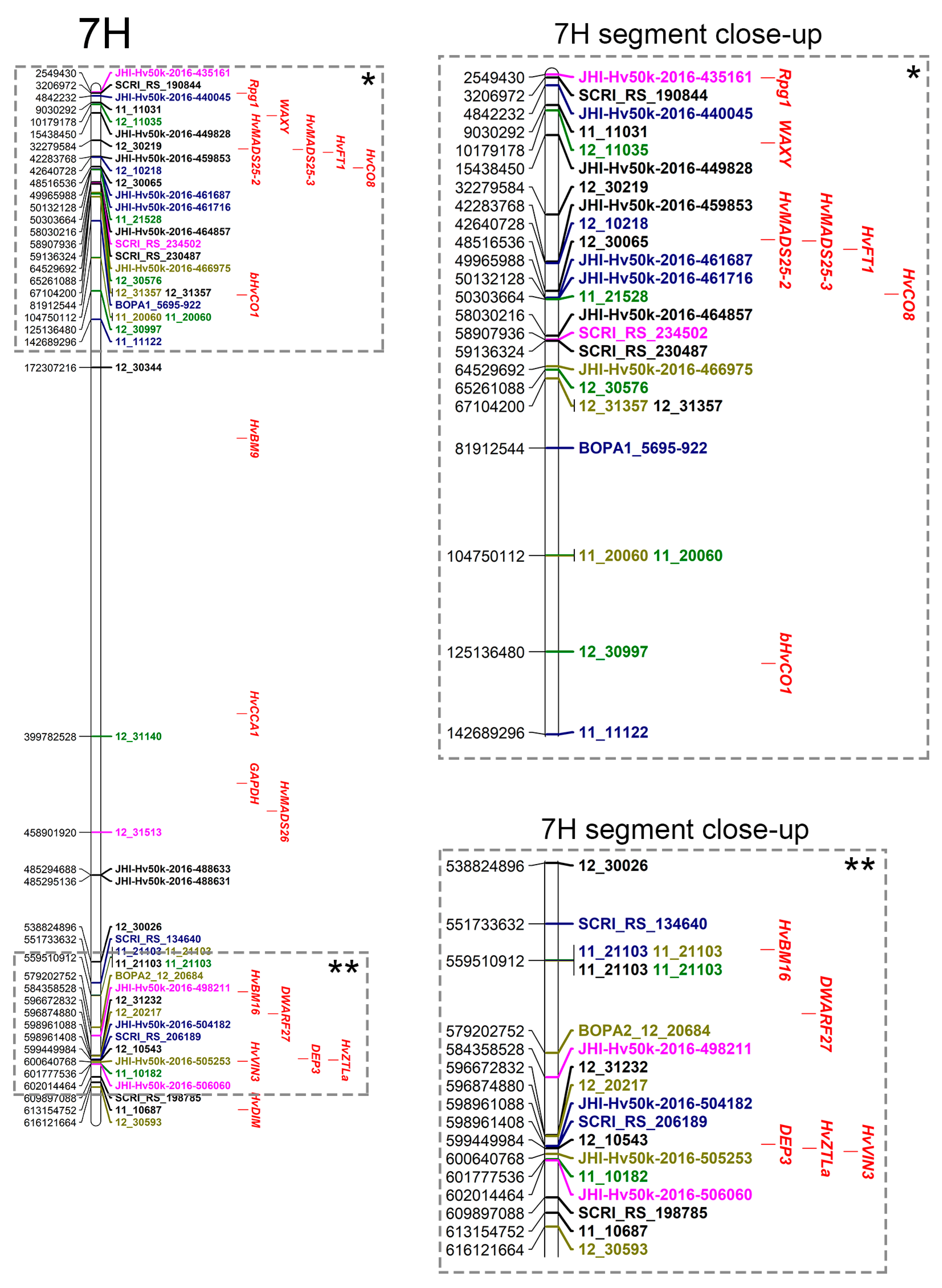
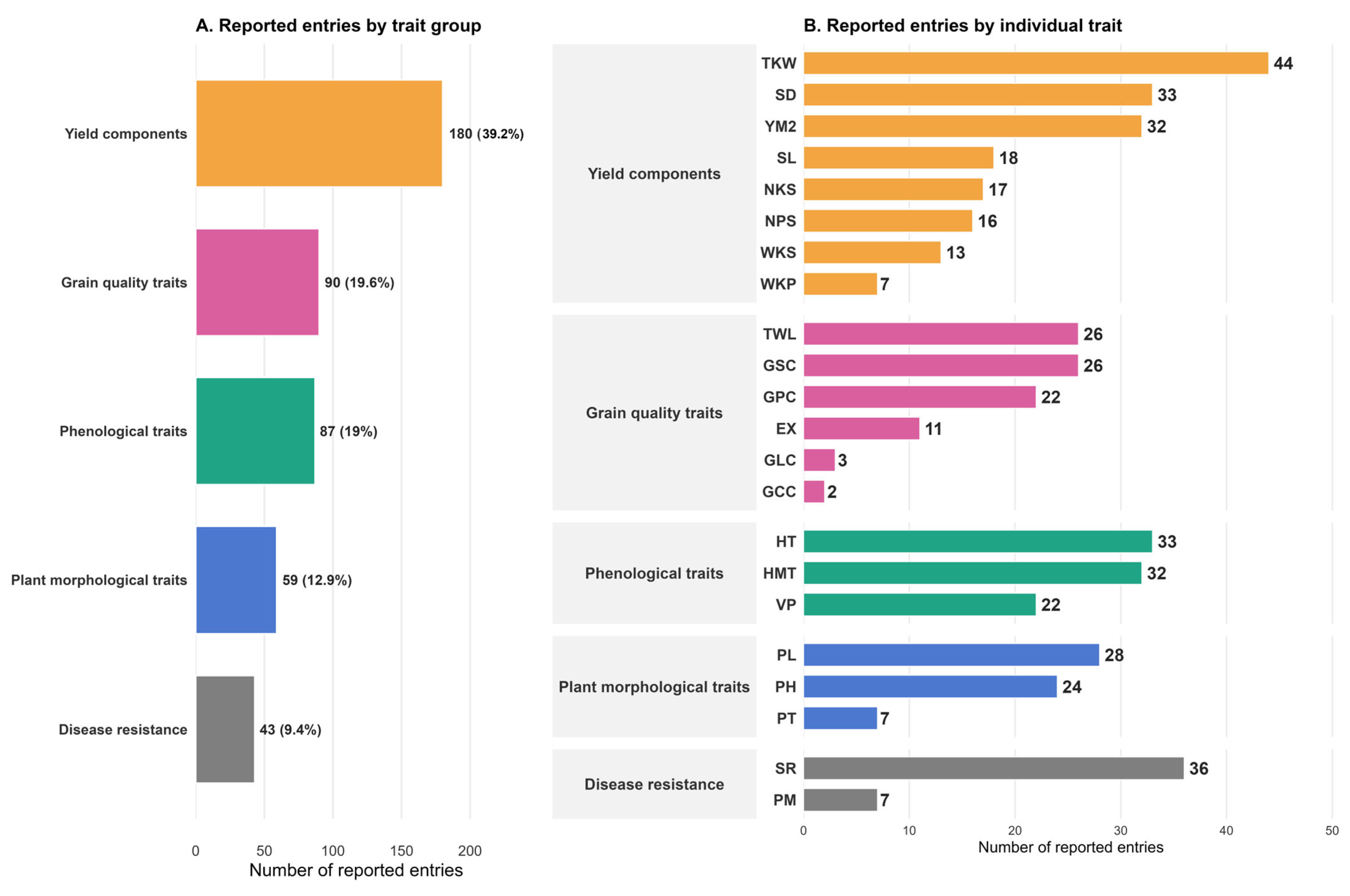
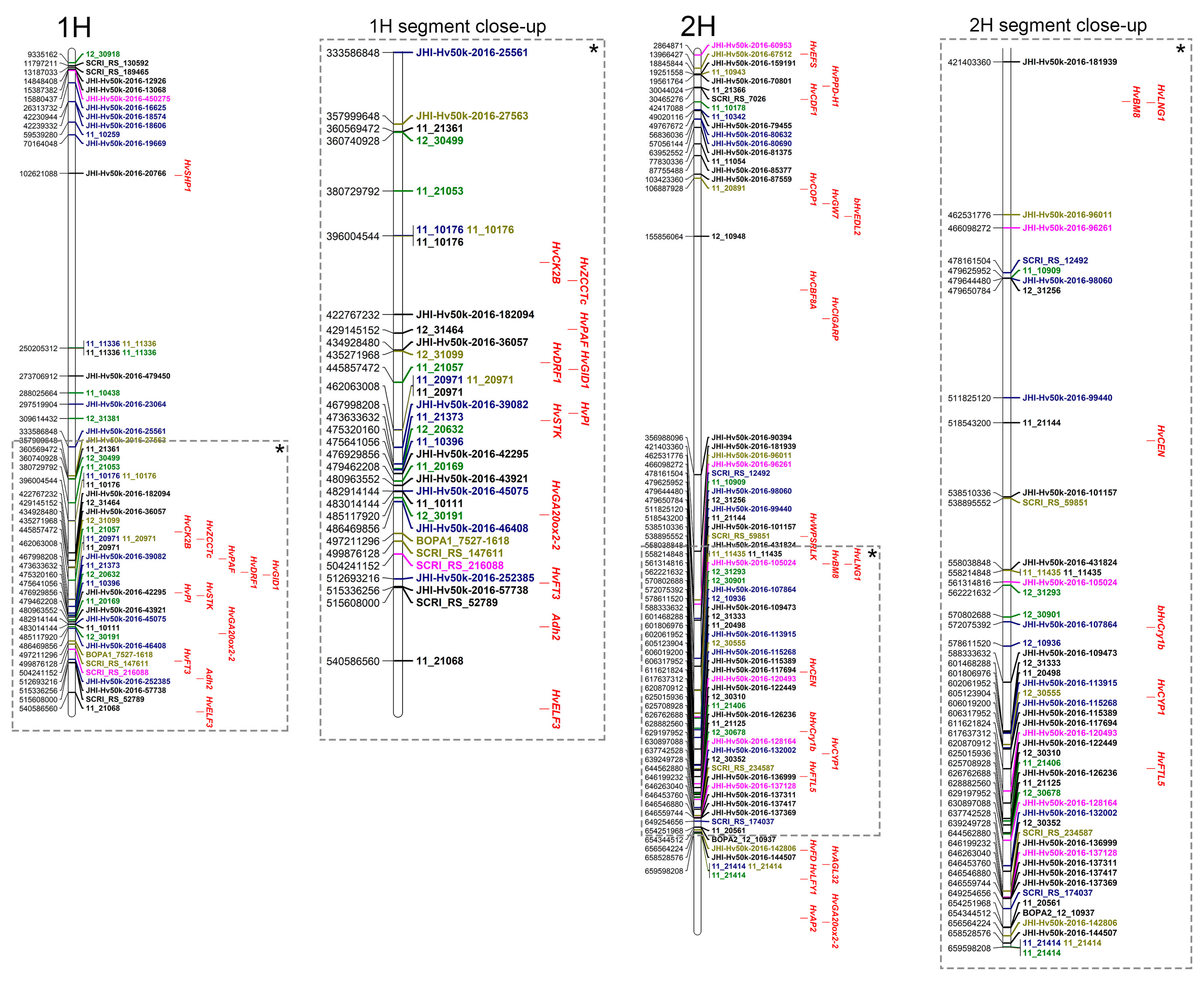
Genome-wide association studies (GWAS) link germplasm diversity to molecular markers for crop improvement. This review synthesizes nine barley GWAS articles and two articles on the development or validation of GWAS-derived Kompetitive Allele-Specific PCR (KASP) assays relevant to Kazakhstan, published between 2016 and 2025. Earlier studies used 9K single-nucleotide polymorphism (SNP) arrays and mainly single-model analyses, whereas later studies used higher-density 50K arrays with multi-environment phenotyping, multiple GWAS models, haplotype analysis, and candidate-gene prioritization. Across 22 traits, 459 reported GWAS association/quantitative trait locus (QTL) entries were extracted: 180 yield-component, 90 grain-quality, 87 phenological, 59 morphological, and 43 disease-resistance entries. These corresponded to 350 distinct lead-marker identifiers and do not represent 459 unique genomic or causal loci. Cross-trait integration revealed marker-rich regions on all seven chromosomes, consistent with pleiotropy or tight linkage, although the available evidence cannot distinguish these mechanisms. Twenty-seven GWAS-derived SNPs were converted into KASP assays, but only a subset was evaluated in separate germplasm panels. Thirty-three SNPs representing 55 associations were prioritized because they exceeded study-specific Bonferroni thresholds and recurred in at least two environments and/or years. Translation into breeding will require validation in separate germplasm panels and multiple environments, genotype-by-environment modeling, pangenome-informed variant discovery, and integration of diagnostic markers with genomic selection for polygenic traits.
Keywords: barley; GWAS; QTL; Kazakhstan agroecosystems; marker-assisted breeding; KASP markers; yield components; fungal disease resistance; grain quality; genotype-by-environment interaction barley; GWAS; QTL; Kazakhstan agroecosystems; marker-assisted breeding; KASP markers; yield components; fungal disease resistance; grain quality; genotype-by-environment interaction