1. Introduction
The pursuit of enhanced productivity, characterized by optimal spatial distribution of seeds and augmented efficiency, has prompted research endeavors into the development of seed meters capable of executing the sowing operation with optimal longitudinal distribution of seeds and accelerated movement of the seed drill [
1]. However, there is a paucity of research on the impact of accelerating the sowing rate of soybeans on the mechanical damage to seeds that may ensue, with the exception of generic assertions from the early days of pneumatic metering that these metering devices did not cause seed damage. Astanakulov [
2] identified an average mechanical damage of 5.2% in soybean seeds using a seeder with horizontal disc dispensers. The findings were consistent with those previously reported by the same author, who had conducted similar experiments in a laboratory setting using a test bench.
Plantability, defined as the quality of sowing, is a pivotal factor in establishing sufficient stands to optimize the productive potential of soybean crops. Uniformity of distribution is a pivotal parameter in the context of crop establishment, along with seed placement depth. The arrangement of seeds, contingent on the spacing between rows and between plants in a row, ought to serve as the guiding principle for the sowing process. The ideal distance between crop seeds in the sowing row is determined based on the cultivar and growing season, for example, to ensure the most equidistant distribution. Consequently, the notion of acceptable, double, or missing spacing between seeds at the time of sowing emerges [
3].
Mechanical damage is a primary factor impeding the production of high-quality soybean seeds, as it affects viability and other physiological variables that can hinder the crop’s maximum expression of productive potential. It has been demonstrated that losses in germination and vigor are evident from harvest through the drying, processing, and storage processes [
4]. The extent of these losses can significantly affect the processes involved in germination and the establishment of the desired stand in soybean crops, depending on the degree of intensity. As demonstrated in the extant literature, damage to seeds can occur during a variety of processes. Such damage has been observed during the harvesting of grains [
5], during transport by grain trucks [
6], during processing at the UBS [
7], during post-harvest seed storage [
8], and during the sowing process [
2]. In particular, damage has been observed as the seeds pass through the seeder to the soil.
The germination test is a widely utilized method for the evaluation of seed quality, enabling producers, traders, and farmers to employ seed lots of known quality. The test is standardized, and its use is widespread. It is employed to market seeds in a structured manner, as it determines the maximum germination potential of a seed lot. In this regard, factors influencing germination, including water, light, temperature, and oxygen, are meticulously regulated [
9].
Soybean seed damage assessment can be performed using the tetrazolium test, as it is an official, widely consolidated methodology for the species. This test allows, in a single analysis, the estimation of seed quality potential, vigor, and identification of the main causes of reduced quality, including mechanical damage, moisture protection, and perception damage, based on color patterns of embryonic tissues. This approach is more suitable for seed quality control than a simple morphological evaluation by optical microscopy, which is not standardized in the “Rules for Seed Analysis” (an official document of the Brazilian Ministry of Agriculture and Livestock) for this purpose and does not establish a direct relationship with embryonic structure [
9].
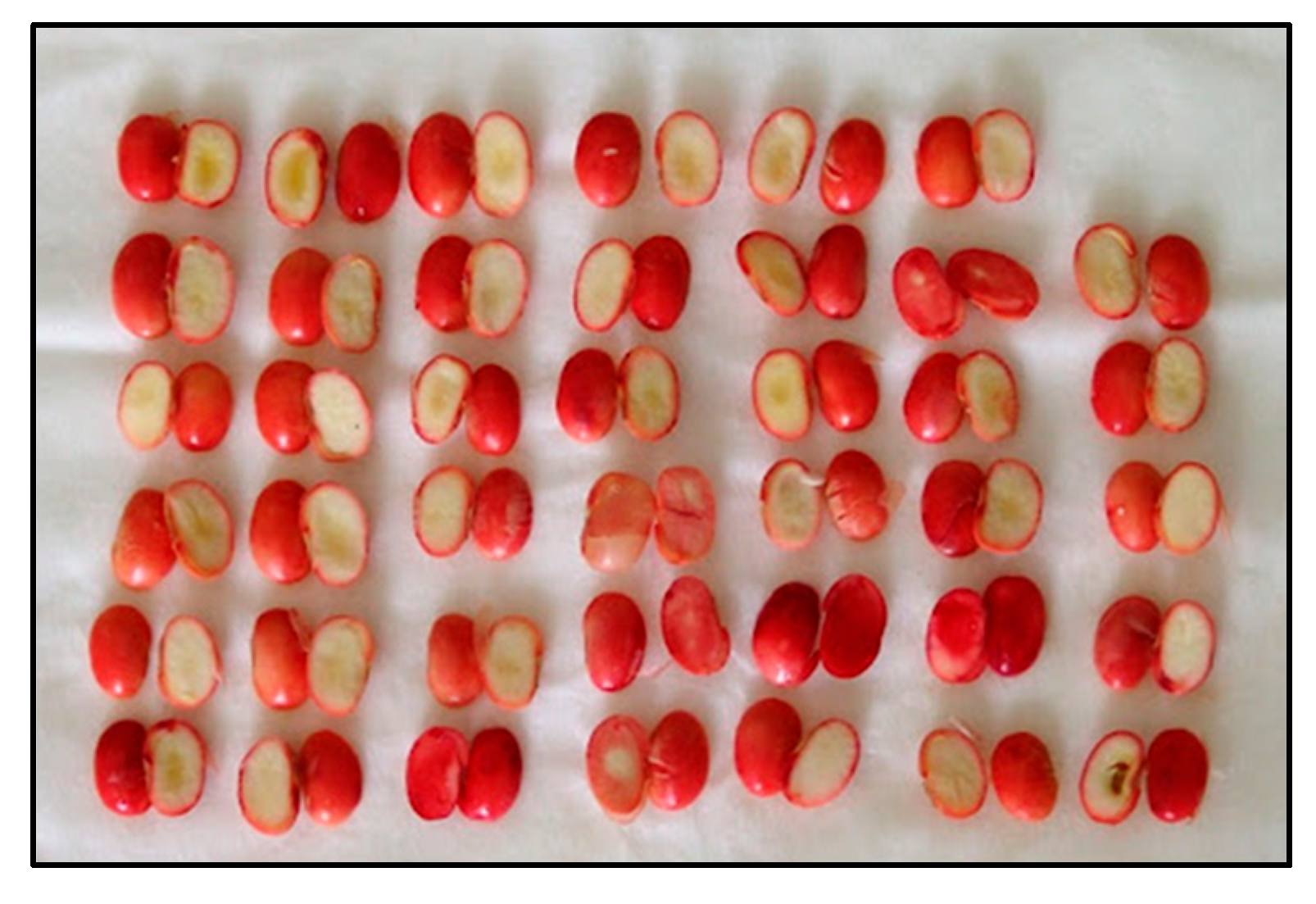
The tetrazolium test is a biochemical test that is based on the activity of dehydrogenase enzymes present in the living tissues of seeds. These enzymes catalyze the reduction of 2-3-5-triphenyl tetrazolium chloride (TCT) in living tissues, resulting in the production of a red, stable, and non-diffusible substance, triphenylformazan, within living cells. This reaction enables the distinction between living and dead parts, with the former exhibiting a red coloration and the latter displaying a milky white hue [
10,
11]. The reduction in TCT, which results in the formation of the compound triphenylformazan, serves as an indicator of respiratory activity within the mitochondria. This, in turn, signifies the viability of the cells and tissue. Consequently, the color that emerges from this reaction serves as a positive indication of viability, achieved through indirect detection of respiration at the cellular level. In Brazil, the tetrazolium test is a prevalent method for evaluating the quality of seeds [
12]. Tetrazolium is an effective method for validating seed quality. This method is advantageous in terms of its rapidity when compared to the germination test, and it enables a diagnosis of the quality of a seed batch through the indirect determination of the respiratory activity of the seed’s living tissues. In direct contact with the tetrazolium saline solution, the seed absorbs this solution, which, through the hydrogenation process of tetrazolium, produces a red-colored substance in the living cells of the seeds [
12,
13].
The utilization of seeds characterized by elevated germination and robust vitality constitutes a pivotal element in the art of successful sowing. These seeds confer stability and uniformity within the field, thereby engendering augmented productivity potential [
14] and optimal dry matter accumulation. This phenomenon signifies an enhanced utilization of the nutrients harbored within the seed [
15,
16].
The objective of this study was to verify the homogeneity of the longitudinal distribution and mechanical damage caused to soybean seeds by a pneumatic dispenser, simulating bench sowing, with different inclinations and speeds of movement of the tractor-seed drill combination.
2. Materials and Methods
The present study was conducted at the Center for Innovation in Agricultural Machinery and Equipment (NIMEq) and at the Seed Laboratory of the graduate program in Seed Science and Technology at the Eliseu Maciel School of Agronomy (FAEM) at the Federal University of Pelotas (UFPel). The Selenium pneumatic dispenser from J. Assy
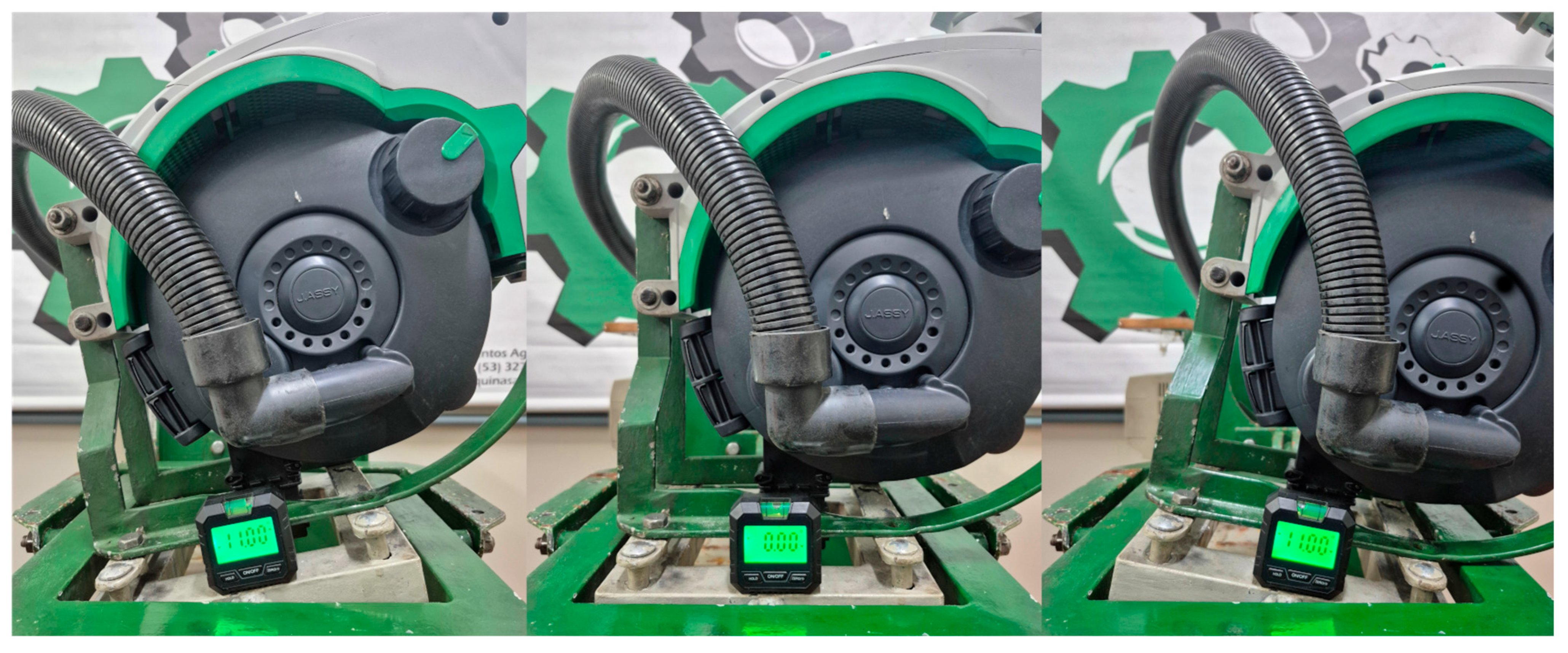
® (São Paulo, Brazil) was utilized in the study. A test bench was utilized to vary the drive rotation of the dispenser, thereby simulating the travel speeds of the tractor-seed drill combination and the longitudinal inclinations of the dispenser. This demonstrated its use on uphill, level ground, and downhill in the field at angles of 11°, 0°, and −11°, respectively, on the test bench for simulating grain sowing, developed by NIMEq as shown in
Figure 1. The test bench was designed to isolate variables such as metering unit rotation and inclination, intentionally excluding the structural vibration of the seeder to avoid masking the effects of these primary variables. The potential effects of vibrations are better assessed in field experiments. The experiment utilized soybean seeds of the 95Y95 IPRO PIONEER
® cultivar, P1 sieve, 5.25 mm, lubricated with agricultural graphite, added at a ratio of 4 g kg
−1 of seeds.
The seeds were meticulously filled into the seed storage box for each repetition. The test demonstrated an absence of seed transfer, indicating that each seed traversed the dispenser on a single pass. The disc utilized in this experiment contained 40 circular apertures, each with a diameter of 4 mm. The tests were conducted with the disc operating at speeds of 29.2 rpm, 40.8 rpm, 52.5 rpm, 64.2 rpm, and 75.8 rpm, corresponding to velocities of 5, 7, 9, 11, and 13 km h
−1, respectively, as delineated in ISO 7256/1-1984 (ISO, 1984 13) [
16]. Consequently, a 3 × 5 + 1 factorial design (15 treatments plus a control) was formulated, with 4 replicates each. The control group consisted of a 1 kg sample of the cultivar under analysis, maintained in its original integrity (without exposure to the metering mechanism). This experimental design aimed to isolate the seed meter as the exclusive independent variable, establishing the premise that any increase in mechanical damage observed in the other treatments resulted strictly from the additive effect of seed passage through the aforementioned mechanical component. To determine the number of replicates necessary for the study, a preliminary test was conducted. This test involved 10 replicates, the purpose of which was to ascertain the stabilization of the coefficient of variation of the experimental error (cv). It was observed that, according to local control, three replicates had already promoted stabilization of the cv. However, it was determined that four replicates would be used for the study.
An automatic data collection system was employed to record the information, with a sensor based on a microprocessor system that continuously communicates the readings taken by an optical sensor instrumented for signal adjustment and arranged in a specific geometry, with the computer via a serial monitor using the RS-232 protocol. At the conclusion of each treatment, the system produced a .csv file comprising data on the time interval between seeds [
17]. The collection of information on the time interval between soybean seeds was used to determine the uniformity of seed distribution, thereby generating the covariate, acceptable spacing between seeds (EA), according to Coelho [
3]. The ideal distance between soybean seeds was simulated, considering a population of 300,000 plants per hectare, which corresponds to 14 seeds per meter, in rows spaced 0.45 m apart, obtaining a distance of 7.14 cm between seeds in the crop row. Accordingly, the acceptable distance between soybean plants was determined to be between 3.57 and 10.70 cm, corresponding to 7.14 cm with a 50% margin of error [
3].
For the variables related to damage to soybean seeds, a sample of approximately 1 kg of soybean seeds was collected during the passage of the seeds in each of the treatments and sent to the seed analysis laboratory of the graduate program in Seed Science and Technology at FAEM, for the analysis of seed damage variables. This analysis was performed in accordance with the Rules for Seed Analysis [
9]. To collect these grains at the exit of the seed conduit, a cloth was used to cushion the fall of the seeds. This control was implemented to ascertain that any impairment to the seeds was attributable to their transit through the dosing unit-down tube assembly, and not to the impact of the seeds as they descended into the collection container. Therefore, the response variables that were evaluated included the following: acceptable seed spacing as a percentage; soybean seed germination as a percentage; mechanical damage to soybean seeds by the tetrazolium test as a percentage; and soybean seed emergence as a percentage. Additionally, as a control, 1 kg of seed from the batch under study was sent for analysis without passing through the dispenser, thereby ensuring a control treatment.
2.1. Germination Test
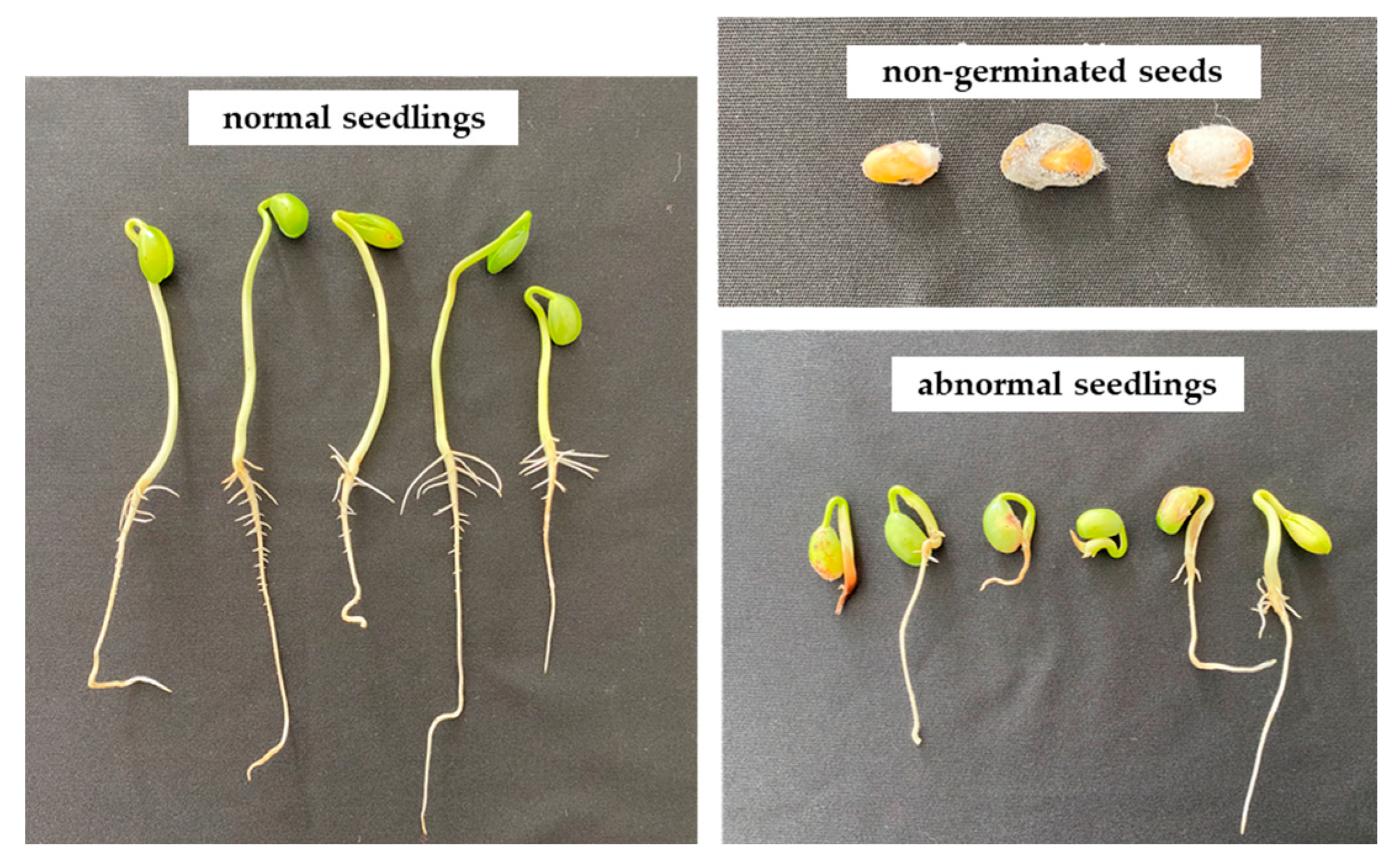
The germination test was conducted using four replicates per treatment, each consisting of four subsamples of 50 seeds. The seeds were sown in the between-paper method, moistened with distilled water at a ratio of 2.5 times the weight of the dry paper. The rolls were placed in a germinator, and the percentages of normal seedlings, abnormal seedlings, and non-germinated seeds were determined according to the Rules for Seed Analysis [
9], as shown in
Figure 2.
2.2. Tetrazolium Test
The tetrazolium test in soybean (4 × 100 seeds) evaluates viability and vigor through enzymatic staining (dehydrogenases), identifying mechanical, weathering, or stink bug damage within 2–3 h. The standard methodology includes preconditioning (6–16 h at 25–41 °C), staining (0.075–1% TZ solution at 35–40 °C in the dark), and the evaluation of longitudinal sections [
12], as shown in
Figure 3.
2.3. Emergence Test
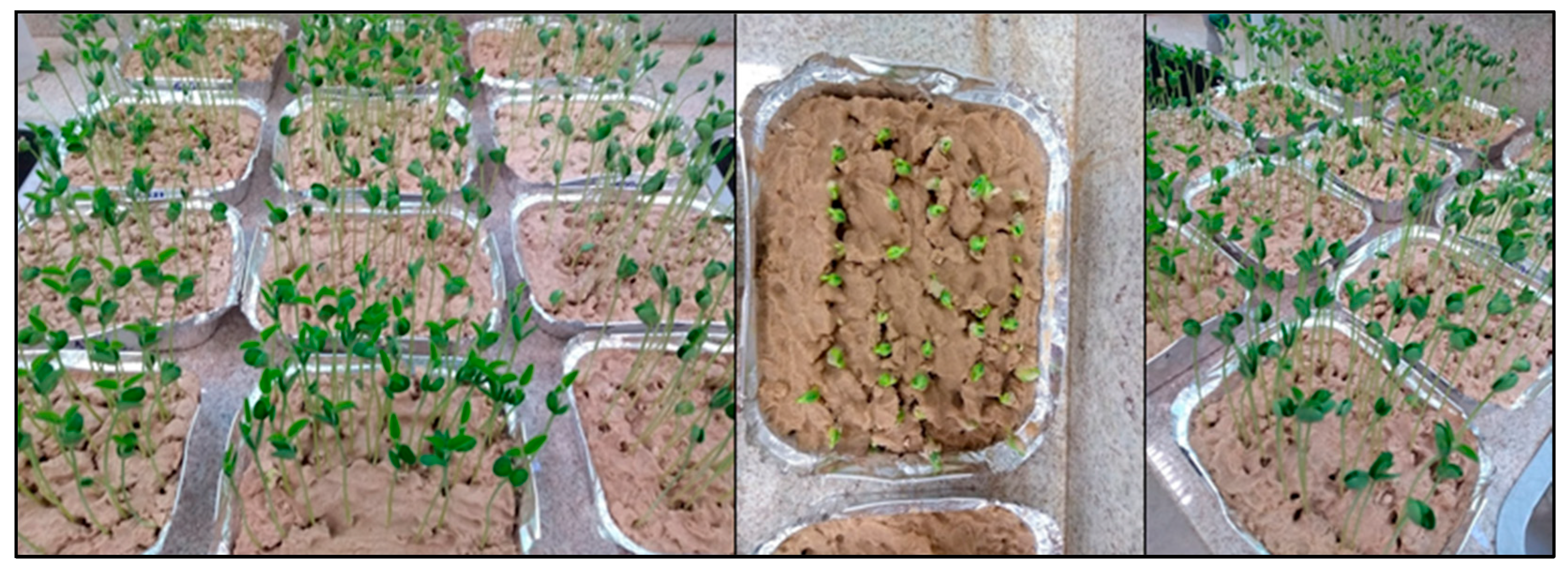
The emergence test allows for an assessment of seedling development under non-controlled conditions. The experiment was conducted using trays (600 mm × 370 mm × 140 mm) filled with a sandy substrate. For each treatment, 100 seeds were sown at the recommended depth for the species. Following sowing, the trays were irrigated and placed in a greenhouse without artificial regulation of temperature, water, or light. The emergence count was performed 21 days after sowing (DAS) [
9], as shown in
Figure 4.
The results obtained for all response variables were analyzed by Proxy ANOVA (analysis of variance) using R statistical software, release 4.4.2. When the effects of the treatments on the model were significant by the F test (α ≤ 0.05), the means were compared by Tukey’s test at a 5% error probability (α ≤ 0.05) for the variable, acceptable spacings. They were also compared by Tukey’s and Dunnett’s tests for the variables: germination, mechanical damage by tetrazolium (TZ), and emergence.
3. Results
A substantial effect was observed for the interaction between treatment factors for all variables that were subjected to analysis. The Shapiro–Wilk test indicated that the error distribution was normal, and the application of data transformation was not required. In simulated sowing on a slope (−11°), the highest percentages of acceptable spacing occurred at speeds of 7 and 9 km h
−1, followed by speeds of 5 and 11 km h
−1 and 13 km h
−1, the latter being no lower than 11 km h
−1. In level sowing (0°), the highest percentages occurred at the first three speeds, followed by the speed of 11 km h
−1. However, the latter was not lower than the first two speeds and not higher than the speed of 13 km h
−1. When the incline was evaluated, two statistically distinct groups were identified. The highest percentages of acceptable spacing were observed at the first three speeds. At the two highest sowing speeds, a decrease in acceptable spacing was observed (
Table 1).
In the context of evaluating the variables associated with damage to soybean seeds as they traverse the dispenser at varying speeds and angles, the additive effects of the treatments can be discerned. This evaluation simulates the field conditions of the seeder, with the additive effects exhibiting variation in intensity depending on the variable under consideration. In the context of variable germination, no discernible decrease was observed compared to the control treatment. Conversely, the increase in speed did not result in a decrease in germination at each angle. However, an examination of the data reveals a decline in soybean germination at speeds of 9 and 13 km h
−1, at both level and uphill angles, compared to the downhill angle (
Table 2).
The findings of the tetrazolium test demonstrate that mechanical damage was substantial following the treatments (
Table 3). Subsequent to the crop establishment process, the damage becomes more apparent. The evaluation of seed emergence subjected to the treatments demonstrated that, with the exception of the level angle treatment at a speed of 9 km h
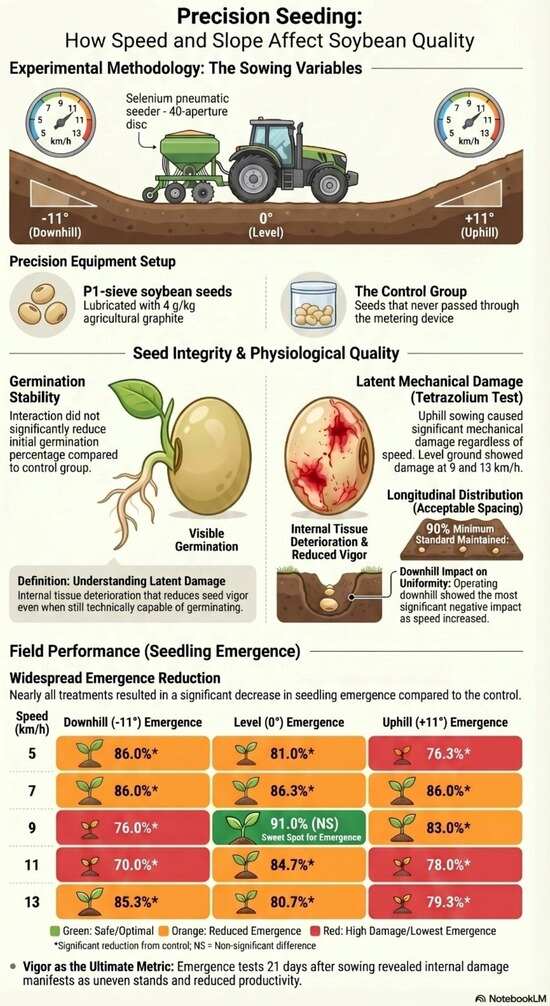
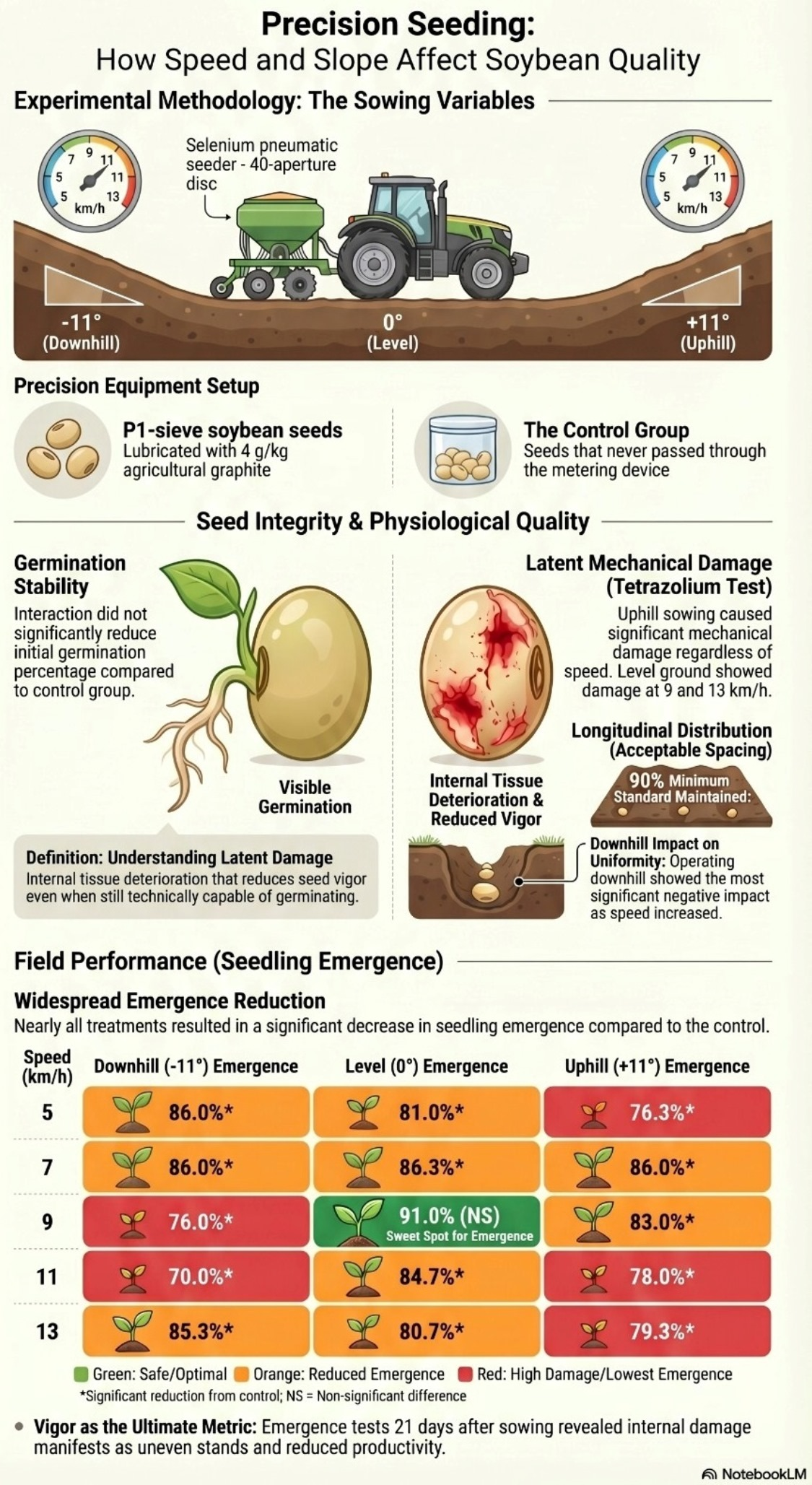
−1, all other treatments resulted in a significant decrease in soybean seedling emergence compared to the control treatment (
Table 4).
4. Discussion
Bortoli et al. [
18] documented an average linear loss of 42% in acceptable deposits in the field when the speed increased from 2 to 9 km h
−1 during the sowing process using a horizontal disc seeder. Therefore, a substantial discrepancy exists in the acceptable spacing requirements when employing horizontal disc dispensers as opposed to pneumatic dispensers.
An analysis of the extant literature reveals the evolution of pneumatic seed dispensers. Alonço et al. [
19] conducted a study in which they analyzed three pneumatic seeders at three transverse inclinations and at three travel speeds between 5 and 10 km h
−1. The study obtained an average value of 50% as the acceptable spacing of soybeans in simulated bench sowing. The enhancement in distribution, in conjunction with the inherent quality of each dispenser, can be mitigated by the geometry of the seed conduit. Down tubes with parabolic profiles—such as the one used in the study—tend to mitigate the decrease in acceptable spacing that can occur due to the increased travel speed of the tractor-seed drill combination [
20]. It is noteworthy that, given the established minimum value of 90% of acceptable spacing for pneumatic dispensers [
3], the observed results indicated that, irrespective of the interaction between speed and inclination levels tested, no value lower than the minimum requirement was recorded.
In the course of evaluating the variables of damage to soybean seeds, it is imperative to pass them through the dispenser at increasing speeds and at different angles. This process serves to simulate the field conditions of the seeder. Through this method, the additive effects of the treatments are observed at different intensities, depending on the variable evaluated. In the context of variable germination, no discernible decrease was observed in comparison to the control treatment.
Conversely, the increase in speed did not result in a decrease in germination at each angle. However, an examination of the data reveals a decline in soybean germination at speeds of 9 and 13 km h
−1, at both level and uphill angles, compared to the downhill angle (see
Table 2). This phenomenon could be attributed to the alteration in the trajectory of the seeds within the descent tube, a phenomenon that was mitigated on the downhill slope, thereby reducing the impact of the seeds within the tube (see
Table 2 for further details).
According to Oliveira et al. [
21], an average loss of viability, as determined by the tetrazolium test, of approximately 14% has been observed between mild and severe damage to soybean seeds. This loss increases to 19% when compared to seeds that have not suffered damage. With regard to the issue of vigor, the aforementioned author exhibited an average loss of approximately 23%, a finding that aligns with the results previously documented in this study. A comparative analysis of the treatments reveals that an increase in travel speed resulted in damage to soybean seeds, exclusively on uphill slopes. As anticipated, an increase in sowing speed resulted in greater damage at the two highest tested speeds on the downhill slope (see
Table 3).
Subsequent to the establishment of the crop, the damage becomes more apparent. The evaluation of seed emergence subjected to the treatments demonstrated that, with the exception of the level angle treatment at a speed of 9 km h
−1, all other treatments resulted in a significant decrease in soybean seedling emergence when compared to the control treatment (
Table 4). When the treatments were evaluated against each other, within each angle, the worst emergence percentages occurred at speeds of 11 and 9 km h
−1, respectively. When level sowing was simulated, three distinct statistical groups were formed. The lowest emergence percentages occurred at the extreme lower and upper speeds (5 and 13 km h
−1), followed by the subsequent speeds in the same direction (7 and 11 km h
−1). The lowest emergence loss occurred at a speed of 9 km h
−1 for this angle. On an incline, the maximum emergence losses occurred at speeds of 5, 11, and 13 km h
−1, while the minimum losses were recorded at speeds of 7 and 9 km h
−1 (see
Table 4). The emergence test is the most evident reflection of seed vigor, as it simulates field conditions, showing stabilization, uniformity, and germination speed. In circumstances where emergence conditions are less than ideal, it is reasonable to anticipate more substantial repercussions from potential damage to seeds during the sowing process. This damage may manifest as uneven or inadequate emergence, with the capacity to influence productivity.
Within each speed, reductions in the emergence rate were higher on uphill and level terrain, respectively, for the speed of 5 km h
−1; greater loss for the level treatment at 7 km h
−1; greater loss on downhill terrain, followed by uphill terrain at a speed of 9 km h
−1; worst on downhill slopes followed by uphill slopes at 11 km h
−1; and greater losses in the variable, level ground and uphill slopes, at a speed of 13 km h
−1 (
Table 4).
The quality of seeds and the ease with which they can be planted are of paramount importance in seed production, as only under these optimal conditions can the plant fully manifest its inherent technological capabilities. According to Rodrigues et al. (2025) [
22], using high-quality seeds has been demonstrated to facilitate optimal crop establishment, prevent the propagation of seed-borne diseases, and ensure high vigor, uniformity, and, consequently, high productivity.
5. Conclusions
The downhill operation demonstrated the most significant impact on the uniformity of distribution, as evidenced by the increase in the speed of the tractor-seed drill combination. However, under the most unfavorable conditions, the minimum acceptable spacing percentage for pneumatic dispensers (90%) was attained.
The interaction between the treatment factors did not demonstrate an effect on seed germination compared to the control.
The process of sowing uphill resulted in substantial mechanical damage to soybean seeds, irrespective of the tested velocity. An analysis of the damage revealed that significant damage occurred exclusively at speeds above 9 km h−1 in the downhill direction. In level sowing, damage was observed at speeds of 9 and 13 km−1.
The emergence of soybean seedlings was not significantly impacted when sown at a speed of 9 km h−1 using a leveled seeder. The remaining treatments exhibited a significant reduction in crop emergence.




 ,
,