Article

Vermicompost-Based Substrates and a PGPR Consortium Improve the Nutraceutical Quality of Greenhouse Tomato (Solanum lycopersicum L.) in a Semi-Hydroponic System


by
Alfonso Andrade-Sifuentes
1,
Jesús Josafath Quezada-Rivera
1,
Gabriel de Jesús Peña-Uribe
1,
Rubén Palacio-Rodríguez
1,
José Luis Estrada-Rodríguez
1,
Jaime Sánchez-Salas
1,
Manuel Fortis-Hernandez
2,
Pablo Preciado-Rangel
2,
Jazmín Montserrat Gaucin-Delgado
3,* and
Jorge Sáenz-Mata
1,*
1
Faculty of Biological Sciences, Juárez University of the State of Durango, Av. Universidad S/N, Col. Filadelfia, Gómez Palacio C.P. 35010, Durango, Mexico
2
Torreon Institute of Technology, National Technological Institute of Mexico, Carretera Torreón-San Pedro km 7.5, Ejido Ana, Torreón C.P. 27170, Coahuila, Mexico
3
Biotechnology Engineering, Polytechnic University of Gómez Palacio, Carretera El Vergel-La Torreña km 0 820, El Vergel, Gómez Palacio C.P. 35120, Durango, Mexico
*
Authors to whom correspondence should be addressed.
Crops 2026, 6(2), 47; https://doi.org/10.3390/crops6020047
Submission received: 12 February 2026 / Revised: 3 April 2026 / Accepted: 14 April 2026 / Published: 16 April 2026

Abstract

Tomato (Solanum lycopersicum L.) is a globally important vegetable, prized for its nutritional value and antioxidant content. Given the increasing demand for foods with health-promoting properties and the need for sustainable production practices, this study evaluated the impact of different growth substrates combined with plant growth-promoting rhizobacteria (PGPR) inoculation on the yield and nutraceutical quality of greenhouse tomatoes grown in a semi-hydroponic system. ‘Nereida’ variety saladette tomato plants were either inoculated with a single PGPR consortium (1 × 10⁸ CFU mL−1) or uninoculated. Three substrates were used: a chemical fertilization control and a sand-vermicompost mixture with two inherent levels of phosphorus (253 and 442 ppm). The chemically fertilized substrate without inoculation served as the control treatment. The results indicated that the chemically fertilized substrate presented a significantly higher yield per square meter (p < 0.05), reaching values of 5.20 ± 0.70 kg m−2 and 4.83 ± 0.35 kg m−2 in the control treatment. However, fruits grown in the vermicompost-based substrate with higher phosphorus content (442 ppm) and PGPR inoculation exhibited significantly greater antioxidant capacity (54.16 µmol TE g−1 FW) and higher concentrations of vitamin C (14.03 mg·100 g−1 FW), lycopene (47.68 mg·100 g−1 FW), flavonoids, carotenoids, and glutathione. This represented an increase of 28–45% in bioactive compounds including lycopene, vitamin C, flavonoids, carotenoids, and glutathione compared to the chemical control. While the interaction between substrate and inoculation was significant only for soluble solids, both factors independently and additively contributed to the enhancement of nutraceutical parameters. These findings suggest that the use of vermicompost-based substrates, particularly those with higher phosphorus content, in combination with PGPR inoculation, is a promising strategy to enhance the accumulation of health-promoting bioactive compounds in tomato fruits, despite a trade-off in total yield.

1. Introduction

Tomato (Solanum lycopersicum L.) is one of the most widely cultivated vegetable crops worldwide, owing to its high production volume and nutritional value. According to FAOSTAT [1], global tomato production approached 250 million tons in 2024. In Mexico, production increased from 3.3 million tons in 2016 [2] to 4.4 million tons in 2024 [1], reflecting its economic importance. Beyond yield, tomato is recognized as a functional food due to its antioxidant profile, particularly its high lycopene content, which plays a key role in mitigating oxidative stress [3]. Additionally, its low caloric density and high dietary fiber content contribute to gastrointestinal and metabolic health benefits [4,5].
However, modern agriculture faces the dual challenge of increasing productivity while reducing the environmental footprint of intensive farming systems [6]. Constraints such as limited arable land, water scarcity, and climate variability have accelerated the adoption of soilless production systems [7]. Among these, semi-hydroponic systems (soilless) offer improved control over nutrient delivery and crop performance, enabling consistent, high-quality production [8,9]. Despite these advantages, their efficiency is strongly dependent on precise nutrient management strategies.
Conventional fertilization practices, although effective in maximizing yield, have been associated with high environmental costs, including soil degradation and contamination of water resources [10,11,12]. Consequently, there is growing interest in sustainable alternatives that maintain productivity while enhancing food quality [13]. Vermicompost has emerged as a viable organic amendment due to its ability to improve nutrient availability, water retention, and microbial activity within the substrate [14,15]. Complementarily, plant growth-promoting rhizobacteria (PGPR), such as Pseudomonas, Bacillus, and Enterobacter, enhance nutrient uptake, stimulate plant growth, and modulate plant secondary metabolism [16]. Increasing evidence indicates that PGPR inoculation can enhance the accumulation of bioactive compounds, including phenolics, flavonoids, and vitamins [17]. Moreover, meta-analytical studies have demonstrated a consistent positive effect of PGPR on crop yield and stress tolerance, underscoring their relevance in sustainable agricultural systems [18,19].
Despite these advances, the combined effects of vermicompost-based substrates and PGPR inoculation in semi-hydroponic systems remain insufficiently characterized, particularly under conditions of varying nutrient availability. This knowledge gap is especially relevant in regions such as the Comarca Lagunera in northern Mexico, where optimizing tomato production systems with enhanced nutraceutical quality could provide both economic and public health benefits. Therefore, the objective of this study was to evaluate the effects of different growth substrates—chemical fertilization and vermicompost-based substrates with contrasting phosphorus levels—in combination with PGPR inoculation on the yield and nutraceutical quality of greenhouse tomatoes grown under semi-hydroponic conditions. We hypothesized that phosphorus availability, as a key regulator of plant metabolism, plays a central role in the synthesis of nutraceutical compounds; thus, the integration of phosphorus-enriched vermicompost with PGPR inoculation would enhance the accumulation of these compounds in tomato fruits. This effect is expected to be associated with increased phosphorus availability and use efficiency, as well as the modulation of microbially mediated metabolic processes. However, this enhancement may occur at the expense of total yield due to trade-offs between primary growth and secondary metabolism.

2. Materials and Methods

2.1. Study Site and Greenhouse Conditions

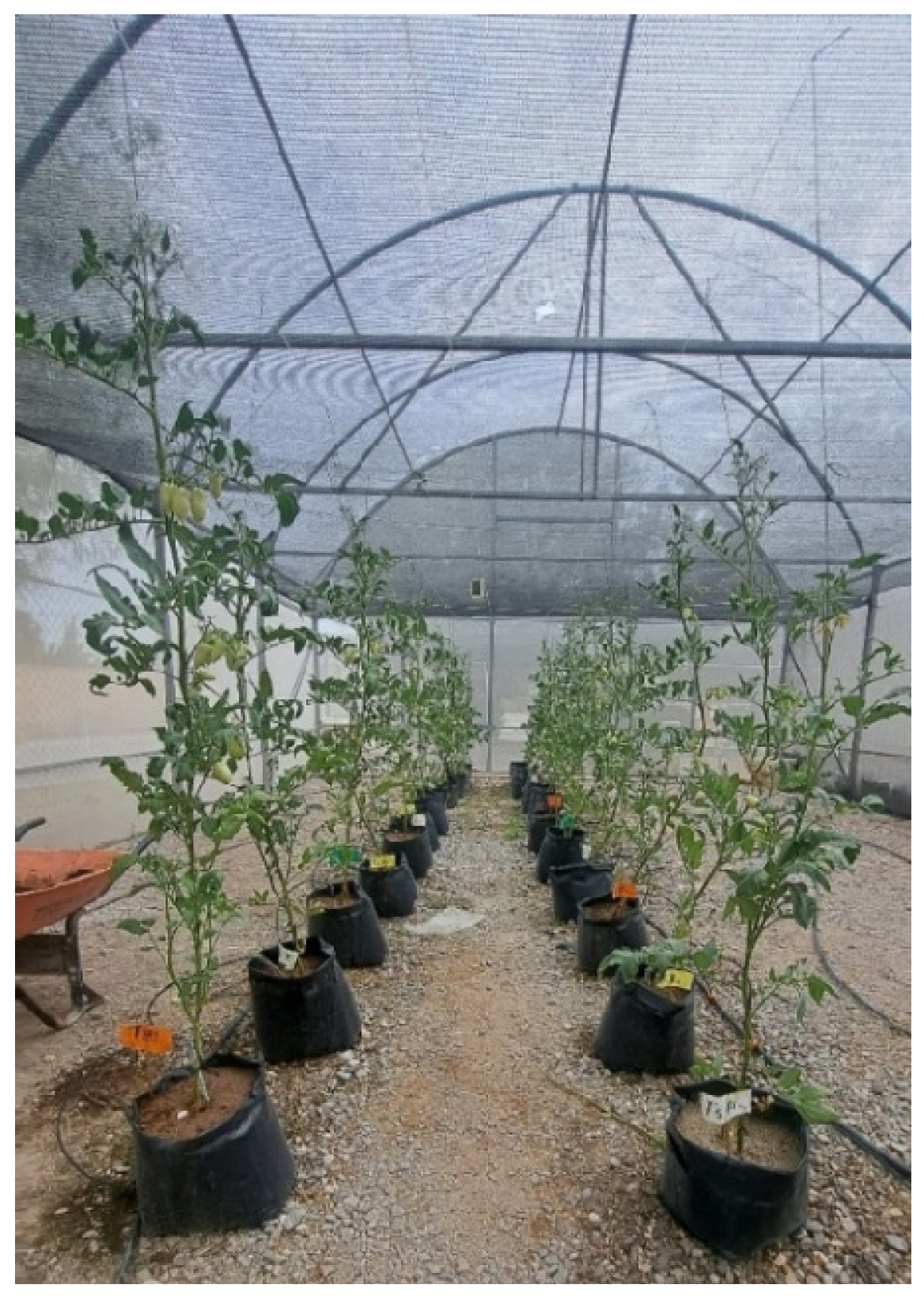
The study was conducted in a greenhouse at the Faculty of Biological Sciences, Juárez University of the State of Durango (FCB-UJED), located at 25° 35′ 14.08″ N, 103° 30′ 2.43″ W, during the spring-summer agricultural cycle of 2023. The greenhouse structure consisted of 2 mm thick galvanized steel with 1.25″ and 1.5″ square profiles. The side walls were covered with crystal-colored anti-insect mesh (25 × 25 threads per inch), and the roof was covered with white polyethylene plastic (720 gauge) to regulate the temperature and light incidence (Figure 1). During the crop cycle, the average temperature inside the greenhouse was 28 ± 5 °C, and the average relative humidity was 55 ± 10%.

2.2. Growth Substrates and Fertilization

Three growth substrates were evaluated. The first consisted of an inert substrate (river sand from the Nazas River and perlite, 80:20 v:v) fertilized with a Steiner nutrient solution (SN) applied via a drip irrigation system (pH 5.8, EC 2.0 dS·m−1, containing 97 ppm of assimilable phosphorus), which served as the chemical fertilization control (Chem). The other two substrates consisted of a mixture of river sand and vermicompost (80:20, v:v). The vermicompost was obtained from a previous study [20] and was characterized by two different levels of assimilable phosphorus: 253 ppm (V253) and 442 ppm (V442). The physicochemical characteristics of the V442 vermicompost were: pH 9.14, electrical conductivity (EC) 6.6 dS·m−1, NO3 472.66 ppm, and NH4+ 160.27 ppm (Table 1). The relatively high EC of the vermicompost reflects its origin from nutrient-rich organic residues. However, this potential salinity effect was mitigated by dilution with river sand (80:20, v:v), resulting in a substrate suitable for tomato cultivation.

2.3. Bacterial Strains, Tomato Seed, and Plant Inoculation

The bacterial consortium was obtained from the Microbial Ecology Laboratory at the FCB-UJED. It included strains of Bacillus aryabhattai Crizos1, Bacillus subtilis CR7, and Bacillus cereus CR5 (available in the laboratory’s internal collection). Prior to consortium formation, compatibility tests were performed by cross-streaking on Petri dishes, confirming no antagonism among the strains. Bacterial activation was carried out in Luria–Bertani liquid medium in a growth chamber at 30 °C and 120 rpm for 24 h. Cell counts were performed using a Neubauer chamber to adjust the concentration to 1 × 10⁸ CFU mL−1 (Table 2). The consortium was prepared by mixing equal volumes of each culture, ensuring a 1:1:1 proportion of the three strains in the final mixture. A volume of 50 mL of this consortium was applied per plant at each inoculation event.
Seeds of the ‘Nereida’ tomato variety were sown in 200-well polystyrene trays containing sterile peat moss (Premier Tech®, Rivière-du-Loup, QC, Canada) and maintained under greenhouse conditions. To maintain humidity, trays were covered with black plastic for 72 h and watered every 24 h. Plants were inoculated directly into the root ball at 12, 35, 60, and 80 days after germination (DAG). At 35 DAG, just before transplanting, seedlings were inoculated in the trays; subsequent inoculations were applied directly to plants in polyethylene bags.

2.4. Transplanting and Crop Management

Transplanting was performed 35 days after sowing, placing one seedling per experimental unit. Black polyethylene bags (gauge 500, 18 L capacity) were used as containers.
For vermicompost treatments, bags were filled with a substrate composed of vermicompost and river sand (80:20, v/v). Control treatment bags were filled with a mixture of river sand and perlite (Multiperl®, Gómez Palacio, DGO, Mexico) in the same ratio (80:20, v/v) (Table 2).
Bags were arranged in double rows, with 0.30 m between plants and 1.60 m between rows, resulting in a planting density of 4.2 plants·m−2. River sand was disinfected with a 5% sodium hypochlorite solution and air-dried for three days, followed by treatment with hot water (>100 °C) to eliminate unwanted microorganisms.
Irrigation was applied manually at three crop stages: pre-flowering, flowering, and production, with daily volumes of 0.5, 1.0, and 2.0 L per bag, respectively. The irrigation water had an EC 1.25 dS·m−1, a sodium adsorption ratio of 3.8, and a pH of 7.5, classifying it as low-salinity, low-sodium water [21]. In chemical fertilization treatments, irrigation with 75% and 100% Steiner nutrient solutions began four days after transplanting. Nutrient solutions were prepared using calcium nitrate [Ca(NO3)2], potassium nitrate (KNO3), magnesium sulfate (MgSO4), potassium sulfate (K2SO4), and micronutrients (Maxiquel Mix®, Biocampo, Torreon, COAH, Mexico). The pH was adjusted to 5.5 using phosphoric acid (H3PO4).
Plants were trained to a single stem using plastic twine and supported by overhead wires. The experiment concluded at 120 DAS. Fruits were harvested from the first to the sixth bunch when they reached 30–60% pink coloration, according to USDA standards [22].

2.5. Experimental Design

A completely randomized factorial design with two factors was used: substrate type (Chem, V253, V442) and bacterial consortium inoculation (with or without 1 × 10⁸ CFU mL−1). This resulted in six treatments with three replications, totaling 18 experimental units.

2.6. Growth Variables in S. lycopersicum Plants

Plant morphological variables, including stem diameter and root fresh weight, were measured at the end of the experiment at 120 days after sowing (DAS). Root fresh weight was used as an indicator of the plant’s potential for water and nutrient absorption. A digital vernier caliper with display (accuracy ± 0.01 mm) was used for main stem diameter, and a digital analytical balance (accuracy ± 0.1 g) was used for root weight. Plant height was recorded at different phenological stages (seedling, pre-flowering, and flowering) up to 100 DAS, using a 30 cm graduated ruler (accuracy ± 1 mm) for the early stages and a 100 cm measuring stick (accuracy ± 1 mm) for mature plants. Final plant height data are presented.

2.7. Fruit Quality Variables of S. lycopersicum

To evaluate the effects of treatments on fruit biophysical quality, the following parameters were measured: fruit size [polar diameter (PD) and equatorial diameter (ED)] using a digital Vernier caliper; soluble solids content (°Brix) using a Master-T refractometer (Atago®, Tokyo, Japan); fruit firmness (FF) using a 3 mm plunger penetrometer; and average fruit weight using an analytical balance. Yield was quantified as the total fresh weight of all commercial-sized fruits harvested from the first to the sixth bunch per plant and expressed in kilograms per square meter (kg·m−2). Harvesting up to the sixth bunch was standardized to avoid the effects of natural senescence and the decline in fruit quality in higher bunches, a common practice in greenhouse production. Each fruit was weighed individually using an analytical balance (capacity 450 g, accuracy 0.01 g). Data were recorded in grams, summed, and converted to kilograms to calculate yield per unit area.

2.7.1. Extraction of Metabolites for Nutraceutical Analysis

Bioactive phytochemicals analysis was conducted in the Genetics Laboratory of the Gómez Palacio Polytechnic University (UPGOP). For each treatment, 10 fruits were randomly selected and washed with distilled water to remove surface impurities. Samples were manually homogenized using a porcelain mortar and pestle to avoid excessive heat that could degrade thermolabile compounds.
From the homogenized pulp, 2 g aliquots were extracted with 10 mL of 80% methanol. The mixture was placed on a rotary shaker at 20 rpm and 5 °C for 6 h to facilitate the extraction of bioactive compounds. After extraction, samples were centrifuged at 3000× g for 10 min. The supernatant was collected and stored at −20 °C until analysis [23].

2.7.2. Lycopene Quantification

Lycopene content was determined by UV-Vis spectrophotometry, adapting the method of Fish et al. [24]. A standard calibration curve was prepared using purified lycopene (≥90%) at concentrations ranging from 0.5 to 5.0 µg mL−1. Briefly, 2 g of homogenized pulp were extracted with 15 mL of a hexane:acetone:ethanol mixture (50:25:25, v/v). Extraction was conducted in darkness to prevent carotenoid degradation. Samples were centrifuged at 4000× g for 10 min at 4 °C, and absorbance was measured at 503 nm in a spectrophotometer. Lycopene concentration was calculated from the calibration curve using the molar extinction coefficient (ε = 3.12 × 10⁴ L·mol−1·cm−1) and expressed as milligrams of lycopene per kilogram of fresh weight (mg·kg−1 FW) and as mg·100 g−1 FW.

2.7.3. Carotenoids

Total carotenoids were quantified by spectrophotometry at 450 nm following the method of Lichtenthaler [25] with modifications. Extraction was performed using 100% acetone and centrifugation at 10,000× g for 10 min at 4 °C. β-carotene was used as a standard (0–100 µg·mL−1, R2 > 0.99). Results were expressed as µg·g−1 FW.

2.7.4. Vitamin C

Vitamin C (ascorbic acid) quantification was performed using the spectrophotometric titration method described by Hernández-Hernández et al. [26]. A calibration curve was constructed using standard ascorbic acid (Sigma-Aldrich®, St. Louis, MO, USA, ≥99%) at concentrations ranging from 0 to 100 µg·mL−1. After titration with 2,6-dichlorophenolindophenol (DCPIP), sample absorbance was measured at 515 nm using a UV-Vis spectrophotometer (Thermo Scientific®, GENESYS 10S, Waltham, MA, USA). Results were expressed as milligrams of vitamin C per 100 g of fresh weight (mg·100 g−1 FW).

2.7.5. Total Phenolic Content

Total phenolic content was determined using the modified Folin-Ciocalteau method [27]. A 30 μL aliquot of extract was mixed with 270 μL of ultrapure water (1:9 ratio) in 2 mL Eppendorf® tubes, followed by the addition of 1.5 mL of Folin-Ciocalteau reagent (Sigma-Aldrich®, St. Louis, MO, USA, ≥99%), 1:15 v/v dilution in water, and vortex homogenization (10 s, 2500 rpm). After 5 min of incubation in dark at room temperature, 1.2 mL of freshly prepared Na2CO3 solution (7.5% w/v) was added, homogenized again (10 s, 2500 rpm), and incubated in a thermostatic bath (45 ± 0.5 °C, 15 min). Samples were cooled to room temperature, and absorbance was measured at 765 nm. A blank (reaction mixture without sample) and a gallic acid calibration curve (0–100 mg·L−1, R2 > 0.995) were used. Results were expressed as gallic acid equivalents (mg GAE·g−1 FW), calculated by linear regression.

2.7.6. Flavonoids

Total flavonoids were determined using the aluminum chloride (AlCl3) colorimetric method at 420 nm [28]. A rutin calibration curve (0–100 mg·L−1) was used. Results were expressed as mg of rutin equivalents (RE) per 100 g of fresh weight (mg RE·100 g−1 FW).

2.7.7. Antioxidant Capacity

Antioxidant activity was evaluated using the 2,2-diphenyl-1-picrylhydrazyl (DPPH) radical scavenging method, adapted from Brand-Williams et al. [29]. A 50 μL aliquot of extract was mixed with 950 μL of methanolic DPPH solution (100 μM, Sigma-Aldrich®, St. Louis, MO, USA) in light-protected Eppendorf® tubes and incubated for 30 min at 25 °C in the dark. Absorbance was measured at 515 nm. Controls included absolute methanol (blank), DPPH solution without sample (negative control), and Trolox® (6-hydroxy-2,5,7,8-tetramethylchroman-2-carboxylic acid, Sigma-Aldrich®, St. Louis, MO, USA) as a positive control. Quantification was based on a Trolox® calibration curve (0–100 μM, R2 > 0.99), and antioxidant activity was calculated using the formula:
[(A_control − A_sample)/A_control] × 100
where
  • A_control represents the absorbance of DPPH without sample;
  • A_sample the absorbance of the sample with DPPH.
Results were expressed as µmol Trolox equivalents (TE)·g−1 FW using a Trolox calibration curve (0–100 µM, R2 > 0.99).

2.7.8. Glutathione

Reduced glutathione (GSH) was quantified using the 5,5′-dithiobis-2-nitrobenzoate (DTNB, Sigma-Aldrich®, St. Louis, MO, USA) spectrophotometric method, adapted from Méndez-Vázquez et al. [30]. Samples (100 mg) were homogenized in 1 mL of 5% (v/v) metacarboxylic acid and centrifuged at 12,000× g for 15 min at 4 °C. The colorimetric reaction was initiated by mixing 480 μL of the supernatant with 2.20 mL of 0.32 M Na2HPO4 buffer (pH 8.0 ± 0.2) and 320 μL of 1 mm DTNB (freshly prepared in phosphate buffer). After vortex homogenization (10 s) and incubation for 10 min in the dark at 25 °C, absorbance was measured at 412 nm. A blank (buffer + DTNB without extract) was used. Results were expressed in mg·100 g−1 dry weight (DW), applying the molecular weight of GSH (307.32) as a conversion factor.

2.8. Statistical Analysis

All statistical analyses were performed using Statistica software (v. 10, StatSoft Inc., Tulsa, OK, USA). Normality (Shapiro–Wilk test) and homogeneity of variances (Levene’s test) were verified prior to analysis of variance (ANOVA). All variables met these assumptions. Morphological and quality variables were subjected to two complementary analyses. First, a one-way ANOVA was performed to compare all six individual treatments (T1 to T6), with significant differences determined by Tukey’s multiple-comparison test (p ≤ 0.05). Second, a two-way factorial ANOVA was conducted to evaluate the individual and interactive effects of the two main factors: substrate type (Chem, V253, V442) and bacterial consortium inoculation (with or without). Results from the factorial ANOVA are presented in Table 2, including F-values and p-values.

3. Results

3.1. Plant Height, Stem Diameter, and Root Weight

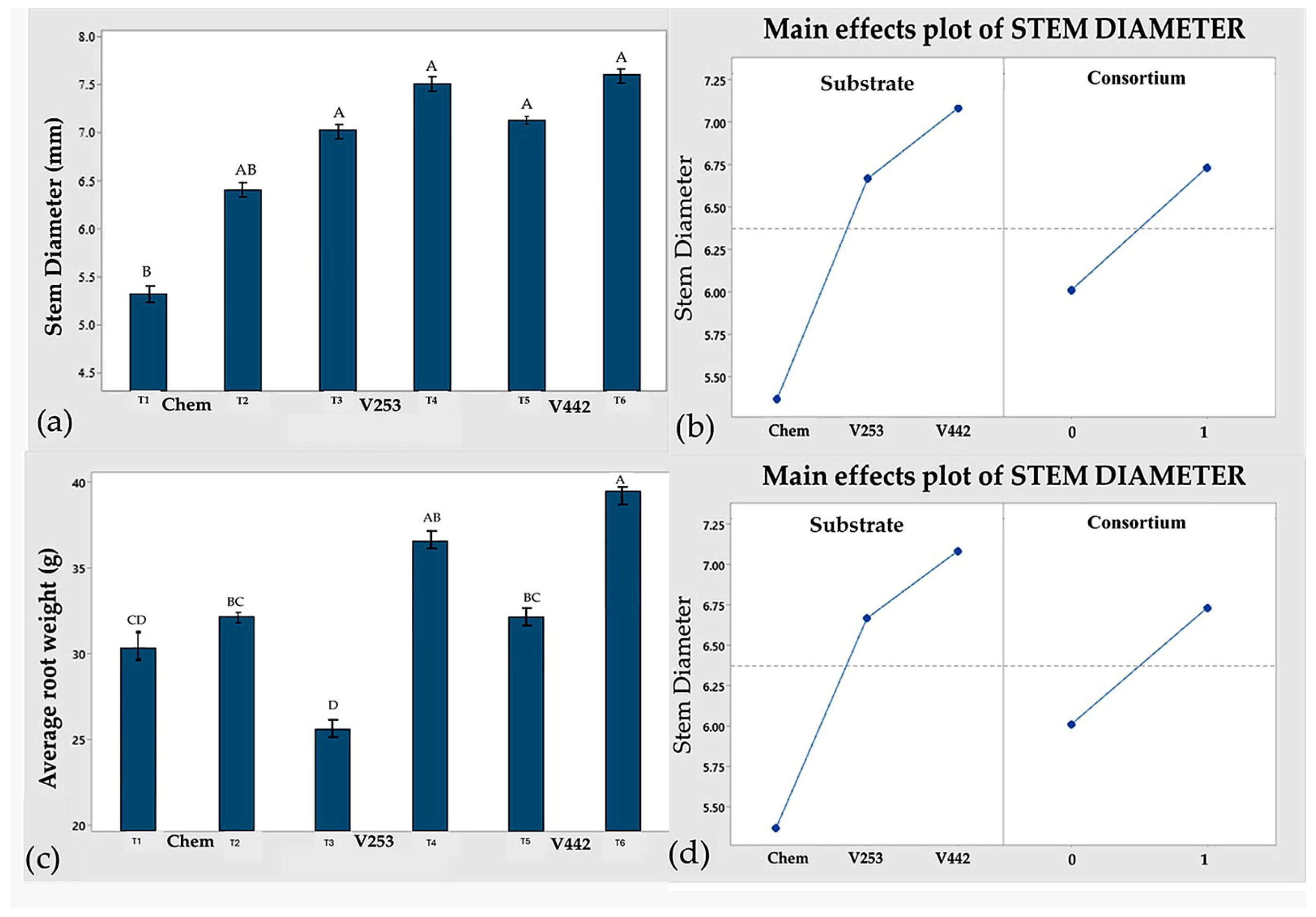
ANOVA revealed no significant differences in plant height among treatments at the end of the experimental cycle (p > 0.05). In contrast, significant differences were observed in stem diameter (p ≤ 0.05), with values ranging from 5.30 ± 0.72 mm (T1) to 7.26 ± 0.25 mm (T4 and T6). Treatments T4 (V253 + 1 × 10⁸ CFU) and T6 (V442 + 1 × 10⁸ CFU) showed the highest stem diameter values, although they were statistically similar to T2, T3, and T5 (Figure 2a).
Factorial analysis indicated significant effects of both substrate type and bacterial consortium application on stem diameter (p ≤ 0.05) (Figure 2b), although no significant interaction was detected (p > 0.05; Table 2). Similarly, root fresh weight differed significantly among treatments (p ≤ 0.05), with T6 (V442 + 1 × 10⁸ CFU) showing the highest values (Figure 2c). As with stem diameter, both factors had significant individual effects (p ≤ 0.05), but their interaction was not significant (p > 0.05) (Figure 2d).

3.2. Yield (kg·m−2), Fruit Size (Polar and Equatorial Diameter), Firmness, and Soluble Solids

ANOVA revealed significant differences in yield among treatments (p ≤ 0.05), with values ranging from 2.00 to 5.20 kg·m−2 (sixth bunch). Treatments with chemical fertilization (T1 and T2) achieved the highest yields (Table 2).
Treatments T5 (V442) and T6 (V442 + 1 × 10⁸ CFU mL−1) produced fruits with improved physicochemical quality. Polar diameter (PD) did not differ significantly among treatments (p > 0.05). Equatorial diameter (ED) differed significantly among treatments (p ≤ 0.05), with values ranging from 28.67 ± 2.08 to 36.00 ± 1.00 mm. Factorial analysis showed significant main effects of substrate type and inoculation, with no significant interaction.
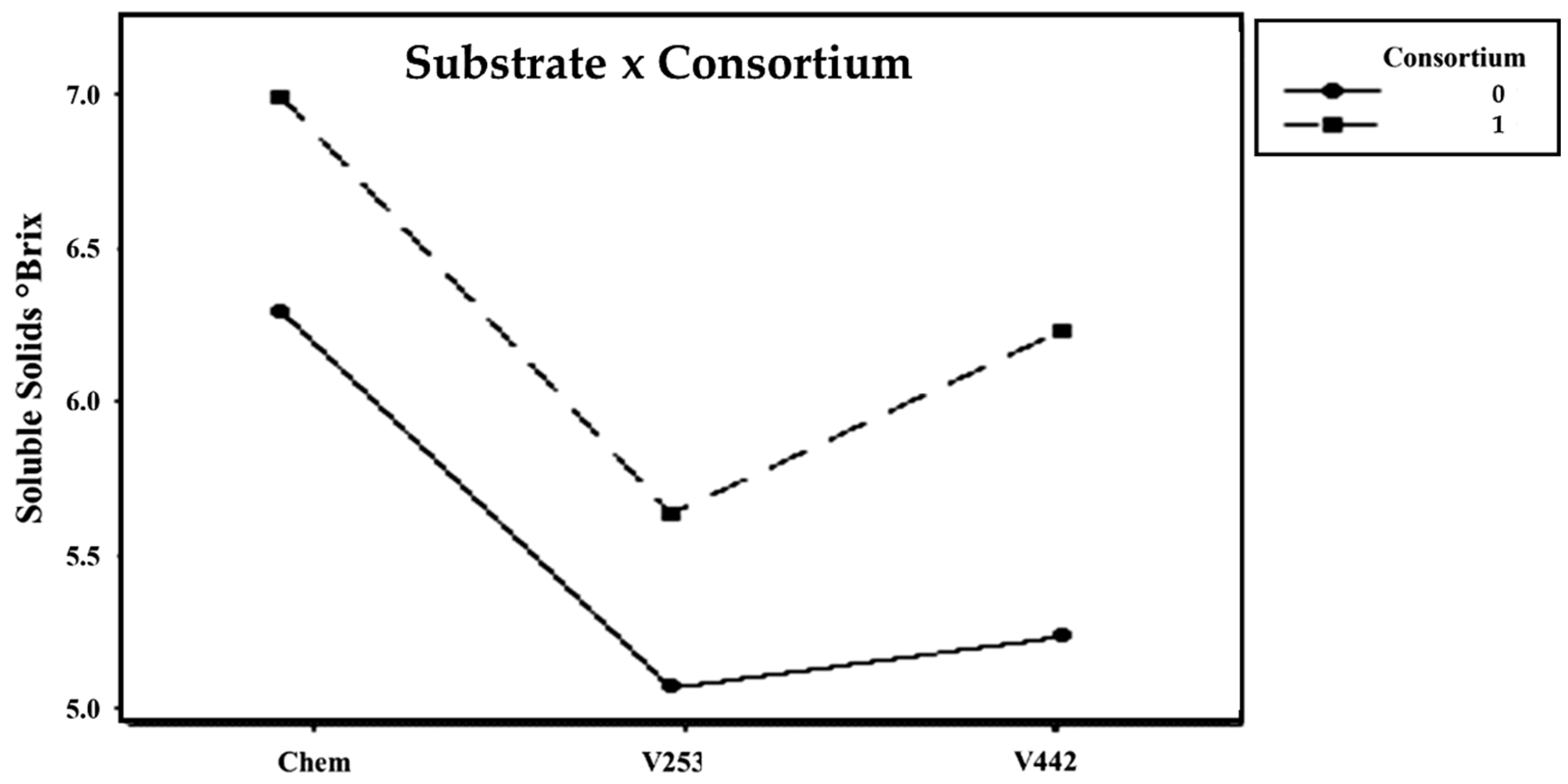
Fruit firmness (FF) did not differ significantly among treatments (p > 0.05). However, the substrate factor showed a significant main effect (p ≤ 0.05), whereas the bacterial consortium had no significant effect. Soluble solids (SS) differed significantly among treatments (p ≤ 0.05). Factorial analysis showed significant effects of substrate type (p ≤ 0.05) and a significant interaction between substrate and bacterial consortium (p = 0.011) (Table 3; Figure 3). The highest values of equatorial diameter and soluble solids were observed in treatment T6 (V442 + 1 × 10⁸ CFU mL−1).

3.3. Phytochemical Quality of Tomato Fruits

Phytochemical quality was evaluated through lycopene, total carotenoids, vitamin C (ascorbic acid), total phenolic compounds, flavonoids, antioxidant capacity, and glutathione. ANOVA revealed significant differences among treatments for all variables (p < 0.05).
Notably, all treatments combining vermicompost (V253 or V442) with PGPR inoculation (T4, T5, and T6) exhibited significantly higher concentrations of bioactive compounds compared to the chemical control (T1).
Factorial analysis showed that both substrate type (V253 vs. V442) and bacterial inoculation (1 × 10⁸ CFU) had significant individual effects (p < 0.05). However, no significant interaction effects were detected for any phytochemical parameter (p > 0.05; Table 4), indicating that the effects of substrate and inoculation were additive rather than synergistic.

3.3.1. Lycopene

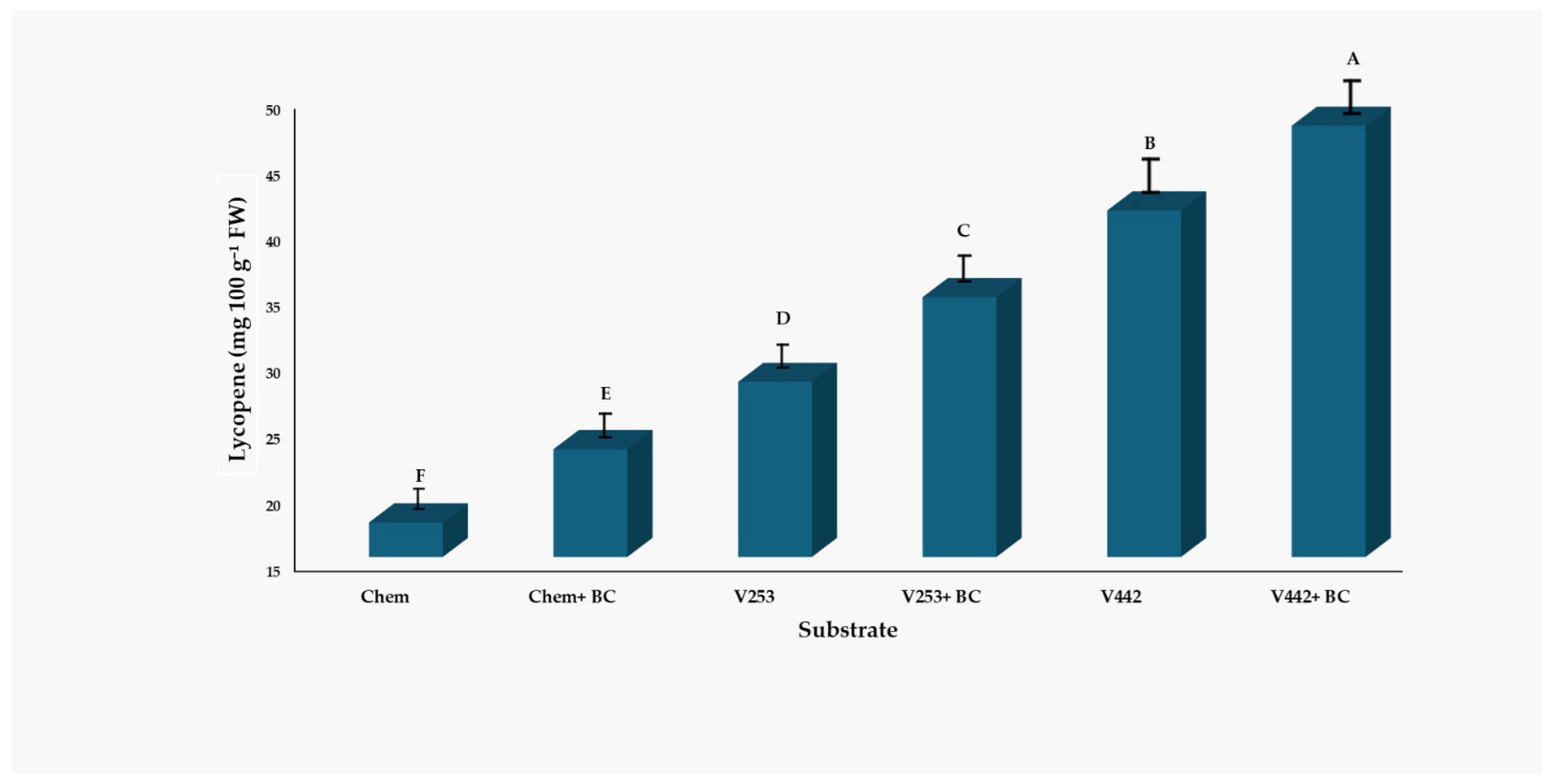
Significant differences in lycopene content were observed among treatments (p < 0.05). The highest concentrations were recorded in T5 (41.25 ± 2.79 mg·100 g−1 FW) and T6 (47.68 ± 2.41 mg·100 g−1 FW), both corresponding to the vermicompost-based substrate with the highest phosphorus level (442 ppm) (Figure 4; Table 4).
Compared to the chemical control, vermicompost-based treatments showed higher lycopene content, particularly when combined with PGPR inoculation. Factorial analysis indicated a significant effect of substrate type (p < 0.05), with higher values in V442. Inoculation also increased lycopene content compared to non-inoculated treatments; however, no significant interaction between substrate type and inoculation was detected (p > 0.05; Table 4).

3.3.2. Vitamin C

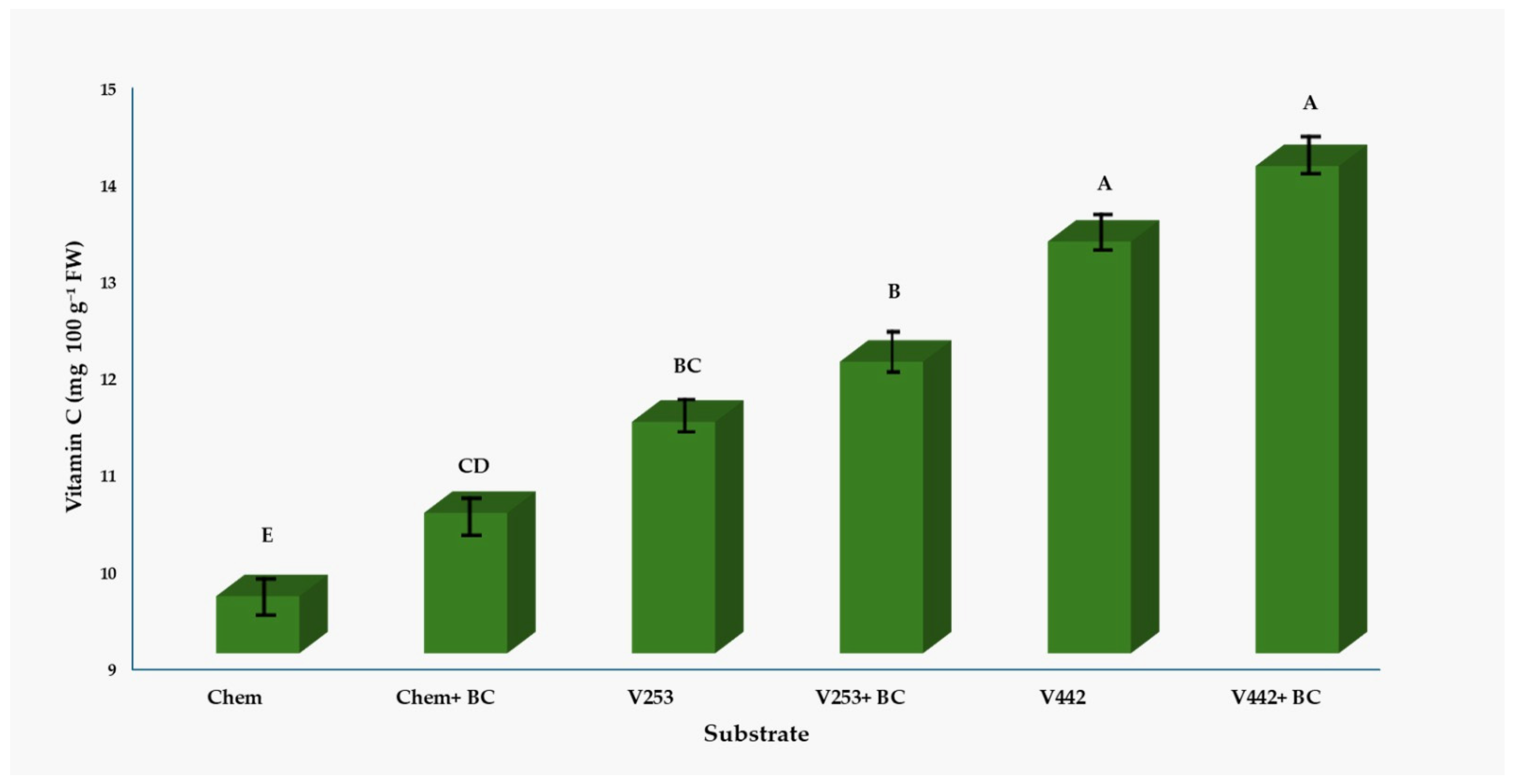
Statistical analysis revealed significant differences in vitamin C content among treatments (p < 0.05). The highest concentration was recorded in T6 (V442 + 1 × 10⁸ CFU) (14.03 ± 0.42 mg·100 g−1 FW), whereas the lowest value was observed in T1 (chemical fertilization: 9.59 ± 0.38 mg·100 g−1 FW) (Figure 5; Table 4). Factorial analysis showed significant main effects of substrate type and bacterial inoculation (p < 0.05). The V442 substrate resulted in higher vitamin C content compared to V253, and inoculated treatments showed higher values than non-inoculated treatments. No significant interaction between factors was detected (p > 0.05).

3.3.3. Phenols, Flavonoids, Antioxidant Capacity, Carotenoids, and Glutathione

Analysis of bioactive compounds showed that the combined application of the V442 substrate and bacterial consortium (1 × 10⁸ CFU) in T6 resulted in the highest levels of:
  • Total phenolic compounds: 179.11 ± 0.11 mg GAE·100 g−1 FW;
  • Flavonoids: 119.08 ± 1.10 mg RE·100 g−1 FW;
  • Antioxidant capacity: 54.16 ± 0.06 µmol TE·g−1 FW;
  • Total carotenoids: 12.93 ± 0.98 mg·100 g−1 FW;
  • Glutathione: 15.93 ± 0.98 mg·100 g−1 FW.
Significant differences (p ≤ 0.05) were observed for both substrate type and bacterial inoculation. However, consistent with other phytochemicals, no significant interaction was observed between them (Table 4). To avoid redundancy, the detailed data for lycopene, vitamin C, and all other phytochemicals are presented exclusively in Table 4, which provides a comprehensive overview of the treatment effects and the factorial analysis.

4. Discussion

This study demonstrates that both the growth substrate and the application of a PGPR consortium significantly influence the plant growth, yield, and particularly the nutraceutical quality of tomato fruits under semi-hydroponic conditions. A key finding is the trade-off between high yield and enhanced nutraceutical quality, which appears to be closely linked to the cultivation strategy. Importantly, the results indicate that the combined use of vermicompost and PGPR exerts primarily additive effects on most quality parameters, with a specific interaction observed only for soluble solids content.

4.1. Effect of Treatments on Vegetative Growth

The results of this study show that stem diameter increased across all treatments compared to the chemical control, with higher values generally associated with vermicompost-based substrates and phosphorus availability. Root fresh weight increased in treatments with higher phosphorus levels, particularly in those receiving vermicompost. Although bacterial inoculation contributed to root development, its effect was not consistently significant across all variables (Figure 2). These findings are consistent with previous reports highlighting the importance of phosphorus in plant development, particularly in cell expansion and root growth [31,32]. The enhanced root development observed in inoculated treatments may be attributed to the production of phytohormones, such as auxins, by Bacillus spp., which stimulate root architecture and root hair formation [33].
No significant differences in plant height were observed among treatments. This may be explained by the training system used, in which plants were managed with a single stem, limiting vertical growth in tomato plants [34]. However, the increases in stem diameter and root biomass under vermicompost and PGPR treatments support the role of phosphorus availability and microbial activity as key drivers of vegetative growth [35]. These results suggest that the combined use of phosphorus-enriched vermicompost and PGPR consortium can enhance plant vigor, although its effect on yield requires further optimization.

4.2. Trade-Off Between Yield and Nutraceutical Quality

In recent years, the increasing global demand for food has intensified concern related to population growth and food security [1,36]. This situation is further aggravated by the rising prevalence of chronic disease associated with poor nutrition [37]. Consequently, the production of safe, nutritious foods with high antioxidant capacity has become a priority for improving human health [37,38]. In this context, tomato (Solanum lycopersicum L.) represents a globally important crop with increasing production and consumption trends [1].
The highest yield values were observed in T1 and T2 (chemical treatments), compared to organic treatments. However, for nutraceutical quality parameters, treatments T2 through T6 all exhibited superior performance compared to the chemical control (T1), with the highest values recorded in T6 (V442 + PGPR). The highest values were observed in T1 and T2 (chemical treatments), compared to organic treatments.
This result can be attributed to the immediate availability of nutrients in synthetic fertilizers, which are rapidly absorbed by plants [39]. Similar findings have been reported in intensive production systems, where chemical fertilization maximizes yield due to high nutrient availability [40].
However, the intensive use of synthetic fertilizers is associated with environmental and health concerns, including soil degradation, water contamination, and reduced microbial diversity [10,41]. In contrast, PGPR represent a sustainable alternative by enhancing nutrient availability, stimulating phytohormone production, and improving plant tolerance to abiotic stress [42].
The results of this study highlight a clear trade-off: while chemical fertilization maximizes yield, the combination of vermicompost and PGPR enhances fruit quality. Therefore, integrated fertilization strategies combining organic amendments and microbial inoculants may represent a promising approach to balance productivity and sustainability.

4.3. Enhancement of Fruit Physicochemical and Biochemical Quality

The application of phosphorus-enriched vermicompost (V442) combined with a PGPR consortium increased fruit size, particularly equatorial diameter (ED), which showed significant differences among treatments. These results are consistent with previous studies indicating that organic fertilizers enhanced fruit development through improved nutrient availability and promoted cell division [43].
Substantial increases in lycopene, vitamin C, phenols, and flavonoids were observed in T6 (V442+ PGPR consortium). Although similar increases (30–40%) have been reported under organic management [11], those studies did not include PGPR inoculation, suggesting that the combined use of vermicompost and PGPR may further enhance the accumulation of bioactive compounds. This effect can be primarily attributed to two key factors: (1) increased antioxidant activity that enhances the defense system against oxidative stress caused by reactive oxygen species (ROS) and various environmental stressors [44]; and (2) the induction of metabolic pathways, including the shikimic acid pathway for the synthesis of phenols and glutathione mediated by γ-glutamylcysteine synthetase [45,46]. The absence of significant interaction effects for most phytochemical variables suggests that vermicompost and PGPR may act independently. PGPR may enhance nutrient availability and phytohormone production, while vermicompost improves substrate properties and microbial activity.
PGPR contribute to improved plant performance through multiple mechanisms, including phytohormone production, nutrient solubilization, and enhanced stress tolerance. For instance, phosphorus solubilization and nitrogen fixation improve nutrient uptake, while ACC deaminase activity reduces stress-related ethylene levels [47,48,49,50,51]. Soluble solids content showed a significant interaction between substrate and PGPR, suggesting a specific combined effect on sugar accumulation. This may be related to improved carbohydrate partitioning and enhanced nutrient uptake, particularly phosphorus, which plays a key role in energy metabolism and sugar transport [48].
An important consideration is the relatively high pH (9.14) and electrical conductivity (6.6 dS·m−1) of the V442 vermicompost. Despite these potentially limiting conditions, plant performance was not adversely affected. This may be explained by the dilution effect of sand, frequent irrigation under semi-hydroponic conditions, and the mitigating role of PGPR in alleviating osmotic stress. Additionally, PGPR may enhance nutrient availability through rhizosphere acidification and improved nutrient cycling [49,50]. These findings highlight the resilience of the vermicompost–PGPR system under suboptimal substrate conditions.

4.4. Underlying Mechanisms and Future Perspectives

The combined application of phosphorus-enriched vermicompost combined with a PGPR consortium offers important agronomic and sustainability advantages [51] and efficient use of nitrogen [52]. In this study, improvements in nutraceutical quality were associated with enhanced secondary metabolism and redox balance, as evidenced by increased glutathione levels in T6 compared to the control. These effects are consistent with the known capacity of Bacillus spp. to modulate plant metabolic pathways.
Future research should focus on optimizing phosphorus levels and microbial consortium composition, as well as evaluating their effects on rhizosphere microbial communities. Additionally, assessing the scalability of these strategies under commercial conditions will be essential. Integrated fertilization approaches combining reduced synthetic inputs with bioinoculants may provide a viable pathway to achieve both high productivity and improved fruit quality in tomato cultivation.

5. Conclusions

The use of vermicompost-based substrates with higher phosphorus content combined with PGPR inoculation enhanced the nutraceutical quality of tomato fruits, increasing the concentration of bioactive compounds such as lycopene, vitamin C, and phenolics. In contrast, chemical fertilization resulted in higher yield. These results indicate a trade-off between productivity and fruit quality, with vermicompost–PGPR systems favoring nutraceutical attributes and chemical fertilization maximizing yield. This approach provides an alternative strategy for improving tomato nutraceutical quality under semi-hydroponic conditions.

Author Contributions

Conceptualization; data curation; formal analysis: A.A.-S.; funding acquisition: A.A.-S.; investigation: A.A.-S. and J.S.-M.; methodology A.A.-S., G.d.J.P.-U. and J.M.G.-D.; project administration: J.S.-M. and J.J.Q.-R.; resources: A.A.-S., G.d.J.P.-U., J.L.E.-R., J.S.-M. and R.P.-R.; software: M.F.-H., J.L.E.-R., P.P.-R. and R.P.-R.; supervision: J.S.-M.; validation A.A.-S., J.M.G.-D., J.S.-M., M.F.-H., P.P.-R., J.S.-S. and J.J.Q.-R.; visualization: P.P.-R., J.S.-M. and J.M.G.-D.; writing—original draft: A.A.-S., J.M.G.-D. and R.P.-R.; writing—review and editing: A.A.-S., J.M.G.-D., J.S.-M., M.F.-H., P.P.-R., J.S.-S. and J.J.Q.-R. All authors have read and agreed to the published version of the manuscript.

Funding

This research was supported in part by the Secretaría de Ciencia, Humanidades, Tecnología e Innovación of Mexico (SECIHTI), with a postdoctoral fellowship number of CVU 560948.

Institutional Review Board Statement

Not applicable.

Informed Consent Statement

Not applicable.

Data Availability Statement

The original contributions presented in this study are included in the article. Further inquiries can be directed to the corresponding authors.

Acknowledgments

This research was supported in part by the Secretaría de Ciencia, Humanidades, Tecnología e Innovación of Mexico (SECIHTI), with a postdoctoral fellowship number of CVU 560948. During the preparation of this manuscript, the authors used AI-assisted language editing tools for the purposes of language assistance during manuscript preparation, specifically for improving syntax, punctuation, and grammar. The authors have reviewed and edited the output and take full responsibility for the content of this publication.

Conflicts of Interest

The authors declare that there are no conflicts of interest related to this article.

References

  1. FAOSTAT. FAOSTAT Statistical Database; Food and Agriculture Organization of the United Nations: Rome, Italy, 2024; Available online: https://www.fao.org/faostat/en/#home (accessed on 30 January 2026).
  2. Orona-Castillo, I.; Del-Toro-Sánchez, C.L.; Fortis-Hernández, M.; Preciado-Rangel, P.; Espinoza-Arellano, J.D.J.; Rueda-Puente, E.; Cano-Ríos, P. Indicadores técnico-económicos de la producción del cultivo de tomate bajo agricultura protegida en la Comarca Lagunera, México. Biotecnia 2022, 24, 70–76. [Google Scholar] [CrossRef] [Scilit]
  3. Yan, L.; Khan, R.A.A. Biological control of bacterial wilt in tomato through the metabolites produced by the biocontrol fungus, Trichoderma harzianum. Egypt. J. Biol. Pest Control 2021, 31, 5. [Google Scholar] [CrossRef] [Scilit]
  4. Amr, A.; Raie, W. Tomato Components and Quality Parameters: A Review. Jordan J. Agric. Sci. 2022, 18, 199–220. [Google Scholar] [CrossRef] [Scilit]
  5. Lal, B. A review study on tomato and its health benefits. Asian J. Res. Soc. Sci. Humanit. 2021, 11, 197–202. [Google Scholar] [CrossRef] [Scilit]
  6. Godfray, H.C.J.; Beddington, J.R.; Crute, I.R.; Haddad, L.; Lawrence, D.; Muir, J.F.; Toulmin, C. Food security: The challenge of feeding 9 billion people. Science 2010, 327, 812–818. [Google Scholar] [CrossRef] [Scilit]
  7. Gruda, N.S. Increasing Sustainability of Growing Media Constituents and Stand-Alone Substrates in Soilless Culture Systems. Agronomy 2019, 9, 298. [Google Scholar] [CrossRef] [Scilit]
  8. Gruda, N.S. Advances in soilless culture and growing media in today’s horticulture—An editorial. Agronomy 2022, 12, 2773. [Google Scholar] [CrossRef] [Scilit]
  9. Chanda, S.; Bhat, M.; Shetty, K.G.; Jayachandran, K. Technology, Policy, and Market Adaptation Mechanisms for Sustainable Fresh Produce Industry: The Case of Tomato Production in Florida, USA. Sustainability 2021, 13, 5933. [Google Scholar] [CrossRef] [Scilit]
  10. Hussein, A.S.; Abeed, A.H.A.; Usman, A.R.A.; Abou-Zaid, E.A.A. Conventional vs. nano-micro-nutrients as foliar fertilization for enhancing the quality and nutritional status of pomegranate fruits. J. Saudi Soc. Agric. Sci. 2024, 23, 112–122. [Google Scholar] [CrossRef] [Scilit]
  11. Espinosa-Aguilar, M.; García-Batista, R.M.; Pérez Iglesias, H.I. Impact of organic and conventional fertilization on fruit productivity and quality. Rev. Científica Agroecosistemas 2025, 13, e762. Available online: http://aes.ucf.edu.cu/index.php/aes/article/view/762 (accessed on 5 April 2026).
  12. Polo-Murcia, S.M.; Chaali, N.; Jaramillo-Barrios, C.I.; Oua-zaa, S.; Polo, V.J.; Calderón Carvajal, J.E. An ecological, environmental, and economic indicators-based approach towards enhancing sustainability in water and nutrient use for passion fruit cultivation in Colombia. Environ. Sustain. Indic. 2025, 26, 100602. [Google Scholar] [CrossRef] [Scilit]
  13. Tilman, D.; Cassman, K.G.; Matson, P.A.; Naylor, R.; Polasky, S. Agricultural sustainability and intensive production practices. Nature 2002, 418, 671–677. [Google Scholar] [CrossRef] [Scilit] [PubMed]
  14. Gutiérrez-González, L.S.; Ojeda-Barrios, D.L.; Ávila-Quezada, G.D.; Hernández-Rodríguez, O.A. Changes during composting and indicative quality values in the final product. Chil. J. Agric. Anim. Sci. 2024, 40, 467–484. [Google Scholar] [CrossRef] [Scilit]
  15. Hajam, Y.A.; Kumar, R.; Kumar, A. Environmental waste management strategies and vermi transformation for sustainable development. Environ. Chall. 2023, 13, 100747. [Google Scholar] [CrossRef] [Scilit]
  16. Aguilar-Paredes, A.; Valdés, G.; Nuti, M. Ecosystem functions of microbial consortia in sustainable agriculture. Agronomy 2020, 10, 1902. [Google Scholar] [CrossRef] [Scilit]
  17. Bona, E.; Lingua, G.; Todeschini, V. Effect of Bioinoculants on the Quality of Crops. In Bioformulations: For Sustainable Agriculture; Arora, N.K., Mehnaz, S., Balestrini, R., Eds.; Springer: New Delhi, India, 2016; pp. 93–124. [Google Scholar] [CrossRef] [Scilit]
  18. Acharya, B.R.; Gill, S.P.; Kaundal, A.; Sandhu, D. Strategies for combating plant salinity stress: The potential of plant growth-promoting microorganisms. Front. Plant Sci. 2024, 15, 1406913. [Google Scholar] [CrossRef] [Scilit]
  19. Liu, Y.; Xu, Z.; Chen, L.; Xun, W.; Shu, X.; Chen, Y.; Zhang, R. Root colonization by beneficial rhizobacteria. FEMS Microbiol. Rev. 2024, 48, fuad066. [Google Scholar] [CrossRef] [Scilit]
  20. Andrade-Sifuentes, A.; Peña-Uribe, G.D.J.; Sáenz-Mata, J.; Quezada-Rivera, J.J.; Palacio-Rodríguez, R.; Muro-Pérez, G. La integración de rizobacterias solubilizadoras de fósforo, Eisenia fetida y roca de fósforo mejora la disponibilidad de fósforo asimilable en el vermicompost. Sostenibilidad 2024, 16, 7576. [Google Scholar] [CrossRef] [Scilit]
  21. Ayers, R.S.; Westcot, D.W. Water Quality for Agriculture; FAO Irrigation and Drainage Paper 29; Food and Agriculture Organization of the United Nations: Rome, Italy, 1994; p. 174. [Google Scholar]
  22. United States Department of Agriculture. United States Standards for Grades of Fresh Tomatoes. 1991. Available online: https://www.ams.usda.gov/grades-standards/tomato-grades-and-standards (accessed on 5 April 2026).
  23. Plaza, A.; Rodríguez, L.; Concha-Meyer, A.A.; Cabezas, R.; Zurob, E.; Merlet, G.; Palomo, I.; Fuentes, E. Effects of extraction methods on phenolic content, antioxidant and antiplatelet activities of tomato pomace extracts. Plants 2023, 12, 1188. [Google Scholar] [CrossRef] [Scilit]
  24. Fish, W.W.; Perkins-Veazie, P.; Collins, J.K. A quantitative assay for lycopene that utilizes reduced volumes of organic solvents. J. Food Compos. Anal. 2002, 15, 309–317. [Google Scholar] [CrossRef] [Scilit]
  25. Lichtenthaler, H.K. Chlorophylls and carotenoids: Pigments of photosynthetic biomembranes. In Methods in Enzymology; Academic Press: New York, NY, USA, 1987; Volume 148, pp. 350–382. [Google Scholar] [CrossRef] [Scilit]
  26. Hernández-Hernández, H.; Quiterio-Gutiérrez, T.; Cadenas-Pliego, G.; Ortega-Ortiz, H.; Hernández-Fuentes, A.D.; Cabrera de la Fuente, M.; Valdés-Reyna, J.; Juárez-Maldonado, A. Impact of selenium and copper nanoparticles on yield, antioxidant system, and fruit quality of tomato plants. Plants 2019, 8, 355. [Google Scholar] [CrossRef] [Scilit] [PubMed]
  27. Guillén-Enríquez, R.R.; Sánchez-Chávez, E.; Fortis-Hernández, M.; Márquez-Guerrero, S.Y.; Espinosa-Palomeque, B.; Preciado-Rangel, P. ZnO nanoparticles improve bioactive compounds, enzymatic activity, and zinc concentration in grapevine. Not. Bot. Horti Agrobot. Cluj-Napoca 2023, 51, 13377. [Google Scholar] [CrossRef] [Scilit]
  28. Zhishen, J.; Mengcheng, T.; Jianming, W. The determination of flavonoid contents in mulberry and their scavenging effects on superoxide radicals. Food Chem. 1999, 64, 555–559. [Google Scholar] [CrossRef] [Scilit]
  29. Brand-Williams, W.; Cuvelier, M.E.; Berset, C.L.W.T. Use of a free radical method to evaluate antioxidant activity. LWT—Food Sci. Technol. 1995, 28, 25–30. [Google Scholar] [CrossRef] [Scilit]
  30. Méndez-Vázquez, J.R.; Benavides-Mendoza, A.; Juárez-Maldonado, A.; Cabrera-De-la-Fuente, M.; Robledo-Olivo, A.; González-Morales, S. Efecto del riego deficitario en la acumulación de compuestos antioxidantes en plantas de tomate. Ecosistemas Recur. Agropecu. 2021, 8, e2822. [Google Scholar] [CrossRef] [Scilit]
  31. Barboza-García, A.; Pérez-Cordero, A.; Chamorro-Anaya, L. Endophytic bacteria isolated from rice (Oryza sativa L.) with plant growth-promoting activity. Biotecnol. Sect. Agropecu. Agroindustrial 2023, 21, 28–39. [Google Scholar] [CrossRef] [Scilit]
  32. González-Coronel, J.M.; Coello, P. PHR1 as a central component in the balance between the response to phosphate deficiency and the immune response in plants. TIP. Rev. Espec. Cienc. Químico-Biológicas 2024, 27. [Google Scholar] [CrossRef] [Scilit]
  33. Liu, Y.; Shi, A.; Chen, Y.; Xu, Z.; Liu, Y.; Yao, Y.; Jia, B. Beneficial microorganisms: Regulating growth and defense for plant welfare. Plant Biotechnol. J. 2025, 23, 986–998. [Google Scholar] [CrossRef] [Scilit]
  34. Ishfaq, M.; Wang, Y.; Xu, J.; Hassan, M.U.; Yuan, H.; Liu, L.; Li, X. Improvement of nutritional quality of food crops with fertilizer: A global meta-analysis. Agron. Sustain. Dev. 2023, 43, 74. [Google Scholar] [CrossRef] [Scilit]
  35. Raksun, A.; Merta, I.W.; Mertha, I.G.; Ilhamdi, M.L. The effect of vermicompost and NPK fertilizer on the growth of spinach (Amaranthus tricolor). J. Pijar MIPA 2022, 17, 691–695. [Google Scholar] [CrossRef] [Scilit]
  36. Gambhir, A.; Albert, M.J.; Doe, S.S.; Donges, J.F.; Farajalla, N.; Giatti, L.L.; Richardson, R. A systemic risk assessment methodological framework for the global polycrisis. Nat. Commun. 2025, 16, 7382. [Google Scholar] [CrossRef] [Scilit] [PubMed]
  37. Chauhan, S. Comprehensive review of coronavirus disease 2019 (COVID-19). Biomed. J. 2020, 43, 334–340. [Google Scholar] [CrossRef] [Scilit] [PubMed]
  38. Platel, K.; Srinivasan, K. Nutritional profile of chekurmanis (Sauropus androgynus), a less explored green leafy vegetable. Indian J. Nutr. Diet. 2017, 54, 243. [Google Scholar] [CrossRef] [Scilit]
  39. Steiner, R.W. Interpreting the fractional excretion of sodium. Am. J. Med. 1984, 77, 699–702. [Google Scholar] [CrossRef] [Scilit]
  40. Majee, S.; Sarkar, K.K.; Sarkhel, R.; Halder, G.; Mandal, D.D.; Rathinam, N.K.; Mandal, T. Bio-organic fertilizer production from industrial waste and insightful analysis on release kinetics. J. Environ. Manag. 2023, 325, 116378. [Google Scholar] [CrossRef] [Scilit]
  41. Ahmed, S.; Sarker, S.K.; Kamruzzaman, M.; Ema, J.A.; Naabeh, C.S.S.; Cudjoe, E.; Pretzsch, H. How biotic, abiotic, and functional variables drive belowground soil carbon stocks along stress gradient in the Sundarbans mangrove forest? J. Environ. Manag. 2023, 337, 117772. [Google Scholar] [CrossRef] [Scilit]
  42. Akef Bziouech, S.; Dhen, N.; Ben Ammar, I.; Haouala, F.; Al Mohandes Dridi, B. Valorization of vermicompost: Effects on morpho-physiological parameters of organic tomato plantlets (Solanum lycopersicum L.). J. Plant Nutr. 2024, 47, 2149–2164. [Google Scholar] [CrossRef] [Scilit]
  43. Kai, K.; Wang, R.; Bi, W.; Ma, Z.; Shi, W.; Ye, Y.; Zhang, D. Chlorogenic acid induces ROS-dependent apoptosis in Fusarium fujikuroi and decreases the postharvest rot of cherry tomato. World J. Microbiol. Biotechnol. 2021, 37, 93. [Google Scholar] [CrossRef] [Scilit]
  44. Arıkan, Ş; Ipek, M.; Eşitken, A.; Pırlak, L.; Dönmez, M.F.; Turan, M. Plant growth-promoting rhizobacteria mitigate deleterious combined effects of salinity and lime in soil in strawberry plants. J. Plant Nutr. 2020, 43, 2028–2039. [Google Scholar] [CrossRef] [Scilit]
  45. Hernández-Acosta, E.; Bañuelos, J.; Trejo-Aguilar, D. Review: Distribution and effects of mycorrhizal fungi in the coffee agroecosystem. Rev. Biol. Trop. 2021, 69, 445–461. [Google Scholar] [CrossRef] [Scilit]
  46. Singh, M.; Singh, D.; Gupta, A.; Pandey, K.D.; Singh, P.K.; Kumar, A. Plant growth-promoting rhizobacteria: Application in biofertilizers and biocontrol of phytopathogens. In PGPR Amelioration in Sustainable Agriculture; Woodhead Publishing: Sawston, UK, 2019; pp. 41–66. [Google Scholar] [CrossRef] [Scilit]
  47. Almeida Guevara, P.E. Efecto del sustrato enriquecido con Trichoderma spp. más citoquininas, en cinco métodos de escarificación en semillas de nogal (Juglans neotrópica Diels). Bachelor’s thesis, Escuela Superior Politécnica de Chimborazo, Riobamba, Ecuador, 2020. Available online: https://dspace.espoch.edu.ec/handle/123456789/14122 (accessed on 5 April 2026).
  48. Vejan, P.; Abdullah, R.; Khadiran, T.; Ismail, S.; Nasrulhaq Boyce, A. Role of plant growth-promoting rhizobacteria in agricultural sustainability—A review. Molecules 2016, 21, 573. [Google Scholar] [CrossRef] [Scilit]
  49. Hasan, A.; Tabassum, B.; Hashim, M.; Khan, N. Role of plant growth-promoting rhizobacteria (PGPR) as a plant growth enhancer for sustainable agriculture: A review. Bacteria 2024, 3, 59–75. [Google Scholar] [CrossRef] [Scilit]
  50. Bécquer-Granados, C.J.; Rojas-Pérez, R.; Puentes, A.B.; Ávila-Cordoví, U.; Nápoles-Gómez, J.Á; Medinilla, N.F. Inoculation of Andropogon gayanus Kunth with Glomus cubense and Azospirillum brasilense under drought stress conditions. Pastos Forrajes 2023, 46, e06. [Google Scholar]
  51. Rehman, S.U.; De Castro, F.; Aprile, A.; Benedetti, M.; Fanizzi, F.P. Vermicompost: Enhancing plant growth and combating abiotic and biotic stress. Agronomy 2023, 13, 1134. [Google Scholar] [CrossRef] [Scilit]
  52. Blouin, M.; Barrere, J.; Meyer, N.; Lartigue, S.; Barot, S.; Mathieu, J. Vermicompost significantly affects plant growth: A meta-analysis. Agron. Sustain. Dev. 2019, 39, 34. [Google Scholar] [CrossRef] [Scilit]
Figure 1. Establishment of the semi-hydroponic experiment under greenhouse conditions.
Crops 06 00047 g001
Figure 2. Effect of the studied treatments on (a) stem diameter (mm) and (c) root fresh weight (g). Bars represent means ± SD. Different lowercase letters indicate significant differences between treatments (one-way ANOVA, Tukey’s test, p ≤ 0.05, n = 3). Factorial analysis of (b) stem diameter and (d) root fresh weight showing the main effects of substrate type (Chem, V253, V442) and bacterial consortium inoculation (0, 1).
Crops 06 00047 g002
Figure 3. Interaction plot for soluble solids (SS) in tomato fruit as affected by substrate type (Chem, V253, V442) and PGPR consortium inoculation (0, 1). Points represent mean values (n = 3). The interaction between factors was significant (p ≤ 0.05).
Crops 06 00047 g003
Figure 4. Lycopene concentration (mg·100 g−1 FW) by treatment. Data are expressed as mean ± standard deviation (SD). Different letters indicate significant differences among treatments according to Tukey’s test (p ≤ 0.05).
Crops 06 00047 g004
Figure 5. Vitamin C concentration (mg·100 g−1 FW) between treatments. Data are presented as mean ± standard deviation (SD). Different letters indicate significant differences between Tukey treatments in p ≤ 0.05.
Crops 06 00047 g005
Table 1. Physicochemical characteristics of substrates and description of treatments evaluating plant growth-promoting rhizobacteria (PGPR) consortium.
ParameterChem (Sand:Perlite)V253V442
pH7.28.99.14
EC (dS m−1)0.85.86.6
Assimilable P (ppm)97 (from Steiner solution)253442
NO3 (ppm)-412.33472.66
NH4+ (ppm)-148.52160.27
Table 2. Description of treatments evaluating plant growth-promoting rhizobacteria (PGPR) consortium and substrate type.
TreatmentsDescription
T1 = ChemChemical Fertilization substrate (97 ppm P)
T2 = Chem + BCChemical Fertilization substrate + Bacterial Consortium
T3 = V253 Vermicompost-based substrate (253 ppm P)
T4 = V253 + BCVermicompost-based substrate (253 ppm P) + Bacterial Consortium
T5 = V442Vermicompost-based substrate (442 ppm P)
T6 = V442 + BCVermicompost-based substrate (442 ppm P) + Bacterial Consortium
BC: Bacterial Consortium; Chem: Chemical Fertilization; V: Vermicompost and ppm: parts per million.
Table 3. Effect of substrate type (ST) and bacterial consortium (BC) inoculation, and their interaction (ST × BC) on yield (Y), polar diameter (PD), equatorial diameter (ED), fruit firmness (FF), and soluble solids (SS) in tomato fruits and plants.
Substrate Type (ST)YPDEDFFSS
Kg m−2mmmmNewton°Brix
Treatments
T14.83 ± 0.35 a52.6 ± 4.62 a28.67 ± 2.08 b41.30 ± 6.53 a5.06 ± 0.12 c
T25.20 ± 0.70 a58.0 ± 1.00 a29.00 ± 1.00 ba38.53 ± 1.08 a5.63 ± 0.15 c
T32.00 ± 0.40 b52.6 ± 10.0 a31.00 ± 2.65 ba48.16 ± 6.33 a5.23 ± 0.25 c
T42.70 ± 0.75 b56.9 ± 4.62 a30.33 ± 1.53 ba44.23 ± 6.87 a6.23 ± 0.32 b
T52.90 ± 0.36 b59.3 ± 1.53 a33.33 ± 5.03 ba54.26 ± 14.3 a6.23 ± 0.29 b
T63.33 ± 0.06 b63.7 ± 1.53 a36.00 ± 1.00 a55.76 ± 2.25 a7.00 ± 0.00 a
Substrate
Chem5.02 a61.50 a34.66 a39.91 b5.35 c
V2533.12 c55.33 a30.66 ba46.20 ba5.73 b
V4422.35 b54.78 a28.83 b55.01 a6.61 a
Bacterial Consortium
03.24 a54.88 a31.00 a47.91 a5.52 b
13.74 a59.52 a31.77 a46.17 a6.28 a
Substrate x Consortium
nsnsnsns*
Values for individual treatments (T1–T6) are expressed as means ± standard deviation (n = 3). Different letters within the same column indicate significant differences among treatments or factor levels (one-way or two-way ANOVA, Tukey’s test, p ≤ 0.05). ns = not significant (p > 0.05); * = significant at p ≤ 0.05. A significant interaction between substrate type and bacterial consortium was detected for soluble solids (SS). This interaction is illustrated in Figure 3.
Table 4. Analysis of phytochemical quality and antioxidants from the interaction of Substrate Type (ST) and bacterial consortium (BC) on the concentration of vitamin C (VC), lycopene (LYC), phenols (PHE), flavonoids (FLAV), antioxidant capacity (AC), carotenoids (CAR), and glutathione (GLUT).
VCLYCPHEFLAVACCARGLUT
mg 100 g−1 FWmg 100 g−1 FWmg GA 100 g−1 FWmg RU 100 g−1 FWμmol TE g−1 FWµm equiv Trolox 100 g−1 FWµm equiv Trolox 100g−1 FW
Treatments
T1 9.59 ± 0.13 d17.61 ± 0.85 f174.15 ± 1.38 c87.50 ± 0.37 e49.54 ± 0.09 d4.52 ± 0.57 d8.86± 0.46 c
T210.45 ± 0.52 cd23.16 ± 1.61 e176.30 ± 0.10 b91.03 ± 1.03 d53.25 ± 0.05 c8.41 ± 0.86 b11.41 ± 0.86 b
T311.39 ± 0.26 bc28.25 ± 2.79 d178.46 ± 0.17 a112.62 ± 1.72 b53.19 ± 0.06 c6.00 ± 1.00 cd9.00 ± 1.00 c
T412.01 ± 0.43 b34.68 ± 2.41 c178.43 ± 0.13 a112.18 ± 1.27 b53.25 ± 0.01 c7.18 ± 0.82 bc10.18 ± 0.82 cb
T513.25 ± 0.82 a41.25 ± 2.79 b178.16 ± 0.09 a119.60 ± 0.86 a53.95 ± 0.05 b7.25 ± 1.13 bc10.25 ± 1.13 cb
T614.03 ± 0.70 a47.68 ± 2.41 a179.11 ± 0.11 a119.08 ± 1.10 a54.16 ± 0.06 a12.93 ± 0.98 a15.93 ± 0.98 a
Substrate
Chem10.02 c20.38 c175.24 b89.26 c51.39 c6.46 b10.13 b
W25311.07 b31.46 b178.44 a112.40 b53.21 b6.59 b9.59 b
W44213.64 a44.46 a178.63 a114.33 a54.05 a10.09 a13.09 a
Bacterial Consortium
011.41 b29.03 b177.94 b103.24 b52.22 b5.92 b9.37 b
112.16 a35.17 a176.94 a107.42 a53.54 a9.50 a12.50 a
Substrate x Consortium
nsnsnsnsnsnsns
Values for individual treatments (T1–T6) are means ± standard deviation (n = 3). Different letters in the same column for individual treatments or factor means indicate significant differences (one-way or two-way ANOVA, Tukey’s test, p ≤ 0.05). All interactions were non-significant (ns) (p > 0.05).
Disclaimer/Publisher’s Note: The statements, opinions and data contained in all publications are solely those of the individual author(s) and contributor(s) and not of MDPI and/or the editor(s). MDPI and/or the editor(s) disclaim responsibility for any injury to people or property resulting from any ideas, methods, instructions or products referred to in the content.