1. Introduction
Water scarcity, especially in Mediterranean countries, has led to the use of reclaimed water from wastewater treatment plants in agriculture, although it may contain trace pharmaceuticals [
1,
2]. The accumulation of pharmaceuticals in crops, including antibiotics, is mainly caused by irrigation with improperly treated reclaimed wastewater and by the use of organic amendments of animal origin [
3,
4]. Consequently, these compounds have also increased in agricultural ecosystems through the use of this type of water for crop irrigation [
5,
6,
7]. Although research solutions for wastewater treatment have been extensively documented, [
8,
9,
10,
11], the problems of microorganism resistance [
12] in human disease treatments [
13] are still unsolved.
As the removal capacity of such micropollutants in regular wastewater treatment plants is limited, the potential risk to humans from consuming vegetables contaminated with various pharmaceutical classes is a concern [
3,
14,
15,
16]. Although the bioaccumulation of xenobiotics in plants may not always be harmful if ingested [
17], the occurrence of calcium oxalate crystals (CaOx) [
18,
19], as a consequence of soil pollution, might pose a real threat. Although this is one of many defense mechanisms in plants specialized to fight against organic pollutants (e.g., antibiotics) or inorganic pollutants (e.g., heavy metals), it can also be used against herbivorous animals [
20,
21,
22].
Recent research has elucidated key genes involved in the formation of CaOx crystals in plants, which, in addition to their physiological role and broad ecological implications, also contribute to carbon sequestration [
23]. Also, the formation of CaOx in plants is relevant to understanding Ca transport and regulation, oxalic acid biosynthesis, and Ca levels in plant tissues and organs. Given that most plants form CaOx crystals, it is interesting to observe to what extent their development can be affected by various soil treatments in which they grow.
It has been shown that SMX may induce abundant crystals on the surfaces of tomato leaves [
24], and it has also been linked to the medical field [
25]. However, for the study presented in this article, the aim was to understand the formation of these crystals (CaOx). Calcium crystal formation in plants is extremely poorly documented [
26], and for this reason, it is also important to determine their mineral composition and how antibiotic irrigation treatment influences them. In contrast, the use of NTP treatment for polluted waters containing antibiotics (including SMX or AMX) on a laboratory scale, using ozonation and pulsed corona discharge systems, has been proven to be successful [
27,
28,
29]. However, their potential applications are still under continuous improvement, considered a new environmentally friendly technique, and recommended for use in agriculture [
30].
The objective of this research was to demonstrate whether the presence and abundance of crystals, as opposed to their shape and size, are due to their chemical composition and appearance as a consequence of the use of SMX or AMX irrigation solutions. To address this objective, the following working hypothesis was tested: In Solanum lycopersicum L. species irrigated with initial SMX or AMX solutions, a large amount of SMX and AMX will lead to an increased abundance of crystals, while plants irrigated with NTP-treated solutions are expected to have similar abundance and mineral compositions as controls.
2. Materials and Methods
Experimental design
Two toxicity experiments were performed on tomato seedlings exposed to 0.25 mM SMX (TCI, CAS 723-46-6, >98.0%) and AMX (TCI, CAS 61336-70-7, >98.0%) from Tokio Chemical Industry Co., Ltd. (Tokyo, Japan), for 30–40 days. Both experiments were performed using 500 mL polyethylene pots filled with 450 g of soil, in which 12 tomato seeds were sown (at a 2 cm depth), with 5 replicates for every applied irrigation treatment. The water-holding capacity (WHC) of the soil was measured, and the plants were irrigated daily to maintain the initial (T0) soil humidity. Treatments were applied on day 0, days 1–15, 18–20, and on day 25 after sowing. Between the applied solutions for irrigation, distilled water was used to alternate the watering treatments until day 40.
The first experiment was carried out under fully controlled conditions in a growth chamber (Daihan LabTech Co., Ltd., Namyangju, Republic of Korea) for 30 days (25/19 °C with a 16/8 h day/night cycle, light intensity of 5000 Lux, and 60% humidity). Six different treatments, with 5 replicates each, were applied using seeds of Solanum lycopersicum L., Zaraza variety (Four Agro, Bucharest, Romania).
The NTP technique promotes partial or total degradation of SMX, depending on the exposure time. Preparation of the NTP solutions was performed in a multi-wire-to-plate plasma reactor using pulsed filamentary corona discharge in a gas phase (oxygen) above the initial solution. The treatment solution was circulated continuously between the plasma reactor and the ozonation reactor by a peristaltic pump, with oxygen added at a flow rate of 300 mL min
−1. The ozone generated in the gas phase of the discharge bubbled through the solution in the ozonation reactor, thereby enabling the in situ formation of reactive species. After treatment, the final irrigation solution acronyms were defined as follows: DW—distilled water control; SMX—initial solution (0.25 mM) dissolved in tap water; TW—tap water as solvent control; T5—SMX solution treated for 5 min using an NTP ozonation technique [
31], containing approximately 15 mg L
−1 SMX at the end of the plasma treatment; PAW—tap water treated by NTP for 20 min (plasma-activated water control); and T20—initial SMX solution treated with NTP for 20 min, with the parental compound completely degraded [
31]. This NTP treatment of polluted water in a circulating ozonation system required 20 min for complete SMX degradation and additional time for handling the solutions. The final restrictive volume after each cycle was 330 mL of treated solution. The plants were allowed to grow to the seedling stage by alternating the prepared irrigation solutions with distilled water. This decision was made both to avoid excessive antibiotic exposure to the plants and to maintain soil moisture in accordance with its initially measured water-holding capacity.
In the second experiment, the same concentration of 0.25 mM was used for both the SMX and AMX initial solutions. No NTP water treatment was used. Seeds of Solanum lycopersicum L., Buzău 47 variety (S.C.D.L. Buzau, Buzau, Romania) were sown. The plants were irrigated for 40 days under greenhouse conditions (Dimitrie Brandza Botanical Garden, University of Bucharest), with antibiotic solutions alternating with distilled water. The experimental treatments were also selected based on the names of the irrigation solutions, as follows: DW—distilled water (control); SMX and AMX solutions, each with 5 replicates.
To ensure data quality, two tomato leaves were randomly collected from each experimental treatment of the two described experiments. The leaves were lyophilized to maintain the three-dimensional structure and minimize leaf shrinkage, thus preventing the appearance of deformation artifacts that occur during air drying. Before scanning, they were coated with gold [
32], allowing the collection of high-resolution images using SEM and EDX techniques for qualitative and semi-quantitative results.
The leaf microarchitecture, crystal morphology, and element composition were investigated with a Hitachi TM3030 SEM (Hitachi, Tokyo, Japan) operated at an accelerating voltage of 15 kV. The elemental analyses were collected using a Bruker QUANTAX 70 EDS system (Bruker, Billerica, MA, USA) (percentual data) and a 15 kV SEM FEI Inspect S50 m (FEI Company, Hillsboro, OR, USA) for counts-per-second spectrum data. Measurements of seedling root and shoot lengths were performed manually using a ruler (cm), and their weights (g) were measured with an analytical balance.
Statistical analysis
Correlations between the applied irrigation treatments, which might contribute to crystal formation in a SMX concentration-dependent manner, were performed. Principal Component Analysis (PCA) was implemented using raw data for physicochemical and geochemical variables from soil, as well as for morpho-physiological and biochemical variables from plants [
24]. These data were analyzed in R version 4.4.2 [
32] with RStudio [
33] IDE version 2024.12.0.467 [
34] to assess correlations among the irrigation solutions. Therefore, an original R script was specifically designed for data analysis using dplyr [
35], ggplot2 [
36], nortest [
37], tseries [
38], car [
39], stats [
40], FactoMineR [
41], and factoextra [
33]. Statistical significance was considered for
p ≤ 0.05 at 95% confidence. The annotations used in PCA implementation are defined as follows: pH; electrical conductivity (EC); loss on ignition (LOI); moisture (H); dissolved inorganic nitrogen (DIN: N-NH
4+, N-NO
3−, N-NO
2−); bioavailable phosphorus (P-PO
43−); mineral elements (Ca, Cu, Fe, K, Mn, Zn, As, Ni, Pb, Rb, As, Sr); percentage of seed germination (X_seed_G); root and stem length (R and S_length); dry biomass of roots and stems (dw_R and dw_S); lipid peroxidation in roots and stems (MDA_R and MDA_S); assimilatory pigments (Chl_a, Chl_b), total chlorophyll (Chl_T), chlorophyll a/b ratio (Chl_a/Chl_b), and carotenoids (Carot); and stomatal conductance (SC). These variables were previously analyzed, interpreted, and reported using Origin
® 6.0 statistical and graphical software separately [
24].
3. Results
The T20 microphotograph shows a reduction in prismatic crystal formation and their abundance in
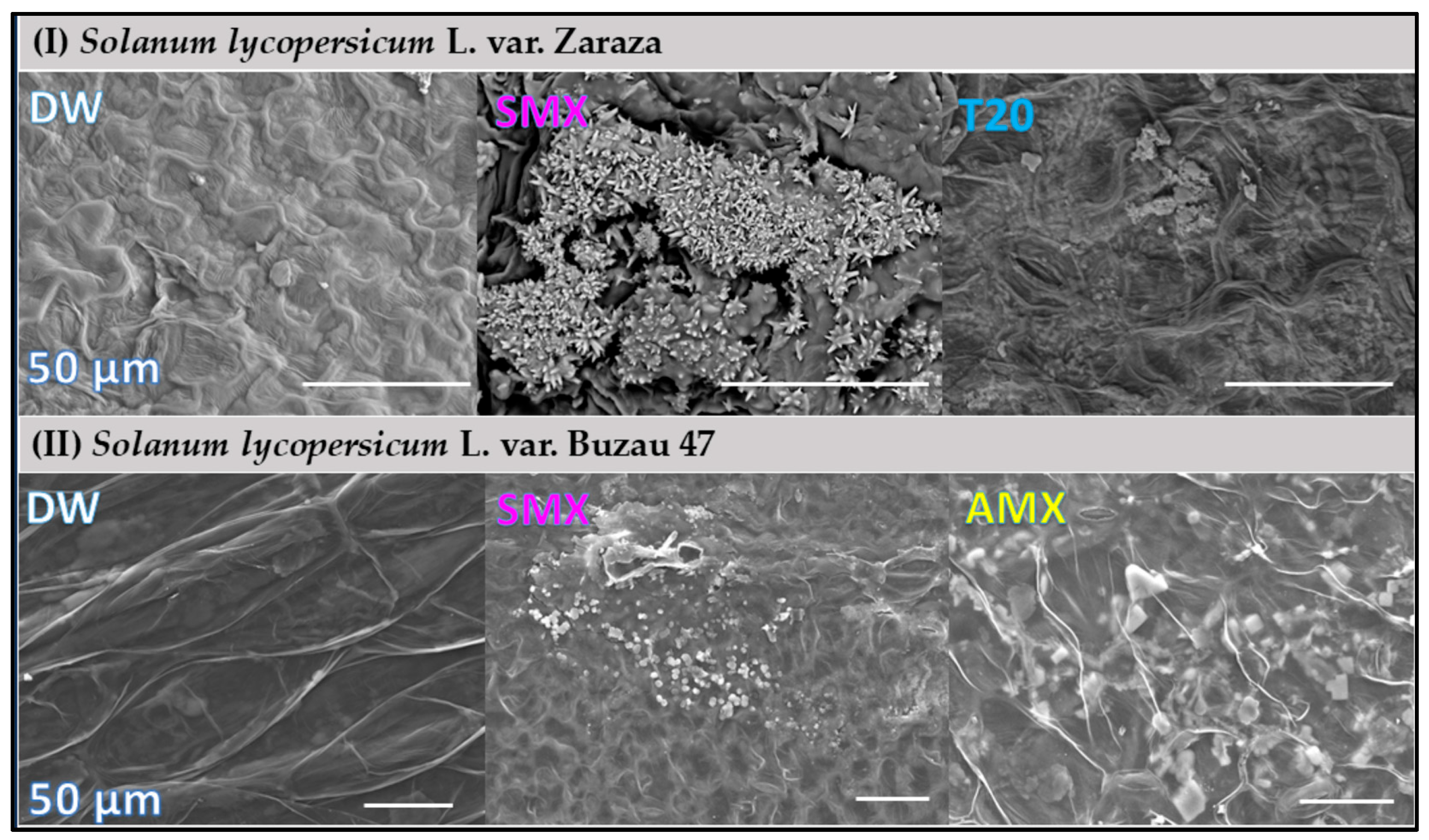
Solanum lycopersicum L. leaves (var. Zaraza) compared with the SMX treatment. The SMX and AMX antibiotic solutions used to irrigate the Buzau 47 (II) variety both induced prismatic crystal formation, but their shapes were not stellate or acicular, as observed in the first experiment (I). The two tomato varieties (
Figure 1—DW for Zaraza and Buzau 47) used in the two phytotoxicity tests responded similarly under SMX treatment (
Figure 1—I and II, SMX), regardless of the environmental conditions applied (vegetative chamber versus greenhouse). However, the prismatic crystals induced by SMX, in the Zaraza variety, appeared prismatic–acicular, whereas in the Buzau 47 variety, they had cubic or diamond shapes. A similar crystal shape was obtained in the SMX II treatment induced by the 0.25 mM AMX antibiotic (
Figure 1, AMX). The general appearance of the plants suggests an advanced state of calcification, as observed in the SEM microscale images (
Figure 1, SEM).
In the subsequent stage of the investigation, attention was directed to analyzing the crystal composition using EDX to identify their elements. The crystal composition of the SMX sample was first analyzed to ascertain whether the concentrations of the detected elements varied across different surface points.
The percentage ratio of each selected element within an SMX-induced crystal was broadly equally distributed from five different measured sample points consisting of C, O, S, Ca, and K. Therefore, we assumed that the mineral assembly did not change between probes or sample points and had stable percentage proportions of elements. As can be seen in
Table 1, the percentage ratio of each selected element was broadly equally distributed across the different measured sample points from S
1 to S
5. Therefore, the percentage proportions of elements within the crystal’s mineral assembly did not change and remained stable in the SMX (I) treatment. It may be noted that the C element was deliberately removed from the determinations and list in
Table 1 to ensure better percentage accuracy for the Ca, S, and K elements of interest.
We also carefully investigated whether the crystal morphology varied within the same treatment (SMX I) across the same samples used for EDX. Overall, we observed that acicular needles had a central basal fixing point and a radial distribution on the opposite extremity.
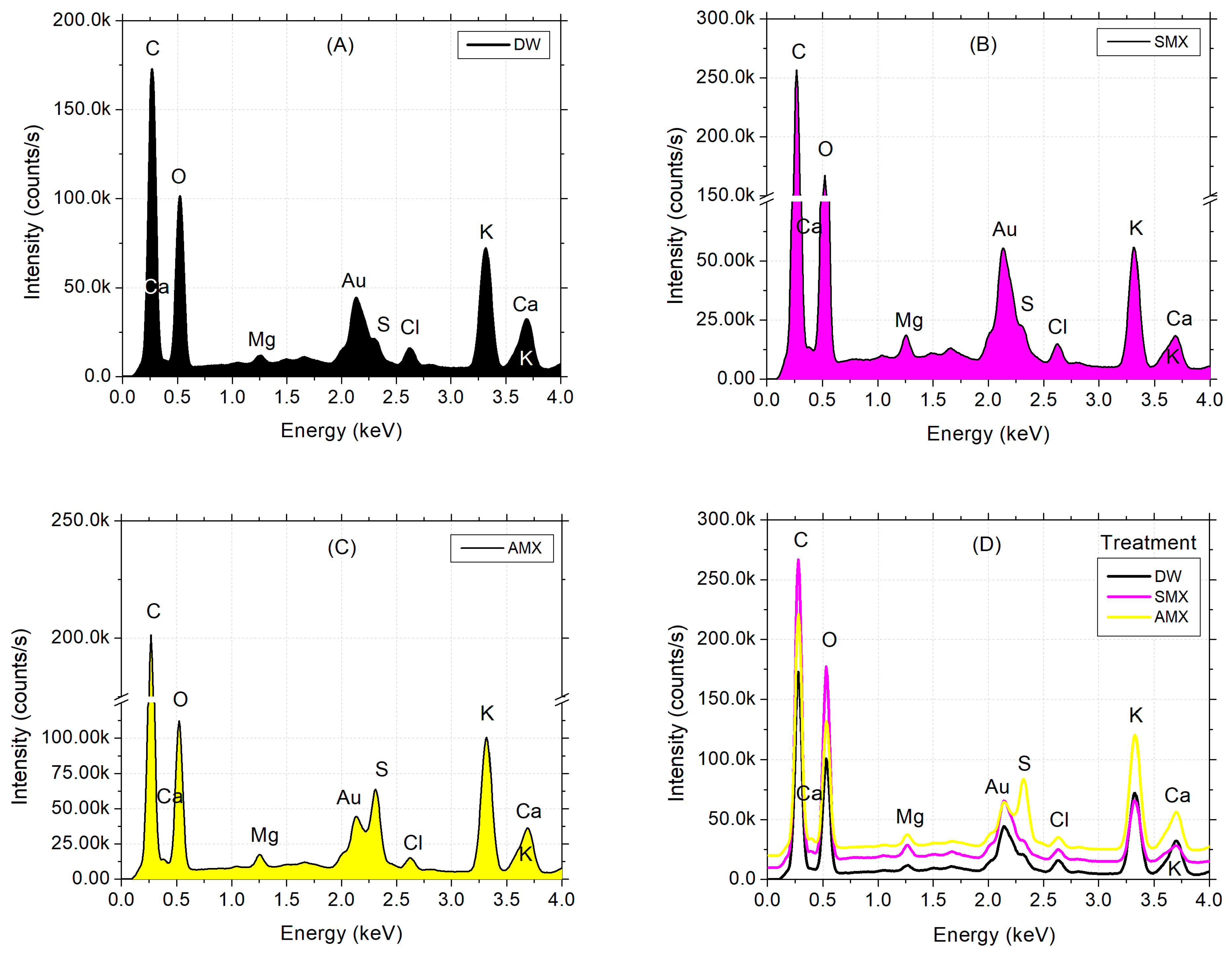
Next, the SMX- and AMX-treated leaf samples were analyzed by EDX to obtain the main element spectrum and compare their scalar levels between the irrigation treatments used in the second experiment (Buzau 47 variety). The automatic detection identified O, C, Ca, K, S and Mg, ranging between 200 k and 300 k counts per second for the DW, SMX and AMX treatments, as shown in
Figure 2. In the distilled water control (
Figure 2A), the C element ranged around 175 k cps, whereas in the AMX treatment, it was at 200 k cps (
Figure 2C), followed by the SMX treatment with C reaching 250 k cps (
Figure 2B). Although the C level fluctuated between treatments, its trend remained constantly higher than the O level across all samples. Mg, S, Cl, and Ca exhibited appropriate levels between the DW and SMX treatments. In contrast, K, Ca, and S showed much higher peak concentrations in the AMX treatment compared to DW and SMX (
Figure 2D). The Au element was also detected in all samples since all probes were gold-coated.
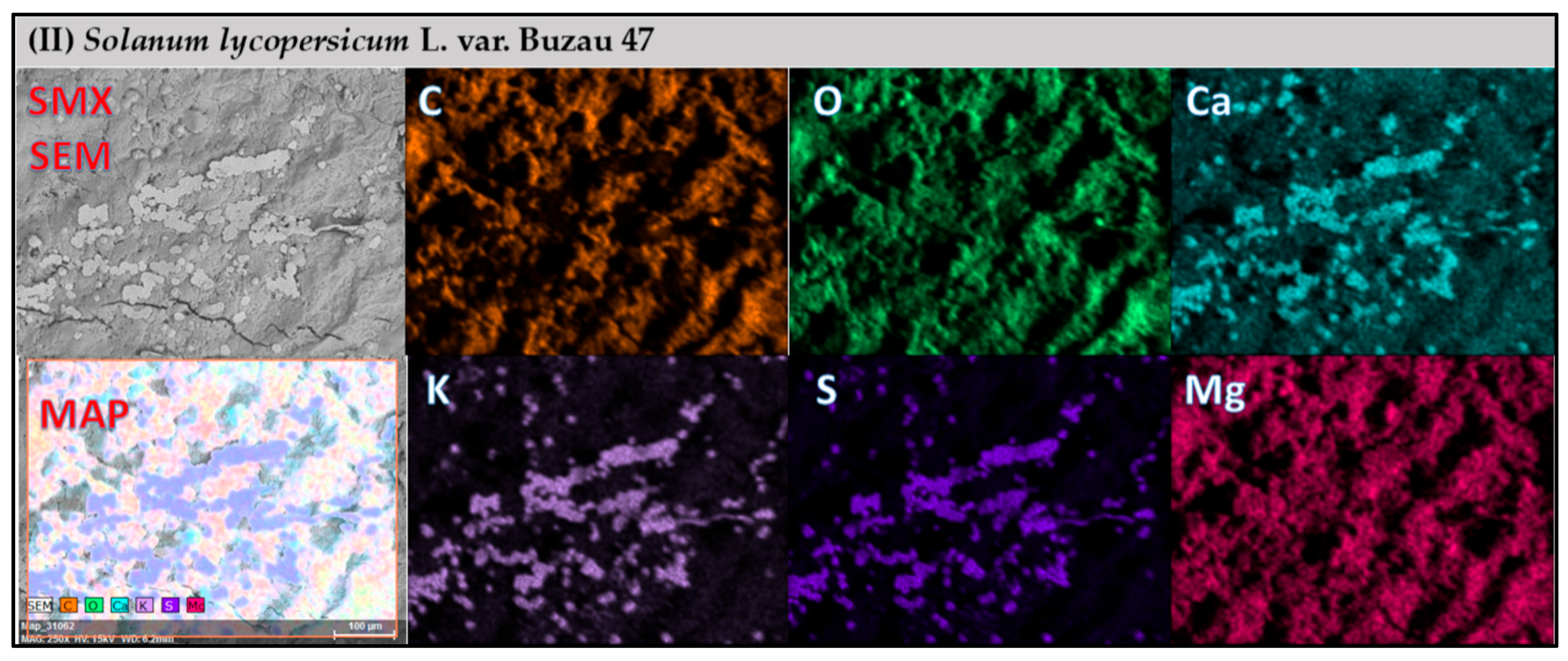
As EDX element profiling also facilitates the visualization of each element distribution within a sample of interest, a colored map was produced within an SMX-induced crystal using the Buzau 47 leaf variety. In
Figure 3, the color intensity of the main constituent elements differs between the vegetal tissue and crystal compositions: Ca (turquoise), K (light violet), and S (dark violet). Mg, O, and C are shared elements between vegetal tissue and crystals, as shown in field EDX analyses, EDX map and in point analyses of two different crystal types.
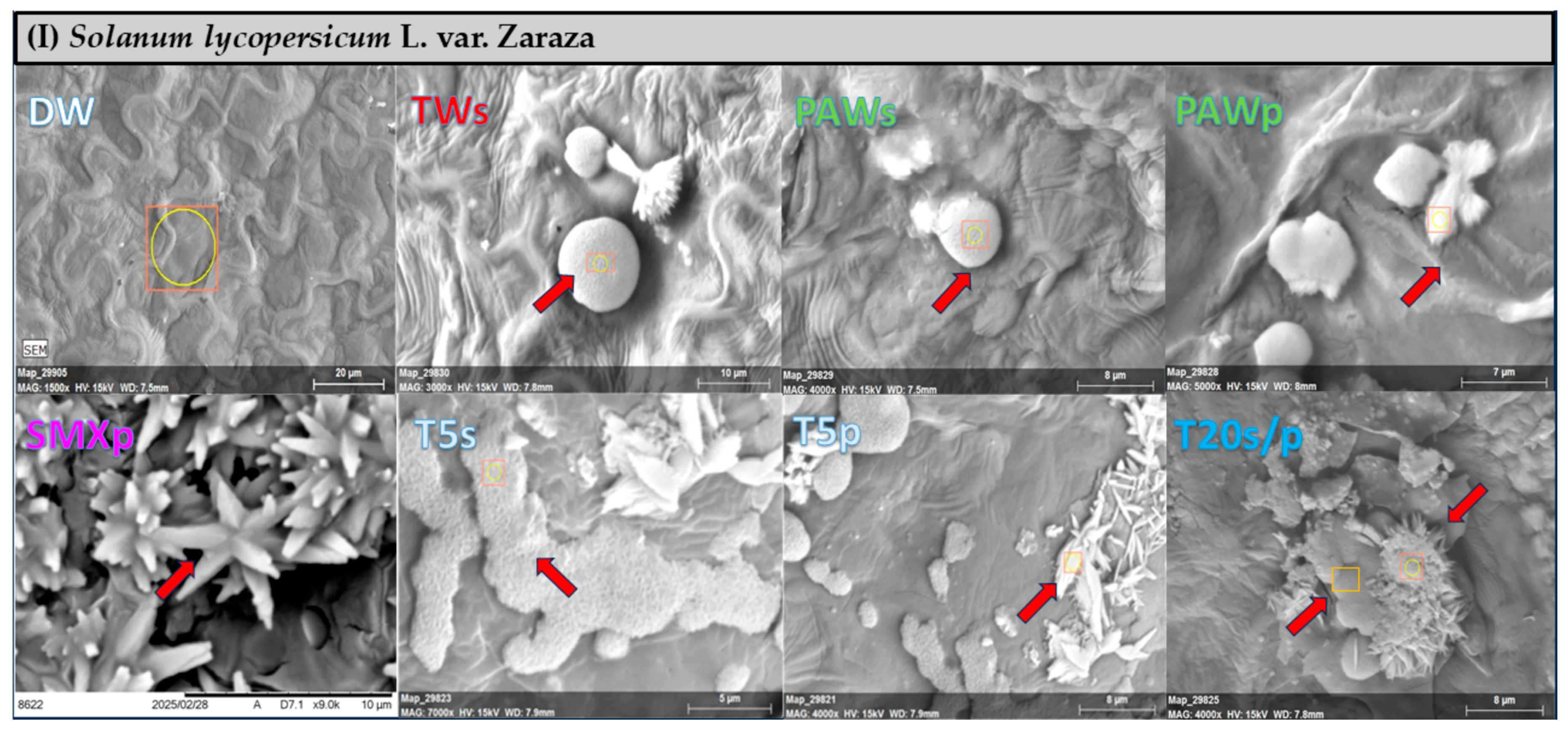
Next, the SMX solution was subjected to an NTP treatment for 20 min (T20resulting in its complete removal from the initial solution. The resulting sample (T20) was compared with an incomplete removal treatment of the SMX after 5 min of NTP action (T5). Also, the sample was compared with a negative SMX-containing control to assess any plasma potential effects after 20 min of NTP treatment, as well as with plasma-activated water (PAW). SEM high-magnification (HM) microphotographs (between 5 and 20 μm) of the plasma-treated plants (T20) indicated the presence of spherical structures (s) on the leaf surface, similar to those found in the TW solvent control. Such forms were associated with spherical-like crystals and were also visualized in the PAW plasma control and T5 treatments. Also, prismatic crystals (p) were present in the PAW, T20, and T5 irrigation treatments, along with the previously mentioned spherical ones (
Figure 4).
In the final phase of the study, the compositions of the two crystal types detected in each treatment sample (
Figure 4) were investigated using point analyses (with a resolution of less than 10 μm). These analyses were conducted using the SEM-EDX technique for each treatment in isolation. The automatically detected elements, extracted and displayed as percentages, were analyzed directly for each crystal type in the spherical (s) and prismatic (p) cases. The obtained results for the main elements were confirmed in the EDX spectrum of
Solanum lycopersicum L. leaf samples from Buzau 47 variety (
Figure 2 and
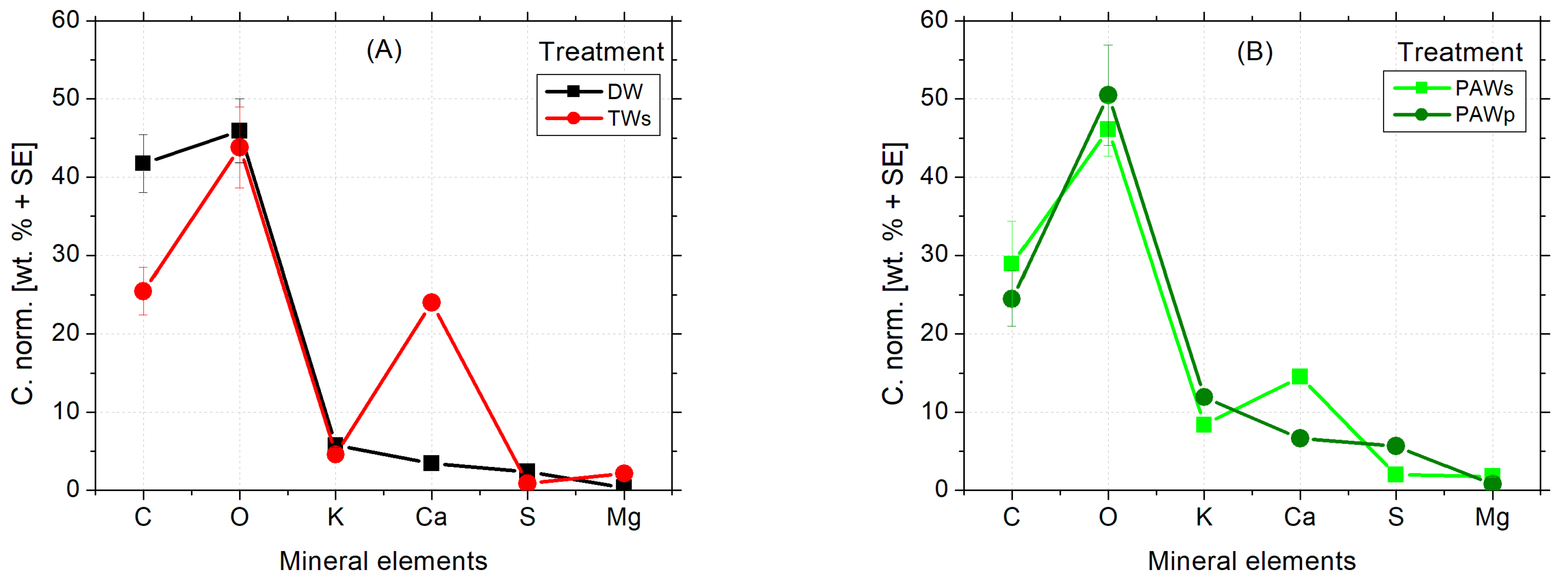
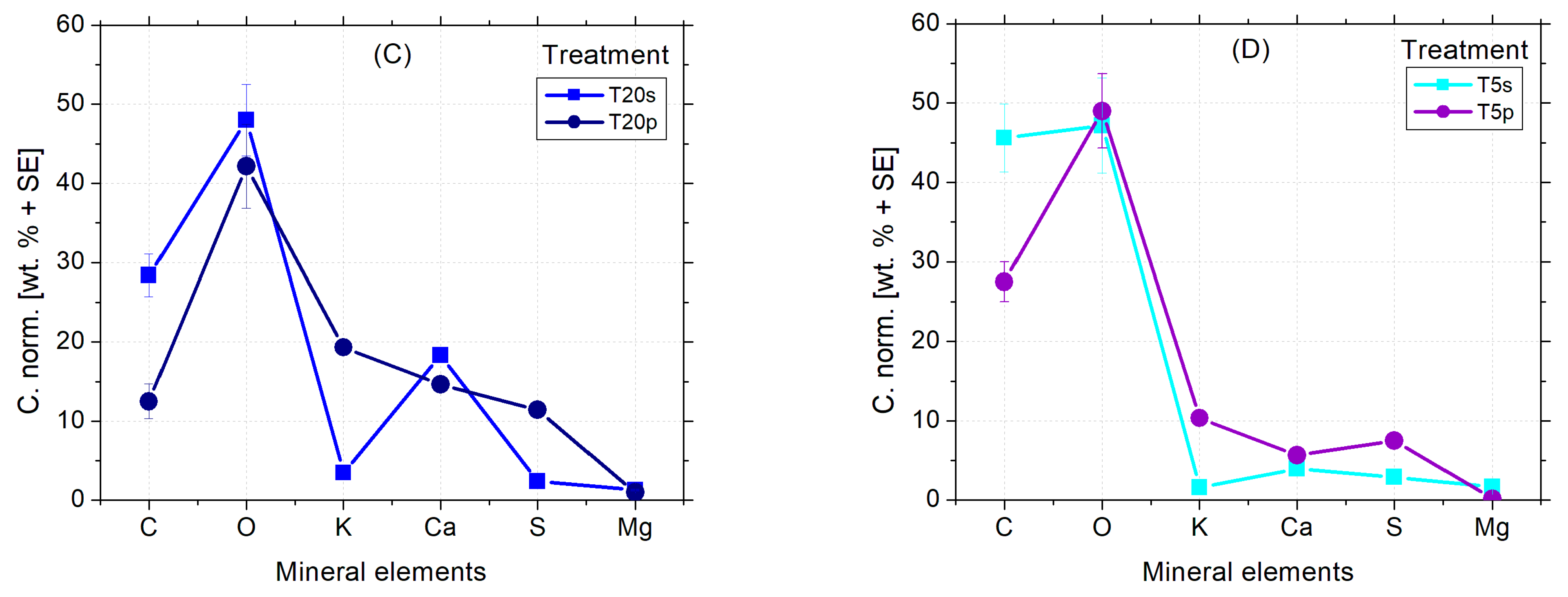
Figure 3), namely C, O, K, Ca, S, and Mg. However, other elements, such as Cl, P, and Mn, although present, appeared in very low amounts and not considered. Therefore, the specific element profiling screening at the microscale level (point analyses) revealed percentage differences between the two types of crystals and between the irrigation treatments for spherical (TWs, PAWs, T20s, and T5s) and prismatic (PAWp, T20p, T5p) crystals, as shown in
Figure 5A–D. The significant impact on the classification of the two observed crystals is displayed in
Figure 4. The high and low percentages of the displayed minerals indicate that the combination of these elements may play a role (
Figure 5) in crystal formation or crystal growth mechanisms. The elemental profile of the DW water control (black line) is used here to represent the physiological status of the plant. It is plotted alongside the spherical crystal profile found in the TW solvent control (red line), which serves as a marker of crystal growth initiation (
Figure 5A). Here, the C level in the spherical crystal from TW decreases compared to that in the DW. In contrast, the Ca level increases sharply from 5% in the DW to 25% in the TW. Furthermore, the NTP treatment of TW for 20 min resulted in plasma-activated water (PAW) with properties distinct from those of the other irrigation treatments. At this point, the overall Ca level is midway between the DW and TW controls on the scale in
Figure 5A. However, since the percentage level of the S element did not change much, uptake from soil through roots to shoots and bioaccumulation in plants may have occurred. Still, it was present at various percentage concentrations across crystal types. This is clearly displayed in all
Figure 5 graphs, as both crystals contained S but at different levels. Based on
Figure 5B,C and the patterns observed in
Figure 4, NTP has the potential to reduce the SMX effect by alternating prismatic and spherical crystals through specific up-and-down shifts in detected mineral trends.
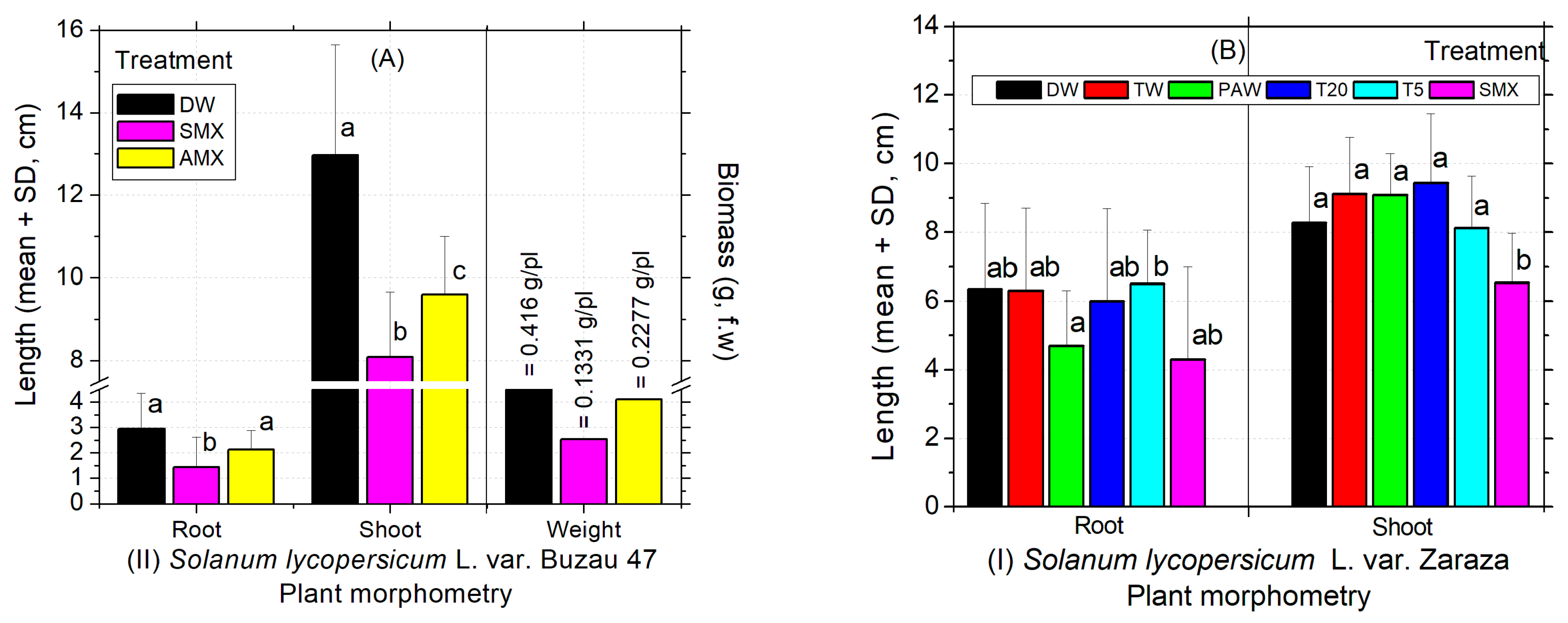
Regarding the morphometry of the Buzau 47 variety used in the repetition trial with the same SMX initial solution (II), the plant total length (roots and shoots) and the subsequently recorded fresh biomass were significantly smaller than in the control (DW). Small SMX-treated roots were also confirmed in the Buzau 47 (II) variety. In contrast, tomato roots showed no significant differences between the DW and AMX control groups but were larger than in the SMX treatment (
Figure 6A). Similarly, the AMX-treated shoots, although significantly higher than those irrigated with the SMX solution, remained below the DW control scale (
Figure 6A). The scale pattern of total seedling fresh weight is similar to the trend in plant lengths, even though it was measured in a composite sample (
Figure 6A, Biomass). In contrast, the SMX-treated shoots were significantly smaller than the DW control in both experiments (varieties I and II).
The NTP-derived solution comparisons between PAW, T20, and T5 irrigation treatments reveal that root length was significantly reduced only by the PAW treatment compared to T5 (
Figure 6B). At the same time, T20 had roots similar to PAW and T5, including the DW and TW controls.
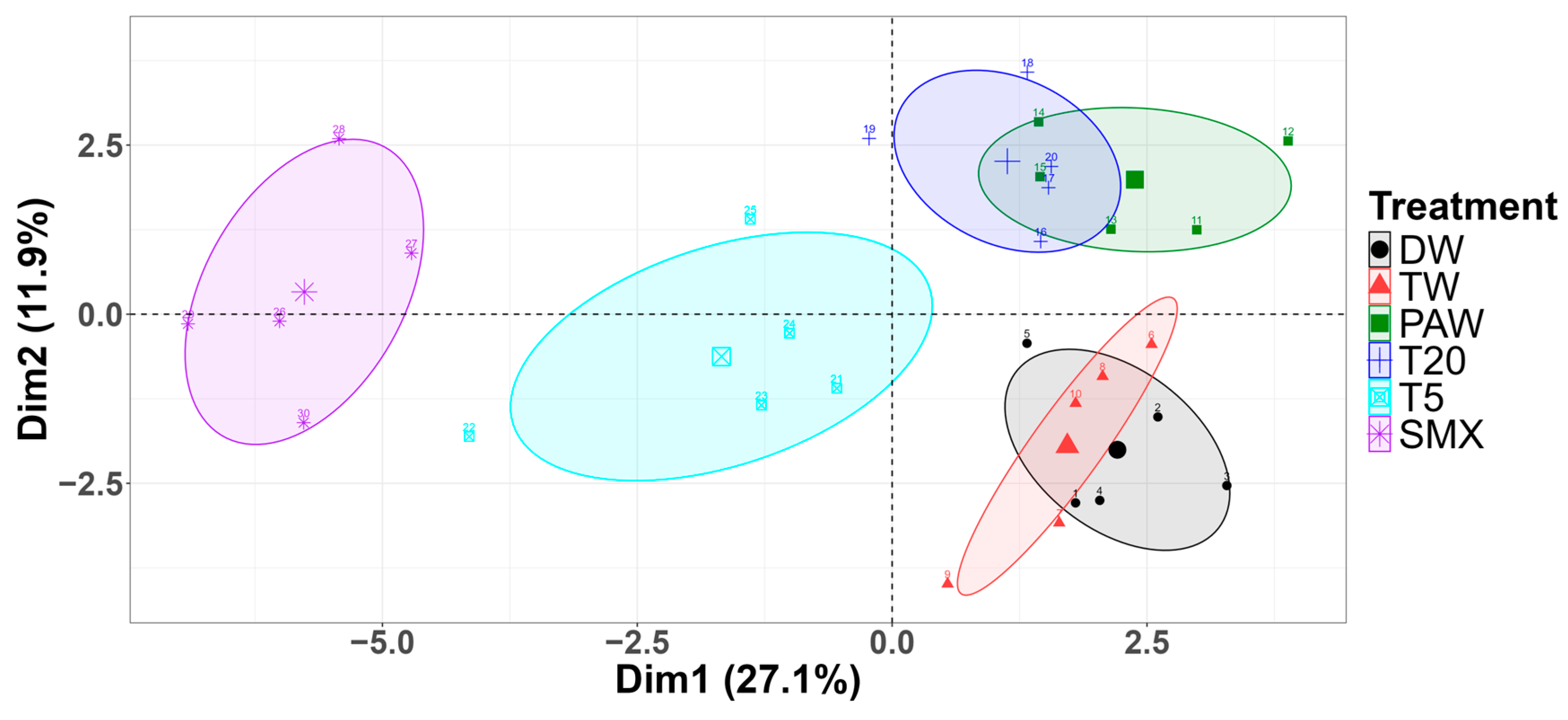
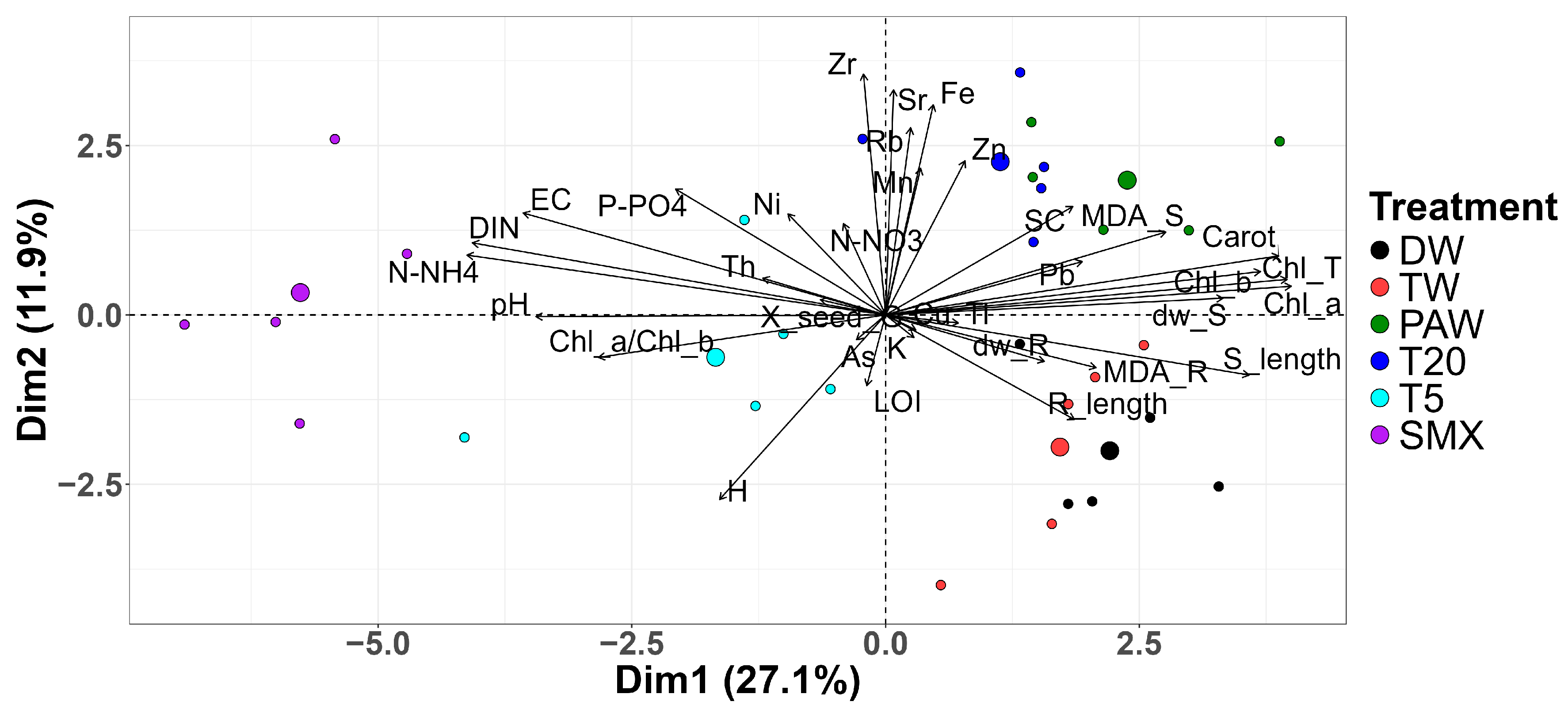
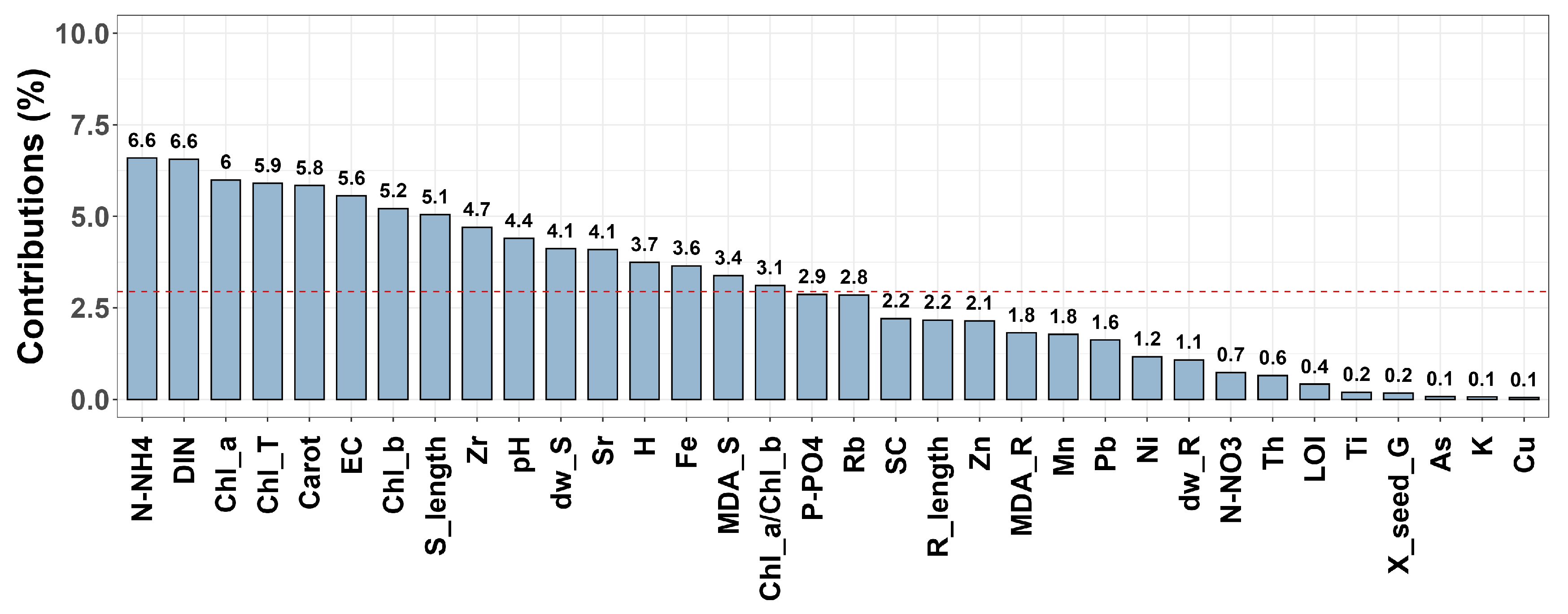
The characterization of the irrigation solutions was performed using soil and plant variables. The raw data set used to illustrate the PCA (
Figure 7 and
Figure 8) showed a relatively low explained variance between the initial variables and the treatments applied to the plants, with Dim1 at 27.1% and Dim2 at 11.9%. However, the graphical representation of the mean values (n = 5) indicates two distinct but slightly interconnected groups: DW (control) with TW (solvent control), and PAW (plasma control) with T20 (solution without SMX after 20 min NTP treatment). In contrast, the variables obtained with the SMX and T5 solutions appear isolated on the same axis, but at large distances, and are associated with the presence of the SMX compound at different concentrations.
In this context, the first principal component may serve as a primary indicator of physiological vigor, as this dimension is heavily defined by high positive contributions from assimilatory pigments (Chl_a at 6% and Chl_b at 5.2%), total chlorophyll (Chl_T at 5.9%), carotenoids (Carot at 5.8%), and physical growth parameters, such as stem length (S_Length at 5.1%). As illustrated in
Figure 7 and
Figure 8, the control groups (DW, TW, and PAW) cluster in the positive half of Dim1. In stark contrast, the SMX and T5 groups are isolated in the negative half of Dim1. Interestingly, the graph illustrates a steady positive shift in Dim1-dominant variables from the SMX treatment group to the T5 and T20 groups.
Additionally, the second principal component primarily captures variance related to nitrogen speciation and chemical alteration, with the two dominant contributors to this axis being ammonia nitrogen (N.NH4 at 6.6%) and dissolved inorganic nitrogen (DIN at 6.6%), followed by pH (4.4%). This dimension effectively separates the plasma-treated groups (PAW and T20) from the standard controls. While the T20 group successfully returns to the positive side of Dim1, thus indicating a restoration of physiological vigor comparable to the SMX group, it remains elevated on Dim2 (
Figure 7,
Figure 8 and
Figure 9).
4. Discussion
Observations of crystal formation in tomato leaves under SMX and AMX antibiotic treatments are depicted in
Figure 1,
Figure 3 and
Figure 4, which show induction at a high concentration of 0.25 mM. Two intermediate crystal growth stages were detected after SMX concentration decreased following the 5 min action of NTP treatment of the initial SMX solution (15 mg L
−1 SMX, T5)—
Figure 4. A further decrease in abundance was observed after SMX was completely removed from the T20 treatment (
Figure 1). As a general observation, a low abundance of spherical crystals occurred in the TW control (
Figure 4). Despite the crystal shape and size, their general mineral composition did not change much. Thus, the constitutive element profiles detected by EDX, either as cps spectra (
Figure 2 and
Figure 3) or as percentages, are: O, C, Ca, K, Mg, and S. Moreover, various element concentrations were obtained, depending on the treatment applied or the magnification scale (point versus field analyses). Although the values of certain elements between sampling points varied little, as exemplified in
Table 1, statistical differences in means can influence the initial interpretation of the data. For example, differences between Ca and S in PAWs and PAWp crystals were still obvious, as Ca decreased in the true prismatic crystal, whereas S slightly increased (
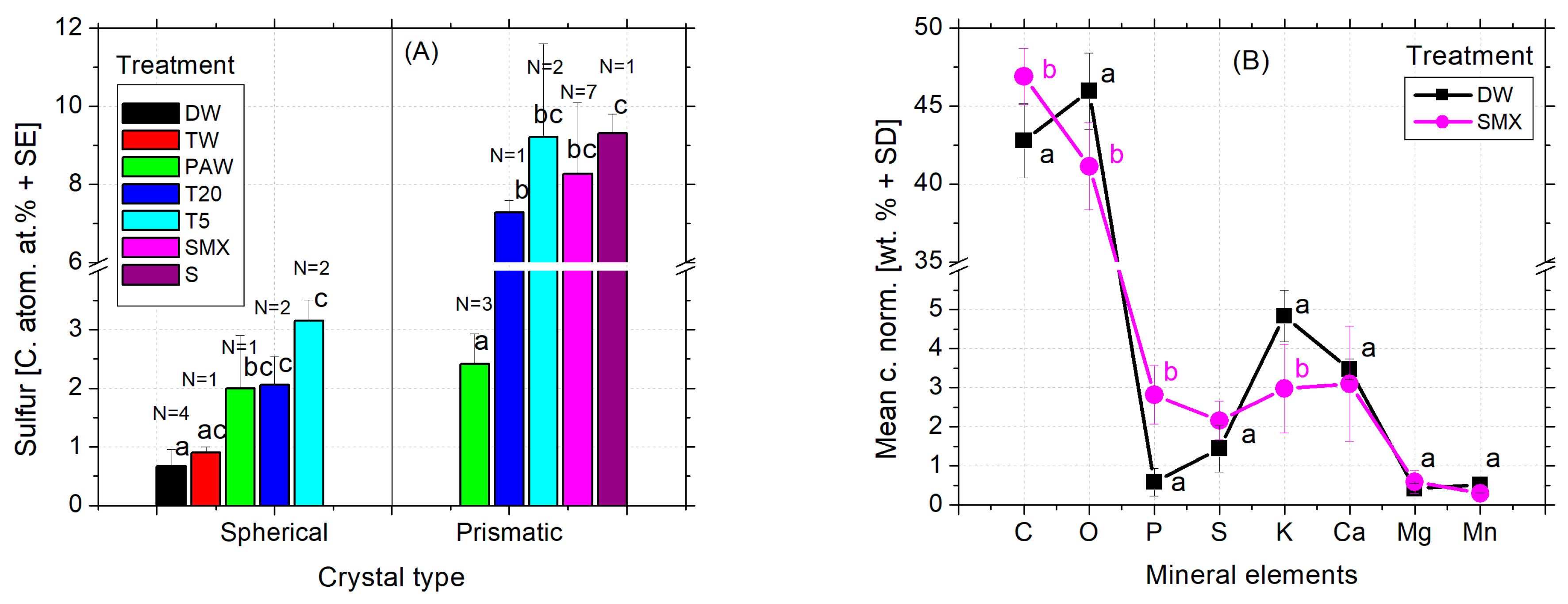
Figure 5B). Similarly, as S was still present in both the T20 and T5 samples, it had the same concentration but was present in different metabolite types or other reaction by-products. Although the SMX-induced prismatic crystal effect remained, the K level likely influenced the plasma effect, reducing spherical crystal abundance and promoting the formation of spherical crystals. Conversely, judging by the limited sampling numbers, as indicated in
Figure 10A, it can be concluded that an element (i.e., S) can occupy a stable percentage level in a mature prismatic crystal compared to a spherical one. This affirmation is supported by
Table 1, which shows point analyses at different locations within a mature crystal (acicular–prismatic). In contrast, sulfur was not significantly different between a DW tissue control sample and an SMX-intoxicated leaf (
Figure 10B), yielding semi-quantitative results. However, other present elements that were not considered may have been present at different concentrations (e.g., P, Mn, Cl, Cu, Au), as partially shown in
Figure 2. These and other elements might be actively involved in crystal formation mechanisms under antibiotic stress induced by high SMX or AMX concentrations. Moreover, toxic elements can be present in the environment, ranked as non-essential plant toxic or carcinogenic (e.g., Cd, As, Al, Hg, or Pb), and detected in soil, air, and water, affecting plants [
34]. Studies of two cacao tree cultivars with high Cd accumulation revealed that CaOx crystals were involved in Cd accumulation in branches. CaOx was present in all organs of both cultivars. In particular, mature leaves accumulated CaOx content above the 5% dry weight, a limit used to define extreme oxalate accumulation [
35].
The herbicidal effect of the initial SMX solution [
36] persisted in tomato seedlings (
Figure 6A,B), as we observed in both a previous Petri dish experiment for roots [
31] and in pots for stems [
24]. Also, the AMX treatment reduced seedling size compared to DW (
Figure 6B).
Overall, the intuitive mechanism of crystal formation might involve C-O balance, with P increasing and K decreasing, as shown in
Figure 10B. However, as both S and K increased and the C-O ratio remained steady, according to
Figure 2 (AMX), the contextual data must be carefully and critically tested, documented, and interpreted (
Figure 10B).
In our experiments, crystal growth was dependent on the mineral element’s variation in the presence of antibiotic treatment solutions, as determined by the concentrations found in the irrigation treatment (SMX or AMX). The acicular shape or size is likely dependent on other factors such as species variety (Zaraza), antibiotic type (SMX), or experimental growth conditions (climate chamber).
Once Sulfamethoxazole (SMX) enters the soil, it is taken up by plants and enters their cells, where it affects their metabolism through transformation, conjugation, and sequestration reactions. N-glycolysis is the main transformation of SMX in
Arabidopsis thaliana L., leading to the formation of S-containing metabolites. The main resulting metabolite is N4-glucosyl-SMX, which is further metabolized into other S-containing compounds [
37]. In contrast, in [
38], it was stated that the main metabolite of SMX formed in
Oryza sativa L. was N4-acetyl-sulfamethoxazole (NASMX). NASMX accumulates mainly in roots, but also in plant tissues. The authors demonstrated that cytochrome P
450, as well as acetyltransferases and glycosyltransferases, are involved in metabolite biotransformation, concluding that this antibiotic acts as a phytotoxic stress factor. Also, [
39] demonstrated that SMX acts at the rhizosphere level by reducing the abundance of S-oxidizing bacteria (e.g.,
Sulfuricaulis), thereby influencing S assimilation by plants. Moreover, SMX induces the formation of reactive oxygen species (ROS), which intervene in plant defense mechanisms, thereby activating secondary metabolism and enzymes such as SOD, POD, and CAT [
38]. The toxicity mechanisms of SMX also led to decreased photosynthetic efficiency and growth in
Hordeum vulgare L. as SMX concentration increased [
40]. In this case, the phytotoxicity of SMX manifests as inactivation of the oxygen evolution complex (OEC). This blocking disrupts the flow of electrons to the reaction center of photosystem II (PSII), thereby inhibiting the entire electron transport chain in photosynthesis. Therefore, SMX disrupts the plant’s nutritional and chemical balance, leading to the poor management of S as a macronutrient.
Sulfur crystals formed in plants have rarely been reported, with the literature reporting their occurrence on the surfaces of conifer needles or in the substomatal cavities of longleaf pine following acid rain. The mechanisms of S crystal formation and their role in plant function are unknown [
26].
Although S from SMX, once it reaches the plants, is stored as metabolites resulting from detoxification, under the influence of microorganisms in the rhizosphere, the organic compound can also be mineralized. This phenomenon modifies the microbiome and induces the release of S from the organic compound in the form of sulfate ions (SO
42−) [
41]. It is likely that these ions, once absorbed into the plant cell wall or vacuoles, can precipitate as crystals containing S, similar to crystalluria in medicine.
In human and veterinary medicine, CaOx may act as a toxin or an antinutrient, leading to crystalline nephropathy or kidney stone formation [
42,
43,
44].
Recent research has elucidated key genes involved in the formation of CaOx crystals in plants, which, in addition to their physiological role, have broad ecological implications [
23]. The natural occurrence of CaOx crystals in plants has been documented since the 17th century [
19] and is observed in most groups of photosynthetic organisms, such as algae, lower vascular plants, gymnosperms and angiosperms [
18,
45,
46,
47]. It has been shown that endogenous synthesis of oxalic acid is accompanied by a physicochemical precipitation, in addition to the uptake of Ca derived from the environment [
19,
47]. The localization of CaOx crystals can be found as intracellular or extracellular deposits. Intracellular crystals are mostly formed in the vacuoles of plant cells and are known as crystal idioblasts or are associated with plant walls as a result of a biomineralization process. It is interesting to note that the crystals have different shapes and sizes and are probably specific to each plant species [
18].
Although the presence of CaOx crystals in plants, as well as the mechanisms leading to their formation, are well documented in the literature, the mechanism underlying the formation of CaOx-SMX crystals is still unknown [
48].
Generally, the natural phenomenon of CaOx crystal deposition in plants could satisfy the calcium requirements of adjacent cells during their development [
49]. However, many plant species contain secondary metabolites in large quantities, such as oxalates, alkaloids, terpenes, and phytotoxins, which can cause diseases or may even be lethal to animal and human populations. Among these metabolites, oxalates are metabolized the slowest or not at all; therefore, free calcium, which is toxic to cells, can induce the formation of calcium oxalate crystals, thus eliminating the excess calcium oxalate [
22,
50,
51,
52]. Although it is documented that calcium oxalate crystals can be present in almost all parts of plants, in our studies, we identified calcium oxalate crystals in tomato only in the leaves, induced by sulfamethoxazole and amoxicillin (
Figure 1 and
Figure 4). We also briefly explored the possibility of crystal formation in
Solanum lycopersicum L. roots using SEM, and SMX crystals were not observed. Similarly, in
Gomphrena claussenii, crystals were reported in stems and leaves but not in roots, and were associated with Cd [
51]. The authors reported heavy metals, such as Cadmium (Cd), that may be involved in the co-localization and ligand coordination of crystals, with a greater abundance of Cd-O-C binding compared to S ligands (Cd-S-C). Such crystals can form independently of Ca supply [
51]. Plants have developed intricate defense mechanisms to protect themselves against the toxic effects of certain elements [
34], and the formation and function of CaOx may be associated with the elimination of excess pollutants. Plants lack a dedicated excretory system for eliminating solid waste, such as calcium salts [
52]. Some defense mechanisms include compartmentalization, pollutant sequestration in cellular organelles, inactivation via complex formation with organic ligands, and exclusion via transporters, ion channels, transcription factors, and signaling molecules [
34]. In contrast, it is known that CaOx crystal formation is dynamic and that it can be resorbed at different stages of plant development. It has been found that when idioblasts do not show signs of wall rupture, this phenomenon suggests resorption or internal consumption of CaOx crystals during anther maturation [
49].
The PCA results (
Figure 7,
Figure 8 and
Figure 9) for the variables measured in plant and soil suggest that the biological importance of the aboveground parts of plants is greater than that of the roots in this scenario. Analysis of the factors contributing to the variance revealed five measurements that explained most of the variance between treatments and were correlated with each other based on soil physicochemical and geochemical determinations, combined with plant morpho-physiological and biochemical variables. The assimilatory pigments, represented by chlorophylls and carotenoids in plants, together with dissolved inorganic nitrogen from soil, were overcome by physical growth parameters, such as stem length. Plant performance is also shown in
Figure 6A,B. As illustrated in
Figure 7 and
Figure 8, the control groups of DW, TW, and PAW had clusters in the positive half of Dim1. This positioning might correlate with the optimal health of these plants, which is consistent with previous findings where these treatments showed minimal presence of surface crystals [
24]. In stark contrast, the SMX and T5 groups were isolated at the negative half of Dim1. This spatial separation could reflect a “stress state” characterized by significantly reduced pigment concentrations and inhibited growth. This inhibition was likely driven by the high abundance of SMX-induced crystals on the tomato leaf surfaces, also identified in previous SEM-EDX analyses [
24]. The vertical shift in nitrogenous species suggests that, while 20 minutes of NTP treatment effectively removed the SMX compound and reduced leaf crystal abundance to control levels, it may have simultaneously enriched the system with specific (NH4) slightly, affecting the pH profile of the irrigation solution.
Further research is needed to investigate the factors influencing crystal formation across crops and concentrations to narrow the range of plant stress conditions. The study of interactions between antibiotic residues and other pollutants in the plant–soil–water ecosystem has particular implications for assessing long-term ecological and human health risks.




 ,
,