Article

Hydrogen Fuel Cells vs. Dynamic Wireless Charging for Heavy-Duty Transport: A Corridor-Level Techno-Economic Comparison


1
Department of Energy, Politecnico di Milano, Via La Masa, 34, 20156 Milano, Italy
2
Canmet ENERGY Research Centre, Natural Resources Canada, 1 Haanel Drive, Ottawa, ON K1A 1M1, Canada
*
Author to whom correspondence should be addressed.
Future Transp. 2026, 6(3), 130; https://doi.org/10.3390/futuretransp6030130
Submission received: 28 April 2026 / Revised: 29 May 2026 / Accepted: 1 June 2026 / Published: 17 June 2026

Abstract

Decarbonizing heavy-duty road transport requires comparing zero-emission options to guide infrastructure investments along strategic corridors. This study develops a scenario-based techno-economic model to evaluate hydrogen fuel cell trucks (HFCTs) and battery electric trucks supported by dynamic wireless power transfer (DWPT) on a 100 km segment of Italy’s A4 motorway in 2030 and 2050 scenarios. The framework integrates traffic flows, vehicle archetypes, infrastructure sizing, and end-to-end energy chains (power-to-hydrogen-to-wheel for hydrogen and grid-to-wheel for WPT) to estimate capital and operating costs, efficiencies, and energy demand. Results show that hydrogen refueling infrastructure requires lower initial investment (approximately €60 million CAPEX and €20 million annual OPEX) than wireless charging systems (€80 million CAPEX and €15 million OPEX). However, WPT achieves significantly higher grid-to-wheel efficiency (96% vs. 62%) and lower per-vehicle energy demand (18 MWh/year vs. 25 MWh/year). These findings highlight a fundamental trade-off: hydrogen solutions offer operational flexibility and are better suited to long-haul or low-density contexts, while WPT systems are more efficient and become increasingly competitive in high-traffic corridors with high infrastructure utilization. Overall, the results suggest that no single technology universally dominates and that optimal deployment depends on traffic density, infrastructure usage, and system integration. A combined implementation of hydrogen and wireless charging technologies may provide the most effective pathway to balance efficiency, flexibility, and cost in future heavy-duty transport systems.

1. Introduction

Decarbonizing commercial road transport has become urgent due to climate and air quality targets, exposure to fuel price volatility, and logistics efficiency constraints in congested corridors. While heavy-duty vehicles (HDVs) are essential to trade and mobility, their growing activity intensifies energy use and greenhouse gas (GHG) emissions. Among zero-tailpipe options, two technology families are attracting increasing attention: (i) hydrogen fuel cell trucks (HFCTs), which combine high gravimetric energy density and rapid refueling but depend on cost and energy intensive hydrogen production, compression, storage and refueling infrastructure; and (ii) battery electric trucks supported by dynamic wireless power transfer (WPT), which can reduce on-board battery size and extend effective range at the expense of significant roadway and power electronics investments and careful electromagnetic compatibility and safety management. In addition to hydrogen refueling and dynamic wireless power transfer, conductive electric road systems based on pantograph/catenary charging represent another relevant option for heavy-duty transport electrification. Pantograph-based systems can provide high-power transfer and may benefit from a higher technological readiness level compared with some contactless dynamic charging solutions. However, they also require overhead infrastructure, vehicle-mounted current collectors, physical contact between vehicle and infrastructure, dedicated interoperability standards, and careful integration with road geometry, safety constraints, and maintenance requirements. Since the objective of this study is to compare a fuel-based pathway with a contactless electric road pathway, pantograph charging is not modeled as a separate quantitative scenario, but it is considered an important benchmark for future corridor-level assessments. A large literature has explored hydrogen pathways for road transport, covering well-to-wheel impacts in production routes [1], deployment challenges and performance at scale [2], drivetrain comparisons in HDVs [3], and hybrid fuel cell architectures [4]. Recent control-oriented studies have also shown that the performance of fuel cell electric vehicles depends not only on vehicle architecture and refueling infrastructure, but also on energy management, eco-driving strategies, fuel cell degradation, and health monitoring. Hu et al. proposed a real-time intelligent energy management strategy based on deep reinforcement learning for multi-objective optimization in FCEVs, addressing fuel consumption, battery safety, degradation, and torque distribution [5]. Liu et al. developed a hierarchical model predictive control strategy to co-optimize eco-driving and energy management while explicitly considering fuel cell degradation [6]. More recently, Wu et al. introduced a low-frequency consensus knowledge transfer approach for cross-domain online voltage degradation prediction in PEM fuel cells, highlighting the growing role of data-driven prognostics in improving fuel cell durability and reliability [7]. Policy and planning dimensions for hydrogen adoption are also widely discussed [8], with sectoral applications in port logistics and yard tractors showing operational feasibility [9,10]. Regional system studies suggest a role for HFCVs alongside other electrification options [11], and examine siting and utilization of refueling infrastructure along major corridors [12,13]. Comprehensive reviews emphasize that long-term decarbonization of HDVs may require a portfolio of technologies [14,15]. In parallel, WPT research has advanced from stationary to dynamic concepts [16,17], including charger networking and smart scheduling [18,19], component and compensation design [20], power scaling to the 10 kW class and beyond for HDVs [21], and applications in drayage and terminal operations [22,23,24]. Recent review studies further confirm the rapid evolution of WPT technologies for electric vehicles, covering inductive, capacitive, magnetic gear, stationary and dynamic charging systems, as well as standardization, economic aspects, and electromagnetic field safety issues [25]. In addition, bidirectional wireless power transfer is emerging as a relevant research direction, with recent work focusing on bidirectional capacitive power transfer, converter topologies, resonant networks, power-flow control strategies, and application scenarios [26]. Despite this progress, the specific novelty of this work lies in developing a corridor-level, like-for-like techno-economic comparison between hydrogen fuel cell trucks and battery electric trucks supported by dynamic wireless power transfer under consistent assumptions. Existing studies often analyze hydrogen refueling infrastructure, battery electric heavy-duty vehicles, or electric road systems separately. However, fewer works directly compare these pathways by jointly considering real traffic flows, equivalent vehicle archetypes, infrastructure sizing, end-to-end energy chains, and traffic-dependent infrastructure utilization within the same motorway corridor. Two main gaps are therefore addressed. First, most studies treat hydrogen and electric options in isolation, limiting corridor-level comparisons that jointly consider infrastructure sizing, energy conversion chains, and utilization effects. Second, some comparisons overlook vehicle equivalence in terms of range, power-to-weight ratio, and mass/volume packaging [27,28], which is essential to ensure that performance and cost metrics are evaluated on a like-for-like basis across technologies. Moreover, while battery electric trucks without WPT already exist commercially, assessing WPT is valuable to test whether dynamic charging can reduce battery mass and depot dwell times on high-flow corridors. For completeness, a plug-only BEV baseline is also considered in the discussion. To address these gaps, this study develops a scenario-based techno-economic framework to compare hydrogen fuel cells and dynamic WPT for HDVs on a representative 100 km segment of Italy’s A4 motorway under 2030 and 2050 scenarios, within the EU policy context relevant to Italy’s freight patterns. The framework integrates: (i) real corridor traffic flows; (ii) functionally equivalent heavy-duty vehicle archetypes; (iii) infrastructure dimensioning for both hydrogen refueling stations and energized WPT road sections; and (iv) end-to-end energy chains, from power-to-hydrogen-to-wheel for the hydrogen pathway and from grid-to-wheel for the WPT pathway. The main scientific contribution is therefore the development of a consistent comparative framework that quantifies CAPEX, OPEX, energy demand, efficiency, and infrastructure utilization effects for two competing zero-emission pathways under the same corridor conditions. This allows the identification of the operational contexts in which hydrogen or DWPT may become more suitable, providing practical indications for infrastructure planning and sustainable freight transport policy. For context, a plug-only BEV baseline is considered in the discussion to position WPT-assisted BEVs relative to commercially available solutions. The A4 corridor analyzed in this study presents sustained HDV flows and is therefore a suitable testbed for assessing zero-emission infrastructure options. The remainder of the paper is analyzed as follows: Section 2 presents the methodology, including the case study, scenario definition, infrastructure sizing and economic assumptions. Section 3 discusses the results, while Section 4 addresses safety aspects. Section 5 reports the main conclusions, limitations and future developments.

2. Methodology

2.1. Assumptions and Input Data

This study relies on a set of techno-economic assumptions derived from a combination of literature sources, industry reports, and engineering estimates. Given the emerging nature of both hydrogen and dynamic wireless charging technologies for heavy-duty transport, several parameters are subject to significant uncertainty, as highlighted in recent studies on transport decarbonization pathways [29]. Where appropriate, ranges are introduced and discussed, and results are interpreted within a scenario-based framework rather than as precise forecasts. To ensure transparency and reproducibility, the key input parameters adopted in the analysis are summarized in Table 1.

2.1.1. Energy System Assumptions

Electricity is assumed to be the primary energy source for both hydrogen production and wireless charging systems. Recent studies on electric mobility systems highlight the importance of accurate modeling of energy flows and battery behavior in transport applications [30]. A baseline electricity price of 0.15 €/kWh is adopted for 2030, consistent with projected European industrial electricity prices. To account for market volatility and regional variability, a sensitivity range between 0.10 €/kWh and 0.30 €/kWh is considered when interpreting results.

2.1.2. Hydrogen System Assumptions

Hydrogen production is modeled through water electrolysis powered by grid electricity. Electrolyzer efficiency is assumed to reach approximately 82% by 2030. For 2050, the value of 94% is not intended as a deterministic central forecast, but as an optimistic upper-bound scenario for long-term technological development. This value is close to the theoretical limit of water electrolysis and is consistent with long-term R&D targets reporting system electricity consumption below about 45 kWh/kgH2 [31]. More conservative efficiency values remain plausible; therefore, results based on this assumption should be interpreted as upper-bound hydrogen performance rather than certain 2050 outcomes. Hydrogen vehicle penetration is treated as a scenario variable rather than a deterministic market forecast. The 2% penetration rate assumed for 2030 represents a conservative early-adoption case, reflecting the limited expected availability of hydrogen trucks and refueling infrastructure in the initial deployment phase. The 30% penetration rate considered for 2050 represents a mature-market upper-bound case for long-haul applications in which hydrogen may remain competitive due to range, refueling time, and operational flexibility. Lower and upper bounds are included to reflect uncertainty in technology uptake and to explore the effect of different adoption levels on hydrogen refueling station sizing, utilization, and cost.

2.1.3. Wireless Charging System Assumptions

Dynamic wireless power transfer (WPT) is modeled as an emerging technology with significant uncertainty in both cost and deployment [32]. The infrastructure cost is assumed to be approximately 1000 €/m as a baseline engineering value. However, public cost data for full-scale DWPT roads are still limited, because most implementations are currently at pilot or demonstration stage. Recent examples include the A35 Brebemi/Arena del Futuro pilot in Italy and the A10 motorway demonstration in France, which confirm the technical feasibility of dynamic wireless charging but also highlight that large-scale cost data remain uncertain [33,34,35]. For this reason, a wide CAPEX sensitivity range of 500–2000 €/m is considered in the analysis. The penetration of wireless-enabled vehicles is explored through scenario analysis rather than treated as a deterministic market forecast. The scenario construction first considers the expected diffusion of electric trucks in the heavy-duty fleet and then applies different shares of vehicles equipped with wireless receivers within the electric truck fleet. In 2030, wireless vehicles are assumed to represent 35–70% of the electric truck fleet, while in 2050 this share increases to 50–90%. These values are used to test low- and high-utilization cases for the DWPT infrastructure, rather than to predict the actual market share of wireless-enabled heavy-duty vehicles.

2.1.4. Operational Assumptions

Vehicles are assumed to enter the analyzed corridor with a minimum state of charge (SoC) of 20%, reflecting conservative operational practices in heavy-duty logistics. A lower threshold of 10% SoC is imposed to ensure safe operation and avoid battery depletion during transit. For hydrogen vehicles, refueling behavior is modeled based on a minimum residual capacity threshold, below which vehicles are assumed to stop at refueling stations. Variability in vehicle conditions (e.g., load, driving style, environmental factors) is accounted for through statistical distributions, as described in the methodology.

2.1.5. Uncertainty and Limitations of Assumptions

It is important to note that several parameters, particularly those related to wireless charging deployment, hydrogen infrastructure costs, and long-term market penetration, are subject to significant uncertainty. As a result, the outcomes of this study should be interpreted as scenario-based insights rather than deterministic predictions. To address this limitation, the analysis focuses on relative comparisons between technologies under consistent assumptions, highlighting key drivers of cost and efficiency rather than absolute performance values. Given the early stage of deployment of both hydrogen refueling infrastructure and DWPT systems for heavy-duty transport, several input parameters remain uncertain. Robust probability distributions are not yet available for many of these variables, including future technology penetration, DWPT infrastructure cost, electrolyzer efficiency, and infrastructure utilization. For this reason, a full probabilistic uncertainty quantification was not performed in this study. Instead, the analysis adopts scenario-based ranges and sensitivity interpretations to identify the main cost and efficiency drivers. A more detailed probabilistic sensitivity analysis, based on validated distributions from large-scale deployment data, is identified as a future development of the work.

2.2. Case Study

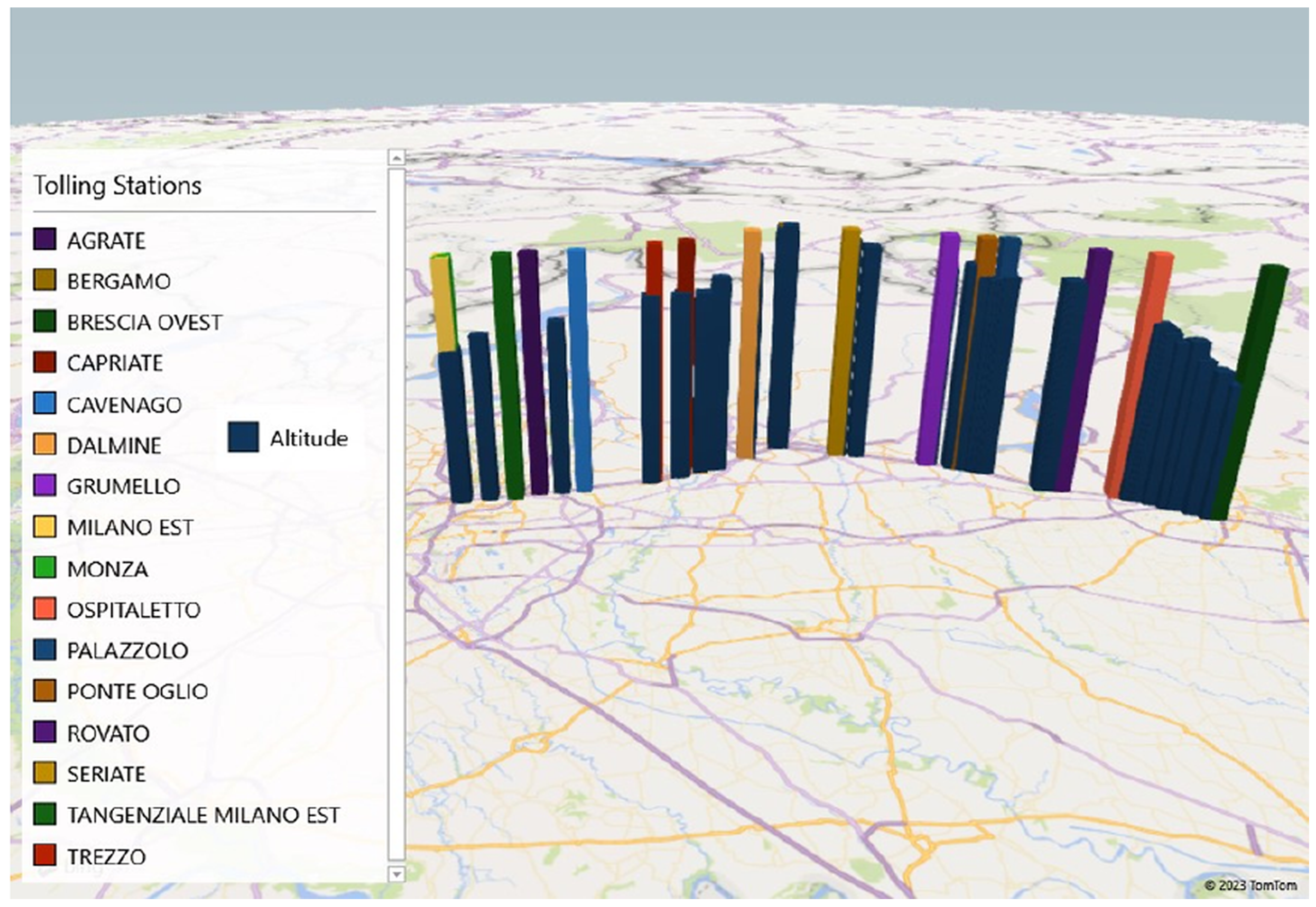
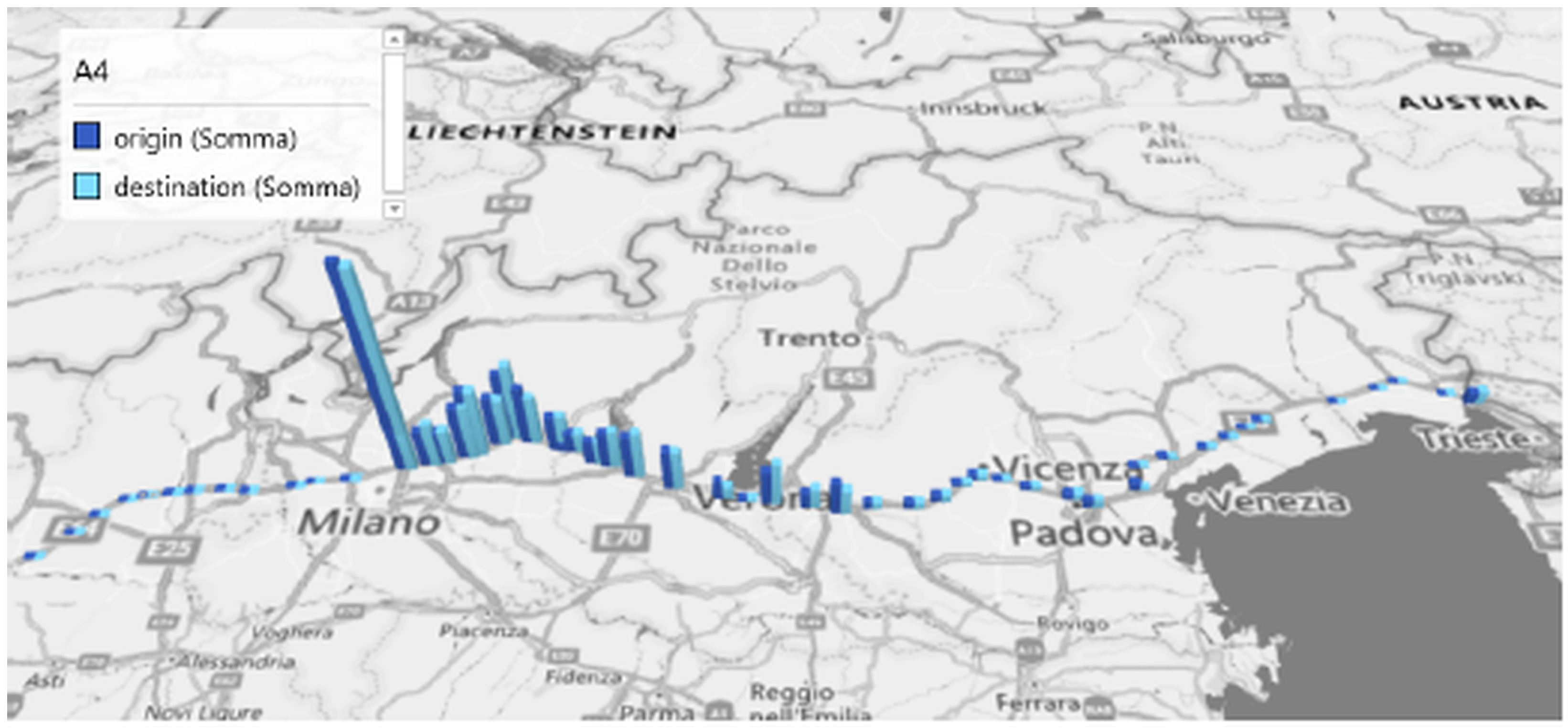
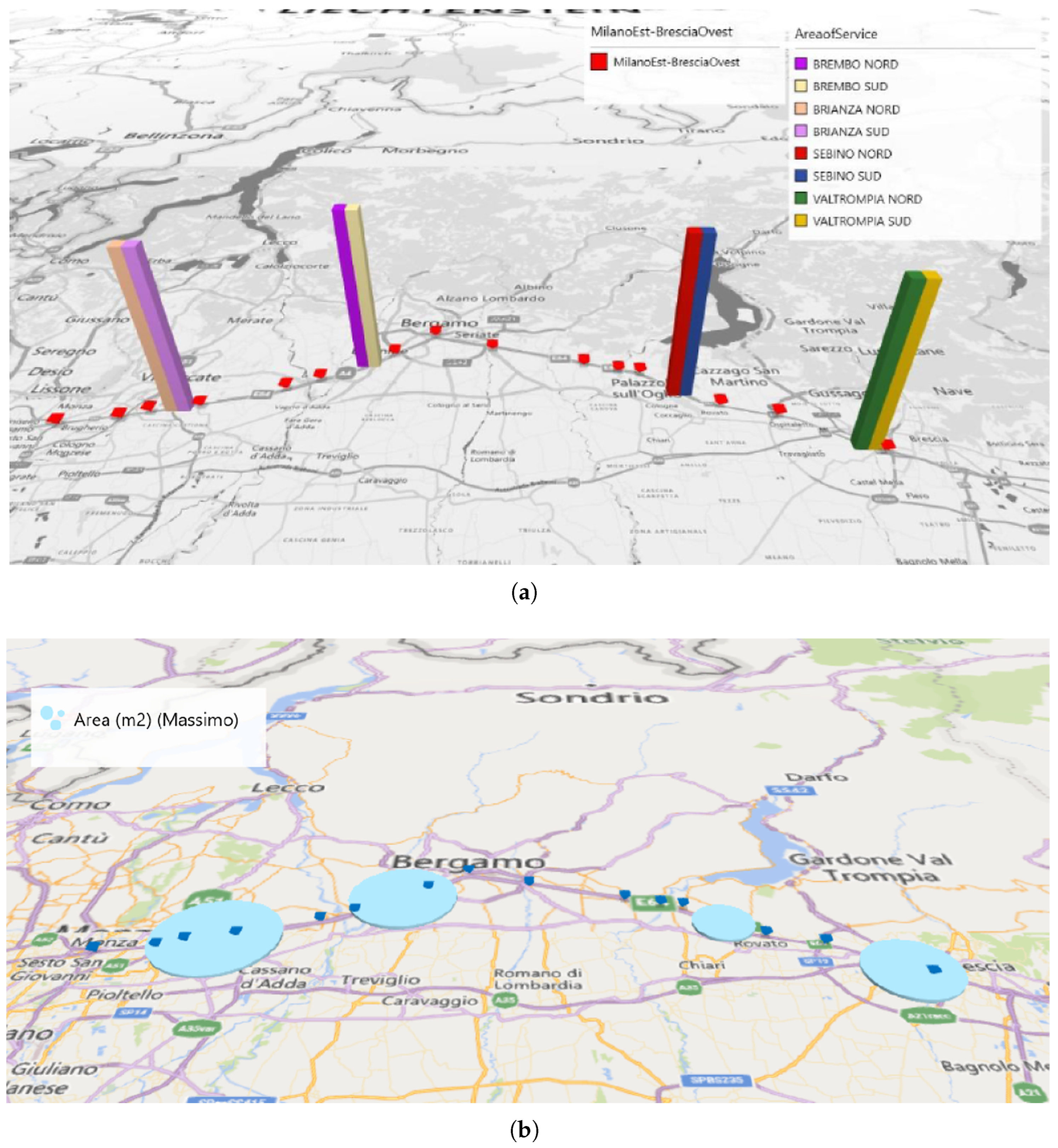
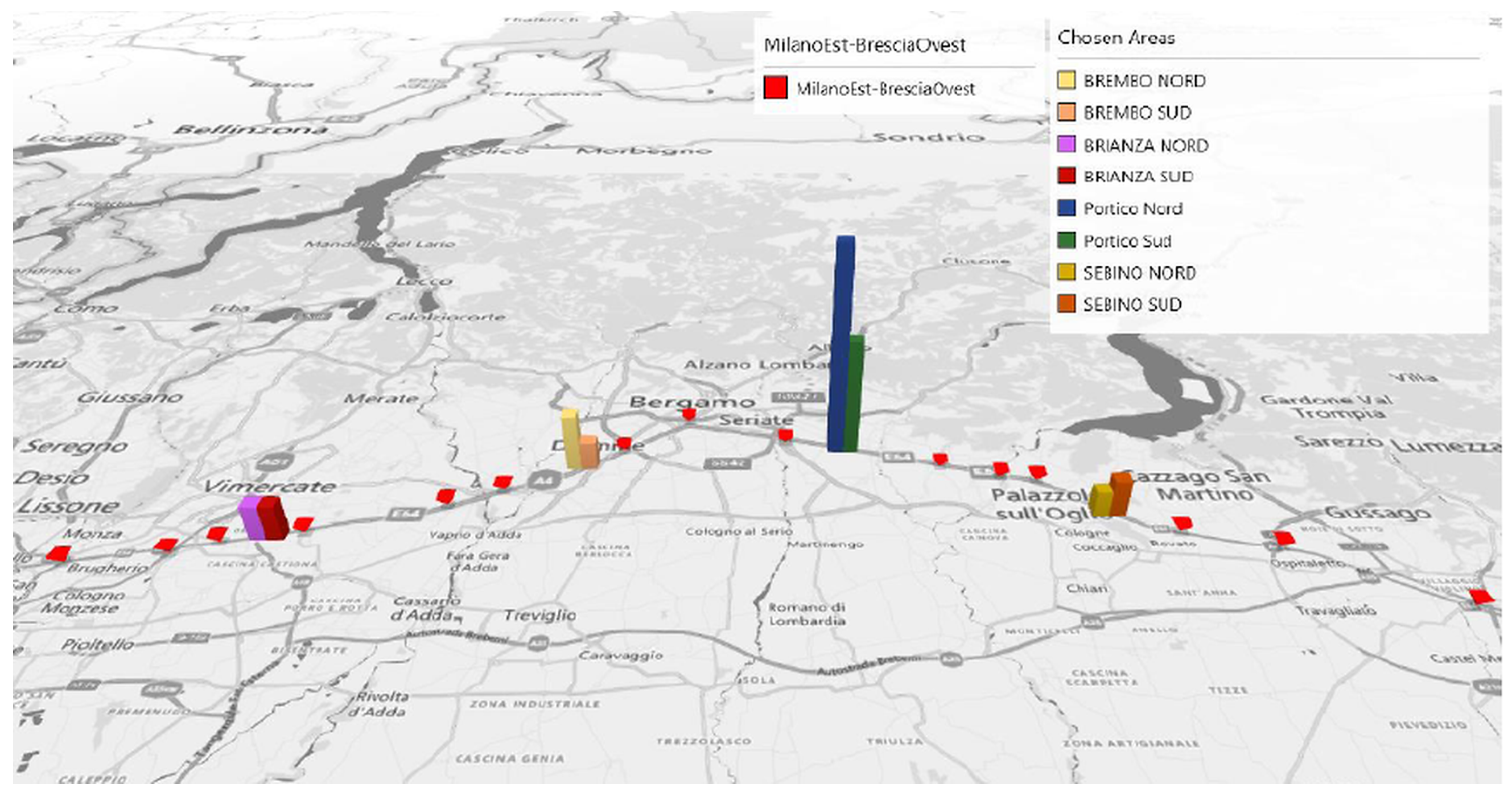
This research is the result of a collaboration between Scania [36], a global leader in sustainable transport solutions, and Movyon [37], a key player in intelligent transport systems. Scania is at the forefront of developing heavy-duty vehicles and industrial engines, with a strong commitment to sustainability. The company’s strategy emphasizes energy efficiency, electrification, and smart transport solutions, with ambitious goals to reduce C O 2 emissions from operations by 50% and decrease vehicle emissions per kilometer by 20% by 2025. While prioritizing battery electric vehicles (BEVs), Scania recognizes the complementary role of fuel cell electric vehicles (FCEVs) for specific applications, adopting a modular approach to seamlessly integrate both technologies. Movyon, the innovation arm of Autostrade per l’Italia [38], specializes in ITS solutions, including traffic management, infrastructure monitoring, and smart mobility. The company’s focus on innovation, sustainability, and collaboration enables the development of high-efficiency, interoperable systems that improve transport safety and environmental performance. Through ongoing research and technological integration, Movyon plays a pivotal role in advancing intelligent and sustainable mobility. This study investigates the implementation of sustainable heavy-duty transport solutions along a 100 km stretch of the A4 highway, one of Italy’s most congested transport corridors. Similar approaches for the electrification of motorway corridors and the integration of charging infrastructure have been explored in recent studies [39]. The study integrates data on freight transport flows, energy demand, and environmental impact to evaluate the feasibility of hydrogen fuel cell and wireless charging technologies. Recognizing that the existing infrastructure may not support these advanced technologies, the project proposes modifications, including enhanced signage, upgraded communication systems, and sensor integration. The goal is to overcome these challenges and develop a scalable, replicable model for sustainable transport along the A4 corridor between Milan and Brescia. Sixteen toll stations and four service zones on the study area were computed, as illustrated in Figure 1 and Figure 2, respectively. The maximum extent of the service zones was also plotted for visual representation. In particular, it is clear that the location with the greatest number of heavy truck entries and departures is East Milan.

2.3. Definition of the Hydrogen Scenarios

Before proceeding with the scenario analysis, several fundamental assumptions are defined to establish the operational framework. It is assumed that heavy-duty trucks will refuel exclusively on highways, and all vehicles passing by a service area are considered potential candidates for refueling, regardless of their direction of travel. Each vehicle is expected to maintain a minimum residual capacity of 10%, and those falling below this threshold are assumed to stop and refuel. Furthermore, the impact of vehicle load on driving range is neglected for simplification purposes. Hydrogen distribution is assumed to be carried out via road transport using trucks. The cost estimation for each scenario takes into account the expenses related to distribution components and, where necessary, the inclusion of an electrolyzer in case land transport is disrupted. All energy required for hydrogen production is presumed to be sourced from the national electric grid. Finally, the residual capacity of transiting vehicles is modeled as a Gaussian distribution to capture variability in remaining fuel levels among vehicles approaching the refueling stations. Hydrogen vehicle penetration is treated as a scenario parameter reflecting possible infrastructure development, vehicle commercialization, and regulatory evolution. Two target years are analyzed:
  • Year 2030: An estimated 2% penetration of hydrogen long-haul trucks, about 4000 vehicles out of a 200,000 fleet.
  • Year 2050: Up to 30% of the fleet, approximately 49,000 hydrogen trucks.
Our five-year market projection for hydrogen fuel-cell road tractors shows that by 2050 the on-road fleet will reach roughly 49,000 units about 29% of all road tractors with annual sales of around 1500 vehicles after ten years in service. In Italy, yearly registrations average 180,000 units for the 3.5 t GVW class and 20,000 units for the >16 t class. As of 31 December 2022, the national commercial vehicle fleet stood at 4,227,000 units, over 42% of which are pre-Euro 4 models older than 17 years posing major emissions and safety challenges [40]. To estimate heavy goods vehicle growth, we used Aci [41] for 2015, 2018–2022 across the AM (freight trucks), RM (trailers/semi-trailers) and TS (road tractors) categories; the absolute figures and inter-year percentage changes appear in Table 2.
It can be shown that the vehicle fleet has increased by 1–2% in recent years, both nationally as well as regionally. As a result, it was agreed to utilize an annual change of 1% for the scenarios in the analysis. Italy’s fleet includes about 720,000 heavy vehicles (>3.5 t), with 173,000 road tractors. The fleet is growing at an estimated annual rate of 1%. Twelve locations along the A4 highway were selected based on space availability and strategic relevance (Figure 3).
MCDM was used to rank the sites using key performance indicators (KPIs). The existing service areas in the region were then inspected, and using Google Earth, it was determined how much the existing area could be enlarged to accommodate the new hydrogen charging infrastructure.The Valtrompia Nord and Valtrompia Sud stations cannot be expanded further since they are completely surrounded by business and/or residential areas. The service areas shown in Table 3 have been designated for the building of hydrogen charging stations, beginning with East Milan. Table 4 depicts the results.
The existing service areas are Brianza, Brembo, Sebino and Val Trompia. The location column reports the name of the toll gate before and succeeding the service area. Basiano and Grezzago; Fiume Brembo, Osio and Brembo; Zocco and Sebino; and Camaione, Antezzate and Val Trompia are located in the same location.
The selection of infrastructure locations is based on a multi-criteria decision-making (MCDM) approach, widely adopted in the literature for charging infrastructure planning [42]:
  • Infrastructure availability: determines whether a pre-existing service area exists (20% weight). In this scenario, it could only be provided a 10 if the service area was already in place, and a 0 otherwise.
  • Safety: The location of hydrogen charging infrastructure must take safety into account. Stations for hydrogen refueling should be positioned away from heavily populated residential areas (25% weight). A maximum reference distance of 300 m was adopted, and the score was calculated using Equation (1), where D is the distance from residential areas and D max is the maximum reference distance.
    Score Safety = D D max × 10
  • Industrial Area Proximity: the distance from an industrial location where heavy truck transit may occur was taken into account (15% weight). Distances to the nearest industrial center were computed, and the score was derived using the Equation (2).
    Score Industrial Area = 10 Distance Distance max × 10
    where d i s t a n c e max is the greatest distance measured.
  • Attractiveness: the actual usage of a specific facility based on transit flows in the surrounding region was evaluated (15% weight). For scoring, Equation (3) was used.
    Score Logistic = Flow traffic Flow traffic , max × 10
    where Flow traffic , max is the maximum traffic flow recorded.
  • Logistic Attractivity: the distance between logistics enterprises was measured (10% weight). For the sake of simplicity and due to the remarkable consistency of flows in the two directions, it was decided to treat the service area as a single unit, ignoring the divide of flows between north and south and adding them together for each Service Area. In this scenario, the score was calculated using solely logistics businesses; the presence of any logistics company within a 1 km radius was considered. If a corporation is present, the score will be 10, otherwise the score will be 0.
  • Land Feasibility: the topography was analyzed to see whether it is viable to build a charging infrastructure in the designated area (5% weight). The score was calculated by considering 0 if it is not possible to build (industrial area, residential area, or quarries), 5 if it is possible to build, but there may be permit issues due to the presence of cultivated land (simple arable land, permanent grasslands), and 10 if there are no problems with building because the land is either uncultivated or abandoned (bushes in abandoned agricultural areas, uncultivated green areas, and bushes with significant presence of shrubs).
  • Hydrography: this feature was used to assess proximity to watercourses (5% weight). After careful consideration of the benefits and drawbacks of the presence of waterways, a score of 5, the average value between 0 and 10, to the stations located near a river was assigned.
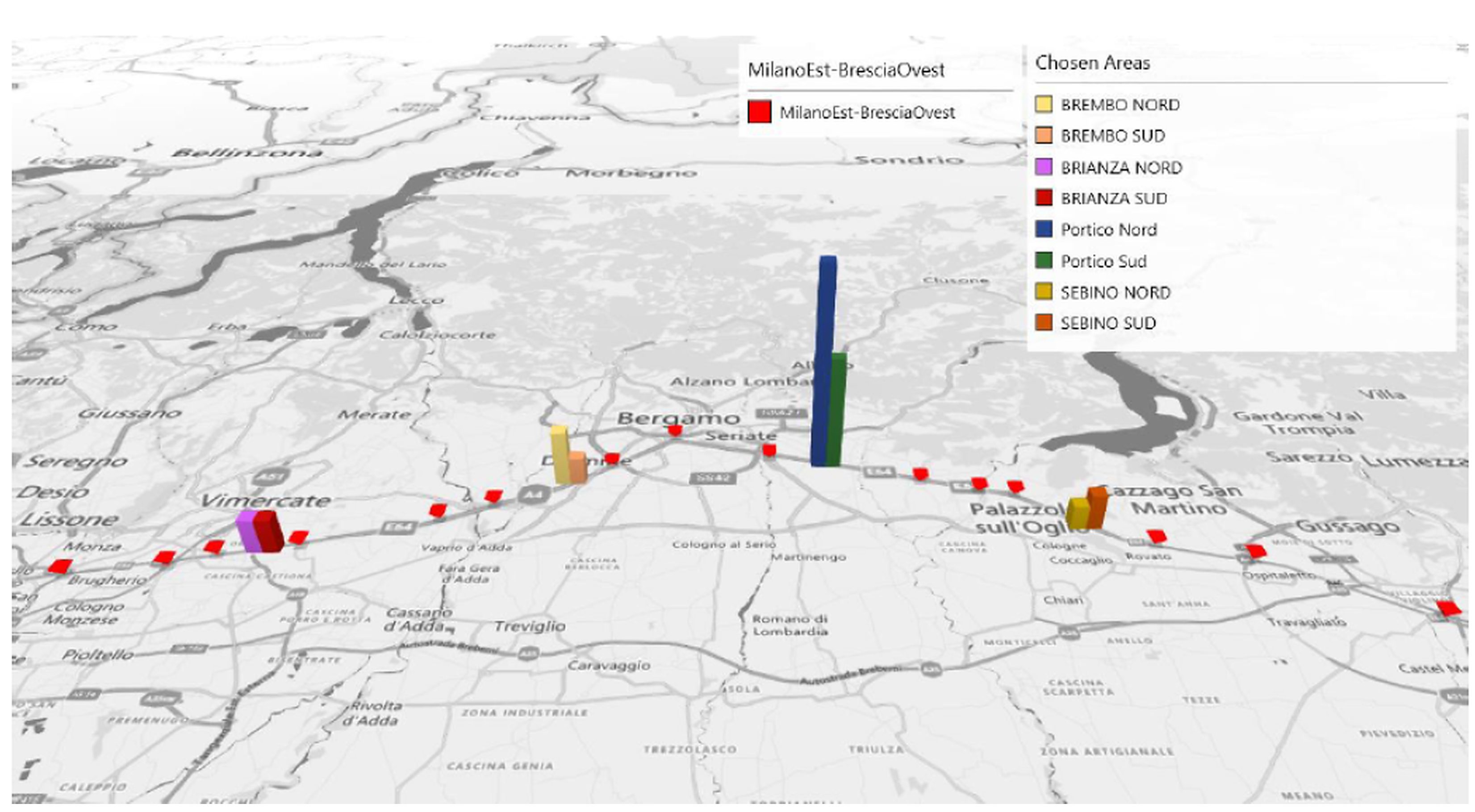
Based on MCDM analysis, the top areas selected for infrastructure development are
  • 2030: Brianza, Brembo, Sebino (expansion).
  • 2050: Addition of Portico.
Figure 4 presents a map of the selected charging stations.
Six scenarios were developed for examination using the information gained from prior assessments, see Table 5.
Each scenario is linked to specific infrastructure configurations and traffic flow assumptions. The hydrogen scenarios developed aim to represent realistic projections of hydrogen heavy-duty vehicle adoption and corresponding infrastructure needs, aligned with Italy’s hydrogen strategy for 2030 and 2050.

2.4. Definition of the Wireless Scenarios

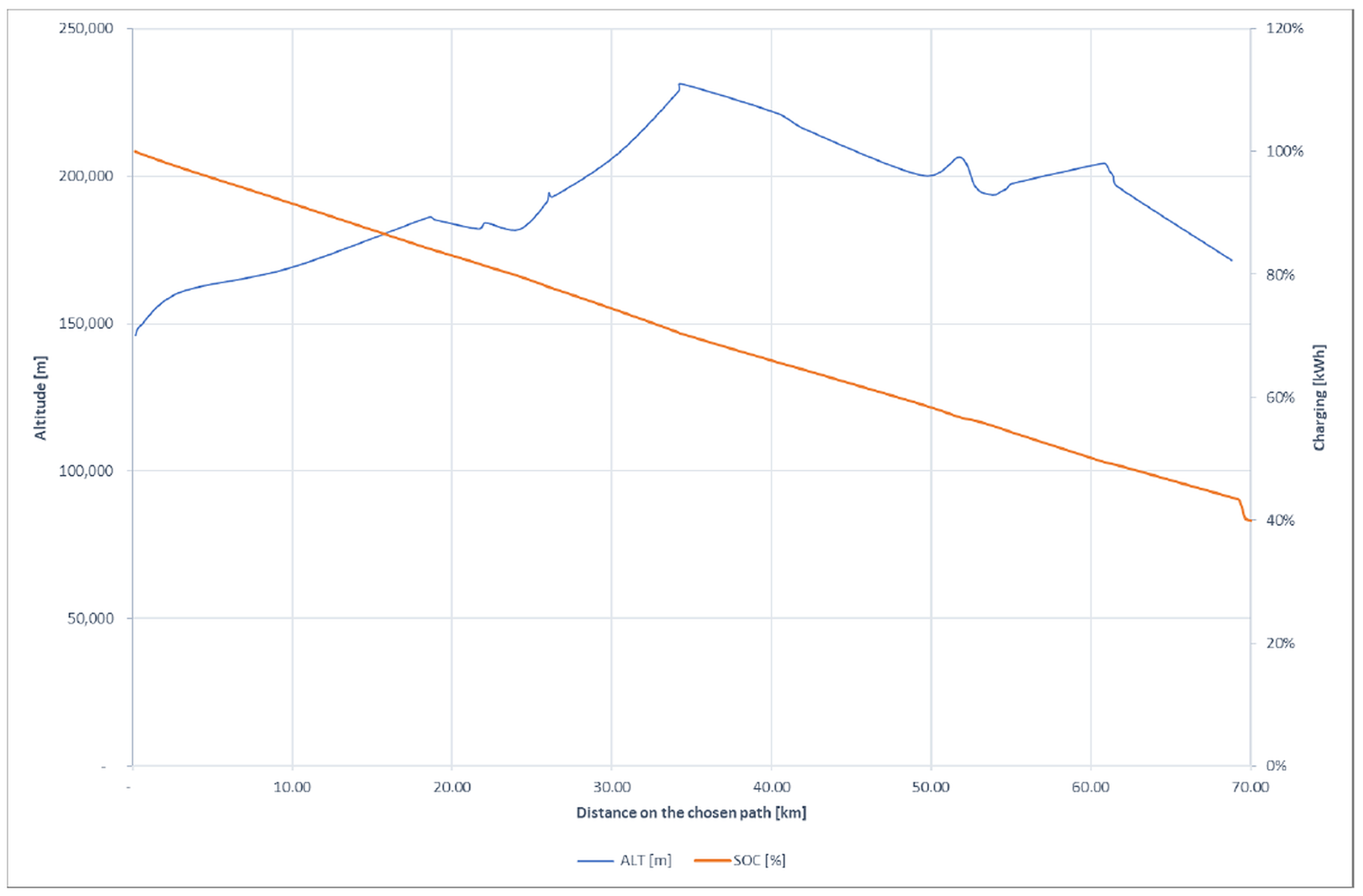
Before proceeding with the scenario analysis, a set of key assumptions was defined. Vehicles traveling along the analyzed corridor are considered for wireless charging, while the effect of vehicle load on range is neglected for simplification. The wireless infrastructure cost is assumed to be approximately €1000 per meter and includes the underground charging system, electrical rooms, transformers, wiring, grid connection, maintenance, and annual energy consumption. All charging energy is assumed to be supplied by the electrical grid. Vehicles are assumed to enter the study area with a minimum state of charge (SoC) of 20%, while the SoC is not allowed to fall below 10% along the analyzed motorway segment. The DWPT system is designed with a power level of approximately 1 MW. It should be noted that, at an average speed of 60 km/h, a 30-min charging interval would correspond to approximately 30 km of equipped roadway. However, in the present analysis, the DWPT infrastructure is not sized to fully recharge the vehicle during its passage through the corridor. Instead, the equipped sections are dimensioned to maintain the battery state of charge above the minimum safety threshold of 10% along the analyzed 100 km segment. Therefore, the proposed configuration is based on selected charging sections rather than on the continuous electrification of the entire corridor. For scalability, the analysis focuses on a single direction of travel, although the same methodology can be extended to both directions. Daily traffic data are converted into hourly averages to support the energy demand calculation. To evaluate the proposed scenarios, a set of variable parameters was defined, focusing primarily on the expected proportion of wireless vehicles circulating in the study area, projected for the years 2030 and 2050. Additionally, variations in the total number of vehicles whether increasing, decreasing, or stable were considered, taking into account possible modal shifts that may favor rail transport over road freight (as discussed in Section 2.3). Based on these parameters, several scenarios were developed. For each, a technical analysis was conducted to determine the necessary length of wireless road infrastructure to ensure that vehicle batteries do not fall below 10% state of charge, even in the worst-case scenario starting from 20%. Finally, an economic analysis was performed to assess the overall feasibility of the proposed infrastructure. The future diffusion of wireless-enabled trucks is still uncertain because no consolidated market data are available for this technology. Therefore, the scenario definition was based on the expected diffusion of electric trucks and on different assumptions regarding the share of vehicles equipped with wireless receivers. In this study, wireless-enabled trucks are assumed to represent 35–70% of the electric truck fleet by 2030 and 50–90% by 2050. These values are used as exploratory scenario parameters to test different infrastructure utilization levels, rather than as deterministic market forecasts. The siting of wireless charging infrastructure focuses on identifying the optimal road segments where vehicles are most likely to require recharging, ensuring that battery levels remain above critical thresholds while minimizing infrastructure costs. Since no specific regulations currently govern such installations, a detailed analysis of the study area was carried out to identify suitable locations. The analysis considered a single direction of the Italian A4 highway, following a methodology that is both scalable and replicable for other highways. The study began by analyzing the altitude and length profile of the road using route track data from Milano Lampugnano–Brescia N511 [43]. The original .tcx file was converted into .csv format and then processed to derive the altitude profile, slope values, and sampling intervals used in the wireless charging analysis, as shown in Figure 5.
From this dataset, slopes and time intervals between samplings were computed. The samplings were mapped against tolling station positions to better understand the spatial distribution (Figure 6).
Using Equations (4)–(6), the total energy required for heavy-duty vehicles, including battery discharge, was calculated. Assuming a 3% uphill freeway scenario crossed by heavy traffic (38,000 kg per vehicle), each vehicle requires potential energy U to travel 1 km, as evaluated in Equation (4). The power associated with this potential energy is then derived in Equation (5):
U [ J ] = m · g · h
P p [ kW ] = U t · 1000
This power must be added to the normal rolling power required by the vehicle, given by Equation (6). Assuming a vehicle speed of v = 60 km / h = 16.667 m / s , 1 km will be traveled in 1 min.
P f r i c t i o n [ kW ] = m · g · c f · v 1000
where c f is the friction coefficient. The total average power P required by each vehicle is the sum of the power from Equation (5) and the rolling power from Equation (6), as shown in Equation (7):
P [ kW ] = P p + P f
Considering 30 vehicles per kilometer, corresponding to typical traffic density for heavy vehicles going uphill, assuming only one lane, the total power required for all vehicles is obtained from Equation (8):
P t o t [ M W ] = P · v e h 1000
where m is the vehicle mass [kg], g is the gravitational acceleration [m/s2], h is the altitude variation over the considered road segment [m], and t is the travel time over the same segment [s]. The term P p represents the power associated with the altitude variation [kW], while P f r i c t i o n is the rolling resistance power [kW]. The coefficient c f is the rolling resistance coefficient [-], and v is the vehicle speed [m/s]. The total power P represents the average power demand of a single vehicle [kW], while v e h is the number of heavy-duty vehicles simultaneously considered along the analyzed segment. The total power demand P t o t is then obtained by multiplying the single-vehicle power demand by the number of vehicles and converting the result from kW to MW. The battery discharge behavior was analyzed against altitude variations (Figure 7).
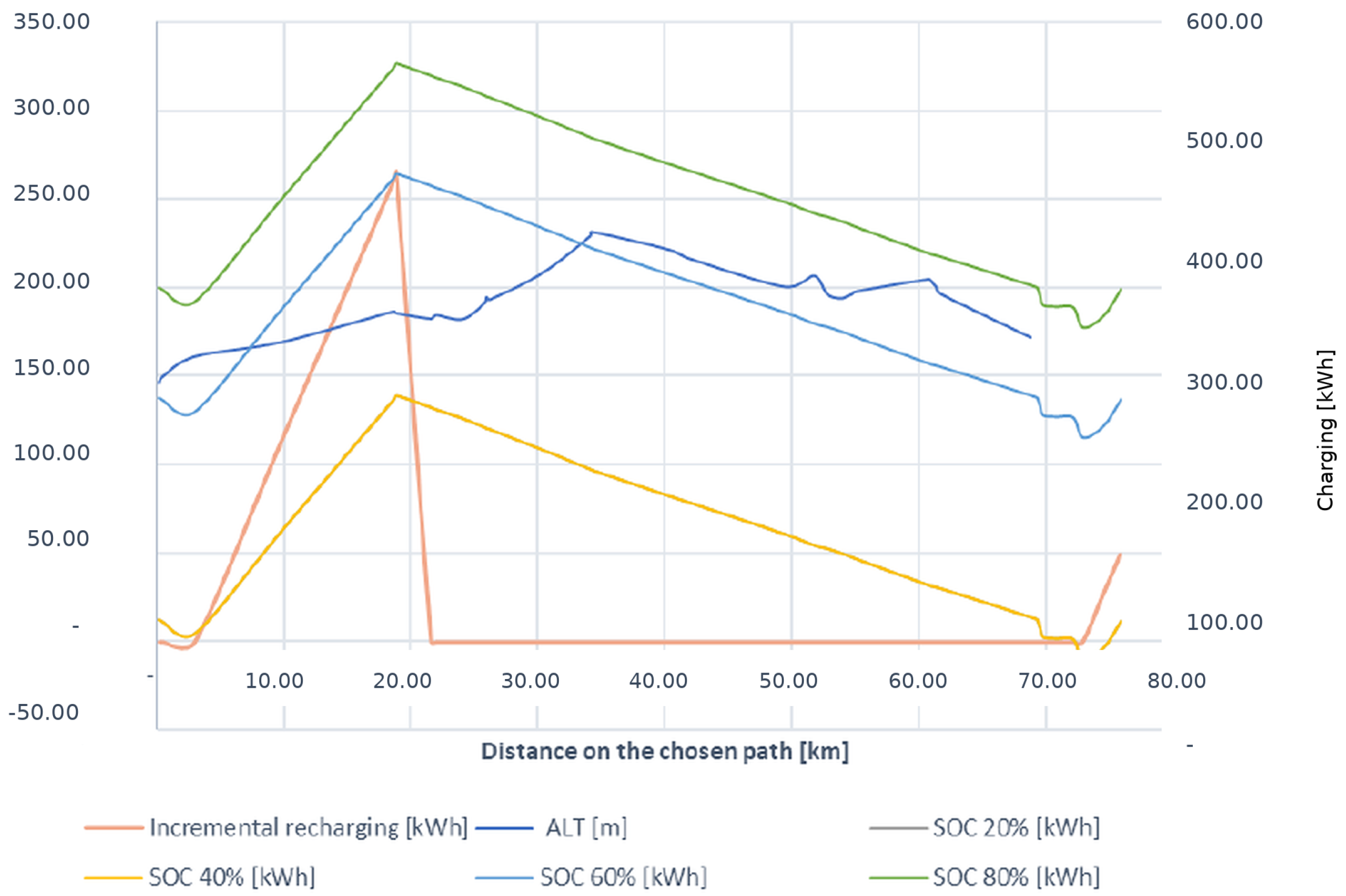
To address different operational conditions, four scenarios with varying initial state of charge (SoC) were defined (Table 6). A 10 km wireless charging section was proposed to allow for a 10-min recharge at 60 km/h. In the worst-case scenario, where vehicles enter with only 20% SoC, the starting point of the wireless segment was set when the battery reached the 10% threshold.
Considering the significant power involved and to optimize cost, two separate charging segments were proposed for the A4 highway portion analyzed. This strategy reduces the need to electrify the entire segment while still ensuring vehicles can complete the section without additional charging. Extending the charging section to 20 km would be inefficient, as vehicles with high SoC would reach full charge too early (as shown in Table 6). The final length of the wireless infrastructure was determined by summing both segments (Table 7) and compared with energy needs (Figure 8). This confirms that the infrastructure deployment is based on selected charging sections, with a total equipped length of 10.39 km, rather than on the continuous electrification of the entire motorway corridor. The analysis confirmed that, with the proposed infrastructure, vehicles can maintain autonomy along the whole path, independent of slope variations.
The wireless charging infrastructure is planned for implementation by 2030 (Figure 9), with no modifications foreseen for 2050 to minimize investment costs. The only infrastructural adjustment will concern the scaling of electrical components, such as upgrading from smaller to larger electric cabins and wiring, to accommodate the increased energy demand due to fleet growth over time. As in the hydrogen scenarios, fleet costs are not considered in the economic analysis, as their impact is negligible compared to infrastructure costs (estimated at only €100–200 per vehicle).
As shown in Table 8, a total of 12 scenarios were defined, varying year, EV proportion, fleet variation, and wireless vehicle share. The corresponding traffic flow was used to estimate the energy demand and infrastructure requirements for each scenario. It is assumed that the infrastructure will be deployed in 2030, with only the electrical supply components being scaled up in 2050 to account for the higher energy demand. Fleet acquisition costs were excluded from the economic analysis as the study focused on corridor-level infrastructure costs.

2.5. Hydrogen Technical and Economical Analysis

This section presents the technical and economic analysis necessary for sizing hydrogen refueling stations (HRS) and understanding the costs and requirements for their development. The analysis considers various scenarios based on vehicle fleet characteristics, such as hydrogen vehicle adoption and usage patterns.

2.5.1. Hydrogen Refueling Station Sizing and Cost Considerations

A critical aspect of the hydrogen refueling station (HRS) development process is determining the ideal station size. During the early stages of market development, hydrogen stations with capacities ranging from 50 to 100 kg H2/day may suffice for passenger vehicles. However, as the market matures, a minimum station capacity of 500 kg H2/day is expected to meet demand. The construction cost of a station varies significantly between countries, mainly due to differing safety regulations and requirements. Despite this, significant economies of scale exist. According to the International Energy Agency (IEA), increasing a station’s capacity from 50 kg H2/day to 500 kg H2/day can reduce the production cost per kilogram of hydrogen by up to 75%, resulting in a lower selling price. The utilization rate of refueling facilities is another key factor in the competitiveness of fuel cell electric vehicles (FCEVs). As previously mentioned, the cost of an HRS depends on its size and utilization. For example, a station with a capacity of 200 kg H2/day operating at 10–33% of its capacity may see production costs increase by 3.63–11.8 USD/kg H2 compared to nominal operation. However, this margin decreases as station size and utilization capacity grow. The risk of underutilization underscores the importance of achieving high utilization rates during the early stages of FCEV deployment. In California, it took about two years to raise the average utilization of hydrogen stations from 5% to 40%. Presently, the average station size in California is approximately 200 kg H2/day, though some stations still operate at less than 10% utilization. The costs associated with designing and building a station are heavily influenced by the rate of FCEV market penetration and the demand for hydrogen. Investment risks related to refueling station construction are primarily due to high capital and operational expenditures, as well as potential underutilization during the initial period of FCEV market growth. This may lead to negative cash flow during the first 10–15 years, often referred to as the “valley of death”. However, these risks can be mitigated by lowering capital and operational expenses and improving resource utilization. Public support is crucial during the early stages to offset this negative cash flow. For instance, the Bolzano hydrogen production plant, with three modular electrolyzers, can produce up to 180 Nm3/h under standard conditions. Currently, compressed hydrogen in gaseous form can fuel up to 15 urban buses (with daily itineraries of 200–250 km) or up to 700 vehicles. Tank trucks can also be used to refill hydrogen cylinders or trailer tanks at the site. The number of refueling stations required depends on vehicle demand. For example, a large truck requires approximately 33 kg of hydrogen to refuel, with a refueling period of 10 min. In the early years (up to 2030), a lower utilization factor is acceptable to ensure sufficient coverage across regions, enabling long-distance travel. Additionally, the electrolyzer’s working time is considered to be 8 h per day ( t work ).

2.5.2. Modeling Hydrogen Demand and Cost for HRS Deployment

Two distinct models were developed using MATLAB R2023b (MathWorks, Natick, MA, USA) and Microsoft Excel to estimate the hydrogen demand for each hydrogen refueling station (HRS) and the associated deployment costs. The Matlab model aims to calculate the quantity of hydrogen required to refuel heavy-duty vehicles (HDVs) passing by the HRS station. A statistical study was conducted to determine the proportion of HDVs that would require refueling within the total fleet. It is assumed that the remaining capacity of the passing HDVs follows a normal Gaussian distribution, with the mean value corresponding to the average available capacity, as shown in Equation (9):
C a v g = C m a x + C m i n 2
A sensitivity analysis was conducted by varying the standard deviation between 5 and 10 kg of hydrogen to assess its impact on the results. The number of vehicles with residual hydrogen capacity below the prescribed threshold and the corresponding amount of hydrogen required for refueling were calculated based on the distribution. To account for varied user behavior, several minimum limits (10% and 20% of total capacity) were considered. A random component was introduced to account for various factors, such as tire pressure, driving behavior, environmental conditions, maintenance, load, cargo, and driving terrain. The analysis was repeated across 10,000 trials to ensure the reliability of the data. These data were entered into an Excel file, and the total refueling time was estimated by applying a proportion based on the refueling rate ( t refill = 10 min / 33 kg H 2 ).
The infrastructure components were subsequently analyzed and scaled based on the findings.

2.5.3. Electrolyzer Efficiency and Power Requirements

The electrolysis of water under standard conditions requires a minimum of 10,000 kJ of electrical energy to dissociate each mole of water, corresponding to the standard Gibbs free energy of formation of water. Therefore, 143,000 kJ are needed to produce 1 kg of hydrogen, which is approximately equivalent to 39.72 kWh. An electrolyzer operating at 1.48 V would function isothermally at 25 °C, and the electrical energy required would be approximately 20% higher than the minimum energy due to the enthalpy of water decomposition. Currently, the average electrolyzer operates with an efficiency of around 75%, which is expected to improve to between 82% and 86% by 2030. Theoretical efficiencies for PEM electrolyzers are projected to reach up to 94%. In Equation (10), m H 2 is the hydrogen mass required in the considered scenario [kg], E H 2 is the specific electricity consumption for hydrogen production [kWh/kg], and t w o r k is the daily operating time of the electrolyzer [h]. Therefore, the resulting value represents the electrolyzer power requirement [kW] needed to produce the required hydrogen mass within the assumed operating time.
P E L C [ kW ] = m H 2 · E H 2 t w o r k
Equation (10) calculates the electrolyzer power required to produce the hydrogen mass needed in each scenario within the assumed daily operating time. The energy required to produce 1 kg of hydrogen, as a function of electrolyzer efficiency, is shown for different years in Table 9.
Table 9 displays the forecasted electrolyzer efficiencies and the energy required to produce 1 kg of hydrogen. The energy required decreases as electrolyzer efficiency improves over the years, with projections for future technological improvements.

2.5.4. Compressor Power Requirements

The compressor is critical in reducing the potential ignition of hydrogen gas, as it minimizes the required storage space and ensures the refueling process at the desired pressures. Hydrogen gas is compressed to 385 bar for refueling and stored at 700 bar to mitigate economic and volume-related issues. Two compressors are used in series to achieve the final desired pressure. The compression process, essential for hydrogen refueling stations, is characterized by several key parameters. The specific workrequired for compression is expressed as 2.01 × p p 0 , where p 0 represents the initial pressure, set at 25 bar. The exponential factor (exp p) used in the compression calculation is 0.3356. The system is designed to achieve a refueling pressure of 385 bar, while the storage pressure is maintained at 200 bar. These parameters are crucial for determining the energy demand and technical specifications of the compression stage. The power required for the compressor is evaluated using the formula:
W = w s · p f p 0 α · m
Equation (11) models the work done by the compressor in terms of the hydrogen pressure and mass. This is a key factor in ensuring that the hydrogen is safely compressed for storage and refueling. Where m is the hydrogen mass needed for each scenario, and W is the work required by the compressor. The corresponding energy requirements are calculated using Equation (12):
E = W 3.6
Equation (12) converts the work done by the compressor into energy (in kWh). This energy is critical for calculating the operational cost of the compressor unit in the hydrogen refueling station. In Equations (11) and (12), W is the mechanical work required for compression [MJ], w s is the specific compression work, p 0 and p f are the initial and final hydrogen pressures [bar], α is the compression exponent [-], and m is the hydrogen mass to be compressed [kg]. The energy demand E is obtained by converting the compression work from MJ to kWh. This energy contribution is then included in the operational cost assessment of the hydrogen refueling station.

2.5.5. Tank Volume Calculation

In order to evaluate the required volume for hydrogen storage, the relationship that best describes the behavior of a substance in the gas phase is given by the following equation:
p · V = z · R · T
where V is the molar volume, z is the compressibility factor, p is the pressure, R is the ideal gas constant, and T is the temperature. The compressibility factor z accounts for the deviation of real gas behavior from ideal gas behavior and is set equal to 1.2 for hydrogen at standard conditions [44]. For each scenario, the maximum necessary volume was computed for both 385 bar and 700 bar, applying the following equation:
V = z · m · R · T M · P
where m is the mass of hydrogen, M is the molar mass of hydrogen, and P is the pressure at which the hydrogen is stored.

2.5.6. Buffer Tank, Dispensing Unit and Vehicle

The buffer tank, positioned between the electrolyzer and the compressor, regulates the hydrogen flow to ensure consistent operation. It helps prevent issues such as pressure buildup in the connecting pipe, which could cause rupture, or a vacuum when the compressor’s flow rate exceeds that of the electrolyzer. When the buffer tank reaches full capacity, it signals the compressor to activate and discharge hydrogen until a set pressure threshold is met, after which the compressor shuts down until the tank is refilled to its maximum pressure. The pressures are defined based on the compressor’s operational range. The dispensing unit, located after the storage tanks, is responsible for distributing hydrogen to the vehicle. It operates by matching the pressure in the vehicle’s fuel tank with that of the storage tanks. In systems with multiple storage banks, the unit switches to the next tank once the pressure equilibrium is reached, continuing the process until the vehicle’s tank is fully refueled. The dispensing unit does not consume electricity when idle, and the energy consumption during operation is minimal. The dispensing time is calculated based on the hydrogen mass required for each specific scenario, with the refueling rate considered as 10 min/33 kg H2. The vehicle’s fuel tank operates similarly to the main storage and buffer tanks, with hydrogen dispensed until the desired pressure is reached. Once the vehicle’s hydrogen is depleted, the station replenishes the storage tanks and is ready to refuel the vehicle again. This process repeats, maintaining a continuous supply of hydrogen. Economic evaluations are based on the total energy dispensed by each component.

2.5.7. Cost Analysis of Hydrogen Refueling Stations

A detailed cost analysis was performed for the construction of hydrogen refueling stations. The costs include the construction of the station, land acquisition, security systems, and the costs of components such as electrolyzers, compressors, storage tanks, and dispensing units. The unitary costs (UC) for each component are given by Equations (15)–(18):
U C E L C = P · C I n v , E L C · m H 2
U C c o m p = t r e f i l l · C c o m p · m H 2
U C t a n k = V t a n k · C t a n k
U C d i s p = C D i s p · 2
Equations (15)–(18) define the cost structure for each component in the HRS, including electrolyzers, compressors, tanks, and dispensing units. These are used to estimate the overall cost of setting up a hydrogen refueling station. The total cost for constructing the station is then calculated by summing the unitary costs:
C o s t T o t = U C d i s p + U C t a n k + U C c o m p + U C E L C
Equation (19) calculates the total cost of constructing the refueling station by summing the unitary costs of the main components. This is crucial for the economic evaluation of station development.
Unitary costs for hydrogen powered vehicles can be obtained by applying the Equations (20) and (21).
UC H 2 = Cost Tot Energy Tot
where Energy Tot was obtained from Equation (21):
Energy Tot = Mass H 2 · LHV H 2
Hydrogen’s lower heating value ( LHV H 2 ) is equal to 33 kWh/kg.

2.5.8. Hydrogen Demand Estimation and Scenario Analysis

Before determining the size of hydrogen refueling stations, it is crucial to estimate the potential hydrogen demand from vehicles in the region. A statistical approach was used to analyze this demand, minimizing assumptions about unknown traffic characteristics. It was assumed that the vehicles passing the area of interest have a residual hydrogen capacity that follows a Gaussian distribution, with the mean value being the average of the maximum and minimum capacity. The standard deviation was varied to generate different scenarios based on the distribution of residual capacity, maintaining consistency with real-world data. Furthermore, the minimum residual capacity, or the threshold for refueling, was set to vary between 10% and 20% of the maximum capacity. Two alternative time scenarios, namely 2030 and 2050, were considered. For each of these years, three different cases were analyzed, reflecting constant, increased, or decreased usage of heavy goods vehicles (HGVs). As a result, a total of six distinct scenarios were evaluated: 2030 with constant HGV use, 2030 with increased HGV use, 2030 with decreased HGV use, 2050 with constant HGV use, 2050 with increased HGV use, and 2050 with decreased HGV use. The cost of the components required to construct the hydrogen refueling infrastructure was calculated for each scenario. Additionally, the electrolyzer was analyzed to estimate its investment cost for on-site manufacturing, with the cost varying according to different time scenarios.

2.6. Wireless Technical and Economical Analysis

This section provides an analysis of the technical and economic aspects associated with the deployment of wireless infrastructure for vehicle charging. The sizing of the infrastructure in early stages and in a mature market is discussed, as well as the energy requirements for wireless vehicles. In the early phases, modest wireless infrastructures are required to handle loads of less than 1 MWh, with the necessary power ( P Syst ) for infrastructure sizing given by Equation (22):
P Syst = E transformer t
where t = 10 min (converted to hours). The power required for infrastructure in the 2030 scenarios is estimated to be around 6 MW, and in the 2050 scenarios, more than 120 MW.
Starting from the scenarios shown in Section 2.4, traffic flow was analyzed using data from various scenarios. In particular, Table 10 shows the average hourly traffic for the east–west direction.
Successively, to better comprehend the fleet behavior along the chosen path, the dataset has been interpolated with the tolling stations’ coordinates The traffic flow data, aligned with toll station coordinates, enabled the identification of segments where wireless infrastructure would be implemented, allowing for accurate infrastructure sizing. For this analysis, only two initial state-of-charge (SoC) values were considered: 40% for 2030, as 20% was deemed too risky for heavy-duty vehicle operators, and 60% for 2050, assuming a denser infrastructure network by that time. The worst-case scenario between 40% and 60% SoC was used for 2050 calculations. This section provides an overview of the costs considered for the economic analysis of the scenarios, including construction costs (materials, labor, equipment, excavation), energy supply costs, maintenance and management, and component costs (HV-MV/MV-LV connections, prefabricated cabins, transformers, wiring to the distribution network, and wireless underground systems). The prices of the various components used in the economic analysis are as follows: energy costs €0.15 per kWh, infrastructure HV-MV costs €150.00 per kW, infrastructure MV-LV costs €350.00 per kW, underground wireless infrastructure costs €1000.00 per meter, and maintenance is 3% of the total infrastructure cost. The energy required by vehicles for each scenario was evaluated by multiplying the energy demand of each heavy-duty wireless vehicle obtained from the wireless scenario definition by the corresponding traffic flow for each segment. These calculations were based on the total energy required for wireless-supported trucks, which was divided by the annual required energy for each segment. These results are consistent with previous studies highlighting the impact of energy management and charging strategies on system efficiency [30]. The total energy needed for the entire path was then calculated by summing the energy required from each segment. As described in Section 2.4, two initial state-of-charge (SoC) values, 40% for 2030 and 60% for 2050, were considered to reflect the expected battery levels under varying conditions. The analysis was carried out for twelve distinct scenarios, considering the following factors: for the year 2030, scenarios with constant, increased, or decreased use of heavy vehicles were combined with a 35% or 70% share of wireless vehicles. Similarly, for the year 2050, scenarios with constant, increased, or decreased use of heavy vehicles were combined with a 50% or 90% share of wireless vehicles. The infrastructure costs associated with the transformers, prefabricated cabins, and connections to the distribution network and wireless system were calculated using Equation (23). This was necessary for all scenarios, as the increase in required energy would require the installation of new devices:
Infr HV-MV , MV-LV = ( Infr HV-MV Unit + Infr MV-LV Unit ) · P System
The underground (UG) investment was considered only in the 2030 scenarios, as the lifespan of the coils was assumed to be between 25 and 50 years, similar to transformers. The cost is fixed and depends on the length d of the chosen segments, which is evaluated in the wireless infrastructure sizing procedure. The cost of the underground investment is evaluated using Equation (24):
Infr UG = Infr UG , Unit · d
The total investment was then evaluated by summing the two components, as shown in Equation (25):
Infr TOT = Infr HV-MV , MV-LV + Infr UG
Regarding annual costs, two main components were considered:
  • Maintenance cost: This is assumed to be 3% of the total infrastructure cost, as indicated in Equation (26):
    Cost Maint = Infr TOT · 0.03
  • Energy cost: This was calculated based on the mean unitary cost of energy, assumed to reach €0.15 per kWh by 2030. The energy required to get the hourly cost was multiplied by 24 to obtain the annual energy cost. This is represented in Equation (27):
    Cost Energy , Hourly = Cost Energy · E Transf , Cost Energy , Annual = Cost Energy , Hourly · 24 · 365
Finally, the total annual cost is obtained by summing the maintenance and energy costs, as shown in Equation (28):
Cost Annual = Cost Maint + Cost Energy , Annual
The total annual costs are given by Equation (29):
Cost Annual = Cost Maint + Cost Energy , Annual

3. Results

3.1. Hydrogen Scenarios

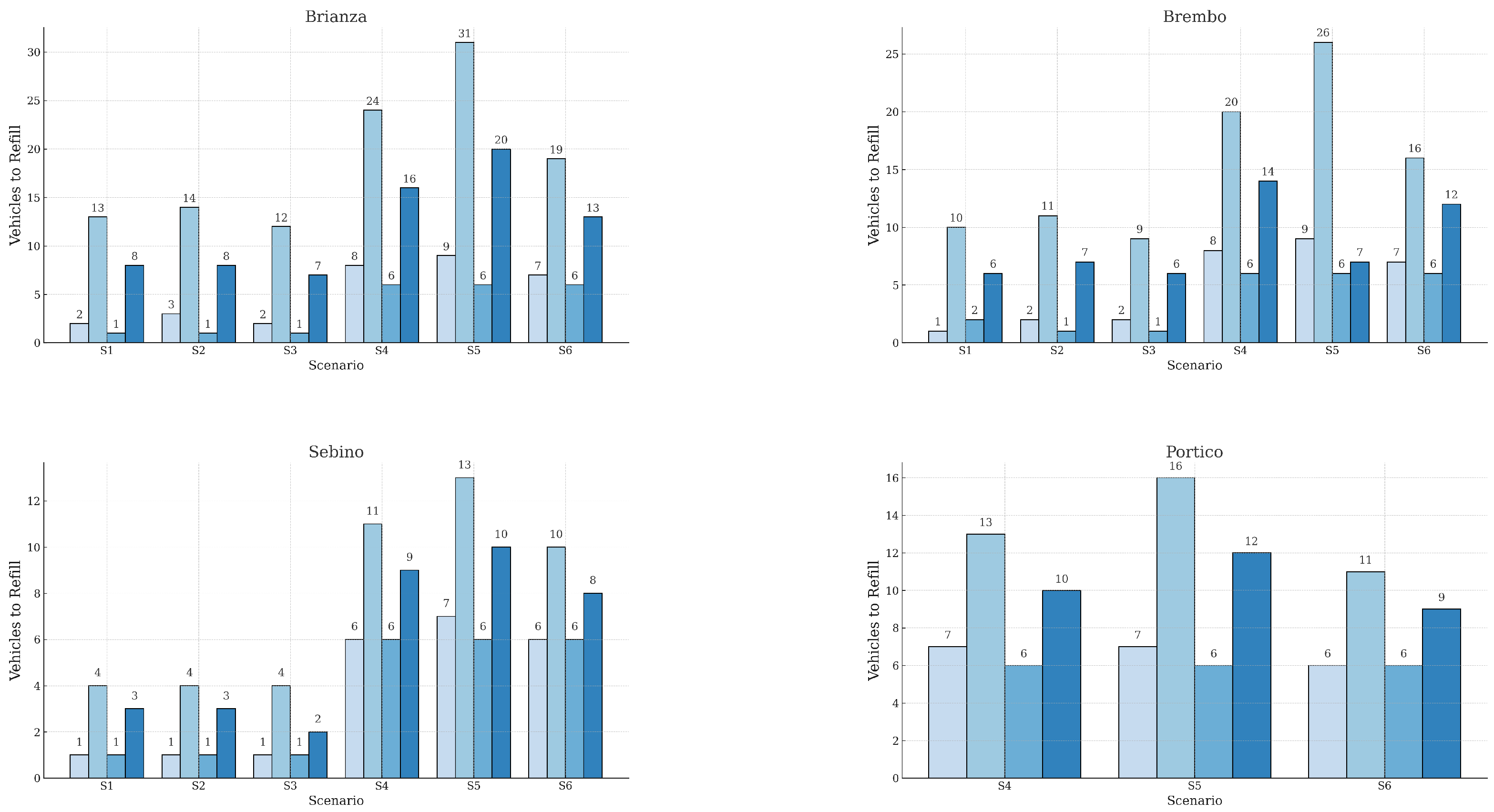
The model’s predictions indicate that, as the time horizon shifts from 2030 to 2050, the increase in hydrogen vehicles results in a higher fuel demand. While fluctuations in modal share have a lesser impact, changes in demand significantly affect the refueling infrastructure. Over time, the unitary cost of components for hydrogen refueling stations (HRS) decreases, but the total cost increases due to the higher demand. Raising the standard deviation of the residual capacity distribution increases the likelihood of encountering vehicles with low residual hydrogen capacity, as the Gaussian curve broadens. Conversely, increasing the minimum refueling level leads to a larger amount of hydrogen required to replenish passing heavy-duty vehicles (HDVs). These findings underscore the importance of these two variables, with the standard deviation having a more significant impact on hydrogen demand. The studies also show that higher traffic flow corresponds to greater hydrogen demand. Moreover, the predicted statistics align closely with the International Energy Agency’s (IEA) projections for the early adoption of hydrogen fuel cell electric vehicles (HFCEVs). It is important to note that the Portico HRS price does not include the cost of all services typically associated with a standard refueling station. Figure 10 illustrates the number of vehicles expected to stop at each refueling station.
The results of this study provide a detailed comparison of the two alternative technologies: hydrogen and wireless-supported mobility, for heavy-duty vehicles. Calculations were performed to analyze energy requirements, costs, and infrastructure for both technologies under various scenarios. The hydrogen-powered vehicle system was evaluated under six different scenarios (from Scenario 1 to Scenario 6). Unitary costs for hydrogen powered vehicles were obtained by applying the Equations (20) and (21), considering the single components’ costs as in Section 2.5.7. The results for the unitary costs in each scenario are presented in Table 11, Table 12, Table 13, Table 14, Table 15 and Table 16. These tables show the breakdown of costs across different scenarios, taking into account factors such as infrastructure, maintenance, and fuel cell efficiency.
The data presented in Table 11, Table 12, Table 13, Table 14, Table 15 and Table 16 reveal a consistent trend in the unitary costs for hydrogen-powered vehicles. As the scenarios progress from Scenario 1 to Scenario 6, the unitary costs for hydrogen show a gradual increase, likely driven by the variations in infrastructure and hydrogen production costs. The average unitary cost for hydrogen vehicles across all scenarios is lower compared to wireless-supported mobility, with the most significant differences observed in the early stages (e.g., Scenario 1 and Scenario 2), where costs are around 10–15% lower for hydrogen. The unitary cost for hydrogen is consistently calculated based on the energy required per unit of fuel, derived from the mass of hydrogen and its lower heating value (LHV). In general, the costs range from approximately 0.35 €/kWh in the more cost-effective scenarios to about 0.5 €/kWh in the higher-cost scenarios. These variations underscore the sensitivity of hydrogen costs to infrastructure and market conditions, particularly the fluctuating prices of hydrogen production and distribution.

3.2. Wireless Scenarios

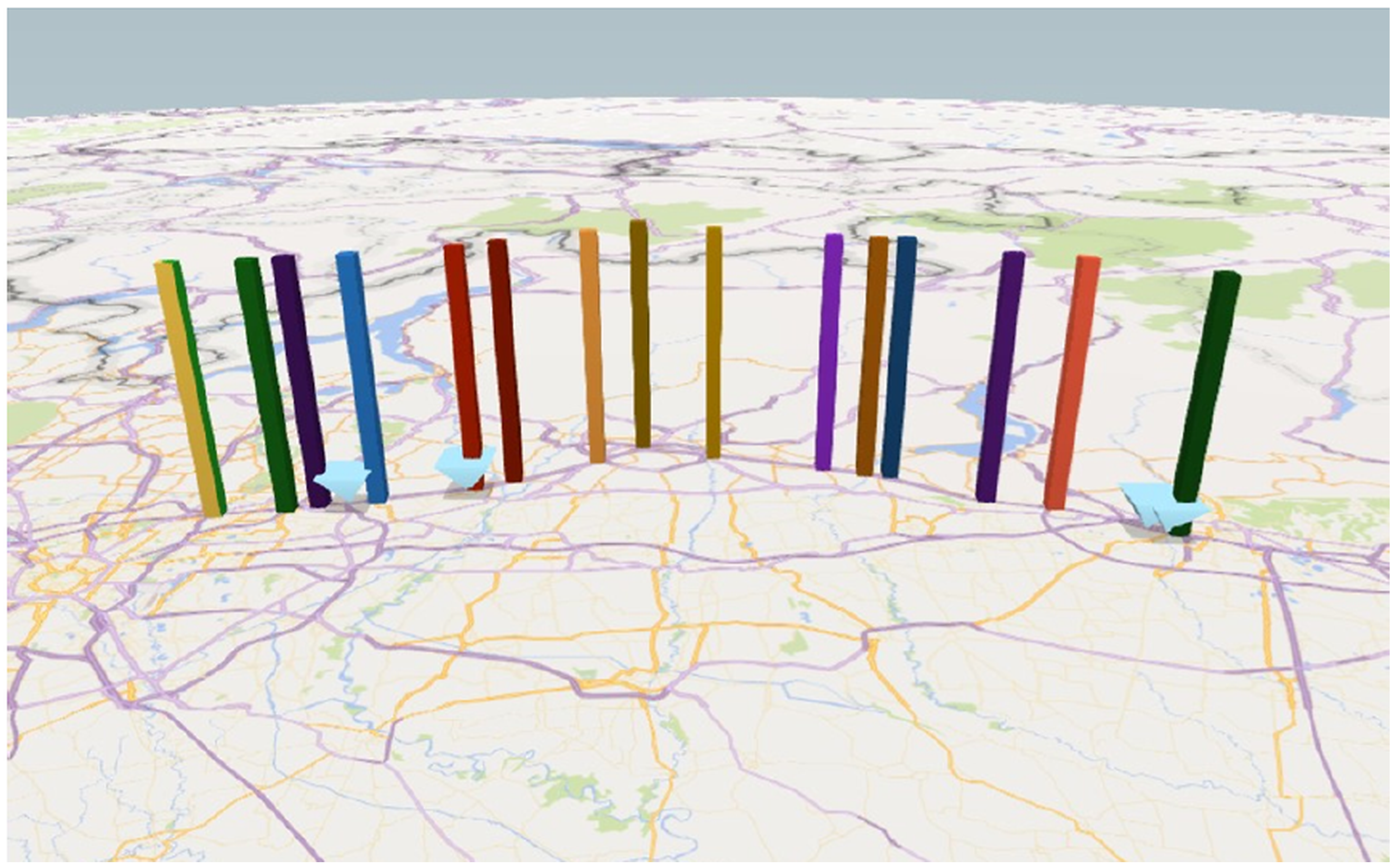
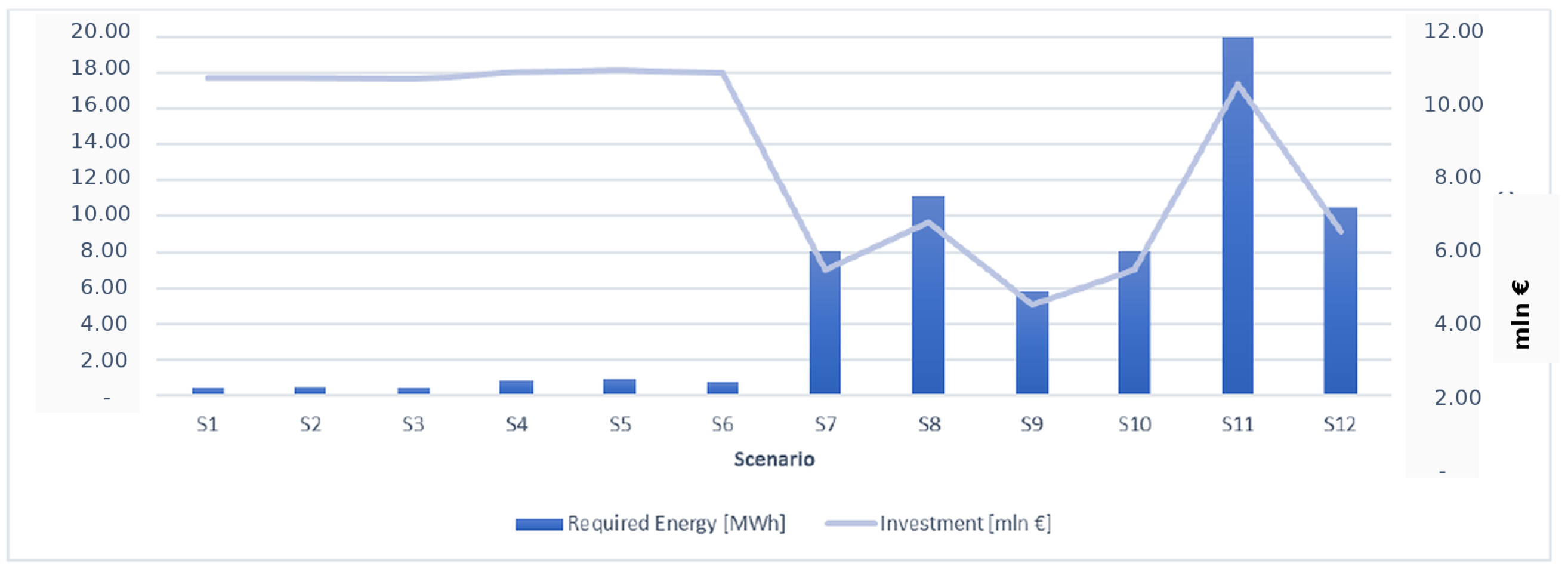
As the time horizon shifts from 2030 to 2050, an increase in wireless vehicles leads to a corresponding rise in energy demand. However, fluctuations in modal share have a lesser impact compared to changes in demand. By 2050, the need for underground investments could be eliminated, yet the overall costs are still elevated due to the increased demand. The energy required by vehicles, as shown in Figure 11, varies significantly across different scenarios. As the number of vehicles passing through the A4 highway increases, so does the energy requirement. The initial infrastructure cost remains substantial for the first six scenarios, which correspond to the 2030 projections. Specifically, the underground infrastructure, expected to last for 25 years, is required in 2030 and represents a significant portion of the total cost. By 2050, while the infrastructure costs, including transformers, cabins, and annual costs, are lower, the total costs are still influenced by the increase in the number of vehicles. The decrease in underground infrastructure costs, however, results in lower overall expenses compared to 2030, even when vehicle numbers reach their maximum levels.
Wireless-supported mobility for heavy-duty vehicles was also analyzed across various worst-case scenarios, assuming a minimum charging length of 10 km per segment. Data of the unitary costs for wireless mobility systems in 2030 and 2050, considering various traffic flow and electric vehicle (EV) wireless share scenarios can be described as follows:
  • Transformer Annual Energy (GW/h/y): The energy required by the transformer varies based on the wireless share of the EV fleet. With a constant traffic flow (3%), the annual energy required is 3.86 GW/h/y. This increases to 4.23 GW/h/y for a 10% wireless share, and further increases in other cases, with the highest being 7.72 GW/h/y for a 70% wireless share.
  • Total Infrastructure Costs (M€): The infrastructure costs follow a similar trend, rising from 10.60 M€ for a 35% wireless share, to 10.78 M€ for a 70% wireless share. The maximum infrastructure cost, for a 10% decrease in traffic flow, is 10.81 M€.
  • Annual Costs (M€/y): These costs reflect the operational and maintenance expenses, which start at 0.87 M€ annually for a 35% wireless share and increase to 1.34 M€ for a 70% wireless share.
  • Total Annual Costs (€/MWh): The total annual costs, based on energy usage and infrastructure requirements, are presented in euros per megawatt-hour. These costs range from 336.23 €/MWh for a 35% wireless share, decreasing as the wireless share increases, with a lower value of 147.84 €/MWh in the case of a 90% wireless share at a constant traffic flow.
  • Transformer Annual Energy (GW/h/y): The energy required by the transformer increases significantly in 2050. For a 35% wireless share, it is 73.53 GW/h/y, increasing up to 182.65 GW/h/y for a 90% wireless share.
  • Total Infrastructure Costs (M€): The infrastructure costs range from 53.15 M€ at a 50% wireless share to 147.84 M€ at a 90% wireless share.
  • Annual Costs (M€/y): These costs remain somewhat steady, starting at 10.71 M€ for a 50% wireless share and maintaining a consistent rate across different wireless shares.
  • Total Annual Costs (€/MWh): Total costs show an overall decrease over the years, ranging from 101.47 €/MWh for a 50% wireless share in 2050 to 95.67 €/MWh for a 90% wireless share at a 40% traffic flow reduction.
The unitary costs reported for the wireless scenarios are system-level costs, including both infrastructure and energy components, and should therefore be interpreted as comparative indicators rather than direct market electricity prices. The calculated wireless costs are higher than those obtained for the hydrogen scenarios, typically ranging between 0.65 €/kWh and 0.75 €/kWh. However, DWPT shows a higher grid-to-wheel efficiency, estimated at 96%, compared with 62% for the hydrogen pathway. These results highlight the main trade-off between the two solutions. Hydrogen offers lower unitary costs, greater operational flexibility and better suitability for low-density or long-haul applications where continuous electrification is not economically viable. Conversely, DWPT becomes more attractive in high-traffic corridors, where high infrastructure utilization can compensate for the larger initial investment and exploit the higher energy efficiency of the system. Fleet-side costs, including wireless vehicle coupling systems, fuel cell stacks and hydrogen storage systems, are not fully included in this comparison and should be addressed in future total cost of ownership analyses.

3.3. Sensitivity and Uncertainty Interpretation

As both hydrogen refueling and DWPT systems are emerging solutions for heavy-duty transport, their economic viability is heavily dependent on uncertain parameters. For this reason, the analysis was supplemented with a sensitivity interpretation focusing on three main factors: electricity price, hydrogen production cost and infrastructure utilization. The price of electricity directly affects both pathways. For the DWPT pathway, electricity price influences the annual energy cost associated with the electricity supplied to the charging infrastructure. In the hydrogen case, it affects the cost of producing hydrogen through electrolysis, as well as the cost of the electricity required for compression and auxiliary systems. Therefore, an increase in the price of electricity raises the operational costs of both technologies, but can have a stronger impact on the hydrogen pathway due to the additional energy conversion steps involved in hydrogen production, compression, storage and dispensing. The hydrogen cost was not introduced as an independent fixed market price, but was derived from the technical components of the hydrogen refueling station model. In particular, the unitary cost of hydrogen production depends on the electricity required for electrolysis, the energy demand of the compressor, the storage volume, the dispensing equipment and the utilization of the refueling station. Consequently, improving electrolyzer efficiency and increasing the utilization of the refueling station can reduce the unitary cost of hydrogen delivered to vehicles. Infrastructure utilization is a key parameter for both technologies because fixed investment and maintenance costs are distributed according to the amount of energy delivered to vehicles. Higher utilization reduces unit costs, whereas underutilization increases the economic burden of the infrastructure. This effect is particularly relevant for DWPT, where the road infrastructure represents a significant initial investment. However, it is also important for hydrogen refueling stations, particularly during the initial deployment phase when the number of hydrogen vehicles may still be limited. For the DWPT pathway, the wireless infrastructure CAPEX is another critical uncertainty. The assumed baseline cost of 1000 €/m was therefore evaluated together with a broad sensitivity range of 500–2000 €/m. This range reflects the limited availability of full-scale cost data and the fact that most DWPT systems are still at pilot or demonstration stage. Higher infrastructure CAPEX increases the unitary cost of wireless charging, especially in low-utilization scenarios, while high traffic flows can partially dilute the fixed investment over a larger amount of delivered energy. Overall, this sensitivity analysis confirms that the economic competitiveness of the two pathways depends on a variety of factors, including CAPEX and OPEX values, electricity prices, hydrogen production efficiency and infrastructure utilization rates. Therefore, the results should be interpreted as scenario-based outcomes rather than deterministic cost predictions.

3.4. Environmental Interpretation and Carbon-Intensity Considerations

Although this study does not perform a full cradle-to-grave lifecycle assessment, the energy chain results provide useful information for interpreting the environmental implications of the two pathways. Since both hydrogen production and DWPT operation are assumed to rely on electricity, the indirect operational emissions mainly depend on the carbon intensity of the electricity mix adopted in each scenario. For the DWPT pathway, the operational emissions can be expressed as
C O 2 , W P T = E W P T · C I e l
where C O 2 , W P T represents the indirect operational emissions [kgCO2eq/year], E W P T is the annual electricity supplied to the wireless charging infrastructure [kWh/year], and C I e l is the carbon intensity of the electricity mix [kgCO2eq/kWh]. For the hydrogen pathway, the corresponding emissions can be estimated as:
C O 2 , H 2 = ( E E L C + E c o m p + E a u x ) · C I e l + C O 2 , t r a n s p
where E E L C is the electricity required for hydrogen production through electrolysis [kWh/year], E c o m p is the compressor electricity demand [kWh/year], E a u x includes auxiliary electricity consumption for storage and dispensing [kWh/year], and C O 2 , t r a n s p accounts for emissions associated with hydrogen delivery when truck transport is used. At a screening level, lifecycle emissions can also be expressed by allocating both operational and embodied contributions over the transport service delivered by each pathway. For a generic pathway i, corresponding to either hydrogen or DWPT, lifecycle emissions per unit of transport service can be written as
L C E i = C O 2 , o p , i + C O 2 , v e h , i + C O 2 , i n f r a , i + C O 2 , m a i n t , i + C O 2 , E o L , i D i
where L C E i represents the lifecycle emissions of pathway i [kgCO2eq/km], C O 2 , o p , i includes operational emissions associated with electricity use, hydrogen production, compression, dispensing, and delivery [kgCO2eq], C O 2 , v e h , i accounts for vehicle-related embodied emissions such as batteries, fuel cell stacks, hydrogen tanks, and wireless receivers [kgCO2eq], C O 2 , i n f r a , i includes infrastructure-related embodied emissions such as wireless coils, power electronics, road works, electrolyzers, compressors, storage systems, and dispensers [kgCO2eq], C O 2 , m a i n t , i represents maintenance-related emissions [kgCO2eq], C O 2 , E o L , i includes end-of-life contributions [kgCO2eq], and D i is the total vehicle-kilometers served over the lifetime of the system [km]. This simplified formulation shows that infrastructure utilization is also relevant from an environmental perspective. High traffic flows can reduce lifecycle emissions per kilometer by distributing the embodied emissions of road-side or refueling infrastructure over a larger amount of delivered transport service. Conversely, underutilized infrastructure may increase both economic costs and lifecycle emissions per kilometer. Therefore, while DWPT benefits from a more direct grid-to-wheel pathway, its embedded road infrastructure and vehicle-side receivers must be considered in lifecycle terms. Similarly, hydrogen pathways require the inclusion of electrolyzers, compressors, storage systems, dispensers, fuel cell stacks, hydrogen tanks, and logistics. This formulation highlights that the environmental performance of both technologies is strongly influenced by the electricity supply chain. DWPT benefits from a more direct grid-to-wheel pathway and avoids the conversion losses associated with hydrogen production, compression, storage, and dispensing. Conversely, hydrogen can reduce its carbon intensity when produced using low-carbon electricity and when transport or storage emissions are minimized. Therefore, the environmental advantage of one solution over the other cannot be assessed only through nominal efficiency values, but depends on the carbon intensity of the energy source, infrastructure utilization, and hydrogen logistics. It should also be noted that the present study does not perform a complete cradle-to-grave lifecycle assessment. However, the simplified lifecycle emissions formulation introduced above provides a screening-level interpretation of the main environmental contributions, including operational emissions, vehicle-related embodied emissions, infrastructure-related emissions, maintenance, and end-of-life processes. A full lifecycle assessment would require detailed inventory data on vehicle manufacturing, battery production, fuel cell stacks, wireless coils, road works, infrastructure construction, maintenance cycles, hydrogen logistics, and end-of-life processes, and is therefore identified as a future development of the study.

4. Safety Assessment and Risk Mitigation for Emerging Energy Technologies

4.1. Hydrogen Quantitative Risk Assessment and Production

Hydrogen refueling stations involve specific safety issues mainly related to leakage, flammability, low ignition energy, and high-pressure storage. The most relevant accidental scenarios include releases from tube trailers, storage systems, and dispensers, which may lead to jet fires, explosions, or overpressure effects. For this reason, hydrogen infrastructure requires dedicated risk assessment procedures, such as hazard and operability study (HAZOP) and event tree analysis (ETA). The main mitigation measures include safety distances, passive protections such as fire barriers and blast walls, and active systems such as hydrogen concentration detectors and emergency shutdown systems. When properly implemented, these measures can reduce the residual risk to an acceptable level according to the as low as reasonably practicable principle (ALARP). From a supply perspective, hydrogen can be delivered by truck, produced on-site, or transported through dedicated pipelines. In the analyzed corridor, truck delivery is considered the most realistic short-term option, while pipelines and on-site production may become more relevant in the long term depending on infrastructure development, local renewable energy availability, regulatory constraints, and economic feasibility.

4.2. Wireless Affecting Humans and Electronic Devices

Dynamic wireless power transfer relies on electromagnetic fields to transfer energy between the road infrastructure and the vehicle receiver. The main safety aspects are related to electromagnetic field exposure, electromagnetic compatibility with nearby devices, thermal effects and the possible presence of foreign metallic objects. These risks can be mitigated through shielding, power regulation, thermal monitoring, foreign object detection and compliance with applicable electromagnetic compatibility and exposure standards. For heavy-duty road applications, safety assessment should also consider the higher transferred power, the variable alignment between vehicle and infrastructure, and the presence of users, maintenance operators and roadside equipment. Therefore, real-world pilot projects remain essential to validate exposure levels, interoperability and operational safety under actual traffic conditions.

4.3. Practical Implementation Challenges

In addition to safety considerations, the deployment of hydrogen refueling and DWPT systems presents several practical implementation challenges. Firstly, both technologies may impose significant constraints on the electrical grid. DWPT requires a high-power supply along selected sections of road, complete with dedicated transformers, power electronics, grid connections and peak power management strategies. Similarly, producing hydrogen through electrolysis and operating compressors and auxiliary systems can lead to a significant increase in electricity demand at refueling locations. Therefore, grid connection capacity, transformer sizing, local congestion and coordination with distribution system operators are key factors in real-world implementation. Maintenance complexity is another important issue. In the case of DWPT, maintenance activities involve road-embedded coils, power electronics, communication systems, sensors and potential roadworks, all of which may affect traffic management and infrastructure availability. In contrast, maintenance at hydrogen refueling stations mainly concerns high-pressure components, compressors, storage tanks, dispensers, leakage detection systems and emergency shutdown devices. These aspects can influence downtime, operational reliability and long-term operating costs. Interoperability is also essential for large-scale deployment. DWPT systems require compatibility between road infrastructure and vehicle receivers with regard to alignment tolerance, transferred power, communication protocols, control strategies and user authorization or payment systems. Similarly, hydrogen refueling infrastructure requires interoperability in terms of refueling pressure, dispenser interface, hydrogen quality, and compatibility between station equipment and vehicle storage systems. Without harmonized standards, deployment may be slowed down and investment risk increased. Finally, regulatory and safety requirements remain central to both solutions. DWPT installations must comply with electromagnetic exposure limits, electromagnetic compatibility requirements, foreign object detection, thermal monitoring and road safety regulations. Hydrogen infrastructure requires dedicated permitting procedures, safety distances, leakage detection systems, emergency shutdown systems and compliance with regulations for high-pressure and flammable gases. Therefore, these implementation aspects should be considered alongside CAPEX, OPEX, efficiency and traffic utilization when planning zero-emission infrastructure for heavy-duty corridors.

5. Conclusions

This study presented a corridor level techno economic comparison between hydrogen fuel cell trucks and battery electric trucks supported by dynamic wireless power transfer (WPT), applied to a 100 km segment of the A4 motorway under 2030 and 2050 scenarios. By integrating traffic flows, vehicle archetypes, infrastructure sizing, and end to end energy chains, the analysis provided a consistent framework to evaluate both cost and efficiency under comparable conditions. The results highlight a clear trade-off between the two technologies. Hydrogen systems offer operational flexibility and lower dependence on continuous infrastructure, making them suitable for long-haul and low-density applications. In contrast, WPT systems achieve significantly higher grid to wheel efficiency and reduced per-vehicle energy demand, which makes them particularly advantageous in high-traffic corridors with high infrastructure utilization. From an economic perspective, hydrogen solutions currently exhibit lower unitary costs, mainly due to the high capital investment required for wireless infrastructure. However, the superior efficiency of WPT systems suggests that, under conditions of high utilization and large-scale deployment, wireless charging could become increasingly competitive over time. These findings indicate that no single technology universally dominates, and that optimal deployment depends strongly on traffic density, corridor characteristics, and infrastructure usage patterns. The analysis also confirms that infrastructure utilization is a key driver of system performance: DWPT benefits from high traffic flows, while hydrogen remains attractive where continuous electrification is not economically viable. Since several assumptions, especially those related to wireless infrastructure costs and technology penetration, remain uncertain, the results should be interpreted as scenario-based insights rather than deterministic predictions. Future research should refine these assumptions through real-world pilot projects and extend the analysis to a full lifecycle assessment. This should include vehicle manufacturing, infrastructure construction, battery and fuel cell production, wireless coils, hydrogen logistics, maintenance and end-of-life processes. Further developments should also include total cost of ownership evaluations and alternative electric road system solutions, such as pantograph/catenary-based conductive charging and static megawatt charging. A more detailed assessment of implementation barriers should also be included, such as grid connection constraints, maintenance requirements, interoperability standards, permitting procedures and safety regulation compliance. Overall, this study provides practical guidance for infrastructure investment decisions in heavy-duty transport, supporting the development of integrated and context-specific decarbonization strategies. A combined deployment of hydrogen and wireless charging technologies may represent the most effective pathway to balance efficiency, flexibility, and cost in future transport systems.

Author Contributions

N.M.: conceptualization, methodology, software, formal analysis, data curation, writing—original draft preparation, writing—review and editing, visualization; L.G.: methodology, data curation; M.L.: conceptualization, writing—review and editing, supervision, project administration, funding acquisition; W.Y.: formal analysis, visualization, investigation. All authors have read and agreed to the published version of the manuscript.

Funding

This research received no external funding.

Institutional Review Board Statement

Not applicable.

Informed Consent Statement

Not applicable.

Data Availability Statement

The original contributions presented in this study are included in the article. Further inquiries can be directed to the corresponding author.

Conflicts of Interest

The authors declare no conflicts of interest.

References

  1. Lee, D.Y.; Elgowainy, A.; Kotz, A.; Vijayagopal, R.; Marcinkoski, J. Life-cycle implications of hydrogen fuel cell electric vehicle technology for medium- and heavy-duty trucks. J. Power Sources 2018, 393, 217–229. [Google Scholar] [CrossRef]
  2. Ajanovic, A.; Sayer, M.; Haas, R. The economics and the environmental benignity of different colors of hydrogen. Int. J. Hydrogen Energy 2022, 47, 24136–24154. [Google Scholar] [CrossRef]
  3. Mojtaba Lajevardi, S.; Axsen, J.; Crawford, C. Comparing alternative heavy-duty drivetrains based on GHG emissions, ownership and abatement costs: Simulations of freight routes in British Columbia. Transp. Res. Part D Transp. Environ. 2019, 76, 19–55. [Google Scholar] [CrossRef]
  4. Changizian, S.; Ahmadi, P.; Raeesi, M.; Javani, N. Performance optimization of hybrid hydrogen fuel cell-electric vehicles in real driving cycles. Int. J. Hydrogen Energy 2020, 45, 35180–35197. [Google Scholar] [CrossRef]
  5. Hu, J.; Fu, P.; Li, J.; Jiang, J.; Zhou, Q.; Liu, Y.; Chen, Z.; Zhang, Y. Intelligent Energy Management for the Fuel Cell Electric Vehicle: A Real-Time, Deep Reinforcement Learning Application to Multi-Objective Optimization. Green Energy Intell. Transp. 2025, in press. [Google Scholar] [CrossRef]
  6. Liu, C.; Chen, Y.; Xu, R.; Ruan, H.; Wang, C.; Li, X. Co-optimization of energy management and eco-driving considering fuel cell degradation via improved hierarchical model predictive control. Green Energy Intell. Transp. 2024, 3, 100176. [Google Scholar]
  7. Wu, H.; Fan, F.; Hao, W.; Song, K.; Xue, R.; Jiang, J.; Sun, C.; Li, Y.; Xie, C.; Chan, S.H. Low-Frequency Consensus Knowledge Transfer in PEM Fuel Cells for Cross-Domain Online Voltage Degradation Prediction. Green Energy Intell. Transp. 2026, 100405, in press. [Google Scholar] [CrossRef]
  8. de las Nieves Camacho, M.; Jurburg, D.; Tanco, M. Hydrogen fuel cell heavy-duty trucks: Review of main research topics. Int. J. Hydrogen Energy 2022, 47, 29505–29525. [Google Scholar] [CrossRef]
  9. Di Ilio, G.; Di Giorgio, P.; Tribioli, L.; Bella, G.; Jannelli, E. Preliminary design of a fuel cell/battery hybrid powertrain for a heavy-duty yard truck for port logistics. Energy Convers. Manag. 2021, 243, 114423. [Google Scholar] [CrossRef]
  10. Li, S.; Djilali, N.; Rosen, M.A.; Crawford, C.; Sui, P.C. Transition of heavy-duty trucks from diesel to hydrogen fuel cells: Opportunities, challenges, and recommendations. Int. J. Energy Res. 2022, 46, 11718–11729. [Google Scholar] [CrossRef]
  11. Zhang, X.; Lin, Z.; Crawford, C.; Li, S. Techno-economic comparison of electrification for heavy-duty trucks in China by 2040. Transp. Res. Part D Transp. Environ. 2022, 102, 103152. [Google Scholar] [CrossRef]
  12. Mohammadi, A.; Babaei, R.; Jianu, O.A. Feasibility analysis of sustainable hydrogen production for heavy-duty applications: Case study of highway 401. Energy 2023, 282, 128785. [Google Scholar] [CrossRef]
  13. Rose, P.K.; Neumann, F. Hydrogen refueling station networks for heavy-duty vehicles in future power systems. Transp. Res. Part D Transp. Environ. 2020, 83, 102358. [Google Scholar] [CrossRef]
  14. Cunanan, C.; Tran, M.K.; Lee, Y.; Kwok, S.; Leung, V.; Fowler, M. A Review of Heavy-Duty Vehicle Powertrain Technologies: Diesel Engine Vehicles, Battery Electric Vehicles, and Hydrogen Fuel Cell Electric Vehicles. Clean Technol. 2021, 3, 474–489. [Google Scholar] [CrossRef]
  15. Sens, L.; Neuling, U.; Wilbrand, K.; Kaltschmitt, M. Conditioned hydrogen for a green hydrogen supply for heavy duty-vehicles in 2030 and 2050—A techno-economic well-to-tank assessment of various supply chains. Int. J. Hydrogen Energy 2024, 52, 1185–1207. [Google Scholar]
  16. Amjad, M.; Farooq-i-Azam, M.; Ni, Q.; Dong, M.; Ansari, E.A. Wireless charging systems for electric vehicles. Renew. Sustain. Energy Rev. 2022, 167, 112730. [Google Scholar] [CrossRef]
  17. Jang, Y.J. Survey of the operation and system study on wireless charging electric vehicle systems. Transp. Res. Part Emerg. Technol. 2018, 95, 844–866. [Google Scholar] [CrossRef]
  18. Lu, X.; Niyato, D.; Wang, P.; Kim, D.I.; Han, Z. Wireless charger networking for mobile devices: Fundamentals, standards, and applications. IEEE Wirel. Commun. 2015, 22, 126–135. [Google Scholar] [CrossRef]
  19. Mohamed, A.A.S.; Day, D.; Meintz, A.; Jun, M. Real-Time Implementation of Smart Wireless Charging of On-Demand Shuttle Service for Demand Charge Mitigation. IEEE Trans. Veh. Technol. 2021, 70, 59–68. [Google Scholar] [CrossRef]
  20. Machura, P.; Li, Q. A critical review on wireless charging for electric vehicles. Renew. Sustain. Energy Rev. 2019, 104, 209–234. [Google Scholar] [CrossRef]
  21. Miller, J.M.; Daga, A. Elements of Wireless Power Transfer Essential to High Power Charging of Heavy Duty Vehicles. IEEE Trans. Transp. Electrif. 2015, 1, 26–39. [Google Scholar]
  22. Ye, Z.; Bragin, M.A.; Yu, N.; Wei, R. Joint planning of dynamic wireless charging lanes and power delivery infrastructure for heavy-duty drayage trucks. Appl. Energy 2024, 375, 124029. [Google Scholar] [CrossRef]
  23. Piedel, E.; Lauth, E.; Grahle, A.; Göhlich, D. Review and Evaluation of Automated Charging Technologies for Heavy-Duty Vehicles. World Electr. Veh. J. 2024, 15, 235. [Google Scholar] [CrossRef]
  24. Un-Noor, F.; Vu, A.; Tanvir, S.; Gao, Z.; Barth, M.; Boriboonsomsin, K. Application of Wireless Charging at Seaports for Range Extension of Drayage Battery Electric Trucks. IEEE Trans. Veh. Technol. 2024, 73, 4599–4609. [Google Scholar] [CrossRef]
  25. Mansour, H.S.E.; Samir, M.; Elhady, B.; Abdelmaksoud, S. Wireless charging systems for electric vehicles: Review. Green Energy Intell. Transp. 2025, 5, 100371. [Google Scholar] [CrossRef]
  26. Wu, Y.; Madawala, U.K.; Zhao, L.; Dai, X. Research status of bidirectional wireless power transfer technology. Green Energy Intell. Transp. 2026, 5, 100266. [Google Scholar] [CrossRef]
  27. Katalenich, S.M.; Jacobson, M.Z. Toward battery electric and hydrogen fuel cell military vehicles for land, air, and sea. Energy 2022, 254, 124355. [Google Scholar] [CrossRef]
  28. Jacobson, M.Z.; von Krauland, A.K.; Song, K.; Krull, A.N. Impacts of green hydrogen for steel, ammonia, and long-distance transport on the cost of meeting electricity, heat, cold, and hydrogen demand in 145 countries running on 100% wind-water-solar. Smart Energy 2023, 11, 100106. [Google Scholar] [CrossRef]
  29. Colombo, C.G.; Borghetti, F.; Longo, M.; Yaïci, W.; Miraftabzadeh, S.M. Decarbonizing Transportation: A Data-Driven Examination of ICE Vehicle to EV Transition. Clean. Eng. Technol. 2024, 19, 100693. [Google Scholar] [CrossRef]
  30. Di Martino, A.; Longo, M.; Rossi, S.; Zaninelli, D. Impactful Driving Performances for e-Bus Service Operations: Assessment Through Virtual Environment. In Proceedings of the 13th International Conference on Renewable Energy Research and Applications (ICRERA), Nagasaki, Japan, 9–13 November 2024; pp. 189–193. [Google Scholar]
  31. International Renewable Energy Agency (IRENA). Green Hydrogen Cost Reduction: Scaling Up Electrolysers to Meet the 1.5 °C Climate Goal; IRENA: Abu Dhabi, United Arab Emirates, 2020; Available online: https://www.irena.org/-/media/Files/IRENA/Agency/Publication/2020/Dec/IRENA_Green_hydrogen_cost_2020.pdf (accessed on 18 May 2026).
  32. Colombo, C.G.; Miraftabzadeh, S.; Saldarini, A.; Longo, M.; Brenna, M.; Yaïci, W. Literature Review on Wireless Charging Technologies: Future Trend for Electric Vehicle? In Proceedings of the 2nd International Conference on Sustainable Mobility Applications, Renewables and Technology (SMART), Cassino, Italy, 23–25 November 2022; pp. 1–5. [Google Scholar]
  33. A35 Brebemi. Arena del Futuro, la Ricarica Wireless è Sulla Brebemi. 2022. Available online: https://www.brebemi.it/wp-content/uploads/2022/02/F3JXVX.pdf (accessed on 18 May 2026).
  34. VINCI Autoroutes. A World First: Dynamic Wireless Charging on a Motorway. 2025. Available online: https://www.vinci.com/en/newsroom/news/world-first-dynamic-wireless-charging-motorway (accessed on 18 May 2026).
  35. Electreon Wireless Ltd. Charge As-You-Drive: The World’s First Wireless Charging Highway. 2025. Available online: https://electreon.com/projects/charge-as-you-drive-the-worlds-first-wireless-charging-highway/ (accessed on 18 May 2026).
  36. Scania Takes Part in Hydrogen Project. 2022. Available online: https://www.scania.com/group/en/home/newsroom/news/2022/Scania-takes-part-in-hydrogen-project.html (accessed on 6 November 2025).
  37. Movyon—Creative Product and Digital Service Studio. Available online: https://movyon.com/en (accessed on 6 November 2025).
  38. Autostrade per l’Italia. 2025. Available online: https://www.autostrade.it/it/home (accessed on 6 November 2025).
  39. Colombo, C.G.; Longo, M.; Foiadelli, F.; Yaïci, W. Electrification of Motorway Network: A Methodological Approach to Define Location of Charging Infrastructure for EV. Sustainability 2023, 15, 16429. [Google Scholar] [CrossRef]
  40. ACEA—European Automobile Manufacturers’ Association. Reliable Data & Statistics. 2025. Available online: https://www.acea.auto/reliable-data-statistics/ (accessed on 6 November 2025).
  41. ACI. Automobile Club d’Italia. Available online: https://www.aci.it/ (accessed on 6 November 2025).
  42. Erbaş, M.; Kabak, M.; Özceylan, E.; Çetinkaya, C. Optimal siting of electric vehicle charging stations: A GIS-based fuzzy multi-criteria decision analysis. Energy 2018, 163, 1017–1031. [Google Scholar] [CrossRef]
  43. Wikiloc. Milano Lampugnano–Brescia N511 Route. Available online: https://www.wikiloc.com/ (accessed on 6 November 2025).
  44. International Energy Agency (IEA). Global Hydrogen Review 2022; Report; International Energy Agency: Paris, France, 2022; Available online: https://www.iea.org/reports/global-hydrogen-review-2022 (accessed on 6 November 2025).
Figure 1. Representation of toll stations’ origin and destination along the study area of the A4 highway.
Futuretransp 06 00130 g001
Figure 2. Overview and surface representation of the service areas: (a) Service areas on the map, (b) Representation of the surface of the service areas.
Futuretransp 06 00130 g002
Figure 3. Map of the chosen areas.
Futuretransp 06 00130 g003
Figure 4. Map of the chosen charging stations.
Futuretransp 06 00130 g004
Figure 5. Altitude profile along the analyzed A4 motorway segment; the color gradient represents the elevation variation along the route.
Futuretransp 06 00130 g005
Figure 6. Overlay of samplings with tolling stations’ positions; different colors identify the corresponding tolling stations.
Futuretransp 06 00130 g006
Figure 7. Initial discharging behavior compared with altitude.
Futuretransp 06 00130 g007
Figure 8. Capacity of the batteries depending on initial SoC compared with altitude of the path and charging energy provided by the infrastructure.
Futuretransp 06 00130 g008
Figure 9. Selected segments for wireless infrastructure implementation; colored vertical markers identify the selected road sections and their spatial position along the route.
Futuretransp 06 00130 g009
Figure 10. Vehicles to refuel in different locations (Brianza, Brembo, Sebino, and Portico) under the scenarios considered; the different bar colors distinguish the combinations of scenario assumptions and refueling thresholds considered in the model.
Futuretransp 06 00130 g010
Figure 11. Energy required by vehicles and corresponding investment costs across different scenarios.
Futuretransp 06 00130 g011
Table 1. Key techno-economic assumptions adopted in the analysis.
ParameterBase ValueRangeSource/Justification
Electricity price (2030)0.15 €/kWh0.10–0.30 €/kWhEuropean energy market projections
Electrolyzer efficiency (2030)82%75–90%IEA projections
Electrolyzer efficiency (2050)94%85–94%Optimistic upper-bound scenario based on long-term R&D targets
Energy required for H2 production48–53 kWh/kg40–55 kWh/kgBased on efficiency assumptions
Hydrogen penetration (2030)2%1–5%Conservative early-adoption scenario
Hydrogen penetration (2050)30%20–50%Mature-market upper-bound scenario
Wireless infrastructure cost1000 €/m500–2000 €/mBaseline engineering assumption with CAPEX sensitivity based on pilot-stage uncertainty
Wireless vehicle share (2030)35–70% of EVsScenario-basedLow/high infrastructure utilization cases
Wireless vehicle share (2050)50–90% of EVsScenario-basedUpper-bound deployment and utilization cases
Minimum vehicle SoC20%15–30%Operational constraint for HDVs
Minimum allowable SoC10%5–15%Safety threshold
Table 2. Heavy vehicles fleet in Italy during years [41].
YearAMRMTSTotalVariation
20153,943,964252,351153,8584,350,173
20184,130,291278,551183,7324,592,5745.57%
20194,178,066286,960190,3034,655,3291.37%
20204,221,718293,513195,4694,710,7001.19%
20214,290,042303,621205,0864,798,7491.87%
20224,361,269314,968213,7314,889,9681.90%
The dash indicates that no variation is reported for the first year of the series.
Table 3. Position of the areas under study.
Service AreasPosition
Gringhellamilanoest–agrate
Brianzaagrate–cavenago
Basianocavenago–trezzo
Grezzagocavenago–trezzo
Fiume Brembocapriate–dalmine
Osiocapriate–dalmine
Brembocapriate–dalmine
Porticoseriate–grumello
Grumellogrumello–ponte oglio
Oglioponte oglio–palazzolo
Zoccopalazzolo–rovato
Sebinopalazzolo–rovato
Ospitalettorovato–ospitaletto
Camaioneospitaletto–brescia
Antezzateospitaletto–brescia
Val Trompiaospitaletto–brescia
Table 4. Available area and addable surface for each toll station.
Toll StationsArea (m2)Addable Surface (m2)
BREMBO NORD5025
BREMBO SUD2015
BRIANZA NORD6615
BRIANZA SUD4015
SEBINO NORD1010
SEBINO SUD15.515
VALTROMPIA NORD35no
VALTROMPIA SUD18no
Table 5. Summary of hydrogen scenarios.
ScenarioYearHydrogen Vehicle PenetrationFleet VariationRefueling Station
120302%ConstantExpansion of Brianza, Brembo and Sebino stations
220302%+10%Expansion of Brianza, Brembo and Sebino stations
320302% 9 % Expansion of Brianza, Brembo and Sebino stations
4205030%ConstantBrianza, Brembo and Sebino previously expanded, Portico opening
5205030%+38%Brianza, Brembo and Sebino previously expanded, Portico opening
6205030% 28 % Brianza, Brembo and Sebino previously expanded, Portico opening
Table 6. Battery state-of-charge evolution under different initial SoC conditions.
Tolling StationsDIST [km]SOC 20%SOC 40%SOC 60%SOC 80%
BeforeRech.SOCBeforeRech.SOCBeforeRech.SOCBeforeRech.SOC
656 – MONZA0.1893.6093.60187.2093.60280.80280.80374.40374.40
655 – TANG. MILANO EST0.2793.6093.60187.20187.20280.80280.80374.40374.40
654 – MILANO EST0.4492.2792.27187.2092.27279.47279.47373.07373.07
653 – AGRATE2.9581.5481.54175.1481.54268.74268.74362.34362.34
652 – CAVENAGO9.8654.71115.23169.63148.01115.23169.63241.61115.23335.21352.53115.23450.43
652 – CAVENAGO18.5819.52145.19279.94113.12145.19279.94206.72145.19467.14300.32145.19560.74
651 – TREZZO18.8818.445.15284.01112.045.15284.01205.645.15471.21299.245.15564.81
651 – TREZZO21.668.20273.77101.80273.77195.40460.972.89554.57
650 – CAPRIATE22.086.40271.97100.00271.97193.60459.17287.20552.77
650 – CAPRIATE24.191.36264.2192.24264.21185.84451.41279.44545.01
650 – CAPRIATE25.878.66256.9184.94256.91178.54444.11272.14237.71
650 – CAPRIATE26.299.78255.7983.82255.79177.42442.99271.02536.59
650 – CAPRIATE26.2910.49255.0883.11255.08176.71442.28270.31535.88
649 – DALMINE30.3527.46238.1186.14238.11159.74425.31253.34518.91
649 – DALMINE34.2044.28221.2949.32221.29142.92408.49236.52502.09
648 – BERGAMO34.3044.91220.6648.69220.66142.29407.86235.89501.46
647 – SERIATE40.3166.72198.8526.88198.85120.48386.05214.08479.65
647 – SERIATE42.1973.26192.3120.34192.31113.94379.51207.54473.11
646 – GRUMELLO49.4999.43166.145.83166.1487.77353.34181.37446.94
646 – GRUMELLO51.79108.80156.7715.20156.7778.40343.97172.00437.57
645 – PONTE OGLIO52.81111.59153.9817.99153.9875.61341.18169.21434.78
645 – PONTE OGLIO53.85115.29150.2821.69150.2871.91337.48165.51431.08
645 – PONTE OGLIO54.35117.32148.2523.72148.2569.88335.45163.48429.05
644 – PALAZZOLO54.74118.92146.6525.32146.6568.28333.85161.88427.45
644 – PALAZZOLO55.07120.35145.2226.75145.2266.85332.42160.45426.02
644 – PALAZZOLO60.77142.72122.8549.12122.8544.48310.05138.08403.65
644 – PALAZZOLO60.97143.41122.1649.81122.1643.79309.36137.39402.96
644 – PALAZZOLO61.17143.94121.6350.34121.6343.26308.83136.86402.43
644 – PALAZZOLO61.39144.60120.9751.00120.9742.60308.17136.20401.77
643 – ROVATO61.62145.12120.4551.52120.4542.08307.65135.68401.25
642 – OSPITALETTO68.80169.8295.7576.2295.7517.38282.95110.98376.55
642 – OSPITALETTO69.25171.6293.9578.0293.9515.58281.15109.18374.75
642 – OSPITALETTO69.50179.3886.1985.7886.197.82273.39101.42366.99
642 – OSPITALETTO69.75186.6878.8993.0878.890.52266.0994.12359.69
642 – OSPITALETTO70.81187.8077.7794.2077.770.60264.9793.00358.57
642 – OSPITALETTO72.11188.5177.0694.9177.061.31264.2692.29357.86
642 – OSPITALETTO72.88205.4760.10111.8760.1018.27247.3075.33340.90
641 – BRESCIA OVEST74.48222.3026.6969.96128.7026.6969.9635.1026.69257.1658.5026.69350.76
641 – BRESCIA OVEST75.85222.6822.8292.40129.0822.8292.4035.4822.82279.6058.1222.82373.20
Red cells indicate values below the minimum SoC threshold; green cells indicate recharge-related points. A dash indicates no recharging at that location.
Table 7. Tolling stations with coordinates and distances.
Tolling StationsLAT [°]LONG [°]DIST [km]DIST Wireless [km]
656 - MONZA45.569.270.18
655 - TANG. MILANO EST45.569.270.27
654 - MILANO EST45.569.270.44
653 - AGRATE45.569.302.95
652 - CAVENAGO45.579.399.869.02
651 - TREZZO45.599.5018.58
651 - TREZZO45.609.5318.88
650 - CAPRIATE45.619.5422.08
650 - CAPRIATE45.629.5824.19
650 - CAPRIATE45.629.5825.87
650 - CAPRIATE45.629.5826.06
650 - CAPRIATE45.629.5926.29
649 - DALMINE45.659.6330.35
648 - BERGAMO45.679.6734.20
647 - SERIATE45.669.6734.30
647 - SERIATE45.669.7540.31
647 - SERIATE45.659.7742.19
646 - GRUMELLO45.639.8049.49
646 - GRUMELLO45.639.8951.79
645 - PONTE OGLIO45.629.9052.81
645 - PONTE OGLIO45.629.9153.85
645 - PONTE OGLIO45.629.9254.35
644 - PALAZZOLO45.629.9254.74
644 - PALAZZOLO45.629.9355.07
644 - PALAZZOLO45.589.9860.77
644 - PALAZZOLO45.589.9960.97
644 - PALAZZOLO45.589.9961.17
644 - PALAZZOLO45.589.9961.39
643 - ROVATO45.589.9961.62
643 - ROVATO45.589.9961.84
642 - OSPITALETTO45.5610.0868.80
642 - OSPITALETTO45.5610.0969.25
642 - OSPITALETTO45.5610.0969.50
642 - OSPITALETTO45.5610.0969.75
642 - OSPITALETTO45.5510.1170.11
642 - OSPITALETTO45.5510.1272.11
642 - OSPITALETTO45.5410.1372.881.37
642 - OSPITALETTO45.5310.1474.48
641 - BRESCIA OVEST45.5310.1675.85
Total Distance10.39 km
Green cells identify the start and end points used to determine the wireless charging segments; bold indicates the total equipped wireless distance.
Table 8. Summary of Wireless Scenarios.
ScenarioYearEV ShareFleet VariationWireless Share
120303%Constant35%
220303%+10%35%
320303%−9%35%
420303%Constant70%
520303%+10%70%
620303%−9%70%
7205040%Constant50%
8205040%+38%50%
9205040%−28%50%
10205040%Constant90%
11205040%+38%90%
12205040%−28%90%
Table 9. Electrolyzer energy efficiency and projections.
YearPercentageEnergy [kWh/kg]
202375%52.96
203082%48.44
2050optimistic upper-bound 94%42.26
100% Efficiency100%39.72
Table 10. EV wireless share by traffic flow for 2030 and 2050.
Year–EV2030–3%2050–40%
Wireless Share35%70%50%90%
Traffic FlowConst10%−9%Const10%−9%Const38%−28%Const38%−28%
656 - MONZA0.000.000.000.000.000.000.000.000.000.000.000.00
655 - TANG.MILANO EST0.220.250.200.450.490.414.285.913.104.2810.645.57
654 - MILANO EST0.630.690.571.251.371.1411.9116.438.6111.9129.5815.50
653 - AGRATE1.641.801.503.293.613.0031.3343.2422.6531.3377.8340.77
652 - CAVENAGO1.661.821.513.323.643.0231.6043.6122.8431.6078.5041.12
651 - TREZZO1.551.691.413.093.392.8229.4540.6421.2929.4573.1638.32
650 - CAPRIATE1.661.821.513.323.643.0231.5943.5922.8331.5978.4641.10
649 - DALMINE1.321.451.202.642.892.4025.1234.6718.1625.1262.4032.69
648 - BERGAMO1.061.160.972.122.321.9320.1927.8714.6020.1950.1626.27
647 - SERIATE0.840.920.771.681.841.5316.0222.1111.5816.0239.8020.85
646 - GRUMELLO0.700.770.641.401.541.2813.3418.419.6513.3433.1517.36
645 - PONTE OGLIO0.680.740.621.381.491.2412.9417.869.3112.9432.1516.84
644 - PALAZZOLO0.690.750.631.381.511.2513.1118.099.5213.1132.6516.05
643 - ROVATO0.610.660.551.211.331.1011.5315.928.3411.5328.6515.01
642 - OSPITALETTO0.500.550.451.001.090.919.4913.106.869.4923.5712.35
641 - BRESCIA OVEST0.250.270.230.500.550.464.786.593.454.7811.876.29
Table 11. Unitary cost for hydrogen refilling at different locations (Scenario S1).
Scenario S1% RefillMass of H2 to Refill [kg]Total Cost [mln €]Total Energy [kWh]Unitary Costs [€/MWh]
Brianza2052.088.71718.645.06
20343.2266.411,325.6023.52
1029.74.64980.104.73
10237.61297840.8016.45
Brembo207.022.77231.6611.96
20254.7147.98405.1017.60
1038.085.91256.644.70
1016765.15511.0011.81
Sebino2013.683451.446.65
2093.3322.13079.897.18
102.482.681.8431.77
1060.579.71998.814.85
Bold entries indicate the refueling station names.
Table 12. Unitary cost for hydrogen refilling at different locations (Scenario S2).
Scenario S2% RefillMass of H2 to Refill [kg]Total Cost [mln €]Total Energy [kWh]Unitary Costs [€/MWh]
Brianza2052.918.91746.035.10
20358.53290.511,831.4924.55
1010.342.9341.228.50
10233.01124.27689.3316.15
Brembo2042.146.61390.624.75
20281.77180.49298.4119.40
108.182.8269.9410.37
10187.6278.16191.4612.61
Sebino2015.533.2512.496.24
20102.0425.93367.327.69
102.982.698.3426.44
1077.22162548.266.28
Bold entries indicate the refueling station names.
Table 13. Unitary cost for hydrogen refilling at different locations (Scenario S3).
Scenario S3% RefillMass of H2 to Refill [kg]Total Cost [mln €]Total Energy [kWh]Unitary Costs [€/MWh]
Brianza2044.527.11469.164.83
20297.1200.39804.3020.43
108.842.8291.729.60
10194.1887.16407.9413.59
Brembo2034.335.31132.894.68
20232.53123.87673.4916.13
106.852.7226.0511.94
10153.7555.65073.7510.96
Sebino2012.383408.547.34
2085.57192823.816.73
102.352.677.5533.53
1055.969.61846.685.20
Bold entries indicate the refueling station names.
Table 14. Unitary cost for hydrogen refilling at different locations (Scenario S4).
Scenario S4% RefillMass of H2 to Refill [kg]Total Cost [mln €]Total Energy [kWh]Unitary Costs [€/MWh]
Brianza20207.7744.96856.416.55
20625.18385.720,630.9418.70
10155.9926.55147.675.15
10471.61220.615,563.1314.17
Brembo20192.2938.96345.576.13
20522.2827017,235.2415.67
10163.0928.75381.9710.73
10405.7216413,388.7612.25
Sebino20156.726.75171.105.16
20280.3479.79251.228.62
10156.2229.15155.225.64
10245.8461.98112.727.63
Portico20165.7929.65471.075.83
20340.33116.211,230.899.63
10157.8927.15210.375.20
10286.45839452.858.78
Bold entries indicate the refueling station names.
Table 15. Unitary cost for hydrogen refilling at different locations (Scenario S5).
Scenario S5% RefillMass of H2 to Refill [kg]Total Cost [mln €]Total Energy [kWh]Unitary Costs [€/MWh]
Brianza20235.1156.87758.637.32
20809.84645.526,724.7224.15
10170.9131.35640.035.55
10591.39345.419,515.8717.70
Brembo20214.1647.67067.286.74
20665.6743721,967.1119.89
10167.2930.15520.575.45
10499.93247.616,497.6915.01
Sebino20164.5429.25429.825.38
20334.73112.411,046.0910.18
10157.77275206.415.19
10282.2680.79314.588.66
Portico20176.9833.35840.348.66
20417.99173.913,793.6712.61
10160.0327.75280.995.25
10336.54113.611,105.8210.23
Bold entries indicate the refueling station names.
Table 16. Unitary cost for hydrogen refilling at different locations (Scenario S6).
Scenario S6% RefillMass of H2 to Refill [kg]Total Cost [mln €]Total Energy [kWh]Unitary Costs [€/MWh]
Brianza20187.9637.26202.686.00
20488.26236.316,112.5814.67
10162.1328.45350.295.31
10382.62146.112,626.4611.57
Brembo20176.5733.25826.815.70
20414.9171.413,691.7012.52
10160.0527.75281.655.24
10333.9511211,020.3510.16
Sebino20150.324.84959.905.00
20240.8459.57947.727.49
10155.0426.25116.325.19
10220.0850.27262.646.91
Portico20157.0326.85181.995.17
20283.5981.59358.477.47
10156.1926.55154.275.17
10249.5863.78236.147.73
Bold entries indicate the refueling station names.
Disclaimer/Publisher’s Note: The statements, opinions and data contained in all publications are solely those of the individual author(s) and contributor(s) and not of MDPI and/or the editor(s). MDPI and/or the editor(s) disclaim responsibility for any injury to people or property resulting from any ideas, methods, instructions or products referred to in the content.