
Perspective

Strategic Imperatives for High-Definition Map Development in the Emerging Autonomous Vehicle Market of Saudi Arabia

1
Department of Geomatics, Faculty of Architecture and Planning, King Abdulaziz University, Jeddah 21589, Saudi Arabia
2
Nova Spatium Inc., Toronto, ON M2N 6P4, Canada
3
Department of Civil Engineering, Toronto Metropolitan University, Toronto, ON M5B 2K3, Canada
4
LiDARist Co., Ltd., New Territories, Hong Kong SAR, China
5
Department of Architecture, Faculty of Architecture and Planning, King Abdulaziz University, Jeddah 21589, Saudi Arabia
6
Department of Civil and Environmental Engineering, Faculty of Engineering, King Abdulaziz University, Jeddah 21589, Saudi Arabia
7
Department of Urban and Regional Planning, Faculty of Architecture and Planning, King Abdulaziz University, Jeddah 21589, Saudi Arabia
*
Author to whom correspondence should be addressed.
Future Transp. 2026, 6(3), 131; https://doi.org/10.3390/futuretransp6030131
Submission received: 19 May 2026 / Revised: 5 June 2026 / Accepted: 12 June 2026 / Published: 18 June 2026

Abstract

As the Kingdom of Saudi Arabia (KSA) accelerates its transition toward smart mobility under Vision 2030, establishing a robust digital infrastructure is paramount for the safe deployment of autonomous vehicles (AVs). High-definition (HD) maps serve as a critical foundation for this infrastructure, yet their deployment is severely bottlenecked by extreme operational costs, massive data processing payloads, and rapid environmental variations across vast highway networks. To address these challenges, this paper proposes a comprehensive, localized national strategy structured around three key tasks. First, it establishes a unified national HD map standard to guarantee seamless interoperability and data sharing among competing AV manufacturers and government transport authorities. Second, it implements an AI-powered baseline workflow using Mobile Mapping Systems (MMS) for high-fidelity static map construction, anchored and validated within designated pilot zones, including the King Abdulaziz University campus and key sectors in the Kingdom. Third, it deploys a decentralized, vision-based crowdsourcing system that leverages active public and commercial vehicle fleets for real-time map maintenance. By integrating a sovereign edge-cloud AI infrastructure that respects local Personal Data Protection Law (PDPL), this framework bridges the gap between high-accuracy baseline mapping and long-term economic sustainability, offering an actionable technical roadmap for scaling a resilient digital transport layer across the Kingdom.

1. Introduction

1.1. Overview of AV Market

Autonomous driving aims to rely on a computer-controlled system coupled with artificial intelligence (AI) to sense its immediate environment and communicate with city’s infrastructure so as to navigate vehicles without (or with minimal) manual intervention. The ultimate goal of an autonomous system is to reduce on-road accidents, ease traffic congestions, and improve both safety and efficiency for drivers and on-road users. Autonomous driving, on the other hand, also offers perceived social benefits to the general public. For instance, the desire of minimizing human-to-human contact, especially during COVID-19 pandemic, resulted in an increased adoption of autonomous vehicles (AVs) in China [1]. Parents are gradually open to adopting AVs transporting children alone to enhance mobility and ensure child safety [2]. People with disabilities also benefit from AVs with a greater independence and improved access to the transportation services [3]. As a result, commercial autonomous driving systems have emerged lately after decades of research and development (R&D). According to various market surveys, the global market size of autonomous driving yields over US $1.9 trillion recently in 2025 and is expected to grow over US $13 trillion by 2030 [4,5].
The concept of autonomous driving can be traced back a century ago while various initial prototypes of radio-controlled cars were invented [6]. Nowadays, AVs are equipped with different sensors to assist the positioning, navigation, and obstacle avoidance. These include, but are not limited to, (1) Global Navigation Satellite System (GNSS) receivers to determine the AVs’ immediate position with reference to the local coordinate system, (2) Inertial Measurement Unit (IMU) to estimate the AVs’ acceleration, angular rate, and/or orientation to assist navigation, (3) 2D high-resolution digital cameras to collect RGB images/videos for scene perception and understanding, (4) ultrasonic sensors for automated parking and near-distance obstacle detection, (5) Light Detection and Ranging (LiDAR) system collecting 3D point cloud for precise distance and depth perception and creating real-world 3D map, and finally (6) radar sensors for real-time object detection and even speed estimation (with 4D radar) of on-road moving objects. Autonomous driving is thus classified into six levels, from Level 0 (no automation) to Level 5 (full automation), by the Society of Automotive Engineers (SAE) International.
Currently, the front runners of AVs are located in Europe, United States, and China. Alphabet’s subsidiary, Waymo, has expanded its coverage to various cities in US, including Phoenix, San Francisco, Los Angeles, Austin, and Atlanta with over 10 M paid rides and 250 K paid rides weekly, while expansion into overseas markets, including Japan and possibly Australia, is currently underway [7,8]. Waymo has also closed a Series C funding from its parent company Alphabet with a US $5.6 B investment late last year. Tesla has recently launched its Robotaxi service in Austin in late June 2025, while its Full Self Driving (FSD) and Auto Pilot features are also provided to end-users through monthly subscription or one-time fees. In China, the market of AVs is substantially more competitive with a wider adoption by the general public, driven by key players, including Baidu (Apollo), XPeng, Nio, Li Auto, Huawei, Pony.ai, WeRide, etc. Currently, the industry trend of autonomous driving ranges between Level 2 (with partial automation, such as Tesla’s AutoPilot) and Level 3 (conditional automation, such as Mercedes-Benz Drive Pilot). In contrast, Level 4 automation, such as Waymo’s robotaxi services, can be found exclusively in certain areas with high automation in a specific well-defined geofence.

1.2. Safety Concerns

Despite a gradual market adoption, AVs from different brands are reported with malfunctions or even fatal accidents due to sensors, software, and unexpected on-road situations. Advanced Driver Assistance Systems (ADASs) are expected to stop at red lights and traffic signs, while a number of incidents reported that certain AV brands failed to do so, necessitating an immediate takeover [9]. Similarly, AVs are reported to make a sudden stop at the green light, turn into a wrong direction, keep looping in a roundabout or drive into a construction zone/lane. The Wall Street Journal [10] also released two videos last year regarding fatal crashes along highways during nighttime and foggy weather condition while Tesla’s AutoPilot was under operation. Critics have pointed to specific automakers, including Tesla, which relies heavily on a pure vision perception approach without equipping active sensing systems. Prior knowledge of the road ahead through detailed mapping can indeed ensure the safety and driving efficiency. This is the approach that successful frontrunners, such as Waymo, adopt when they expand their services to new cities, coupled with their sensor fusion approach [11].
According to the latest accident report issued by National Highway Traffic Safety Administration (NHTSA) [12], Tesla’s robotaxi service has reported three accidents, resulting in property damage in two instances and one minor injury in July 2025 [13] since its first launch with only 12 service cars in Austin, Texas, just a month after its launch. Waymo, on the other hand, has its first serious injury reported five years (i.e., in 2023) after launching their service in Phoenix at end of 2018 [14]. Comparing the injury rate, the accident rate is 0.8 injuries per million miles, while Tesla has recently completed 7000 miles by end of July [15], and as a result, the corresponding accident rate would be as high as 142.8 per million miles. Apart from the sensor fusion approach, having a prior knowledge of the road condition and geometry ahead likely improves the safety and system reliability. Therefore, the need of having an up-to-date high-definition (HD) map as a guide for AVs supporting their decisions with their instantaneous sensing of the environment, seems to be a viable approach.

1.3. Saudi Arabia’s Vision Towards AVs

The Kingdom of Saudi Arabia (KSA) has established the Saudi Vision 2030 Plan [16] with an initiative to have at least 15% of on-road public transport vehicles operating autonomously by 2030, alongside a 25% target for autonomous logistics and goods transport. Such an initiative gradually supports car manufacturers in establishing a base in the Kingdom to embrace the upcoming self-driving cars. The Public Investment Fund (PIF) has also recently backed two AV manufacturers, Ceer Motors and Lucid Motors, to set up factories in the Kingdom to embrace large production. Initial road tests by AVs are currently underway in seven locations in the capital Riyadh. As a result, the ecosystem of autonomous driving gradually forms over time. However, as far as the authors are aware, there is no HD map that has been formed or established in the Kingdom. Recent scientific survey conducted in 2025 revealed that 48.4% of experts and stakeholders believed the digital infrastructure, especially the HD map, is not ready at the current stage to embrace AVs in the Kingdom [17]. As a result, it should be the right moment to initiate the development of an up-to-date HD map for the Kingdom. Establishing the HD map can improve the safety and reliability of the AVs, as witnessed by the front runners across the globe.
General Authority for Survey and Geospatial Information (GEOSA) [18], as the geospatial agency and authority in the KSA, provides a comprehensive and accurate geospatial dataset supporting infrastructure planning and design, land use management, urban development support and infrastructure monitoring and maintenance. The National Geospatial Platform also offers various national geospatial data layers, including planning and development, transportation, land parcels, etc. to the general public. Although all these data layers deem to be a good starting point to form a base for the HD map development, the data structure and elements of HD map are different from common geospatial map data found in the common spatial data infrastructure. HD map requires detailed information of lane information, road intersections, lane markings, curblines, road dividers, crosswalks, traffic signs, traffic lights, etc., where not all of them are available on existing geospatial platforms. Having all these geospatial information can provide AVs prior knowledge of the driving scene, especially if active sensing systems are unable to provide a clear picture of immediate surroundings, especially under adverse weather conditions.
While existing literature extensively covers global HD mapping technologies and generalized AV deployment strategies, there remains a critical research gap in tailoring these frameworks to rapidly emerging, state-backed automotive ecosystems in the Middle East. This perspective article bridges this gap by providing a foundational architectural contribution specifically optimized for the KSA. First, we contextualize global market dynamics and acquisition trends to establish a baseline for regional infrastructure valuation. Second, we propose a novel, three-pronged methodological framework that uniquely harmonizes local regulatory structures, such as the GEOSA and the Roads General Authority (RGA), with the commercial needs of regional manufacturers like Lucid Motors, Ceer Motors, and WeRide. Finally, by integrating localized pilot data, this work provides concrete strategic imperatives required to transform KSA’s existing spatial data infrastructure into a dynamic, AI-empowered network capable of supporting national smart mobility mandates.

2. Global HD Map Landscape & Market Dynamics

2.1. Overview of the HD Map Market

The market of autonomous driving across the globe remains nascent but shows high potentials with government supported initiatives. A few regions or countries have recently rolled out self-driving cars or robotaxi services with L3 automation or above, as legal framework and approval from regulators are required. Currently, China, France, Germany, Japan, United States, and UAE have allowed automakers, including Baidu, General Motors (Cruise), Honda, Mercedes-Benz, Nissan, Pony.ai, Tesla, Waymo, WeRide, etc. to operate AVs within specific geofences in their respective regions. Currently, the global market size of AVs is currently estimated to be US $1.9 trillion and is projected to be approximately US $13 trillion by 2030 [4,5]. In terms of Saudi Arabia, the market revenue of AVs was less than a billion USD in 2023 and the forecast of 2030 revenue increases up to US $3 B [19,20,21]. Therefore, the market growth in terms of AVs is expected to be three times in the next five years both regionally and globally.
Most AV frontrunners adopt HD maps as a critical digital infrastructure since HD maps provide prior information of road geometry and route profile to aid in navigation. Thus, HD maps can be treated as redundant information for sensor fusion and fill the gaps in sensors’ coverage. AV key players, such as Waymo, are required to map the entire new city before launching their self-driving robotaxi service [11]. As of mid-2025, Waymo has completed 10 M paid ride, covering Phoenix, San Francisco, Los Angeles, Silicon Valley, Austin and Atlanta, which is a proven leader in the US robotaxi market. Although a few automakers claim to provide self-driving capabilities without HD maps, most of their systems still require human supervision. For instance, Tesla’s robotaxi in Austin, the service vehicle includes a driver in the passenger seat for safety monitoring. Even though Tesla claims its technique does not rely on HD maps, they have been observed heavily surveying and commonly believed to transfer the HD maps into neural network weights in their AI infrastructure via Dojo. Therefore, high-detailed mapping within the service region deems to be critical to improve the riders’ safety and system reliability.
The HD map business sector is also on a fast-growing pace alongside AVs. The global market size is estimated to be US $3.1 B and the forecast projects the market rising up to US $13.96 B by 2029 [22] and US $20 B by 2032, with a 30.8% compound annual growth rate. Currently, there is a lack of market report or studies revealing HD map development in the Kingdom. Therefore, the proposed HD map development framework can certainly bring forward the development of such an important digital infrastructure in the country, paving the way for upcoming AVs in the Kingdom.

2.2. Merge and Acquisition (M&A) in the HD Map Sector

In view of the colossal market opportunity, the M&A of HD map business is rather active across the globe. Automakers, sensor manufacturers, and geospatial data developers in USA, Japan, and Germany actively break into the HD map industry through M&A to build synergies, paving the way for the blossom of autonomous driving opportunities. Table 1 summarizes a few notable M&A deals made by publicly listed companies in the past five years.
Luminar Technologies, a NASDAQ-listed LiDAR manufacturer with a market cap of US $130 M, has manufactured and provided solid state LiDAR, Halo, for ADAS of Volvo EX90 and Mercedes-Benz. Luminar recently acquired Civil Maps, which is a startup based in San Francisco and previously secured over US $17 M fund, providing crowdsourcing HD map solution to automakers so as to build a safe and reliable ADAS system [23]. DeepMap, founded in Palo Alto in 2016, has raised over US $92 M from investors through five rounds of fund raising, including Accel, Andreessen Horowitz, Honda, and Generation Investment Management. In 2021, NVIDIA successfully acquired DeepMap to strengthen NVIDIA’s DRIVE autonomous vehicle platform [24]. Apart from USA, Bosch, a German-based automotive supplier, acquired Atlatec in 2022, which was a spin-off from Karlsruhe Institute of Technology in 2013 [25] The driving force of such acquisition aims to expand Bosch’s current market reach from an automotive hardware supplier to software and even map data, yielding a safe L4 autonomous solution.
In Japan, Woven Planet, a subsidiary of Toyota Motor, acquired CARMERA in 2021 so as to build up their crowdsourced automated mapping platform to produce HD maps and ensure smart and safe mobility [26]. Another subsidiary of Toyota Motor, Dynamic Map Platform (DMP), has been a leading HD map data provider for automakers in Japan since 2016. In 2019, DMP acquired Ushr to gain a dominant position in the North America market with a total of US $181 M [27]. Prior to that, Ushr has successfully demonstrated their map product being adopted by General Motors’ Super Cruise, and received a Series A fund in 2017 with US $10 M.
The above-mentioned M&A are only a few notable deals among many that have occurred in the last five years. Earlier transactions, including Mobileye being acquired by Intel with a US $15.3 B deal in 2017 [28] and the exit of Nokia’s HERE map unit with a final deal of US $4 B in 2015 [29], are also conspicuous in the market. All these successful M&A cases prove the vital need of HD map and corresponding solutions in the autonomous business so that the acquirers can quickly expand to a new regional market, increase their market share, and scale up their business.
Table 1. Recent M&A in the HD map sector.
YearAcquirerTargetFund Raised Before M&AFinancial Terms
2022 [23]Luminar (USA)Civil Maps (USA)USD $17 MMore than eight figures
2022 [25]Bosch (Germany)Atlatec (Germany)UnknownNot disclosed
2021 [24]NVIDIA (USA)DeepMap (USA)USD $92 MNot disclosed
2021 [26]Woven Planet (Japan)CARMERA (USA)USD $20 MNot disclosed
2019 [27]Dynamic Map Platform (Japan)Ushr (USA)USD $10 MUSD $181 M

2.3. Fundraising in the HD Map Sector

Fund raising can be deemed as a viable indicator showing that investors having confidence in a specific sector with regards to its potential growth and high returns. Timely investment is able to support tech companies to scale the operations, develop new products, and expand to a new market. Indeed, the HD Map sector is continuously reported with different levels of capital raise, from pre-seed, seed, to Series A to E, etc., proving its high demand and potential in the autonomous market. Here, a few glaring fund-raising examples are reported to demonstrate the high-flying potential of HD map sector. Table 2 summarizes the fund-raising history of two major technology providers in the HD map sector, i.e., MapBox and DeepMap, with information summarized from Tracxn [30].
MapBox [31], an America-based HD map data provider, offers online map platform with different types of application programme interface (API) for automakers. MapBox has a successful fund-raising history all the way starting from 2012 with a half-million seed fund and subsequently secured a Series A with over US $10 M. The Series B backed by DFJ Growth went over five times than the previous round in 2015. SoftBank has also invested in MapBox in both Series C (2017) and Series E (2023) with a total of US $444 M, where Premji invested in between the two rounds with a Series D fund of over US $107 M in 2020. MapBox now offers their maps and API for more than 90 regions and countries (except Saudi Arabia), and is deemed to be a very successful HD map data solution provider in the globe. Currently, MapBox is still not listed in any public stock market.
DeepMap [24], a Palo Alto-based startup, raised US $7 M by three venture capitals in Silicon Valley & California in 2016. A year later, DeepMap further raised US $25 M to expand and optimize the HD map localization platform and scale up the team. In 2018, DeepMap raised a Series B with a total of US $60 M, resulting in a total valuation of US $450 M, before an M&A deal with NVIDIA in 2021. Other notable fund-raising history can be found in various HD map solution providers outside USA. Carmera, which exited in 2021 through M&A by Woven Planet, a subsidiary of Toyota Motor, has raised a US $6.4 M in seed round and US $20 M in Series B with investors including Google Ventures and Matrix Partners. Mapper has respectively raised US $2.5 M and US $5.85 M in 2016 and 2017, before an acquisition happened by Velodyne Lidar in 2019, where Velodyne Lidar has merged with Ouster, having a total market cap of US $1.68 B. A competitor of Ouster, Luminar Technologies, has also acquired Civil Maps in 2022, where Civil Maps raised an initial seed in 2015 with US $1 M, a seed round with US $6.6 M in 2016, and a Series A of US $9.36 M before the M&A happened. In short, the investment and fund-raising activities in HD Map sector have been active in the market, mostly in USA, Europe, and Japan, supported by Venture Capitals and tech-companies. All these capital raises not only facilitate scaling up the business but also end up resulting in a M&A.

2.4. Pricing of HD Map Production and Data Products

The HD map production process involves lidar point cloud data collection, data annotation, AI model training, semantic segmentation of point cloud, modeling the segments into map objects, final map verification, and subsequent update. Therefore, creating HD maps from scratch for automakers are indeed costly. Deepmap, as one of the pioneers of HD map data provider in USA, estimates the HD map production rate costs US $5 K per km in 2018 [32]. Such a price is also subsequently confirmed by Hyperspec AI [33,34], though it is believed the cost can be reduced after technologies reach to a mature, well-developed stage. Recent report provides a lower estimate ranging to US $1 K per km, depending on the desired HD map accuracy and details [35]. Considering the KSA having a total of 627,000 km road network, the HD map production cost would be approximately US $0.62 B to $3.1 B.
Aside from HD map production, a few map service providers also offer off-the-shelf map API for tracking, map matching, and fleet management purposes. Radar [36], which offers an online map platform, adopts another approach for the pricing in terms of Map API. Their geofencing platform for location tracking, especially for logistics, fleet or delivery, starts from US $1.5 per monthly tracked user. The map price starts from US $0.5 per 1 K map loads/requests, while the same service provided by the Google Maps platform may cost ten times higher. Another online map data provider, MapBox [37], offers similar map API service with various options in navigation, direction, map matching, and optimization. The map pricing is US $1.2 to $2 per 1 K map loads/requests, depending on the total number of monthly requests.
Since producing an up-to-date HD map is both time-consuming and costly, automakers usually look for a partnership or outsource the map production and updating work to map service providers. Also, automakers tend to seek for a single sub-contracting service that can achieve a mass production instead of distributing the assignment to various companies [32]. TomTom has built a number of strategic partnerships with Toyota, Mazda, Volkswagen, and Hyundai, while HERE has formed numerous partnerships with various German automakers, including BMW, Mercedes-Benz, Audi, etc, paving the way for the coming self-driving cars.

3. Challenges in HD Map Development

3.1. Data Collection for HD Maps

Existing HD maps mostly incorporate both static and dynamic/real-time information [38,39]. Collecting static road information often adopts the use of mobile mapping system (MMS) equipped with high resolution LiDAR sensor. However, on-road vehicle-induced occlusions often obstruct lines of sight during data collection that may in turn result in missing data or data voids in the point clouds. Collecting static road information on highway also imposes safety threats, while the traditional land surveying method is certainly inefficient and impractical. The MMS vehicle collecting data along the highway should obey the speed limit, while the point cloud density dramatically reduces if the MMS vehicle travels at a high speed, resulting in loss of details. Not to mention, the high operating cost of MMS and subsequent data processing make the HD map update challenging, considering the current market costs range from US $1 K to 5 K per km [32,33,35].
Beyond fiscal challenges, the physical data processing bottleneck is highly contingent upon the chosen mapping modality. For the initial high-fidelity static mapping phase, a MMS operating a 3D LiDAR sensor alongside high-resolution panoramic cameras generates massive volumetric payloads. To maintain an average point density spacing of 3 to 5 cm and a standard capture rate of 1.5 million points per second without risking significant data degradation or loss of structural detail, the MMS data collection vehicle must operate at controlled speeds ranging between 40 and 60 km/h. Under these operational parameters, the raw data size yields approximately 1.5 GB to 3.0 GB of spatial data per driven kilometer.
On the other hand, those dynamic and real-time information on the HD maps, such as traffic light signal, connected vehicle’s information, is highly valuable but difficult to collect. Collaborations with the traffic authority and collaboration with AV manufacturers are necessary. As various AV manufacturers approach to the market in the Kingdom, they may ride on different sensing strategies to make driving decision on the road. Therefore, a HD map standard sought for an agreement among different involved parties so that the corresponding map generation and map information sharing can be achieved.

3.2. Rapid Change of On-Road Conditions

Aside from the HD map generation, updating HD map is certainly another major hurdle. Road assets and features may change due to various reasons, e.g., road accidents, events/activities, road maintenance, new development proposal, etc. From the minute a traffic cone being placed to the subsequent lane diversion, all these changes may happen within half an hour to a few hours. The outdated lane information may affect the AVs’ map-matching algorithms to yield a precise localization, which may in turn cause an accident. Thus maintaining an up-to-date HD map requires tremendous effort. Though MMS is commonly adopted for HD map generation, the use of such high-end equipment seems to be both impractical and infeasible under this scenario aside from the cost consideration. Thus, a pro-active updating strategy should be implemented so that the HD map can be updated on-the-fly. For instance, Lyft has demonstrated the use of 20 AVs to collect HD map required data using car-front cameras for 26,000 km of routes within 1000 h [40]. In view of all these pain points, perhaps a study which contributes to the development of national HD map could remedy this situation, especially for the Kingdom.

3.3. Intensive Data Labeling & Annotation Effort

Common HD map generation often adopts mobile LiDAR to collect 3D point clouds of road environment. Data annotation (or manual segmentation) should be conducted to assign a specific label (or class name) to each of the points so that the on-road facilities or geometry can be subsequently extracted and modeled. Indeed, data labeling on point cloud for HD map creation is totally different than drawing a rectangular bounding box for object recognition in autonomous lidar or image annotation. Such a task requires manual effort to trace the boundary of each object in 3D. While 3D point cloud often suffers from imperfection due to occlusion, noise, and artifacts, assigning a correct label to each data points thus require a certain degree of professional judgement. In addition, data annotation is often accomplished by a team of labelers, ensuring the quality while at the same time maintaining the consistency to avoid ambiguous labels is always challenging and costly. Not to mention, scaling up the work to cover a large region would require a standardized workflow and commonly agreed quality control. Yet, a fully automatic approach for data labeling, which can yield a perfect result, is missing or simply non-existent.

3.4. Lack of HD Map Standardization

The AV industry currently lacks a universal standard for HD map data structures, models, formats, and specifications. Different automakers may adopt their own proprietary formats, making data exchange and interoperability difficult. At the same time, the resulting HD maps’ data quality may be questionable or hard to be examined, resulting in potential safety risk. Therefore, in China, there is an initiative from the academician, led by scholars from Wuhan University and Tongji University, who formed a working group with more than 26 parties, including mapmakers, automakers, surveying authorities, automotive unions, and traffic regulators, to discuss and establish national and industrial standards for HD maps from 2023 to 2024 [41,42]. Topics include conceptual HD map model, feature classes, data attributes, data format, data structure, accuracy, updating cycle, etc., all of which have finalized last year. One cannot deny the robotaxi and EVs development in China has blossomed in the last couple of years with various automakers to set their feet in the market. As a result, the Kingdom should also take the lead to form a national and industrial standard of HD map so as to pave the way for the formation of AV ecosystem in the future.

3.5. High Accuracy Demand on HD Map

HD map, as literally stated in name, requires high level of details and accuracy of map features. Common accuracy of HD map ranges from 2 to 10 cm in high dense urban area, while the rural region may allow a slightly relieved standard [38,39]. Densely-populated cities, such as Hong Kong, Tokyo, and New York, situated with dense high rise building usually has a lack of GNSS signals, coupled with the interference from multi-path error [43]. As a result, a highly accurate HD map is desired to assist in terms of localization under these challenging circumstances. Inaccurate HD map product or not up-to-date map objects in the HD map may lead to imprecise navigation, thereby affecting the rider’s safety. Traditional map making methods relying on total-station and leveling measurements are unable (or rather challenging) to capture information, such as road markings, lane information, etc. for a large spatial extent, though a rigorous accuracy level can be guaranteed. Satellite remote sensing, aerial photogrammetry or UAV mapping can collect images from mid to large spatial extent, while the 3D details and derived product accuracy are still behind what HD maps require. Thus the use of MMS and LiDAR become a viable approach for HD map generation; while the corresponding drawbacks are the high data complexity, high cost in data collection and labeling, and lengthy data processing. Recent market data reveal the HD map generation and update cost ranges from US $1 K to 5 K, depending on the desired accuracy and map details [32,33,35]. Thus, incorporating the use of AI and computer vision should be able to relieve the bottleneck in terms of data processing and HD map generation.

4. Proposed Methodological Framework

Considering KSA’s urgent infrastructural needs and the operational paradigms of global industry frontrunners, we propose three major initiatives for HD map development in the Kingdom. To ensure practical scalability, these initiatives are geographically anchored across two distinct spatial phases: an initial empirical validation area focusing on localized high-resolution mobile mapping data within the King Abdulaziz University (KAU) campus geofence in Jeddah and the seven active autonomous vehicle pilot zones in Riyadh, which ultimately scales to cover Saudi Arabia’s macro-scale national road network of approximately 627,000 km. To methodologically systematically realize this multi-scale mapping scope, our framework outlines the following core execution paths:
  • Establishing a HD map data standard for KSA,
  • Developing an AI-powered workflow for automatic construction of HD map from LiDAR and imagery data, and
  • Developing a vision-based HD map updating mechanism through a crowdsourcing approach.
In the following sub-sections, the corresponding methods and spatial considerations for each of the three initiatives are discussed.

4.1. National HD Map Standard

First and foremost, a standardized data model of HD map, specifically tailor made for Saudi Arabia, should be formed prior to HD map development. Formation of such HD map standard can reap the experience of successes of leading regions/countries, such as US and China, through collaboration among academic scholars, local automakers, and regulatory authorities. The HD map data model likely includes a static layer storing common road information (e.g., lanes, sidewalks, road dividers, curbs, ramps, etc.), traffic signals and signs, simplified buildings, parking lots, etc. [38,39]. Real-time and dynamic data layers may include real-time data received from road communication devices and information shared by the autonomous vehicles. As a result, close discussion with the local authority, including GEOSA, RGA, Transport General Authority (TGA), etc., should be conducted to understand their standard, data protocol, and API, etc. if possible, to integrate information received by the smart communication devices as a possible dynamic/real-time data layer for the HD map. Also, reaching out to the local automakers, such as Lucid Motors, Ceer Motors, and WeRide, can help understand their need and design to integrate their real-time sharing information (e.g., detected vehicles/pedestrians in the surroundings, etc.) or formation of implicit map model [44]. The desired accuracy of the HD model (cm or mm level) as well as the data format/schema/protocol will be formed in a way so that a lite HD map data model can be established for future practical use [44]. Currently, the proposed, tentative HD map model should include at least three major feature classes; these include (1) static road feature class, (2) real-time road feature class, and (3) dynamic on-road user feature class.

4.1.1. Static Road Feature Class

The static road feature class mainly includes topographic or geometric information of roads and surrounding points of interests (PoI) and zoning background. Most of the information can be retrieved from existing National Geospatial Platform and/or semantic segmentation from mobile LiDAR data point clouds. The static road feature class likely includes the following sub-feature classes: road network data, lane network data, traffic related facilities, PoI information, district related data, public transportation connection, land use/cover zone information, road-side positioning reference information, etc. The following paragraph will cover the items and attributes in each of the feature classes.
Firstly, the feature class of road network data should include, without limitation, road boundary line, road centerline, road intersection, nodes, restriction type, road section, and tentatively road materials. The corresponding attributes should include a unique ID, name, the geospatial representation (i.e., point, line, or polygon), type, semantic information, etc. In terms of the lane data class, the feature class should likely include the lane section, lane boundary line, lane intersection, lane reference line, lane restriction type, lane node, and lane virtual connection (for turning). Similarly, the corresponding attributes may include a unique ID, name, the geospatial representation (i.e., point, line, or polygon), type, semantic information, etc. The feature class of on-road traffic related facilities can include traffic light, traffic sign, pedestrian lane, fire hydrant, deceleration zone, traffic barricade, and road marking, etc. The PoI Information feature class should include common or important landmark in the Kingdom, including without limitation to airport, bank, hospital, hotel, market, parking lot, restaurant, stadium, tourist sight-seeing spot, EV charging station, etc. The feature class of public transportation should cover those stops and stations regarding public buses, railway, subway, high-speed train, etc. The land use/zone feature class describes the utilization of land, such as administrative division, residential region, desert, agricultural area, lake, mountain, coast, river, etc. Finally, the road side positioning equipment includes RFID tag, microwave beacon, Wi-Fi, CCTV etc., all of which can be adopted to assist the localization and/or positioning of AVs.

4.1.2. Real-Time Road Feature Class

Real-time data feature class refers to the information that may change over time. Information includes weather condition, traffic limit, traffic jam, traffic flow, traffic control, and instantaneous traffic light, etc. Most likely, these should be provided and/or retrieved from the traffic authority through a certain protocol accessing their sensors. Specifically, the real-time road feature class should include two sub-classes: (1) real-time road condition class, and (2) real-time traffic condition class. In the first sub-class, the real-time road condition, including traffic flow, traffic jam, traffic light, speed limit, traffic control, and real-time weather (i.e., raining, etc.), should be provided to the AVs to make instantaneous route adjustment or action (e.g., speed reduction or stop). The second sub-class provides current background information of the traffic, whether it is under a normal driving scene, a parking scenario, traffic accident, or road maintenance, etc. Again, AVs can render real-time decision to couple with the instantaneous traffic condition.

4.1.3. Dynamic On-Road User Feature Class

Indeed, the AVs may come across with different types of on-road vehicles and users during driving. Therefore, most of the AVs are equipped with active or passive sensors, such as LiDAR, radar, camera or ultrasonic sensors, to perceive its immediate surrounding and enable to safely navigate and render real-time decisions. On-road objects may include the automobiles, bicycles, electric vehicles, obstacles, pedestrians, etc. When connected vehicle technology reaches a mature stage, the current state information may be able to share among each other, such as their driving direction, speed, “intention” to change lane or turn, auto/manual driving mode, autopilot on/off, start/stop, etc. Other relevant vehicle-related information, such as car model and their attribute (e.g., type, width, length, height, minimal turning radius, etc.), car performance (e.g., engine power, braking distance, fuel consumption, maximum torque, etc.), license plate, car milage, driving habit, driving experience, etc., if available and legal, can be shared among the AVs.

4.1.4. HD Map Data Format and Accuracy

Regarding the HD map accuracy, the global standard commonly adopts 2 cm to 10 cm [38] in urban area, where certain rural region may adopt a lower HD map accuracy requirement of 10 to 20 cm [39]. All these can be treated as a reference to facilitate the discussion of desired HD map accuracy, alongside with the corresponding data acquisition and map creation/update mechanism. In terms of map data format, HD map providers and automakers commonly utilize format such as the Association for Standardization of Automation and Measuring Systems (ASAM)’s OpenDRIVE [45], Navigation Data Standard (NDS) [46], Lanelet2 [47], etc. OpenDRIVE utilizes open-source XML data structure, which focuses on the geometric details and logical description of road. NDS, on the other hand, does not adopt an open-source data format and requires a commercial license, though it is adopted by the industry as a vehicle navigation database. Lanelet2 adopts a bottom-up and lane-specific geometric model to represent HD map; however, it seems to have a slightly lower adoption in the industry. Also, the OpenSCENARIO [48] can be adopted to store and describe those dynamic moving on-road feature objects, such as vehicles, pedestrian, etc. regarding their movements and behaviours.

4.1.5. Summary

Establishing a HD map data standard is indeed critical for the autonomous driving ecosystem, since it can standardize the data components, format, model, and accuracy, where different automakers can exchange the corresponding map-related information. This specific task should be accomplished by seeking agreement from local automakers, regulatory authorities, and scientific community prior to building and updating the national HD maps.

4.2. AI-Empowered Initial HD Map Construction

The second initiative aims to develop an automatic workflow to construct the HD map from multimodal data. Specifically, those available geospatial (GIS) data from the National Geospatial Platform can be the starting point to form a base for the HD map. For those missing information as defined in the aforementioned HD map standard, data collection can be conducted using mobile and/or airborne laser scanning (or LiDAR) technology to capture the 3D point clouds. The collected 3D point clouds can be manually labeled with the desired classes (as defined in the HD map data model) so that these well-labeled point clouds can be used to train AI models for object detection. Once the AI models are formed, further data collection will be conducted on other neighborhoods so that those missing information in the static layer of HD map can be collected and formed. The following subsections further explain each of the tasks to create an initial HD map.

4.2.1. Collection of Available Geospatial Data

The GEOSA has developed the National Geospatial Platform [49], which provides a diversity of geospatial and topographic data, such as aerial photos, topographic map, digital elevation model (DEM), digital 3D building, etc. forming a comprehensive basemap for the entire Kingdom. Adopting these datasets can be a good starting point to develop the HD map for the Kingdom, since they include information, such as road network, boundary, building, and certain landmarks, all of which are required according to the proposed HD map data standard. For those missing information, likely lane information, road marking, traffic signs, traffic lights, etc. or not up-to-date information from the existing dataset, these can be acquired through the use of LiDAR or other remote sensing techniques.
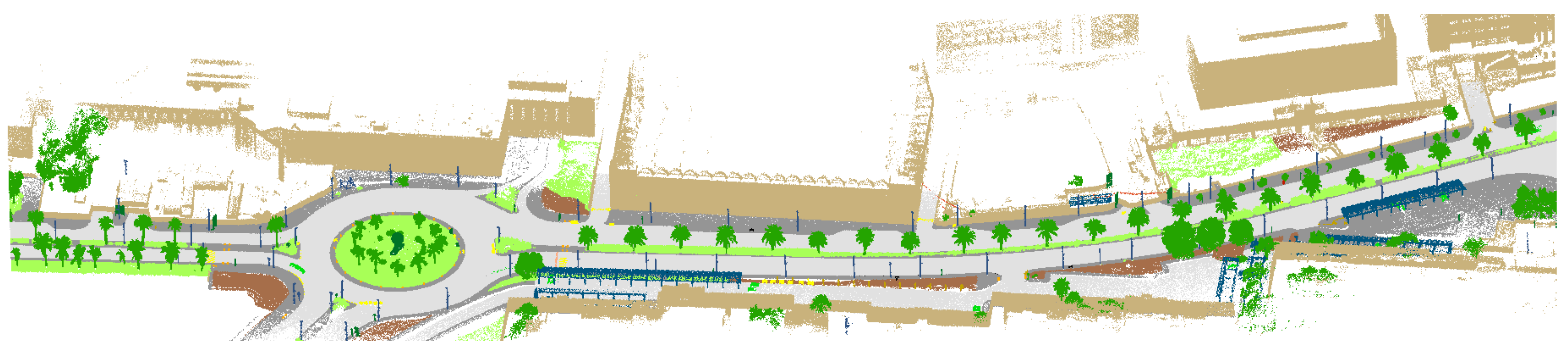
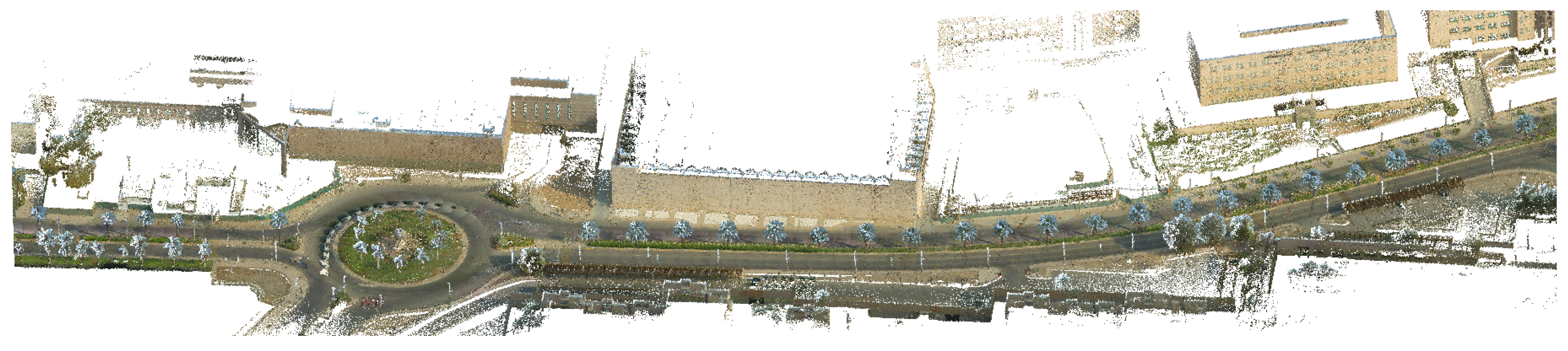
MMS is commonly equipped with high-resolution LiDAR equipment, which can collect dense 3D point clouds while the MMS vehicle moves along the roadway [50,51]. Most of the commercial MMS systems are equipped with positioning and navigation devices (e.g., GNSS receiver and IMU) as well as panoramic camera, so that the collected 3D point cloud can be geo-referenced to local coordinate system (i.e., KSA-GRF17 National Geodetic Reference) and colorized with RGB values. The desired point spacing of the collected point cloud should be within 3 to 5 cm. Once data collection is accomplished, the collected 3D point cloud will undergo pre-processing stage, including fusion of RGB with point cloud, cloud to cloud registration, noise removal, and data trimming, before export them into *.las data format. For suburban, rural, and desert regions, the lower demands for accuracy and detail in the HD map allow features to be extracted using remote sensing or photogrammetry approaches. Recently, GEOSA and KAU collaboratively conducted an MMS survey across the university campus to generate the high-density point cloud utilized for labeling, see Figure 1.

4.2.2. Data Annotation and Labeling

After data collection, these 3D point cloud files in *.las data format are ready to undergo semantic labeling. Instead of conducting manual labeling, AI-assisted point cloud labeling can facilitate an efficient annotation process. For instance, 3DMas [52] adopts the use of Vision Foundation Models (VFMs) [53] to first project the point cloud onto a 2D image, undergo the semantic segmentation using VFMs, and subsequently back project the masks on the point cloud. Furthermore, 3DMas [52] supports text-prompt annotation, allowing users to simply input keywords to isolate and label specific objects; this eliminates the need for manual clicking and drastically improves annotation efficiency. In this way, the point cloud labeling process no longer relies on the tedious polygon tracing or point-by-point identification, instead grouping or merging the segmented masks as the designed semantic labels. Figure 2 shows an example of semantic labeling of MMS point cloud for the KAU campus with 18 classes. The classes, which are going to be labeled, should follow the road objects or items as agreed according to the HD map standard (see Section 4.1). Another approach is to use pre-trained AI models to provide a preliminary label for the point clouds, and then the pre-labeled point cloud can undergo a re-label process to re-adjust the mis-classified labels. Once the point cloud labeling process is accomplished, the resulting point cloud should be cross-checked and examined before AI model training.

4.2.3. Training AI Models for Semantic Segmentation

After sufficient training data are created through point cloud labeling, these data are adopted to train AI models, specifically deep learning models, for semantic segmentation. Data cleaning, such as noise removal, should be conducted prior to training the deep learning models. Adopting off-the-shelf point cloud deep learning models, including PointNet++ [54], KPConv [55], RandLA-Net [56], can be a starting point for initial testing. Subsequent fine tuning of model parameters, e.g., radius, number of neighbor/kernel points, network weights and layers, loss function, feature vectors, etc. are generally required to yield an optimal model. Currently, the challenge for real-world road scene often includes objects with different size and dimension, such as light pole, fence, signage, etc., found in the outdoor environment. A pre-set voxel or grid size, such as those adopted by PointNet++, may over-represent or under-represent certain types of objects, causing inaccurate inference. As a result, customizing existing encoder-decoder architecture [57] and attention mechanism [58] can be carried out to cater these multi-scale objects. Also, pre-trained AI models can also be acquired for transfer learning so as to speed up the process. The AI model training process is certainly an iterative process. The trained models, apart from being used for semantic segmentation of LiDAR point cloud and subsequent map object extraction, can be used to provide initial pre-labeling results for newly collected data and operators can re-adjust those labels to create new training dataset to further reinforce the deep learning models. If the segmentation accuracy yields over 80 to 90%, it is sufficient enough to locate reliable feature points, such as the edge and boundary, so that the corresponding map objects can be extracted in the subsequent stage.

4.2.4. Map Object Modeling and Vectorization

Once the deep learning models are trained, newly collected LiDAR data point clouds will undergo semantic segmentation through model inference. The classified point clouds, which should be embedded with corresponding labels, are utilized to extract key feature points to provide geometric representation of the HD map objects. As aforementioned, the team will adopt OpenDRIVE [45], which is an open file format to describe road networks and objects for HD map. For linear features, such as curblines, road boundary, the key edge points can be obtained from the semantic segmentation results. Then, they are used to fit into corresponding reference lines for each road segment, including straight lines, arcs, spirals and polynomials. Corresponding vertical and cross-sectional geometry, including elevation, superelevation, and lane/road width, can also be modeled and extracted from the segmentation results. For point-based objects, the pole regions of traffic signs or light poles are first extracted via semantic segmentation; a cylindrical fitting algorithm based on RANSAC-based least squares optimization [59] is then applied to retrieve the pole’s centroid and radius as road objects in OpenDRIVE. Road markings are extracted and assigned alongside with the lane information, including number of lanes, width, type, offset, etc. Finally, the topological information, such as the predecessor/successor links, should be assigned between road segments, junctions and lanes, so as to facilitate efficient navigation and route logic simulation.

4.2.5. Inferring Semantic Information Toward HD Map

The resulting HD map from the above-mentioned step only has the geometric map element of the road objects with its associated class label, however, it may not be able to provide further information to ensure efficient navigation and on-road safety. Therefore, the proposed HD map should embed with semantic information that can be found available in existing geospatial data or road signs. The proposed lidar data collection, usually bundled with RGB values collected by camera, can extract semantic information from road signs. By using off-the-shelf text recognition model, such as YOLOv10 [60], which incorporates Optical Character Recognition (OCR), the text information from the road signs or signage can be retrieved. Information such as speed limit, street name, right-of-way control, direction/distance, etc. can be mostly obtained through such a process. These can be subsequently assigned and embedded to each of the road segment and/or lane so that the resulting HD map not only includes the geometric details but also the corresponding semantic meaning or attributes.

4.2.6. AI Infrastructure and Data Security Framework

To operationalize these deep learning workflows while ensuring national infrastructure safety, a hybrid edge-cloud AI architecture is designed to strictly adhere to KSA’s National Data Management Office (NDMO) regulations and the PDPL. The centralized training infrastructure serves as the computational core for heavy training and global map fusion, utilizing high-performance GPU clusters, such as localized NVIDIA A100 or H100 environments integrated with PyTorch (https://pytorch.org/ (accessed on 18 September 2025)), hosted exclusively within secure, in-Kingdom sovereign cloud data centers. Conversely, the decentralized inference infrastructure leverages automotive-grade AI edge modules, such as NVIDIA Jetson Orin, deployed directly within active vehicle fleets. These edge units process incoming camera streams natively to run optimized, quantized versions of 2D detection models (e.g., YOLOv10 [60]) to automatically scrub personally identifiable information, such as pedestrian faces and civilian license plates, before transmission. By performing inference locally, the edge infrastructure transmits only lightweight, encrypted vector metadata over secure APN network lines using Transport Layer Security (TLS 1.3), preventing cloud network congestion and ensuring that raw video streams never leave the vehicle. Furthermore, the centralized repository utilizes Advanced Encryption Standard (AES-256) architectures with strict Role-Based Access Control (RBAC), allowing national automotive manufacturers to interact safely with read-only, vectorized map layers via secure local APIs without compromising national data sovereignty.

4.2.7. Summary

The resulting HD map will be installed in a centralized HD map system with version control mechanism so that they can be used for traffic simulation and further deployed to a fleet of vehicle for evaluation of autonomous driving. Also, such a centralized HD map system can receive any update or change request from the fleet of vehicles for on-the-fly rapid update.

4.3. HD Map Update: A Crowdsourcing Approach

Finally, the last initiative aims to cater the subsequent map updating after the HD maps are formed. Although the Government and local authority may be aware of the new development, road closure, construction work, etc., HD map updating is usually required on-the-fly instead of a prolonged waiting procedure. Therefore, a crowdsourcing map updating approach [61,62] should be adopted here so that cameras installed in vehicles can aid in collecting real-time information to aid in such a task. Specifically, the HD map updating approach can adopt the use of car cameras, coupled with positioning system and AI models, to recognize specific road objects on-the-fly so that the location of these road objects (e.g., traffic signs) can be sent to the server. Similar to the HD map construction using remote sensing and LiDAR data, intensive data collection should be first carried out to collect video images for common road scenes in the Kingdom prior to image labeling and training AI models. Then, the AI models can be equipped in the vision-based map updating system installed in a fleet of vehicles for on-the-fly object recognition. The recognized objects (such as traffic signs, traffic lights, bollards, speed bumps, ramps, etc.) can be compared with those formed in the existing HD maps and any potential changes can trigger an alert for on-the-fly updating of the HD maps.

4.3.1. Equipment and Data Collection

The equipment of HD map update does not rely on the aforementioned mobile LiDAR to collect 3D point cloud data. Instead, the team proposes to adopt a car-front camera as the source of perception to detect any on-road map object change. In this way, any suspicious on-road changes detected by a fleet of vehicles can be compared with the HD map to yield a majority decision. In general, the equipment involved in HD map update includes a high-definition camera installed at the front of the vehicle, alongside with positioning and navigation sensors (i.e., GNSS and IMU) and an on-board AI computing platform. All these sensors are mounted on a vehicle to travel around the study area for data collection, including day time, night time, and different weather scenarios. The collected car-front camera should be able to capture objects including road marking, lane, traffic signs, traffic light, and other on-road vehicles/users. Since positioning and navigation sensors are equipped, the geospatial location of these objects can be estimated through modeling the projective geometry. All these collected video images will subsequently undergo data labeling and training. In terms of data processing volumes, this dynamic approach introduces a vastly lighter infrastructure payload compared to MMS mapping workflows. By processing highly compressed car-front h.264/h.265 video feeds, the streaming raw imagery requires approximately 20 MB to 50 MB of data per driven kilometer. Deployed edge-computing platforms within the vehicle fleets can compress this further by converting visual inputs directly into lightweight bounding-box coordinates and metadata on-the-fly, preventing server-side network congestion during high-frequency map refreshes.

4.3.2. AI Training and Model Inference

Similar to the point cloud-based semantic segmentation, intensive data labeling and annotation must be carried out prior to training AI models for object detection. Point cloud/image labeling tools, i.e., LabelImg or 3DMas [52] will be adopted to draw bounding boxes for the class labels with reference to the map objects defined in the HD map standard. Once annotated, the resulting dataset and its associated metadata are exported for model training. The core image recognition AI model selected for this framework is YOLO [60]. The labeled images will be split into a ratio of 70:15:15, where 70% of them will be used to train the YOLO model weights, 15% will be used to evaluate model performance and tune hyperparameters, and the remaining 15% will be reserved for testing. Subsequently, the fully trained YOLO model is deployed to generate predictions on newly collected imagery, effectively isolating target HD map features along the roadway.
After objects are recognized and detected within an image frame, the pixel coordinates of their respective boundaries are extracted. These pixel positions then undergo a series of geometric projections to estimate their true spatial locations. A number of vital parameters must be determined to facilitate this workflow, including the camera’s intrinsic parameters derived via prior calibration, alongside the vehicle’s instantaneous extrinsic parameters, specifically the GNSS position and IMU-derived orientation vectors. Furthermore, since most physical target dimensions are known a priori, they can be leveraged for depth estimation via perspective projection geometry. Ultimately, a comprehensive coordinate transformation framework is established to map these relative image space detections back into absolute, real-world coordinate systems [63].

4.3.3. Change Detection and Map Updating

The abovementioned car-camera systems and AI models are installed in a fleet of vehicles for real-time road object recognition and detection. For each of the detected objects, the corresponding information, such as object type, coordinates, can be compared with the initial HD map being installed in the vehicle’s AI computing platform. If there exist any discrepancy, such change can be uploaded to the centralized HD map platform as mentioned in Section 4.2.7. So, the centralized HD map platform thus receives a number of change requests from the fleet of vehicles. Map object checking algorithms are then developed to (1) align these changes to the corresponding object in the HD map since they are often mis-aligned, (2) remove or clean any irrelevant requests or anomalies, (3) aggregate these changes for a particular event from multiple sources and assess their reliability, and (4) render a decision to either insert a new map object, erase a map object or modify an existing object (i.e., positional change). Once the change decision is rendered, the corresponding component is updated in the master HD map either automatically or manually. A final manual approval can be considered to safeguard the decision so that the updated section can be pushed to the on-road vehicles’ AI computing platform, ensuring all the AVs or the fleet adopting the latest accurate HD map model.

4.4. Cost-Benefit and Economic Sustainability Analysis

To justify the scalability of the proposed multi-tiered framework across the KSA’s 627,000-km road network, a comparative cost-benefit analysis must be established between traditional dedicated surveying methods and the integrated crowdsourcing model (See Table 3). Traditional high-fidelity HD map creation relies exclusively on survey-grade MMS equipped with premium LiDAR sensors, high-accuracy IMUs, and panoramic camera arrays. The capital expenditure (CapEx) for a single industrial-grade MMS vehicle ranges between US $150,000 and $300,000, supplemented by high operational expenditures (OpEx) driven by specialized survey crews, fuel, and data-processing labor. If the Kingdom were to rely solely on a dedicated fleet of these vehicles for nationwide map generation and continuous maintenance, the financial burden would scale linearly with the geographical expansion, resulting in an unsustainable long-term fiscal model.
The proposed framework successfully mitigates these economic barriers by decoupling baseline map generation from continuous update loops. The initial high-CapEx MMS deployment is strategically restricted to a one-time front-loaded investment to build the core static baseline within targeted innovation zones, such as the KAU campus and major municipal corridors. For the critical maintenance and update phase, the architecture transitions to a decentralized crowdsourcing paradigm. By outfitting mass-transit assets, logistics fleets, and municipal vehicles with low-cost, automotive-grade vision sensors costing under US $100 per unit, the framework transforms existing operational infrastructure into passive data collectors. This crowdsourcing loop operates at a near-zero marginal OpEx because the data collection occurs concurrently with pre-existing daily transit routes. Consequently, this hybrid economic structure balances absolute geometric precision with long-term fiscal viability, providing a sustainable pathway toward scaling national digital infrastructure in complete alignment with the economic diversification goals of Saudi Vision 2030.

5. Strategic Implementation, Governance, and Policy Considerations

5.1. National Alignment and Market Dynamics

The roadmap of Saudi Vision 2030 [16] identifies autonomous driving as one of the key initiatives to build smart, sustainable city by improving human mobility, on-road safety, and traffic efficiency. The vision plan also sets a goal to have at least 15% of on-road public transport vehicles operating autonomously by the time in the Kingdom. The RGA [64] has recently revamped the Saudi Road Code to incorporate the policies related to AVs and updated standards for road design and construction to embrace the upcoming AVs. Also, RGA has laid smart infrastructure, such as road-side sensors and smart communication devices along the roadway, to assist AVs and reduce traffic congestion [65]. These are important information for the real-time and dynamic feature class layers in the HD map, as mentioned in the proposed methodological framework.
According to various market research studies, the AV market in the KSA likely grows to US $2.7 to $6.1 B by 2030 to 2033 [19,20,21]. Currently, there are a number of key players of AV manufacturers, which intend to roll out the driverless services in the Kingdom. Lucid Motors has established the first-ever car manufacturing factory in King Abdullah Economic City, Jeddah, in 2023, backed by the PIF with a total of US $1.5 B to ramp up the production. Ceer Motors, founded in 2022, is a local Saudi electric vehicle brand backed by PIF and Foxconn from Taiwan. Currently, Ceer is pursuing a L3 self-driving capabilities and targets to launch their first vehicle off its production by 2026. WeRide, partnered with Uber, recently evaluates the driverless service in Riyadh and plans to roll out the Robotaxi services (L4) in Riyadh and AlUla in next 12 months [66].

5.2. Socio-Economic Justification and Pilot Validation

Indeed, the autonomous driving ecosystem is still in its infant stage in the KSA despite the aforementioned initiatives. There exist various technical, political, and social concerns to be consider prior to deploying and scaling up the autonomous driving system across the Kingdom. Currently, the global front runners of AVs, such as Waymo and Tesla, mostly deploy their self-driving cars/full driverless services within a well-defined geofence. The recent announcement of pilot phase testing in city of Riyadh in KSA also limits the coverage in seven key areas, including Terminals 2 and 5 at King Khalid International Airport, Roshn Business Front, Princess Nourah University, the North Train Station, and the TGA’s headquarters, with a total of 13 drop-off and pick-up spots [67]. Indeed, setting up a specific geofence for pilot testing can help evaluate the system usage and enhance safety and operational efficiency. On-road safety is always the ultimate concern from the authority, and this is one of the driving forces shifting manual driving to self-driving.
Developing HD map in the Kingdom not only facilitates AV ecosystem but also leads to a better sustainable development of the country. The KSA, though, has successfully reduced the road crash death rate by 35% since 2018, the accident death rate as reported by 2021, i.e., 18.5 per 100 K people, remains above the global average, i.e., 15 [68]. To further reduce 50% of road traffic death by the end of the 2nd United Nations Decade of Action for Road Safety in 2030, intensive effort should be made to improve the on-road user safety that can also reduce the accident-related resource losses, such as vehicle repairs, medical claims, and insurance costs. Thus, scaling up the autonomous driving system requires prior information of the topography, alongside with equipping other smart infrastructure, so that AVs can be deployed in a reliable and safe manner. These can aid in optimizing traffic flow, reducing congestion and carbon emission, minimizing idling, and prolonging the life cycle of infrastructure. Reaping the experience from the front runners, such as Waymo, expanding new robotaxi services in new cities certainly require intensive effort to survey the 3D road scene [11] and generate the HD map, guiding the AVs navigating around the cities.

5.3. Infrastructure Readiness and Standardization Governance

Recent studies have reported, nearly half of the experts and stakeholders believe the infrastructure of AV, including 5G networks, HD map, and EV charging stations, in the Kingdom is not ready and hinder the AV deployment. Among which the 48.4% of experts and AV stakeholders believe the HD map is highly desired to improve the safety but not yet ready and 25.8% of them believe the HD maps have limited readiness [17]. Thus, one of the missing pieces toward the autonomous driving in the KSA is the development of a standardized HD map. As far as the authors are aware, a lack of effort is perceived in the scientific and industrial community. Nevertheless, having a standardized, up-to-date HD map is of importance to facilitate smart mobility, driving safety, and traffic efficiency. Therefore, the academic community, local automakers, and regulatory authorities, including the RGA, TGA, and GEOSA, can take the lead to establish the industrial standard of HD map in the KSA so that these key AV players can ride on the standard and reap benefits for an up-to-date HD map across the country.
The future HD maps in KSA should provide both static and dynamic information of on-road condition to the AVs for efficient navigation and ensuring riding safety. The static information commonly refers to 3D road profile, lane information, curblines, traffic signs, light poles, etc., all of which are with up to centimeter level accuracy. Unfortunately, some of these detailed information may often be found missing or incomplete in traditional topographic maps or National Geospatial Platform under GEOSA. Therefore, approval from the corresponding authority, i.e., GEOSA, can speed up the data collection and formation of the HD maps. General Motors has been recently approved to collect LiDAR and panoramic data for highways by GEOSA in September 2025 [69]. The collected geospatial data not only serve the purpose of building HD maps; they are also being treated as an essential base for building digital twins for the nation as they are the digital representation of the real-world. Digital 3D maps can be built based on the use of these information, since HD maps are usually constructed using 3D point cloud data. On the other hand, the dynamic information, such as traffic light signal, IoT sensors, CCTV cameras, instantaneous incident/accident, etc. are also embedded in the HD maps. These data, coupled with the digital twin platform, can be visualized on-the-fly, providing the authority for real time monitoring and being treated as a digital smart infrastructure.
Also, corresponding HD map updating mechanism through crowdsourcing approach can indeed contribute to real-time update of road network. Such an approach relies on the use of a fleet of vehicles or AVs collecting car-front camera data for real-time HD map-related road object recognition. Therefore, any temporary road closure, route diversion, and construction block-off can be realized through the proposed approach. A real-time road network update can be achieved using such a crowdsourcing mechanism. An updated HD map thus serve as a central nervous system, which help connect the on-road vehicles/AVs, infrastructure, and decision-making system to ensure precise localization, optimize real-time traffic and routing, and assist managing incidents, all of which form as a base of smart road networks. Thus, a better predictive awareness and adaptive traffic control can be achieved through the HD map digital infrastructure.

5.4. Operational Roadmap and Stakeholder Role-Sharing

The core novelty and systemic justification of the proposed architecture lie in its tailored, multi-phase deployment roadmap designed to systematically orchestrate academic, public, and private stakeholders within Saudi Arabia while accounting for concrete operational timelines. To transform this theoretical framework into a functional national asset, operation and governance are envisioned to be shared across a tightly integrated public-private ecosystem over a structured, three-phase chronological timeline. The initial phase, spanning years one and two, focuses on standardization and pilot validation. This period highlights the strategic importance of formalizing a national HD map data standard, an initiative that could ideally be championed through a collaborative regulatory framework involving key authorities, such as the RGA, TGA, and GEOSA.
This initial phase relies on premium, highly accurate MMS workflows to establish the high-fidelity static baseline, with estimated mapping durations tightly bound to the scale of the target environment. Based on an operational collection speed of 40 to 60 km/h and a daily surveying window of six active hours, a localized pilot zone such as the KAU campus can be scanned in less than two business days, requiring an additional three to five working days for AI-powered cloud processing and quality control. For larger municipal deployments, such as the seven designated pilot zones in Riyadh [67], the initial high-fidelity data acquisition and cloud-compilation duration is estimated to span four to six weeks. Operational execution during this pilot phase serves as the critical empirical testing ground to validate sensor alignment, 3D point cloud densities, and initial local AI feature extraction accuracies before broader scaling.
Once the baseline maps for major metropolitan centers are certified, the framework transitions to its second phase during years three and four, shifting toward decentralized edge integration and fleet deployment to guarantee long-term economic sustainability. In this stage, the operational entities responsible for data harvesting expand to commercial and public logistics providers, including national transport fleets, municipal bus networks, and postal services, which are outfitted with low-cost camera arrays and automotive-grade AI edge modules. Simultaneously, local sovereign cloud providers assume operational responsibility for hosting the centralized infrastructure, ensuring that edge-scrubbed telemetry and lightweight vector metadata are ingested and synthesized entirely within localized, in-Kingdom data centers in strict compliance with PDPL regulations.
Finally, in the mature third phase, from year five and beyond, the continuous update loop achieves nationwide optimization to support the fully commercialized autonomous ecosystem. The master global HD map database is maintained as a public utility by the regulatory transport authorities. Localized EV pioneers and AV operators, such as Ceer, Lucid Motors, and WeRide [66], act as both data contributors and end-users. These entities stream anonymized edge detections back into the national repository while simultaneously consuming read-only, vectorized map layers via secure local APIs to safely power consumer AVs across the KSA’s 627,000-km road network.

6. Conclusions

The desire to reduce reliance on the oil industry has prompted the KSA to establish Saudi Vision 2030, contributing to the development of various key sectors, including smart cities, renewable energy, tourism, healthcare, and technology. In alignment with this vision, specifically to address smart cities development, local authorities have revised corresponding policies to open doors for automakers to embrace AV development in the Kingdom. Simultaneously, the PIF is actively investing in and backing manufacturers and startups to establish the necessary foundation for the self-driving era. A critical digital infrastructure, i.e., HD map, should be created to help navigate AVs and ensure on-road user safety. Thus, the proposed strategic perspectives focus on three major initiatives: (1) the establishment of a national HD map data standard to facilitate interfacing and information sharing among different automakers, (2) the development of AI-powered solutions for efficient HD map creation, and (3) the adoption of a crowdsourcing approach to enable near real-time HD map updates. To ensure practical viability, this multi-tiered framework anchors its initial empirical validation within targeted localized pilot zones, specifically the KAU campus and dedicated corridors in Riyadh, providing a scalable blueprint for national expansion. These initiatives can be realized through robust Public-Private Partnerships (PPP) with close collaboration among academic scholars, the AV industry, and regulatory authorities. Furthermore, by integrating localized sovereign cloud architectures, the proposed framework successfully balances high-fidelity mapping demands with strict national data security compliance and long-term fiscal sustainability. In view of the global HD map landscape and market dynamics, the KSA is well-positioned to leverage the experience of frontrunners while carefully considering local concerns to ensure successful and safe deployment.

Author Contributions

Conceptualization, K.F. and W.Y.Y.; methodology, K.F., W.Y.Y., W.F. and M.H.K.; validation, K.F. and W.Y.Y.; software, W.Y.Y., W.F. and M.H.K.; formal analysis, K.F. and W.Y.Y.; investigation, K.F. and W.Y.Y.; resources, K.F., M.A., A.S. and Y.Q.; data curation, K.F., M.A., A.S. and Y.Q.; writing—original draft preparation, W.Y.Y.; writing—review and editing, K.F., W.Y.Y., W.F., M.H.K., M.A., A.S. and Y.Q.; supervision, K.F. and M.A.; visualization, W.Y.Y.; funding acquisition; K.F. and M.A. All authors have read and agreed to the published version of the manuscript.

Funding

This research was funded by the King Abdulaziz University (KAU) Deanship of Scientific Research, grant number: IPP: 1011-137-2025.

Institutional Review Board Statement

Not applicable.

Informed Consent Statement

Not applicable.

Data Availability Statement

No new data were created or analyzed in this study. Data sharing is not applicable to this article.

Acknowledgments

The authors wish to express their sincere appreciation to General Authority for Survey and Geospatial Information (GEOSA), King Abdulaziz University (KAU), Abdullah Ali Alshehri, and Nawaf Abdulaziz Althobaiti for their invaluable contributions to the MMS point cloud data acquisition.

Conflicts of Interest

Author Wenzheng Fan was employed by the company Nova Spatium Inc. and author Man Ho Kwan was employed by the company Lidarist Company Limited. The remaining authors declare that the research was conducted in the absence of any commercial or financial relationships that could be construed as a potential conflict of interest.

Abbreviations

The following abbreviations are used in this manuscript:
ADASAdvanced Driver Assistance System
AIArtificial Intelligence
AVAutonomous Vehicle
FSDFull Self Driving
GEOSAGeneral Authority for Survey and Geospatial Information
GNSSGlobal Navigation Satellite System
HDHigh-Definition
IMUInertial Measurement Unit
KSAKingdom of Saudi Arabia
LiDARLight Detection and Ranging
M&AMerge and Acquisition
MMSMobile Mapping System
NHTSANational Highway Traffic Safety Administration
PIFPublic Investment Fund
PDPLPersonal Data Protection Law
RGARoads General Authority
TGATransport General Authority

References

  1. Li, R.; Han, Y.; Zhou, H. What changes the autonomous vehicle acceptance after COVID-19? Evidence from China. Res. Transp. Econ. 2025, 109, 101498. [Google Scholar] [CrossRef]
  2. Lee, Y.-C.; Hand, S.H.; Lilly, H. Are parents ready to use autonomous vehicles to transport children? Concerns and safety features. J. Saf. Res. 2020, 72, 287–297. [Google Scholar] [CrossRef] [PubMed]
  3. Dicianno, B.E.; Sivakanthan, S.; Sundaram, S.A.; Satpute, S.; Kulich, H.; Powers, E.; Deepak, N.; Russell, R.; Cooper, R.; Cooper, R.A. Systematic review: Automated vehicles and services for people with disabilities. Neurosci. Lett. 2021, 761, 136103. [Google Scholar] [CrossRef] [PubMed]
  4. Mordor Intelligence. Autonomous Car Market Size & Share Analysis—Growth Trends & Forecasts (2025–2030). Available online: https://www.mordorintelligence.com/industry-reports/autonomous-driverless-cars-market-potential-estimation/ (accessed on 16 September 2025).
  5. Fortune Business Insight. Autonomous Vehicle Market Size, Share & COVID-19 Impact Analysis. Available online: https://www.fortunebusinessinsights.com/autonomous-vehicle-market-109045/ (accessed on 29 July 2025).
  6. Bimbraw, K. Autonomous cars: Past, present and future a review of the developments in the last century, the present scenario and the expected future of autonomous vehicle technology. In Proceedings of the 12th International Conference on Informatics in Control, Automation and Robotics (ICINCO), Colmar, France, 21–23 July 2015; Volume 1, pp. 191–198. [Google Scholar]
  7. Waymo. Waymo in Japan. Available online: https://waymo.com/waymo-in-japan/ (accessed on 29 July 2025).
  8. Crikey. Waymo in Talks to Start Testing Self-Driving Taxis in Australia. Available online: https://www.crikey.com.au/2025/10/28/waymo-in-australia-self-driving-taxis-cars-uber/ (accessed on 28 October 2025).
  9. Business Insider. Elon Musk Responds to Tesla FSD Running a Red Light. Available online: https://www.businessinsider.com/elon-musk-tesla-robotaxi-austin-geofenced-intersections-fsd-red-light-2025-5/ (accessed on 30 July 2025).
  10. The Wall Street Journal. Inside the WSJ’s Investigation of Tesla’s Autopilot Crash Risks. Available online: https://www.wsj.com/business/autos/tesla-autopilot-crash-investigation-997b0129/ (accessed on 30 July 2025).
  11. Waymo. The Waymo Driver Handbook: How Our Highly-Detailed Maps Help Unlock New Locations for Autonomous Driving. Available online: https://waymo.com/blog/2020/09/the-waymo-driver-handbook-mapping/ (accessed on 16 September 2025).
  12. NHTSA. Standing General Order on Crash Reporting. Available online: https://www.nhtsa.gov/laws-regulations/standing-general-order-crash-reporting/ (accessed on 18 September 2025).
  13. Electrek. Tesla is Trying to Hide 3 Robotaxi Accidents. Available online: https://electrek.co/2025/09/17/tesla-hide-3-robotaxi-accidents/ (accessed on 18 September 2025).
  14. Lee, T.B. Human Drivers Are to Blame for Most Serious Waymo Collisions. Available online: https://www.understandingai.org/p/human-drivers-are-to-blame-for-most/ (accessed on 18 September 2025).
  15. Forbes. Tesla Robotaxis Average Just 20 Miles a Day—Meanwhile, Where’s Mobileye? Available online: https://www.forbes.com/sites/bradtempleton/2025/07/25/tesla-robotaxis-only-go-20-milesday--meanwhile-wheres-mobileye/ (accessed on 18 September 2025).
  16. Saudi Vision 2030. Available online: https://www.vision2030.gov.sa/en/ (accessed on 18 September 2025).
  17. Shatnawi, I.; Gonzalez, J.N.; Masoud, N. Toward AV-CAV deployment in the Kingdom of Saudi Arabia: A readiness assessment based on expert feedback. Res. Transp. Bus. Manag. 2025, 60, 101378. [Google Scholar] [CrossRef]
  18. GEOSA. General Authority for Survey and Geospatial Information in Saudi Arabia. Available online: https://geosa.gov.sa/en/pages/default.aspx (accessed on 20 September 2025).
  19. IMARC Group. Saudi Arabia Autonomous Vehicle Market Report. Available online: https://www.imarcgroup.com/saudi-arabia-autonomous-vehicle-market/ (accessed on 24 July 2025).
  20. TechSci Research. Saudi Arabia Autonomous Vehicle Market. Available online: https://www.techsciresearch.com/report/saudi-arabia-autonomous-vehicle-market/9440.html (accessed on 24 July 2025).
  21. Grand View Research. Saudi Arabia Autonomous Vehicle Market Size & Outlook. Available online: https://www.grandviewresearch.com/horizon/outlook/autonomous-vehicle-market/saudi-arabia/ (accessed on 16 September 2025).
  22. ResearchAndMarkets. HD Map for Autonomous Vehicles Market 2025–2029. Available online: https://www.researchandmarkets.com/report/global-hd-map-market/ (accessed on 5 August 2025).
  23. Luminar. Luminar Achieves New Wins; Expands Roadmap at CES. Available online: https://investors.luminartech.com/news-events/press-releases/detail/59/luminar-achieves-new-wins-expands-roadmap-at-ces (accessed on 12 September 2025).
  24. NVIDIA. NVIDIA Acquires Deepmap, Enhancing Mapping Solutions for the AV Industry. Available online: https://blogs.nvidia.com/blog/nvidia-deepmap-mapping-drive-platform/ (accessed on 12 September 2025).
  25. Bosch. Automated Driving: Acquisition Gives Boost to Bosch Engineering Work on SAE Level 4 Solutions. Available online: https://www.bosch-mobility.com/en/company/current-news/acquisition-of-map-specialist-atlatec-planned/ (accessed on 12 September 2025).
  26. Woven Planet. Woven Planet Holdings, a Subsidiary of Toyota, to Acquire CARMERA. Available online: https://woven.toyota/en/our-latest/20210715/ (accessed on 12 September 2025).
  27. Forbes. Super Cruise HD Map Developer Ushr Acquired by Dynamic Map Platform of Japan. Available online: https://www.forbes.com/sites/samabuelsamid/2019/02/12/super-cruise-hd-map-developer-ushr-acquired-by-dynamic-map-planning-of-japan/ (accessed on 12 September 2025).
  28. Reuters. Intel’s $15 Billion Purchase of Mobileye Shakes Up Driverless Car Sector. Available online: https://www.reuters.com/article/technology/intels-15-billion-purchase-of-mobileye-shakes-up-driverless-car-sector-idUSKBN16K0Z4/ (accessed on 15 September 2025).
  29. CBC News. German Carmakers Buy Nokia’s HERE Maps Unit. Available online: https://www.cbc.ca/news/business/german-carmakers-buy-nokia-s-here-maps-unit-1.3177859/ (accessed on 12 September 2025).
  30. Tracxn. Technology + Human-in-the-Loop for Deal Discovery. Available online: https://tracxn.com (accessed on 12 September 2025).
  31. MapBox. Maps, Navigation, Search, and Data. Available online: https://www.mapbox.com/ (accessed on 12 September 2025).
  32. Synced. The Golden Age of HD Mapping for Autonomous Diving. Available online: https://syncedreview.com/2018/08/11/the-golden-age-of-hd-mapping-for-autonomous-driving/ (accessed on 11 September 2025).
  33. Hyperspec AI. Are HD Maps a Bottleneck for Self-Driving Cars? Available online: https://www.linkedin.com/pulse/hd-maps-bottleneck-self-driving-cars-hyperspec-ai/ (accessed on 16 September 2025).
  34. SNSInsider. HD Map for Autonomous Vehicles Market Size, Share & Segmentation. Available online: https://www.snsinsider.com/reports/hd-map-for-autonomous-vehicles-market-8336/ (accessed on 19 September 2025).
  35. AI Journal. HD Map for Autonomous Vehicles Market Size is Set to Grow by USD 13.39 Billion from 2024–2028. Available online: https://aijourn.com/hd-map-for-autonomous-vehicles-market-size-is-set-to-grow-by-usd-13-39-billion-from-2024-2028-rise-in-adoption-of-autonomous-vehicles-boost-the-market-technavio/ (accessed on 16 September 2025).
  36. Radar. Radar Pricing. Available online: https://radar.com/pricing/ (accessed on 16 September 2025).
  37. MapBox. MapBox Pricing. Available online: https://www.mapbox.com/pricing/ (accessed on 16 September 2025).
  38. Liu, R.; Wang, J.; Zhang, B. High definition map for automated driving: Overview and analysis. J. Navig. 2020, 73, 324–341. [Google Scholar]
  39. Elghazaly, G.; Frank, R.; Harvey, S.; Safko, S. High-definition maps: Comprehensive survey, challenges, and future perspectives. IEEE Open J. Intell. Transp. Syst. 2023, 4, 527–550. [Google Scholar] [CrossRef]
  40. Houston, J.; Zuidhof, G.; Bergamini, L.; Ye, Y.; Chen, L.; Jain, A.; Omari, S.; Iglovikov, V.; Ondruska, P. One thousand and one hours: Self-driving motion prediction dataset. In Proceedings of the Conference on Robot Learning, London, UK, 8–11 November 2021; pp. 409–418. [Google Scholar]
  41. Chinese Society for Geodesy Photogrammetry and Cartography. Specifications of High Definition Map Production for Automatic Driving System. Available online: https://www.csgpc.org/ueditor/php/upload/file/20230824/1692841981899826.pdf (accessed on 16 September 2025).
  42. Chinese Society for Geodesy Photogrammetry and Cartography. Dynamic Data Interaction Patterns and Contents of High Definition Maps for Autonomous Driving. Available online: https://www.csgpc.org/index.php/detail/23300.html (accessed on 16 September 2025).
  43. Soubielle, J.; Fijalkow, I.; Duvaut, P.; Bibaut, A. GPS positioning in a multipath environment. IEEE Trans. Signal Process. 2002, 50, 141–150. [Google Scholar] [CrossRef]
  44. Chen, P.; Luo, Z.; Jiang, X.; Yin, Z.; Li, J. Maps for autonomous driving: Full-process survey and frontiers. arXiv 2025, arXiv:2509.12632. [Google Scholar]
  45. Dupuis, M.; Strobl, M.; Grezlikowski, H. OpenDRIVE 2010 and beyond–status and future of the de facto standard for the description of road networks. In Proceedings of the Driving Simulation Conference Europe, Paris, France, 9–10 September 2010; pp. 231–242. [Google Scholar]
  46. Navigation Data Standard. The Worldwide Standard for Map Data in Automotive Eco-Systems. Available online: https://nds-association.org/ (accessed on 20 October 2025).
  47. Poggenhans, F.; Pauls, J.-H.; Janosovits, J.; Orf, S.; Naumann, M.; Kuhnt, F.; Mayr, M. Lanelet2: A high-definition map framework for the future of automated driving. In Proceedings of the 21st International Conference on Intelligent Transportation Systems (ITSC), Maui, HI, USA, 4–7 November 2018; pp. 1672–1679. [Google Scholar]
  48. Jullien, J.-M.; Martel, C.; Vignollet, L.; Wentland, M. OpenSCENARIO: A flexible integrated environment to develop educational activities based on pedagogical scenarios. In Proceedings of the 2009 Ninth IEEE International Conference on Advanced Learning Technologies, Riga, Latvia, 15–17 July 2009; pp. 509–513. [Google Scholar]
  49. National Geospatial Platform. Available online: https://www.geoportal.sa/geoportal/ (accessed on 20 September 2025).
  50. Puente, I.; González-Jorge, H.; Martínez-Sánchez, J.; Arias, P. Review of mobile mapping and surveying technologies. Measurement 2013, 46, 2127–2145. [Google Scholar] [CrossRef]
  51. Elhashash, M.; Albanwan, H.; Qin, R. A review of mobile mapping systems: From sensors to applications. Sensors 2022, 22, 4262. [Google Scholar] [CrossRef] [PubMed]
  52. Fan, W.; Lee, C.S.; Kwan, M.H.; Yan, W.Y. Labeling Methods and Systems for 3D Point Cloud Segmentation. U.S. Patent US20250245931A1, 31 July 2025. [Google Scholar] [CrossRef] [PubMed]
  53. Kirillov, A.; Mintun, E.; Ravi, N.; Mao, H.; Rolland, C.; Gustafson, L.; Xiao, T.; Whitehead, S.; Berg, A.C.; Lo, W.-Y.; et al. Segment anything. In Proceedings of the IEEE/CVF International Conference on Computer Vision, Paris, France, 4–6 October 2023; pp. 4015–4026. [Google Scholar]
  54. Qi, C.R.; Yi, L.; Su, H.; Guibas, L.J. Pointnet++: Deep hierarchical feature learning on point sets in a metric space. In Proceedings of the 31st Annual Conference on Neural Information Processing Systems (NIPS), Red Hook, NY, USA, 4–9 December 2017. [Google Scholar]
  55. Thomas, H.; Qi, C.R.; Deschaud, J.-E.; Marcotegui, B.; Goulette, F.; Guibas, L.J. Kpconv: Flexible and deformable convolution for point clouds. In Proceedings of the IEEE/CVF Conference on Computer Vision and Pattern Recognition, Long Beach, CA, USA, 16–20 June 2019; pp. 6411–6420. [Google Scholar]
  56. Hu, Q.; Yang, B.; Xie, L.; Rosa, S.; Guo, Y.; Wang, Z.; Trigoni, N.; Markham, A. Randla-net: Efficient semantic segmentation of large-scale point clouds. In Proceedings of the IEEE/CVF Conference on Computer Vision and Pattern Recognition, Seattle, WA, USA, 13–19 June 2020; pp. 11108–11117. [Google Scholar]
  57. Badrinarayanan, V.; Kendall, A.; Cipolla, R. Segnet: A deep convolutional encoder–decoder architecture for image segmentation. IEEE Trans. Pattern Anal. Mach. Intell. 2017, 39, 2481–2495. [Google Scholar] [CrossRef] [PubMed]
  58. Guo, M.-H.; Lu, C.-Z.; Liu, Z.-N.; Cheng, M.-M.; Hu, S.-M. Visual attention network. Comput. Vis. Media 2023, 9, 733–752. [Google Scholar] [CrossRef]
  59. Yan, W.Y.; Morsy, S.; Shaker, A.; Tulloch, M. Automatic extraction of highway light poles and towers from mobile LiDAR data. Opt. Laser Technol. 2016, 77, 162–168. [Google Scholar] [CrossRef]
  60. Wang, A.; Chen, H.; Liu, L.; Chen, K.; Lin, Z.; Han, J.; Ding, G. Yolov10: Real-time end-to-end object detection. Adv. Neural Inf. Process. Syst. 2024, 37, 107984–108011. [Google Scholar] [CrossRef]
  61. Kim, K.; Cho, S.; Chung, W. HD map update for autonomous driving with crowdsourced data. IEEE Robot. Autom. Lett. 2021, 6, 1895–1901. [Google Scholar] [CrossRef]
  62. Zhang, P.; Zhang, M.; Liu, J. Real-time HD map change detection for crowdsourcing update based on mid-to-high-end sensors. Sensors 2021, 21, 2477. [Google Scholar] [CrossRef] [PubMed]
  63. Leibe, B.; Schindler, K.; Cornelis, N.; Van Gool, L. Coupled object detection and tracking from static cameras and moving vehicles. IEEE Trans. Pattern Anal. Mach. Intell. 2008, 30, 1683–1698. [Google Scholar] [CrossRef] [PubMed]
  64. Roads General Authority. Saudi Road Code. Available online: https://shc.rga.gov.sa/content/roadcodes/en/home.html (accessed on 16 September 2025).
  65. Arab News. How Saudi Arabia Is Using Advanced Automated Systems to Tackle Traffic Congestion. Available online: https://www.arabnews.com/node/2591881/saudi-arabia/ (accessed on 6 October 2025).
  66. WeRide. WeRide Expands into Saudi Arabia with Launch of Robotaxi and More Autonomous Driving Products. Available online: https://ir.weride.ai/news-releases/news-release-details/weride-expands-saudi-arabia-launch-robotaxi-and-more-autonomous/ (accessed on 22 July 2025).
  67. Gulf News. Saudi Arabia Launches Self-Driving Taxis in Landmark Pilot Across Seven Key Locations in Riyadh. Available online: https://gulfnews.com/business/markets/saudi-arabia-launches-self-driving-taxis-in-landmark-pilot-across-seven-key-locations-in-riyadh-1.500208458/ (accessed on 30 July 2025).
  68. WHO. Reducing Road Crash Deaths in the Kingdom of Saudi Arabia. Available online: https://www.who.int/news/item/20-06-2023-reducing-road-crash-deaths-in-the-kingdom-of-saudi-arabia/ (accessed on 24 July 2025).
  69. Saudi Press Agency. GEOSA Grants GM Panoramic Imaging Permit to Support Autonomous Driving. Available online: https://www.spa.gov.sa/en/N2398141/ (accessed on 6 October 2025).
Figure 1. Sample of high-resolution MMS point cloud collected for the KAU campus.
Futuretransp 06 00131 g001
Figure 2. Semantic labeling of the MMS point cloud with 18 classes performed by 3DMas [52].
Futuretransp 06 00131 g002
Table 2. A summary of fundraising for two HD map data providers: MapBox and DeepMap.
RoundMapBox [31]DeepMap [24]
YearFinancial TermInvestorYearFinancial TermInvestor
Pre-Seed/Seed2012USD $0.575 MKnight Foundation2016USD $7 MAndreessen Horowitz, GSR Ventures, and iSeed Ventures
Series A2013USD $10 MFoundry Group2017USD $25 MAccel, Andreessen Horowitz, and GSR Ventures
Series B2015USD $52.6 MDFJ Growth2018USD $60 MNVIDIA’s GPU Ventures, Andreessen Horowitz, Accel,
GSR Ventures, and Robert Bosch Venture Capital
Series C2017USD $164 MSoftBank--Exit in 2021 through M&A by NVIDIA
Series D2020USD $107 MPremji--
Series E2023USD $280 MSoftBank--
Table 3. Comparative cost-benefit and economic sustainability analysis.
Cost ComponentTraditional Dedicated MMS FleetProposed Integrated Framework
Initial CapExHigh (USD $150,000–$300,000 per
specialized surveying vehicle)
Moderate (Front-loaded investment
restricted to localized pilot assets)
Sensor DeploymentProhibitive (Requires scaling expensive,
specialized hardware arrays)
Low (Leverages low-cost, mass-market
vision sensors < USD $100 per vehicle)
Data Processing OpExHigh (Manual vectorization, heavy
edge compute, and high labor hours)
Low (Automated AI-powered cloud
orchestration and edge-scrubbing)
Update Frequency CostLinear Scaling (Every update pass
requires re-driving the route at full cost)
Near-Zero Marginal Cost (Updates are a
passive byproduct of daily transit operations)
Disclaimer/Publisher’s Note: The statements, opinions and data contained in all publications are solely those of the individual author(s) and contributor(s) and not of MDPI and/or the editor(s). MDPI and/or the editor(s) disclaim responsibility for any injury to people or property resulting from any ideas, methods, instructions or products referred to in the content.