
A Comparison of Connected-Vehicle Roughness and Traditional Pavement Condition Index


Abstract
1. Introduction
1.1. Problem Objective
1.2. Literature Review
2. Materials and Methods
2.1. Study Location
2.2. US Roads Dataset
2.3. Connected-Vehicle Roughness Data
2.4. PCI Data
2.5. Data Processing
2.6. Threshold Optimization
2.7. Summary of Processed Data
3. Results
3.1. PCI-IRI Relationship
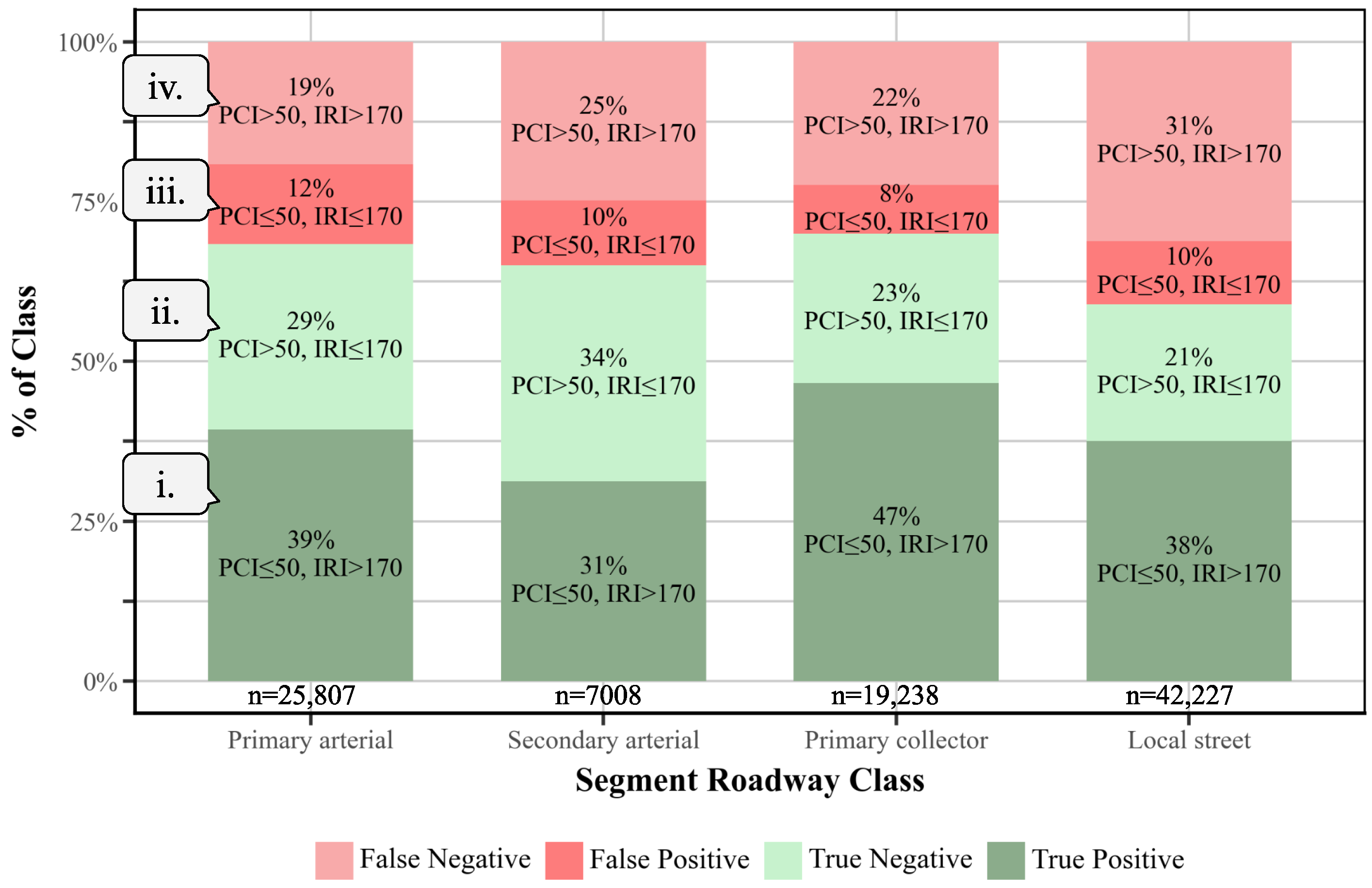
3.2. PCI-IRI Agreement Analysis
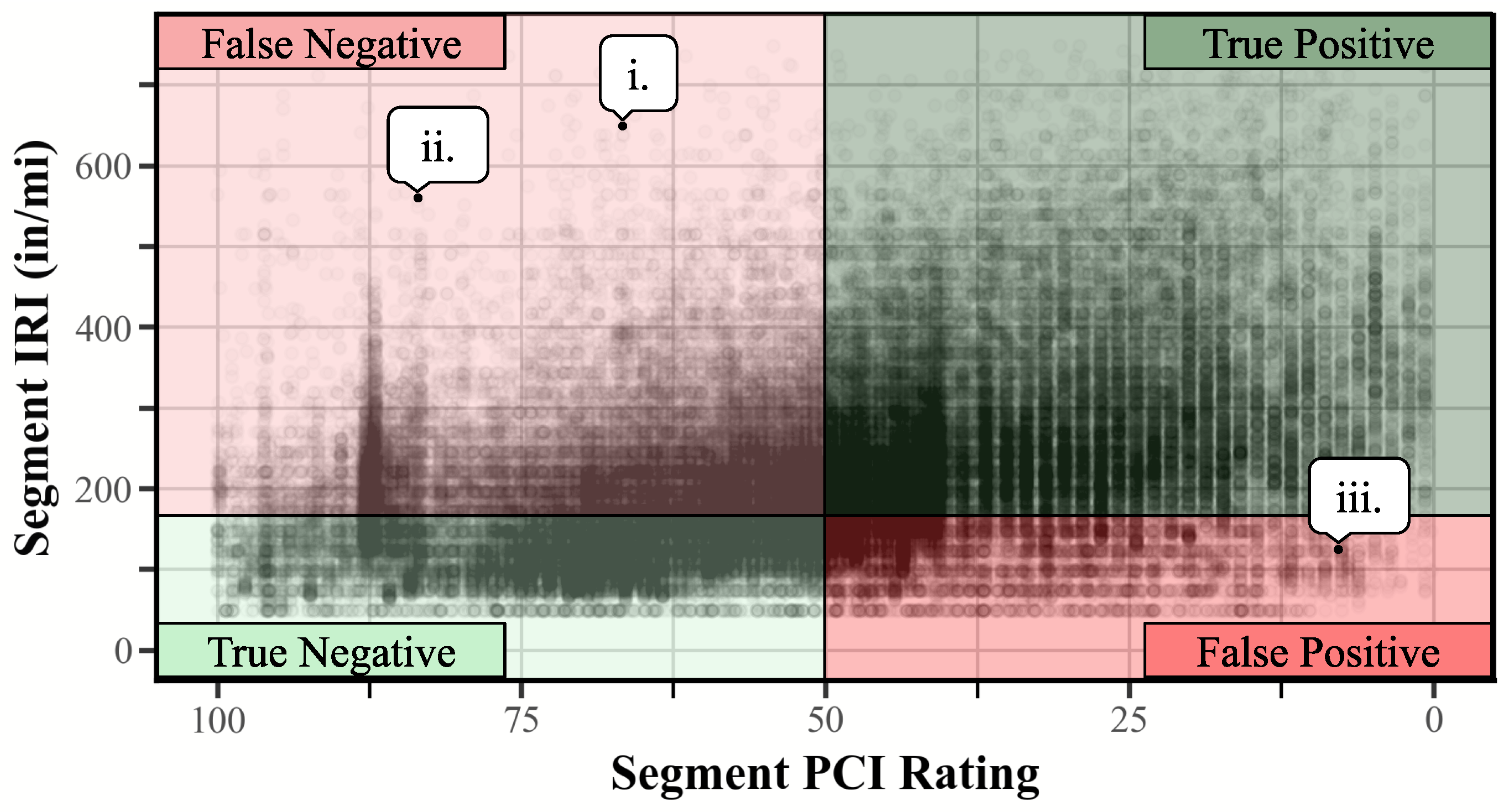
- True Positive (TP): both metrics indicate poor condition.
- True Negative (TN): both metrics indicate good condition.
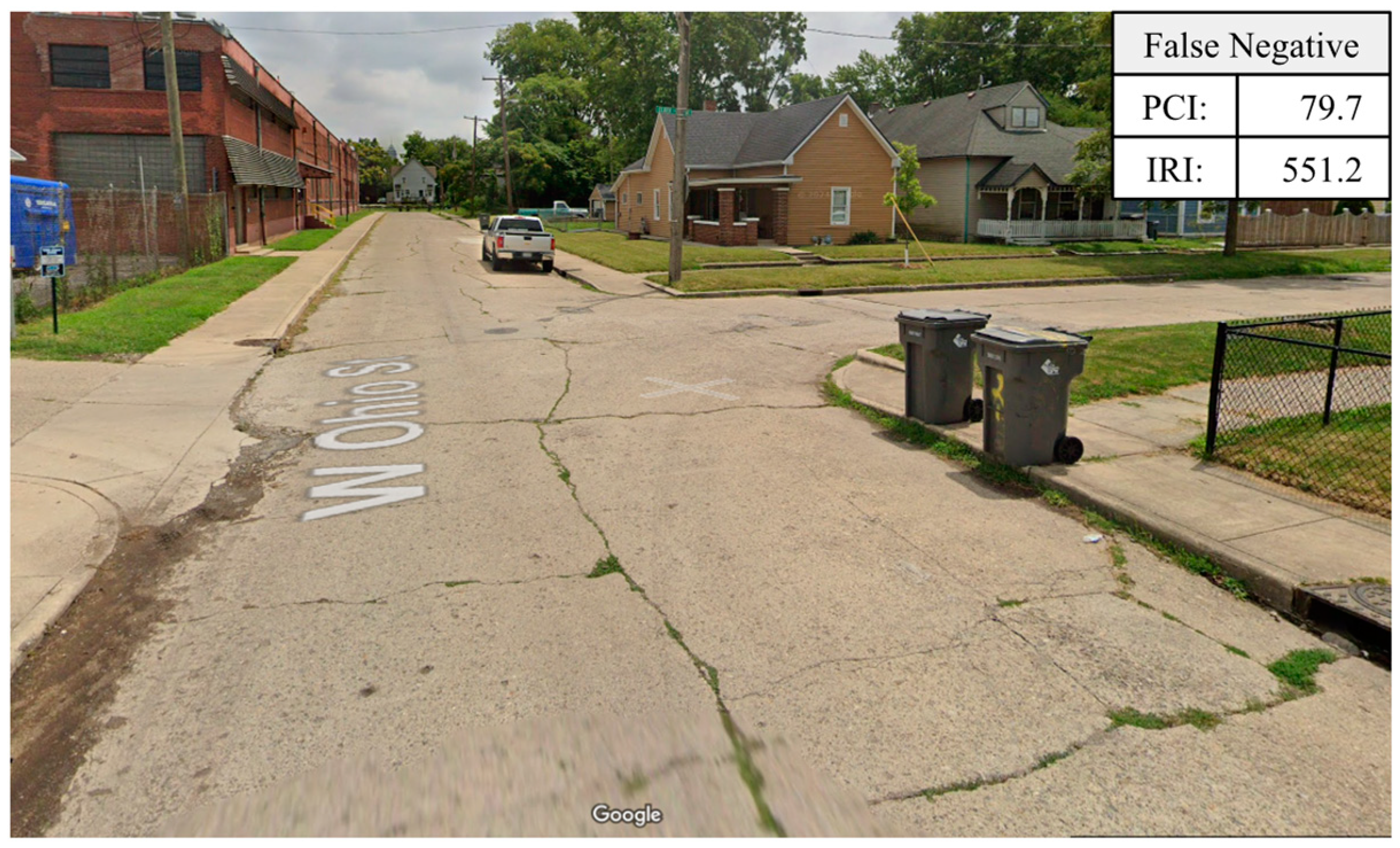
- False Negative (FN): PCI suggests good condition, but IRI indicates a rough surface.
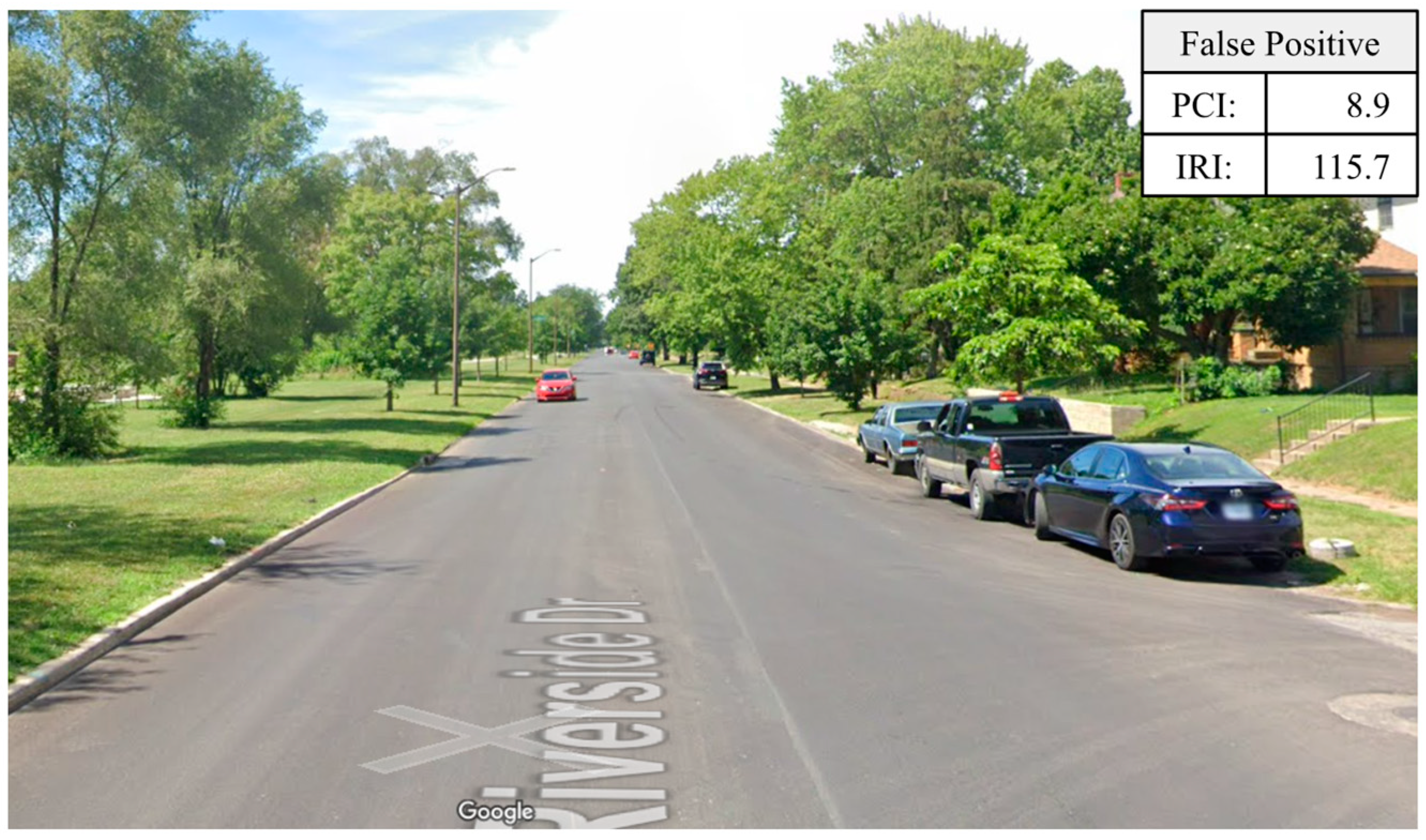
- False Positive (FP): IRI suggests a smooth surface, but PCI indicates poor condition.

3.3. Quality Control Application
4. Discussion and Conclusions
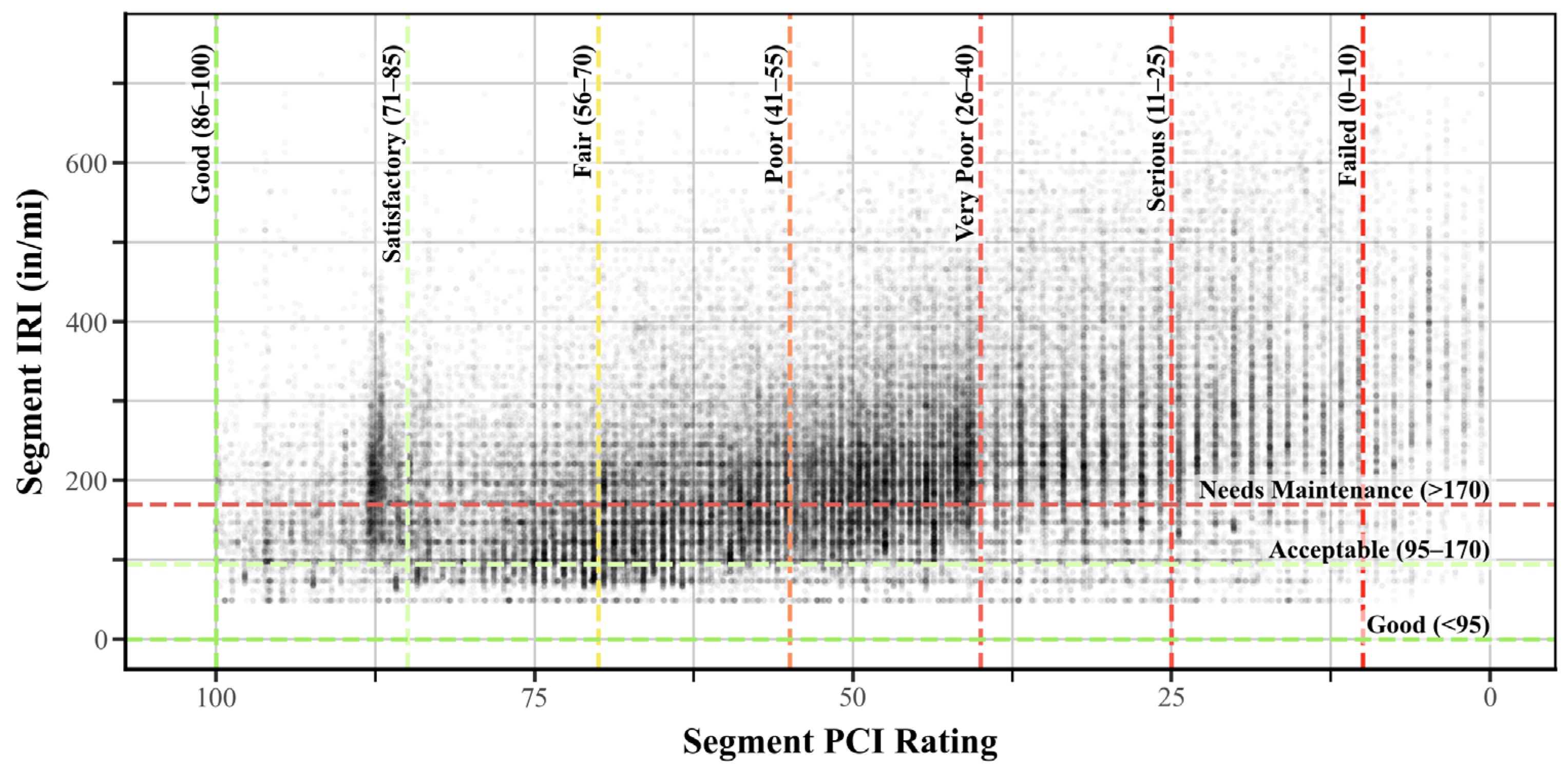
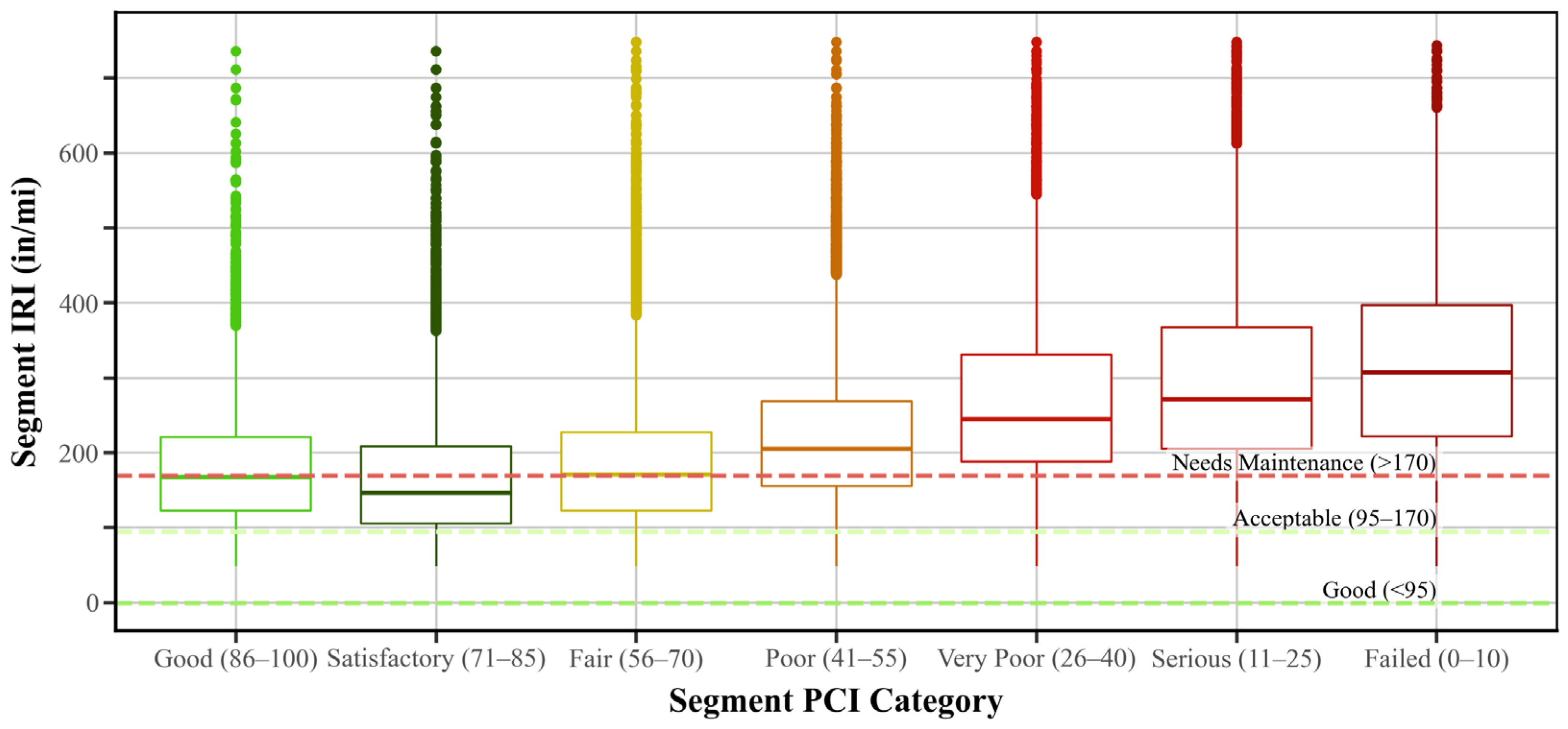
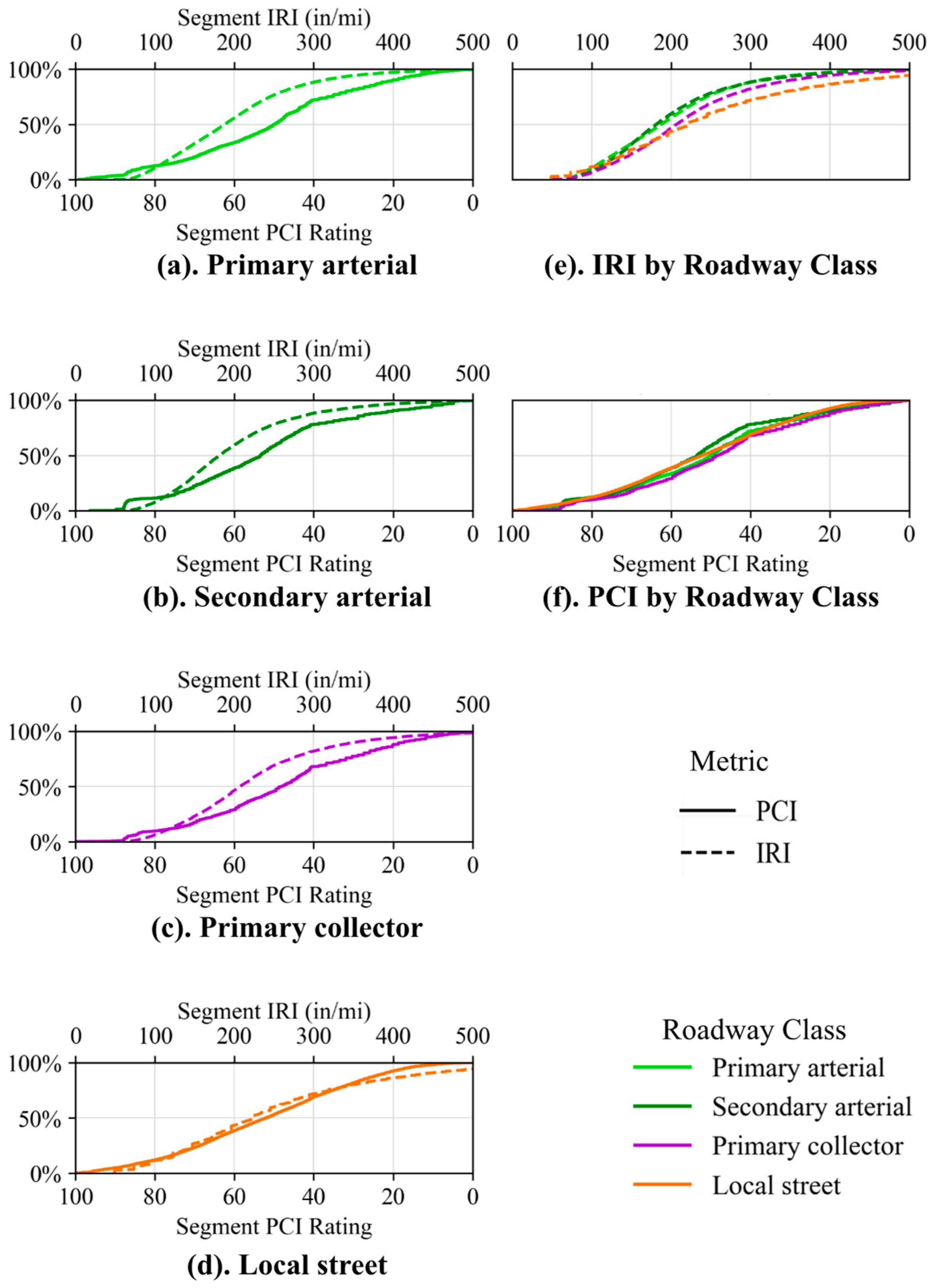
- Classification performance was highest for secondary arterials and primary collectors, as evidenced by the MCC and AUC values (Table 2). While the overall linear correlation (R2 = 0.15) was weak, this is consistent with how these metrics capture different dimensions of pavement degradation. The strength of the classification metrics confirms that IRICVe is a reliable indicator for categorical “needs maintenance” screening, even though it does not linearly track the full range of PCI values.
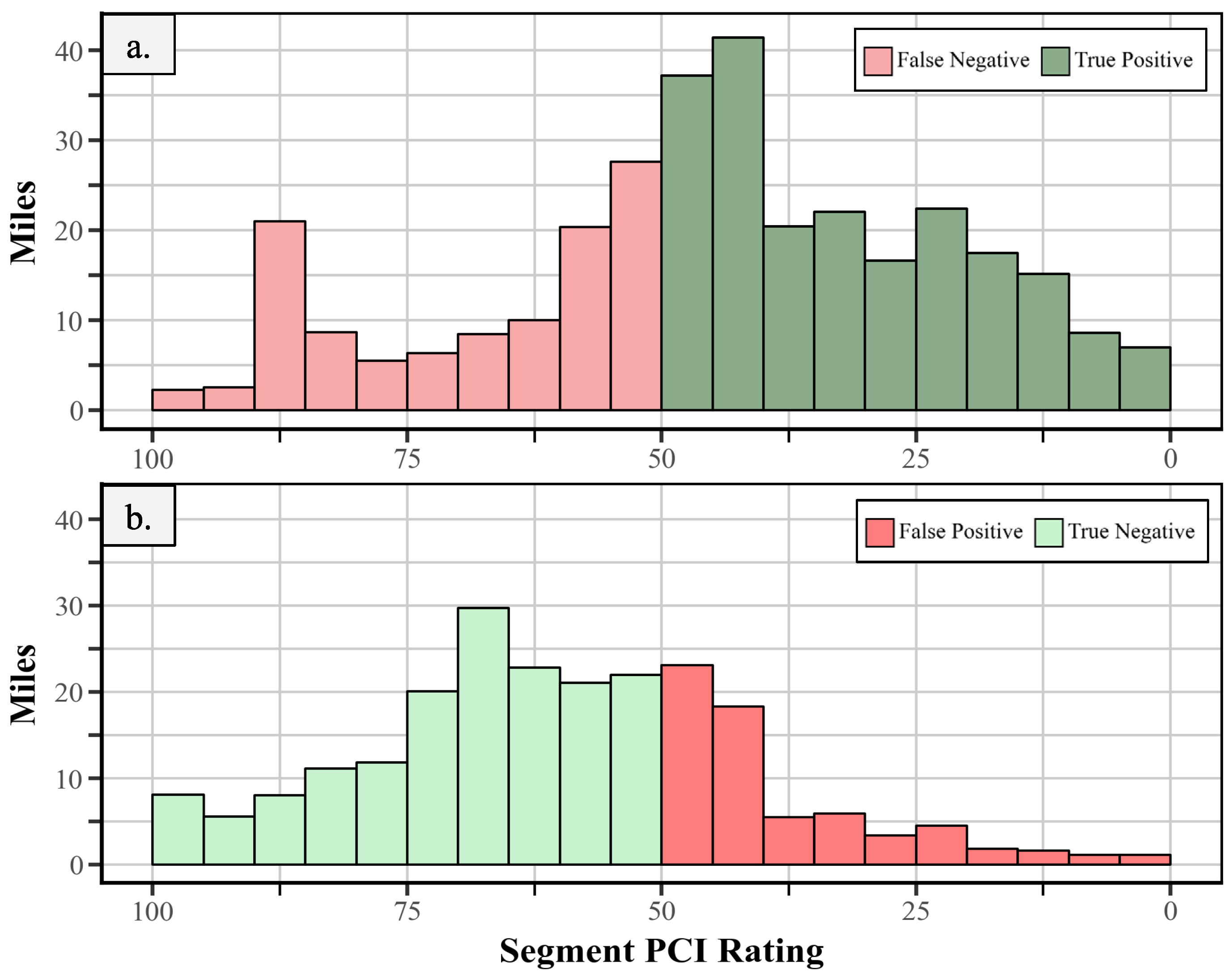
- Threshold optimization identified PCI ≤ 50 as best aligning with the IRI “needs maintenance” category (IRI > 170 in/mi). While this value maximizes the metric agreement within the Marion County dataset, it is intended as a calibration for localized data validation (Figure 9, Figure 10 and Figure 11) rather than a universal predictive rule, which would require diverse inter-agency datasets to minimize the risk of overfitting.
- Systematic biases were observed in both metrics. For instance, a high false-negative rate for PCI values around 87 indicated possible category bias in the dataset (Figure 11), and these segments can be re-evaluated according to the ASTM standards to correct for it if needed. Therefore, agencies can mitigate problems from biased data by combining both metrics: using IRI for large-scale screening and quality control and relying on PCI for diagnosis and treatment planning due to its ability to account for distress type and severity.
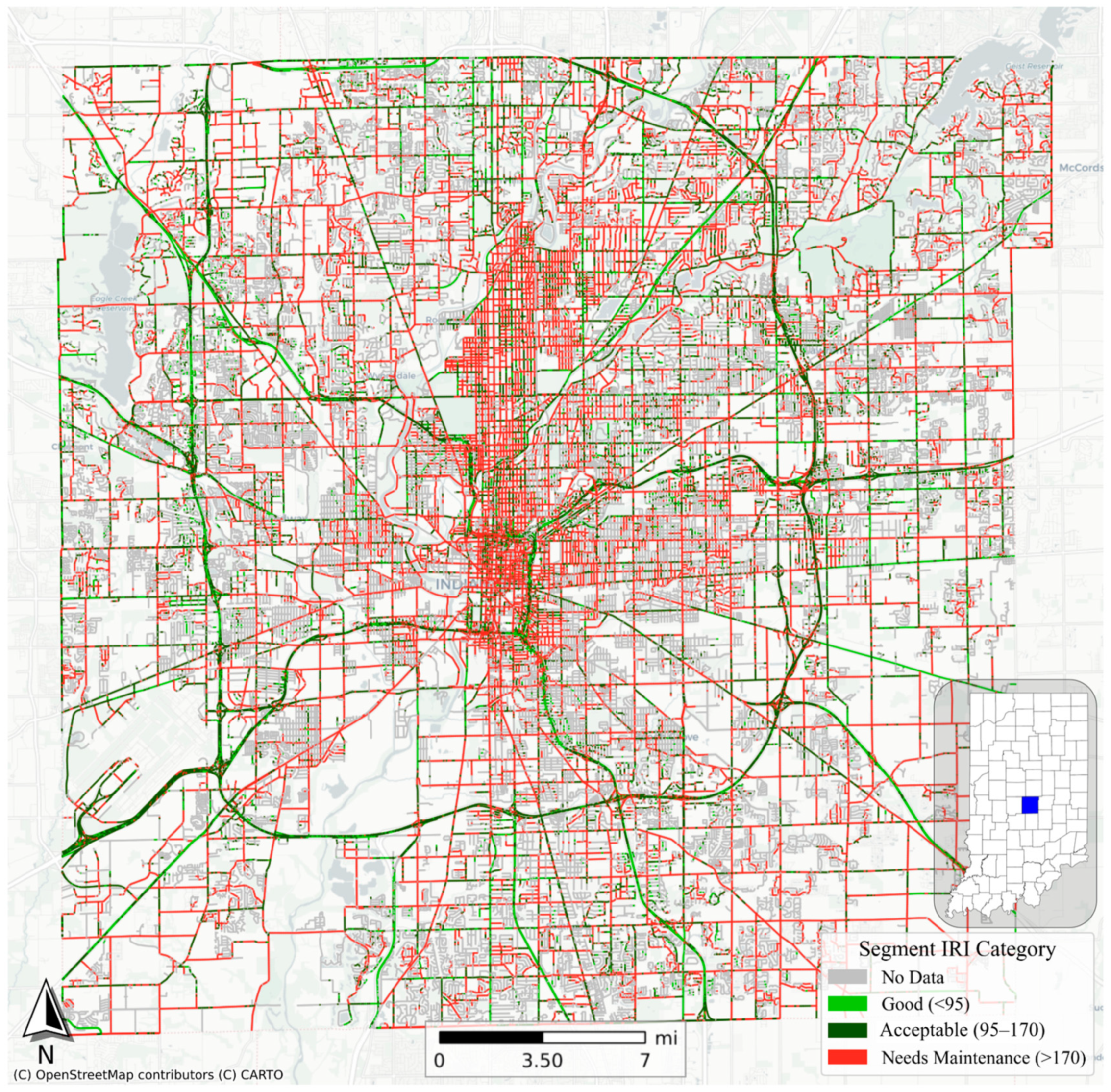
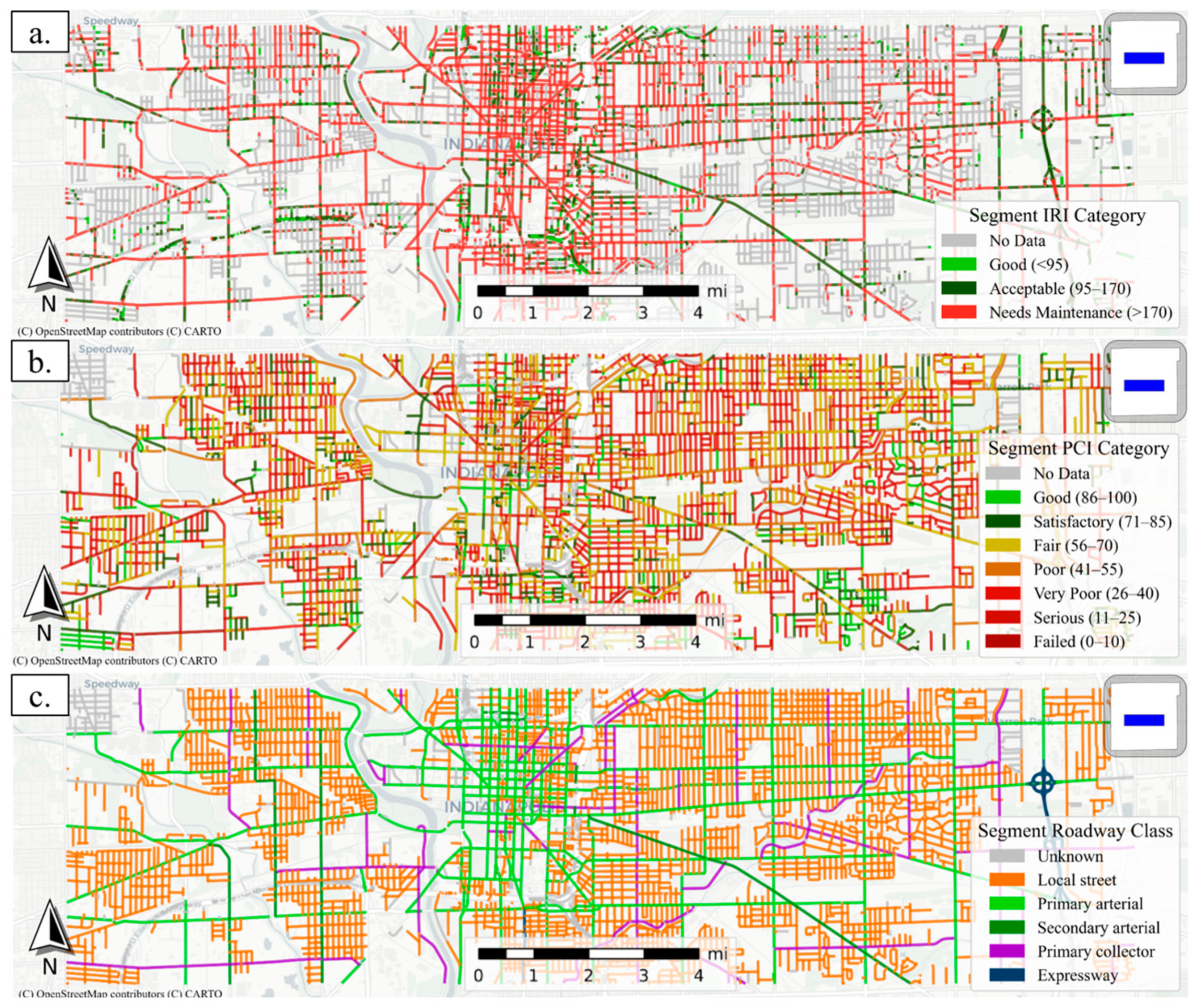
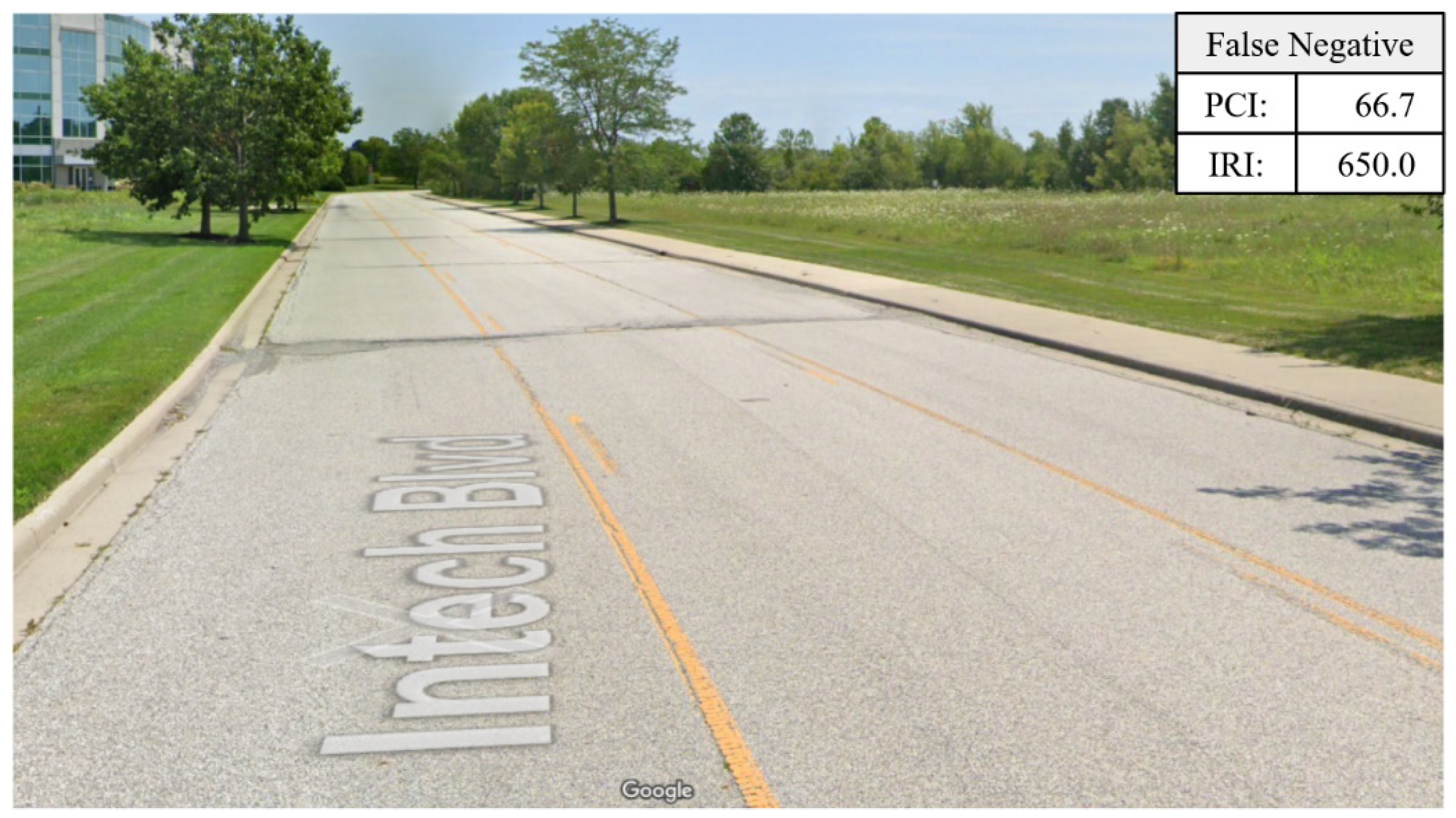
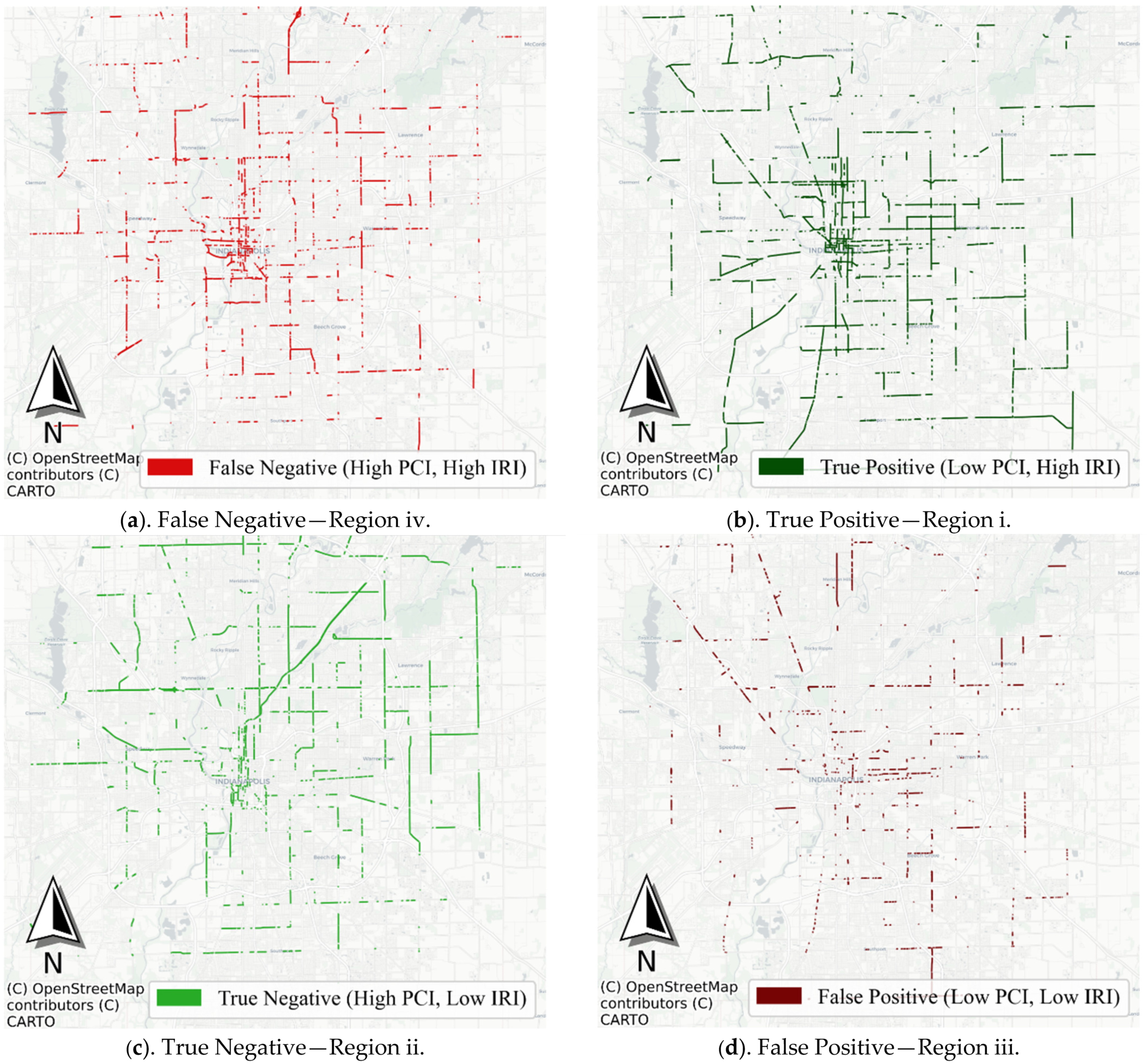
- Finally, and perhaps most promising for immediate implementation, by integrating crowdsourced IRI data into a common database that has traditional PCI data, an agency can very efficiently perform important quality control checks that complement, rather than replace, the use of the PCI data. Figure 12, Figure 13 and Figure 14 provide examples of a small subset of the significant number of discrepancies visible in Figure 8. These inconsistencies may be caused by factors such as systematic bias, human error, or data uncertainty, but all can be detected and addressed through the use of IRICVe data.
Author Contributions
Funding
Institutional Review Board Statement
Informed Consent Statement
Data Availability Statement
Acknowledgments
Conflicts of Interest
Abbreviations
| CV | Connected Vehicle |
| IRI | International Roughness Index |
| IRICVe | CV-estimated IRI |
| PCI | Pavement Condition Index |
| ASTM | American Society for Testing and Materials |
| CNN | Convolutional Neural Network |
| LiDAR | Light Detection and Ranging |
| LTPP | Long-Term Pavement Performance |
| TIGER | Topologically Integrated Geographic Encoding and Referencing |
| OEM | Original Equipment Manufacturer |
| IMU | Inertial Measurement Unit |
| GPS | Global Positioning System |
| FHWA | Federal Highway Administration |
| CFD | Cumulative Frequency Distribution |
| TP | True Positive |
| TN | True Negative |
| FP | False Positive |
| FN | False Negative |
| R2 | Coefficient of Determination |
| MCC | Matthews Correlation Coefficient |
| AUC | Area Under the Curve |
| OLS | Ordinary Least Squares |
References
- Indiana Local Road and Bridge Report. Purdue University Local Technical Assistance Program; Purdue University: West Lafayette, IN, USA, 2024. Available online: https://www.purdue.edu/inltap/resources/2024-08-20-Indiana-Local-Road-and-Bridge-Report---FINAL.pdf (accessed on 16 July 2025).
- Purdue University Local Technical Assistance Program. Asset Management LTAP Portal. Available online: https://inltaptraining.azurewebsites.net/public/asset-management.html#!/home (accessed on 16 July 2025).
- ASTM International. ASTM D6433-20; Standard Practice for Roads and Parking Lots Pavement Condition Index Surveys. ASTM International: West Conshohocken, PA, USA, 2020. [CrossRef]
- U.S. Army Corps of Engineers. PAVER Pavement Management Software. Available online: https://www.paver.colostate.edu/ (accessed on 16 July 2025).
- Llopis-Castelló, D.; Paredes, R.; Parreño-Lara, M.; García-Segura, T. Automatic classification and quantification of basic distresses on urban flexible pavement through convolutional neural networks. J. Transp. Eng. Part B Pavements 2021, 147, 04021063. [Google Scholar] [CrossRef]
- Song, W.; Jia, G.; Zhu, H.; Jia, D.; Gao, L. Automated pavement crack damage detection using deep multiscale convolutional features. J. Adv. Transp. 2020, 2020, 6412562. [Google Scholar] [CrossRef]
- Montgomery, S.; Gkritza, K.; Haddock, J. Factors affecting the accuracy and variability of pavement surface evaluations and ratings. J. Infrastruct. Syst. 2019, 25, 04019009. [Google Scholar] [CrossRef]
- Lu, S.-H.; Lin, J.-D.; Chiou, Y.-S. Analysis and verification results of manual inspection of pavement condition index. Appl. Sci. 2025, 15, 5600. [Google Scholar] [CrossRef]
- Randhawa, S.; Aygün, E.; Randhawa, G.; Herfort, B.; Lautenbach, S.; Zipf, A. Paved or unpaved? A deep learning derived road surface global dataset from Mapillary street-view imagery. arXiv 2024, arXiv:2410.19874v1. Available online: https://arxiv.org/html/2410.19874v1 (accessed on 12 November 2025). [CrossRef]
- Dadashova, B.; Dobrovolny, C.S.; Tabesh, M. Detecting pavement distresses using crowdsourced dashcam camera images. Safe-D UTC/Texas A&M Transportation Institute 2021. Available online: https://vtechworks.lib.vt.edu/server/api/core/bitstreams/9b20748e-c8a5-44fb-83e8-ab211d22d9aa/content (accessed on 12 November 2025).
- World Bank. The International Road Roughness Experiment (IRRE): Establishing Correlation and a Calibration Standard for Measurements; World Bank Technical Paper No. 45; International Bank for Reconstruction and Development: Washington, DC, USA, 1986; Available online: https://documents1.worldbank.org/curated/en/326081468740204115/pdf/multi-page.pdf (accessed on 16 July 2025).
- Federal Highway Administration. Pavements—Inertial Profiler—Pavement (IP); Federal Highway Administration: Washington, DC, USA, 2021. Available online: https://infotechnology.fhwa.dot.gov/inertial-profiler-road-pavement/ (accessed on 16 July 2025).
- Abohamer, H.; Elseifi, M.; Dhakal, N.; Zhang, Z.; Fillastre, C.N. Development of a deep convolutional neural network for the prediction of pavement roughness from 3D images. J. Transp. Eng. Part B Pavements 2021, 147, 04021048. [Google Scholar] [CrossRef]
- De Blasiis, M.R.; Di Benedetto, A.; Fiani, M.; Garozzo, M. Assessing the road pavement roughness by means of LiDAR technology. Coatings 2021, 11, 17. [Google Scholar] [CrossRef]
- Mathew, J.; Desai, J.; Sakhare, R.; Hunter, J.; Bullock, D. Spatiotemporal analysis of pavement roughness using connected vehicle data for asset management. J. Transp. Technol. 2025, 15, 1–16. [Google Scholar] [CrossRef]
- Mahlberg, J.A.; Li, H.; Zachrisson, B.; Leslie, D.K.; Bullock, D.M. Pavement quality evaluation using connected vehicle data. Sensors 2022, 22, 9109. [Google Scholar] [CrossRef]
- Mahlberg, J.A.; Li, H.; Zachrisson, B.; Mathew, J.K.; Bullock, D.M. Applications of using connected vehicle data for pavement quality analysis. Front. Future Transp. 2024, 4, 1239744. [Google Scholar] [CrossRef]
- Llopis-Castelló, D.; Camacho-Torregrosa, F.J.; Romeral-Pérez, F.; Tomás-Martínez, P. Estimation of pavement condition based on data from connected and autonomous vehicles. Infrastructures 2024, 9, 188. [Google Scholar] [CrossRef]
- Mazzi, C.; Carini, C.; Meocci, M.; Paliotto, A.; Marradi, A. Floating car data for road roughness: An innovative approach to optimize road surface monitoring and maintenance. Future Transp. 2025, 5, 162. [Google Scholar] [CrossRef]
- Arhin, S.A.; Noel, E.C. Predicting pavement condition index using international roughness index in Washington DC. Howard University. 2014. Available online: http://d92016.eos-intl.net/eLibSQL14_D92016_Documents/2014-03_IRI-PCI%20Final%20Report.pdf (accessed on 16 July 2025).
- Pramesti, F.P.; Setyawan, A.; Octavian, M.C.; Parnaningrum, K.N. Can we predict the roughness index (IRI) of a road based on its pavement condition index (PCI)? E3S Web Conf. 2023, 445, 1015. [Google Scholar] [CrossRef]
- Hasibuan, R.P.; Surbakti, M.S. Study of pavement condition index (PCI) relationship with international roughness index (IRI) on flexible pavement. MATEC Web Conf. 2019, 258, 03019. [Google Scholar] [CrossRef]
- Park, K.; Thomas, N.; Lee, K. Applicability of the international roughness index as a predictor of asphalt pavement. J. Transp. Eng. 2007, 133, 706–712. [Google Scholar] [CrossRef]
- Madeh Piryonesi, S.; El-Diraby, T.E. Examining the relationship between two road performance indicators: Pavement condition index and international roughness index. Transp. Geotech. 2021, 29, 100441. [Google Scholar] [CrossRef]
- Molinero-Pérez, N.; Montalbán-Domingo, L.; Sanz-Benlloch, A.; García-Segura, T. Dual model for international roughness index classification and prediction. Infrastructures 2025, 10, 23. [Google Scholar] [CrossRef]
- Medina, J.R.; Zalghout, A.; Gundla, A.; Castro, S.; Kaloush, K. Use of time–temperature superposition principle to create pavement performance master curves and relate pavement condition index and international roughness index. Transp. Res. Rec. 2021, 2675, 972–983. [Google Scholar] [CrossRef]
- Shrestha, S.; Pradhananga, R.; Kumar Thapa, S.; Thapaliya, S.; Ram Shrestha, A. Assessment of relationship between asphalt concrete pavement performance indicators: Pavement condition index and RoadRoid based international roughness index. Int. J. Eng. Technol. 2024, 1, 191–201. [Google Scholar] [CrossRef]
- Elhadidy, A.A.; El-Badawy, S.M.; Elbeltagi, E.E. A simplified pavement condition index regression model for pavement evaluation. Int. J. Pavement Eng. 2019, 22, 643–652. [Google Scholar] [CrossRef]
- Adeli, S.; Najafi Moghaddam Gilani, V.; Kashani Novin, M.; Motesharei, E.; Salehfard, R. Development of a relationship between pavement condition index and international roughness index in rural road network. Adv. Civ. Eng. 2021, 2021, 6635820. [Google Scholar] [CrossRef]
- Google. US Roads Dataset. Google Cloud Console. Available online: https://console.cloud.google.com/marketplace/product/united-states-census-bureau/all-roads?hl=en&inv=1&invt=Ab27_Q (accessed on 16 July 2025).
- Agebjär, M.; Zetterqvist, G.; Gustafsson, F.; Wahlström, J.; Hendeby, G. Road Roughness Estimation via Fusion of Standard Onboard Automotive Sensors. In Proceedings of the 2025 28th International Conference on Information Fusion (FUSION), Rio de Janeiro, Brazil, 7–11 July 2025; Available online: https://www.niradynamics.com/hubfs/FUSION_2025___Nira%205.pdf (accessed on 25 July 2025).
- Federal Highway Administration; Office of Highway Policy Information. Highway Statistics: Chapter 7; Federal Highway Administration: Washington, DC, USA. Available online: https://www.fhwa.dot.gov/policyinformation/pubs/hf/pl11028/chapter7.cfm (accessed on 16 July 2025).
- U.S. Department of Transportation; Federal Highway Administration. Highway Functional Classification: Concepts, Criteria and Procedures, 2023 Edition; Federal Highway Administration: Washington, DC, USA, 2023. Available online: https://rosap.ntl.bts.gov/view/dot/72430/dot_72430_DS1.pdf (accessed on 16 July 2025).
- Thompson, A.; Desai, J.; Bullock, D.M. Evaluation of connected vehicle pavement roughness data for statewide needs assessment. Infrastructures 2025, 10, 248. [Google Scholar] [CrossRef]
- PPRA/RoadResource.org. PCI Pavement Rating Categories (Excellent, Good, Fair, Poor); Pavement Preservation & Recycling Alliance: Nationwide, OH, USA. Available online: https://roadresource.org/toolbox/criteria (accessed on 5 February 2026).
- Western Transportation Institute. PCI Value Classification Table (0–100) for Pavement Condition Categories; Western Transportation Institute: Bozeman, MT, USA, 2009; p. 105. Available online: https://westerntransportationinstitute.org/wp-content/uploads/2016/12/ec135.pdf (accessed on 5 February 2026).
- Fugro Roadware/NCTCOG. Pavement Condition Index (PCI) Distress and Rating Categories; North Central Texas Council of Governments: Arlington, TX, USA, 2016; p. 94. Available online: https://www.nctcog.org/getmedia/5bf9e131-e962-49e6-b639-d36e37d92715/PavementAnalysis.pdf (accessed on 5 February 2026).





| Roadway Class | Asphalt | Concrete | Total |
|---|---|---|---|
| Primary Arterial | 516.1 | 1.8 | 548.1 |
| Secondary Arterial | 140.2 | 0.2 | 141.4 |
| Primary Collector | 384.8 | 0.6 | 387.4 |
| Local Street | 844.6 | 12.2 | 870.8 |
| Total | 1900.7 | 14.7 | 1963.6 |
| Roadway Class | MCC | AUC | R2 |
|---|---|---|---|
| Primary Arterial | 0.37 | 0.74 | 0.18 |
| Secondary Arterial | 0.33 | 0.75 | 0.21 |
| Primary Collector | 0.40 | 0.77 | 0.21 |
| Local Street | 0.21 | 0.69 | 0.15 |
| Total | 0.30 | 0.71 | 0.15 |
Disclaimer/Publisher’s Note: The statements, opinions and data contained in all publications are solely those of the individual author(s) and contributor(s) and not of MDPI and/or the editor(s). MDPI and/or the editor(s) disclaim responsibility for any injury to people or property resulting from any ideas, methods, instructions or products referred to in the content. |
© 2026 by the authors. Licensee MDPI, Basel, Switzerland. This article is an open access article distributed under the terms and conditions of the Creative Commons Attribution (CC BY) license.
Share and Cite
Thompson, A.; Desai, J.; Bullock, D.M. A Comparison of Connected-Vehicle Roughness and Traditional Pavement Condition Index. Future Transp. 2026, 6, 47. https://doi.org/10.3390/futuretransp6010047
Thompson A, Desai J, Bullock DM. A Comparison of Connected-Vehicle Roughness and Traditional Pavement Condition Index. Future Transportation. 2026; 6(1):47. https://doi.org/10.3390/futuretransp6010047
Chicago/Turabian StyleThompson, Andrew, Jairaj Desai, and Darcy M. Bullock. 2026. "A Comparison of Connected-Vehicle Roughness and Traditional Pavement Condition Index" Future Transportation 6, no. 1: 47. https://doi.org/10.3390/futuretransp6010047
APA StyleThompson, A., Desai, J., & Bullock, D. M. (2026). A Comparison of Connected-Vehicle Roughness and Traditional Pavement Condition Index. Future Transportation, 6(1), 47. https://doi.org/10.3390/futuretransp6010047