1. Introduction
Metropolitan Manila, also known as the National Capital Region (NCR), is located on Luzon Island in the Philippines. It has an approximate population of 13 million (
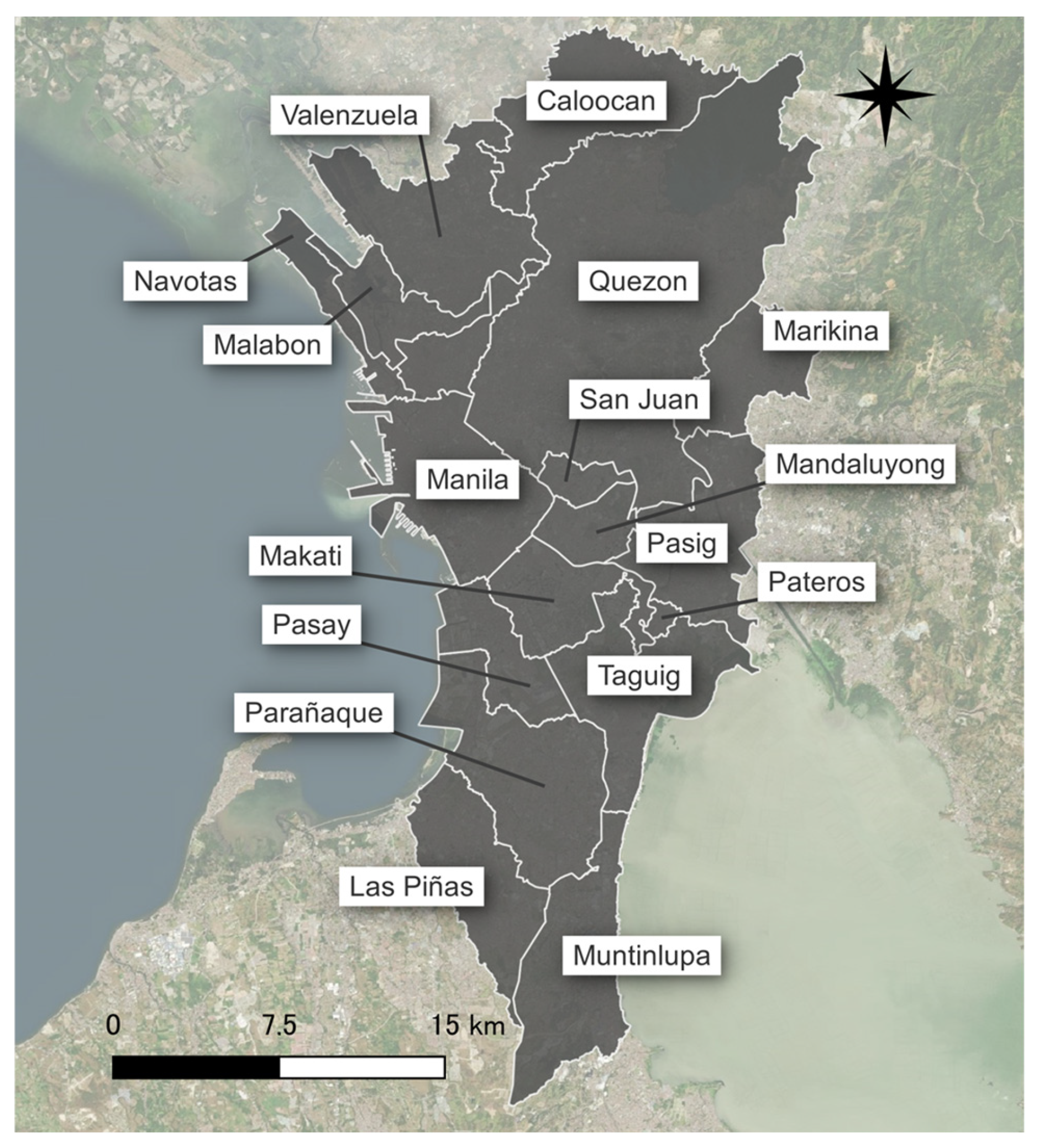
Table 1). It consists of 17 Local Government Units (LGUs), including Caloocan, Las Piñas, Makati, Malabon, Mandaluyong, Manila, Marikina, Muntinlupa, Navotas, Parañaque, Pasay, Pasig, Quezon, San Juan, Taguig, Valenzuela, and Pateros (
Figure 1). Each LGU functions as an independent city/municipality with its local government. Each also has its unique transportation challenges and opportunities. Another notable key agency for NCR is the Metropolitan Manila Development Authority (MMDA). It is a government agency responsible for planning, monitoring, and coordinating services within Metro Manila. The region was selected for this study due to its severe traffic congestion. According to the 2023 TomTom Traffic Index, Metro Manila has the worst traffic congestion globally, with the longest average travel time for a 10 km route among 387 cities across 55 countries [
1].
According to a 2022 report by the Japan International Cooperation Agency (JICA), daily economic losses in Metropolitan Manila are estimated at
$59 million. If left unaddressed, this figure could rise to
$92 million per day by 2035 [
2]. In response, the Philippine government has placed strong emphasis on enhancing public transportation systems and leveraging Information and Communication Technology (ICT) to advance smart mobility. These initiatives align with the country’s broader vision of smart city development, with the goal of improving transport efficiency, accessibility, and sustainability. In this research, smart mobility is defined as the integration of Information and Communication Technology (ICT) to optimize public transportation, active mobility, and urban traffic flow, while enhancing government data sharing practices to improve the efficiency, accessibility, and sustainability of urban transport systems.
Assessing the readiness and performance of smart mobility in Metropolitan Manila’s 17 Local Government Units (LGUs) is critical for tracking progress and guiding effective policy implementation. Existing global indices often fail to capture the unique realities of developing countries, where economic and cultural factors shape transportation systems differently from those in developed contexts. Thus, a localized framework is essential to accurately measure smart mobility in the Philippines and to address its persistent urban congestion challenges.
This study aims to develop and compute a Smart Mobility Index (SMI) tailored to the 17 LGUs of Metropolitan Manila. The index will identify strengths and weaknesses across LGUs, provide benchmarks for progress, and enable evidence-based policy guidance. Tracking indicator values over time will allow for assessment of mobility improvements and facilitate meaningful comparisons with other cities, creating opportunities to adopt best practices from higher-performing counterparts. Moreover, the study will evaluate the applicability of the leapfrog concept, which involves bypassing traditional mobility development stages in favor of advanced, transit-oriented, and technology-driven solutions. Additionally, the research will propose a smart mobility development framework and generate policy recommendations tailored to the Philippine context.
2. Literature Review
2.1. Fundamental Smart Mobility Framework
In their groundbreaking work on smart cities, Giffinger et al. [
3] offer a very comprehensive vision of smart mobility, which they consider to be a fundamental pillar of the smart city. The authors conceptualize smart mobility as a mobility system that is above all accessible (high local accessibility due to a dense network and efficient intra-urban connections). It also has to be efficient, safe, sustainable, and technologically enabled, contributing directly to the city’s long-term development. This view was later shared by Neirotti et al. [
4]. The latter also place greater emphasis on the importance of ICTs in resolving the problems posed by a more traditional view and understanding of transport networks. However, we can temper this perception by looking at the work of Federico Cugurullo [
5], which highlights several weaknesses of the smart city. It is important to remember that smart cities are often “forced assemblages of incompatible elements” and that the gap between sometimes idealized expectations and the reality of urban society can be staggering. In a political and social context as complex as that of Metro Manila, it is important to bear in mind the limitations of digital tools and to rely on concepts that are easily implementable and not entirely dependent on technology.
2.2. Similar Indices in the Litterature
The existing literature underscores the importance of developing indicators to assess smart mobility. While numerous studies have evaluated mobility solutions in developed regions, such as those by Orlowski et al. [
6] and Battarra et al. [
7] in European cities, and that of Pop et al. [
8], who advocate for a standardized global framework, these approaches often fail to address the specific challenges of developing nations. Munhoz et al. [
9], for example, highlight governance and technical solutions as crucial aspects of urban mobility. In the Philippines, local studies (Ramos et al. [
10,
11]) acknowledge progress toward smart city development, but emphasize the need for stronger infrastructure, effective data management, and robust policy support. However, these conclusions can be applied to many existing cases and do not seem to provide a comprehensive view of the current situation and the complexity of the options to be developed. Furthermore, Cugurullo’s conclusions [
5] also call for the development of a more comprehensive method and a more localized index. Although they do not explicitly propose an index, Yigitcanlar et al. [
12] propose the following model in their work: input (the city as an asset), followed by process (the “drivers”: community, technology, and politics), finally followed by output (the “desired outcomes”: productivity, sustainability, accessibility, and well-being). Among the desired outcomes, accessibility is the one that directly affects mobility. By analogy, we could derive indicators such as the coverage rate of transport networks (physical + digital) or the average time to access mobility infrastructure. In the case of Metro Manila, physical accessibility must be a primary factor, as it is necessary for digital development in the second phase.
2.3. Smart Mobility in Developing Countries
Regional and international collaborations further demonstrate the growing importance of smart mobility. The UNESCAP [
13] highlights the increasing application of ICT-based mobility solutions in Southeast Asian cities to address traffic congestion and underscores the role of regional cooperation in ensuring effectiveness. Similarly, the Asian Development Bank [
14] has emphasized intelligent transport systems, support for electric vehicle adoption, and the use of digital platforms in transport project planning and evaluation. These initiatives reflect the Philippines’ commitment to advancing smart mobility through collaborative efforts with international and regional partners. However, these reports also highlight a fundamental difference in perception of the concept of smart mobility between developed countries, where the role of ICT tends to be relativized [
4,
11], and developing countries, where it can sometimes be perceived as an end in itself and a functional solution. In their article, Savithramma et al. [
15] specifically mention this gap in understanding and emphasize the need for developing countries to prioritize the development of fundamental transport network infrastructure such as traffic signal management. For this reason, we will also include this factor in our index for LGUs. In their excellent article, Tan et al. [
16] provide a comprehensive list of potential barriers to the development of smart mobility in developing countries. Among the most significant obstacles are a lack of basic infrastructure, institutional fragmentation, and low digital literacy (or a lack of human capital and skills). The lack of funding and sources of financing is also a recurring problem that is often mentioned, as in the work of Nguyen et al. [
17]. The numerous difficulties highlighted in the aforementioned writings will also be one of the reasons why, as part of this study, we will conduct a series of interviews with professionals and officials in the sector for the metropolis, with the aim of confirming or refuting the presence of these various obstacles in Metro Manila.
2.4. Leapfrogging
However, the limitations to development cited in the previous section should not be perceived as an absolute barrier to development, nor should the actual limitations of technology become an obstacle to the development of innovative solutions. Also, with a view to integrating our index and, more generally, this study in the most comprehensive way possible, we will simultaneously develop a reflection on the possibilities and advantages of leapfrogging. The concept is defined, for example, as “bypassing stages in capability building or investment through which countries were previously required to pass during the process of economic development” by Edward Steinmueller [
18]. In another article, Cavoli et al. [
19] conceptualize leapfrogging in urban mobility as the capacity of rapidly urbanizing Sub-Saharan African cities to bypass the conventional car-dependent development path and transition directly to sustainable and inclusive mobility systems. While the authors do not frame their argument under the technical rubric of “smart mobility”, the implication and concept could be extended to the case of Metro Manila. Similarly, in his thesis, Anteneh Getnet Dagnachew [
20] describes leapfrogging as a solution aimed directly at developing a highly decarbonized society that is independent of heavy individual vehicles.
2.5. Research Originality
As mentioned above, the various studies conducted to date on the development and applicability of smart mobility primarily concern developed cities and regions. Although studies also exist for cases in developing countries, the work remains more theoretical and offers even fewer practical index solutions. Also, the approach generally proposed by the various indices compares several cities, which is not what we are looking for here. Our index will therefore stand out in terms of its use and will seek to provide insights into the levels of smart mobility development within a single metropolitan area. Furthermore, in our work, we seek to develop indicators based on and constructed from the opinions of urban planning professionals, in addition to using readily available data. This particular approach should enable us to propose a more comprehensive and achievable index in the context of developing territories.
3. Methodology
3.1. General Framework
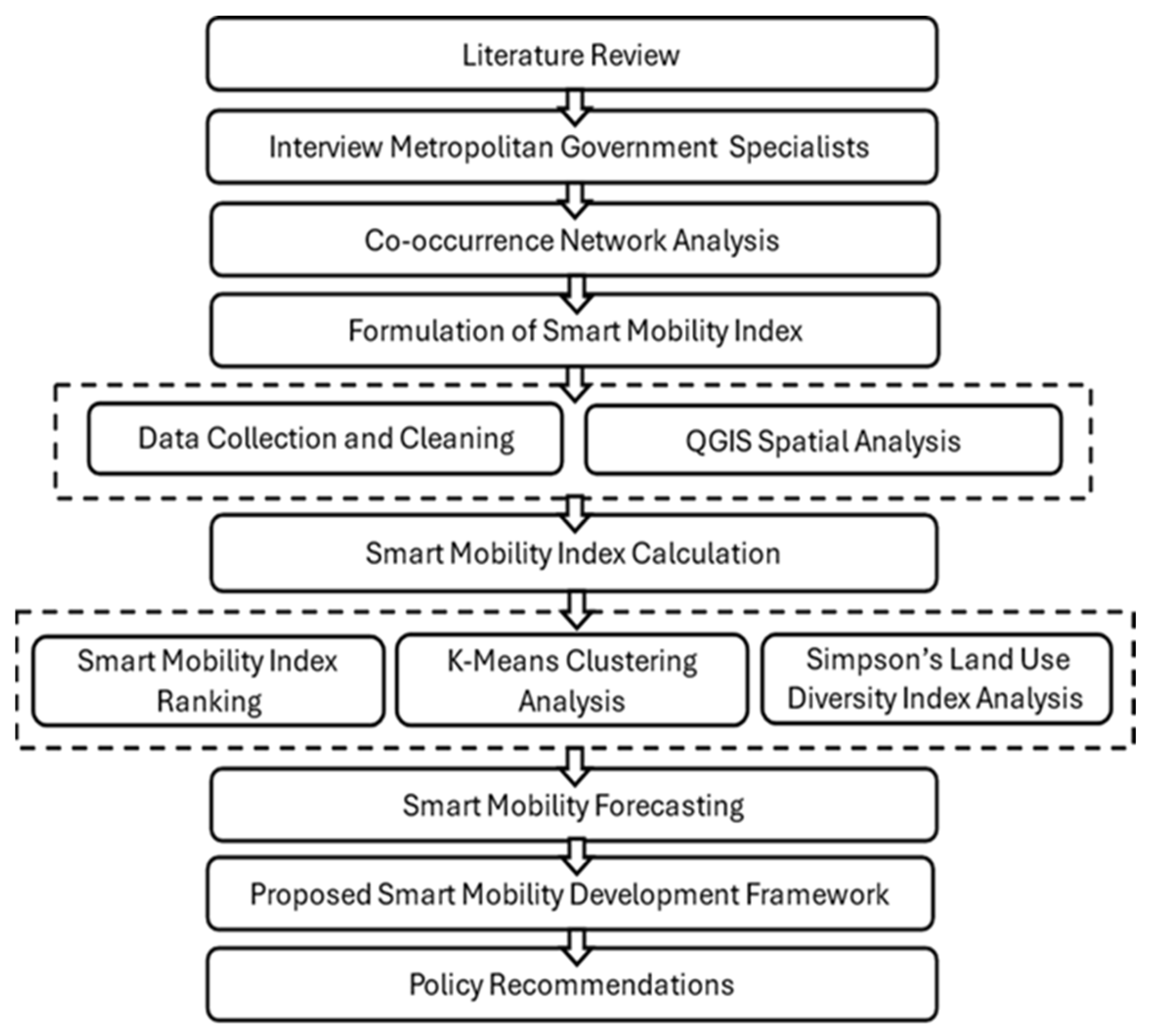
This study followed a structured research flow, as shown in
Figure 2, beginning with the interviews of Metropolitan Manila Development Authority (MMDA) specialists. Following the interviews, a series of analyses were performed in order to develop a Smart Mobility Index (SMI) and then a forecasting proposition was made by integrating new components bringing the vision of the SMI to 2035.
3.2. Interviews
The interview of the experts from the MMDA provided critical insights that informed the formulation of the Smart Mobility Index (SMI). The interview process started with the identification and selection of key informants from the MMDA specialized in urban planning and traffic management. Thus, a total of 30 specialists from three core divisions within the metropolitan government participated in online interviews: the MMDA Planning Division, the Traffic Engineering Center—Planning Division, the Traffic Engineering Center—Traffic Signal Operations and Maintenance Division, and the MMDA Metrobase. These divisions were selected based on their institutional knowledge and technical expertise in urban planning, traffic engineering, and management. The online interviews were conducted between 2 May 2024 and 15 May 2024.
The first part consisted of a semi-structured interview conducted in order to gather in-depth insights regarding the current traffic situation, challenges, and prospective solutions. The interview responses served as quantitative and qualitative data to inform the development of the SMI. Since each interview was conducted in Filipino, all transcripts were first translated into English for analysis. We conducted a co-occurrence network analysis using KH Coder (v.0.7), a text-mining software system that enables quantitative content analysis and the visualization of lexical relationships. After preprocessing the corpus (tokenization, stop-word removal, and lemmatization), the software was used to extract the most frequent terms and calculate co-occurrence patterns based on their joint appearance within the same textual units. The software then generated a network graph in which nodes represent words and edges indicate co-occurrence strength. This allowed us to identify and to map the interrelationships among key mobility challenges and to identify root causes of congestion alongside potential solutions. Clusters are used to define the categories of factors within our SMI. However, two conditions must be met for a cluster to be considered valid as a category. First, it must resonate with the existing, well-established scientific literature by linking to recognized categories such as public transportation, sustainable mobility, applied technologies, etc. Secondly, the cluster must be “transferable” into a category that can facilitate the creation or retrieval of existing data. Given the numerous limitations in data collection and the comprehensive nature of our SMI, it cannot include complex qualitative indicators or data that are difficult to collect.
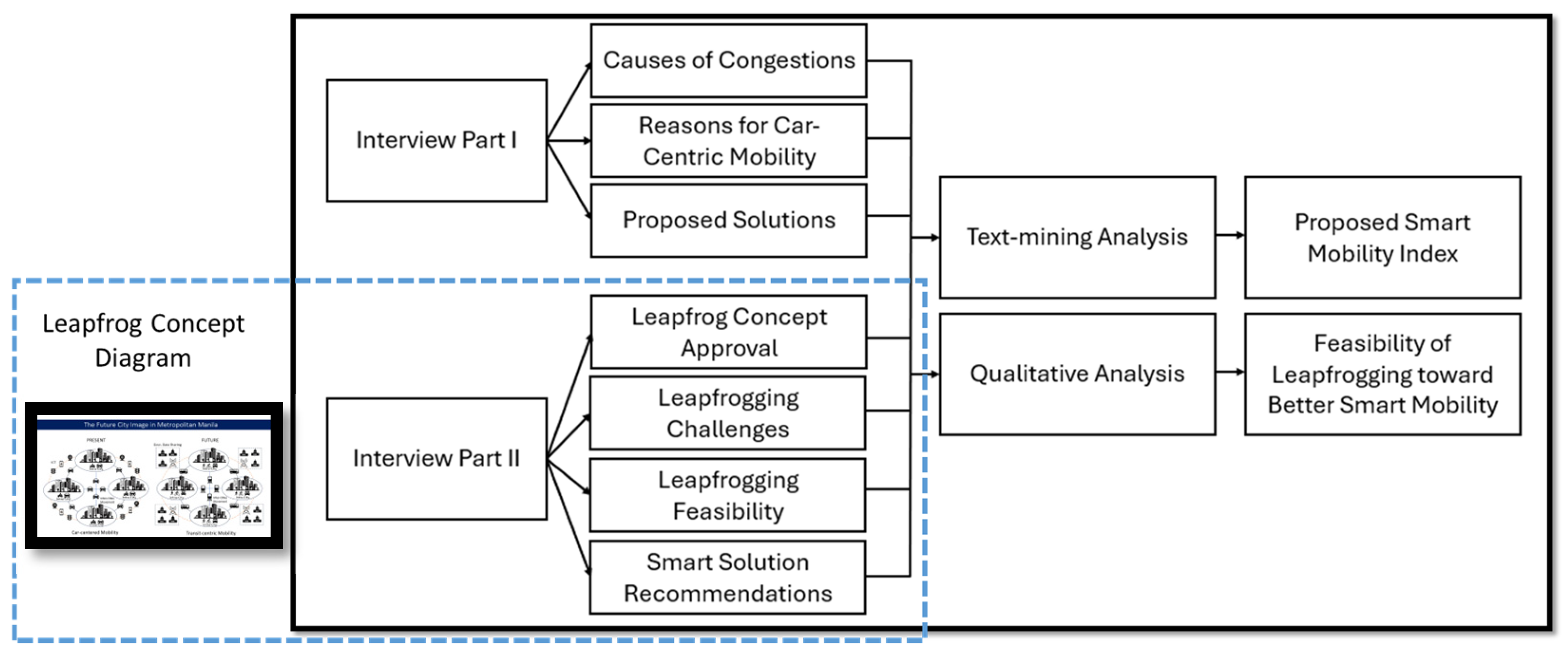
In a second part of the interview, the respondents were also asked to evaluate the feasibility of the leapfrogging concept (
Figure 3).
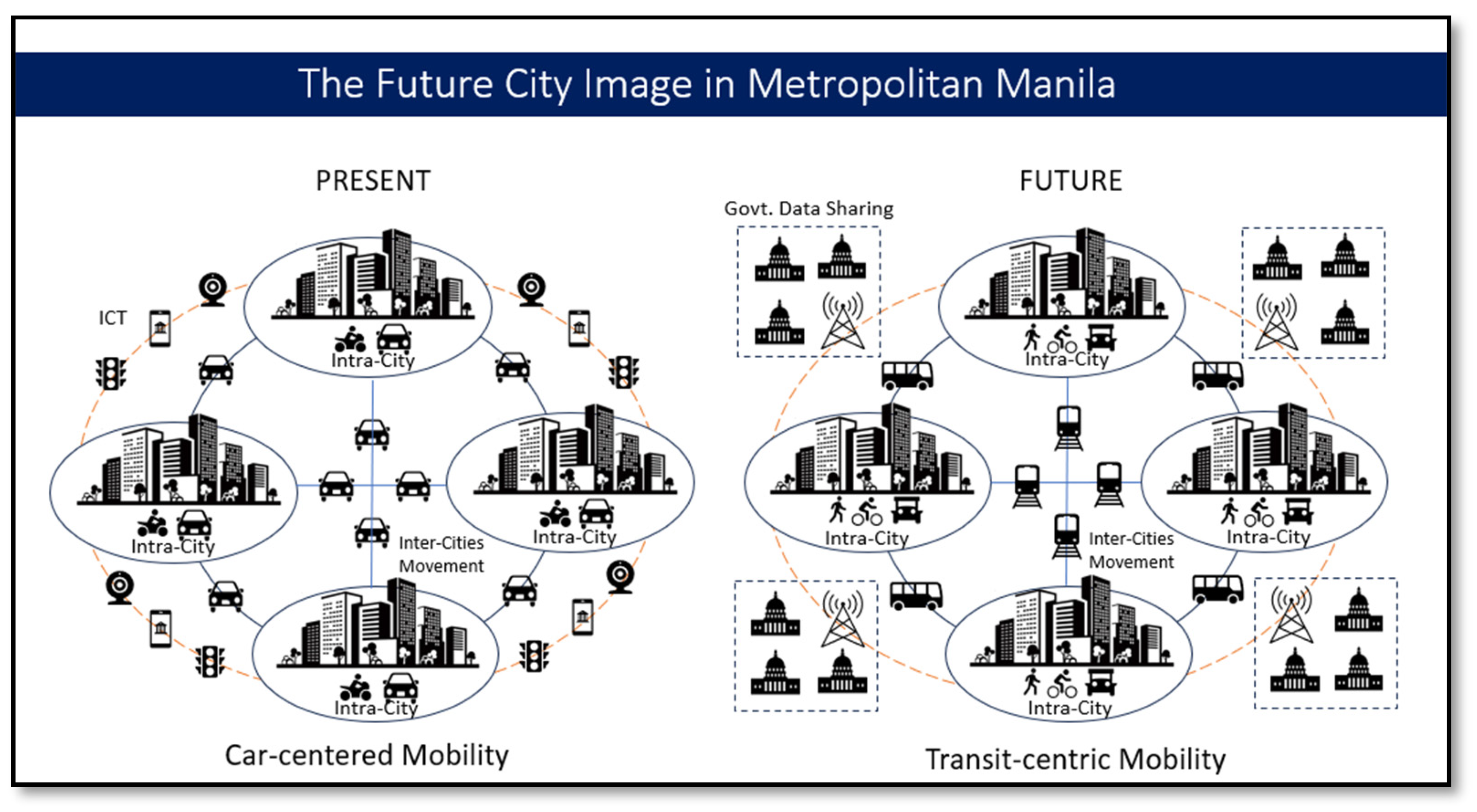
A leapfrog conceptual diagram was also created for this research. It was shown to the interviewees in the second part of the interview to get their perspective on the feasibility of leapfrogging. It envisions the future of Metropolitan Manila as a transit-centric mobility society (
Figure 4). This shift aims to leverage smart solutions to enhance overall mobility. The strategic direction involves developing an SMI to assess the readiness of each city within the metropolitan area to adopt and implement transit-centric mobility solutions. The SMI will serve as a key metric in evaluating and guiding progress toward achieving this vision.
3.3. Smart Mobility Index Metric Creation and Calculation
Although the metrics and variables that make up the SMI were derived not only from the literature review but also, and above all, from the results of the interviews conducted, the composition of the index will be revealed in the following section. Thus, the composition of the categories will reflect the main topics raised by the specialists. The metrics that make up the categories were either extracted directly from the interviews or taken from the scientific literature mentioned above when they fit perfectly with the specialists’ reflections. In this section we present the manner in which the various data were collected and then processed for inclusion in the index.
All the quantitative datasets were collected, cleaned, and spatially analyzed using QGIS to compute normalized SMI scores for each of the 17 LGUs in Metro Manila. The use of geospatial techniques allowed for a more nuanced assessment of mobility patterns and highlighted spatial disparities across LGUs. The data were sourced from multiple channels. Primary data included responses from structured interviews with Metropolitan Manila Development Authority specialists, while secondary data were drawn from traffic signal and CCTV datasets provided by MMDA and land use data were drawn from the Metro Manila Earthquake Impact Reduction Study (MMEIRS) and the JICA Comprehensive Traffic Management Plan. Additional CCTV datasets were obtained from various LGUs, supplemented by open-source data from platforms such as OpenStreetMap and other publicly available repositories.
3.4. Clustering
Subsequently, the study ranked the LGUs according to their SMI scores and applied K-means clustering to identify distinct performance patterns, grouping LGUs into comparable clusters. This step, which had no direct link to the preceding co-occurrence network analysis, aimed solely to illustrate the differences and similarities between municipalities in terms of smart mobility development. The robustness of the clustering results was examined using ANOVA to determine whether the clusters differed significantly across the selected variables.
4. Results
4.1. Interview Results
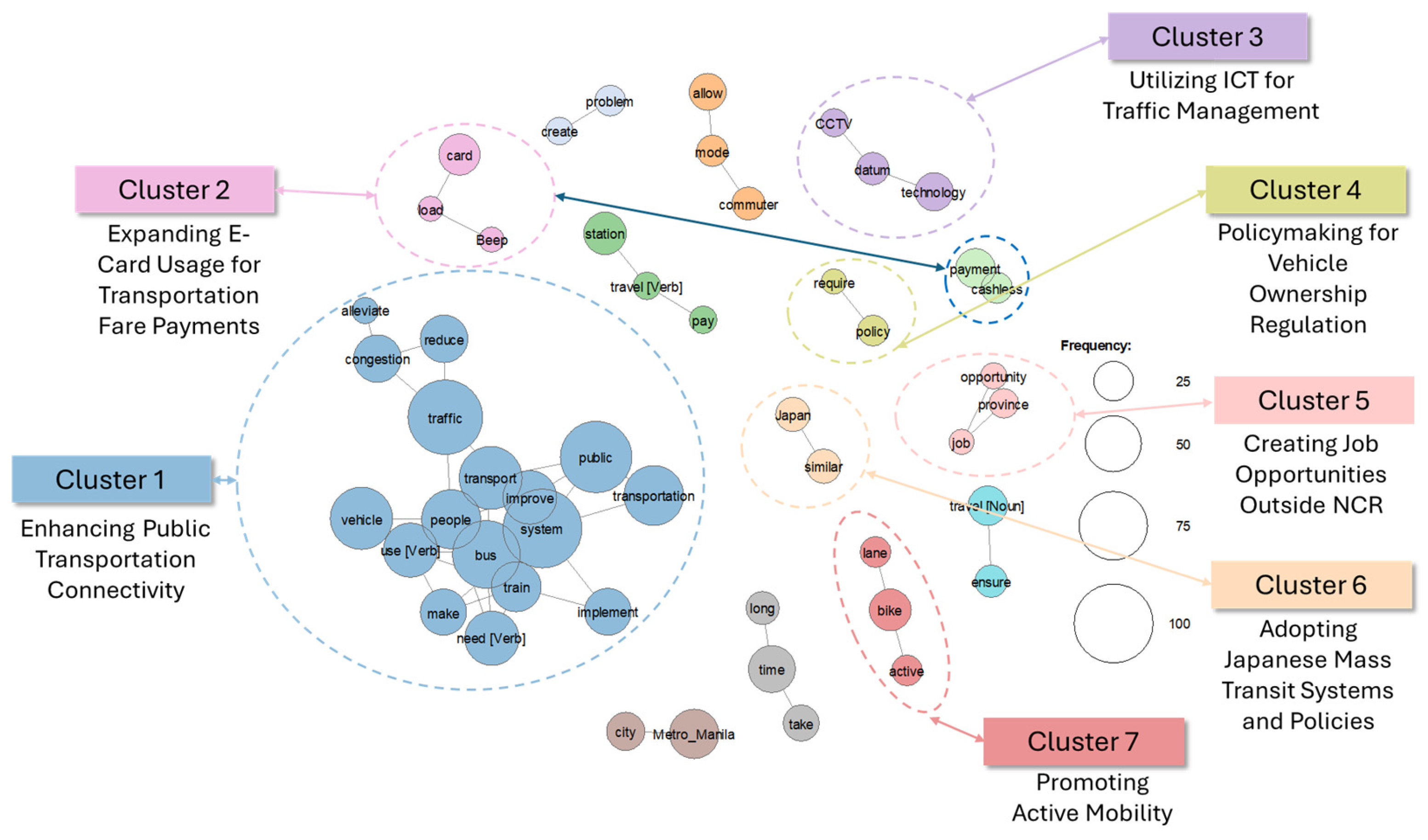
Once the response corpus was consolidated and the data prepared, the results of the Co-Occurrence Network of Words Analysis revealed several highly interesting insights (
Figure 5).
Similar to the findings of researchers and scientists presented in the literature review, specialists primarily mentioned the need for an efficient, accessible public transportation system that is connected to other modes of transportation (cluster 1). Next, cluster 2 illustrates the need to expand the transportation payment system with a financial and cashless system (cluster extension). This need is not limited to public transportation, as it can be extended to shared light mobility (e.g., rental bikes). Cluster 3 illustrates the need to develop more optimized traffic management through the use of ICT. This cluster is also the only one to express, among other things, a direct need for investment in cutting-edge technologies that are not basic infrastructure (in this case, CCTV). Clusters 4, 5, and 6, although they raise interesting points in the process of developing smart mobility, are much more difficult to quantify if we want to translate them into components of the index. For this reason, we highlight them in this analysis and keep them for qualitative development of our thinking without directly integrating their topics into the SMI. Finally, cluster 7 refers to active mobility and the need to develop cycling infrastructure in particular. Although this strategy can be translated into an indicator for our index fairly easily (presence of lanes, network density, etc.), it was also noted several times that infrastructure alone may not be a sufficient response if mobility habits do not change in parallel (scooters on cycle lanes, low cycling culture, etc.).
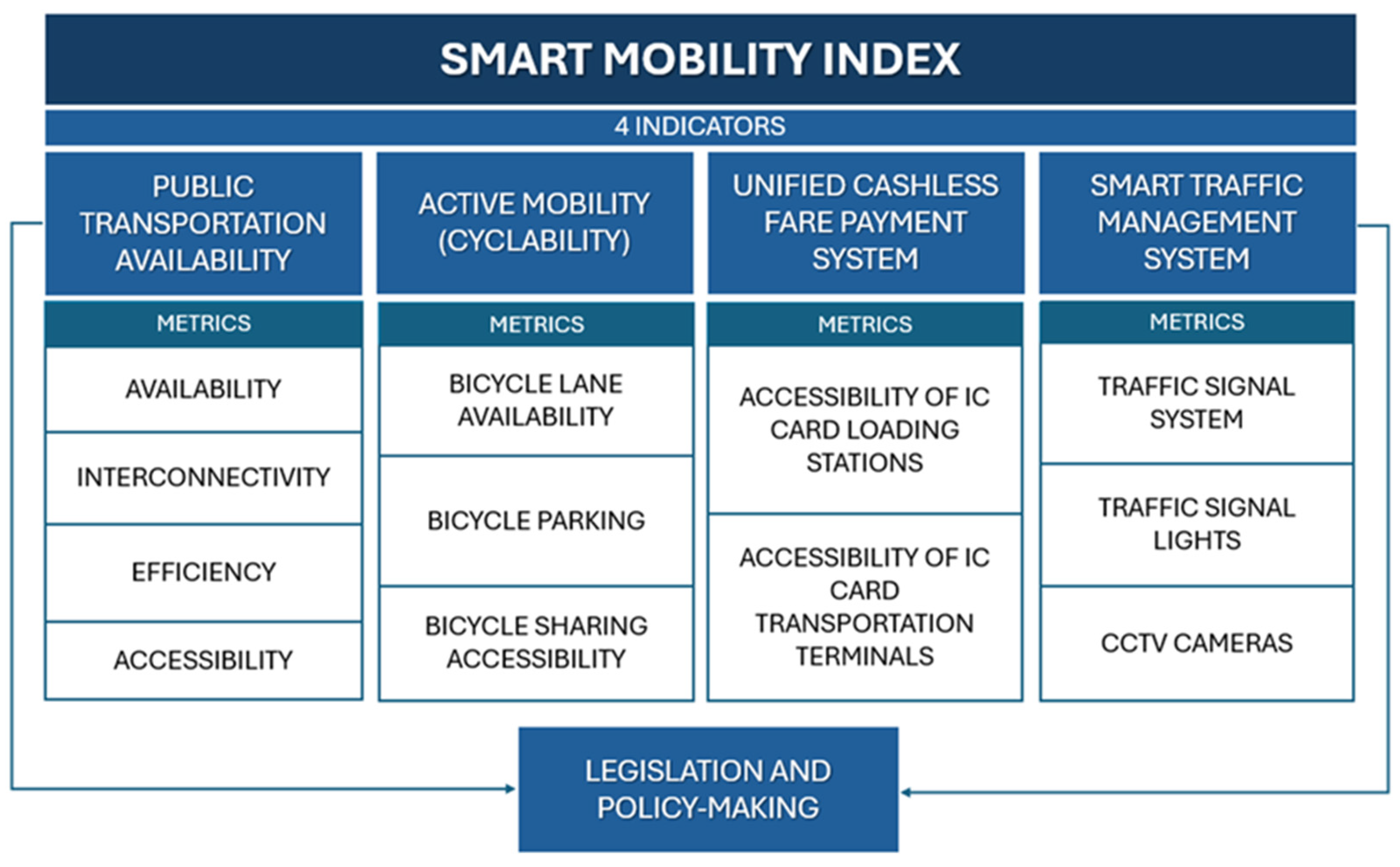
From this series of interviews, based on the collected data and cross-referencing the aspirations of specialists with variables already used and noted in the scientific literature, we constructed an index based on the four themes identified in clusters 1, 2, 3, and 7: public transportation level of service; active mobility development; a unified, contactless, and widely deployed payment system; as well as a smart traffic management system (
Figure 6).
4.2. Smart Mobility Index
4.2.1. Index Creation
Table 2 presents the 12 selected metrics together with their respective data sources, derived from both spatial analysis in QGIS and supporting numerical datasets.
These indicators were chosen to capture different dimensions of mobility and urban conditions across Metro Manila. Some indicators are quite unique to the situation of Metro Manila, like interconnectivity, which represents the number of transfer points from jeepney stops to different modes. The observation of sometimes very large differences between the means and the standard deviations of the variables’ raw scores (the standard deviations are sometimes much greater than the means) already reflects very significant differences in development from one LGU to another. After generating the raw scores, the data were normalized to a common scale of 0 to 1 for each metric to ensure comparability across metrics with differing units, magnitudes, and ranges. Normalization also allowed us to maintain the differences outlined above.
Once normalized, the indicators were aggregated into a composite score that captures an integrated measure of performance across the selected dimensions. This approach provides a holistic and balanced assessment of livability and smart mobility readiness, minimizing distortions caused by variations in measurement scales. Ultimately, the methodology ensures that comparisons among LGUs are fair, transparent, and context-specific, enabling the study to highlight both strengths and gaps in Metro Manila’s urban mobility landscape.
4.2.2. Index Results
The final ranking of the Smart Mobility Index scores across 17 Local Government Units (LGUs) reveals significant variation in the level of smart mobility development (
Table 3).
Makati stands out as the strongest performer, achieving the highest smart mobility index score (≈0.74), which reflects its comprehensive advancements in public transport services, active mobility (despite a relatively low score for bicycle lanes), fare integration, and traffic management. It could be interesting for the other LGUs to set a goal of development to reach those results. Manila (0.59) and Pasay (0.57) follow with relatively strong results, although their performance is more uneven across certain dimensions (public transportation interconnectivity for Manila and CCTV for Passay). LGUs such as San Juan, Mandaluyong, and Pasig fall within a high-middle range of approximately 0.47 to 0.54, suggesting ongoing progress but also persistent gaps, particularly in areas such as active mobility (lack of shared bicycles) and improvable public transportation services. Pateros presents an interesting exception, with a combination of very high and very low values across different indicators, leading to a profile that diverges markedly from the broader pattern observed among other LGUs.
Meanwhile, those ranked from eleventh to seventeenth (Marikina, Caloocan, Malabon, Parañaque, Navotas, Las Piñas, and Valenzuela) exhibit consistently low scores below 0.30, with Valenzuela registering the lowest (0.08). These results highlight significant disparities in smart mobility readiness, likely influenced by variations in infrastructure investment, institutional capacity, and urban development constraints. Overall, while some LGUs demonstrate clear leadership and integrated mobility strategies, many others face structural and operational challenges that limit their adoption of smart mobility components. The diversity of these performance profiles provides a valuable foundation for grouping LGUs based on shared characteristics, which the next section examines through a dedicated clustering analysis.
4.3. LGUs Clustering
Based on the ANOVA results, all the metrics except for the traffic signal system exhibit statistically significant differences across clusters, indicating their effectiveness in distinguishing between cluster characteristics (
Table 4).
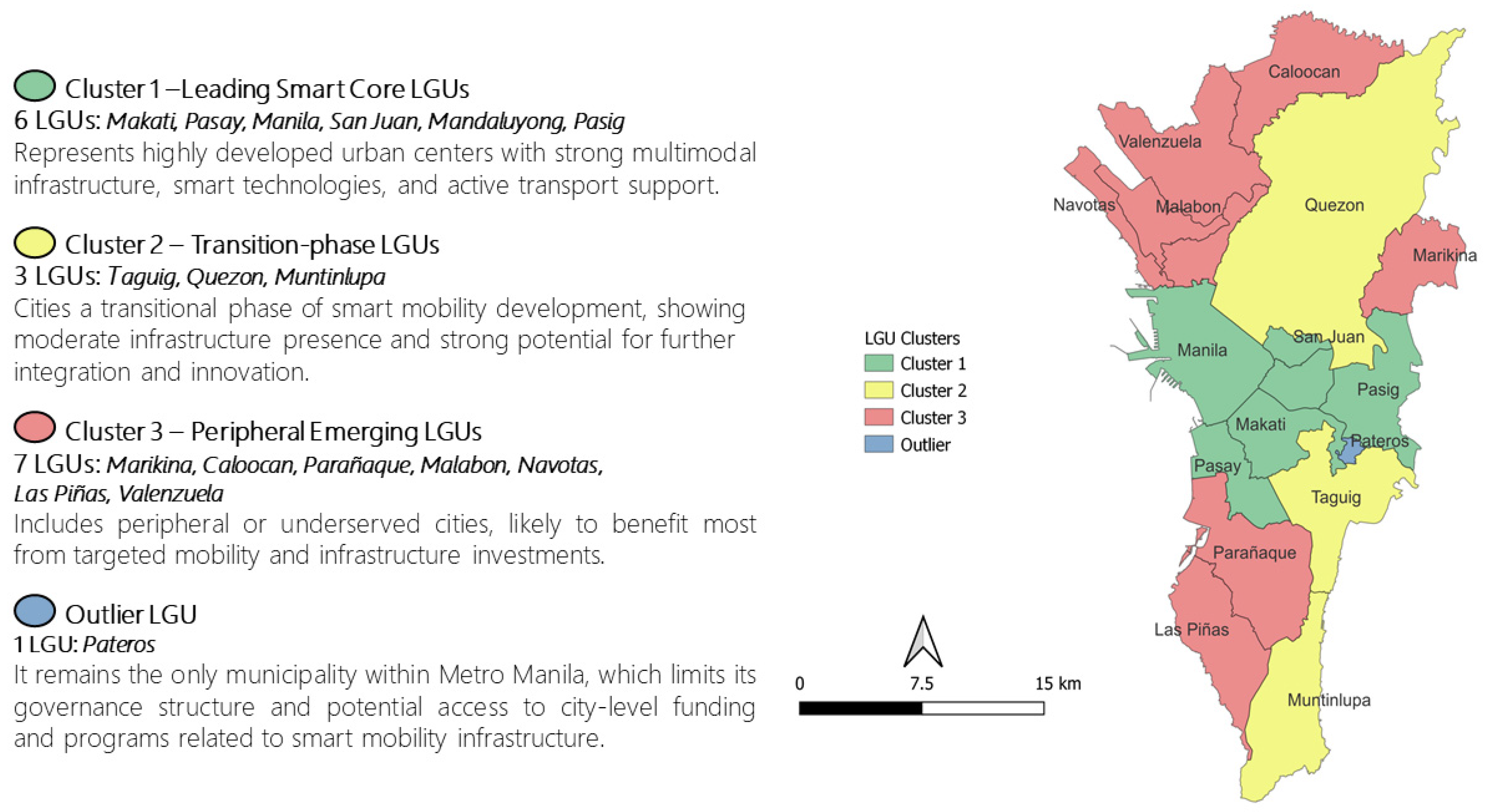
There are three clusters and one outlier, which is Pateros (
Figure 7). The specific results for Pateros, which lead to its status as an outlier, can be explained by the fact that the city holds a special status as a municipality rather than a city within Metro Manila. As a result, Pateros enjoys less autonomy and fewer fiscal resources than the other Local Government Units (LGUs).
Cluster 1 represents developed urban centers with strong multimodal infrastructures, smart technologies, and active transport support. These LGUs are particularly strong on public transport access but lag slightly behind in term of active mobility and CCTV implementation. Cluster 2 reflects LGUs in transition, working towards more comprehensive and interconnected mobility solutions. However, their most basic transportation infrastructure and system integration remain in the developmental stage. Finally, cluster 3 includes peripheral or underserved LGUs that have low scores for active mobility and cashless fares, and traffic management with moderate public transport and a smart traffic management system. Even the most basic transportation infrastructure is still lacking, and significant fundamental investments must be made to catch up with the highest-ranked LGUs.
4.4. Feasibility of Leapfrogging
While the results of our analysis highlight major structural challenges and reveal substantial disparities in mobility development across LGUs, it is essential to consider how Metro Manila can move from its current situation toward a more sustainable, geographically equitable, and efficient transport system. This final subsection therefore synthesizes the perspectives of the experts consulted regarding the feasibility of adopting a leapfrogging approach in Metro Manila.
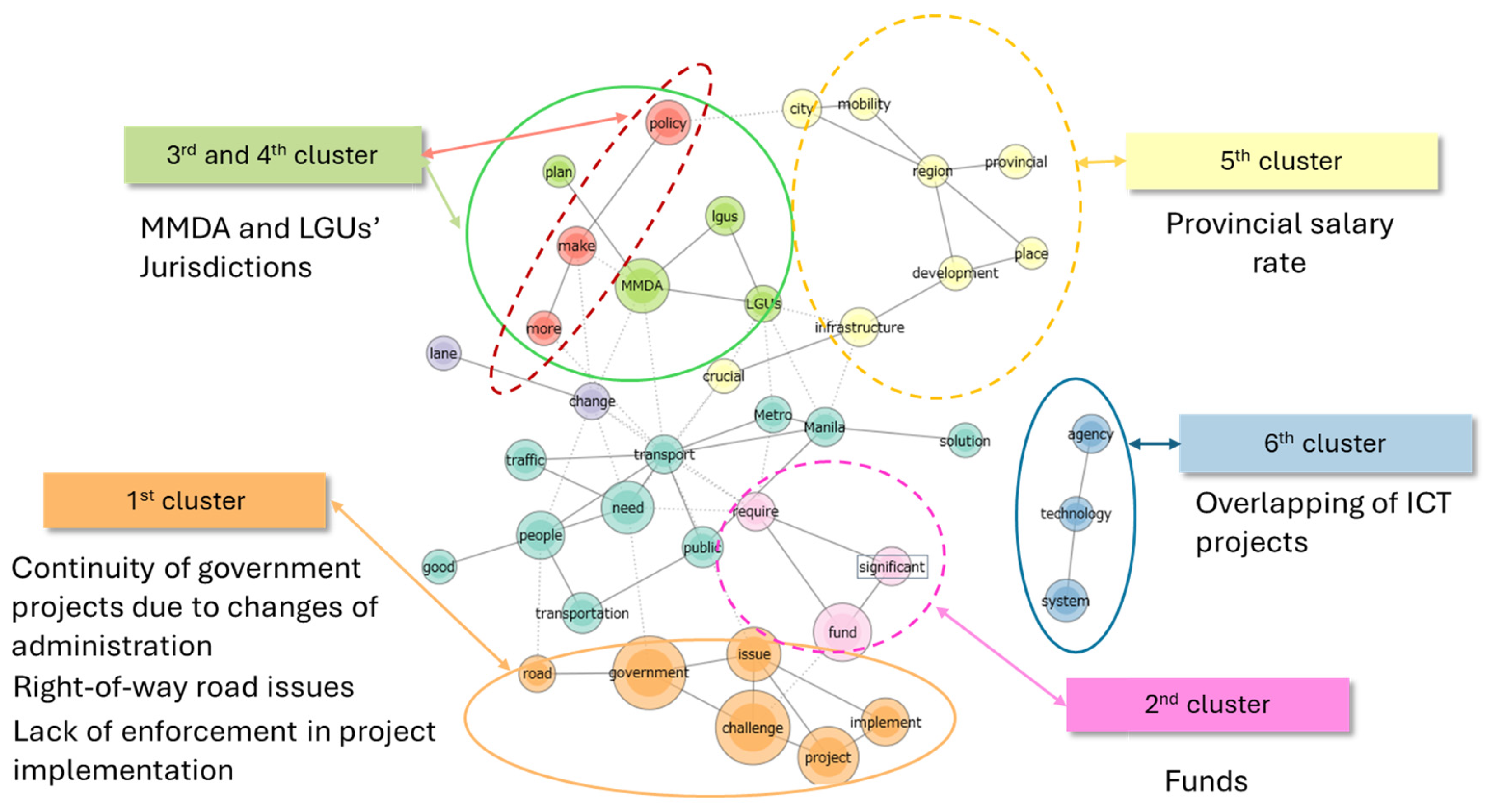
We should firstly emphasize the fact that every one of the interviewees agreed that leapfrogging is a viable vision for Metropolitan Manila’s future mobility, though challenges persist (
Figure 8). Key issues include weak enforcement of transport projects due to limited funding, delays in land use and right-of-way acquisition, and fragmented governance across 17 LGUs and the MMDA. Urban sprawl driven by salary disparities suggests a need for regional salary equalization. Overlapping ITS initiatives across agencies create data gaps, emphasizing the need for a central coordinating office. Most interviewees found leapfrogging feasible within 10 years, citing ongoing railway development, ITS projects, and master plans. Success depends on strong political will, prioritization of ITS and public transit, and project continuity amid leadership changes. Interviewees also highlighted the importance of capacity-building within LGUs to effectively implement smart mobility initiatives. Moreover, public–private partnerships are key to speeding up infrastructure and tech innovation. Once again, the content of the specialists’ remarks seems to echo studies already conducted on the subject, confirming the recurrence of challenges specific to developing territories in the case of Metro Manila.
4.5. Future Railway Expansion
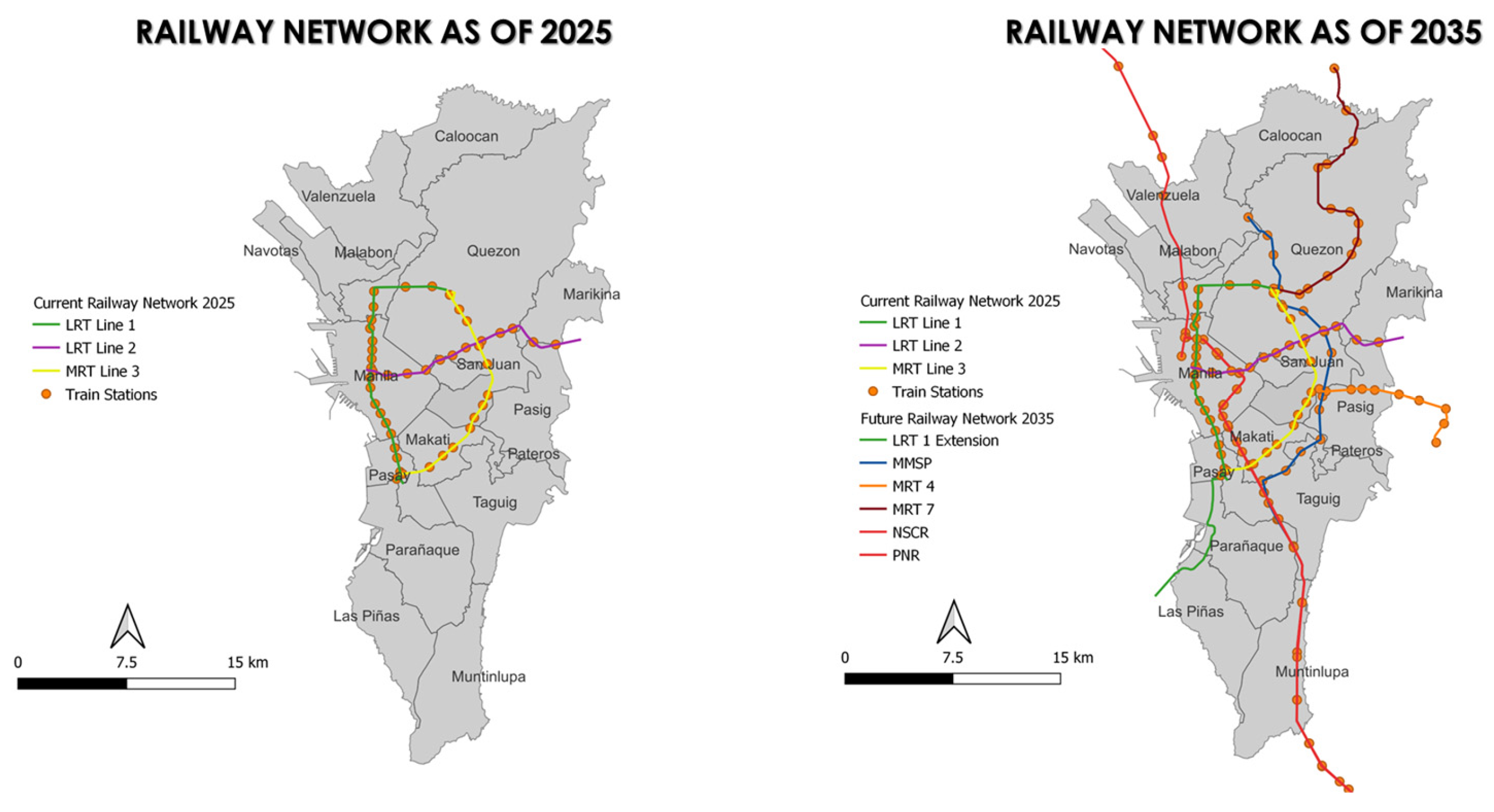
Finally, based on the projected completion of future railway lines (
Figure 9), a forecast analysis was conducted to estimate the impact on key transport-related indicators. The following metrics are expected to exhibit measurable changes because of the enhanced transit infrastructure: public transportation availability, public transportation interconnectivity, public transportation accessibility and IC card terminal density.
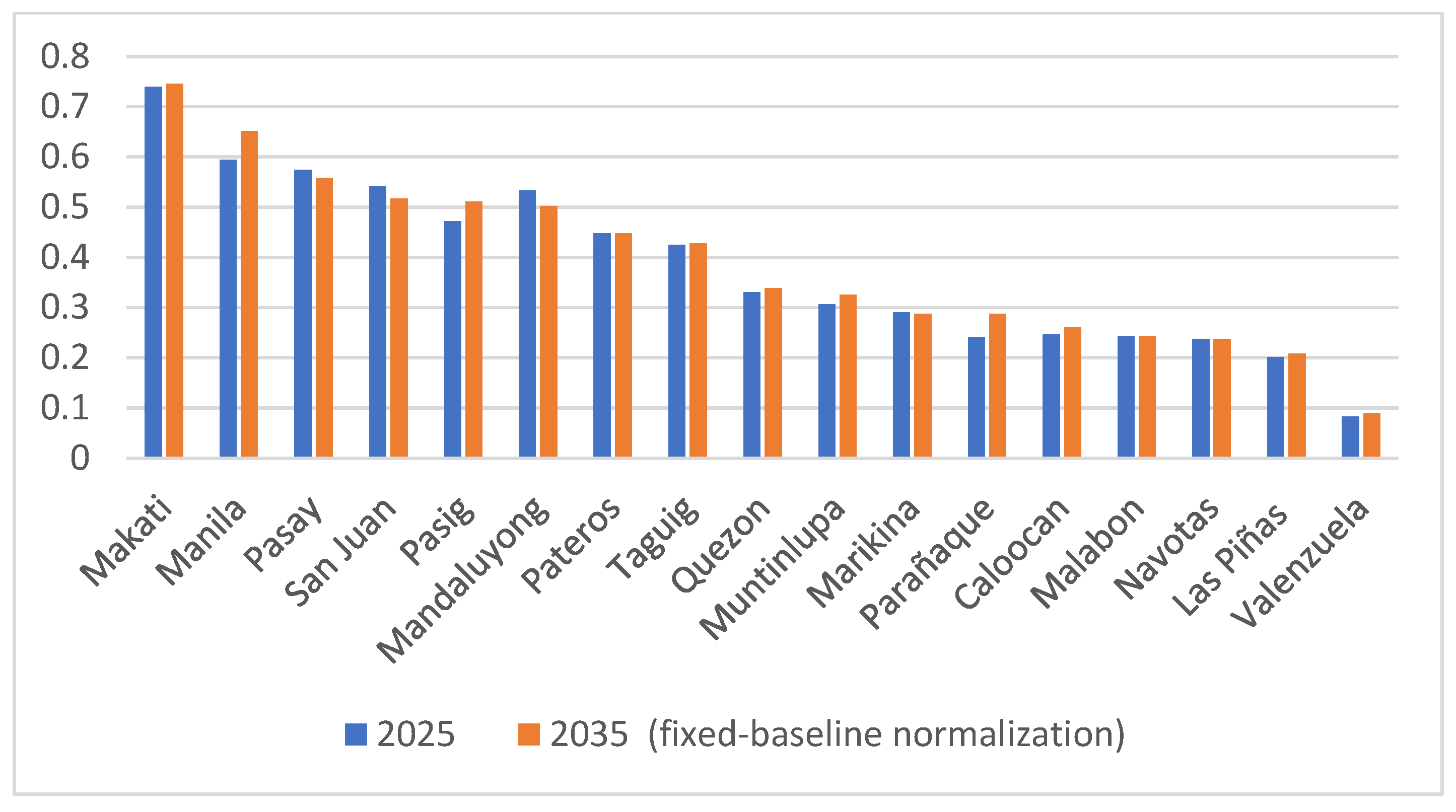
Between 2025 and 2035, most LGUs in Metro Manila are expected to show slightly moderate increases in their SMI scores, reflecting improvements driven by the completion of six major railway projects (
Figure 10). Adding future data such as average travel time, population density, and new feeder transport hubs can further enhance the accuracy of these projections. Top-ranked LGUs continue to perform well, showing potential to serve as models for smart mobility advancement. Middle-ranked LGUs display promising momentum, while lower-ranked LGUs may need targeted national support to address infrastructure and service delivery gaps. What is certain, moreover, is that these new infrastructures do not seem to be leading to equality among LGUs, as the gaps between the good and the bad performers remain extremely visible.
5. Discussion
The Smart Mobility Index (SMI) developed in this study reveals substantial structural disparities among the 17 LGUs of Metro Manila and highlights the uneven distribution of transport-related assets across the metropolitan region. Several findings emerge when examining the aggregated scores together with the spatial patterns illustrated by the underlying metrics.
First, the overall hierarchy of LGUs reveals a clear concentration of high-performing areas within the urban core, particularly Makati, Manila, and Pasay. These LGUs benefit from dense public transport networks, widespread fare integration, and relatively advanced traffic management systems, reflecting the historical investments in commercial districts and central business hubs. In contrast, many peripheral LGUs, which account for a large share of the region’s land area, perform poorly in several dimensions, especially active mobility and digital payment infrastructures. This spatial divide highlights a long-standing urban mobility inequality: central LGUs accumulate multimodal transport assets, while peripheral LGUs struggle to establish even basic elements required for integrated mobility. It is also important to note that the reasons behind these disparities are not uniform. Some LGUs excel in public transport availability but lag in active mobility or ICT-based traffic management, suggesting that density-based indicators must be interpreted in their spatial context, as results can be influenced by the LGU’s size rather than its service provision level.
Second, the persistence of stable rankings from 2025 to 2035 raises important questions about long-term policy direction. If the mobility hierarchy of LGUs remains unchanged even after major infrastructure expansion, the underlying barriers are likely institutional rather than infrastructural. Issues such as fragmented governance, uneven technical capacity, inconsistent data-sharing practices, and limited budgetary autonomy may therefore represent the core impediments preventing low-performing LGUs from leveraging regional improvements. These findings echo concerns raised by interview respondents who emphasized institutional fragmentation, weak coordination, and difficulties in harmonizing local and metropolitan transport initiatives.
Third, the results provide insight into the potential as well as the limits of leapfrogging in Metro Manila. While interviewees generally expressed optimism about bypassing incremental transport development stages, the empirical evidence suggests that leapfrogging might be uneven across LGUs unless foundational systems are strengthened. Successful leapfrogging requires not only advanced technologies but also strong governance mechanisms capable of integrating new transport modes, enforcing standards, and ensuring interoperability across 17 independent LGUs. It should be noted that leapfrogging appears more feasible for core LGUs that already benefit from dense transport networks and stronger institutional capacity, while peripheral LGUs may face structural constraints that limit their ability to capitalize on such opportunities. Without targeted interventions, leapfrogging strategies may therefore exacerbate, rather than reduce, the existing core–periphery divide in Metro Manila.
Overall, the results indicate that Metro Manila’s mobility landscape is shaped as much by governance and institutional structure as by physical infrastructure. While high-performing LGUs demonstrate pockets of innovation and strong investment, the majority of the region continues to face significant barriers to achieving smart mobility readiness. Addressing these inequalities will require targeted investments, strengthening of institutional capacity, and improvements in metropolitan governance mechanisms to ensure that progress is shared more evenly across all LGUs.
Regarding the performance of our original index, it has highlighted several crucial points in the development of smart mobility using widely available data, which is often the main obstacle to research in underdeveloped or developing regions. By being used to compare several territorial entities within the same metropolitan area, it also stands out for its scale of use. This approach avoids direct comparisons between territories belonging to countries with very different contexts, while making it easy to visualize development gaps within cities in order to encourage homogeneous development of territories, which is essential for fluid and smart mobility.
Finally, several avenues for reflection and potential solutions can be derived from the series of results and observations made. First, it appears crucial for the metropolis to work towards rebalancing development levels across all LGUs. More significant resources must be allocated to cities with the lowest scores, and areas like Caloocan, Navotas, and Las Piñas must be better connected. The future railway lines, however, do not address these issues (due to a lack of stations in certain areas), and substantial work must be done on feeder transport systems to ensure better access to the upcoming stations. The case of Pateros also highlights the limitations of integrating a geographically distinct area with a different legal status within the LGUs. The status of the territory should be revisited to harmonize development across the entire metropolis. Regarding leapfrogging, it is clear that Metro Manila must first focus on developing its most fundamental infrastructures (bike lanes, public transport systems, etc.). Although ICT technologies are frequently discussed by experts, it seems realistic to state that, according to the existing literature and the results of our index, these solutions are only a small part of Metro Manila’s transition to smart mobility. Instead of focusing solely on developing the use of these systems, cities should primarily reorganize their decision-making and planning models to create structures that are more efficient in resource utilization and more effective in deploying new policies and infrastructures.
6. Limitations
The writing of this article encountered several obstacles and limitations. The first limitation concerns restricted access to certain datasets. For example, data related to the active mobility indicator could only be extracted from OpenStreetMap (OSM). While OSM provides a valuable starting point, it is neither the most accurate nor consistently updated database. More broadly, LGUs remain reluctant to share data, and the availability of information on infrastructure and mobility is still more of an aspiration than a reality. Yet such data sharing is essential for the development of a smart city equipped with an efficient and comprehensive transport system.
Another limitation is methodological. It emerges when comparing SMI scores between 2025 and 2035: because each year is independently normalized to a 0–1 scale, the relative ranking is preserved but the absolute magnitude of change is lost. This compresses temporal variation and may give the impression that mobility conditions remain static even when all LGUs improve. We partially addressed this issue by using a fixed-baseline normalization, in which the minimum and maximum values observed in the base year (2025) were retained as reference points for normalizing future years. However, the very nature of the indicator, being an average of all its normalized components, also limits its suitability for cross-city comparisons. As a result, its potential use is largely restricted to the comparison of territories that are interconnected and share broadly similar characteristics, as is the case in Metro Manila.
Another limitation lies in the fact that the indicators are not weighted. All variables contribute equally to the SMI. The existing literature often presents more complex and weighted indices, but these typically rely on resources and datasets that remain inaccessible in the context of Metro Manila. For example, detailed data on modal shares or individual travel behavior would have allowed us to assign greater importance to railway stations within the indicators. However, this limitation can also be justified in the sense that, as discussed in the previous sections, at the current stage of development LGUs generally need to strengthen all dimensions of their mobility systems, as none are yet fully developed, fully accessible, or fully efficient.
Finally, another limitation concerns the potential opinion biases expressed by the interviewed specialists. Their institutional affiliation and their roles within the territorial agencies examined in this study may have influenced their responses, leading to omissions or a lack of objectivity in the way they addressed the questions posed to them.
7. Conclusions
This study developed a Smart Mobility Index (SMI) tailored to the specific institutional, spatial, and infrastructural characteristics of the 17 Local Government Units (LGUs) of Metro Manila. By integrating four key dimensions (public transportation service, active mobility, unified cashless fare systems, and smart traffic management) the index provides a comprehensive and context-sensitive tool for assessing smart mobility readiness in a highly heterogeneous metropolitan region. The combination of spatial data, expert interviews, and text-mining analysis makes this approach uniquely adapted to the realities of Metro Manila, where data scarcity and fragmented governance often hinder evidence-based mobility planning. The results reveal substantial disparities across LGUs. A small group of core urban centers demonstrate relatively advanced mobility systems, characterized by higher transport availability, broader fare integration, and more developed ICT-based traffic management. In contrast, peripheral LGUs consistently show lower scores across multiple indicators, highlighting persistent geographic inequality in the distribution of mobility infrastructure and technological assets. The clustering analysis further emphasizes this divide, identifying three distinct groups of LGUs with markedly different mobility profiles and institutional capacities.
Forecasting based on the region’s planned railway expansion suggests that although most LGUs may experience moderate improvements by 2035, these enhancements alone are unlikely to significantly alter the overall ranking or the systemic disparities observed. This finding underlines a critical implication: large-scale infrastructure investments, while necessary, are insufficient without parallel improvements in coordination, local capacity-building, and long-term governance structures.
Based on the findings of this study, several priority policy directions emerge for advancing smart mobility in Metro Manila:
Strengthen metropolitan-level governance and coordination mechanisms. Establish stronger institutional frameworks for inter-LGU coordination, including shared standards for data collection, fare integration, and traffic management, to reduce fragmentation and ensure that mobility improvements benefit the entire metropolitan region rather than only core LGUs.
Target investment toward peripheral LGUs through integrated mobility packages. Prioritize funding and technical support for low-performing LGUs by coupling large-scale infrastructure projects with feeder transport systems, active mobility infrastructure, and local capacity-building, in order to address persistent core–periphery disparities.
Align leapfrogging strategies with foundational mobility and institutional capacities. Ensure that the adoption of ICT-based and smart mobility solutions is systematically integrated with basic transport infrastructure and governance reforms, preventing technology-driven initiatives from reinforcing existing inequalities across LGUs.
Despite the limitations, the proposed SMI constitutes an important step toward context-sensitive mobility assessment in developing metropolitan regions. Future research should expand the index to incorporate environmental sustainability, social equity, climate resilience, and user experience. Comparative studies with other Southeast Asian megacities would also help situate Metro Manila’s mobility transition within broader regional trajectories.
Ultimately, this study demonstrates that advancing smart mobility in Metro Manila will require more than technological adoption; it demands a strategic combination of infrastructure development, institutional reform, and long-term metropolitan governance. The SMI offers policymakers a practical benchmarking tool to identify priorities, monitor progress, and promote a more inclusive, efficient, and sustainable mobility future for the National Capital Region.









 Best Score