You are currently viewing a new version of our website. To view the old version click .
Future Transportation
  • Article
  • Open Access

4 December 2025

Methodology for Determining the Territories Where Scheduled Public Transport Should Be Changed to DRT


,
and
Road Department, Vilnius Gediminas Technical University, 10223 Vilnius, Lithuania
*
Authors to whom correspondence should be addressed.

Abstract

To address the evolving mobility requirements of local (suburban) and regional public transportation systems, it is imperative to employ service models capable of adapting to low-density and variable demand. This paper develops and tests a practical methodology aimed at identifying regions optimally suited for demand-responsive transport (DRT) and integrating DRT into regional public transport frameworks. At the beginning, a review of DRT system implementation practices in other countries is presented, and an analysis of international public transport macro-models is provided, which reveals structural differences between urban and regional environments. Then, the article describes the development and verification of a public transport macro-model for a selected region. With the help of the model, potential DRT territories in the analyzed region are defined and, using the macro-modeling of the PTV Vissum program, the implementation and results of DRT are evaluated. The fourth section of the article describes the refined methodology for selecting DRT territories and its transferability and parameterization for the wider application in other regions. The proposed methodology integrates multi-criteria spatial assessment, clustering techniques, and service scenario testing to identify low-demand zones, measure accessibility deficiencies, and select DRT designs that are appropriate for specific needs. The results showed that after changing the organization of the public transport service, the total bus mileage decreased from 287,684.18 km per month to 284,078.27 km/month (which is 1.25%), and the total time spent by passengers on trips decreased by 0.5% (the difference is 118 h 11 min).

1. Introduction

The success of public transport (PT) services can be assessed by their passenger-oriented approach, which evaluates whether these services fulfill a passenger-centered criterion [1]. The objective of PT services is to satisfy the needs and expectations of passengers; therefore, comprehensive planning of the PT network is crucial. It is recommended that local authorities enhance collaboration not only with PT operators but also with residents to gain a deeper understanding of and address passenger demands [2].
The provision of regular fixed-route bus services across all geographical regions is often impractical, inefficient, and uneconomical. Nonetheless, the lack of PT services in remote areas poses significant challenges for residents in accessing essential services. This issue is exacerbated by the centralization of healthcare and various social services in larger urban centers or regional hubs [3,4]. It is imperative to develop high-quality PT services that address the actual needs of the population. Such services should be sustainable, adaptable, cost-effective, and well-integrated, ensuring reliable transportation options for socially disadvantaged groups who lack access to personal vehicles [4,5]. An analysis of PT organization and management frameworks in several countries reveals that the models adopted in Sweden, Estonia, Germany, and Austria are particularly noteworthy and suitable. These models involve the establishment of regional centers, associations, or a unified PT agency, which serve as principal institutions for passenger inquiries, thereby enhancing the efficiency of request management.
The comparative analysis reveals that, in accordance with the predefined criteria, the transportation models of Great Britain and France exhibit the lowest suitability. In these countries, accessibility to PT services is not assured, the passenger transport market lacks systematic planning based on empirical data collection, and services are predominantly provided on a commercial basis. It is recommended that flexible PT solutions, known as DRT, be implemented within these regions to enhance financial resource efficiency and reduce greenhouse gas emissions related to bus mileage. However, it is noted that DRT is not fully developed as a component of PT services in either nation. It is crucial to integrate DRT services with conventional PT to form a unified PT service system.
To enhance the utilization of PT, it is imperative to offer a service that mirrors the comfort associated with personal vehicle usage. The allure of PT can be augmented through the provision of a ‘door-to-door’ service [6,7]. DRT frameworks facilitate individuals’ transit by covering daily routes within specific sectors, as opposed to maintaining a financially burdensome, fixed-schedule conventional PT system [8]. DRT is a passenger-centric, high-mobility PT schema defined by adaptable routes and vehicles of smaller capacity that operate between pick-up and drop-off locations based on passenger requirements, thus responding solely to actual user demand [9,10]. Additionally, DRT is referred to by various terminologies such as flexible PT, on-demand transport, and adaptive transport systems, among others [5].
In the region of Vales, service was inaugurated in 2009, [8]. This service enables passengers to book their travel via online platforms, mobile applications, or through a call center. The call center has been strategically incorporated to enhance service accessibility across diverse user demographics, particularly targeting older adults who either refrain from or are unable to utilize smartphone technology [11,12]. Presently, Austria hosts 262 distinct DRT services, 57% of which provide a ‘door-to-door’ service, predominantly in rural locales [13]. Exemplary instances of successful DRT implementations include ‘Bwcabus’ and ‘Grass Routes’. These systems dynamically plan daily routes and stops based on user demand, employing advanced mapping, routing, and GPS technologies. To secure a seat, pre-registration is mandatory. While most passengers are collected from local bus stops, individuals with mobility impairments or those residing in highly remote areas receive doorstep pick-ups. Fare structures are distance-dependent. The successful integration of DRT in rural regions, as evidenced by ‘Bwcabus’ and ‘Grass Routes’, demonstrates its viability where conventional bus systems prove impractical or inconvenient [8].
Technological advancements have simplified request submissions: users can submit requests through a mobile app specifying their departure (typically the user’s current location) and destination locations, along with the desired arrival time. The DRT system subsequently provides a response detailing the appropriate bus stop and bus schedule, including the estimated time of arrival. This mechanism effectively reduces zero mileage [14]. A pertinent international example is the three-year GUSTmobil pilot project in Austria’s Styria province, concluded in December 2020. The project revealed that Bwcabus curtailed average travel time to the nearest employment center from 52 to 27 min [15], thereby significantly enhancing regional accessibility. Although fares are distance-based, external financial support is essential for both service maintenance and expansion [16].
The DRT model was also adapted to the rural sectors of Amsterdam, specifically in Landelijk Noord, encompassing four villages. Prior to the pilot, these villages were served by two bus routes operating on weekdays, which proved costly due to low ridership. The regular PT system routes were replaced by a DRT system, offering seven-day services, thereby reducing mileage, operational costs, and greenhouse gas emissions. However, Amsterdam village residents expressed willingness to forego private cars only if the DRT system surpassed in quality, met mobility demands, offered a user-friendly booking interface, and ensured punctuality [17].
Italian researchers who did a deep analysis of the DRT services note that this service makes it easier to change routes according to the specific need when it appears, thus reducing the mileage of fixed routes. This is very important in low-populated areas, where PT services are least efficient [18].
The successful match between the predicted outcomes and the real-world results validates the quality of the design choices made concerning the service’s operating days, time frame, pricing, and destinations [19].
In Lithuania, a parallel pilot initiative is underway in Lazdijai district municipality, with residents being transported from villages to the district center via DRT. The maximum bookable travel distance is capped at 35 km, with services available on weekdays from 8 am to 5 pm. Residents may book transport via phone, online, or through a mobile app. During the initial year, operational costs, including bus driver wages, are subsidized by EU funds, allowing residents to travel free of charge [20]. Over two years, the service accommodated 24,625 passengers, registered 9000 trips, and handled 9504 call center inquiries.
It is noteworthy that DRT has not yet fully evolved as a standalone PT modality in any surveyed nation. Instead, it functions akin to a pre-booked taxi service, prioritizing individual passenger needs over a cohesive PT framework. This discourse advocates for the conceptualization of DRT as an adjunct to regular routes, facilitating its integration into extant PT systems, thereby optimizing operations in regions where conventional vehicles are suboptimal or inaccessible. The integration of DRT systems poses modeling challenges that necessitate sophisticated resolutions. The core challenge of DRT services is their frequent link to periods or locations of weak demand. Consequently, the predictive models commonly found in the literature, which are optimized for high-volume periods or systematic, well-studied demands (like home-to-work travel), are insufficient for this unique low-demand context. Lack of user demographic data in the database restricts our ability to analyze how user traits influence their choices [21].
In the first chapter, a review of DRT system implementation practices in other countries is presented, and an analysis of international PT macro-models is provided, which reveals structural differences between urban and regional environments. The second chapter describes macro-model development, calibration (in the PTV Vissum program) and the prepared methodology, which was verified and tested in our study. The third section of the article presents the results of the DRT implementation, which were modeled in the PTV Vissum program. The last section, Discussions and Conclusions, includes a description of the refined DRT territory determination methodology, the application of this methodology in other regions and its possible further development and improvement. This article aims to delineate a methodology, exemplified through Lithuania, for identifying territories particularly suited for DRT implementation.

2. Methodology and Creation of the Model

In regions characterized by higher population densities, precedence is allocated to regular fixed-route PT services due to reduced waiting periods and the potential to establish an optimized system predicated upon a regular timetable, subject to seasonal modifications (for instance, a reduction in service frequency during summer months). Conversely, the financial implications of maintaining such a PT infrastructure render it economically unviable in regions with lower population densities.
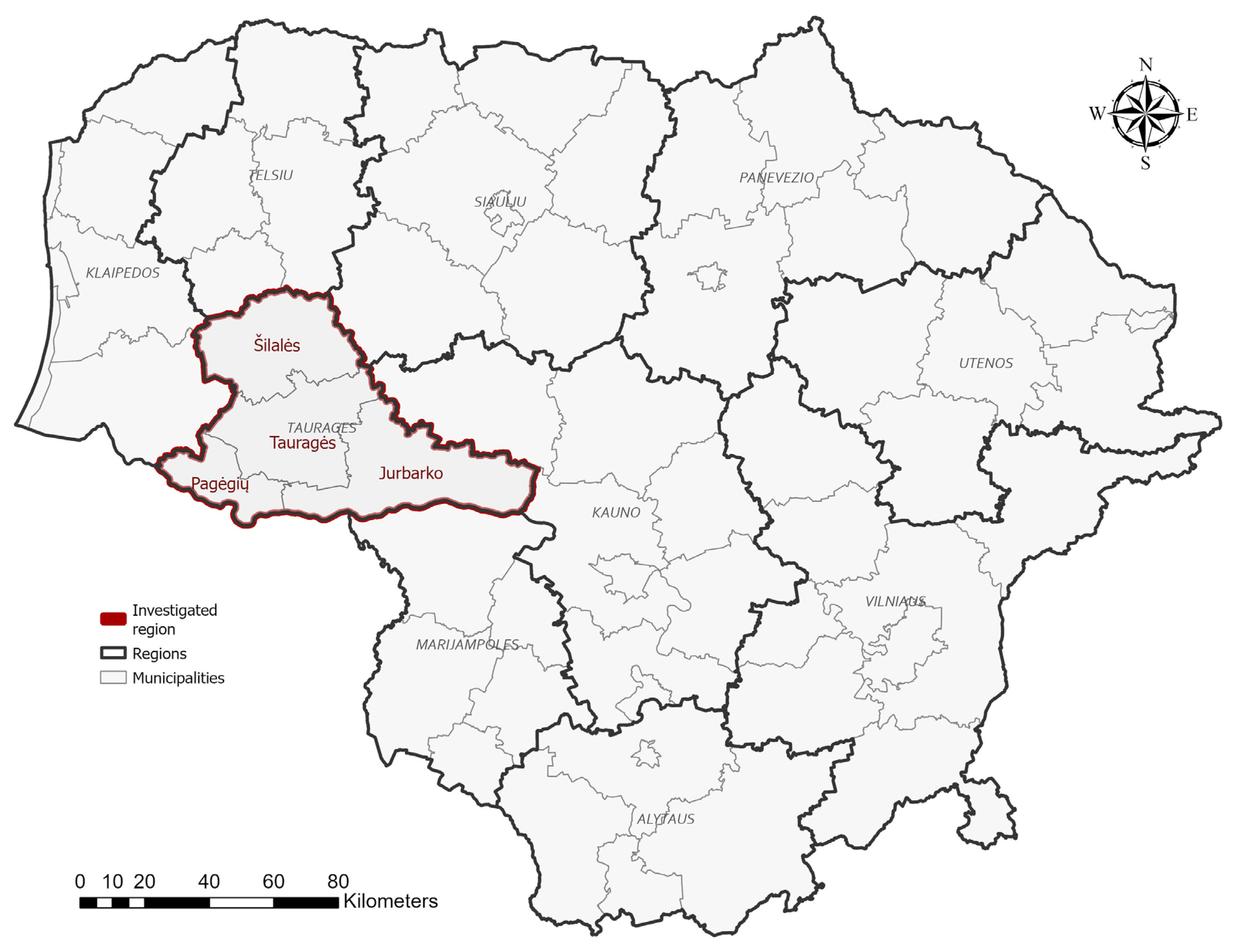
The study was conducted to delineate areas most appropriate for the substitution of scheduled PT with DRT alternatives, developing the methodology based on a specific region of Lithuania. The Tauragė region, selected region to investigate (Figure 1), was strategically selected due to the following considerations: (1) it is among the two regions where a cohesive, integrated ticket PT system is under development across more than two municipalities; (2) the unified system encompasses all four municipalities within the region. This selected region exemplifies the comprehensive structure of transportation services, comprising the regional center city of Tauragė, which is serviced by both city and suburb routes. The remaining municipalities benefit from an extensive network of suburb routes. Additionally, intercity bus routes constitute a pivotal component of the regional transport infrastructure, significantly enhancing the frequency of commuter travel from peripheral areas to regional urban centers.
Figure 1. The map of location of the investigated region (created by the authors).
In an effort to enhance the operational framework of regional PT, a decision has been made to incorporate DRT into the existing PT network as a supplementary option to conventional services. Amidst the evolving patterns of work and travel, there is an increasing necessity for solutions that enhance the flexibility, accessibility, and responsiveness of PT services to user demands.
An empirical survey conducted by the ‘Green Region’ (City of Tauragė) in 2022, alongside a theoretical analysis, forms the foundation for a methodology currently under development. This methodology is designed to enable the selected region to discern areas where alterations to the PT operational model are feasible. The methodology comprises the following principal steps:
  • Identification of areas serviced by DRT (designated as DRT areas);
  • Modification or elimination of routes within these DRT areas;
  • Evaluation of the congruence between transport provision and the requirements of the local populace, with an estimation of the frequency of PT service provision in DRT areas;
  • Subsequently, the improved PT system’s performance is compared to the existing model through metrics such as bus mileage and passenger travel time costs.
PT planning in regional has imperative to incorporate the passenger’s viewpoint. The overarching objective is to enhance the accessibility of regional municipalities (smaller communities), optimize the utilization of the vehicle fleet, elevate public satisfaction with PT, and minimize travel distances and time costs. Public perception favors travel options characterized by minimal duration and distance, with the most preferred routes being the shortest and fastest between two points. There is an observed dynamic where increased transport provision by municipalities correlates with heightened transport demand, and vice versa.
The integration of conventional PT operational systems with DRT services allows passengers to utilize DRT to reach the nearest transportation hub, after which they can continue their journey to their final destination using regular PT. This integrated approach is posited as an effective strategy for cost optimization and enhancing the overall efficiency of the PT system. Optimization strategies include: (1) the redistribution of mileage, whereby the realignment of regular route segments yields mileage savings; (2) these savings, both in terms of mileage and financial resources, contribute to a fund dedicated to financing DRT.

2.1. Model Building and Calibration

In order to evaluate the effects of DRT within the region, a digital model of PT was devised for the designated area. This model was constructed utilizing the PTV Vissum 2024 software, whereby the region’s zones were delineated based on an array of available social, economic, statistical, and demographic datasets. The region was partitioned into zones corresponding to the smallest level of administrative division, specifically elderships, as exemplified by Lithuania. The partitioning of zones according to elderships mitigates potential inaccuracies and errors during data processing within the model. The centrality of zones was determined by the following criteria: the most urbanized area, the largest population size, or the greatest population density. Subsequently, connections were established from the zone’s center to the bus route stops:
  • The connectivity is not established over an extensive distance through the forest or across the river.
  • Each existing PT stop is allocated a specific link.
  • These links are systematically established between distinct zones.
  • Furthermore, the link is delineated over a connector not exceeding 3 km.
In regional transportation models, the analysis period is not confined to a single peak hour due to the low passenger flow volumes characteristic of these areas. PT services within these regions are typically provided on selective days of the week, during restricted hours, and at a frequency of only 1–2 times per day. Consequently, the selection of an appropriate model period must be tailored to the specific conditions of the region under study. For studies focusing on areas with low population density, it is recommended to utilize a modeling period encompassing either a single working day or a period of 5 working days. The selection of the model assignment period should incorporate consideration of the available cumulative data.
During the trip generation stage, it is advisable to categorize the residents of each zone into distinct demographic groups—such as children, schoolchildren, students, seniors, working individuals, and the unemployed—thereby capturing the diversity of movement patterns. The number of demographic groups utilized is contingent upon the extent of available regional data. Furthermore, it is imperative to have access to statistical data pertaining to employment figures, as well as the capacity of kindergartens and educational institutions. Travel models are subsequently formulated based on these data. In the constructed model, all types of trips undertaken by residents are evaluated; however, in instances where data availability is limited, it is advisable to restrict the analysis to daily household trips, excluding leisure-related travel.
In the trip distribution phase, it is imperative to develop an Origin-Destination (OD) matrix that delineates the travel behaviors, durations, and destinations of individuals. For the construction of an OD matrix within regional contexts, the household survey method is not employed in regional PT models. Instead, it is recommended to utilize a gravity model, wherein the selection of suitable mixed function parameters a, b, and c is crucial. The spatial distribution of trips, which is determined by parameters a, b, and c, necessitates empirical studies on the transport behavior of residents by trip type. In the absence of such data, the parameters a, b, and c from other analogous regions, where these parameters have been previously established, may be adopted. This approach is deemed acceptable for synthetic models. It is important to acknowledge that the parameters a, b, and c of the trip complexity function vary based on the type of trip.
During the trip assignment phase, the fixed schedule-based model is identified as the most appropriate approach for regional applications. The culminating phase of the four-step model encompasses network flow assignment modeling, specifically through the development of a Logit model. In the computation of the IPD indicator pertinent to a particular low-density area, it is imperative to assess the values of the PJT indicators. It is recommended that the selection of PJT indicator values be informed by data from resident surveys regarding PT utilization and the outcomes of regression analyses exploring factors impacting regional PT passenger flows. It is crucial to acknowledge that the formulation of the demand model is modified in accordance with the prevailing cultural, religious, and travel paradigms within the region.
During the calibration phase, the coefficient of determination r2 (Tables S1 and S2), was determined to be 0.87 (Figure S1). The developed model was calibrated by comparing the obtained passenger flows with passenger flow calculation studies conducted in September 2022 (Table S3). Comparisons of passenger flows on all routes used in the model were used for calibration and validation. The results obtained indicate a substantial alignment between the model’s predicted passenger flows and the observed data. The outcomes of the modeling process, encompassing both the calibration and validation of the base model, demonstrate that the PT operational model was accurately executed. Furthermore, the base model effectively mirrors the actual PT operational system, rendering it a reliable framework for implementing modifications to the current transport network.

2.2. Methodology for Changing the Type of Public Transport Organization

The initial phase involves identifying the geographic regions suitable for DRT implementation, herein referred to as DRT areas. DRT possesses the capability to address the transportation requirements of underserved populations, enhance connectivity efficiency, minimize transfer occurrences, optimize vehicle usage in accordance with travel demands, and decrease the overall operating expenses of PT. The deployment of DRT services enables coverage of broader geographic expanses and guarantees a baseline level of service provision.
To delineate DRT areas, specific criteria and their corresponding boundaries are established, namely territorial and route dimension boundaries. The territorial dimension criteria include population density and employment figures.
A low population density serves as a principal criterion for categorizing regions as remote. Specifically, regions with fewer than 20 inhabitants per square kilometer are classified as rural or low-density areas [22,23]. In such areas, the passenger demand is insufficient to justify the economic viability of conventional PT services. The standard PT accessibility radius is 2 km, encompassing an area of 12.56 square kilometers. In regions characterized by low population density, with 20 inhabitants per square kilometer and a PT accessibility of 2 km, the population amounts to 251 individuals. Based on data from the official statistics portal of the Republic of Lithuania [24], the employment rate stands around 74%, for persons aged 15–64. Following a comprehensive analysis of all Lithuanian municipalities, a threshold of 200 jobs was established. Regions with fewer than 200 employment opportunities exhibit low daily travel demand, suggesting limited feasibility for regular transport services.
It is accepted that the DRT service should be integrated into areas where the territorial dimensions are within the following limits:
(a)
Population density is less than 20 inhabitants/km2;
(b)
The number of jobs is less than 200 in one place.
Although there are many sources analyzing the specifics of creating PT operational models, no literature was found specifically for creating regional models. In the case of the Tauragė region pilot project, considering the identified passenger needs and dissatisfaction with the current PT system, and taking into account the widespread problem in Lithuania that regular PT services and bus operations are not economically viable in smaller towns and villages, a methodology adapted for regional municipalities composed of low-density areas is proposed. In municipalities with higher population density, PT routes should be changed, and the frequency of trips should be increased. In municipalities with lower population density, the proposed methodology can be implemented, which would allow optimizing PT operational costs and ensuring the provision of higher quality services to residents.
In regions characterized by low population density, the incorporation of adaptable PT systems, such as DRT, into the existing PT infrastructure adheres to the methodology devised by the authors, as delineated below.
During the development of a model for PT operational systems, the initial phase involves the collection of primary data:
  • Existing passenger flow data on PT routes. These data are more easily collected with an electronic ticket system and/or other permanent passenger counting tools.
  • Road and street network data. These data are imported from existing information or planning systems, e.g., from GTFS data based on actual facts and adjusted according to the latest collected information.
  • Current data on PT stops and routes (routes, directions, frequencies, and schedules). These data are imported from GTFS based on actual facts (such data are already collected in Lithuania [25] and updated according to official PT organizers’ information.
  • Demographic (population) data, such as the number of children, schoolchildren, students, seniors, working residents, unemployed, etc. This information is available from the State Data Agency.
  • Statistical data, such as the number of jobs, places in kindergartens, educational institutions, etc. This information is found according to the State Data Agency, available GIS platforms, etc.
  • Modal distribution data, which are found in territorial planning documents (Master Plans, Sustainable Mobility Plans, etc.).
  • Survey data of the region’s residents on the use of PT services (whether residents use the PT system, whether they are satisfied with it, reasons for not using it, what would encourage them to start using it, etc.).
  • Results of the regression analysis of the criteria determining the region’s PT passenger flows.
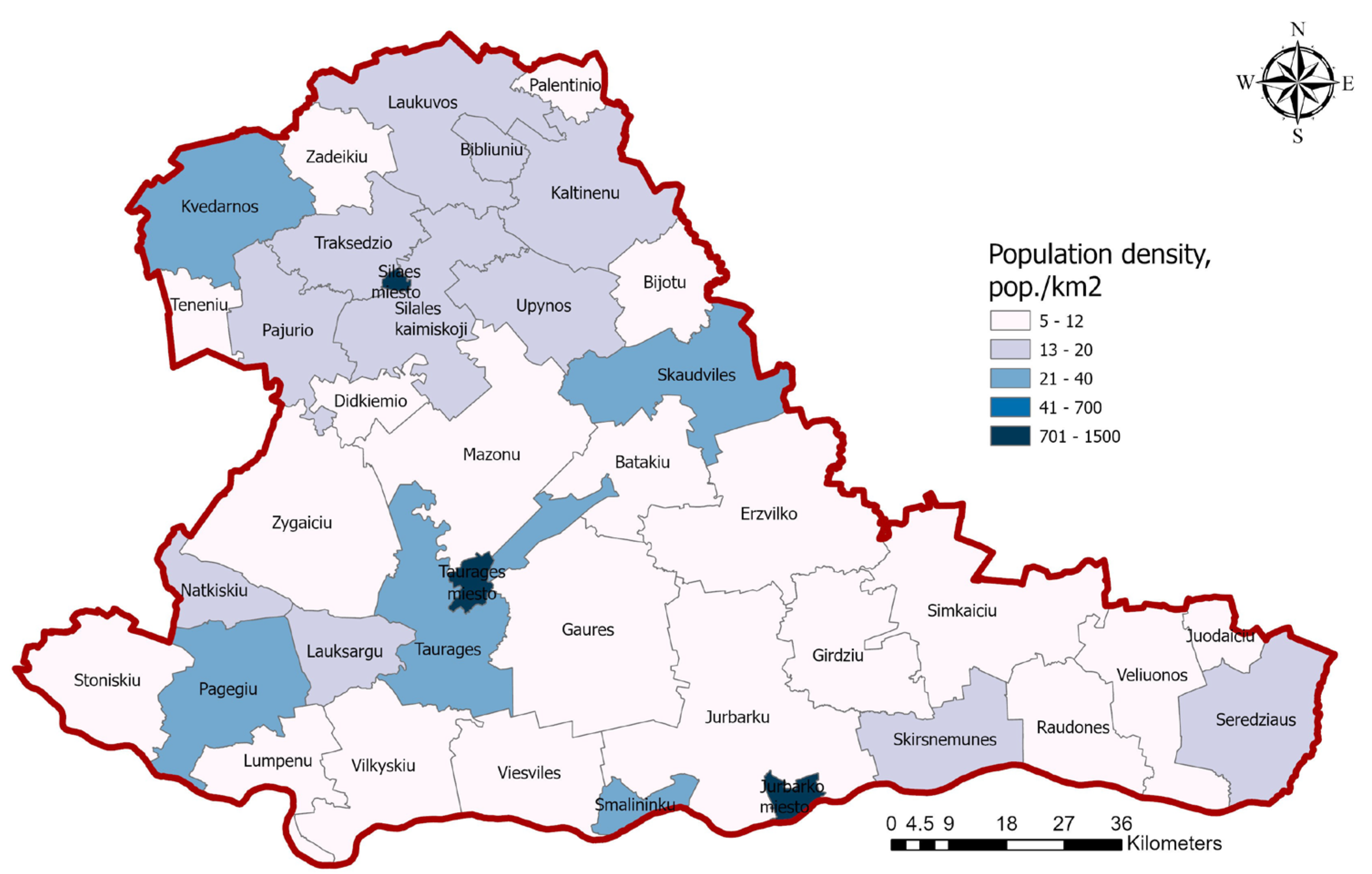
The dataset has been systematically categorized based on the administrative divisions of the territory. At this stage, it is not presupposed that an increased volume of data inherently guarantees enhanced model accuracy or result reliability. The data is meticulously collected and evaluated to ensure its quality and appropriateness for subsequent analysis. Figure 2 illustrates the population density map of the Tauragė region, delineated by individual elderships.
Figure 2. The population density map of Tauragė county by elderships, N° citizen/km2 (created by the authors).
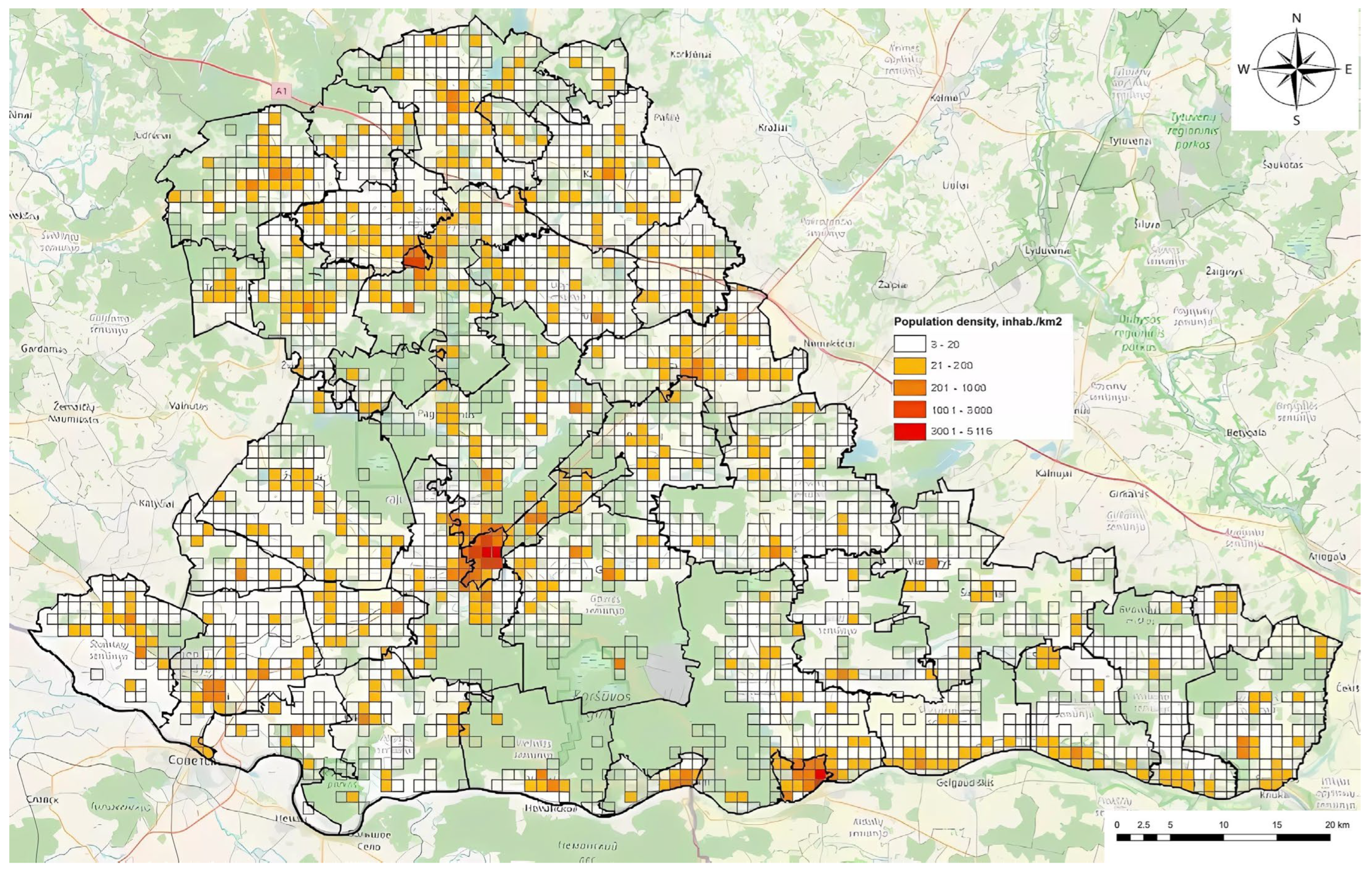
The first step. Identification of areas with elevated population density is essential (refer to Figure 3). Areas where the population density exceeds 20 inhabitants per square kilometer are delineated by colored grids. In these regions, it is imperative to ensure the provision of consistent PT services.
Figure 3. The population density of Tauragė region in grids (compiled by the authors). The background source used to create the figure is the World Topo Map from ESRI.
The highest population density concentration is in the main elderships of the Tauragė region, where the largest urban areas exist: Tauragė city (1500 inhabitants/km2), Jurbarkas city (712 inhabitants/km2), Šilalė city (1311 inhabitants/km2).
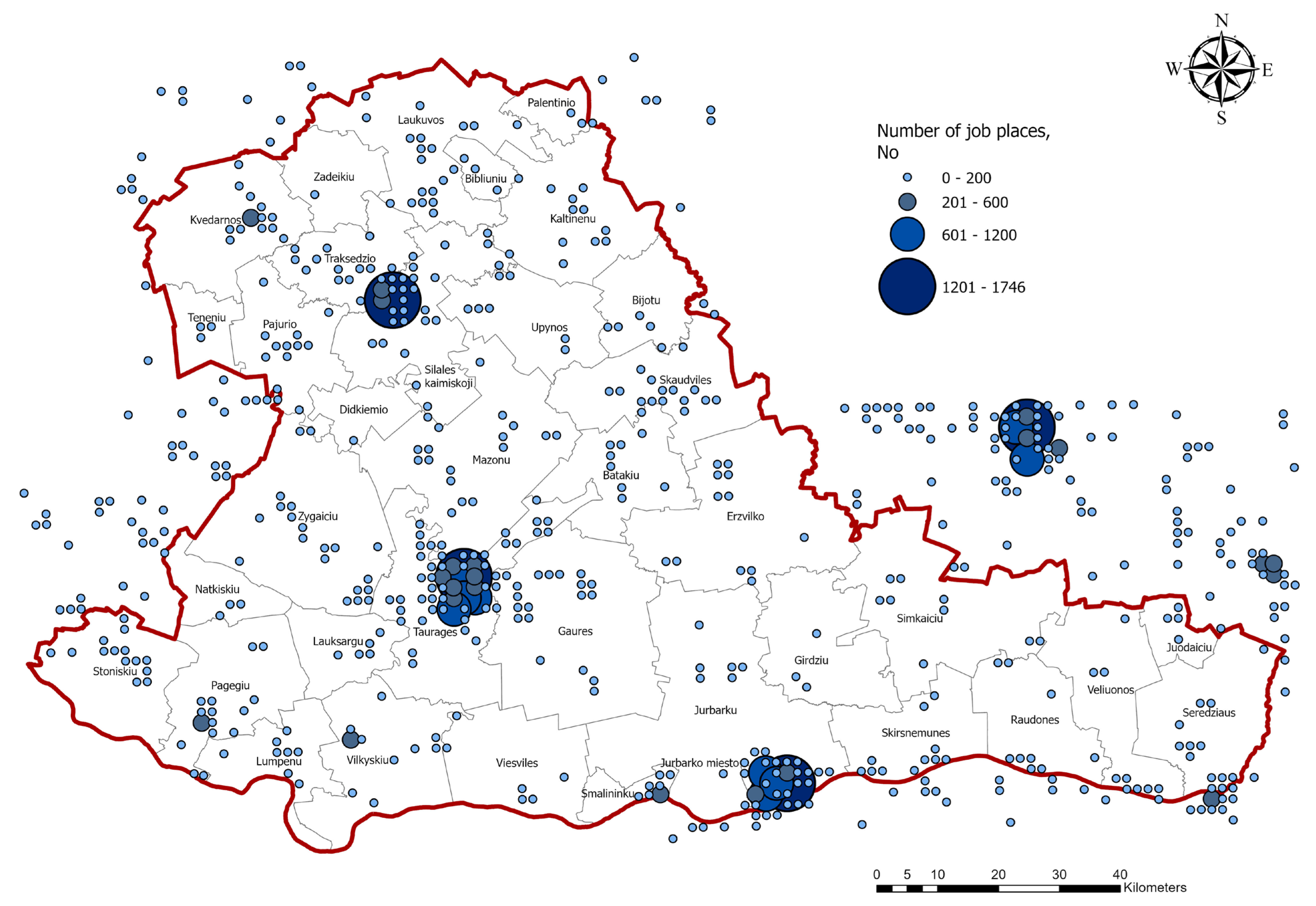
The same situation applies to the assessment of the number of jobs: it is necessary to identify local areas (Figure 4).
Figure 4. The map of the number of job places in Tauragė region (compiled by the authors).
Job places are completely undeclared in the elderships of Raudonė, Palentinys, Teneniai, and Žadeikiai (0 job place). The highest number of job places is in the main elderships of the Tauragė region: Tauragė city (8414 job place), Jurbarkas city (4000 job places), Šilalė city (2418 job places).
PT systems with predetermined routes achieve optimal performance only when a specific demand threshold is surpassed, thereby ensuring the efficient operation of these routes. In contrast to fixed PT service arrangements, DRT offers passengers greater flexibility in their travel options. It is imperative to consider both the spatial and route-specific dimensions. The route utility criterion quantifies the average number of passengers traveling on a given route, alongside the revenue-to-cost ratio and the benefits to PT organizers. If this metric is comparatively low relative to alternative routes, the route is deemed underutilized. The passenger density per kilometer is computed by dividing the total number of passengers utilizing the route by its total length.
K = N L ;
where K—the route utility criterion pass/1 km, N—the number of passengers on the route, passengers; L—the length of the route segment, km.
The minimum route utility criterion between stops is 5 for the route to be effective. The average PT accessibility is 2 km, the distance between 2 PT stops is 4 km. When the number of PT passengers is equal to 20 passengers/day, the route utility criterion is:
K = 20 4 = 5   pass / 1   k m .
From the results of Formula (2), we can see that with a daily passenger count of 20, the route utility criterion is minimal, and the PT route remains effective. Based on the statistics of the Republic of Lithuania, the route optimization criteria currently used in Lithuania, and the proposed route utility criteria, the following assumptions are defined:
  • Unused bus stops—a bus stops where the number of passenger trips per month is 0.
  • An underutilized section of a PT route is characterized by transporting no more than 20 passengers per working day.
  • An underutilized route loop is an additional route branch ending at a single stop where the number of passengers transported is no more than 20 trips/working day.
Two possible route criteria conditions are provided, at least one of which must be met:
  • Condition I. There exists an underutilized route section when there are at least three unused PT bus stops in the DRT area.
  • Or
  • Condition II. There exists an underutilized route loop when there is one unused PT bus stop in the DRT area, which is reached by creating a route loop.
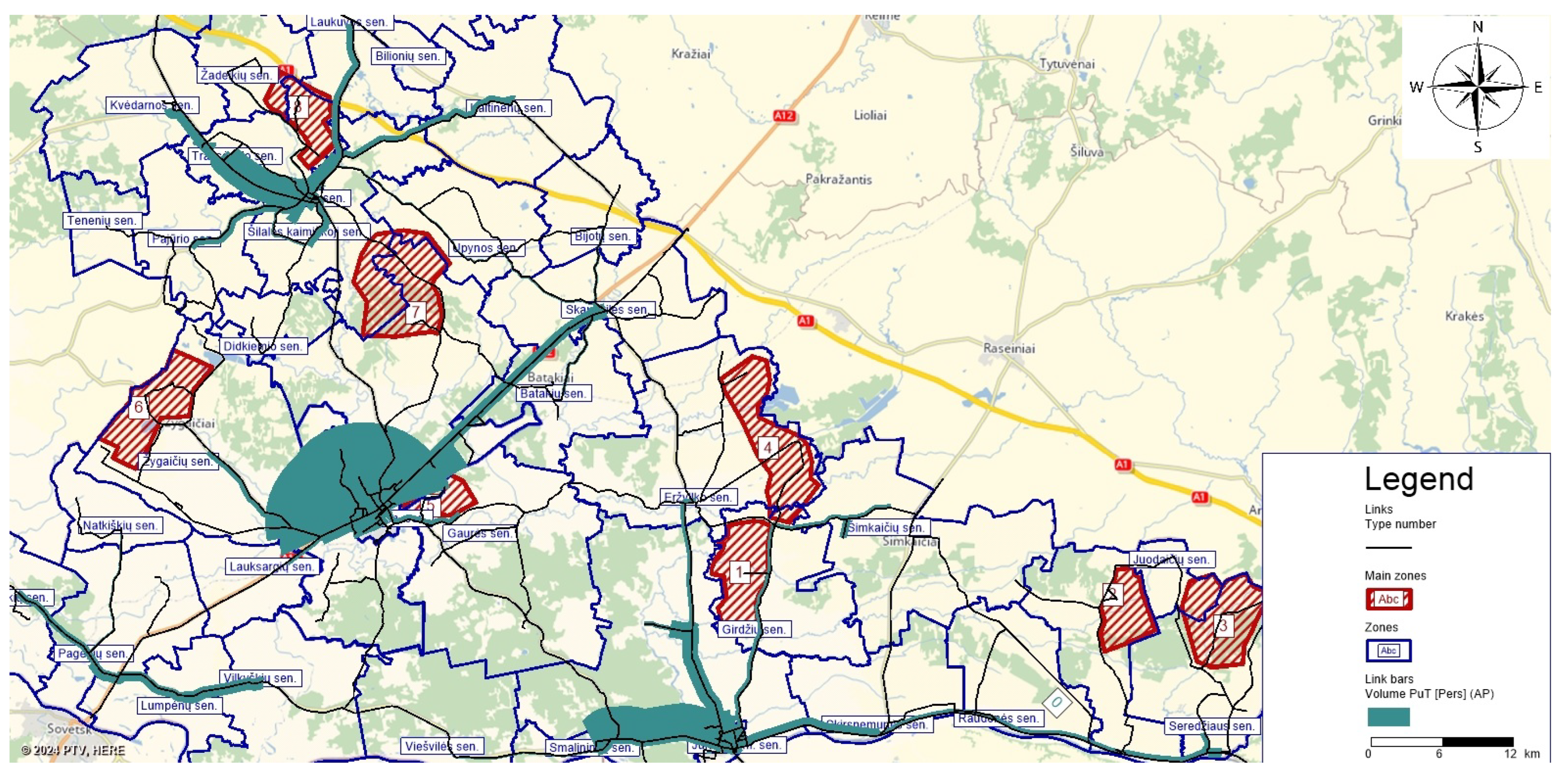
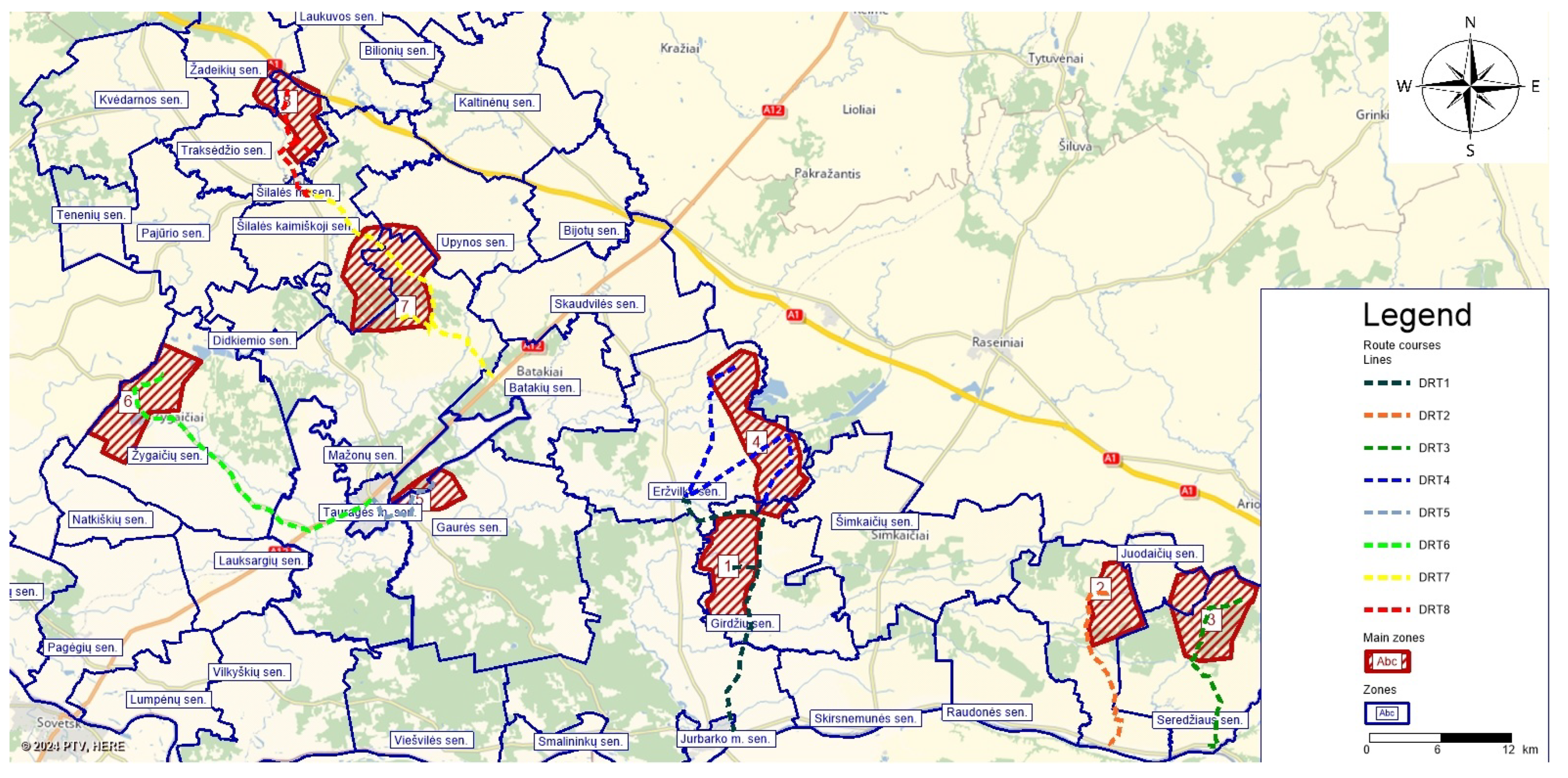
Based on the criteria of territorial and route dimensions and their boundaries, which are based on the previously defined assumptions, DRT areas were designated where regular PT is proposed to be abolished and DRT introduced. This PT is user-oriented and designed to meet the needs of different users. In the Tauragė region, 8 DRT areas have been identified (Table S4), shown in Figure 5.
Figure 5. The DRT areas of Tauragė region (compiled by the authors). The background source used to create the figure is the PTV default Map, HERE.
The number of unused stops in DRT areas ranges from 1 to 7. Six out of eight areas had underutilized territories where the number of passengers was zero. According to the methodology, five DRT areas met Condition I, and the other three met Condition II.
The second step. The process entails the elimination or modification of routes within the designated DRT areas, specifically through the rectification of route sections. Flexible PT systems and appealing route configurations afford passengers the autonomy to make informed choices and facilitate the emergence of innovative services. A more linear PT route is associated with reduced travel duration and diminished bus mileage.
The third step. The objective is to conduct an analysis of the alignment between transport supply and the needs of the residents in order to enhance the PT route network. Typically, DRT services are offered for journeys either to or from central urban areas or designated points of interest. The routes may be distinctly defined, based on the destinations selected by clientele, or partially defined, for instance, servicing travel to or from intercity PT stations and other focal points of attraction. Additionally, the planning of DRT routes encompasses connectivity to transfer points within the PT system where the principal bus routes converge.
It is assumed that the DRT service area has an average PT service demand depending on the number of passengers on the removed regular PT routes. In this pilot case, based on the analyzed region’s passenger flow statistics, assumptions are made that will be used in the model to obtain the most accurate results:
  • In scenarios where route segments accommodating in excess of 50 passengers per month are eliminated, the DRT system within the specified area operates at a frequency of twice daily, contingent upon demand. This frequency of DRT operation is deemed sufficient to maintain fundamental connectivity with primary facilities and to provide convenient mobility options.
  • Conversely, route segments with passenger volumes below 50 per month be excluded, the DRT service frequency is adjusted to twice monthly, again contingent upon demand. This bi-monthly service provision ensures that transport services are maintained within regions of low population density, thereby preventing excessive strain on the PT system. Furthermore, this approach facilitates social inclusion by guaranteeing access to essential services, notwithstanding the sparse passenger traffic.
The fourth step. Comparison of the results of the bus mileage and passenger travel time costs after making changes to the existing PT operational model. Passenger travel time costs are the sum of the products of passenger trips and travel time from boarding to alighting stops. It should be noted that when making changes to the PT operational scheme, the number of passengers transported in the model does not change.

3. Results of Modeling the Provision of Regional Public Transport Services

The multiple regression analysis conducted during the study of regional municipalities showed that both long-distance and suburban passenger flows depend on bus mileage. Bus mileage serves as an indicator of the operational efficiency of the vehicle fleet. Equivalent mileage across varying municipalities results in differing intensities of demand. So the existing regular PT routes are removed from the identified DRT areas. In the DRT areas, 1–3 routes are shortened (12 routes in all 8 DRT areas).
The service routes of each DRT area are shown in Figure 6.
Figure 6. The routes on DRT areas (compiled by the authors). The background source used to create the figure is the PTV default Map, HERE.
The calibrated total bus mileage of the existing PT operational system is 287,684.18 km, and the passenger travel time is 23,541 h, 26 min, and 28 s. After straightening the PT routes, the total mileage of the PT system is 283,106.64 km, and the passenger travel time is 23,423 h, 14 min, and 46 s. By improving the PT system, the total bus mileage of the PT system decreased by 1.6% (a difference of 4577.54 km), and the total passenger travel time decreased by 0.5% (a difference of 118 h, 11 min, and 42 s).
In analyzing the frequency of DRT service, which is assumed to operate either bi-daily or semi-monthly (Tables S5 and S6), the cumulative DRT mileage amounts to 971.63 km. In contrast, the total mileage achieved by the enhanced PT system is 284,078.27 km. Upon comparison with the extant calibrated model, there is an observed reduction in the monthly PT bus mileage by 1.25%, equating to a decrement of 3605.91 km per month. Consequently, there is a concomitant reduction in the metrics of PT kilometers per passenger, operational costs per passenger, and greenhouse gas emissions per passenger.

4. Discussion and Conclusions

The developed methodology showed that in the selected region, the area of 4411 km2, it is possible to select 8 territories with inefficient PT, where the current organization of PT can be replaced by the DRT system. 6 out of 8 territories had unoccupied territories, where the number of passengers was equal to 0 and the number of unused stops was from 1 to 7. In 5 territories, more than 3 unused stops were identified, and in the other 3, one unused stop located in the route loop was identified. In these territories, 20 existing routes were changed and shortened, and the DRT service was introduced for the newly emerged unserved territories. The results showed that after changing the organization of the PT service, the total bus mileage decreased from 287,684.18 km per month to 284,078.27 km/month (which is 1.25%), and the total time spent by passengers on trips decreased by 0.5% (the difference is 118 h 11 min 42 s).
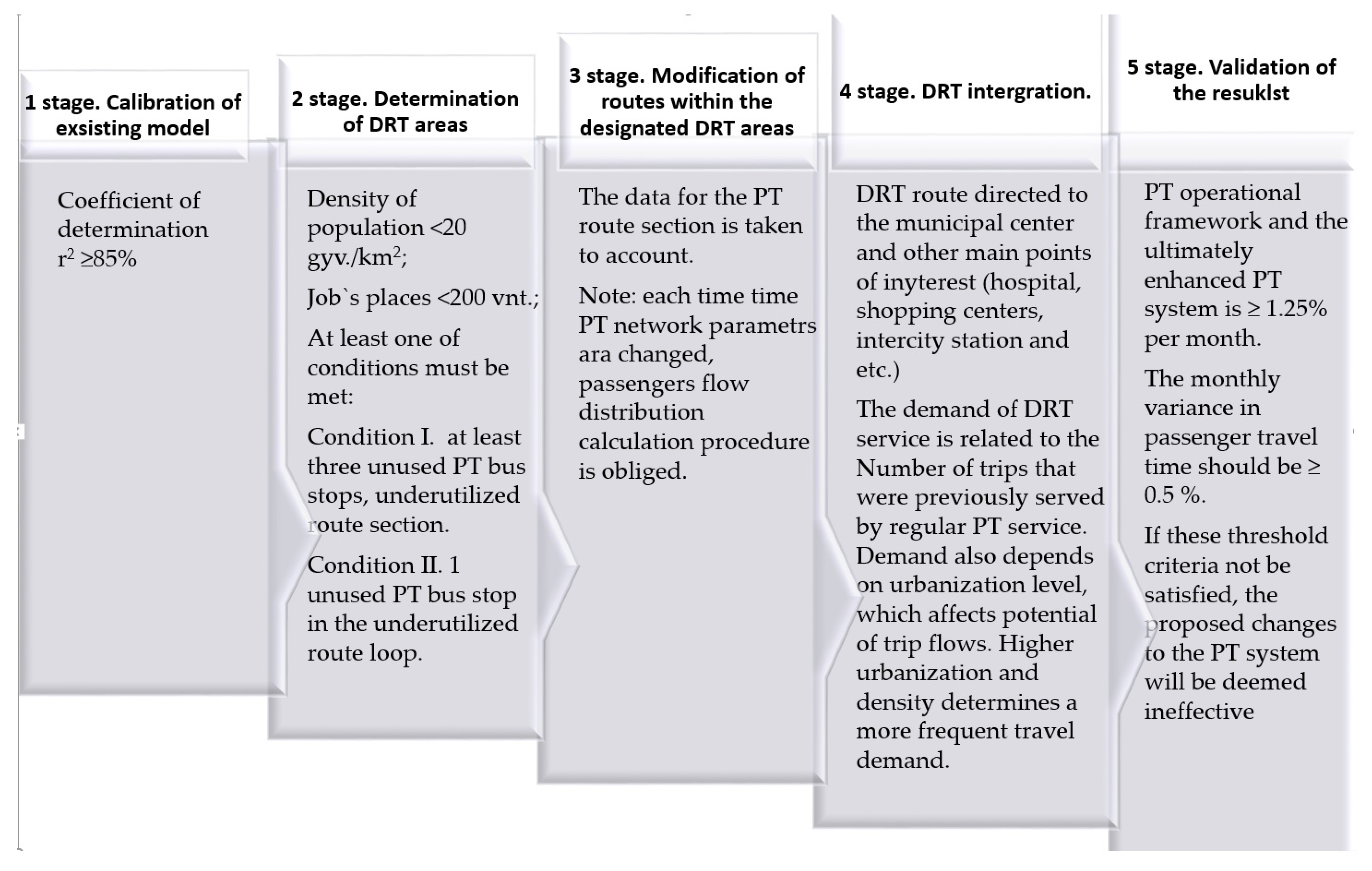
The pilot study conducted provides evidence supporting the efficacy of the developed methodology. Consequently, it is recommended to implement the proposed 5-step methodology for the allocation of territories to the DRT service mode, as illustrated in Figure 7. We would suggest applying this methodology to regions with very uneven population density and where the population density is less than 20 inhabitants/km2.
Figure 7. The PT service model improvement scheme for regions (compiled by the authors).
In order to delineate DRT areas with precision, it is imperative to analyze local population density along with the concentration of employment opportunities. Within DRT regions, the process involves the elimination or modification of conventional PT routes, thereby rectifying route sections to remove unnecessary loops. The primary objective of this operation is to minimize the total distance traveled by buses, consequently diminishing passenger travel time and enhancing the allocation of financial resources. It is crucial to incorporate the demand metrics associated with the sections that are removed or altered.
PT functions as a social service, necessitating that all low-density regions remain accessible. To achieve this objective, the DRT system should be integrated within the existing PT framework. The scale of implementation for the DRT system may be projected based on population demand metrics. Nonetheless, the primary objective is to ensure that low-density regions receive PT services that are strategically directed towards major transfer points, the municipal center, and/or key attraction centers, including but not limited to hospitals, clinics, shopping centers, and stations.
The demand for DRT services in a specified region is intrinsically linked to the number of passengers who were previously accommodated by decommissioned regular PT routes. This demand is further influenced by the degree of urbanization within the region, which delineates the potential for passenger flow. An elevated level of urbanization correlates with an increased probability that DRT services will be required with greater frequency. The precise frequency of DRT service provision—measured in occurrences per day, week, or month—may differ across regions due to varying levels of demand. Additional factors such as population density, prevalent travel destinations, and the characteristics of local transport infrastructure also significantly impact the demand for DRT services. Higher urbanization levels and population density increase the demand for DRT services, but the frequency of service depends on specific regional factors, such as travel purposes and transport infrastructure characteristics. Regions should analyze their passenger travel purposes and plan the intensity of the proposed DRT service accordingly. Other established indicators can be used in other regions where the DRT system is to be implemented.
In the process of enhancing the prevalent PT system through a detailed comprehension of passenger requirements—such as the introduction of DRT services—PT managers are required to conduct a comparative analysis of the outcomes related to bus mileage and the costs associated with passenger travel time. To validate the efficacy of the modifications applied to the PT system, it is imperative that the monthly variance in bus mileage between the calibrated pre-existing PT operational framework and the ultimately enhanced PT system is no less than 1.25%. Moreover, the monthly variance in passenger travel time should not fall below 0.5%. These specified threshold values are experimental parameters, derived from an analysis of the necessity for PT system restructuring within the pilot region. Should these threshold criteria not be satisfied, the proposed changes to the PT system will be deemed ineffective.
This research is only an initial stage; further in-depth analysis on how the DRT system operates, such as vehicle capacity, booking time, fleet size, average speed, energy type (electric or fossil fuel), and measures for handling full capacity situations, among others. If the region has a lot of work trips that are concentrated in one place, it should be considered to provide the service in addition to the regular services, without increasing the overall frequency of routes.
The application of the proposed methodology also addresses the issues of sustainable mobility and improving social equality. Providing reliable PT services even to those residents of the region who live in low-density areas would reduce the population’s dependence on private cars and increase the social equality of the population. Reducing empty bus mileage, in addition to economic goals, also has environmental goals—both air and noise pollution are reduced.

Supplementary Materials

The following supporting information can be downloaded at: https://www.mdpi.com/article/10.3390/futuretransp5040189/s1, Table S1. r2 dependencies; Table S2. Analysis of variance for the r2; Table S3. The results of the currently calibrated PT system; Table S4. Determined DRT territories and their characteristics; Table S5. VTP territories served 2 times a month; Table S6. VTP territory served 2 times a day (compiled by the author). Figure S1. Double-squared model dependencies.

Author Contributions

Conceptualization, R.U.-V. and J.R.; methodology, R.U.-V. and J.R.; validation, R.U.-V. and J.R.; investigation, A.S.; data curation, J.R.; writing—original draft preparation, A.S.; writing—review and editing, R.U.-V. All authors have read and agreed to the published version of the manuscript.

Funding

This research received no external funding.

Institutional Review Board Statement

Not applicable.

Data Availability Statement

All data are available within the text.

Acknowledgments

We would like to thank Green Region for sharing the results of the public transport passenger survey conducted in 2021 and for their cooperation.

Conflicts of Interest

The authors declare no conflicts of interest.

Abbreviations

The following abbreviations are used in this manuscript:
PTPublic transport
DRTDemand-responsive transport
O-DOrigin-Destination (OD) matrix

References

  1. Mugion, R.G.; Toni, M.; Raharjo, H.; Di Pietro, L.; Sebathu, S.P. Does the service quality of urban public transport enhance sustainable mobility? J. Clean. Prod. 2018, 174, 1566–1587. [Google Scholar] [CrossRef]
  2. Št’astná, M.; Vaishar, A.; Stonawská, K. Integrated Transport System of the South-Moravian Region and its impact on rural development. Transp. Res. Part D Transp. Environ. 2015, 36, 53–64. [Google Scholar] [CrossRef]
  3. Mounce, R.; Beecroft, M.; Nelson, J.D. On the role of frameworks and smart mobility in addressing the rural mobility problem. Res. Transp. Econ. 2020, 83, 100956. [Google Scholar] [CrossRef]
  4. Goodwin-Hawkins, B. Future Innovation for Rural Public Transport; National Innovation Centre Rural Enterprise: London, UK, 2021. [Google Scholar]
  5. Velaga, N.R.; Nelson, J.D.; Wright, S.D.; Farrington, J.H. The potential role of flexible transport services in enhancing rural public transport provision. J. Public Transp. 2012, 15, 7. [Google Scholar] [CrossRef]
  6. Yatskiv, I.; Budilovich, E.; Gromule, V. Accessibility to Riga public transport services for transit passengers. Procedia Eng. 2017, 187, 82–88. [Google Scholar] [CrossRef]
  7. Saif, M.A.; Zefreh, M.M.; Torok, A. Public transport accessibility: A literature review. Period. Polytech. Transp. Eng. 2019, 47, 36–43. [Google Scholar] [CrossRef]
  8. Goodwin-Hawkins, B. Demand Responsive Transport in Rural Areas: Carmarthenshire, Ceredigion, Monmouthshire & Pembrokeshire, Wales. 2020. Available online: https://www.researchgate.net/publication/341939873_Demand_Responsive_Transport_in_Rural_Areas (accessed on 15 September 2024).
  9. Avermann, N.; Schlüter, J. Determinants of customer satisfaction with a true door-to-door DRT service in rural Germany. Res. Transp. Bus. Manag. 2019, 32, 100420. [Google Scholar] [CrossRef]
  10. Schasché, S.E.; Sposato, R.G. Systematic Literature Review of Demand-Responsive Transport Services. 2021. Available online: https://www.iaee.org/en/publications/proceedingsabstractpdf.aspx?id=17019 (accessed on 15 September 2024).
  11. Clewlow, R.R.; Mishra, G.S. Disruptive Transportation: The Adoption, Utilization, and Impacts of Ride-Hailing in the United States. 2017. Available online: https://escholarship.org/uc/item/82w2z91j (accessed on 22 November 2024).
  12. Kloth, H.; Mehler, S. Nachfragegesteuerte verkehre oder on-demand-ridepooling? Nahverkehr 2018, 36–39. [Google Scholar]
  13. Schasché, S.E.; Sposato, R.G.; Hampl, N. User acceptance of demand-responsive transport services in rural areas: Applying the UTAUT to identify influential latent constructs. In Proceedings of the IEWT, Online, 8–10 September 2021. [Google Scholar]
  14. Melis, L.; Sörensen, K. The On-Demand Bus Routing Problem: A Large Neighborhood Search Heuristic for a Dial-a-Ride Problem with Bus Station Assignment (No. 2020005). 2020. Available online: https://ideas.repec.org/p/ant/wpaper/2020005.html (accessed on 22 November 2024).
  15. Tracks. The Future of Rural Bus Services in the UK. September 2020. Available online: https://bettertransport.org.uk/wp-content/uploads/legacy-files/research-files/The-Future-of-Rural-Bus-Services.pdf (accessed on 22 November 2024).
  16. Bauchinger, L.; Reichenberger, A.; Goodwin-Hawkins, B.; Kobal, J.; Hrabar, M.; Oedl-Wieser, T. Developing Sustainable and Flexible Rural–Urban Connectivity through Complementary Mobility Services. Sustainability 2021, 13, 1280. [Google Scholar] [CrossRef]
  17. Koster, R. Demand-Responsive and Sustainable Ways of (Public) Transport to Keep Shrinking Regions in Groningen Accessible. Ph.D. Dissertation, University of Groningen, Groningen, The Netherlands, 2021. [Google Scholar]
  18. Campisi, T.; Spadaro, C.; Russo, A.; Tesoriere, G.; Torrao, G. The Development of Integrated Public Transport and on Demand Services (PTs-DRTs) for Greater Flexibility and Complementarity of Transport Mode Choices. In Proceedings of the International Conference on Computational Science and Its Applications, Istanbul, Türkiye, 30 June–3 July 2025; pp. 48–64. [Google Scholar]
  19. Caramuta, C.; Grosso, A.; Longo, G.; Ricchetti, C.; Rotaris, L. Design, implementation and monitoring of a Demand Responsive Transport service for student leisure transfers: The case study of University of Trieste. Transp. Eng. 2025, 20, 1003457. [Google Scholar] [CrossRef]
  20. What It Is—Lazdijai Drive? (Kas yra Lazdijai veža?—In Lithuanian). Available online: https://lazdijaiveza.lt (accessed on 24 September 2024).
  21. Camprisi, T.; Russo, A.; Spadaro, C.; Tiesoriere, G.; Torrao, G. Times Slot Choice Analysis for DRT Service: Evidence from Ragusa Province, Italy. 2025. Available online: https://www.archivesoftransport.com/index.php/aot/article/view/787/616 (accessed on 22 November 2024).
  22. Castillo, C.P.; Barranco, R.R.; Curtale, R.; Kompil, M.; Jacobs-Crisioni, C.; Rodriguez, S.V.; Auteri, D. Are remote rural areas in Europe remarkable? Challenges and opportunities. J. Rural Stud. 2024, 105, 103180. [Google Scholar] [CrossRef]
  23. Yuan, G. Rural electrification goes local: Recent innovations in renewable generation, energy efficiency, and grid modernization. IEEE Electrif. Mag. 2015, 3, 16–24. [Google Scholar] [CrossRef]
  24. Official Statistics Portal of the Republic of Lithuania. Available online: https://osp.stat.gov.lt/en (accessed on 15 December 2024).
  25. Portal of Public Transport Routes in Lithuanian. Available online: https://www.visimarsrutai.lt/gtfs/ (accessed on 8 November 2024).
Disclaimer/Publisher’s Note: The statements, opinions and data contained in all publications are solely those of the individual author(s) and contributor(s) and not of MDPI and/or the editor(s). MDPI and/or the editor(s) disclaim responsibility for any injury to people or property resulting from any ideas, methods, instructions or products referred to in the content.

Article Metrics

Citations

Article Access Statistics

Multiple requests from the same IP address are counted as one view.