


Abstract
Population aging requires residential environments that go beyond basic accessibility. This study theorizes and validates the Accessibility Gap (the divergence between regulatory compliance and the functional lived experience of older adults) using a Multi-Criteria Decision Analysis (MCDA) tool. The research uses a weighted linear aggregation model based on user-centered design and the International Classification of Functioning, Disability, and Health (ICF). Thirty dwellings—apartments, single-story, and two-story houses—were evaluated in Chile’s Metropolitan Region. The model applies 40 indicators, normalized on a 0–100% scale across six dimensions, and weighted by older adults and caregivers. Results reveal fragmented accessibility gap: basic features often meet standards; yet important deficits remain in highly prioritized areas—autonomy, safety, and communication. The Global Performance Index (GPI) identifies “accessibility gaps” that traditional assessments miss. By combining objective metrics with subjective experiences, this study delivers a replicable, evidence-based framework. It shows that specific design choices, rather than architectural configuration, better support functional independence. The MCDA approach provides a robust tool for guiding housing rehabilitation and public policies that support aging in place and ensure homes meet the needs of an aging population.
1. Introduction
Population aging is a central demographic challenge of the 21st century, progressing rapidly in Latin America and the Caribbean. Projections indicate that by 2050, nearly one in four people in the region will be 60 years or older [1]. In Chile, 14% of the population is currently aged 60 or over, and estimates suggest that in less than three decades, this group will represent approximately one-third of the national total [2]. These demographic shifts anticipate tangible changes in daily life, as many residential environments were not originally designed to accommodate the functional changes associated with aging [3].
The relationship between physical housing characteristics and health has been internationally recognized within the Sustainable Development Goals (SDGs) (SDG 3—Good Health and Well-being and SDG 11—Sustainable Cities and Communities) [4]. In this context, housing accessibility is identified as a key factor, defined as the compatibility between an individual’s functional capacity and the demands of the residential environment [5]. Nevertheless, evidence shows that in many countries, residential accessibility remains insufficient to meet the needs of an aging population [6].
The concept of “aging in place”, defined as the ability to live safely, independently, and comfortably in one’s own home regardless of age or functional capacity, has become a cornerstone for social and housing policies in aging societies [7,8]. Remaining at home promotes autonomy, maintains social networks, and enhances the perception of control over daily life; however, these benefits depend on the adequacy of the physical environment. When housing presents barriers, everyday activities such as moving around, accessing the bathroom, or using equipment can become restrictive or hazardous for older adults [9,10,11,12,13].
Biological aging leads to changes in body functions essential for home life, such as loss of muscle mass, strength, and sensory abilities [14,15]. Residential accessibility is the “fit” between a person’s functional capacity and environmental demands [5]. Poor fit can increase dependence in Activities of Daily Living (ADL) and harm well-being and quality of life [16,17].
For aging in place to work, housing must provide both inclusive accessibility. However, design standards and regulatory frameworks often fail to reflect the real needs of older adults [7,8,10,18,19]. This creates a gap between regulation, architectural design, and lived experience. This issue is clear in Chile, where the housing stock is varied, and many dwellings lack universal accessibility [20].
International literature associates the physical characteristics of the home with significant health and functional outcomes, such as increased risk of falls, ADL limitations, loss of independence, and reduced social participation [13,21,22,23,24]. Home modifications, including accessibility improvements, fall prevention, and safety enhancements, show clear benefits, including reduced difficulty in daily tasks, decreased need for healthcare, and, in some studies, delaying institutionalization by up to ten years while reducing long-term care costs [25]. Positive effects on fall prevention and overall safety are also reported [26,27,28,29].
Despite these findings, the methodological quality of available evidence is generally low. This is due to heterogeneous study designs, a predominance of cross-sectional studies, and the use of partial or non-comparable instruments for evaluating the domestic environment [30,31]. Furthermore, much research focuses on partial physical adaptations (bathrooms, ramps, circulation) based on technical or safety criteria, overlooking a holistic understanding of inclusive accessibility and its relationship with well-being, identity, and the daily experience of the home [9,12,32,33].
From the ICF perspective, residential accessibility is the adjustment between functional capacities and environmental demands; disability results from the interaction between health conditions and personal/environmental factors [34]. Minor barriers, such as inadequate equipment height, poor lighting, or unsafe circulation, can accumulate and cause significant daily restrictions, especially during functional decline [9,33].
In previous research, the authors proposed architectural criteria for residential accessibility based on a user-centered design approach, integrating multi-criteria methodologies such as the Analytic Hierarchy Process (AHP) and the ICF conceptual framework [35,36]. While these contributions have helped structure and prioritize relevant evaluation dimensions, an empirical void persists regarding the systematic evaluation of real, occupied homes of older adults, particularly in Latin American contexts, which remain underrepresented in the international literature [9,12].
This study presents the empirical application and evaluation of a Multi-Criteria Decision Analysis (MCDA) tool to assess residential accessibility in homes of older adults in the Metropolitan Region of Chile. The MCDA framework systematically combines objective data on the technical performance of the built environment with user preferences, expressed through weighted indicators grounded in user-centered design and the International Classification of Functioning, Disability and Health (ICF). This approach translates multiple, often conflicting, accessibility dimensions into a common metric. It enables assessment of how well homes respond to residents’ needs and helps identify barriers and facilitators in daily life. The study aims to provide systematic, comparable evidence to inform design strategies, home adaptation programs, and policies that support aging in place and create inclusive, accessible housing.
2. Materials and Methods
This applied, observational study used a multi-criteria evaluation approach to assess accessibility in homes occupied by older adults. The methodology integrated two components: importance weightings based on older adults’ perceptions from a validated study [37], and an objective technical assessment of the built environment using a structured checklist during on-site inspections.
The analytical framework of the study is supported by a systematic comparison of the relative importance (wi and ζi) that older adults assign to different criteria and dimensions of accessibility with the degree of technical compliance observed in the evaluated homes. This relationship was operationalized through a weighted-aggregation model that synthesizes the built environment’s performance into partial indices per axis and a global performance index, facilitating comparisons between dwellings and housing typologies.
This descriptive and exploratory study [38] focuses on validating a multi-criteria evaluation tool in real residential settings. It does not seek population-level statistical inference but instead provides empirical evidence on the tool’s performance across diverse housing types. This approach clarifies gaps between older adults’ priorities and the technical conditions of their homes.
2.1. Sample Selection and Characteristics
The sample comprised 30 dwellings in the Metropolitan Region of Chile (Table 1), selected through purposive sampling to ensure controlled typological diversity. Three housing typologies relevant to aging in place were included, with a balanced distribution: 10 apartments, 10 single-story detached houses, and 10 two-story houses. These dwellings serve as primary residences for at least one person aged 60 or older. Transitional housing, collective residences, and institutional care facilities were deliberately excluded to focus on permanent residential environments.
Table 1.
Characteristics of the housing sample.
Regarding the residents, the validation sample focuses on older adults with a profile of functional autonomy, without pre-existing severe disabilities or high care dependency at the time of the study. This inclusion criterion was essential to validate the MCDA tool as a preventive instrument within the “aging in place” framework, identifying architectural barriers before total dependence occurs. To ensure socio-economic diversity within the urban context, the sample included a range of housing with different market values and locations across the Metropolitan Region in 2025, covering various social strata.
Because the goal was to systematically apply the tool and compare spatial configurations, rather than achieving generalizable statistical representativeness, a non-probability sampling strategy was used. Recruitment began with national foundations for older adults and the researchers’ professional networks, followed by snowball sampling. While this approach may introduce a sampling bias toward more socially integrated or proactive residents [38], it was necessary to establish the level of trust required for intensive, in situ technical measurements. For future applications, the model remains transferable and recalibrable, as the importance of weightings and regulatory constraints can be adjusted to reflect different geographic, rural, or socio-economic contexts.
2.2. User-Based Importance Weights (Perceptual Component)
The importance of weightings assigned to the indicators (wi) and dimensions (ζi) were obtained from previous work by the authors [37], which employed the Analytic Hierarchy Process (AHP) to elicit preferences from older adults and caregivers. This structured prioritization process ensures that the different weightings assigned to the dimensions are not an arbitrary decision, but a mathematical reflection of the priorities stated by end-users. The consistency checks inherent in the AHP method confirm that these preferences are consistent across the entire sample. Whilst this emphasis significantly influences the Global Performance Index (GPI), it aligns with the ‘aging in place’ paradigm, in which certain self-care activities (such as using the kitchen and bathroom) are fundamental to maintaining functional independence. Consequently, the model is intentionally designed to be highly sensitive to these areas, ensuring that the housing assessment prioritizes what users value most for their daily lives.
2.3. Technical Housing Assessment Tool (Checklist-Based Evaluation)
The evaluation of the dwellings was conducted using a structured tool based on an objective checklist, aligned with the principles of User-Centered Design and the International Classification of Functioning, Disability, and Health (ICF).
The instrument was validated through expert judgment (12 specialists in accessibility, health, and architecture) and an internal consistency analysis, yielding a Cronbach’s alpha of 0.85, indicating high reliability [38]. The tool organizes the environment into six dimensions (details of the indicators are found in Table 2):
Table 2.
Technical specifications and prioritization of accessibility indicators.
- Autonomy (7 indicators): To ensure that the user can carry out self-care and feeding tasks safely, comfortably, and independently. This includes indicators related to bathroom self-care, kitchen use, and closet design to facilitate dressing.
- Communication (1 indicator): To facilitate seamless, multisensory interaction with the environment, ensuring that information is perceived through visual, auditory, and tactile channels. This includes an indicator related to doorbell characteristics.
- Comfort (Indoor quality) (4 indicators): To provide a controlled indoor environment that maximizes well-being. This includes indicators related to indoor environmental quality, such as noise, lighting, temperature, and ventilation.
- Independence (11 indicators): To enable the management of the home and its devices with minimal human intervention. This dimension relates to the independent use of the environment, including hardware, windows, doors, and electrical systems.
- Mobility (8 indicators): To ensure that individuals can move freely and maneuver easily within the environment. This includes indicators related to obstacle-free circulation, passage widths, and the existence of ramps and stairs.
- Safety (9 indicators): To mitigate critical risks and ensure a safe environment through physical security measures and hazard anticipation. This includes accident prevention, support, handrails, and emergency systems.
2.4. Fieldwork Procedure and Data Collection
Data collection took place from May to October 2024 by three trained researchers. Each 60 min visit included visual inspection, technical measurements, and photographs. Data were recorded in standardized digital spreadsheets, with consistency ensured through team meetings after initial surveys.
2.5. Multicriteria Integration and Index Calculation
To obtain the results, a Multi-Criteria Decision Analysis approach was applied—a methodological framework designed to evaluate complex problems with conflicting criteria, which allows for the systematic integration of technical compliance data with users’ subjective judgments. This approach is crucial given that decisions regarding accessible housing design often omit early consideration of the end user [39], under the misconception that the user must adapt to limited options.
Although the literature offers various techniques such as AHP, ELECTRE, TOPSIS, VIKOR [40], FMCDM, ANP, PROMETHEE, OWA, DEMATEL, FWA, or ENTROPY [41], applied in areas such as thermal modeling [42], indoor environmental quality [43], or climate adaptation [44], this study utilizes a linear weighted aggregation model. While linear models are often criticized for their compensatory nature, this tool mitigates such risk by incorporating ‘Absolute Constraints’ during the normalization phase. These thresholds ensure that non-compliance with critical regulatory standards (e.g., fire safety or emergency buttons) cannot be fully offset by high performance in aesthetic or comfort variables, acting as a technical ‘veto’ within the final score.
For this evaluation, a linear multi-criteria analysis method based on the weighted sum of normalized indicators across six dimensions of accessibility was used. This methodological choice allows for comparing design solutions by transforming quantitative and qualitative variables into a common metric, facilitating the clear visualization of compliance levels [45,46,47]. The selection of a linear approach over outranking methods—such as ELECTRE or PROMETHEE, which rely on complex net flows—responds to the critical need for a transparent and replicable framework for public policy management. In the context of housing rehabilitation and subsidy prioritization, score traceability is fundamental; therefore, a percentage-based scale (0–100%) provides an intuitive metric that is more accessible to decision-makers and stakeholders than the abstract rankings of non-compensatory mathematical models. Like an environmental certification, this method ensures that intermediate and final scores transparently reflect the proportional degree of accessibility achieved, allowing results to be directly translated into evidence-based urban interventions.
The integration was carried out in three stages:
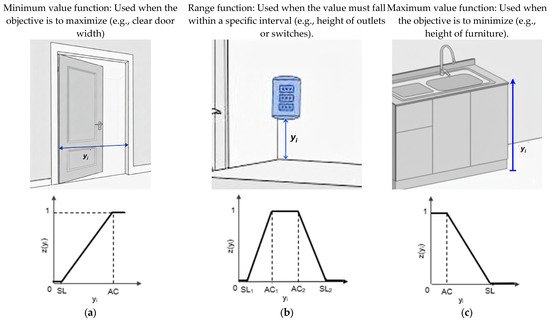
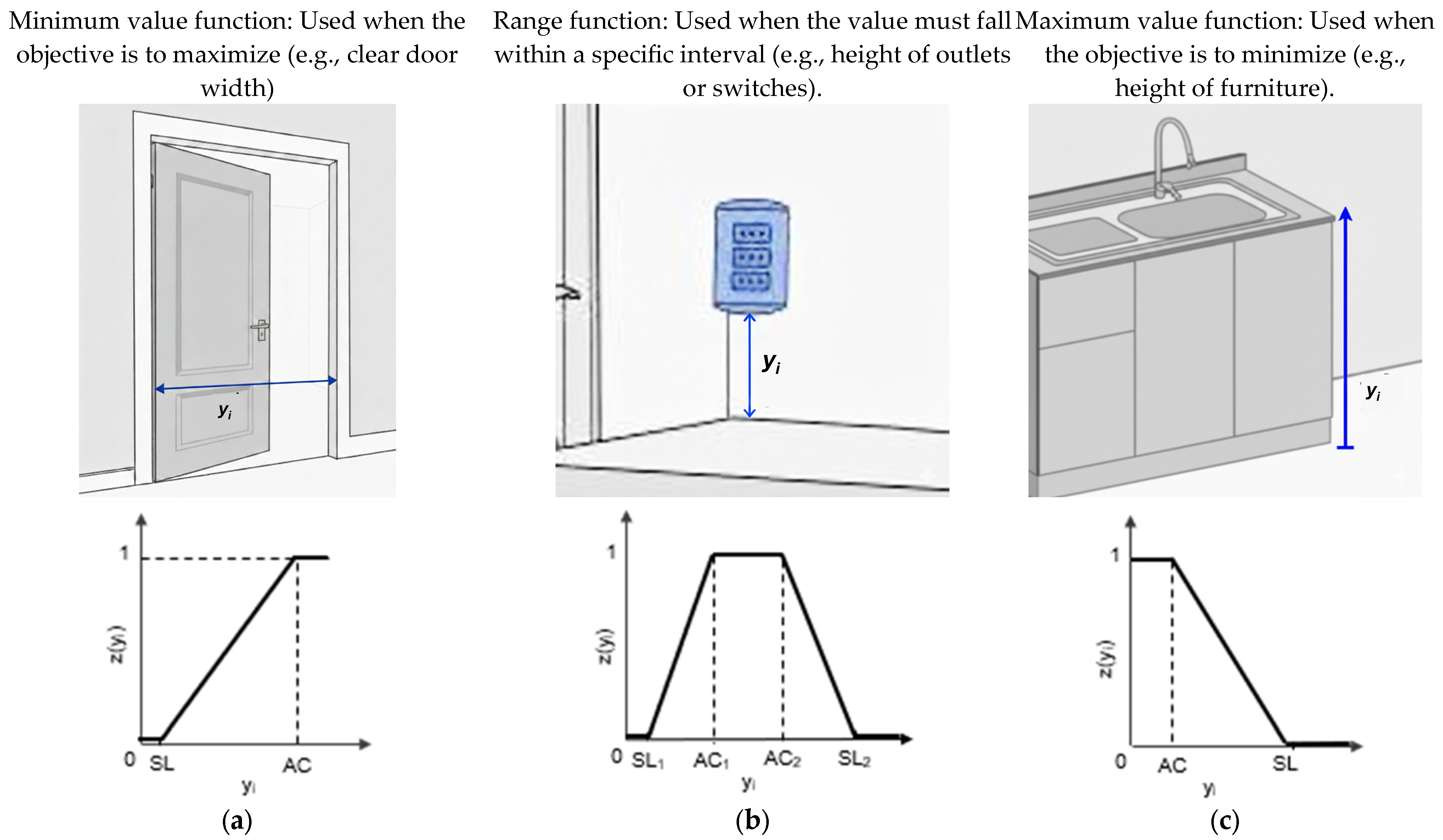
- Normalization: The indicators (yi) were normalized to a 0–100 scale. The scoring assignment method varied according to the nature of the evaluated variable:
- -
- Quantitative Variables: For numerical measures (such as dimensions or light levels), acceptability functions were used. These allow for grading compliance based on optimal limits (Soft Limits) and regulatory restrictions (Absolute Constraints), assigning a proportional value to the dwelling’s performance (see Figure 1a–c).Figure 1. Acceptability functions are used to normalize indicators toward the desired objective. (a) Minimum value function; (b) Range function, and (c) Maximum value function.
- -
- Qualitative Variables: For characteristics based on presence or absence, the evaluation used a dichotomous criterion. If the dwelling possesses the sought attribute (e.g., a ventilation mechanism), 100% compliance is assigned; otherwise, 0% compliance is assigned.
When an indicator was not applicable due to the dwelling’s specific typology, it was excluded from the calculation, with the weighting adjusted to maintain the proportionality and consistency of the global index.
- 2.
- Calculation of the Design Objective Index (DOI): A partial index was calculated for each strategic axis using a successive weighted average (Equation (1)):
- 3.
- Calculation of the Global Performance Index (GPI): DOIs were aggregated into a global index reflecting the overall level of accessibility of the dwelling (Equation (2)). Consider that the sum of all (ζi) will always be equal to 100%.
2.6. Data Analysis
The GPI is a composite measure of weighted compliance (0–100%) that integrates technical performance with user-defined functional priorities through successive weighting. Unlike a simple average, the GPI reflects the degree to which the environment aligns with the ideal of independent living.
For example, if indicator C01 (Acoustic/visual alarm) has an average technical compliance (DOI) of 30% within a category (i.e., 3 out of 10 dwellings meet this criterion), and users assign it a priority (wi) of 62%, its contribution to the overall index is 18.6% (30% × 0.62). Aggregating the model’s 40 indicators yields a GPI between 3.7% and 4.5%, highlighting the fragmentation of current compliance. The model’s sensitivity demonstrates that:
- The index decreases substantially when critical indicators (such as safety) are unmet, whereas improvements in low-priority areas result in only marginal increases.
- Because the index aggregates 40 variables, the presence of zero values in specific indicators leads to a low overall score, thereby identifying a systemic accessibility gap.
Descriptive statistics were used to analyze both the Design Objective Index (DOI) and the Global Performance Index (GPI) for each dwelling. Results were compared across apartments, single-story houses, and two-story houses to identify patterns and differences related to spatial configuration.
Due to the study’s descriptive and exploratory design, statistical inference tests were not applied. Instead, results are presented using graphical representations and a color-coded traffic light scale. This visual approach enables objective assessment of the “distance to the target” (100% compliance), replacing arbitrary qualitative ranges with a continuous performance gradient that highlights areas requiring urgent intervention. Data processing and analysis were conducted in Microsoft Excel.
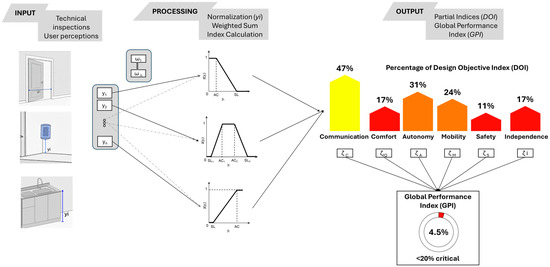
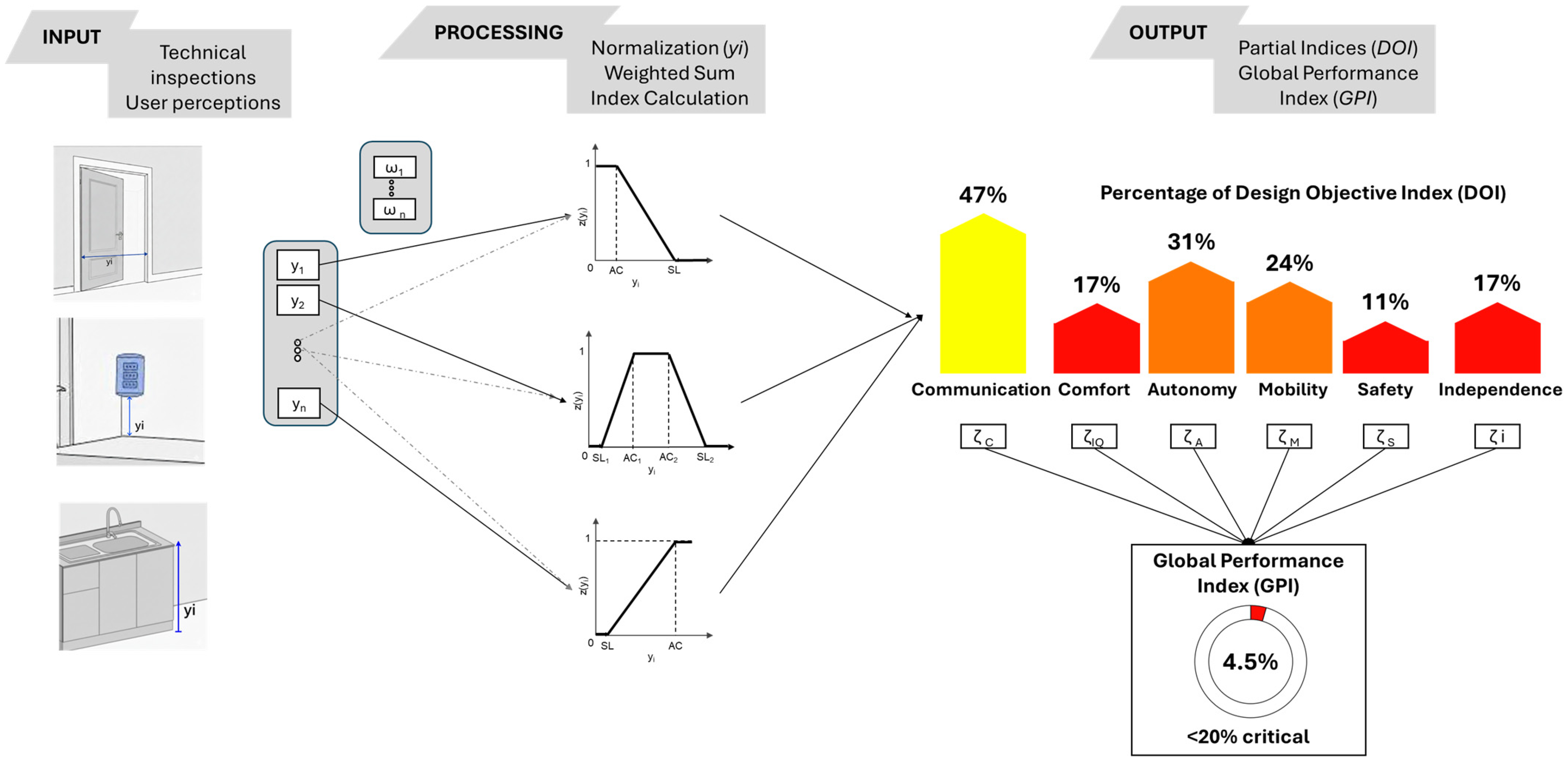
A graphical representation of the procedure is shown in the following Figure 2:
Figure 2.
Schematic of the accessibility evaluation model for dwellings of older adults.
2.7. Ethical Considerations
The study was approved by the Research Ethics Committee of the corresponding institution (Ethical Code: 02092022CV), in accordance with current national regulations and the ethical principles established in the Declaration of Helsinki. All participants were informed about the study’s objectives and procedures and provided written informed consent before the housing evaluations.
Participation was voluntary, and residents could withdraw from the study at any time without consequences. The collected information was treated confidentially, ensuring the protection of participants’ identities. Photographic material obtained during fieldwork was used exclusively for technical analysis and stored in secure formats that contained no elements that would allow the identification of residents or dwellings.
3. Results
This section presents the accessibility evaluation results for 30 dwellings: 10 single-story houses, 10 two-story houses, and 10 apartments. Indicators are normalized on a 0 to 100% scale, with 0% indicating no accessibility and 100% indicating optimal conditions. Each indicator is weighted by a prioritization value (wi) set by older adults and caregivers. Results are displayed using a color scale from red (0–20%) to dark green (81% and above) for quick visual interpretation (see Figure 3 legend).
Figure 3.
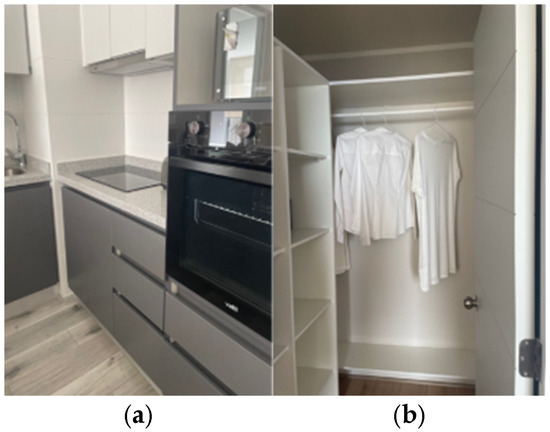
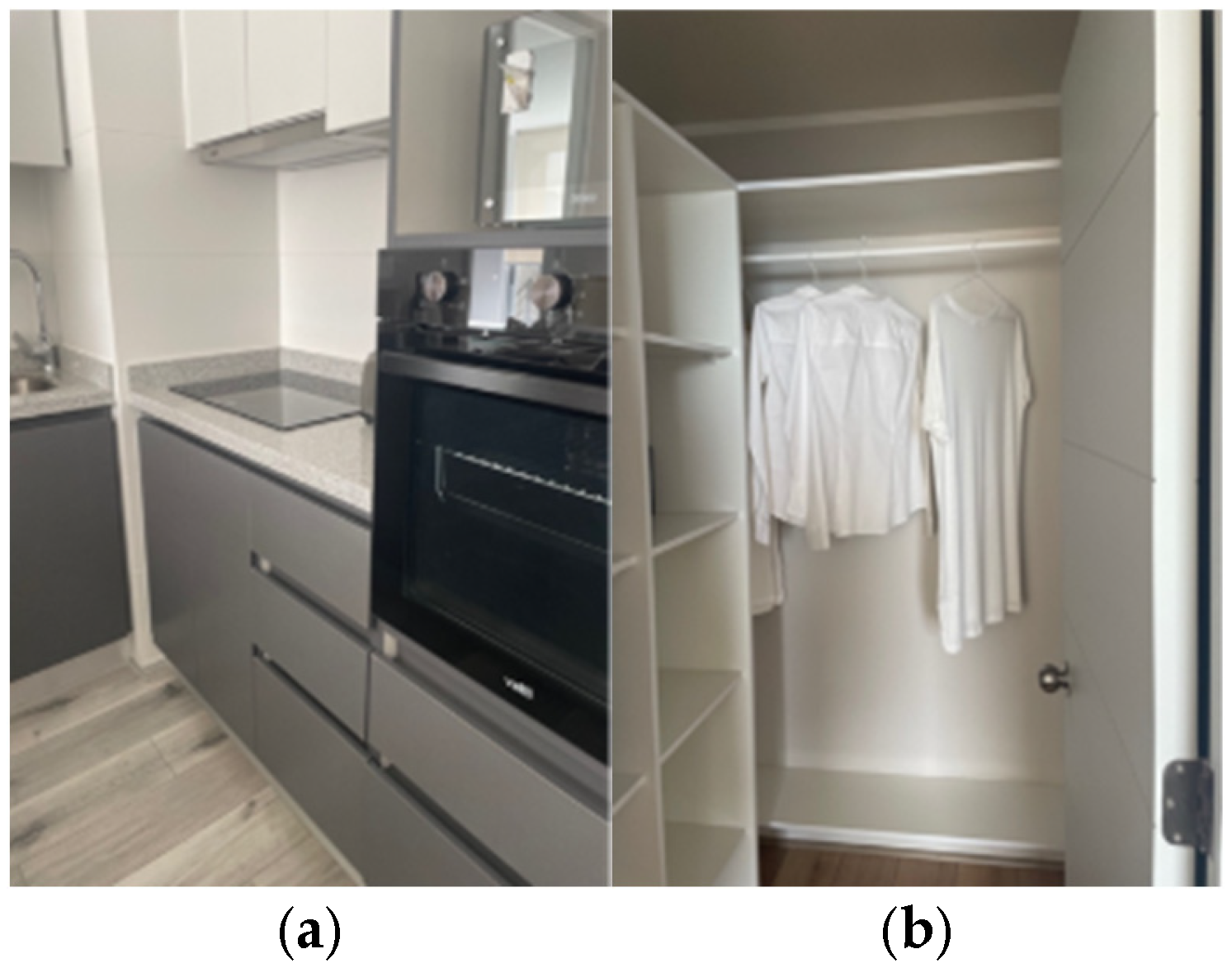
Images representing some indicators of the autonomy axis: (a) wall-mounted kitchen cabinets—Indicator A05; (b) Type of closet with layout of different spaces—Indicator A03.
3.1. Indicator Behavior per Accessibility Axis (Design Objective Index—DOI)
In the Communication dimension, indicator C01—Type of doorbell and/or buzzer (sound, light, and audible in several places)—presents an average compliance of only 5% in the 10 single-story houses, primarily because it is non-existent; 30% in two-story houses; and 75% in apartments, where in most cases it consisted of an intercom (citophone). This result gains special relevance when contrasted with its prioritization weight of 62%, indicating that, despite its low performance, this aspect is highly valued by users and caregivers of older adults for identifying who is arriving or knocking at the door.
In the Comfort–Indoor Environmental Quality (IQ) dimension, indicator IQ01—Sound insulation from outside in all areas—receives the highest priority (50%) and is mainly associated with the ability to prevent the transmission of exterior noise. Its compliance reaches 30% in two-story houses, 10% in single-story houses, and 40% in apartments. In contrast, indicator IQ02—Indoor temperature control system—registers 0% compliance, as none of the evaluated dwellings have one, despite an 18% prioritization.
Meanwhile, IQ03—Type of wall cladding—also has an 18% prioritization and relates to the use of light colors. This indicator shows 60% compliance in single- and two-story houses, and 95% in apartments. Finally, the best-performing indicator is IQ04—Existence of ventilation—with 31% prioritization and 95% compliance across all evaluated dwellings, due to the presence of either natural cross-ventilation or centralized mechanical ventilation systems in bathrooms.
In the Autonomy dimension, it is observed that in all three analyzed cases, indicators A06—Type of bathtub (preferably a shower tray/receptacle)—and A07—Type of faucets (preferably single-handle/lever)—present, on average, the highest compliance levels. Regarding indicator A06, all evaluated dwellings have a second bathroom, allowing at least one shower tray in each. Indicator A07 presents 93% compliance in single-story houses and apartments, and 87% in two-story houses. The indicator with the lowest compliance is A05—Height of kitchen cabinets—with 0% in apartments, 20% in two-story houses, and 30% in single-story houses. This is because, in most cases, the height exceeds the recommended 80 cm; cabinets are too deep to reach items on lower levels, and nearly all dwellings include wall-mounted cabinets (Figure 3a). This is followed by poor performance in indicators A04—Height of washbasin countertop—which also exceeds 80 cm (35% compliance in single- and two-story houses, and 50% in apartments), and A03—Built-in closet dimensions—as both the clothes hanging rod exceeds 120 cm and the drawers exceed 80 cm in height (Figure 3b), with compliance levels of 40%, 50%, and 20% in two-story houses, single-story houses, and apartments, respectively.
Finally, indicators A01 and A02 show slightly better performance. In the case of A01—Height of fixtures (between 70 and 120 cm from finished floor level in the kitchen, bathroom, and bathtub)—observed averages were 50%, 63%, and 33% for two-story houses, single-story houses, and apartments, respectively. For A02—Bathroom seating—the desired condition is to have a seat or, failing that, a flat surface wide enough to place one. This criterion presents (30%) compliance in apartments due to the presence of bathtubs without a flat surface, whereas it reaches 60% in two-story houses and 70% in single-story houses.
Overall, the prioritization weighting in this dimension is higher than in other areas: most indicators (A01, A02, A04, A05, A06, and A07) exceed 56%, even reaching values close to 88%. However, indicator A03 registers an 18% prioritization weight.
In general, the Mobility dimension presents a contrasting scenario. On the one hand, there is a group of indicators with very high compliance. M02—Door characteristics (relating to weight and the ability to open them with one hand)—reaches 90% in single- and two-story houses, and 89% compliance in apartments. Indicator M06—Existence of stairs—presents 100% compliance in single-story houses and apartments, and 0% in two-story houses, as expected due to the typology itself. M01—Spaciousness (straight hallways with a width of more than 90 cm)—maintains similar values: 75%, 60%, and 70% for two-story houses, single-story houses, and apartments, respectively. In indicator M07—Size of spaces (turning diameter greater than 150 cm), results are similar between two-story (70%) and single-story houses (68%), while apartments reach only 41%, with better results in those featuring open-plan (American-style) kitchens.
On the other hand, average compliance levels correspond to M04—Staircase characteristics, where two-story houses reach only 48% due to open railings, open risers, or non-straight stairs; and M05—Existence of floor level changes, with 50% in houses and 90% in apartments, considering that only one of the latter presented interior level changes.
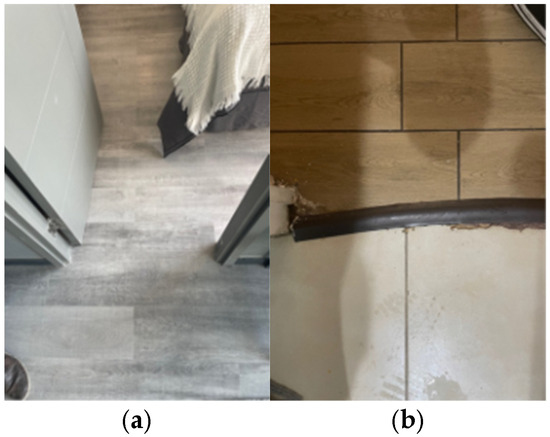
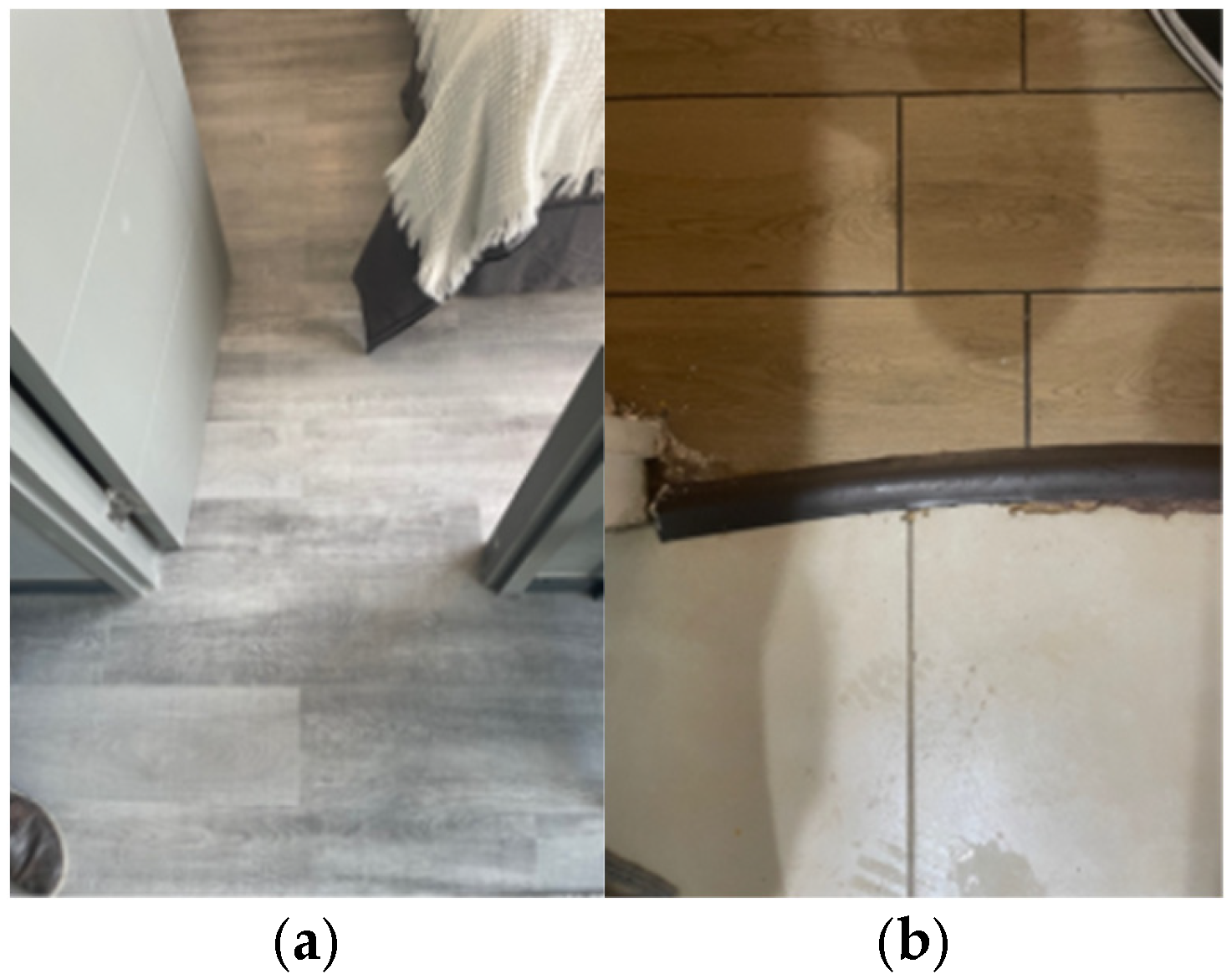
Finally, the indicators with the lowest compliance are M03—Clear door width (greater than 90 cm), affected by opening angles that do not reach 90° due to doorstops or restrictions, such as the door frame itself (Figure 4a), with compliance of 20%, 18%, and 11% in two-story houses, single-story houses, and apartments, respectively; and M08—Flooring characteristics (unified and non-slip), with 13% in both types of houses and 0% in apartments, where tiles, porcelain, or ceramics predominate, but lose compliance mainly due to the transition strips (threshold covers) at the junction of two types of flooring (Figure 4b).
Figure 4.
Images representing some indicators of the mobility axis: (a) Restriction in door opening—Indicator M03; (b) Example of lack of flooring uniformity primarily due to the transition strip—Indicator M08.
Regarding prioritization, some indicators present high values, such as M03 (75%), M05 (63%), and M07 (63%), while others show lower levels, such as M02 (18%), M06 (38%), and M08 (44%).
The Safety dimension is one of the most critical within the analyzed set. Indicator S01—Window sill height (not exceeding 60 cm above finished floor level)—presents compliance rates of 30%, 40%, and 45% in two-story houses, single-story houses, and apartments, respectively. Indicator S05—Location of the gas shut-off valve (never behind furniture and located between 90 and 120 cm in height)—presents compliance rates of 44%, 50%, and 67% for single-story, two-story houses, and apartments, respectively.
In contrast, the worst-performing indicators are S4—Emergency button in the bathroom—and S07—Existence of night lighting, both present 0% compliance in all evaluated cases. Indicator S02—Height of railings, handrails, and bars (95 cm for windows or balconies)—reaches 10% in apartments. Meanwhile, S09—Smoke or CO alarms (primarily smoke)—presents 10% compliance in two-story houses and 20% in apartments.
Indicator S03—Grab bars and handrails in the bathroom—obtains 30% compliance in two-story houses and 56% in apartments. Regarding indicators analyzed exclusively in two-story houses, S06—Protected area under stairs (to prevent head strikes)—reaches 47%, while S08—Stair tread characteristics (open risers and measurements for treads and risers)—registers 0%.
In terms of prioritization, weightings fall within ranges of: S01 (31%), S02 (18%), S05 (31%), and S08 (25%). However, other indicators present significantly higher values, such as S03 (94%), S04 (63%), and S09 (68%).
In the final group, concerning the Independence dimension, results vary across indicators. The indicator with the lowest compliance is I05—Adjustable lighting height—with only 18% prioritization and 0% compliance across all evaluated dwellings, primarily because adjustable lighting is not present (only main ceiling-mounted fixtures). This is followed by I09—Location of outlets (at least two per room and never behind doors), with 44% prioritization and compliance rates of 17% in two-story houses, 12% in single-story houses, and 18% in apartments, mainly due to the lack of two outlets per room. Added to these is I10—Location of switches (located at entrances), also with 44% prioritization, and 23% compliance in two-story houses, 6% in single-story houses, and 53% in apartments, as in most cases, switches are not located at entrances but rather, for example, at the level of a potential bed location.
A second group of indicators presents medium compliance levels between 43% and 57%. Among them are I01—Height of door and window handles (not more than 95 cm from finished floor level), with 25% prioritization and compliance of 40% in two-story houses, 30% in single-story houses, and 68% in apartments. Also, I02—Type of door and window handle (preferably lever-style), with 40% compliance in two-story houses, 50% in single-story houses, and 74% in apartments; although most comply with this criterion, button or knob systems still exist in older homes, or handles are absent on windows (this indicator presented a 44% prioritization). Similarly, I04—Door opening type (preferably sliding) shows 20% compliance in two-story houses and 30% in single-story houses and apartments, as these doors are usually found only in bathrooms or bedrooms with limited space. This group also includes the indicator with the highest prioritization percentage (56%), I11—Characteristics of fixed furniture (without sharp corners or with rounded edges to prevent impacts)- which performs well with 40% compliance in two-story houses, 60% in single-story houses, and 70% in apartments.
Finally, there is a group of indicators with high compliance levels. I03—Window characteristics (sliding and lightweight) has 38% prioritization and compliance of 80% in two-story houses, 90% in single-story houses, and 79% in apartments. I06—Height of outlets (between 40 and 120 cm) has 13% prioritization and 80% compliance in two-story houses, 60% in single-story houses, and 90% in apartments. Similarly, I07—Height of switches (between 40 and 120 cm) shows 13% prioritization and 100% compliance in single- and two-story houses, and 90% in apartments. Lastly, I08—Switch characteristics (push-button and in a contrasting color relative to the wall)—shows 31% prioritization and 100% compliance in single- and two-story houses, and 70% in apartments.
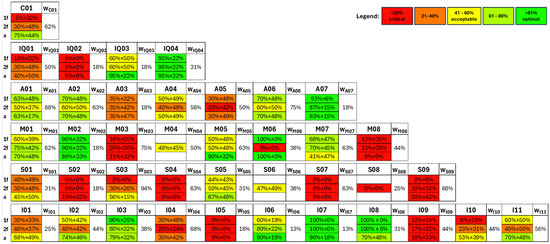
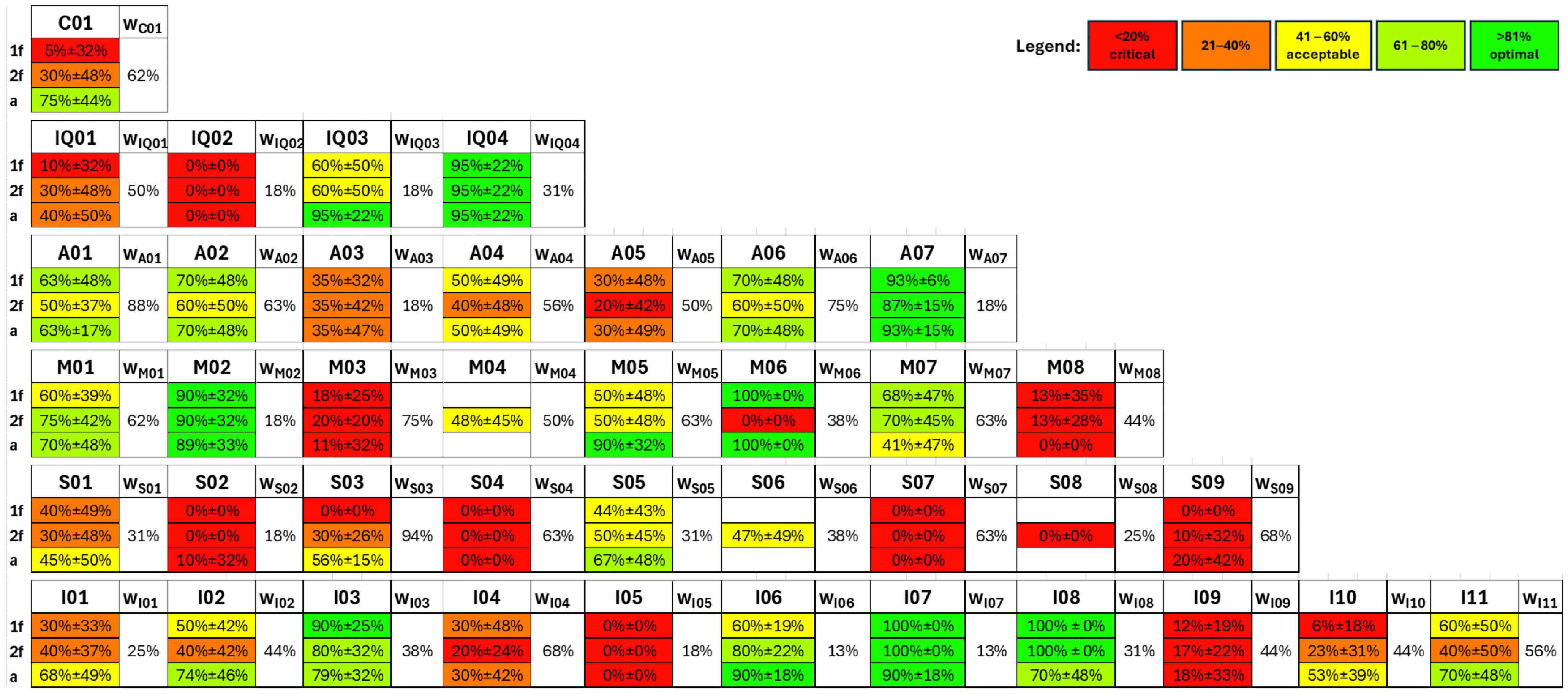
The following Figure 5 synthesizes the prioritization weights for each indicator (wi) alongside the technical performance across the three housing configurations studied. The values represent the mean percentage of technical compliance (yi) and its corresponding standard deviation (SD) for each group of 10 dwellings. In this scale, 100% indicates optimal accessibility according to the technical checklist, while 0% indicates a total absence of the evaluated feature.
Figure 5.
Heatmap of compliance performance (Mean ± SD) and prioritization weights (wi) per indicator. The matrix displays the average performance of 40 indicators across three housing typologies: one-floor houses (1f), two-floor houses (2f), and apartments (a). Each cell presents the mean normalized score followed by its standard deviation (Mean ± SD). Colors represent performance levels (Red < 20%: Critical; Green > 81%: Optimal). The weight columns (wi) indicate the prioritization weight assigned by older adults and caregivers to each indicator.
When examining the dispersion of the results, the standard deviations (SD) and ranges of the 40 evaluated criteria follow three distinct statistical patterns based on their nature.
Firstly, for dichotomous indicators (binary presence/absence, such as IQ01, A02, or A06, the SD reaches its mathematical maximum (SD ≈ 50%) when compliance is near the median, indicating high inconsistency in the sample. Conversely, some of these indicators show SD = 0%, reflecting total uniformity where the requirement is either universally met (e.g., IQ02) or entirely ignored.
Secondly, for continuous indicators with a range of acceptability (e.g., A01, I06, or I07), the variability tends to be the lowest (SD ≈ 17%). This suggests that when a flexible range is provided (e.g., socket heights between 0.40 and 1.20 m), construction practices more easily converge within the allowed margins, resulting in more stable performance across the three housing typologies.
Finally, for indicators defined by minimum or maximum threshold values (e.g., door widths M03 > 0.90 m or space dimensions M07 > 1.50 m), an intermediate level of variability is observed, with SDs ranging from 20% to 47%.
3.2. Accessibility Behavior—Global Performance Index (GPI)
Regarding the assigned weighting (values for ζi in Table 2), the input from older adults and caregivers shows a clear, non-homogeneous hierarchy of needs regarding housing accessibility. The Autonomy axis, with a 61.8% priority, is dominant over the other criteria, indicating that the ability to perform daily activities without assistance is the primary determinant of perceived quality of life. At a second level of importance are the axes of Mobility (10.4%), Comfort (9.7%), and Safety (9.7%). Finally, the Communication (4.4%) and Independence (4.0%) axes present a lower relative weight, although they remain relevant components within a comprehensive accessibility approach. This differentiated distribution of priorities directly affects the final score for each typology, as the axes with higher weights more strongly influence the overall result of the MCDA analysis.
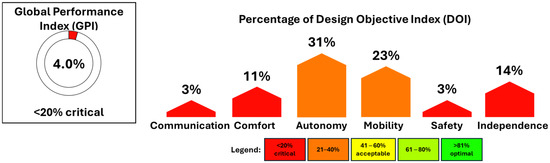
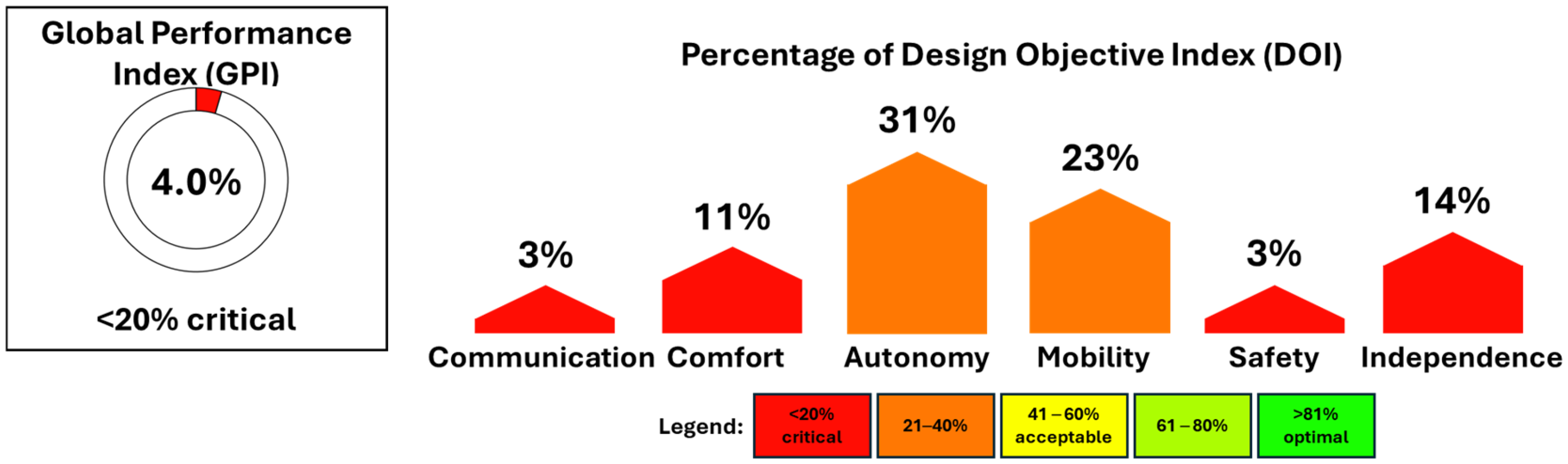
In the case of single-story houses (Figure 6), the results show the highest compliance in the Autonomy axis, with an average compliance of 31%, consistent with four of its indicators having values above 63%. However, this housing type shows low compliance in the Communication and Safety axes, both at 3%. As a result, the final score is only 4.0%.
Figure 6.
Global Performance Index (GPI) for the average of 10 single-story houses. The left circle displays the Global Performance Index for this entire housing category. The bar chart shows the percentage of dwellings distributed across six functional dimensions (Design Objective Index-DOI). The color of each bar indicates the prevailing performance level within that dimension for first-floor houses, based on the color-coded legend (red: critical, yellow: acceptable, green: optimal).
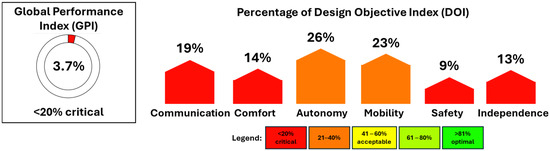
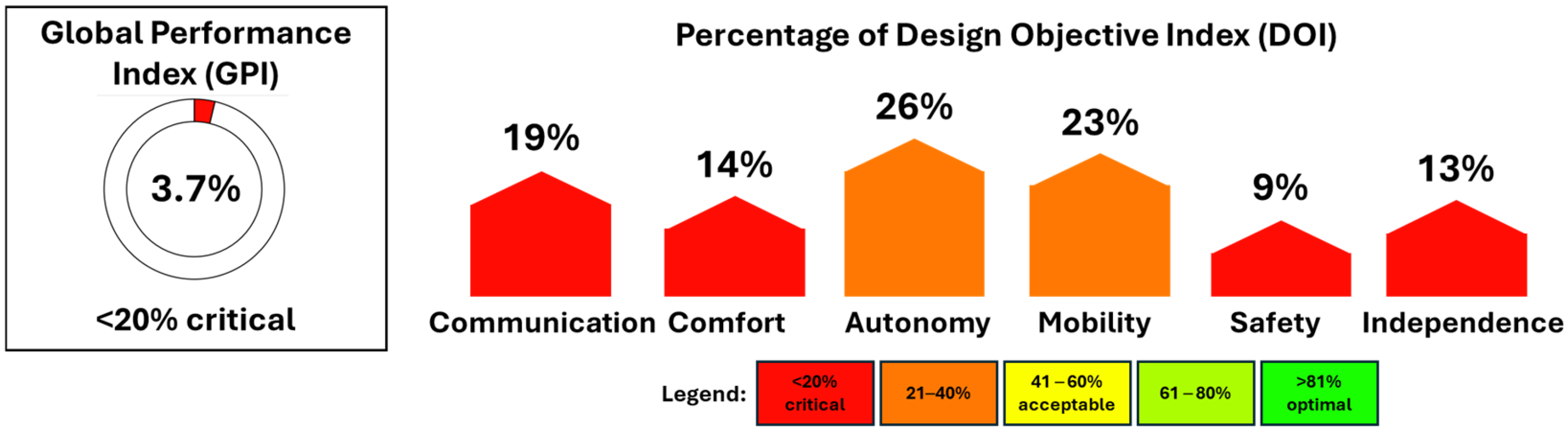
For two-story houses (Figure 7), this configuration presents relatively balanced levels in the Mobility (23%) and Autonomy (26%) axes; however, compliance in Communication decreases to 19%. Consequently, this typology obtains the lowest final score of the set, near 3.7%.
Figure 7.
Global Performance Index (GPI) for the average of 10 two-story houses.
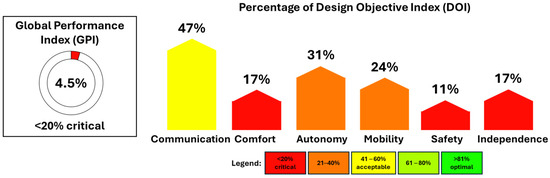
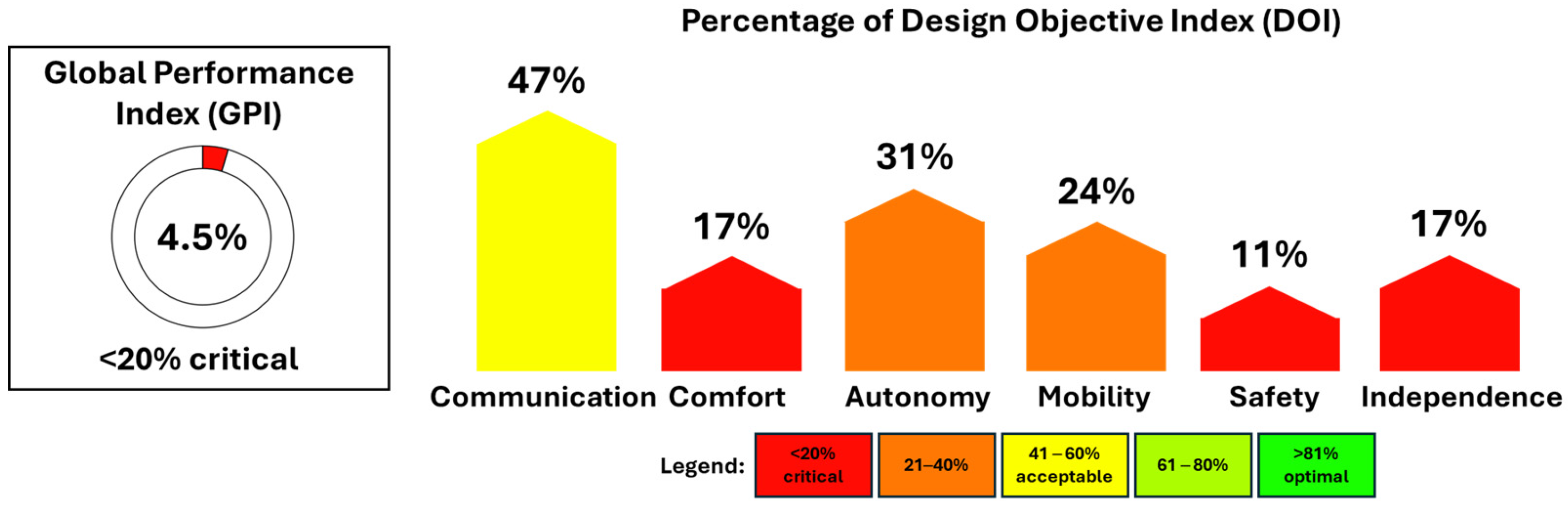
On the other hand, apartments (Figure 8) stand out for higher compliance in the Communication (47%), Autonomy (31%), and Mobility (24%) axes. Likewise, they maintain a level of compliance in Comfort and Safety comparable to that of single-story houses. As a result, apartments reach the best final score, close to 4.5%.
Figure 8.
Global Performance Index (GPI) for the average of 10 apartments.
4. Discussion
From a methodological perspective, the main contribution of this multi-criteria evaluation model is its ability to integrate objective and subjective data into a single analytical framework. This provides a comprehensive view of housing performance in aging contexts.
Normalizing indicators on a common scale simplifies comparison across housing types and analytical dimensions. Weighted aggregation incorporates the priorities of older adults and caregivers by assigning greater importance to factors that impact autonomy, safety, and quality of life. This is essential because older adults often report high satisfaction with their homes, yet significant discrepancies may exist between their perceptions and expert evaluations, particularly in areas such as stairs and bathrooms [32]. Weighting helps balance subjective experiences with technical criteria, including those used by occupational therapists in safety-focused assessments.
Using per-axis indices, such as the Design Objective Index (DOI), highlights specific strengths and weaknesses, avoiding reductionist conclusions and guiding targeted interventions. This is particularly important because older adults often postpone home adaptations until a crisis, such as a fall or sudden health decline, even when they are aware of underlying risks [32,48,49]. The method functions as both a diagnostic tool and a decision-support system for design, post-occupancy evaluation, and housing rehabilitation.
The robustness of the Global Performance Index (GPI) was evaluated using a sensitivity analysis of the weighting factors (ζi). The model is highly sensitive to the dimensions of Safety and Autonomy, which older people and carers identified as the highest priorities. As a result, even small improvements in these areas significantly affect the overall score, while high performance in lower-priority dimensions, such as certain aesthetic aspects, has little impact on the GPI. This pattern shows that the model accurately reflects users’ functional priorities. The use of Absolute Constraints keeps the index aligned with regulatory requirements and prevents compensatory effects from masking critical deficits. These findings confirm that the MCDA tool reliably identifies accessibility gaps and can effectively guide housing interventions in public policy.
Some limitations should be acknowledged. Weighted linear aggregation makes the model compensatory. Recalibration is required both within and across countries, as housing types and infrastructure standards differ between the Metropolitan Region studied and rural areas. The proposed MCDA framework allows for adaptation by adjusting ‘Acceptability Functions’ to meet local regulations. ‘Prioritization Weights’ can also be recalculated to address the specific sociocultural and functional needs of different populations. While these results are context-specific, the methodology offers flexibility for territorial adaptation. The evaluation is cross-sectional and does not capture temporal changes or progressive functional decline, which often lead to home modifications only after repeated falls [50,51]. However, aligning indicators with current regulations supports consistency and enables future updates.
Discussion of Results by Dimension
The results reveal a significant gap between the high importance attributed to certain indicators and their low effective compliance, suggesting a structural misalignment between residential design and the needs of older adults. Addressing this gap is vital to realize the potential benefits for older adults living independently. From a preventive perspective, proactive home modifications are highly effective at reducing daily difficulties, lowering healthcare utilization, and delaying institutionalization. Most importantly, adapting the physical environment plays a critical role in fall prevention. By removing hazards and improving safety features before an accident occurs, the risk of debilitating falls can be significantly minimized, thereby preserving both physical health and psychological confidence in older residents [26,27,28,29,52,53].
Communication: A pronounced disparity exists between the high priority assigned to doorbell features (62% weighting) and their low implementation in residential settings. This underscores the frequent underestimation of low-cost elements that influence social interaction and perceived safety. Although doorbell systems may be relatively low-tech, the ability to identify visitors is highly valued by both users and caregivers for security purposes. In contrast, improved performance in apartments equipped with intercoms demonstrates that straightforward technological interventions can substantially reduce functional barriers.
Comfort and Interior Environment: While ventilation is generally optimal, acoustic insulation and temperature control perform poorly. Older adults have specific thermal needs and are more vulnerable to extreme temperatures, making climate control a key factor in residential satisfaction [54,55]. Similarly, lighting is critical for safety and social participation, yet the lack of dimmers and poorly placed switches remains a barrier [56,57].
Autonomy: This dimension receives the highest priority (61.8%), reflecting that the capacity to perform daily activities without assistance is the primary determinant of perceived quality of life among older adults. However, the findings indicate that conventional housing does not adequately support essential activities of daily living (ADLs). Inappropriate fixture heights in kitchens and bathrooms, as well as poorly designed closets, present substantial barriers to independent self-care, including toileting, bathing, cooking, and dressing. These results are consistent with existing literature [27], which suggests that when the physical environment fails to accommodate functional limitations, it effectively disables residents and compels premature reliance on external assistance for tasks fundamental to dignity and quality of life.
Mobility: The results for this dimension are mixed. Although spatial amplitude is frequently sufficient, other indicators, such as door width, flooring characteristics, and thresholds, perform inadequately. This is particularly significant because high-risk environmental factors can nearly triple the likelihood of injuries [58], whereas reducing such barriers is associated with decreased mobility limitations and a lower risk of cognitive decline [59,60].
Safety and Independence: Safety emerges as the most deficient dimension. The consistent absence of emergency buttons, night lighting, and smoke detectors persists despite substantial evidence that straightforward interventions, such as grab bars and non-slip surfaces, can effectively mitigate risk [29,57,61]. In terms of independence, low adherence to accessibility standards for switches and outlets indicates that true independence depends on the precise placement and usability of equipment, rather than merely on their presence [62].
5. Conclusions
The primary objective of this study was to empirically validate a Multi-Criteria Decision Analysis (MCDA) tool designed to evaluate the accessibility of dwellings for older adults. By synthesizing technical performance with user-defined prioritization weights (wi and ζi), this research successfully theorized and quantified the “Accessibility Gap”, the systemic discrepancy between physical environmental performance and the functional requirements of aging residents.
The empirical findings underscore that the “Accessibility Gap” is not uniform but fragmented across all typologies. Dwellings across all typologies demonstrate uneven performance, particularly in dimensions most highly prioritized by users, such as Autonomy and Safety. The persistent deficits in these areas confirm that mere regulatory compliance is insufficient; inclusive accessibility requires a model that weights environmental features based on their impact on daily life. Furthermore, the comparative typological analysis proves that no specific architectural configuration (apartment vs. house) inherently guarantees accessibility; rather, the magnitude of the Accessibility Gap is determined by the granular design decisions captured by the model’s indicators.
Methodologically, this research contributes to a robust framework for articulating objective and subjective data. The Global Performance Index (GPI) elevates the evaluation from a descriptive checklist to a synthetic metric of the Accessibility Gap, allowing for a rigorous, replicable comparison of built environments. A significant advancement of this model is the explicit recognition of older adults and caregivers as active agents in the evaluative process, ensuring that the prioritization weights reflect lived experience rather than purely technical assumptions.
This study demonstrates the flexibility of the MCDA approach to be anchored in local regulations while remaining internationally transferable through the recalibration of its weightings. These results advocate for a shift in public policy: moving away from standardized, one-size-fits-all solutions toward situated, multidimensional strategies for “aging in place.” Future research should build on this model by incorporating longitudinal data and instrumental variables to further refine the index’s predictive validity in fostering inclusive residential environments.
Finally, this study confirms that the Accessibility Gap is the primary theoretical lens through which person-environment fit should be assessed. By focusing on the Autonomy axis, the model reveals that the most critical barriers are those hindering self-determination. Consequently, the Global Performance Index (GPI) serves as more than an evaluation score; it acts as a roadmap for architectural interventions that prioritize functional dignity over generic standardization. Future research should build on this model by incorporating longitudinal data and instrumental variables to further refine the index’s predictive validity in fostering inclusive residential environments.
Author Contributions
Conceptualization, methodology, and formal analysis, C.V.-U.; investigation and data curation, C.V.-U., R.B., N.G., L.A. and F.S.-D.; writing—original draft preparation, C.V.-U.; writing—review and editing, and visualization, C.V.-U. and F.S.-D.; supervision, C.V.-U. All authors have read and agreed to the published version of the manuscript.
Funding
This research was funded by a Fondecyt Iniciación (Agencia Nacional de Investigación y Desarrollo de Chile—ANID) grant number 11220460.
Institutional Review Board Statement
This study was conducted in accordance with the Declaration of Helsinki and approved by the Institutional Research Ethics Committee (CEII) of Universidad del Desarrollo (ethical code: 02092022CV, date of approval: 2 September 2022).
Informed Consent Statement
Informed consent was obtained from all participants involved in the study.
Data Availability Statement
This article includes all original contributions. We cannot share datasets to protect participant privacy and consent.
Acknowledgments
The authors extend their sincere gratitude to Matías Ahumada Cruz from the School of Construction Engineering at Universidad Mayor and to Sebastián Negrete M. from the Department of Design at Universidad Católica de Temuco. Their support and commitment were essential to the development of this work within the context of multi-university collaboration. Additionally, we acknowledge the support of Grammarly for English language editing and Gemini for the graphic enhancement of Figure 1.
Conflicts of Interest
The authors declare no conflicts of interest.
Disability Language/Terminology Positionality Statement
This manuscript adopts person-centered language (e.g., ‘older people’) to emphasize the individual’s identity over their biological or functional condition. This choice is based on the Inter-American Convention on the Protection of the Human Rights of Older Persons. It aligns with the International Classification of Functioning, Disability and Health (ICF) framework. Under this approach, disability is not an absolute attribute, but rather the result of the interaction between an individual’s capabilities and a residential environment that presents barriers. Our terminology seeks to promote dignity, autonomy, and a non-reductive representation, consistent with user-centered design and the concept of aging in place. The author states that the ethical principles of respect and autonomy guided all stages of the research, from the weighting of Global Performance Index (GPI) indicators to the interpretation of the results, recognizing that the environment must adapt to the functional diversity of its inhabitants.
Abbreviations
The following abbreviations are used in this paper:
| ADL | Activities of Daily Living |
| AHP | Analytic Hierarchy Process |
| DOI | Design Objective Index |
| GPI | Global Performance Index |
| ICF | International Classification of Functioning, Disability, and Health |
| MCDA | Multi-Criteria Decision Analysis |
| SDG | Sustainable Development Goals |
References
- United Nations—Department of Economic and Social Affairs. World Population Prospects 2024. 2024. Available online: https://population.un.org/wpp/ (accessed on 5 January 2026).
- Instituto Nacional de Estadísticas (INE). Primeros Resultados Censo de Población y Vivienda 2024. 2025. Available online: https://censo2024.ine.gob.cl/primeros-resultados-del-censo-2024-18-480-432-personas-fueron-censadas-en-chile-manteniendose-la-tendencia-de-envejecimiento-de-la-poblacion/ (accessed on 5 January 2026).
- WHO. Ageing and Health. 2025. Available online: https://www.who.int/news-room/fact-sheets/detail/ageing-and-health (accessed on 5 January 2026).
- United Nations. Sustainable Development Goals. 2021. Available online: https://www.un.org/sustainabledevelopment/cities/ (accessed on 5 January 2026).
- Iwarsson, S.; Ståhl, A. Accessibility, usability and universal design—Positioning and definition of concepts describing person-environment relationships. Disabil. Rehabil. 2003, 25, 57–66. [Google Scholar] [CrossRef] [Scilit] [PubMed]
- Granbom, M.; Iwarsson, S.; Kylberg, M.; Pettersson, C.; Slaug, B. A public health perspective to environmental barriers and accessibility problems for senior citizens living in ordinary housing. BMC Public Health 2016, 16, 772–811. [Google Scholar] [CrossRef] [Scilit] [PubMed]
- Sánchez-González, D.; Rojo-Pérez, F.; Rodríguez-Rodríguez, V.; Fernández-Mayoralas, G. Environmental and psychosocial interventions in age-friendly communities and active ageing: A systematic review. Int. J. Environ. Res. Public Health 2020, 17, 8305. [Google Scholar] [CrossRef] [Scilit] [PubMed]
- Wang, Y.; Gibb, K.; McCall, V. Evidence Review of Home Adaptations in the UK and Other OECD Countries; UK Collaborative Centre for Housing Evidence: Glasgow, UK, 2022; 47p. [Google Scholar]
- Xia, B.; Chen, Q.; Buys, L.; Susilawati, C.; Drogemuller, R. Impact of the Built Environment on Ageing in Place: A Systematic Overview of Reviews. Buildings 2024, 14, 2355. [Google Scholar] [CrossRef] [Scilit]
- Mulliner, E.; Riley, M.; Maliene, V. Older people’s preferences for housing and environment characteristics. Sustainability 2020, 12, 5723. [Google Scholar] [CrossRef] [Scilit]
- Powell, J.; Mackintosh, S.; Bird, E.; Ige, J.; Garrett, H.; Roys, M. The Role of Home Adaptations in Improving Later Life; Centre for Ageing Better: London, UK, 2017; 40p. [Google Scholar]
- Washington, S.; Edwards, E.; Fink, A.; Radocha, L. Inclusive Practices for Aging in Place: Environmental and Home Modifications for Older Adults. Am. J. Occup. Ther. 2025, 79, 2. [Google Scholar] [CrossRef] [Scilit]
- Slaug, B.; Chiatti, C.; Oswald, F.; Kaspar, R.; Schmidt, S. Improved Housing Accessibility for Older People in Sweden and Germany: Short Term Costs and Long-Term Gains. Int. J. Environ. Res. Public Health 2017, 14, 964. [Google Scholar] [CrossRef] [Scilit]
- Ireland, A.; Mittag, U.; Degens, H.; Felsenberg, D.; Heinonen, A.; Koltai, E.; Korhonen, M.T.; McPhee, J.S.; Mekjavic, I.; Pisot, R.; et al. Age-related declines in lower limb muscle function are similar in power and endurance athletes of both sexes: A longitudinal study of master athletes. Calcif. Tissue Int. 2022, 110, 196–203. [Google Scholar] [CrossRef] [Scilit]
- Evans, J.R.; Fletcher, A.E.; Wormald, R.P.L.; Ng, E.S.W.; Stirling, S.; Smeeth, L.; Breeze, E.; Bulpitt, C.J.; Nunes, M.; Jones, D.; et al. Prevalence of visual impairment in people aged 75 years and older in britain: Results from the MRC trial of assessment and management of older people in the community. Br. J. Ophthalmol. 2002, 86, 795–800. [Google Scholar] [CrossRef] [Scilit]
- Crist, P.A. Does quality of life vary with different types of housing among older persons? A pilot study. Phys. Occup. Ther. Geriatr. 2000, 16, 101–116. [Google Scholar] [CrossRef] [Scilit]
- Iwarsson, S.; Horstmann, V.; Slaug, B. Housing matters in very old age—Yet differently due to ADL dependence level differences. Scand. J. Occup. Ther. 2007, 14, 3–15. [Google Scholar] [CrossRef] [Scilit]
- Slaug, B.; Granbom, M.; Iwarsson, S. An Aging Population and an Aging Housing Stock—Housing Accessibility Problems in Typical Swedish Dwellings. J. Aging Environ. 2020, 34, 156–174. [Google Scholar] [CrossRef] [Scilit]
- Sturge, J.; Miedema, E.; Elf, M.; Nordin, S. Socially sustainable housing and built environments to support the health and social inclusion of older adults. BMC Geriatr. 2023, 13, 812–817. [Google Scholar] [CrossRef] [Scilit]
- Ferrada, X.C.; Valderrama, C.; Fuentes-Contreras, C. Economic and technical analysis of universal accessibility in social and private housing in Chile. IOP Conf. Ser. Earth Environ. Sci. 2020, 503, 012003. [Google Scholar] [CrossRef] [Scilit]
- Kuboshima, Y.; McIntosh, J. Housing Design That Improves the Independence and Safety for Older Adults Using a Walker. Appl. Ergon. 2021, 97, 103539. [Google Scholar] [CrossRef] [Scilit] [PubMed]
- Lee, Y.; Park, J.; Jang, M. Perceived Effects of Home Renovation on Independence of Physically Disabled Koreans Living at Home. Disabil. Rehabil. 2018, 40, 2380–2387. [Google Scholar] [CrossRef] [Scilit]
- Lord, S.; Menz, H.; Sherrington, C. Home Environment Risk Factors for Falls in Older People and the Efficacy of Home Modifications. Age Ageing 2006, 35, 55–59. [Google Scholar] [CrossRef] [Scilit]
- Pizzi, M.; Chalmers, J.; Bunout, D.; Osorio, P.; Fernández, V.; Cusato, M.; Avendaño, V.; Rivera, K. Physical Barriers and Risks in Basic Activities of Daily Living Performance Evaluation in State Housing for Older People in Chile. Hous. Care Support 2013, 16, 23–31. [Google Scholar] [CrossRef] [Scilit]
- Kim, H.; Ahn, Y.H.; Steinhoff, A.; Lee, K.H. Home modification by older people and their informal caregivers. Arch. Gerontol. Geriatr. 2014, 59, 648–656. [Google Scholar] [CrossRef] [Scilit]
- Aliberti, M.J.R.; Covinsky, K.E. Home Modifications to Reduce Disability in Older people With Functional Disability. JAMA Intern. Med. 2019, 179, 211–212. [Google Scholar] [CrossRef] [Scilit]
- Bamzar, R. Assessing the quality of the indoor environment of senior housing for a better mobility: A Swedish case study. J. Hous. Built Environ. 2019, 34, 23–60. [Google Scholar] [CrossRef] [Scilit]
- Carnemolla, P.; Bridge, C. Housing Design and Community Care: How Home Modifications Reduce Care Needs of Older People and People with Disability. Int. J. Environ. Res. Public Health 2019, 16, 1951. [Google Scholar] [CrossRef] [Scilit] [PubMed]
- Meucci, M.M.; Gozalo, P.; Dosa, D.; Allen, S.M. Variation in the Presence of Simple Home Modifications of Older Americans: Findings from the National Health. J. Am. Geriatr. Soc. 2016, 64, 2081–2087. [Google Scholar] [CrossRef] [Scilit] [PubMed]
- Dalistan, R.; George, S.; Laver, K. Considering the home environment and planning for the future: A qualitative exploration of the views of older adults and individuals with older relatives. Scand. J. Occup. Ther. 2023, 30, 1167–1179. [Google Scholar] [CrossRef] [Scilit]
- Heller, C.; Haak, M.; Schmidt, S.; Chiatti, C.; Ekstam, L.; Nilsson, M.; Slaug, B. The relationship between physical housing characteristics, housing accessibility and different aspects of health among community-dwelling older people: A systematic review. J. Aging Health 2024, 36, 120–132. [Google Scholar] [CrossRef] [Scilit]
- Aclan, R.; George, S.; Laver, K. A Digital Tool for the Self-Assessment of Homes to Increase Age-Friendliness: Validity Study. JMIR Aging 2023, 6, e49500. [Google Scholar] [CrossRef] [Scilit]
- Iwarsson, S. The Housing Enabler: An Objective Tool for Assessing Accessibility. Br. J. Occup. Therapy. 1999, 62, 491–497. [Google Scholar] [CrossRef] [Scilit]
- World Health Organization. Towards a Common Language for Functioning, Disability and Health: ICF; World Health Organization: Geneva, Switzerland, 2002. [Google Scholar]
- Valderrama-Ulloa, C.; Schmitt, C.; Marchetti, J.; Bucarey, G. Design Criteria Recommendation to Achieve Accessibility In-house to Different Users. Int. J. Archit. Environ. Eng. 2024, 18, 83–88. [Google Scholar]
- Valderrama-Ulloa, C.; Schmitt, C.; Ortiz Velosa, E.; Marchetti, J.-P.; Bucarey, V. Condiciones de Habitabilidad de Viviendas Para Personas Mayores. Revis. Criterios Diseño. Inf. Constr. 2024, 76, 6623. [Google Scholar] [CrossRef] [Scilit]
- Valderrama-Ulloa, C.; Ferrada, X.; Herrera, F. Applying the Analytic Hierarchy Process (AHP) to Accessible Housing: A Multi-Disability Perspective. Disabilities 2025, 5, 48. [Google Scholar] [CrossRef] [Scilit]
- Hernández Sampieri, R.; Fernández Collado, C.; Baptista Lucio, P. Fundamentos de Metodología de la Investigación, 6th ed.; McGraw-Hill: New York, NY, USA, 2005. [Google Scholar]
- Wright, C.J.; Muenchberger, H.; Whitty, J.A. The choice agenda in the Australian supported housing context: A timely reflection. Disabil. Soc. 2015, 30, 834–848. [Google Scholar] [CrossRef] [Scilit]
- Nesticò, A.; Somma, P. Comparative analysis of multi-criteria methods for the enhancement of historical buildings. Sustainability 2019, 11, 4526. [Google Scholar] [CrossRef] [Scilit]
- Mardani, A.; Jusoh, A.; Zavadskas, E.K. Fuzzy multiple criteria decision-making techniques and applications–Two decades review from 1994 to 2014. Expert Syst. Appl. 2015, 42, 4126–4148. [Google Scholar] [CrossRef] [Scilit]
- Sahu, M.; Bhattacharjee, B.; Kaushik, S.C. Thermal design of air-conditioned building for tropical climate using admittance method and genetic algorithm. Energy Build. 2012, 53, 1–6. [Google Scholar] [CrossRef] [Scilit]
- Larsen, T.S.; Rohde, L.; Jønsson, K.T.; Rasmussen, B.; Jensen, R.L.; Knudsen, H.N.; Bekö, G. IEQ-Compass–A tool for holistic evaluation of potential indoor environmental quality. Build. Environ. 2020, 172, 106707. [Google Scholar] [CrossRef] [Scilit]
- Haque, A.N. Application of multi-criteria analysis on climate adaptation assessment in the context of least developed countries. J. Multi-Criteria Decis. Anal. 2016, 23, 210–224. [Google Scholar] [CrossRef] [Scilit]
- Caballero-Moreno, W.; Alegre, I.; Armengou-Orús, J.; Aguado, A. Self-construction in informal settlements: A multiple-criteria decision-making method for assessing sustainability of floor slabs in Bucaramanga, Colombia. J. Hous. Built Environ. 2019, 34, 195–217. [Google Scholar] [CrossRef] [Scilit]
- Canales, P.; Valderrama Ulloa, C.; Ferrada, X. Hospitales sustentables: Partidas críticas para su construcción y el rol de la inspección técnica. Rev. Hábitat Sustentable 2021, 11, 22–33. [Google Scholar] [CrossRef] [Scilit]
- Odu, G.O.; Charles-Owaba, O.E. Review of multi-criteria optimization methods–theory and applications. IOSR J. Eng. 2013, 3, 28–37. [Google Scholar] [CrossRef] [Scilit]
- Safran-Norton, C.E. Physical home environment as a determinant of aging in place for different types of elderly households. J. Hous. Elder. 2010, 24, 208–231. [Google Scholar] [CrossRef] [Scilit]
- Davey, J. Ageing in place: The views of older homeowners on maintenance, renovation and adaptation. Soc. Policy J. N. Z. 2006, 27, 128. [Google Scholar]
- Gell, N.M.; Brown, H.; Karlsson, L.; Peters, D.M.; Mroz, T.M. Bathroom modifications, clutter, and tripping hazards: Prevalence and changes after incident falls in community-dwelling older adults. J. Aging Health 2020, 32, 1636–1644. [Google Scholar] [CrossRef] [Scilit] [PubMed]
- Wellecke, C.; D’Cruz, K.; Winkler, D.; Douglas, J.; Goodwin, I.; Davis, E.; Mulherin, P. Accessible design features and home modifications to improve physical housing accessibility: A mixed-methods survey of occupational therapists. Disabil. Health J. 2022, 15, 101281. [Google Scholar] [CrossRef] [Scilit] [PubMed]
- Ahrentzen, S.; Tural, E. The role of building design and interiors in ageing actively at home. Build. Res. Inf. 2015, 43, 582–601. [Google Scholar] [CrossRef] [Scilit]
- Luciano, A.; Pascale, F.; Polverino, F.; Pooley, A. Measuring age-friendly housing: A framework. Sustainability 2020, 12, 848. [Google Scholar] [CrossRef] [Scilit]
- Van Hoof, J.; Schellen, L.; Soebarto, V.; Wong, J.K.W.; Kazak, J.K. Ten question concerning thermal comfort and ageing. Build. Environ. 2017, 120, 123–133. [Google Scholar] [CrossRef] [Scilit]
- WHO. Housing and Health Guidelines; WHO: Geneva, Switzerland, 2018. [Google Scholar]
- Leung, M.; Yu, Y.; Chow, H. Impact of indoor facilities management on the quality of life of the elderly in public housing. Facilities 2016, 34, 564–579. [Google Scholar] [CrossRef] [Scilit]
- Lu, X.; Park, N.K.; Ahrentzen, S. Lighting Effects on Older people’ Visual and Nonvisual Performance: A Systematic Review. J. Hous. Elder. 2019, 33, 298–324. [Google Scholar] [CrossRef] [Scilit]
- Carter, S.E.; Campbell, E.M.; Sanson-Fisher, R.W.; Gillespie, W.J. Accidents in older people living at home: A community-based study assessing prevalence, type, location and injuries. Aust. N. Z. J. Public Health 2000, 24, 633–636. [Google Scholar] [CrossRef] [Scilit]
- González, E.; Requena, C.; Álvarez-Merino, P. Single time-point study of the home environment and functionality of older adults in Spain. Int. J. Environ. Res. Public Health 2020, 17, 8317. [Google Scholar] [CrossRef] [Scilit]
- Yang, H.Y.; Sanford, J.A. Home and community environmental features, activity performance, and community participation among older adults with functional limitations. J. Aging Res. 2012, 1, 625758. [Google Scholar] [CrossRef] [Scilit]
- Brookfield, K.; Fitzsimons, C.F.; Scott, I.; Mead, G.E.; Starr, J.; Thin, N.; Tinker, A.; Thompson, C.W. The home as enabler of more active lifestyles among older people. Build. Res. Inf. 2015, 43, 616–630. [Google Scholar] [CrossRef] [Scilit]
- Jiménez-Arberas, E.; Varela, G.R.; Ordoñez Fernández, F.; Méndez Fernández, M.-I. Development of the Home Environmental Scale of Accessibility Instrument for Spain. Clin. Pract. 2024, 14, 1123–1136. [Google Scholar] [CrossRef] [Scilit]

Disclaimer/Publisher’s Note: The statements, opinions and data contained in all publications are solely those of the individual author(s) and contributor(s) and not of MDPI and/or the editor(s). MDPI and/or the editor(s) disclaim responsibility for any injury to people or property resulting from any ideas, methods, instructions or products referred to in the content. |
© 2026 by the authors. Licensee MDPI, Basel, Switzerland. This article is an open access article distributed under the terms and conditions of the Creative Commons Attribution (CC BY) license.