Review

Plant-Derived Photosensitizers in Antimicrobial Photodynamic Therapy: Mechanisms, Advances, and Emerging Applications


Department of Biological & Environmental Sciences, Walter Sisulu University, Mthatha 5117, South Africa
Photochem 2026, 6(2), 17; https://doi.org/10.3390/photochem6020017

Submission received: 12 March 2026 / Revised: 11 April 2026 / Accepted: 15 April 2026 / Published: 17 April 2026

Abstract

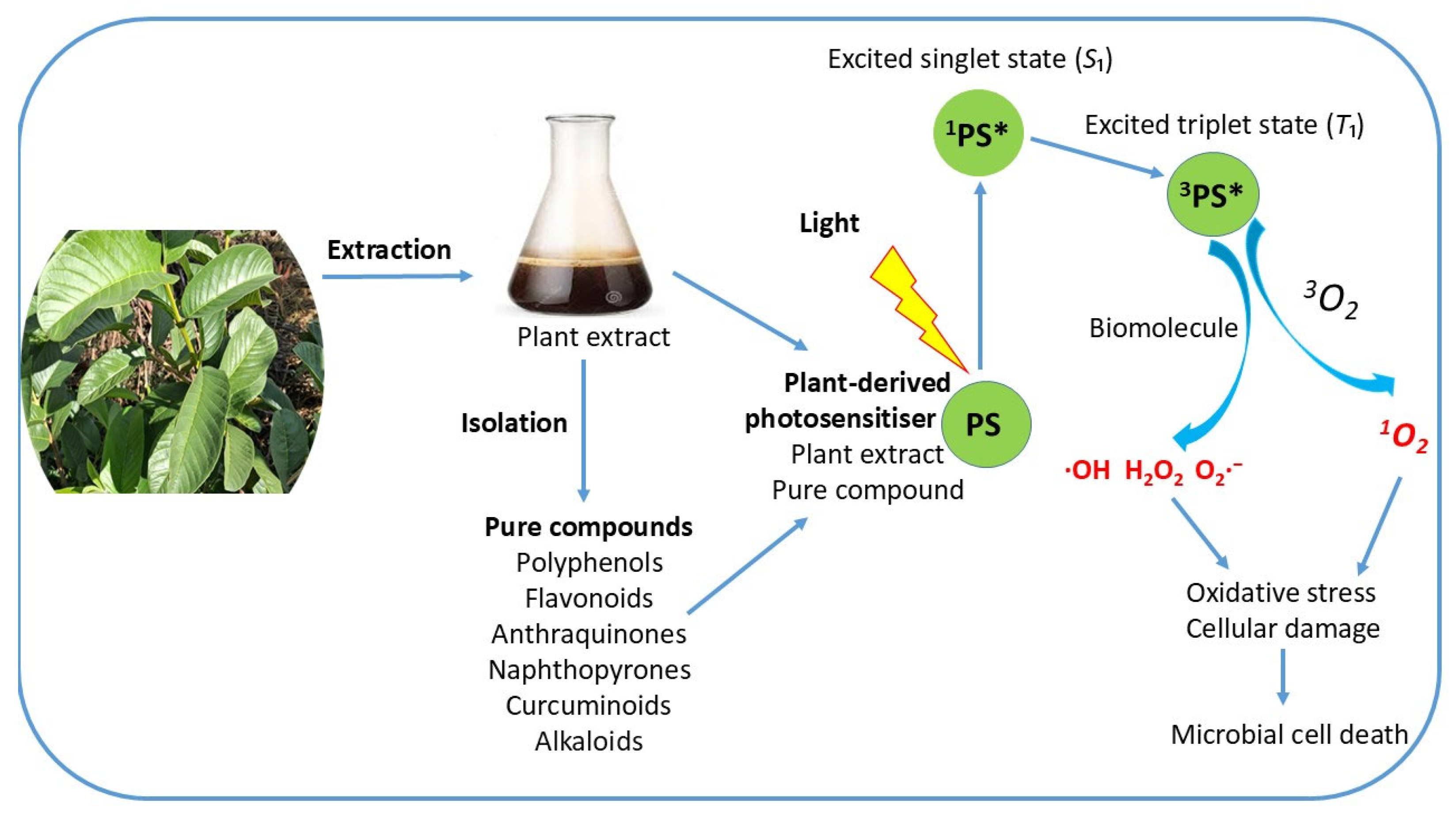
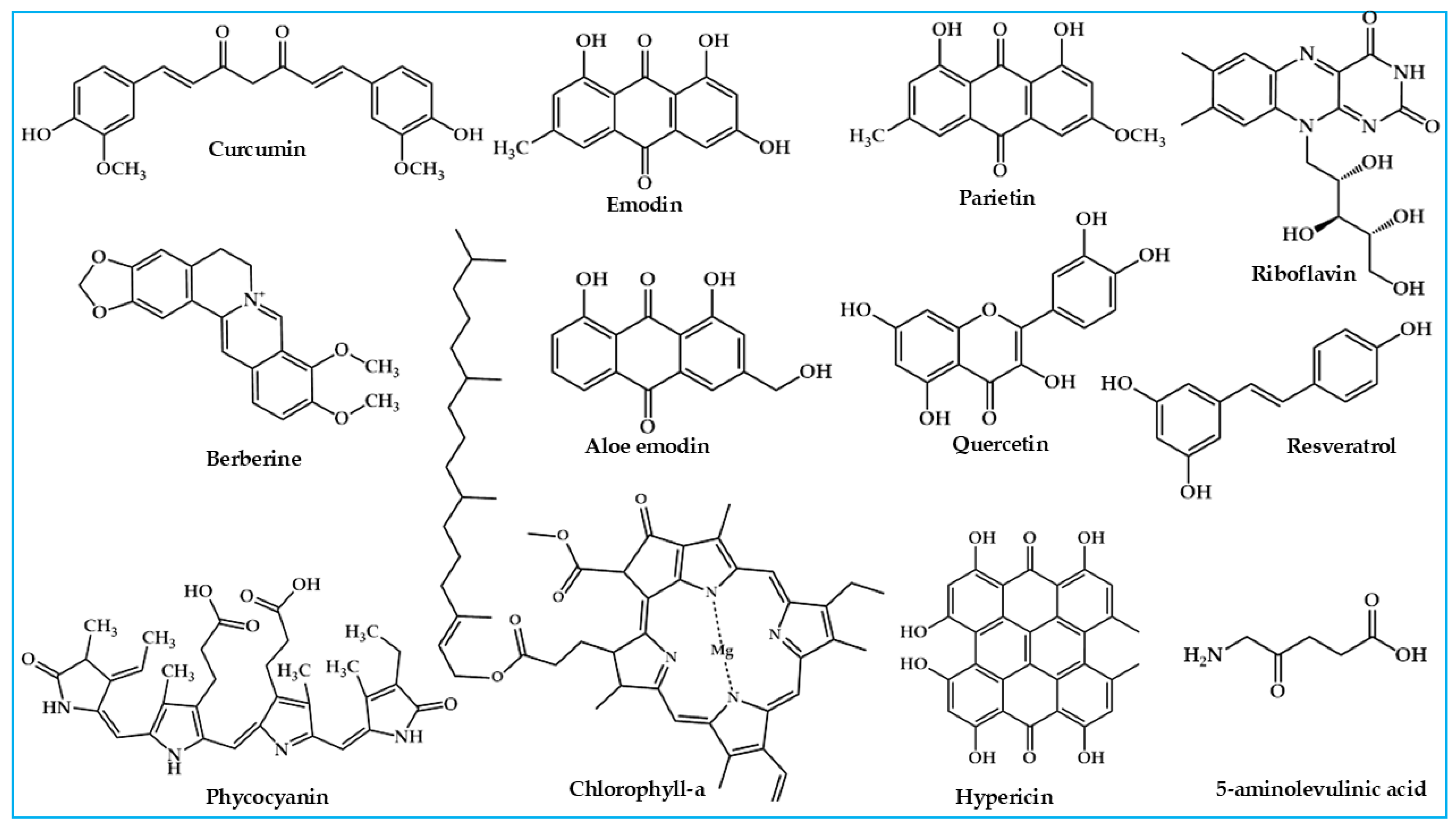
The increasing prevalence of antimicrobial resistance, together with recurring infectious disease outbreaks, has intensified the need for alternative strategies to control microbial infections beyond conventional antibiotic therapies. Antimicrobial photodynamic therapy has emerged as a promising non-antibiotic approach in which light-activated photosensitising compounds generate reactive oxygen species that induce oxidative damage to microbial cells. Plant-derived photosensitisers have attracted increasing attention due to their structural diversity, biocompatibility, natural abundance, and potential for sustainability. Natural compounds such as curcumin, hypericin, chlorophyll derivatives, flavonoids, anthraquinones, and riboflavin exhibit favourable photochemical properties that enable efficient production of reactive oxygen species upon irradiation with visible light. Through radical- and singlet-oxygen-mediated photochemical pathways, these molecules exhibit broad-spectrum antimicrobial activity against bacteria, fungi, viruses, and biofilm-associated microorganisms. This review examines the photophysical properties and mechanisms of reactive oxygen species generation associated with plant-derived photosensitisers, together with key factors influencing their antimicrobial performance. Recent advances in nanocarrier-based delivery systems, dual-wavelength activation strategies, and synergistic combination therapies are also discussed for their potential to improve photostability, enhance reactive oxygen species generation, and increase microbial inactivation efficiency. Finally, current progress, challenges, and future research directions for advancing plant-derived photosensitisers in antimicrobial photodynamic therapy are discussed.
Keywords: natural photosensitising compounds; photodynamic therapy; spectral matching; singlet oxygen natural photosensitising compounds; photodynamic therapy; spectral matching; singlet oxygen