
Article

Photodynamic Polymers Constituted by Porphyrin Units as Antibacterial Materials

by
María B. Ballatore
1,
María E. Pérez
1,
Sofía C. Santamarina
1,
Javier E. Durantini
2,
María E. Milanesio
1 and
Edgardo N. Durantini
1,*
1
IDAS-CONICET, Departamento de Química, Facultad de Ciencias Exactas, Físico-Químicas y Naturales, Universidad Nacional de Río Cuarto, Ruta Nacional 36 Km 601, Río Cuarto X5804BYA, Argentina
2
IITEMA-CONICET, Departamento de Química, Facultad de Ciencias Exactas, Físico-Químicas y Naturales, Universidad Nacional de Río Cuarto, Ruta Nacional 36 Km 601, Río Cuarto X5804BYA, Argentina
*
Author to whom correspondence should be addressed.
Photochem 2022, 2(4), 891-904; https://doi.org/10.3390/photochem2040057

Submission received: 10 September 2022 / Revised: 21 October 2022 / Accepted: 24 October 2022 / Published: 9 November 2022
(This article belongs to the Special Issue Advanced Research in Photothermal Therapy)

Abstract

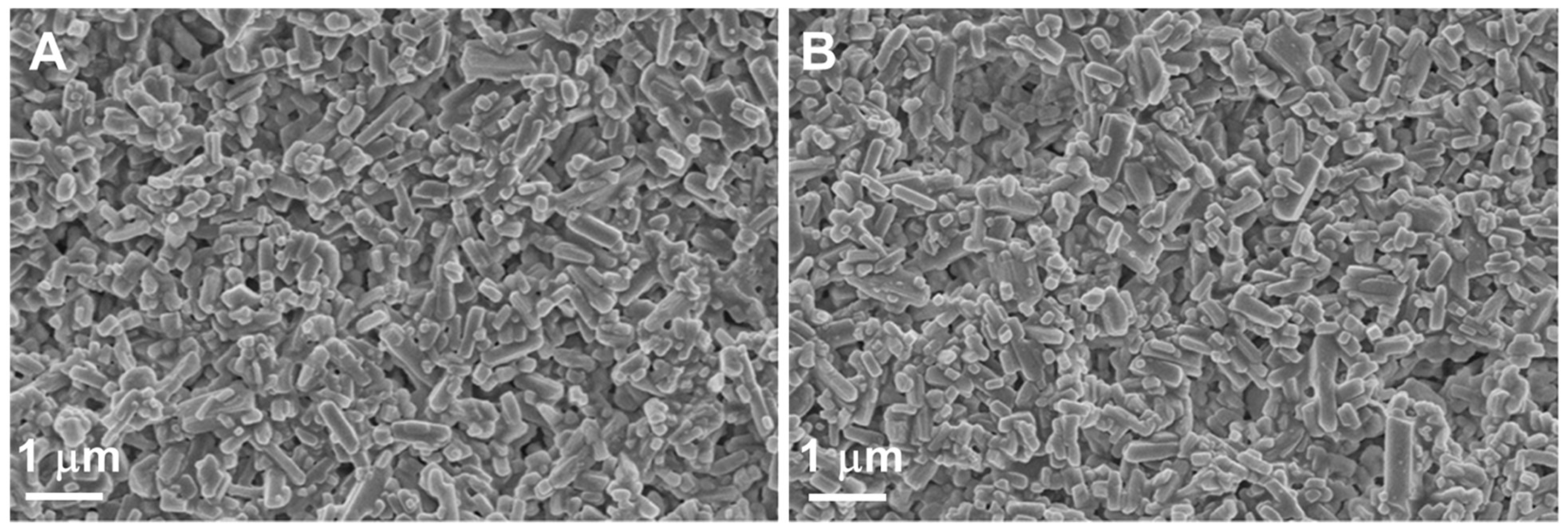
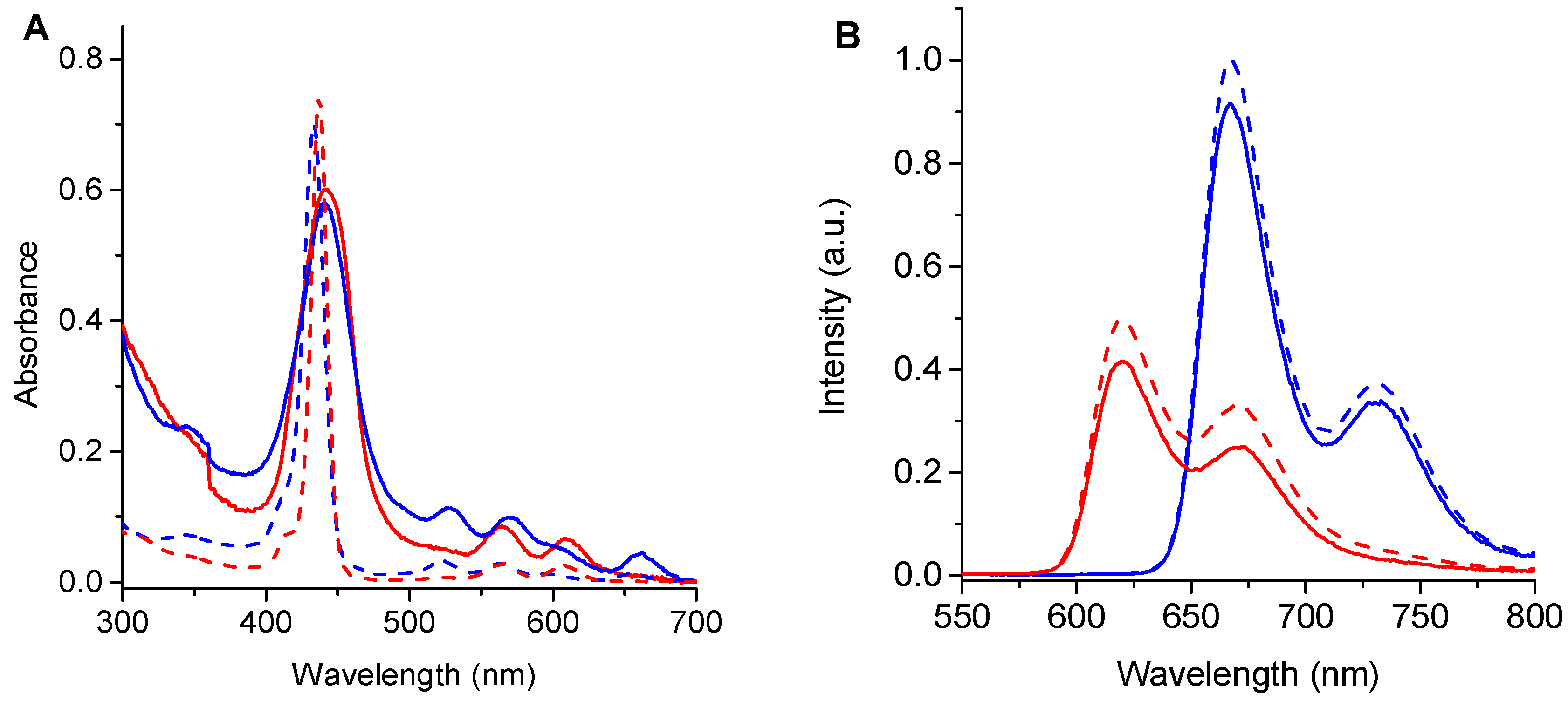
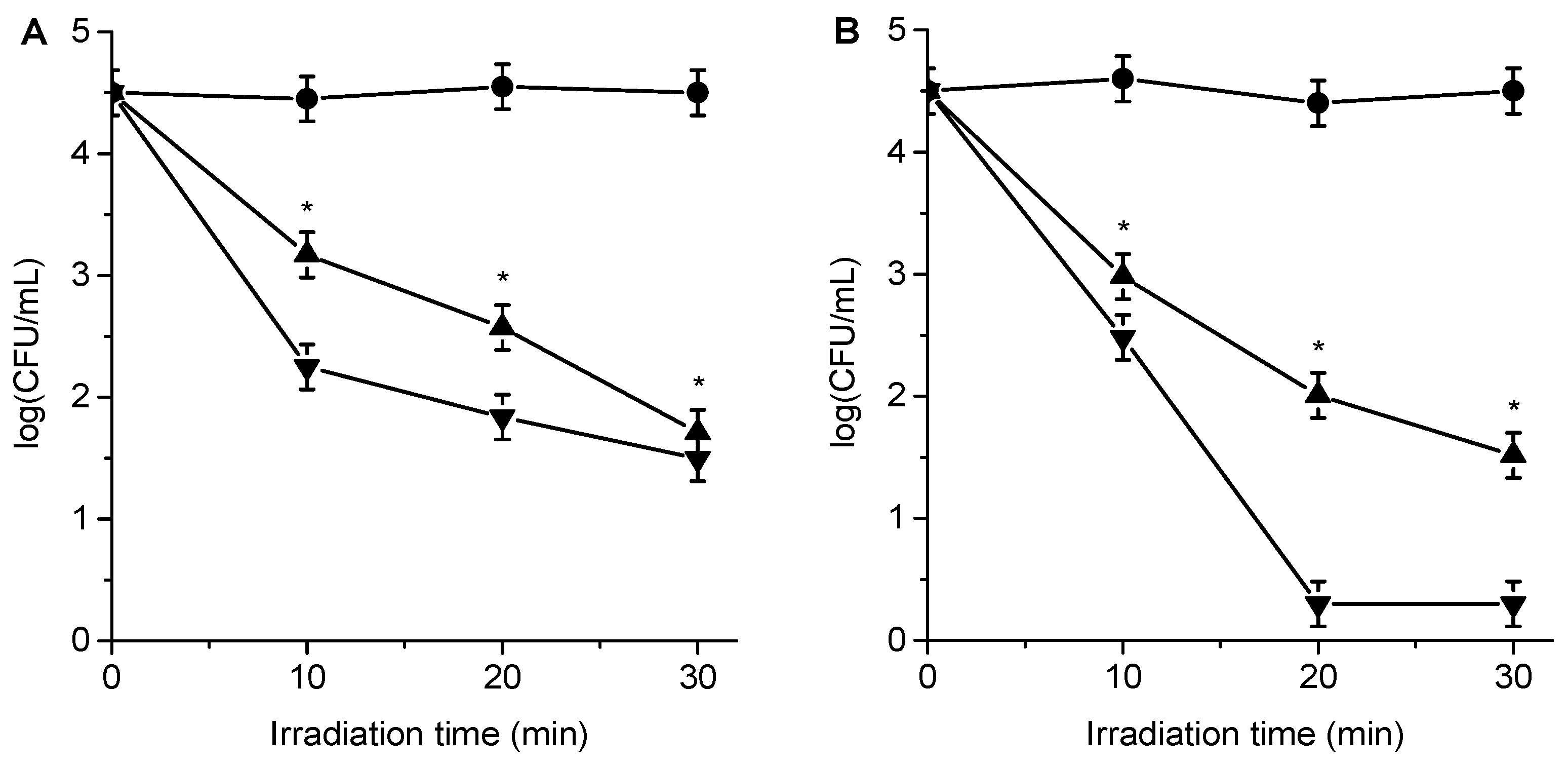
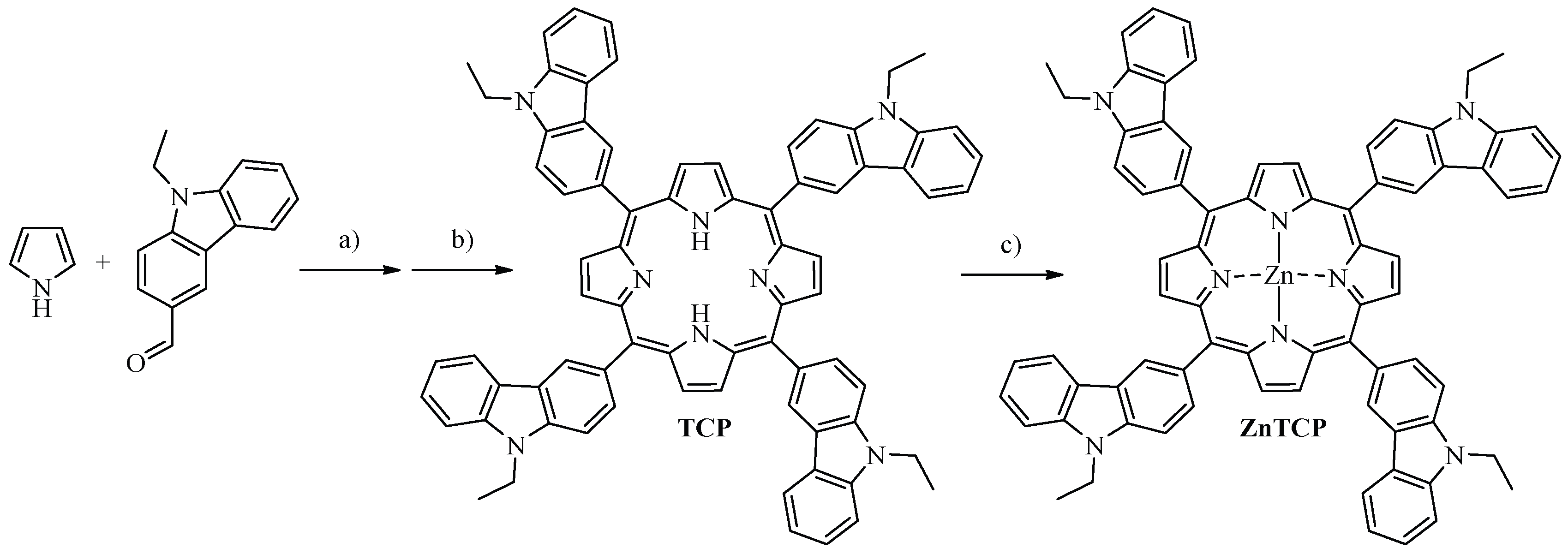
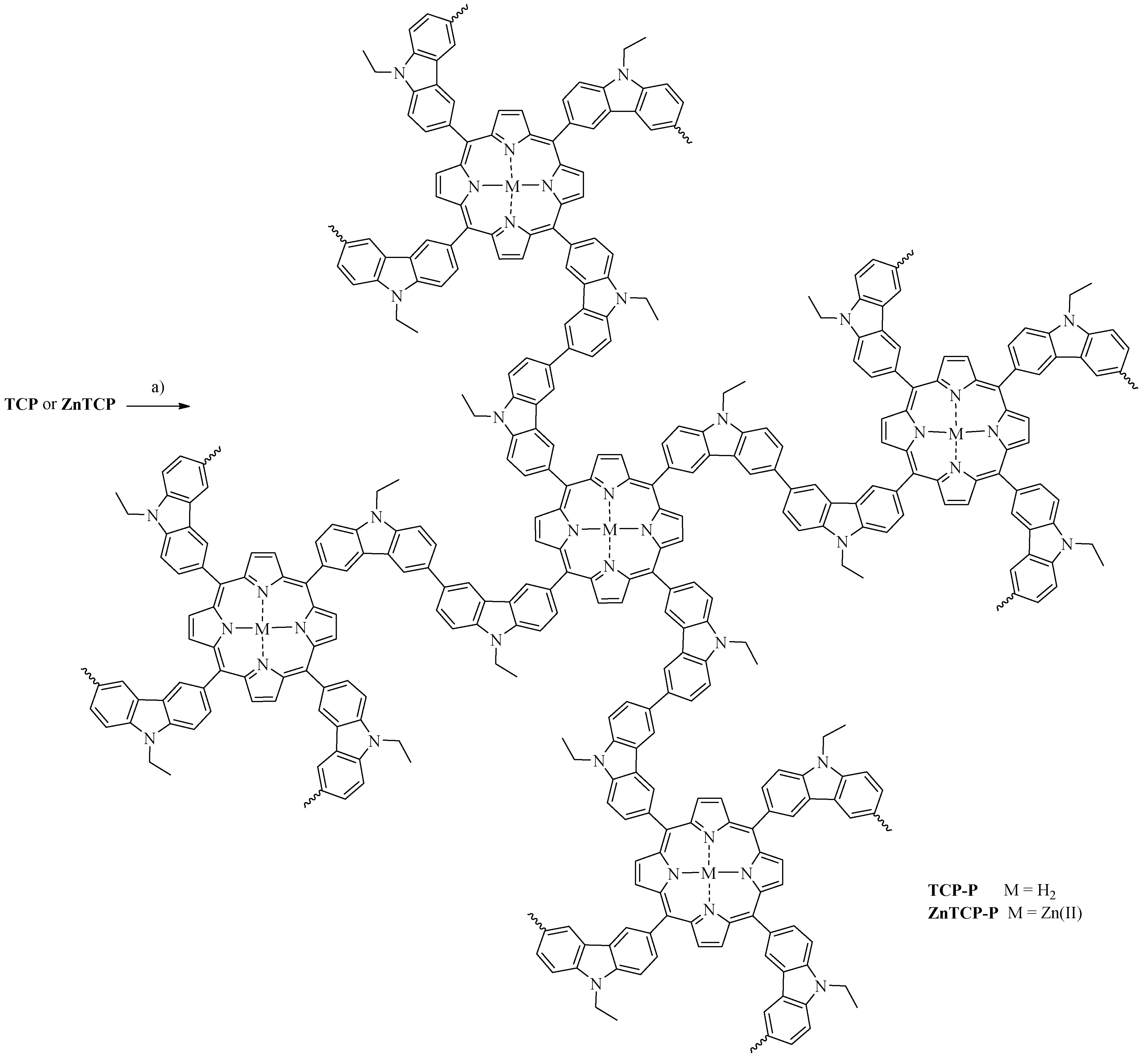
Photodynamic inactivation of microorganisms has emerged as a promising strategy to kill and eradicate pathogens. In this work, two polymers, TCP-P and ZnTCP-P, were synthesized by oxidative polymerization of 5,10,15,20-tetrakis [3-(N-ethylcarbazoyl)]porphyrin and its complex with Zn(II). Solid polymers consist of rods (diameter 100 nm, length ~100–500 nm) that form microporous structures on a surface. UV-visible absorption spectra in solution showed the Soret and Q bands characteristic of the corresponding constitutional porphyrins. In addition, the polymers presented two red emission bands with quantum yields ΦF = 0.11 for TCP-P and ΦF = 0.050 for ZnTCP-P. These compounds sensitized the production of singlet molecular oxygen with quantum yields of ΦΔ~0.3. Thus, the spectroscopic and photodynamic properties of the porphyrin units were maintained in the conjugates. The photodynamic activity induced by both polymers was tested to inactivate S. aureus. In cell suspensions, TCP-P was more effective than ZnTCP-P in killing bacteria. Viable S. aureus cells were not detected using 4 µM TCP-P after 20 min of irradiation. Moreover, both polymers showed a high photocytotoxic activity to eradicate S. aureus cells attached to a surface. The results indicate that these conjugated polymers can act as effective antimicrobial agents to photoinactivate pathogens.
Keywords: porphyrin; polymer; singlet oxygen; photodynamic inactivation; antimicrobial porphyrin; polymer; singlet oxygen; photodynamic inactivation; antimicrobial