
Article

Investigating the Feasibility of Developing Yarns and Socks from Corn Silk Fibers

1
Department of Textile Engineering, School of Engineering and Technology, National Textile University, Faisalabad 37610, Pakistan
2
Department of Textiles, Leather and Industrial Management, Faculty of Energy Engineering and Industrial Management, University of Oradea, Universității Str., No. 1, 410087 Oradea, Romania
*
Authors to whom correspondence should be addressed.
Textiles 2026, 6(2), 66; https://doi.org/10.3390/textiles6020066
Submission received: 20 February 2026 / Revised: 14 May 2026 / Accepted: 19 May 2026 / Published: 29 May 2026

Abstract

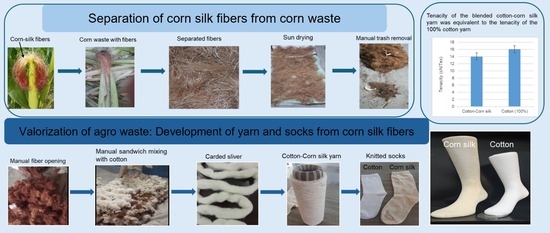
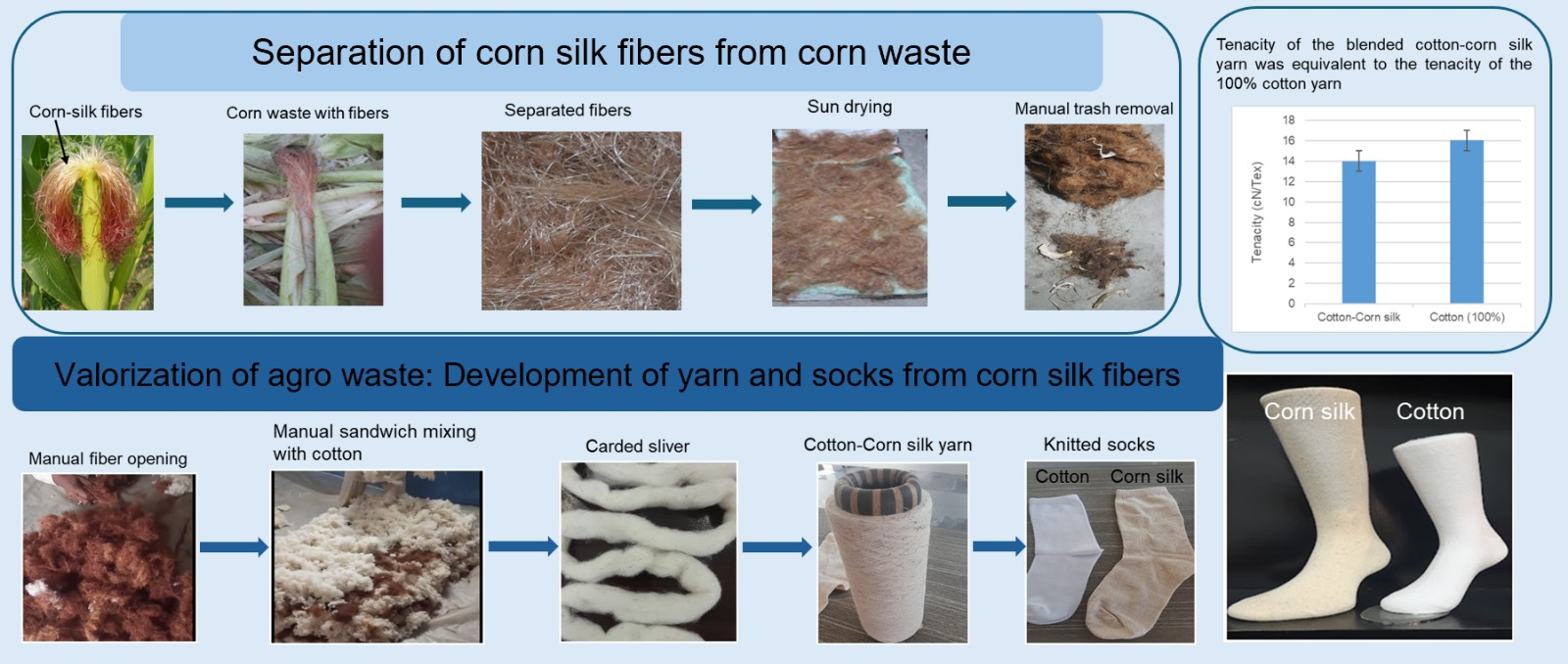
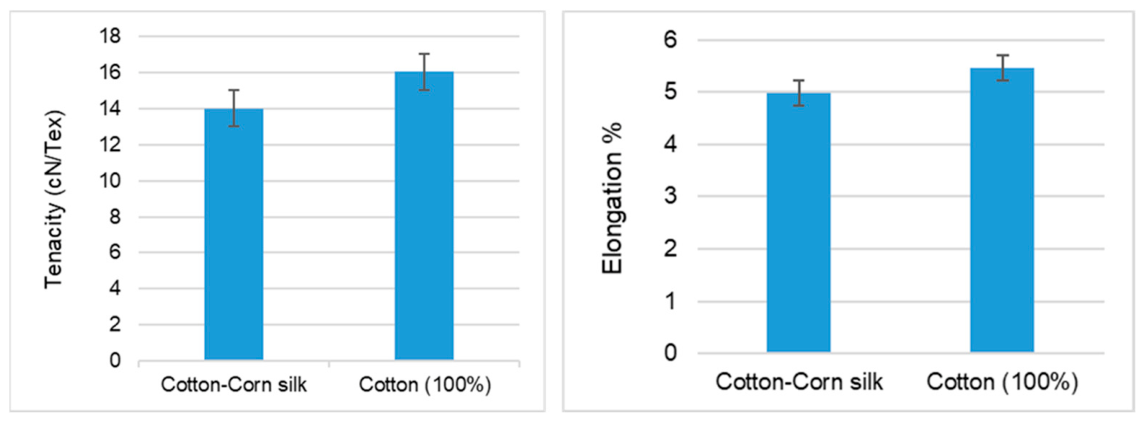
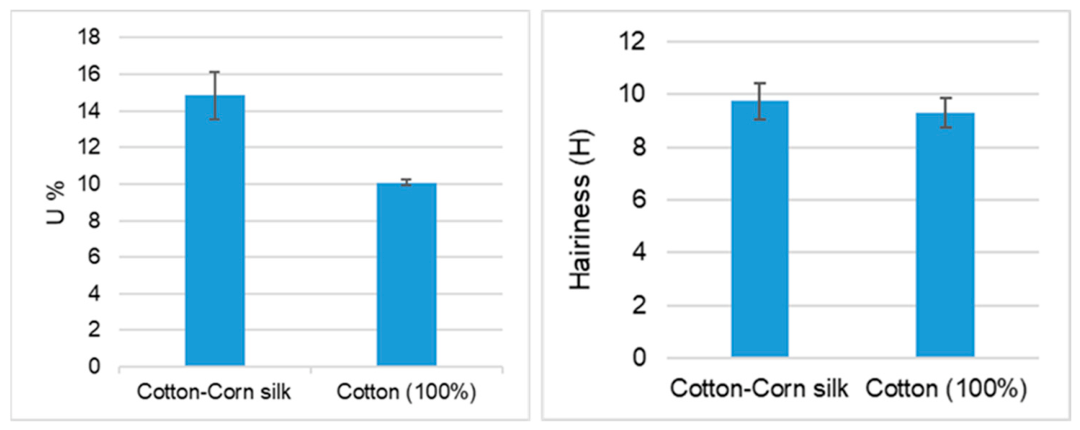
The growing demand for sustainable and functional textiles has prompted exploration of novel natural fibers from agricultural by-products. This study investigates the feasibility of utilizing corn silk fibers, an abundant agro-waste from corn processing, as a blend component with cotton for yarn and knitted product development. Corn silk fibers were blended with cotton to produce ring-spun yarns, which exhibited tenacity, elongation, and hairiness comparable to pure cotton yarns. The tenacity and elongation of the cotton yarn were 16 cN/Tex and 5.46%, while those of cotton–corn silk yarns were 14 cN/tex and 4.98%, respectively. However, the unevenness (U%) of the cotton–corn silk yarn was 14.83% while that of the cotton control yarn was 10.06%. These blended yarns were successfully knitted into socks. The resulting socks demonstrated satisfactory performance in abrasion resistance, absorbency, vertical wicking, color fastness to washing, and moisture content, comparable to pure cotton socks, indicating viable processability and dyeability. The abrasion tests of the socks developed from both the yarns showed no thinning or hole formation until 10,000 abrasion cycles. This work establishes the technical feasibility of corn silk–cotton blends and highlights their potential for future research into medicinal or functional textile applications, such as antibacterial or anti-odor properties.

Graphical Abstract

1. Introduction

The increasing global demand for sustainable and functional textiles has accelerated the exploration of novel natural materials, particularly from agricultural by-products, that offer unique bioactive properties. Utilizing agricultural waste not only provides a renewable source of raw materials but also mitigates environmental pollution associated with such waste.
One such promising source is corn silk, which is a glossy, brownish-colored fiber that is usually considered waste of the corn plant and grows on the cob under the cork husk. Corn silk is obtained as a by-product after corn processing and is usually discarded as eco-friendly agricultural waste [1]. Corn is one of the most widely grown crops in the world. Worldwide corn production was reported to be more than 1136.3 million metric tons in 2021, which was even more than that of wheat or rice [2].
Traditionally, corn silk has been recognized for its medicinal properties and has been used in various cultures to treat ailments such as urinary tract infections, prostate disorders, and hypertension [3,4,5]. Corn silk possesses a fiber-like structure and is composed of carbohydrates, proteins, fibers and other bioactive compounds [6]. Corn silk is not a purely cellulosic fiber as it contains a significant concentration of other compounds, such as lignin, hemicellulose, proteins, etc.; therefore, it can be considered a lignocellulosic fiber [7]. Corn silk fibers are mainly composed of carbohydrates, 65.5–74.3%, but also contain about 10% moisture, up to 17% proteins, up to 4.74% fat, 1.2–3.91% ash and 7.34% dietary fiber [6]. Research studies demonstrate that various compounds have been extracted from corn silk, such as polysaccharides [2,8], flavonoids [9,10,11], peptides [12,13], and phenolics [14].
Researchers have also investigated various applications of corn silk, such as composites [14], sorbent for oil sorption [15], health care and cosmetics [3,16], solid biopolymer electrolyte in energy storage [17], scaffolds for regenerating bone tissue [18], hydrogels [19], food packaging [20] and for the synthesis of carbon nanomaterials [21,22], and many others. Studies on health care and medicinal applications of corn silk include facial cream [17], wound healing [19], antidiabetic treatment [23], anti-obesity effects [24], and anti-cancerous [25] and anti-inflammatory effects [26], to mention a few.
However, its potential as a textile fiber remains underexplored. Recent studies suggest that corn silk fibers possess characteristics suitable for textile applications, such as adequate tensile strength and moisture absorbency. Moreover, incorporating corn silk into textiles aligns with sustainable practices of valorizing agricultural by-products that would otherwise be discarded. Particularly, corn silk fibers can be blended with other fibers such as cotton to develop yarns and textile products.
Blending different fibers is a common practice in yarn manufacturing to tailor properties and control cost and quality of the textile products [27]. Various other fibers have been blended with cotton to reduce the dependence on cotton and contribute to efforts to promote sustainability. In this pursuit, researchers have blended banana fibers, derived from the stem of the banana plant, with cotton to produce yarns that exhibit improved mechanical properties [28]. Previous studies have explored the blending of other cellulosic fibers, such as hemp, flax, jute, sisal, and banana, with cotton to develop yarns and woven fabrics [29]. Such fibers can also be blended with synthetic fibers such as nylon [30] and polyester [31] to develop yarns and fabrics.
Therefore, this study investigates the feasibility of processing corn silk fibers into yarns and textile products (such as socks), acknowledging limitations in spin ability while exploring the potential for future development of functional textiles leveraging the medicinal properties of corn silk.

2. Materials and Methods

2.1. Materials

In this study, cotton and corn silk fibers were used as follows.

2.2. Fiber Collection and Cleaning

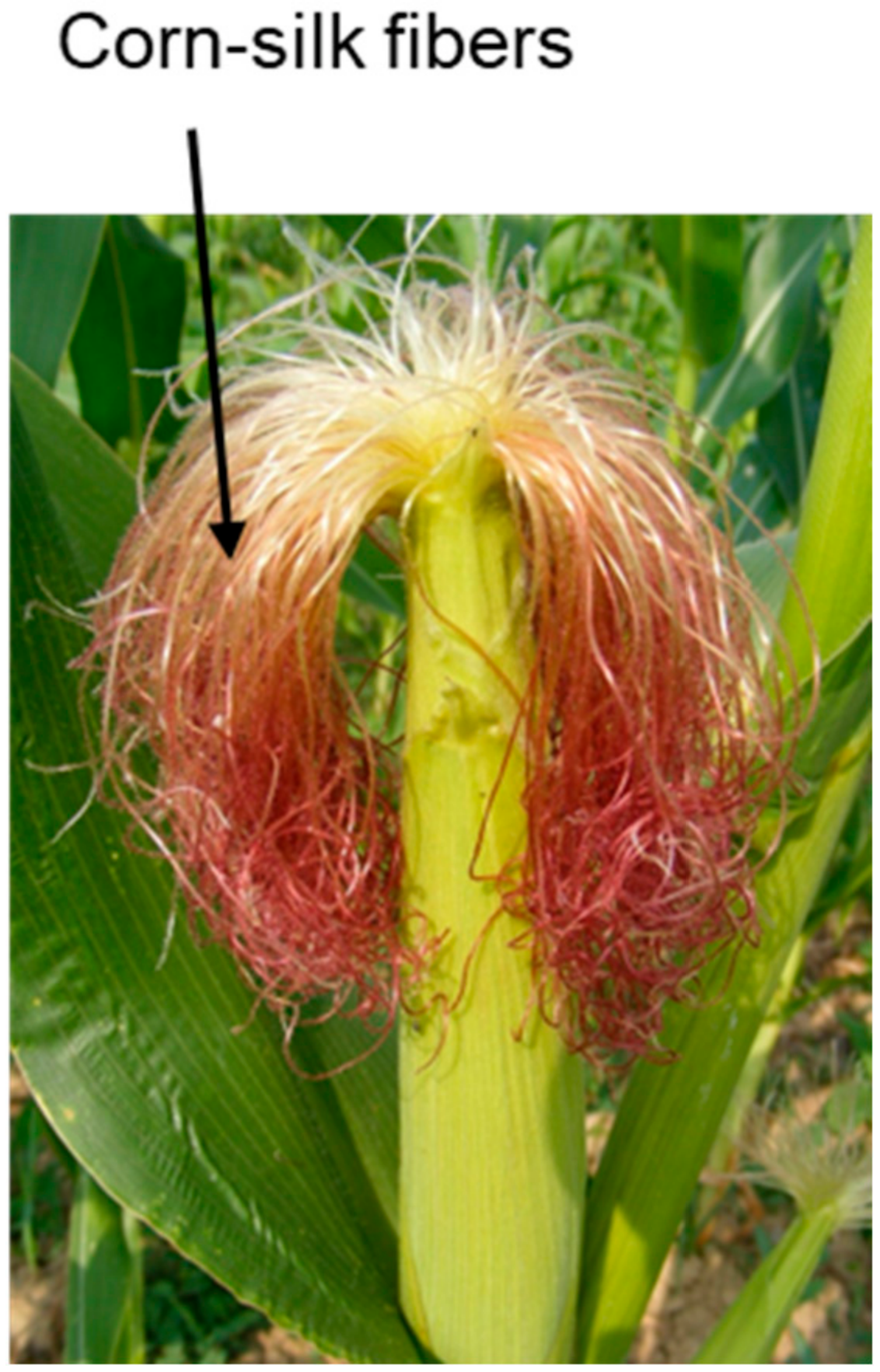
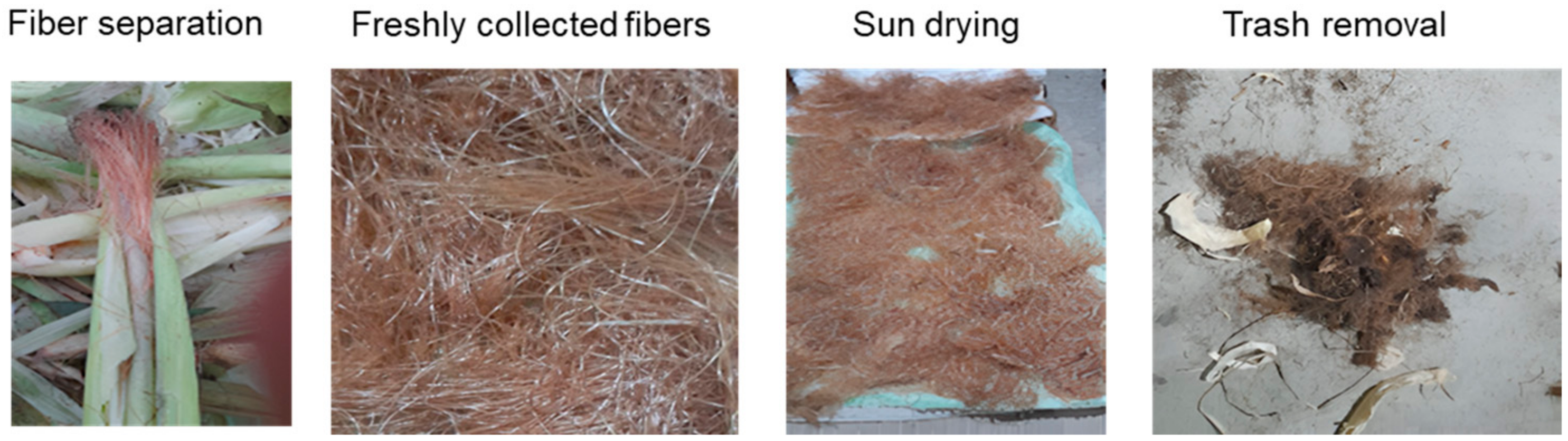
Corn silk fibers, as shown in Figure 1, derived from corn crop residue, were collected from the waste of the corn crop in Punjab, Pakistan. The corn silk fibers were obtained from commercially cultivated hybrid maize (Zea mays L.) from Punjab, Pakistan, where hybrid yellow dent maize is predominantly grown. No legal permission or license is required to collect any such waste. The fibers were first separated from the corn waste to collect the corn silk. Subsequently, the freshly collected silk was sun-dried, and impurities were manually removed before blending the fibers with cotton, as illustrated in Figure 2. About 8 to 10% of the trash was removed manually from the corn silk fibers separated from the corn waste.

2.3. Yarn Development

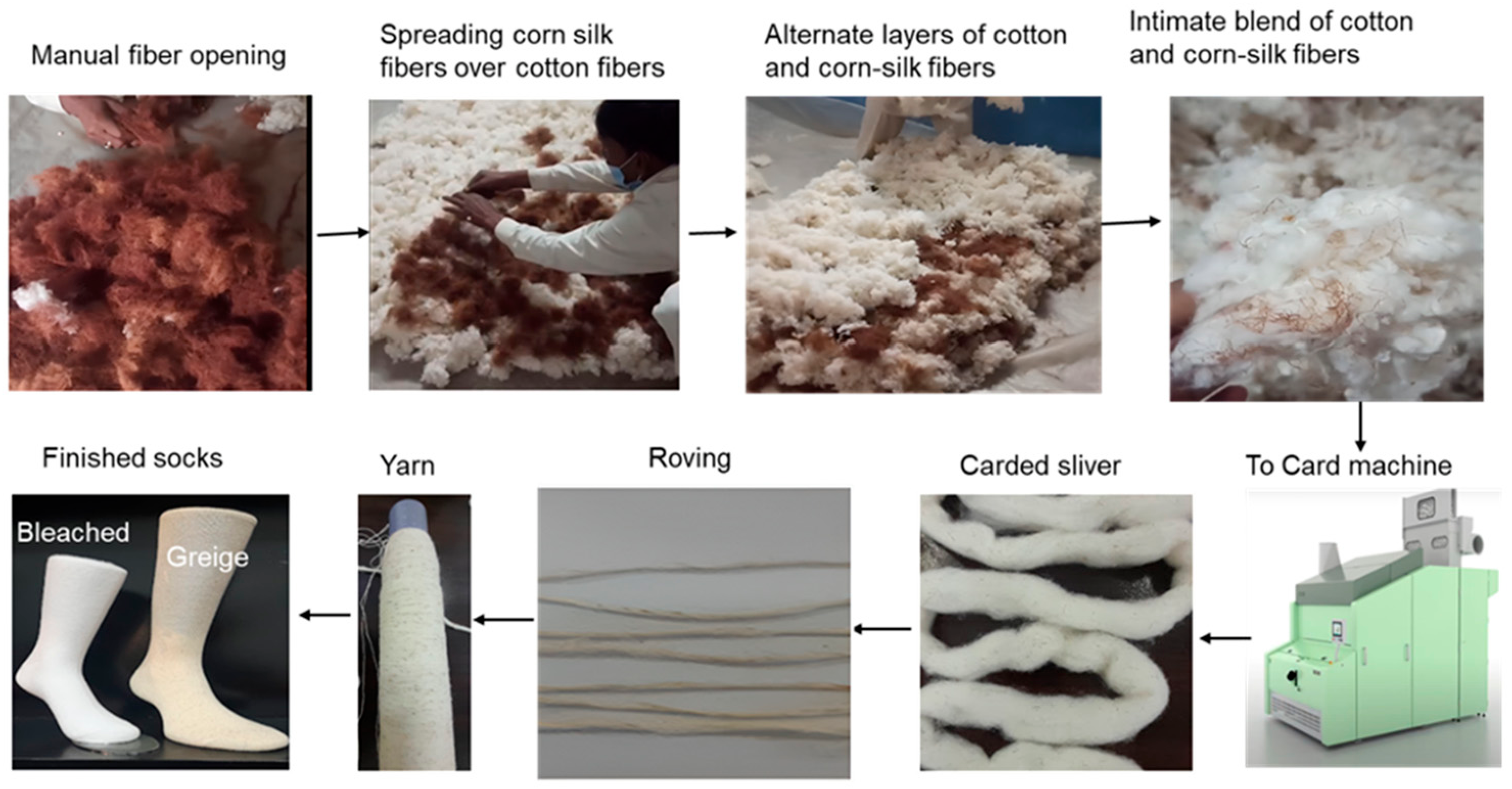
The yarns were manufactured at a private textile mill. The corn silk fibers were manually opened to some extent to enable them for sandwich blending with cotton. A layer of corn silk fibers was spread on a layer of cotton fibers, and the process was repeated again to obtain a four-layered sandwich comprising alternate layers of cotton and corn silk fibers, as shown in Figure 3. Due to the filament-like length, the corn silk fibers were manually cut to a length of about 30 mm before blending with cotton. Initially, a total mass of 4 kg of fibers was processed for the sample development, consisting of 70% cotton (2.8 kg) and 30% corn silk (1.2 kg) by weight. The sandwiched fibers were then fed to the carding machine for intimate blending and sliver formation. Due to fiber loss during carding, the final yarn contained 20% corn silk fibers, as estimated from the card waste, thus making the cotton-corn silk yarn an 80:20 blend. It should be noted that the raw materials were initially blended in a 70:30 (Cotton–Corn Silk) ratio. However, due to preferential fiber loss during the carding process, the resultant yarn composition was determined to be 80:20. All subsequent mechanical testing on yarns and circular knitting trials were conducted using this 80:20 resultant blend yarn.
The higher fiber loss at carding for similar biomass-derived fibers is well documented in the literature. A study reports that untreated banana fibers can experience up to a 40% mass loss in licker-in waste due to fiber breakage, though this may be mitigated through chemical treatments to about 10% [32]. Another study reports significantly higher dropping levels for the jute component in a cotton–jute blend, leading researchers to suggest incorporating a higher initial percentage of alternative fiber to achieve the desired resultant blend ratio in the yarn [33].
Because of the limited quantity of the collected corn silk fibers and the formed sliver, draw frame passages were omitted purposefully since draw frame passages need 6 to 8 slivers for doubling and drafting purposes. Draw frame passages are given to improve the quality of the formed sliver and the yarn that will be formed.
After roving package formation, the 12/1 Ne yarn was produced on a ring frame. For comparison purposes, 12/1 Ne cotton yarn was selected, which was in regular production at Interloop.

2.4. Socks Development

The socks were developed from the two yarns using a socks knitting machine Lonati (Model GL 544 144 4) by Lonati, Brescia, Italy, having a 4-inch cylinder diameter. To give stretch and recovery properties to the socks, an air-covered polyester yarn covering an elastomeric filament was used as a backing yarn in both socks.
The developed socks were scoured, bleached and dyed. Scouring was performed to remove natural impurities, such as waxes, pectins, proteins or mineral matter, as well as any processing residues from the fibers. Scouring was carried out with sodium hydroxide (1 g/L) as the scouring agent and Rucogen WBL (1 g/L) from Rudolf, Lahore, Pakistan, as the wetting agent at 80 °C for 10 min. After scouring, the socks were washed and pH-neutralized with citric acid (1 g/L).
After washing, the socks were bleached with hydrogen peroxide. Leucophore BSBB, by Archroma Pakistan Ltd., Karachi, Pakistan, was also added as a brightening agent. The liquor ratio was kept 1:10 (kg: liter). After bleaching, samples were hot-washed at 70 °C, and then the pH was neutralized by using 1.5 g/L citric acid at 50 °C temperature for 10 min.
Both cotton and corn silk–cotton blended socks were dyed with reactive black dye. The dyeing recipe was composed of Sunzol Black EXF (5.5%) reactive dye, salt (100 g/L), soda ash (10 g/L) and caustic soda (2 g/L). The dye process was carried out at 60 °C for 60 min.
The socks were then boarded at the steam boarding rotary machine with a setting of 2.5 bar steam for 5 s to make them flat and wrinkle-free, to verify the fitting of the socks before performing detailed testing of the socks.

2.5. Yarn Characterization

The developed yarns were characterized for their strength and evenness properties. The single yarn strength in terms of tenacity cN/tex was determined using Uster Tensorapid by Uster Technologies AG, Uster, Switzerland, at a speed of 5000 mm/min, and breaking elongation was measured as a percentage with respect to the original length of the yarn. The yarn evenness properties, such as yarn hairiness and unevenness represented as U%, were determined using Uster Uester 5 at a speed of 400 m/min.

2.6. Socks Characterization

The developed cotton–corn silk blended socks and 100% cotton socks were evaluated for their mechanical, durability, and moisture-related properties using internationally recognized testing standards.
The abrasion resistance of the socks was evaluated using the Martindale Abrasion Tester according to the BS EN ISO 12947-2:2016 standard [34]. Circular specimens were cut from the sock fabric and placed against an abradant fabric. The test continued until fabric failure occurred (i.e., hole formation or significant wear). The socks were considered to pass the commercial performance if they sustained 10,000 rubs before breaking down or failure in terms of hole formation or thinning.
The properties of socks under normal wear are also of commercial importance and were evaluated according to the BS EN ISO 13770:2002 standard [35] under simulated wear conditions, using a standardized rotary drum or Martindale abrasion machine. The number of cycles to failure (holes or excessive wear) was recorded. Socks should withstand at least 10,000 cycles to meet durability expectations for everyday use.
The absorbency of the socks was determined as per the Drop Method according to AATCC 79:2018 [36]. A drop of distilled water was placed on the surface of the fabric, and the time taken for complete absorption (disappearance of the drop) was recorded. The test was conducted after three washing cycles to simulate real-world conditions. Absorbency is considered good if the water drop is absorbed within 5 s.
The appearance retention properties of the socks were evaluated using the BS EN ISO 6330:2020 standard [37]. Briefly, socks were laundered using a standard domestic washing machine cycle followed by drying under controlled conditions. The dimensional stability, surface texture, and pilling resistance were assessed visually using a grading scale from 1 (poor) to 5 (excellent). A rating of equal to or greater than 3.5 (good appearance retention) is generally required for commercial textile products, and socks meeting this criterion were considered to meet commercial standards.
The color fastness properties of the socks were determined according to the Color Fastness to Washing test as per the BS EN ISO 105 C06:2010 standard [38]. The socks were subjected to repeated washing cycles followed by drying. Color change and staining were assessed using a grayscale rating (1 to 5), with 5 indicating no change. A minimum rating of 4 for color change and 3 for staining was considered as passing criteria for the socks.
Moisture-related performance of the socks was evaluated using two tests to determine the moisture content and vertical wicking of the moisture. Moisture contents in the socks were determined following the AATCC 20A:2021 standard [39]. The moisture percentage was determined by weighing sock samples before and after drying in an oven at 105 °C for 3 h. The moisture regain percentage was calculated using the following formula:
M o i s t u r e   c o n t e n t   % =   W e t   w e i g h t D r y   w e i g h t D r y   w e i g h t   ×   100
Moisture retention of about 7–8% under standard atmospheric conditions is considered good, and the developed socks’ values were compared to this range.
Similarly, vertical moisture wicking properties were determined as per the AATCC 197:2018 standard [40]. The knitted fabric strip was suspended vertically with its lower end immersed in distilled water. The wicking height was measured at a specified time interval of 30 min to assess moisture rise due to capillary action. A wicking height within 5–17 cm in 30 min was determined, and a value of more than 5 cm was considered satisfactory for moisture management in socks.
All the above tests were performed under standard atmospheric conditions (20 ± 2 °C and 65 ± 2% relative humidity). Each test was conducted in five replicates, and the results are reported as mean values.

3. Results and Discussion

In this study, blended yarns comprising cotton and corn silk fibers were developed to explore the potential of corn silk fibers derived from corn waste. Socks were developed from the yarns, and detailed characterizations were performed on the yarns and socks. The following sections report the results of the study for fibers, yarns and socks.

3.1. Fiber Properties

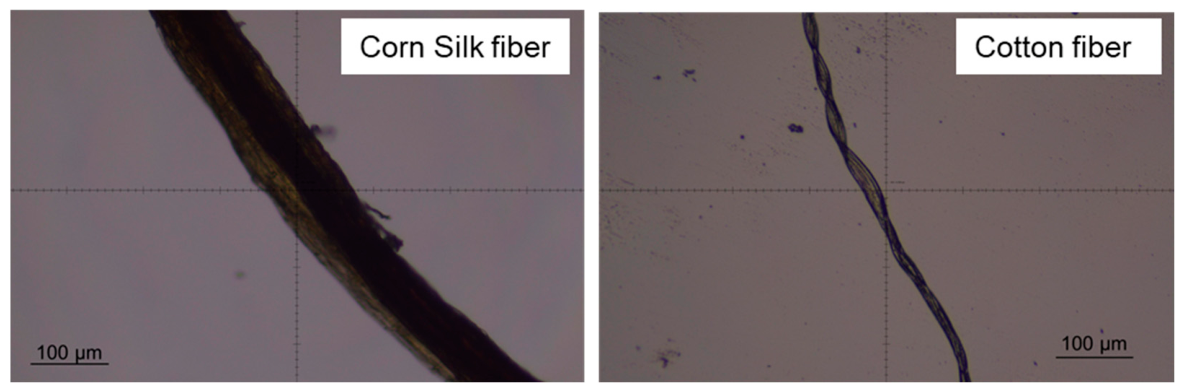
The surface characteristics of the corn silk and cotton fibers were observed using an optical microscope image shown in Figure 4. The figure shows a brownish-hued smooth surface of the corn silk fibers with slight variation in the thinness along the length of the fiber. Whereas the cotton fiber image shows a typical ribbon-like flattened structure with a characteristic twisted or convoluted appearance. The diameter of the cotton fiber, measured from the optical microscope images, was found to be 19 ± 4 µm, whereas that of the corn silk fiber was 94 ± 15 µm, which indicates that there is greater variation in corn silk fibers compared with cotton fibers.
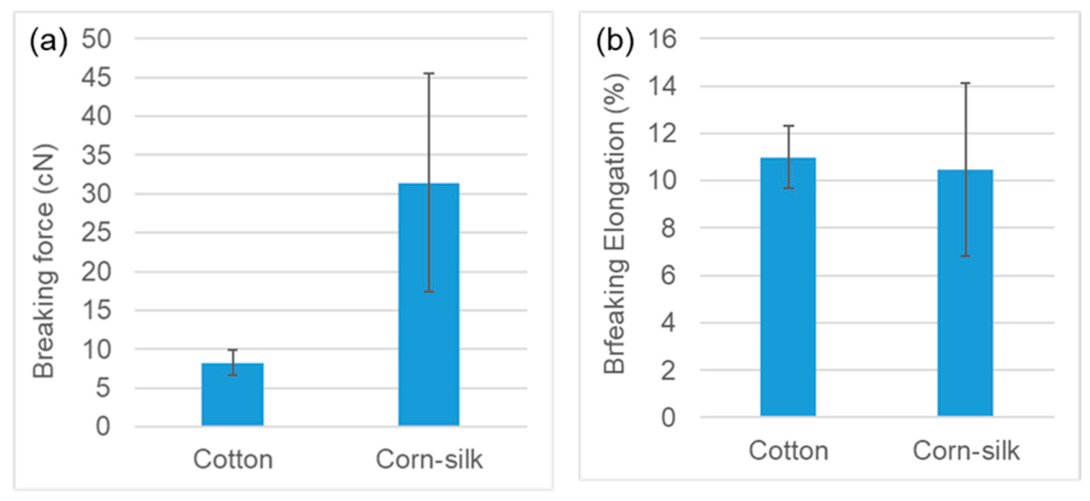
Figure 5 exhibits single fiber tensile test results for corn silk and cotton fibers. The breaking force of corn silk and cotton fibers, shown in Figure 5a, demonstrates that the breaking force of corn silk fibers, being coarser than cotton fibers, is about four times greater than that of cotton fibers. This indicates that corn silk fibers possess sufficient strength to be converted into yarns and can be used in combination with other conventional textile fibers to develop blended yarns.
Figure 5b shows that the elongation at break of corn silk is also equivalent to that of cotton fibers. A certain level of elongation in a fiber is beneficial to withstand stretches and twisting during the yarn manufacturing process. In the absence of any elongation at break, the fiber may break during spinning. Tenacity and elongation at break of corn silk fibers, which are comparable to those of cotton fibers, demonstrate the potential of corn silk fibers to be used in yarn manufacturing for textile applications.
The absence of convolutions and the brittle nature of the corn silk fiber also pose a technical challenge for its spinning. Specifically, the absence of natural convolutions reduces inter-fiber cohesion, while the higher brittleness increases the propensity for fiber breakage during the drafting and twisting stages of ring spinning. These factors necessitate a blending approach, where cotton acts as a ‘carrier’ to provide the necessary structural matrix.

3.2. Yarn Properties

Although the fibers were initially blended at a 70:30 (cotton–corn silk) ratio by weight, the final yarn composition was estimated to be approximately 80:20. This was due to the preferential removal of corn silk fibers during carding; the mechanical action of the carding wires caused the brittle corn silk to fragment more readily than the cotton, leading to a higher concentration of corn silk in the card waste. The extent of droppings was controlled by moisturizing the fibers and adjusting the gauges of the card machine for this purpose.
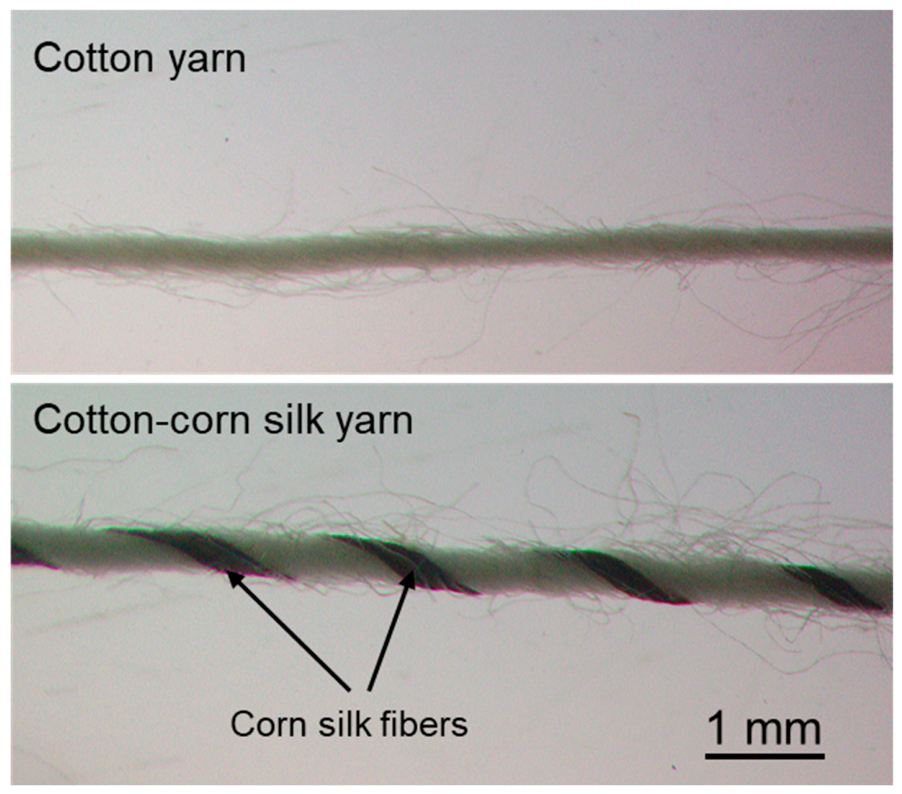
Yarn from 100 percent cotton fibers was also developed for comparison purposes. Figure 6 shows optical microscopy images of the yarns developed from cotton and cotton-corn silk fibers. Corn silk fibers are visible due to their brownish color and coarser nature. The image shows that despite their coarser nature, corn silk fibers were well integrated within the yarn structure along with cotton fibers, indicating their successful incorporation within the blended yarn.
The tensile properties of the cotton/corn silk blended yarns and pure cotton yarns are shown in Figure 7. The figure shows that the tenacity and elongation at break of the corn silk fiber blended yarn were slightly less than but comparable to those of cotton yarn. This demonstrates that blending 20 percent corn silk fibers with cotton fibers does not deteriorate the tensile properties of the yarns and thus corn silk fibers can contribute to reducing reliance on cotton fibers, enhancing sustainability. Since corn silk fibers are also composed of cellulose, the comfort properties of the textile products developed from such yarns would not be compromised, as presented and discussed in the following section with reference to socks.
Similar reduction in tenacity and elongation of the yarns has also been reported for other yarns developed by blending cotton fibers with other cellulosic fibers. In a previous study, cotton fibers were blended with flax fibers in the ratio 70:30 and reported a 16% reduction in the tenacity of the cotton–flax yarns (70:30) compared with a hundred percent cotton yarn [27]. The reduction in tenacity in this study is about 12% for cotton–corn silk yarns. It can be inferred from these results that yarns developed using corn silk fibers up to 20 percent have sufficient strength and elongation to be used in different woven and knitted textile products. Another study reports a decrease in the tenacity of the yarns developed from blends of cotton with other cellulosic fibers such as flax, banana, hemp, sisal, and jute [41].
The evenness properties of the blended cotton–corn silk and cotton yarns, in terms of yarn unevenness (U%) and yarn hairiness (H), are shown in Figure 8. The results shown in Figure 8 indicate that the cotton–corn silk blended yarn exhibited relatively higher unevenness compared with pure cotton yarn. The blending of other cellulosic fibers, such as flax, with cotton fibers has been reported in the literature to increase yarn unevenness significantly [27].
It is important to emphasize that the omission of the draw frame in this study was a constraint of the pilot-scale material volume and is not suggested as a standard process modification. However, the successful conversion of carded sliver into knittable yarn confirms the fundamental feasibility of the blend; it is expected that regular production incorporating standard drawing and doubling would result in superior yarn evenness than that reported here.
The hairiness level (H) of the blended yarn containing corn silk fibers is slightly higher than that of cotton yarn, indicating that inclusion of corn silk in cotton fibers does not deteriorate hairiness properties of the resulting yarns. Yarn hairiness has a significant contribution in controlling pilling characteristics of textile products; therefore, corn silk-containing yarns are expected to maintain the abrasion and pilling characteristics of the textile products as exhibited by the socks developed in this study and discussed in the following section. A blend of cotton with other cellulosic fibers has been reported to increase yarn hairiness [42]. However, the blend of cotton with corn silk exhibited promising results regarding yarn hairiness level.

3.3. Socks Properties

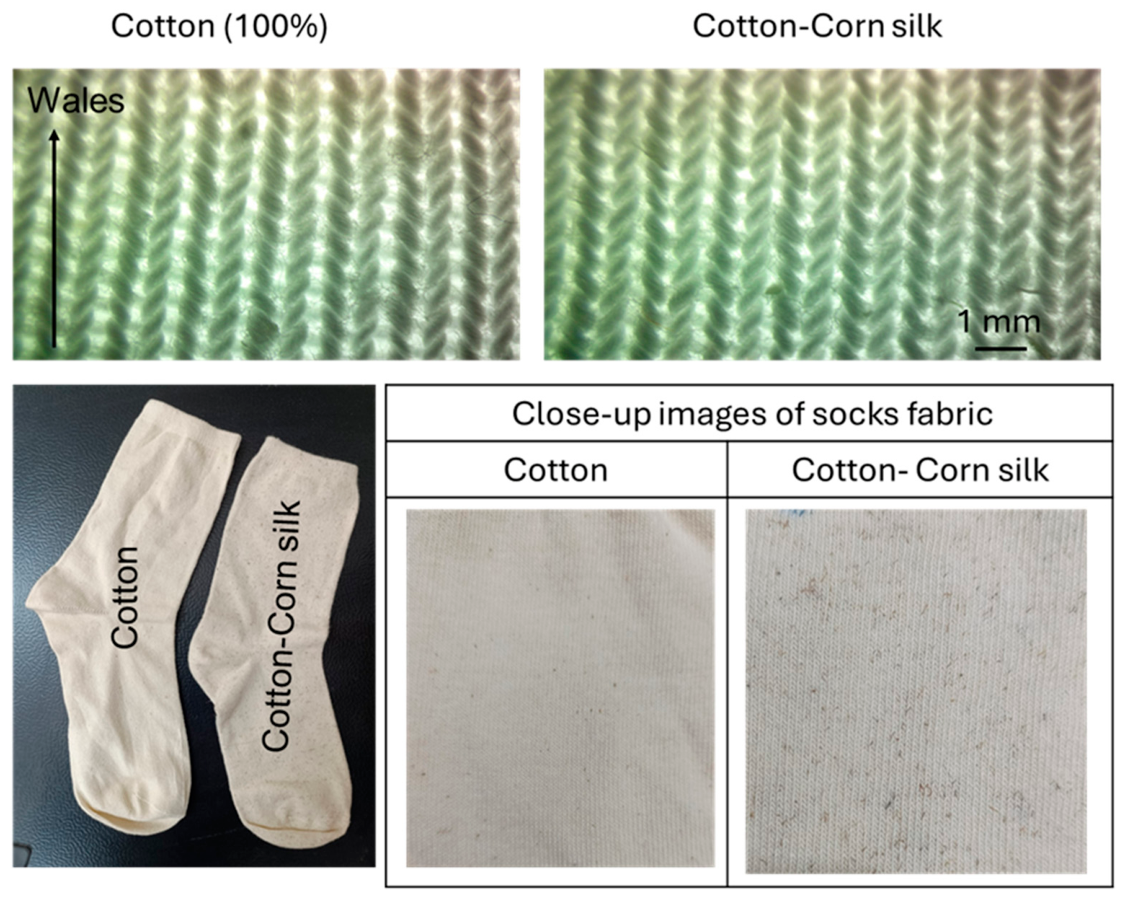
Socks were developed from the cotton–corn silk blended and cotton yarns, and different characterizations related to the socks were performed. Figure 9 shows optical microscope and camera images of the socks developed from blended yarns containing corn silk fibers and cotton yarns. The camera image in Figure 9 shows that socks containing cornsilk fibers have a brownish color or mélange effect due to the brown color of the corn silk fibers. Optical microscope images in Figure 9 also show that the knitted structure of the socks developed from the blended yarn and the cotton yarn was similar, indicating similar knitted fabric characteristics for both socks.
Different characterizations were performed on socks developed from blended and cotton yarns, and the results are shown in Table 1. The results indicate that corn silk blended socks were equivalent in performance to the cotton socks.
The durability testing performed included a general abrasion resistance test and, for knitted footwear, appearance retention after washing and color fastness after washing, whereas moisture-related testing included moisture content determination, moisture absorbance and vertical wicking of moisture.
Abrasion resistance measures a fabric’s ability to withstand surface wear caused by rubbing. High abrasion resistance is crucial for socks, which are subject to constant friction during wear. The corn silk fiber blended socks withstood 10,000 cycles, equal to those of cotton socks, with no hole formation or thinning of the fabric, thus indicating that the integration of corn silk fibers did not compromise the durability of the socks.
The test to determine the abrasion resistance of the knitted footwear garments was also performed on the socks. This specific abrasion test focuses on the durability of knitted structures under conditions simulating actual wear. Both socks were able to withstand 10,000 cycles, confirming that incorporating corn silk fibers does not negatively affect the structural integrity of the knitted structure, making them suitable for practical applications.
Appearance retention was performed to assess how well the socks maintained their look after wear and laundering, including aspects like pilling, color retention, and shape. The blended socks exhibited performance equal to cotton socks in the test, getting an overall rating of 4.5 for color change on a scale of 1–5 and 3.5 for pilling, indicating that corn silk fibers also contributed to the aesthetic durability of the socks, ensuring they remain visually appealing over time.
A color fastness test was also performed to evaluate resistance to fading or bleeding during laundering for both socks. The blended socks also passed this test, demonstrating that the dye affinity of the cotton–corn silk blend was sufficient to maintain color integrity, which is crucial for consumer satisfaction and extended use of the product.
Assessment of the moisture content of textiles is important for understanding their drying behavior and susceptibility to mildew. The blended socks exhibiting appropriate moisture levels suggest that corn silk fibers do not negatively impact the moisture equilibrium of the fabric, ensuring comfort and hygiene. Vertical wicking test determines the ability of a fabric to transport moisture away from the foot upwards, helping in evaporation and keeping the skin dry. The corn silk fiber blended socks’ behavior was equivalent to that of cotton socks, indicating that the addition of corn silk fibers does not deteriorate the moisture-wicking performance that will contribute to overall foot comfort of the wearer.
Absorbency of a knitted or woven fabric reflects a fabric’s ability to take in moisture, contributing to wearer comfort by managing perspiration. Both socks maintained absorbency after multiple washes by absorbing the water droplet within 2 s on the surface of the knitted fabric, suggesting that the corn silk blended socks exhibit moisture absorption properties comparable to pure cotton socks. This is significant, as effective moisture absorption is essential for preventing blisters and maintaining foot comfort.
Summarizing the discussion about the properties developed in this study, the positive outcomes across these tests highlight the feasibility of using corn silk fibers as a sustainable alternative in socks production. The blended socks not only meet the standard performance metrics expected in hosiery but also offer an eco-friendly option that aligns with current trends in sustainable textile development. Furthermore, the potential functional properties of socks, such as anti-odor or antibacterial properties, are also being investigated due to bioactive compounds present in the corn silk fibers.

3.4. Sustainability and Environmental Aspect

The use of virgin fibers like cotton necessitates the use of resources such as land, water and fertilizer. Their processing further employs energy at different stages of processing. In this study, the valorization of corn silk effectively diverted agro-waste from traditional disposal routes, such as open-field burning, which is a major source of CO2 and particulate matter emissions in South Asia. Quantitatively, for every 1 kg of 80/20 blended yarn produced, approximately 200 g of waste material is incorporated into a value-added textile product. Furthermore, since corn silk is a secondary by-product of the maize industry, its environmental entry cost is zero, theoretically reducing the total water and land footprint of the resulting end product by 20% compared to 100% virgin cotton products.
The comparison of environmental load between cotton and corn silk fibers is given in Table 2. It is estimated that cotton cultivation consumes about 11% of the world’s pesticides while it is cultivated on 2.4% of the world’s arable land [43].
The sustainability metrics presented in Table 2 provide a critical context for the experimental results of this study. The table shows that the cultivation of cotton is notoriously resource-intensive, requiring up to 10,000 L of water per kilogram of fiber [43]. In contrast, the corn silk utilized in this study is a true agricultural by-product; its environmental entry cost regarding land, water, and pesticides is effectively zero, as it is allocated to the primary maize crop.
When comparing these theoretical benefits to the present study’s findings, the 80:20 (cotton–corn silk) blend achieves a significant valorization of waste. Furthermore, the successful conversion of this blend into functional knitted socks proves that the sustainability gains are not merely theoretical but are achievable within current spinning and knitting processes.
The fiber loss observed during carding does not represent a complete loss of sustainability value. These short fibers can be repurposed as raw material for non-woven medical pads or can even be used to extract bioactive compounds. This aligns with the “Zero-Waste” principle of the circular economy, where every fraction of the agro-waste is funneled into a secondary production stream.
While this study establishes the fundamental technical feasibility of utilizing corn silk fibers in textile manufacturing, several limitations and areas remain to be further explored. A primary limitation of the current work is the investigation of a single blending ratio (corn silk/cotton) compared against a pure cotton reference. While this was sufficient to prove processability, the mechanical and physiological properties of the yarn may vary significantly with different blend proportions. Additionally, blends with other natural fibers can also be investigated.
Another limitation is that corn silk fibers exhibit relatively higher brittleness compared to cotton. Consequently, different machines during yarn manufacturing need to be run at low speeds. This fiber fragmentation can lead to increased short-fiber content and higher waste percentages, as discussed in the above sections. Future research may focus on pre-treatment and softening techniques. In addition, the potential bioactive properties of the textiles containing corn silk fibers need to be explored in future research.

4. Conclusions

This study successfully demonstrated the development of yarns by blending corn silk fibers with cotton fibers. The socks were knitted from the developed yarns, and the processes of scouring, bleaching, dyeing and detailed characterizations were performed. Corn silk fibers were initially blended at 30% by weight with cotton fibers; however, the final yarn (Ne 12/1) contained an estimated 20% corn silk due to fiber loss during processing. A 100 percent cotton yarn was developed for comparison purposes. The developed blended yarn containing corn silk fibers exhibited mechanical properties comparable to 100% cotton yarn. The knitting and wet processing (bleaching and dyeing processes) of the blended yarn did not present challenges, confirming the processability of corn silk fibers within conventional textile manufacturing processes. The socks developed from the blended yarn containing corn silk fibers successfully passed critical textile performance tests, including abrasion resistance, absorbency, moisture retention, and color fastness, reinforcing the durability and usability of the fiber. The findings highlight corn silk fibers as a promising sustainable alternative that can be utilized in textile applications, contributing to agro-waste valorization and circular economy initiatives. Inherent medicinal properties of the corn silk fibers make them attractive for further research to develop functional textiles with enhanced performance for broader textile applications.

Author Contributions

Conceptualization, M.I. and A.A. (Ali Afzal); methodology, M.N.; formal analysis, A.B. and H.J.; resources, L.I. and A.A. (Adina Albu); writing—original draft preparation, M.N.; writing—review and editing, L.I., A.A. (Ali Afzal) and A.A. (Adina Albu); supervision, M.I. and A.A. (Ali Afzal); funding acquisition, L.I. and A.A. (Adina Albu). All authors have read and agreed to the published version of the manuscript.

Funding

The APC was funded by the University of Oradea, Romania.

Data Availability Statement

Data are contained within the article.

Acknowledgments

The authors are thankful to the Higher Education Commission, Pakistan, for the funding under grant code (20-16082/NRPU/R&D/HEC/2021-2020).

Conflicts of Interest

The authors declare no conflicts of interest.

References

  1. Singh, J.; Inbaraj, B.S.; Kaur, S.; Rasane, P.; Nanda, V. Phytochemical Analysis and Characterization of Corn Silk (Zea mays, G5417). Agronomy 2022, 12, 777. [Google Scholar] [CrossRef]
  2. Zhang, R.; Ma, S.; Li, L.; Zhang, M.; Tian, S.; Wang, D.; Liu, K.; Liu, H.; Zhu, W.; Wang, X. Comprehensive Utilization of Corn Starch Processing By-Products: A Review. Grain Oil Sci. Technol. 2021, 4, 89–107. [Google Scholar] [CrossRef]
  3. Li, P.; Ren, G.; Sun, Y.; Jiang, D.; Liu, C. Extraction Optimization, Preliminary Identification, and Bioactivities in Corn Silk. Evid.-Based Complement. Altern. Med. 2023, 2023, 5685174. [Google Scholar] [CrossRef]
  4. Sawangwong, W.; Kiattisin, K.; Somwongin, S.; Wongrattanakamon, P.; Chaiyana, W.; Poomanee, W.; Saina-kham, M. The Assessment of Composition, Biological Properties, Safety and Molecular Docking of Corn Silk (Zea mays L.) Extracts from the Valorization of Agricultural Waste Products in Thailand. Ind. Crops Prod. 2024, 212, 118352. [Google Scholar] [CrossRef]
  5. Marok, T.; Rasane, P.; Kaur, S.; Jyoti, A.; Ercisli, S.; Assouguem, A.; Choudhary, R.; Ullah, R.; Alqahtani, A.S.; Singh, J. Corn Silk: A Promising Source of Antimicrobial Compounds for Health and Wellness. Open Agric. 2024, 9, 20220321. [Google Scholar] [CrossRef]
  6. Kaur, P.; Singh, J.; Kaur, M.; Rasane, P.; Kaur, S.; Kaur, J.; Nanda, V.; Mehta, C.M.; Sowdhanya, D. Corn Silk as an Agricultural Waste: A Comprehensive Review on Its Nutritional Composition and Bioactive Potential. Waste Biomass Valorization 2023, 14, 1413–1432. [Google Scholar] [CrossRef]
  7. Ali, M.F.; Shabur, M.A.; Safiur Rahman, G.M. Compari-son of the Mechanical Characteristics of Biocomposites of Unsaturated Polyester Resin with Cellu-lose Extracted from Corn Silk and Treated Corn Silk. Discov. Mech. Eng. 2024, 3, 18. [Google Scholar] [CrossRef]
  8. Chen, S.; Chen, H.; Tian, J.; Wang, J.; Wang, Y.; Xing, L. Enzymolysis-Ultrasonic Assisted Extraction, Chemical Characteristics and Bioactivities of Polysaccharides from Corn Silk. Carbohydr. Polym. 2014, 101, 332–341. [Google Scholar] [CrossRef] [PubMed]
  9. Tian, S.; Sun, Y.; Chen, Z. Extraction of Flavonoids from Corn Silk and Biological Activities In Vitro. J. Food Qual. 2021, 2021, 7390425. [Google Scholar] [CrossRef]
  10. Mihali, C.; Frumuzachi, O.; Nicolescu, A.; Babotă, M.; Păltinean, R.; Tanase, C.; Mocan, A. Valorization of Corn Silk as an Agricultural By-Product through the Optimization of Ultrasound-Assisted Extraction. Appl. Sci. 2024, 14, 1516. [Google Scholar] [CrossRef]
  11. Nessa, F.; Ismail, Z.; Mohamed, N. Antimicrobial Activities of Extracts and Flavonoid Glycosides of Corn Silk (Zea mays L.). Int. J. Biotechnol. Wellness Ind. 2012, 1, 115–121. [Google Scholar] [CrossRef]
  12. Ho, T.Y.; Li, C.C.; Lo, H.Y.; Chen, F.Y.; Hsiang, C.Y. Corn Silk Extract and Its Bioactive Peptide Ameliorated Lipopolysaccharide-Induced Inflammation in Mice via the Nuclear Factor-ΚB Signaling Pathway. J. Agric. Food Chem. 2017, 65, 759–768. [Google Scholar] [CrossRef]
  13. Tian, J.; Chen, H.; Chen, S.; Xing, L.; Wang, Y.; Wang, J. Comparative Studies on the Constituents, Antioxidant and Anticancer Activities of Extracts from Different Varieties of Corn Silk. Food Funct. 2013, 4, 1526–1534. [Google Scholar] [CrossRef]
  14. Mohammed, A.A.B.A.; Hasan, Z.; Omran, A.A.B.; Kumar, V.V.; Elfaghi, A.M.; Ilyas, R.A.; Sapuan, S.M. Corn: Its Structure, Polymer, Fiber, Composite, Properties, and Applications. Polymers 2022, 14, 4396. [Google Scholar] [CrossRef]
  15. Asadpour, R.; Sapari, N.B.; Isa, M.H.; Kakooei, S.; Orji, K.U. Acetylation of Corn Silk and Its Application for Oil Sorption. Fibers Polym. 2015, 16, 1830–1835. [Google Scholar] [CrossRef]
  16. Yucharoen, R.; Srisuksomwong, P.; Julsrigival, J.; Mungmai, L.; Kaewkod, T.; Tragoolpua, Y. Antioxidant, Anti-Tyrosinase, and Anti-Skin Pathogenic Bacterial Activities and Phytochemical Compositions of Corn Silk Ex-tracts, and Stability of Corn Silk Facial Cream Product. Antibiotics 2023, 12, 1443. [Google Scholar] [CrossRef] [PubMed]
  17. Suvarnna, K.; Kirubavathy, S.J.; Selvasekarapandian, S.; Krishna, M.V.; Ramaswamy, M. Corn Silk Extract–Based Solid-State Biopolymer Electrolyte and Its Application to Electrochemical Storage Devices. Ionics 2022, 28, 1767–1782. [Google Scholar] [CrossRef]
  18. Makvandi, P.; Ali, G.W.; Della Sala, F.; Abdel-Fattah, W.I.; Borzacchiello, A. Hyaluronic Acid/Corn Silk Extract Based Injectable Nanocomposite: A Biomimetic Antibacterial Scaffold for Bone Tissue Regeneration. Mater. Sci. Eng. C 2020, 107, 110195. [Google Scholar] [CrossRef]
  19. Makvandi, P.; Ali, G.W.; Della Sala, F.; Abdel-Fattah, W.I.; Borzacchiello, A. Biosynthesis and Characterization of Antibacterial Thermosensitive Hydrogels Based on Corn Silk Extract, Hyaluronic Acid and Nanosilver for Potential Wound Healing. Carbohydr. Polym. 2019, 223, 115023. [Google Scholar] [CrossRef]
  20. Abdin, M.; Naeem, M.A.; Elmahdy, A.; Ali, M. Development of Hydroxypropyl Methylcellulose Films with Corn Silk Polysaccharides and Its Application as Biomaterial in Enhancing the Shelf Life of Mozzarella Cheese. Packag. Technol. Sci. 2024, 37, 3–16. [Google Scholar] [CrossRef]
  21. Zhang, Y.; Zhao, R.; Li, Y.; Zhu, X.; Zhang, B.; Lang, X.; Zhao, L.; Jin, B.; Zhu, Y.; Jiang, Q. Potassium-Ion Batteries with Novel N, O Enriched Corn Silk-Derived Carbon as Anode Exhibiting Excellent Rate Performance. J. Power Sources 2021, 481, 228644. [Google Scholar] [CrossRef]
  22. Shi, J.; Zhang, X.; Zhu, H.; Li, D.; Nie, Y.; Gao, B.; Xiang, G. Corn Silk-Derived Biomass Carbon Materials for Low-Frequency Microwave Absorption and Energy Storage. Nanoscale 2025, 17, 6030–6038. [Google Scholar] [CrossRef]
  23. Saini, H.K.; Vaidya, D.; Kaushal, M.; Anand, A.; Gupta, A. Optimization of Method and Conditions for Extraction of Biologically Active Compounds from Corn Silk and Determination of In Vitro Anti-Diabetic Effects. Waste Biomass Valorization 2025, 16, 4775–4795. [Google Scholar] [CrossRef]
  24. Chaiittianan, R.; Sutthanut, K.; Rattanathongkom, A. Purple Corn Silk: A Potential Anti-Obesity Agent with Inhibition on Adipogenesis and Induction on Lipolysis and Apoptosis in Adipocytes. J. Ethnopharmacol. 2017, 201, 9–16. [Google Scholar] [CrossRef]
  25. Gulati, A.; Singh, J.; Rasane, P.; Kaur, S.; Kaur, J.; Nanda, V. Anti-Cancerous Effect of Corn Silk: A Critical Review on Its Mechanism of Action and Safety Evaluation. 3 Biotech 2023, 13, 246. [Google Scholar] [CrossRef]
  26. Wang, G.Q.; Xu, T.; Bu, X.M.; Liu, B.Y. Anti-Inflammation Effects of Corn Silk in a Rat Model of Carrageen-in-Induced Pleurisy. Inflammation 2012, 35, 822–827. [Google Scholar] [CrossRef]
  27. Chowdhury, M.F.M.; Islam, M.N. Qualitative and Statistical Analysis of Cotton-Flax Blend Yarn. Heliyon 2022, 8, e10161. [Google Scholar] [CrossRef]
  28. Khan, A.; Iftikhar, K.; Mohsin, M.; Ubaidullah, M.; Ali, M.; Mueen, A. Banana Agro-Waste as an Alternative to Cotton Fibre in Textile Applications. Yarn to Fabric: An Ecofriendly Approach. Ind. Crops Prod. 2022, 189, 115687. [Google Scholar] [CrossRef]
  29. Jabbar, M.; Iftikhar, F.; Hussain, T.; Ahmad, S.; Ahmad, F. Preparation and Characterization of Sustainable Plant-Based Blended Woven Fabric. J. Eng. Fibers Fabr. 2025, 1–18. [Google Scholar] [CrossRef]
  30. Ling, Y.; Hart, J.; Henson, C.; West, A.; Kumar, A.; Karanjikar, M.; Yin, R. Investigation of Hemp and Nylon Blended Long-Staple Yarns and Their Woven Fabrics. Fibers Polym. 2023, 24, 1835–1843. [Google Scholar] [CrossRef]
  31. Zhang, H.; Zhang, J.; Gao, Y. Study on the Relationship Between Blending Ratio and Performance of Hemp/Polyester Yarn. J. Nat. Fibers 2014, 11, 136–143. [Google Scholar] [CrossRef]
  32. Velumani, A.; Kandhavadivu, P.; Parthiban, M. Influence of Blend Proportion on Mechanical Properties of Ba-nana/Cotton Blended Knit Fabric. Indian J. Fibre Text. Res. 2021, 46, 41–47. [Google Scholar]
  33. Basu, G.; Roy, A.N. Blending of Jute with Different Natural Fibres. J. Nat. Fibers 2008, 4, 13–29. [Google Scholar] [CrossRef]
  34. BS EN ISO 12947-2:2016; Textiles. Determination of the Abrasion Resistance of Fabrics by the Martindale Method. Determination of Specimen Breakdown. British Standards Institution: London, UK, 2016.
  35. BS EN ISO 13770:2002; Textiles. Determination of Resistance to Pilling and Related Surface Changes on Fabrics. Modified Martindale Method. British Standards Institution: London, UK, 2002.
  36. AATCC 79:2018; Test Method for Absorbency of Textiles. American Association of Textile Chemists and Colorists: Research Triangle Park, NC, USA, 2018.
  37. BS EN ISO 6330:2020; Textiles. Domestic Washing and Drying Procedures for Textile Testing. British Standards Institution: London, UK, 2020.
  38. BS EN ISO 105-C06:2010; Textiles. Tests for Colour Fastness. Colour Fastness to Domestic and Commercial Laundering. British Standards Institution: London, UK, 2010.
  39. AATCC 20A:2021; Test Method for Fiber Analysis: Quantitative. American Association of Textile Chemists and Colorists: Research Triangle Park, NC, USA, 2021.
  40. AATCC 197:2018; Test Method for Vertical Wicking of Textiles. American Association of Textile Chemists and Colorists: Research Triangle Park, NC, USA, 2018.
  41. Jabbar, M.; Iftikhar, F.; Hussain, T.; Ahmad, F.; Ahmad, S. A Novel Sustainable Cellulosic Fibrous Blended Yarns as an Alternative to Cotton for Textile Applications. J. Eng. Fibers Fabr. 2026, 1–17. [Google Scholar] [CrossRef]
  42. Ling, Y.; Liu, Y.; Yin, R.; West, A. An Eco-Friendly Droplet-Wet Spinning Technology for Producing High-Quality Hemp/Cotton Blend Yarn. J. Clean. Prod. 2024, 475, 143689. [Google Scholar] [CrossRef]
  43. La Rosa, A.D.; Grammatikos, S.A. Comparative Life Cycle Assessment of Cotton and Other Natural Fibers for Textile Applications. Fibers 2019, 7, 101. [Google Scholar] [CrossRef]
  44. Ertuğrul, Ö.; Özgünaltay Ertuğrul, G.; Değirmencioğlu, A.; Kadirova, S. Analyzing Sustainable Cotton Production in Türkiye through the Water Energy Carbon Nexus Framework. Sci. Rep. 2026, 16, 11388. [Google Scholar] [CrossRef]
  45. Gonzalez, V.; Lou, X.; Chi, T. Evaluating Environmental Impact of Natural and Synthetic Fibers: A Life Cycle Assessment Approach. Sustainability 2023, 15, 7670. [Google Scholar] [CrossRef]
Figure 1. Corn cob of commercially cultivated hybrid yellow dent maize (Zea mays L.) grown in Punjab, Pakistan, showing the corn silk fibers.
Textiles 06 00066 g001
Figure 2. Process sequence for fiber separation from corn waste, fresh collected fibers, fiber drying in the sun and trash removed manually.
Textiles 06 00066 g002
Figure 3. Process flow chart showing sequence of operations performed from opening to yarn manufacturing and socks knitting for cotton–corn silk blended fibers.
Textiles 06 00066 g003
Figure 4. Optical microscope images of corn silk and cotton fibers.
Textiles 06 00066 g004
Figure 5. Single fiber test results for cotton and corn silk fibers: (a) Breaking force and (b) breaking elongation.
Textiles 06 00066 g005
Figure 6. Optical microscope images of 100% cotton and cotton–corn silk blended yarn.
Textiles 06 00066 g006
Figure 7. Tenacity and elongation at break of cotton–corn silk and cotton yarns.
Textiles 06 00066 g007
Figure 8. Unevenness and hairiness of yarns developed from cotton–corn silk and cotton fibers.
Textiles 06 00066 g008
Figure 9. Optical microscopic and camera images of socks knitted from cotton and cotton–corn silk blended yarns.
Textiles 06 00066 g009
Table 1. Fail/Pass results for various characterizations of knitted socks developed in this study.
TestStandardPassing CriteriaResults
Cornsilk Blended SocksCotton Socks
Abrasion Resistance of Textile FabricsBS EN ISO
12947-2: 2016 [34]
No thinning or holes
formation for 10,000 cycles
No thinning or holes
formation for 10,000 cycles
No thinning or holes
formation for 10,000 cycles
Determination of the Abrasion Resistance of Knitted Footwear GarmentsBS EN ISO 13770: 2002 [35]No thinning or holes
formation for 10,000 cycles
No thinning or holes
formation for 10,000 cycles
No thinning or holes
formation for 10,000 cycles
Absorbency of Textiles—After 3 Washes (Drop Method)AATCC-79: 2018 [36]Absorbance time
0–30 s
2 s2 s
Appearance Retention TestBS EN ISO 6330: 2020 [37]4.0–5.04.54.5
Color Fastness to WashingBS EN ISO 105 C06: 2010 [38]4 to 54–54.5
Moisture% AgeAATCC 20A: 2021 [39]Moisture% is reported5.47%5.35%
Vertical Wicking of TextilesAATCC-197: 2018 [40]5–17 cm wicking height within 30 min14 ± 1.0 cm15 ± 2.0 cm
Table 2. Comparative environmental load of cotton and corn silk fibers per Kg.
ImpactCotton (Virgin)Corn Silk (Agro Waste)
Water footprint~2000–3787 Liters [43,44]Negligible (By-product of food crop)
Land use~1.0–2.0 m2 [45]Zero (Existing agricultural land)
Energy usage13.5 MJ [44]Minimal (Mechanical processing only)
Pesticide/FertilizerSignificant applicationZero (None added for fiber)
Carbon footprint2.95 Kg eq [43]Net Reduction (Diverts waste from burning)
Waste valorizationN/A200 g/Kg based on this study
Disclaimer/Publisher’s Note: The statements, opinions and data contained in all publications are solely those of the individual author(s) and contributor(s) and not of MDPI and/or the editor(s). MDPI and/or the editor(s) disclaim responsibility for any injury to people or property resulting from any ideas, methods, instructions or products referred to in the content.