
Review

Innovation in 3D Braiding Technology and Its Applications
Institut für Textiltechnik, RWTH Aachen University, Otto-Blumenthal-Straße 1, 52074 Aachen, Germany
*
Authors to whom correspondence should be addressed.
These authors contributed equally.
Textiles 2021, 1(2), 185-205; https://doi.org/10.3390/textiles1020009

Submission received: 29 May 2021 / Revised: 24 June 2021 / Accepted: 30 June 2021 / Published: 7 July 2021
(This article belongs to the Special Issue Fibrous Materials (Textiles) for Functional Applications)

Abstract

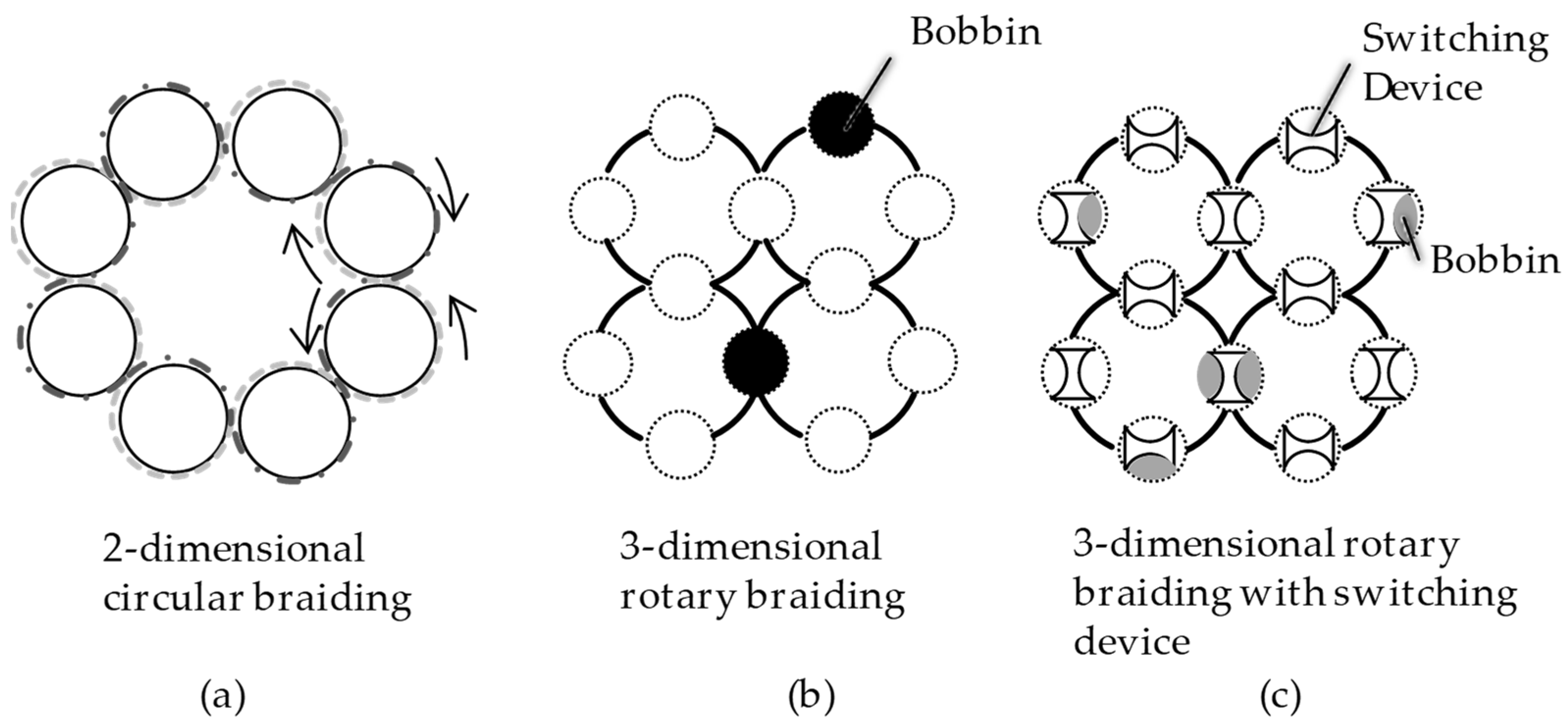
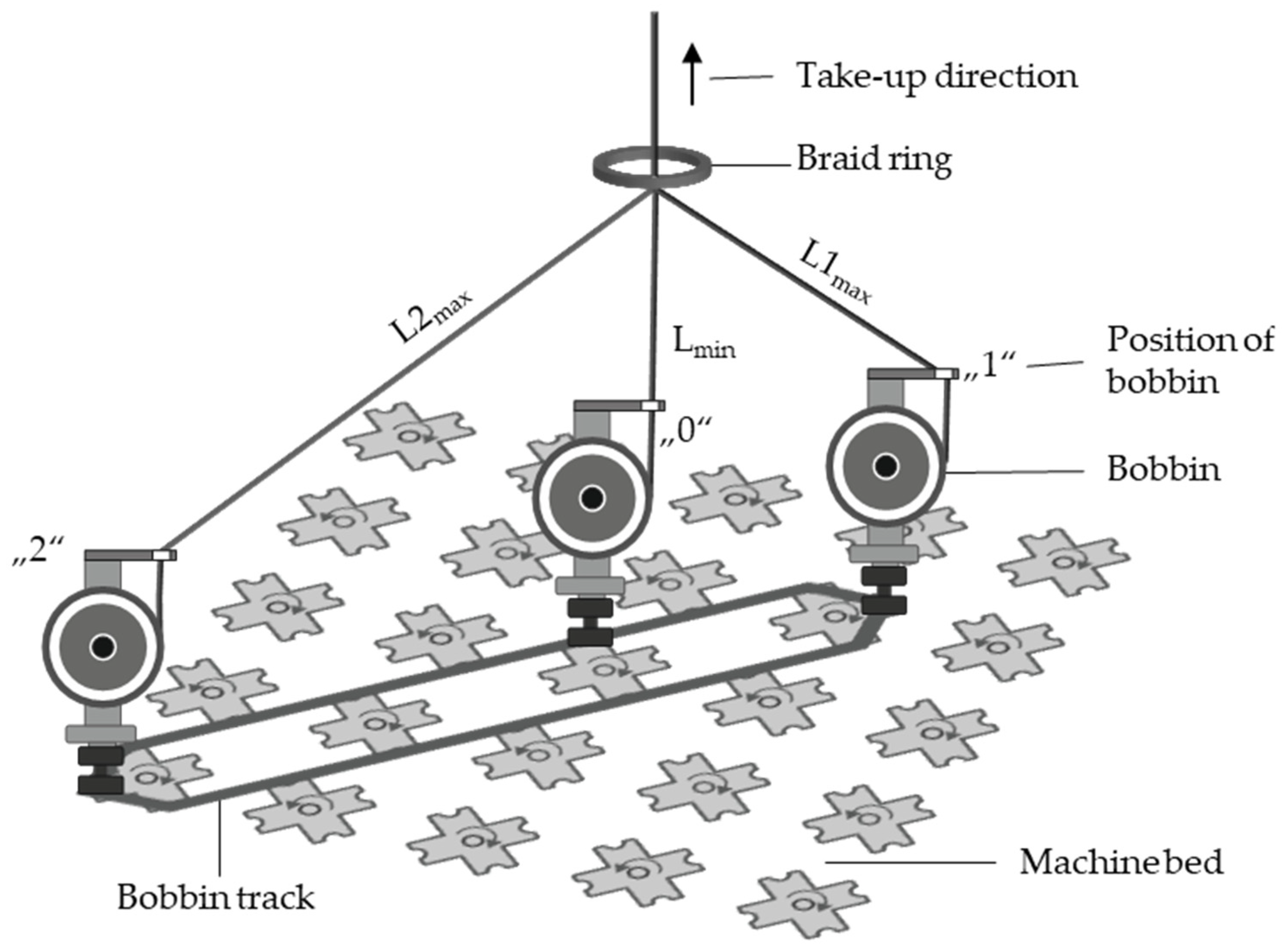
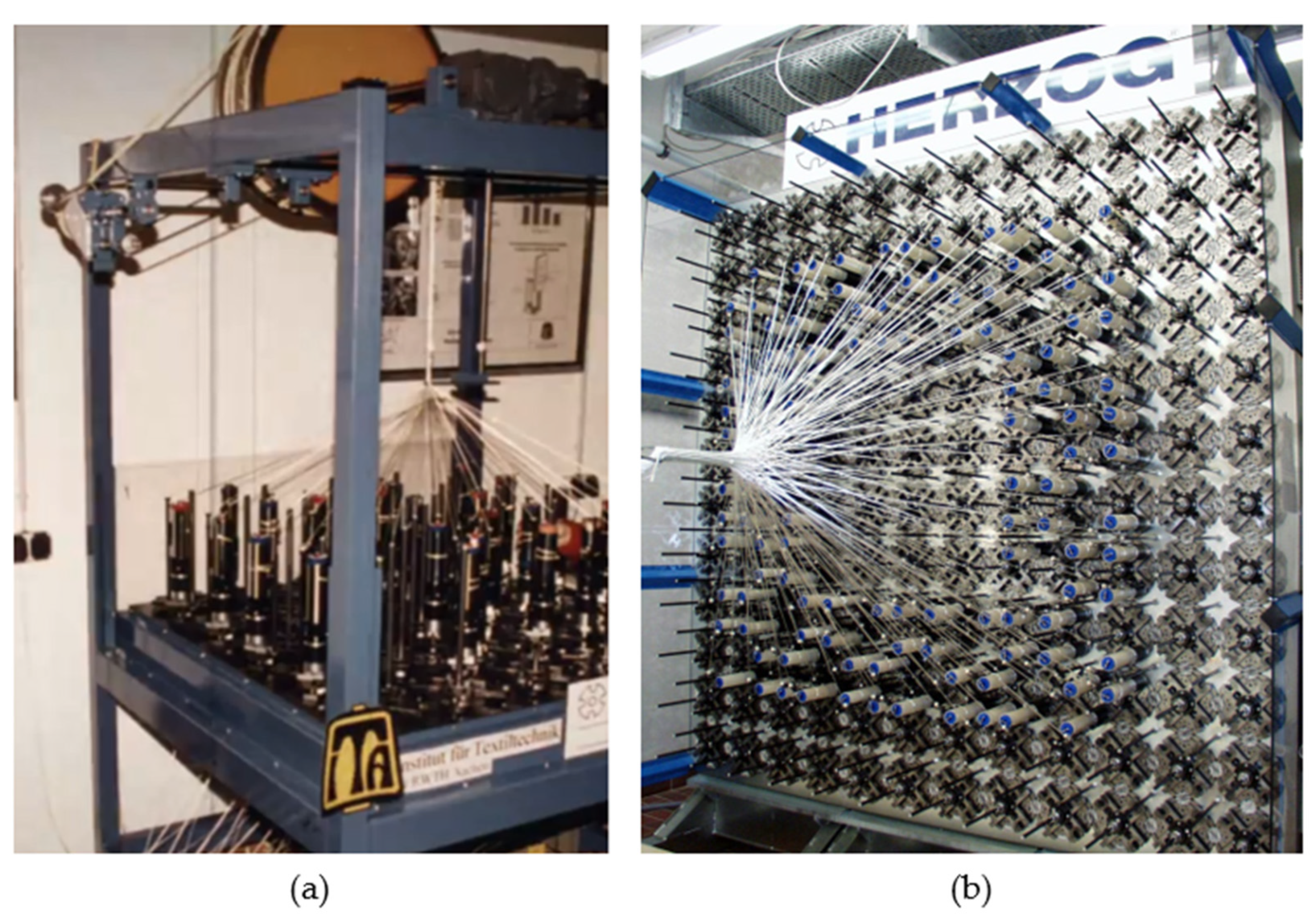
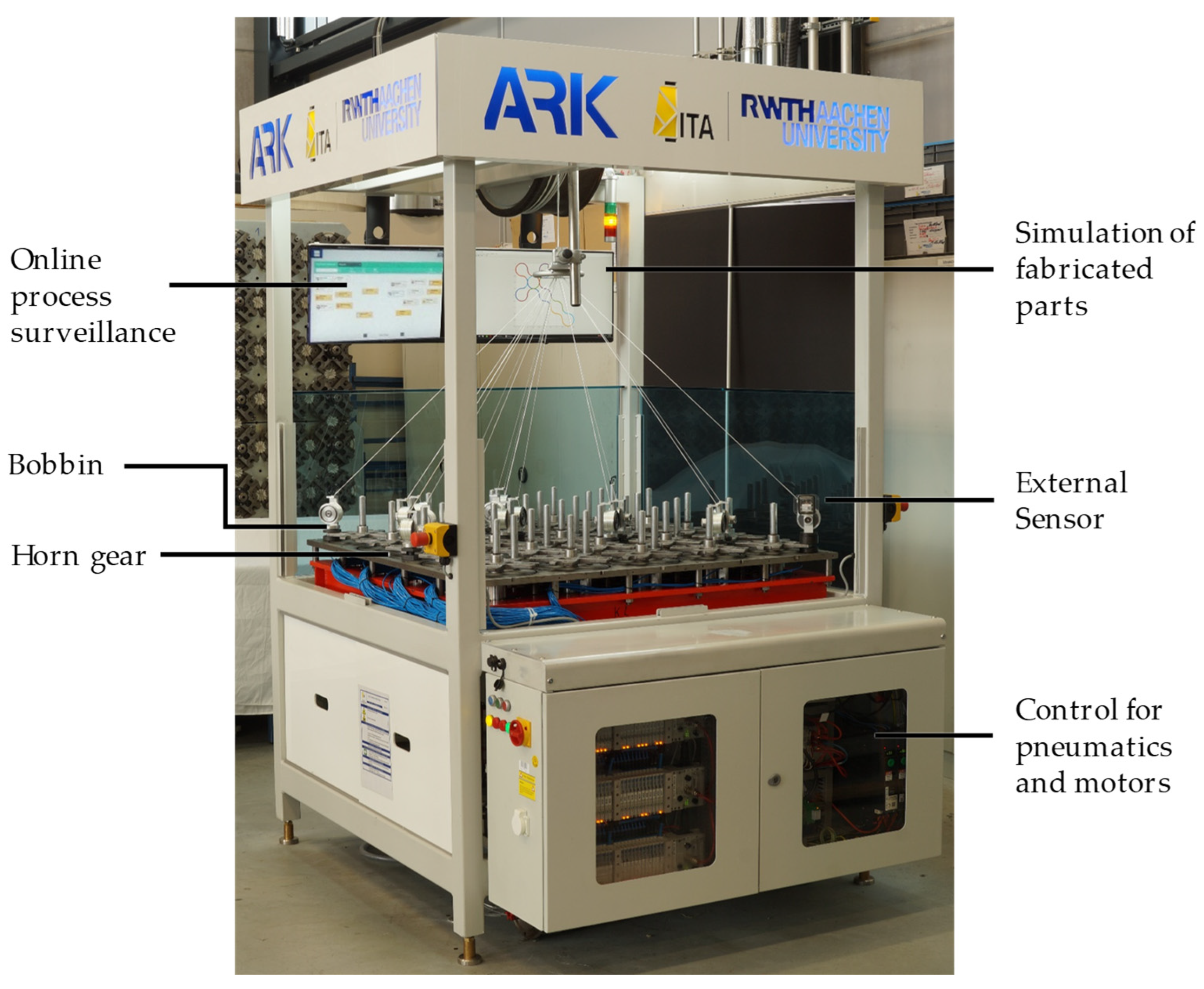
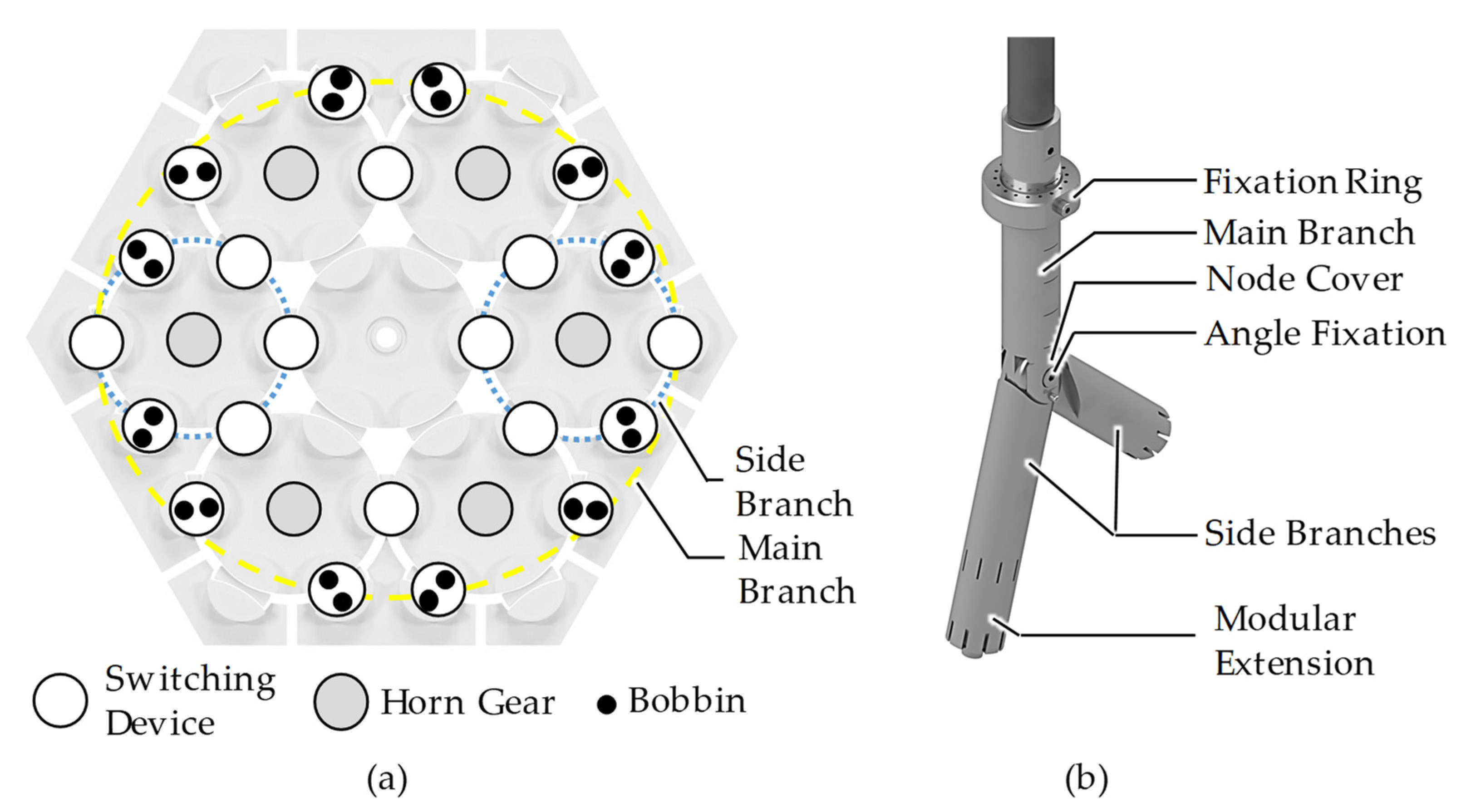
Braids are generally divided into 2D braids and 3D braids. Two-dimensional braids include flat braids and circular braids. Circular braids represent three-dimensional textiles, as they enclose a volume, but consist of a two-dimensional yarn architecture. Three-dimensional braids are defined by a three-dimensional yarn architecture. Historically, 3D braids were produced on row and column braiding machines with Cartesian or radial machine beds, by bobbin movements around inlay yarns. Three-dimensional rotary braiding machines allow a more flexible braiding process, as the bobbins are moved via individually controlled horn gears and switches. Both braiding machines at the Institut für Textiltechnik (ITA) of RWTH Aachen University, Germany, are based on the principal of 3D rotary machines. The fully digitized 3D braiding machine with an Industry 4.0 standard enables the near-net-shape production of three-dimensionally braided textile preforms for lightweight applications. The preforms can be specifically reinforced in all three spatial directions according to the application. Complex 3D structures can be produced in just one process step due to the high degree of design freedom. The 3D hexagonal braiding technology is used in the field of medical textiles. The special shape of the horn gears and their hexagonal arrangement provides the densest packing of the bobbins on the machine bed. In addition, the lace braiding mechanism allows two bobbins to occupy the position between two horn gears, maximizing the number of bobbins. One of the main applications is the near-net-shape production of tubular structures, such as complex stent structures. Three-dimensional braiding offers many advantages compared to 2D braiding, e.g., production of complex three-dimensional geometries in one process step, connection of braided layers, production of cross-section changes and ramifications, and local reinforcement of technical textiles without additional process steps. In the following review, the latest developments in 3D braiding, the machine development of 3D braiding machines, as well as software and simulation developments are presented. In addition, various applications in the fields of lightweight construction and medical textiles are introduced.
Keywords: 3D braiding; 3D hexagonal braiding; 3D rotary braiding; medical textiles; lightweight materials 3D braiding; 3D hexagonal braiding; 3D rotary braiding; medical textiles; lightweight materials