Article

The True Nature of the Energy Calibration for Nuclear Resonant Vibrational Spectroscopy: A Time-Based Conversion


1
SETI Institute, Mountain View, CA 94043, USA
2
Research and Utilization Division, SPring-8/JASRI, 1-1-1 Kouto, Sayo, Hyogo 679-5198, Japan
3
School of Computer Science, Georgia Institute of Technology, Atlanta, GA 30332, USA
*
Author to whom correspondence should be addressed.
These authors contributed equally to this work.
Physchem 2022, 2(4), 369-388; https://doi.org/10.3390/physchem2040027

Submission received: 30 July 2022 / Revised: 12 November 2022 / Accepted: 21 November 2022 / Published: 28 November 2022

Abstract

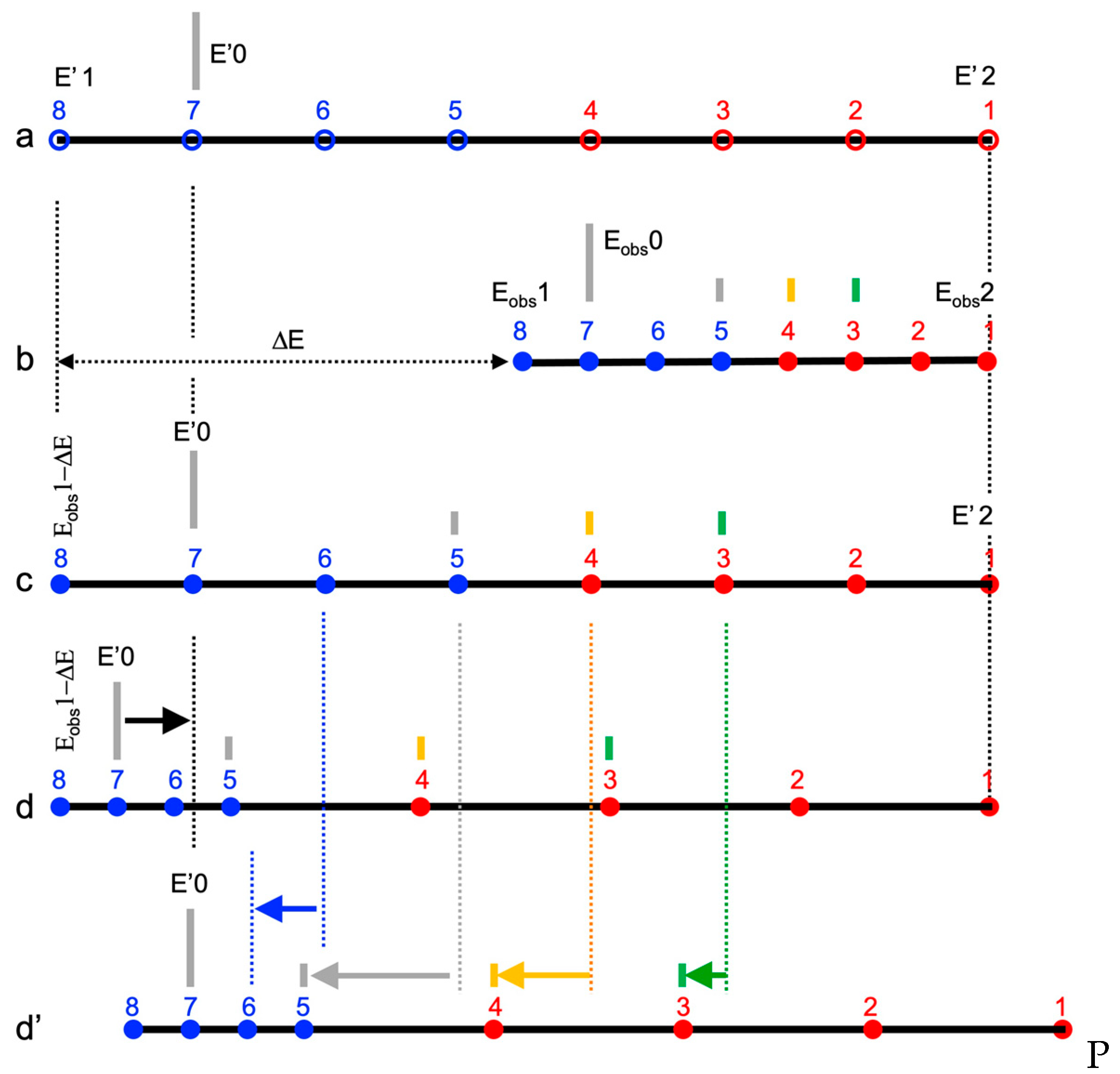
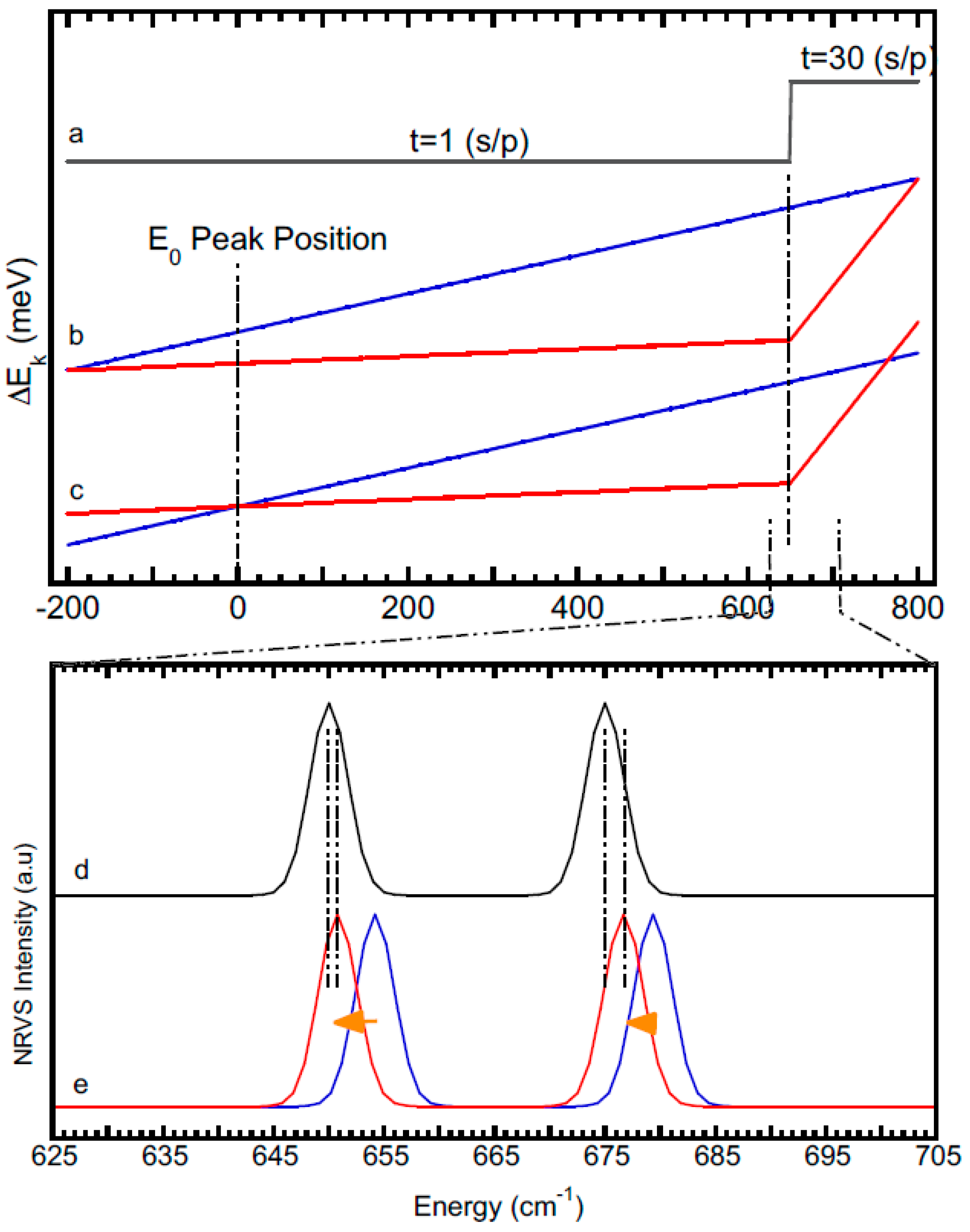
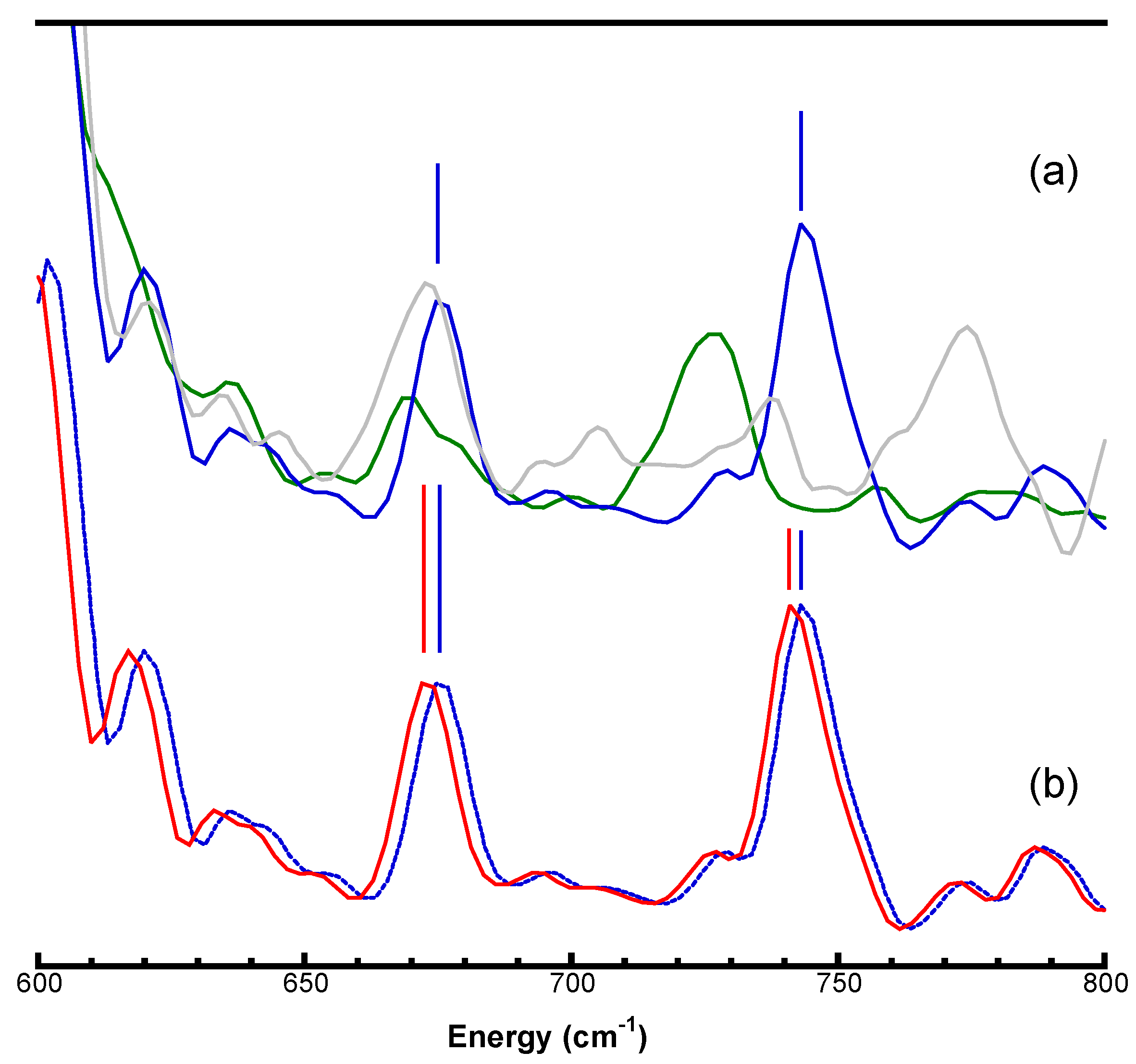
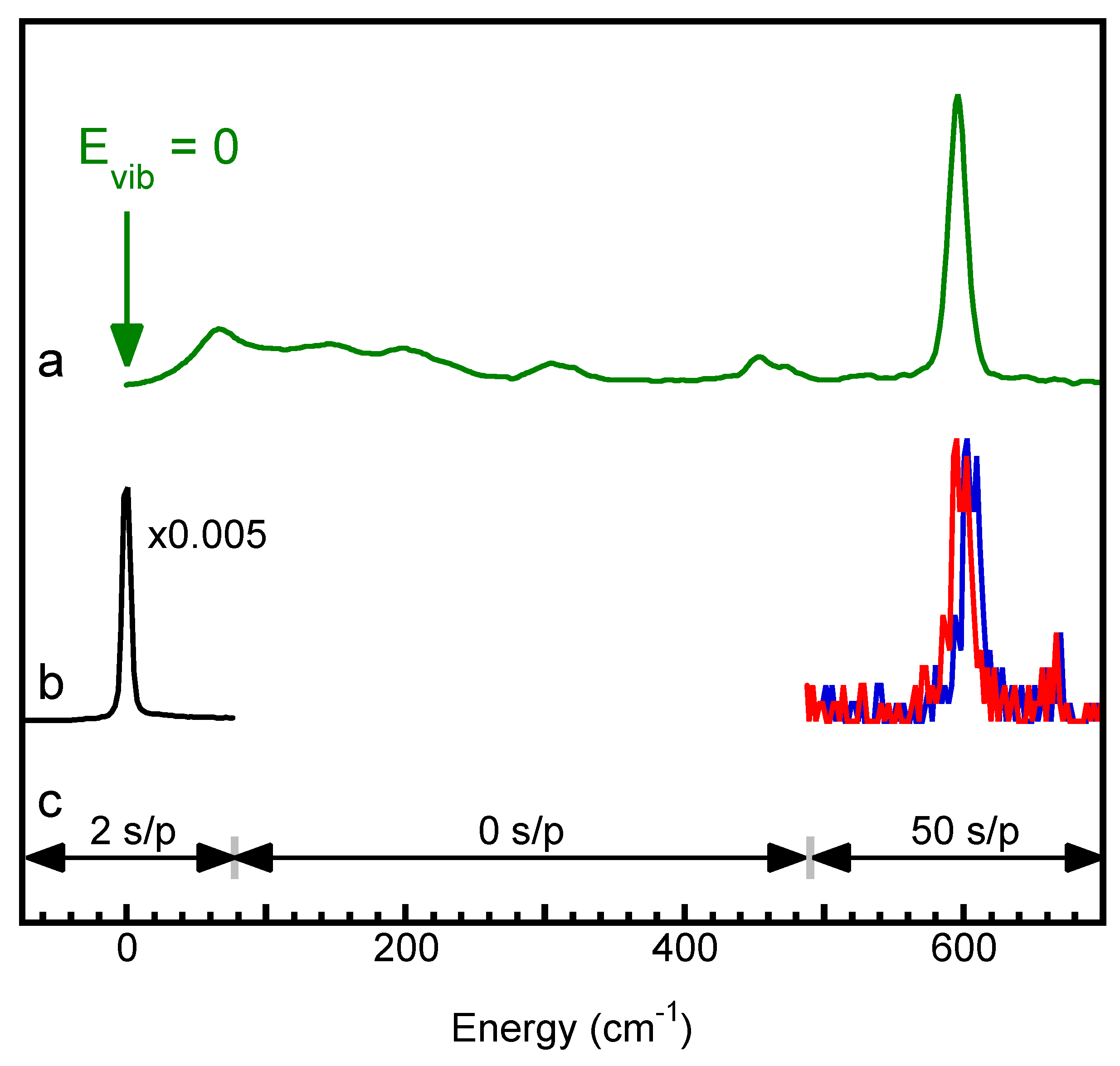
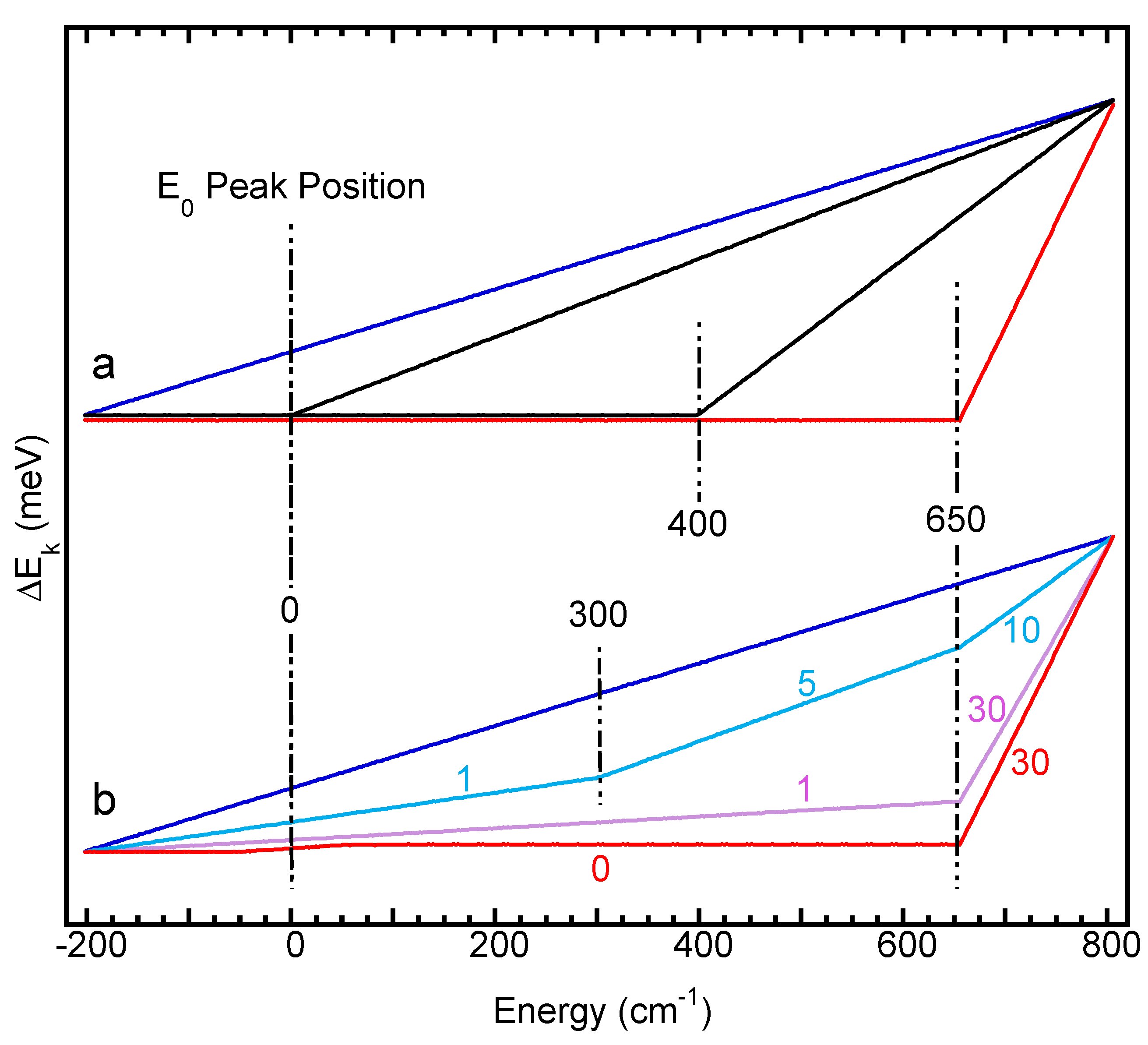
Nuclear resonant vibrational spectroscopy (NRVS) is an excellent synchrotron-based vibrational spectroscopy. Its isotope specificity and other advantages are particularly good to study, for example, iron center(s) inside complicated molecules such as enzymes. In order to investigate some small energy shifts, the energy scale variation from scan to scan must be corrected via an in-situ measurement or with other internal reference peak(s) inside the spectra to be calibrated. On the other hand, the energy re-distribution within each scan also needs attention for a sectional scan which has a different scanning time per point in different sections and is often used to measure weak NRVS signals. In this publication, we: (1) evaluated the point-to-point energy re-distribution within each NRVS scan or within an averaged scan with a time-scaled (not energy-scaled) function; (2) discussed the errorbar contributed from the improper “distribution” of ΔEi or the averaged ΔE within one scan (Eerr1) vs. that due to the different ΔEi from different scans (Eerr2). It is well illustrated that the former (Eerr1) is as important as, or sometimes even more important than, the latter (Eerr2); and (3) provided a procedure to re-calibrate the published NRVS-derived PVDOS spectra in case of need. This article establishes the concept that, at least for sectional NRVS scans, the energy positions should be corrected according to the time scanned rather than be scaled with a universal constant, as in a conventional calibration procedure.
Keywords: nuclear resonant vibrational spectroscopy; NRVS; time-based energy correction; energy calibration; in-situ energy calibration; vibrational zero energy position; ΔE; energy scale nuclear resonant vibrational spectroscopy; NRVS; time-based energy correction; energy calibration; in-situ energy calibration; vibrational zero energy position; ΔE; energy scale