Article

Socioeconomic Uses and Degradation of the Green Belt Around Greater Lomé (GBGL) in Togo

by
Akouété Galé Ekoué
1,2,*,
Salamatou Bilabena
1,
Mohamondou N’djambara
1,
Kossi Adjonou
2,
Katché Komlanvi Akoete
2,
Kossi Hounkpati
2,3,
Sama Nankpakou
1,
Coffi Aholou
4,
Kouami Kokou
2 and
Komi Kossi-Titrikou
1
1
Unité de Recherche en Anthropologie Appliquée et Fondamentale (URAAF-UL), Université de Lomé, Lomé 01 BP 1515, Togo
2
Laboratoire de Recherche Forestière, Centre de Recherche sur le Changement Climatique, Université de Lomé, Lomé 01 BP 1515, Togo
3
African Synthesis Centre for Climate Change, Environment and Development (ASCEND), African Climate and Development Initiative (ACDI), University of Cape Town, Cape Town 7701, South Africa
4
Centre Régional d’Excellence sur les Villes Durables en Afrique (CERViDA-DOUNEDON), Université de Lomé, Lomé 01 BP 1515, Togo
*
Author to whom correspondence should be addressed.
Conservation 2026, 6(2), 72; https://doi.org/10.3390/conservation6020072 (registering DOI)
Submission received: 23 April 2026 / Revised: 1 June 2026 / Accepted: 5 June 2026 / Published: 11 June 2026

Abstract

Although the green belt around Greater Lomé (GBGL) is a vital ecological buffer, it is currently facing significant degradation. This decline appears to be associated with a combination of various socioeconomic uses by the local community and formal operations of established businesses. Grounded in the cultural materialism framework, this study aims to contribute to a better understanding of the dynamics of the socioeconomic uses of the green belt around Greater Lomé in a context of degradation and investigates the dynamics of these socioeconomic uses and their environmental impacts through a multidisciplinary methodology. This approach combines anthropological analysis based on field observation, 53 semi-structured interviews and 5 focus groups, a quantitative questionnaire survey (n = 384) and an analysis of land use and land cover (LULC) dynamics derived from Landsat imagery (2003–2023). The results reveal six main types of socioeconomic uses of the GBGL (notably land transactions, agriculture, breeding and grazing, exploitation of wood energy, timber and utility wood, sand mining, and waste disposal), which lead to complex social dynamics ranging from conflicts to alliances among stakeholders. The LULC dynamics analysis indicates a staggering 468.26% expansion in built-up areas over the last 20 years, at the expense of swamp vegetation/gallery forest (−76.79%), tree-and-shrub savanna (−53.47%) and plantations (−49.43). This study provides a scientific basis supporting the urgent necessity to establish the GBGL as a legally protected entity and argues in favour of an inclusive management model that is designed to reconcile the socioeconomic survival needs of local populations with sustainable preservation of essential ecosystem services.

1. Introduction

Green belts are areas surrounding urban agglomerations that include forests, wetlands, urban parks and agricultural land [1]. These spaces are designed to contain urban sprawl, protect against flooding, preserve biodiversity, enhance public access to nature and improve the quality of urban life [1,2,3,4,5]. However, despite these essential ecological and social functions, green belts are experiencing significant global degradation. For example, between 7.3% and 41% of green spaces have been converted in several European cities, and around 1.4 million hectares of urban green areas were lost in the United States between 1990 and 2000 [6,7].
In the Global South, particularly in West Africa, in countries such as Burkina Faso, Mauritania, Senegal and Mali, green belts have been developed to combat sand encroachment, improve urban living conditions and regulate the local climate [8,9]. However, rapid urbanisation, land pressure, weak governance and the expansion of residential construction are increasingly undermining these functions, leading to significant degradation in cities such as Lagos, Kumasi and Niamey [6,10,11,12,13,14,15]. The loss of green belts reduces essential ecosystem services such as climate regulation, air purification and flood protection and weakens the livelihoods and well-being of urban populations, particularly those dependent on natural resources [5,7,16].
This trend is particularly evident in Greater Lomé, the capital of Togo, and its surrounding conurbation, an area which is bordered to the northwest and northeast by a natural vegetation belt. This green belt is actually an environmental concept rather than a planning tool and it lacks formal legal protection. Thus, against a backdrop of demographic growth and urban sprawl, an increasing number of residential settlements are encroaching upon its fringes, a large-scale pressure which is evidenced by the following statistics: In 2010, Greater Lomé housed 1,477,660 inhabitants [17] across approximately 35,000 hectares [18]. By 2023, the population had grown to 2,188,376 inhabitants [19] occupying 42,560 hectares [20]. This expansion, fuelled by both population growth and residential migration [21], is directly compromising the integrity of the city’s remaining green spaces.
In recent years, the green belt around Greater Lomé (GBGL) has undergone a significant transformation marked by environmental degradation [22] driven by diverse socioeconomic uses pursued by local populations and legally registered enterprises. While local communities rely on the GBGL for the extraction of subsistence resources and income-generating activities, these practices exert considerable pressure on the area, leading to fragmentation and habitat loss. Observable indicators of this decline include widespread waste accumulation, a reduction in vegetation cover and the progressive encroachment of built infrastructures into the GBGL territory [22,23,24]. Thus, despite the area’s recognised potential for delivering ecosystem services, particularly urban heat island regulation, degradation poses significant challenges for the GBGL’s conservation.
Although the literature is replete with studies on urban expansion and environmental degradation in the green belts surrounding African cities, these studies rely on GIS and remote sensing to quantify vegetation loss [22,25,26,27,28,29,30]. More broadly, research is dominated by ecological studies [31,32,33,34,35,36,37,38,39,40,41] focusing on biodiversity, urban forest dynamics and urban planning analyses [42,43,44,45,46]. While these approaches provide valuable and spatial evidence, the socio-anthropological dimensions of green belt transformation are comparatively under-explored [4]. Therefore, to address this gap, this study adopts a cultural materialist framework that allows the GBGL’s transformation to be interpreted not as mere environmental degradation, but as adaptive responses to material and socioeconomic constraints. By combining LULC dynamics with both anthropological investigation and quantitative research based on cultural materialism, this study provides a scientific basis for the formal legal designation of the green belt, with the aim of preventing further encroachment. It also supports the shift in urban planning policies from uncontrolled spatial expansion to urban densification and proposes the foundations for an inclusive management model that can reconcile local socioeconomic livelihoods with ecological preservation.
The main objective of this article is therefore to contribute to a better understanding of the socioeconomic use dynamics of the GBGL in a context of degradation. Specifically, it aims to (i) analyse the socioeconomic uses of the GBGL from an anthropological perspective; (ii) explore the social implications of these uses; and (iii) assess the impact of these uses on the transformation of the GBGL.

2. Methodology

2.1. Study Area

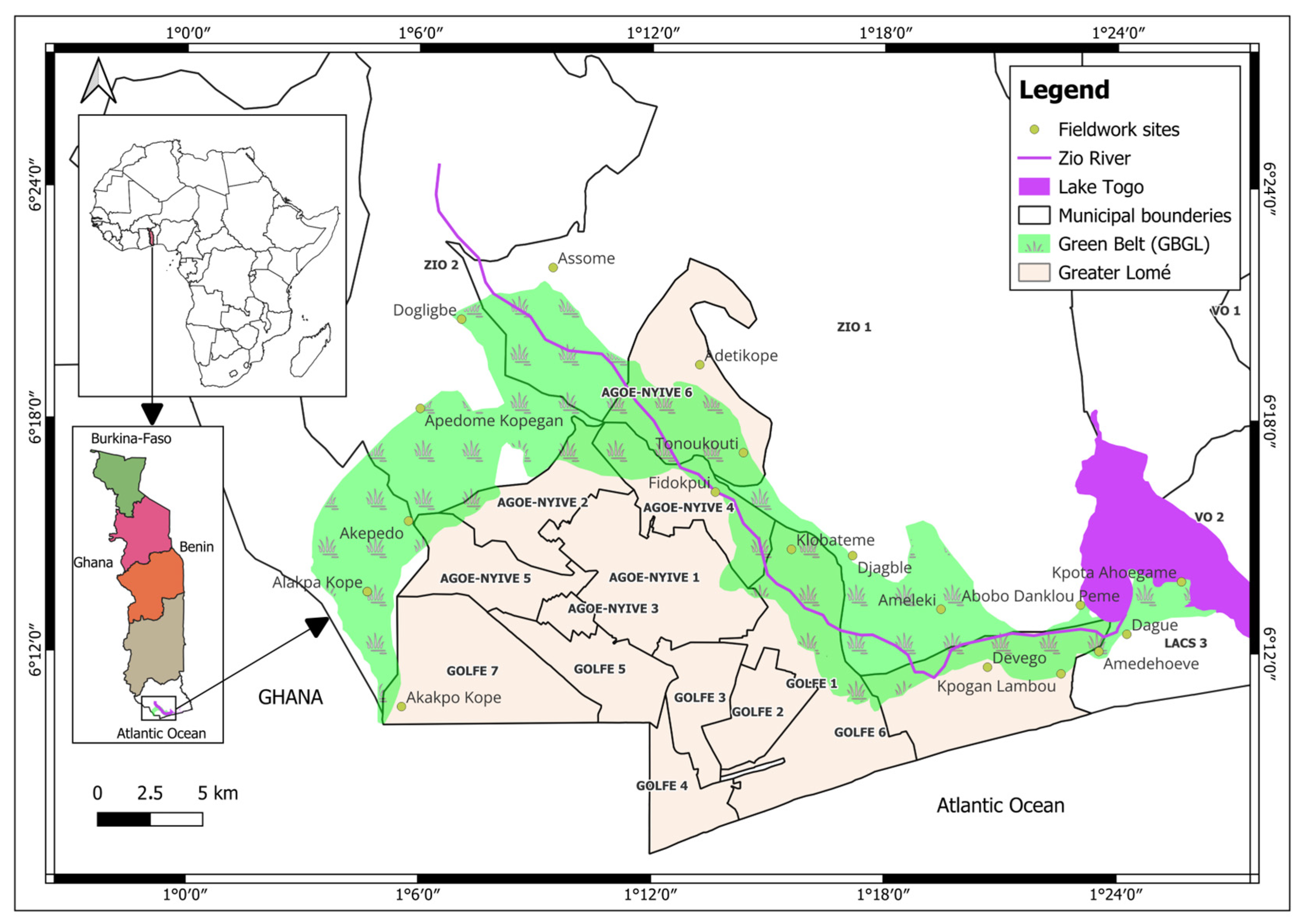
The study area consists of the natural green belt around Greater Lomé (GBGL) and its surrounding localities. This belt partly merges with the Zio River Valley and covers an area of 18,000 ha [47], stretching from the Ghanaian border to the Lake Togo catchment, running west–east, and extending inland from the coast. Administratively, the GBGL passes through 12 municipalities (Figure 1) with a total population of 2,173,896 [19]. Within the GBGL, there are islands of wet shrub savanna with Mitragyna inermis, fragmented islands of gallery forest with Ficus congensis [47] and various species including Zanthoxylum zanthoxyloides and Azadirachta indica [48].
The choice of localities for investigation within the study area was based on a cartographic survey which identified 155 localities within or on the edge of the GBGL. A random selection of 1/5 of these locations was made, taking into account their geographical distribution. These localities are found in 8 municipalities, namely, Agoè-Nyive 4, Agoè-Nyive 6, Ave 2, Golfe 6, Golfe 1, Golfe 7, Lacs 3 and Zio 1 (Figure 1).

2.2. Theoretical Framework

The analysis of the socioeconomic uses of the GBGL carried out in this study falls within the framework of environmental anthropology. To account for the human–environment relationship between the GBGL and its users and/or residents, it is based on the theory of cultural materialism [49,50], a concept derived from the premise that human behaviour and cultural phenomena are primarily determined by material factors, in particular, available resources and ecological, technological and economic conditions [49,50]. This theory approaches cultural and social practices and institutions as responses to human needs in relation to the material constraints and opportunities offered by the environment [50]. These needs can be grouped into three categories: basic biological needs (subsistence, reproduction, physical protection), adaptive needs (to be satisfied in order to adapt to material, ecological and social constraints) and social and cultural needs (which structure collective life, regulate social relations and confer a symbolic meaning and identity). Using cultural materialism as a theoretical framework aids our understanding and assessment of the socioeconomic uses of the GBGL through the interactions of three levels of culture: the infrastructure corresponds to material and ecological conditions, the structure refers to social and economic organisation, and the superstructure indicates ideologies, perceptions and beliefs.
From a methodological perspective, cultural materialism informed this study by structuring the entire research design around these three analytical levels of culture. At the infrastructure level, this theoretical framework guided the collection of biophysical and socioeconomic data through field observations, and the implementation of quantitative and qualitative surveys, as well as the analysis of land use and land cover (LULC) dynamics. These approaches were used to analyse the evolution of the GBGL’s resources and to identify activities linked to the subsistence needs of local populations. The structural dimension was investigated through individual interviews and focus groups carried out to understand the underlying socioeconomic organisation of various uses, as well as the dynamics of conflicts or alliances between stakeholders. Finally, the study of the superstructure relied on quantitative and qualitative survey data to analyse the perceptions and ideologies that legitimise the exploitation of the GBGL’s resources. This articulation ensured that each data collection tool directly considered at least one of Harris’s three levels of culture, thereby providing a comprehensive understanding of the GBGL’s degradation.

2.3. Methodological Approach

A multidisciplinary methodology was adopted in the study and three approaches were used: anthropological analysis, a quantitative methodology and land use and land cover (LULC) dynamics analysis.

2.3.1. Anthropological Analysis of Socioeconomic Uses of the GBGL

The anthropological analysis was grounded in the theory of cultural materialism, which guided the implementation of qualitative data collection techniques such as observation [51,52], participant observation [53], informal conversations, interviews [54] and focus groups [55].
The observation phase was designed to capture the infrastructure level by documenting the material and ecological conditions in addition to human activities in and around the GBGL. By focusing on the physical evidence of resource exploitation such as wood-cutting sites, the presence of market gardening areas and cattle herds, sand mining pits and waste-dumping points, observation helped identify the various uses of the GBGL by local people and businesses. Specifically, participant observation was conducted in the municipalities of Golfe 6 (Kpogan Lambou neighbourhood) and Lacs 3 (Daguè neighbourhood), with researchers spending full days with households located opposite the floodplain savanna of the GBGL and taking field notes. This approach enabled informal conversations and provided a deeper understanding of how households adapt to environmental constraints and how that adaptation shapes their daily routines and social interactions.
A total of 53 individual interviews were conducted with key informants who were purposively selected to ensure representativeness across five categories: prefectural environmental departments, NGOs, municipalities, natural resource operators (sand, timber) and local population (local leaders and village/neighbourhood chiefs). The interviews were guided by the cultural materialism framework and the questions were designed to explore infrastructure (specific socioeconomic uses and resource exploitation practices), structure (social organisation around these uses, community-based management of the space and the environment) and superstructure (perceptions and importance of the GBGL).
In addition to the individual interviews, five focus groups were conducted in five different villages by two members of the research team who served respectively as moderator and note-taker. These targeted village development committee leaders, heads of families, landowners and leaders of farmers’ organisations, and, in order to ensure stakeholder homogeneity and encourage open discourse, participants were purposively selected based on their direct involvement in resource management in the GBGL. On average, each group comprised ten people of both sexes and represented a mix of stakeholder categories. Discussions with these groups focused on their relationship with the GBGL in terms of resource management, socio-cultural and economic significance, symbolic representation of the threats to this natural environment, the various uses of resources and the conflicts raised.

2.3.2. Quantitative Approach

The quantitative approach consisted of a questionnaire survey [56] where data were collected from households in the municipalities using a form loaded into the ODKcollect application. Questions related to participants’ socio-demographic profile, economic activities and perception of the dynamics of the vegetation cover in the GBGL and their causes.
In order to conduct data collection, a sampling was required based on the population of the selected municipalities, i.e., 1,507,187 inhabitants according to the Fifth Population and Housing Census [19]. The sample size for the study was determined using the following formula [57]:
s = z 2 × p 1 p e 2 1 + z 2 × p 1 p e 2 N
where s = the expected sample size; z = the confidence level deduced from the confidence rate (traditionally 95%); N = the size of the parent population (1,507,187); p = the estimated proportion of the population (0.5 was used); and e = the margin of error (set at 5%). By applying this formula, a sample of 384 individuals was determined and surveyed.

2.3.3. Acquisition of Satellite Images for LULC Mapping

The dynamics of land use and land cover (LULC) for the years 2000, 2013 and 2023 were analysed using Landsat images (7 and 9) with a resolution of 30 m × 30 m, downloaded from https://earthexplorer.usgs.gov/ (accessed on 24 October 2025). These images were selected for analysis because of their low cloud cover (<10%) and radiometric homogeneity, and they were geometrically and atmospherically corrected before being pre-processed by mosaicking and cropping to ensure complete coverage of the study area. Their characteristics are shown in Table 1 below.

2.3.4. Data Processing and Analysis

Qualitative data analysis
The qualitative data collected through the semi-structured interviews and focus groups were recorded with informed consent and transcribed verbatim. In addition, field notes were also transcribed. All transcripts were compiled to constitute a comprehensive corpus for analysis.
In order to enhance scientific rigour and minimise interpretative bias, inter-coder reliability was assessed using a cross-checking procedure where two members of the research team independently coded the same subset (one-third) of the corpus sequentially. Any discrepancies in theme assignment were discussed and resolved by consensus to ensure the consistency of the analysis.
The qualitative data analysis consisted of a hybrid approach combining deductive and inductive coding [58]. First, a codebook was developed based on the three analytical dimensions of cultural materialism (infrastructure, structure and superstructure) and integrated into NVivo 20 for the systematic organisation of data. Subsequently, inductive coding was conducted to identify emerging themes and subtopics from the data corpus, which allowed the initial coding grid to be improved and expanded to better reflect the specific features of the GBGL context. This iterative process ensured that the final analysis grid (Table 2) was grounded in the field data while remaining consistent with the theoretical framework.
Quantitative data analysis
SPSS 26 and XLSTAT 2026 were used to analyse the quantitative data. First, a flat sort was carried out to identify frequencies, and then binary logistic regression (BLR) was performed to analyse the factors associated with the perception of significant loss of vegetation cover. The dependent variable was coded dichotomously:
Y = 1   i f   t h e   r e s p o n d e n t   p e r c e i v e s   a   s i g n i f i c a n t   d e c l i n e   0   i n   c a s e   t h e   r e s p o n d e n t   p e r v e i v e   a   s l i g h t   t o   m o d e r a t e   d e c l i n e  
The explanatory variables included in the model were municipality of residence, age group, gender, level of education, residence status and length of residence. The logistic model is defined as follows [59]:
P Y = 1 = 1 1 + e β 0 + β 1 X 1 + β 2 X 2 + + β k X k
where
P Y = 1 is the probability of perceiving a significant decline in vegetation cover;
β 0 is the intercept;
β 1 , β 2 , , β k are the regression coefficients;
X 1 , X 2 , , X k represent the explanatory variables;
e = base of the natural logarithm (Euler’s number, 2.718).
As the explanatory variables are categorical, they were introduced into the model as dummy variables with reference categories. The relationship between the explanatory variables and the outcome variable can be expressed through the logit transformation:
og P Y = 1 1 P Y = 1 = β 0 + β 1 X 1 + β 2 X 2 + + β k X k
The model parameters were estimated using the maximum-likelihood estimation (MLE) method, and Wald statistics were used to assess the statistical significance of individual predictors:
z = β i S E β i
where S E β i represents the standard error of coefficient β i .
The estimated coefficients were exponentiated to obtain odds ratios (OR):
O R =   e β i
where odds ratios greater than 1 indicate an increased likelihood of perceiving a significant decline in vegetation cover and odds ratios lower than 1 indicate a reduced likelihood relative to the reference category. Statistical significance was assessed at the 5% level using p-values and 95% confidence intervals for odds ratios.
During the data processing, the categories of categorical variables that had very small sample sizes or were almost completely separated were excluded from the final analysis [60]. The results presented are therefore based on a model that includes only those categories with sufficient sample sizes and sufficient variance.
Land use and land cover dynamics analysis
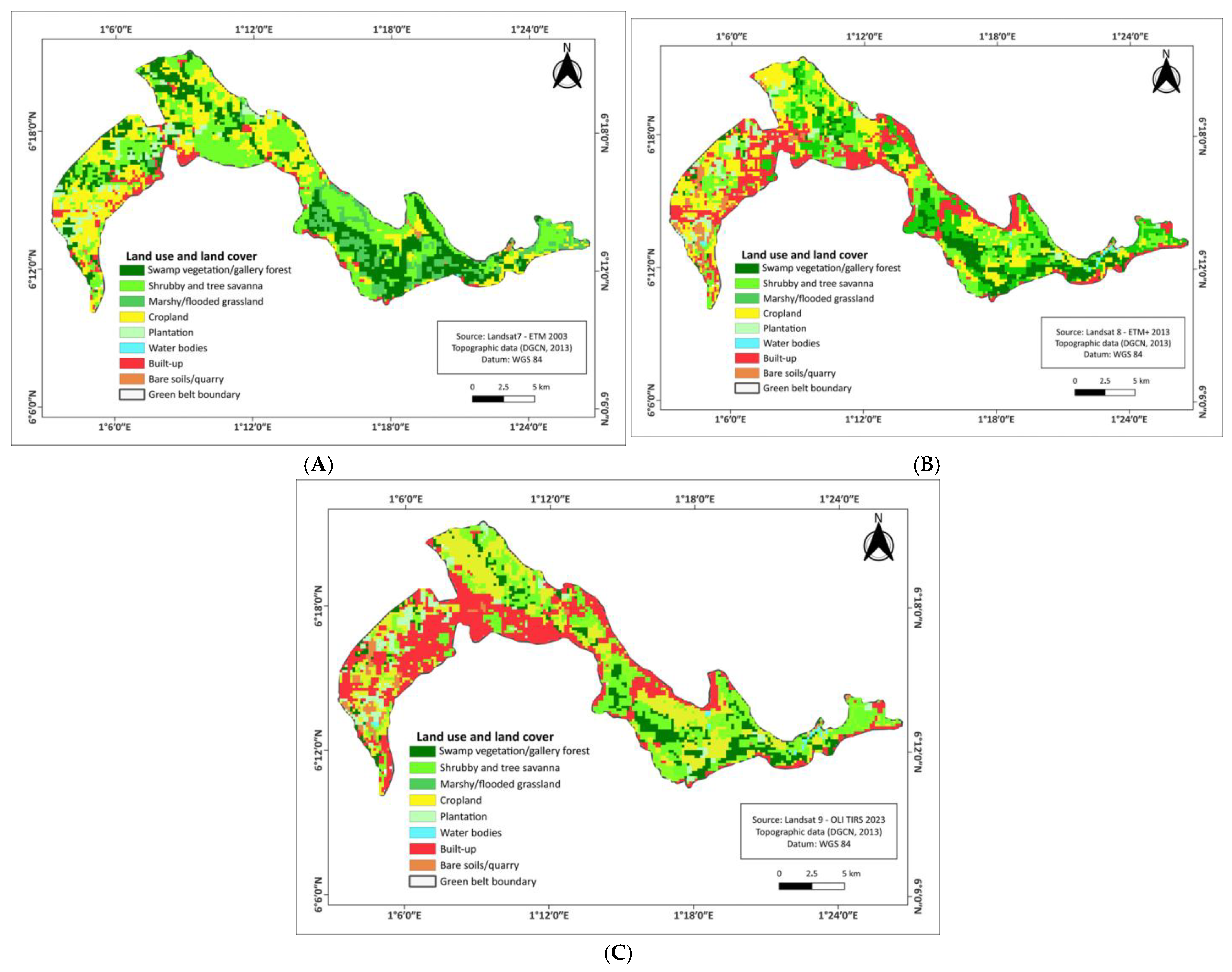
Land use and land cover mapping for 2003, 2013 and 2023 was conducted using a technique based on visual interpretation employing the Rapid Land Cover Mapper (RLCM), an Esri ArcGIS Desktop (version 10.8) add-in, developed by the U.S. Geological Survey EROS [61]. The LULC classification method was carried out following a cascade approach which started with 2023, then carried forward the classifications to 2013 and 2003. The classification system adopted is based on the “Yangambi Classification” [62] and has been adapted to national classification schemes [63]. It distinguishes eight main classes: cropland, built-up areas, tree-and-shrub savanna, swamp vegetation/gallery forest, marshy/flooded grassland, water bodies, bare soil/quarry and plantations.
The quality of the classification was assessed using the Kappa index and overall accuracy. For the three years studied, the overall accuracy was greater than 75%, and the Kappa index exceeded 50%, attesting to the reliability of the classification. After this stage, the raster images were vectorised and integrated into QGIS 3.24 in order to calculate the surface areas of the land use classes and carry out quantitative analysis of the spatio-temporal dynamics of the area.

3. Results

3.1. Socio-Demographic Profile of the Respondents

The socio-demographic profile of the respondents was based on several variables including gender, age, level of education, religion, residence status, length of residence and sector of activity (Table 2). The sample was made up of 66.7% men and 33.3% women from three age groups: 15–35, 36–55 and over 55, with the 36–55 age group being the most represented at 59.4%. In terms of education, the level was generally low, with the proportion of uneducated people being 11.2%, and the majority of the sample having only primary education (54.5%). Regarding religion, adherents of endogenous beliefs were the most represented (63.5%), followed by Christians (33.3%).
Descriptive statistics for the residence status variable indicated that 74% of respondents were natives and 26% non-natives, with the majority of respondents (43%) reporting having lived in the GBGL area for more than 30 years. Of the remainder, 35.9% stated that they had lived in the area for between a few months and 15 years, and 21.1% between 16 and 30 years.
To meet their needs, respondents work in sectors such as primary production (73.2%), processing and added value (11.7%) and distribution and services (9.6%). The primary production sector includes agriculture and market gardening, fishing, livestock farming, sand and gravel extraction and wood energy exploitation. The processing and added-value sector comprises craftsmen and processors of agricultural products. The distribution and services sector consists of river transporters and traders. Table 3 details the socio-demographic characteristics of the questionnaire survey participants.

3.2. Socioeconomic Uses of the GBGL

Six main types of socioeconomic uses of the GBGL were identified: land transactions, market gardening and agricultural production, grazing, sand mining, wood energy exploitation and waste disposal. These uses are the responsibility of individuals, households and businesses.
In this study, the socioeconomic uses of the green belt are classified into six categories based on three complementary criteria: frequency in field data, correspondence with observed land use patterns and environmental conflicts or pressures generated. Land transactions were selected as they were consistently mentioned by landowners and are a key factor in the significant increase in built-up areas. Agriculture, market gardening and livestock farming were selected due to their importance to local livelihoods, their links to vegetation degradation and the recurring conflicts between farmers and livestock keepers. Wood energy production was included due to its economic significance, as well as its significant contribution to forest degradation and pressure on ecosystem services. Finally, sand extraction and waste disposal were identified as major land uses due to their direct link to urban demand, landscape changes and growing socio-environmental tensions within the green belt.

3.2.1. Land Transactions

Land transactions consisting of land sales are practised by native populations and landowners living around the GBGL. These people are mainly of the Ewe ethnic group, more specifically, the Bè subgroup considered to be the original owners of the land in Lomé and its suburbs. Despite being culturally perceived as a sacred and non-marketable common heritage, the land has nonetheless gradually evolved in a context of globalisation and urbanisation to become a marketable asset, either to enrich oneself or to provide additional income in the event of financial difficulties. As a result, the practice of selling land is expanding rapidly in response to the growing demand due to the demographic explosion of the urban population. The lucrative nature of land transactions due to the unbridled increase in the market value of land is further encouraging landowners to invest in this social practice, which is becoming a means of enrichment, especially with the adoption of land speculation. All the landowners interviewed admitted that they had already sold or participated in the sale of land that belonged to their community.
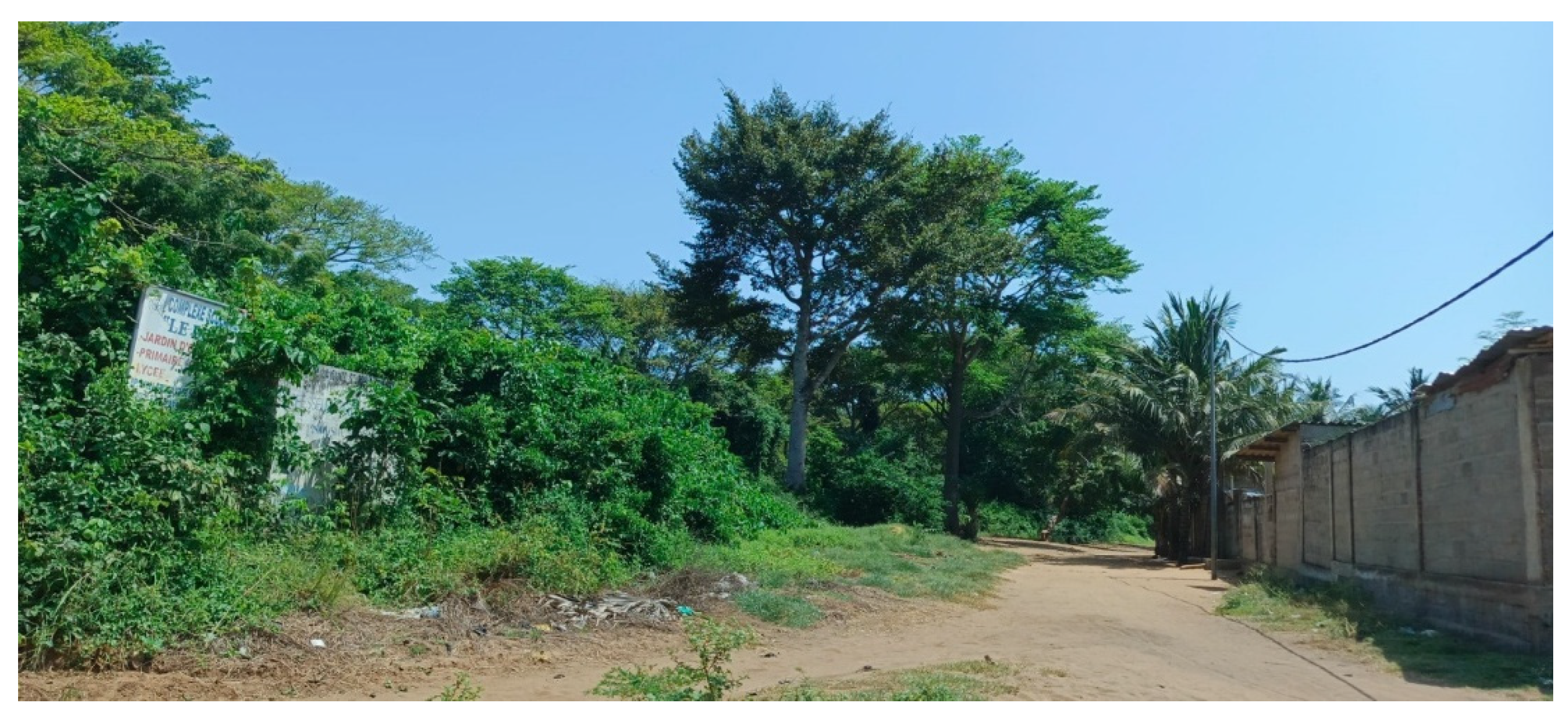
With the availability of peri-urban land and the desire of the Togolese to live in their own house, land transactions are leading to anarchic construction that does not follow any urban development plan. Furthermore, buildings are often preceded by the felling of trees on the plots acquired, and thus the proliferation of housing in and around the GBGL is accompanied by a reduction in wooded areas and farming lands (Figure 2).

3.2.2. Agriculture

The agricultural uses of the GBGL mainly concern the local population and consist of cultivating cereal and market garden crops, taking advantage of the wetlands on the banks of the Zio River and the floodplain savanna. The production is essentially intended for commercial purposes with the aim of increasing or diversifying sources of income.
The cultivated areas are relatively small, with 29.4% of the survey sample farming plots of 0.50 hectares or less and 22.5% cultivating areas ranging from 0.50 to 1 hectare. The crops grown are mainly tomatoes, chillies, maize, cassava and rice, while sugarcane is cultivated in the wet areas of the floodplain savanna. The strategy used by farmers is to plant during the dry season after the water has receded in places that are suitable for crops in the floodplain savanna.
To maximise agricultural production, chemical pesticides are used excessively from soil preparation to harvesting in order to control weeds and pests. This practice was also observed in several households along the GBGL, with inhabitants using herbicides to combat the invasive weeds that grow in the damp soil of residential yards and storefronts.

3.2.3. Breeding and Grazing

The GBGL is used by households and transhumant herders as a grazing area for their animals, with cattle breeders roaming the grassy savanna and agricultural areas of the GBGL in search of pasture. Farm crops are often destroyed and trees pruned by the herders to feed their animals, and the young saplings planted as part of reforestation initiatives are often grazed upon, thereby undermining the restoration efforts undertaken by certain individuals. This is also the case with the rearing of small ruminants, as animals are left to roam freely and graze on the young saplings planted around houses. Such practices discourage reforestation initiatives in inhabited areas. A traditional authority consulted in Djagble (Zio 1 municipality) stated:
[...] We mobilise the population every year on the days chosen for reforestation in our locality. [...] As this is a populated area, we don’t really have any problems with transhumant herders. But the animals that destroy the young plants are the goats, sheep, etc., which are kept by residents and allowed to roam freely in the streets and alleys.
(Interview extract)
These interactions highlight opposing uses of the GBGL. On the one hand, farmers consider the GBGL as a natural open space where the plant resources needed to feed their herds are available. On the other hand, it represents an area to be preserved by adopting sustainable farming practices and preserving the ecosystem. Thus, two models of traditional subsistence appear to be in opposition, namely, a direct and unsustainable exploitation of plant resources and an exploitation anchored in a logic of preservation.

3.2.4. Exploitation of Wood Energy, Timber and Utility Wood

The exploitation of wood energy includes both the production of charcoal and the collection and sale of firewood. It is a socioeconomic practice based on gender relations, as it is mainly performed by women and provides households with available energy for cooking and a source of income through sales. The charcoal manufacturers met in the field estimated their monthly production to be an average of 12.5 bags of around 50 kg, or 625 kg/month. The species most frequently cited for charcoal making and firewood are Azadirachta indica, Sena siamea, Ficus congensis, Dialium guineense, etc. For this activity, the GBGL serves as a plant resource harvesting area.
The exploitation of timber and utility wood is undertaken by landowners who sell the species on their lands to operators who then resell it to processors or craftsmen. These operators also sometimes engage in timber and wood service harvesting in areas under state ownership. Timber and utility wood serve in construction and the manufacture of furniture, agricultural tools and fishing equipment, particularly dugout canoes. Among the most sought-after species for construction of these canoes are Milicia excelsa and Ceiba pentandra, which are becoming increasingly rare in the area. It should be pointed out that this practice is becoming less common due to scarcity of the resource, which has led to a preference for purchasing canoes made from planks.

3.2.5. Sand Mining and Marketing

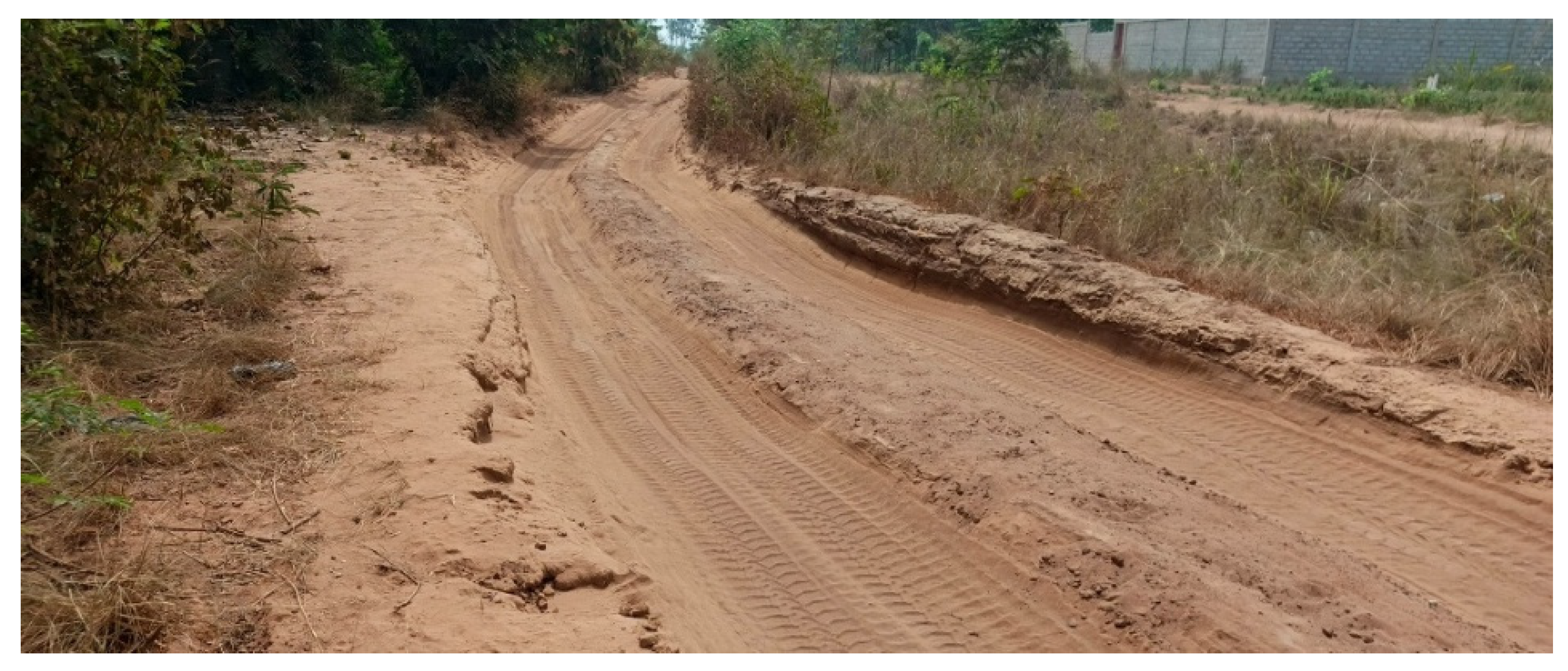
As well as being a natural environment used for agricultural production, grazing and the collection of wood energy, the GBGL serves as a resource reserve for economic operators in the mining sector, particularly sand extraction. Indeed, the extraction and marketing of sand in the GBGL is justified by the growing demand for building materials in a context of accelerated urbanisation and house building on the outskirts of Lomé. Field observations revealed two types of extraction: river extraction in Lake Togo and quarrying. The extracted sand is stored in a yard near the extraction site and distribution is performed by tipper lorries that collect the sand from the storage sites. The sand extraction sites are either on the floodplain savanna and Lake Togo, i.e., public land, or on private or community land. Private land is purchased by the operating companies from communities or landowners, while public land is ceded by the municipality under the supervision of the national mining authority. At the end of operations, most quarries are abandoned without any real effort of restoration, and ecosystems are destroyed and the landscape devastated. The roads used by the lorries are also degraded, with the creation of crevasses that retain large puddles of water during the rainy season. This form of exploitation of the GBGL reflects a profound social and environmental transformation insofar as it leads to changes in ecosystems, the landscape and the daily lives of local residents.

3.2.6. Waste Dumping

Waste dumping in the GBGL is a widespread social practice common among local households, but also among sewage sludge disposal companies. In households, women are generally responsible for maintaining the house through cleanliness practices such as sweeping, cleaning, waste storage and disposal. Disposing of waste by dumping in the GBGL is part of a strategy to save money, as households consider the cost of waste removal by specialised services to be expensive. It is also a coping strategy in response to the infrequent visits of pre-collection waste operators.
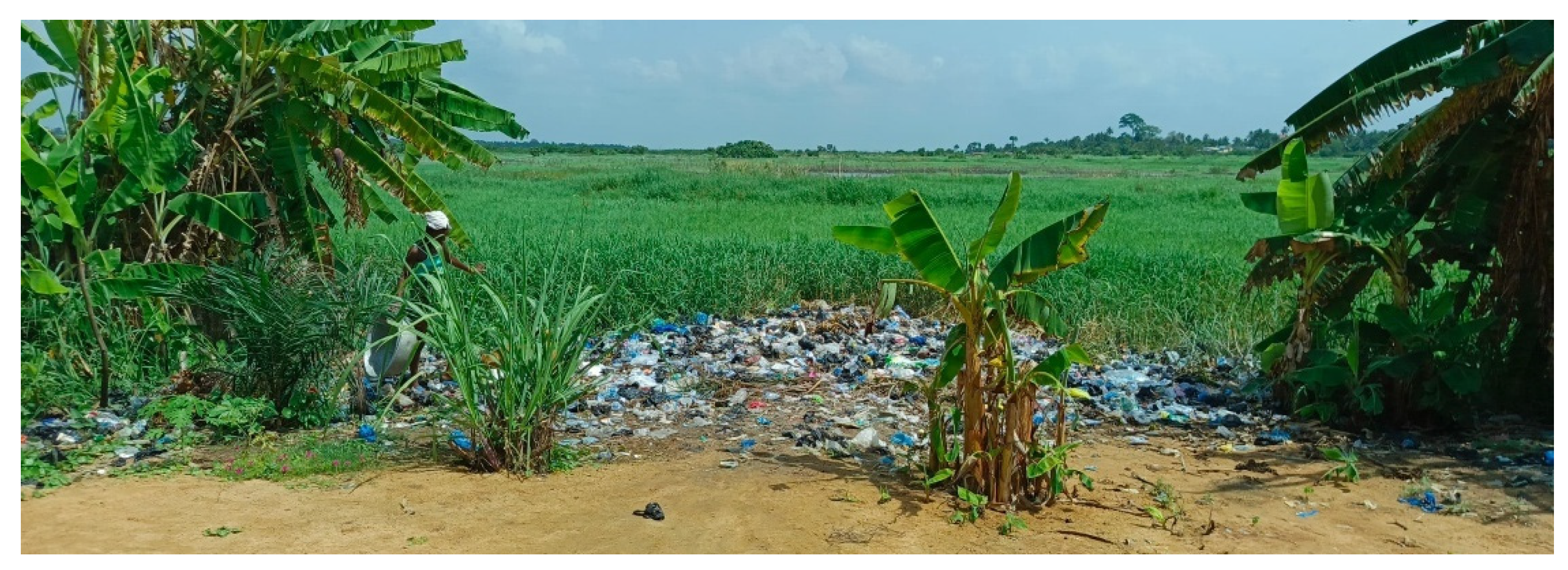
Moreover, this form of waste disposal is encouraged by the availability of spaces that can be converted into dumping grounds, and thus households dispose of their rubbish by dumping it in the nearest and most accessible parts of the GBGL (Figure 3). A housewife in Agbata (Lacs 3 municipality) commented:
The waste collectors here are expensive for me. It’s 1500 FCFA per household per month. They take all that money, but they also throw the rubbish out into the countryside, not far from us. It’s better for me to go and dispose of it myself or send the children and I keep the money there.
(interview extract)
According to another interviewee in Kpogan Lambou (Golfe 6 municipality), directly across from the floodplain savanna: “There’s a lot of space in front of my house to dump waste. That’s what most of my neighbours do as well. But to keep the rubbish from piling up too much, we burn it to reduce the amount” (interview extract).
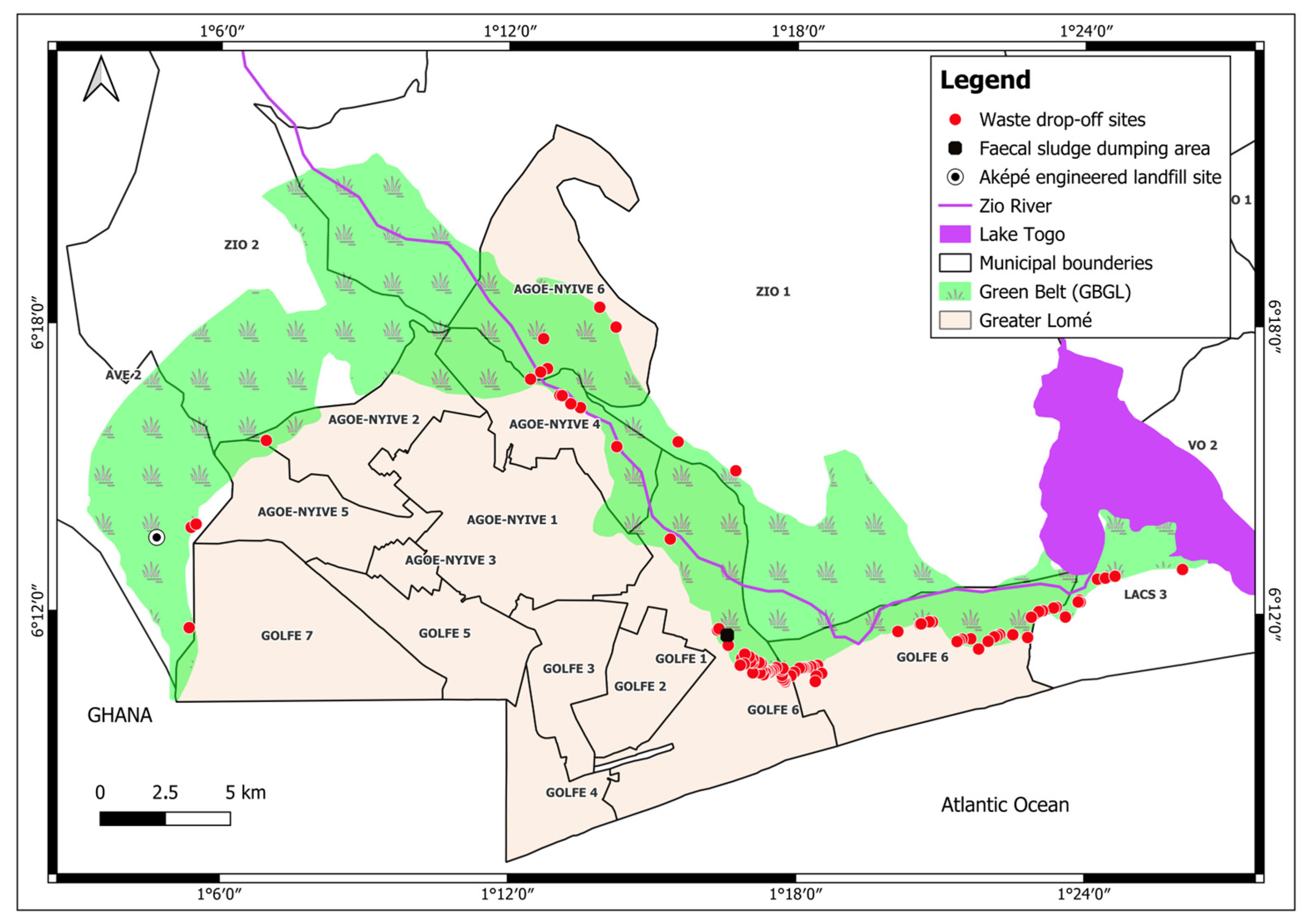
Observations carried out around the GBGL in areas close to residential zones helped to identify 95 informal waste-dumping sites (Figure 4). As well as being used by households as a dumping ground for solid waste, the GBGL plays a significant role in the faecal sludge management system of the city of Lomé. Consequently, it also serve as a major dumping ground for faecal sludge from households in the city and its surrounding areas. This liquid waste is released directly into the natural environment without any form of prior treatment. The GBGL also hosts the engineered landfill facility that receives solid waste produced by the populations of Greater Lomé and its neighbouring localities (Figure 4).

3.3. Social Implications of the Socioeconomic Uses of the GBGL

The socioeconomic uses of the GBGL described above give rise to social dynamics that result in the emergence of conflictual relations due to divergent perceptions, visions and positions on the one hand and the formation of alliances based on common interests on the other. Conflictual relations manifest as varying degrees of open tensions between different groups of GBGL users and include disputes over land transactions, conflicts between livestock breeders and farmers, quarrels over waste dumping and tensions arising from sand quarrying.
Land disputes often emerge between buyers, between buyers and sellers and even between members of the same community or family of landowners. Conflicts between buyers and sellers, as well as between the buyers themselves, arise from the illegal practice of selling the same plot of land multiple times, with several parties claiming ownership. These conflicts are most often referred to customary authorities and the courts, which, after investigation, determine the rightful owner of the disputed land. This was confirmed by a customary official met in Adetikope: “The phenomenon of sa-gba-sè (Ewe expression meaning “sell then resell” or double sale) has become a real problem in recent years. The quest for easy money has led people to sell land twice, and many end up in prison. These disputes often end up in the chief’s court” (interview extract). Aggrieved buyers, on the other hand, take the sellers to court in order to recover the funds spent on acquiring the land. Within communities, land disputes also arise when an individual sells a family plot without consulting the family council, a situation which is also a source of tension for the purchaser when the family of landowners initiates proceedings to recover the sold land.
Competition for natural resources often leads to clashes between the two groups, resulting in protests to customary and municipal authorities as well as confrontations. For instance, conflicts between herders and farmers arise from the destruction of crops by livestock and the pruning of trees in fields by herders. In this situation, transhumant herders believe they have a right to natural resources and deny damaging crops, while discussions with farmers revealed that they feel threatened by the herders: “Transhumants are a big problem for us. When we try to respond to the destruction of our crops, they threaten us with their knives. The authorities must intervene” (interview with a farmer, Assome, Zio 1).
Disputes over waste dumping in the GBGL pit households practising this method of management against each other since waste dumping near dwellings is governed only by informal rules, the violation of which provokes reactions from neighbours. These rules concern (i) avoiding the dumping of waste that emits strong odours that annoy neighbours, such as animal carcasses and faecal matter; and (ii) participating in the upkeep of the dump, which consists of grouping waste scattered by the wind and burning the pile of waste to reduce its volume. Non-compliance with these rules by users leads to disputes between enforcers and offenders, with repeat offenders being banned from using the dump.
Conflicts linked to sand quarrying are due to the negative impacts of the activity on neighbouring populations, including dust raised by lorries, the deterioration of the landscape and the risk of traffic accidents caused by drivers often accused of being “impatient behind the wheel”. Furthermore, the regular use of tracks leading to the quarries by sand transport lorries damages them, making them difficult for local residents to use (Figure 5). These sources of tensions result in local residents insulting quarry operators and lorry drivers.
Faced with a social configuration characterised by opposition resulting from competition over the GBGL’s resources, the various stakeholders develop strategies of alliance and solidarity in order to better defend their interests. For instance, farmers join forces to denounce and combat the destruction of crops by transhumant herdsmen and also come together in ad hoc groups or cooperatives to give a stronger voice to victims of vandalism. Similarly, people living near quarries use solidarity and group together to fight against the ravages of quarrying, a strategy also used by some local residents to prevent the opening of new quarries because of their perception of the risks associated with quarrying and the social and environmental changes it brings.

3.4. Land Use Dynamics in the GBGL

3.4.1. Community Perceptions of Land Use Change in the GBGL

The study of community perceptions regarding changes in vegetation cover within the GBGL revealed that the majority of respondents (71.9%) considered the vegetation cover in the GBGL to have significantly declined. Almost 21% reported a moderate decline based on their personal experience, while only a very small proportion (7.1%) perceived a slight decline in vegetation cover. An analysis of the relationship between the perception of significant vegetation loss in the GBGL and various independent variables using binary logistic regression helped to identify several determining factors. The results of this analysis are presented in Table 4.
The binary logistic regression results indicate that perceptions of a significant decline in vegetation within greater Lomé’s green belt are significantly influenced by geographical location, length of residence, age and level of education, demonstrating how residents’ lived experience and socio-demographic profiles shape their perspectives on environmental degradation.
Geographical location appears to be a key spatial factor. Compared to the reference municipality (Agoè-Nyivé 4), residents in Golfe 6 were almost 24 times more likely (OR = 23.87; p < 0.001) to report a significant decline in vegetation. Similarly, inhabitants of Zio 1 were approximately 7.5 times more likely (OR = 7.48; p < 0.001) to report a substantial decline. These findings suggest that perception is more acute in the GBGL areas where the effects of urban expansion, land pressure and ecosystem disturbances are most visible in daily life.
Length of residence and age are the temporal factors that seem most decisive in explaining these perceptions. For example, those who had lived in the area for 16–30 years were eight times more likely (OR = 8.28; p < 0.001) to have noticed a severe decline than new arrivals. Meanwhile, those who had lived there for over 30 years were six times more likely (OR = 6.12; p < 0.001). This trend was reinforced by age: respondents over 55 were almost four times more likely (OR = 3.94; p = 0.045) to perceive this decline than younger cohorts. This demonstrates that awareness of degradation relies on knowledge of the historical landscape, as older populations have witnessed long-term ecological transformations.
Finally, the BLR results show that level of education plays a crucial role in the ability to recognise ecological changes: Those with no education (OR = 0.17; p = 0.003) or only a primary education (OR = 0.39; p = 0.036) were significantly less likely to perceive a major decline in vegetation than those with a secondary education. Conversely, higher educational attainment appeared to foster greater environmental awareness. However, variables such as gender or residence status (native versus non-native) showed no statistically significant association with the perception of significant vegetation loss.

3.4.2. Dynamics of Land Use and Land Cover Between 2003 and 2023 in the GBGL

The socioeconomic uses discussed in this study, particularly land sales, wood energy exploitation, grazing and sand quarrying, are responsible for the degradation of the GBGL. Their contribution to this degradation was analysed through land use and land cover dynamics over 20 years, from 2003 to 2023, with 2013 as an intermediate year. Over this period, built-up areas grew very rapidly, from 1172 ha to 5368 ha in 2013 and then to 6660 ha in 2023, an overall increase of 468.26% (Table 5, Table 6 and Table 7 and Figure 6). Behind this exponential increase are urban growth and the sale of land, which encourage the construction of new buildings.
While built-up areas underwent massive expansion, swamp vegetation/gallery forests, tree-and-shrub savannas and plantations declined drastically, with rates of decline of 76.79%, 53.47% and 49.43%, respectively. This sharp decline was mainly due to the exploitation of wood energy and deforestation for building purposes. In 20 years, cropland was reduced by 7%, from 5668 ha in 2003 to 5264 ha in 2023. However, it should be noted that, between 2003 and 2013, this area was reduced by 21%, but it then increased by 17% between 2013 and 2023 due to a surge in demand for market garden produce (Table 5, Table 6 and Table 7 and Figure 6). Meanwhile, marshy/flooded grasslands increased considerably (43.33%) over the same period, apparently influenced by the interaction between climatic and anthropogenic factors. Notably, there has been recurrent flooding in the GBGL since 2007, alongside ongoing deforestation for wood energy, utility wood and timber extraction.
Over the same 20-years period (2003–2023), quarry areas grew by a modest 19.23%: between 2003 and 2013, the surface area of bare soil and quarries increased slightly by 3.85%, but most of the increase occurred between 2013 and 2023, when it rose to 14.81%. Table 5, Table 6 and Table 7 clearly detail the dynamics of land use and land cover in the GBGL over the last 20 years (2003–2023), while Figure 6 illustrates these changes.

4. Discussion

4.1. Material and Cultural Basis of the Socioeconomic Uses of the GBGL

This analysis of socioeconomic uses performed in light of the theory of cultural materialism [49,50] enables them to be understood as adaptive responses to three hierarchical levels of cultural organisation: first, infrastructure (material and ecological conditions), and then its derivatives, structure (social and economic organisation) and superstructure (ideologies, perceptions and beliefs).
At the infrastructural level, the uses of the GBGL appear to be direct responses to favourable or constraining material, economic and ecological conditions. For instance, the availability of peripheral land encourages land transactions against a backdrop of rapid urbanisation and growing demand for housing; the fertile lowlands, the presence of water resources and natural vegetation make the GBGL suitable for off-season agriculture, grazing and timber harvesting; and the availability of sand deposits and the lack of waste management infrastructure encourage sand extraction and the dumping of rubbish. Thus, the uses of the GBGL are primarily determined by the material needs of urban and rural populations, particularly in terms of housing, income, food, energy and waste disposal.
From a structural perspective, the uses reveal a complex social and economic organisation based on the interaction of multiple actors with sometimes divergent interests. Land transactions involve landowners, traditional authorities, estate agents and buyers within a hybrid system that combines customary rules and market logic, and the volatile interaction between customary land ownership and formal legal frameworks is a primary driver of the GBGL’s conversion. Traditionally, the Bè subgroup considered land as sacred and not for sale; however, the absence of state-led housing policies has forced a shift towards an informal socioeconomic market in which land is commodified through mutual agreement and without state intervention. This has created a hybrid system in which the illegal practice of “sa-gba-sè” (the multiple sale of the same plot of land) has flourished. This tension shows that the GBGL is a “contested space” where customary authorities struggle to maintain social order and where formal legal frameworks are too distant or expensive for the average resident to navigate.
Agricultural and pastoral activities rely on forms of collective organisation involving cooperatives, groups and traditional authorities such as the rugga among herders. For instance, the exploitation of timber and sand highlights value chains dominated by informal networks, but also the intervention of state control structures. Waste disposal, on the other hand, involves households and certain waste collection operators taking advantage of the shortcomings of the waste management system and environmental governance. This diversity of actors and organisation modes gives rise to recurring conflicts linked to access to, control over and exploitation of the resources of the GBGL.
Beyond the diversity of stakeholders and complexity of resource use arrangements, these dynamics are shaped and exacerbated by significant weakness in environmental governance and institutional regulation. While the ministry in charge of the environment and municipalities hold nominal jurisdiction, there is a clear regulatory enforcement gap; for instance, although sand extraction is theoretically supervised by national mining authorities, the widespread abandonment of quarries without ecological restoration reveals a failure in institutional oversight. Thus, the degradation of the GBGL is not only the result of pressure on resources but also apparently caused by failures in governance.
On the superstructural plane, the ways in which the GBGL is used are underpinned by social perceptions, beliefs and representations that legitimise the exploitation of natural resources. For example, among herders, the basic belief that natural resources are “provided by God” reinforces the cultural legitimacy of grazing. In a more general, material sense, land is perceived as an economic asset with a market value that outweighs its ecological function. Agricultural and pastoral areas are regarded as resources available to ensure subsistence, food security and livestock rearing, while the exploitation of timber and sand is justified by economic needs and urban development and floodplains are perceived as suitable areas for waste disposal attitudes. These perceptions reflect a utilitarian value orientation, a key component of the human dimensions of resource management, which describes how stakeholders’ basic beliefs prioritise the consumptive use of natural resources over their protection [64].

4.2. Anthropogenic Drivers and Direct Threats to the Environmental Degradation of Green Belts

To refine the analysis of the pressures on the GBGL, it is essential to distinguish between underlying drivers (contributing factors) and direct threats, in accordance with the standard conservation terminology proposed by Salafsky et al. [65,66]. Underlying drivers refer to the broader socioeconomic, demographic, institutional and cultural conditions that indirectly push populations to exploit resources, whilst direct threats correspond to the immediate human activities that physically degrade ecosystems and vegetation cover.
Several studies identify rapid population growth, poverty, accelerated urbanisation, weak land governance and increasing demand for housing as the main underlying drivers of environmental degradation in tropical peri-urban environments [67,68,69,70,71], and these structural pressures create conditions that intensify the exploitation of natural resources within green belts. In the context of the GBGL, the growing demand for residential land and the expansion of urban infrastructure appear to be linked to population growth and the transformation of local livelihoods, shifting from predominantly agricultural systems to more monetised urban economies [72,73].
Land tenure dynamics are also a major underlying driver of land degradation. In the coastal region of Togo, particularly around the GBGL, land transactions are mainly carried out through private agreements, with limited state regulation [74]. This lack of institutional control facilitates uncontrolled urban sprawl and the conversion of natural and agricultural land into residential areas, leisure facilities and infrastructure. Guézéré [18] further explains that the expansion of urban agglomerations around Lomé is driven by a strong social aspiration for home ownership and supported by the liberalisation of land practices, the relative accessibility of peri-urban land and the absence of a comprehensive housing policy.
In contrast, agriculture, logging, pruning, hunting, the use of herbicides, sand extraction, mining, waste dumping and uncontrolled construction constitute direct threats, as these are the immediate human actions physically responsible for the degradation of ecosystems. Ahononga et al. [67] identify agriculture, logging, hunting and the use of herbicides as among the main direct pressures affecting natural environments. Likewise, similar threats have been documented in tropical regions where unsustainable resource exploitation contributes to forest degradation and biodiversity loss [68,69].
The harvesting of wood for energy purposes constitutes another major direct threat highlighted in studies of African green belts and peri-urban forests [75]. The growing demand for wood energy, itself driven by population growth and urban expansion [76], encourages the pruning and felling of standing trees, practices that are generally unsustainable and contribute significantly to vegetation degradation [77]. In the GBGL, tree pruning is also associated with transhumant livestock farming, with herders cutting branches to provide fodder for animals during periods of drought.
Mining and sand extraction are among the most destructive direct threats affecting the GBGL and similar peri-urban ecosystems. These activities not only destroy vegetation cover but also contribute to soil erosion, water pollution, habitat destruction and the loss of species of socioeconomic importance to local communities [78,79,80,81,82]. In many cases, the degradation of agricultural land caused by sand extraction forces local populations to diversify or abandon their farming activities, thereby increasing their socioeconomic vulnerability.
Waste dumping also poses an increasingly visible direct threat linked to rapid urbanisation. Takili et al. [73] identified more than 400 micro-dump sites in the Zio Valley in Togo, illustrating the growing pressure that urban waste is placing on peri-urban ecosystems. Similar practices are observed within the GBGL, where informal waste disposal contributes to landscape sealing and environmental pollution.
The interactions between these underlying drivers and direct threats result in visible environmental consequences manifesting as changes in land use and land cover around rapidly expanding cities. Satellite image analyses conducted in several green belts across Africa and Asia consistently reveal substantial declines in vegetation cover and agricultural land, primarily due to the increase in built-up areas and artificial surfaces [68,83,84,85,86,87,88]. This distinction between root causes and immediate threats is crucial for conservation planning, as it enables management strategies to differentiate between immediate pressures requiring direct mitigation and broader structural conditions requiring long-term governance and policy interventions.
To ensure the sustainable management of the GBGL, it is essential to establish a clear legal framework by incorporating it into the Urban Master Plan (PDU), with precise cadastral boundaries to reduce ambiguities in land transactions. An inter-institutional working group bringing together the ministries in charge of the environment, agriculture and mining and the 12 municipalities should be established to address the current fragmentation of governance. Existing village development committees could also be enlisted to formalise locally observed environmental practices, particularly regarding waste management, into binding municipal regulations. Furthermore, sand extraction activities should be regulated through mandatory restoration bonds to ensure the ecological rehabilitation of degraded sites, regardless of whether operations continue.

5. Conclusions

The city of Lomé is surrounded by a natural green belt covering an estimated 18,000 hectares that plays a crucial role in providing ecosystemic services while sustaining the livelihoods of local populations. Local populations rely on this green belt to meet their various socioeconomic needs and use it as a means to escape poverty and enhance their income. The socioeconomic uses identified include land transactions, market gardening and agricultural production, breeding and grazing, sand mining and marketing, wood energy, timber and utility wood exploitation and waste dumping. These uses generate complex social dynamics characterised by conflicts arising from divergent perceptions, visions and positions, as well as the formation of alliances based on shared interests.
Analysis of environmental change perceptions indicated a strong awareness of ecological degradation, with 71.9% of respondents reporting a significant decline in vegetation cover within the green belt and nearly 21% perceiving a moderate decline. Land use and land cover analysis further confirmed this trend, revealing a rapid expansion of built-up areas from 1172 ha to 5368 ha in 2013 and 6660 ha in 2023, representing a 468.26% increase. This dramatic transformation is plausibly associated with urban expansion but also land transactions that stimulate new construction and accelerate spatial conversion.
These findings have significant implications for ecological urban planning in Lomé and other rapidly urbanising African cities facing similar peri-urban pressures. The results suggest that conventional conservation approaches based solely on restrictive protective measures are unlikely to succeed in contexts where local populations depend directly on natural resources for their livelihoods. Urban planning strategies must therefore move towards an inclusive integration model that reconciles ecological preservation with socioeconomic survival needs.
In practical terms, the GBGL should be legally institutionalised through its direct incorporation into the Urban Master Plan. This should include precise cadastral registration to reduce land tenure insecurity and limit unregulated land transactions. Strengthening governance also requires the establishment of an inter-institutional management framework involving environmental authorities, mining departments, municipalities and local community structures. Furthermore, locally rooted practices, such as sustainable market gardening, community-led waste management and the ecological restoration of sand quarries, should be formally incorporated into municipal regulations and development policies. Ultimately, the long-term preservation of the GBGL depends on its transformation into a legally protected and socially productive landscape capable of supporting both ecosystem services and local livelihoods.

Author Contributions

Conceptualisation, A.G.E., M.N., S.B. and K.A.; methodology, A.G.E., M.N., S.B. and K.K.A.; software, A.G.E. and K.K.A.; formal analysis, A.G.E. and M.N.; investigation, S.N., A.G.E., S.B. and M.N.; resources, S.B. and K.A.; data curation, A.G.E.; LULC dynamics analysis, K.K.A.; writing—original draft preparation, A.G.E., S.B., M.N., K.A. and K.H.; review and editing, S.B., K.K.-T., K.H., K.A. and K.K.; visualisation, A.G.E., K.K.A. and K.A.; supervision, S.B., K.K.-T. and M.N.; project administration, K.K. and K.A.; funding acquisition, C.A. All authors have read and agreed to the published version of the manuscript.

Funding

This research received financial support from the Centre régional d’excellence sur les villes durables en Afrique (CERViDA-DOUNEDON) through a grant awarded to the Laboratoire de Recherche Forestière of Université de Lomé for research and development work on “Opportunities for forest landscape restoration to combat urban heat islands (UHI) in the context of climate change in Greater Lomé, Maritime Region” (CONVENTION N°__/2022/CERViDA-DOUNEDON).

Institutional Review Board Statement

Ethical review and approval were waived by the Directorate of Scientific and Technical Research of Togo. Participation in this study was completely voluntary. The participants were informed of the study’s objectives, the conditions for their participation and their right to withdraw were not affected in any way. Before data collection, each participant gave informed consent. No personal identification information was collected, and the collected information was anonymous to ensure confidentiality. For these reasons, the study did not require ethical approval.

Informed Consent Statement

Informed consent was obtained from all subjects involved in the study.

Data Availability Statement

Data will be made available by the authors upon request.

Acknowledgments

The authors are grateful to the Centre régional d’excellence sur les villes durables en Afrique (CERViDA-DOUNEDON) of Université de Lomé (Togo) funded by the World Bank Group. We express our utmost gratitude to all the respondents for their participation in this study. The authors thank the reviewers for their contribution to improving the quality of this article.

Conflicts of Interest

The authors declare no conflicts of interest.

Abbreviations

The following abbreviations are used in this manuscript:
BLRBinary Logistic Regression
ETMEnhanced Thematic Mapper
GBGLGreen Belt around Greater Lomé
HaHectares
LULCLand Use and Land Cover
MERFMinistère de l’Environnement et des Ressources Forestières
NGONon-Governmental Organisation
OFFAPObservatoire de la Faune, de la Flore et des Aires Protégées
OLIOperational Land Imager
RLCMRapid Land Cover Mapper
SLCScan Line Corrector
TIRSThermal Infrared Sensor

References

  1. Couture, G. Conception de Scénarios Cartographiques Pour la Ceinture Verte de Sherbrooke Basés sur des Fonctions Prioritaire. Master’s Thesis, Université de Sherbrooke, Sherbrooke, QC, Canada, 2016. [Google Scholar]
  2. Ali, A.K. Greenbelts to Contain Urban Growth in Ontario, Canada: Promises and Prospects. Plan. Pract. Res. 2008, 23, 533–548. [Google Scholar] [CrossRef]
  3. Amati, M. Urban Green Belts in the Twenty-First Century; Routledge: London, UK, 2016. [Google Scholar]
  4. Balagou, K.; Adjonou, K.; Segla, K.N.; Komi, K.; Zoungrana, J.B.B.; Aholou, C.; Kokou, K. Green belts in Africa: A diagnostic review of urban forestry and sustainable management strategies. Forests 2025, 16, 700. [Google Scholar] [CrossRef]
  5. Obi, N.I.; Nwalusi, D.M.; Ibem, E.O.; Okeke, O.F. Assessment of the role of greenbelts in environmental and socio-economic development of urban areas in Southeast Nigeria. Civ. Eng. Archit. 2021, 9, 545–557. [Google Scholar] [CrossRef]
  6. Girma, Y.; Terefe, H.; Pauleit, S.; Kindu, M. Urban green spaces supply in rapidly urbanizing countries: The case of Sebeta town, Ethiopia. Remote Sens. Appl. Soc. Environ. 2018, 13, 138–149. [Google Scholar] [CrossRef]
  7. Mayrand, K.; Revéret, J.-P.; Dupras, J.; Charron, I.; Michaud, C. Capital Écologique de la Ceinture Verte: Évaluation Économique de la Biodiversité et des Écosystèmes; Fondation David Suziki & Nature-Action Québec: Montreal, QC, Canada, 2013. [Google Scholar]
  8. Briki, M.; Khatra, N.B. L’analyse des expériences de mise en place de ceintures vertes au niveau du circum-Sahara. In Le Projet Majeur Africain de la Grande Muraille Verte: Concepts et Mise en Œuvre; Dia, A., Duponnois, R., Eds.; IRD Éditions: Marseille, France, 2013; pp. 263–273. [Google Scholar] [CrossRef]
  9. Valette, E.; Cordeau, E. Les îlots de Chaleur Urbains. Répertoire de Fiches Connaissance; Institut d’Aménagement et d’Urbanisme: Paris, France, 2010. [Google Scholar]
  10. Banon, F.; Danvidé, B.; Baye, A.Y. Problématique de la gestion des espaces verts en milieu urbain: Projet de conservation et de valorisation de la ceinture verte de Niamey au Niger. Rev. Ecosystèm. Paysages 2021, 1, V1. [Google Scholar]
  11. Benoit-Cattin, M. Les institutions du développement agricole durable des pays du Sud. Écon. Rural. Agric. Aliment. Territ. 2008, 303-304-305, 5–7. [Google Scholar] [CrossRef]
  12. Cattan, N.; Berroir, S. Les représentations de l’étalement urbain en Europe: Essai d’interprétation. In La Ville Insoutenable; Berque, A., Bonin, P., Ghorra-Gobin, C., Eds.; Belin: Paris, France, 2005; pp. 87–95. [Google Scholar]
  13. Doe, B.; Anokye, P.A.; Attakorah, A.K.; Liwur, S.B. Understanding the gnawing threat of encroachment of urban green spaces in Ghana’s growing urban fabric. Discov. Cities 2025, 2, 26. [Google Scholar] [CrossRef]
  14. Kiribou, R.; Djene, S.; Bedadi, B.; Ntirenganya, E.; Ndemere, J.; Dimobe, K. Urban climate resilience in Africa: A review of nature-based solution in African cities’ adaptation plans. Discov. Sustain. 2024, 5, 94. [Google Scholar] [CrossRef]
  15. Maphosa, S.N.; Nkosi, S.E.; Chabalala, Y. Impact of urban green spaces on the livelihoods of residents in Bulawayo and Johannesburg cities. Urban Sci. 2025, 9, 194. [Google Scholar] [CrossRef]
  16. Adegun, O.B. Green infrastructure can improve the lives of slum dwellers in African cities. Front. Sustain. Cities 2021, 3, 621051. [Google Scholar] [CrossRef]
  17. DGSCN. Recensement de la Population et de L’habitat (06 au 21 Novembre 2010); Résultats Définitifs: Lomé, Togo, 2011. [Google Scholar]
  18. Guézéré, A. L’obsession d’habiter sa propre maison à Lomé: Quel impact sur la dynamique spatiale? Les Cah. D’outre-Mer. Rev. Géographie Bordx. 2011, 64, 565–590. [Google Scholar] [CrossRef]
  19. INSEED. Dépliant des Résultats Définitifs du Cinquième Recensement de la Population de L’habitat de Novembre 2022; République Togolaise: Lomé, Togo, 2023. [Google Scholar]
  20. DAGL. Présentation du District Autonome du Grand Lomé; District Autonome du Grand Lomé: Lomé, Togo, 2020. [Google Scholar]
  21. Biakouyé, K.A. Lomé au-delà de Lomé: Etalement Urbain et Territoires Dans une Métropole d’Afrique Sub-Saharienne. Ph.D. Thesis, Université de Lomé & Université Paris Ouest La Défense, Nanterre, France, 2014. [Google Scholar]
  22. Tossoukpe, A.Y.; Dukiya, J.; Folega, F.; Thiel, M.; Okhimamhe, A.A. Dynamics of Changes in Spatial Patterns of Built-Up Areas in Two Metropolitan Areas of Grand Lomé and Greater Accra (West Africa). Urban Sci. 2025, 9, 84. [Google Scholar] [CrossRef]
  23. Payéne, L.; Gnamederama, K.; Fousseni, F.; Madjouma, K.; Pikabe, Y.G.; Graw, V.; Bohnett, E.; Dourma, M.; Kperkouma, W.; Komlan, B. Urbanization Impacts on Wetland Ecosystems in Northern Municipalities of Lomé (Togo): A Study of Flora, Urban Landscape Dynamics and Environmental Risks. Conservation 2025, 5, 28. [Google Scholar] [CrossRef]
  24. Deton, Y.; Kamou, H.; Atato, A.; Kombate, B.; Mabafei, A.; Yoka, J.; Dourma, M.; Guelly, A.K.; Batawila, K.; Akpagana, K. Spatiotemporal Dynamics of Urban Green Spaces and Climatic Vulnerability of Togolese Cities in the Context of Rapid Urbanisation: The Case of Lome and Kara. Land 2025, 14, 471. [Google Scholar] [CrossRef]
  25. Blakime, T.-H.; Adjonou, K.; Komi, K.; Hlovor, A.K.D.; Gbafa, K.S.; Zoungrana, J.-B.B.; Polorigni, B.; Kokou, K. Dynamics of Built-Up Areas and Challenges of Planning and Development of Urban Zone of Greater Lomé in Togo, West Africa. Land 2024, 13, 84. [Google Scholar] [CrossRef]
  26. Ahouandjinou, S.D.; Sodalo, C.; Sambieni, R.K.; Osseni, A.A.; Akossou, A.Y.; Bogaert, J. Built-up expansion and urban land use trade-offs in peri-urban Cotonou (Benin), West Africa: A scenario-based remote sensing approach. City Environ. Interact. 2025, 28, 100263. [Google Scholar] [CrossRef]
  27. Aduko, J.; Yakubu, M.A.; Anokye, K. Assessing the environmental impacts of urban sprawl on vegetation cover and ecosystem integrity in Wa municipality, Ghana. World Dev. Sustain. 2025, 6, 100225. [Google Scholar] [CrossRef]
  28. Benza, M.; Weeks, J.R.; Stow, D.A.; López-Carr, D.; Clarke, K.C. A pattern-based definition of urban context using remote sensing and GIS. Remote Sens. Environ. 2016, 183, 250–264. [Google Scholar] [CrossRef]
  29. Shao, Z.; Sumari, N.S.; Portnov, A.; Ujoh, F.; Musakwa, W.; Mandela, P.J. Urban sprawl and its impact on sustainable urban development: A combination of remote sensing and social media data. Geo-Spat. Inf. Sci. 2021, 24, 241–255. [Google Scholar] [CrossRef]
  30. Deribew, K.T. Spatiotemporal analysis of urban growth on forest and agricultural land using geospatial techniques and Shannon entropy method in the satellite town of Ethiopia, the western fringe of Addis Ababa city. Ecol. Process. 2020, 9, 46. [Google Scholar] [CrossRef]
  31. Balima, L.H.; Zerbo, I.; Bayen, P.; Kiemtoré, H.; Ganamé, M.; Cissé, M.; Thiombiano, A. Greater diversity, denser stands and higher biomass in peri-urban forests than in adjacent agroforestry systems in western Burkina Faso: Implications for urban sustainability. Sci. Rep. 2023, 195, 1077. [Google Scholar] [CrossRef]
  32. Aïda, N.G.; Badara, D.A.; Moustapha, N.; Abou, N.A.; Mamadou, S.; Ousmane, C.; Elhadji, F. Contribution to the study of urban forestry in the commune of Saint-Louis, Senegal. Rev. Écosystèm. Paysages 2024, 4, V4I12024. [Google Scholar]
  33. Guihini, A.M.; Mahamat Saleh, M.; Diallo, A.; Mekila, M.; Guissé, A. Floristic composition and structure of woody populations of two sites along the route of the Great Green Wall of Chad. J. Anim. Plant Sci. 2021, 49, 8774–8784. [Google Scholar]
  34. Houngbo, E.N.; Djego, J.G.; Orekan, V.; Lougbegnon, T.; Mongbo, R.; Sinsin, B. Could the sacred contribute to the conservation of forests in African urban areas? Ann. Sci. Agron. 2013, 17, 1–10. [Google Scholar]
  35. Khalid, A.; Fekhaoui, M.; Arahou, M. Quelle biodiversité pour l’espace urbain et périurbain? Cas de la ville de Rabat. Geo-Eco-Trop 2020, 44, 443–458. [Google Scholar]
  36. Kimpouni, V.; Lenga-Sacadura, M.Y.; Kalath, R.S.; Kiangana-Ngoyi, L. Floristic diversity of vascular epiphytes and hemiparasites in the urban forest ecosystem of Brazzaville, Congo. J. Appl. Biosci. 2017, 117, 11704–11719. [Google Scholar] [CrossRef]
  37. Kimpouni, V.; Mbou, P.; Gakosso, G.; Motom, M. Floristic biodiversity of the undergrowth and natural regeneration of the Patte d’Oie forest in Brazzaville, Congo. Open J. Ecol. 2013, 3, 518–531. [Google Scholar] [CrossRef]
  38. Magrin, G.; Mugelé, R. The Anthropocene Loop in the Sahel: Nature and Societies in the Face of Major Environmental Projects (Safeguarding Lake Chad: Great Green Wall). J. Geogr. 2020, 3, 1–15. [Google Scholar]
  39. Mavimbela, L.Z.; Sieben, E.J.J.; Procheş, Ş. Invasive alien plant species, fragmentation and scale effects on the composition of urban forest communities in Durban, South Africa. N. Z. J. For. Sci. 2018, 48, 19. [Google Scholar] [CrossRef]
  40. Moussa, S.; Boateng, K.; Shem, K.; Abasse, T.; Mahamane, S. Composition floristique et structure des forêts urbaines des villes sahéliennes: Cas de Niamey et Maradi, Niger. Sci. Terre Agron. 2019, 7, 56–65. [Google Scholar]
  41. Tourey, S.; Boukpessi, T.; Kpedenou, K.D.; Thiou Tchamie, T.K. Diversity and Importance of the Woody Flora of the City of Sokodé (Centre—Togo); Cabi Digital Library: Oxfordshire, UK, 2020. [Google Scholar]
  42. Cobbinah, P.B.; Asibey, M.O.; Azumah, A.D. Urban forest and the question of planning-sustainability inadequacy. Cities 2023, 140, 104453. [Google Scholar] [CrossRef]
  43. Dahani, I.; Compaore, G. Ville Durable: Ouagadougou, Capitale du Burkina Faso en Afrique Subsaharienne; Éditions Francophones Universitaires d’Afrique: Lomé, Togo, 2021. [Google Scholar]
  44. Mensah, C.A. Urban green spaces in Africa: Nature and challenges. Int. J. Ecosyst. 2014, 4, 1–11. [Google Scholar]
  45. Tikabo, G.; Herrero-Jáuregui, C.; Yeshitela, K.; Fetene, A.; Negash, M. Rethinking urban planning from the perspective of nature-based stormwater runoff management in Ethiopia. Landsc. Ecol. Eng. 2023, 19, 597–616. [Google Scholar] [CrossRef]
  46. Yirga, B.; Megento, T.L.; Habetemariam, K.Y. Urban forest management in Addis Ababa, Ethiopia: A policy arrangement approach. Urban For. Urban Green. 2023, 79, 127809. [Google Scholar] [CrossRef]
  47. OFFAP. Compte Rendu des Reconnaissances sur les Forêts de la Vallée du Zio de l’OFFAP; Observatoire de la Faune, de la Flore et des Aires Protégées du Togo: Lomé, Togo, 2016. [Google Scholar]
  48. Akpegnon, A.C.; Badjare, B.; Folega, F.; Wala, K.; Batawila, K.; Akpagana, K. Flore et écologie de la partie centrale du Bassin de Zio dans un contexte de pression foncière au Togo. Rev. Ecosystèm. Paysages 2023, 3, 1–16. [Google Scholar] [CrossRef]
  49. Harris, M. Cows, Pigs, Wars & Witches: The Riddles of Culture, 2nd ed.; Vintage/Random House: New York, NY, USA, 1989. [Google Scholar]
  50. Harris, M. Cultural Materialism: The Struggle for a Science of Culture; Altamira Press: New York, NY, USA, 2001. [Google Scholar]
  51. Martineau, S. L’observation en situation: Enjeux, possibilités et limites. Rech. Qual. 2004, hors-série/2, 5–17. [Google Scholar]
  52. Peretz, H. Les Méthodes en Sociologie; La Découverte: Paris, France, 2004. [Google Scholar]
  53. Jorgensen, D.L. Participant Observation: A Methodology for Human Studies; Sage Publications: Newbury Park, CA, USA, 1989. [Google Scholar]
  54. Olivier de Sardan, J.-P. L’enquête Socio-Anthropologique de Terrain: Synthèse Méthodologique et Recommandations à Usage des étudiants; Lasdel: Niamey, Niger, 2003. [Google Scholar]
  55. Morgan, D.L. Focus Groups. Annu. Rev. Sociol. 1996, 22, 129–152. [Google Scholar] [CrossRef]
  56. Van Campenhoudt, L.; Quivy, R.; Marquet, J. Manuel de Recherche en Sciences Sociales, 4th ed.; Dunod: Paris, France, 2011. [Google Scholar]
  57. Daniel, W.W.; Cross, C.L. Biostatistics: A Foundation for Analysis in the Health Sciences, 10th ed.; Wiley: Hoboken, NJ, USA, 2013. [Google Scholar]
  58. Fereday, J.; Muir-Cochrane, E. Demonstrating Rigor Using Thematic Analysis: A Hybrid Approach of Inductive and Deductive Coding and Theme Development. Int. J. Qual. Methods 2006, 5, 80–92. [Google Scholar] [CrossRef]
  59. Hosmer, D.W.; Lemeshow, S. Applied Logistic Regression; Wiley: New York, NY, USA, 2000. [Google Scholar] [CrossRef]
  60. Heinze, G.; Schemper, M. A solution to the problem of separation in logistic regression. Stat. Med. 2002, 21, 2409–2419. [Google Scholar] [CrossRef]
  61. USGS. West Africa Land Use and Land Cover Time Series; U.S. Geological Survey (USGS): Reston, VA, USA, 2017.
  62. Trochain, J.L. Accord interafricain sur la définition des types de végétation de l’Afrique tropicale. Bull. L’institut Etudes Centrafr. 1957, 13–14, 55–94. [Google Scholar]
  63. MERF. Programme National de Reboisement du Togo 2017–2030; Ministère de l’Environnement et des Ressources Forestières (MERF); République Togolaise: Lomé, Togo, 2017. [Google Scholar]
  64. Decker, D.J.; Riley, S.J.; Siemer, W.F. (Eds.) Human Dimensions of Wildlife Management, 2nd ed.; John Hopkins University Press: Baltimore, MD, USA, 2012. [Google Scholar]
  65. Salafsky, N.; Relton, C.; Young, B.E.; Lamarre, P.; Böhm, M.; Chénier, M.; Cochrane, E.; Dionne, M.; He, K.K.; Hilton-Taylor, C.; et al. Classification of direct threats to the conservation of ecosystems and species 4.0. Conserv. Biol. 2025, 39, e14434. [Google Scholar] [CrossRef] [PubMed]
  66. Salafsky, N.; Salzer, D.; Stattersfield, A.J.; Hilton-Taylor, C.R.; Neugarten, R.; Butchart, S.H.; Collen, B.E.; Cox, N.; Master, L.L.; O′connor, S.H.; et al. A Standard Lexicon for Biodiversity Conservation: Unified Classifications of Threats and Actions. Conserv. Biol. 2008, 22, 897–911. [Google Scholar] [CrossRef]
  67. Ahononga, F.C.; Gouwakinnou, G.N.; Biaou, S.S.H.; Biaou, S. Facteurs socio-économiques expliquant la déforestation et la dégradation des écosystèmes dans les domaines soudanien et soudano-guinéen du Bénin. Ann. L’université Parakou Série Sci. Nat. Agron. 2020, 10, 43–60. [Google Scholar] [CrossRef]
  68. Bah, O.A.; Kone, T.; Yaffa, S.; Ndiaye, M.L. Land Use and Land Cover Dynamics in Central River Region of the Gambia, West Africa from 1984 to 2017. Am. J. Mod. Energy 2019, 5, 5–18. [Google Scholar] [CrossRef]
  69. Curtis, P.G.; Slay, C.M.; Harris, N.L.; Tyukavina, A.; Hansen, M.C. Classifying drivers of global forest loss. Science 2018, 361, 1108–1111. [Google Scholar] [CrossRef] [PubMed]
  70. Jayathilake, H.M.; Prescott, G.W.; Carrasco, L.R.; Rao, M.; Symes, W.S. Drivers of deforestation and degradation for 28 tropical conservation landscapes. Ambio 2021, 50, 215–228. [Google Scholar] [CrossRef]
  71. Makunga, J.E.; Misana, S.B. The Extent and Drivers of Deforestation and Forest Degradation in Masito-Ugalla Ecosystem, Kigoma Region, Tanzania. Open J. For. 2017, 7, 285–305. [Google Scholar] [CrossRef]
  72. Iddrisu, S.; Siiba, A.; Alhassan, J.; Abass, K. Land-use and land cover change dynamics in urban Ghana: Implications for peri-urban livelihoods. Int. J. Urban Sustain. Dev. 2023, 15, 80–96. [Google Scholar] [CrossRef]
  73. Takili, M.; Faya, L.; Soma, A. Vulnérabilité de la Biodiversité de la Vallée du Zio Dans le Grand Lomé au Togo; Collection Pluraxes/Mondex, Dossier 3: Afrique/Histoire, Science politique, Relations internationales, Economie, Géographie; ACAREF, Editions Francophones Universitaires d’Afrique: Lomé, Togo, 2024; pp. 422–444. [Google Scholar]
  74. Bawa, A. Mutations des Périphéries Urbaines au Sud du Togo. Des Espaces Ruraux à l’épreuve du Peuplement et de la Marchandisation des Terres. Ph.D. Thesis, Université de Montpellier, Montpellier, France, 2017. [Google Scholar]
  75. Bigma, B.; Woegan, Y.A.; Bawa, A.; Koumantiga, D.; Wala, K.; Akpagana, K. Ceintures vertes villageoises de la préfecture de l’Avé au Togo (Afrique de l’ouest): Diversité floristique, menaces et modes de gestion. Ecosystème Paysage 2022, 2, 42–54. [Google Scholar] [CrossRef]
  76. Duguma, L.A.; Atela, J.; Minang, P.A.; Ayana, A.N.; Gizachew, B.; Nzyoka, J.M.; Bernard, F. Deforestation and Forest Degradation as an Environmental Behavior: Unpacking Realities Shaping Community Actions. Land 2019, 8, 26. [Google Scholar] [CrossRef]
  77. Kaina, A.; Wala, K.; Koumantiga, D.; Folega, F.; Akpagana, K. Impact de l’exploitation du bois-énergie sur la végétation dans la préfecture de Tchaoudjo au Togo. Rev. Géographie L’université Ouagadougou 2018, 1, 69–88. [Google Scholar]
  78. Adedeji, O.H.; Adebayo, H.O.; Sotayo, E.I. Assessing environmental impacts of inland sand mining in parts of Ogun State, Nigeria. Ethiop. J. Environ. Stud. Manag. 2014, 7, 478–487. [Google Scholar] [CrossRef]
  79. Akanwa, A.O.; Joe-Ikechebelu, N.N. Sustainable natural resources exploitation: Clay/sand mining on diminishing greener security and increased climate risks in Nigeria. In Natural Resources Conservation and Advances for Sustainability; Jhariya, M.K., Meena, R.S., Banerjee, A., Meena, S.N., Eds.; Elsevier: Amsterdam, The Netherlands, 2022; pp. 545–562. [Google Scholar] [CrossRef]
  80. Bohbot, J. L’orpaillage au Burkina Faso: Une aubaine économique pour les populations, aux conséquences sociales et environnementales mal maîtrisées. EchoGéo 2017, 42, 1–19. [Google Scholar] [CrossRef]
  81. Milka, P.; Mulongo, L.S.; Kurgat, A. Sand Harvesting, Environmental Degradation and Livelihoods in North Rift Kenya. Int. J. Innov. Res. Multidiscip. Educ. 2023, 2, 94–98. [Google Scholar] [CrossRef]
  82. Ohaeri, M.C.A.; Ogbonna, D.N.; Gobo, A.E.; Ngah, S.A. Environmental Impacts of Sand Mining in Some Coastal Communities in Port Harcourt Metropolis Nigeria. J. Appl. Life Sci. Int. 2021, 24, 31–43. [Google Scholar] [CrossRef]
  83. Asempah, M.; Sahwan, W.; Schütt, B. Assessment of Land Cover Dynamics and Drivers of Urban Expansion Using Geospatial and Logistic Regression Approach in Wa Municipality, Ghana. Land 2021, 10, 1251. [Google Scholar] [CrossRef]
  84. Ashiagbor, G.; Amoako, C.; Asabere, S.B.; Quaye-Ballard, J.A. Landscape Transformations in Rapidly Developing Peri-urban Areas of Accra, Ghana: Results of 30 years. Open Geosci. 2019, 11, 172–182. [Google Scholar] [CrossRef]
  85. Mawenda, J.; Watanabe, T.; Avtar, R. An Analysis of Urban Land Use/Land Cover Changes in Blantyre City, Southern Malawi (1994–2018). Sustainability 2020, 12, 2377. [Google Scholar] [CrossRef]
  86. Munthali, M.G.; Davis, N.; Adeola, A.M.; Botai, J.O.; Kamwi, J.M.; Chisale, H.L.W.; Orimoogunje, O.O.I. Local Perception of Drivers of Land-Use and Land-Cover Change Dynamics across Dedza District, Central Malawi Region. Sustainability 2019, 11, 832. [Google Scholar] [CrossRef]
  87. Oppong, J.; Namwamba, J.B.; Twumasi, Y.A.; Ning, Z.H.; Asare-Ansah, A.B.; Akinrinwoye, C.; Antwi, R.; Osimbo, B.M.; Loh, P.; Frimpong, D.B.; et al. Urbanization and urban forest loss: A spatial analysis of five metropolitan districts in Ghana. Geol. Ecol. Landsc. 2025, 9, 346–355. [Google Scholar] [CrossRef]
  88. Tun, P.T.; Nguyen, T.T.; Buerkert, A. Transformation of Agricultural Landscapes and Its Consequences for Natural Forests in Southern Myanmar within the Last 40 Years. Remote Sens. 2023, 15, 1537. [Google Scholar] [CrossRef]
Figure 1. Location of the study area.
Conservation 06 00072 g001
Figure 2. Dwellings on the edge of the Assévé forest (Amédéhoèvé, Lacs 3).
Conservation 06 00072 g002
Figure 3. A woman dumps waste in the GBGL (Kpogan Lambou, Golfe 6).
Conservation 06 00072 g003
Figure 4. Location of waste-dumping points observed.
Conservation 06 00072 g004
Figure 5. Condition of tracks damaged by sand transport lorries (Akepedo, Ave 2 municipality).
Conservation 06 00072 g005
Figure 6. Land use and land cover in the GBGL in 2003 (A), 2013 (B) and 2023 (C).
Conservation 06 00072 g006
Table 1. Characteristics of the images collected.
YearAcquisition DateSensorPath/Row
202313 December 2023Landsat 9/OLI-TIRS192/056
201325 December 2013Landsat 7/ETM + (SLC-off)
20034 January 2003Landsat 7/ETM + (SLC-off)
OLI = Operational Land Imager; TIRS = Thermal Infrared Sensor; SLC = Scan Line Corrector (this sensor is switched off because its products have gaps in the data, but they are still useful and retain the same radiometric and geometric corrections as the data collected before the SLC failure); ETM = Enhanced Thematic Mapper.
Table 2. Components of the analysis grid.
Theory-Driven CodesThemesSubtopics (Data-Driven Codes)
Infrastructure (material, ecological and economic conditions)Socioeconomic uses of the GBGL
-
Socioeconomic uses of self-subsistence
-
Uses underpinned by the logic of the market economy
Structure (actors involved in the uses, social organisation)Social implications of uses
-
Conflicts over use
-
Alliances around uses
Superstructure (representations and perceptions)Representations and perceptions
-
Socio-cultural representation of land and perception of land ownership
-
Perception of the GBGL’s natural environment and resources
Table 3. Composition of the survey sample.
VariableNumber of RespondentsPercentage (%)
Gender
Male25666.7
Female12833.3
Age group
15–35 years8822.9
36–55 years22859.4
Over 55 years6817.7
Level of education
Upper secondary school/University389.9
Lower secondary school9424.5
Primary school20954.4
Uneducated4311.2
Religion
Christianity12833.3
Islam41.0
Endogenous beliefs24463.5
No religion82.1
Residence status
Natives28474.0
Non-natives10026.0
Length of residence
0–15 years13835.9
16–30 years8121.1
Over 30 years16543.0
Sector of activity
Primary production28173.2
Processing and added value4511.7
Distribution and services379.6
Others215.5
Table 4. Binary logistic regression results.
VariablesCategoriesOdds Ratio (OR)95% CI for ORp-Value
Municipality of residenceAgoe-Nyive 61.140.33–3.950.840
Ave 20.950.32–2.840.927
Golfe 12.050.62–6.750.238
Golfe 623.873.90–145.92<0.001
Zio 17.482.93–19.12<0.001
Age group36–55 years2.701.10–6.610.030
>55 years3.941.03–15.050.045
GenderMale0.910.45–1.830.787
Level of educationPrimary school0.390.16–0.940.036
Uneducated0.170.05–0.540.003
Upper secondary school/University2.710.51–14.440.244
Residence statusNon-natives0.530.23–1.220.138
Length of residence16–30 years8.283.07–22.32<0.001
>30 years6.122.24–16.73<0.001
Excluded categories: Golfe 7, Lacs 3 (municipality of residence). Reference categories: Agoe-Nyive 4 (municipality of residence), 0–15 years (length of residence), 15–35 years (age), lower secondary school (level of education), natives (residence status).
Table 5. Land use and land cover status between 2003 and 2013.
Land Use and Land Cover ClassesSurface Area by Year (ha)Percentage of Increase or Decrease
20032013
Cropland56684476−21.03%
Built-up areas11725368358.02%
Tree-and-shrub savanna71444780−33.09%
Swamp vegetation/gallery forest54282516−53.65%
Marshy/flooded grassland2040355674.31%
Bare soil/quarry1041083.58%
Plantations105211327.60%
Table 6. Land use and land cover status between 2013 and 2023.
Land Use and Land Cover ClassesSurface Area by Year (ha)Percentage of Increase or Decrease
20132023
Cropland4476526417.61%
Built-up areas5368666024.07%
Tree-and-shrub savanna47803324−30.46%
Swamp vegetation/gallery forest25161260−49.92%
Marshy/flooded grassland35562924−17.77%
Bare soil/quarry10812417.81%
Plantations1132532−53%
Table 7. Land use and land cover status between 2003 and 2023.
Land Use and Land Cover ClassesSurface Area by Year (ha)Percentage of Increase or Decrease
20032023
Cropland56685264−7.13%
Built-up areas11726660468.26%
Tree-and-shrub savanna71443324−53.47%
Swamp vegetation/gallery forest54281260−76.79%
Marshy/flooded grassland2040292443.33%
Bare soil/quarry10412419.23%
Plantations1052532−49.43%
Disclaimer/Publisher’s Note: The statements, opinions and data contained in all publications are solely those of the individual author(s) and contributor(s) and not of MDPI and/or the editor(s). MDPI and/or the editor(s) disclaim responsibility for any injury to people or property resulting from any ideas, methods, instructions or products referred to in the content.