1. Introduction
Urban expansion in southwestern Florida has substantially altered native ecosystems, resulting in the widespread loss and fragmentation of habitat critical to local wildlife [
1,
2,
3,
4]. In this region, the Big Cypress fox squirrel (
Sciurus niger avicennia, BCFS), a geographically isolated subspecies of the eastern fox squirrel faces ongoing pressures primarily driven by habitat conversion and fragmentation [
2,
3,
4,
5]. Listed as state-threatened since 1974, habitat conversion, hydrologic modification, invasive species, and road mortality have contributed to significant population declines, with current estimates indicating fewer than 10,000 mature individuals remaining and densities reaching as low as 0.09 squirrels/km
2 [
2]. These declines are most pronounced along the urban fringe, where development continues to encroach upon suitable habitat [
2,
3,
5].
Endemic to areas south of the Caloosahatchee River and historically associated with cypress-pine savanna mosaics [
2,
6], the BCFS has three notable zones of habitat use, each distinctive in its physiography, habitat suitability, and potential threats. These zones include (1) elevated, seasonally inundated landscapes of Big Cypress swamps and the Everglades wetlands, (2) the flatwoods region with favorable open habitat, and (3) the drier flatwoods near urbanizing regions [
5]. BCFS habitat exhibits a wide range of environmental attributes, all navigated through behavioral distinctions that can change between land cover classes. Optimal conditions include a sufficiently open canopy, specific tree species for nesting, sparse understory for ground travel, and consistent year-round food availability for foraging [
3,
6,
7]. Due to its sensitivity to fragmentation and reliance on a matrix of structural habitat features that can be spatially heterogeneous, the BCFS serves as a focal species for evaluating landscape-level ecological change.
While BCFS have demonstrated limited adaptability to disturbed environments such as parks, golf courses, and low-density residential areas [
2,
4], these landscapes frequently function as demographic sinks, resulting in higher mortality rates primarily due to human-related factors such as vehicle collisions [
3,
4]. Auxiliary threats include the presence of invasive species, disease, possible poaching, shifts in hydrological conditions, fire suppression, and vehicle collisions [
3,
4,
6,
8]. As such, the species functions as a spatial indicator of ecosystem integrity in rapidly urbanizing regions [
9,
10]. Interestingly, research by [
8], observed that BCFS individuals inhabiting a golf course opportunistically selected food based on seasonal variability. Their findings suggest that a mix of non-native plant vegetation to accompany native flora can provide suitable food and nesting resources during both dry and wet seasons.
A petition was filed to the US Fish and Wildlife Service to gain federal listing status; however, the review was denied due to three main factors: (1) available ‘opportunistic’ habitats in golf courses were evident, (2) 58% of BCFS habitat is located in conserved lands, and (3) insufficient information on BCFS ecology [
2,
8,
11]. Access to data collection from core habitats remains limited, highlighting the ongoing need for targeted monitoring and research to fully understand the species’ range, behaviors, and conservation status [
4].
Long-term trends in land use throughout Florida highlight the urgency of implementing conservation strategies that explicitly address habitat fragmentation and landscape connectivity at both landscape and municipal scales. Projections estimate that Florida’s population will increase by 57% from the 2019 baseline, reaching approximately 33.7 million by 2070, with 3.5 million acres of land anticipated to transition to urban use [
12,
13,
14]. These landscape connectivity trends are especially pronounced in southwest Florida, a region exhibiting rapid urban expansion [
15] that increasingly fragments BCFS habitat availability.
In response to these trends and the threatened status of the BCFS, this study describes a process of species-specific connectivity modeling, green infrastructure (GI) design, and transect-based spatial planning to inform conservation within the context of urban development. The central research question is: How can connectivity modeling, GI typologies, and a transect-based framework be used to enhance landscape permeability and habitat availability for a state-threatened species at the municipal scale?
To address this question, we apply a GIS-based modeling approach using Omniscape [
16], an omnidirectional extension of Circuitscape based on electrical circuit theory [
17,
18,
19,
20]. In this framework, higher current density values at a pixel indicate potential stronger connective flow [
20]. Unlike node-based models that require predefined source and destination patches, Omniscape infers movement from all locations simultaneously, providing a high-resolution depiction of movement potential in complex, heterogeneous landscapes [
21]. This approach quantifies movement potential by modeling normalized current flow across a resistance surface representing land cover and anthropogenic features [
16,
21], with areas of elevated current density indicating potential movement bottlenecks [
21,
22], which can be used to prioritize locations for targeted GI interventions [
16]. The ability of Omniscape to address municipal-scale biodiversity challenges has been demonstrated in research, highlighting how connectivity modeling can enhance ecological networks in urban settings [
23].
While connectivity modeling identifies structural flows and constraints in the landscape, GI provides solutions to mitigate fragmentation. Traditionally, GI is defined as an “interconnected network of natural areas and other open spaces that conserves natural ecosystem values and functions” [
24]. The implementation of GI typologies—including greenways, ecological corridors, green belts, and urban green streets—offers opportunities to restore or enhance structural connectivity and functional habitat elements across varying land-use intensities.
To contextualize GI placement, we apply a transect-based spatial planning framework that organizes the urban-to-rural gradient into zones of development intensity. Originally developed for urban form analysis by [
25], the transect framework allows interventions to be tailored according to spatial context and ecological opportunity. The commonly used transect categorizes geographic areas into six zones, providing a structured lens for understanding land-use patterns [
25,
26]. When combined with connectivity modeling, this approach facilitates the design of a multiscale GI network that aligns with both ecological and land-use planning objectives [
26,
27].
As a contextually responsive tool, the GI transect builds on transect principles of urban form along a development gradient, using GI-based strategies to strengthen spatial connectivity and reduce the impacts of habitat fragmentation for BCFS and other wildlife species [
27]. Key components of this approach include broader land use planning strategies (smart growth, conservation subdivisions), targeted management of recreational greenspace such as golf courses, mitigation of existing wildlife impedances (such as roads), increasing connectivity across existing open spaces, and retention of natural and semi-natural vegetation [
28]. At a more localized scale, interventions such as green streets, bioswales, and green roofs can function as complementary elements, amplifying the ecological and social benefits of a larger transect-based GI scheme rather than serving as primary solutions for habitat connectivity [
24,
29].
This study contributes to the relatively limited body of research integrating species-specific connectivity modeling directly into municipal planning processes despite increasing calls for applied connectivity frameworks in urban conservation [
30,
31]. By explicitly linking ecological connectivity modeling with practical urban design typologies, it offers a novel and replicable framework for operationalizing conservation planning within rapidly urbanizing landscapes. Such an approach is particularly important for guiding sustainable development that balances urban growth with the preservation of critical habitats and biodiversity.
The principal objective of this study is to identify priority locations for GI interventions that enhance habitat connectivity for the BCFS using GIS-based connectivity modeling. To achieve this, we employed an Omniscape connectivity model and land cover data to locate BCFS movement bottlenecks, or ‘pinch-points’. While this study focuses on the BCFS, the proposed methods can be applied more broadly to design an ecologically relevant GI network that not only enhances connectivity for the BCFS but also provides co-benefits for other wildlife, supporting informed municipal planning across its range. A subsequent objective addresses the challenges of urban growth by mitigating anthropogenic impacts while sustaining essential ecosystem services. To illustrate these outcomes, a conceptual GI network was developed in AutoCAD 2025 and Adobe Photoshop version 26.0, showing how this approach can support species conservation within urbanizing landscapes [
32,
33].
2. Materials and Methods
2.1. Study Area
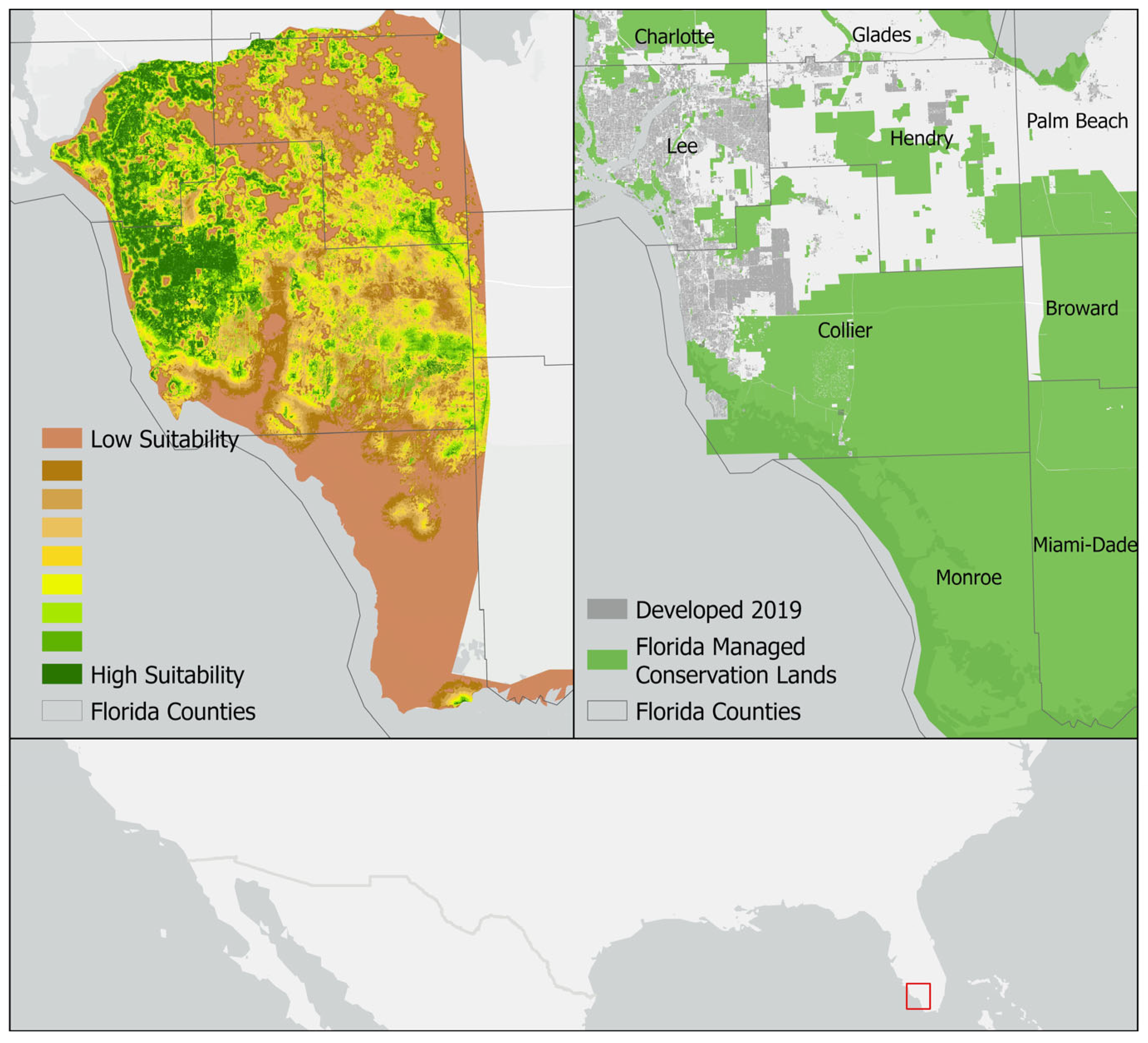
This study integrates spatial connectivity modeling and GI design to inform conservation strategies for the BCFS across urbanizing landscapes in southwestern Florida. This study was conducted across the range of the BCFS south of the Caloosahatchee River, with a focus on the core portion of its occupied habitat in southwestern Florida (
Figure 1).
A two-tiered analytical framework was applied, combining regional and municipal-scale connectivity analysis using Omniscape with a transect-based GI design tailored to the City of Fort Myers. The Fort Myers region was selected as a subsite due to its rapid land-use change, high development pressures, and overlap with the core habitat range of the BCFS, making it a critical area for evaluating optimal GI interventions.
2.2. Mapping Regional BCFS Connectivity
To support connectivity modeling for the BCFS, a habitat suitability surface was developed using a combination of updated species occurrence data and land cover classifications, following the methodological framework established in the previous 2020 baseline model. These high-suitability zones are generally associated with remnant pine flatwoods, cypress swamps, and agricultural matrices that maintain canopy structure and ground cover favorable to the species. In contrast, the extent of urban development as of 2019 reveals significant conversion of natural lands across the coastal urban corridor surrounding Cape Coral, Naples, and Immokalee. Despite the presence of large conservation areas such as Big Cypress National Preserve and Everglades National Park, many of the most mapped suitable habitats for BCFS fall outside public land boundaries and are interspersed with developed or intensively managed private lands. This fragmented landscape presents challenges for species persistence and connectivity, especially where suitable patches are bisected by roads, canals, and expanding suburban infrastructure. The juxtaposition of high suitability with high development pressure underscores the importance of targeted conservation strategies on private lands.
Species occurrence records were compiled from three primary data sources, resulting in a total of 207 verified observations of
Sciurus niger avicennia. Data were sourced from the Florida Natural Areas Inventory (FNAI) database, which incorporated 11 of the 14 available sources while excluding three due to low representation accuracy. Additional records were obtained from survey data collected by Danielle Eisenberg at the University of Central Florida between 2005 and 2007, which contributed 75 occurrences [
3]. These were spatially buffered at 100 m, consistent with the buffering applied in the 2013 model. Further observations were drawn from the University of Arizona [
34] and the University of Florida Center for Landscape Conservation Planning, which included 29 confirmed BCFS detections and 93 signs of presence. These 122 total observations were buffered at 10 m.
Habitat classification was based on the Cooperative Land Cover (CLC) v.3.7 dataset [
35], with land cover types categorized as either primary or secondary habitat according to their suitability for BCFS included Rockland Hammock (1130), Dry Flatwoods (1310), Mesic Flatwoods (1311), Scrubby Flatwoods (1312), Mixed Hardwood-Coniferous (1400), Maritime Hammock (1650), Hydric Hammock (2232), Golf Courses (1821320), Unimproved/Woodland Pasture (1833140), Cypress/Tupelo (2210), Cypress/Hardwood Swamps (2241), Cypress/Pine/Cabbage Palm (2242), Isolated Freshwater Swamp (2213), Dome Swamp (22131), Wet Flatwoods (2221), and Hydric Pine Flatwoods (22211). Several of these classes were newly added in the 2021 update based on additional evidence of BCFS suitability presented by the University of Arizona and the University of Florida Center for Landscape Conservation Planning [
34]. Secondary habitat classes, representing intermediate suitability, included Upland Hardwood Forest (1110, 1111, 1112), Scrub (1210, 1211, 1212, 1213, 1214), Pine Rockland (1320), Dry Prairie (1330), Palmetto Prairie (1340), Successional Hardwood Forest (1410), Low Intensity Urban (1821000), Urban Open Land (1821100), Urban Open Forested (1821110), Urban Open Pine (1821120), Rural Open Forested (1831110), Rural Open Pine (1831120), Fallow Orchards (1833240), Hardwood Plantations (1833310), Coniferous Plantations (1833320), Wet Coniferous Plantations (1833321), Other Coniferous Wetlands (2220), and Intertidal (5200). This classification allowed us to map habitat suitability for BCFS across the landscape and identify key areas for conservation and connectivity planning.
Habitat suitability modeling was performed using Maxent, a maximum entropy machine learning algorithm previously applied to BCFS in the 2020 study. The linear inverse of predicted habitat suitability was used to represent resistance, where higher values indicated greater resistance to movement. Prior to integration into the connectivity model, resistance values were rescaled linearly between 1 and 100, with values approaching 1 indicating least resistance (highest suitability) and values approaching 100 indicating most resistance (lowest suitability). This transformation allowed for a more accurate simulation of BCFS movement across complex and heterogeneous landscapes.
The landscape resistance layer was derived by applying a linear inversion to the previously developed BCFS habitat suitability map. Landscape connectivity was then modeled using
Omniscape [
16], an open-source connectivity modeling tool built on circuit theory that estimates ecological flow across heterogeneous landscapes. Implemented in Julia v1.8.5, Omniscape simulates species movement by applying electrical current principles to raster-based resistance surfaces, representing spatial variation in landscape permeability due to ecological and anthropogenic factors [
16,
36,
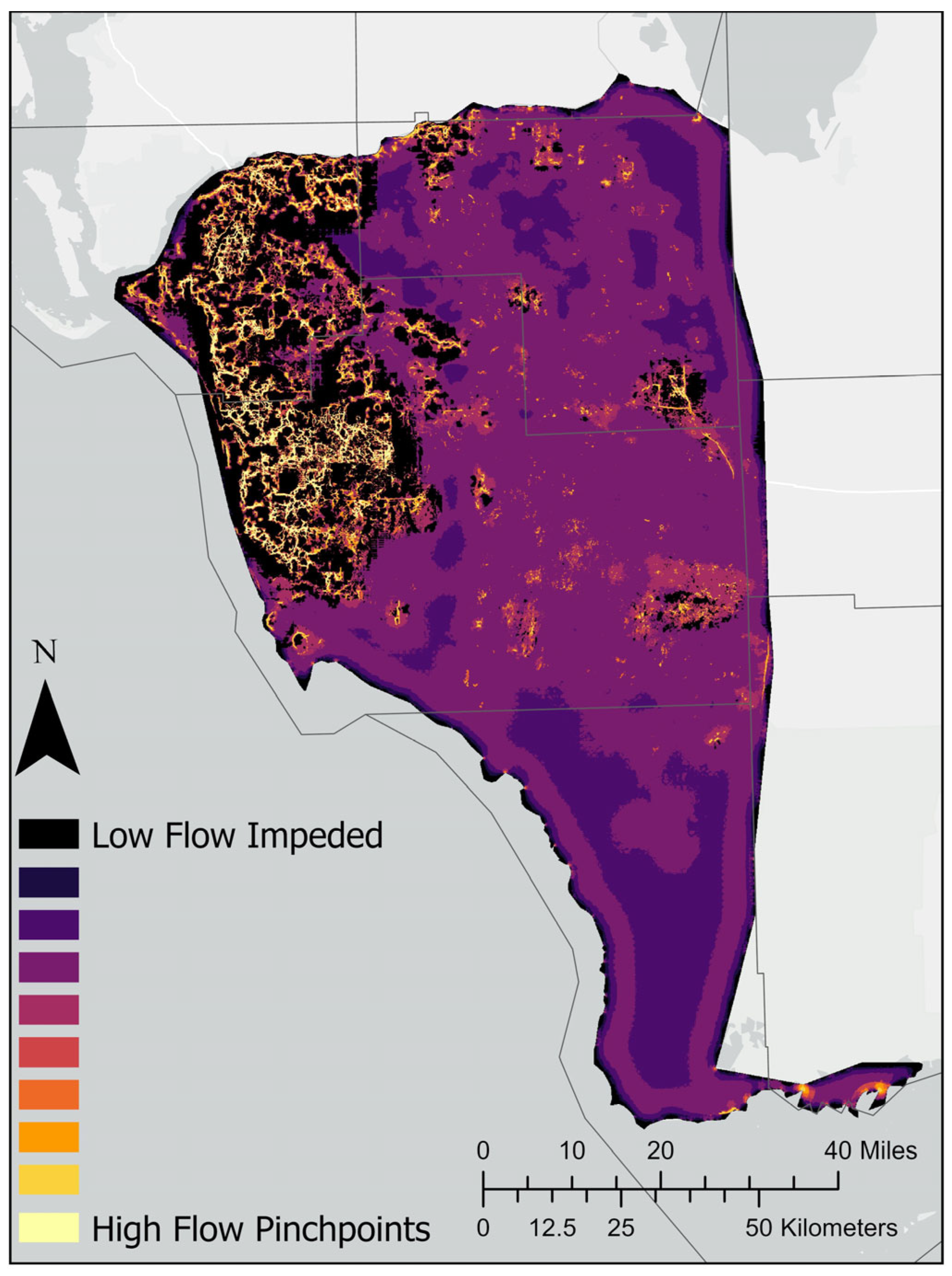
37]. The primary outputs from the analysis included (1) cumulative current flow, which quantifies the total modeled current across all moving window iterations, representing the relative likelihood of movement across each pixel in the landscape; and (2) normalized current flow, defined as the ratio of observed current flow to potential current under null resistance conditions. Normalized values offer a standardized measure of relative connectivity strength, enabling spatial comparison across gradients of development intensity and habitat suitability. The normalized flow values were categorized into four flow types based on standard deviation from the mean: impeded (<−0.5 SD), diffuse (−0.5 to 1 SD), channelized (1 to 2 SD), and intensified (>2.0 SD) [
38]. The four flow types were classified 1–4, respectively.
To generate a synthesized metric capturing both the magnitude and reliability of modeled ecological connectivity, we computed a composite index by combining two core Omniscape outputs: cumulative current flow and normalized current flow. Prior to integration, each raster surface was min-max rescaled to a continuous range of 0 to 1 to standardize their dynamic ranges. The rescaled layers were then multiplied on a pixel-wise basis to produce a new raster representing a Connectivity Intensity Index. This composite metric retains the directional probability of movement from cumulative current flow while incorporating the relative efficiency of that movement under null-resistance conditions from normalized current flow. The resulting surface enhances the spatial interpretation of landscape connectivity by simultaneously weighting flow intensity and flow quality, thereby identifying areas of both high movement potential and functional permeability. This index is particularly useful for isolating priority zones where connectivity restoration or protection efforts may yield the greatest ecological return under multi-scale GI planning.
2.3. Regional-Scale Modeling
Outputs from Omniscape were analyzed using ArcGIS Pro 3.2 to assess connectivity conditions across public and private lands, transportation corridors, and conservation areas. Spatial overlays were performed using layers representing conservation lands, transportation infrastructure, county boundaries, and land cover classifications. The aim was to characterize the spatial distribution of movement patterns, including areas with low resistance (diffuse flow) and potential movement constraints (channelized or intensified flow).
2.4. Municipal-Scale Modeling
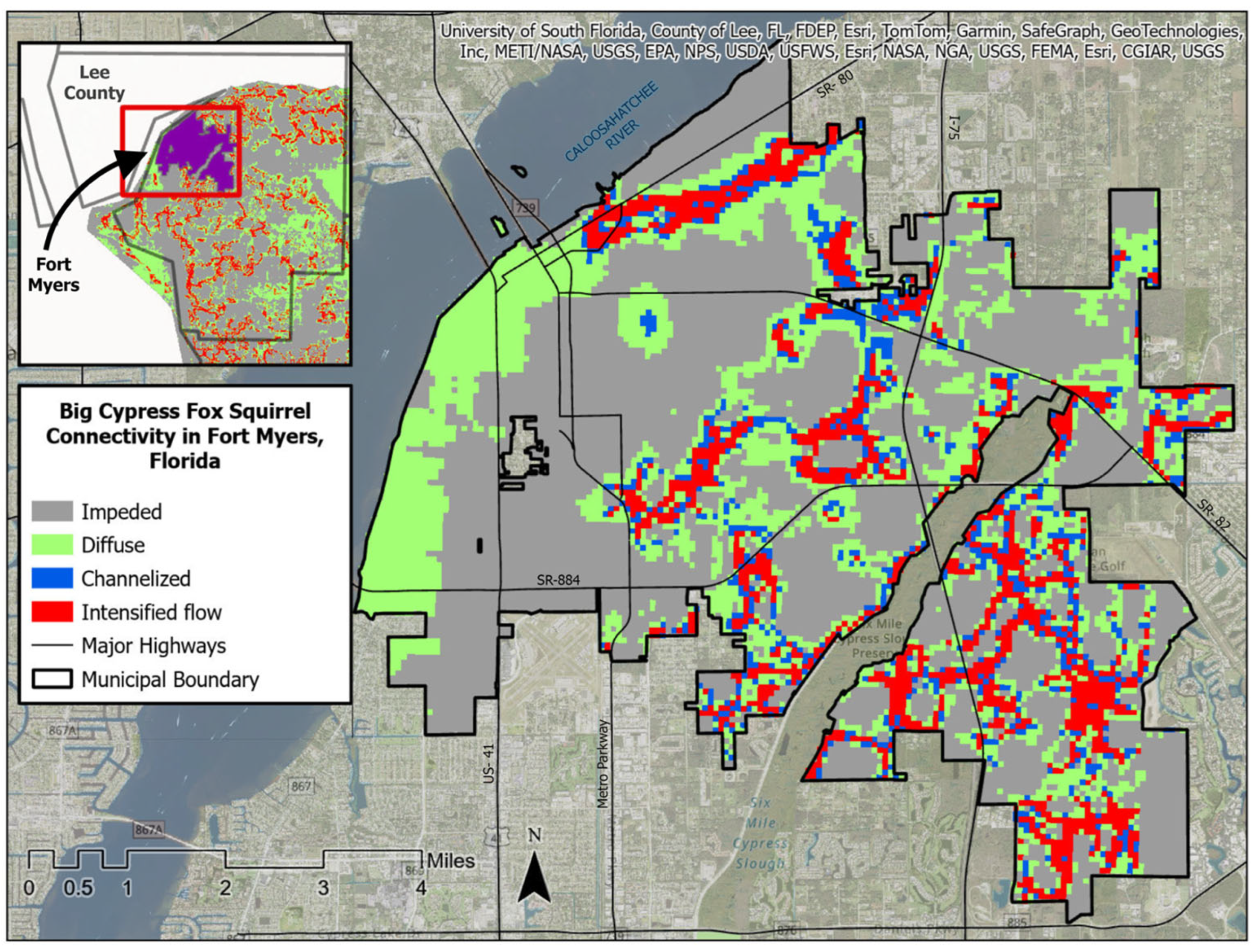
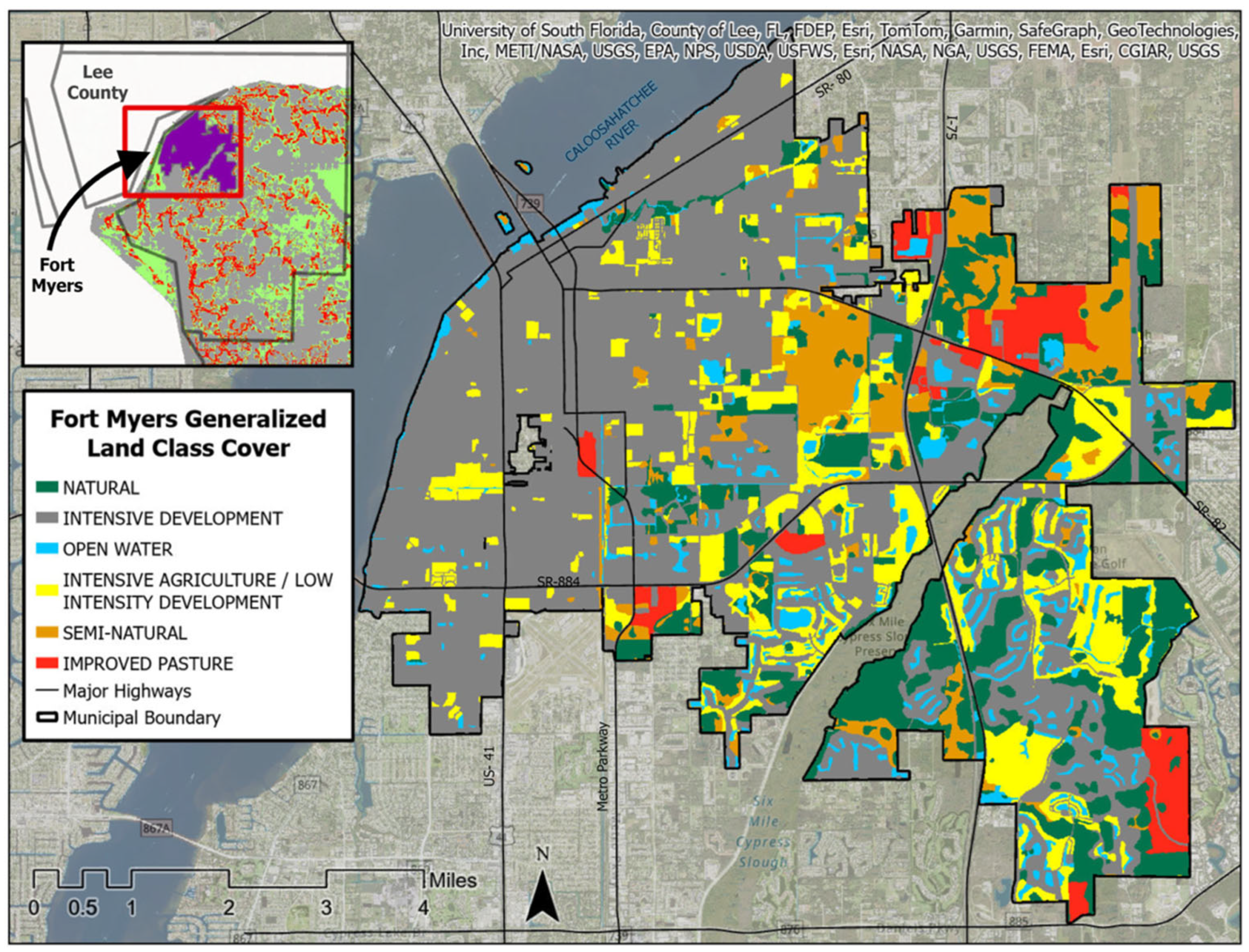
The regional Omniscape output was clipped to the Fort Myers municipal boundary for finer-scale analysis. Land cover data were derived from the CLC v3.4 dataset [
35] and reclassified into general categories: high-intensity development, low-intensity development/agriculture, semi-natural, improved pasture, and natural cover. The analysis was structured to support identification of urban land cover conditions associated with varying degrees of modeled connectivity. The relationship between connectivity and land cover was further used to inform GI siting and prioritization strategies in the subsequent design intervention. Secondary supporting map attributes such as the municipal boundary and major highways were obtained from the Florida Geographic Data Library. These maps provide a comparative analysis between bottleneck pinch-points and land class coverage, revealing correlations to characteristics of development on the movement patterns of BCFS. The two data sets were selected due to perceived land use effects on impeding or facilitating flow, allowing for the proper analysis of landscape components necessitating GI improvement.
2.5. Green Infrastructure Transect Design
Following spatial modeling, a GI transect design framework was developed to propose zone-specific conservation strategies that align with modeled pinch-points and corridors, following the model developed by [
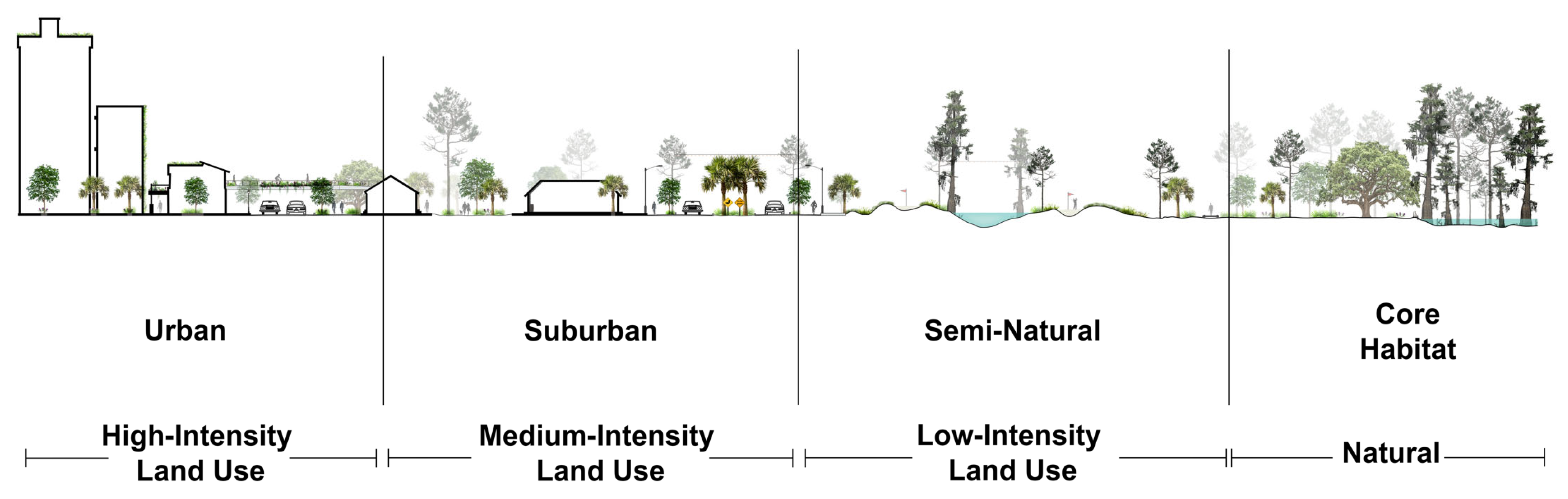
25]. This included a range of zones from urban (T6–T4) to suburban (T3), semi-natural (T2), and natural (T1) zones. This typology informed a visual and spatial strategy for GI interventions appropriate to each land-use context. GI typologies were illustrated in cross-sectional design diagrams created using AutoCAD 2025 and Adobe Photoshop version 26.0.
Transect design scenarios were informed by land use and zoning data, landscape permeability, and documented BCFS habitat preferences. For each transect zone, GI interventions were selected based on their potential to reduce resistance to movement and enhance habitat connectivity. Strategies include smart growth and land use plans, road crossing structures, retrofitting of managed landscapes (e.g., golf courses), native vegetation restoration, and invasive species control.
The transect framework offers a structured method to apply conservation design principles within urban and peri-urban environments and is intended to be replicable across other municipalities intersecting BCFS habitat.
2.6. Site-Specific Design Application
To showcase real world application, the transect typologies were applied to a subsite selected within Fort Myers, Florida. Site selection was based on two criteria: (1) a substantial portion of the project area lies within identified BCFS pinch-points, and (2) the potential ability to implement a variety of GI strategies across the urban gradient, spanning a wide-range of development intensities.
A practical initial step was establishing an inventory of potential spaces to navigate a spatial network that guides future preservation, restoration, and management efforts. Since BCFS are often observed in less-intensive, semi-natural open spaces, enhancing connectivity between these areas into higher-quality habitats can reduce risks associated with population isolation. These open spaces, including vacant or underutilized lots, can serve as important refuge and stepping stone sites and offer parcels of land easily feasible for habitat regeneration [
39]. This is reinforced by the local role of surrounding golf courses, which act as transitional fabric maintaining landscape permeability. They are recognized for supporting BCFS persistence by mitigating fragmentation and enhancing connectivity through preserved vegetation cover and potential connection of natural areas [
40,
41].
Using 2019 orthomosaic aerial imagery as a background reference, a master plan was developed and visualized through aerial and exploded axonometric views in Adobe Photoshop version 26.0. The plan identifies specific land use stratgies to support species conservation and guide future sustainable urban development interventions within the subsite. This plan was developed as part of a student project within a fairly limited amount of time, so would require further study to groundtruth and refine the proposed interventions. However, it does demonstrate a specific application of the GI transect framework to a particular location. The primary importance for this article is showing that process, in a way that might be replicated by other communities and locations.
4. Green Infrastructure Transect Design Intervention
To operationalize the findings from the connectivity modeling and address identified pinch-points along the urban-periurban-natural gradient, a transect-based green infrastructure (GI) design framework was developed (
Figure 5). This framework applies a spatially stratified approach that segments the landscape into four primary zones based on land use intensity and ecological integrity: urban (corresponding to transect zones T6–T4), suburban (T3), semi-natural (T2), and core natural habitat (T1). Each zone presents distinct constraints and opportunities for implementing GI elements to enhance functional connectivity for the BCFS.
4.1. Urban Zone (T4)
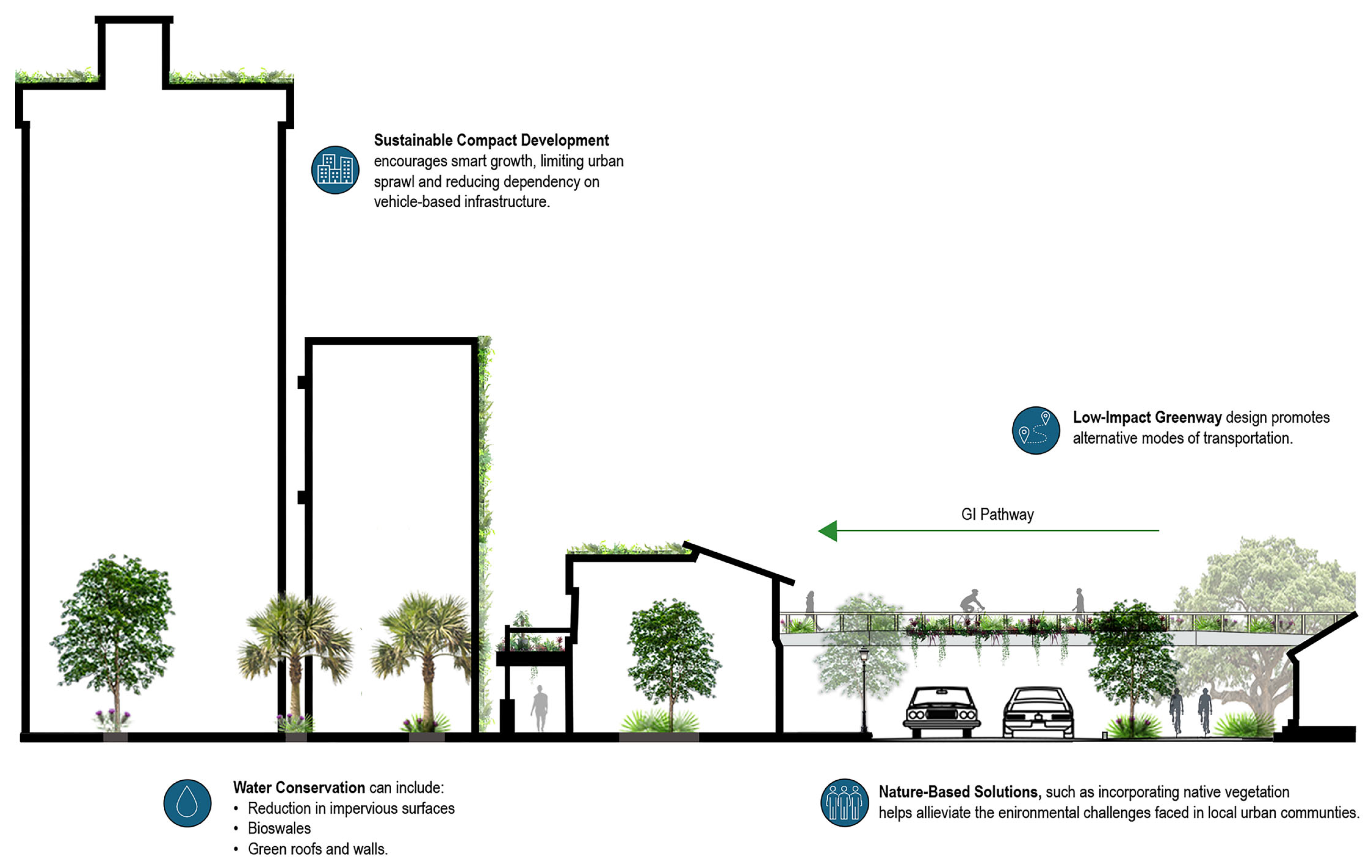
The urban zone (
Figure 6) is characterized by high-density built environments with extensive impervious surfaces and a high degree of anthropogenic disturbance. These conditions significantly reduce landscape permeability for BCFS. GI strategies in this zone prioritize retrofitting existing infrastructure to restore ecological function and reduce urban stressors. Key interventions include the integration of vertical and horizontal GI elements such as green roofs, living walls, bioswales, rain gardens, and permeable pavement. These features serve multifunctional roles such as supporting vegetation structure, facilitating stormwater management, mitigating urban heat island effect, providing microhabitats, and supplementing food availability important for BCFS diets. Urban zone intervention and management strategies are likely not to have the largest effect on BCFS sustainability in the urban to rural transect, but such strategies can play a supportive role that may significantly impact patch and corridor function.
In parallel, the application of smart growth principles is emphasized as a structural strategy to limit urban sprawl, promote higher-density development, and preserve adjacent ecological networks. These planning tools work synergistically with GI features to establish a more resilient urban form, reduce edge effects, and promote passive connectivity through greenspace integration. Compact development patterns including cluster subdivision design supported by mixed-use zoning and connected open space corridors are critical to reducing fragmentation and facilitating urban biodiversity conservation.
4.2. Suburban Zone (T3)
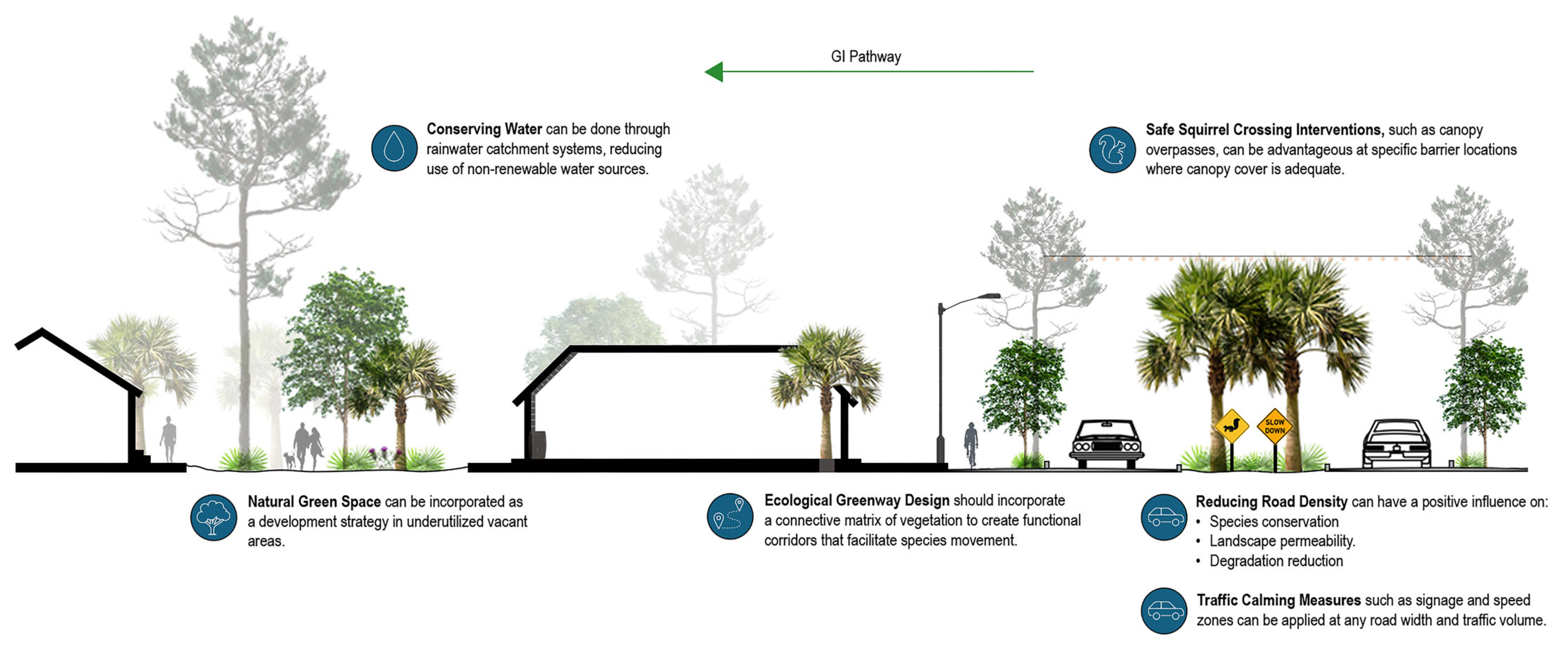
Transitional suburban areas (
Figure 7) represent moderate-intensity development typified by single-use residential parcels interspersed with open or underutilized space. These zones exhibit greater ecological restoration potential compared to urban cores. Vacant lots, remnant woodlands, and other low-intensity parcels offer opportunities for habitat enhancement and structural GI interventions. Residential development is a major driver of habitat fragmentation; therefore, conservation-based neighborhood planning for private properties offers a strategic solution to conventional sprawl. Proposed strategies include reforestation, native plantings, and daylighting or restoring riparian buffers to establish linear corridors suitable for species movement.
Of particular importance is the modification of transportation infrastructure. Roads often act as barriers to species movement, requiring targeted design interventions such as canopy bridges, wildlife underpasses, or multi-use overpasses. Site-specific assessments are recommended to determine the most suitable crossing types, as factors such as road width, traffic volume, and landscape context can significantly influence design decisions. Measures such as strategically placed fencing can help guide wildlife toward safe passages, while signage and reduced speed zones can support traffic calming [
42]. Using permeable, natural materials supports efforts to mitigate human impacts and avoid bisecting priority habitats, particularly in areas with sheet water flow, therefore minimizing barriers to functional connectivity [
28]. Interventions aim to reduce mortality and help facilitate interpatch dispersal of BCFS across an increasingly fragmented suburban matrix.
4.3. Semi-Natural Zone (T2)
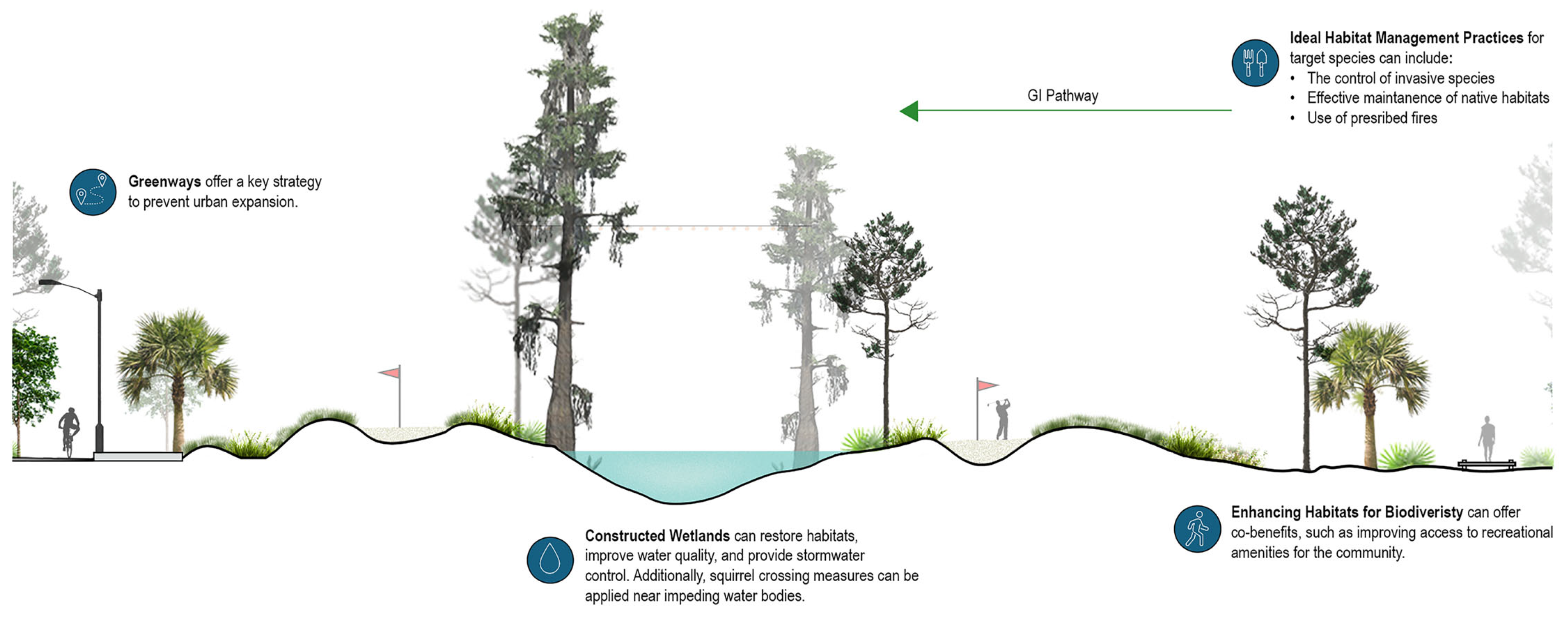
The semi-natural zone (
Figure 8) includes areas that maintain a degree of ecological integrity despite active human use. This includes managed open spaces such as golf courses, large recreational parks, pastures, or agricultural fallow lands. Although these areas are not fully natural, they serve as critical transitional habitats and buffers between the built environment and core conservation areas.
GI strategies in this zone are focused on ecological retrofitting and functional restoration. A key recommendation is the establishment of constructed wetlands in locations where hydrologically isolated or artificially managed water features currently exist. Such wetlands can be engineered to mimic natural hydroperiods, support native vegetation (e.g., cypress communities), and provide breeding and foraging habitat for wetland-dependent species, including BCFS, especially if they include buffers and/or patches of adjacent mesic community natural vegetation. Moreover, the reduction in agrochemical inputs and the active management of invasive species (e.g., Bischofia (Bischofia javanica), Brazilian pepper (Schinus terebinthifolia)) are essential to restoring ecological function.
This zone also presents opportunities for targeted enhancements of trophic resources. While exotic plant species such as Queen palm (
Syagrus romanzoffiana) and Bottlebrush (
Melaleuca spp.) may provide short-term dietary supplements [
8], long-term management must prioritize native plant communities to avoid reinforcing ecological traps. More specifically, invasive plants, including Melaleuca (
Melaleuca quinquenervia) and Brazilian pepper (
Schinus terebinthifolia), can create denser habitats in and near fire-adapted, open uplands that can negatively impact BCFS habitat quality and security. Adaptive management involving local ecological expertise is necessary to balance habitat enhancement and invasive species risk.
4.4. Core Natural Habitat Zone (T1)
The core habitat zone (
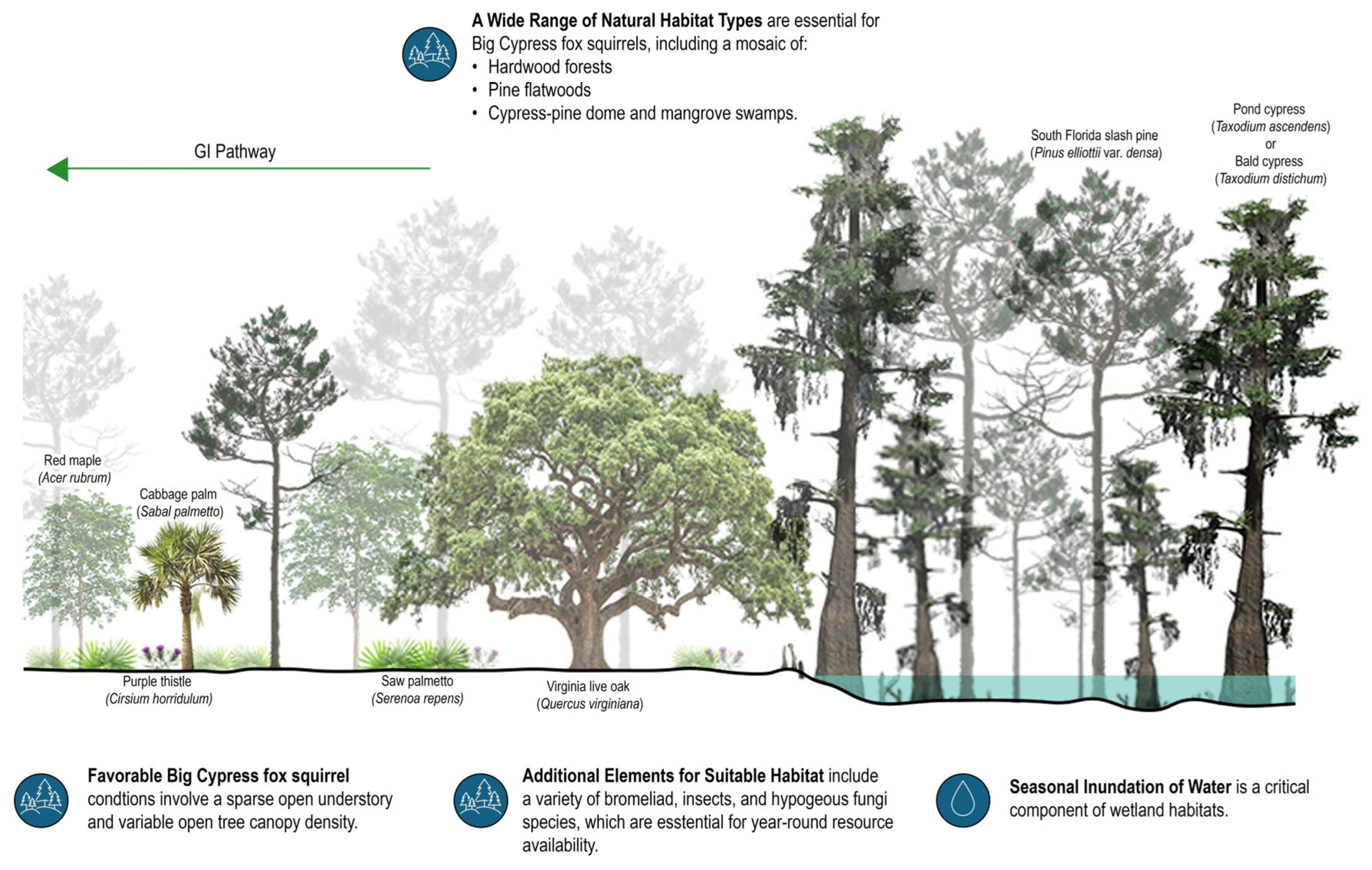
Figure 9) encompasses formally protected conservation lands with minimal anthropogenic disturbance. These areas—such as Corkscrew Swamp and Big Cypress Swamp—form the ecological backbone for BCFS persistence and metapopulation dynamics. GI interventions in this zone are aimed at preserving ecological integrity and enhancing habitat quality rather than structural modification.
Priority actions include the use of prescribed fire to maintain open-canopy pine and cypress systems, hydrological restoration to support natural wetland regimes, and continued removal of invasive flora and fauna. The vegetative communities in these zones—comprising species such as South Florida slash pine (Pinus elliottii var. densa), Bald cypress (Taxodium distichum), Pond cypress (Taxodium ascendens), Saw palmetto (Serenoa repens), and Cabbage palm (Sabal palmetto)—reflect the native mosaic habitats required for BCFS roosting, foraging, and breeding.
4.5. Conceptual Master Plan Within a Targeted Subsite
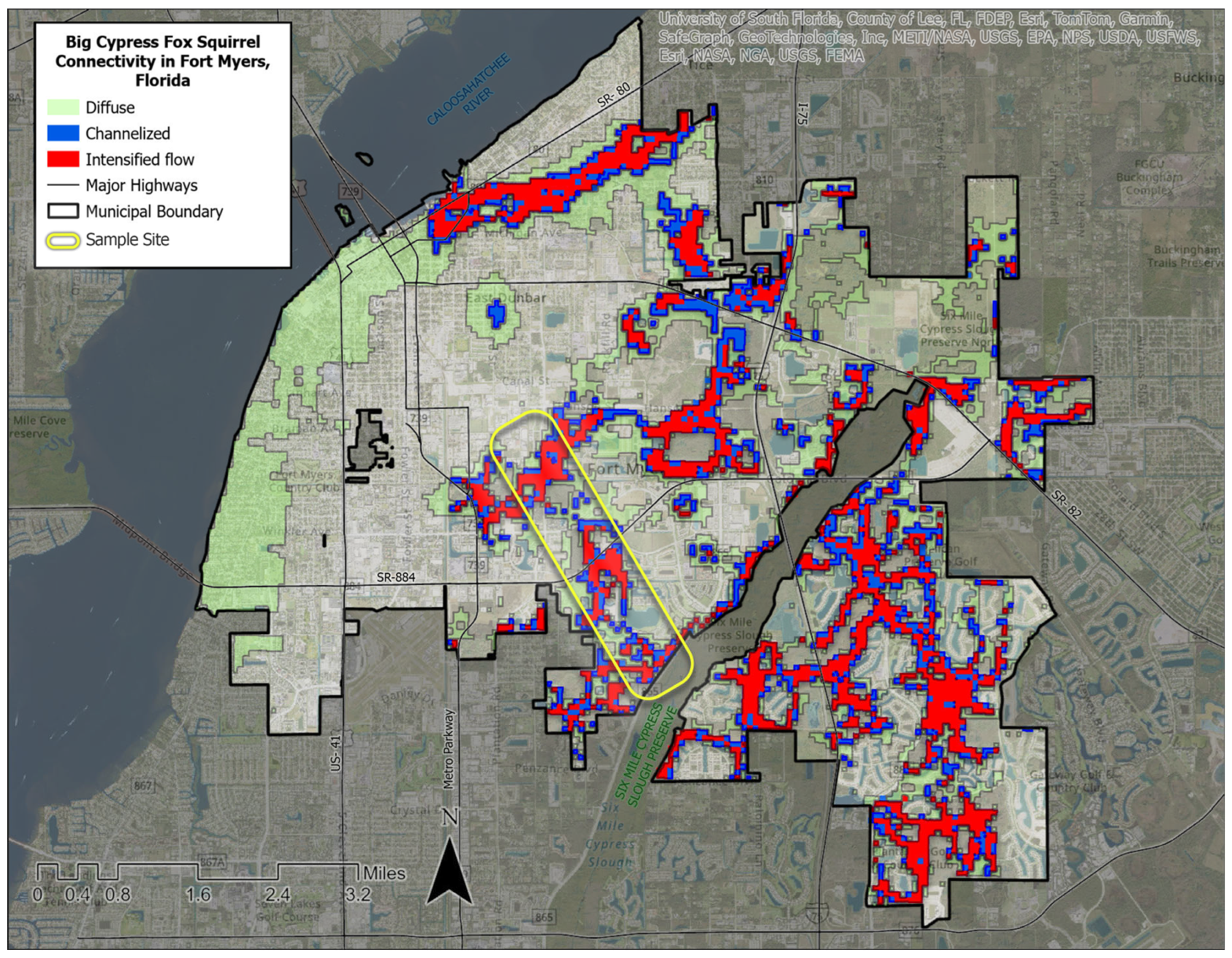
After reviewing the generalized CLC map, Omniscape results, and Orthomosaic imagery, a subsite was selected as a test location for applying the GI transect (
Figure 10). The subsite was chosen to include a range of land uses and intensities within the City of Fort Myers city limits, reflective of the transect zones described earlier. The project area’s proximity to the Six Mile Cypress Slough Preserve made it an ideal location for evaluating potential urban GI improvements in close proximity to core priority habitat [
4].
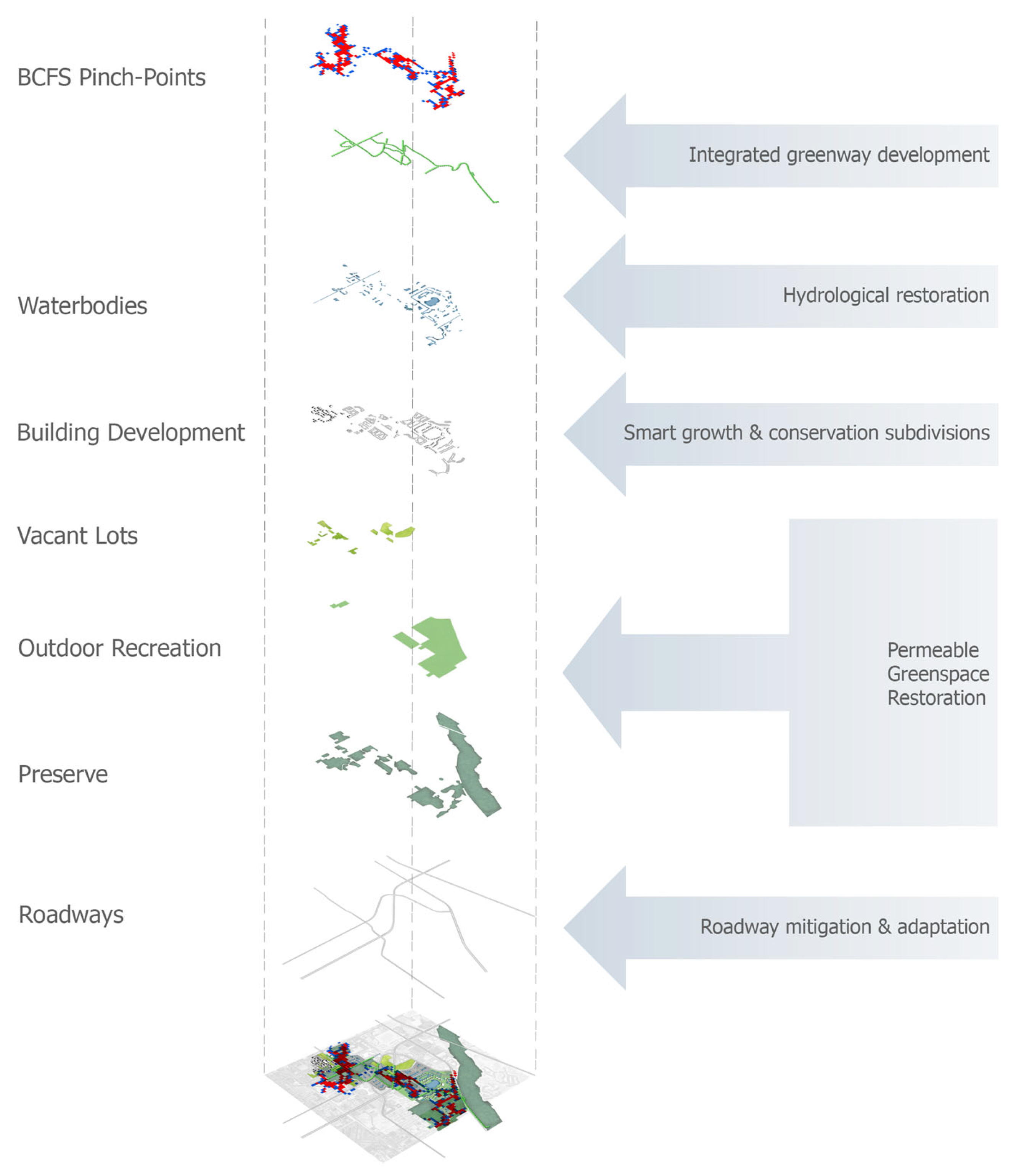
Within this subsite, a series of single-issue layers were developed, including the existing spatial arrangement of roadways, preserved and recreational spaces, future green space potential, building development, and waterbodies (
Figure 11). These were used to better understand the existing site conditions and evaluate where and how GI transect-based network strategies should be applied, including within BCFS channelized and intensified flow pathways. For example, existing green spaces, open areas, and vacant lots were used to identify core habitat patches and opportunities for linear connective corridors. In addition, road networks were examined to determine areas of impedance to ecological flow.
Based on these analyses, strategies from the transect-based framework were used to identify specific localized, multi-functional design strategies across the spectrum of land uses, from high to low development intensities, and including industrial, commercial, residential, and recreational uses. For instance, an integrated multi-use greenway is proposed as a linkage across the urban gradient, reducing vehicular and structural barriers and providing more continuous connectivity between green patches for both wildlife and human recreational needs.
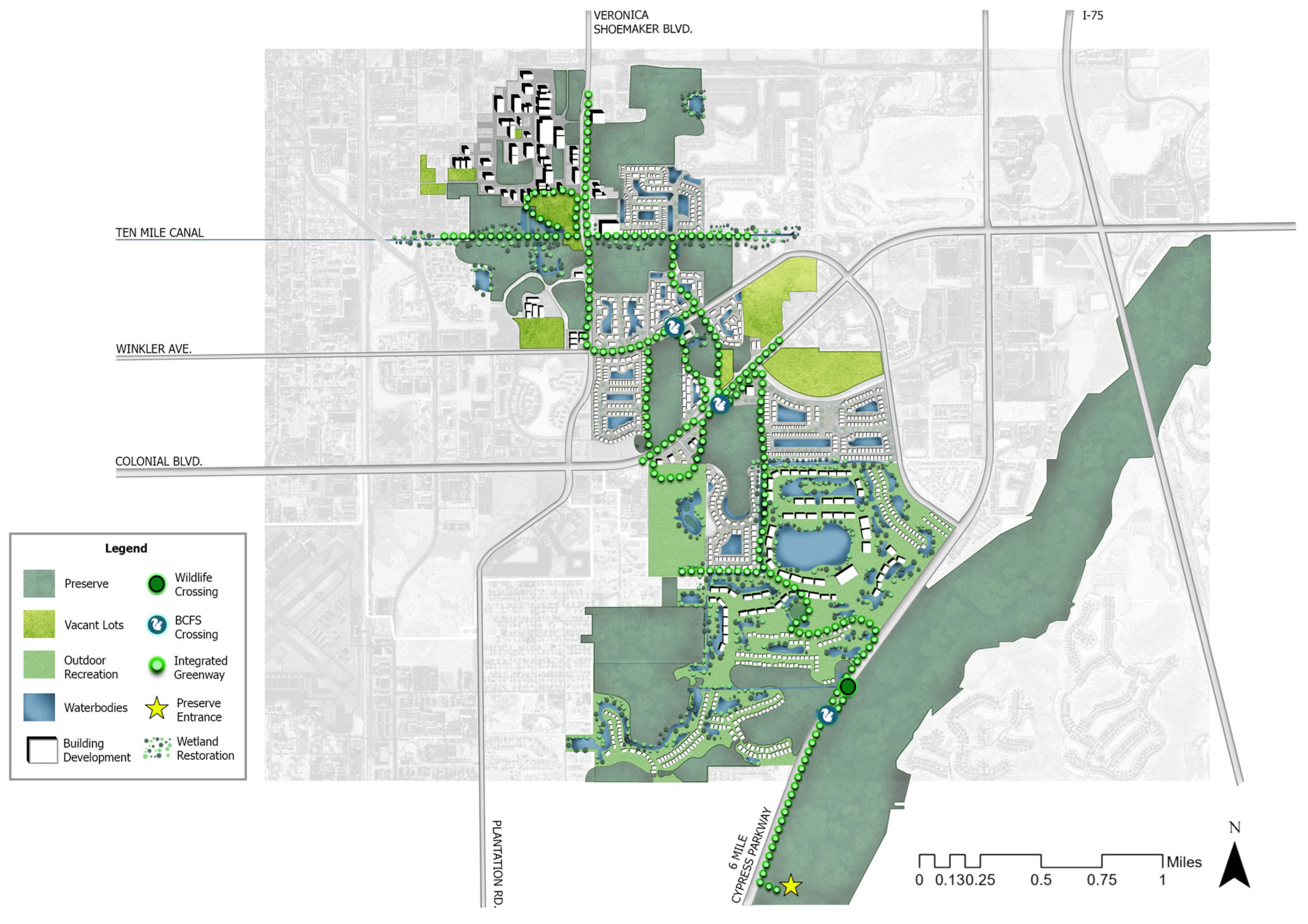
This process drew attention to areas needed for restoration, retention, adaptation, and infrastructure upgrades, such as restoration of historic natural flow patterns and opportunities for wetland restoration, which could be examined further as part of a more detailed design and analysis process. The final GI master plan developed is shown in
Figure 12.
Key outcomes included a proposed GI network as the key structural mechanism for (1) mitigating habitat fragmentation and connecting habitat patches within the subsite and across multiple land uses; (2) providing a corridor offering co-benefits for both human and wildlife movement; and (3) increasing resilience of ecosystem services to support both biodiversity and population needs. A key design objective was to build upon existing land-use patterns to guide ecology-focused, multifunctional development that supports both habitat and human needs, a critical consideration for the BCFS.
Careful management of the GI network, including both private and public parcels, is particularly important when it is co-located with the greenway and connected to priority habitat areas. This approach maximizes the network’s function as a series of critical stepping stones that improve dispersal success [
39,
43].
5. Discussion
This study demonstrates the utility of landscape connectivity modeling as a spatially explicit approach for informing conservation-oriented urban planning. Using the Big Cypress fox squirrel (BCFS) as a focal species, we employed Omniscape to characterize ecological flow across a heterogeneous matrix of land cover and development intensities. The resulting connectivity surfaces revealed spatially clustered pinch-points, particularly in the western periphery of southwest Florida, corresponding to highly urbanized nodes within and surrounding Fort Myers. These results indicate that landscape permeability is severely compromised near intensifying development zones, constraining the species’ capacity for dispersal and long-term persistence.
Pinch points located near areas of total impedance were observed to potentially function as population sinks. In some cases, pinch points occurred within designated conservation areas, suggesting the presence of edge effects or internal fragmentation within protected lands. Small habitat patches exhibiting high resistance within semi-natural landscapes may indicate ecological degradation or insufficient patch size to support functional movement. In highly developed areas characterized by diffuse flow, the proximity of water features suggests a potential role for blue–green corridors in maintaining movement potential. Overall, these findings indicate that urban connectivity is shaped by a complex interaction among land-use intensity, patch configuration, and landscape permeability. Areas exhibiting intensified and channelized flow therefore represent priority locations for targeted conservation or infrastructure interventions.
The dual-layer analysis incorporating cumulative and normalized current flow into a Connectivity Intensity Index allowed us to assess both total and relative movement potential across the study area. This integrative perspective provides insight into the spatial dynamics of structural resistance, elucidating where ecological function is most at risk. By mapping relative flow intensities, this study enables practitioners to visually identify critical corridors and bottlenecks requiring intervention.
While connectivity modeling is a valuable tool for evaluating multi-dimensional landscape parameters, it fails to account for measurable demographic indicators, such as fecundity [
4,
44]. Incorporating these biological metrics, along with projections of human interference and climate change, would enhance interpretation of connectivity results and enable more responsive planning for shifting environmental conditions [
45].
The data underlying the habitat suitability model included verified BCFS occurrence records, a sample size sufficient for landscape-scale modeling but limited in its capacity to capture local variation or intra-annual movement patterns. Enhanced spatial and temporal resolution of occurrence data would improve confidence in resistance calibration and movement simulation. Consideration should also be given to the sensitivity of BCFS to abiotic stressors such as hydrologic change, sea-level rise, and saltwater intrusion [
34,
46]. While effective as a high-level planning tool, future applications of this model would benefit from complementary field-based data to validate modeled pathways and refine estimates of resistance in finer-scale contexts.
While Omniscape is a powerful tool for modeling connectivity, potential limitations remain apparent. Selecting BCFS as a focal species may help reduce the need to simulate multiple species, acting as a synergetic ‘umbrella’ that targets multiple species dispersal patterns [
47]. Further investigations into GI planning would benefit from integrating species agnostic or multi-species connectivity models that group species with convergent requirements, therefore improving overall effectiveness of future planning and management [
21].
5.1. The Role of Green Infrastructure in Urban Conservation Planning
Urban expansion in southwest Florida poses significant threats to both focal species like BCFS and the broader landscape and ecological network they inhabit. While traditional conservation strategies have emphasized the preservation of core habitat and large protected areas, urban environments must now also be recognized as integral components of structural connectivity for some species. A strategic GI framework offers a mechanism for enhancing ecological functions within the built environment and reconnecting fragmented habitat patches.
This study introduces a transect-based GI planning approach that operationalizes connectivity modeling outputs through spatial design and implementation. By targeting high-flow and bottleneck zones identified by Omniscape, we propose a gradient-based intervention model that scales GI strategies from dense urban cores to peri-urban and natural habitat zones. This integrative framework supports conservation outcomes by coordinating strategies across multiple development typologies.
A foundational step in this process is the spatial identification of low-intensity land uses and semi-natural open spaces—such as vacant lots, underutilized parcels, pastures, or golf courses—that serve as potential habitat patches within the landscape. These areas, while often overlooked in conventional planning in urban areas for conservation value, provide feasible sites for ecological restoration and or habitat improvement. For BCFS, such spaces offer refuge, stepping stones, and potential breeding grounds that reduce risks of population isolation and genetic bottlenecking.
A combination of urban habitat patches and corridors can create an uninterrupted network from the urban center to natural or semi-natural landscapes, with native plants representative of the mosaic of the landscape (in this case southwest Florida). In this study, a heterogeneous gradient of variable habitats and diverse vegetation strata addresses the critical role of native trees, shrubs, and groundcover in providing essential habitat functions throughout the life cycle of the BCFS [
6,
48].
Equally critical is the restoration of hydrologic regimes that underpin the ecological viability of these landscapes. Altered surface and groundwater dynamics—caused by urban infrastructure, increased impervious cover, and channelization [
49,
50,
51,
52]—have degraded wetland habitats [
6,
51], especially those essential for BCFS such as cypress dome swamps [
53]. Reestablishing hydrologic function through GI (e.g., bioswales, constructed wetlands, permeable pavements, and green roofs) supports water retention, stormwater filtration, and habitat quality, resulting in a healthier and more resilient landscape [
54,
55,
56].
Managed landscapes such as golf courses and stormwater retention basins present novel opportunities for ecological retrofitting. These spaces can be reconfigured to serve dual functions as both recreational and conservation areas, especially when combined with native vegetative communities that provide structural and functional habitat for BCFS or other taxa [
40,
57,
58]. Similarly, re-naturalizing artificial canals through riparian restoration and bank stabilization can restore aquatic corridors that align with species movement needs [
54,
55,
56].
Transportation infrastructure continues to be a major source of fragmentation and wildlife mortality [
59]. Incorporating mitigation structures—such as canopy bridges [
60,
61] and above- or below-grade wildlife crossings—alongside traffic calming measures, signage, and green street design [
62] can reduce vehicle collisions and promote safe passage for wildlife [
42,
63]. These strategies must be grounded in empirical evaluations to determine effectiveness and ensure that connectivity enhancements do not inadvertently create ecological traps. Incorporating green street design helps soften the ecological footprint of roadways, offering co-benefits for both wildlife and human community well-being [
56].
Some interventions, such as maintaining corridor connectivity, planting native tree species, and roadway mitigation, are directly informed by BCFS ecology and are expected to enhance species movement and habitat use. Other GI strategies, including stormwater management features like bioswales and permeable paving, primarily provide broader benefits for overall landscape function but are not expected to directly influence BCFS movement.
The success of GI implementation depends heavily on coordinated governance and stakeholder participation. Multi-scalar governance mechanisms, including federal, state, and municipal actors, must be engaged in aligning land-use planning with ecological priorities [
4,
64].
Incentive-based tools such as conservation easements, transfer of development rights, and payment for ecosystem service programs can be used to encourage private landholder participation in urban and suburban habitat conservation. Although potentially more complicated, costly, or politically challenging, rezoning and land-use regulation, or fee simple acquisition may provide additional options for specific circumstances [
65,
66].
GI planning also offers considerable co-benefits for human communities. Improved recreational opportunities, urban heat mitigation, and stormwater management are among the ecosystem services linked to GI investments. Involving the public through participatory planning processes and educational outreach may increase local stewardship and promote better acceptance of native wildlife and habitat needs [
53].
Despite its benefits, GI implementation presents a number of constraints. Practitioners may prioritize esthetic or infrastructural objectives over ecological function, and long-term biodiversity outcomes remain insufficiently documented in many urban contexts [
44,
67,
68]. This underscores the need for adaptive management, robust monitoring, and integrative design processes that balance multiple ecological and social dimensions.
The Florida Fish and Wildlife Conservation Commission’s Imperiled Species Management Plan and Species Action Plan for BCFS both advocate for integrative, landscape-scale conservation approaches. By extending this vision into urban design practice, we present a case for the viability of species-specific GI networks as a scalable, transferrable model for resilient urban planning.
Collectively, the findings of this study argue a multi-dimensional, transdisciplinary approach to urban ecological planning. The design of an urban GI network must be based on a sound planning and design process that includes the best available data and site information, site analysis to identify opportunities and constraints, and a holistic approach that addresses context-specific needs. The framework outlined herein offers one pathway for implementing such a vision, linking spatial modeling with actionable and well accepted transect-based planning tools. This integrated strategy not only offers a mechanism to support species conservation but also as a method to strengthen the resilience and livability of cities in the face of accelerating environmental change.
5.2. Challenges
Most landscape connectivity modeling has traditionally been applied at broader regional scales, and accurately assessing the functionality of connective linkages remains challenging due to dynamic factors such as species behavior and human activity. For instance, connectivity features that facilitate movement for one species may create obstructions or risks for others, complicating efforts to standardize these models for broader application [
17,
20,
39,
69].
Beyond methodological constraints, increasing connectivity in fragmented landscapes—particularly important for populated municipal areas like Fort Myers—may inadvertently introduce ecological risks such as the transmission of diseases, spread of undesirable invasive species, and heightened human–wildlife conflict [
17,
69,
70]. These factors present legitimate concerns for maintaining ecological connectivity, presenting a critical component to consider when targeting vulnerable species such as the BCFS.
The benefits for facilitating species movement are broadly recognized to outweigh potential hazards, as enhanced connectivity can improve species viability and the provision of essential ecosystem services [
17,
39,
71]. Conservation scientists and ecologists need to be involved in design and planning prior to development, as applying tools such as connectivity assessments offers significant potential to alleviate social–ecological pressures caused by intensive land use and fragmentation [
17,
28,
39,
72]. Considering the unique challenges posed by built environments, incorporating connectivity tools into urban planning can play a vital role in the conservation and resilience of vulnerable species such as the BCFS, serving as a crucial strategy to address complex socio-ecological issues.





 ,
,