


Abstract
This study provides a comprehensive and refined framework for the micropropagation of the critically endangered Greek endemic Silene conglomeratica. Using a limited seed stock, a reliable in vitro propagation protocol was developed, supporting both ex situ conservation and potential commercial applications in floriculture and landscape architecture. Nodal explants excised from aseptic seedlings, established on half-strength Murashige and Skoog (MS) medium, were successfully used for culture initiation. Supplementation with 1.0 mg L−1 meta-topolin (mT) and 0.2 mg L−1 1-naphthaleneacetic acid (NAA) promoted shoot proliferation. Subsequent subculturing on half-strength Rugini Olive Medium (OM/2) supplemented with 0.5 mg L−1 2-isopentenyladenine (2iP) resulted in high multiplication rates and a high frequency of spontaneous rooting. Rooting initiation was further optimized using OM/2 supplemented with 0.5 mg L−1 indole-3-butyric acid (IBA). The high acclimatization percentage (80%) confirms the feasibility of this protocol for ex situ conservation and highlights its applicability for nursery production and specialized landscape use. Overall, this study contributes an efficient and scalable propagation strategy that supports both the conservation and sustainable utilization of this valuable endemic species. Future work should focus on refining these protocols through more targeted testing of concentrations and alternative combinations of growth regulators and nutrient compositions.
1. Introduction
Silene L. is one of the largest and taxonomically most complex genera of Caryophyllaceae, comprising more than 700 species distributed primarily across the Northern Hemisphere, with a major center of diversity in the Mediterranean Basin [1]. In Greece, 121 species are currently recorded, 39 of which (33%) are endemic, reflecting the country’s high floristic richness and biogeographic complexity [2,3]. Members of the genus display remarkable morphological and ecological diversity, including annual, biennial, or perennial herbs, occasionally suffruticose or cushion-forming, and occupy habitats as varied as alpine meadows, rocky cliffs, screes, dry grasslands, and coastal sand-dunes. However, Silene taxonomy has long been considered problematic due to hybridization, polyploidy, and convergent morphological traits [1]. This difficulty is further complicated by the repeated evolution of hermaphroditic, gynodioecious and dioecious reproductive systems across independent lineages, which obscures species boundaries and intrageneric limits [4,5]. Classical and modern studies, notably those by Greuter [6] and Oxelman et al. [7], have substantially refined its classification, combining morphology with molecular data to define infrageneric groupings. Of particular relevance is Silene sect. Saxifragoideae, which includes 15 to 35 species depending on taxonomic treatment and has its highest species diversity in the Balkan Peninsula [8]. The entire S. sect. Saxifragoideae and especially the so-called S. saxifraga group exemplify the evolutionary radiations of Mediterranean chasmophytes, shaped by complex geological and climatic histories that promoted high rates of speciation and endemism [8,9,10]. In Greece, sparsely vegetated cliffs and screes host a specialized chasmophytic flora; within these habitats, Silene ranks among the most taxon-rich genera [11].
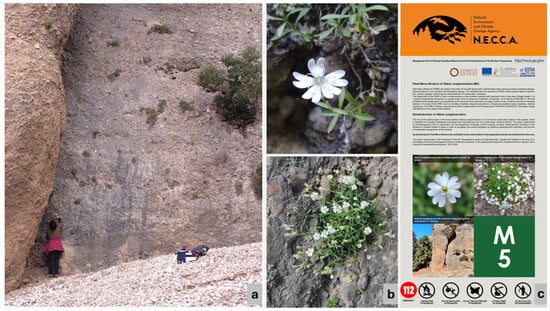
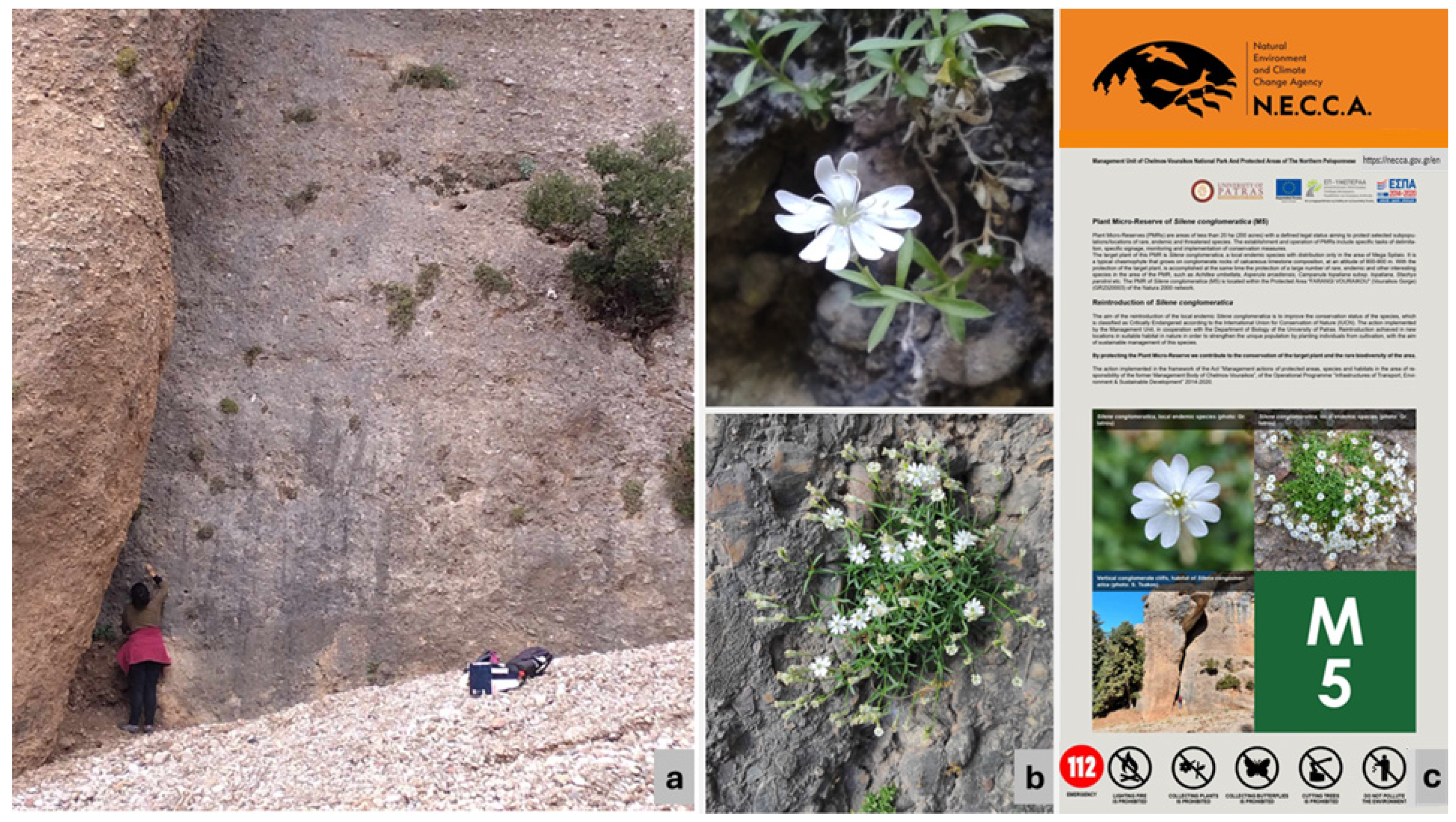
Silene conglomeratica Melzh. belongs to the Silene saxifraga group and, according to Kougioumoutzis et al. [12], is the rarest mountain endemic of Chelmos–Vouraikos National Park (CVNP) in northern Peloponnese and one of the rarest Greek endemics (Figure 1a–c).
Figure 1.
Silene conglomeratica. (a) Habitat; (b) inflorescence; (c) plant micro-reserve sign (https://necca.gov.gr/en/ accessed on 19 September 2025).
This perennial, caespitose chasmophyte grows exclusively on conglomerate cliffs between 800 and 900 m a.s.l., near the Vouraikos Gorge. It produces compact tufts of stems up to 30 cm long, bearing white flowers from June to August [13,14]. The species is confined to two adjacent localities, with its entirely known population numbering fewer than 250 mature individuals. According to Kougioumtzis et al. [15] both the area of occupancy (AOO) and the extent of occurrence (EOO) are very restricted, with the AOO estimated at 4 km2. These conditions have led to its classification as critically endangered [16], with climate change models projecting over 40% habitat loss and a high risk of extinction within the next decades [12,15]. Population persistence is further undermined by habitat instability, cliff erosion, and limited reproductive output.
Like many Greek endemic congeners, S. conglomeratica lacks established propagation and conservation protocols. Its rarity, restricted distribution, and apparent low seed viability highlight the urgency of integrated conservation strategies. While in situ protection is essential, complementary ex situ measures are increasingly necessary. Micropropagation has emerged as a key approach for conserving exceptional species that cannot be secured through conventional seed banking due to recalcitrance or poor seed availability [17,18]. In vitro techniques are essential for mass propagation. They are also important for the long-term preservation of genetic resources. In addition, they enable the production of plants suitable for reintroduction and population augmentation. This makes them indispensable for the conservation of rare and threatened species. The use of aseptic seedlings as starting material can enhance genetic diversity. It requires only a small amount of plant material. It also facilitates the selection of special genotypes with unique adaptive and/or ornamental traits through clonal multiplication [19,20,21,22]. Considering the critically endangered status and extremely restricted distribution of S. conglomeratica, establishing a reliable micropropagation protocol is crucial both to ensure its survival and to evaluate its potential as an ornamental species [23,24]. Seedling-derived explants, in particular, have proven effective in several Greek endemics, including Cerastium candidissimum, Origanum scabrum, Dianthus fruticosus subsp. fruticosus, and Salvia pomifera ssp. pomifera [25,26,27,28]. Consequently, similarly to the aforementioned species, S. conglomeratica could also be introduced as an ornamental ground cover in specialized landscapes such as rock gardens and green roofs, contributing to ex situ viability and sustainability, as its cultivation requires minimal energy and agrochemical inputs.
Chelmos–Vouraikos National Park, where the species occurs, is among Greece’s most significant biodiversity hotspots, recognized as part of the EU Natura 2000 network, comprising five designated sites (SACs GR2320002, GR2320003, GR2320004 and GR2320009, SPA GR2320013), and as a UNESCO Global Geopark since 2015. Its rugged topography, ranging from gorges and karstic springs to peaks exceeding 2000 m, supports exceptional floristic diversity, including five taxa restricted entirely within its boundaries [13,29]. Despite this protection, S. conglomeratica faces substantial threats from climate change, cliff erosion and habitat degradation due to human activities, leading to the continuing decline of its population. For this reason, a plant micro-reserve (PMR) was established for the conservation of the species in 2023 under the responsibility of the Management Unit of Chelmos–Vouraikos National Park and protected areas of the northern Peloponnese that operates under NECCA’s (Natural Environment and Climate Change Agency) Protected Areas Management Directorate (Figure 1c). The ongoing survival of S. conglomeratica within this protected area presupposes the need to combine habitat-level conservation with ex situ conservation measures, the latter built upon innovative propagation and restoration practices appropriate for species of high conservation priority.
Despite its critical conservation status, no micropropagation or ex situ conservation protocol has been reported for S. conglomeratica. The species’ extremely restricted distribution, small population size, and limited seed viability highlight the need for developing dedicated and reliable propagation protocols to support conservation and potential horticultural use. Τhe present study establishes the first efficient and reproducible in vitro propagation protocol for S. conglomeratica using seedling-derived explants. By optimizing culture media and plant growth regulator combinations, successful shoot proliferation, rooting, and acclimatization were achieved. At the same time, beyond safeguarding one of the most threatened cliff-dwelling Greek endemics, the procedure followed can offer a model applicable to other Mediterranean chasmophytes of narrow distribution and high conservation concern.
2. Materials and Methods
2.1. Plant Material and Establishment of In Vitro Cultures
Mature seeds of S. conglomeratica were hand-collected at peak maturity from all known subpopulations, in Mega Spileon (Vouraikos Gorge) in September 2022. Seed collection followed recognized best practices for rare taxa to maximize genetic representation while minimizing impacts on wild recruitment. Removal per maternal plant was kept to ~10% of the ripe seed crop, and at the population level it remained well below ~20% of the estimated annual seed production; where fruiting was sparse, only trace quantities were taken [30,31]. Fieldwork was carried out in consultation with the Management Unit of Chelmos–Vouraikos National Park of the Natural Environment and Climate Change Agency (NECCA) and was consistent with the IUCN SSC Guidelines on the Use of Ex situ Management for Species Conservation [32]. The seeds were stored in paper bags under dark conditions (25 °C, 30% relative humidity) for six months, before the germination trials.
In March 2023, 20 seeds of S. conglomeratica were used as the initial plant material for in vitro germination studies. These seeds were a subsample of the original collection, representative of all maternal lines included within. In order to prevent potential microbial contamination, seeds were subjected to surface sterilization through a two-step disinfection procedure as outlined by Bertsouklis et al. [20]. Sterilized seeds were then transferred into 9 cm Petri dishes containing half-strength Murashige and Skoog (MS/2) medium [33]. Seed germination was carried out under in vitro conditions, and two culture approaches were subsequently established using the resulting seedlings: (a) germinated aseptic seedlings were removed from Petri dishes and transferred to vessels containing MS/2 medium for continued growth; (b) after 30 days of growth, nodal explants excised from the in vitro-derived plantlets were subcultured onto fresh MS/2 medium. This subculture step was repeated once, enabling the successful establishment of S. conglomeratica under controlled in vitro conditions.
2.2. Effect of the Addition of Cytokinins and Auxin
For the multiplication stage, in vitro-grown plantlets of S. conglomeratica were transferred to MS medium to evaluate the effect of different cytokinins on shoot proliferation. Three cytokinins, benzylaminopurine (BA), kinetin (KIN), and isopentenyladenine (2iP), were tested individually at a concentration of 0.5 mg L−1. In addition, the commercial aromatic cytokinin meta-topolin (mT) was evaluated at two concentrations: 0.5 mg L−1 and 1.0 mg L−1. To assess the combined effect of cytokinin and auxin on shoot proliferation, an additional treatment was included with mT at 1.0 mg L−1 supplemented with 0.2 mg L−1 1-naphthaleneacetic acid (NAA). Cultures were maintained under standard in vitro conditions, and a total of four subculture cycles were conducted. All hormones were supplied by Duchefa (Duchefa Biochemie BV, Haarlem, The Netherlands).
2.3. Effect of Explant Origin and Basal Medium on Culture Performance
Nodal explants obtained from in vitro-grown shoots cultured on MS medium supplemented with 1.0 mg L−1 mT, either alone or in combination with 0.2 mg L−1 NAA, were used to evaluate the effect of explant origin and basal medium on culture performance. These explants were transferred to three different basal media: MS, MS/2, and Rugini Olive Medium (OM) [34]. In this stage, the combined effect of the explant’s hormonal preconditioning and the subsequent culture medium composition was assessed to determine optimal conditions for shoot development and proliferation.
2.4. Evaluation of OM and 2iP Effectiveness
Based on the findings above, the effectiveness of OM for shoot multiplication was further evaluated. To enhance propagation efficiency, OM was supplemented with the naturally occurring and cost-effective cytokinin 2iP. Three concentrations of 2iP, 0 (control), 0.5, and 1.0 mg L−1, were tested to assess their effects on shoot proliferation and overall plantlet growth and development.
2.5. In Vitro Rooting and Acclimatization
Micro-shoots, 1.5–2.0 cm long, were obtained from 40-day-old in vitro plantlets. These micro-shoots had been subcultured on media containing various growth regulators during the multiplication stage. The excised micro-shoots were placed on OM/2, either without auxin or supplemented with 0.5 or 1.0 mg L−1 indole-3-butyric acid (IBA; Duchefa Biochemie BV, Haarlem, The Netherlands). Root development was first observed after 10–15 d of culture. Data collection was conducted 15 d later (30 days after culture). Acclimatization was then carried out according to the method of Bertsouklis et al. [35]. After acclimatization, plantlets were transplanted individually into 1.1 L plastic pots filled with a 1:1 (v/v) peat-perlite mixture. Plants were fertilized every 15 days with 4.0 g L−1 of a complete water-soluble fertilizer (Nutrileaf 60, 20-20-20; Miller Chemical and Fertilizer Corp., Hanover, PA, USA). The final survival rate was assessed two months after transplantation.
2.6. In Vitro Culture Conditions and Data Collection
In vitro cultures for establishment, multiplication, and rooting were maintained in Magenta B-cap vessels (100 mL; Sigma-Aldrich, Steinheim, Germany), containing two to four explants per vessel. During the establishment stage, only two explants were placed per vessel to minimize the risk of contamination and ensure the safety of the propagating material. Four explants or plantlets were cultured during the multiplication and rooting stages, respectively. Medium preparation and culture incubation were carried out as described by Bertsouklis et al. [35], under 25 ± 1 °C and a 16 h photoperiod. Data were collected after 40 d of culture and included the shoot formation percentage (%), total number of shoots per explant, number of long shoots (LS; >0.5 cm), shoot length of LS, number of nodes per shoot, rooting percentage (%), number of roots per explant, and root length. The proliferation potential of the cultures was further evaluated using the “multiplication index” (MI), calculated as described by Bertsouklis et al. [35].
MI = [(explant response (%) × mean shoot number × mean shoot length)/(100 × 0.6)]
Acclimatization data were recorded 21 days after transplantation, while plant survival was assessed 30 days after the transplantation of acclimatized plants into pots.
2.7. Statistical Analysis
A completely randomized design was applied, and data were analyzed using one- or two-way analysis of variance (ANOVA). One-way ANOVA was performed to assess the effect of different hormones on shoot formation and culture performance (across four subcultures, with pooled data), as well as to evaluate the effectiveness of IBA concentrations in OM/2 during the rooting stage of micro-shoots. Two-way ANOVA was used for factorial studies (i) to examine the effect of mT (1.0 mg L−1, with or without 0.2 mg L−1 NAA) on multiplication across different media (MS/2, MS, OM), highlighting main effects and interactions and (ii) to evaluate the effect of OM strength (full vs. half) in combination with 2iP concentrations (0, 0.5, and 1.0 mg L−1). Rooting percentages were arcsine square-root-transformed prior to statistical analysis in order to stabilize variances and improve the approximation to normality, as commonly recommended for proportional data. Means were compared using Tukey’s honest significant difference (Tukey’s HSD) test at p < 0.05 (JMP 14.0; SAS Institute Inc., Cary, NC, USA). The number of replicates (explants) per treatment is provided in the corresponding tables.
3. Results
3.1. Seed Germination and Establishment of Initial Cultures
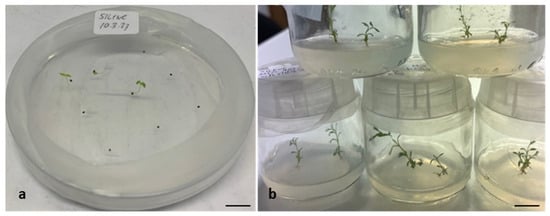
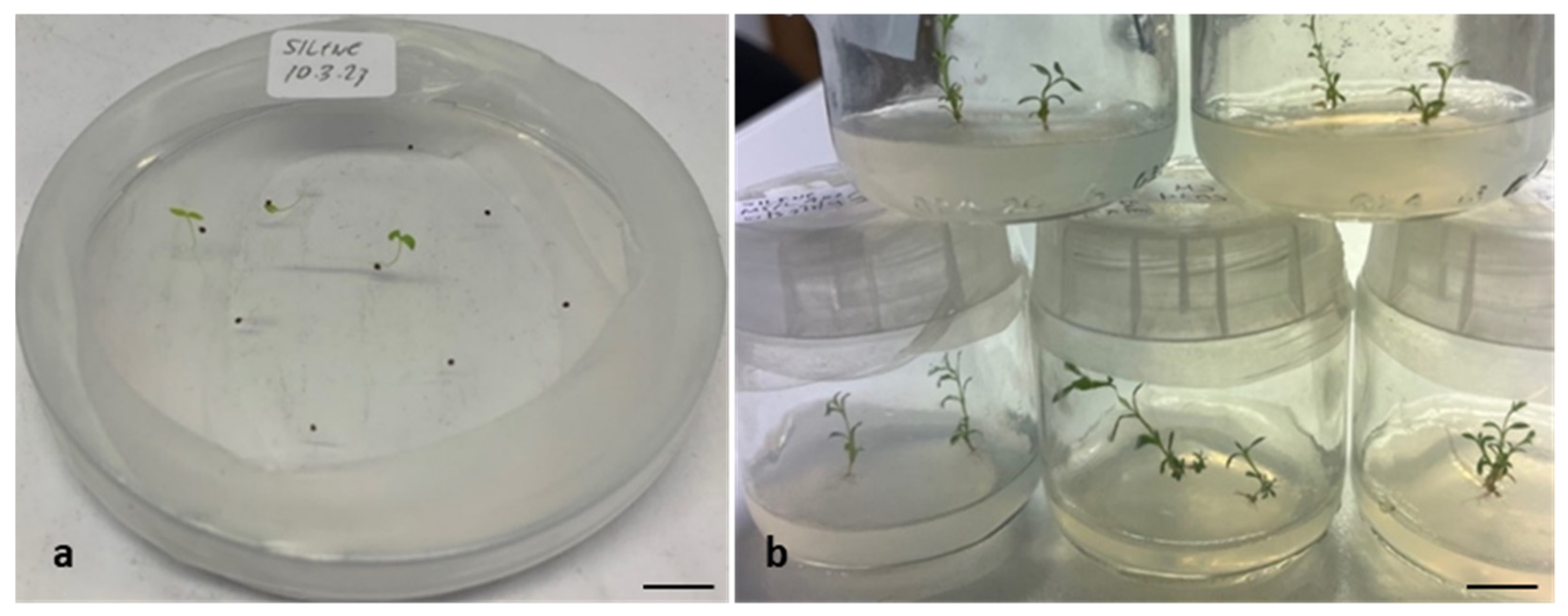
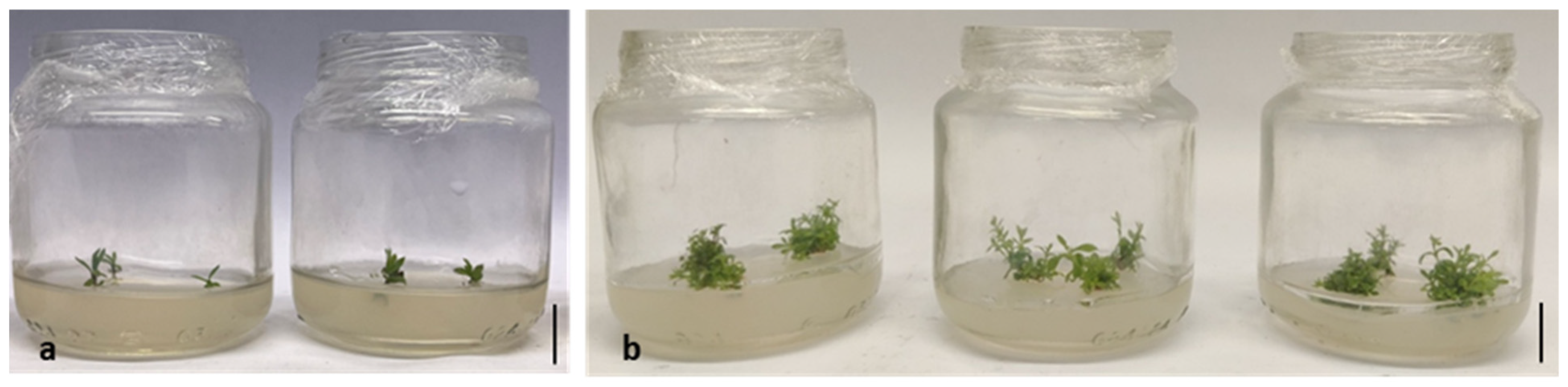
Seed germination occurred on the 7th day and was completed by the 17th day of incubation. Out of the 20 seeds, 6 successfully germinated, while the remaining 14 were non-viable or lacked full embryo development (Figure 2a). On the 25th day, germinated seedlings were transferred to vessels containing MS/2 medium for continued growth and placed into a growth chamber to facilitate further development (Figure 2b). All seedlings exhibited healthy growth, reaching 1–2 cm in length after both the initial transfer and the subsequent subculture on MS/2 medium. Nodal explants were then successfully established on hormone-free MS/2 medium. All explants responded (100%) and produced a single shoot per explant, measuring 0.7–1.0 cm in length.
Figure 2.
Germination of Silene conglomeratica seeds on MS/2 medium (a), followed by the transfer of seedlings to MS/2 medium for the establishment of initial cultures (b). Bars represent a length of 1 cm.
3.2. Effect of the Addition of Cytokinins and Auxin
During this stage, all explants successfully formed micro-shoots across all media tested (Table 1). However, significant differences were observed in shoot number, shoot length, and the multiplication index (MI). The highest shoot number was recorded in media supplemented with mT at 1.0 mg L−1 combined with 0.2 mg L−1 NAA (10.7 shoots per explant; Table 1; Figure 3). In the two mT-containing media, 2.3–2.5 shoots longer than 0.5 cm per explant were formed. Shoot elongation was most pronounced in the medium containing 1.0 mg L−1 mT plus 0.2 mg L−1 NAA, with a mean shoot length of 1.0 cm. The highest MI values were obtained in mT-supplemented media, with 0.2 mg L−1 NAA (17.4), significantly higher than those under the control and other cytokinin treatments, thus highlighting the media’s superior efficacy in promoting shoot proliferation (Table 1; Figure 3). Moderate levels of spontaneous rooting (50–60%) were also observed across different media.
Table 1.
In vitro response of Silene conglomeratica nodal explants in the multiplication stage after 4 weeks of culture on hormone-free MS medium (Hf) or MS supplemented with 0.5 mg L−1 BA, 0.5 mg L−1 KIN, and 0.5 mg L−1 2iP; 0.5 mg L−1 mT; or 1.0 mg L−1 mT, either alone or combined with 0.2 mg L−1 NAA.
Figure 3.
Representative images of the treatments described; multiplication stage on Murashige and Skoog media: without hormones (a); supplemented with 1.0 mg L−1 mT and 0.2 mg L−1NAA (b). Bars represent a length of 1 cm.
3.3. Effect of Explant Origin and Basal Medium on Culture Performance
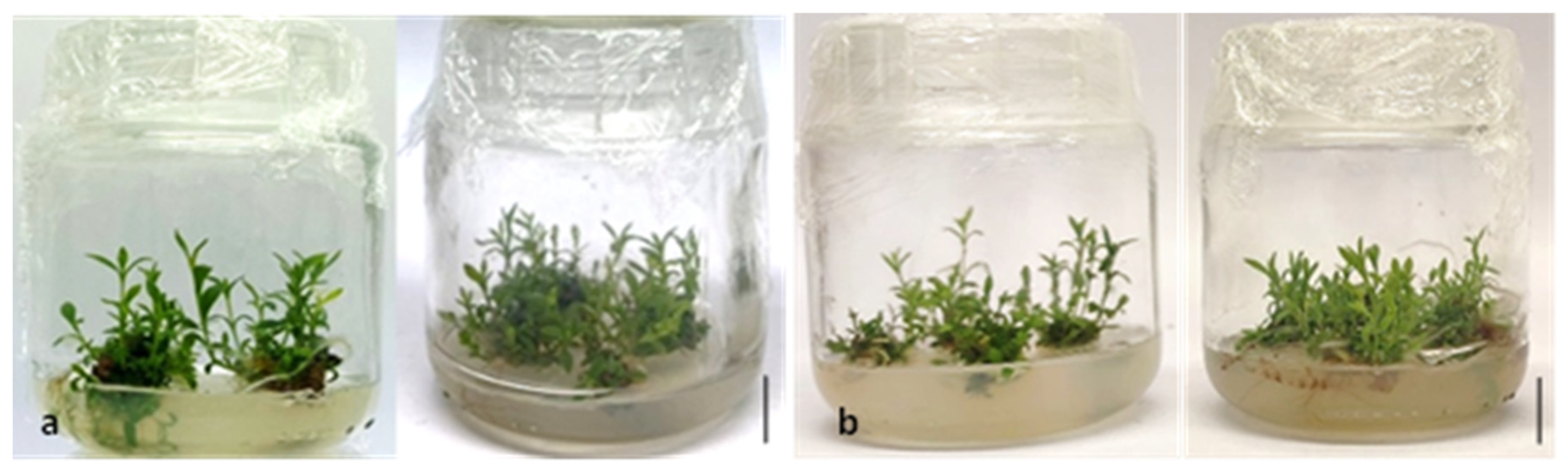
All tested culture media exhibited a 100% shooting response (Table 2). The concentration of the MS origin medium did not affect the shoot number, the LS number and the MI. On the other hand, the type of culture medium had significant effect in terms of shoot number, LS number and multiplication index (MI). Hence, OM demonstrated the highest shoot proliferation, yielding 11.8 shoots per explant, which was significantly greater than the shoot numbers observed in MS (3.7 shoots per explant) and MS/2 (2.6 shoots per explant). A similar trend was noted for the number of long shoots, with OM producing the highest value (7.2 per explant), significantly exceeding those recorded in MS (2.1 per explant) and MS/2 (1.4 per explant). Regarding the MI, it was highest in OM (16.4), significantly outperforming MS (4.4) and MS/2 (2.9) (Table 2; Figure 4). A significant interaction between two factors (MS origin and culture medium) was observed for shoot elongation. The longest shoots were formed in explants derived from 1 mg L−1 mT and transferred to MS, MS/2 or OM ranging from 1.3 to 1.5 cm (Table 2). Regarding rooting response, all treatments achieved spontaneous rooting (Table 2). The spontaneous rooting percentage (%) was significantly influenced by the interaction between culture medium and MS medium of origin, with the highest percentage (92.3%) being observed on MS/2 medium supplemented with 1.0 mg L−1 mT and 0.2 mg L−1 NAA. However, the number of roots per explant was significantly higher in OM (4.8) compared to MS (2.8) and MS/2 (3.2). Root elongation followed a similar pattern, with OM yielding the longest roots (1.5 cm), significantly exceeding those observed in MS (0.6 cm) and MS/2 (0.4 cm) (Table 2). Regarding the effect of MS medium of origin, root length was significantly greater (1.1 cm) when micro-shoots derived from the 1 mg L−1 mT medium were transferred to MS, compared to those derived from 1-mT/0.2 NAA, which exhibited significantly shorter roots (0.6 cm) (Table 2).
Table 2.
Shoot proliferation of Silene conglomeratica explants produced by shoots during the first stage of multiplication, on Murashige and Skoog (MS) media without hormone (Hf), or containing mT at 1.0 mg L−1 without NAA or with the addition of 0.2 mg L−1 NAA. The cultures were conducted on three different media: MS, MS/2 and Rugini Olive Media (OM).
Figure 4.
Representative images of the treatments described; multiple shoot formation on Rugini Olive Media (OM) of explants derived from Murashige and Skoog (MS) medium supplemented with 1.0 mg L−1 mT without (a) or with 0.2 mg L−1 NAA (b). Bars represent a length of 1 cm.
3.4. Evaluation of OM and 2iP Εffectiveness
In a separate experiment, the effects of OM strength (full vs. half) and varying concentrations of the cytokinin 2iP (0, 0.5, and 1.0 mg L−1) on shoot development parameters were studied. Significant variance in shoot number was observed, while interaction analysis between medium strength and cytokinin concentration revealed notable differences, with the highest shoot number recorded on media containing 2iP (3.0–4.3 cm). Regarding the number of long shoots (LSs), the effect of 2iP concentration was found to be significant. The highest value was observed at 1.0 mg L−1 (2.4 shoots), which was significantly greater than the control (1.3 shoots) but not significantly different from that under the 0.5 mg L−1 treatment. Shoot length was significantly affected by the interaction between medium strength and 2iP concentration. The longest shoots were obtained on full-strength medium with 1.0 mg L−1 2iP (1.6 cm), followed by half-strength medium with 0 mg L−1 (1.4 cm) and 0.5 mg L−1 2iP (1.5 cm). The highest MI values were recorded at 1.0 mg L−1 (7.9) and 0.5 mg L−1 2iP (7.4), both of which were significantly greater than the control (3.4; Table 3). Spontaneous rooting was evident in this experiment too, being observed in 60% and 95% of explants on OM and OM/2, respectively.
Table 3.
Shoot proliferation of Silene conglomeratica explants on full- (OM) or half-strength (OM/2) Rugini Olive Media without hormone (control) or containing 2iP at 0.5 or 1.0 mg L−1.
3.5. In Vitro Rooting and Acclimatization
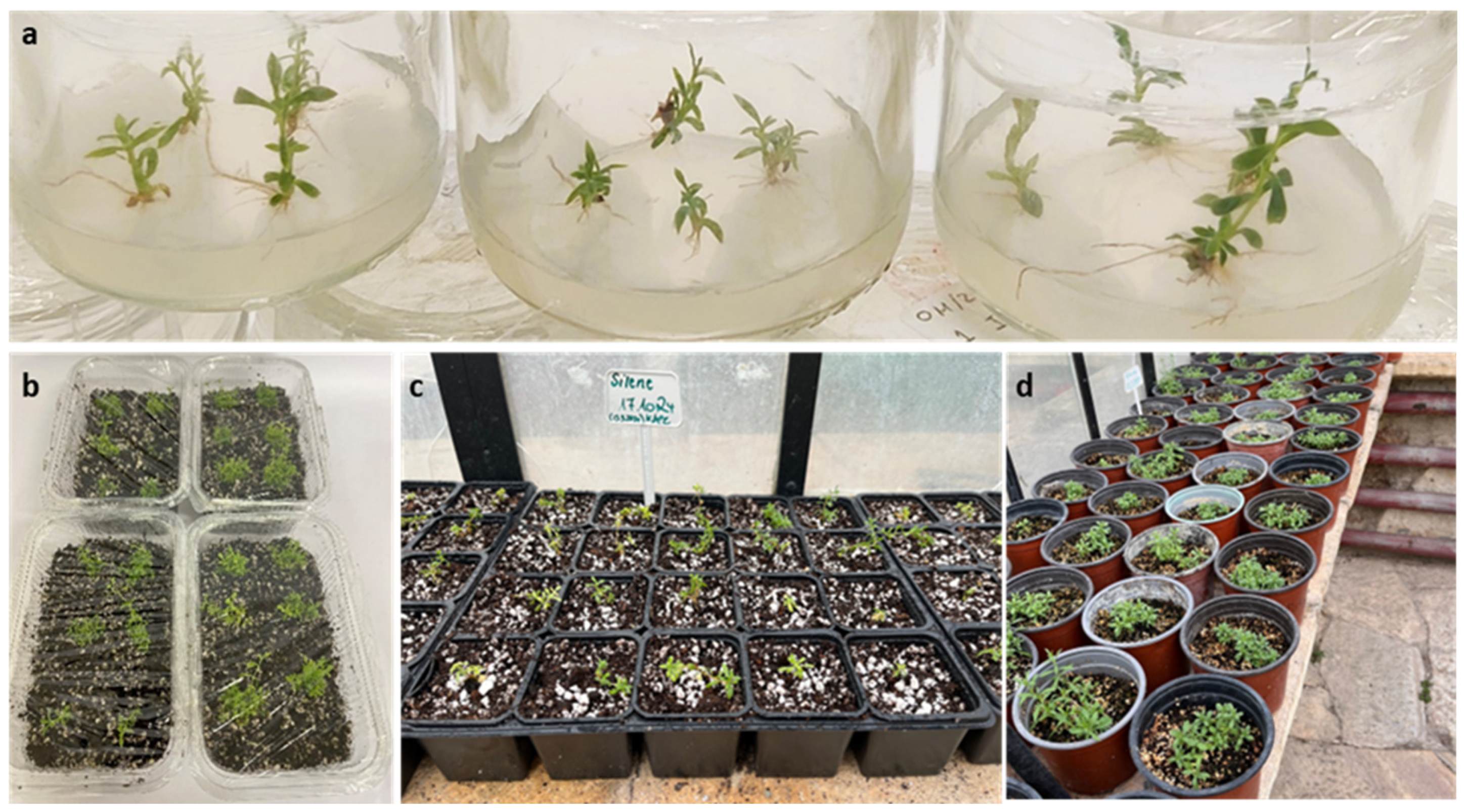
All the micro-shoots successfully rooted on OM/2 without IBA or supplemented with 0.5 mg L−1 and 1.0 mg L−1 IBA (100% rooting success). However, root number varied significantly with different IBA concentrations. The highest average number of roots per plant (6.6) was observed at 0.5 mg L−1 IBA, which was significantly greater than both the control treatment and the 1.0 mg L−1 IBA treatment, the latter exhibiting the lowest root number (4.8 roots per plant) (Table 4; Figure 5a). Root length did not differ significantly among treatments, remaining relatively consistent between 1.1 and 1.3 cm. The acclimatization success rate on a peat–perlite mixture (1:1, v/v) was 80.0% for rooted micro-shoots from all three populations (Figure 5b,c). Thirty days after completion of acclimatization, the final survival rate of the acclimatized plants reached 100.0% (Figure 5d).
Table 4.
In vitro rooting of Silene conglomeratica micro-shoots derived from the multiplication stage cultured on OM/2 as affected by IBA concentration (0, 0.5, and 1.0 mg L−1).
Figure 5.
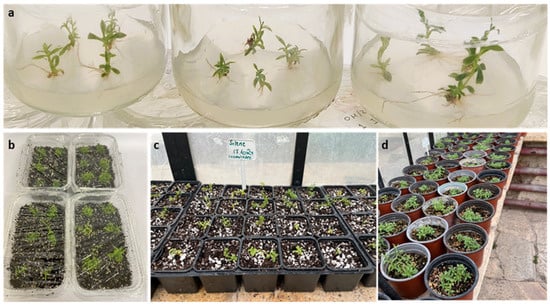
Developmental stages of Silene conglomeratica plantlets. (a) In vitro-rooted plantlets on OM/2. (b) Plantlets in the initial stage of acclimatization (7 days after transfer) in a 1:1 peat–perlite mixture. (c) One-month-old, acclimatized plants showing vigorous growth. (d) Well-developed plants that successfully survived after 6 months of acclimatization.
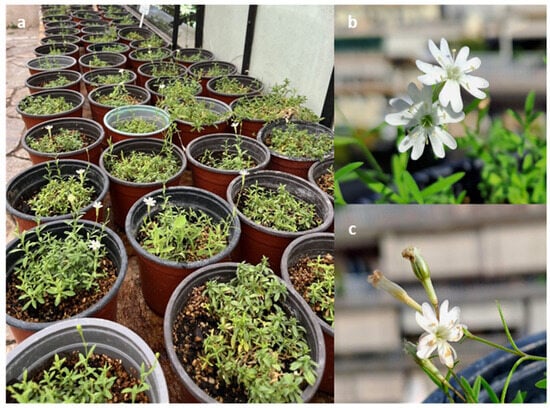
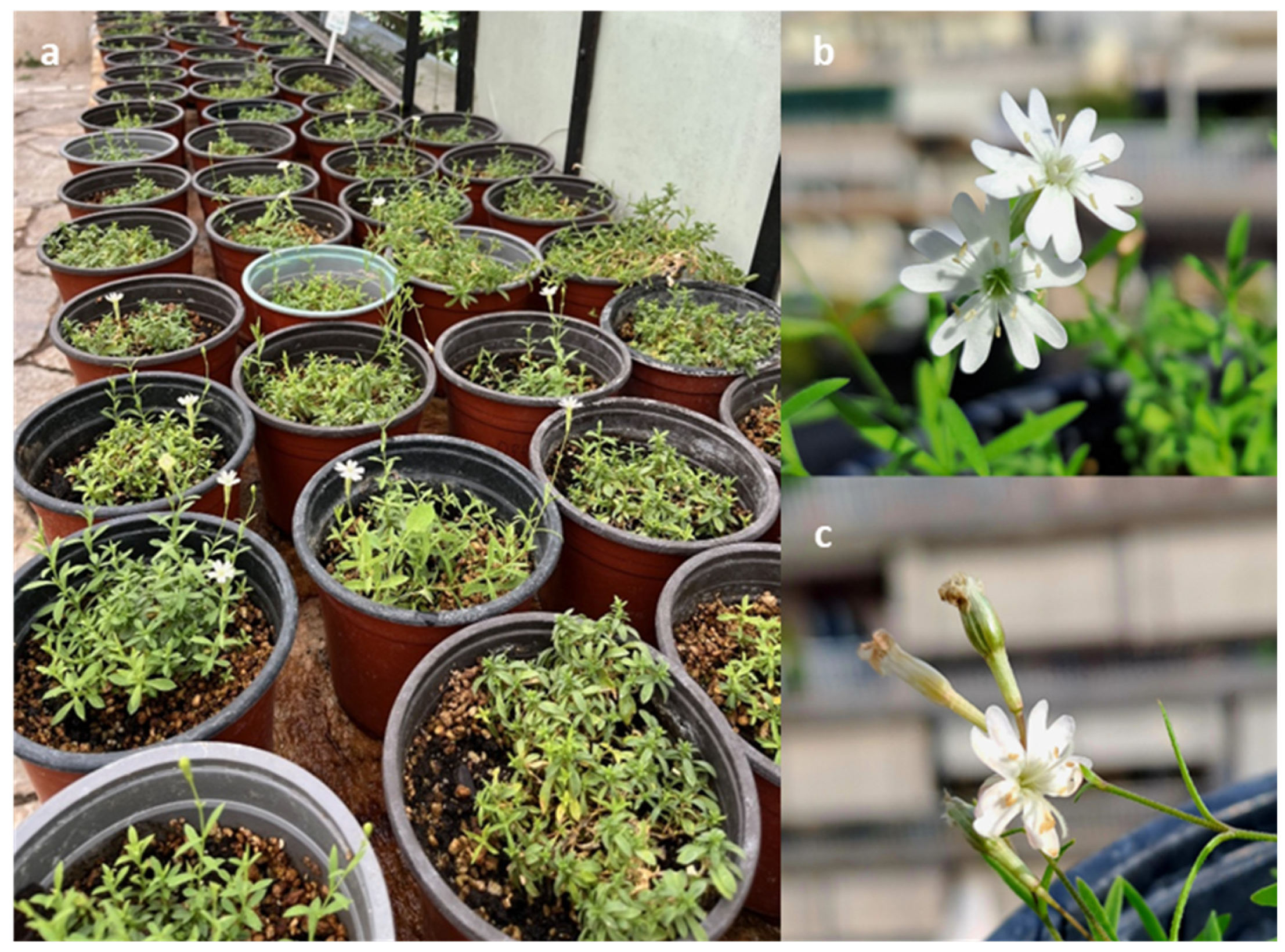
Following successful in vitro propagation and acclimatization, S. conglomeratica plantlets were transferred to greenhouse conditions for long-term maintenance. The ex situ conservation of these individuals was carried out in the glasshouse facilities of the Laboratory of Floriculture and Landscape Architecture. Under controlled environmental conditions, the plants continued to grow vigorously, exhibiting healthy vegetative development. Remarkably, one year after acclimatization, the conserved plants reached reproductive maturity and initiated flowering, with the production of several slightly fragrant, nocturnally opening white flowers. Some of the flowering individuals were transferred in an exposed urban rooftop environment, where they continued flowering and found to be producing viable fruits and seeds after both cross- and self-pollination, demonstrating their successful transition from in vitro conditions to ex vitro environments and further solidifying the ornamental potential of the species (Figure 6).
Figure 6.
Ex situ conservation of Silene conglomeratica plants that flowered one year after acclimatization. The plants are maintained in the glasshouse of the Laboratory of Floriculture and Landscape Architecture (a). Sustained production of flowers (b), followed by fruits (c), on an urban rooftop of Athens, Greece.
4. Discussion
4.1. Seed Germination and Establishment of Initial Cultures
The present study aimed to investigate the in vitro propagation potential of the critically endangered S. conglomeratica, a low-growing, perennial herbaceous plant endemic to the rocky limestone landscapes of the northern Peloponnese in Greece. Young seedlings cultured in vitro were used as the initial plant material, since developing a rapid and efficient propagation technique is essential both for conservation purposes and for the successful introduction of this species into the horticultural industry [36]. Owing to the small population size of the species and the minimal quantities of maternal plant material collected, only 20 seeds were available for germination trials, which exhibited a relatively low germination rate of 30%. The number of seeds tested was limited in accordance with ISTA [37] standards; nonetheless, the results may reflect potential seed dormancy or viability constraints, and thus more research is needed on the seed viability and germination ecophysiology of the species, in conjunction with its reproductive biology and success [38,39]. Germination commenced on the 7th day and was completed by day 17, indicating a moderately paced germination response under controlled temperatures (15 °C) and light conditions. This may reflect the species’ adaptation to seasonal cues in its native habitat, similarly with other oro-Mediterranean chasmophytes such as Cerastium candidissimum [20]. Field regeneration of S. conglomeratica is likely constrained by multiple ecological pressures. As a narrow endemic of the Mega Spilaio region, it faces threats from overgrazing, particularly by goats, which heavily reduce reproductive output and seedling establishment [13,29]. Additionally, habitat disturbance from tourism and land-use changes may further inhibit seed germination and survival by degrading microsite conditions necessary for recruitment [13,29]. While data on natural regeneration rates remain scarce, these observations suggest that in situ regeneration potential is low [40].
Nevertheless, the species demonstrates a capacity for regeneration under optimized in vitro conditions. This highlights the importance of ex situ conservation strategies such as micropropagation and seed banking, in addition to in situ management and habitat restoration, to counteract its limited regenerative capacity in the wild and ensure its long-term survival [41].
The establishment of in vitro cultures is a critical transitional phase in any micropropagation system, as it lays the groundwork for consistent plantlet development and survival in subsequent phases. The use of MS/2 medium reflects a strategic decision to reduce salt concentration, which is particularly important for sensitive species or early seedling stages, where high osmotic potential could hinder water uptake and overall vitality. The temperature and photoperiod conditions mimic those of springtime in the plant’s native habitat, enhancing the physiological adaptation of the explants. The successful establishment of S. conglomeratica under minimized initial stress suggests a high adaptive capacity to artificial conditions, likely driven by physiological plasticity and reduced activation of stress-response pathways favoring growth. This effective establishment supports subsequent shoot multiplication and contributes to the long-term feasibility of ex situ propagation and conservation of this rare endemic species [42,43,44].
4.2. Multiplication Stage
Multiplication stage demonstrated that cytokinins significantly influenced shoot proliferation and multiplication. Specifically, mT at 1.0 mg L−1, both alone and in combination with 0.2 mg L−1 NAA, substantially enhanced shoot number and the multiplication index (MI). The highest shoot proliferation, marked by up to 10.7 shoots per explant, underscores the efficacy of mT in stimulating cytokinin-mediated shoot development. These results align with previous studies indicating the positive role of mT in promoting shoot proliferation in vitro [45,46,47]. The effectiveness of mT is likely due to the hydroxyl group on its aromatic side chain, which facilitates O-glycoside formation and subsequent conversion into active nucleosides, nucleotides, or free bases [48]. Furthermore, this stage revealed the importance of medium selection for shoot and root development. The OM significantly outperformed MS and MS/2 media, yielding the highest shoot proliferation (11.8 shoots per explant) and root development parameters, likely due to its optimized nutrient balance and osmotic properties [49,50]. Interaction effects further highlighted the impact of explant origin on shoot elongation and spontaneous rooting efficiency, suggesting that prior PGR treatments influence subsequent growth stages [51,52].
The multiplication stage further confirmed the pivotal role of medium strength in combination with cytokinin concentration in regulating shoot development. A synergistic interaction between OM/2 and 1.0 mg L−1 2iP resulted in the highest shoot proliferation, with an average of 4.3 shoots per explant. In contrast, the application of 0.5 mg L−1 2iP in full-strength OM significantly enhanced shoot elongation. These findings underscore the importance of optimizing the balance between medium strength and cytokinin concentration to promote both shoot proliferation and elongation [53,54].
4.3. In Vitro Rooting and Acclimatization
An efficient micropropagation protocol depends on successful rooting, as well as an equally effective acclimatization phase. In the present study, spontaneous rooting during multiplication stage was observed, indicating a promising rooting potential. In accordance with this finding, the use of OM/2 supplemented with IBA resulted in successful root induction. The presence of IBA promotes cell division and differentiation in root primordia, enhancing vascular tissue development, and modulating endogenous hormonal balance. These mechanisms collectively facilitate successful root formation and subsequent acclimatization. The application of 0.5 mg L−1 IBA notably enhanced root number, optimizing root formation essential for successful acclimatization. These findings are consistent with prior studies, confirming auxin’s critical function in stimulating root initiation in micropropagation protocols [55,56]. Regarding the effectiveness of OM/2, reducing basal salt strength is a common practice in in vitro rooting systems as it helps minimize inhibiting factors on root induction.
The high percentages of both acclimatization and survival, as well as the flowering of established ex vitro plants first in the greenhouse and then on the urban rooftop, not only indicate the viability and physiological normalcy of the regenerated plants but also confirm the potential of the developed micropropagation protocol for the long-term conservation and sustainable use of this highly imperiled endemic species. The ability to maintain and reproduce flowering individuals under ex situ conditions as living collections represents a critical step toward the conservation of S. conglomeratica, permitting further research into its reproductive biology and sexual propagation and thus supporting both germplasm preservation and potential translocation and reintroduction actions in the future [57,58,59,60].
5. Conclusions
In conclusion, this work establishes a reliable and efficient in vitro propagation protocol for the critically endangered S. conglomeratica, developed from a limited seed stock and tailored to support both conservation and horticultural applications. The optimized use of plant growth regulators such as mT, NAA, and 2iP on OM across successive culture stages, combined with effective rooting on OM/2 supplemented with IBA, led to high multiplication rates, frequent spontaneous rooting, and an 80% acclimatization success, with the subsequent production of robust, free-flowering reproductive individuals able to be used for further conservation actions. These outcomes demonstrate the protocol’s suitability for inclusion in the ex situ conservation of the species, as well as its potential for integration into specialized nursery production and landscape design applications. Continued research on the optimization and refinement of S. conglomeratica’s sexual and vegetative propagation protocols, as well as additional research on the ecology and demography of its remaining populations, is expected to further increase enhance scalability and sustainability of viable plant production ex situ. Thus, the availability of healthy, diverse and adaptable individuals is expected to contribute to long-term conservation efforts in the form of population augmentation and reintroduction, as well as responsible commercial utilization of this valuable species. At the same time, the present study is expected to serve as a blueprint for the in vitro propagation of other exceptional imperiled Greek endemic plant taxa, offering a viable alternative to the traditional seed banking approach.
Author Contributions
Conceptualization, K.B., P.T., and M.P.; methodology E.K., K.B., A.-E.B., M.T., P.T., and M.P.; software, E.K. and K.B.; validation, E.K., K.B., and A.-E.B.; formal analysis, E.K., K.B., and A.-E.B.; investigation, E.K., K.B., A.-E.B., E.D., M.T., and M.P.; resources, K.B. and M.P.; data curation, E.K., K.B., and A.-E.B.; writing—original draft preparation, E.K., K.B., A.-E.B., M.T., P.T., and M.P.; writing—review and editing, E.K., K.B., A.-E.B., M.T., P.T., and M.P.; visualization, E.K., K.B., E.D., M.T., and M.P.; supervision, K.B. and M.P.; project administration, K.B. and M.P.; funding acquisition, K.B. and M.P. All authors have read and agreed to the published version of the manuscript.
Funding
This research received no external funding.
Institutional Review Board Statement
Not applicable.
Informed Consent Statement
Not applicable.
Data Availability Statement
The original contributions presented in this study are included in the article material. Further inquiries can be directed to the corresponding authors.
Conflicts of Interest
The authors declare no conflicts of interest.
Abbreviations
The following abbreviations are used in this manuscript:
| 2iP | isopentenyladenine |
| BA | benzylaminopurine |
| IBA | indole-3-butyric acid |
| KIN | kinetin |
| MS | Murashige and Skoog medium |
| MS/2 | half-strength Murashige and Skoog medium |
| mT | meta-topolin |
| NAA | 1-naphthaleneacetic acid |
| NECCA | Natural Environment and Climate Change Agency |
| OM | Rugini Olive Medium |
| OM/2 | half-strength Rugini Olive Medium |
References
- Jafari, F.; Zarré, S.; Abbas, G.; Eggens, F.; Rabeler, R.K.; Oxelman, B. A New Taxonomic Backbone for the Infrageneric Classification of the Species-Rich Genus Silene (Caryophyllaceae). Taxon 2020, 69, 337–368. [Google Scholar] [CrossRef] [Scilit]
- Strid, A. Atlas of the Hellenic Flora, Volume I; Broken Hill Publishers Ltd.: Nicosia, Cyprus, 2024; pp. 536–568. [Google Scholar]
- Hellenic Botanical Society (HBS). Vascular Plants of Greece Checklist|Flora of Greece—An Annotated Checklist. Available online: https://portal.cybertaxonomy.org/flora-greece (accessed on 8 July 2025).
- Casimiro-Soriguer, I.; Buide, M.L.; Narbona, E. Diversity of sexual systems within different lineages of the genus Silene (Caryophyllaceae). AoB PLANTS 2015, 7, plv037. [Google Scholar] [CrossRef] [Scilit]
- Desfeux, C.; Maurice, S.; Henry, J.P.; Lejeune, B.; Gouyon, P.H. Evolution of reproductive systems in the genus Silene. Proc. Biol. Sci. 1996, 263, 409–414. [Google Scholar] [CrossRef] [Scilit]
- Greuter, W. Silene (Caryophyllaceae) in Greece: A Subgeneric and Sectional Classification. Taxon 1995, 44, 543–581. [Google Scholar] [CrossRef] [Scilit]
- Oxelman, B.; Lidén, M.; Rabeler, R.K.; Popp, M. A Revised Generic Classification of the Tribe Sileneae (Caryophyllaceae). Nord. J. Bot. 2000, 20, 743–748. [Google Scholar] [CrossRef] [Scilit]
- Đurović, S.; Schönswetter, P.; Niketić, M.; Tomović, G.; Frajman, B. Disentangling relationships among the members of the Silene saxifraga alliance (Caryophyllaceae): Phylogenetic structure is geographically rather than taxonomically segregated. Taxon 2017, 66, 343–364. [Google Scholar] [CrossRef] [Scilit]
- Naciri, Y.; Pasquier, P.-E.D.; Lundberg, M.; Jeanmonod, D.; Oxelman, B. A Phylogenetic Circumscription of Silene Sect. Siphonomorpha (Caryophyllaceae) in the Mediterranean Basin. Taxon 2017, 66, 91–108. [Google Scholar] [CrossRef] [Scilit]
- Naciri, Y.; Toprak, Z.; Prentice, H.C.; Hugot, L.; Troia, A.; Burgarella, C.; Gradaille, J.L.; Jeanmonod, D. Convergent Morphological Evolution in Silene Sect. Italicae (Caryophyllaceae) in the Mediterranean Basin. Front. Plant Sci. 2022, 13, 695958. [Google Scholar] [CrossRef] [Scilit]
- Panitsa, M.; Kokkoris, I.P.; Kougioumoutzis, K.; Kontopanou, A.; Bazos, I.; Strid, A.; Dimopoulos, P. Linking Taxonomic, Phylogenetic and Functional Plant Diversity with Ecosystem Services of Cliffs and Screes in Greece. Plants 2021, 10, 992. [Google Scholar] [CrossRef] [Scilit]
- Kougioumoutzis, K.; Trigas, P.; Tsakiri, M.; Kokkoris, I.P.; Koumoutsou, E.; Dimopoulos, P.; Tzanoudakis, D.; Iatrou, G.; Panitsa, M. Climate and Land-Cover Change Impacts and Extinction Risk Assessment of Rare and Threatened Endemic Taxa of Chelmos-Vouraikos National Park (Peloponnese, Greece). Plants 2022, 11, 3548. [Google Scholar] [CrossRef] [Scilit]
- Tsakiri, M.; Koumoutsou, E.; Kokkoris, I.P.; Trigas, P.; Iliadou, E.; Tzanoudakis, D.; Dimopoulos, P.; Iatrou, G. National Park and UNESCO Global Geopark of Chelmos-Vouraikos (Greece): Floristic Diversity, Ecosystem Services and Management Implications. Land 2022, 11, 33. [Google Scholar] [CrossRef] [Scilit]
- Strid, A.; Tan, K. Flora Hellenica; Koeltz Scientific Books: Konigstein, Germany, 1997; Volume 1, p. 286. [Google Scholar]
- Kougioumoutzis, K.; Kokkoris, I.P.; Panitsa, M.; Strid, A.; Dimopoulos, P. Extinction Risk Assessment of the Greek Endemic Flora. Biology 2021, 10, 195. [Google Scholar] [CrossRef] [Scilit] [PubMed]
- Tsakiri, M. Silene conglomeratica IUCN Red List API. Available online: https://apistaging.iucnredlist.org/species/225955481/225955893 (accessed on 8 July 2025).
- Pence, V.C.; Meyer, A.; Linsky, J.; Gratzfeld, J.; Pritchard, H.W.; Westwood, M.; Bruns, E.B. Defining Exceptional Species—A Conceptual Framework to Expand and Advance Ex Situ Conservation of Plant Diversity beyond Conventional Seed Banking. Biol. Conserv. 2022, 266, 109440. [Google Scholar] [CrossRef] [Scilit]
- Philpott, M.; Pence, V.C.; Coffey, E.E.D. Building Capacity in the Conservation of Exceptional Plant Species. Appl. Plant Sci. 2022, 10, e11498. [Google Scholar] [CrossRef] [Scilit]
- Grigoriadou, K.; Krigas, N.; Sarropoulou, V.; Papanastasi, K.; Tsoktouridis, G.; Maloupa, E. In vitro propagation of medicinal and aromatic plants: The case of selected Greek species with conservation priority. Vitr. Cell. Dev. Biol.-Plant 2019, 55, 635–646. [Google Scholar] [CrossRef] [Scilit]
- Bertsouklis, K.; Tsopela, S.; Bazanis, A.-E.; Kartsonas, E. In Vitro Seed Germination and RAPD Variation in Three Populations of Cerastium candidissimum Correns, a Promising Ornamental Species. Horticulturae 2025, 11, 443. [Google Scholar] [CrossRef] [Scilit]
- Sarasan, V.; Kite, G.C.; Sileshi, G.W.; Stevenson, P.C. Applications of phytochemical and in vitro techniques for reducing overharvesting of medicinal and pesticidal plants and generating income for the rural poor. Plant Cell Rep. 2011, 30, 1163–1172. [Google Scholar] [CrossRef] [Scilit]
- Mulumbati, M.C.; Godoy Jara, M.; Baboy Longanza, L.; Bogaert, J.; Werbrouck, S.; Sikuzani, Y.U.; Mazinga Kwey, M. In Vitro Regeneration Protocol for Securidaca longepedunculata Fresen., a Threatened Medicinal Plant within the Region of Lubumbashi (Democratic Republic of the Congo). Conservation 2023, 3, 411–425. [Google Scholar] [CrossRef] [Scilit]
- Bettoni, J.C.; Wang, M.-R.; Wang, Q.-C. In Vitro Regeneration, Micropropagation and Germplasm Conservation of Horticultural Plants. Horticulturae 2024, 10, 45. [Google Scholar] [CrossRef] [Scilit]
- Werden, L.K.; Sugii, N.C.; Weisenberger, L.; Keir, M.J.; Koob, G.; Zahawi, R.A. Ex-situ conservation of threatened plant species in island biodiversity hotspots: A case study from Hawaii. Biol. Conserv. 2020, 613, 108435. [Google Scholar] [CrossRef] [Scilit]
- Bertsouklis, K.; Tsopela, S. In Vitro Propagation of Three Populations of the Endangered, Greek Endemic Cerastium candidissimum and Short-Term Storability of Alginate-Encapsulated Shoot Explants for Exploitation and Conservation. Horticulturae 2023, 9, 273. [Google Scholar] [CrossRef] [Scilit]
- Alexopoulos, A.A.; Kartsonas, E.; Karras, S.; Mavrommati, E.; Petropoulos, S.A.; Papafotiou, M. In Vitro Propagation of Origanum scabrum (Boiss. & Heldr.): An Endemic Medicinal Plant of Greece. Plants 2023, 12, 2118. [Google Scholar] [CrossRef] [Scilit] [PubMed]
- Papafotiou, M.; Stragas, J. Seed Germination and in Vitro Propagation of Dianthus fruticosus L. Acta Hortic. 2009, 813, 481–484. [Google Scholar] [CrossRef] [Scilit]
- Papafotiou, M.; Vlachou, G.; Martini, A.N. Investigation of the Effects of the Explant Type and Different Plant Growth Regulators on Micropropagation of Five Mediterranean Salvia spp. Native to Greece. Horticulturae 2023, 9, 96. [Google Scholar] [CrossRef] [Scilit]
- Golfinopoulos, V.; Papadopoulou, P.; Koumoutsou, E.; Zouros, N.; Fassoulas, C.; Zelilidis, A.; Iliopoulos, G. Quantitative Assessment of the Geosites of Chelmos-Vouraikos UNESCO Global Geopark (Greece). Geosciences 2022, 12, 63. [Google Scholar] [CrossRef] [Scilit]
- ENSCONET. ENSCONET Seed Collecting Manual for Wild Species. Main Editors: Royal Botanic Gardens, Kew & Universidad Politécnica de Madrid. Edition 1 (17 March 2009). 2009. Available online: https://brahmsonline.kew.org/Content/Projects/msbp/resources/Training/ENSCONET_Collecting_protocol_English.pdf (accessed on 28 June 2025).
- Center for Plant Conservation. CPC Best Plant Conservation Practices to Support Species Survival in the Wild; Center for Plant Conservation: Escondido, CA, USA, 2019; Available online: https://saveplants.org/wp-content/uploads/2020/12/CPC-Best-Practices-5.22.2019.pdf (accessed on 28 June 2025).
- IUCN/SSC. Guidelines on the Use of Ex Situ Management for Species Conservation. Version 2.0; IUCN Species Survival Commission: Gland, Switzerland, 2014; Available online: https://portals.iucn.org/library/sites/library/files/documents/2014-064.pdf (accessed on 28 June 2025).
- Murashige, T.; Skoog, F. A revised medium for rapid growth and bioassays with tobacco tissue cultures. Physiol. Plant. 1962, 15, 473–497. [Google Scholar] [CrossRef] [Scilit]
- Rugini, E. In vitro propagation of some olive (Olea europaea sativa L.) cultivars with different root-ability, and medium development using analytical data from developing shoots and embryos. Sci. Hortic. 1984, 24, 123–134. [Google Scholar] [CrossRef] [Scilit]
- Bertsouklis, K.; Vazaka-Vodena, D.; Bazanis, A.-E.; Papafotiou, M. Studies on Seed Germination and Micropropagation of Ebenus sibthorpii, an Endemic Shrub of Greece with Potential Ornamental Use. Horticulturae 2023, 9, 1300. [Google Scholar] [CrossRef] [Scilit]
- Kulak, V.; Longboat, S.; Brunet, N.D.; Shukla, M.; Saxena, P. In Vitro Technology in Plant Conservation: Relevance to Biocultural Diversity. Plants 2022, 11, 503. [Google Scholar] [CrossRef] [Scilit]
- International Seed Testing Association (ISTA). International rules for seed testing. Seed Sci. Tech. 1999, 27, 333. [Google Scholar]
- Carruggio, F.; Onofri, A.; Catara, S.; Impelluso, C.; Castrogiovanni, M.; Lo Cascio, P.; Cristaudo, A. Conditional Seed Dormancy Helps Silene hicesiae Brullo & Signor. Overcome Stressful Mediterranean Summer Conditions. Plants 2021, 10, 2130. [Google Scholar] [CrossRef] [Scilit] [PubMed]
- Baskin, C.C.; Baskin, J.M. Seeds: Ecology, Biogeography, and Evolution of Dormancy and Germination, 2nd ed.; Academic Press: Amsterdam, The Netherlands, 2014. [Google Scholar]
- Trigas, P.; Iatrou, G.; Tsakiri, M.; Panitsa, M. Plant Guide of the Chelmos-Vouraikos National Park—Endemic, Rare and Threatened Species; Natural Environment and Climate Change Agency (NECCA): Athens, Greece, 2023. Available online: https://necca.gov.gr/wp-content/uploads/2024/08/Plant-Guide.pdf (accessed on 28 June 2025).
- Sarasan, V.; Cripps, R.; Ramsay, M.M.; Atherton, C.; McMichen, M. Conservation in vitro of threatened plants—Progress in the past decade. Vitr. Cell. Dev. Biol.-Plant 2006, 42, 206–214. [Google Scholar] [CrossRef] [Scilit]
- George, E.F.; Hall, M.A.; De Klerk, G.J. Plant Propagation by Tissue Culture: Volume 1. The Background, 3rd ed.; Springer: Berlin/Heidelberg, Germany, 2008; Volume 1. [Google Scholar] [CrossRef] [Scilit]
- Rafiq, S.; Wagay, N.A.; Bhat, I.A.; Kaloo, Z.A.; Rashid, S.; Lin, F.; El-Abedin, T.K.Z.; Wani, S.H.; Mahmoud, E.A.; Almutairi, K.F.; et al. In vitro propagation of Aconitum chasmanthum Stapf Ex Holmes: An endemic and critically endangered plant species of the western Himalaya. Horticulturae 2021, 7, 586. [Google Scholar] [CrossRef] [Scilit]
- Rout, G.R.; Mohapatra, A. Tissue culture of ornamental pot plant: A critical review on present scenario and future prospects. Biotechnol. Adv. 2006, 24, 531–560. [Google Scholar] [CrossRef] [Scilit]
- Shekhawat, M.S.; Priyadharshini, S.; Jogam, P.; Kumar, V.; Manokari, M. Meta-topolin and liquid medium enhanced in vitro regeneration in Scaevola taccada (Gaertn.) Roxb. Vitr. Cell Dev Biol.-Plant 2021, 57, 296–306. [Google Scholar] [CrossRef] [Scilit]
- Jayaprakash, Κ.; Manokari, M.; Badhepuri, M.K.; Raj, M.C.; Dey, A.; Shekhawat, M.S. Influence of meta-topolin on in vitro propagation and foliar micro-morpho-anatomical developments of Oxystelma esculentum (L.f.) Sm. Plant Cell Tiss. Organ Cult. 2021, 147, 325–337. [Google Scholar] [CrossRef] [Scilit]
- Ahmad, A.; Anis, M. Meta-topolin Improves In Vitro Morphogenesis, Rhizogenesis and Biochemical Analysis in Pterocarpus marsupium Roxb.: A Potential Drug-Yielding Tree. J. Plant Growth Regul. 2019, 38, 1007–1016. [Google Scholar] [CrossRef] [Scilit]
- Aremu, A.O.; Bairu, M.W.; Doležal, K.; Finnie, J.F.; Van Staden, J. Topolins: A panacea to plant tissue culture challenges? Plant Cell Tissue Organ Cult. 2011, 108, 1–16. [Google Scholar] [CrossRef] [Scilit]
- Lucchesini, M.; Mensuali-Sodi, A. Influence of medium composition and vessel ventilation on in vitro propagation of Phillyrea latifolia L. Sci. Hortic. 2004, 100, 117–125. [Google Scholar] [CrossRef] [Scilit]
- Dyduch-Siemińska, M.; Błaszczyk, W.; Gawroński, J. Influence of medium type and culture method on the multiplication efficiency of Chlorophytum comosum (Thunb.) Jacques in in vitro conditions. Acta Sci. Pol. Hortorum Cultus 2023, 22, 91–102. [Google Scholar] [CrossRef] [Scilit]
- Benkaddour, R.; Ali, N.; Azaroual, L.; Martin, P.; Lamarti, A. Interaction Effect of Plant Growth Regulators on Shoot Micropropagation of Aromatic Plant Origanum elongatum (Bonnet) Emberger & Maire. Am. J. Plant Sci. 2022, 13, 1126–1144. [Google Scholar] [CrossRef]
- Werner, T.; Schmülling, T. Cytokinin action in plant development. Curr. Opin. Plant Biol. 2009, 12, 527–538. [Google Scholar] [CrossRef] [Scilit] [PubMed]
- Idowu, P.E.; Ibitoye, D.O.; Ademoyegun, O.T. Tissue culture As a Plant Production Technique for Horticultural Crops. Afr. J. Biotechnol. 2009, 8, 3782–3788. [Google Scholar]
- Thomas, T.D. The role of activated charcoal in plant tissue culture. Biotechnol. Adv. 2008, 26, 618–631. [Google Scholar] [CrossRef] [Scilit] [PubMed]
- Kuroha, T.; Kato, H.; Asami, T.; Yoshida, S.; Kamada, H.; Satoh, S. A trans-zeatin riboside in root xylem sap negatively regulates adventitious root formation on cucumber hypocotyls. J. Exp. Bot. 2002, 53, 2193–2200. [Google Scholar] [CrossRef] [Scilit]
- De Klerk, G.J.; van der Krieken, W.; de Jong, J.C. Review the formation of adventitious roots: New concepts, new possibilities. Vitr. Cell Dev. Biol.-Plant 1999, 35, 189–199. [Google Scholar] [CrossRef] [Scilit]
- Godefroid, S.; Lacquaye, S.; Ensslin, A.; Dalrymple, S.; Abeli, T.; Branwood, H.; Pardo, I.F.; Gallego, P.P.F.; Zippel, E.; Gouveia, L.; et al. Current state of plant conservation translocations across Europe: Motivations, challenges and outcomes. Biodivers. Conserv. 2025, 34, 769–792. [Google Scholar] [CrossRef] [Scilit]
- Apostolopoulos, E.; Valli, A.-T.; Gkournelos, N.; Bazanis, A.-E.; Koutsovoulou, K.; Constantinidis, T. An IUCN-Based Conservation Perspective of the Genus Limonium (Plumbaginaceae) in Greece: From Assessing Species to Identifying Patterns of Extinction Risk and Conservation Needs. Diversity 2025, 17, 726. [Google Scholar] [CrossRef] [Scilit]
- Sarropoulou, V.; Krigas, N.; Tsoktouridis, G.; Maloupa, E.; Grigoriadou, K. Seed Germination Trials and Ex Situ Conservation of Local Prioritized Endemic Plants of Crete (Greece) with Commercial Interest. Seeds 2022, 1, 279–302. [Google Scholar] [CrossRef] [Scilit]
- Catalano, C.; Abbate, L.; Carimi, F.; Carra, A.; Gristina, A.S.; Motisi, A.; Pasta, S.; Garfì, G. Propagation of Calendula maritima Guss. (Asteraceae) through Biotechnological Techniques for Possible Usage in Phytotherapy. Agronomy 2022, 12, 2788. [Google Scholar] [CrossRef] [Scilit]

Disclaimer/Publisher’s Note: The statements, opinions and data contained in all publications are solely those of the individual author(s) and contributor(s) and not of MDPI and/or the editor(s). MDPI and/or the editor(s) disclaim responsibility for any injury to people or property resulting from any ideas, methods, instructions or products referred to in the content. |
© 2026 by the authors. Licensee MDPI, Basel, Switzerland. This article is an open access article distributed under the terms and conditions of the Creative Commons Attribution (CC BY) license.