


Abstract
This study examines a long-term dataset where 16 passerine species, classified as long-distance migrants, short-distance migrants, and residents were monitored at the Santo André National Ringing Station (Portugal) from 1997 to 2024. Using standardized capture data from 16 passerines species collected during the autumn migration period, we evaluated trends in population abundance over a 27-year time span. Our analyses revealed pronounced and statistically robust declines in all long-distance migratory species, particularly savi’s warbler, grasshopper warbler, and sedge warbler, which are now almost locally extinct. In contrast, short-distance migrants and resident species exhibited more heterogeneous patterns depending on their ecological specialization, yet all strictly insectivorous taxa, except for the chiffchaff, showed marked population declines, particularly the bluethroat and the sardinian warbler. The parallel decline in insectivorous species across migratory strategies points to a widespread trophic effect, likely linked to the global depletion of insect populations, driven by habitat destruction, pesticide use, pollution, and climate change. Collectively, these findings emphasize the urgent need for regionally adapted, long-term monitoring programs to inform effective conservation strategies in the face of accelerating climate and land-use change.
1. Introduction
Key traits such as habitat requirements, diet, breeding sites, and life-history patterns are closely linked to population trends in animal species [1,2,3,4]. Even small changes in habitat quality can affect the availability and abundance of critical food sources, such as insects and plants, as well as the suitability of habitats for breeding and survival [5,6,7]. Interacting anthropogenic pressures such as habitat loss and agricultural intensification, widespread use of systemic pesticides and insecticides, and broader land-use change and pollution are reducing and fragmenting foraging and breeding habitats for many bird species, particularly those that are insectivorous [7]. Climate change, altered phenology (mismatches between insect peak availability and bird breeding), wetland drainage, and declines in semi-natural habitats further amplify these pressures and reduce the resilience of insectivorous species [5,6,8]. At the European scale, the decline of avian insectivores is related with farmland use (particularly grasslands), suggesting that agriculture intensification is driving a decline in insect food resources, which in turn drives the decline of insectivorous bird species [9]. Sánchez-Bayo and Wyckhuys [8] reviewed more than 70 global studies on insect population trends, revealing that over 40% of insect species are in decline and one-third are endangered, largely due to agricultural intensification, pollution, pesticides use, habitat loss and fragmentation, and climate change [7,8]. These changes lead to the loss of pollination services, disruption of nutrient cycling in ecosystems, and food chain imbalances, which in turn affect fish, mammals, birds, and other organisms [8].
Ecological traits, such as thermal tolerance, habitat specialization, the tendency to preferentially occupy human-dominated habitats, and migratory strategy, have also been identified as key factors influencing large-scale and long-term patterns in bird population trends [3,10]. Passerine species that breed in temperate regions and migrate long distances, specifically those traveling between Europe and Africa, or between Northern and Southern Europe, may alter their migratory schedule, speed, and route selection according to the resources available along their migratory path [5,11,12,13]. In response to warming temperatures, some passerine species such as the European reed warbler (Acrocephalus scirpaceus), may be shifting towards partial migration strategies [14]. As a result, remaining in Southwestern Europe during the winter has become increasingly common. Lehikoinen et al. [14] found that between 1980 and 2016, warblers and other small passerine species that previously migrated to sub-Saharan Africa have increasingly remained in Europe, including in the Iberian Peninsula. During winter, bird populations may be adjusting to climate change faster than during the breeding season, likely because birds can shift their wintering sites more easily than their breeding sites. As a result, non-breeding dynamics are crucial when studying how species respond to warming, and conservation strategies need to consider these seasonal differences [14]. However, in these new wintering areas they will also be affected by the overall strong reduction in insect food resources [14].
Phenological mismatches between migratory strategies and seasonal resources have contributed to more rapid population declines in long-distance migratory birds compared to short-distance or resident species [15,16,17]. Long-distance migratory species such as the great reed warbler (Acrocephalus arundinaceus) are experiencing more severe population declines than those breeding in warmer climates, or those that are resident or short-distance migrants [18,19,20,21]. However, a few adaptable and generalist species, such as the chiffchaff (Phylloscopus collybita) and the blackcap (Sylvia atricapilla) [14], are increasing in abundance, partly filling the ecological gaps left by species in decline [8]. Taken altogether, these changes threaten biodiversity and disrupt ecosystem processes [22]. Therefore, it is crucial to analyze how the abundance of long-distance migrants, short-distance migrants, and resident species is changing in specific regions, particularly during the autumn migration period [23,24].
This study addresses changes in the abundance of 16 passerine species, classified as long-distance migrants, short-distance migrants, and resident species, over a 27-year period at the Santo André National Ringing Station in Southwestern Portugal during the autumn migration, with the purpose of comparing long-term trends in the abundance patterns among these three groups. The Santo André region is a critical area for both breeding and migratory bird populations [25], serving as one of the last stopover sites before birds cross the first major ecological barrier, the Strait of Gibraltar, along the major migratory flyway from the Palearctic to sub-Saharan Africa [26]. Therefore, it is a key location to assess differential population trends. Our dataset includes strictly insectivorous, granivorous, and frugivorous/omnivorous bird species. We anticipate more pronounced declines in long-distance migrants compared to short-distance migrants and resident species, and in strictly insectivorous bird species, consistent with patterns reported by Gregory et al. [27] across 28 European countries from 1980 to 2015. Long-term trends in European passerine species in relation to their migratory strategy have been examined for breeding populations in several Northern European countries, but long-term data for migrating birds through Southern Europe is much scarcer [7,8,27].
2. Materials and Methods
2.1. Study Area
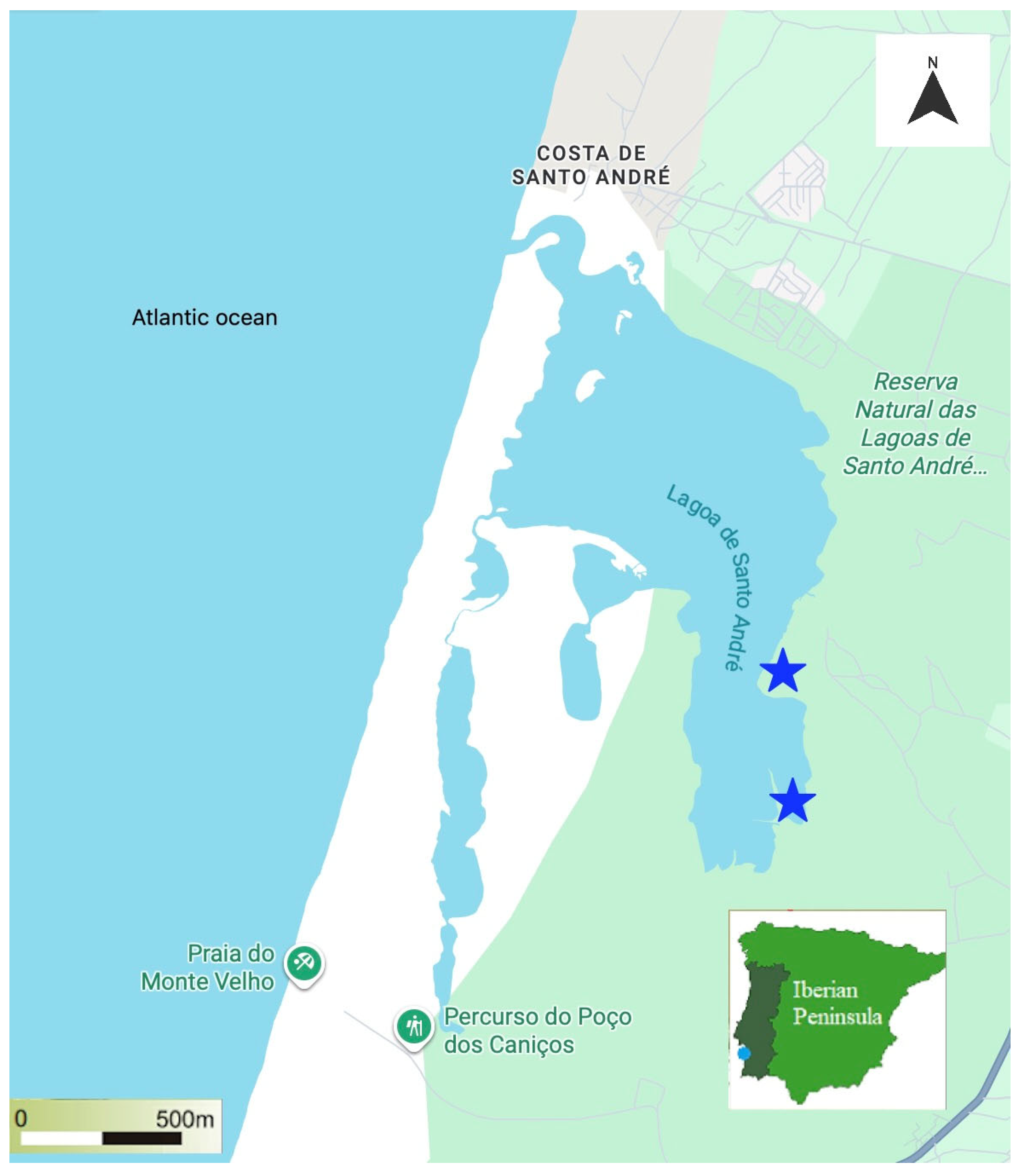
The Santo André Lagoon (38°6′ N, 8°48′ W) is located on the southwestern coast of Portugal, approximately 80 km south of Lisbon. The lagoon is surrounded by agricultural land in the east, a barrier beach in the west, and sand dunes in the north and south [28]. The lagoon is influenced by its connection to the sea, as well as by hydrological and meteorological conditions [29], and it is recognized by its high ecological and ornithological value, frequently supporting large concentrations of birds [30], being designated as a Ramsar site, a Special Protected Area, and part of the European Natura 2000 network. As such, it has been classified as a protected area known as the ‘Reserva Natural das Lagoas de Santo André e Sancha’ [28] (Figure 1).
Figure 1.
Study area map, Reserva Natural das Lagoas de Santo André e Sancha (38°6′ N, 8°48′ W), located on the southwestern coast of Portugal (ICNF—Instituto da Conservação da Natureza e das Florestas). The blue stars represent the ringing points, where mist nets were used.
Dense stands of reed beds (Phragmites australis) are present in soils inundated by fresh or brackish water [31,32], and willows (dominated by Salix atrocinerea and Thelypteris palustris) as well as rare species, such as the forget-me-not (Myosotis retusifolia) and the common violet (Viola rivineana), prosper in areas where fresh water is consistently available throughout the year. These areas attract many bird species looking for shelter, food, and nesting-sites [31,32], and are situated along the key migratory flyway of the Eastern Atlantic [25]. Given that avifauna is one of the primary conservation priorities in the region, bird populations are regularly monitored [25]. Over the past 50 years, these populations have been the subject of several studies [33], and the area has hosted consistent bird ringing sessions for over 40 years [25].
2.2. Study Species
This study addressed the population trends of 16 passerine species, categorized as long-distance migrants: sedge warbler (Acrocephalus schoenobaenus), European reed warbler (Acrocephalus scirpaceus), savi’s warbler (Locustella luscinioides), grasshopper warbler (Locustella naevia), and willow warbler (Phylloscopus trochilus); short-distance migrants: bluethroat (Luscinia svecica), chiffchaff (Phylloscopus collybita), and blackcap (Sylvia atricapilla); and resident species: cetti’s warbler (Cettia cetti), greenfinch (Chloris chloris), robin (Erithacus rubecula), tree sparrow (Passer montanus), blue tit (Parus caeruleus), great tit (Parus major), sardinian warbler (Sylvia melanocephala), and blackbird (Turdus merula). These species were selected because of their consistent presence in our long-term dataset, which enabled a robust temporal analysis of abundance patterns. All long-distance migrants were strictly insectivorous, in the short-distance migrants group there were two insectivorous species (bluethroat, chiffchaff) and one mainly frugivorous species (blackcap), and in the resident group there was one insectivorous species (cetti’s warbler), one granivorous species (greenfinch), and the remaining species were omnivorous, i.e., they feed on fruits, arthropods, and seeds.
2.3. Data Analysis
A long-term dataset was collected during bird ringing sessions at the Santo André National Ringing Station, spanning from 1997 to 2024. These data were collected during the autumn migration period (from July to October), with mist nets opened between 53 and 87 days each year (Appendix A, Table A1). The nets were opened at sunrise, usually closed during high temperature periods, and opened again before sunset. One to three senior ringers were present in virtually all ringing sessions to ensure that methods were similar between years. The nets were placed in the same habitat types throughout the study period, and therefore habitat quality, particularly in terms of density of reed beds, remained relatively similar throughout the study period. We have no reason to suspect that other possible factors, such as local changes in predator or competitor populations, affected the trends in bird captures.
The mist-netting effort varied between years in terms of the number of ringing days and the total mist nets used. Bird abundance was calculated based on the number of individuals captured, the total mist net meters used for capture, and the number of ringing days (1). These values were combined into an index to account for variation in the capture effort across the study period.
(number of birds)/(net meters × day) × 10,000 = bird abundance
To evaluate temporal changes in bird abundance, we first plotted mean annual capture-based abundance estimates per year ± SE using Microsoft Excel (Microsoft Corporation, version 2016). The change in bird abundance over time was visualized with a smooth trend line, and a linear regression line between bird abundance and year was fitted for all species after logarithmic transformation of bird abundance. We examined this regression line for the R2 (percentage of variation explained by this relationship) and the p value. The residuals were examined for all linear regressions and all were normally distributed. A p < 0.05 was considered statistically significant, indicating evidence for a long-term change in abundance.
Data quality control was performed by checking for inconsistencies and outliers, standardizing units, and removing duplicates. These steps ensured that long-term tendencies were robust and not influenced by errors or gaps in the dataset.
3. Results
3.1. Long-Distance Migrants
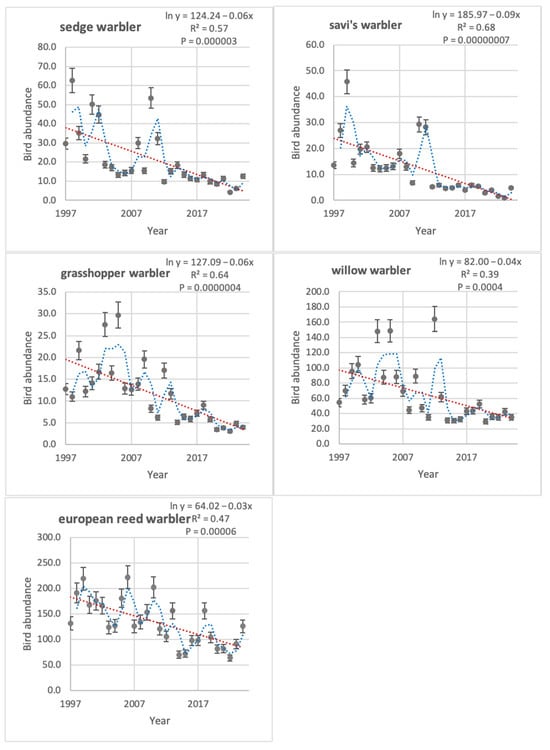
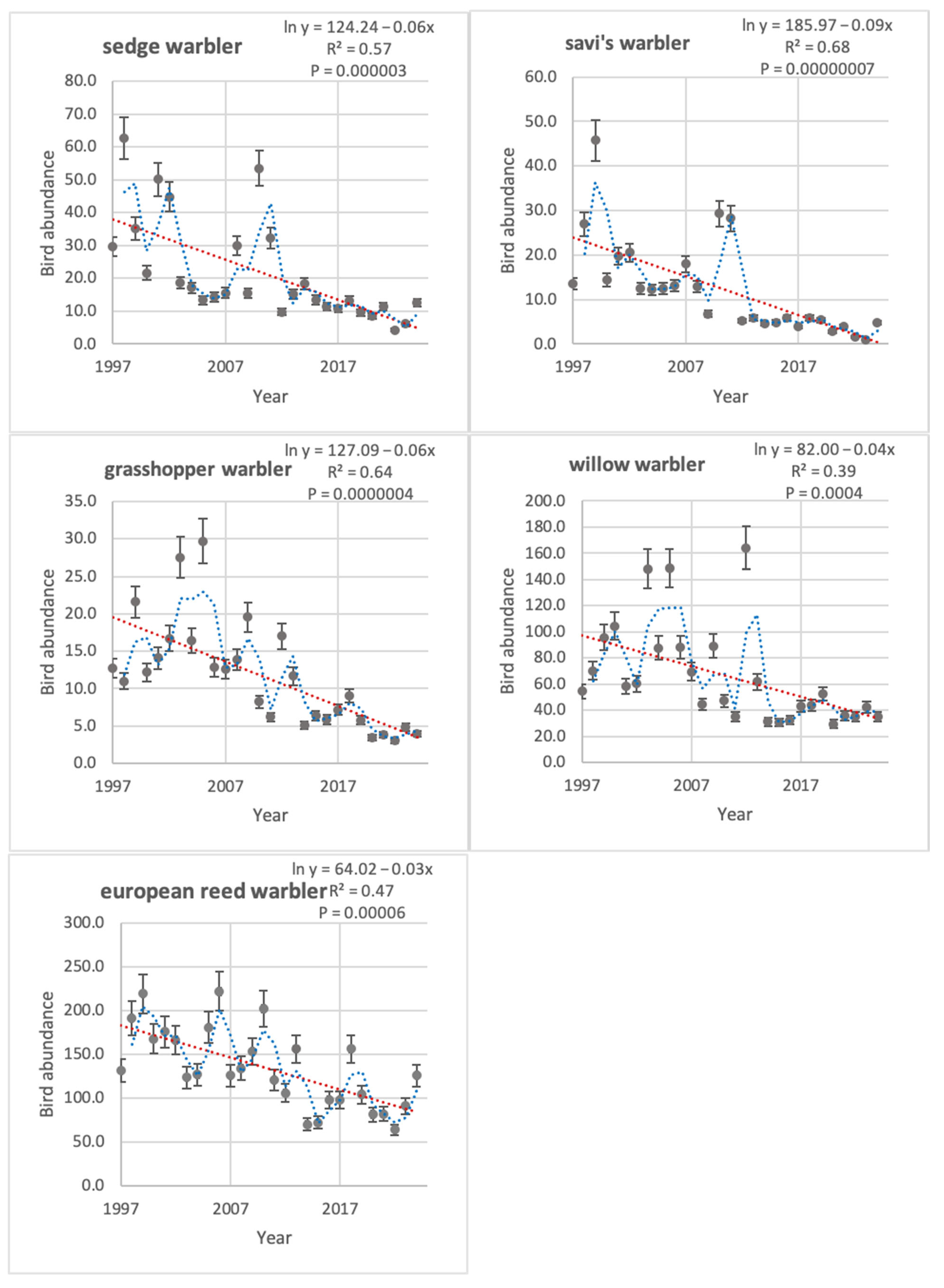
Despite short-term oscillations in the annual abundance of bird species, all long-distance migratory passerine species exhibited a highly significant long-term declining trend over the study period (Figure 2). The savi’s warbler, the grasshopper warbler, and the sedge warbler now barely occur in the area.
Figure 2.
Index of bird abundance (1997–2024) for long-distance migratory passerine species: sedge warbler (Acrocephalus schoenobaenus), savi’s warbler (Locustella luscinioides), grasshopper warbler (Locustella naevia), willow warbler (Phylloscopus trochilus), and European reed warbler (Acrocephalus scirpaceus). Bird abundance values were calculated based on the number of birds captured, corrected by annual changes in sampling effort (see methods). The dashed blue line represents a smooth trend line adjustment to the data, and the dashed red line represents the linear regression of the logarithmic index of bird abundance over time. Error bars represent standard errors. It should be noted that all species have a different scale in the y-axis.
3.2. Short-Distance Migrants
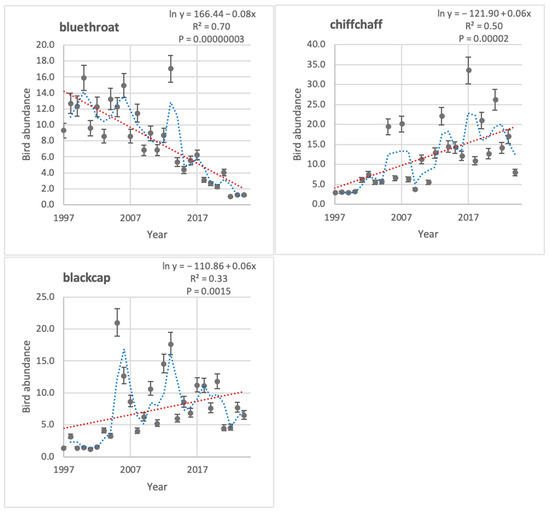
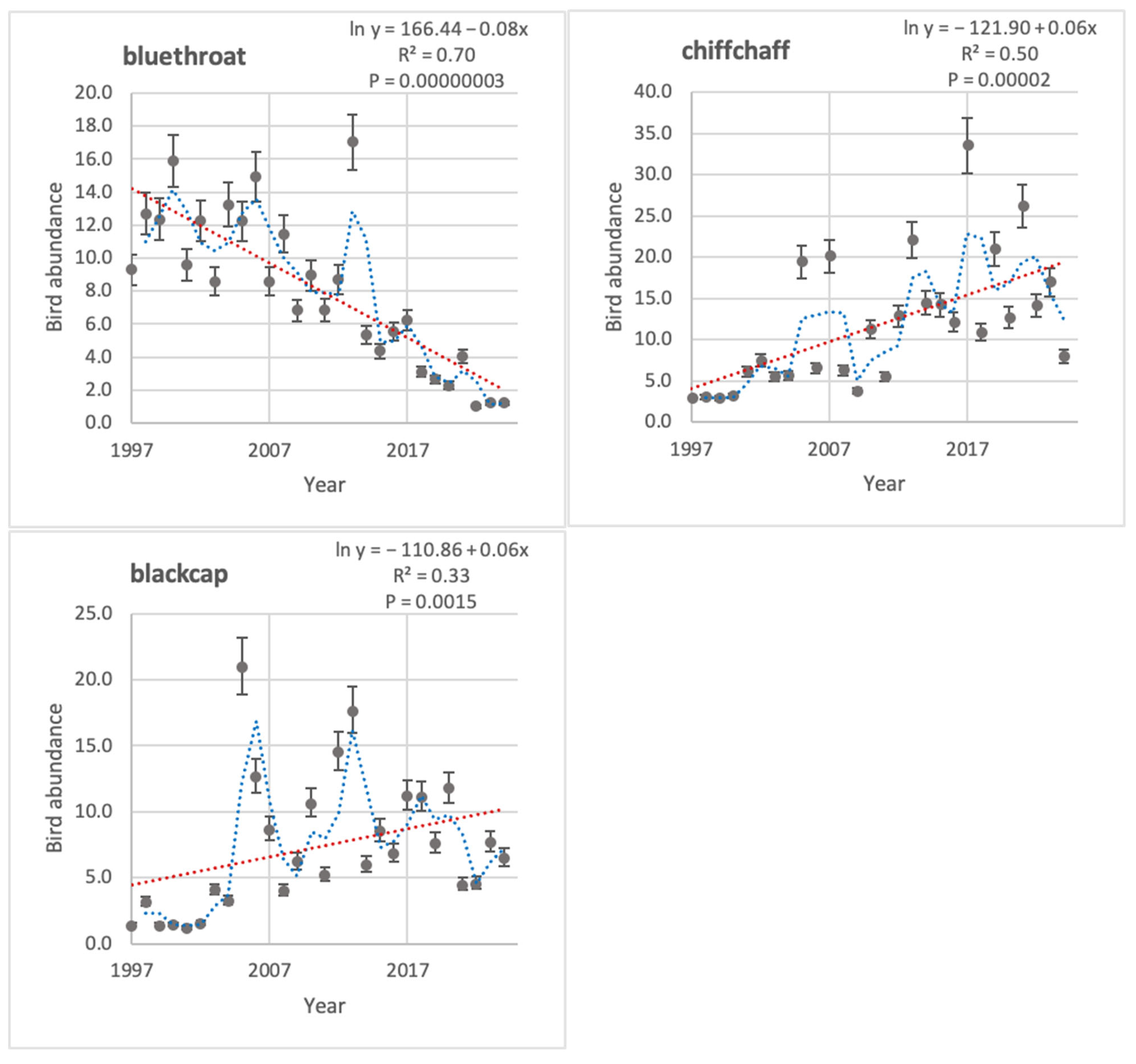
Among short-distance migrants, the bluethroat showed a significant and gradual decline (p < 0.0001), indicating a continuous decrease in individuals passing through the study area over the monitoring period. In contrast, the chiffchaff exhibited large fluctuations, yet maintained a consistent overall positive tendency (p < 0.0001), and it has now become the most abundant short-distance migratory species in Santo André. The blackcap also displayed a significant increasing tendency, although with moderate interannual variability (p = 0.0015; Figure 3).
Figure 3.
Observed bird abundance (1997–2024) for short-distance migratory passerine species: bluethroat (Luscinia svecica), chiffchaff (Phylloscopus collybita), and blackcap (Sylvia atricapilla). Bird abundance values were calculated based on the number of birds captured, corrected by annual changes in sampling effort (see methods). The dashed blue line represents a smooth trend line adjustment to the data, and the dashed red line represents the linear regression of the logarithmic index of bird abundance over time. Error bars represent standard errors. It should be noted that different species have a different scale in the y-axis.
3.3. Resident Species
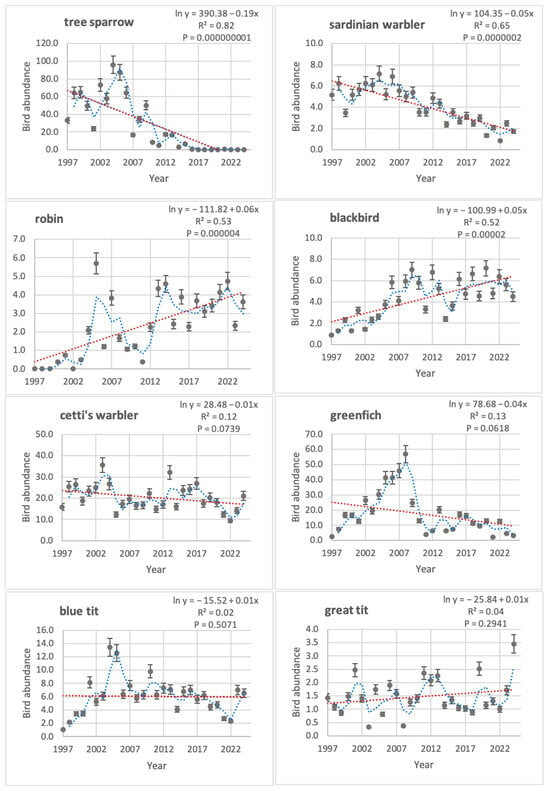
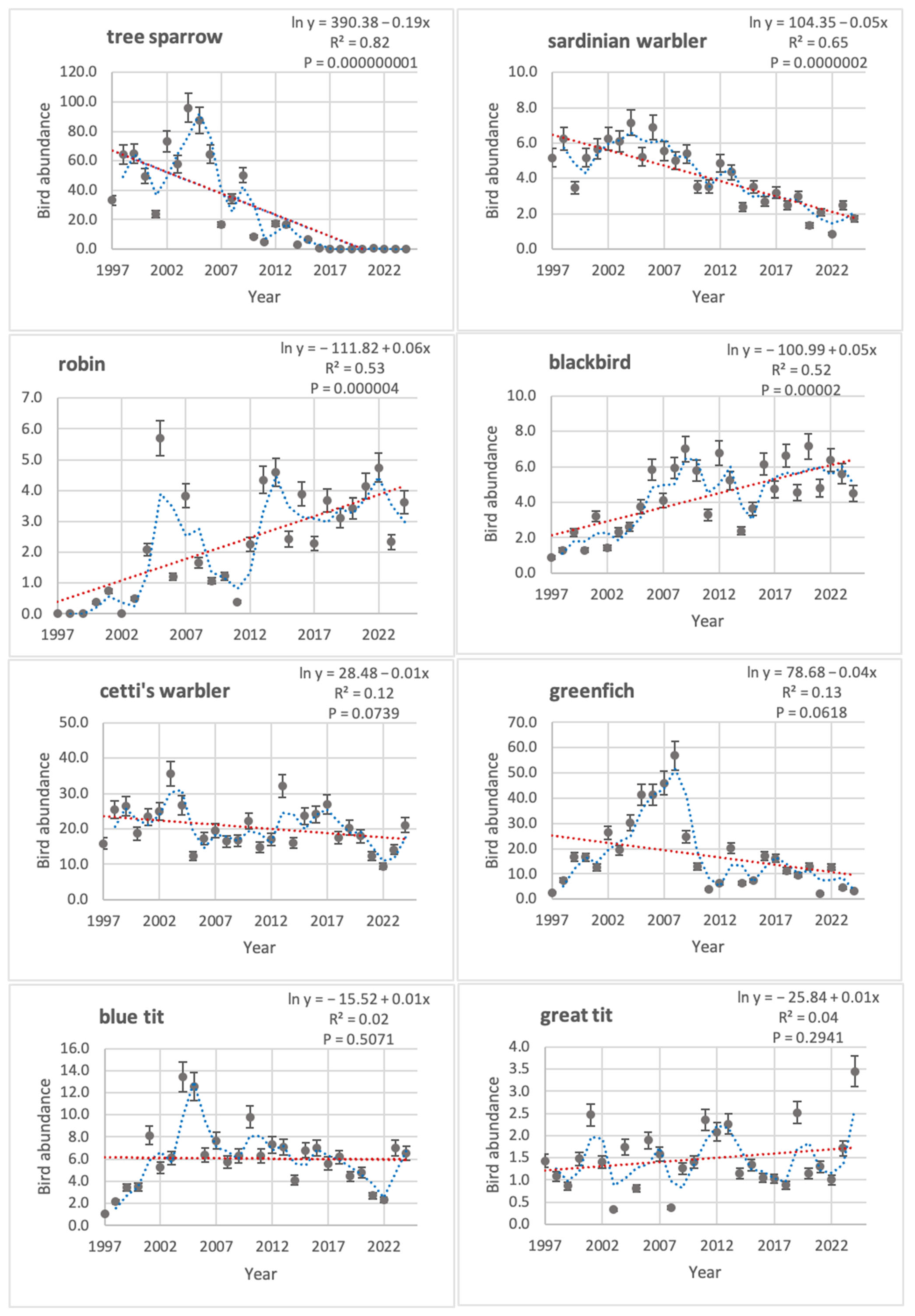
Regarding resident species, the tree sparrow (p < 0.0001) showed a significant decrease, with near local extinction by 2020, and the Sardinian warbler (p < 0.0001) also showed a highly significant decline (Figure 4). Significant increases were found for the robin (p < 0.0001) with a steady increase over the study period, as well as the blackbird (p < 0.001). The cetti’s warbler (p = 0.0739), greenfinch (p = 0.0618), blue tit (p = 0.5071), and great tit (p = 0.2941) showed fluctuations over time, but these were not significant.
Figure 4.
Observed bird abundance (1997–2024) for resident passerine species: tree sparrow (Passer montanus), sardinian warbler (Sylvia melanocephala), robin (Erithacus rubecula), blackbird (Turdus merula), cetti’s warbler (Cettia cetti), greenfinch (Chloris chloris), blue tit (Parus caeruleus), and great tit (Parus major). Bird abundance values were calculated based on the number of birds captured, corrected by annual changes in sampling effort (see methods). The dashed blue line represents a smooth trend line adjustment to the data, and the dashed red line represents the linear regression of the logarithmic index of bird abundance over time. Error bars represent standard errors. It should be noted that different species have a different scale in the y-axis.
3.4. Population Trends
Table 1 summarizes the population trends for each species that we monitored. It is clear that all five long-distance migrants passing through the Santo André Lagoon on their way to Africa are declining. From the three short-distance migrating species, only one is declining, and from the seven resident species, two are declining.
Table 1.
List of population tendencies and diet of each species captured in the Santo André Lagoon, Southwestern Portugal, from 1997 to 2024.
4. Discussion
Our study reported population abundance trends in long-distance, short-distance, and resident passerine species during the autumn migration period in an ecologically important wetland dominated primarily by reed beds. During this season, birds were less restricted to specific habitat types, and many species congregate at stopover sites such as Santo André. We observed that long-distance migratory species exhibited a greater decline in abundance compared to short-distance migrants and resident species. These findings aligned with previous studies showing that the steepest declines occurred among wetland-specialist, long-distance migratory passerines (e.g., sedge warbler, European reed warbler, and savi’s warbler [34]; however, generalist and/or short-distance migrants tended to remain stable, possibly due to their greater capacity to adapt to environmental change [35]. Although local changes in habitat quality, weather, and competitor and predator populations could have had some influence on the capture rates of some species, it is unlikely that they had an important influence on the patterns of abundance that we obtained because: (1) the quality of habitats that were used remained similar throughout the study period and no visible changes were detected by the senior ringers that accompanied the whole study, and (2) the significant changes in the abundance patterns that we obtained were very strong and could not be explained by minor changes occurring in the study area.
All species showing significant declines throughout the 27-year monitoring period were primarily insectivorous, encompassing all long-distance migrants as well as the bluethroat and two Iberian residents, namely the tree sparrow and the Sardinian warbler. These species depend heavily on insect prey, particularly during the breeding season, which may have rendered them especially vulnerable to ongoing trophic disruptions. Although the declines were most severe among long-distance migrants, our long-term results indicated that all strictly insectivorous birds, regardless of migratory strategy with exception of chiffchaff, appear to be affected; these findings were consistent with other European regions, particularly France and Denmark [36,37], and also North America [38]. Strong declines in insect populations were reported worldwide [8], attributed mainly to habitat loss, insecticides use, pollution, and climate change. These processes are now recognized as key drivers of declines in strictly insectivorous bird species across multiple habitats [36,37].
Long-distance migratory birds often face multiple pressures, including habitat degradation and mismatches between breeding phenology and the peak of food availability [38,39]. At the European scale, long-distance forest migrants have declined more sharply in Western Europe than in Northern Europe, largely due to increasingly warmer springs [40]. However, other studies have highlighted additional drivers of passerine declines, such as agricultural intensification (especially pesticide and fertilizer use), urbanization, changes in forest structure, and temperature fluctuations [41,42,43], which may also be linked to a decline in insect populations that are key food resources for these species. Our data revealed that the European reed warbler and the willow warbler were among the most frequently captured species at the Santo André Ringing Station at the end of the 20th century, and both showed pronounced declines in abundance since 2014. Jiménez et al. [44] found that rising temperatures, reduced rainfall, and fluctuating water levels in Mediterranean wetlands were diminishing food availability for reed warblers. Hanzelka et al. [38] further demonstrated that climatic conditions during both breeding and wintering, such as heatwaves, droughts, and altered precipitation regimes, negatively affected insectivorous migrants by constraining trophic resources.
Short-distance migratory species displayed divergent population trends. The bluethroat showed a pronounced and consistent decline, whereas the chiffchaff and blackcap exhibited increasing or stable abundances, likely reflecting their adaptability to environmental changes [45,46]. The bluethroat was recognized in several studies as a bioindicator of wetland health across Europe given its strong dependence on high-quality wetland habitats during both the breeding and migration periods. Therefore, its population trends can reflect broader ecological shifts affecting migratory bird communities [47]. Our data revealed a persistent decline in bluethroat abundance, consistent with patterns reported in Txingudi (a key stopover between Spain and France) and Southwestern France, where population size and condition have both deteriorated, indicating a wider population downturn [47,48].
The chiffchaff emerged as the most abundant and resilient species in our dataset. Despite notable interannual fluctuations, likely driven by variable weather, resource availability, or changes in observer effort, the long-term trend indicated a positive population trajectory. This supported the hypothesis of population growth or range expansion, possibly facilitated by the species’ flexibility to occupy fragmented landscapes, urban green spaces, and its broader thermal tolerance [46]. Our findings were consistent with Martay et al. [49], who documented population increases in chiffchaffs across the UK, particularly in Scotland, as breeding-season temperatures approached the species’ optimal range of approximately 13.5 °C. These increases in Northern Europe, likely driven by milder winters and changes in forest structure [50], may be contributing to higher numbers of individual chiffchaffs wintering in Southern Europe, including in the Santo André region. The overall increase in the blackcap likely reflected adjusted migratory behavior and their ability to exploit ecological opportunities, arising from environmental changes, such as using an increased local food availability (like a diet based on fruits) to improved their body condition and allow a faster migration and shorter stopovers; this potentially affected their survival and population dynamics in contrast to many declining European migrants [51]. By capitalizing on increased availability of berry crops in key stopover and breeding areas, likely influenced by climate and land-use shifts, blackcaps have successfully adapted their habitat use and migratory strategies [51]. The increasing trends observed for both the chiffchaff and the blackcap may reflect a broader European pattern of population expansion among short-distance migratory generalist species [45].
Among resident species in the Santo André system, the tree sparrow exhibited the steepest decline, suggesting a local extinction event. Although regularly associated with the wetland, their numbers peaked in 2004 and remained relatively high until 2012. Their non-detection after 2022 suggested either local extinction or a marked contraction in site occupancy, plausibly driven by habitat loss or competition with expanding synanthropic generalists such as the house sparrow (Passer domesticus) [52]. The species’ reliance on traditional nesting substrates (e.g., mature trees or cavities in farm buildings) makes it particularly vulnerable to urbanization and building modernization, which strongly reduced nest-site availability [52]. The sardinian warbler also showed a clear negative trend throughout the study period. As a Mediterranean specialist, its occurrence depends heavily on continuous shrubland cover and high vegetation complexity, making it sensitive to habitat alteration and degradation [53], which in turn are likely to affect their insect food resources. By contrast, the robin exhibited a strong positive trend, consistent with European-wide findings that generalist omnivores benefit from milder winters and extended growing seasons [3,35]. The blackbird also showed a steady population increase, which can be attributed to its ecological flexibility and omnivorous diet. This adaptability enables it to thrive across a wide range of environments from forests to urban areas, making it one of the most successful and widespread birds in Europe [42,43].
5. Conclusions
The patterns that we describe, where specialist species such as strictly insectivorous birds declined regardless of their migratory strategy, while omnivorous generalist species remained relatively stable, suggests an overall simplification of ecosystems and a loss of functional diversity [35,36]. Because strictly insectivorous birds are relatively easy to monitor, they may serve as effective bioindicators of such widespread ecosystem simplification [36]. In particular, long-distance migratory passerines are vulnerable to the combined pressures of global warming and anthropogenic land-use change, particularly agricultural intensification and urban expansion [39,40,42]. These pressures disrupt trophic interactions, reduce habitat suitability, and compromise demographic resilience, leading to more pronounced declines in species with narrow ecological niches and high energetic demands [42]. In contrast, short-distance migrants and resident generalists appear to be buffered against such changes, highlighting the uneven impacts of anthropogenic pressures such as agricultural intensification and climate-related stressors across avian functional groups [45].
Developing robust and consistent conservation strategies requires a fine-scale understanding of species-specific responses to environmental change [3]. Long-term monitoring and the integration of ecological and phenological data are essential for guiding evidence-based management [8]. Ultimately, safeguarding critical habitats, such as wetlands, reed beds, and willows in the Santo André Lagoon [30,31], limiting the use of harmful chemicals in agriculture, establishing protection laws, and raising awareness about wildlife conservation could be the most effective means of mitigating the ongoing disruption of bird populations across Europe’s rapidly changing landscapes [34,41].
Author Contributions
M.A. and J.A.R. conceived the ideas and designed methodology; V.E. provided the data collection; A.P.A. organized the data collection and analyzed the data; M.A. and J.A.R. led the critical revision; A.P.A. wrote and prepared the original draft of the manuscript. All authors have read and agreed to the published version of the manuscript.
Funding
This research received no external funding.
Institutional Review Board Statement
Not applicable.
Informed Consent Statement
Not applicable.
Data Availability Statement
Data will be provided upon reasonable request.
Acknowledgments
We are grateful to ICNF (Instituto da Conservação da Natureza e das Florestas) for provided us the data presented in this study. We are also grateful to anonymous reviewers and the editors for their detailed and thoughtful critiques of the earlier draft of the manuscript, which has been greatly improved.
Conflicts of Interest
The authors declare no conflicts of interest to publish the results.
Appendix A
Ringing data by year, number of days and number of 12 m nets used between 1997 and 2024, in Santo André Ringing Station.
Table A1.
Ringing data by year, number of days and number of 12 m nets used between 1997 and 2024, in Santo André Ringing Station.
References
- Morelli, F.; Benedetti, Y.; Callaghan, C.T. Ecological specialization and population trends in European breeding birds. Glob. Ecol. Conserv. 2020, 22, e00996. [Google Scholar] [CrossRef] [Scilit]
- Jiguet, F.; Gregory, R.D.; Devictor, V.; Green, R.E.; Vorisek, P.; Van Strien, A.; Couvet, D. Population trends of European common birds are predicted by characteristics of their climatic niche. Glob. Change Biol. 2010, 16, 497–505. [Google Scholar] [CrossRef] [Scilit]
- Howard, C.; Stephens, P.A.; Pearce-Higgins, J.W.; Gregory, R.D.; Butchart, S.H.; Willis, S.G. Disentangling the relative roles of climate and land cover change in driving the long-term population trends of European migratory birds. Divers. Distrib. 2020, 26, 1442–1455. [Google Scholar] [CrossRef] [Scilit]
- Reif, J.; Vermouzek, Z.; Voříšek, P.; Šťastný, K.; Bejček, V.; Flousek, J. Population changes in Czech passerines are predicted by their life-history and ecological traits. Ibis 2010, 152, 610–621. [Google Scholar] [CrossRef] [Scilit]
- Both, C. Flexibility of timing of avian migration to climate change masked by environmental constraints en route. Curr. Biol. 2010, 20, 243–248. [Google Scholar] [CrossRef] [Scilit]
- Møller, A.; Rubolini, D.; Lehikoinen, E. Populations of migratory bird species that did not show a phenological response to climate change are declining. Proc. Natl. Acad. Sci. USA 2008, 105, 16195–16200. [Google Scholar] [CrossRef] [Scilit]
- Hallmann, C.; Foppen, R.; van Turnhout, C.; de Kroon, H.; Jongejans, E. Declines in insectivorous birds are associated with high neonicotinoid concentrations. Nature 2014, 511, 341–343. [Google Scholar] [CrossRef] [Scilit]
- Sánchez-Bayo, F.; Wyckhuys, K. Worldwide decline of the entomofauna: A review of its drivers. Biol. Conserv. 2019, 232, 8–27. [Google Scholar] [CrossRef] [Scilit]
- Bowler, D.E.; Heldbjerg, H.; Fox, A.D.; de Jong, M.; Bohning-Gaese, K. Long-term declines of European insectivorous bird populations and potential causes. Conserv. Biol. 2019, 33, 1120–1130. [Google Scholar] [CrossRef] [Scilit]
- Clavel, J.; Julliard, R.; Devictor, V. Worldwide decline of specialist species: Toward a global functional homogenization? Front. Ecol. Environ. 2011, 9, 222–228. [Google Scholar] [CrossRef] [Scilit]
- Tottrup, A.P.; Rainio, K.; Coppack, T.; Lehikoinen, E.; Rahbek, C.; Thorup, K. Local temperature fine-tunes the timing of spring migration in birds. Integr. Comp. Biol. 2010, 50, 293–304. [Google Scholar] [CrossRef] [Scilit]
- Both, C.; Bouwhuis, S.; Lessells, C.M.; Visser, M.E. Climate change and population declines in a longdistance migratory bird. Nature 2006, 441, 81–83. [Google Scholar] [CrossRef] [Scilit]
- Norris, D.R.; Marra, P.P. Seasonal interactions, habitat quality, and population dynamics in migratory birds. Condor 2007, 109, 535–547. [Google Scholar] [CrossRef]
- Lehikoinen, A.; Lindström, Å.; Santangeli, A.; Sirkiä, P.; Brotons, L.; Devictor, V.; Elts, J.; Foppen, R.; Heldbjerg, H.; Herrando, S.; et al. Wintering bird communities are tracking climate change faster than breeding communities. J. Anim. Ecol. 2021, 90, 1085–1095. [Google Scholar] [CrossRef] [Scilit] [PubMed]
- Runge, C.A.; Watson, J.E.M.; Butchart, S.H.; Hanson, J.O.; Possingham, H.P.; Fuller, R.A. Protected areas and global conservation of migratory birds. Science 2015, 350, 1255–1258. [Google Scholar] [CrossRef] [Scilit] [PubMed]
- Studds, C.E.; Kendall, B.E.; Murray, N.J.; Wilson, H.B.; Rogers, D.I.; Clemens, R.S.; Gosbell, K.; Hassell, C.J.; Jessop, R.; Melville, D.S.; et al. Rapid population decline in migratory shorebirds relying on Yellow Sea tidal mudflats as stopover sites. Nat. Commun. 2017, 8, 14895. [Google Scholar] [CrossRef] [Scilit] [PubMed]
- Wilcove, D.S.; Wikelski, M. Going, going, gone: Is animal migration disappearing? PLoS Biol. 2008, 6, e188. [Google Scholar] [CrossRef] [Scilit]
- Gilroy, J.J.; Gill, J.A.; Butchart, S.H.; Jones, V.R.; Franco, A.M. Migratory diversity predicts population declines in birds. Ecol. Lett. 2016, 19, 308–317. [Google Scholar] [CrossRef] [Scilit]
- Koleček, J.; Procházka, P.; Iernonymidou, C.; Burfield, Y.J.; Reif, J. Non-breeding range size predicts the magnitude of population trends in trans-Saharan migratory passerine birds. Oikos 2018, 127, 599–606. [Google Scholar] [CrossRef] [Scilit]
- Stephens, P.A.; Mason, L.R.; Green, R.E.; Gregory, R.D.; Sauer, J.R.; Alison, J.; Aunins, A.; Brotons, L.; Butchart, S.H.M.; Campedelli, T.; et al. Consistent response of bird populations to climate change on two continents. Science 2016, 352, 84–87. [Google Scholar] [CrossRef] [Scilit]
- Storch, D.; Koleček, J.; Keil, P.; Vermouzek, Z.; Voříšek, P.; Reif, J. Decomposing trends in bird populations: Climate, life histories and habitat affect different aspects of population change. Divers. Distrib. 2023, 29, 572–585. [Google Scholar] [CrossRef] [Scilit]
- Bauer, S.; Hoye, B.J. Migratory animals couple biodiversity and ecosystem functioning worldwide. Science 2014, 344, 1242552. [Google Scholar] [CrossRef] [Scilit] [PubMed]
- Sanderson, F.J.; Donald, P.F.; Pain, D.J.; Burfield, I.J.; van Bommel, F.P. Long-term population declines in Afro-Palearctic migrant birds. Biol. Conserv. 2006, 131, 93–105. [Google Scholar] [CrossRef] [Scilit]
- Curley, S.R.; Manne, L.L.; Veit, R.R. Differential winter and breeding range shifts: Implications for avian migration distances. Divers. Distrib. 2020, 26, 415–425. [Google Scholar] [CrossRef] [Scilit]
- Silveira, M.; Encarnacao, P.; Vidal, A.M.; Cancela da Fonseca, L. Aves aquáticas e gestão da Lagoa de Santo André. Rev. Gest. Costeira Integr.-J. Integr. Coast. Zone Manag. 2009, 9, 55–70. [Google Scholar] [CrossRef] [Scilit]
- Newton, I. The Migration Ecology of Birds; Elsevier: London, UK; Academic Press: Cambridge, MA, USA, 2008. [Google Scholar]
- Gregory, R.D.; Skorpilova, J.; Vorisek, P.; Butler, S. An analysis of trends, uncertainty and species selection shows contrasting trends of widespread forest and farmland birds in Europe. Ecol. Indic. 2009, 103, 676–687. [Google Scholar] [CrossRef] [Scilit]
- Correia, M.J.; Costa, J.L.; Chainho, P.; Félix, P.M.; Chaves, M.L.; Medeiros, J.P.; Silva, G.; Azeda, C.; Tavares, P.; Costa, A.; et al. Inter-annual variations of macrobenthic communities over three decades in a land-locked coastal lagoon (Santo André, SW Portugal). Estuar. Coast. Shelf Sci. 2012, 110, 168–175. [Google Scholar] [CrossRef] [Scilit]
- Correia, M.J.; Domingos, I.; De Leo, G.A.; Costa, J.L. A comparative analysis of European eel’s somatic growth in the coastal lagoon Santo André (Portugal) with growth in other estuaries and freshwater habitats. Environ. Biol. Fishes 2021, 104, 837–850. [Google Scholar] [CrossRef] [Scilit]
- CEZH/RNLSAS. Reserva Natural das Lagoas de St.º André e Sancha, Uma Contribuição Para o Plano de Gestão; Instituto da Conservação da Natureza/Centro de Zonas Húmidas: Lisbon, Portugal, 2004; 118p. [Google Scholar]
- Beja, P.; Gordinho, L.; Porto, M.; Machado, J.; Santana, J.; Simões, H.; Carvalho, C.R.; Borralho, R.; Silva, L.N. Plano de Ordenamento da Reserva Natural das Lagoas de Santo André e da Sancha; Technical Report; Instituto da Conservação da Natureza e das Florestas: Lisbon, Portugal, 2005. [Google Scholar]
- Pinto, M.J. Guia das Plantas e dos Ecossistemas da RNLSAS; ICNF: Lisbon, Portugal, 2014. [Google Scholar]
- Catry, P.X. A Avifauna da Lagoa de Santo André—Caracterização, Impacto e Propostas de Gestão. Bachelor’s Thesis, Faculty of Sciences of the University of Lisbon, Lisbon, Portugal, 1993; 189p. [Google Scholar]
- Alambiaga, I.; Carrasco, M.; Ruiz, C.; Mesquita-Joanes, F.; Monrós, J.S. Population trends and habitat selection of threatened marsh passerines in a protected Mediterranean wetland. Avian Conserv. Ecol. 2021, 16, 23. [Google Scholar] [CrossRef] [Scilit]
- Petras, T.; Vrezec, A.l. Long-Term Ringing Data on Migrating Passerines Reveal Overall Avian Decline in Europe. Diversity 2022, 14, 905. [Google Scholar] [CrossRef] [Scilit]
- Møller, A. Quantifying rapidly declining abundance of insects in Europe using a paired experimental design. Ecol. Evol. 2020, 10, 2446–2451. [Google Scholar] [CrossRef] [Scilit] [PubMed]
- Nebel, S.; Mills, A.; McCracken, J.D.; Taylor, P.D. Declines of aerial insectivores in North America follow a geographic gradient. Avian Conserv. Ecol. 2010, 5, 1. [Google Scholar] [CrossRef] [Scilit]
- Hanzelka, J.; Telenský, T.; Koleček, J.; Procházka, P.; Robinson, R.; Baltà, O.; Cepák, J.; Gargallo, G.; Henry, P.; Henshaw, I.; et al. Climatic Predictors of Long-Distance Migratory Birds Breeding Productivity Across Europe. Glob. Ecol. Biogeogr. 2024, 33, e13901. [Google Scholar] [CrossRef] [Scilit]
- Border, J.; Pearce-Higgins, J.; Hewson, C.; Howard, C.; Stephens, P.; Willis, S.; Fuller, R.; Hanson, J.; Sierdsema, H.; Foppen, R.; et al. Expanding protected area coverage for migratory birds could improve long-term population trends. Nat. Commun. 2025, 16, 1813. [Google Scholar] [CrossRef] [Scilit]
- Both, C.; Van Turnhout, C.A.M.; Bijlsma, R.G.; Siepel, H.; Strien, A.J.V.; Foppen, R.P. Avian population consequences of climate change are most severe for long-distance migrants in seasonal habitats. Proc. R. Soc. B Biol. Sci. 2010, 277, 1259–1266. [Google Scholar] [CrossRef] [Scilit]
- Rigal, S.; Dakos, H.V.; Alonso, A.; Auniņš, Z.; Benkő, L.; Brotons, T.; Chodkiewicz, P.; Chylarecki, E.; de Carli, J.C.; del Moral, C.; et al. Farmland practices are driving bird population decline across Europe. Proc. Natl. Acad. Sci. USA 2023, 120, e2216573120. [Google Scholar] [CrossRef] [Scilit]
- Burns, F.; Eaton, M.A.; Burfield, I.J.; Klvaňová, A.; Šilarová, E.; Staneva, A.; Gregory, R. Abundance decline in the avifauna of the European Union reveals cross-continental similarities in biodiversity change. Ecol. Evol. 2021, 11, 16647–16660. [Google Scholar] [CrossRef] [Scilit]
- Saino, N.; Ambrosini, R.; Rubolini, D.; Hardenberg, J.; Provenzale, A.; Hüppop, K.; Hüppop, O.; Lehikoinen, A.; Lehikoinen, E.; Rainio, K.; et al. Climate warming, ecological mismatch at arrival and population decline in migratory birds. Proc. R. Soc. B Biol. Sci. 2010, 278, 835–842. [Google Scholar] [CrossRef] [Scilit]
- Jiménez, J.; Hernández, J.; Feliu, J.; Carrasco, M.; Moreno-Opo, R. Breeding in a Dry Wetland. Demographic Response to Drought in the Common Reed-Warbler Acrocephalus scirpaceus. Ardeola 2018, 65, 247–259. [Google Scholar] [CrossRef] [Scilit]
- Lehikoinen, A.; Virkkala, R. Population Trends and Conservation Status of Forest Birds. In Book Ecology and Conservation of Forest Birds; Cambridge University Press: Cambridge, UK, 2018; Chapter 11; pp. 389–416. [Google Scholar]
- Newson, S.; Ockendon, N.; Joys, A.; Noble, D.; Baillie, S. Comparison of habitat-specific trends in the abundance of breeding birds in the UK. Bird Study 2009, 56, 233–243. [Google Scholar] [CrossRef] [Scilit]
- Fontanilles, P.; de la Hera, I.; Sourdrille, K.; Lacoste, F.; Kerbiriou, C. Stopover ecology of autumn-migrating Bluethroats (Luscinia svecica) in a highly anthropogenic river basin. J. Ornithol. 2019, 161, 89–101. [Google Scholar] [CrossRef] [Scilit]
- Arizaga, J.; Gordo, O. Long-Term Dynamics of Stopover Use by the Bluethroat Luscinia svecica. Ardeola 2024, 71, 291–306. [Google Scholar] [CrossRef] [Scilit]
- Martay, B.; Pearce-Higgins, J.W.; Harris, S.J.; Gillings, S. Breeding ground temperature rises, more than habitat change, are associated with spatially variable population trends in two species of migratory bird. Ibis 2023, 165, 34–54. [Google Scholar] [CrossRef] [Scilit]
- Lindström, Å.; Svensson, S.; Green, M.; Ottvall, R. Distribution and population changes of two subspecies of Chiffchaff Phylloscopus collybita in Sweden. Ornis Svec. 2007, 17, 137–147. [Google Scholar] [CrossRef] [Scilit]
- Ożarowska, A.; Meissner, W. Increasing body condition of autumn migrating Eurasian blackcaps Sylvia atricapilla over four decades. Eur. Zool. J. 2024, 91, 151–161. [Google Scholar] [CrossRef] [Scilit]
- Ramos-Elvira, E.; Banda, E.; Arizaga, J.; Martín, D.; Aguirre, J.I. Long-Term Population Trends of House Sparrow and Eurasian Tree Sparrow in Spain. Birds 2023, 4, 159–170. [Google Scholar] [CrossRef] [Scilit]
- Moreno Mosquera, E.; Drechsler, R.; Monrós, J. The effect of vegetation structure on seasonal density of Sylvia warblers in the eastern Iberian Peninsula. Bird Study 2021, 68, 112–121. [Google Scholar] [CrossRef] [Scilit]

Disclaimer/Publisher’s Note: The statements, opinions and data contained in all publications are solely those of the individual author(s) and contributor(s) and not of MDPI and/or the editor(s). MDPI and/or the editor(s) disclaim responsibility for any injury to people or property resulting from any ideas, methods, instructions or products referred to in the content. |
© 2026 by the authors. Licensee MDPI, Basel, Switzerland. This article is an open access article distributed under the terms and conditions of the Creative Commons Attribution (CC BY) license.